
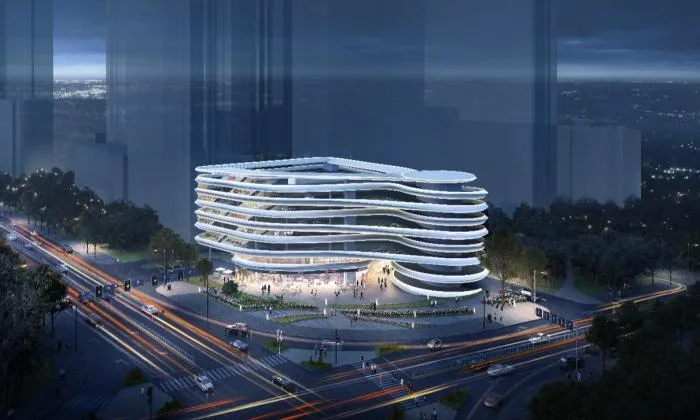
Rendering © GWP Architects
GWP secured the project design rights as the first-place winner in an international competition.
The GWP team’s design skillfully integrates parking, pedestrian and vehicle circulation, and commercial spaces under the concept of “Infinite Flow.” This creates a seamless blend of function and striking architectural form. It is set to become a landmark parking structure in Dongguan.
— Dr. Liu Bo, Senior Engineer and Chairman of Dongshi Group
Project Background: CBD Pilot Project
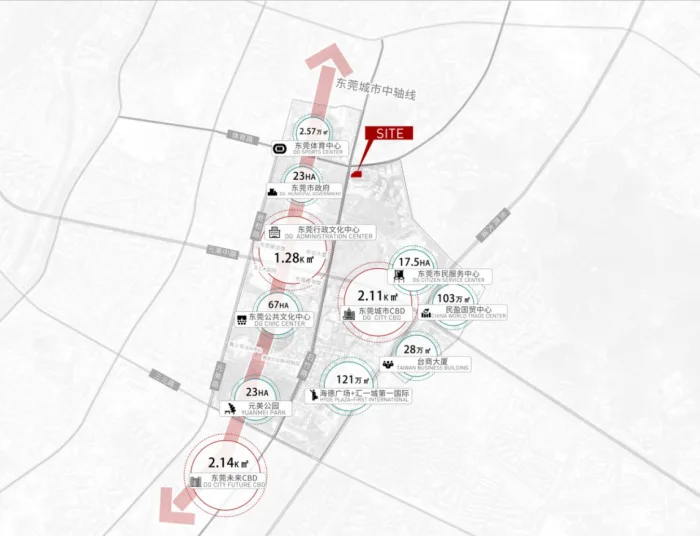
Location map © GWP Architects
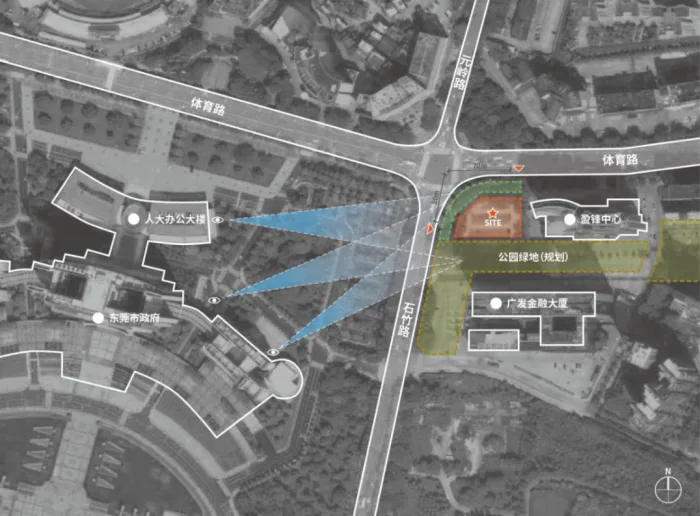
Location map © GWP Architects
The Dongguan Parking Building site covers 4,844 square meters, with a total construction area of 20,575 square meters. This project marks the city’s first pilot parking building aimed at upgrading Dongguan’s urban image and alleviating traffic congestion. Strategically located at the intersection of Shizhu Road and Tiyu Road in Guancheng District, the site sits within Dongguan’s core urban area, characterized by one center and two axes.
Surrounded by green landscapes and just 200 meters from the Dongguan Municipal Government, the area hosts administrative, office, commercial, and hotel functions, making it a vital venue for showcasing Dongguan’s urban culture.
Historically, the area has faced multiple traffic challenges such as insufficient parking and illegal roadside parking. Combining innovative design with the city’s new landmark vision, the GWP team aims to resolve parking congestion while creating a convenient, comfortable transit experience. The project envisions a new urban space where people can pause, linger, and engage with the city.
Design Concept: Infinite Flow
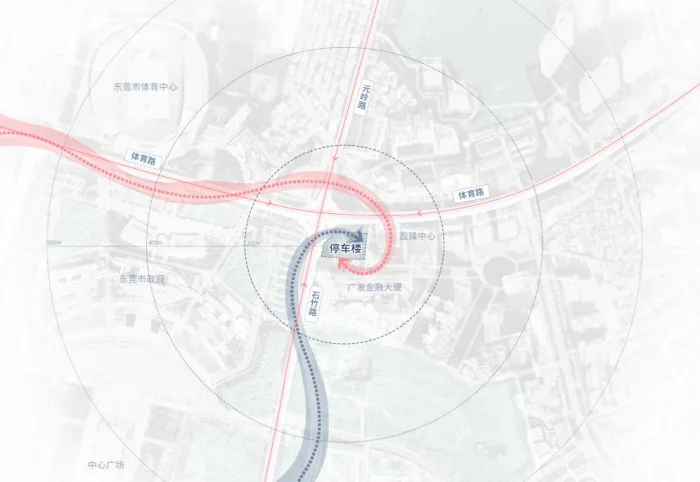
Concept map © GWP Architects
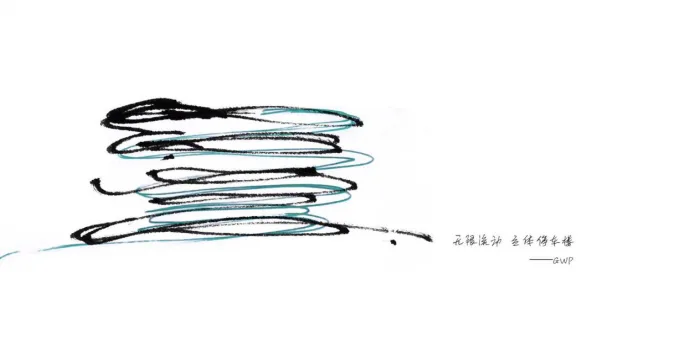
Concept map © GWP Architects

Concept map © GWP Architects
The design draws inspiration from the unique winding waterways of Dongguan’s water towns and the site’s central location, referred to as “one heart, two axes.” Using the two main urban roads as flowing ribbons, the design reorganizes and transforms the existing chaotic parking pattern into a cohesive architectural language.
The vehicle circulation follows infinite flowing and rotating paths, creating two dynamic spiraling curves that intersect to form the architectural image of the parking building—resembling a sculptural city landmark.
The building volume emerges from the continuous circulation of traffic flows, refining the site’s geometric form into a pure, elegant architectural shape. A continuous façade ribbon flows around the entire building, creating diverse spatial experiences and allowing the architecture to harmonize with its urban environment. This design balances tranquility with respect and enhancement of its surroundings.
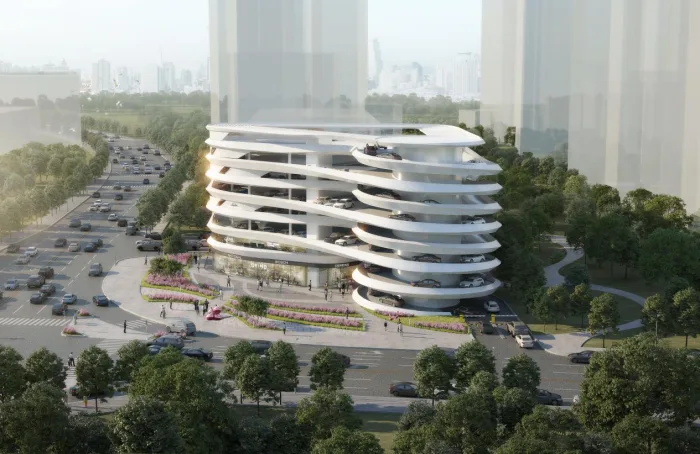
Rendering © GWP Architects
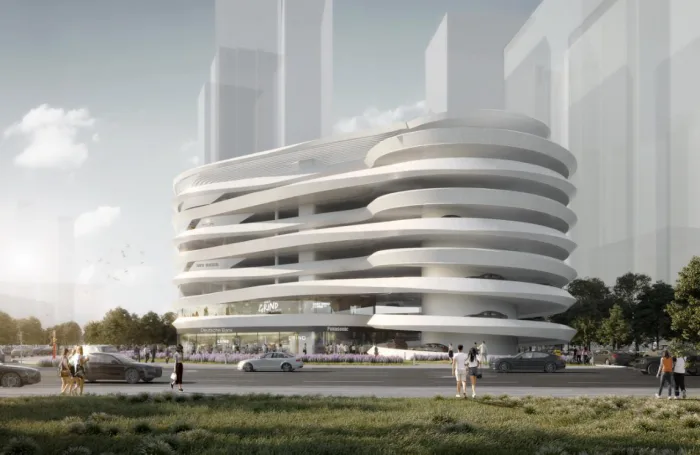
Rendering © GWP Architects
“We aim to bring vibrant design to Dongguan. This building acts as a spatial sculpture, offering residents a joyful experience and a stronger sense of belonging.”
— John Zhang, Lead Architect, GWP
Facade Design: Dynamic Curves and Poetic Expression
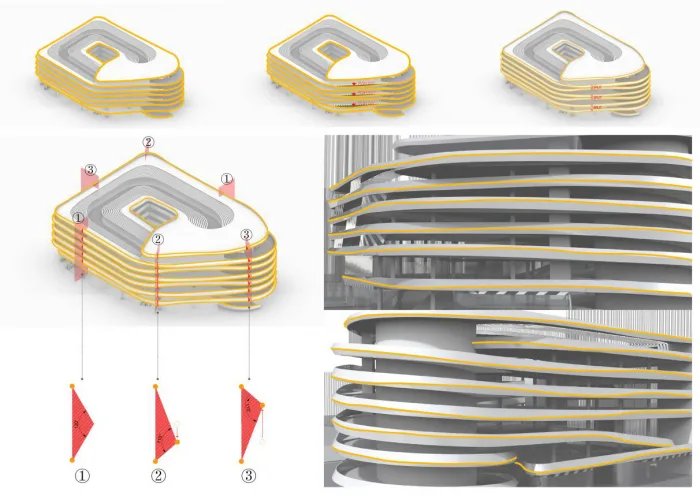
Analysis diagram © GWP Architects
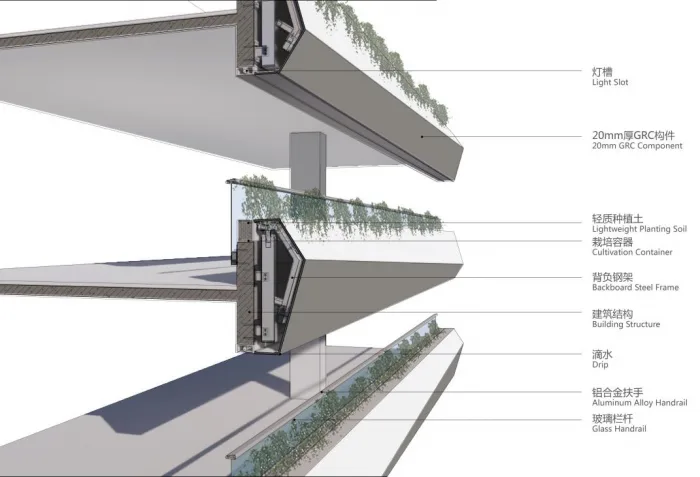
GRC node diagram © GWP Architects
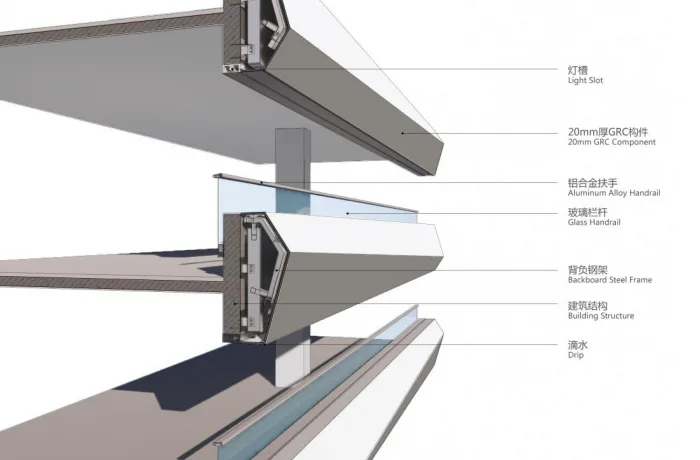
GRC node diagram © GWP Architects
The facade design reflects the fluidity of flowing water through dynamic, lightweight linear elements. Continuous white ribbons twist and undulate, layering to create a visually rich surface that evokes movement and change. Exterior materials include Glass Fiber Reinforced Concrete (GRC), offering a unique textured finish that blends with the surrounding landscape.
As sunlight shifts throughout the day, the building’s facade reveals its beauty through changing light and shadow, creating a poetic atmosphere. At night, illuminated ribbons form a flowing pattern, turning the building into a striking urban sculpture on commuters’ routes.
Efficient Structure and Independent Circulation
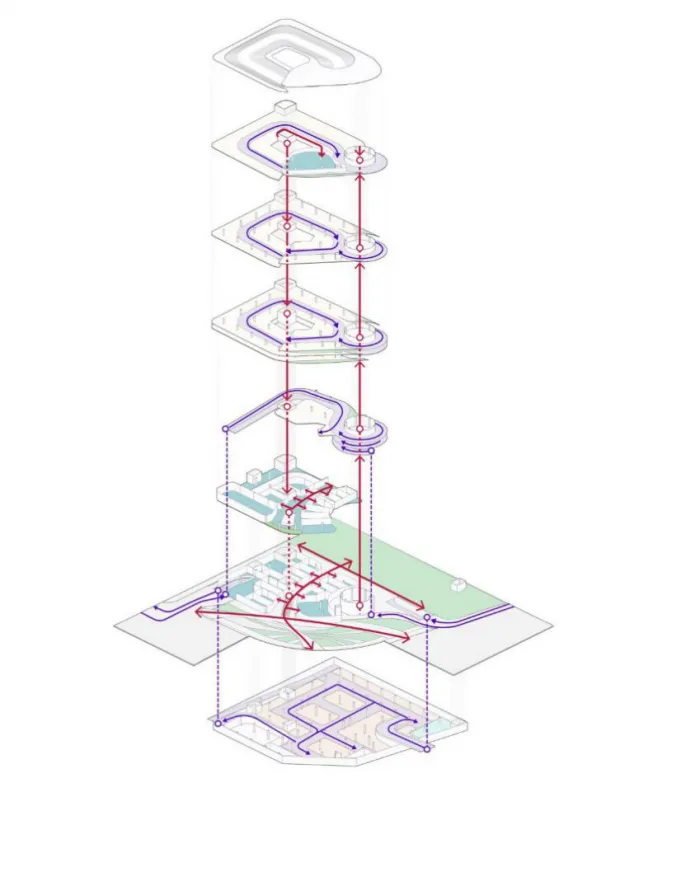
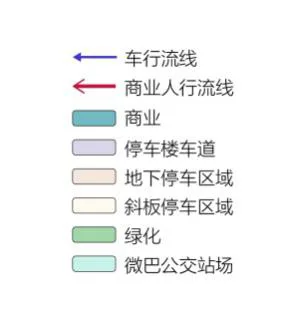
Analysis diagram © GWP Architects
The design uses a compact spiral ramp in the building’s southwest section, efficiently moving vehicles from the ground floor to the sixth floor and significantly improving parking turnover. This spiral ramp integrates seamlessly with the exterior facade, achieving architectural continuity.
The structure features a sloped plate parking system centered around a spiral ramp that passes through the building. Vehicles ascend and descend via this core lane, while parking spaces flank both sides. This design increases space utilization by 30% compared to flat plate structures, providing 25% more effective parking spaces and easing downtown congestion.
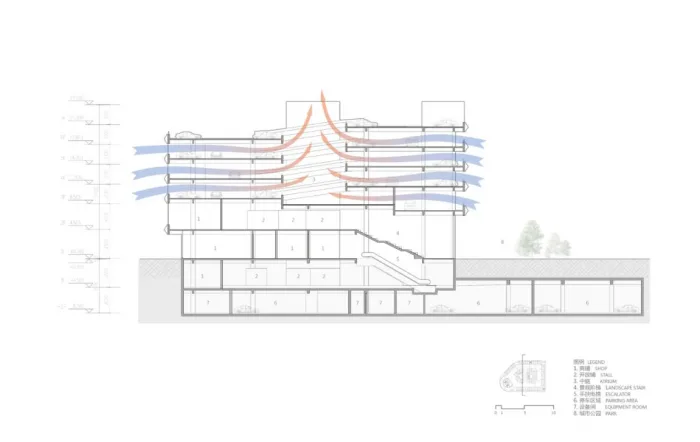
Analysis diagram © GWP Architects
Pedestrian and vehicle flows are fully separated, with independent circulation systems for commercial vehicles, private vehicles, and minibuses. This design ensures flexible emergency response within the parking facility.
The infinite circulation paths are complemented by a central courtyard allowing natural light and enhancing airflow. Vehicle exhaust is vented through this naturally ventilated atrium, while oxygen replenishes via facade gaps, creating a healthy internal environment.
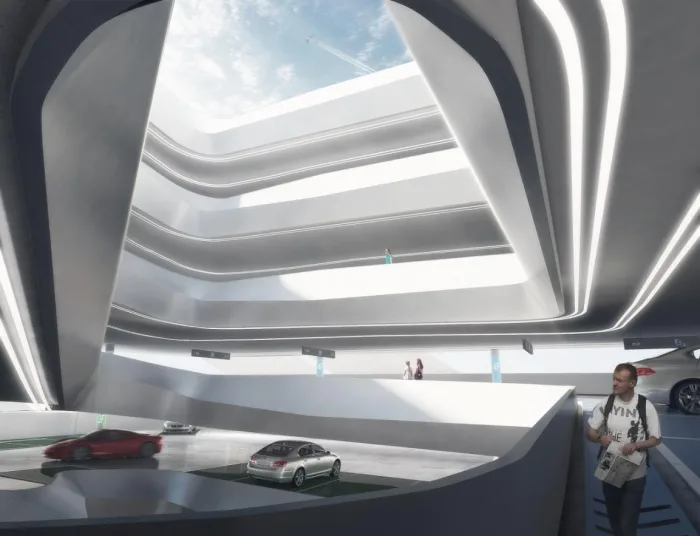
Rendering © GWP Architects
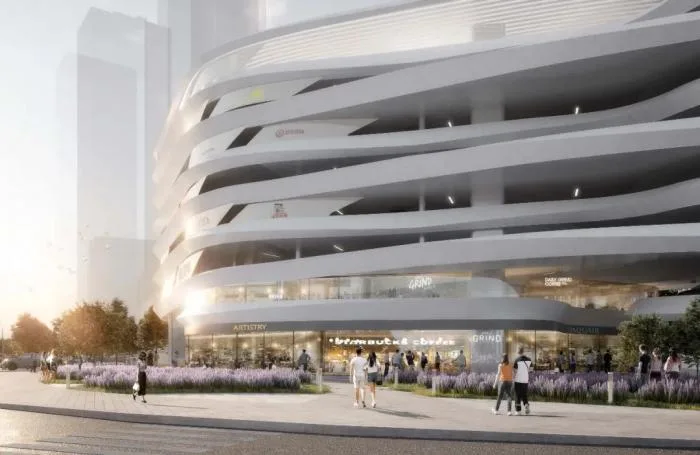
Rendering © GWP Architects
“This project demanded innovative solutions to challenges including traffic flow, parking capacity, building aesthetics, and commercial functionality within a limited site. Despite its modest scale, it rigorously tested the design team’s ability to solve complex, integrated problems. GWP delivered a unique, balanced approach, and we eagerly anticipate the project’s completion.”
— Mei Youyao, Planning and Management Manager, Dongshi Group, Registered Urban Planner
Public Commercial Spaces
Following extensive discussions with the client, the design team allocated the first two floors, basement level, and rooftop for public commercial use. These areas create vibrant spaces where visitors can linger, interact with the building, and engage with the city beyond simply parking their vehicles.
The first two floors and basement form concentrated commercial zones that can be flexibly subdivided or opened into large retail spaces to accommodate diverse tenants. A north-south elevated pedestrian corridor on the first floor connects the central square with a city park to the south, integrating the building into the city’s slow traffic network.
The rooftop is designed as a distinctive commercial space—a creatively planned fifth facade offering continuous visual dialogue with the surrounding landscape. This approach redefines the traditional concept of a parking structure, transforming it into a community hub and social space.
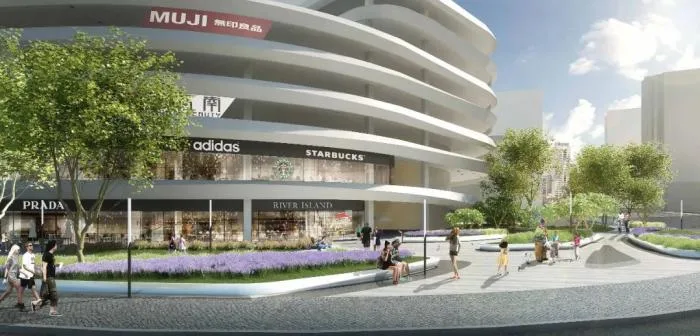
Rendering © GWP Architects
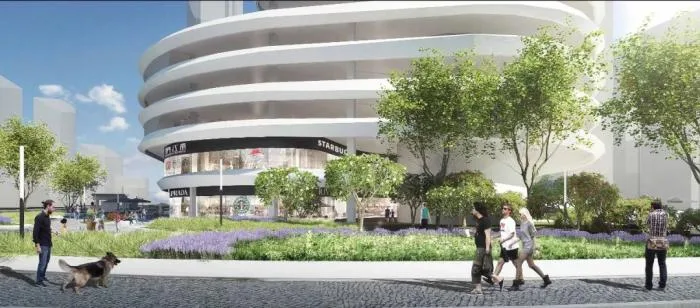
Rendering © GWP Architects
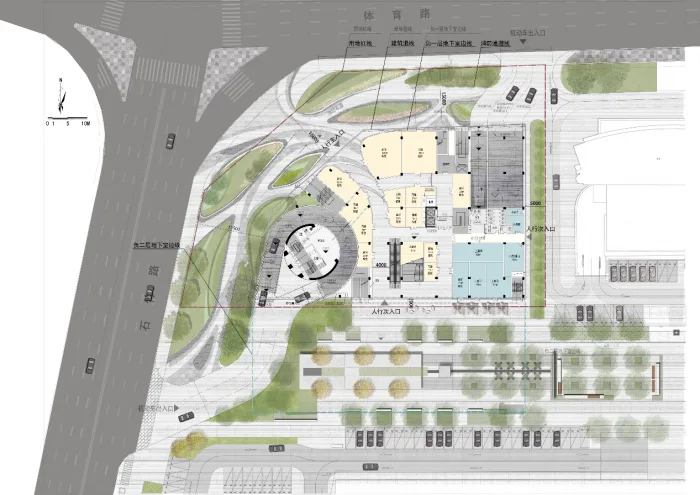
First Floor General Plan © GWP Architects
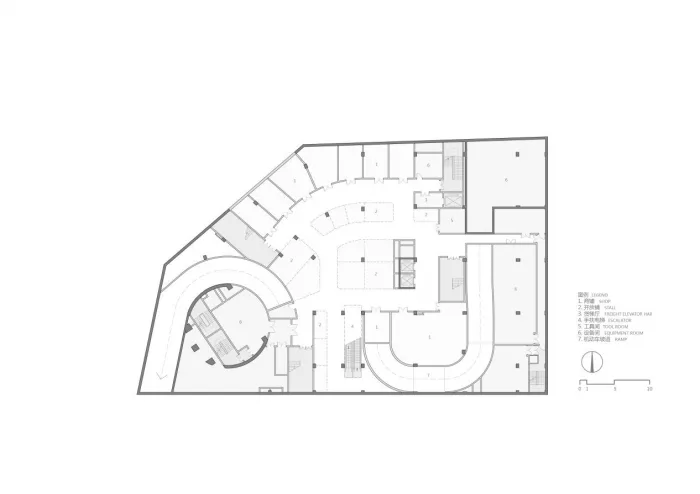
Basement Floor Plan © GWP Architects
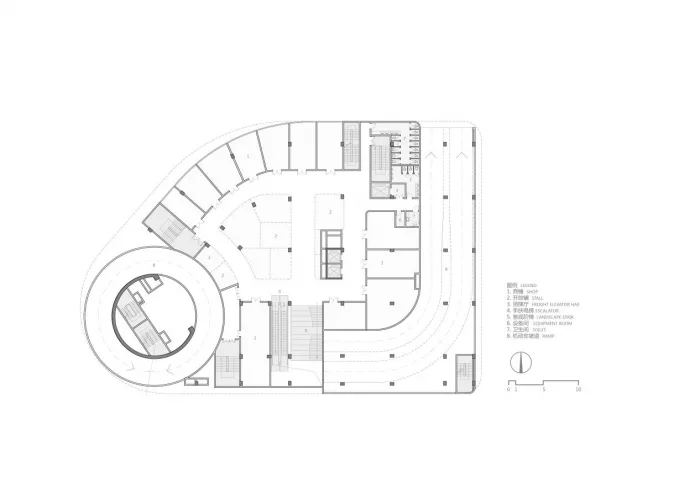
Second Floor Plan © GWP Architects
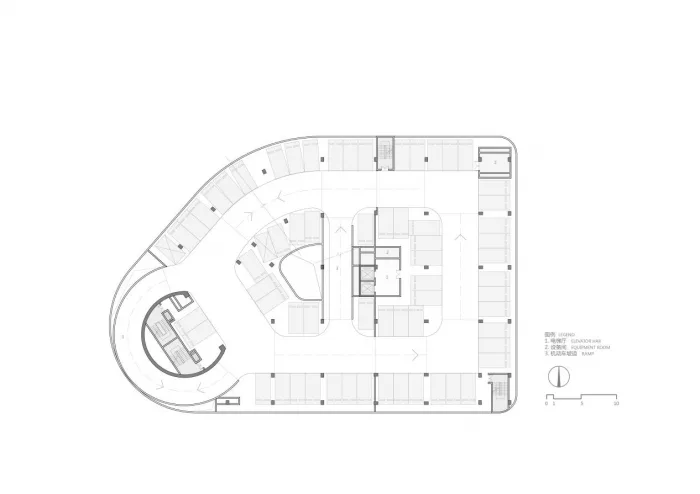
Fourth Floor Plan © GWP Architects
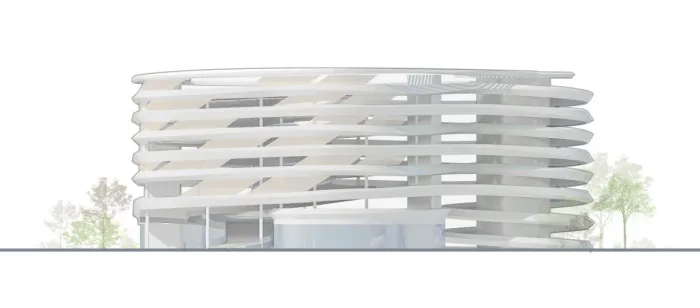
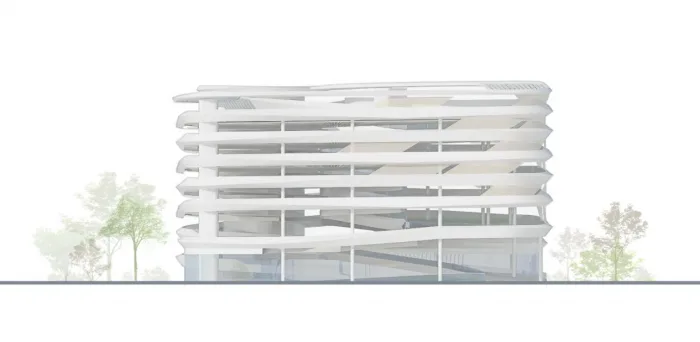
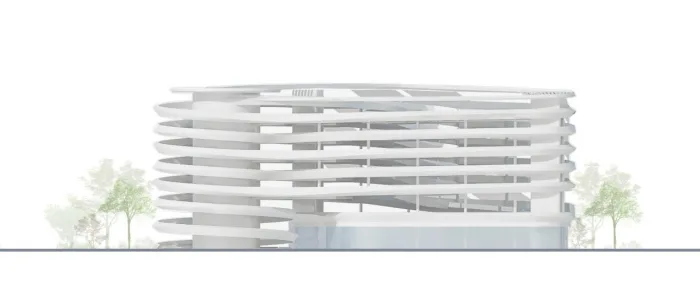
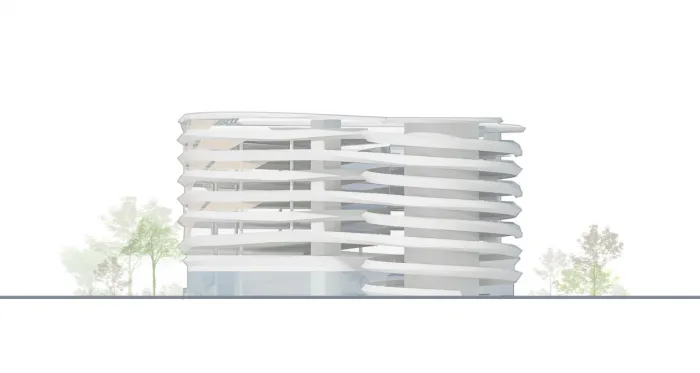
Parking Building Elevation © GWP Architects
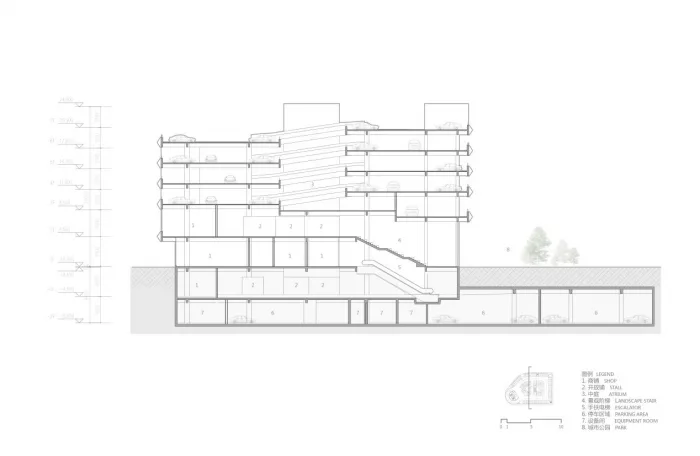
Parking Building Section © GWP Architects
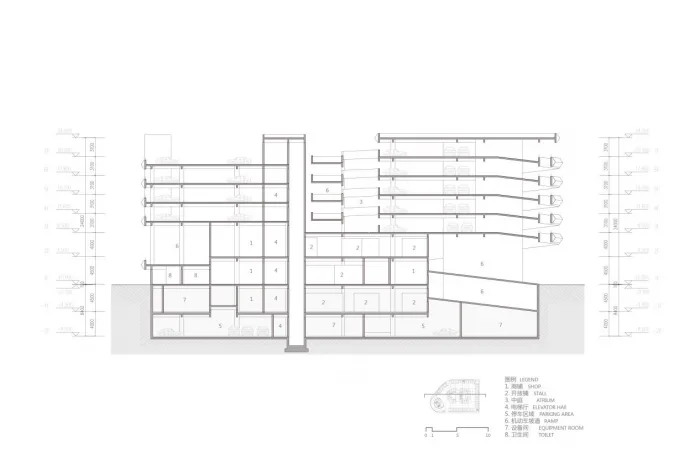
Parking Building Section © GWP Architects
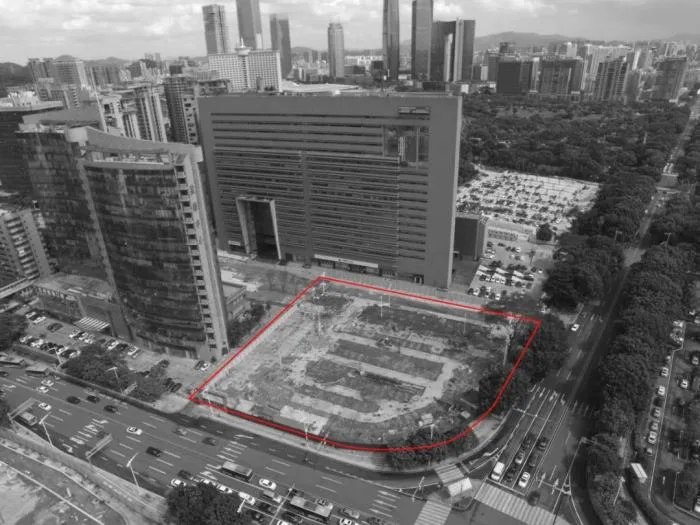
Site photo © GWP Architects
Project Details:
Location: Dongguan, Guangdong, China
Design Year: 2019; Construction started July 2020
Total Building Area: 20,575 square meters
Architectural Design: GWP Architects, Yuanshang Design Consulting (Hong Kong) Group Limited
Lead Architects: John Zhang, Zhang Guowei
Project Investment: Dongguan Industrial Investment Holding Group Co., Ltd
General Contractor: Dongguan Guancheng Construction Engineering Co., Ltd
Construction Drawings: Dongguan Jianqing Architectural Design Institute
Main Materials: Concrete, GRC, Glass
Lead Designer:
Guowei Zhang (John)
Partner, Lead Architect & President of GWP
Director, Harvard University South China Alumni Association
Chairman, Huaying Association DEC Youth Design Development Program
Design Philosophy
The philosophy centers on poetic dwelling and harmonious coexistence, blending traditional Eastern culture with modern technology. Through research and diversified exploration, the design seeks optimal solutions that balance depth, breadth, and overall project value.
Awards:
- 2020 MUSE Architectural Design Award – Platinum (USA)
- 2020 MUSE Design Award: Platinum Winner (USA)
- 2020 German Iconic Design Award – Innovative Architecture (Germany)
- 2020 ICONIC AWARDS: Innovative Architecture Winner (Germany)
- INSIDE International Design Award (Netherlands)
- INSIDE World Festival of Interiors (Netherlands)
- World Interior News Awards (UK)
- Best Design Award at Barcelona Design Week 2019 (Spain)
- REARD Global Real Estate Design Award (China)
- Best Design Award at St. Petersburg Design Week 2019 (Russia)
- BOY (Best of Year) Interior Design Award from Interior Design Magazine (USA)












Must log in before commenting!
Sign Up