
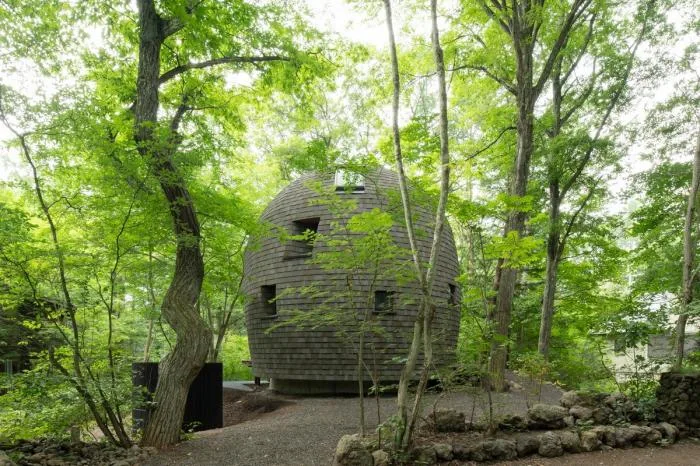
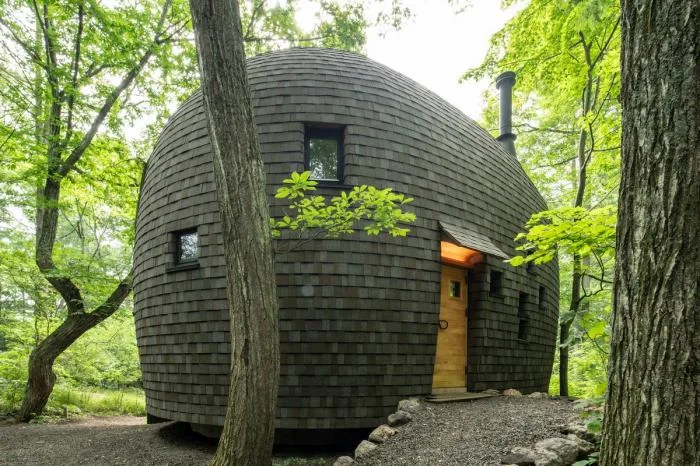
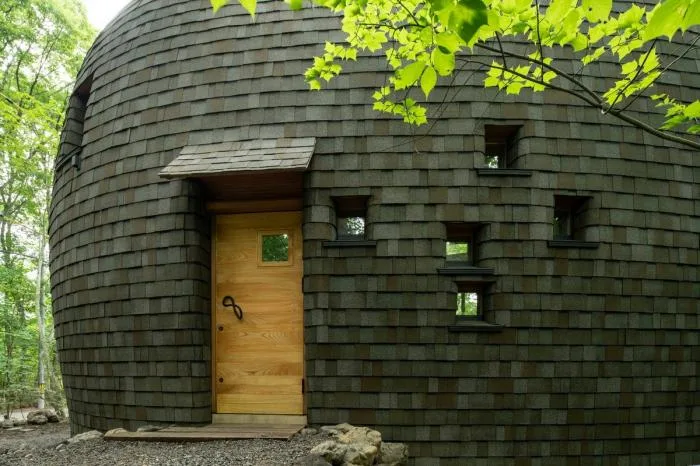
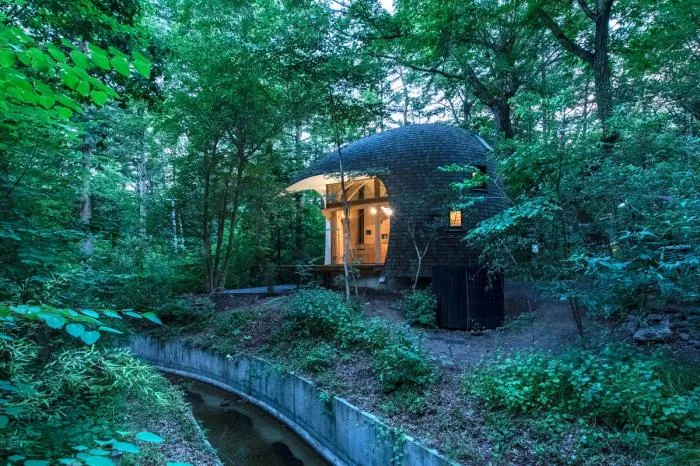
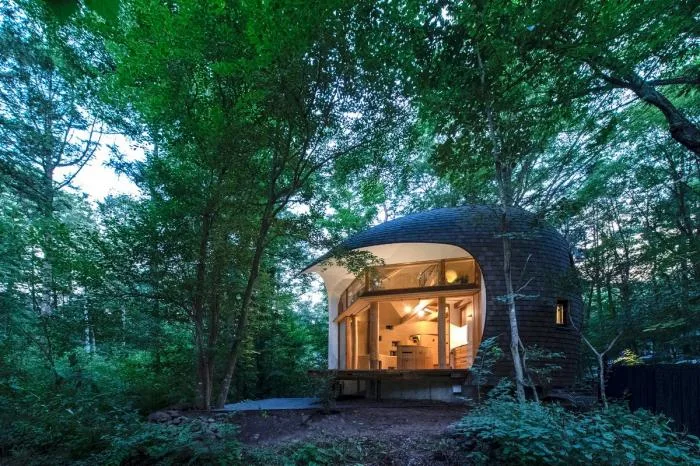
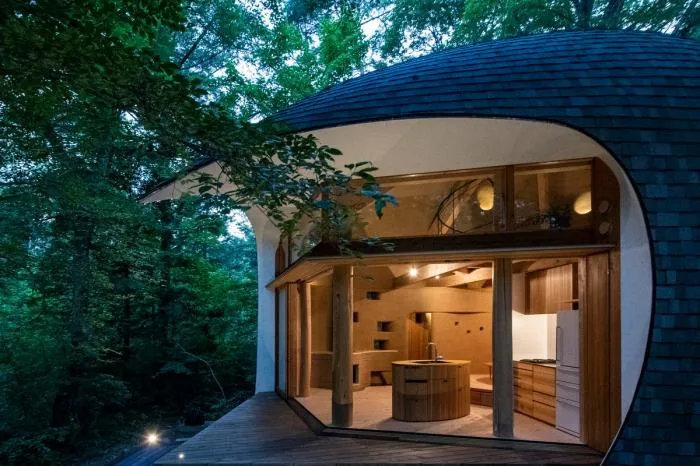
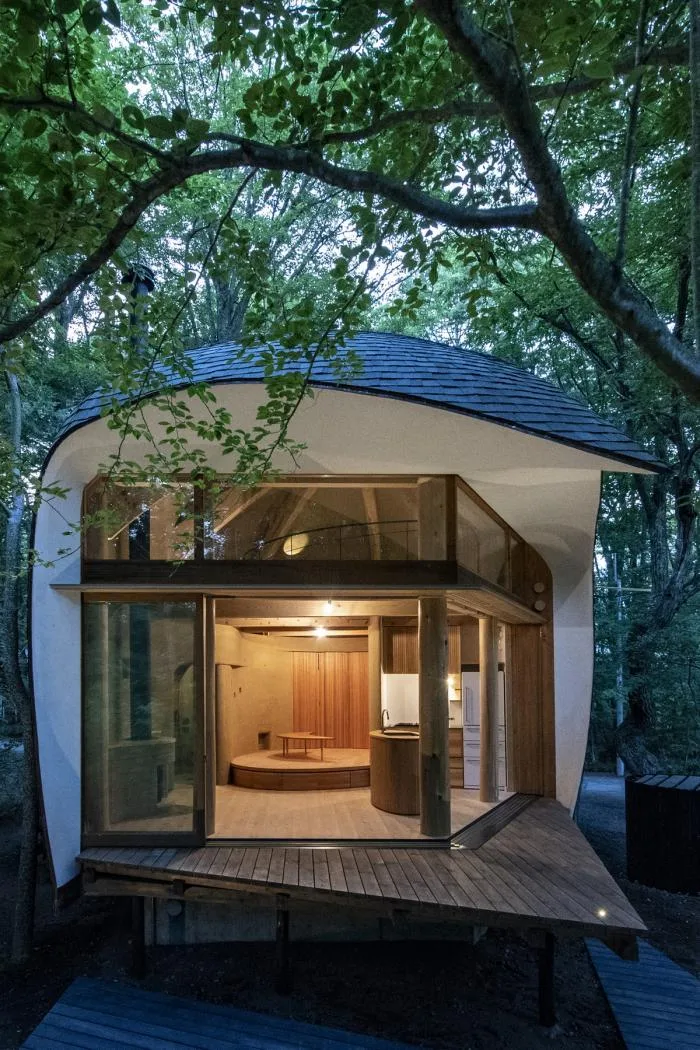
This unique small villa is nestled in the forest of Nagano Prefecture, central Japan. Constructed using local wood, clay, and traditional techniques, the design reflects a contemporary approach while maintaining a connection to nature. The client requested a distinctive and aesthetically pleasing building that avoids outdated styles. Additionally, the design complies with strict landscape regulations, including setback lines and a 20% building plot ratio on the 290 square meter site.
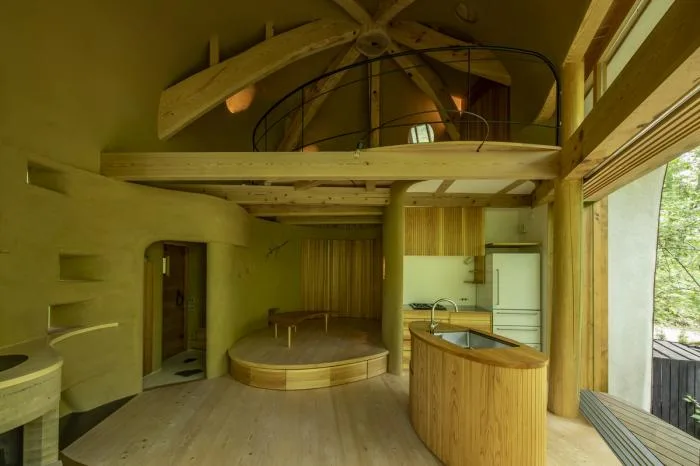
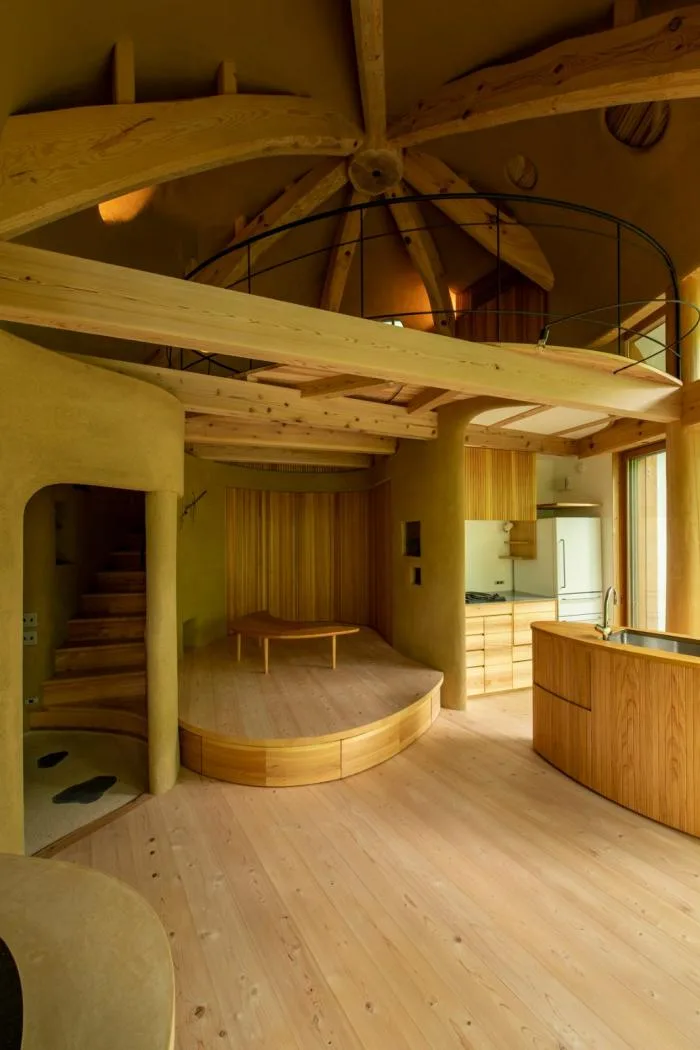
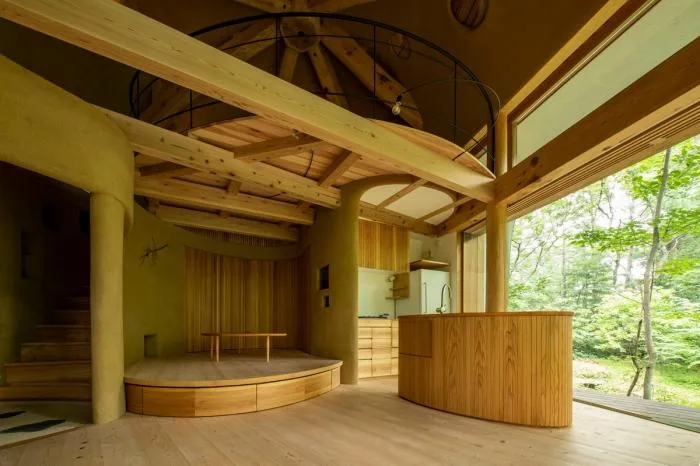
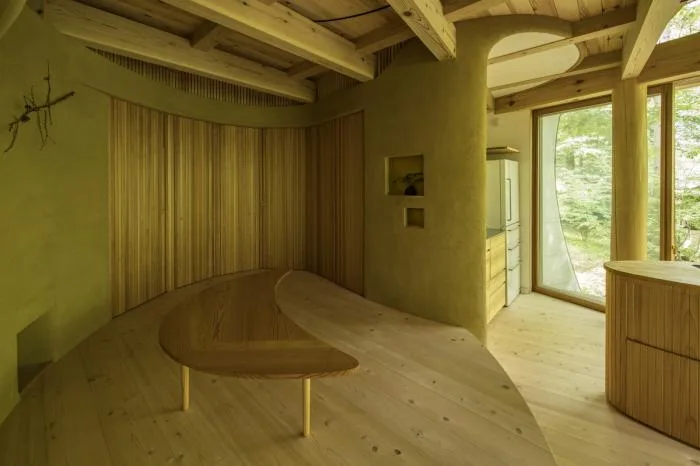
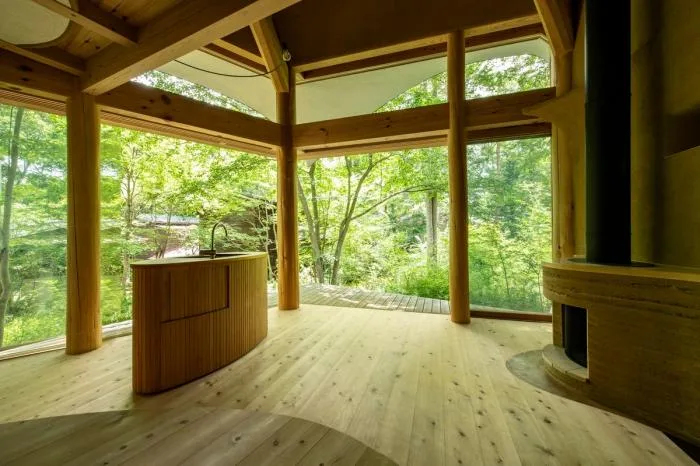
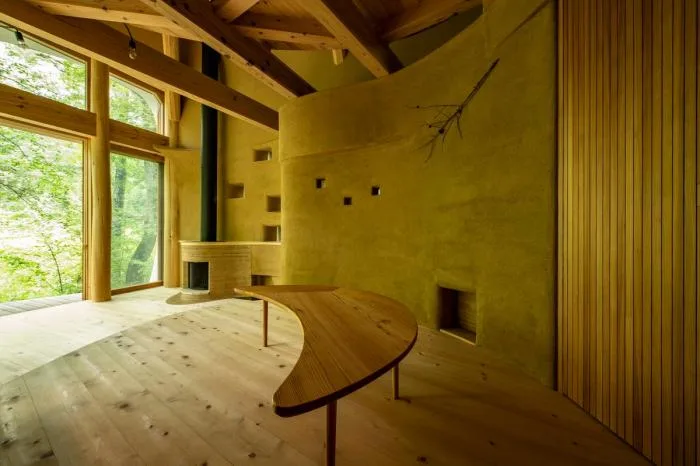
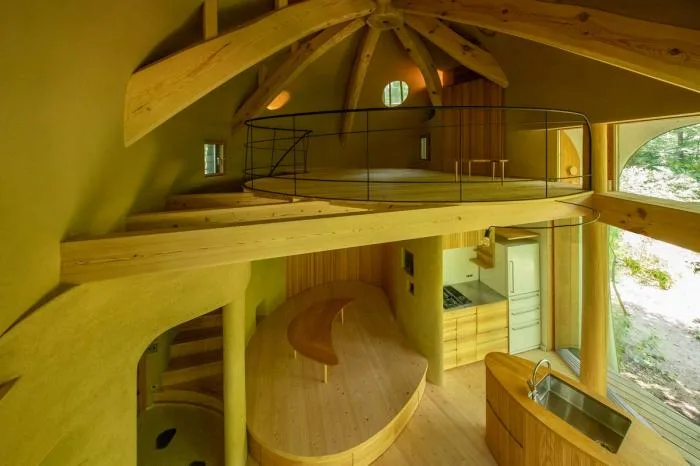
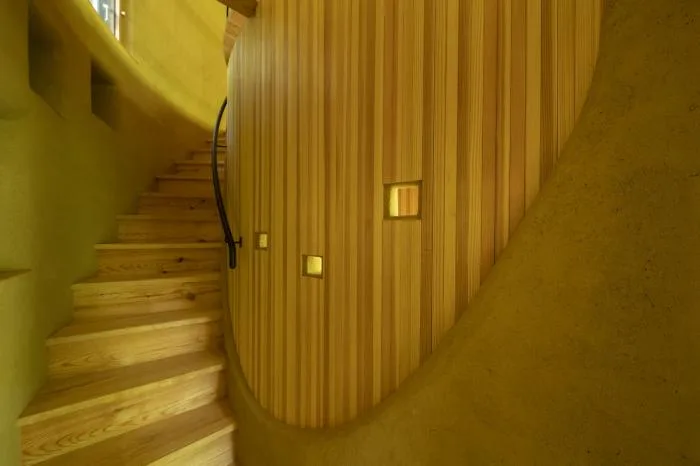
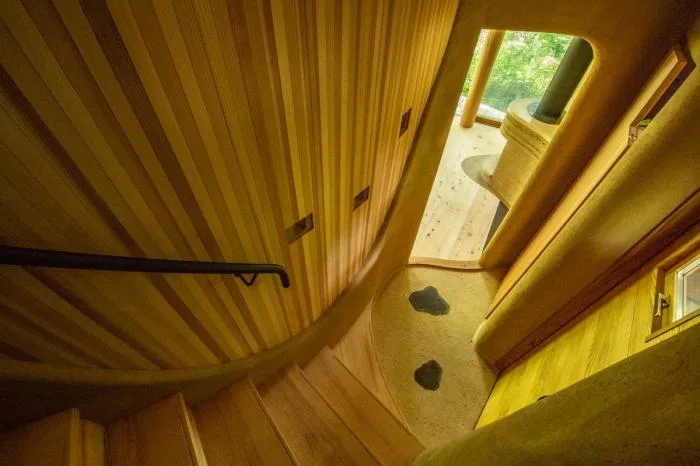
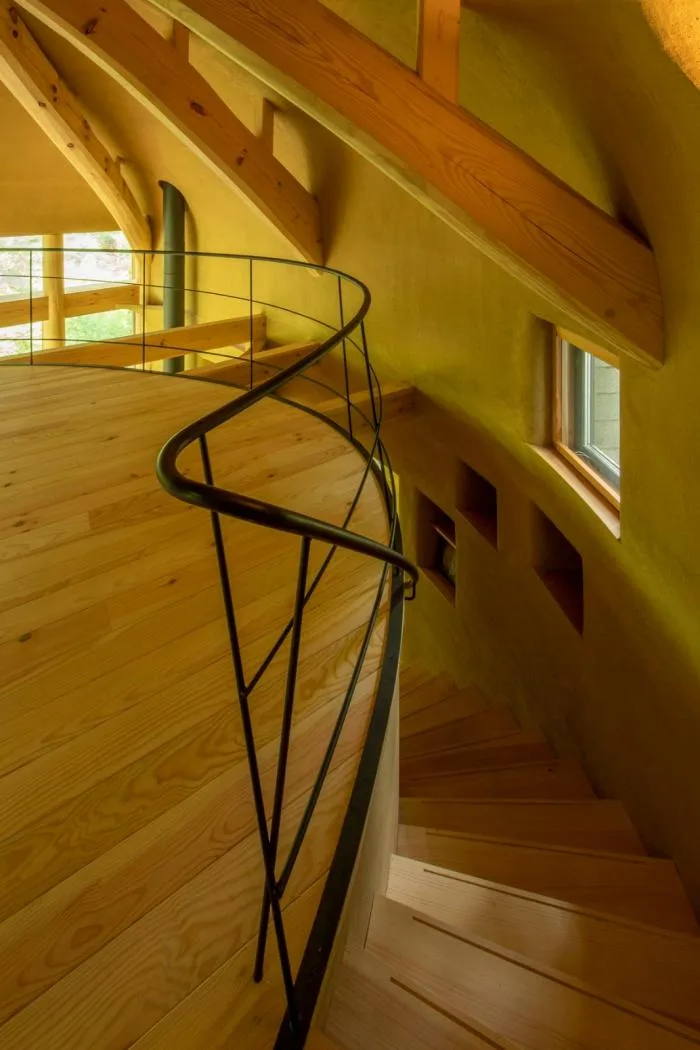
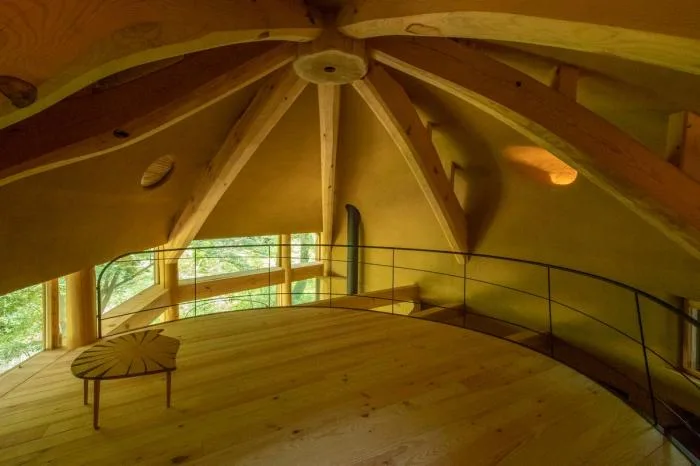
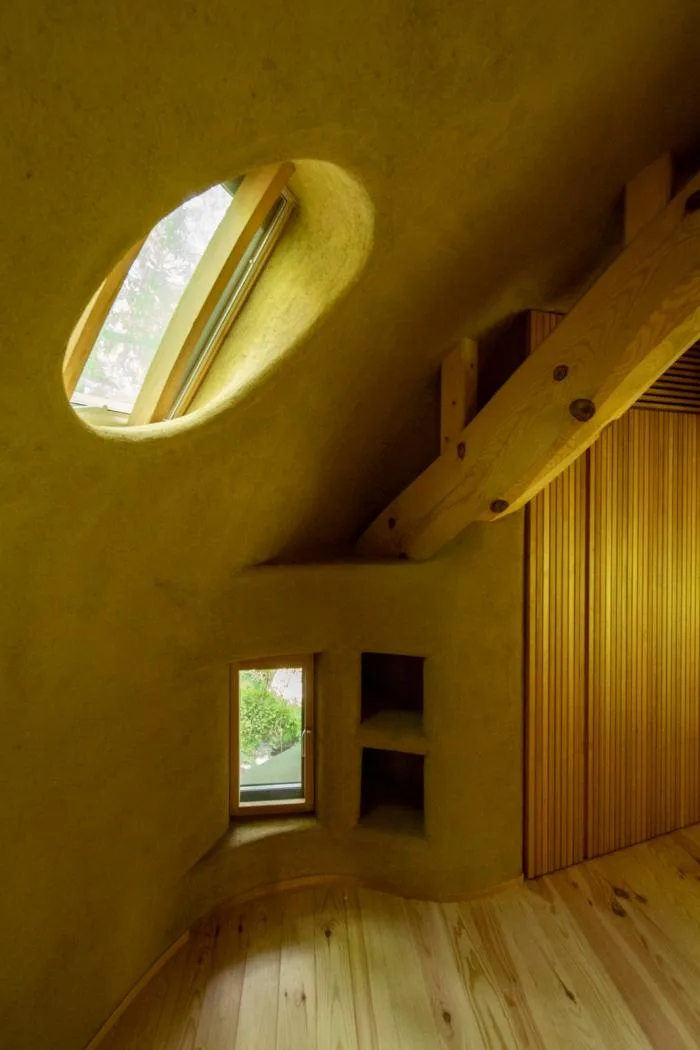
Taking the site’s environment into account, the north and west sides of the building, which face busy tourist areas and waterways, are enclosed for privacy and protection. In contrast, the south and east sides open fully to maximize natural light and heat ventilation. The building’s organic shapes on these sides blend seamlessly with the surrounding forest.
This residence is constructed using locally sourced FSC-certified wood, soil, and natural materials, avoiding petrochemical products entirely. This approach minimizes environmental impact and serves as a sustainable model.
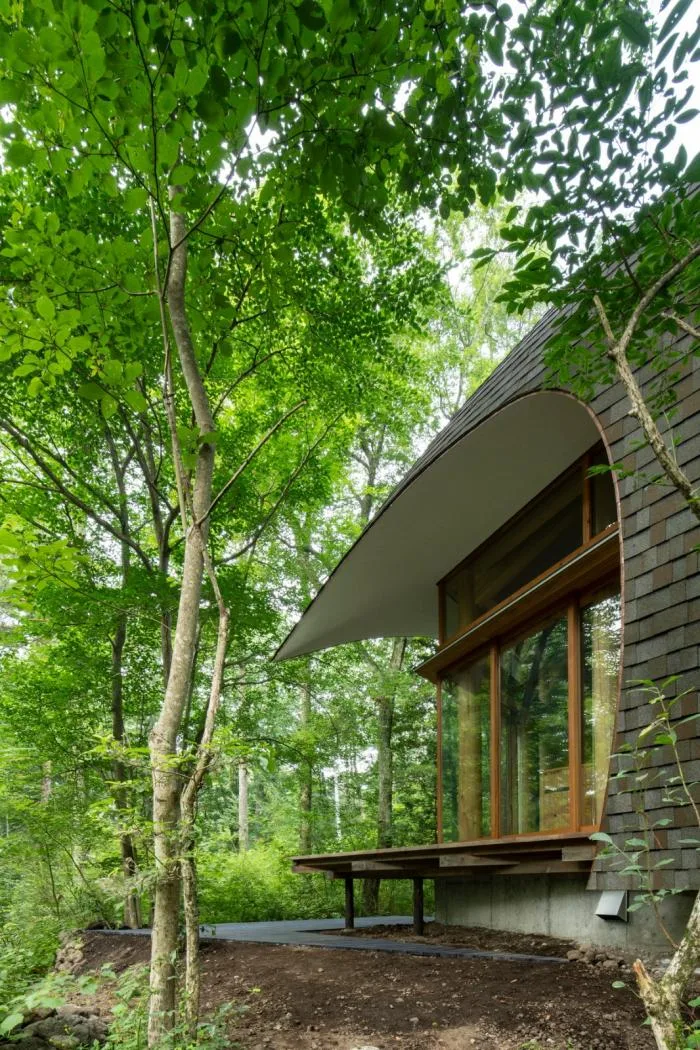
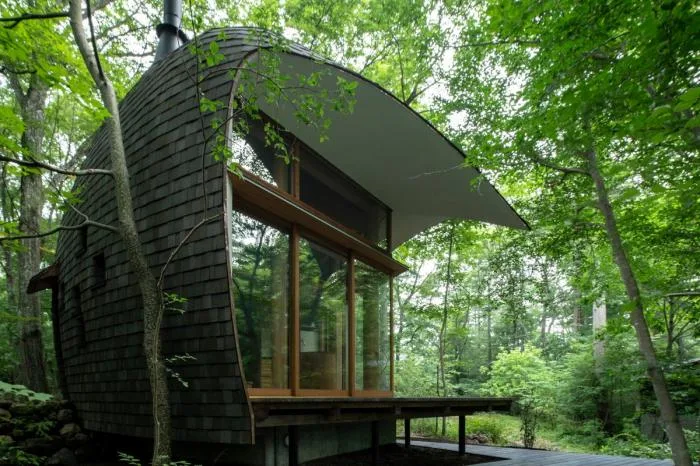
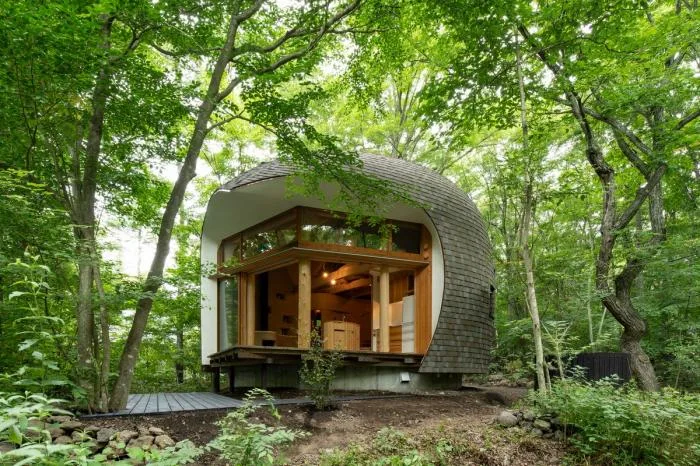
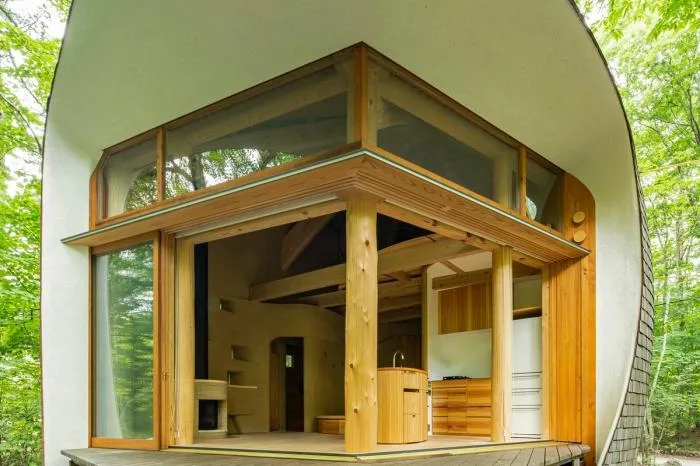
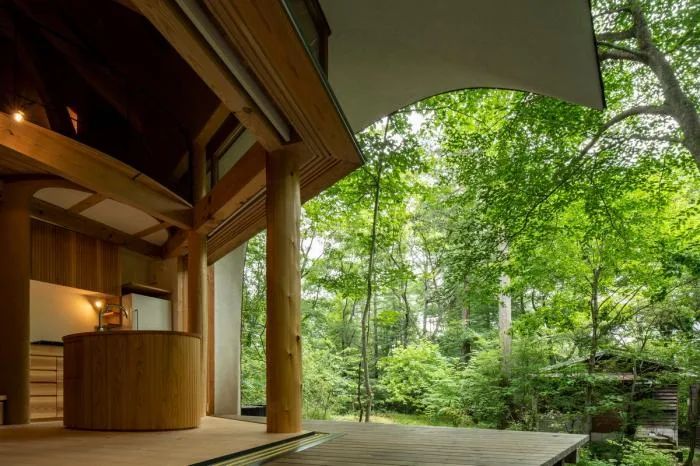
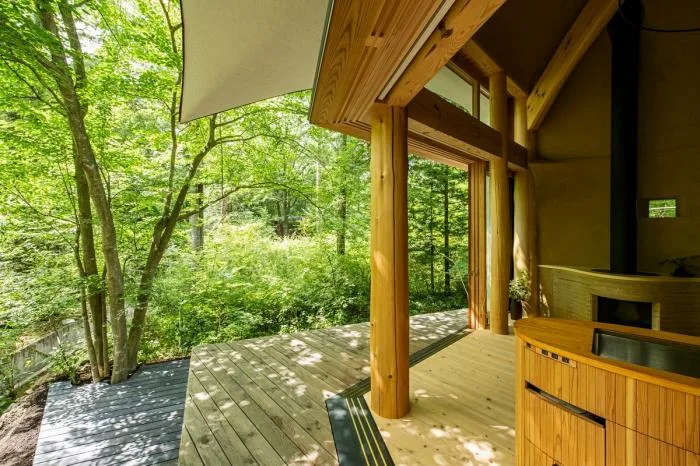
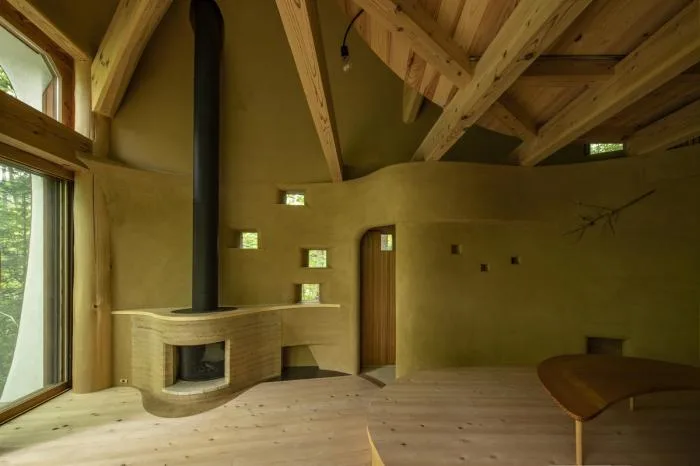
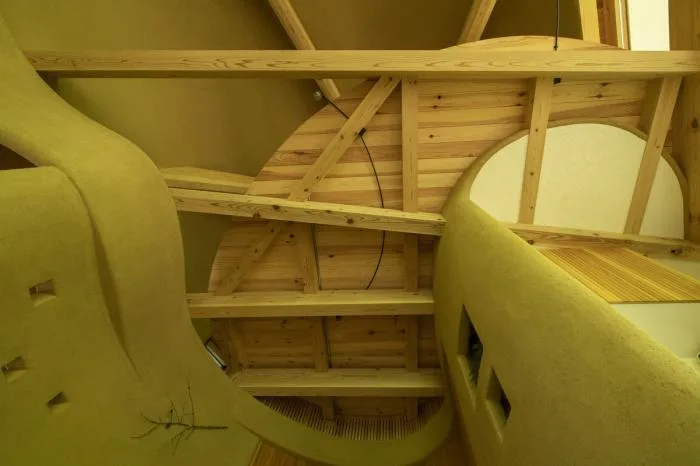
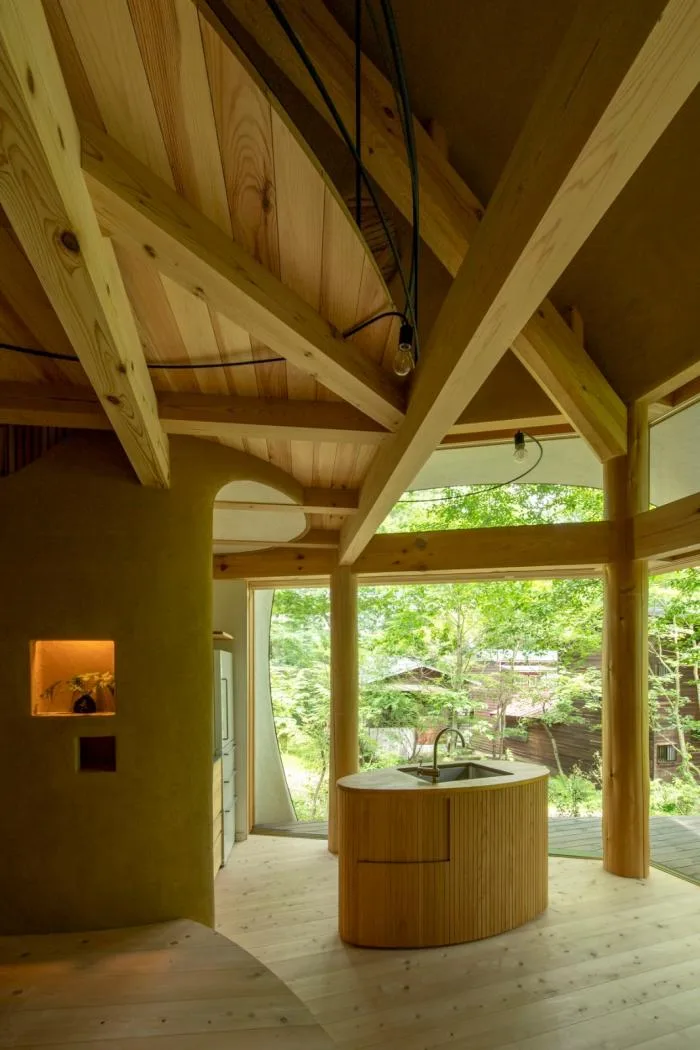
Inside, all rooms are finished with local soil and wood, creating a warm and natural atmosphere. The gently curving earth walls flow smoothly throughout the space. On the southeast side, concave wooden features extend into the forest via wooden flooring, enhancing the connection with nature.
The first-floor layout evolves with the ascending stairs, revealing bathrooms and toilets concealed behind continuous wooden doors for a streamlined look.
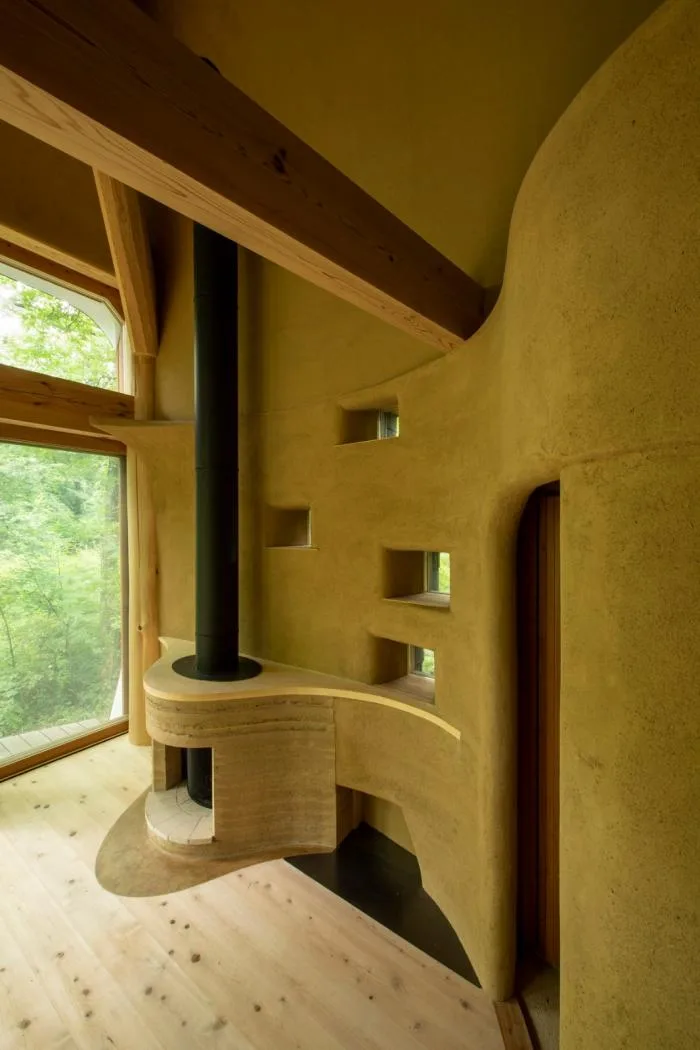
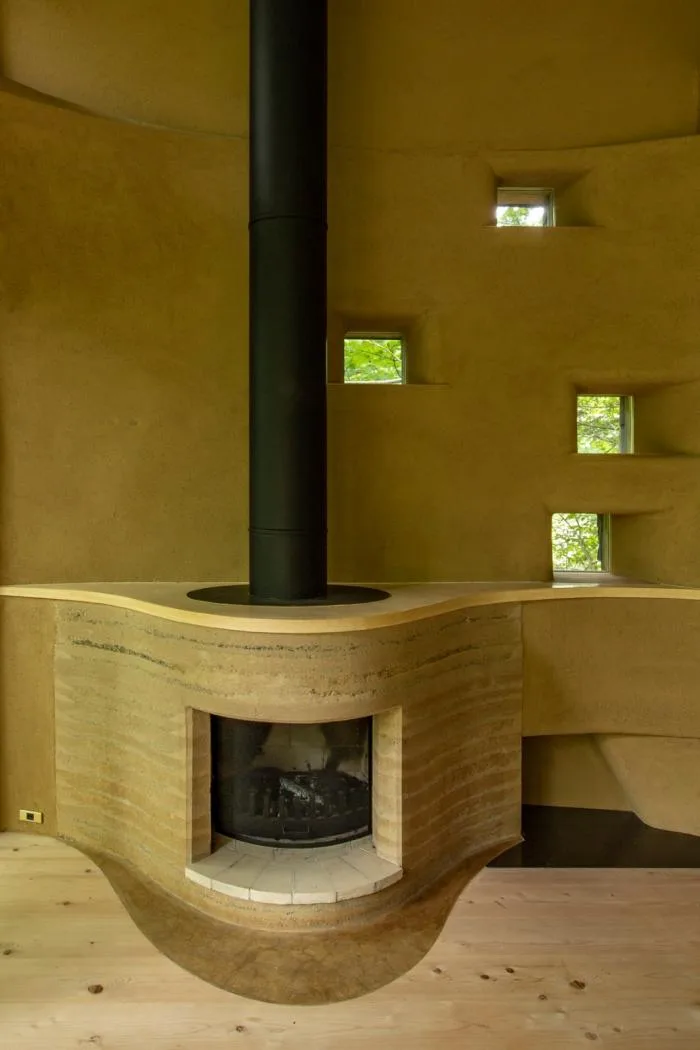
This home follows a passive design philosophy, achieving an average heat transfer coefficient (UA) of 0.49 W/(m²·K) for exterior walls, roofs, and ceilings. This rating meets the 5-star Japanese environmental assessment CASBEE S and complies with Japan’s standard of reducing primary energy consumption by 11%.
The earthen walls feature 180mm wool insulation, achieving a U-value of 0.207 W/(m²·K). Seven beams extending from the earthen wall symbolize the life cycle of humanity and the universe, accompanied by two inscribed circles representing their relationship. This design embodies both human creation and a return to nature.
Design Drawings
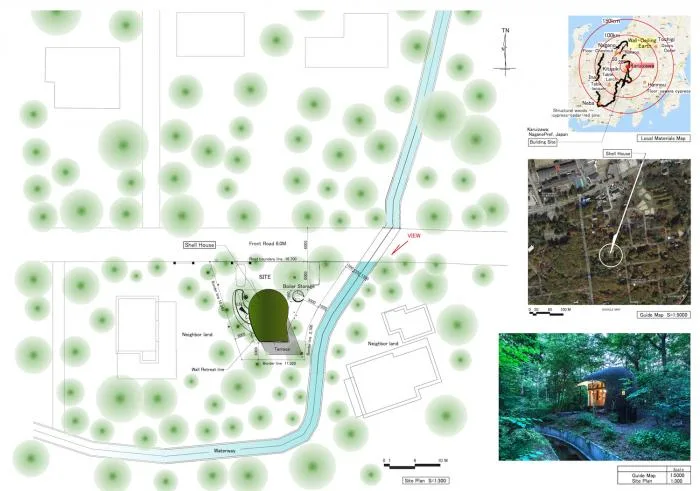
△ General layout plan
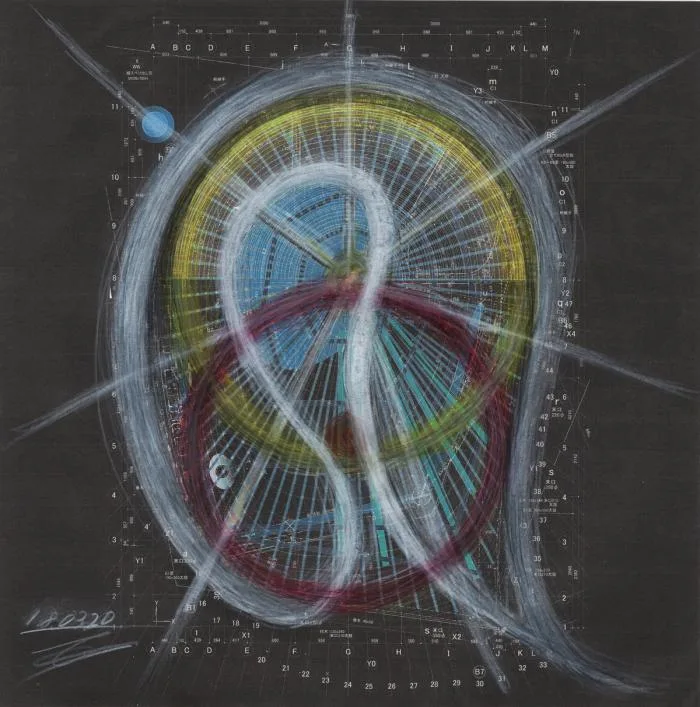
△ Design Concept
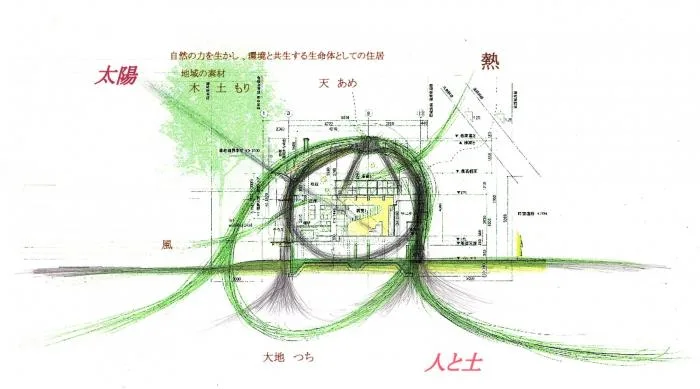
△ Design Concept
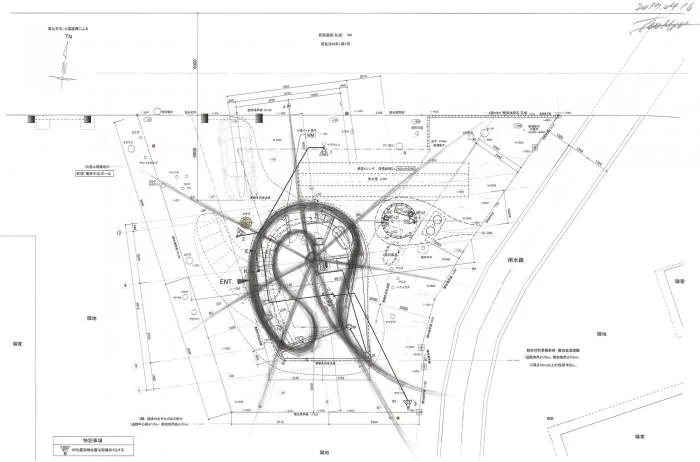
△ Plan view
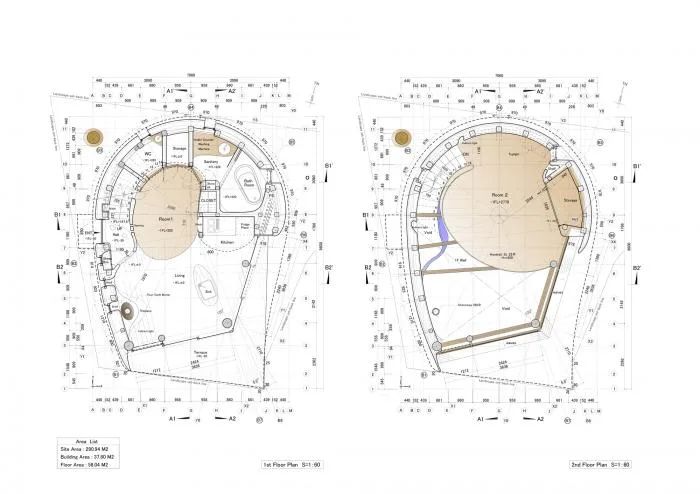
△ Plan view
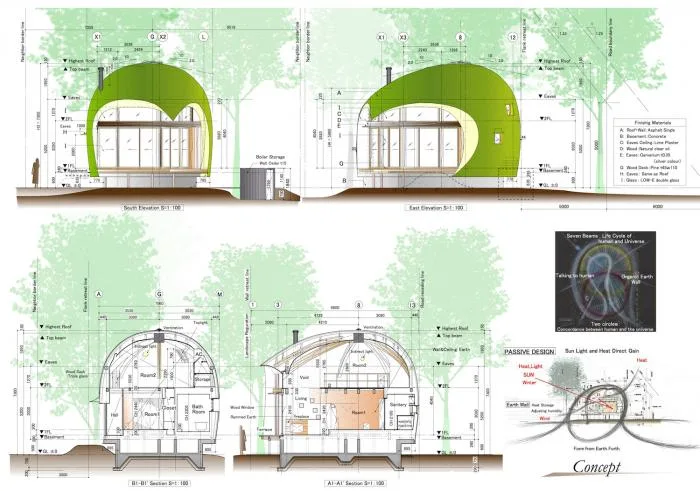
△ Section diagram
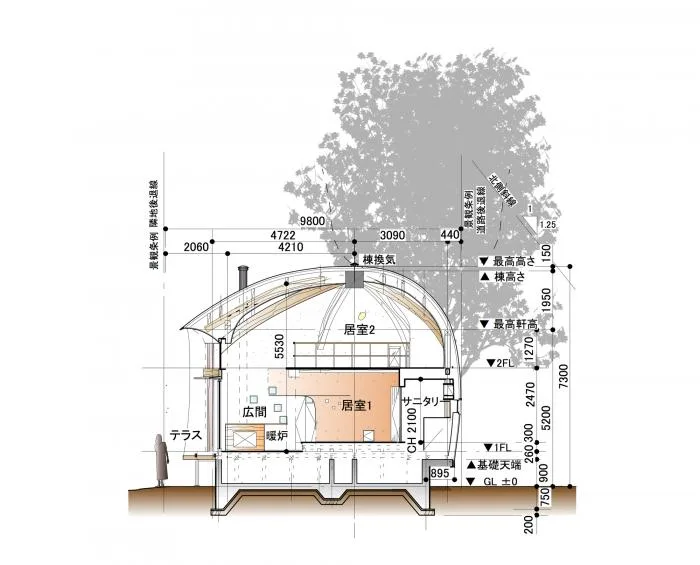
△ Section diagram
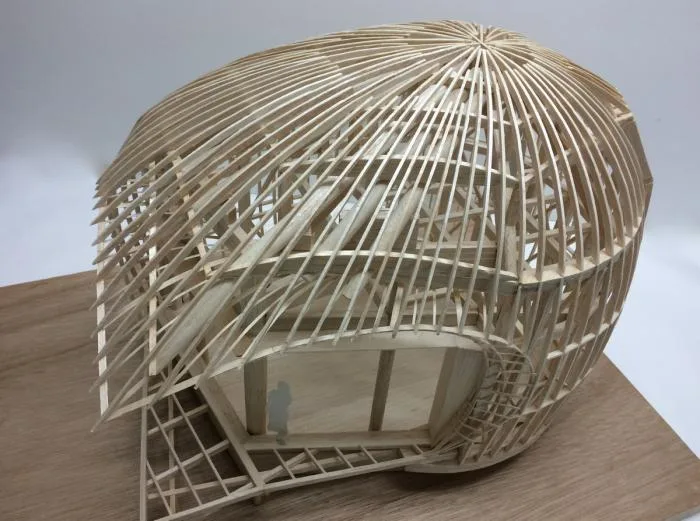
△ Model
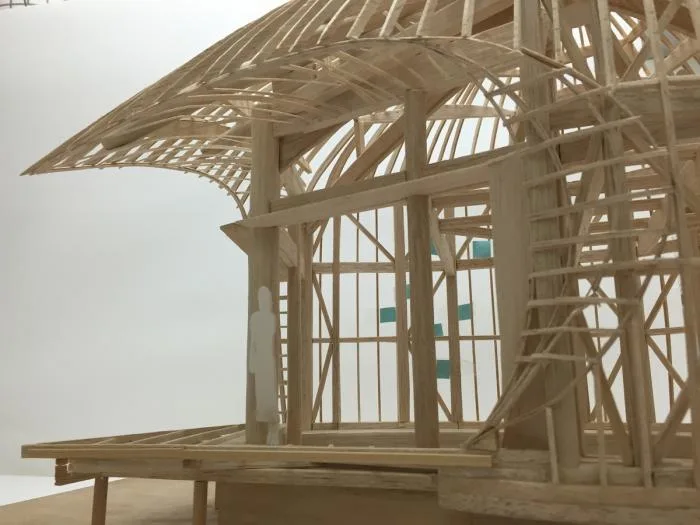
△ Model
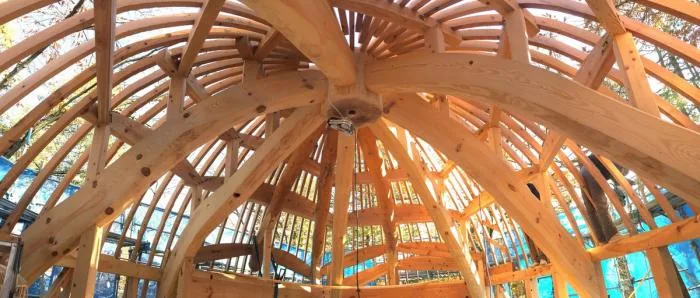
△ Construction process
Project Information
Project type: Independent residential building
Location: Japan
Architectural firm: Tono Mirai Architects
Area: 38m²
Year: 2018
Photographer: Takeshi Noguchi
Lead Architect: Tono Mirai
Design team: Tono Mirai Architects
Construction company: Terashima Construction Company












Must log in before commenting!
Sign Up