
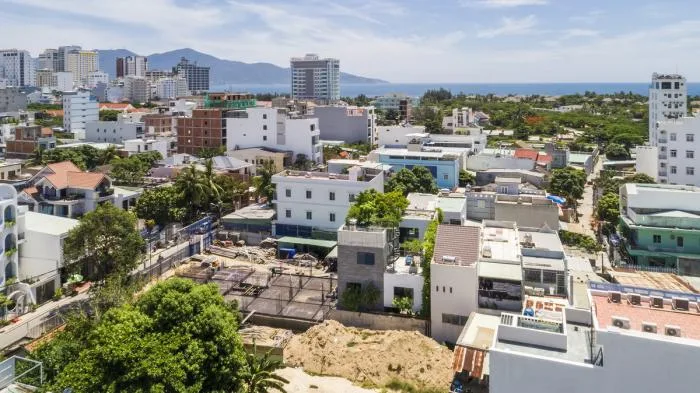
This residence draws inspiration from the architect’s childhood dream of building a countryside villa in the heart of Da Nang. It is surrounded by lush tropical plants, expansive grasslands, and fresh air, creating a serene living environment.
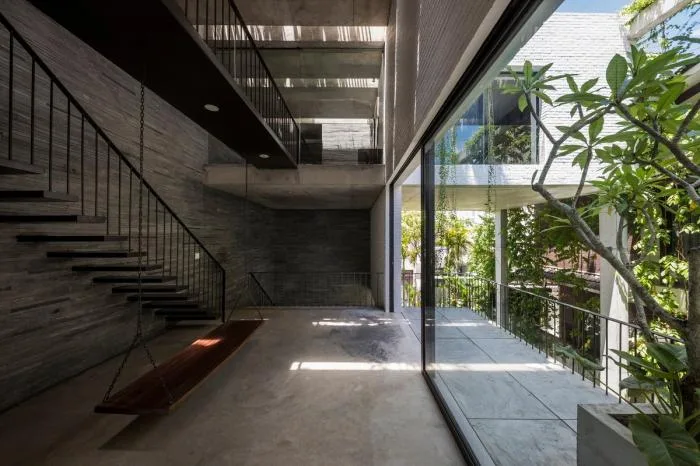
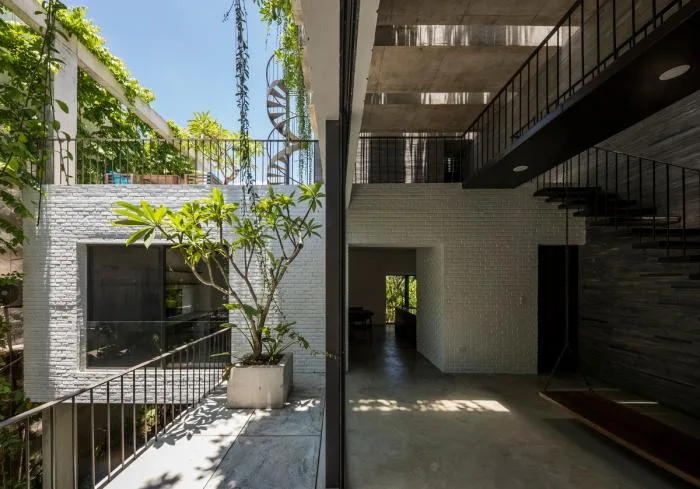
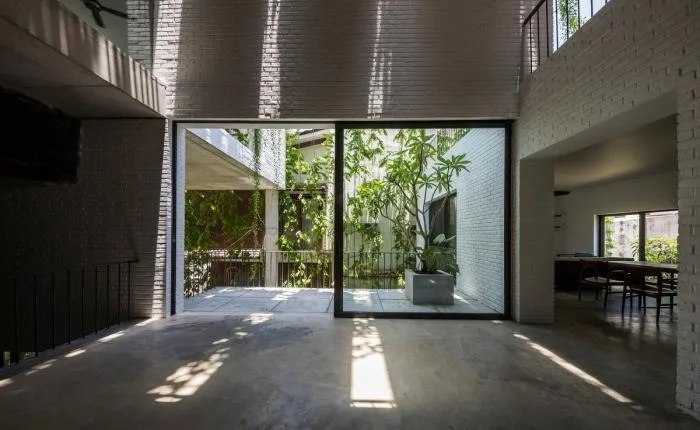
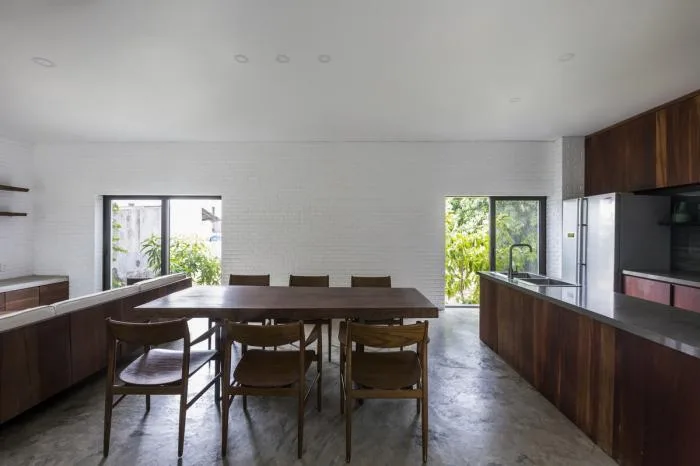
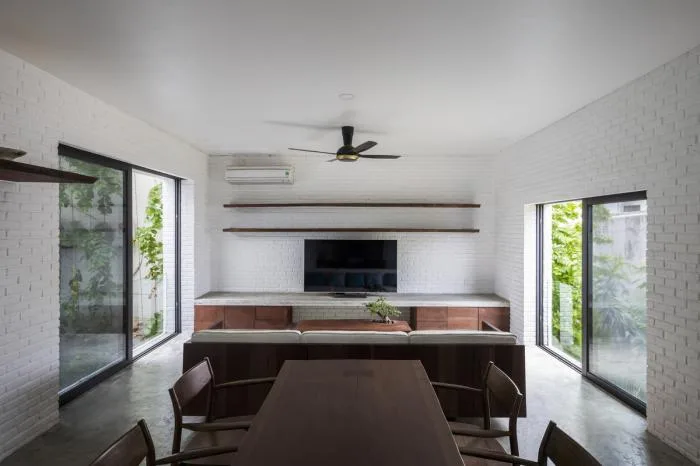
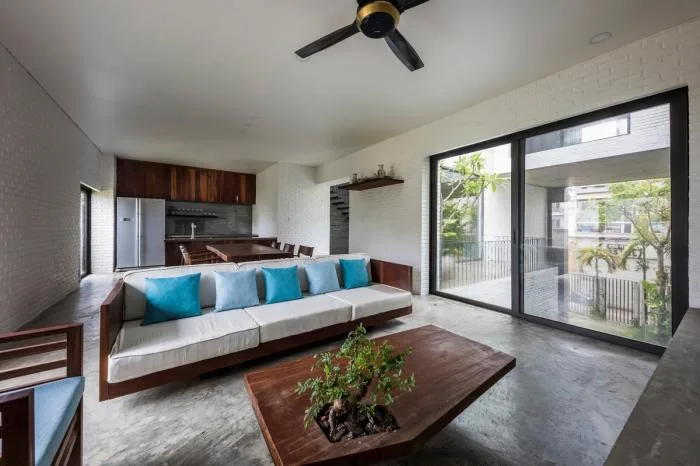
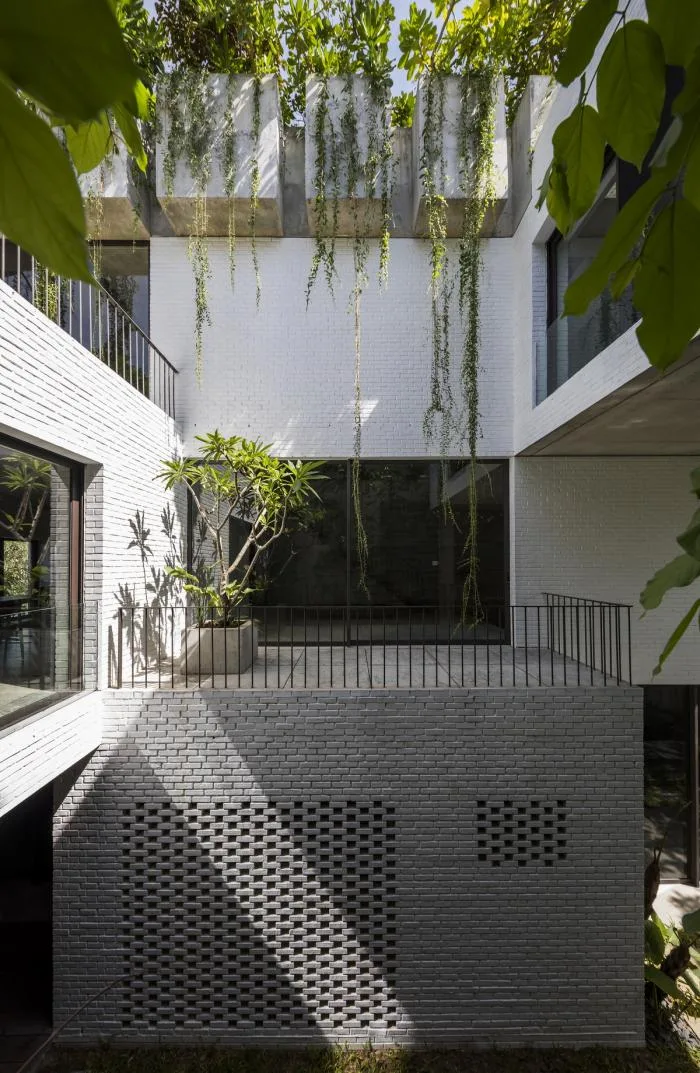
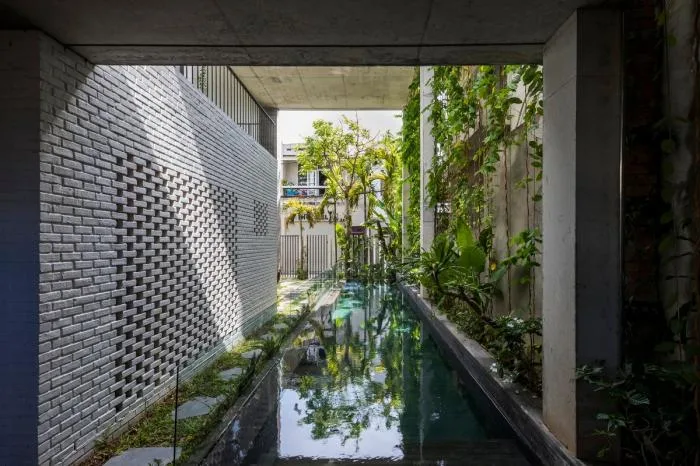
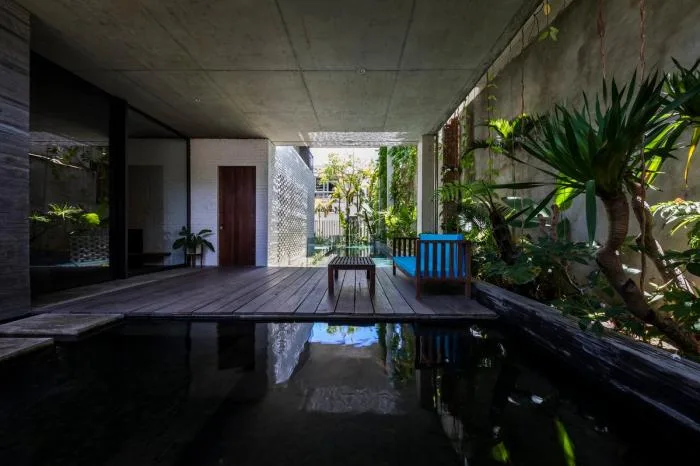
The design team was challenged to develop a solution for a compact 250 square meter plot. Their strategy divides the land into two parallel sections to create a breathable “green lung”: one side serves as a garden with a large green wall, while the other houses the living spaces. Most windows and doors face this green lung, allowing natural light, fresh air, and the scent of flowers and grass to fill every room.
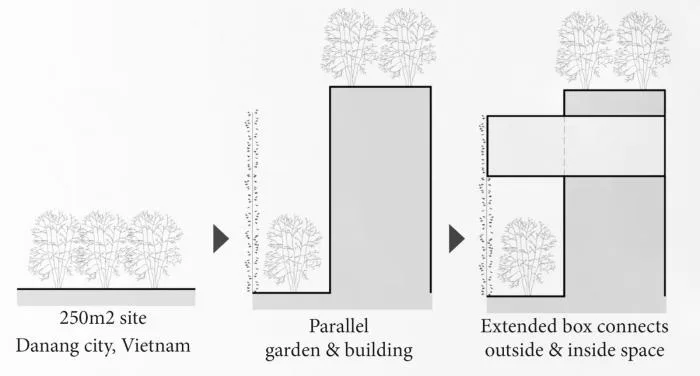
Concept Analysis
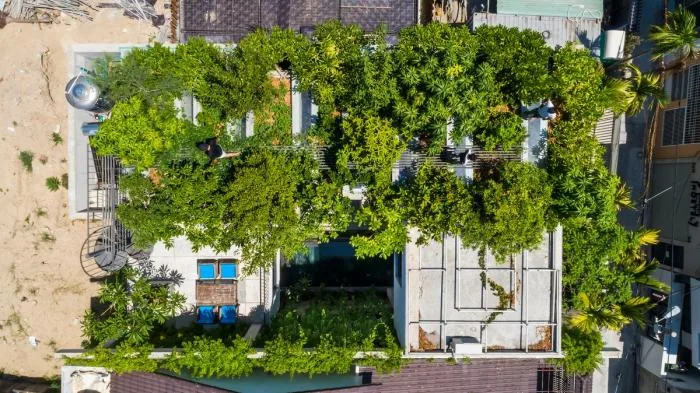
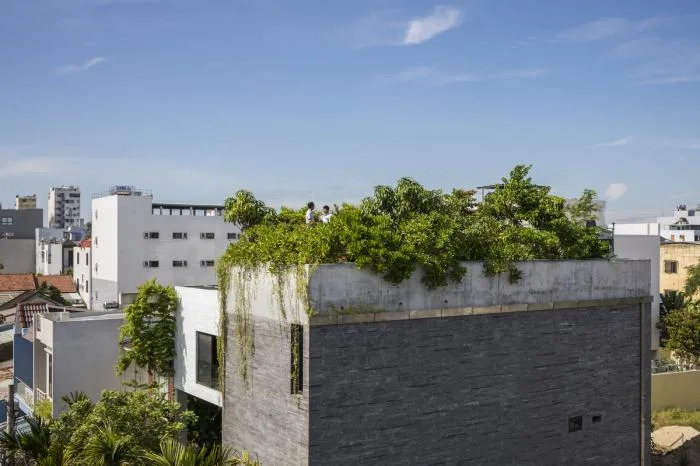
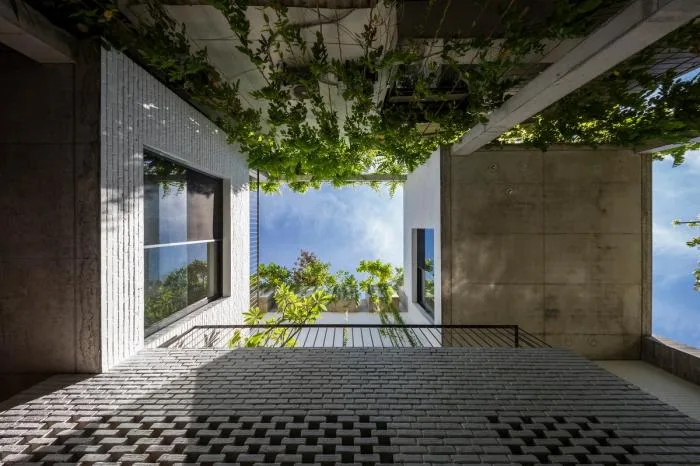
The green space lost due to construction is compensated by a rooftop water orchard, which absorbs sunlight and offers shelter to the building. This rooftop garden features nine tree boxes separated by gaps, maximizing greenery under natural day and night light. Beyond enhancing urban greenery, it supports urban agriculture by providing fresh daily vegetables and fruits for the family. This blend of agriculture and panoramic coastal city views offers a peaceful retreat from the bustle of urban life.
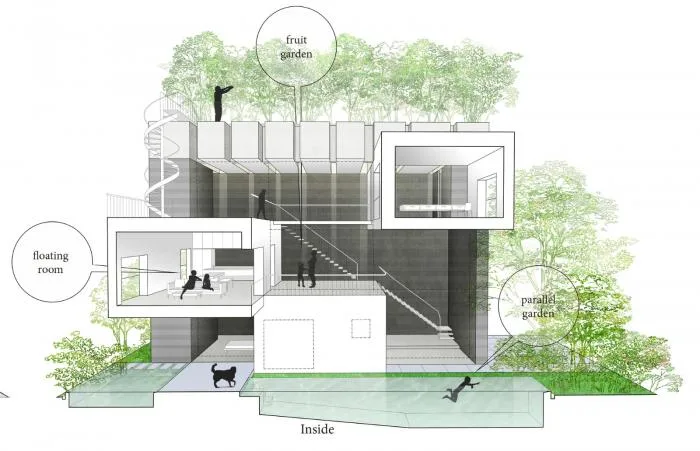
△ Profile concept
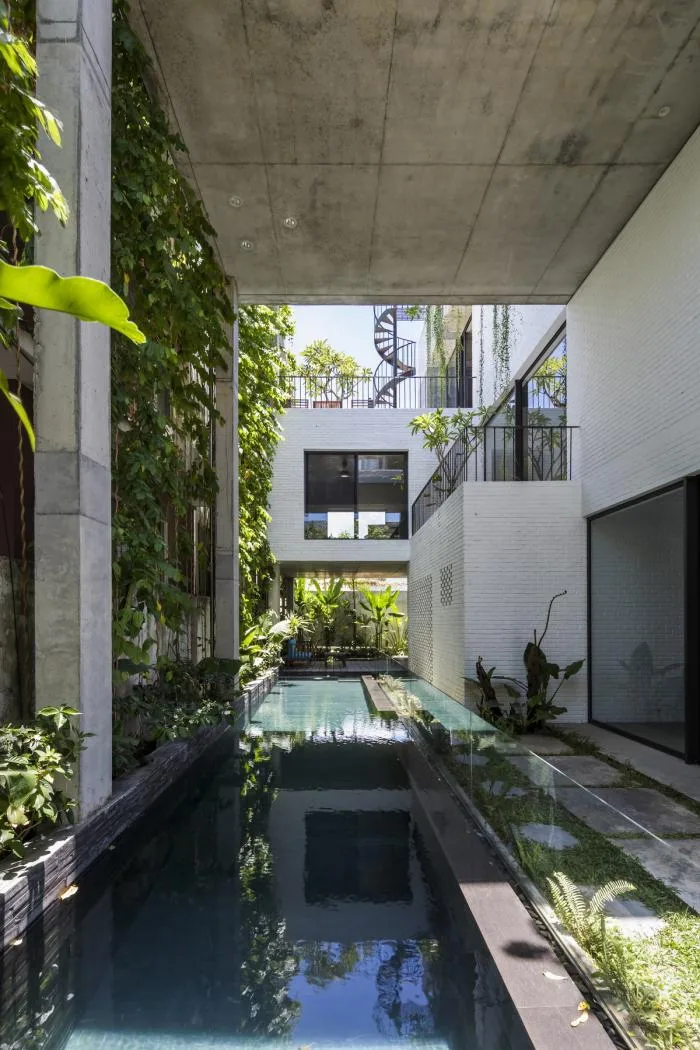
To enhance sustainability, the residence incorporates an automatic watering system that recycles water between the fish pond and rooftop garden. Solar hot water and solar panels are installed on the roof to supply energy for the household. The design aims for self-sufficiency in producing green food while minimizing energy consumption.
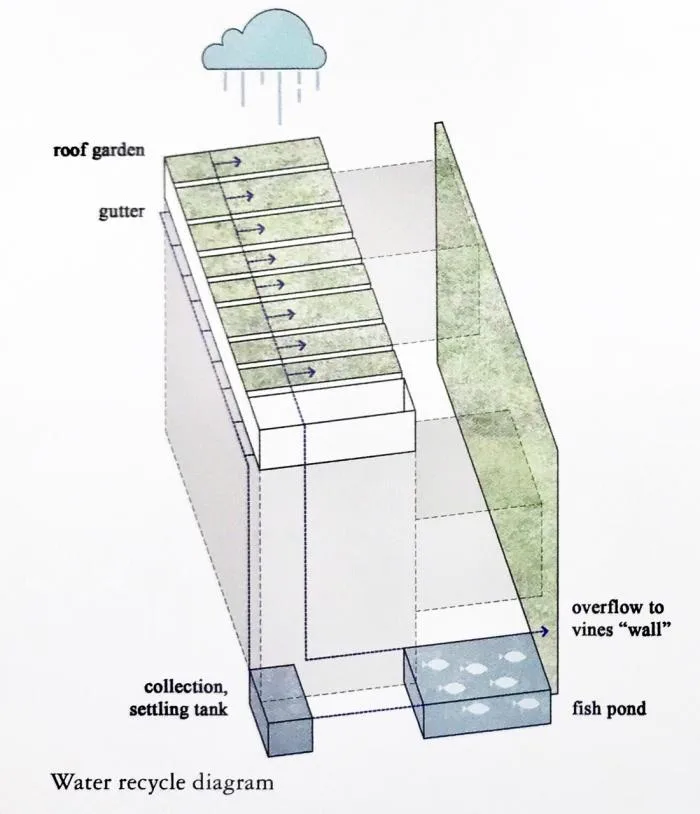
Resource Recycling Analysis
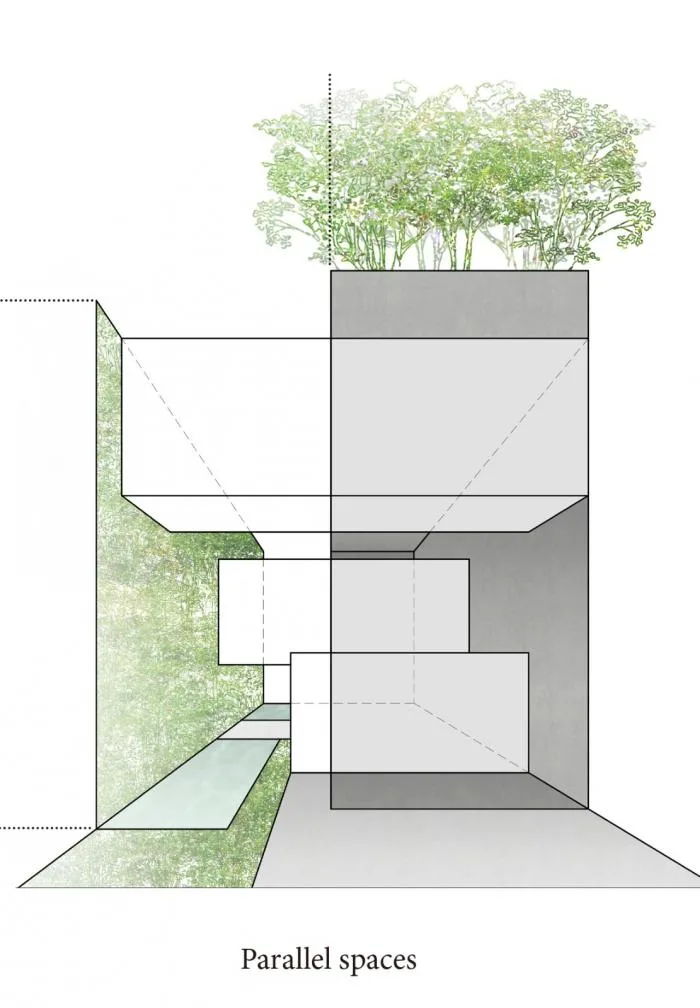
△ Parallel space
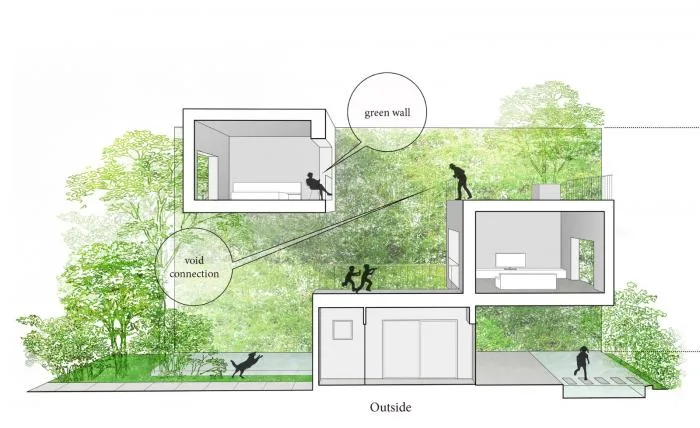
△ Spatial analysis
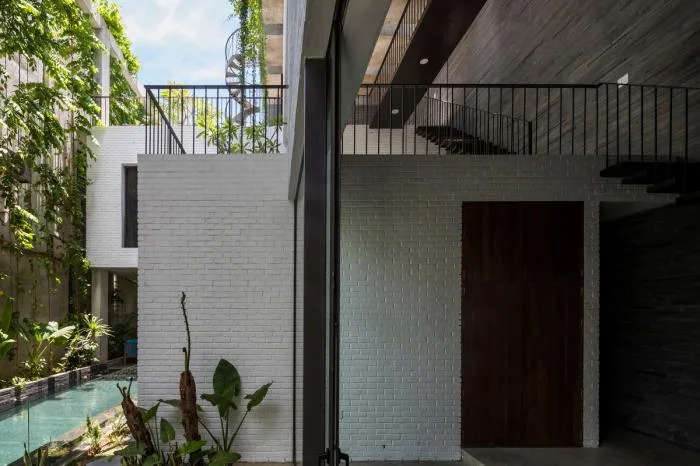
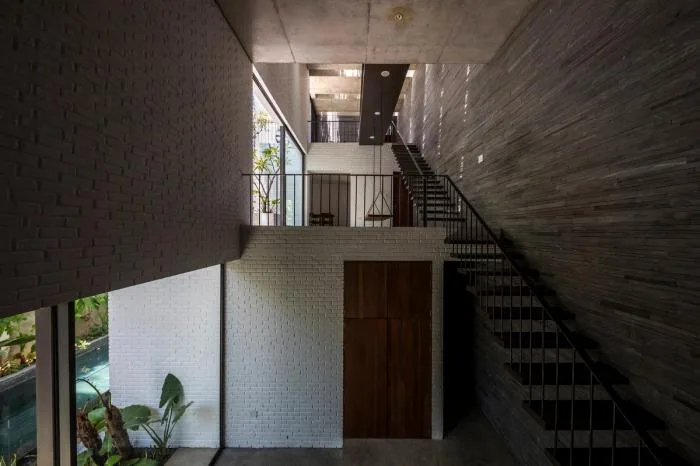
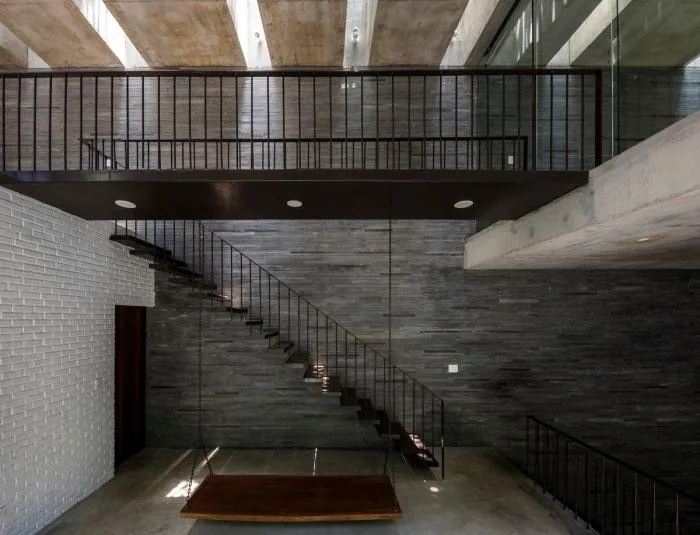
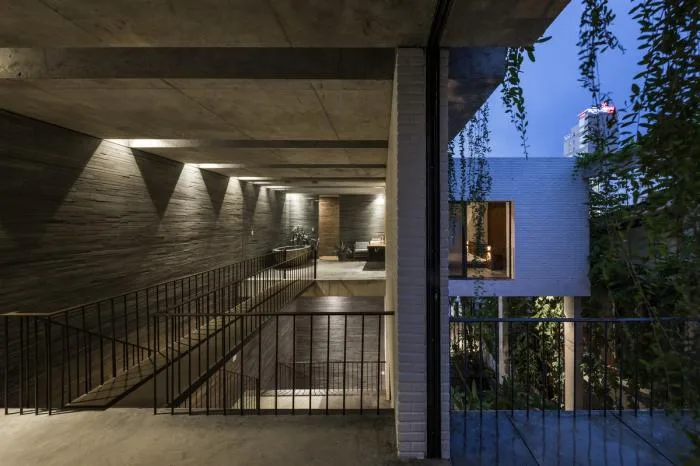
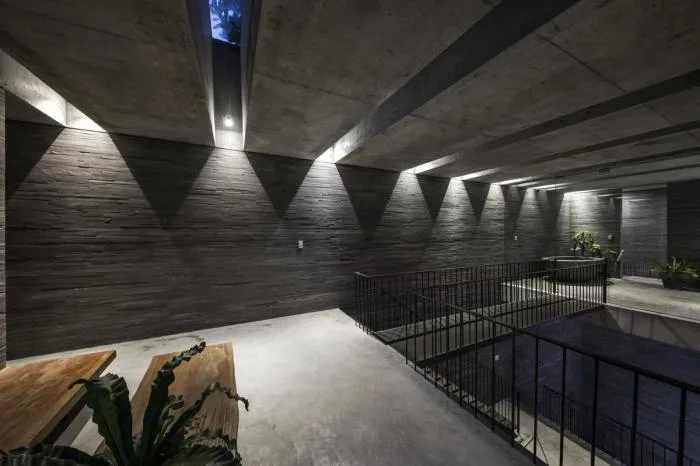
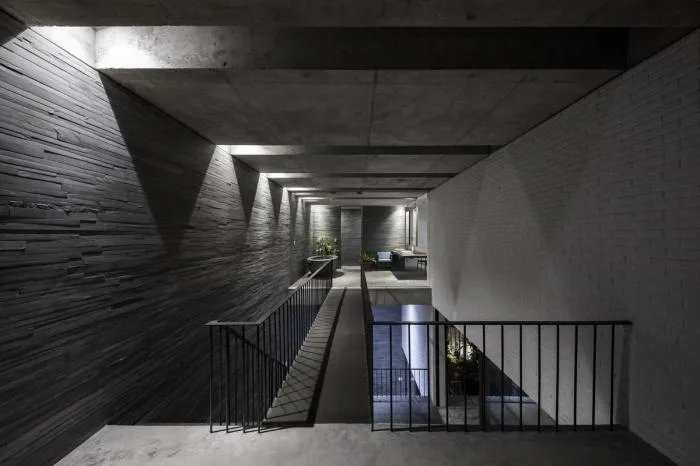
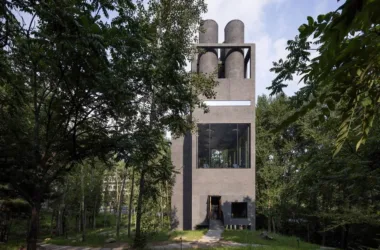
The residence is composed of four main volumes: a large box beneath the roof and three smaller boxes within it. These volumes extend and hover above the garden, creating open spaces for the bedrooms and living room. The large box is clad in gray stone, evoking a deep and inviting public atmosphere, while the smaller boxes use white bricks to create a bright and warm living space. This design allows seamless movement between indoor areas with distinct atmospheres. Narrow gaps in the roof cleverly channel natural light indoors, producing dynamic light and shadow effects across the three levels.
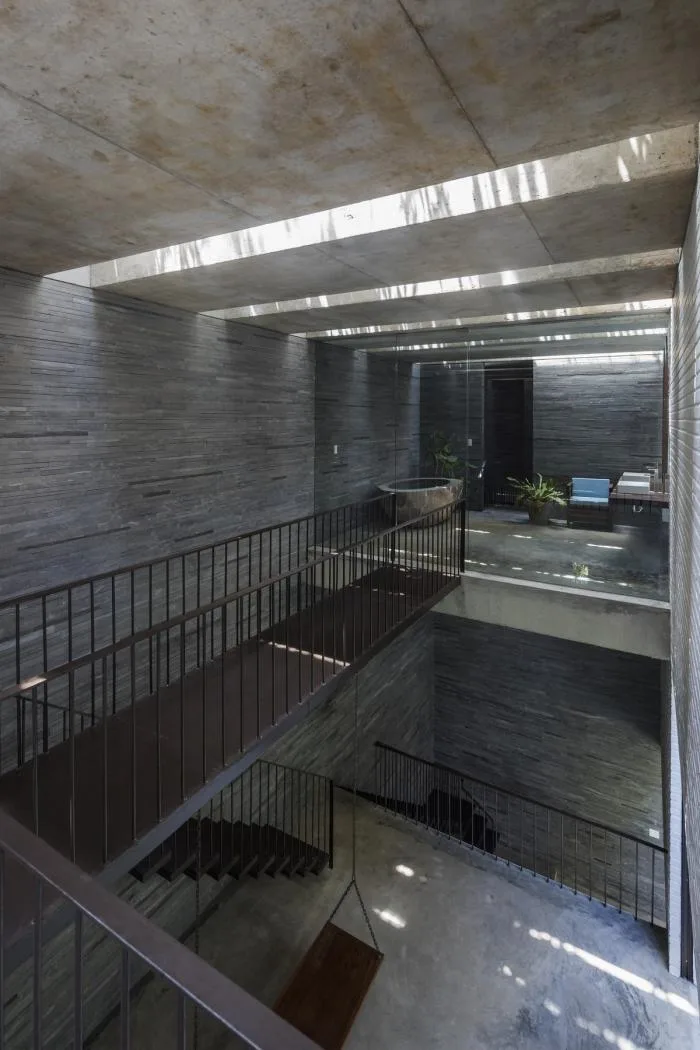
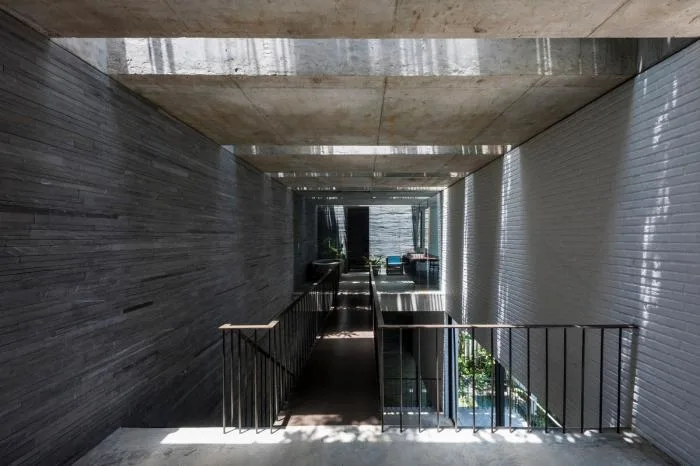
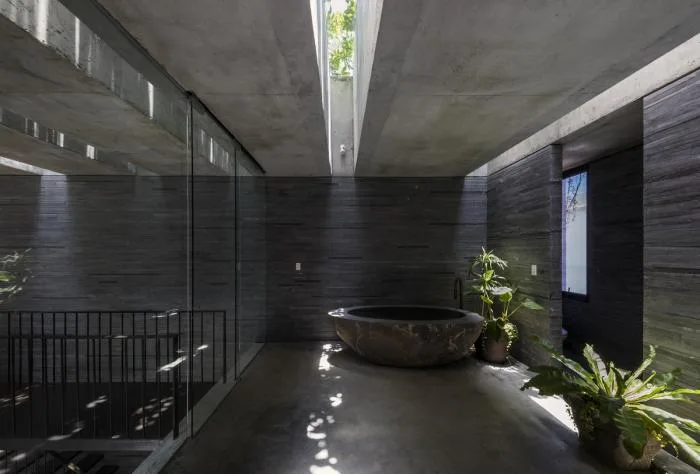
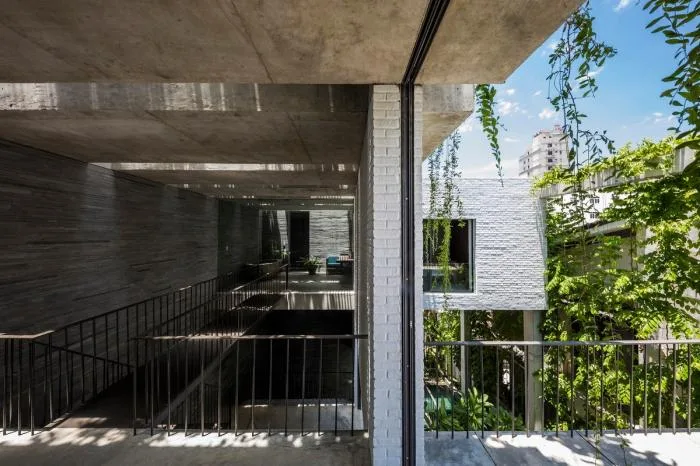
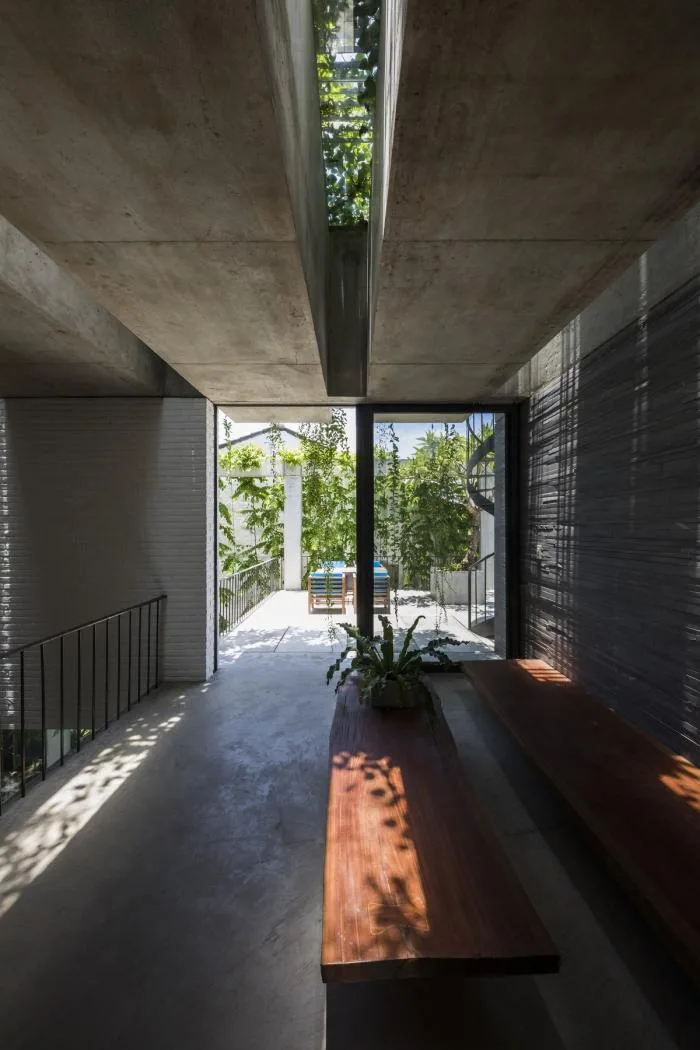
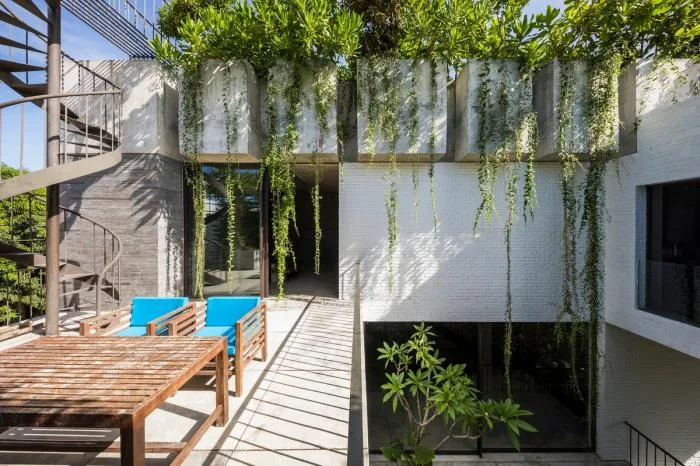
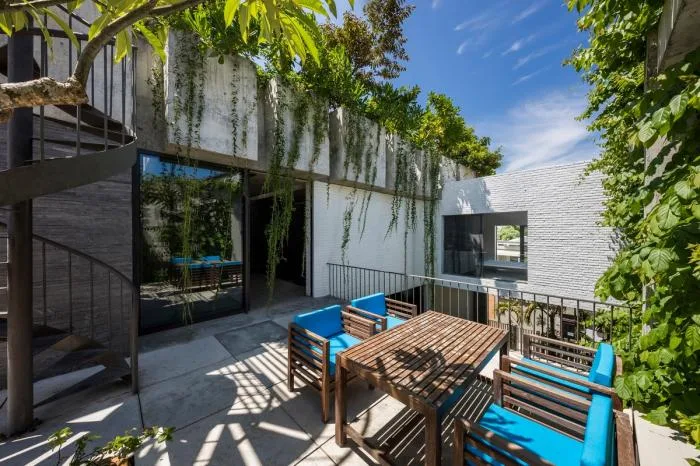
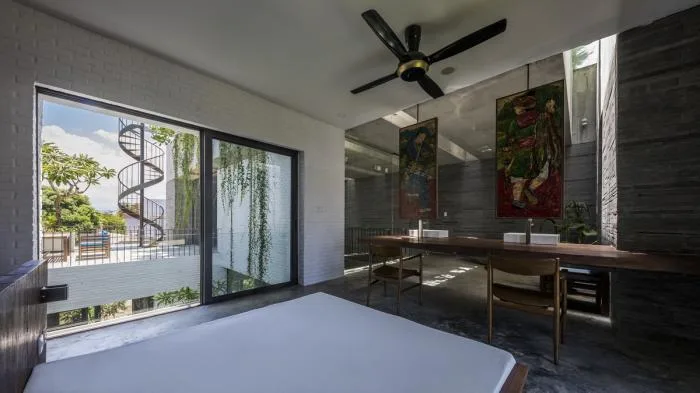
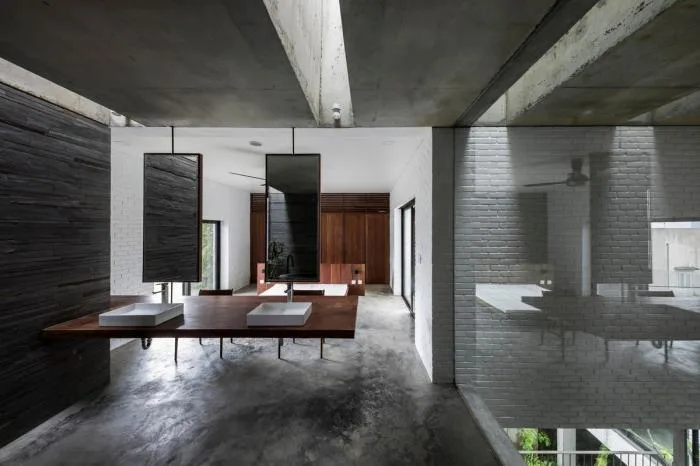
The buildings primarily use local materials sourced nearby, such as gray stone from Hoa Son quarry and bricks from Guangnan Province. Additionally, exposed concrete is employed as a durable and low-tech construction material suited to Vietnam’s harsh climate.
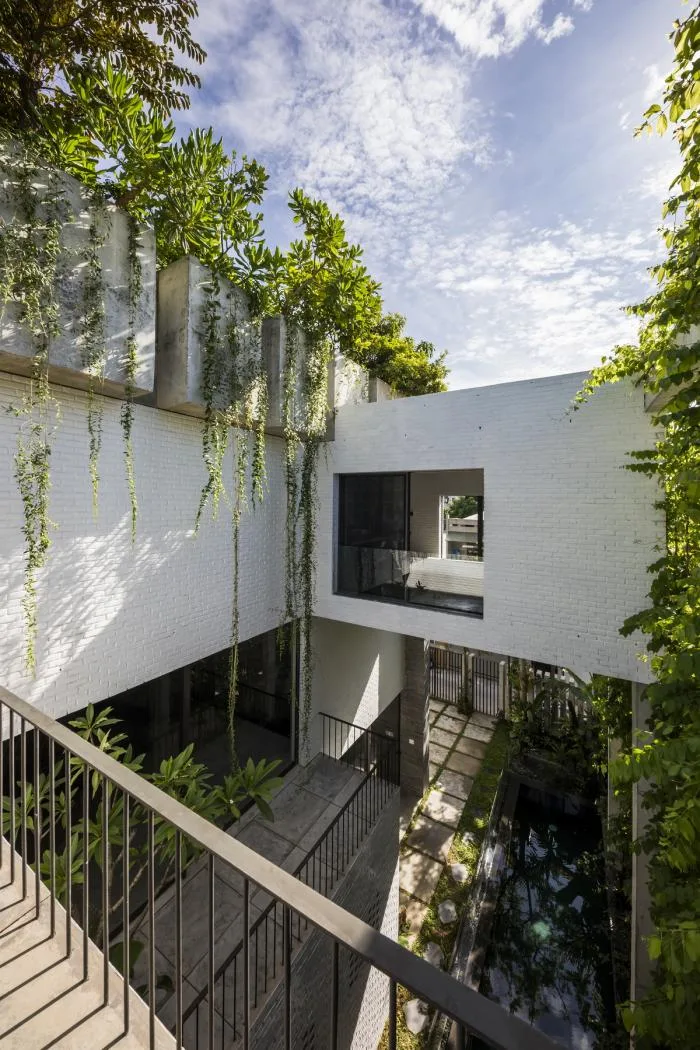
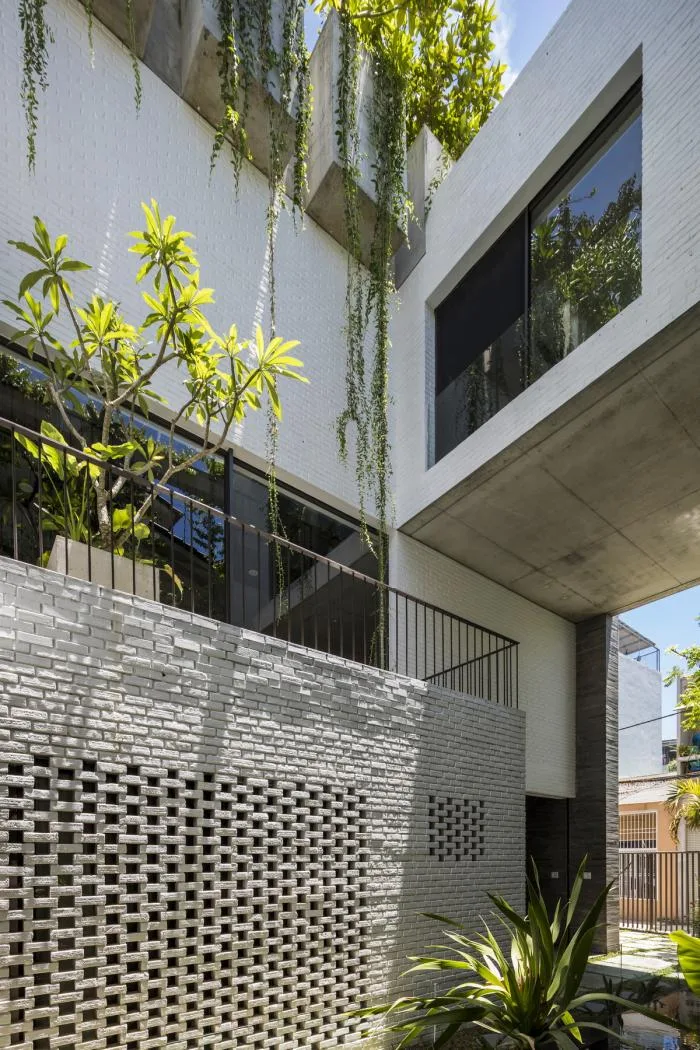
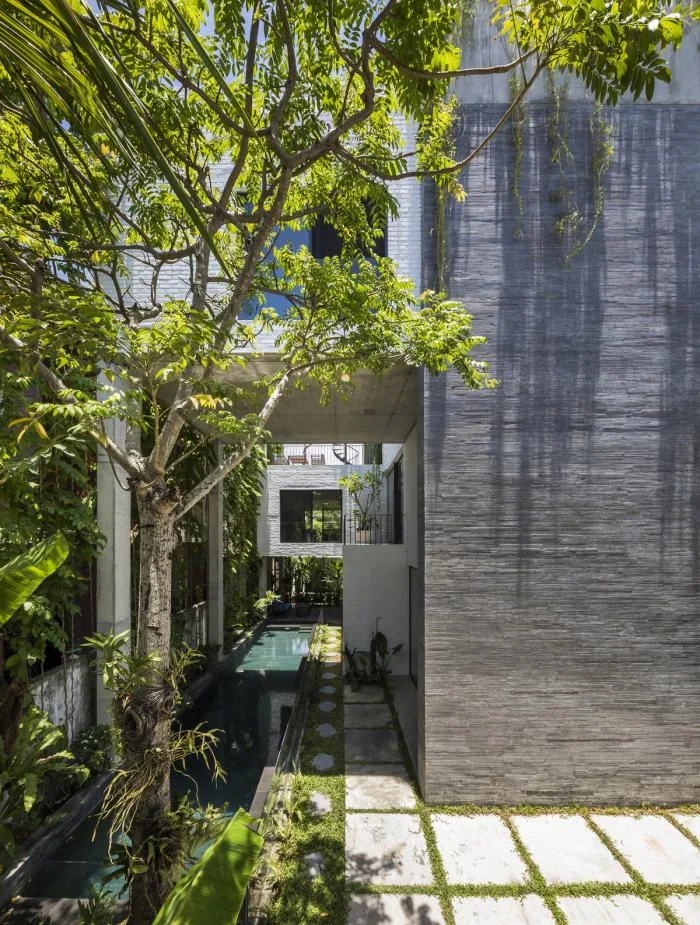
With rapid urbanization in Vietnamese cities, the shortage of green spaces has led to multiple challenges: worsening air pollution, poor rainwater retention, insufficient cooling areas along streets, and the relentless pace of city life. This residence is part of the “Tree House” series, designed to enhance urban greening and improve living conditions. Covered with tropical fruit trees, it offers a peaceful sanctuary for every family member while preserving a green oasis in the rapidly growing city center.
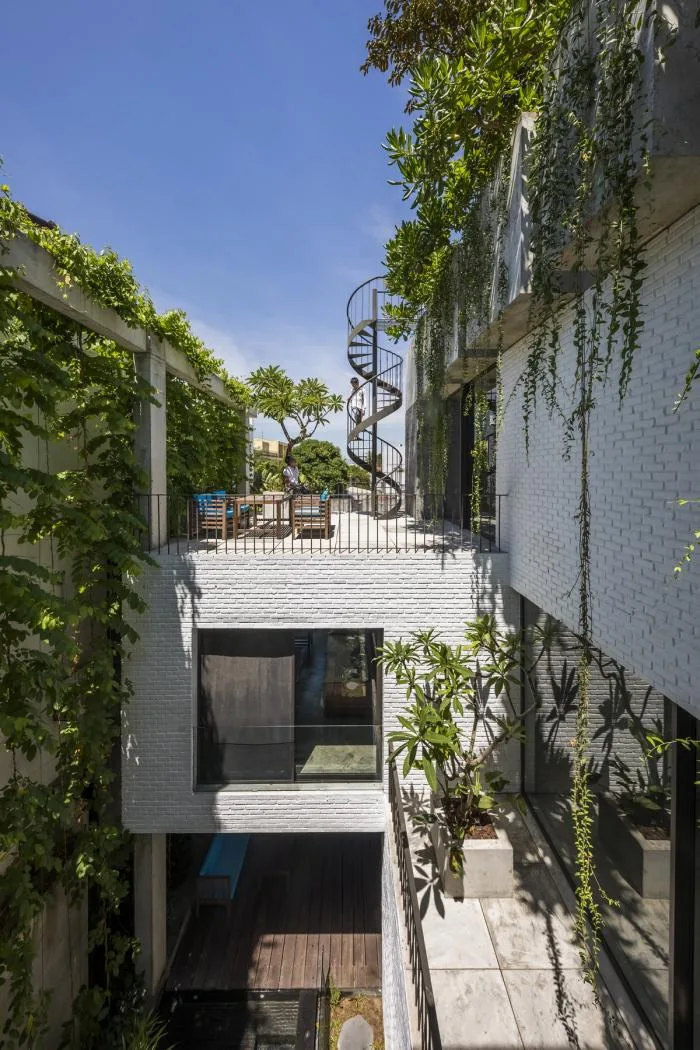
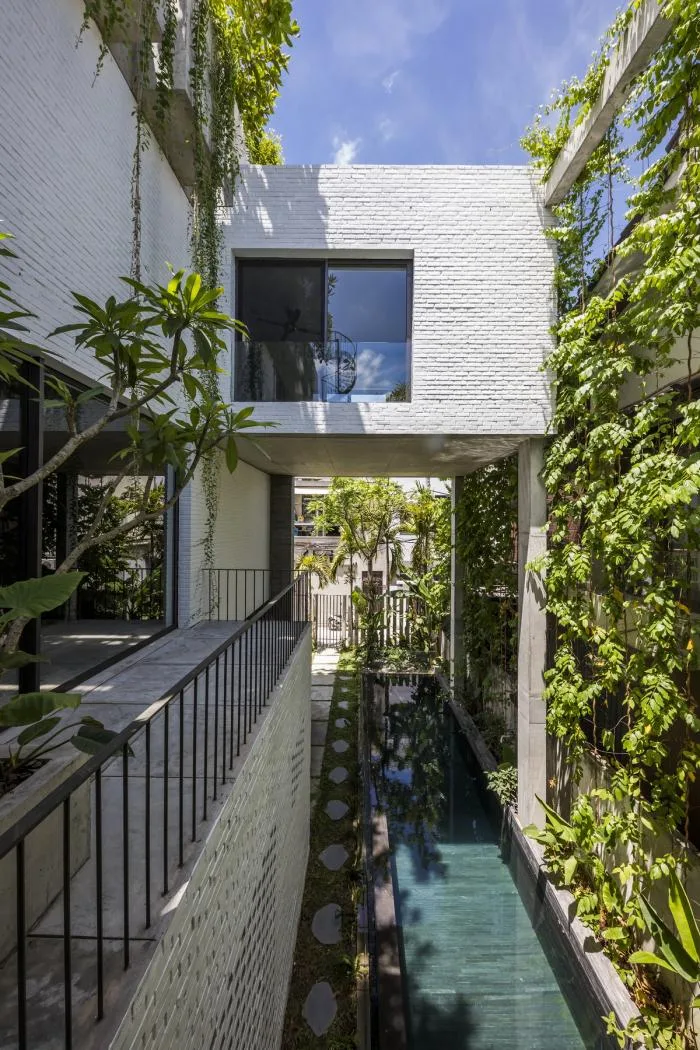
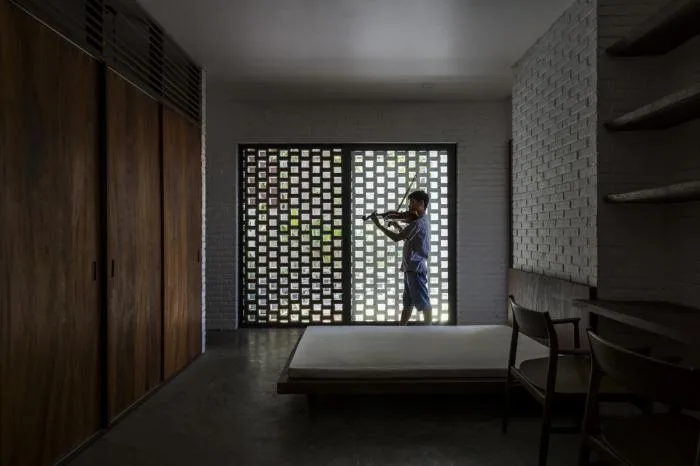
Night View of the Buildings
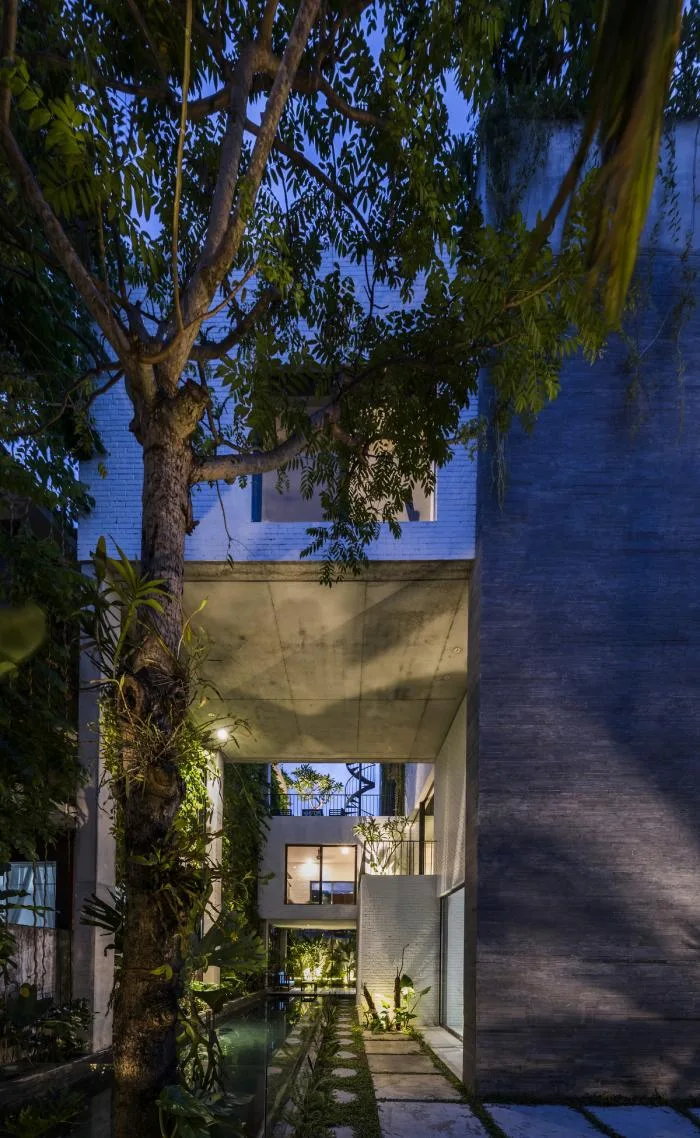
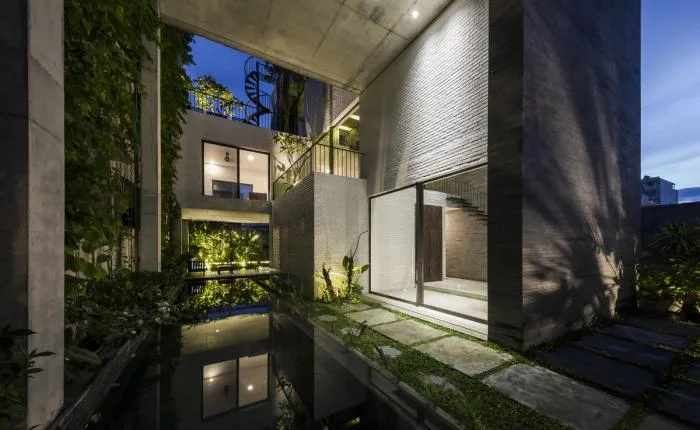
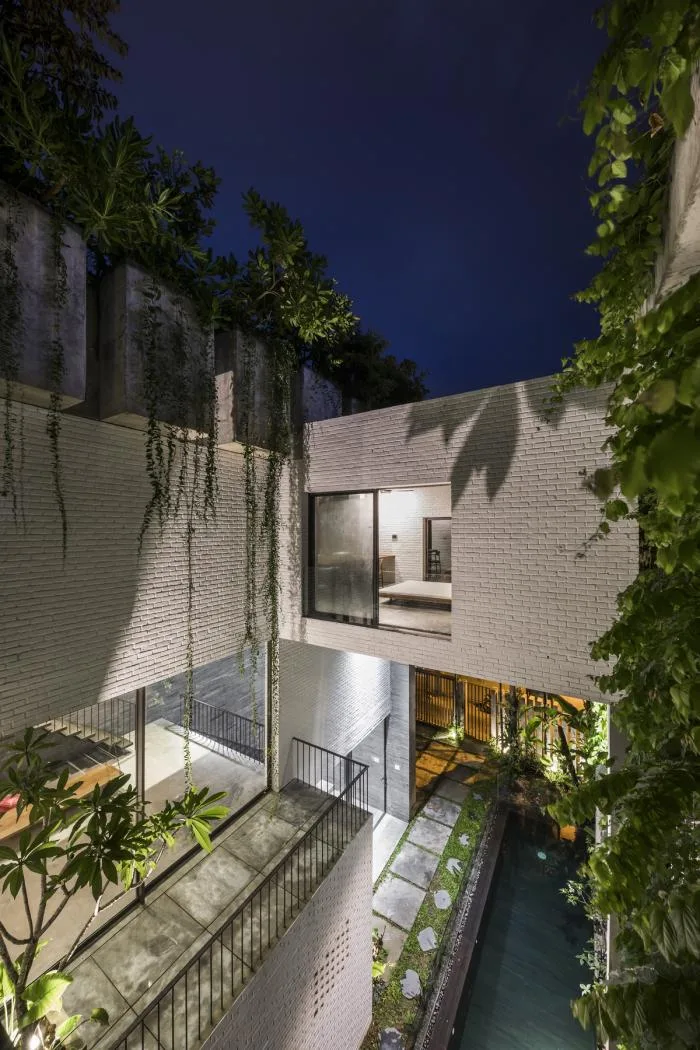
Design Drawings
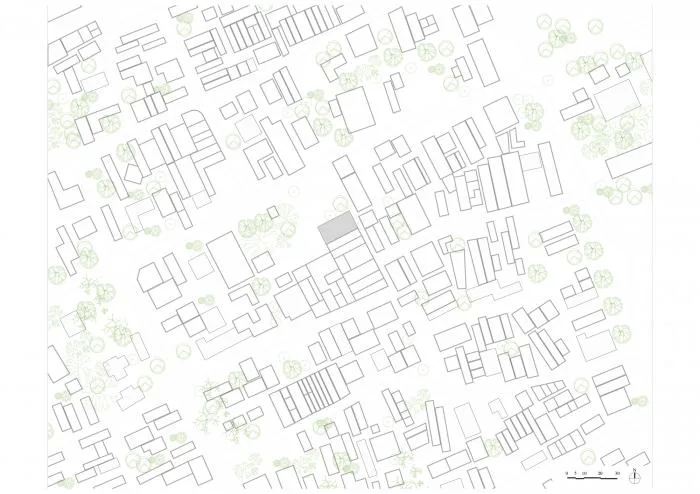
△ General layout plan
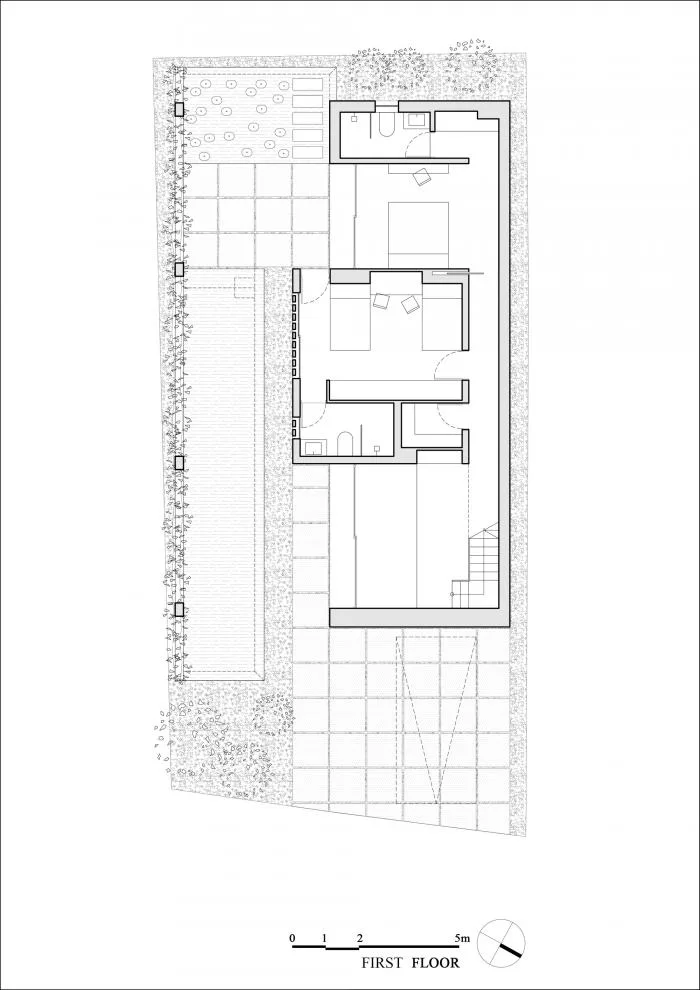
△ First floor plan
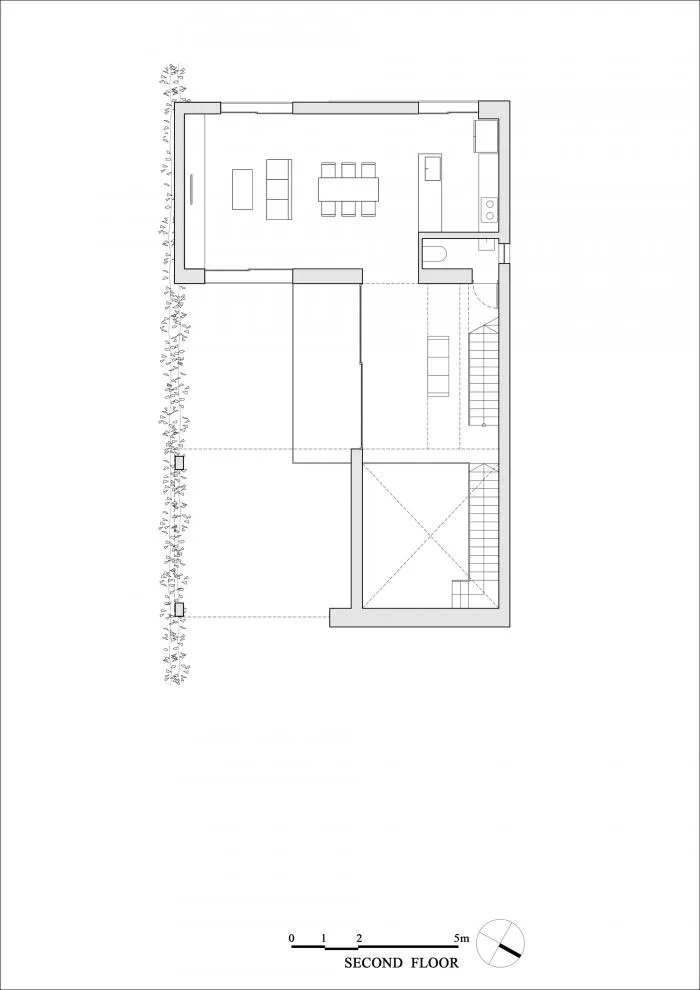
△ Second floor plan
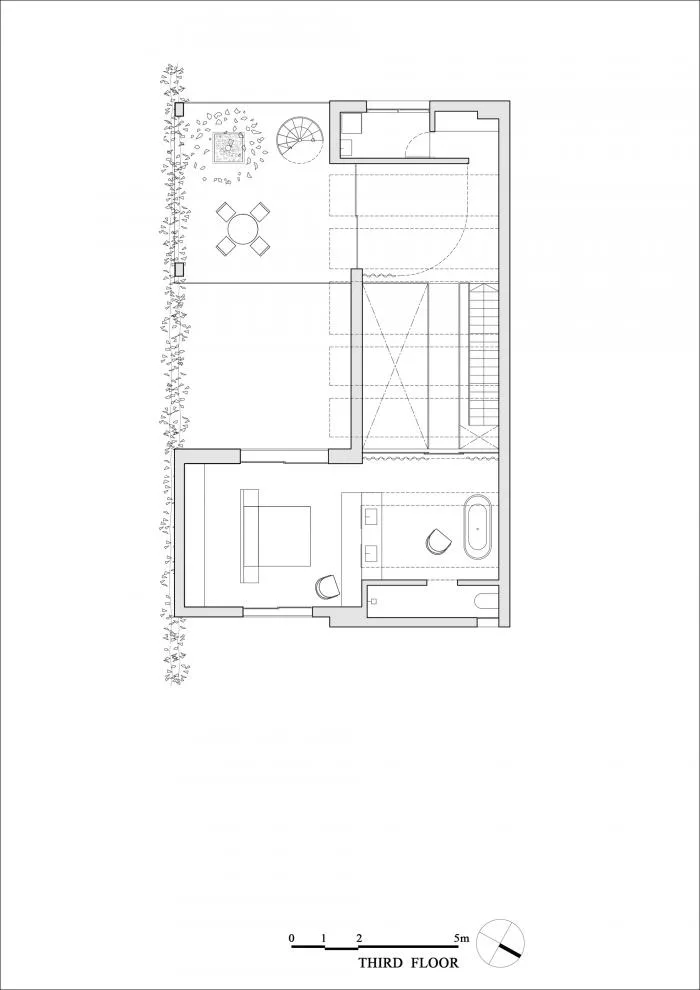
△ Third floor plan
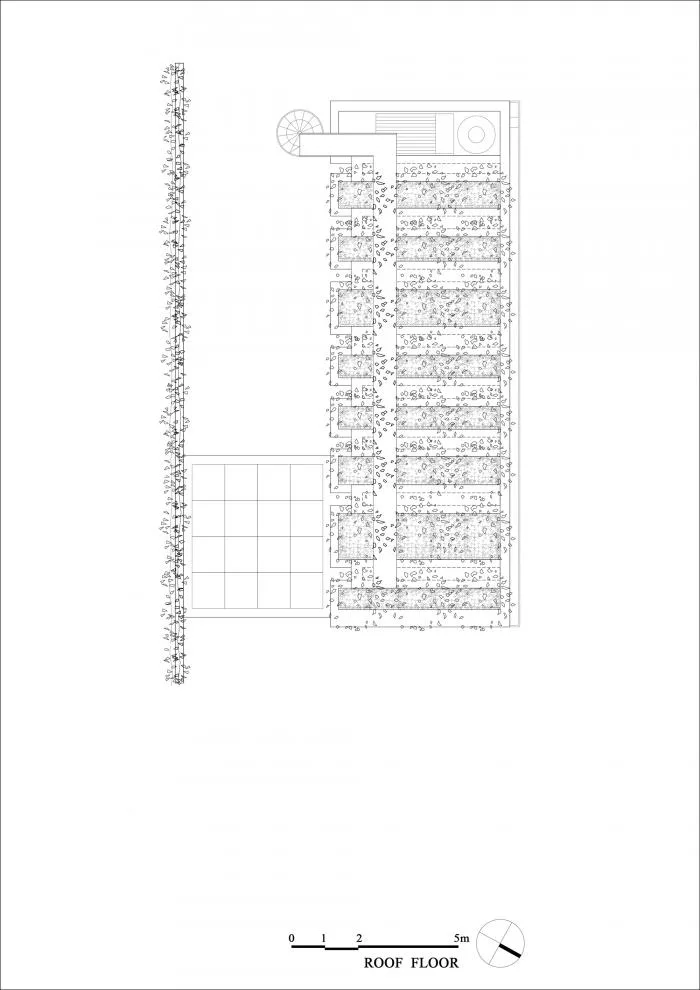
△ Roof plan
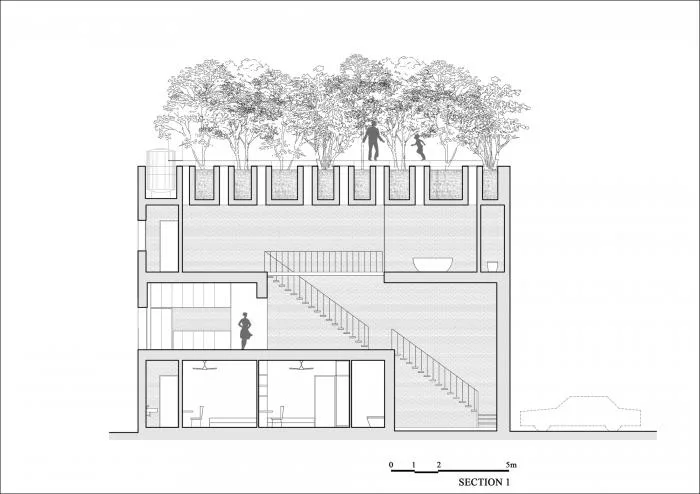
△ Section diagram
Project Information
Project Type: Independent Residential Building
Location: Da Nang, Vietnam
Architectural Firm: Wu Zhongyi Architectural Firm
Area: 250 m²
Year: 2019
Photographer: Hiroyuki Oki
Lead Architect: Vo Trong Nghia
Design Team: Le Phuong Uyen, Kosuke Nishijima
Construction: Thang












Must log in before commenting!
Sign Up