
Yongning Ancient City is situated in Yongning Town, Yanqing, northwest of Beijing. Established in the 18th year of the Zhenguan reign and also known as Hanjiang City, it flourished during the 12th year of the Yongle reign. This city was a critical military garrison in Yanjing and earned the reputation, “Yongning City first, followed by the Thirteen Tombs.”
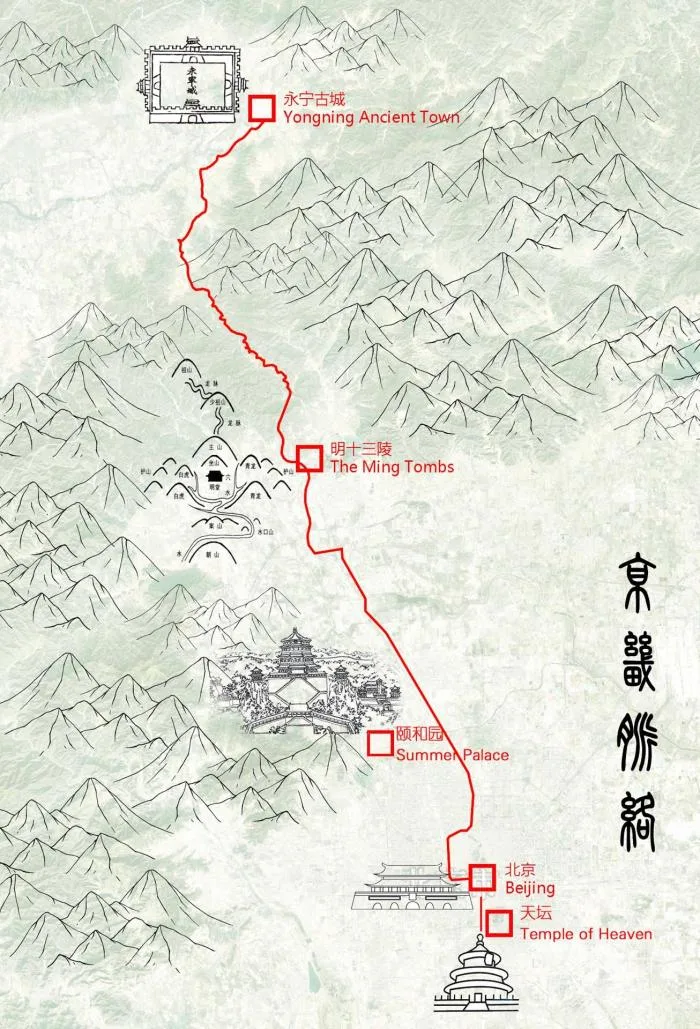
△ Location Map
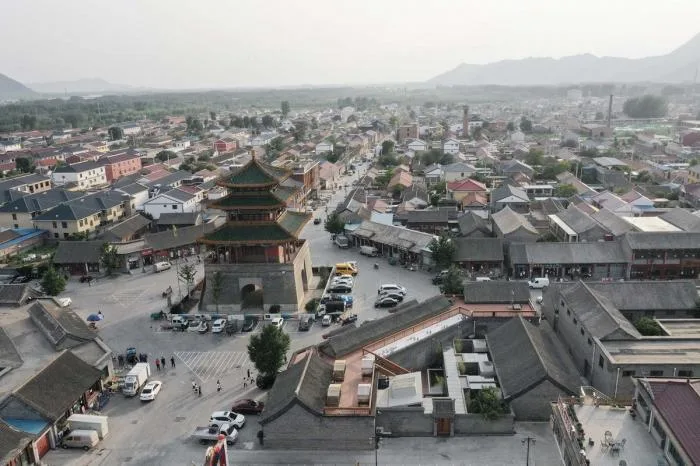
△ Xiaoyuan and Yongning City
At the heart of the ancient town stands the “Jade Emperor Pavilion.” Northeast of this pavilion lies a courtyard known as “Shun Garden.” Abandoned for over a decade, Yuan Huang plans to restore this area, building three guest houses named “Flying Sky,” “Sleeping Dragon,” and “Singing Phoenix,” alongside reconstructing a golden platform to celebrate the ancient Yan culture. To bring this vision to life, he invited me to design the garden.
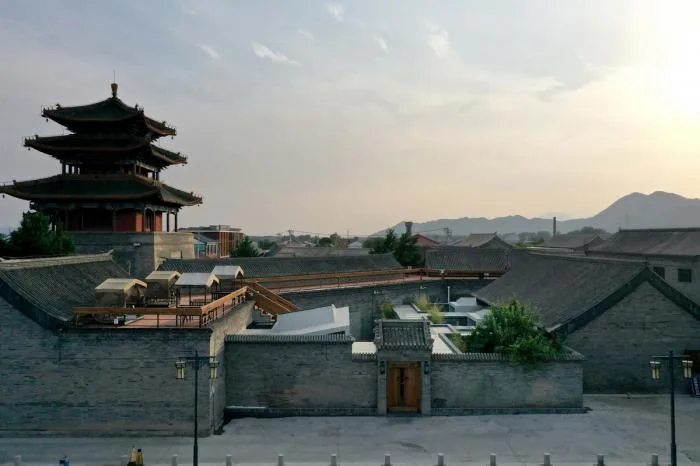
△ Xiaoyuan and Yuhuang Pavilion
Standing in the garden, inspired by the grandeur of the Jade Emperor Pavilion, I felt a deep sense of connection. Walking through the old street, I was touched by the simple, rustic countryside charm. Farmers, women, and children played together, while the aroma of Shaobing (griddle-baked cakes) and tofu filled the narrow lanes. This contrast between quiet living and urban bustle inspired the garden’s design.
The courtyard was divided into two main sections, north and south, separated by a tall wall. Within these, three smaller courtyards each featured a pavilion. Each pavilion included a small house with windows, complemented by a slanted skylight above and a large side window for viewing. The prosperity of the pavilion symbolized the prosperity of the courtyard, so all scenic pavilions faced each other to enhance harmony.
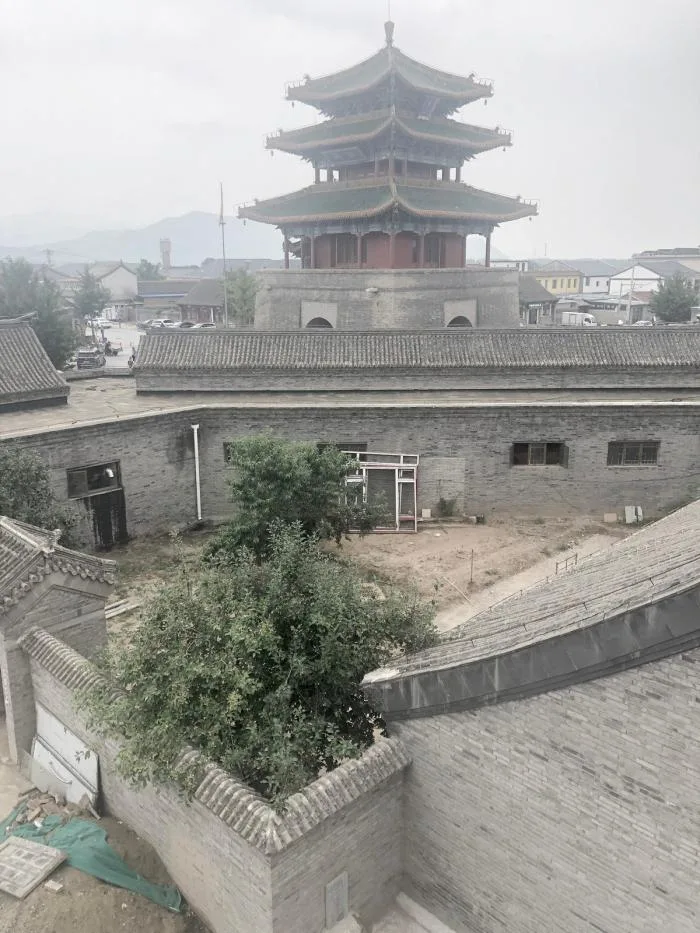
Before the renovation
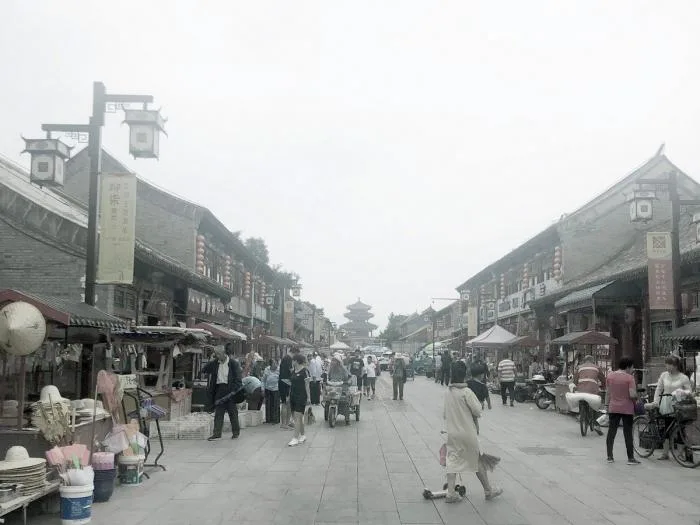
Yongning Old Street
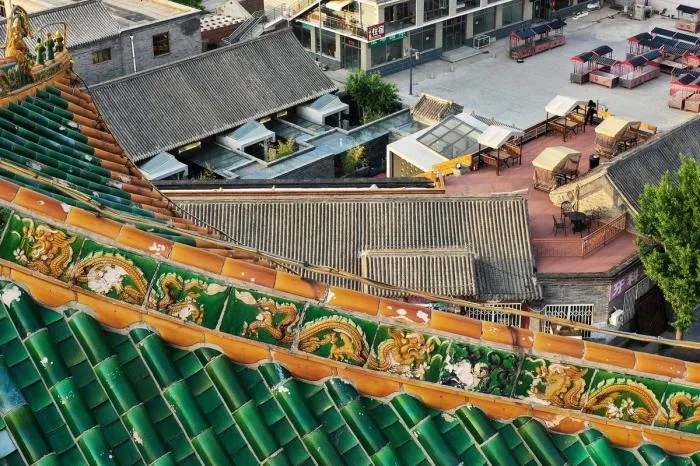
Your Excellency the Jade Emperor
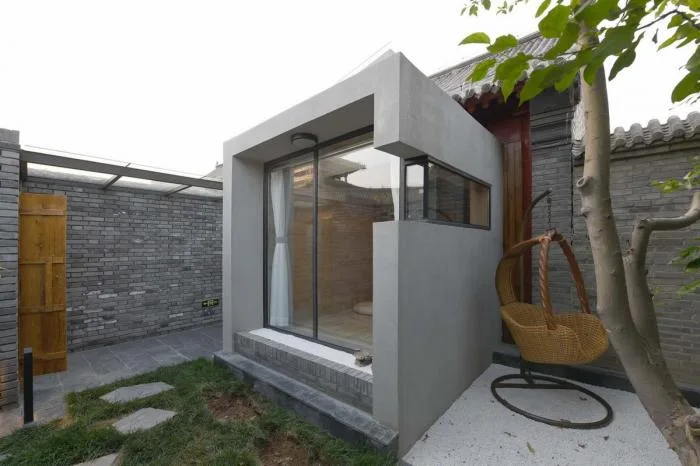
△ Xiaoxuan
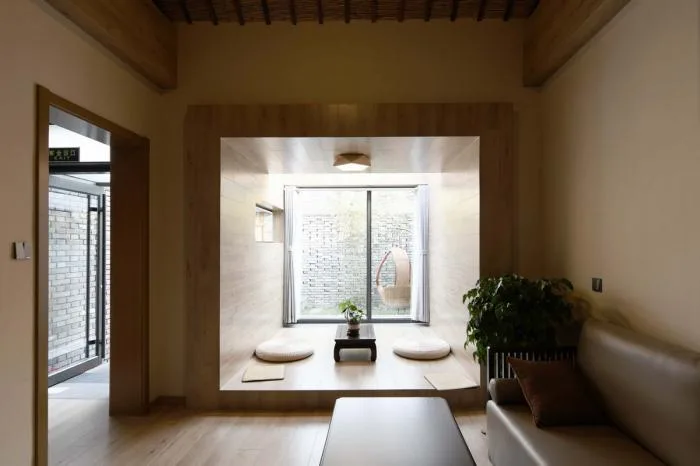
△ Inside Xiaoxuan
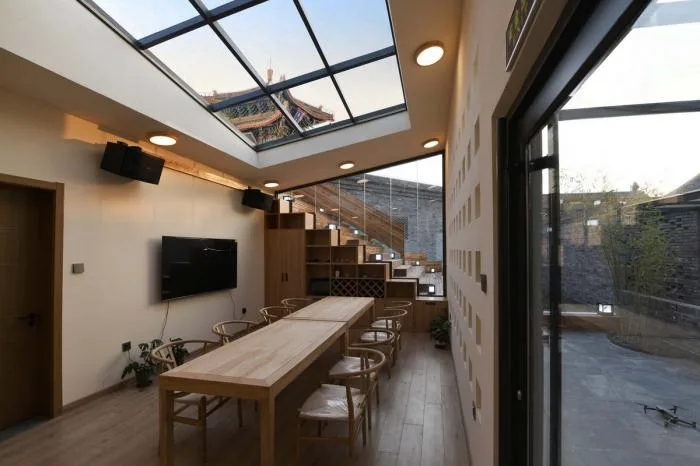
△ Restaurant and Pavilion
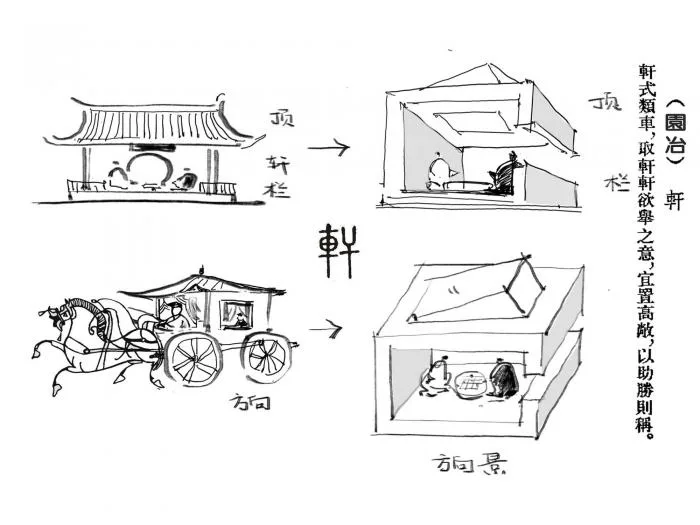
Interpretation of Modern Pavilion
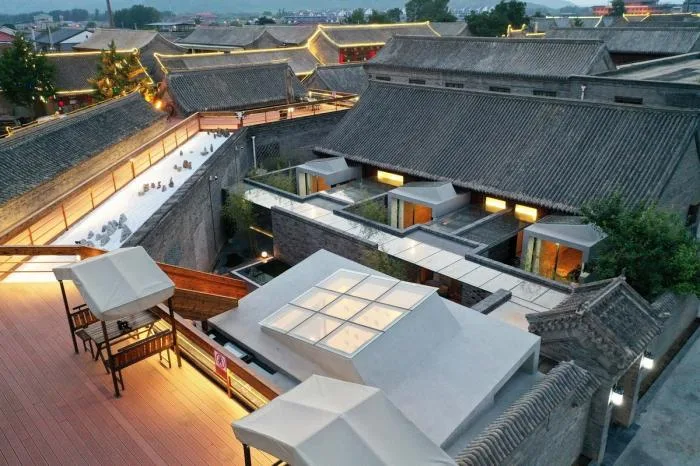
△ Three Courtyards
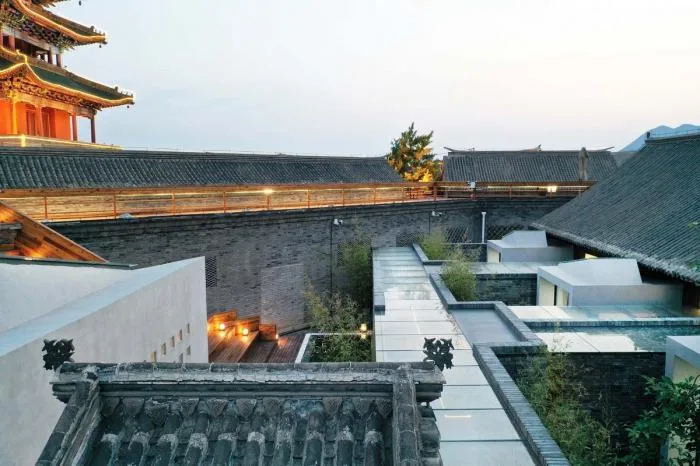
△ Gate Tower
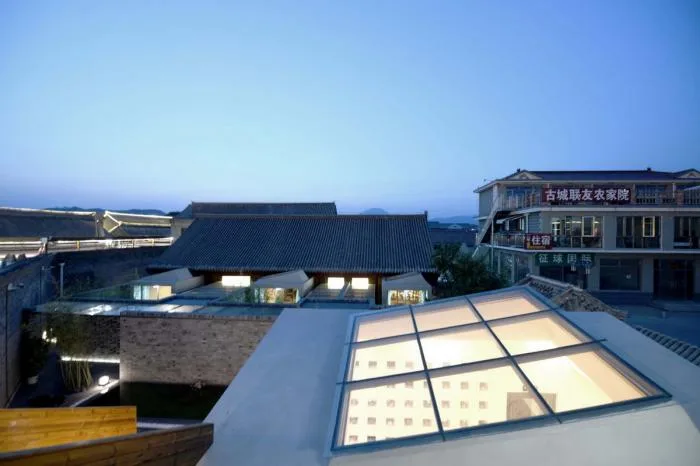
△ Window and Distant Mountain
Though the courtyard is deep, its southern orientation allows ample sunlight to enter. It features a wooden platform ideal for resting or lounging, essentially a cozy retreat. Bamboo and bluestone within the courtyard fulfill Old Su’s wish for “no place to live without bamboo.” A tree in the east courtyard is sheltered by a pavilion, and every leaf is cherished. The old house is a single floor but unusually tall. Grass mats behind wooden beams provide warmth, yet the height remains substantial. To improve comfort, the house is divided into two levels with staircases, which can be inconvenient. Therefore, a “Bo Gu Jia” (a covered walkway) was added—tiring to traverse but intriguing.
The design includes a bed on both upper and lower levels, a high hall outside, and a sleeping tent inside. These three houses are modest yet rich in local character. The deeper one stays within, the more peaceful it becomes, ensuring restful sleep.
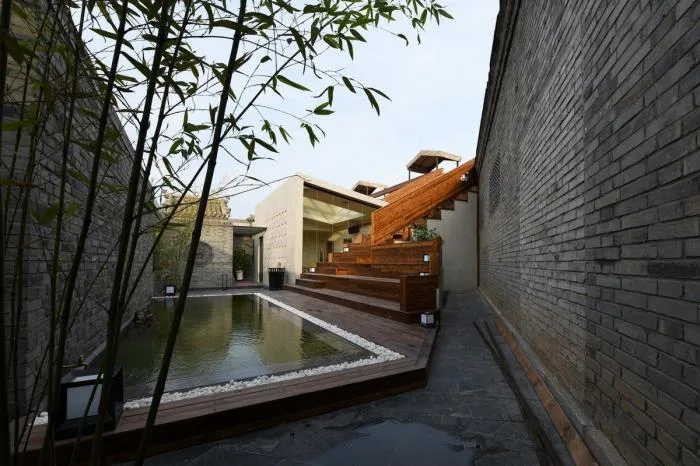
△ Pool and Platform
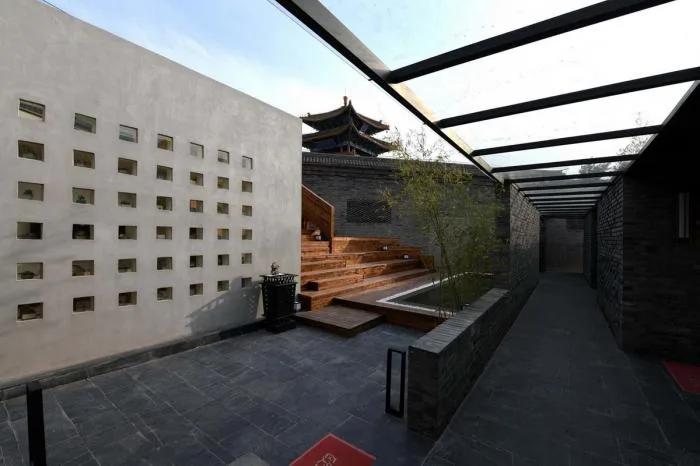
△ Corridor
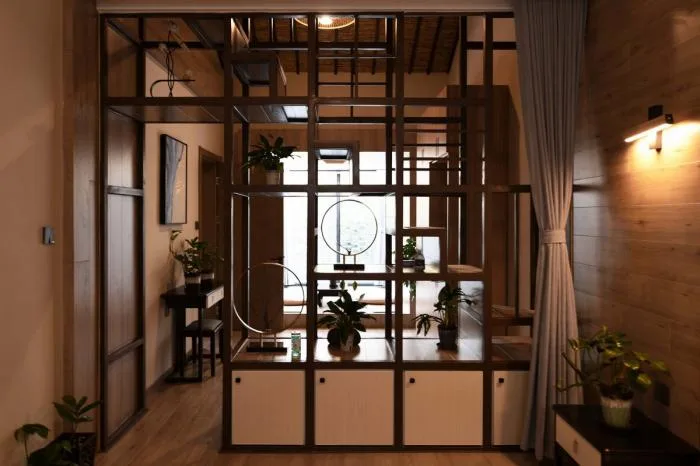
△ Bo Gu Jia
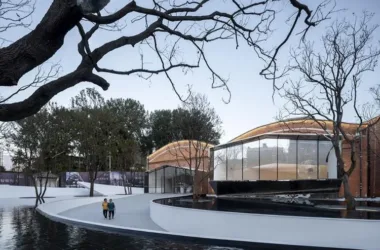
Outside the high wall, a pavilion was constructed overlooking the water. Its walls are often perforated, resembling pearl curtains in a foyer, serving as a venue for banquets, entertainment, and breakfast. Adjacent to the pavilion stands a golden platform, built in tiers, allowing visitors to climb onto neighboring rooftops and even reach the city tower, offering a clear view of the pavilion.
Under the stage lies a pond filled with fish, symbolizing “surplus every year beneath the golden stage.” Behind the pond is a wall that acts as a curtain. At night, outdoor movie screenings take place on the golden stage, where visitors can enjoy the company of the Jade Emperor in the pavilion.
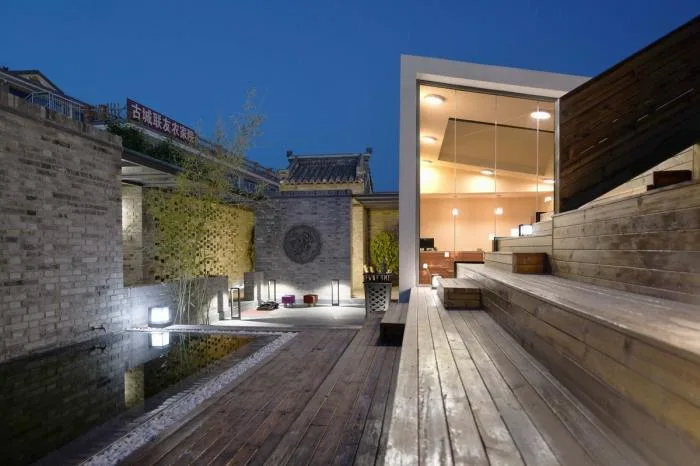
△ Pool and Pavilion
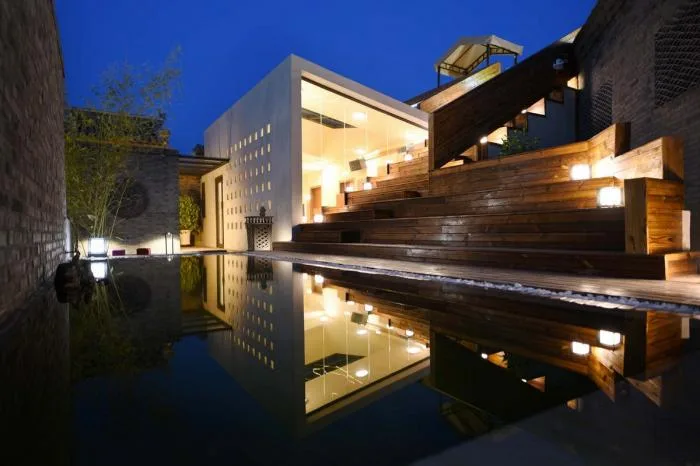
△ Terrace and Pavilion
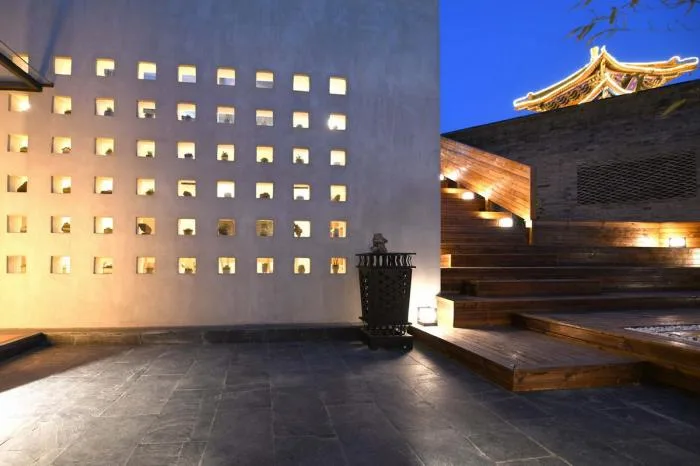
△ Hollow Wall
To the west of the western courtyard lies a quiet space covered with sand where children play with cats and dogs. Surrounded by high walls, safety is assured. Elderly couples can retreat here for meditation and reflection, resolving unresolved matters in solitude.
Stepping out of the garden, one enters a hidden alley leading directly to the old street. The lively sounds of shouting vendors and bustling activity contrast sharply with the tranquility of the garden, creating a feeling of stepping between two different worlds.
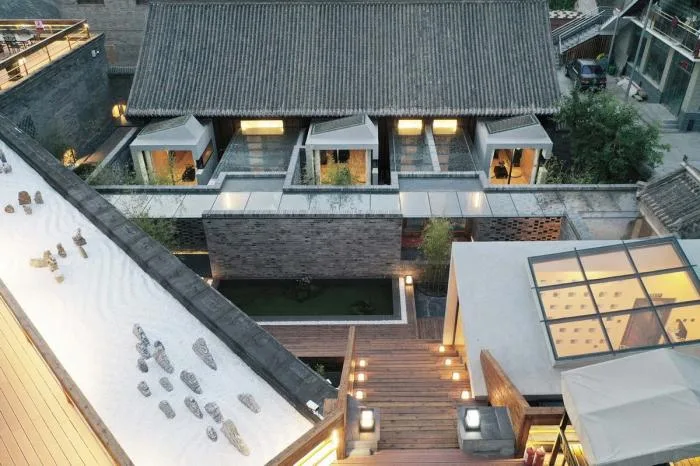
△ Golden Platform
By year’s end, the small courtyard was completed. Compared to before, one wall, three pavilions, one platform, and one pavilion had been built. Though the garden is modest in size, the Jade Emperor Pavilion serves as a beautiful backdrop for leisurely strolls, gently stirred by the breeze. Away from the city’s noise, one can savor the scent of plants and trees.
Heading south, a hundred miles from the capital, the climate is cooler, with little haze or dust. Looking north, one can admire the mountains and rivers extending for miles, offering a sense of peace and contentment. Traveling westward leads to Tumu Fort, Jiming Post Station, and the ancient Ming Dynasty city, inviting further exploration.
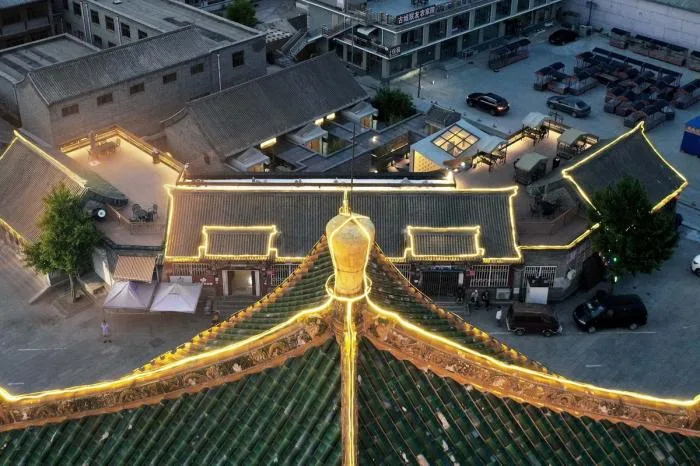
△ Northwest Diagonal
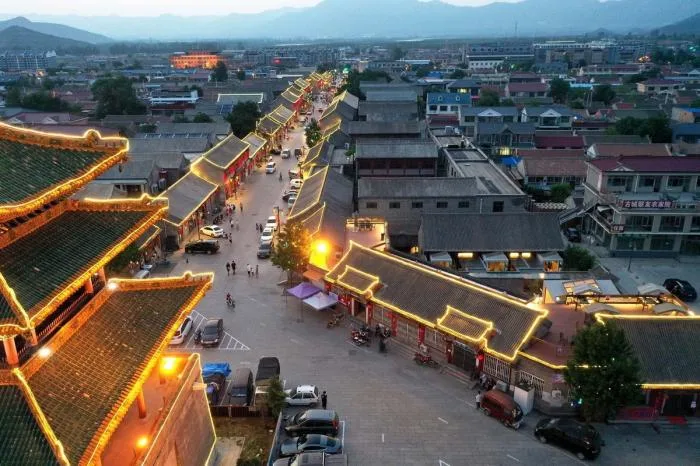
△ Evening Lights
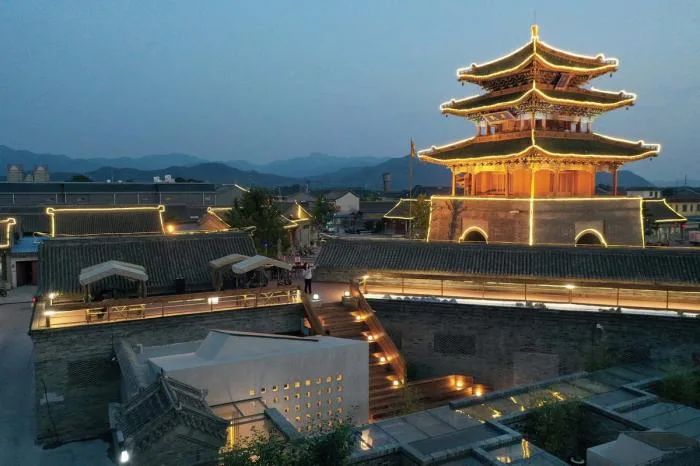
△ Wangge
The ancient charm and stories may be lost, but today’s creations honor our ancestors’ craftsmanship without merely copying it. We create for the present by inheriting traditions and adapting to local contexts.
Historically, Yanqing was known as Juyong during the Qin Dynasty, Guichuan in the Tang Dynasty, and later as Jinshan, Longqing, and Yanqing. This area, rich in cultural heritage, is now known as the “Hidden Lane of Jinshan.”
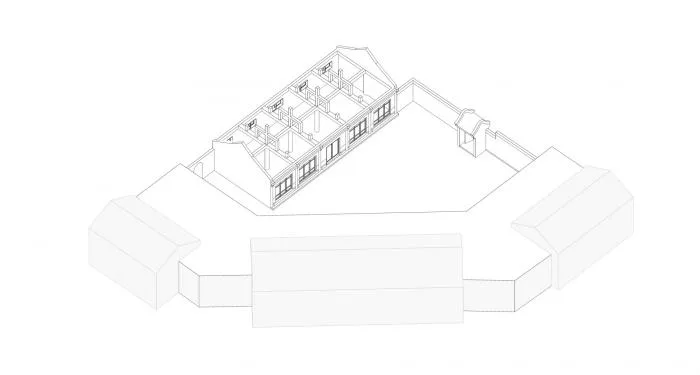
△ Jinshan Hidden Lane
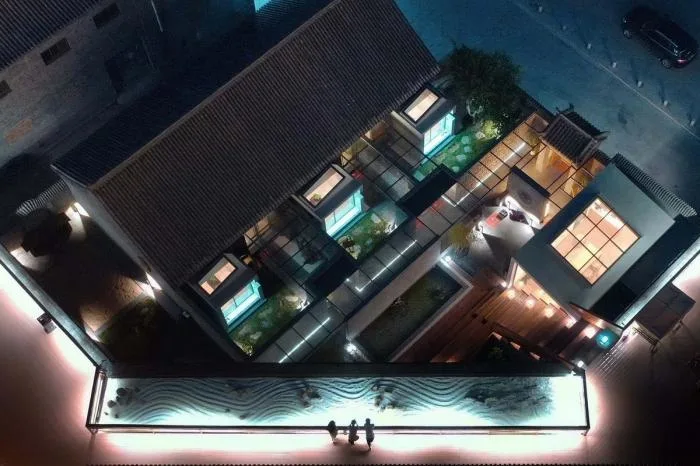
△ Color Block
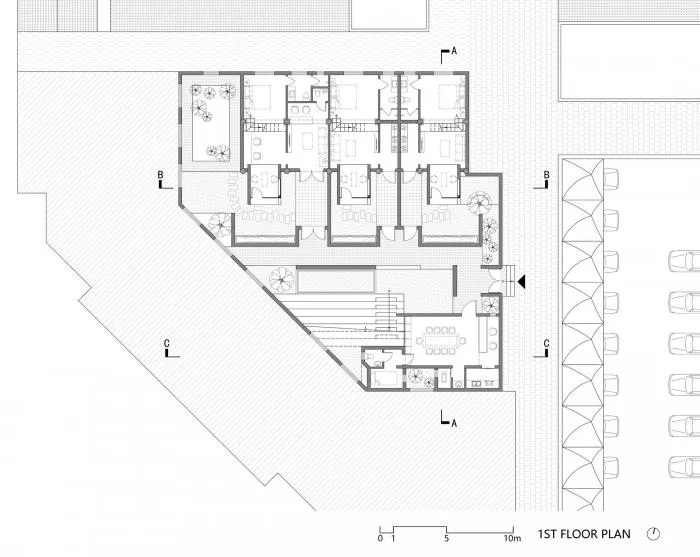
△ First Floor Plan
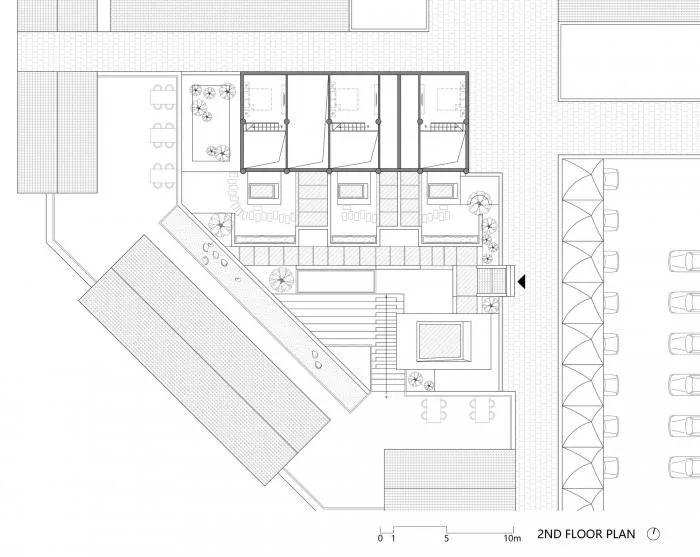
△ Second Floor Plan
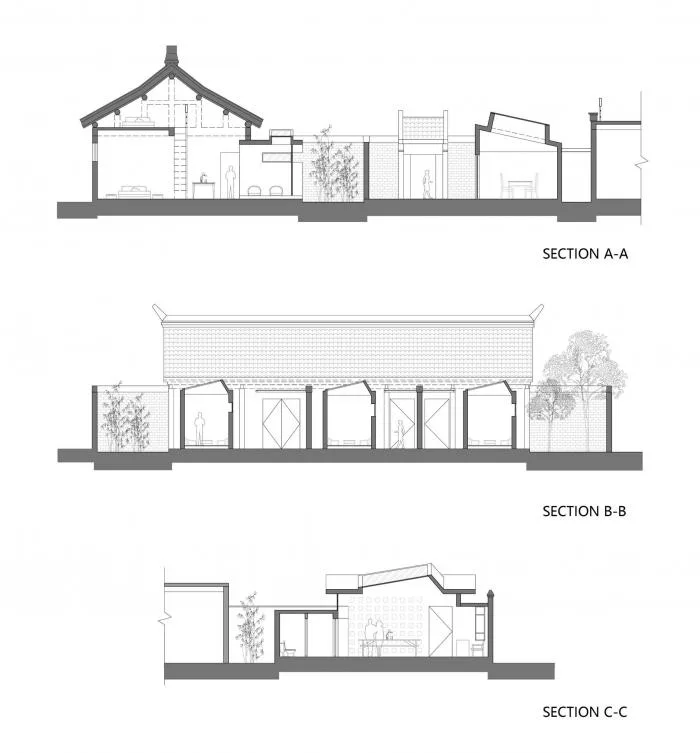
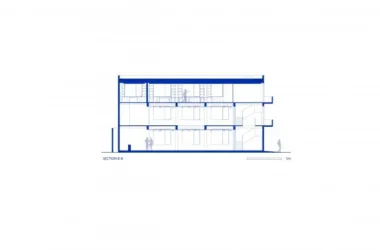
△ Section Diagram
Project Information
Project Type: Hotel
Location: Beijing, China
Architecture Firm: Local Creation Center
Area: 500 m²
Year: 2020
Photographer: Guo Hai’an
Principal Architect: Guo Hai’an
Design Team: Xiang Gang, Meng Jie, Qu Kaichen
Operating Brand: Jinshan Hidden Lane Homestay
Translation: Lin Jiana












Must log in before commenting!
Sign Up