
Background
Zhiziling Ideal Village is situated in Yinan County, Shandong Province, serving as a key node within the Zhujialin National Rural Complex. This rural complex implements revitalization through a “cultural tourism” approach. Over four years, it has progressed from a national pilot project to a national demonstration, distinguishing itself among rural complexes nationwide. As the core area, Zhiziling Ideal Village embraces rural forms, explores local culture, extracts indigenous elements, and initiates renewal and transformation through design interventions. This includes architectural restoration, spatial revitalization, economic industry revival, and development of cultural tourism, ultimately establishing the first cultural tourism landmark in the Qilu region.
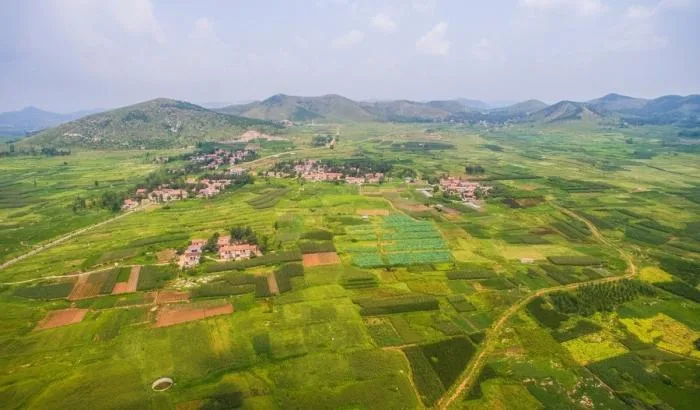
Aerial view of the original state of Zhiziling Village
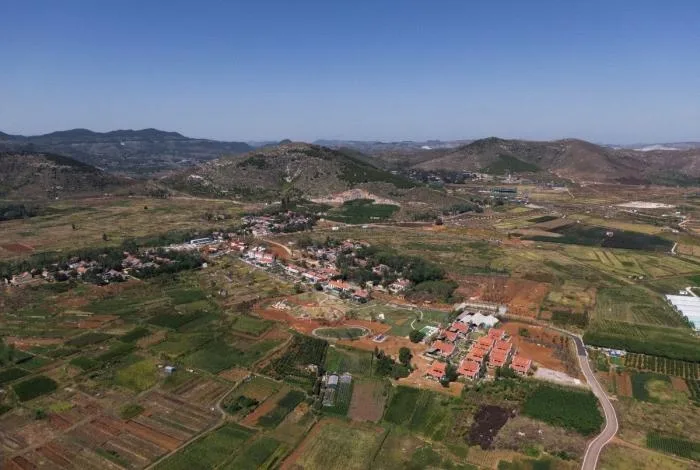
Bird’s-eye view of Zhiziling Village after renovation
The project covers approximately 7,600 square meters, arranged linearly and extending from west to east along the village road into the fields. Residential buildings are scattered on the north side, while expansive fields lie to the south. At the eastern end, village courtyards cluster together, blending rural life with nature. The open spaces between the original village and the earth remain undeveloped, offering potential for further growth.
Considering location, transportation, and settlement patterns, the business model of Zhiziling Ideal Village is organized from east to west into three zones: a homestay courtyard, a cultural and creative block, and a public service center. Functions transition from private to public, and spaces evolve from enclosed to open, with design interventions gradually intensifying.
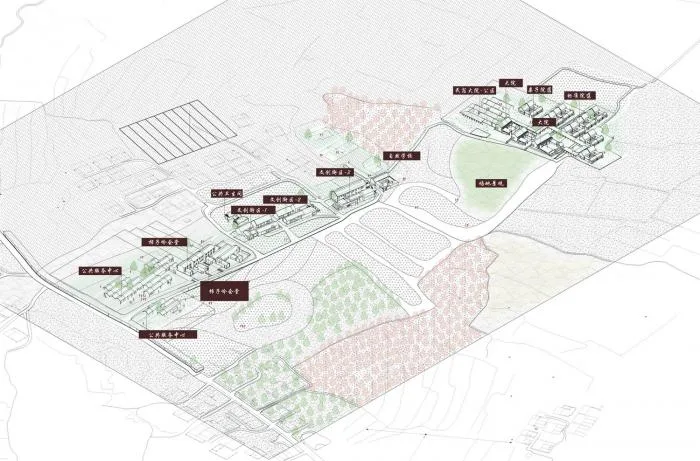
Zhiziling Business Model
Homestay Courtyard
The “courtyard” is a characteristic spatial form of local residences. The eastern village’s original settlement texture is composed of interconnected courtyards. Dozens of homestays are located on the original homesteads, preserving the traditional courtyard layout and maintaining regional heritage through spatial design, forms, and materials, creating relatively independent courtyard spaces.
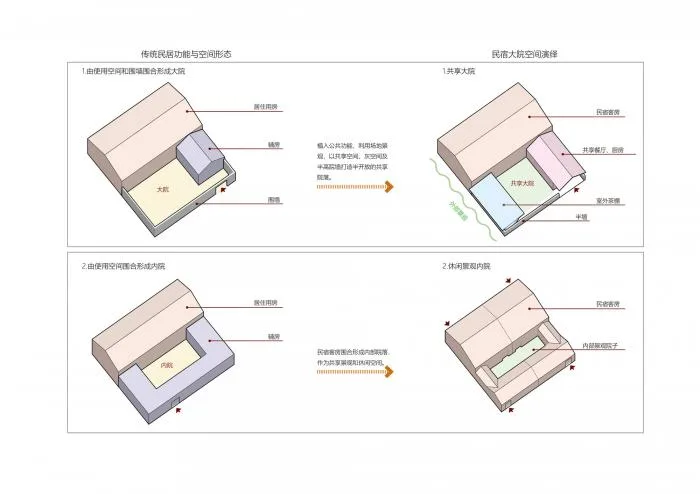
Interpretation of Homestay Courtyard Space
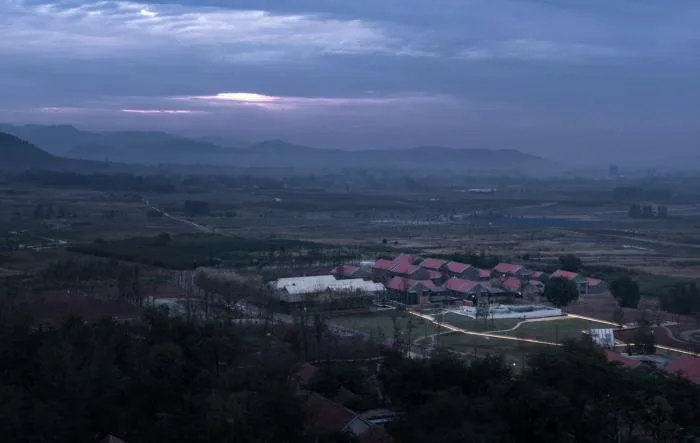
Overall bird’s-eye view of the homestay courtyard
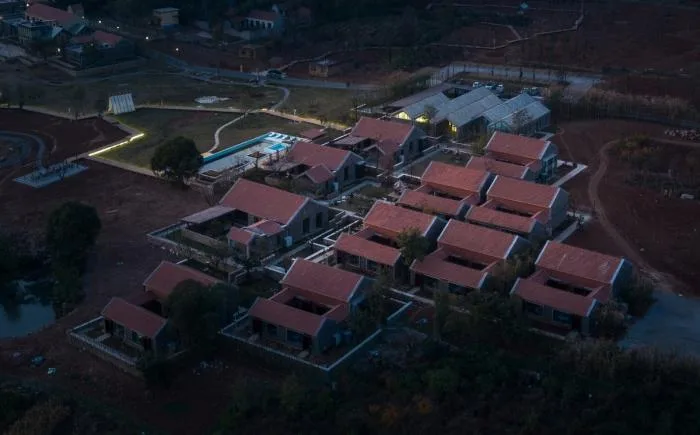
Homestay Courtyard
The homestay courtyard is divided into courtyard homestays, standard courtyard homestays, and parent-child courtyard homestays, offering indoor and outdoor spaces for business, leisure, and family interaction. To cater to modern lifestyles, a large communal courtyard is located north of the homestays near the village road, providing reception and dining services. Public kitchens, shared living rooms, and courtyard tea houses are integrated, blending traditional living spaces with modern social functions.
This transformation turns family-owned traditional courtyards into vibrant spaces for friends, families, and children to gather and interact. Minor renovations allow each courtyard to develop unique character, reflecting the lifestyles of its residents.
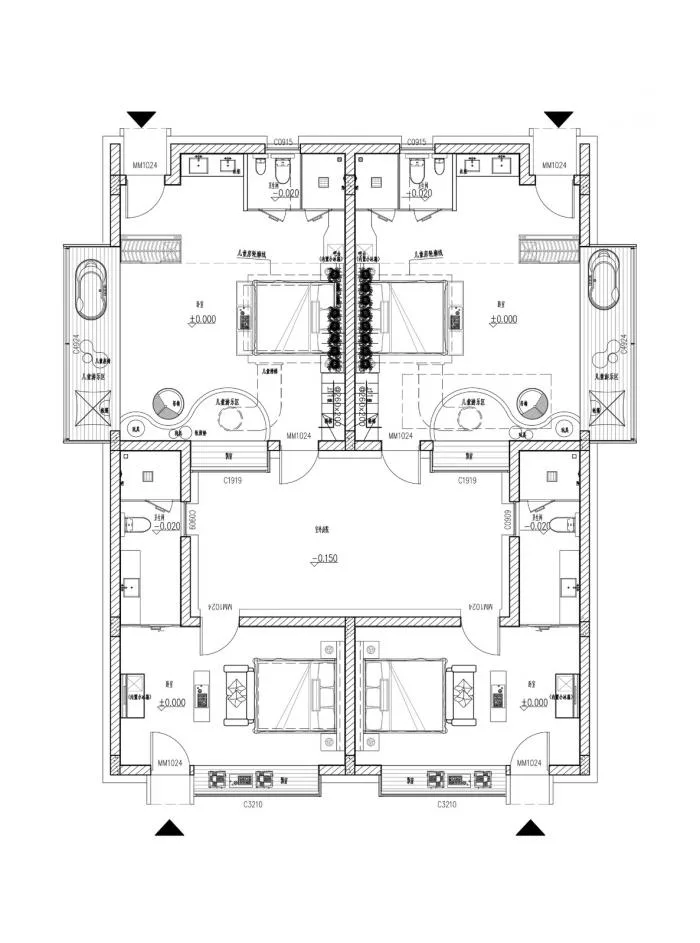
Parent-child Courtyard Homestay Floor Plan
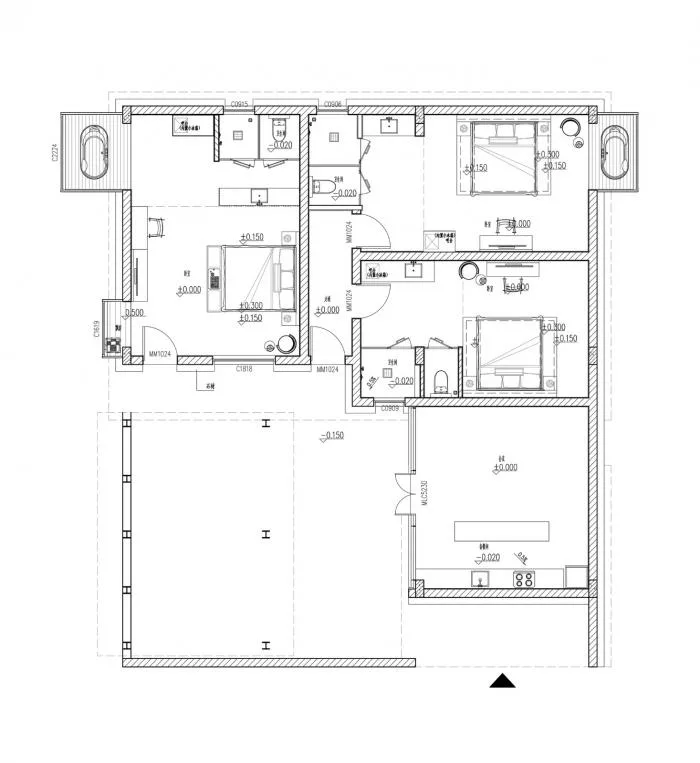
Shared Courtyard Homestay Floor Plan
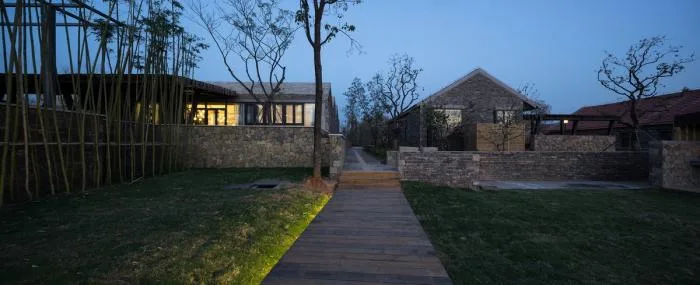
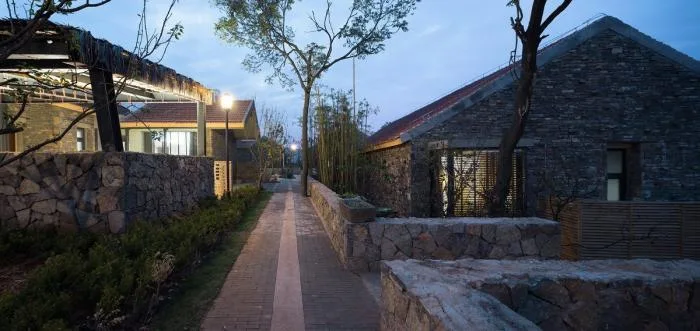
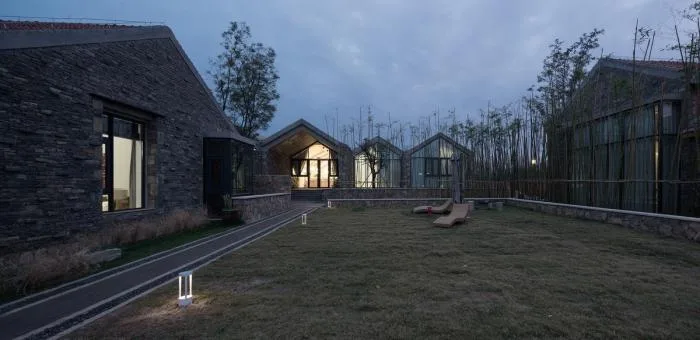
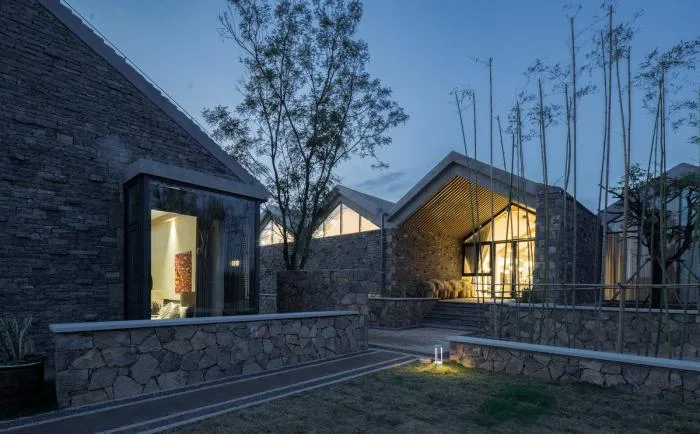
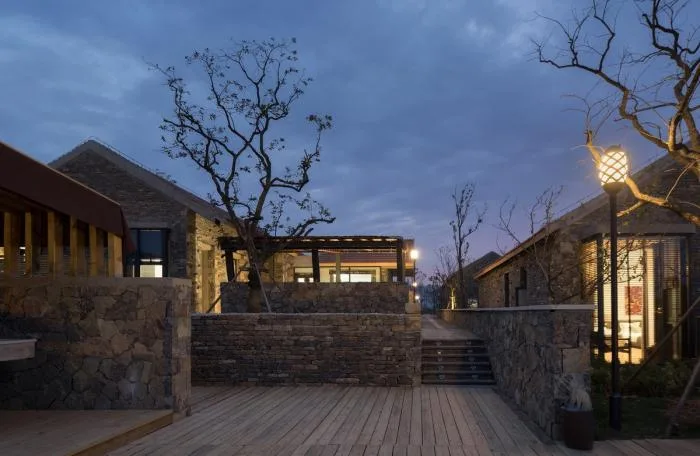
Homestay Courtyard
This courtyard complex thoughtfully integrates modern living needs with traditional materials and building methods. The public area features a folded roof inspired by traditional sloping roofs, covering communal activity spaces and highlighting the building’s social role within the community.
The public buildings use stacked stone for facades and roofs, with entrances guided by locally common thatched roofs, evoking a sense of emerging from the earth. The courtyards are constructed mainly from stacked stones and red tiles, honoring local architectural traditions.
The streets and alleys between courtyards maintain the scale of traditional villages, with diverse neighborhood spaces connected by pedestrian pathways, serving as public gathering places. From the public area, winding trails lead visitors through courtyards, landscapes, and surrounding fields, offering a rich spatial experience within the homestay cluster.
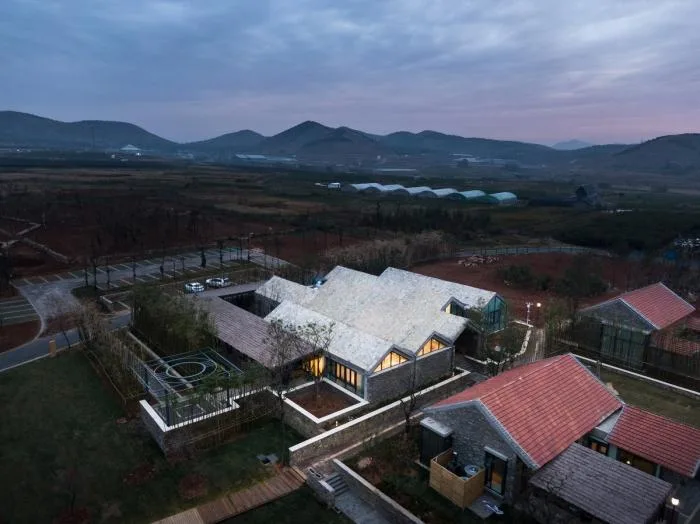
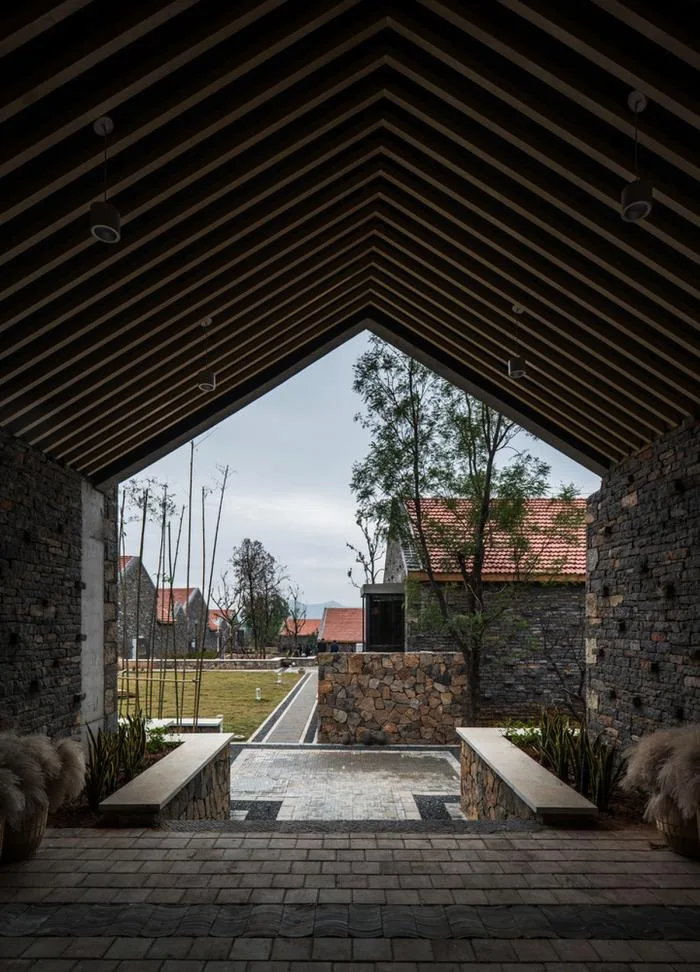
Dayuan Public Area
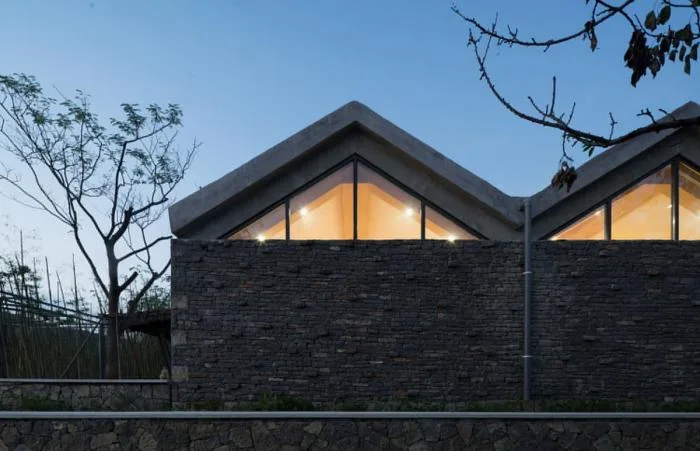
Corner of Dayuan Public Area
Cultural and Creative Block
The central village cluster, backed by residential courtyards and facing roads and fields, follows a linear pattern that suggests directionality. This spatial orientation was utilized to expand and elongate neighborhood spaces by opening walls, connecting inner courtyards, and creating clusters of multiple “dismantled” courtyards, resulting in a block-style spatial sequence.
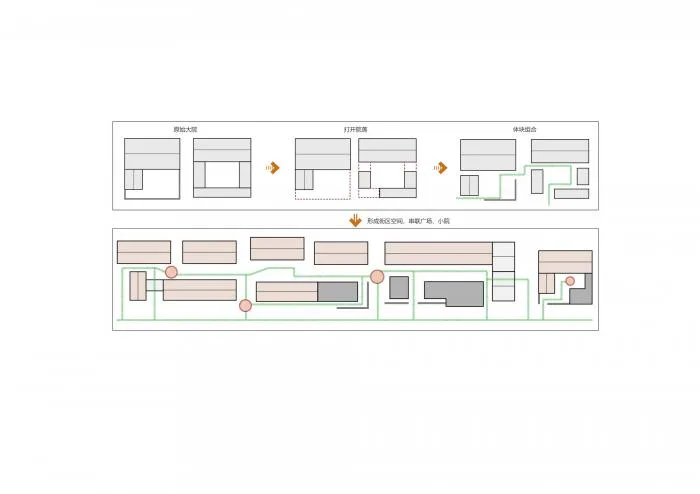
Block space generation
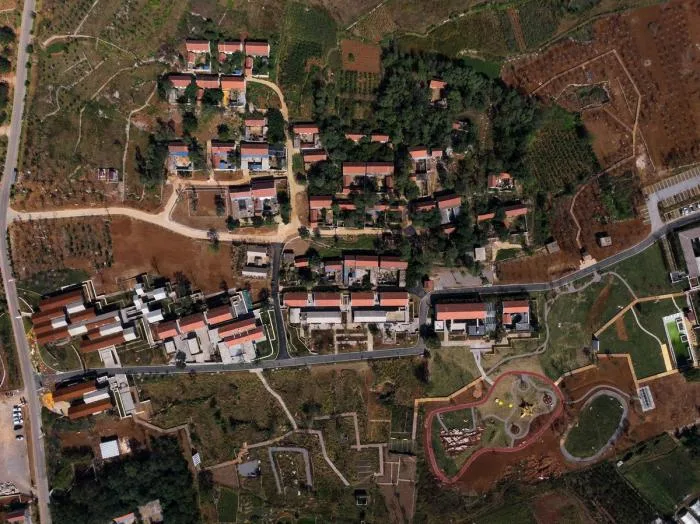
Aerial view of cultural and creative blocks
The openness and combination of courtyard forms transform the traditional “front yard and back house” layout into a series of inner streets, squares, and semi-enclosed courtyards, fostering an open, inviting block atmosphere. The southern side of the road has been organized and slightly renovated to include activity areas such as boardwalks, tents, and an unpowered children’s amusement park, reviving the playful spirit of rural fields.
The earth landscape extends the neighborhood experience, serving as a natural transition between courtyards and the broader community.
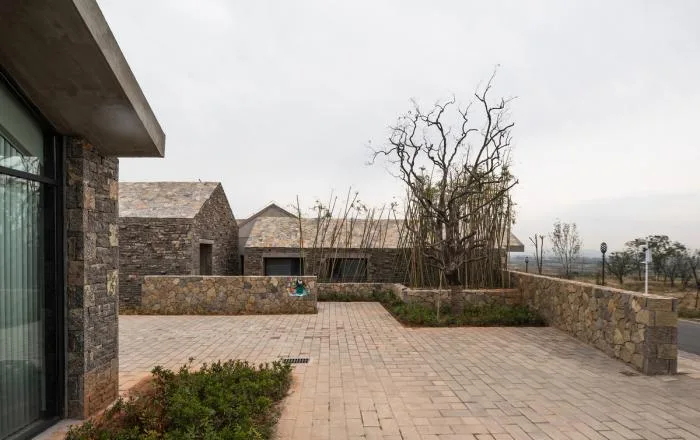
Cultural and Creative Block – Small Square
The rural block is primarily constructed from stone, complemented by wood and glass elements, emphasizing openness and display spaces to enrich the block experience.
This block supports diverse activities including agricultural innovation, rural entrepreneurship, and cultural creativity. It houses cultural shops, handicraft workshops, rural markets, restaurants, and natural schools. Local crops, customs, and crafts are creatively reimagined and integrated into educational settings, shop displays, and products, offering new employment opportunities for villagers and unique regional experiences for visitors.
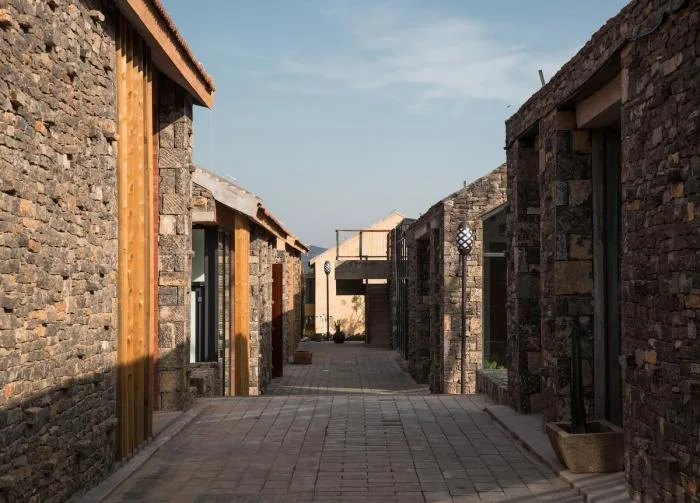
Cultural and Creative Block – Inner Street
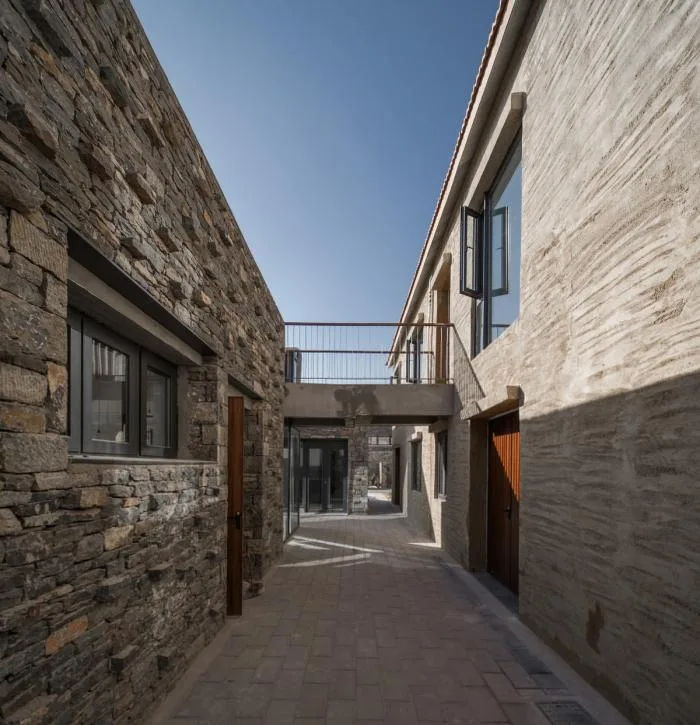
Cultural and Creative Block – Inner Street
Public Service Center
Located at the western “gateway zone” of the village road, the Public Service Center serves as the village’s starting point and gathering place. It provides entertainment, communication, and learning spaces for residents, reflecting strong public characteristics.
The design balances public function and regional identity by reinterpreting local architectural language within a contemporary context. Regional culture is integrated into the building’s symbols, materials, and construction methods, creating a spatial narrative that connects tradition with modernity.
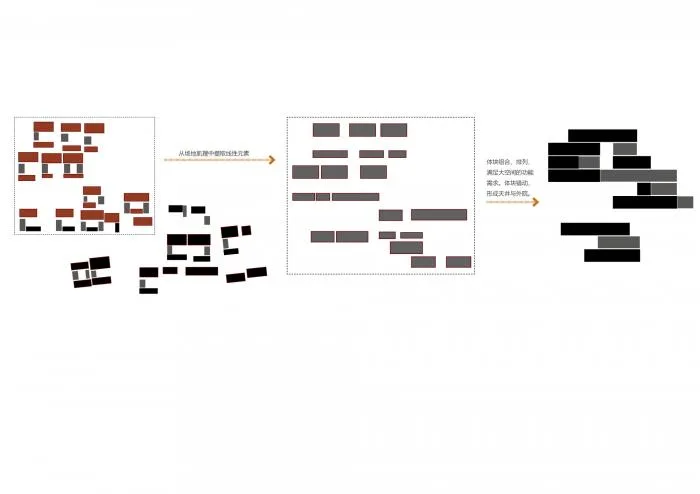
Public Service Center Block Formation
The design draws inspiration from the village’s traditional sloping roofs. The double-pitched roof motif evolves into a continuous and dynamic folded form through processes of replication, displacement, and disconnection. This roof not only accommodates large functional spaces but also creates a seamless indoor sloping ceiling, unifying the building’s interior and exterior.
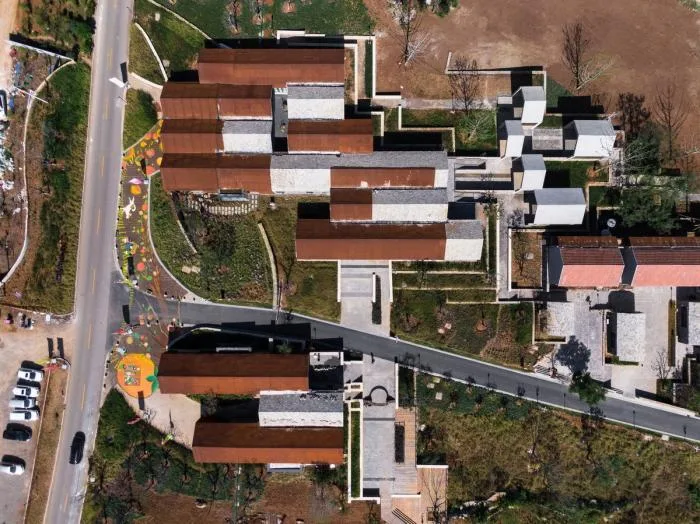
Aerial View of Public Service Center
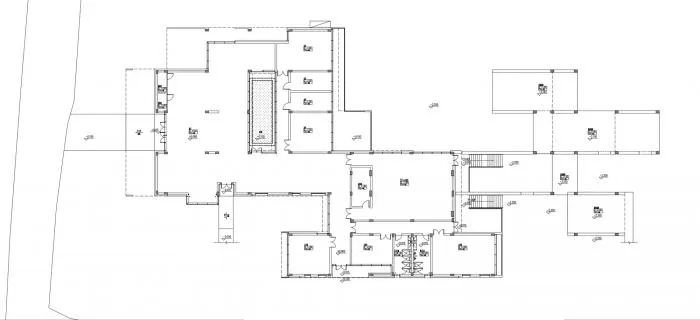
Public Service Center Floor Plan
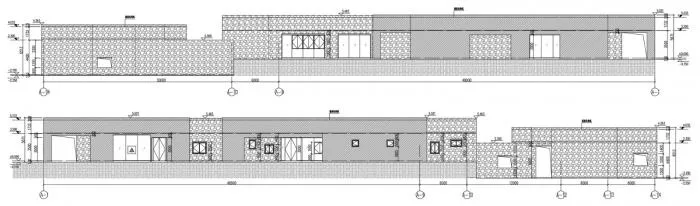
Front View of Public Service Center
The western facade faces the road, serving as the main entrance. The repeated roof motif on this facade creates a strong symbolic presence. This language is extended to form the main entrance gray space. On the eastern side, indoor spaces extend into the fields through structural forms, blending the building with its surroundings.
The continuity of the roof and the openness of the enclosure create a unique spatial relationship between the building and the natural environment, offering shelter while maintaining connection to nature.
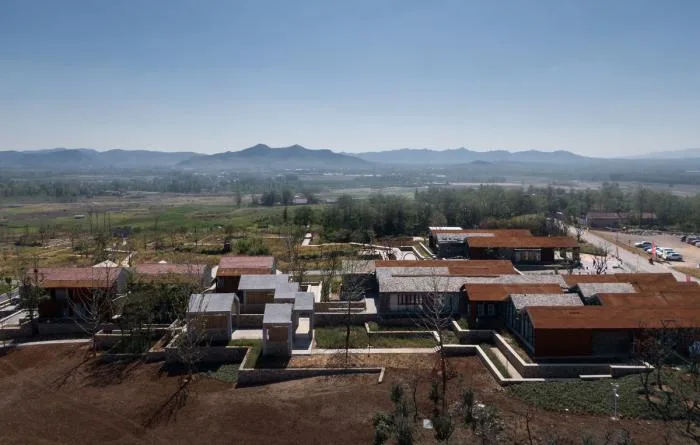
Public Service Center
The building features stone masonry combined with weather-resistant steel plates for the facade. The stonework showcases regional materials and local masonry techniques, presenting natural textures. The deep red steel plates evoke the traditional red tiled roofs of the area.
The interplay of gray or yellow block stones with deep red steel creates rich texture and layered color on the facade. Extending beyond the main structure, site elements use a classic combination of stone, plain concrete, and wood. The gray-white concrete provides a clean simplicity, while wooden screens between concrete roofs and stone walls add warmth and visual interest.
This interface transformation between materials creates dynamic light and shadow effects, enriching spatial qualities and connecting the built environment with the expansive fields.
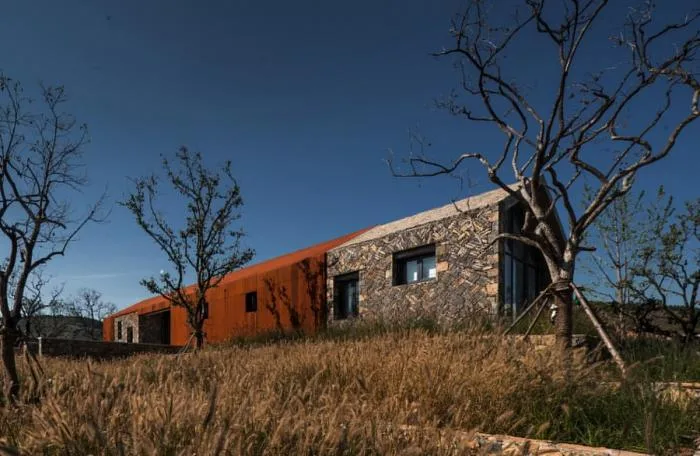
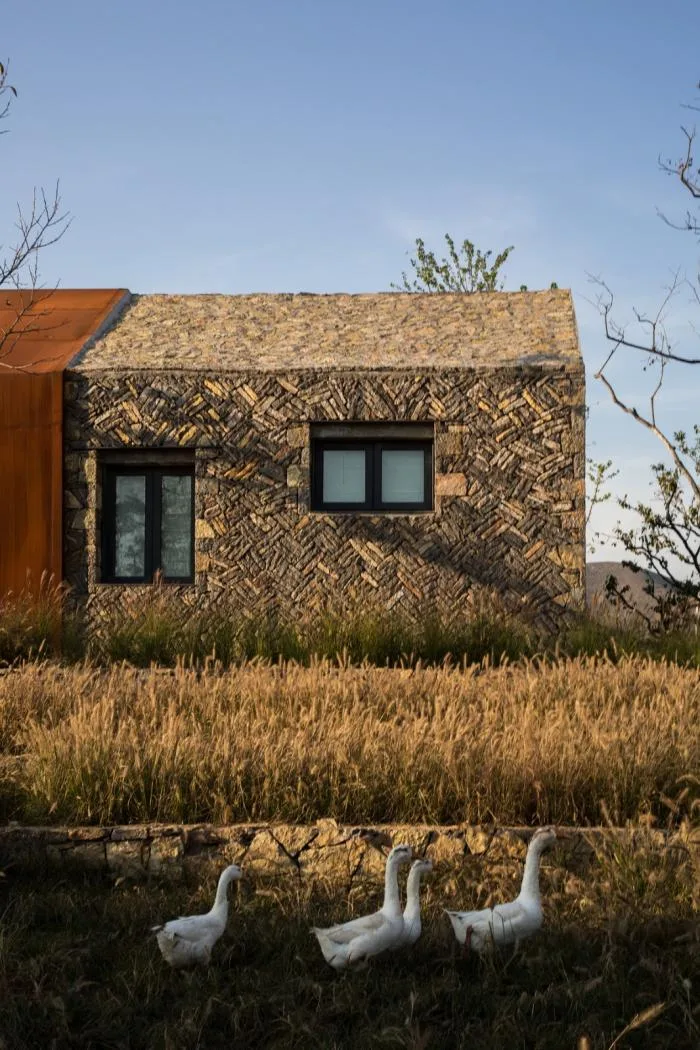
Public Service Center
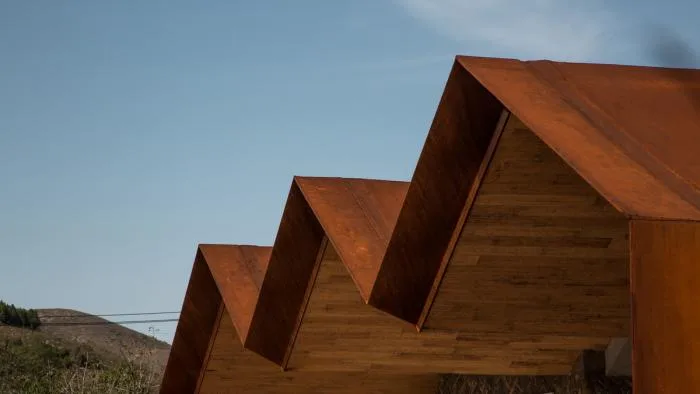
Public Service Center – Symbolic Language
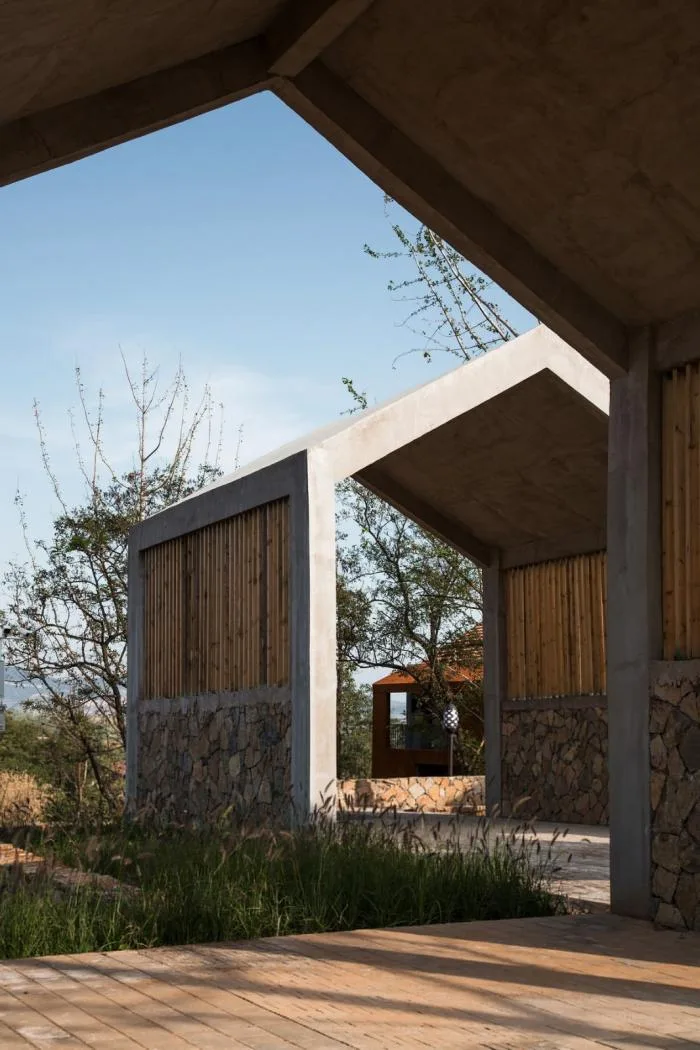
Public Service Center – Landscape Architecture
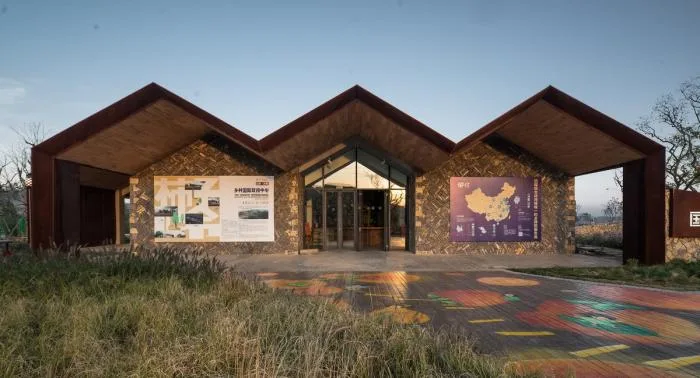
Entrance of Public Service Center
Conclusion
Zhiziling Ideal Village’s comprehensive renewal project demands deeper reflection on rural identity and future compared to individual building projects. Within the cultural and tourism environment of the Zhujialin Rural Complex, urban culture and non-traditional formats inevitably influence the village.
The design approach integrates modern culture with local traditions through planning and construction. By subtle design interventions, the traditional “courtyard” form has been adapted to create homestays, which gradually open to form blocks and incorporate public buildings. This process represents the evolution of traditional elements from preservation to modern architectural expression.
For visitors, the journey begins at modern public service spaces, moves through regionally characteristic spatial atmospheres, and culminates in experiencing authentic traditional living environments.
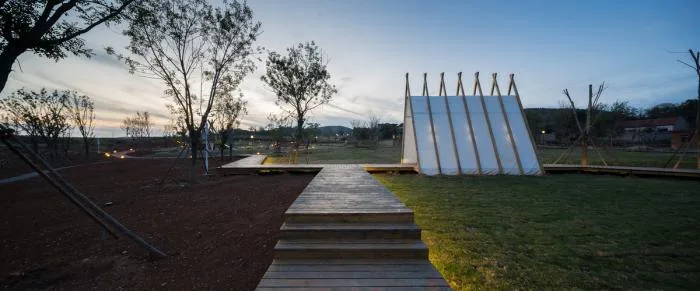
Landscape of the venue
Project Information
Project Type: Hotel, Renewal Project
Location: Linyi, China
Architect: Huajian Group · Shanghai Design Free Studio
Area: 7,601 m²
Project Year: 2019
Photographer: Zhang Kun
Lead Architect: Shen Yue
Architectural Design: Wang Ye, Chen Jing, Sun Yutong
Mechanical and Electrical Design: Yin Chunlei, Chen Yitong, Dai Dingli, Hu Hong
Structural Design: Li Wei, Shen Weiguo
Principal: Zhujialin Rural Complex Command Center in Yinan County
Interior and Landscape: Shanghai Times Architecture Design Co., Ltd
Planning and Operation: Xiangban Tourism Culture Development Co., Ltd












Must log in before commenting!
Sign Up