
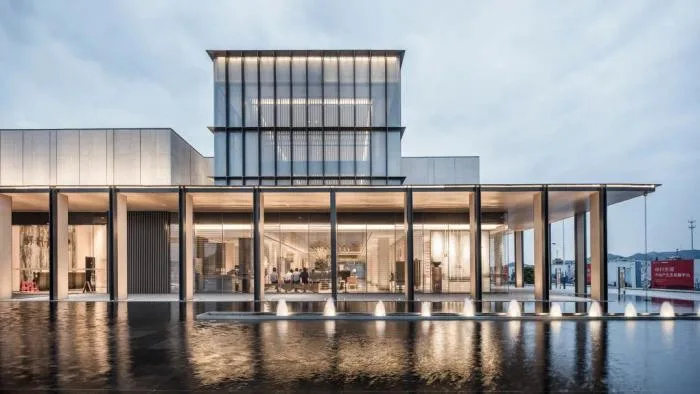
The Song Dynasty marked the pinnacle of Chinese culture during the Zhao and Song eras. It cultivated a distinctive aesthetic characterized by simplicity, transcendence, and agility, emphasizing poetic spirit over mere functionality. This era propelled classical Chinese aesthetics to new heights.
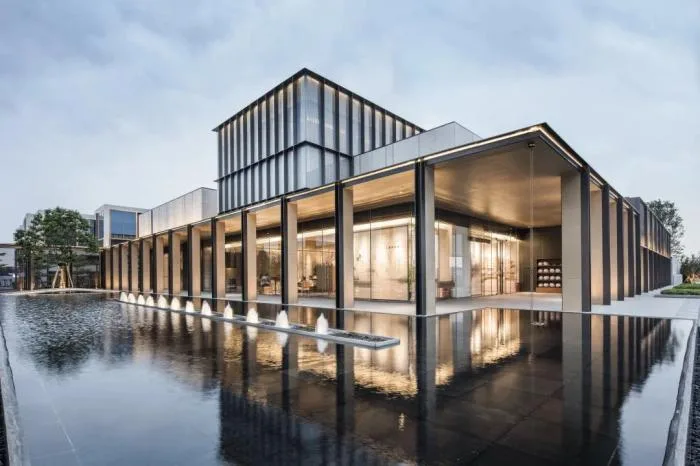
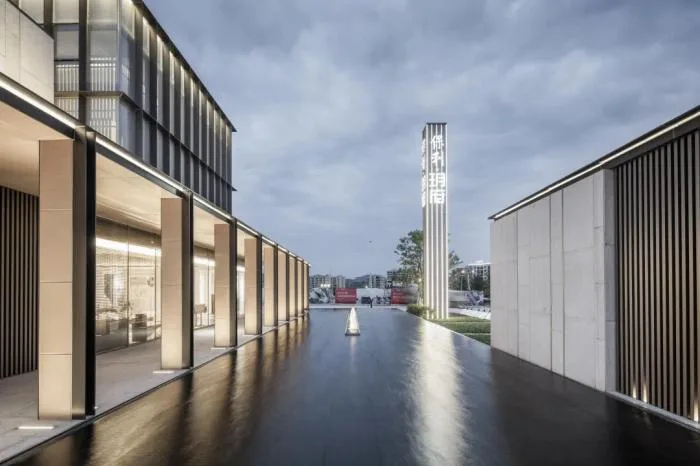
Project Areas:
- Sales Center: 1,007 square meters
- Sample Room: 650 square meters
- Landscape: 8,750 square meters
Background
Oriental Charm Meets Modern Expression
This project is situated in Gujing Town, Xinhui, within the Guangdong-Hong Kong-Macao Greater Bay Area. Positioned centrally in Jiangmen City, it connects to Xinhui—the transportation hub of Zhuxi—via Provincial Highway 270. It lies adjacent to Zhuhai as well as Hong Kong and Macao, serving as a primary gateway for cities in the western Pearl River Delta to access these regions.
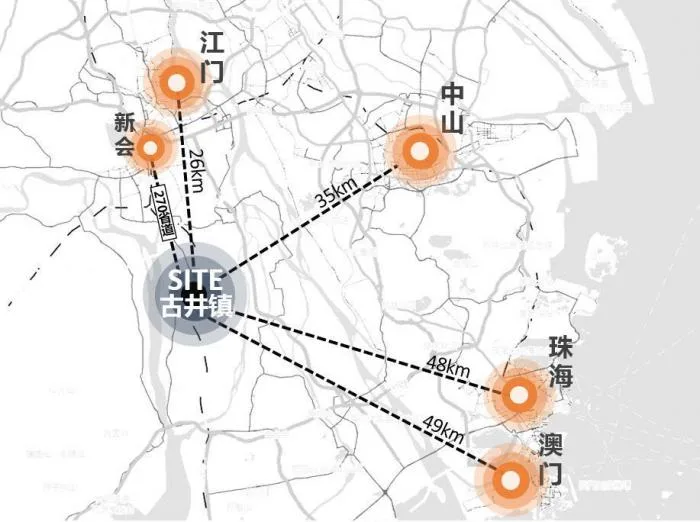
▲ Location Map
Gujing Town holds historical significance as the site of the Battle of Yashan during the late Song Dynasty. It became a cultural hub when members of the Southern Song royal family settled here, forming the foundation of the area’s heritage. Following the Opium War, overseas migrants from Jiangmen were influenced by Western culture but maintained a strong desire to honor their homeland. This led to a unique fusion of Western architectural styles with traditional Chinese design, especially within overseas Chinese communities.
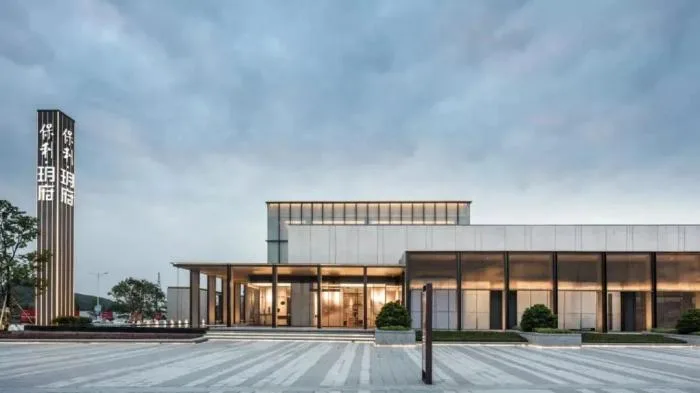
▲ Entrance Square
Our design employs modern materials, techniques, and architectural language to express the refined simplicity and elegance of Eastern charm rooted in Song Dynasty aesthetics. It continues the exploration of blending Chinese and Western cultural elements characteristic of overseas Chinese hometowns.
Form Generation
Form, Etiquette, and Spatial Sequence
The building layout adapts to the plot’s shape by carving out an enclosed courtyard from a square block. Functional areas are organized around several inward-facing courtyards, embodying the traditional Chinese courtyard culture that emphasizes spatial hierarchy and sequential experience.
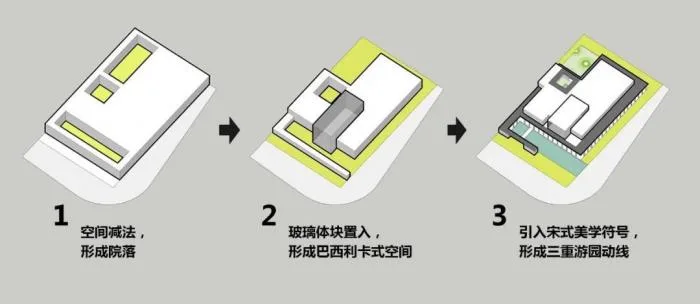
▲ Volume Generation
The composition of building blocks highlights the logical relationship between form and function. The design balances asymmetry, contrasts solid and void, and emphasizes a dominant central volume, reflecting principles of modernist architecture.
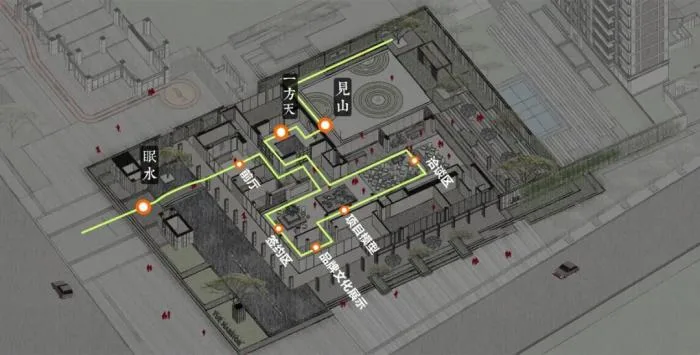
▲ Tourist Route
Inspired by traditional Chinese courtyards, the design arranges a series of overlapping courtyards with clear order and rhythm, guiding visitors through spaces intended for display and sightseeing.
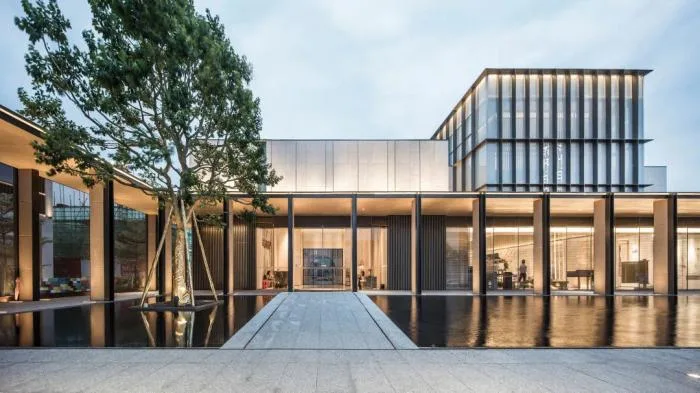
▲ Pool and Colonnade
Modern building materials and minimalist design vocabulary are used to evoke traditional courtyard spatial qualities, such as the transition from one space to another and scenic movement, achieving a restrained, elegant, and atmospheric Song-style aesthetic.
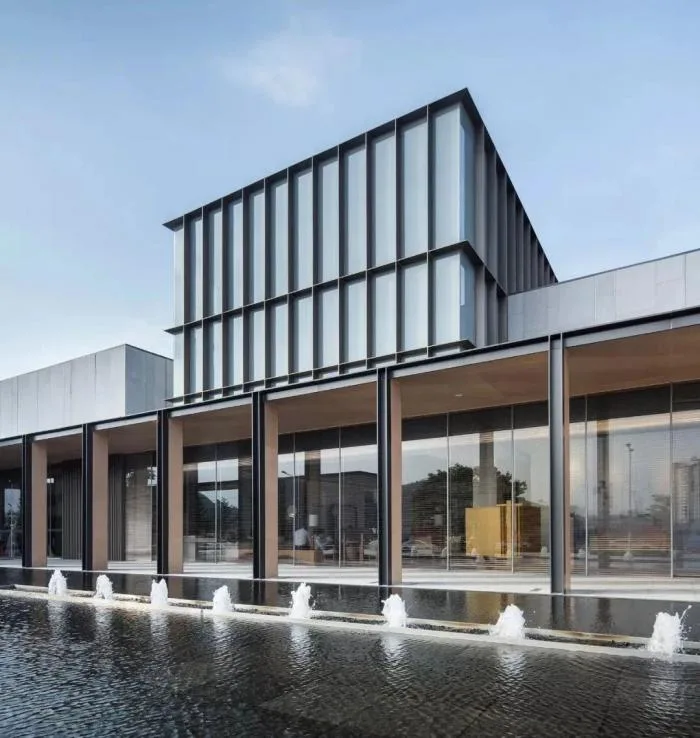
▲ Architecture and Water Scenery
Spatial Experience
Multiple Courtyards, Poetic Expression
The three-story courtyard blends modern and classical design elements within a concise and elegant layout. This creates a sense of progressive spatial development where front and rear views unfold like a traditional painting scroll, gradually revealing the subtle beauty of the East.
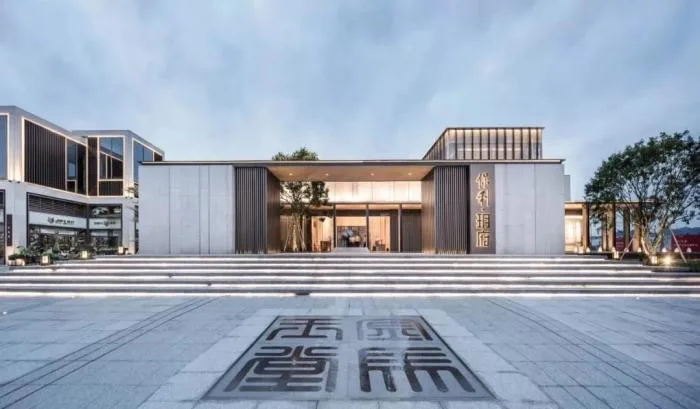
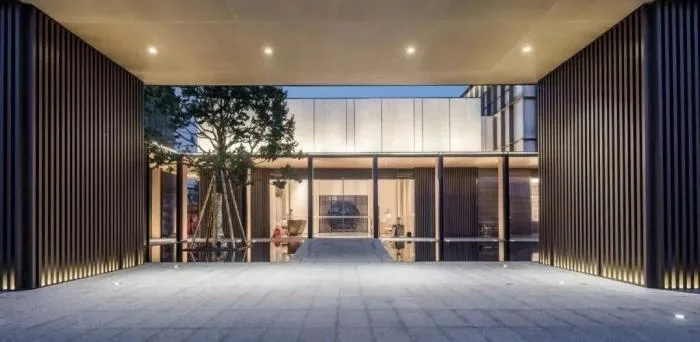
▲ Entrance with Open Door
Yi Zhong Yuan | Sleeping Water: The Elegance and Righteousness of Light and Shadow
The courtyard features deep spaces with willow trees and misty atmosphere, complemented by delicate, weightless curtains.
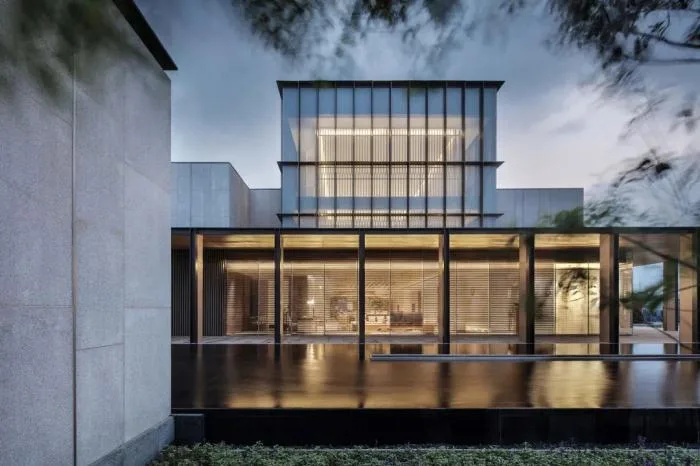
▲ Pools and Buildings
The tranquil ponds and winding corridors create a harmonious interface between architecture and nature. The still water acts as a reflective third space, merging reality and illusion, blurring the boundaries among architecture, landscape, and environment, and evoking a subtle, layered Eastern charm.
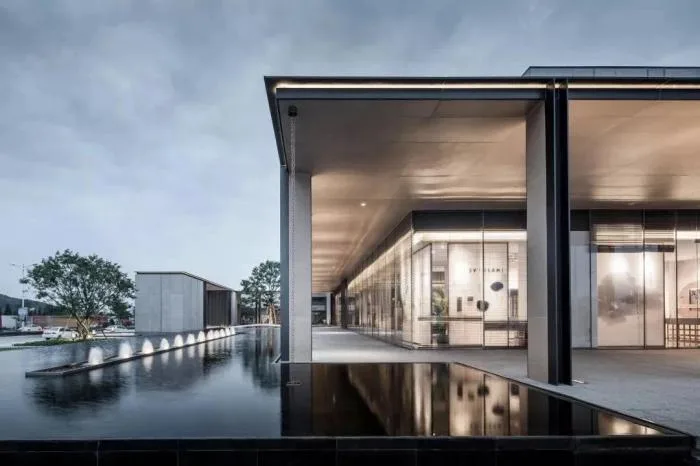
▲ Column Gallery and Pool
Eryuan | One Square Sky: The Graceful Balance of Square and Circle
The flower garden features a small corridor draped with soft wind and green curtains.
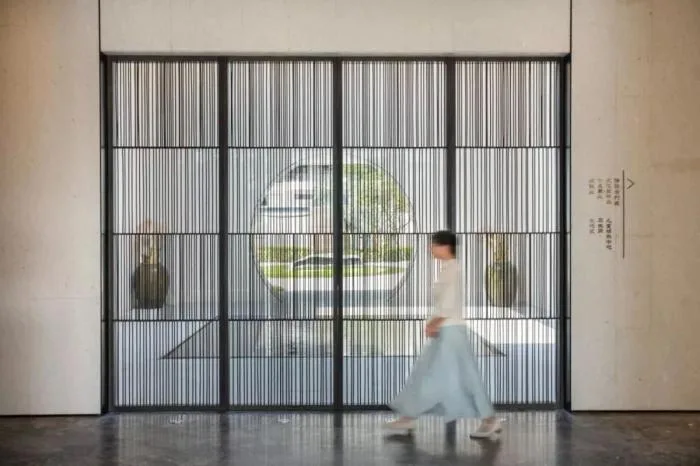
▲ Translucent Partition
This design uses traditional Chinese spatial layout to create a double courtyard garden enclosed on all sides. Rainwater gathers along the eaves, symbolizing the convergence of water at the heart of the heavens. The interplay of square and circular shapes subtly reflects Eastern cosmology, encircling the scenery and embracing the universe within a mustard seed.
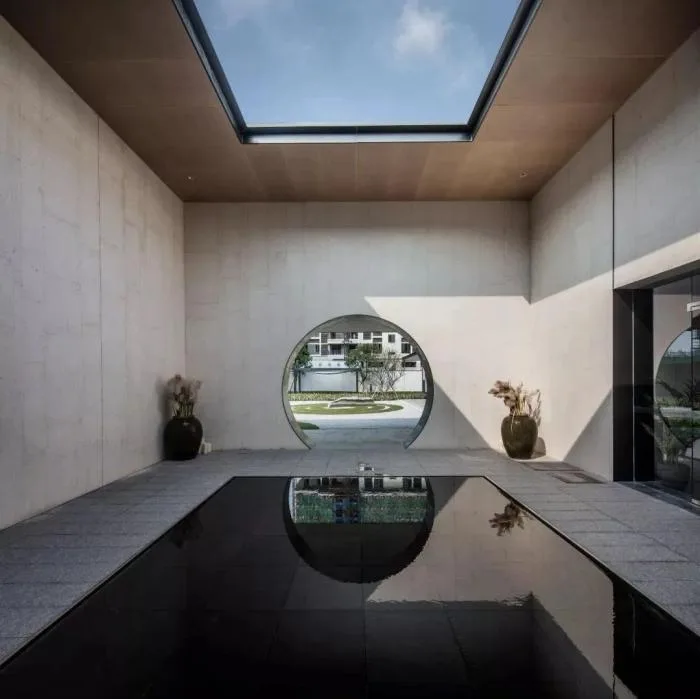
▲ Moon Gate and Pool
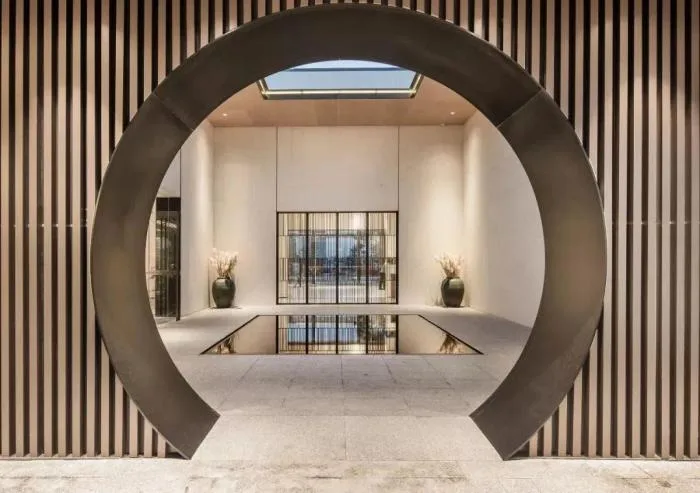
▲ Square and Circle
Sanchong Temple | Jian Shan: The Boundary Between Heaven and Earth
The water surface is adorned with delicate red hues and green silk curtains, evoking the proximity of Penglai’s clouds and the clarity of the wind.
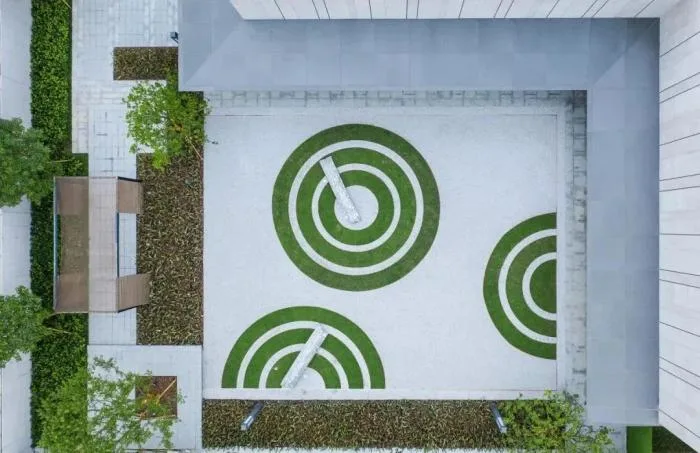
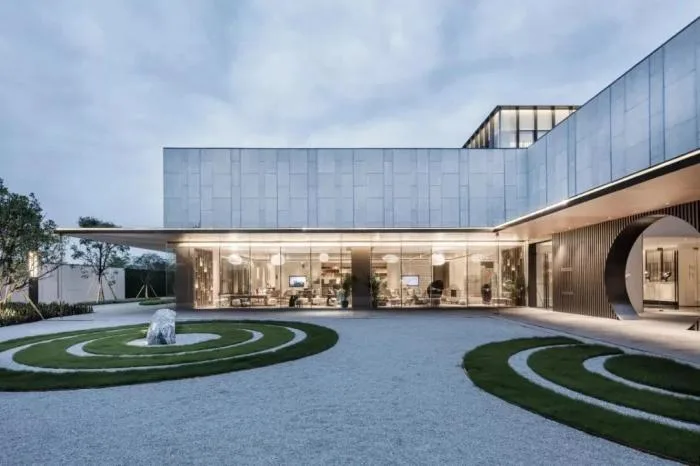
▲ “One Pool and Three Mountains”
In the third courtyard, the Zen spirit intensifies. The horizontally extending eaves embody the graceful lines of Song aesthetics. Transparent glass dissolves the barrier between inside and outside, enclosing the open space of “one pond and three mountains” crafted with sand and stone into a unified world.
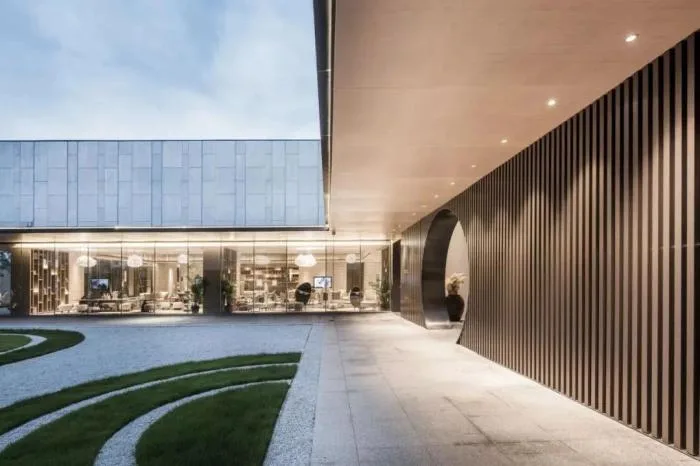
▲ Eaves and Courtyards
The courtyard and mountain courtyard interconnect through the Moon Gate, creating a harmonious and continuous visual dialogue.
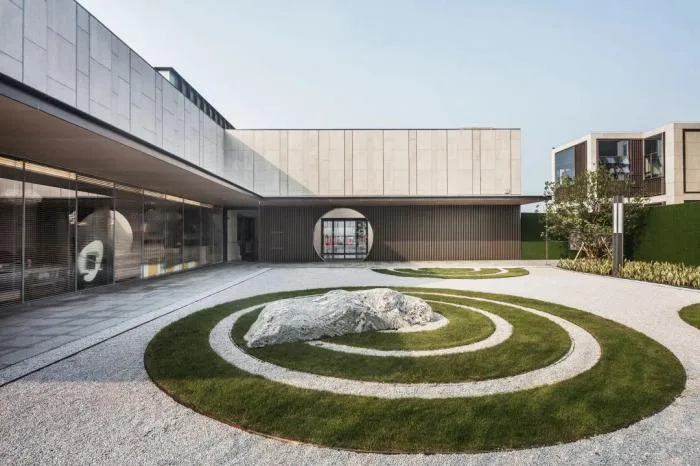
▲ Moon Gate and Courtyard
Interior Views
Detailed Reproduction of Song Style Aesthetics
Chinese classical aesthetics reached their zenith during the Song Dynasty, emphasizing absolute simplicity in form, color, and texture. The interior design reflects the building’s overall square and dignified character, featuring predominantly straight lines that convey calmness and elegance.
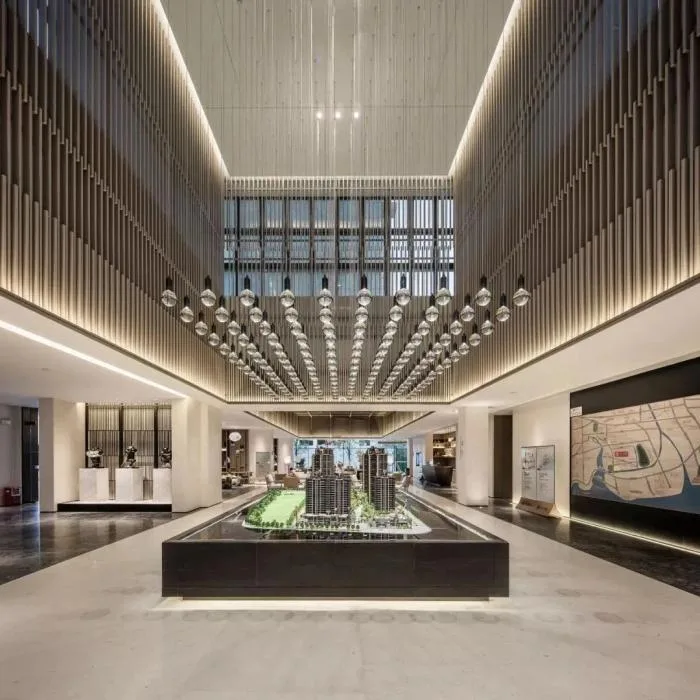
▲ Main Hall
The color palette adheres to Song style aesthetics, featuring neutral gray-brown tones harmonized with local accents of gray-blue, creating rich yet subtle variations.
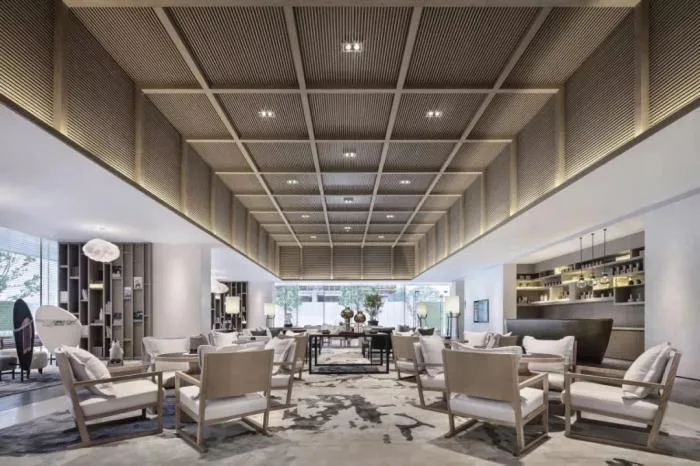
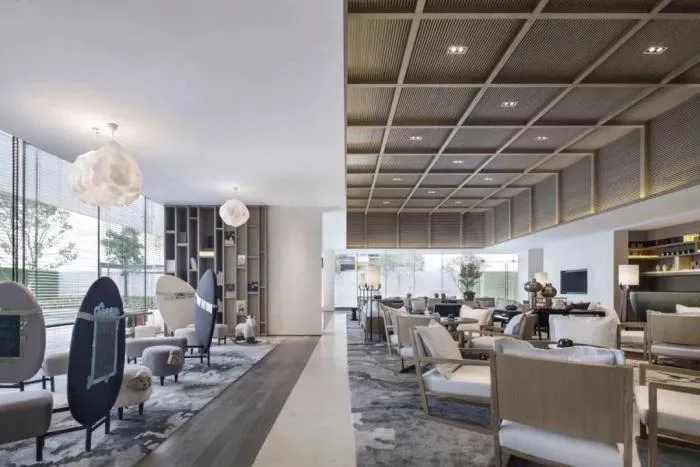
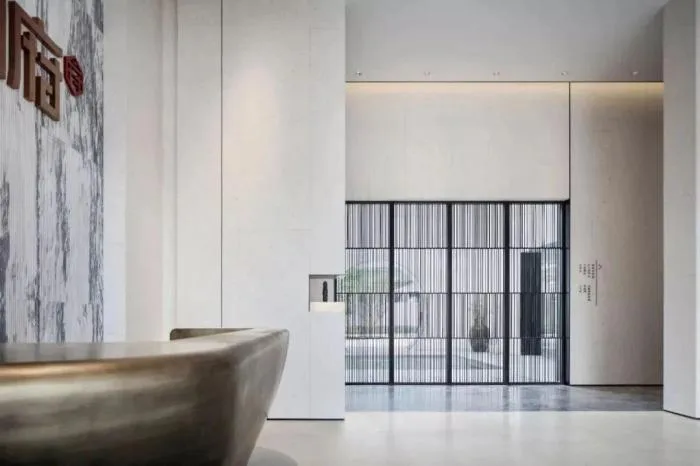
▲ Interior Details
Project Details
- Project Name: Xinhui Gujing Poly Yuefu
- Location: Gujing Town, Xinhui District, Jiangmen City, Guangdong Province
- Year Built: 2019
- Developer: Poly South China
- Design Firm: Shanghai Lianchuang Design Group Co., Ltd
- Architectural Team: Shanghai Lianchuang Urban Construction Design and Research Institute
- Construction Drawings: Guangdong Nanhai International Architectural Design Co., Ltd
- Lighting Design: RuShi Lighting Design (Shanghai) Co., Ltd
- Landscape Design: Pubang Design
- Interior Design: Shenzhen Yifang Space Design Co., Ltd
- Curtain Wall Design: Guangdong Chuanggao Curtain Wall Doors and Windows Engineering Co., Ltd
- Photography: Shen Zhonghai
- Graphic Editing: Lianchuang Research Institute












Must log in before commenting!
Sign Up