
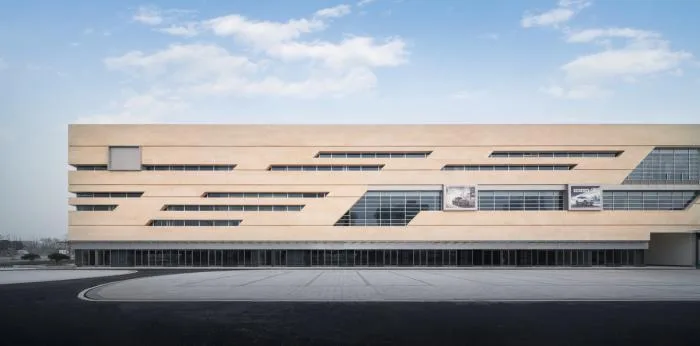
▲ Facade
In late 2019, Tianyi International Automobile City—the first large-scale automobile-themed complex in Nanjing’s Lishui area—officially opened its doors. The Sanyi design team aimed to create a themed cultural experience center by thoughtfully integrating one-stop automotive-related services and embedding automotive culture into the facade materials and detailed design.
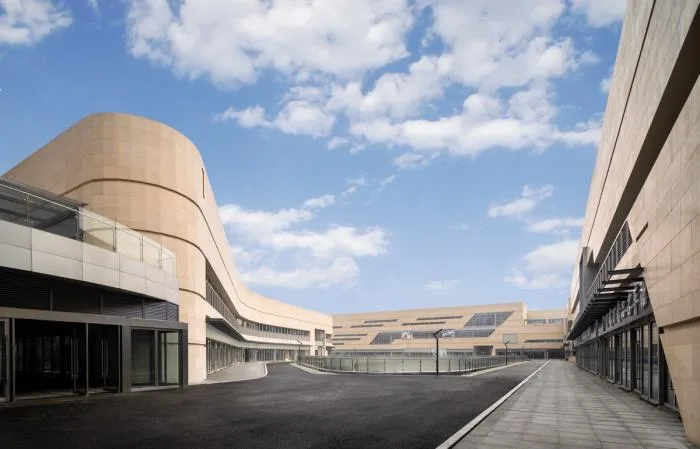
▲ Tianyi International Automobile City Photography: Ziran Architecture Photography
Covering 100,000 square meters, Tianyi International Automobile City is Lishui’s first automobile lifestyle-themed plaza. It promises to usher in new opportunities for the automobile sales and service industries in Lishui and neighboring regions, playing a vital role in optimizing the local industrial structure.
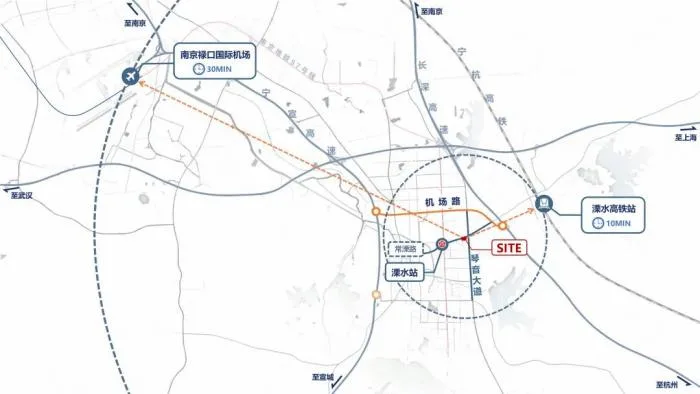
▲ Project location
The total construction area of Tianyi International Automobile City is 105,000 square meters, with an above-ground area of 53,500 square meters and a plot ratio of 1.5. Situated at the intersection of Jiaotong East Road and Provincial Road 246 in Lishui District, it benefits from convenient transportation links. Nearby facilities include a high-speed railway station, subway station, highway entrance, hospital, and a building materials city.
Supported strongly by the government, the project serves Lishui and faces Nanjing’s main urban area. It aligns with international automotive industry trends and is poised to become a new commercial landmark in Lishui.
A Landmark Industrial Park Rich in Experience
For the design team, Tianyi International Automobile City was never intended to be just a conventional design project.
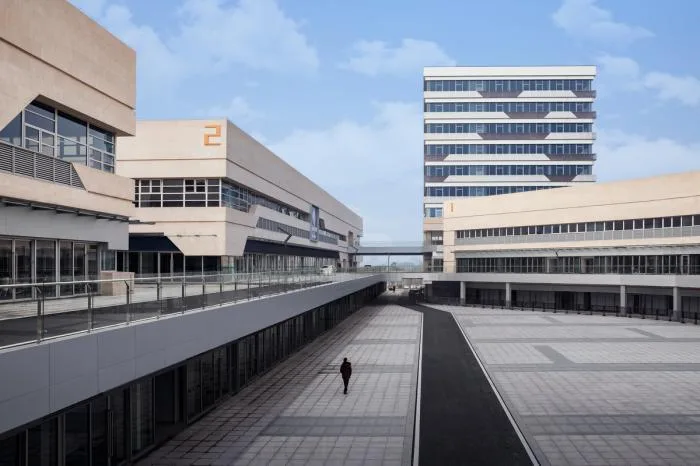
▲ Interior sunken courtyard Photography: Ziran Architecture Photography
This project is not merely a commercial complex, an industrial park, a standalone building, or a large-scale urban design. It is a hybrid that combines elements of all these types. It must balance the commercial experience of a complex with the specialized functions of an industrial park. Every building space is designed to be functional, comfortable, and aesthetically pleasing, while the entire complex is planned in a coherent and orderly manner.
This unique design challenge requires architects to think differently. Unlike typical commercial complexes, the operational processes, rules, and habits of the automotive industry form the foundational logic for the entire complex. The scale, however, does not reach that of urban design. Designing a smooth car activity center is as interesting and complex as the 1933 old factory’s dedicated flow and space for cattle slaughtering.
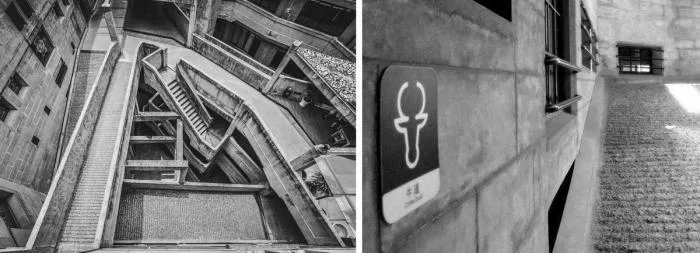
▲ 1933 Lao Chang Fang Niu Dao, image sourced online
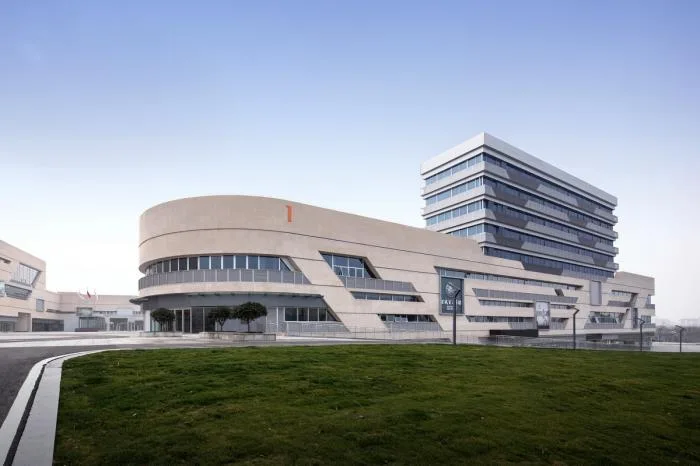
▲ Urban Interface
In essence, this industrial park—which covers the entire automotive lifecycle—functions more like a city complex themed around automobiles for the residents of Lishui.
Tianyi International Automobile City has established a one-stop service flow encompassing new car displays, used car sales, car decoration and assembly, beauty treatments, inspection, and registration. It also offers comprehensive lifestyle and commercial services such as branded dining, leisure and entertainment, express hotels, coffee clubs, cultural experiences, and children’s karting tracks—forming a new regional business district centered on automobiles.
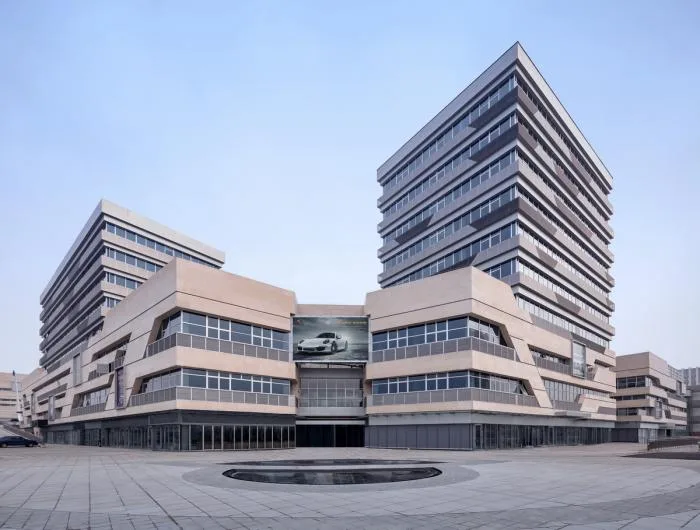
▲ Urban landmark corner Photography: Ziran Architecture Photography
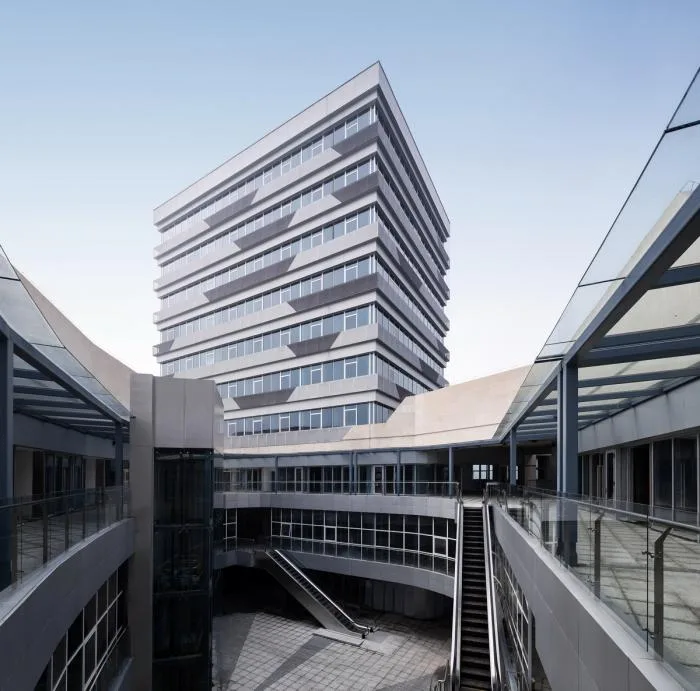
▲ Interior Photography: Ziran Architecture Photography
Tianyi International Automobile City in Lishui offers closed-loop, one-stop services covering the entire automotive industry chain. The relocation of the Lishui Vehicle Management Office has created a centralized service hub for new car exhibitions, used car sales, decoration, beauty treatments, inspection, and registration, integrating all automobile-related businesses.
Just as corridors, elevators, and stairs facilitate human movement, the park’s various functional zones are connected by car-friendly roads, creating continuous spatial interfaces and seamless flow for vehicle traffic.
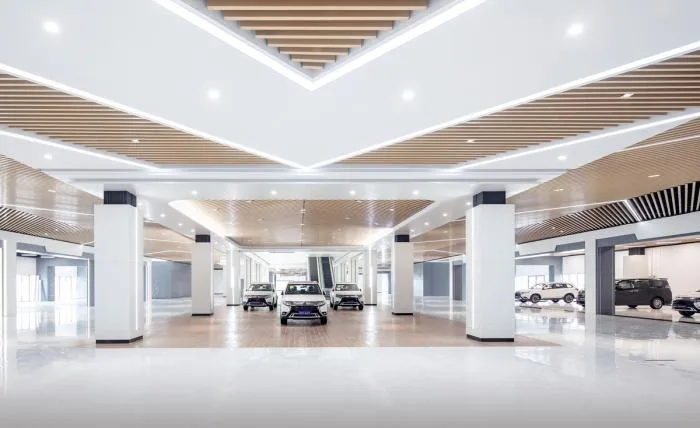
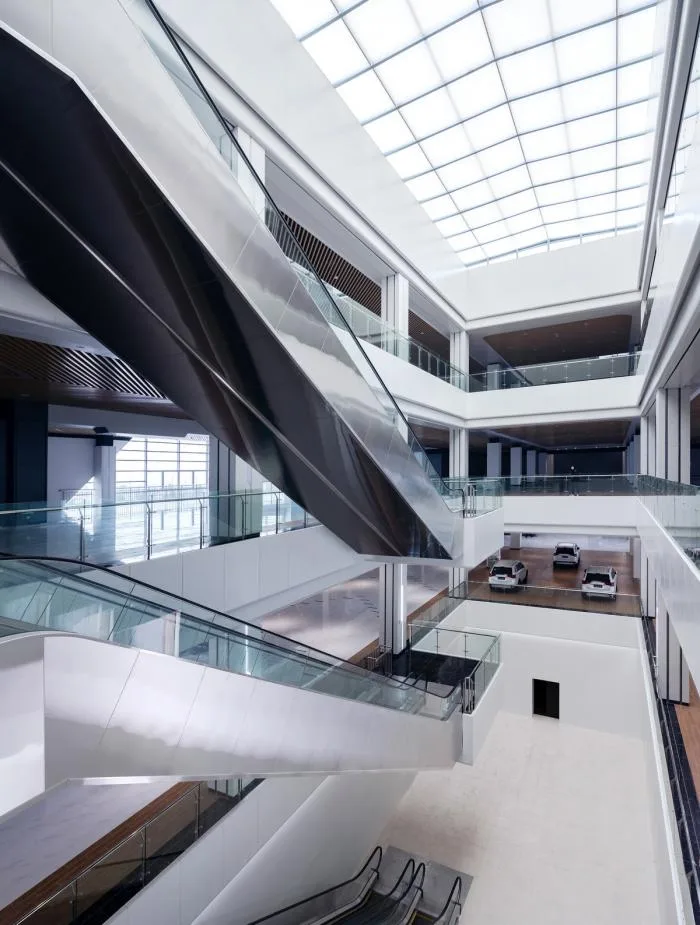
▲ Indoor Space Photography: Ziran Architecture Photography
Entering the park feels like visiting a themed amusement park where you can enjoy the experience without leaving your car. Various route guides lead customers through the complete service journey based on their needs. Moving away from the monotony of traditional industrial parks, vehicles here encounter a stylish commercial atmosphere, high-quality facilities, and engaging “car routes.”
The sunken plaza hosts used car events, with dedicated flow lines for car beauty and maintenance, registration, inspection, photography, business acceptance, test drives, and environmental testing.
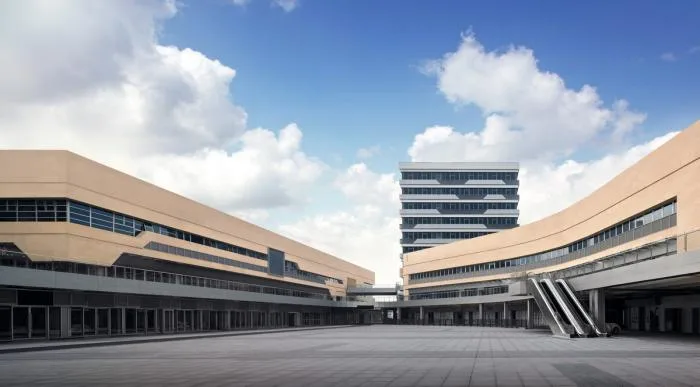
▲ Interior and sunken courtyard Photography: Ziran Architecture Photography
The entire park is designed as a car-centric, barrier-free facility rich in drama and experience. This innovative and engaging “experiential” streamlined design distinguishes Tianyi Automobile City from traditional industrial parks or commercial complexes, making it more of a “car tour experience center.”
Composite and Unified Functional Layout
Tianli Square, located on the southern side of the Automobile City site, serves as a connector and upgrade. Designers aimed to extend the commercial experience from Tianli Square Phase I into the atmosphere of Phase II Automobile City.
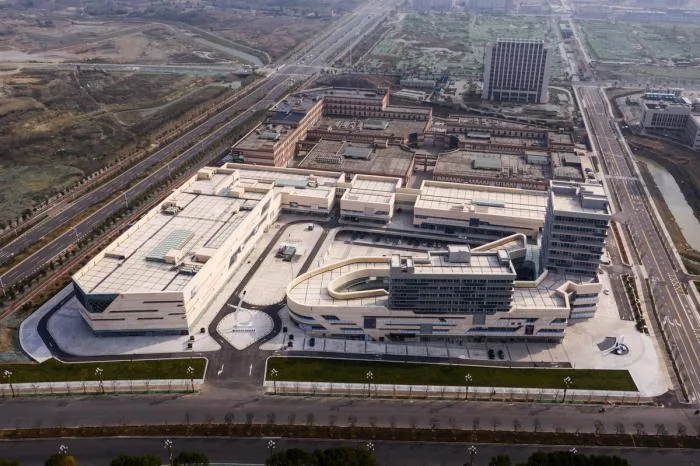
▲ Tianyi International Automobile City and Phase I Tianli Square Photography: Ziran Architecture Photography
The park’s layout follows the concept of “one axis and two zones.” The “one axis” is a continuation of the north-south axis from Tianli Square Phase 1, while the “two zones” encompass commercial spaces, automobile exhibitions, and auto parts decoration areas.
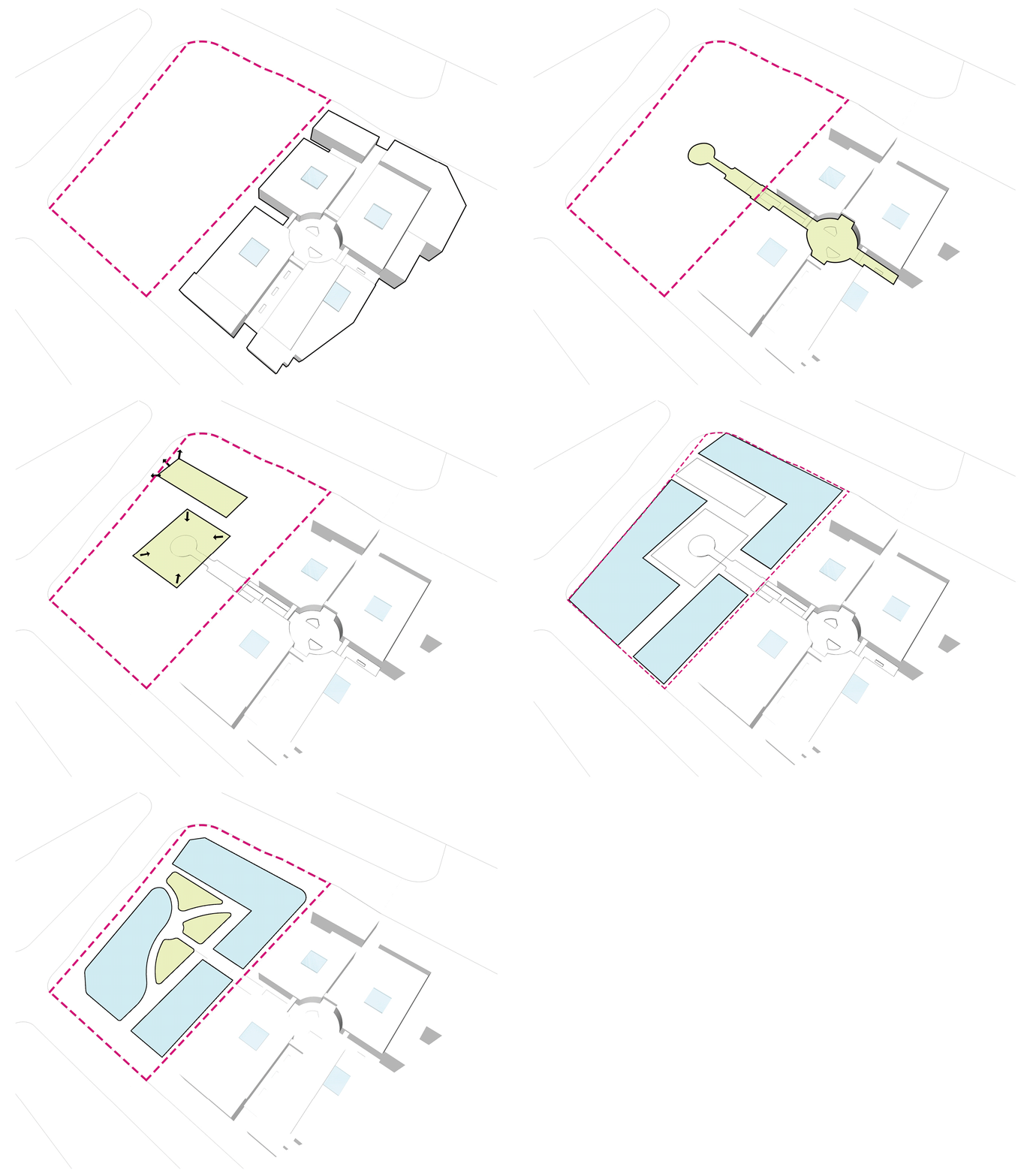
▲ Concept generation
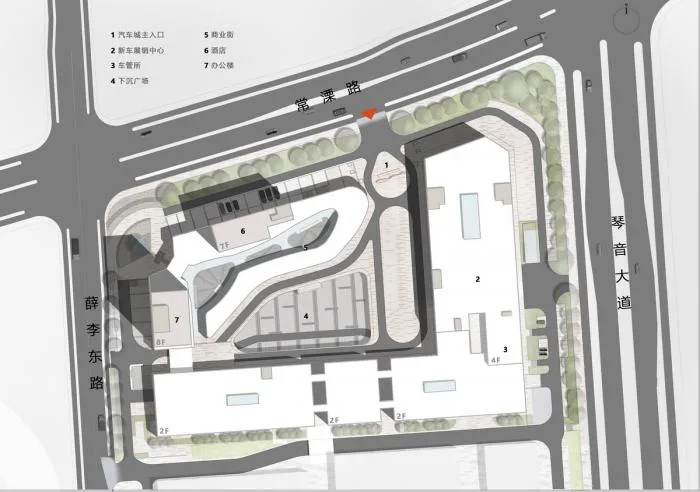
▲ General layout plan
The architects placed the new car exhibition center on three above-ground floors in the northeast corner, establishing a strong urban interface and landmark for Lishui. The used car exhibition and sales center is located on the first underground floors at the southwest side, connected to the sunken plaza.
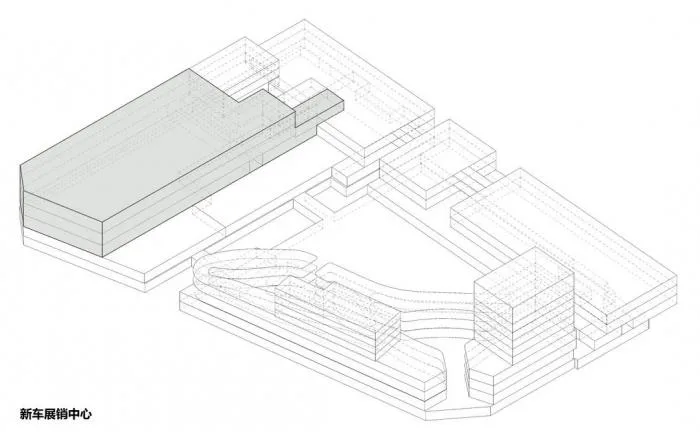
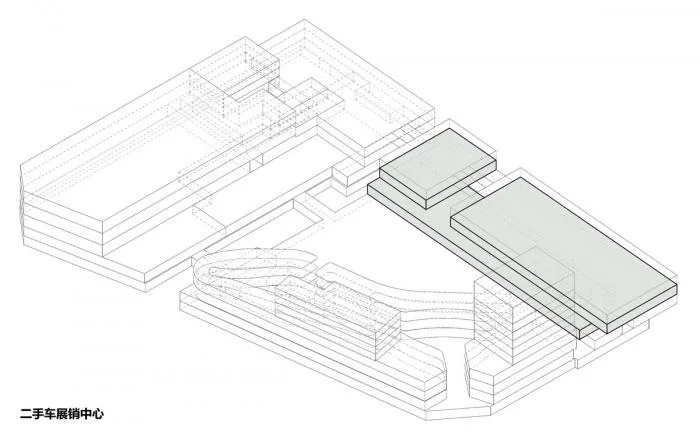
Supporting automotive services—including the vehicle management office and vehicle inspection center—are centrally located on the east side of the site. Auto parts and beauty services line the south side, forming a lively commercial street alongside the central square building.
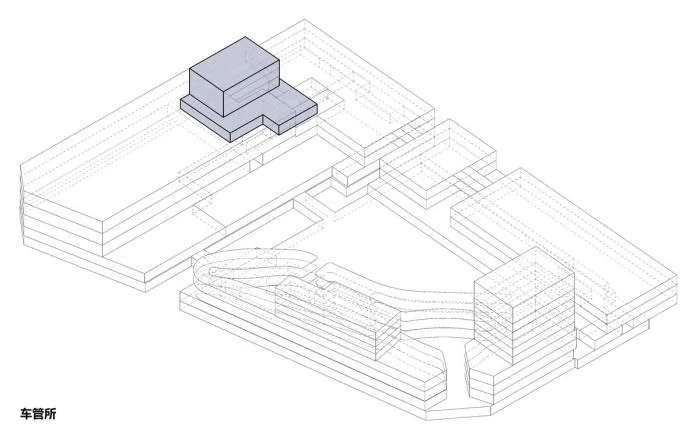
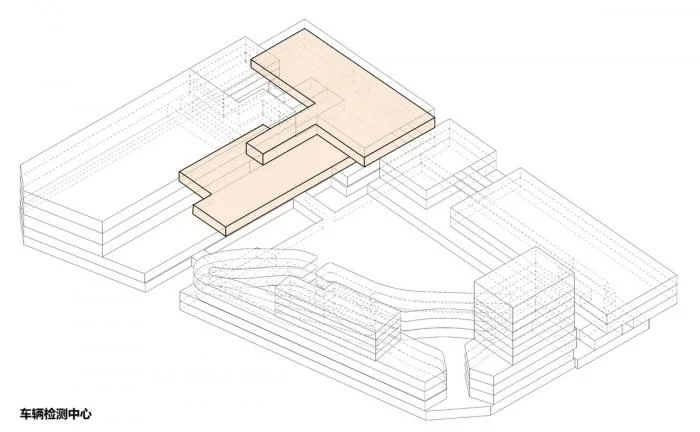
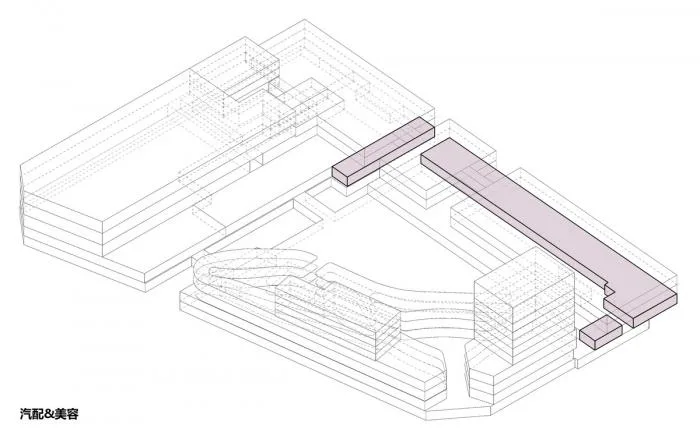
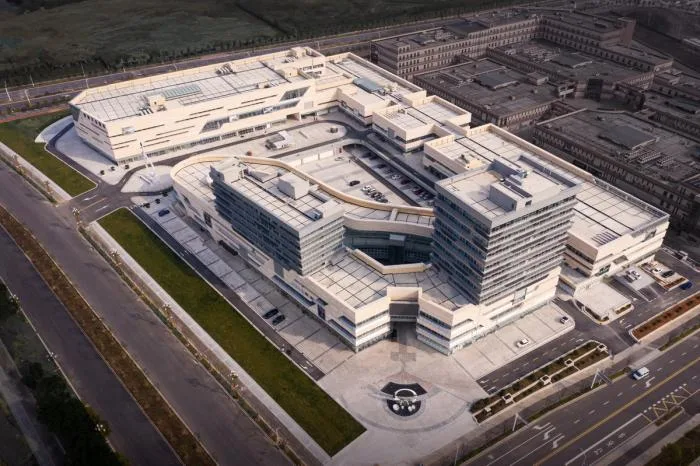
▲ Project Aerial Photography: Ziran Architecture Photography
The two-story podium and basement areas on the north and west sides serve as commercial retail spaces, maximizing the urban commercial interface. Two tall towers accommodate hotel and office functions. The highest floors on the south side are also designated for offices. The hotel’s main entrance is located on the south side of the commercial street, while office entrances are along the west side.
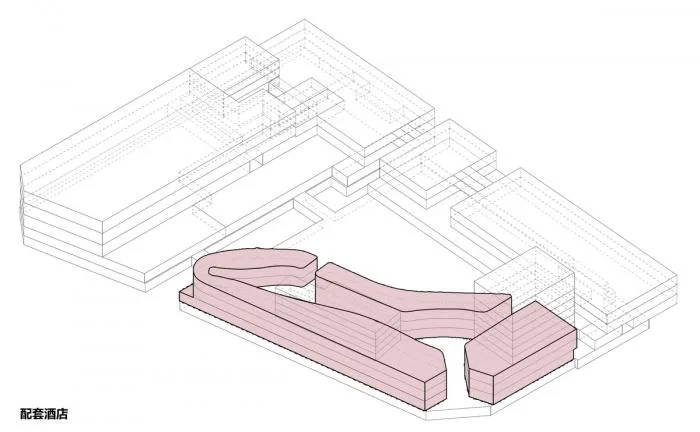
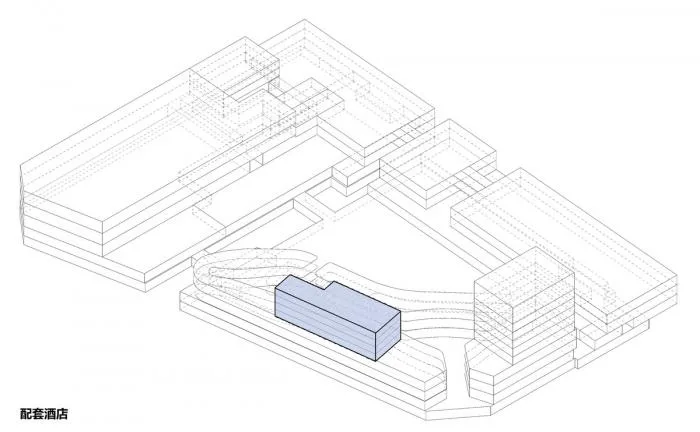
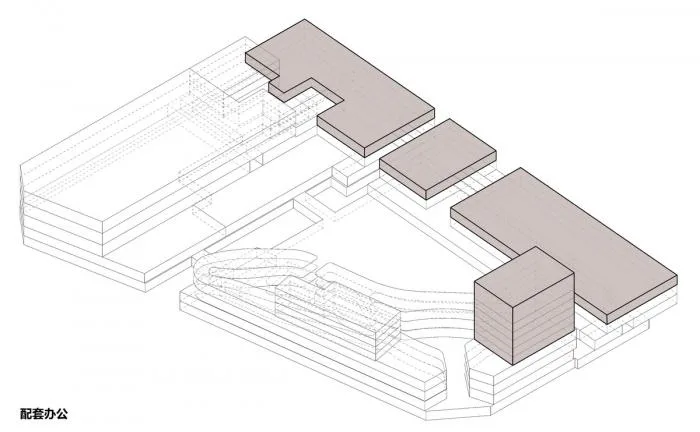
The interaction between the interior spaces and the central and sunken squares, combined with the terrain’s elevation changes, creates a two-story commercial building concept that contributes positively to the urban image.
This composite functional layout, balancing industrial and urban support services, naturally aligns with the diverse needs of clients, government bodies, and urban infrastructure.
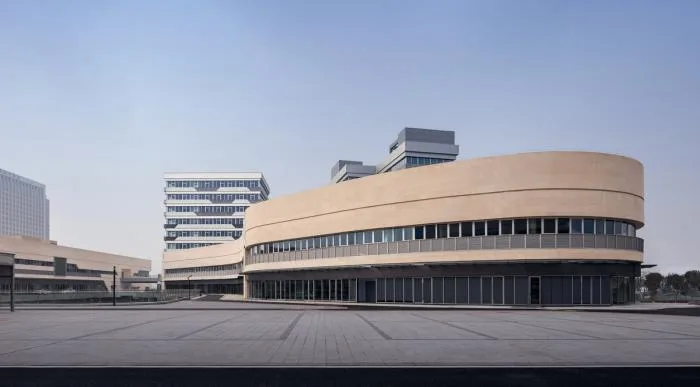
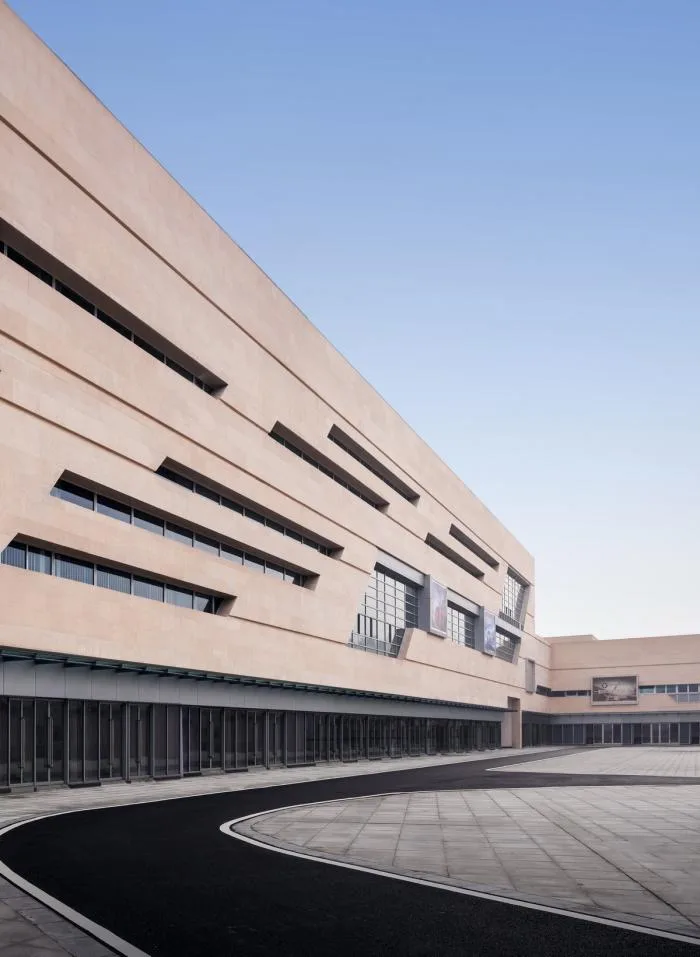
▲ Composite functional layout Photography: Ziran Architecture Photography
Automotive Culture Woven Throughout
Cars are not only the experiential theme of Tianyi International Automobile City but also the source of its design inspiration.
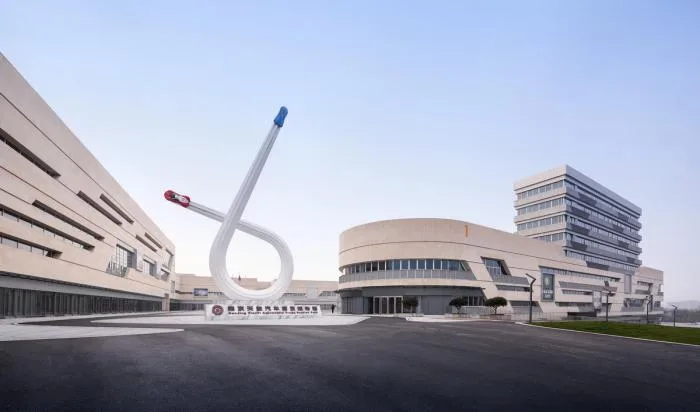
▲ Entrance Photography: Ziran Architecture Photography
Automotive culture symbolizes the spirit of our era—style, courage, and passion. This is reflected in the global popularity of Formula One racing, Elon Musk’s Tesla empire, the unforgettable Paul Walker and the “Fast and Furious” series, as well as the iconic Ford vs. Ferrari rivalry portrayed in the 2020 Oscar-winning film “Ford v Ferrari”.
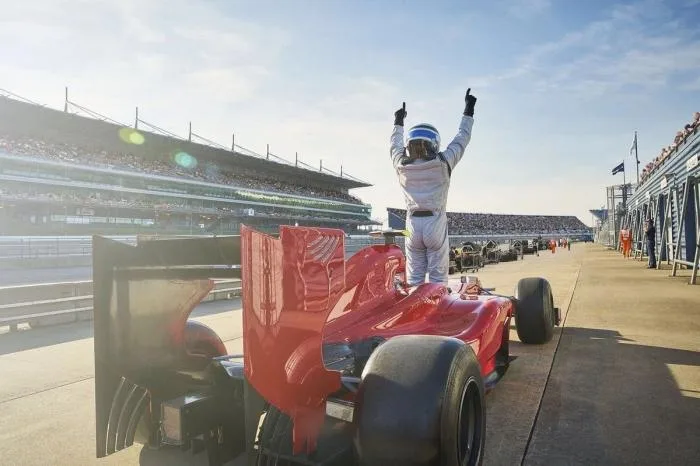
▲ A symbol of automotive culture in the era, image sourced online
Architectural masters often incorporate their interpretation of automotive culture into their designs. For example, Zaha Hadid’s BMW Central Factory in Leipzig embodies her signature fluid and sleek car-inspired style. Similarly, BIG’s Toyota Woven City project presents a vision of automotive intelligence, futurism, and environmental consciousness.
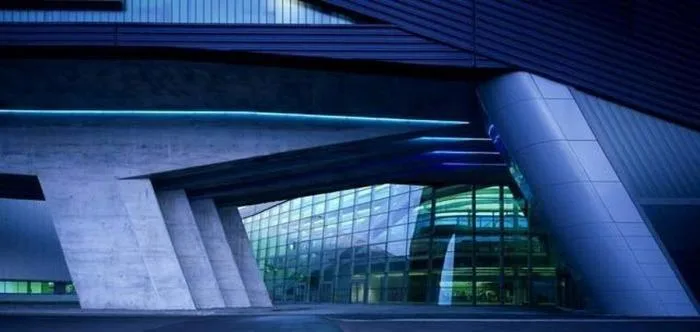
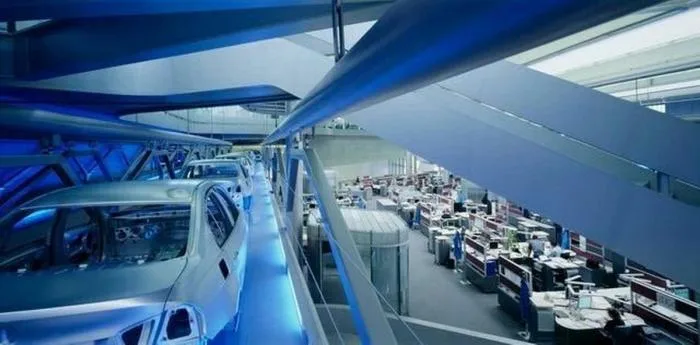
BMW Central Factory in Leipzig, Germany, designed by Zaha Hadid
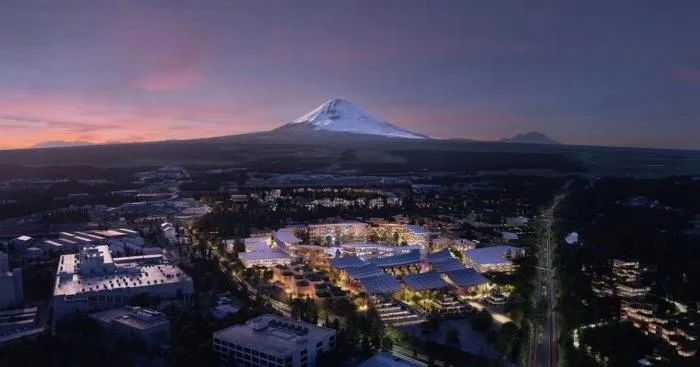
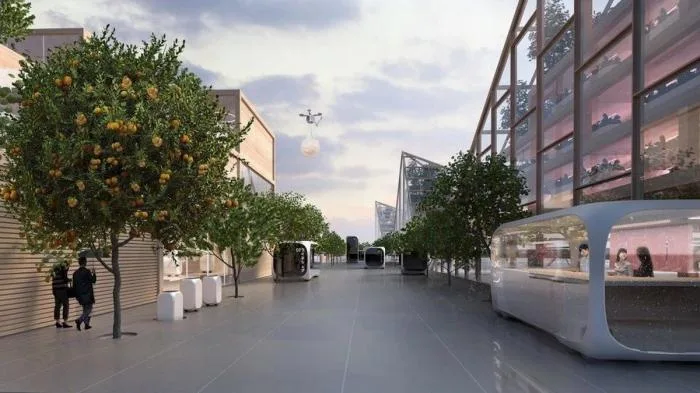
BIG’s “Woven City” designed for Toyota
In Tianyi International Automobile City, architects aimed to integrate this fashionable, sleek, and industrial style into the building facades. They crafted rich architectural imagery through diverse detailing.
The project features a simple, modern, and elegant facade design that emphasizes volume and resonates with automotive elements through interlocking forms and dynamic shapes. Streamlined lines and the irregular cladding of the building podium are standout features of the automobile city’s architectural identity.
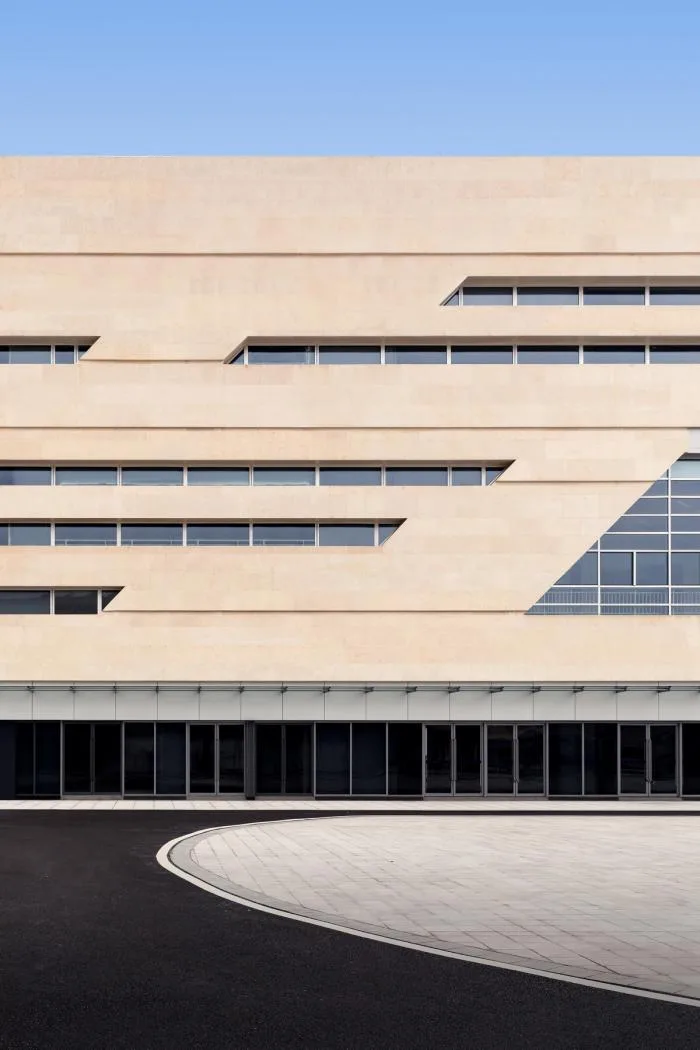
▲ Interior sunken courtyard Photography: Ziran Architecture Photography
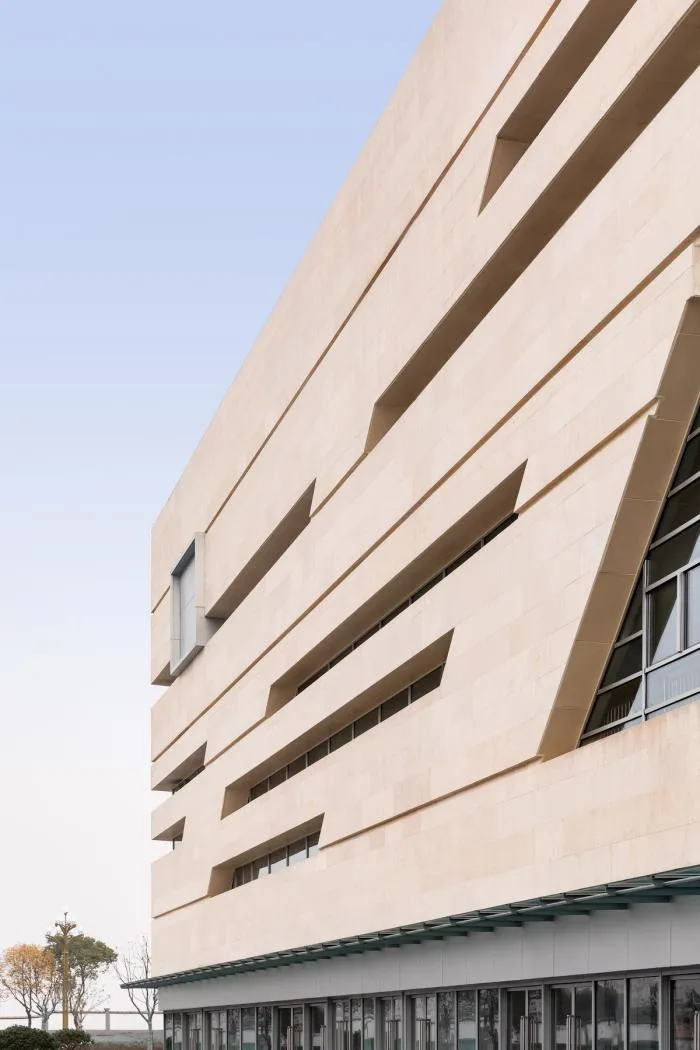
▲ Facade Photography: Ziran Architecture Photography
The main building incorporates perforated exterior panels that create a rhythmic and cohesive volume. It also integrates LED elements to add vibrancy and distinctiveness to the business atmosphere.
The clean, dynamic forms and distinctive material use establish Tianyi International Automobile City as a landmark architectural icon at the gateway to Lishui.
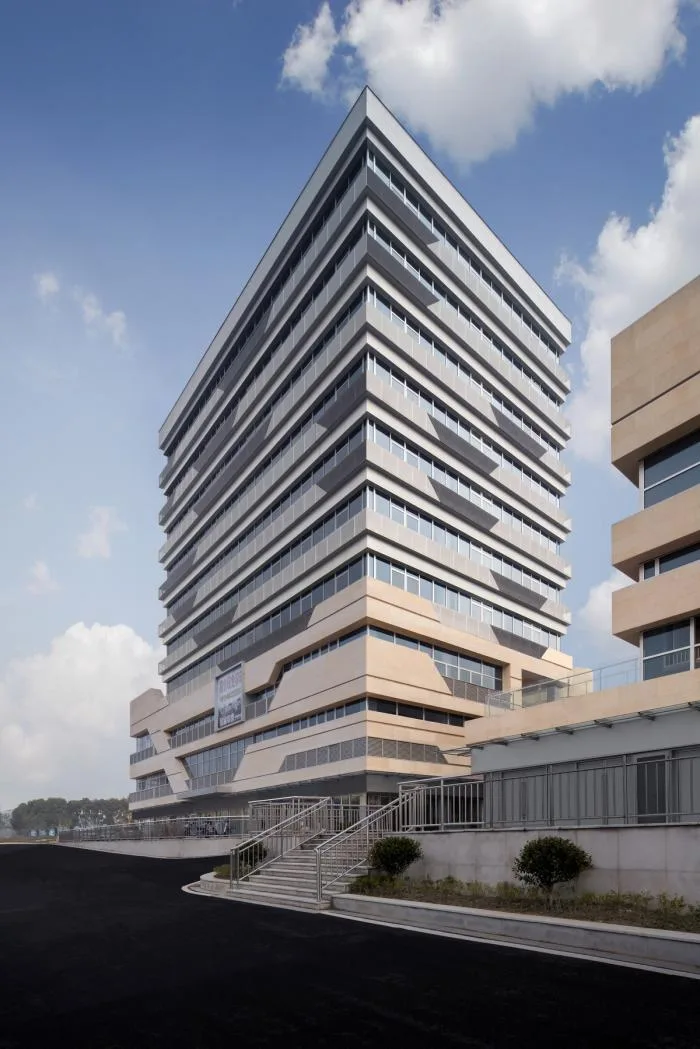
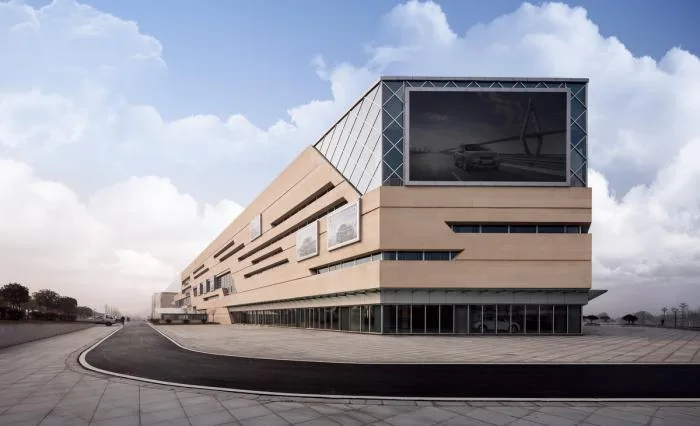
▲ Facade Photography: Ziran Architecture Photography
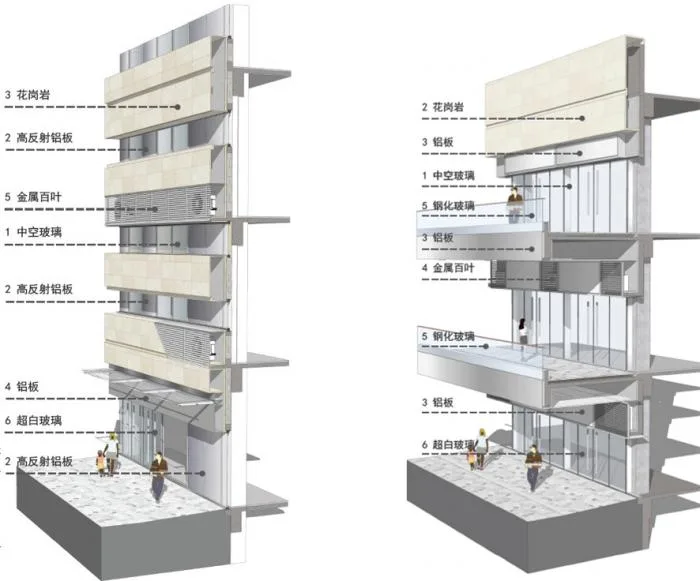
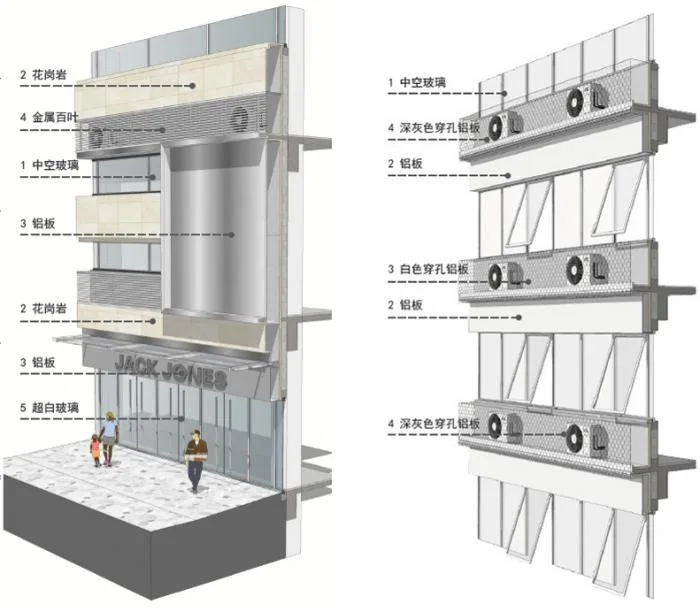
The establishment of Tianyi International Automobile City has transformed the coexistence of “industry” and “city” into an accessible reality, marking a significant step toward the harmonious integration of people and cars, industry and urban life.
Project Information
Project Name: Nanjing Tianyi International Automobile City
Location: No. 69 Jiaotong East Road, Lishui District, Nanjing City
Site Area: 44,907 square meters
Building Area: 105,321 square meters
Completion Date: November 2019
Developer: Nanjing Tianli Real Estate Co., Ltd
Design Team: Shanghai Sanyi Architectural Design Co., Ltd (Scheme, Architecture, Deepening, Structure, Mechanical and Electrical Design)
Project Leader: Zhang Min
Planning Team: Yuan Yi, Kong Dekai, Yu Yutong, Zhang Xiaonan, Wang Zikun, Wang Tengfei, Lin Ye
Architecture Team: Wu Yan, Yan Yanhua, Ye Xia, Gao Shanjie, Zhang Yanyan, Zhang Liwei, Hu Hongfeng, Yang Yong
Structure Team: Huang Xindong, Song Yingling, Sha Zheng, Zhang Ping, Gao Sen, Zhang Xiaodi, Wang Ben, Lu Fang, Lv Rong
Electromechanical Team: Zhu Weimin, Ding Hongmei, Wu Ting, Jiang Li, Sun Chao, Qiu Kaihua, Yu Wenjia, Lu Lu, Huang Zongbing, Wang Qiong
Technical Support: Zhu Yumei, Wang Xiaohong, Zhao Bin, Jiang Hong, Chen Ying, Chen Gang, Ha Minqiang, Tao Haicheng
Drawing Coordination: Li Zhong, Zuo Yongping, Zhang Keran
Landscape Design: Nanjing Donghou Landscape Engineering Co., Ltd
Civil Air Defense: Nanjing Jiucheng Civil Air Defense Equipment Co., Ltd
Construction: Nanjing Eighth Construction and Installation Engineering Co., Ltd
Curtain Wall: Jiangsu Jiongyuan Decorative Curtain Wall Engineering Co., Ltd
Lighting: Jiangsu Haotianlong Group Co., Ltd. Lishui First Branch
Intelligent Systems: Jiangsu Langlun IoT Technology Co., Ltd












Must log in before commenting!
Sign Up