
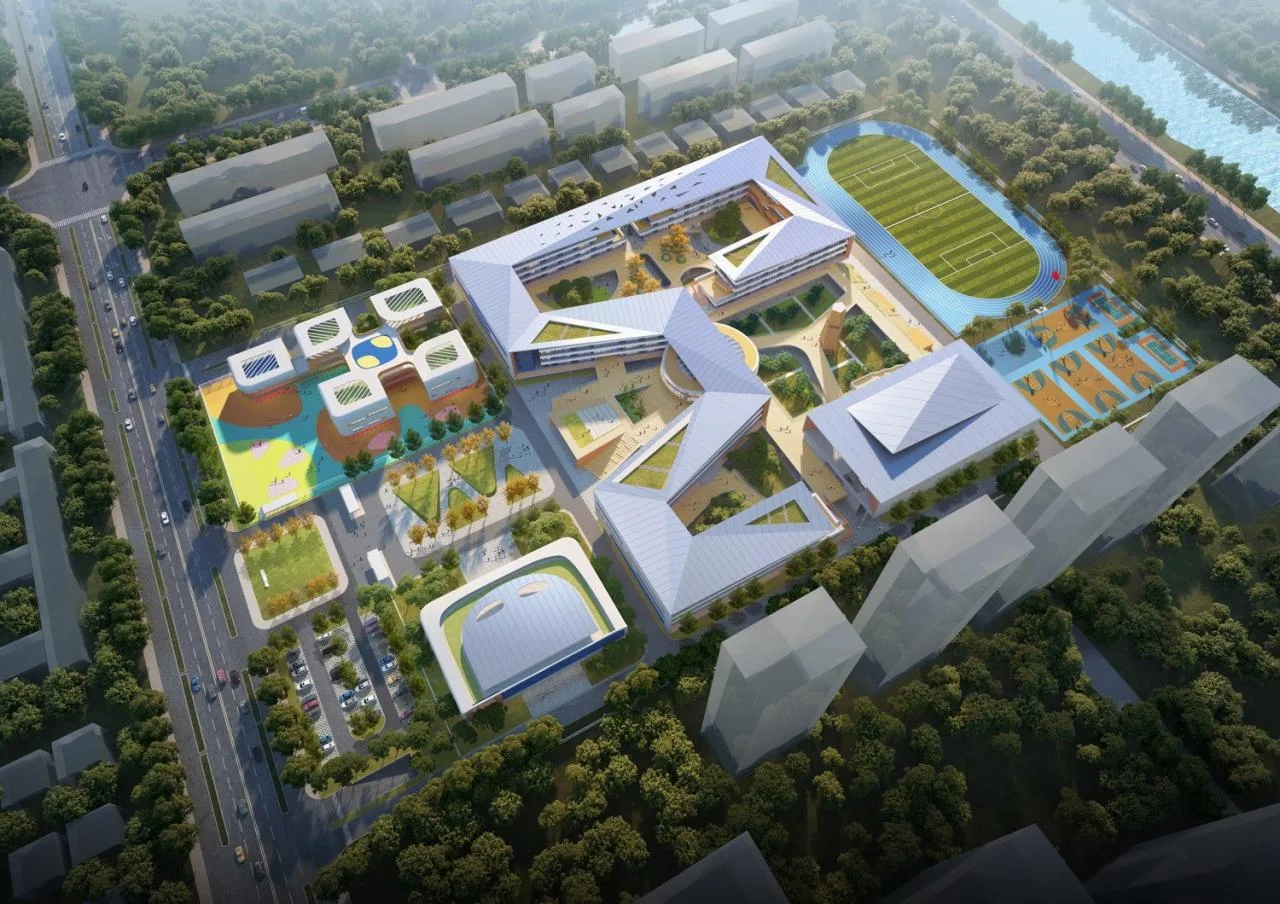
The ambition of Qingjin is to achieve great success through dedicated practice.
01 Initial Encounter: Addressing the Challenge of Limited Land
This project is situated in the heart of Suyu District, Suqian City, adjacent to the district government’s administrative center and facing the newly constructed Suyu Grand Theater across the water. As part of the district’s urban renewal plan, the Suyu Experimental Primary School and Kindergarten will be rebuilt on their original site.
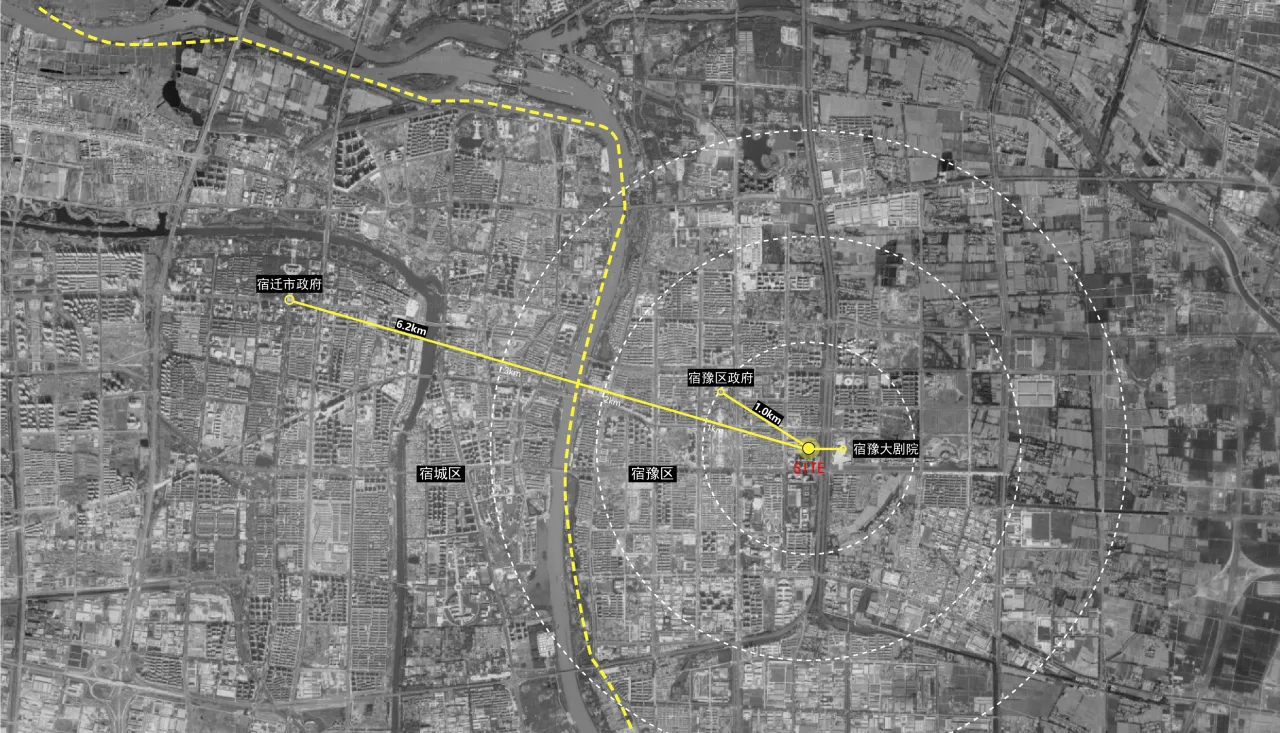
△ Location Analysis
The site is bordered by Huangpu River Road, a major urban artery, on the west, and an urban expressway on the east, with residential areas to the north and south. The current school’s main entrance is located on a dead-end road shared with the southern residential area, causing severe congestion. The playground is overshadowed by high-rise buildings, resulting in poor snow melt during winter. Additionally, the teaching buildings are arranged in a traditional fishbone layout concentrated in one corner of the site, with weak inter-building connections.
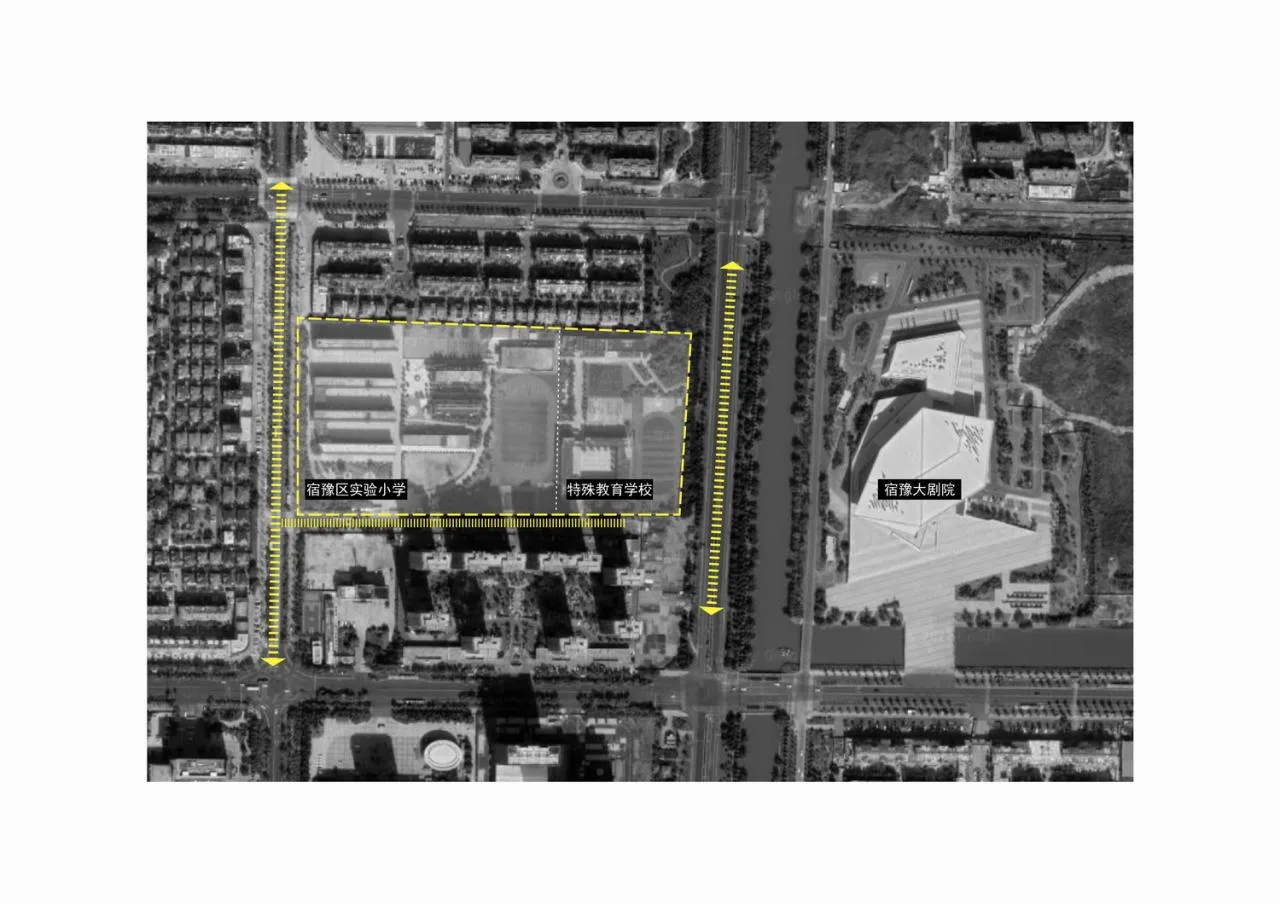
△ Current Satellite Image
02 Conceptual Foundations: Campus Renewal and Cultural Heritage
The water flows vigorously, the Maling Mountains stretch widely, and the sun and moon shine in harmony. This is the hometown of King Xiang—a land rich in soil and water—and home to a prestigious school. Since its founding, Suyu Primary School has inherited the cultural charm of the Chu and Han dynasties and the spirit of the Grand Canal, guided by the educational philosophy of creating a modern campus rich in cultural and scholarly atmosphere. The teaching buildings are named after the rhythms of spring, summer, autumn, and winter, inspiring students to study throughout the year.
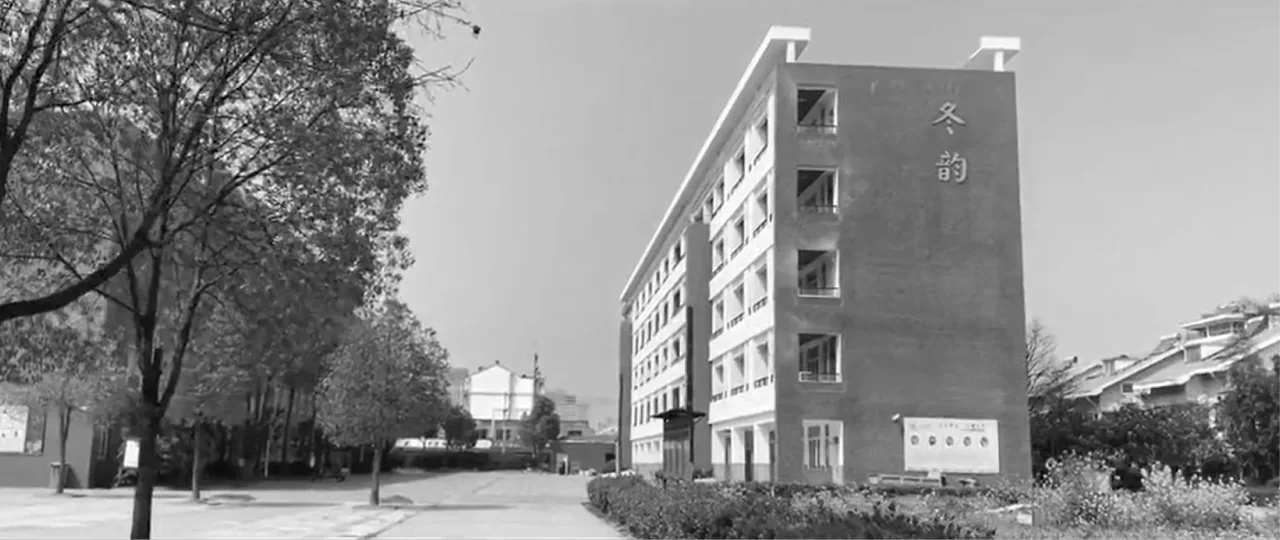
△ Current Site Map
The design goal is to rebuild the campus on its original site, preserving its educational philosophy and culture while adapting to modern educational needs. By analyzing the environment and functional requirements, integrating contemporary educational design concepts, and extracting the cultural essence of the campus, the design renews its elements and breathes new life into this esteemed school.
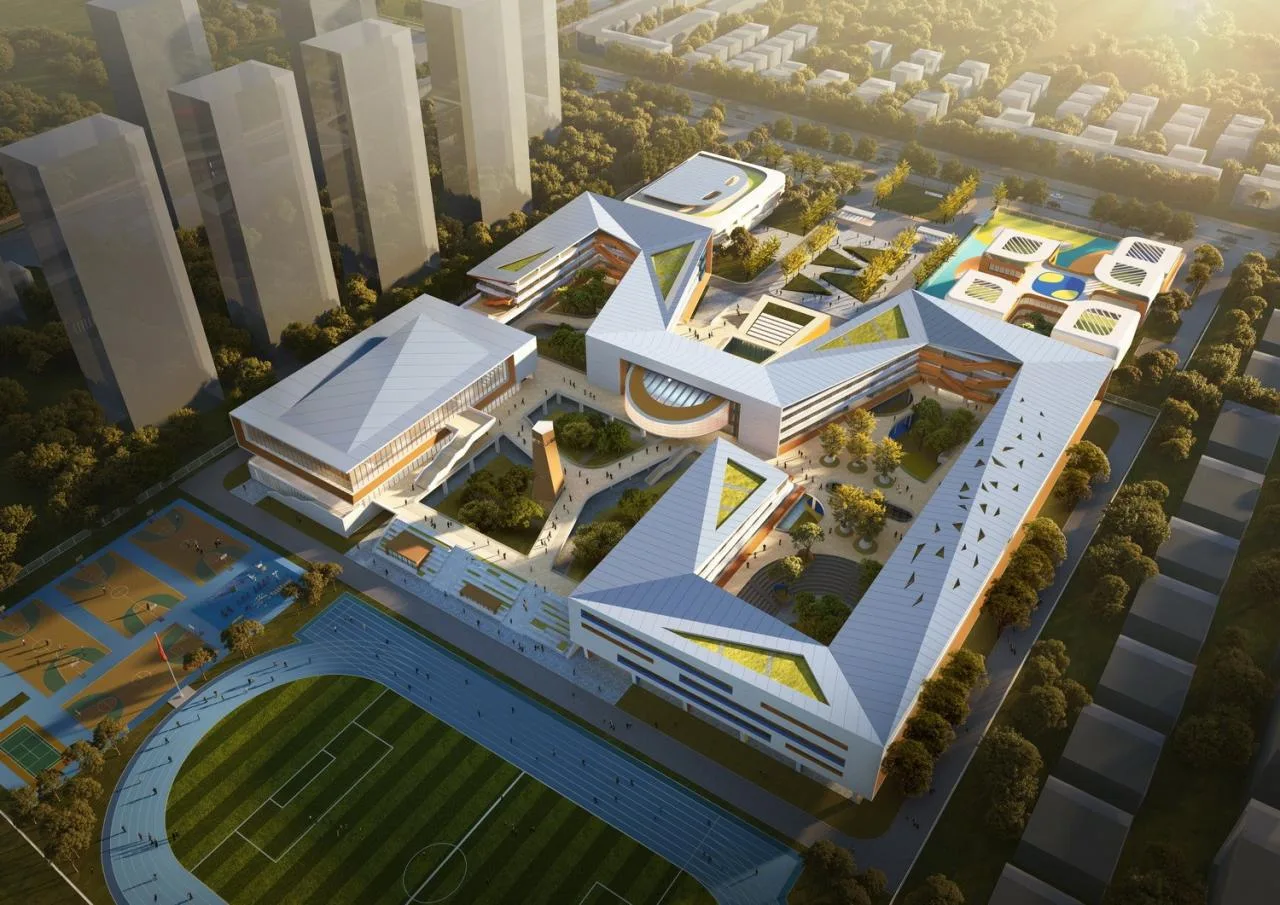
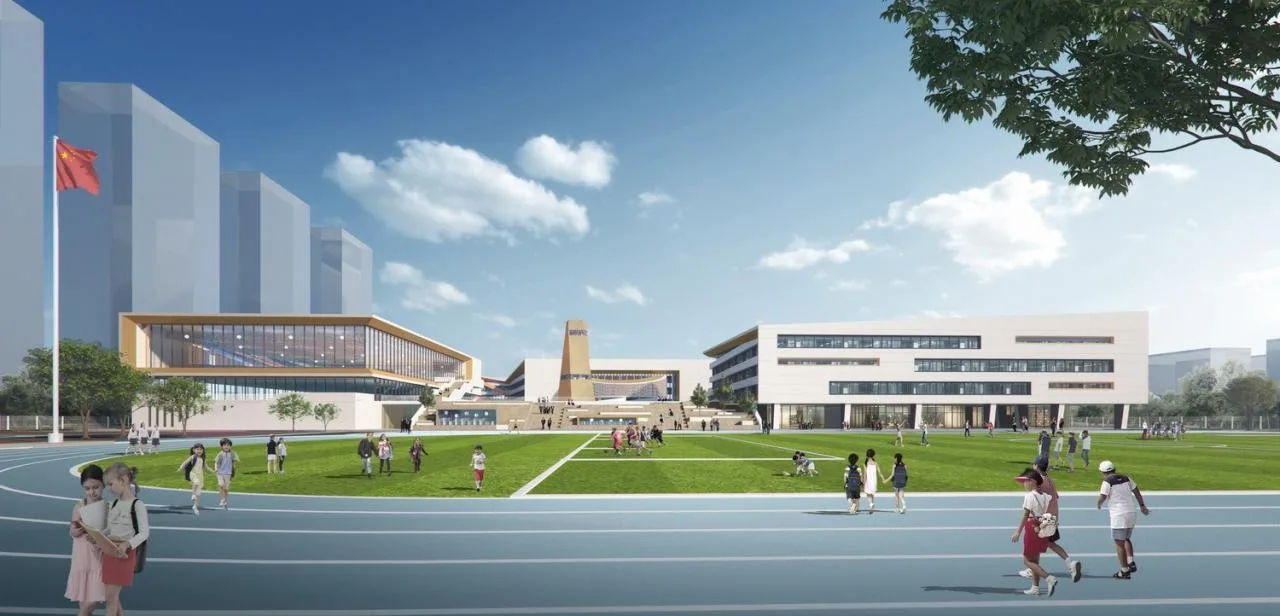
03 Analysis: Managing Sunlight and Tidal Square
A major design focus is resolving issues related to sunlight shading and enhancing the spatial experience of the campus. By studying sunlight exposure of residential areas and campus buildings to the south and north, functional zones are strategically positioned. The architecture forms a folded shape enclosing an inner courtyard, while spaces such as lecture halls, cafeterias, and gyms are located in areas with less sunlight exposure to minimize impact.
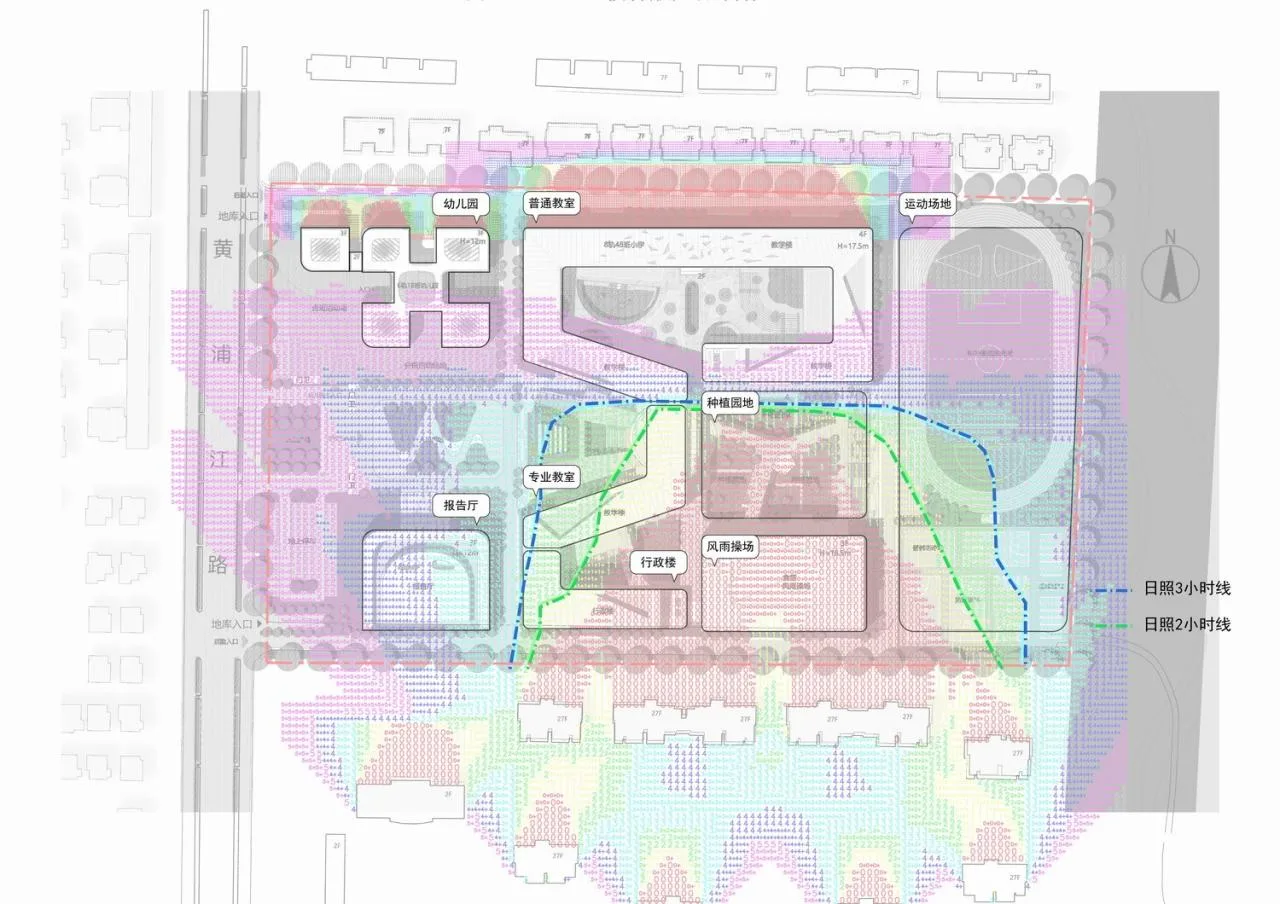
△ Sunlight Analysis
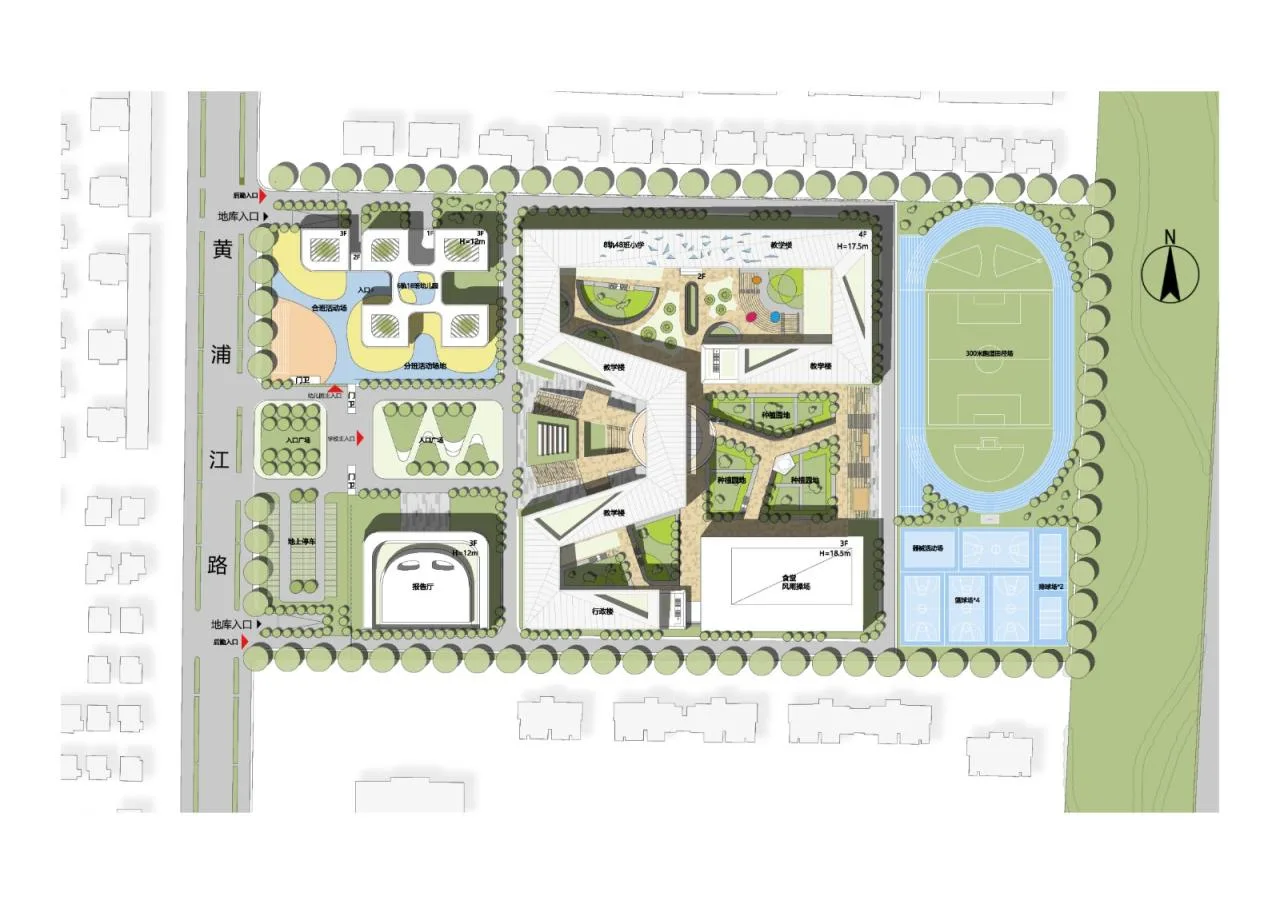
△ Overall Color Layout
Addressing congestion at the main entrance is essential. By coordinating with the newly constructed kindergarten along the city’s main road, the building design steps back and encloses a spacious front square for vehicle parking. This layout meets transportation demands during peak hours while preventing interference with the main road.
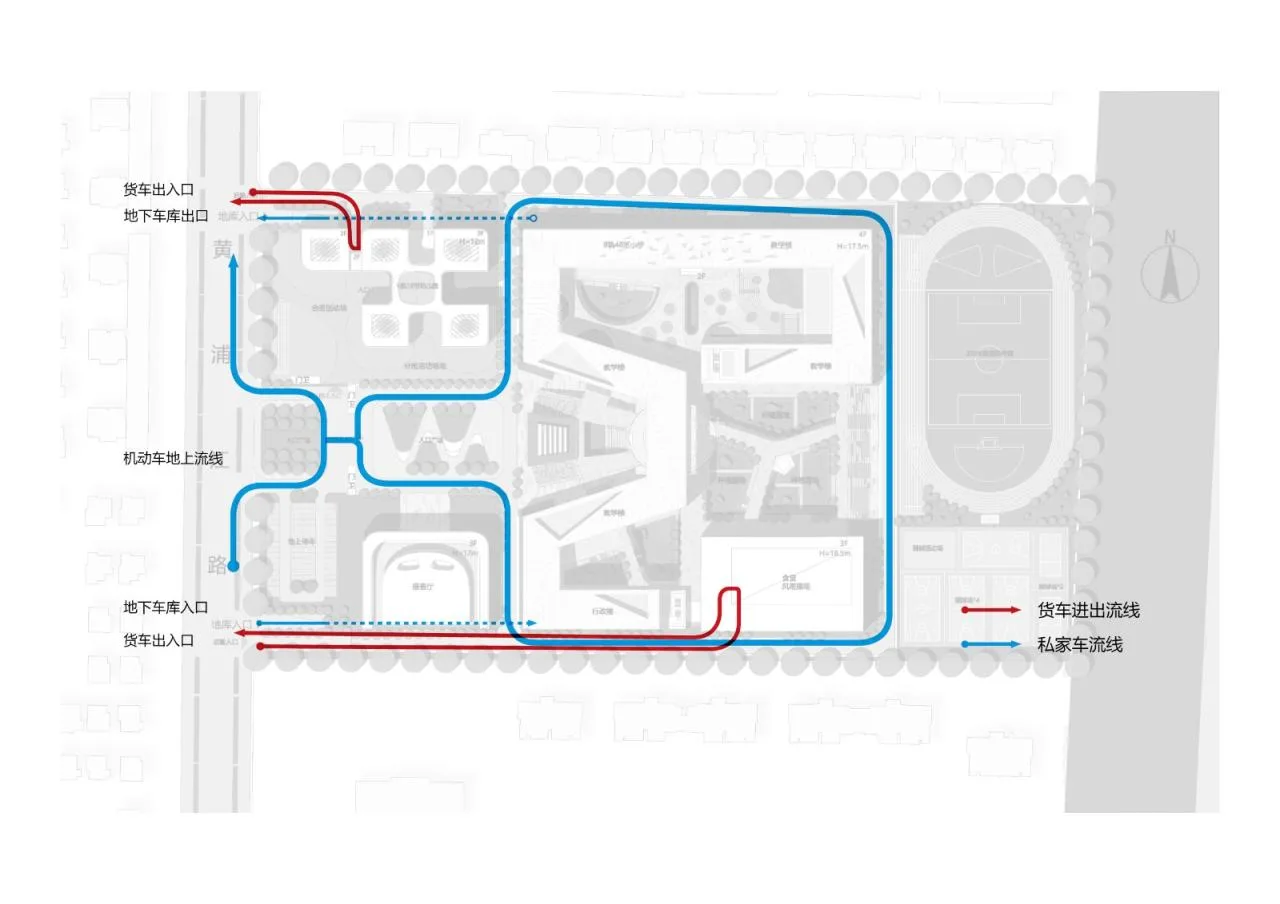
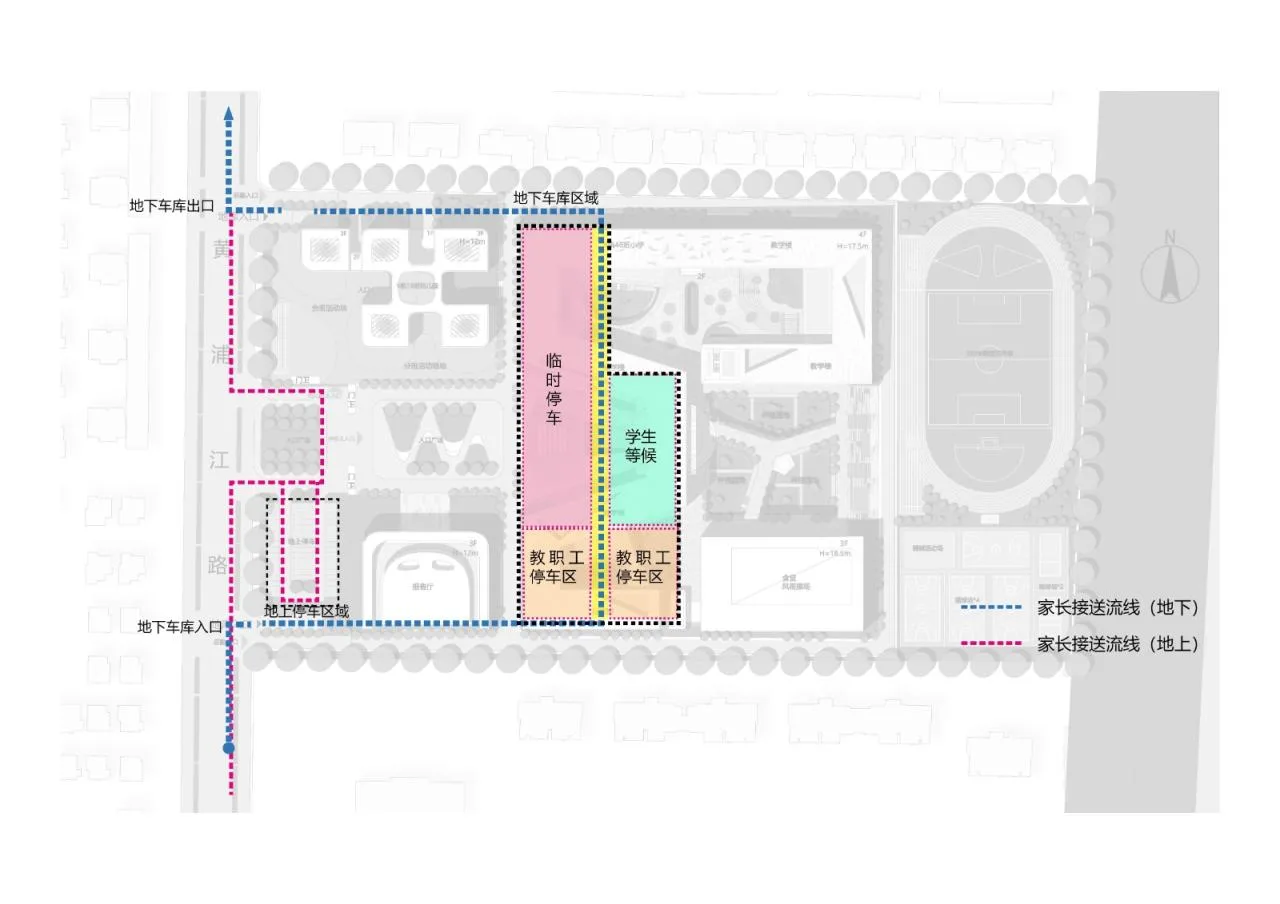
△ Flow Analysis
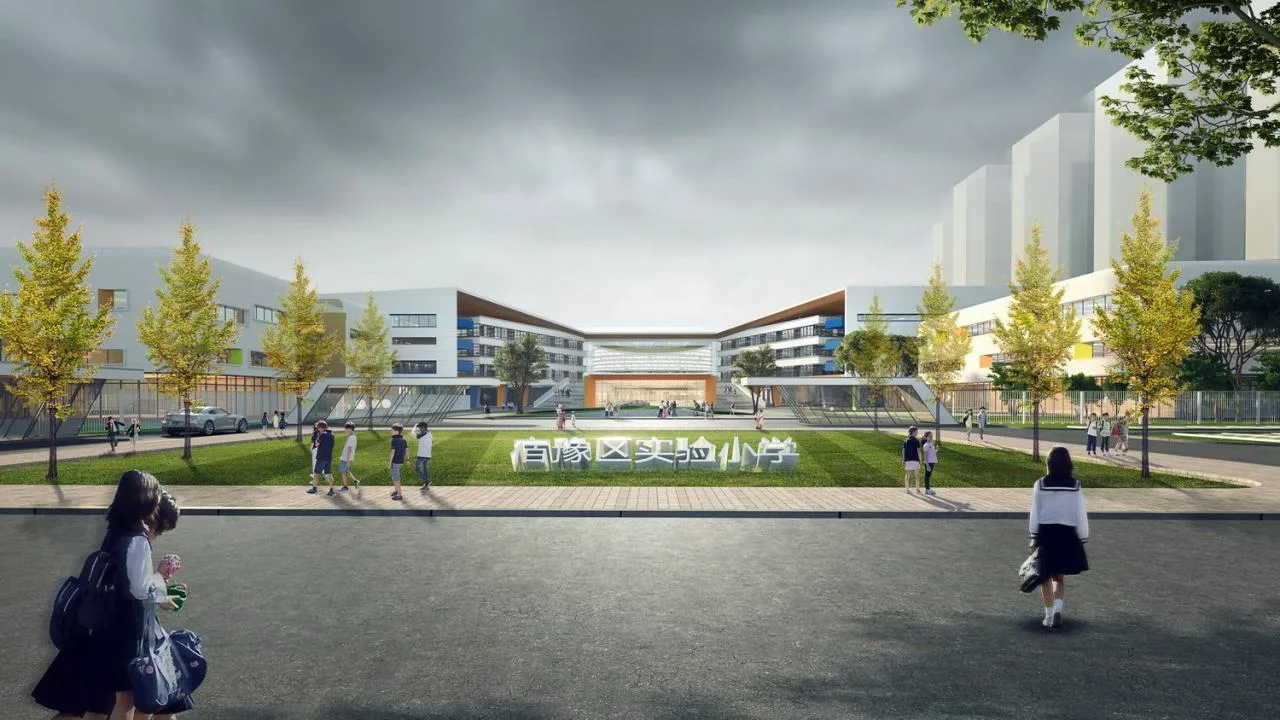
04 Redesign: The Book Mountain Trail and Time Corridor
The school is conceived as an integrated space. A continuous activity platform on the building’s second floor connects the teaching areas, library, shared classrooms, lecture hall, cafeteria, and gymnasium, creating a rich and orderly spatial experience.
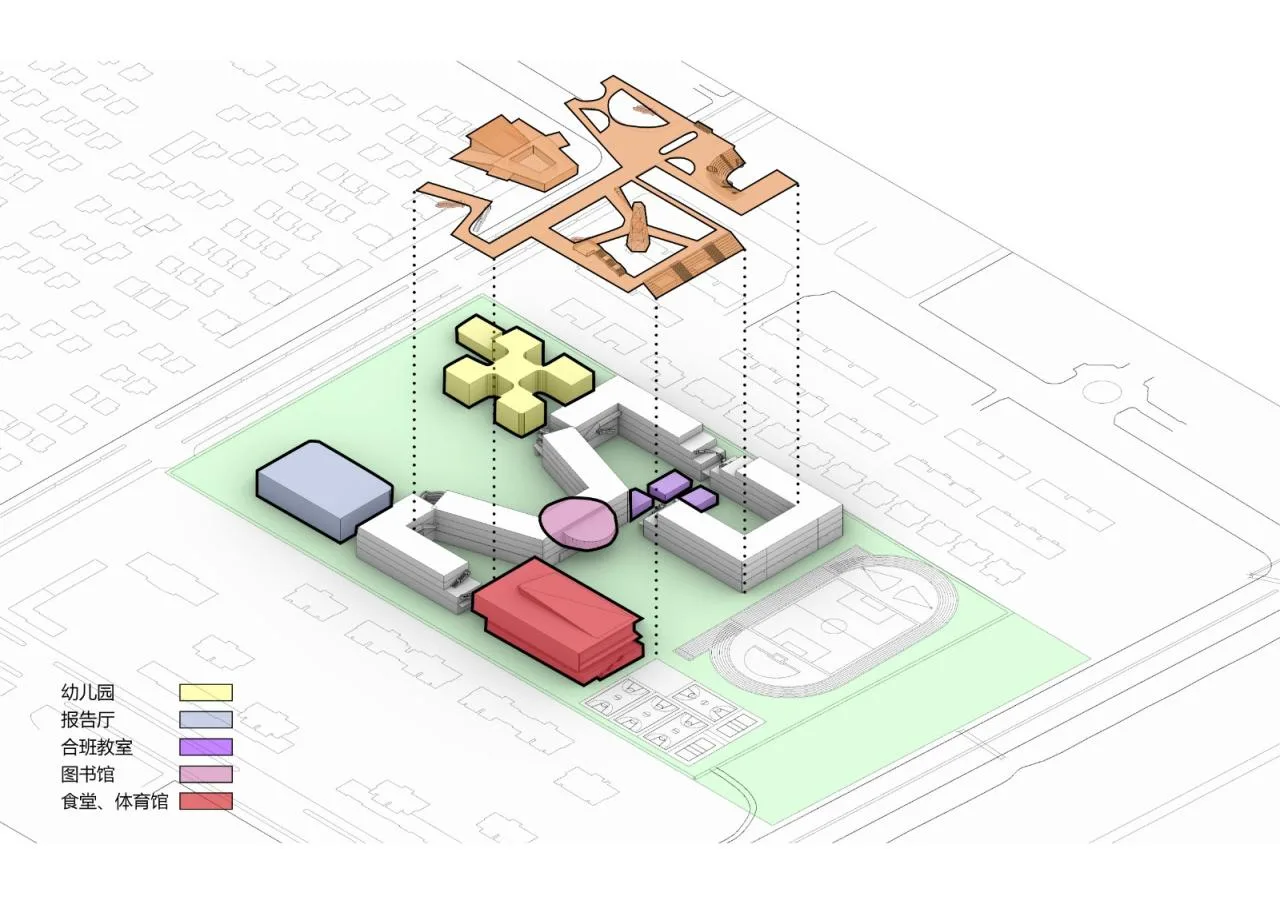
The activity platform is oriented along a north-south axis and connects at multiple points to a zigzag corridor. This corridor represents the most important circulation route for students, inspired by the “Book Mountain Diligence Path” concept. Main courtyards are arranged along this path, providing unique reading spaces for all seasons.
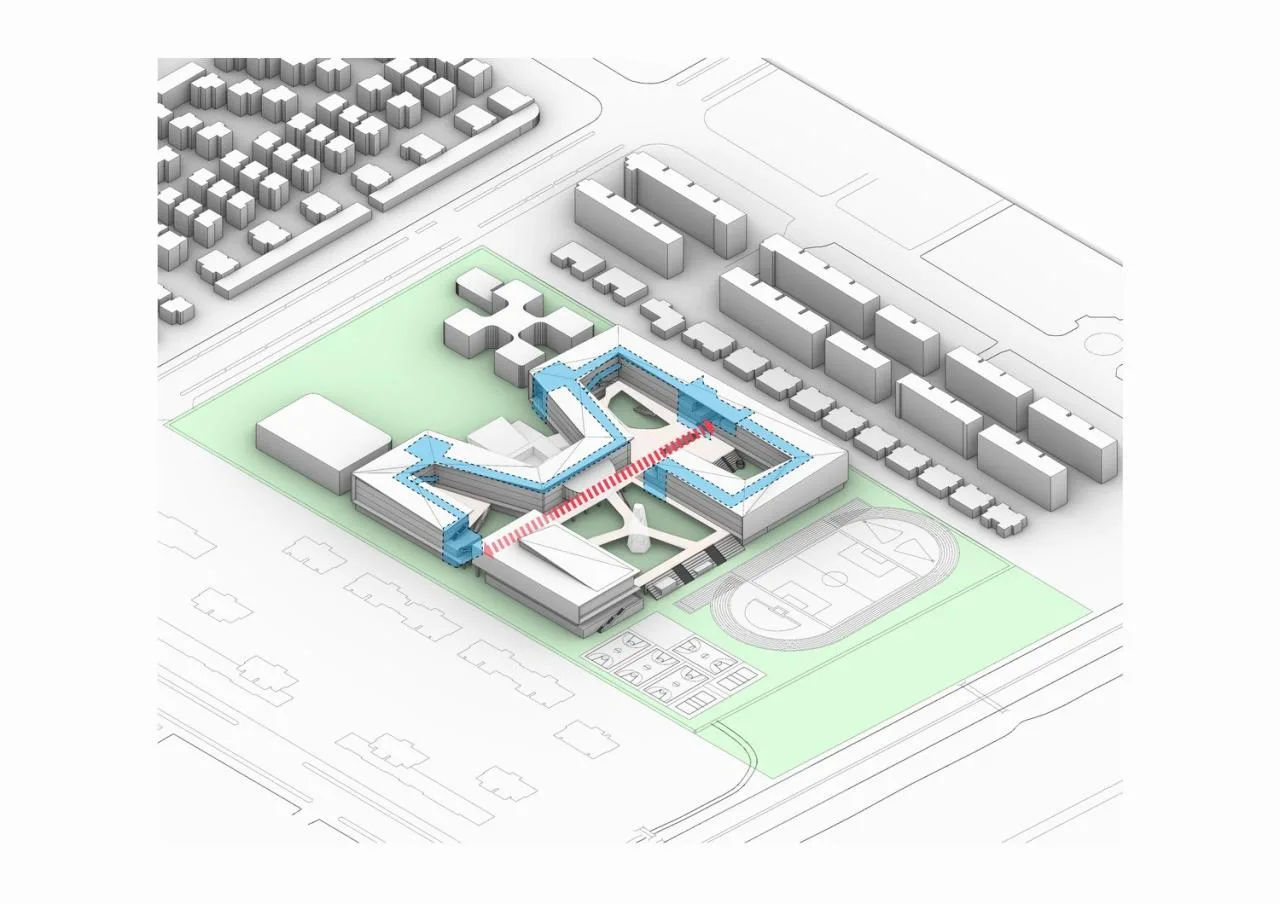
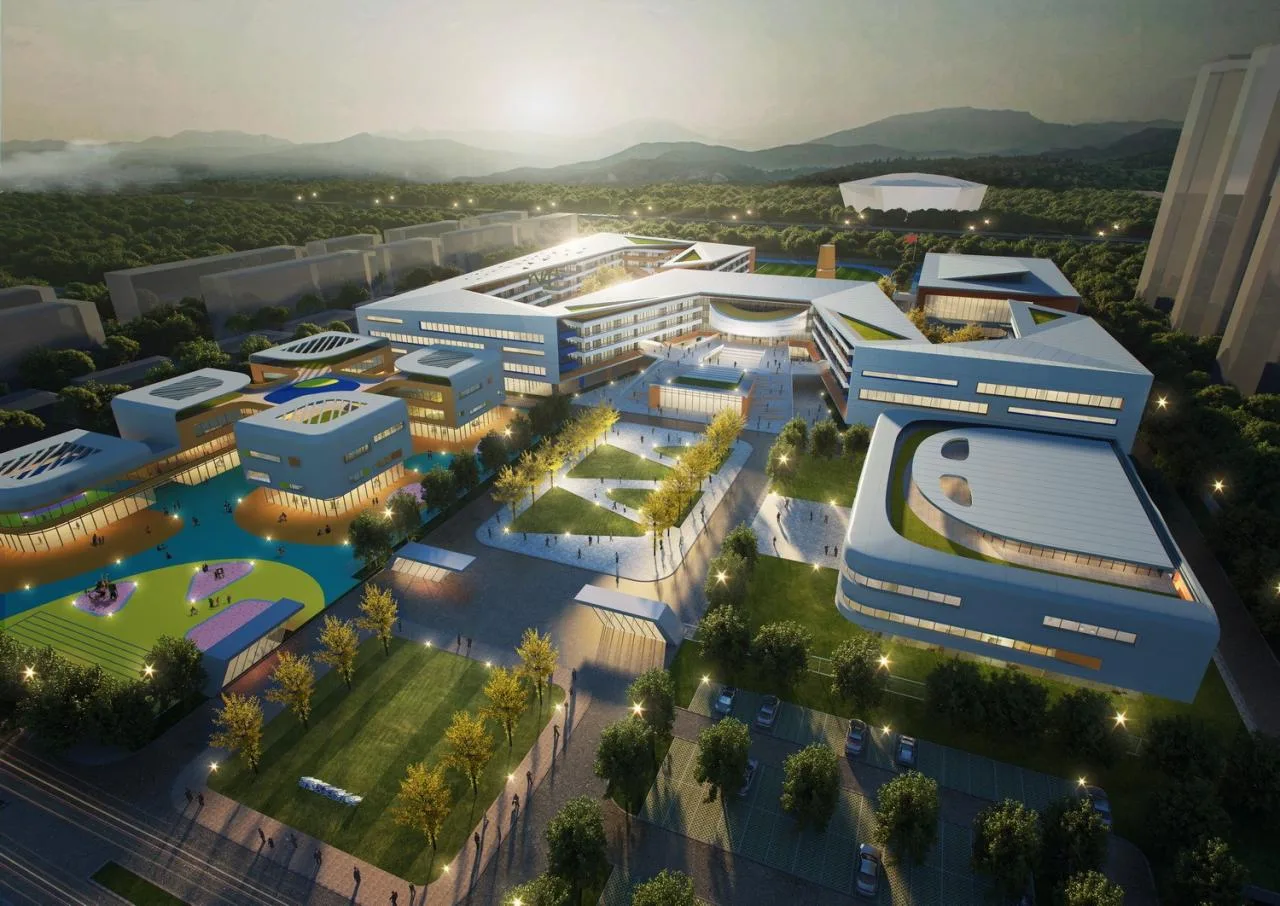
The roof features planted gardens and rooftop terraces. The continuous folded roof above resembles a “time corridor,” connecting the courtyard spaces and reinforcing the design concept. Its form echoes that of the nearby Suyu Grand Theater to the east.
05 Heritage: Four Seasons and a Scholarly Campus
The original campus designated teaching buildings as “Spring Yin,” “Summer Ming,” “Autumn Han,” and “Winter Charm.” This design honors those names by assigning them to each courtyard space. The concept celebrates the joy of reading throughout the cyclical changes of the seasons, passing down the cultural spirit of Chu and Han dynasties and the Grand Canal heritage across generations.
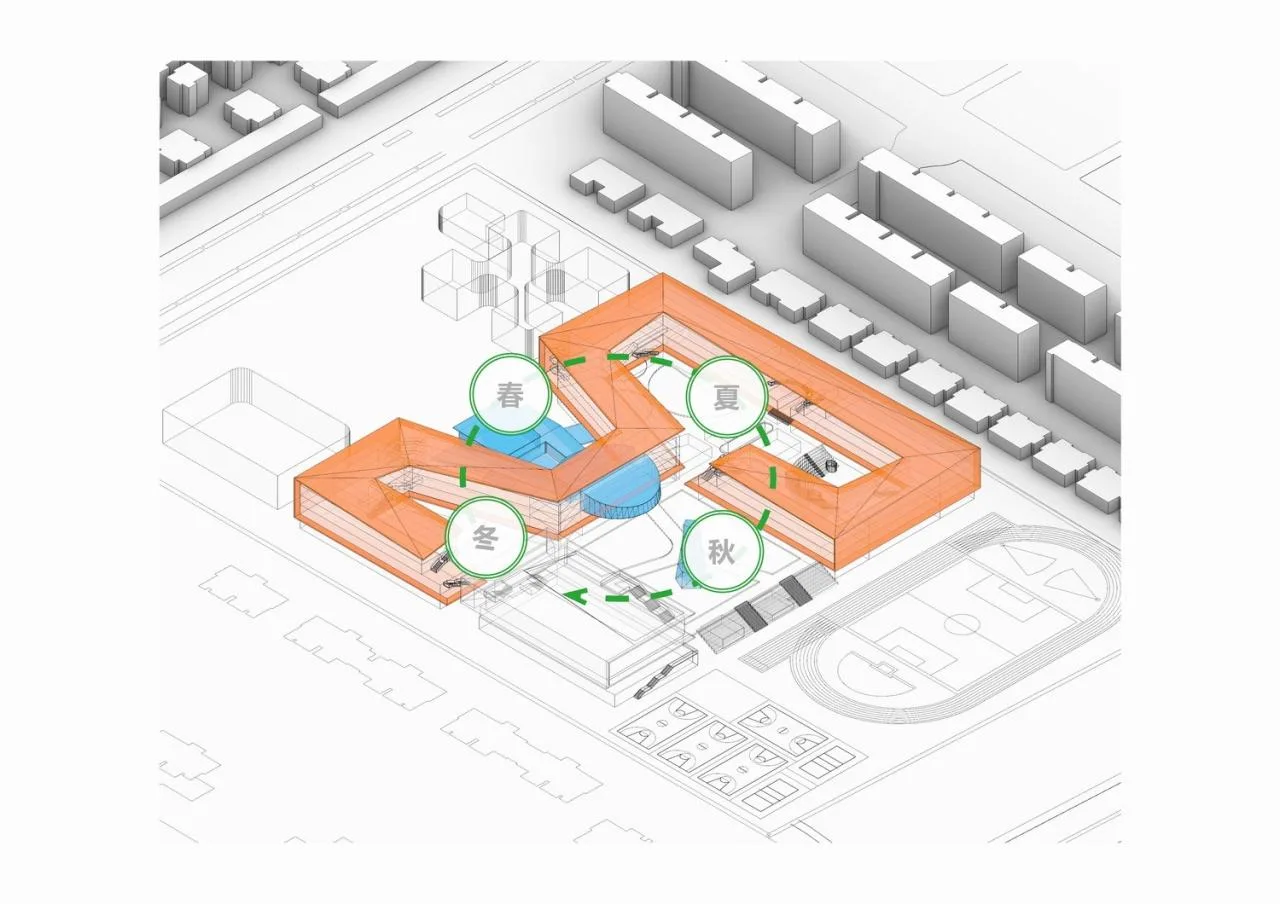
Spring represents a beginning. Approaching the entrance platform, visitors are greeted by the reading courtyard and the quietly standing library, together creating a “spring reading” scene. Climbing the steps symbolizes reaching for distant goals. The open architecture embodies a vision of beauty and lofty aspirations.
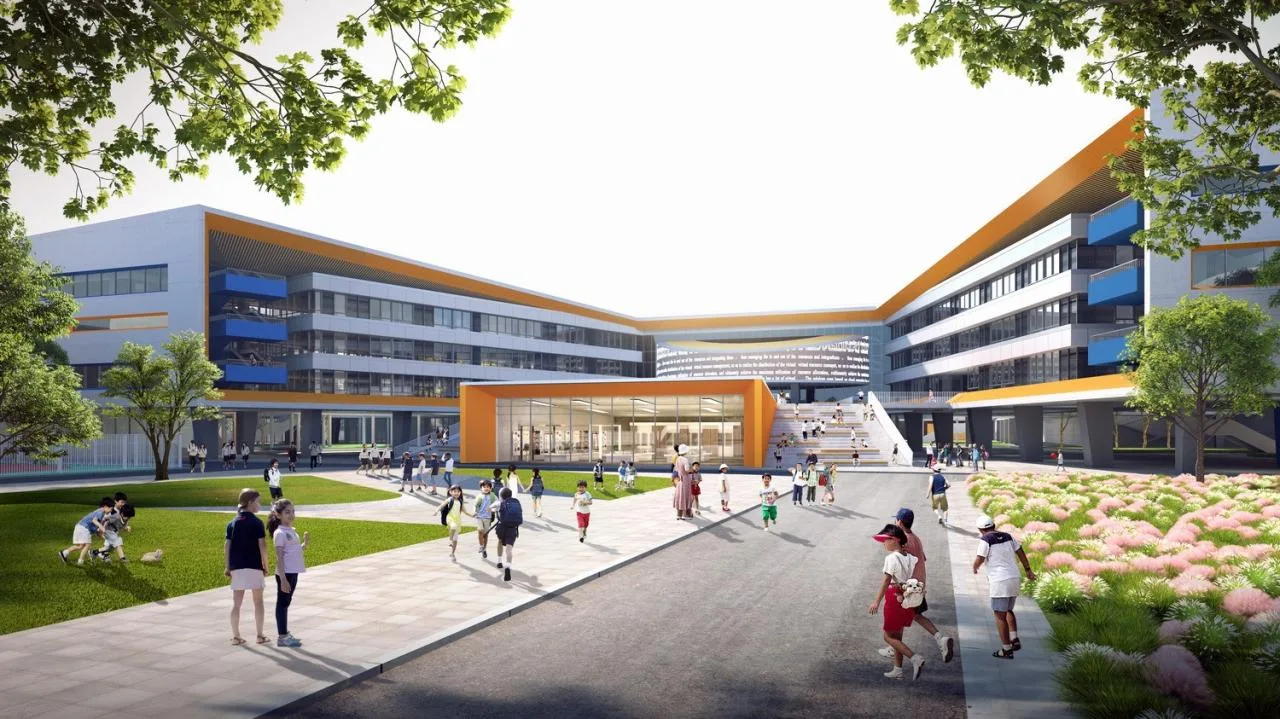
Spring Yin: A window by the water where the qin is played and books are gently moistened, with fragrant words and phrases among the flowers.
Summer symbolizes vitality. The main teaching block is supported by a tree-like structure with staircases on both sides and retreat spaces. Scattered sunlight filters through roof cracks. The second-floor platform includes a sunken square with steps resembling tree rings, embodying endless energy and life. This dynamic space encourages exploration and signifies the vastness of knowledge.
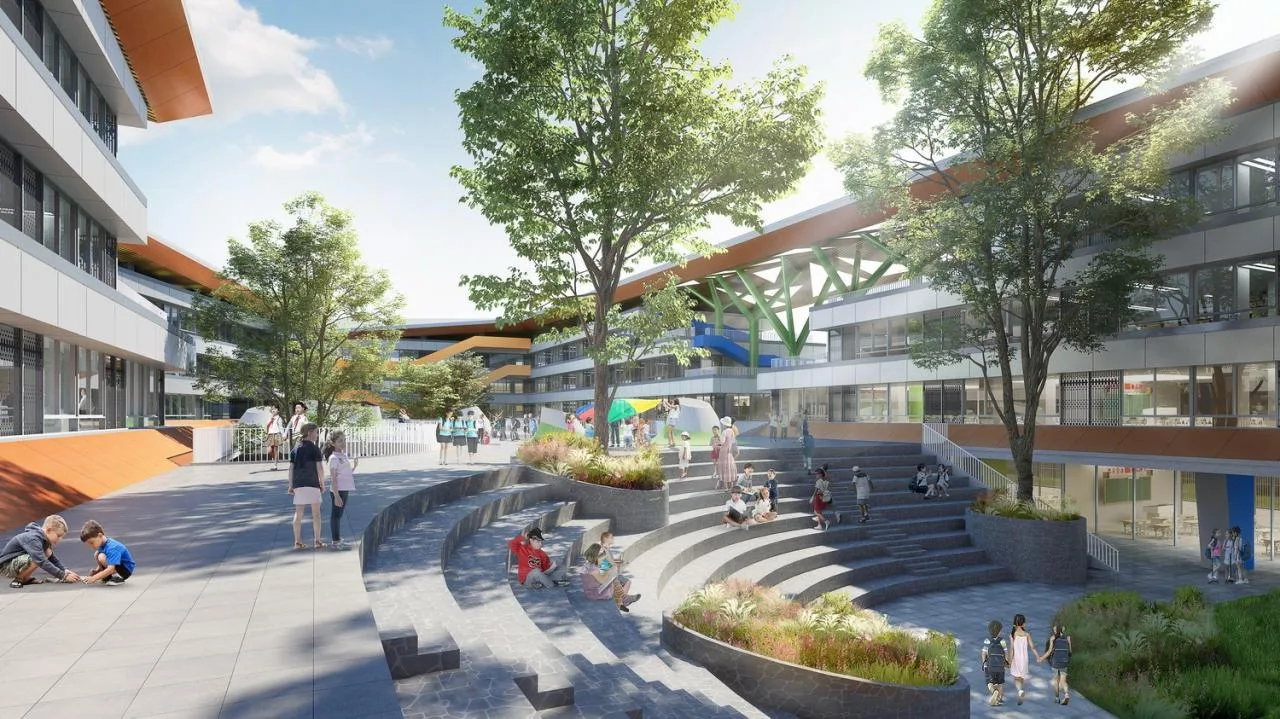
Summer Ming: “Ask if the canal is clear like this, because there is a source of living water coming.”
Autumn is the season of harvest. The planting beds in the library and central garden represent staggered ‘barns’ symbolizing fruitful harvests. The theme of sowing in spring and reaping in autumn reflects the accumulation of knowledge and hard work. The open spaces connect to campus activities and carry the joy of children.
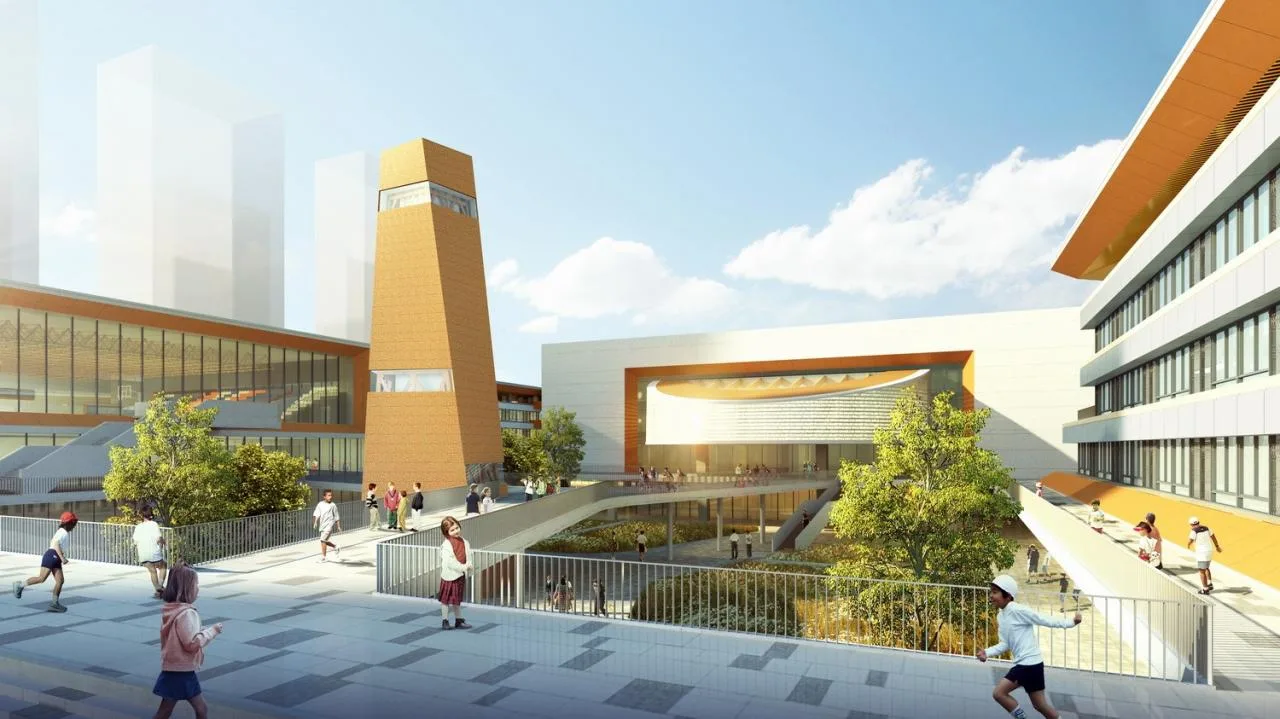
Autumn Han: “Dreaming of spring grass in the pond, the sound of autumn leaves in front of the steps.”
Winter represents accumulation. The courtyard enclosed by specialized classrooms connects to the sports hall platform. This space encourages students to read extensively and broaden their horizons. The interactive platform symbolizes comprehensive development in morality, intellect, physical fitness, aesthetics, and practical skills. It emphasizes cultural accumulation alongside physical strength.
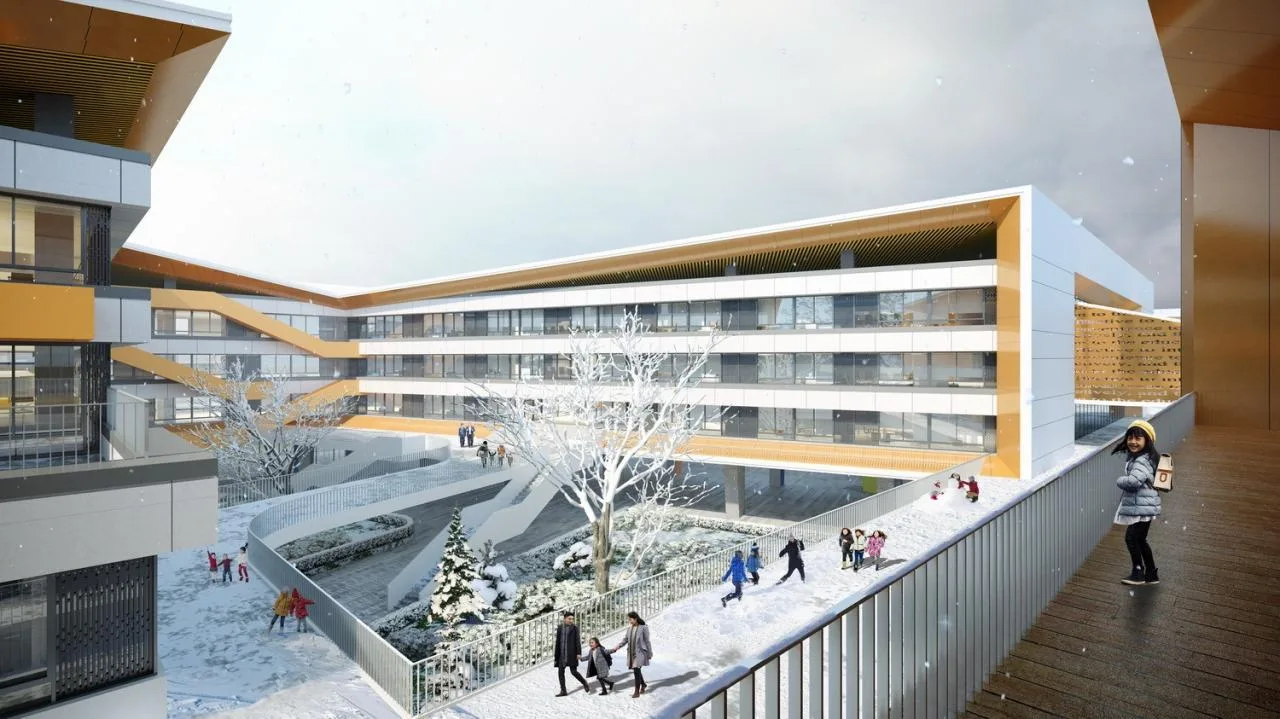
Winter Rhyme: As the sun sets and snow falls all day, combined with plum blossoms, it creates a spring-like atmosphere.
Conclusion
In the context of urban renewal, more existing schools are undergoing reconstruction. Unlike new school constructions on undeveloped land, rebuilding schools on existing sites involves more complex conditions. It requires respecting tradition and context while preserving the historical memory of the original campus as much as possible.
Project Drawings
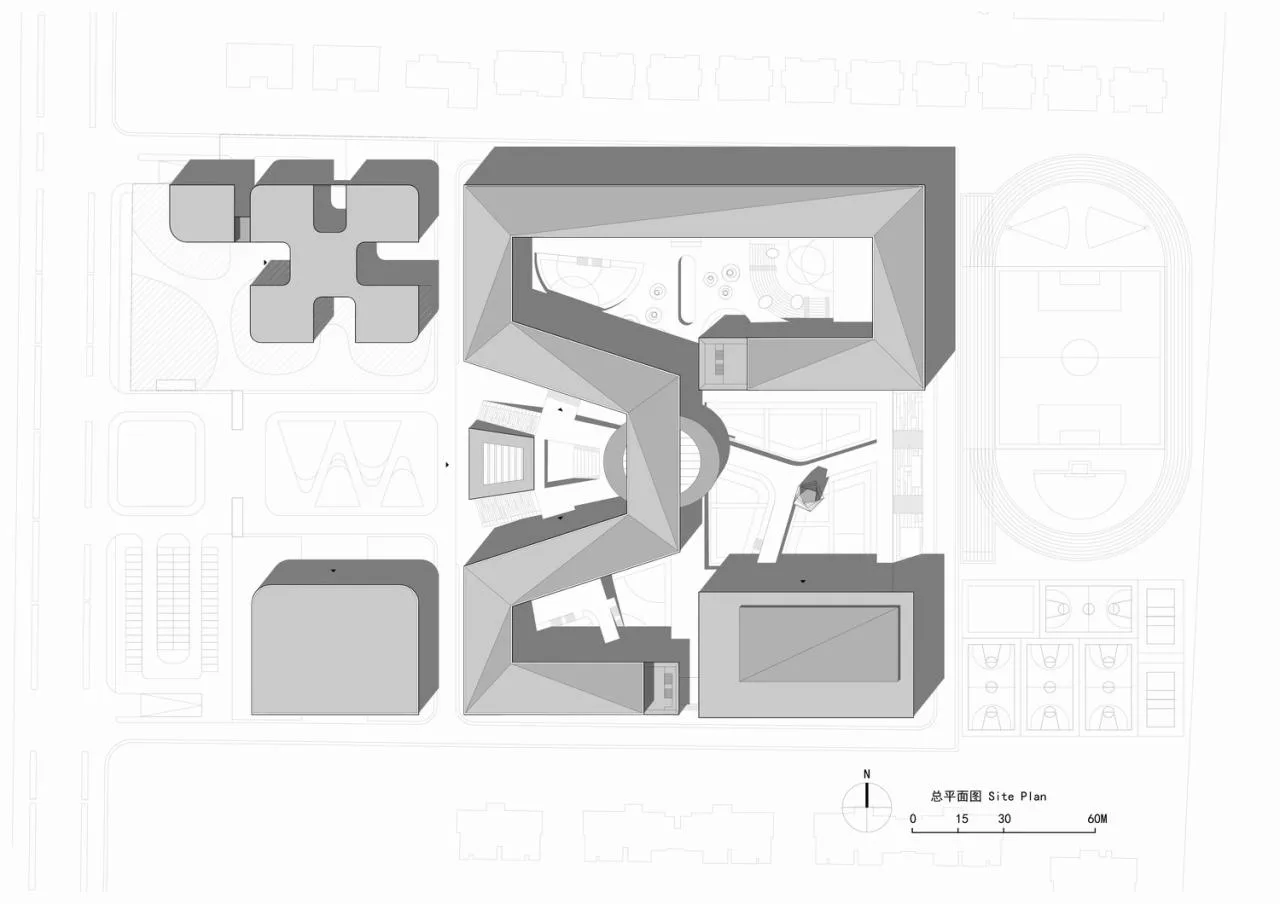
△ General Layout Plan
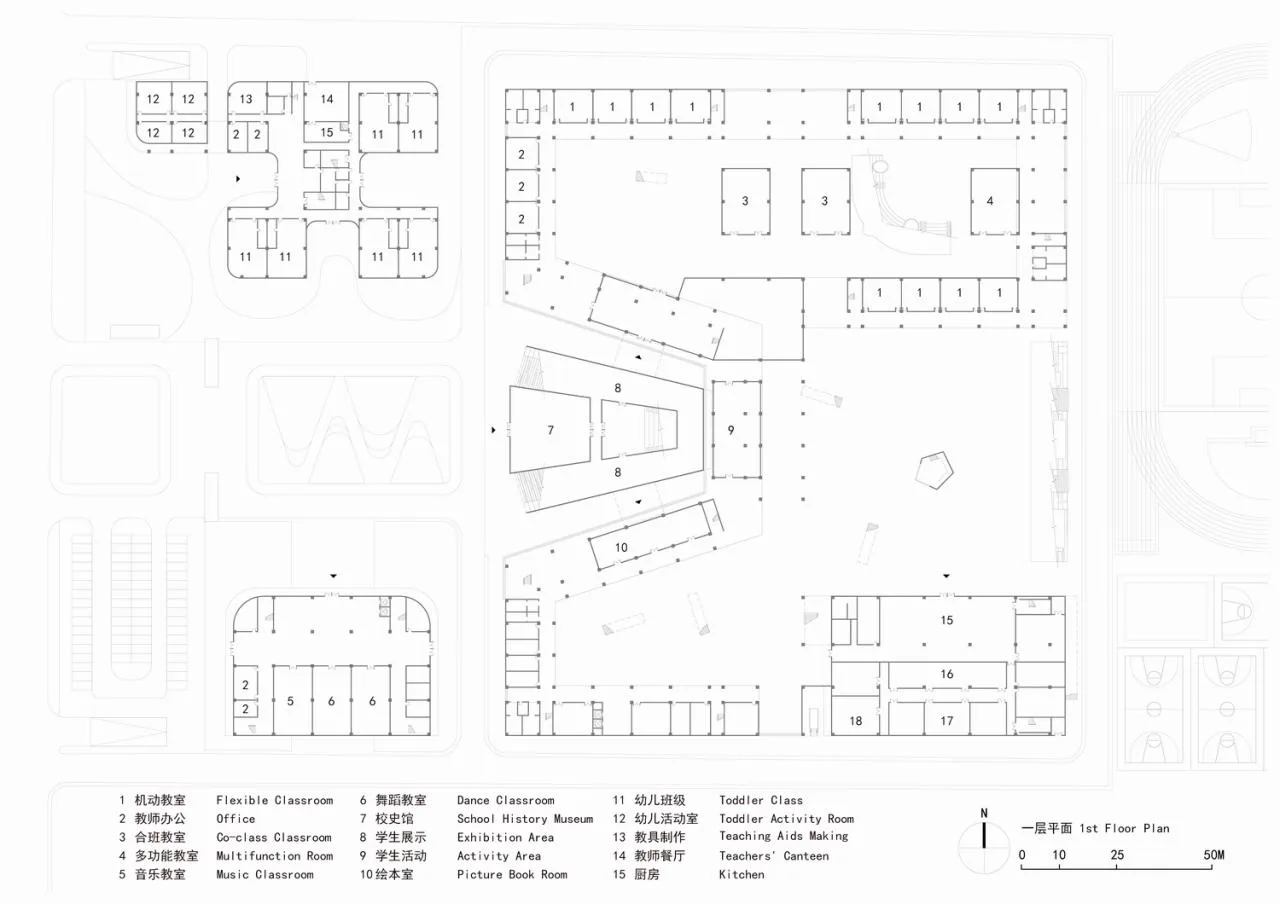
△ First Floor Plan
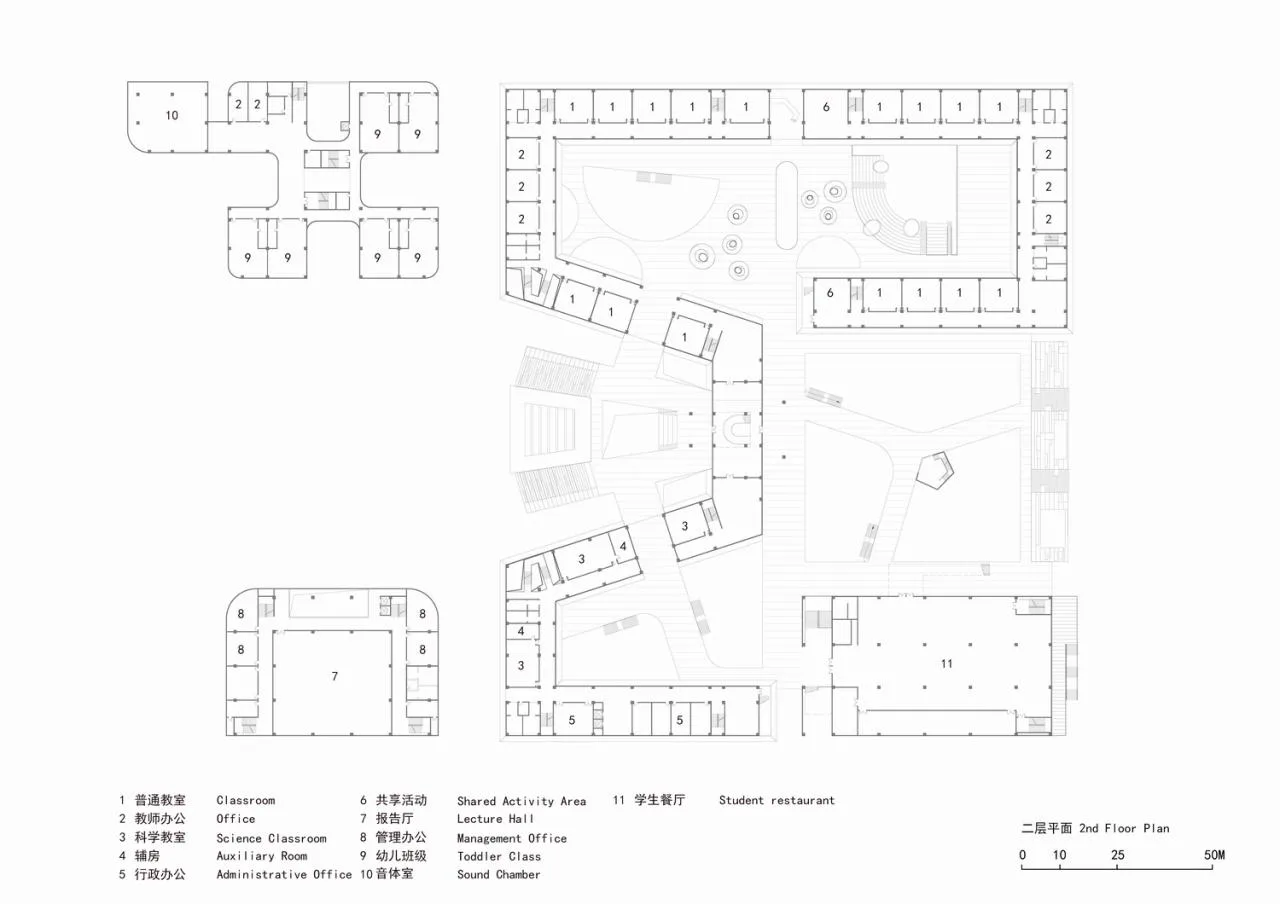
△ Second Floor Plan
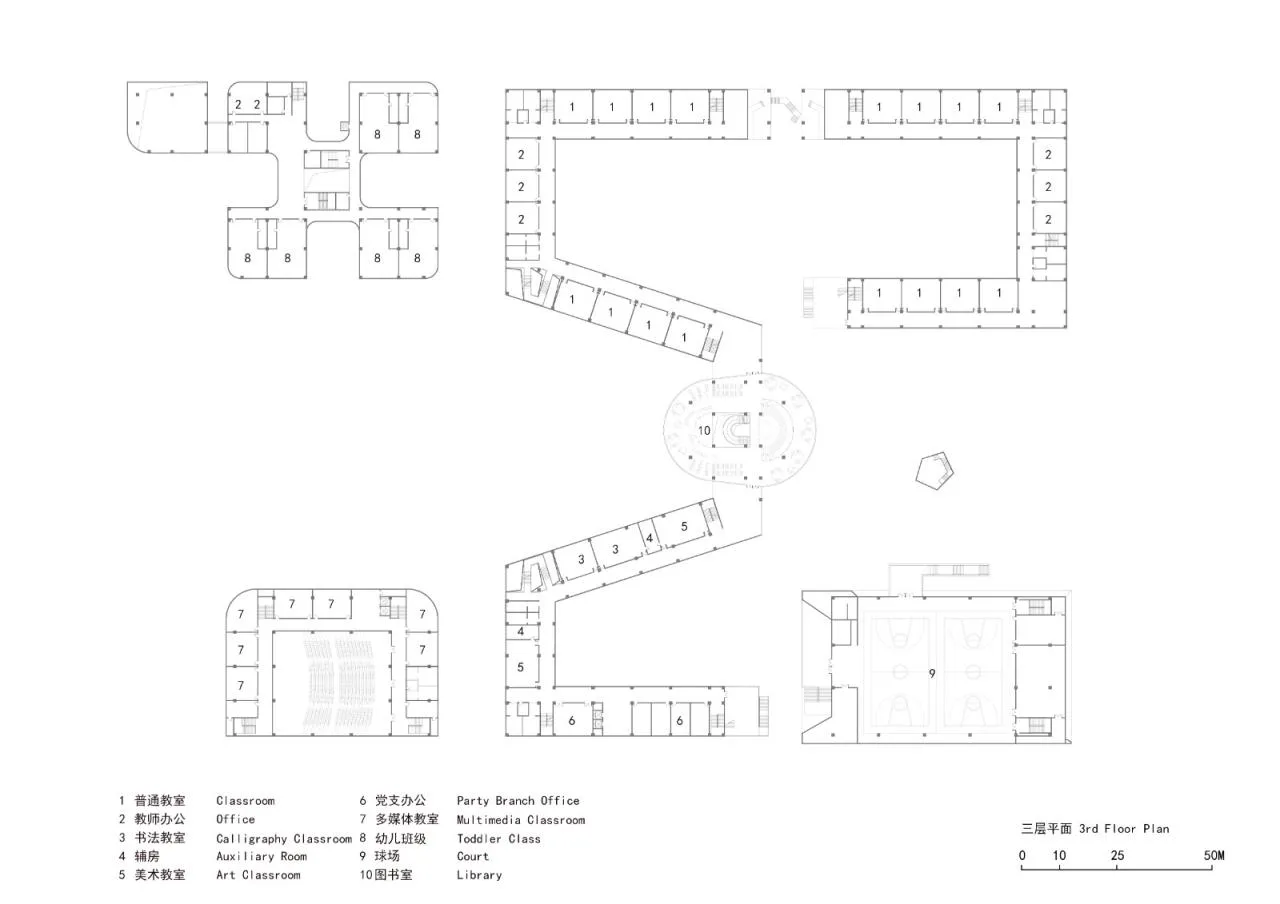
△ Third Floor Plan
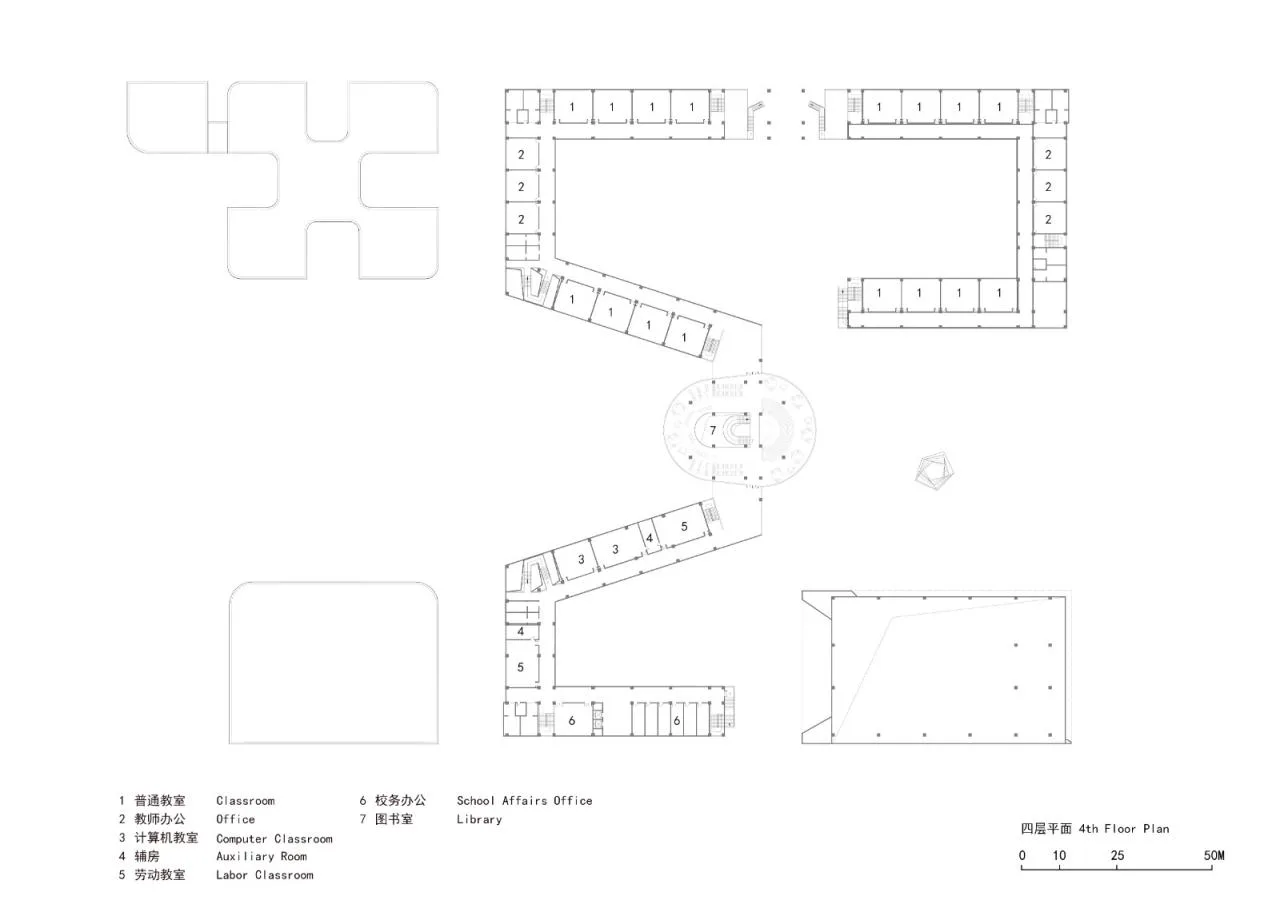
△ Fourth Floor Plan
Project Information
Project Name: Suqian Suyu District Experimental Primary School Reconstruction Project
Project Type: School
Owner: Education Bureau of Suyu District, Suqian City
Design Firm: GEN Jianhe Studio
Building Area: 57,000 square meters
Design Team: Zhu Qixiang, Zhou Shuguang, Yan Kongyu, Wu Xuanyi














Must log in before commenting!
Sign Up