
Over the past three decades, Accra, the capital of Ghana, has experienced rapid growth and is now recognized as the “Gateway to West Africa.” The area around Accra’s Kotoka International Airport has become a vibrant development zone, featuring convenient transportation, modern high-rise buildings, and numerous shopping centers. This district is a key component of Accra’s expanding urban network.
With the rise of emerging oil and service industries, the demand for internationally standard office and commercial buildings has surged. Responding to this need, the One Airport Square project was developed—not only to meet current requirements but also to set new benchmarks for green building standards in Ghana. As an ecological landmark in Accra, it represents the city’s commitment to innovation and sustainable development. Completed in 2015, One Airport Square is Ghana’s first 4-star (design phase) certified building by the South African Green Building Council (GBCSA), and notably, the first commercial building in West Africa to receive green certification.
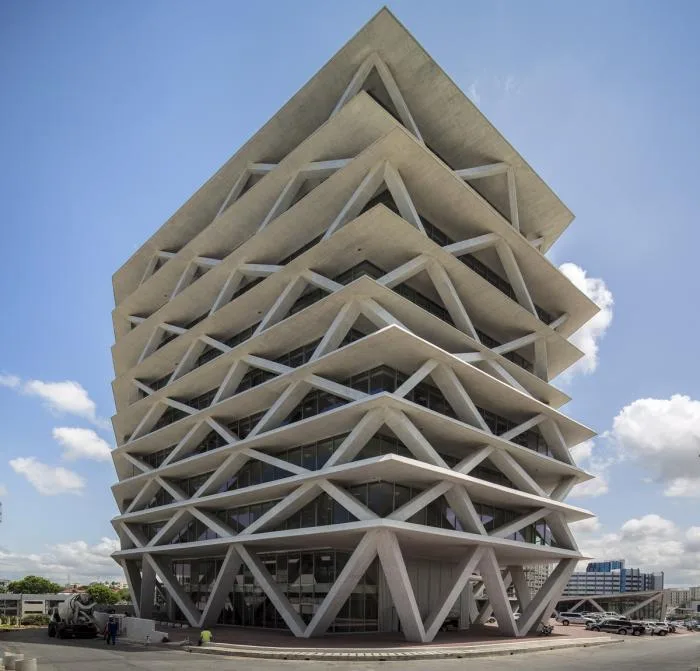
By thoroughly analyzing the site’s surroundings, including climate, terrain, sun angles, and local culture, the project team aimed to create a new standard for West African office buildings. This innovative approach earned the project the 2012 Africa International Real Estate Award for Best Office Building.
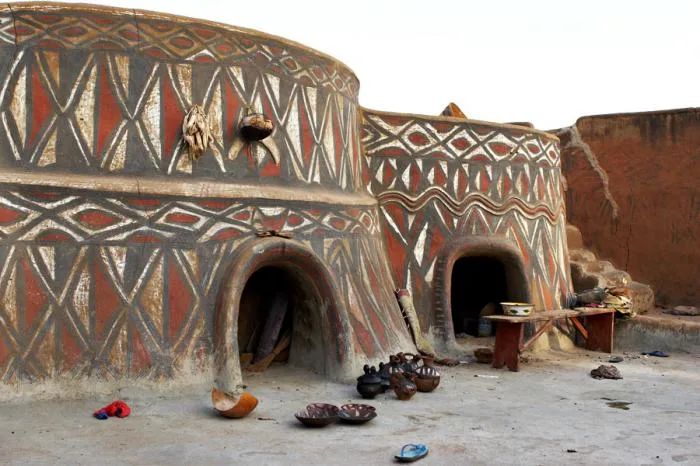
Traditional Cultural Architecture in Ghana
The building’s aesthetic and design draw inspiration from local traditional art, particularly the distinctive patterns found in palm tree bark. These elements are closely integrated with environmental development strategies to address climatic challenges effectively. A multidisciplinary design team developed the building’s form and layout by balancing functional, structural, and energy requirements with creative solutions tailored to the client’s needs.

Palm tree bark texture
Multifunctional Complex
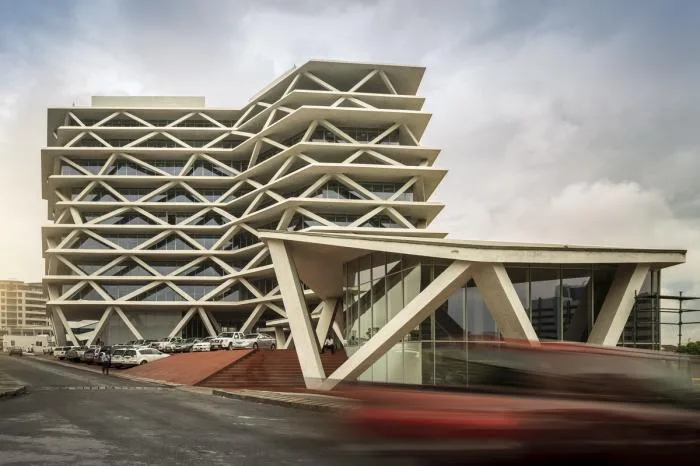
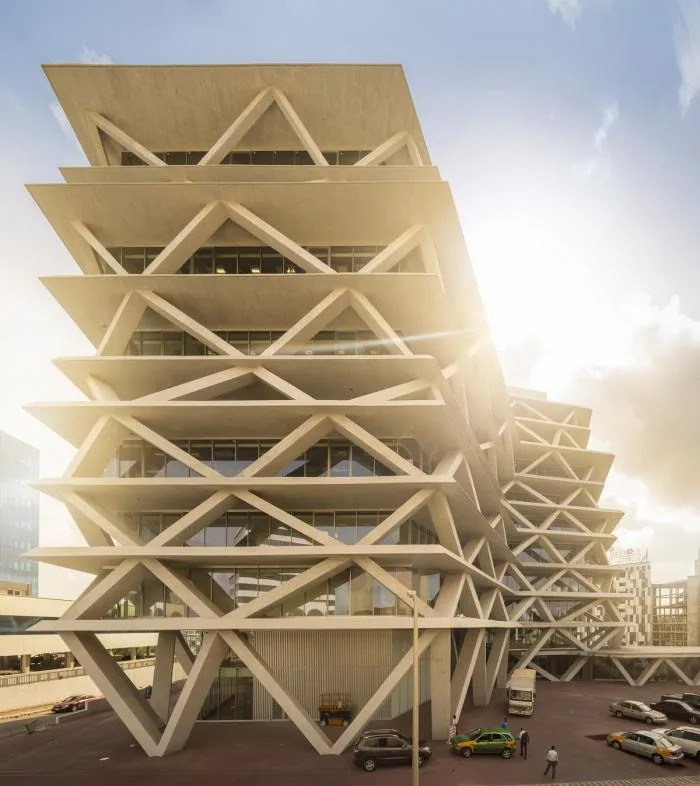
One Airport Square is a multifunctional development that includes a commercial ground floor and a ten-story office tower with an adjoining plaza on the southwest side, covering a total built-up area of 17,000 square meters. Taking into account the site’s unique shape and terrain, the tower is positioned on the southwest side, while an open public plaza faces northeast. Around this plaza, commercial spaces such as shops and restaurants are arranged in a circular layout. The project distinguishes itself within the urban fabric by contributing positively to the community, landscape, and embodying principles of ethical design, cultural respect, and environmental sustainability.
Floor Plan
The building’s irregular floor plan reflects the natural terrain of the site. The paved plaza connects directly to the street and leads to the main entrance, located on the plaza’s elevated level, providing access to both office and retail spaces. Two escalators provide direct access to a two-level underground parking garage. Even below ground, the design respects the site’s topography and incorporates modern seismic-resistant structural technologies. Given Accra’s high seismic activity, One Airport Square is among the first buildings in Africa to incorporate these advanced seismic safety measures.
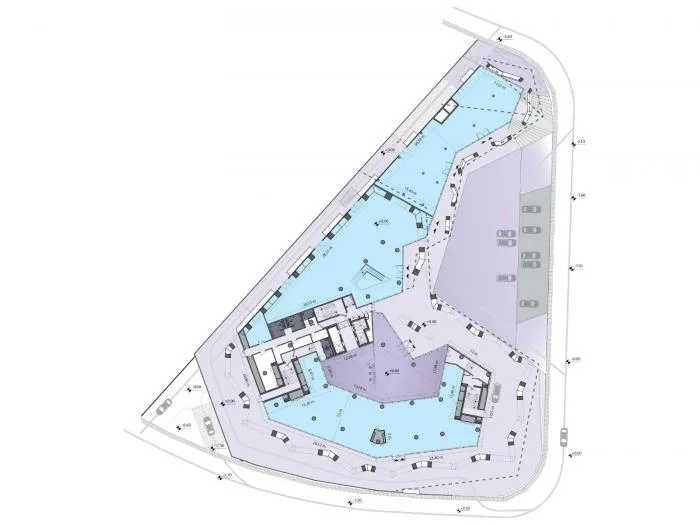
△ First floor plan
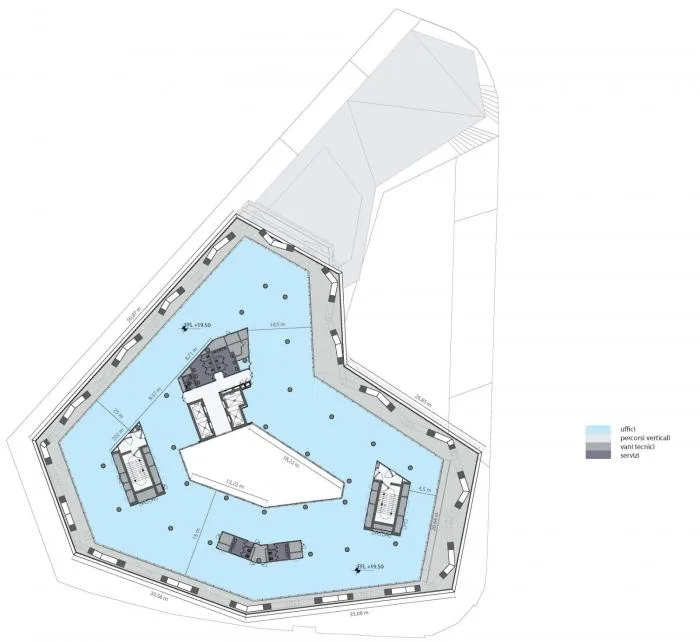
△ Fifth floor plan
Public Garden
The spacious plaza serves as a versatile venue for various events and functions as an exhibition space for permanent art installations. This dynamic area supports commercial activities, contributing to a lively atmosphere throughout the day and into the night.
Atrium
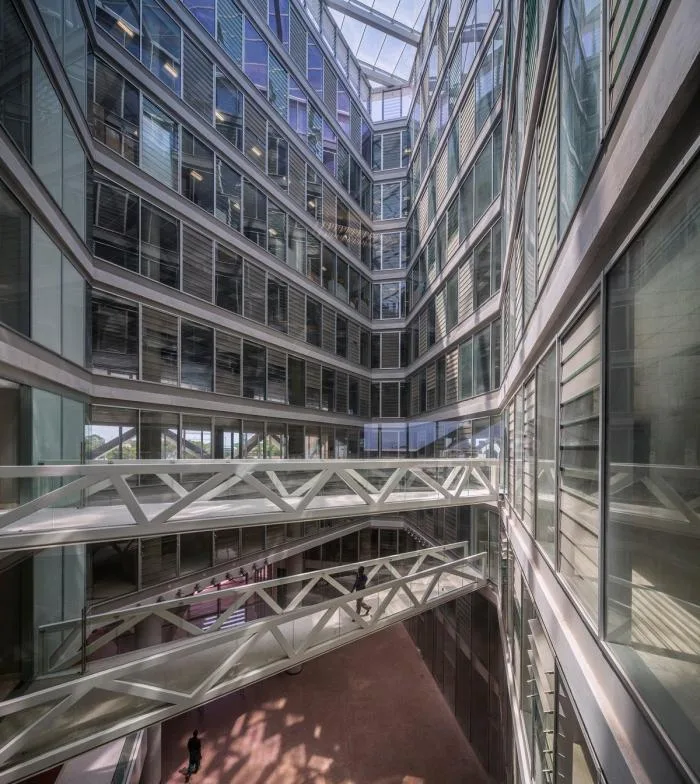
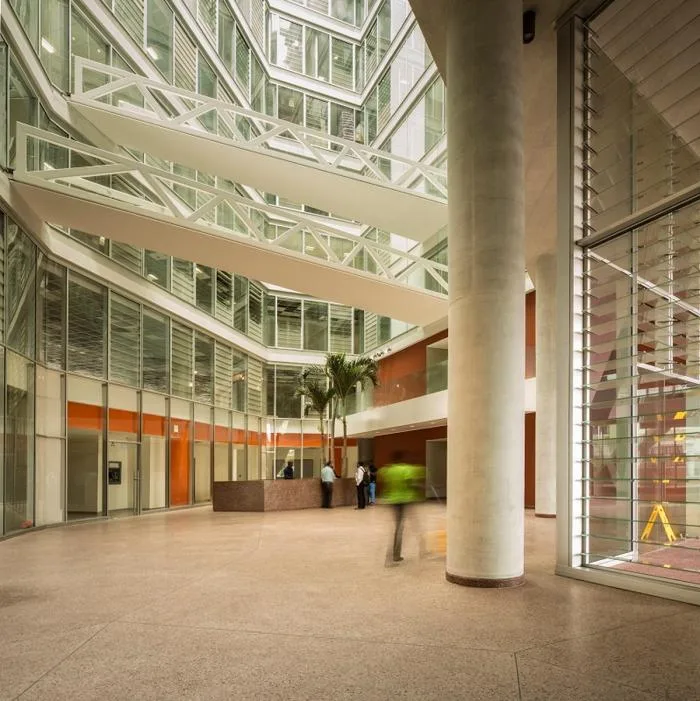
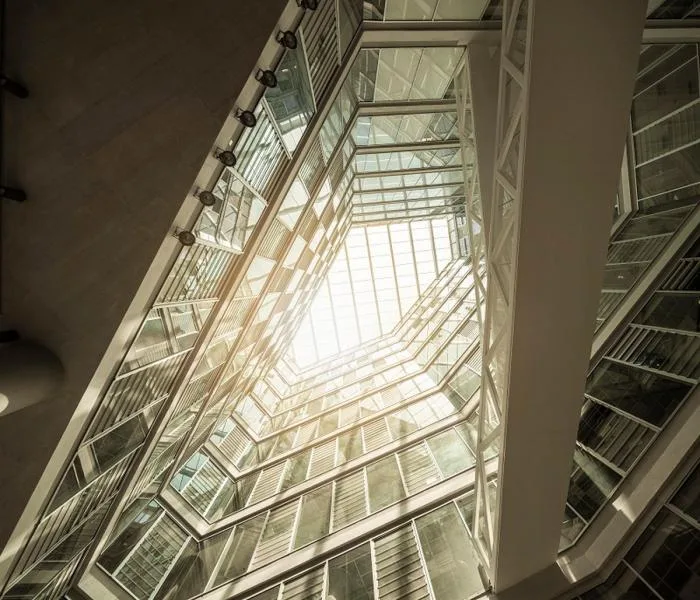
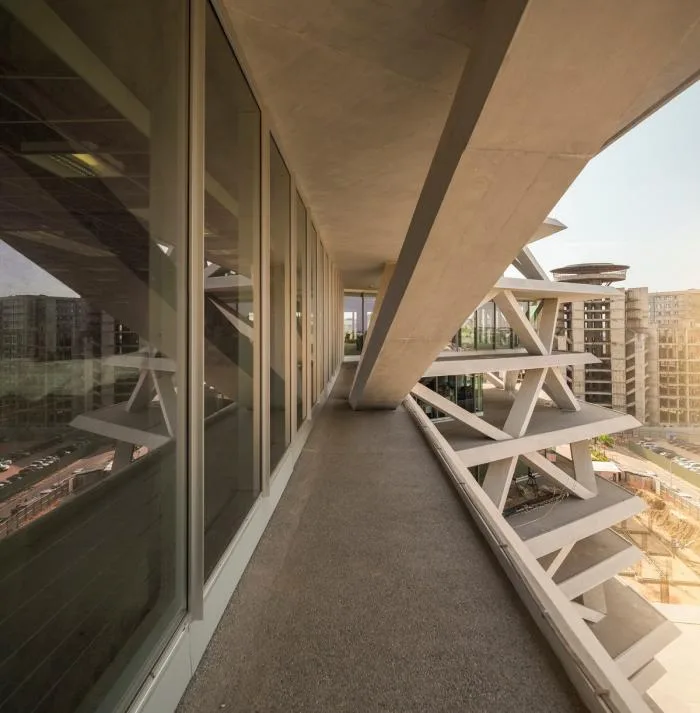
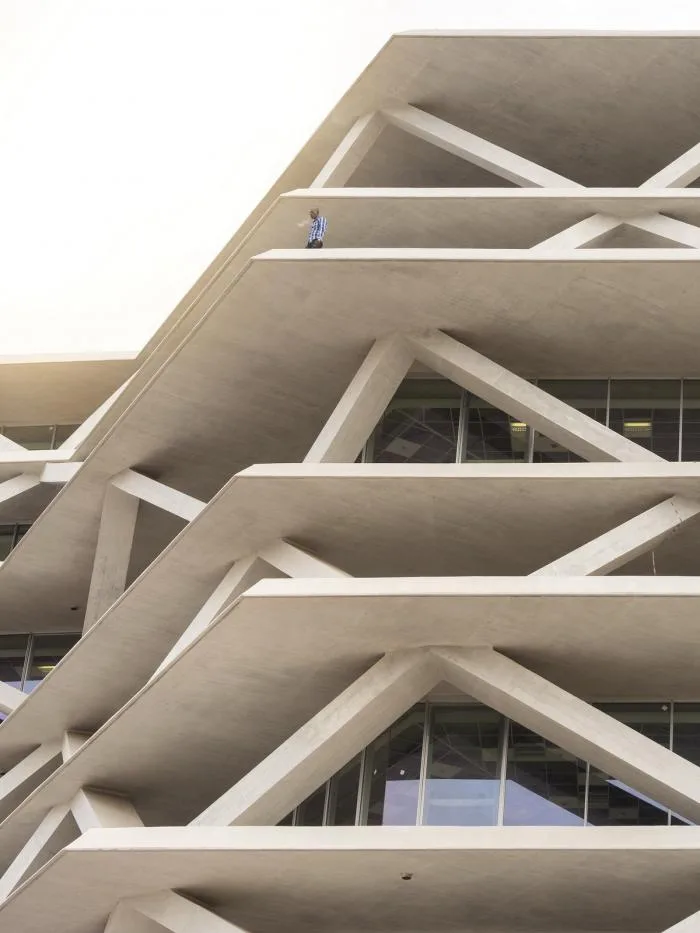
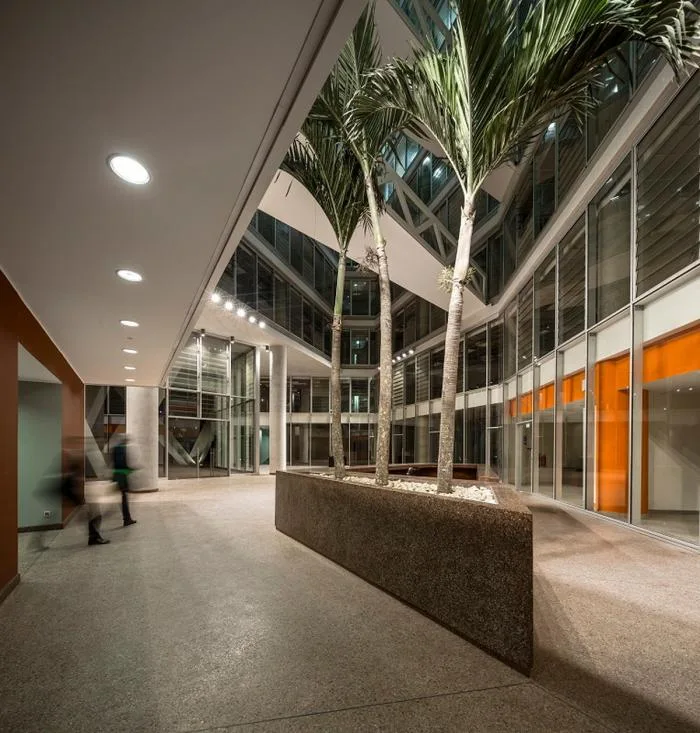
The building includes a compact atrium designed to bring in natural light and enhance indoor ventilation, creating a comfortable microclimate. The atrium generates a “chimney effect” that helps regulate internal thermal balance, enabling natural ventilation and reducing reliance on air conditioning, thereby saving energy. The building’s exterior design skillfully integrates form, structure, and environmental strategies. The vertical profile allows for three office layout types: large, medium, and small. A dynamic feature of the design is the cantilevered trapezoidal terraces, which gradually diminish in size at higher levels. This flexible configuration accommodates the varying needs of tenants.
Building Structure
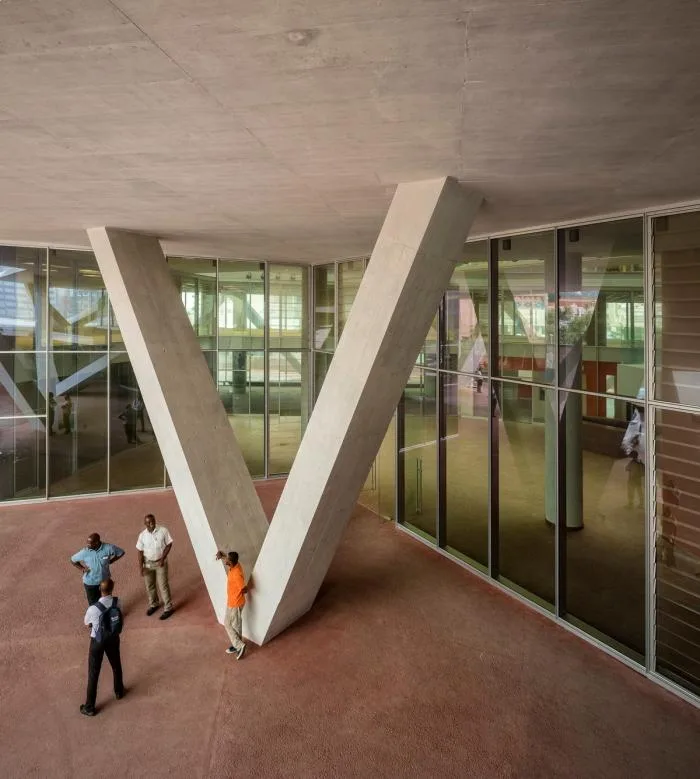
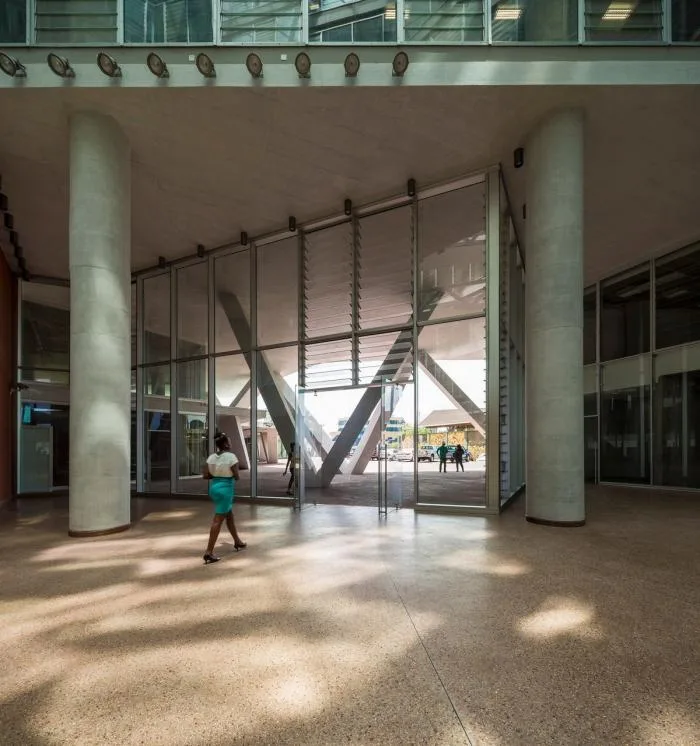
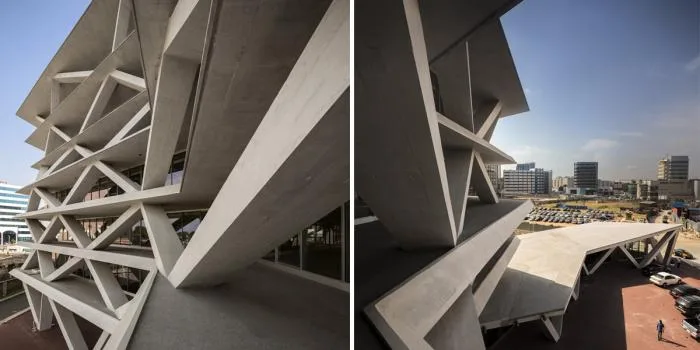
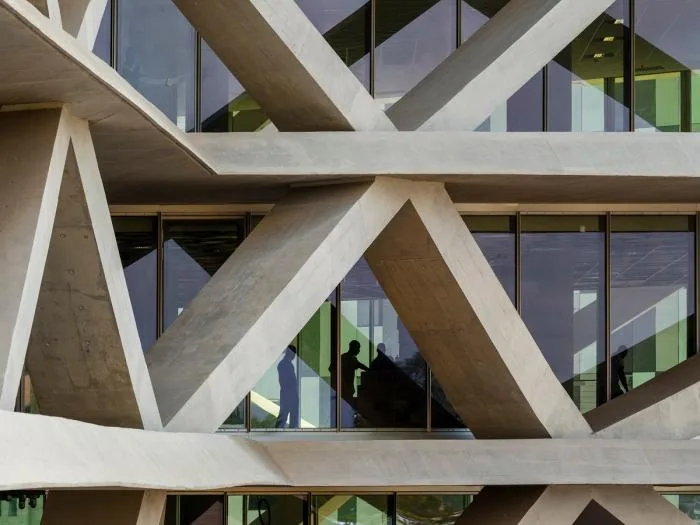
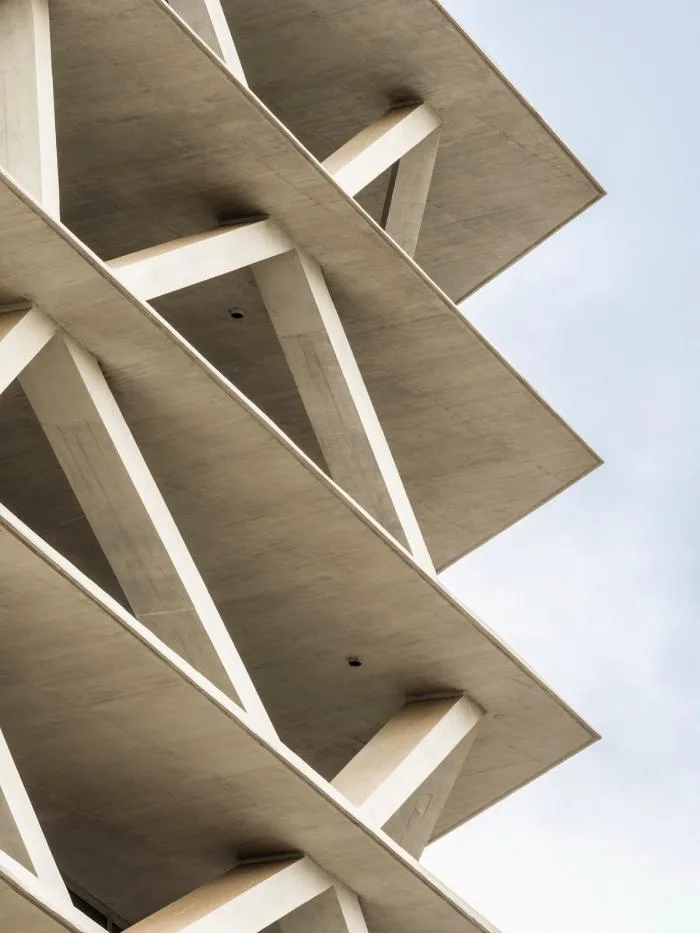
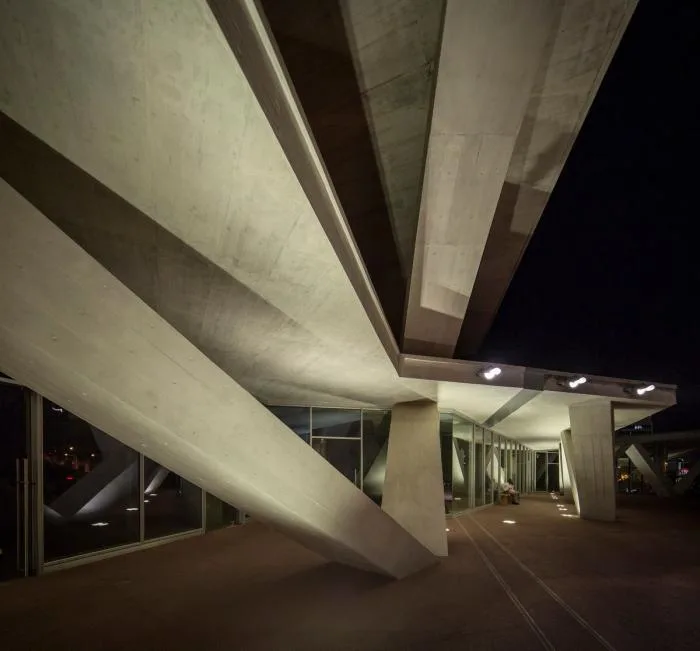
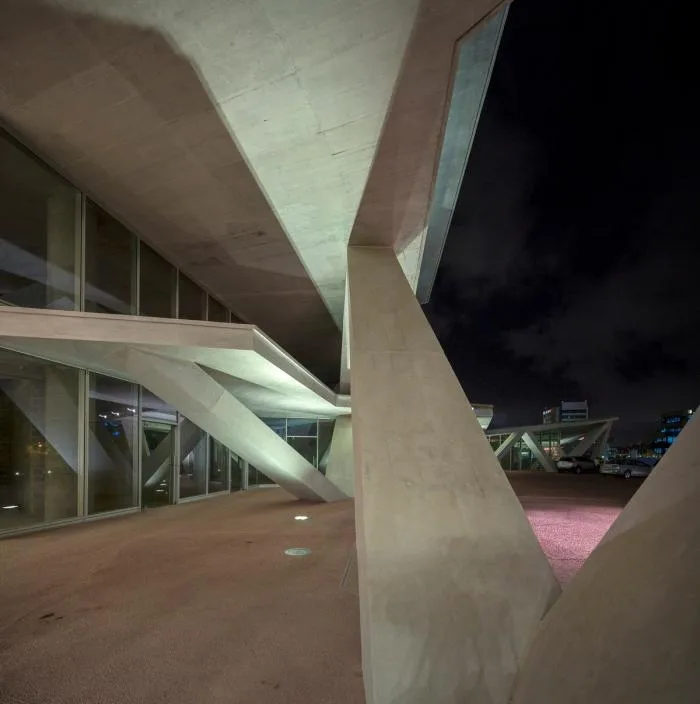
Although concrete structures often feel heavy, One Airport Square employs concrete in a lightweight and eco-friendly manner. The design incorporates inclined reinforced concrete columns that enhance the building’s stability and support cantilevered sections. These structural elements also serve as decorative facade patterns, harmonizing with glass curtain walls to create a surprising sense of lightness.
Passive Energy Strategy
The building employs a hybrid ventilation strategy featuring operable windows in the atrium and on both interior and exterior facades of all office floors. This design enhances natural airflow and minimizes unnecessary air conditioning.
Given the building’s latitude, its east and west facades are particularly exposed to solar radiation. To address this, solar panels are installed on the roof to harness renewable energy. Additionally, the cantilevered trapezoidal terraces provide shading to reduce direct sun exposure. Considering the typical tropical climate with consistently moderate to high temperatures, cooling demand is a significant concern. The climate control system distributes cooled air through raised floors for even temperature distribution across the space. Indoor temperatures average around 23°C, while humidity varies seasonally, reaching up to 90% saturation in summer. Compared to most buildings in Accra, this design reduces energy consumption by 30–40%.
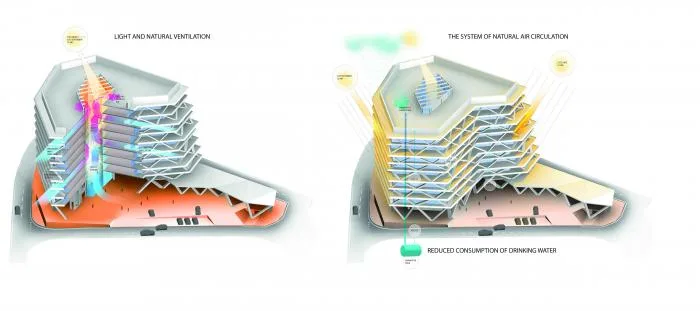
△ Natural ventilation and lighting system
Water Conservation
To reduce potable water consumption, flow restriction technologies have been implemented throughout the building.
Additionally, a rainwater harvesting system collects runoff during rainy periods, storing it in tanks for use in restrooms and irrigation of plants.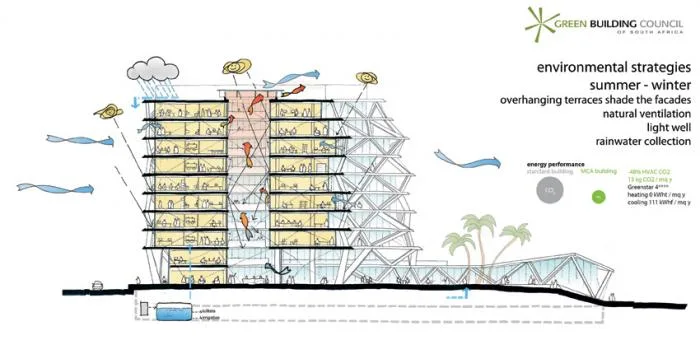
△ Bioclimatic analysis
One Airport Square achieves a well-balanced design that reduces energy consumption while optimizing natural light use. By blending advanced technology with local traditions, it introduces a new concept of ecological beauty that maximizes sustainability and respects the local environment. The project is an exemplary case of green building that integrates creative empathy.
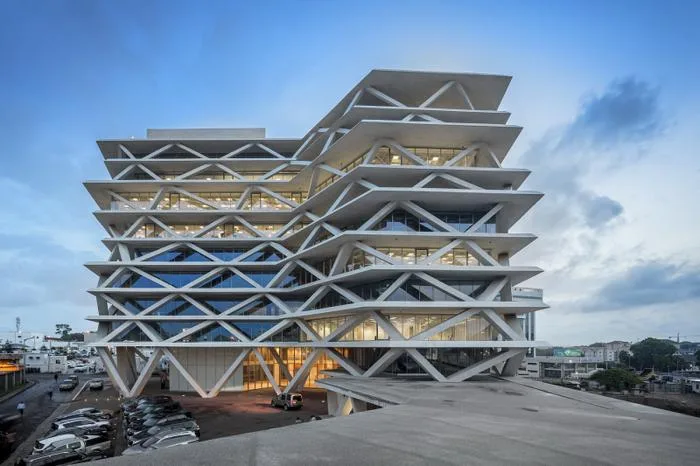
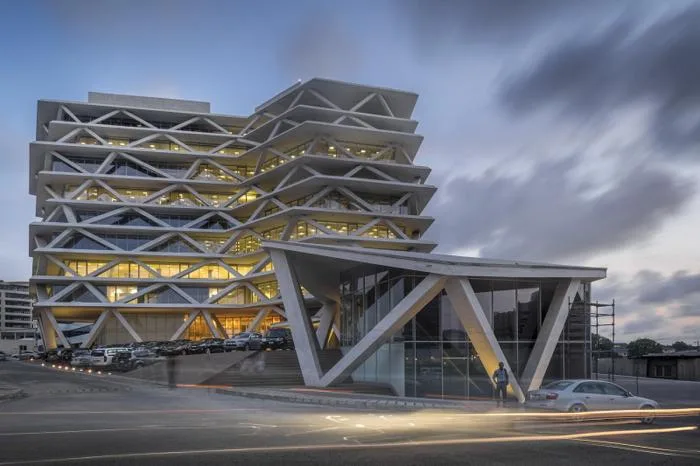
Night Views
Drawings and Models
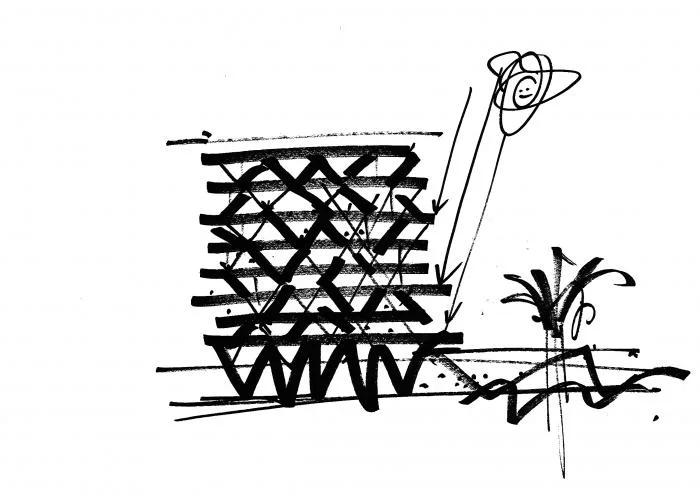
△ Sketch
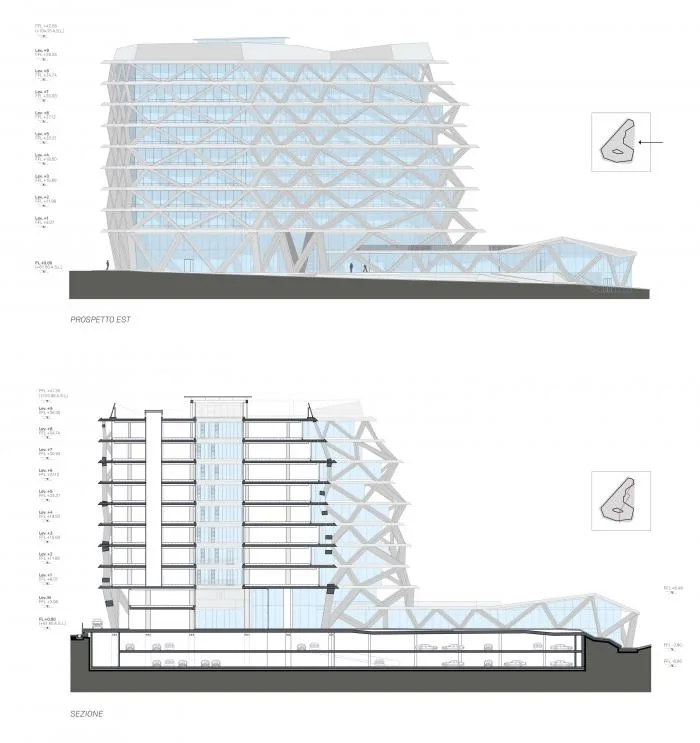
△ East facade and section
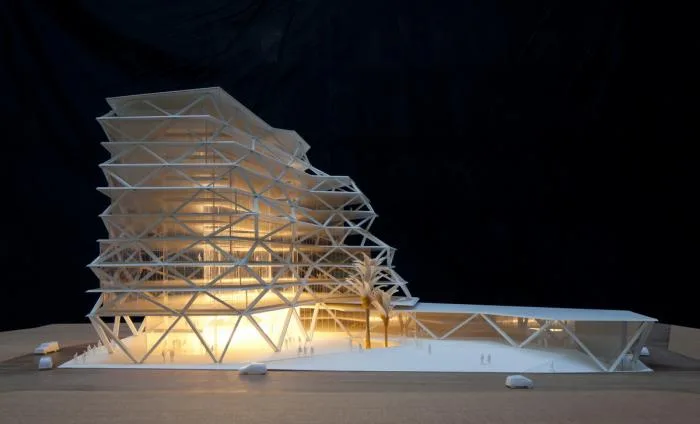
△ Overall Model
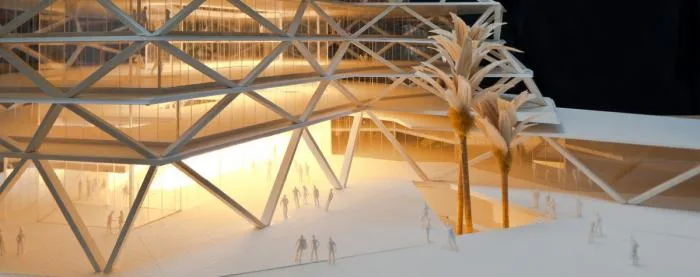
△ Model close-up view
Project Information
Location: Accra, Ghana
Construction Period: 2010–2015
Investor: Actis Boston Tower Development Limited
Builder: Laurus DP
Type: Commissioned
Area: 17,000 m²
Architecture and Structural Design: Mario Cucinella Architects + Deweger Gruter Brown & Partners
Team: Mario Cucinella, Luca Bertacchi, Hyun Seok Giuseppe Perrone, Nada Balestri, Luca Sandri, Giulia Pentella, Alberto Bruno, Yuri Costantini
Structural Engineering: Politecnica Ingegneria e Architettura
Mechanical and Electrical Engineering: Chapman – BDSP
Local Structural Construction Engineer: Ghana Twum Boafo & Partners
Local Plumbing and Electrical Coordination Engineer: Ghana Impact Technologies Limited
Coordinating Architect: Deweger Gruter Brown & Partners
Engineering Cost Consultant: AECOM London
Coordinated Engineering Cost Consultant: A-Kon Consults Limited, Ghana
Construction Unit: MICHELETTI LTD
Construction Management: MACE
Rendering: Cristian Chierici – CC79; Engram Studio
Photography: Fernando Guerra












Must log in before commenting!
Sign Up