
In the Story of Xiaoqiu
Expansion of an Actual Winery
Host Design/Presentation: Wang Jianfeng
Location: Eastern Foothills of Helan Mountain, Ningxia
Project Nature: Actual Commissioned Construction
Building Area: 800 square meters
Landscape Scale: 4,035 m²
Design Period: 2018–2019
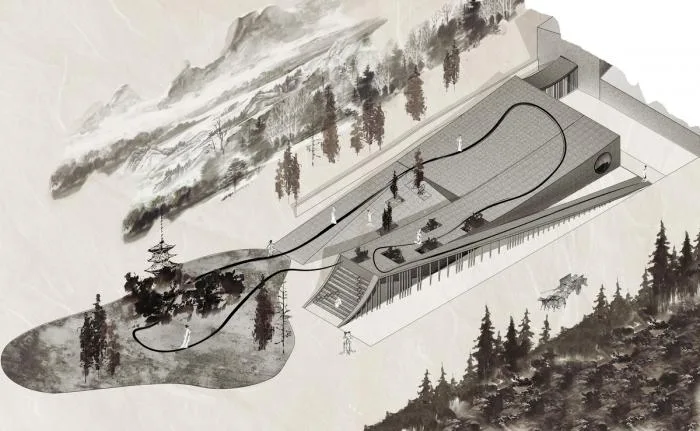
© PL-T Architecture Firm
Mr. Wu Hong once described Tang Yin’s Ming Dynasty painting Da Huan Tu as follows:
At the beginning of the scroll, a towering mountain appears, with faint stone steps visible at its base. Moving along the scroll, two thatched cottages come into view, hidden behind a large rock depicted with thick ink. Through the open window, a scholar is seen resting at his desk. Suddenly, the dense inked mountain stones vanish from the foreground, revealing distant mountains lightly shaded with ink stretching to the left. Above the mountain floats a tiny scholar in midair, his sleeves and hat straps fluttering—indicating flight. His white robe and blue scarf match those of the scholar resting inside the cottage, suggesting they are the same person. The flying scholar gazes back at his sleeping self.
Although dreams are a common subject in Chinese art, the genius of this piece lies in its use of the handscroll medium. It blends the concept of “dream” with the temporal progression of the scroll, adding a philosophical layer through the motif of “looking back.”
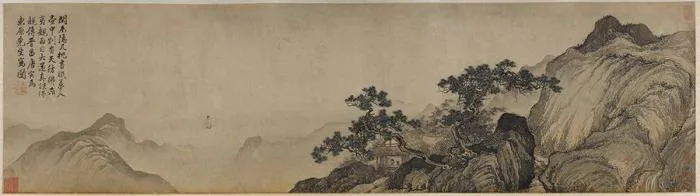
Da Huan Tu by Ming artist Tang Yin © Image sourced from the internet
The concept behind Xiaoqiu Ji originates from the handscroll painting Da Huan Tu, which I refer to as “Travel.” The horizontal composition, the diachronic experience of viewing a handscroll, and the viewer’s journey together create a “moving painting.” Faced with this real-world construction project, my aim was to integrate the handscroll’s medium characteristics into the spatial sequence itself.
To “erase architecture” architecturally and “deconstruct” humanistically, the goal was to craft a scene or state rather than a traditional building form.

© PL-T Architecture Firm
What will happen in this place? Behavioral patterns seem to matter most.
The focus is on harnessing the site’s true potential, arranging fitting scenes, and creating the right atmosphere—not on architecture as an object. While the building inevitably takes form, it is secondary. Over time, it is the materials and atmosphere that will infuse the place with vitality.
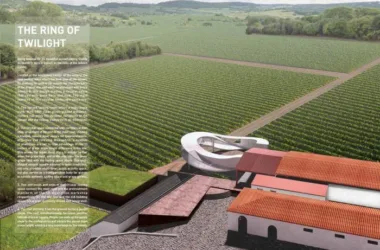
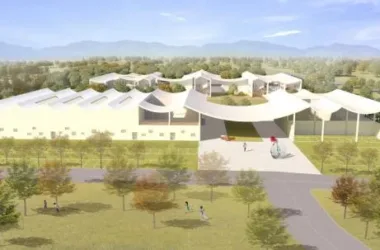
The newly constructed main structure is cleverly nestled between the natural hills of the original winery production area and the site itself, forming a complete small mountain garden bridging the natural mountain range and the new construction.
Through methods of “de-architecting” and “de-formalizing,” a landscaped public garden space is created.
The new building rises from the ground, forming an artificial hill that gradually merges with the natural hillside, becoming one with it. As visitors move freely between the two, they experience a unique mountain ambiance.
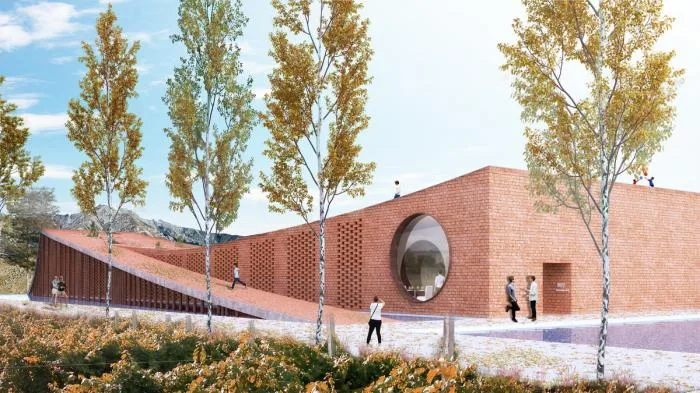
© PL-T Architecture Firm
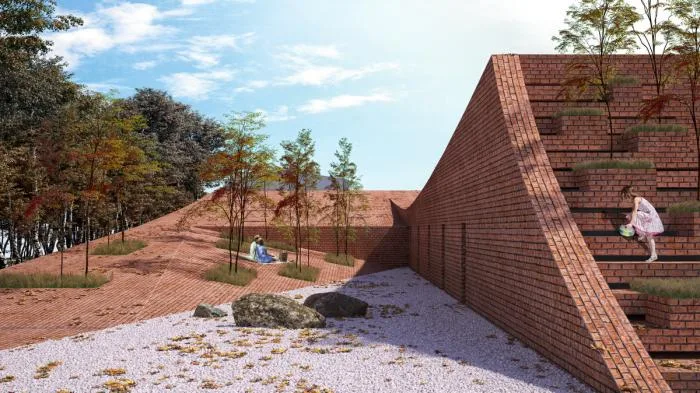
© PL-T Architecture Firm
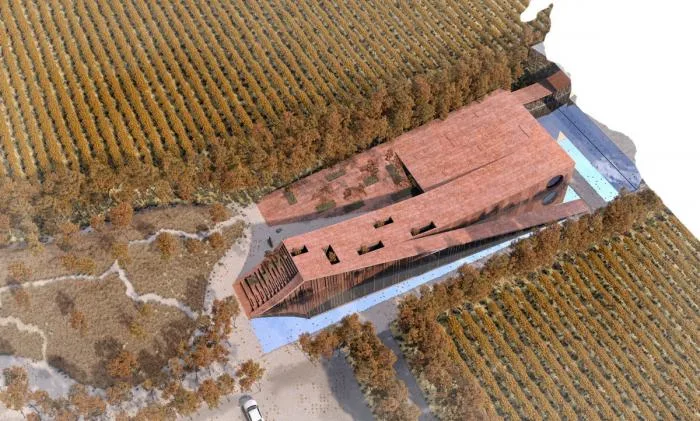
© PL-T Architecture Firm
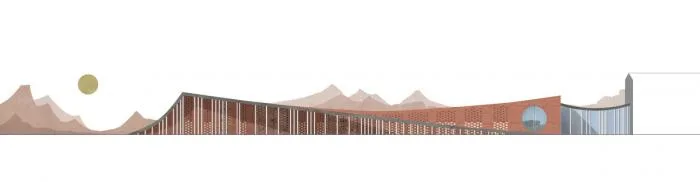
© PL-T Architecture Firm
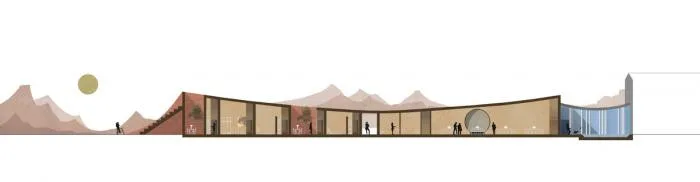
© PL-T Architecture Firm
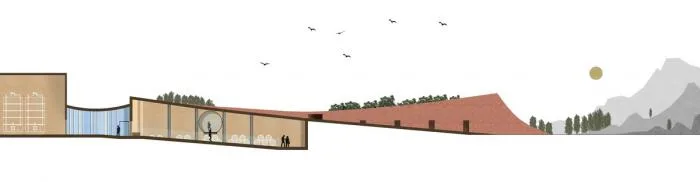
© PL-T Architecture Firm
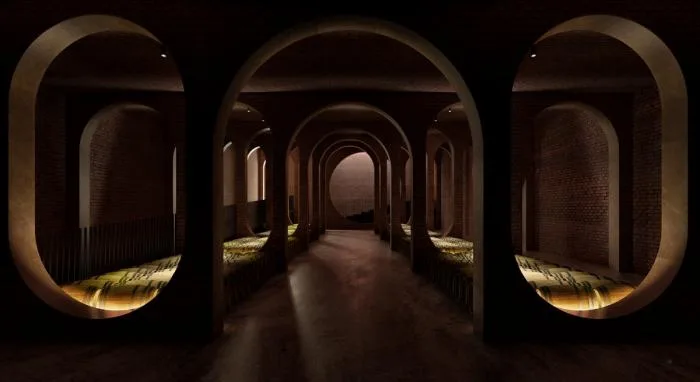
© PL-T Architecture Firm
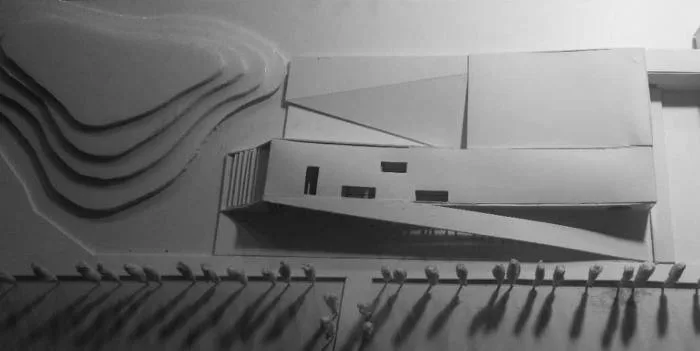
© PL-T Architecture Firm
The winery’s project, The Little Hill, began with The Grand Return but concludes with another sculptor: Michelangelo. Wallace once remarked about Michelangelo’s God of Wine:
“Michelangelo masterfully created multiple perspectives, yet none dominates the composition. It remains a profoundly successful work of art.”
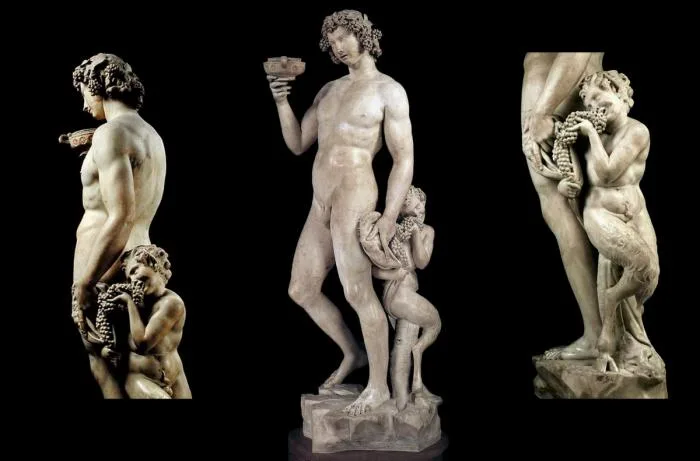
The Wine God by Michelangelo, Italy © Image sourced from the internet
Indeed, God of Wine serves as an inspiration. I hope that the scenes within The Little Hill will similarly offer multiple perspectives without a single dominant viewpoint. As we move around the building, we experience continuous shifts in perception.
Wang Jianfeng
Wang Jianfeng is a founding partner of PL-T Architecture Firm and leads its design process. He is also a founding partner of a local winery studio and serves as a resident architect in Italy. Holding a Master’s degree in Architecture from the University of Venice (IUAV), his expertise lies in urban architecture and the theories of Aldo Rossi. During his time in Italy, he worked at Ferlenga Architetti Associates in Milan and contributed to the Venice Biennale.













Must log in before commenting!
Sign Up