
Longhua City, the sixth book city in Shenzhen, spans approximately 46,000 square meters. It serves as a public cultural center and landmark, seamlessly integrating cultural reading, creative design, leisure and entertainment, education and training, along with commercial services.
From the project’s inception to its completion, the design approach centers on a profound dialogue between nature and humanities, art and culture, space and emotion, and people and their surroundings. By honoring the heritage of book city culture while embracing its future, we envisioned a smart cultural book city that breathes, grows, and resonates deeply with its citizens. This design invites urban dwellers to rediscover the space and experience the allure of reading anew.
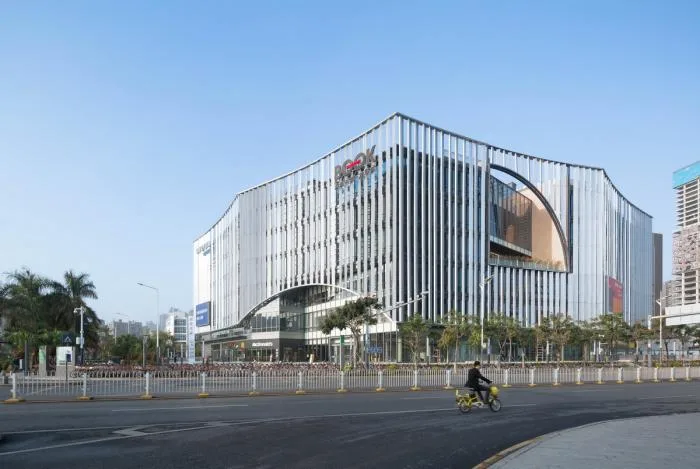
▲ Architectural Exterior
Twenty years ago, Shenzhen Book City revolutionized life through books. Today, it sparks a second revolution by weaving books into the fabric of life. The architectural and interior design of Longhua Book City emphasizes that the bookstore offers not just books, but the lifestyles and cultures they embody. By creating multi-level, three-dimensional courtyard designs, the project fosters diverse communication scenarios and rich cultural interactions for citizens, infusing the space with artistic soul and endless possibilities. This approach also establishes a sustainable framework for the bookstore’s future, pioneering a new era where reading and cultural spaces coexist across multiple formats.
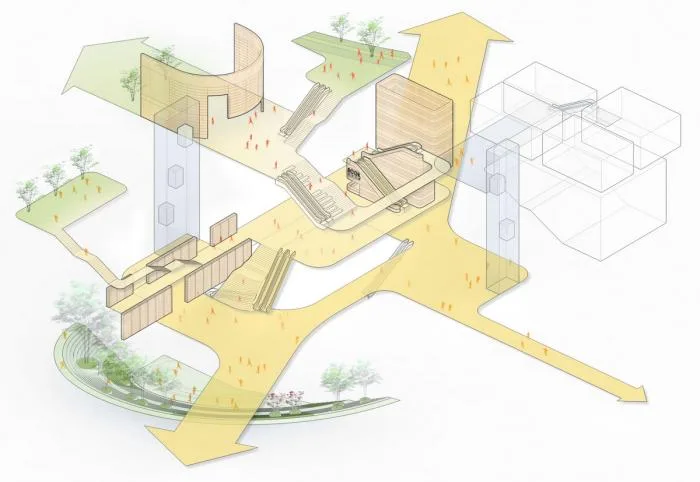
▲ Analysis Diagram
From the basement through to the sixth floor, every gathering point within the space is carefully orchestrated. A dynamic cultural flow courses throughout, emphasizing the interplay between architecture, people, books, nature, sunlight, and the inner light of the soul. The design also prioritizes respect and care for the natural ecology, enabling seamless integration between space and nature, and between humans and the environment. This creates a welcoming atmosphere with breathable green buildings and indoor spaces, enriching the city while reigniting the public’s passion for reading.
Layered Pavilions
The layered pavilions rise skyward, overlooking waterfront residences. Between the basement and first floor, intriguing mezzanines form rich, multi-layered spatial experiences reminiscent of traditional pavilions. These connections enhance architectural functionality and offer readers a more immersive experience. The area, which remains open late into the night, serves as a “canteen” for late-night readers, providing spiritual nourishment for those seeking urban rejuvenation.
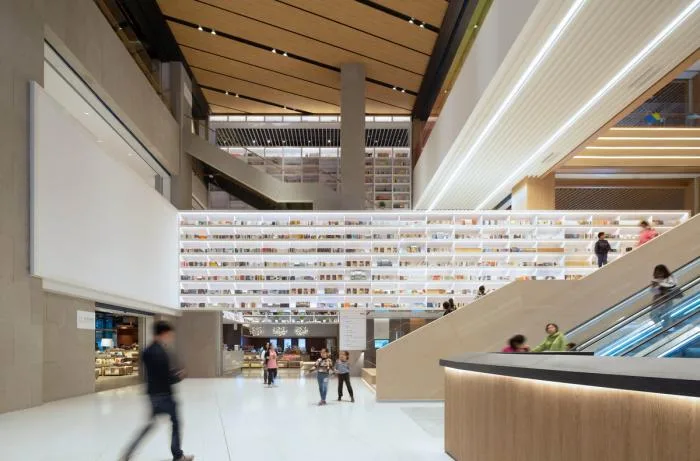
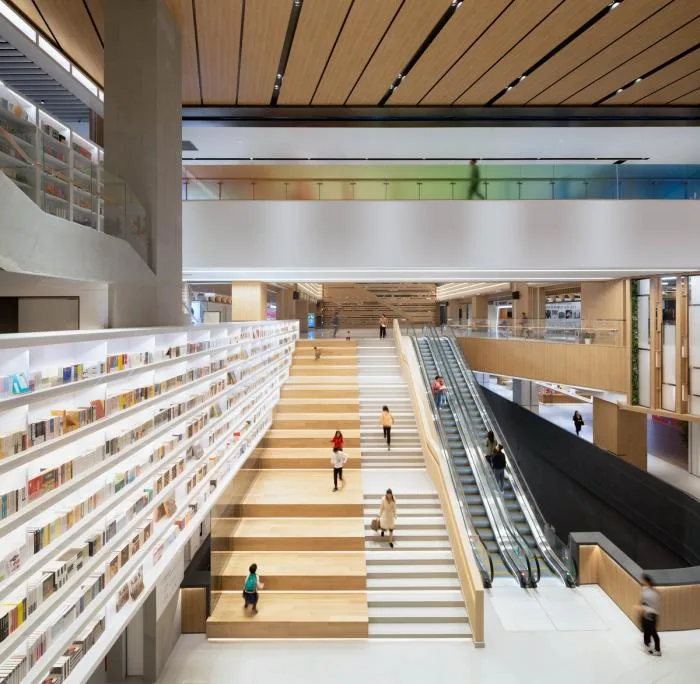
▲ Entrance to the Public Area of the Comprehensive Reading Hall
Interdependence of Walls and Mountains
The public spaces offer flexible, diverse environments through thoughtfully arranged pathways. A grand staircase connecting the first and second floors acts as a cultural hub for movement, display, and leisurely reading. The third-floor book wall, housing over 8,000 titles, dominates the visual landscape of the bookstore’s first-floor area. It serves as the spatial prologue, immersing visitors in a sea of books and showcasing the transformative power of reading.
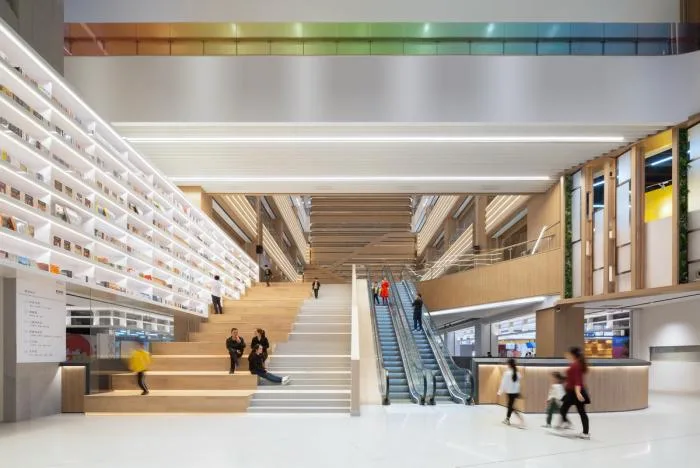
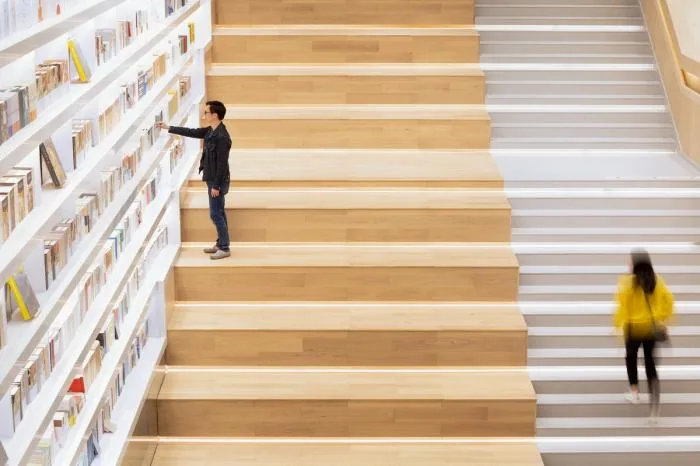
▲ Entrance to the Cultural Public Area
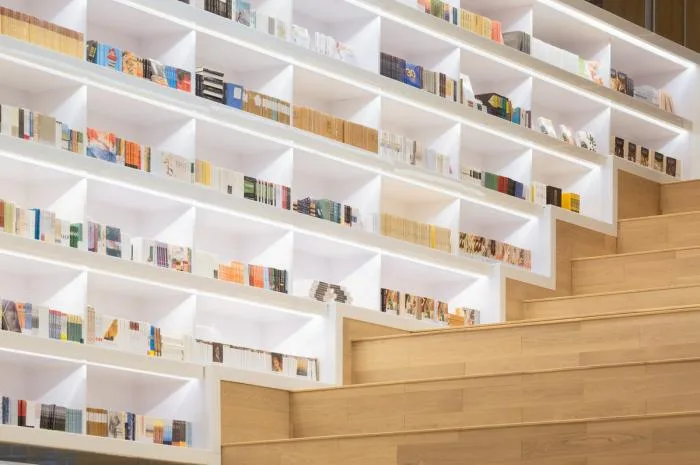
▲ Book Wall
The second floor serves as the bookstore’s central living room—an ideal space for immersive reading and a flexible cultural hub that adapts to various needs. It also functions as a cutting-edge multimedia display area. Hosting cultural events, lectures, and forums, it fosters artistic exchanges between the bookstore and its visitors. Spanning up to four levels, this “Book Mountain” courtyard design features direct access to skylights, presenting readers with the imagery of “Book Mountain with paths and diligent trails.” Natural light pours through glass and partition skylights shaped like book pages, blending a simple white palette with wood-like materials to create a warm, modern tranquility. This abundant sunlight also significantly reduces energy consumption, reinforcing the green ecological design philosophy.
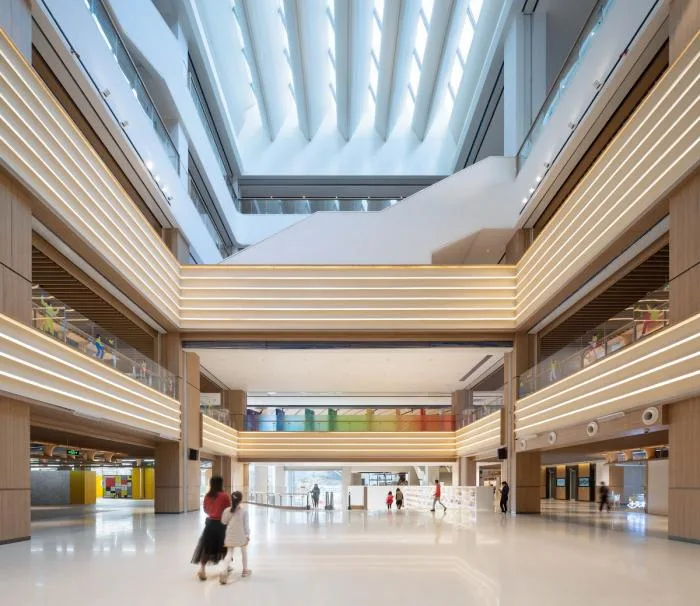
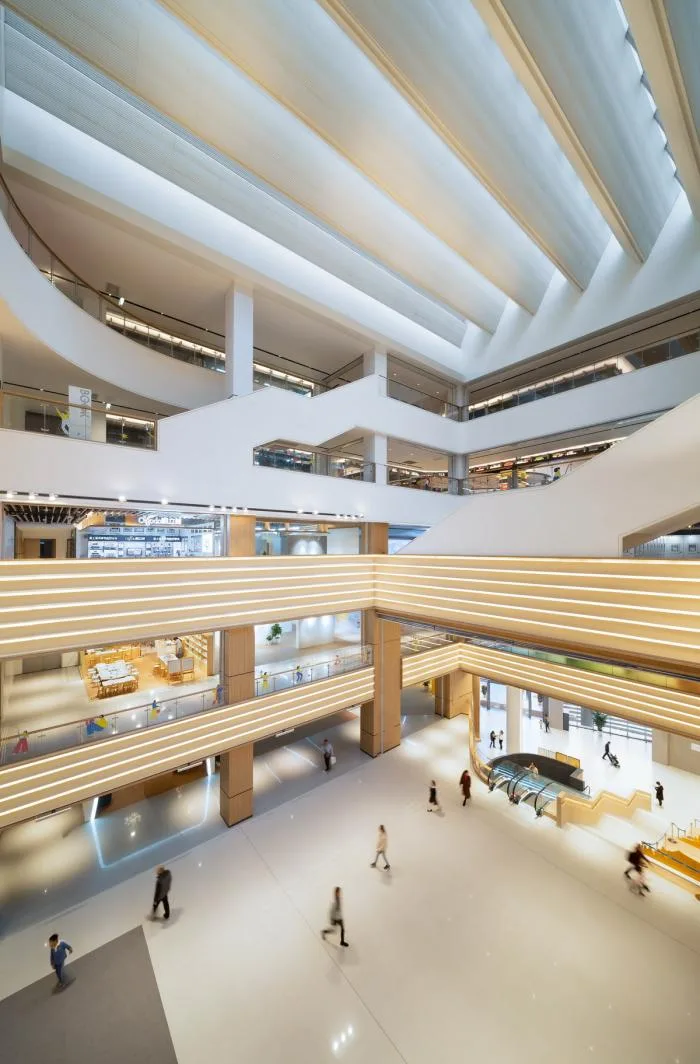
▲ Central Courtyard of the Cultural Public Area
Children’s Market
Designed from a child’s perspective, this space aims to be a paradise of imagination and creativity. Incorporating the concept of a “micro community,” it fosters diverse community elements and inspires children through multifunctional spatial combinations. The reading scenes emphasize ownership and engagement, featuring bookshelves and open lawns scaled to children’s height and browsing habits, flexible modular reading booths, and playful standing shuttle hole designs. These create exclusive, comfortable spaces for children while nurturing their creativity and hands-on skills. The design also facilitates visual communication between parents and children across various settings.
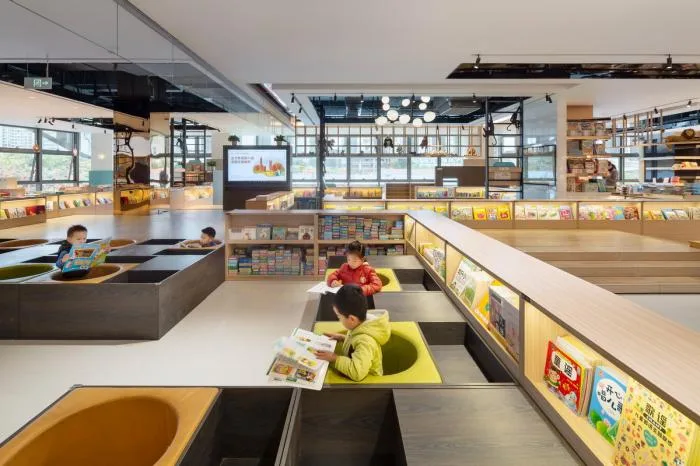
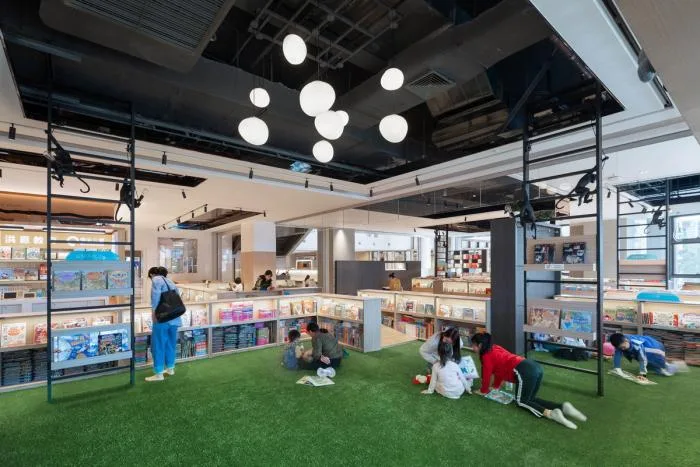
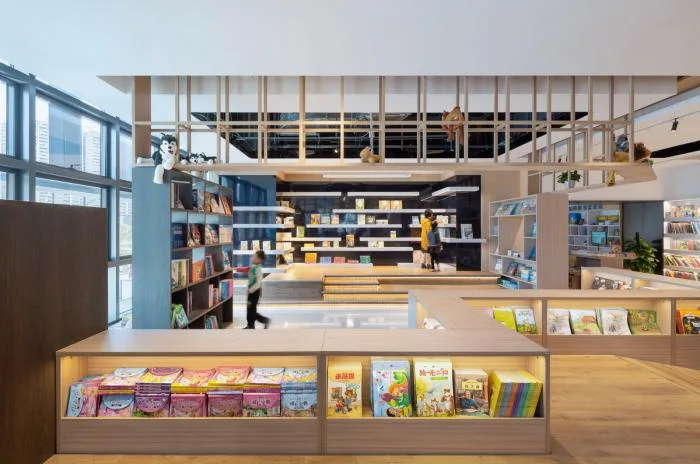
▲ Children’s Fun Hall
A Small Bridge Over Flowing Water
Material selection and craftsmanship play a crucial role in expressing design concepts. To embody the theme of a “small bridge over flowing water,” sparkling mirrored metal is used to simulate the concave and convex water surface beneath the bridge. Wooden boats positioned below enhance this layered artistic impression, evoking an elegant and natural spatial image. This design cultivates a relaxed and pleasant reading atmosphere, flowing gently like a small bridge over water.
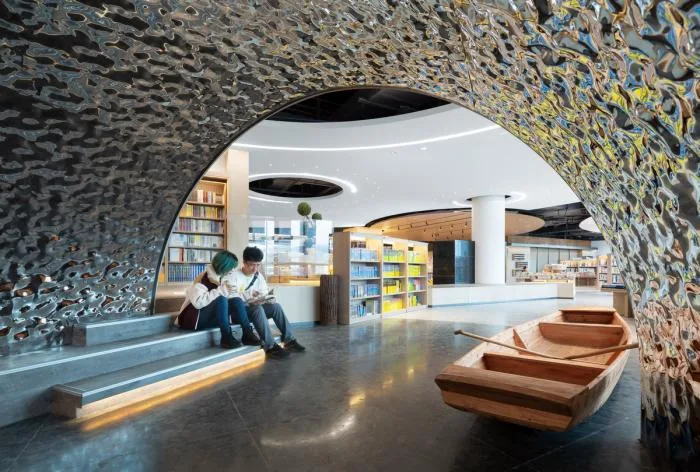
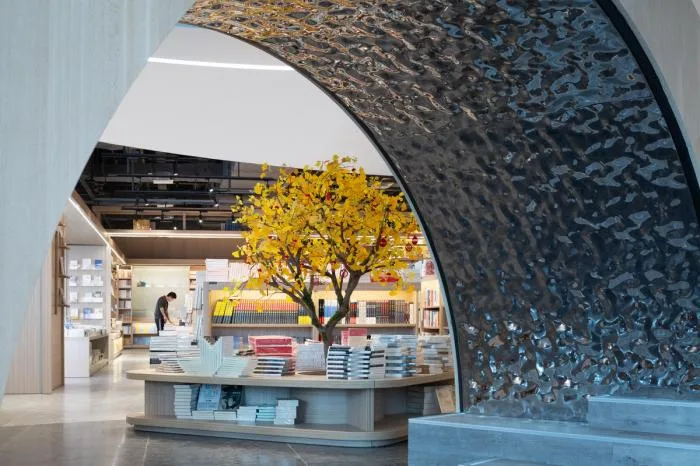
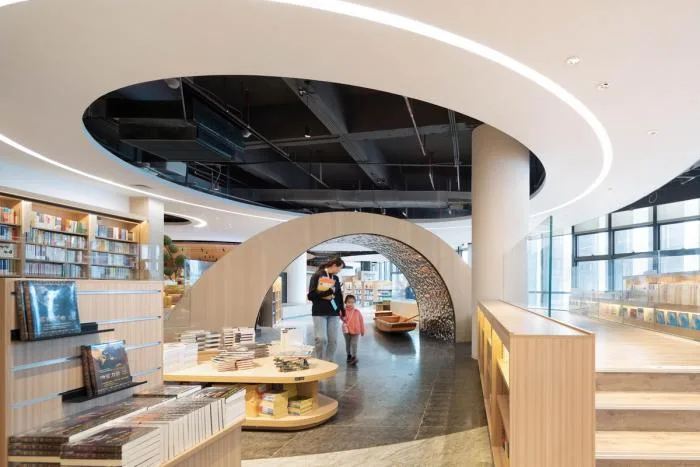
▲ Humanities Museum
Within the Square and the Circle
In the art museum area, characterized by horizontal and linear sightlines, circular framed views are incorporated to create a sense of “winding paths leading to secluded spots, surrounded by deep flowers and Zen-inspired rooms.” The rich, interwoven façade layers enhance this effect. The natural texture of materials complements the simple forms of bookshelves and desks, crafting a soft and warm reading ambiance. Every element—a book, pavilion, wall, or window—becomes part of the scenery. The interplay of square and circular shapes allows visitors to glimpse readers exploring books, fostering a serene environment and a textured life experience within this “scene within a scene.”
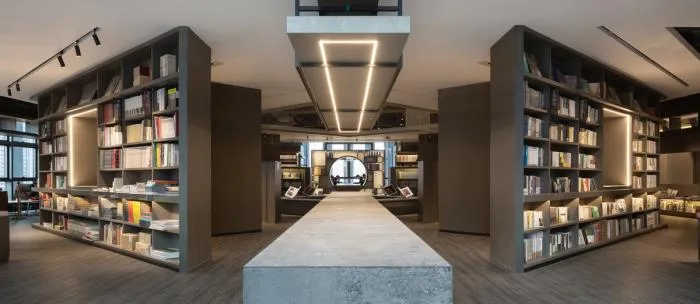
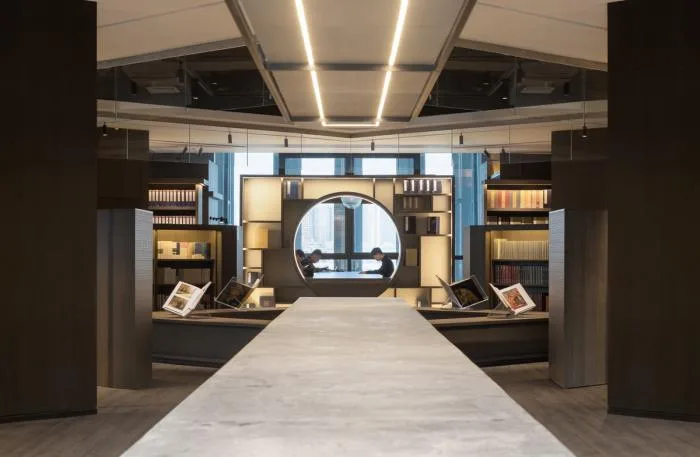
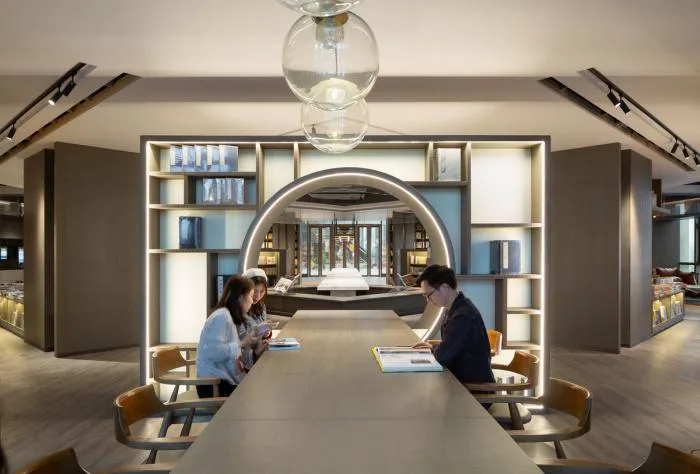
▲ Art Museum
Additionally, as Shenzhen’s first smart book city to implement 5G technology, Longhua Book City employs a “cloud + terminal” architecture to integrate data with its existing operational systems. This enables personalized book recommendation services and enriched value-added experiences for readers, expanding cultural and creative spaces through technological innovation.
From project initiation to completion, Longhua Book City took nearly two and a half years. Over time, it became clear that unlike previous bookstores, Longhua represents more than a shopping mall, experiential, or creative bookstore. It is a dynamic cultural and creative platform, a sharing and display space, an experiential venue, and a humanistic sanctuary that evolves alongside life itself. This book-centered experiential space plants a new cultural seed in Shenzhen’s vibrant environment, serving as a nourishing “sweet spring” for generations to come.
Project Information
Project Location: Shenzhen, China
Building Area: 45,500 square meters
Project Type: Public and Cultural Space
Completion Year: 2020
Design Team: Atelier Global, Hong Kong
Lead Designers: Lv Dawen, Luo Jinwei
Architectural Designers: He Zhenfeng, Liu Yiquan, Huang Zhiqiang
Interior Designers: Pan Zhaofeng, Cai Chao, Liang Dexin, Zhong Yinghao, Guo Rufeng, Wang Shuchen, Zhang Yu
Company Website: __AI_ST_URL_0__
Contact Email: __AI_S_SC0__
Collaborator: Beijing Zhongwai Construction Architectural Design Co., Ltd
Photographer: Zeng Tianpei












Must log in before commenting!
Sign Up