
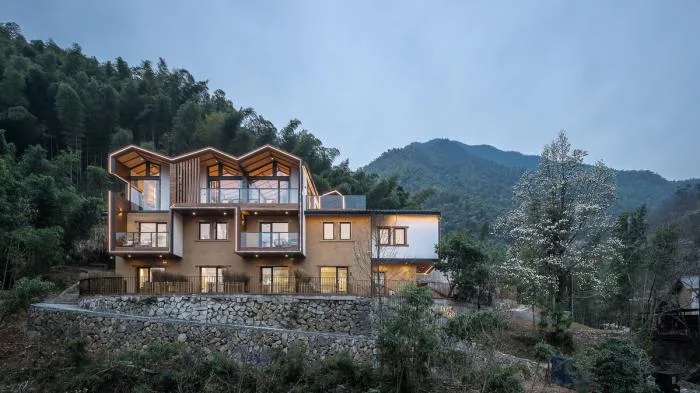
▲ Phase II main facade overlooking the valley
This project is located in Daijiashan, Eshan She Ethnic Township, Tonglu County, Hangzhou City, Zhejiang Province. Nestled in the hilly region of central and southern Tonglu County, it lies 9.5 kilometers from Tonglu’s center. This expansion represents the second phase of the Daijiashan No. 8 Homestay.
Daijiashan has become a hotspot for “internet-famous” homestays across Jiangsu and Zhejiang provinces. In an increasingly competitive market, our approach goes beyond design alone: what type of experience do we want to offer visitors? What kind of travel lifestyle should we create? Communication is central to our design philosophy—fostering connections between people and nature, among guests, and between visitors and local villagers.
Design Philosophy
Given the complex site conditions and homeowners’ needs, our challenge was to maximize every inch of space while anticipating the varied behaviors of future guests. We reconfigured the site’s original circulation and functions, aiming for a cohesive solution that preserves the existing site relationships.
Site Analysis
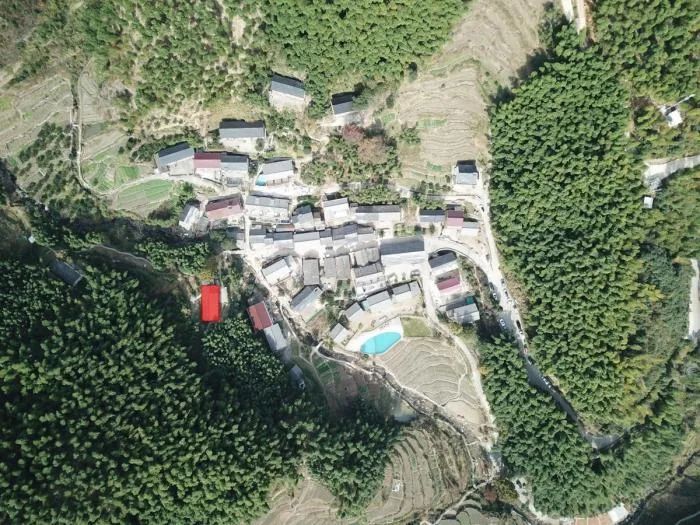
▲ Site location
The village is shaped like a Y-shaped valley, with the project site positioned on the western edge near the mountain, offering excellent views. This elevated spot also serves as a landmark visible from the village entrance and surrounding areas.
A small stream separates Phase II from Phase I, with a notable vertical drop between them.
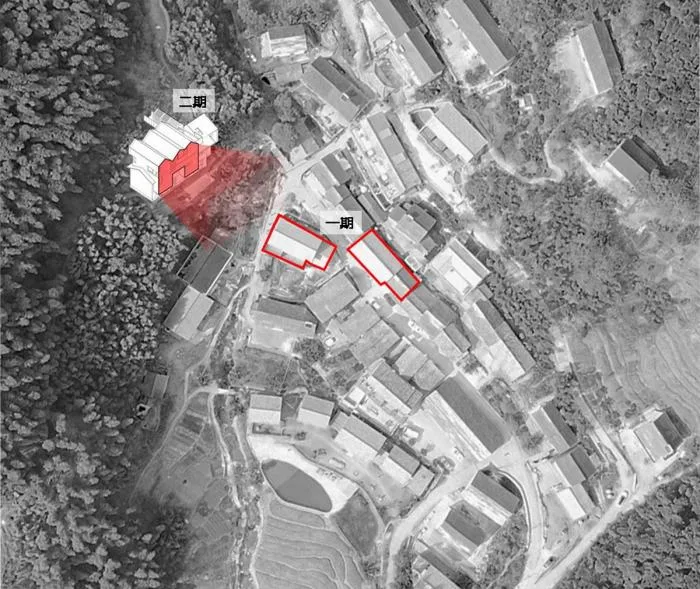
▲ Relationship between Phase II and Phase I
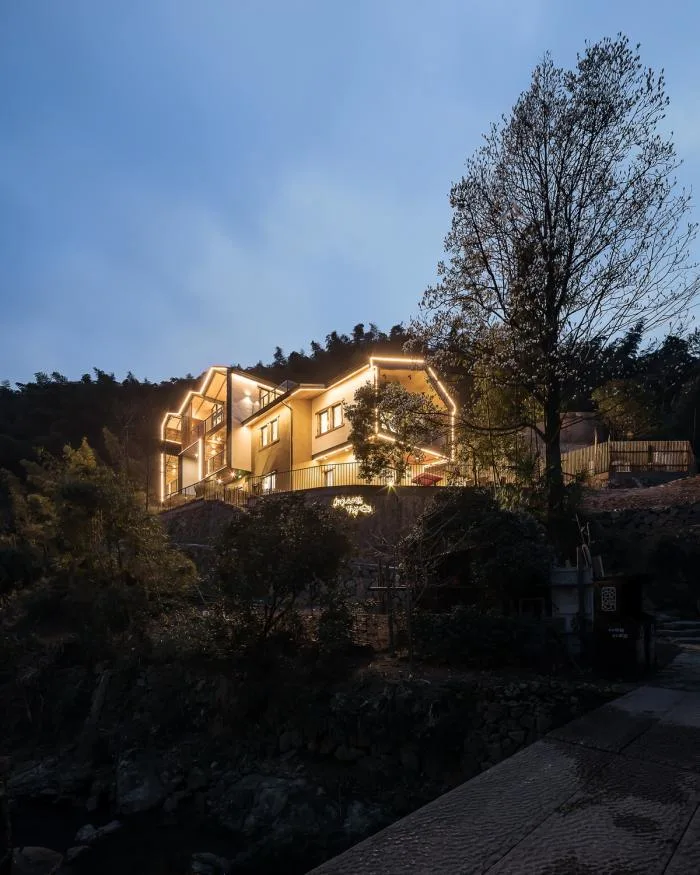
▲ View of the Phase I and Phase II locations
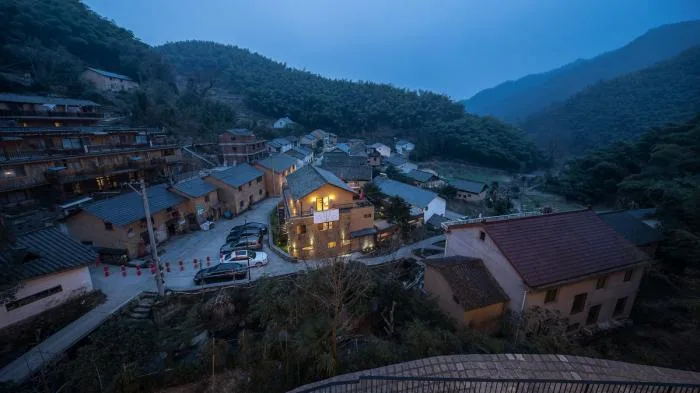
▲ Phase II site facing Phase I
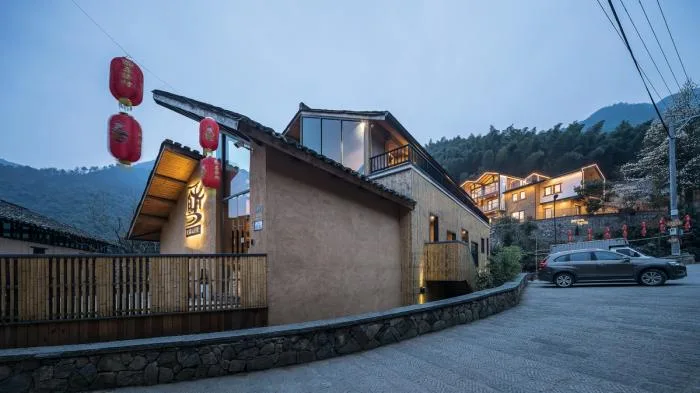
▲ Overall perspective of Phase I and II
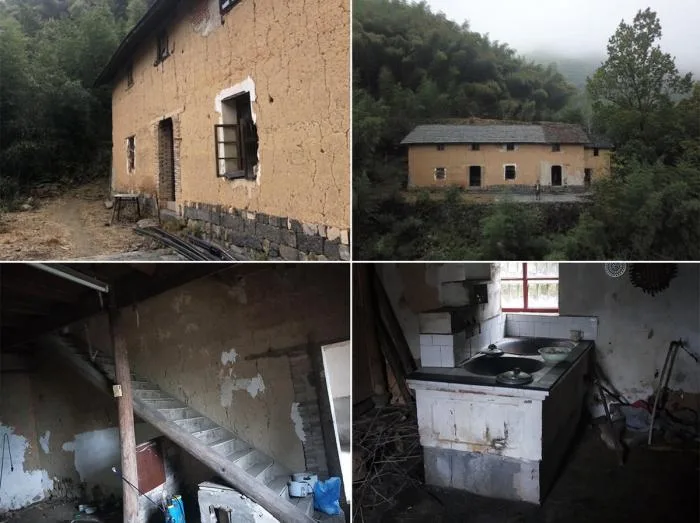
▲ Original state of the building
The original structure is a dilapidated residence from the 1970s, featuring a three-bay main building and a two-bay annex on the right. The internal wooden beams and columns were small in section and prone to decay, creating serious structural risks. We removed the internal wooden framework and replaced it with a steel structure, while preserving the external earthen walls.
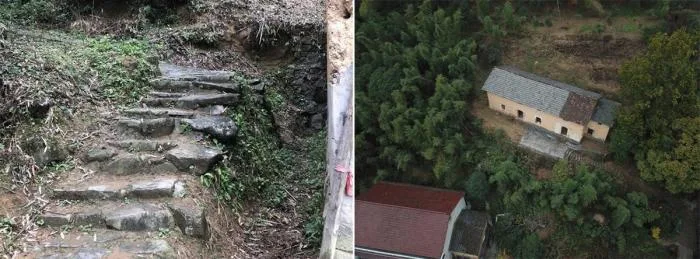
▲ Current site condition
Owing to its mountainous setting, the terrain is complex: a small platform at the front contrasts sharply with a steep drop at the rear, combining slopes and flat areas, which poses a landslide risk.
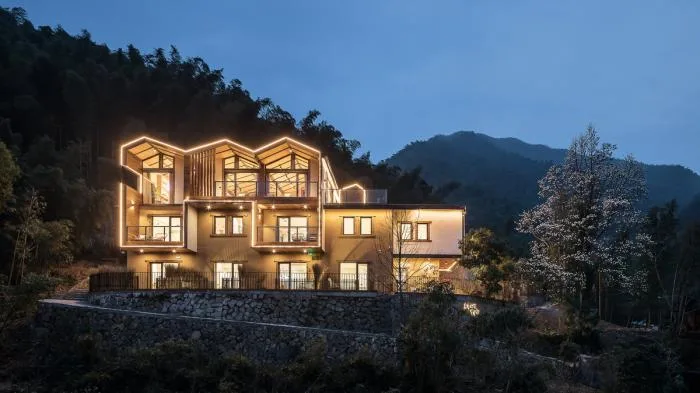
▲ Post-renovation state
To enhance the public areas and increase guest room capacity, the original building was expanded vertically by adding a third floor dedicated to public use. This floor offers the best views and aligns with the largest flat area at the back. Elevated corridors connect this public space to outdoor activity zones, transforming the previously inactive mountain slope into an engaging venue. The first and second floors were converted into guest rooms without significantly altering the original adobe walls. With the main event space relocated, the original first-floor front platform now serves as exclusive courtyard space for guests.
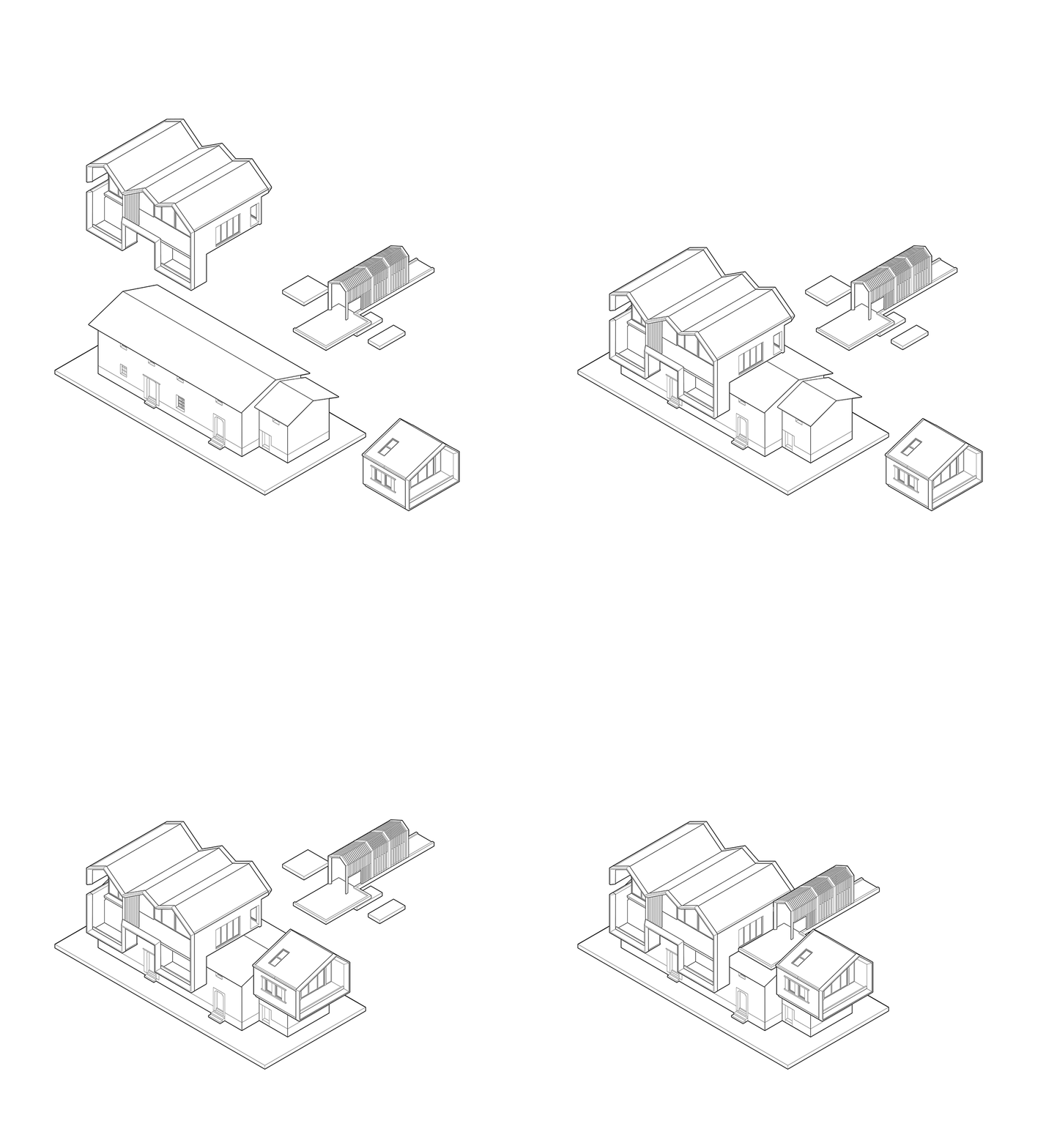
▲ Building massing concept
Due to the limited depth of the original structure, interior corridors were relocated outside and integrated with the rear terrace, creating multi-level circulation spaces that facilitate vertical flow. Renovating the terrace also mitigated landslide risks.
The flat terrain behind the building was divided into two terraces: the lower terrace hosts a swimming pool designed with stacked water levels to manage elevation changes, angled towards the valley to provide an infinity pool experience. The upper terrace functions as an outdoor campsite, offering ample space for family or group activities.
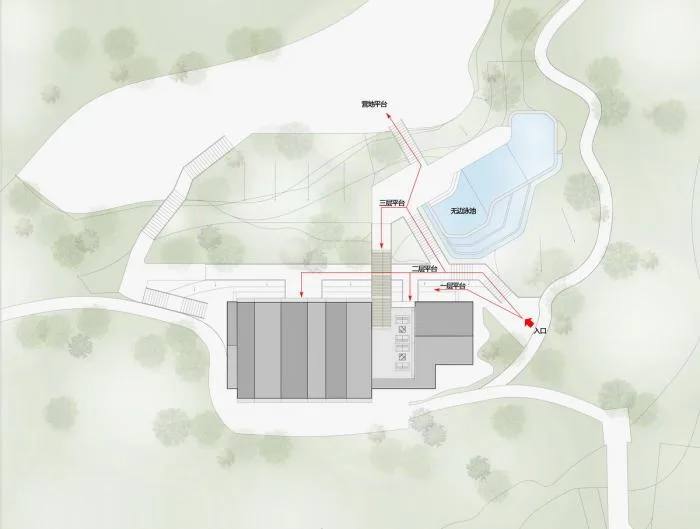
▲ Overall site plan
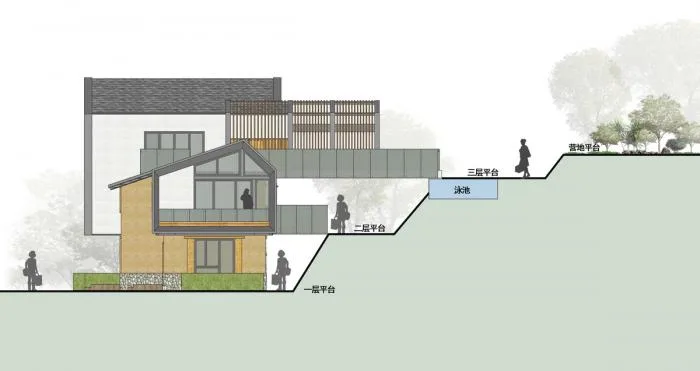
▲ Section diagram
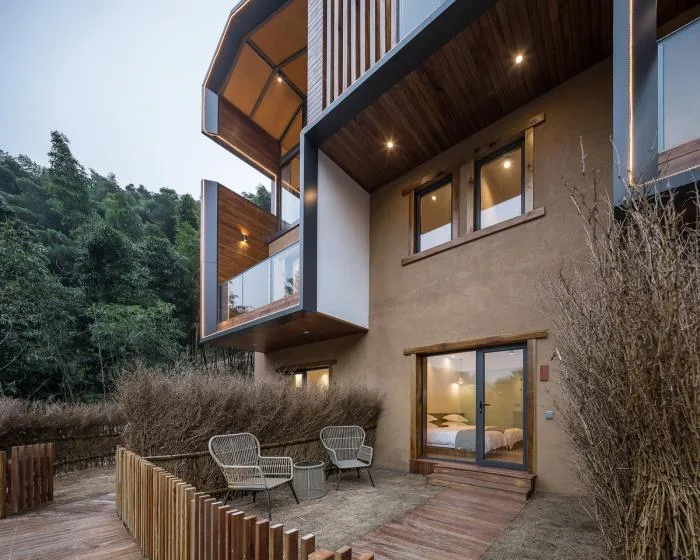
▲ First floor guest room courtyard
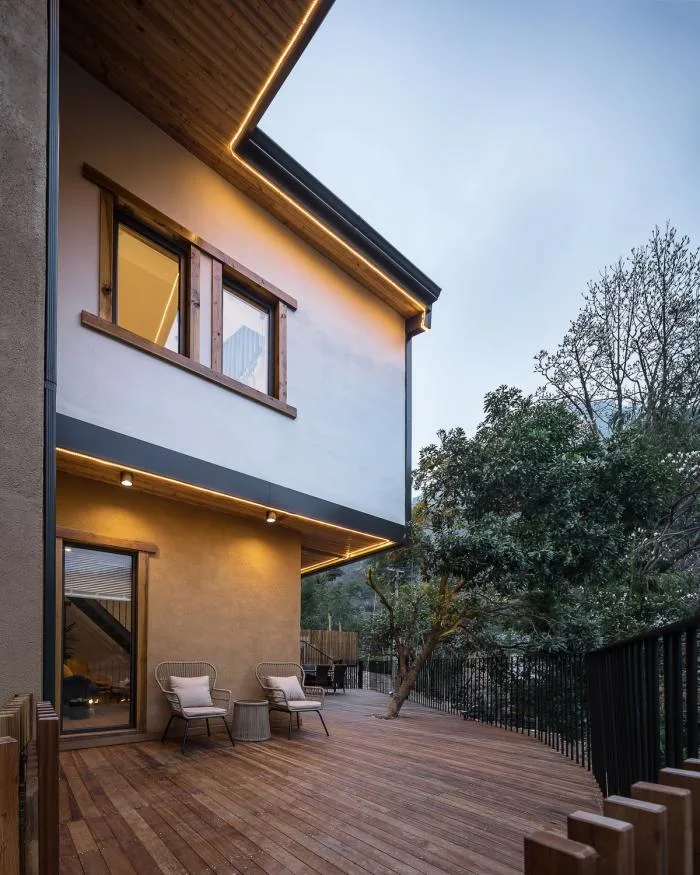
▲ First floor LOFT family house courtyard
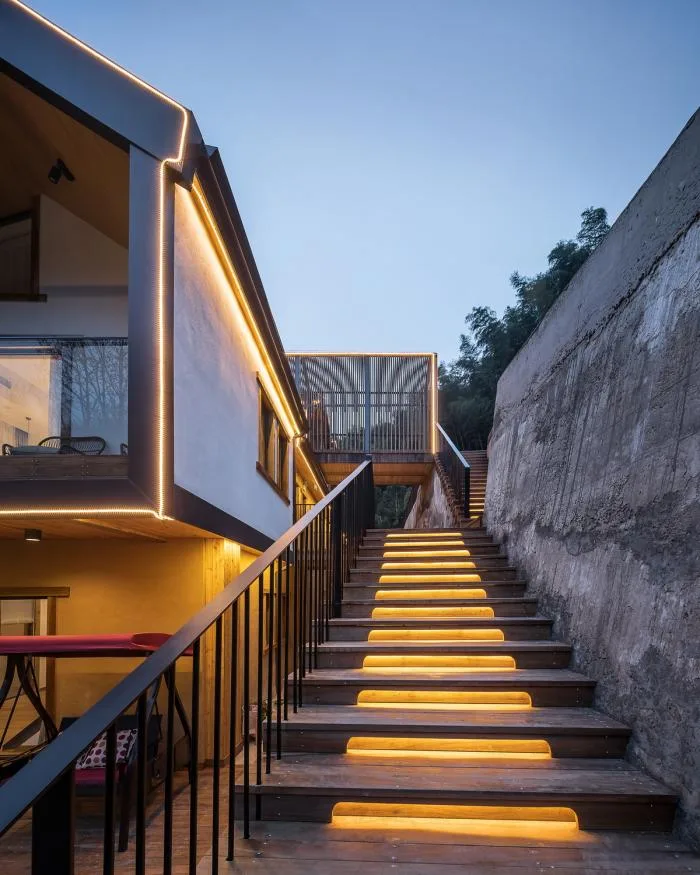
▲ Main vertical circulation
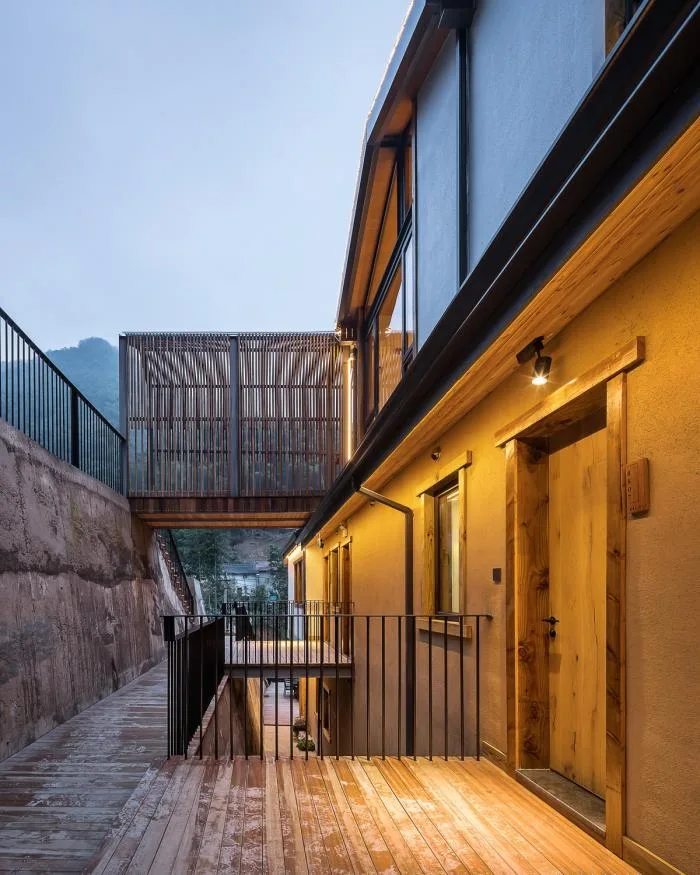
▲ Second floor entrance platform
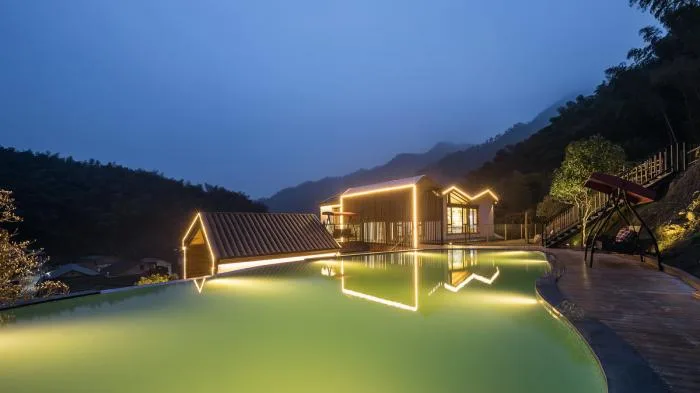
▲ Third floor outdoor infinity pool
The final architectural form creates a dialogue between old and new. The new roof is vertically placed atop the original, with a glass “mountain wall” maximizing scenic views. This design avoids an overly bulky roof and introduces a dynamic, undulating ceiling that enhances the three-story public space. Adobe walls are preserved as a tribute to traditional She ethnic architecture, while two-story eaves protect them from rain and honor original construction methods.
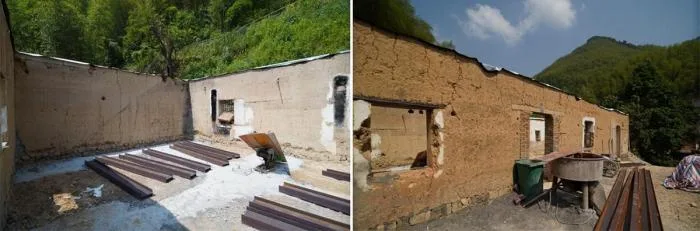
▲ Construction site
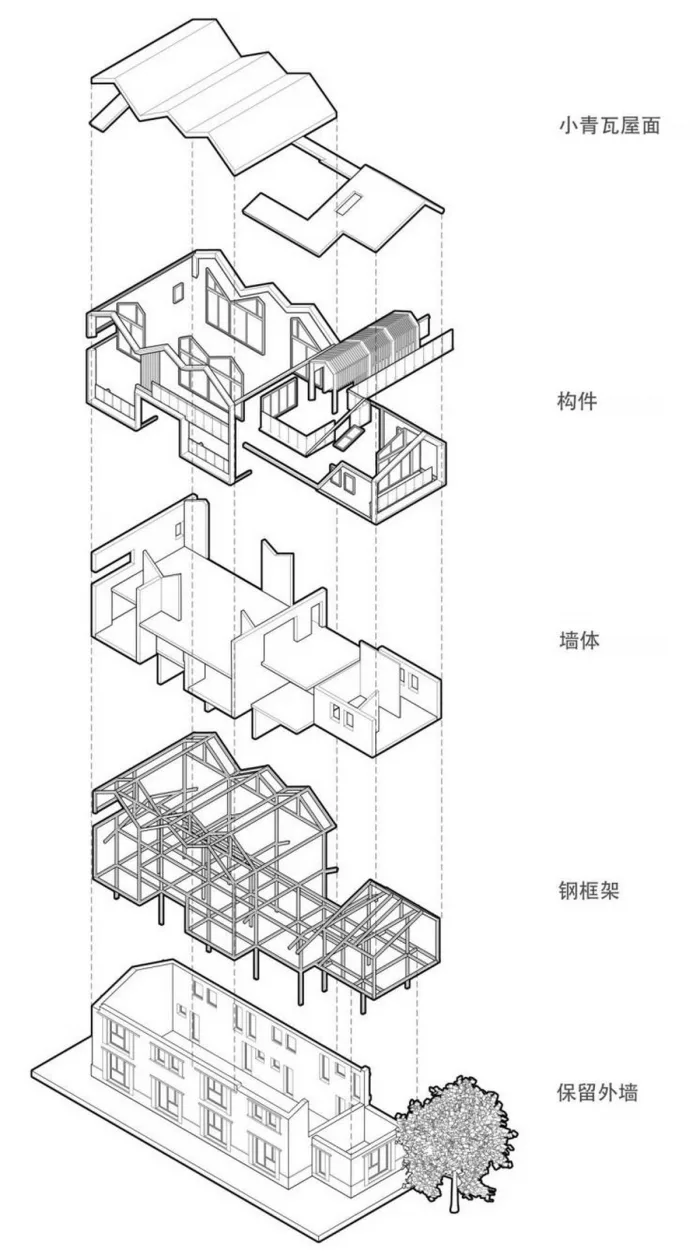
▲ Axial exploded diagram
As the public gathering space for guests, the building itself is designed to feel understated. Large French windows offer panoramic views, while semi-outdoor balcony areas encourage interaction with local mountain life. A long bar counter at the rear visually links indoor relaxation with outdoor activities. The terrace connects via elevated corridors to the swimming pool and campsite, integrating all spaces into a cohesive venue.
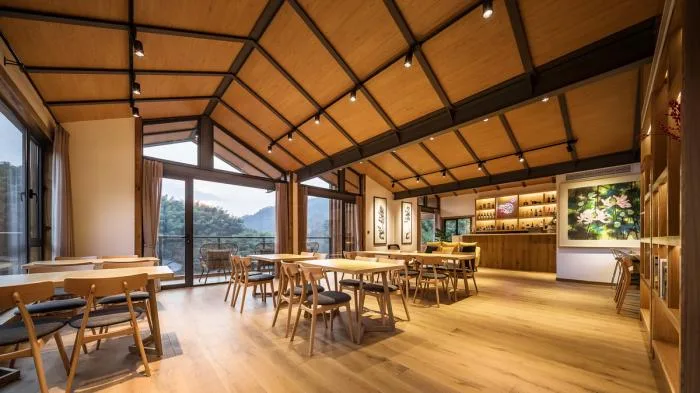
▲ Third floor public area
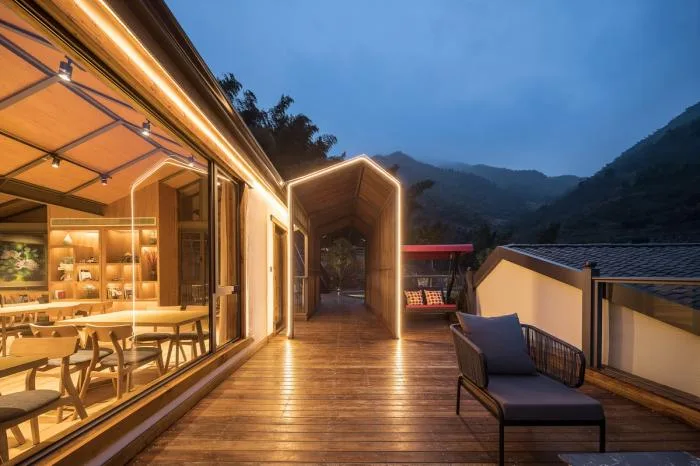
▲ Third floor terrace
Guest rooms, the most private parts of the homestay, are carefully organized to optimize space and meet diverse needs: the first floor features guest rooms with private courtyards; the second floor offers expanded suites; and former auxiliary rooms have been converted into LOFT family rooms, catering to different types of visitors.
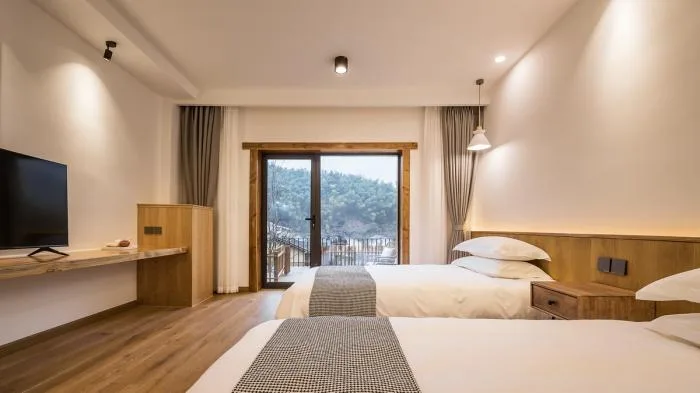
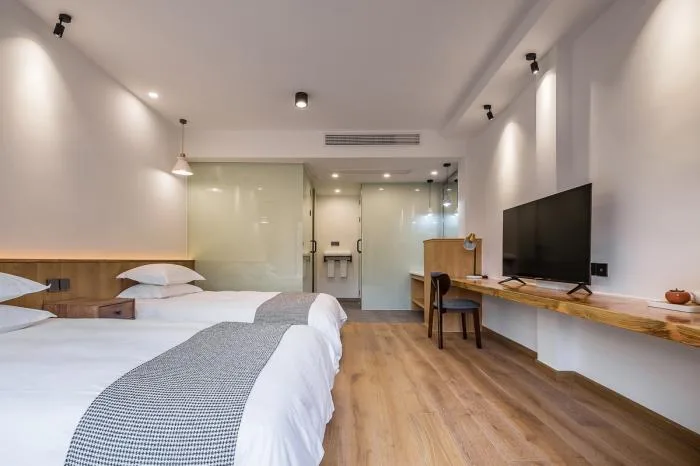
▲ First floor courtyard house
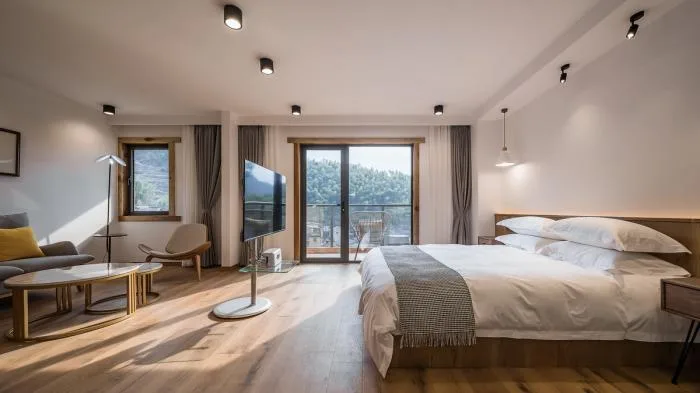
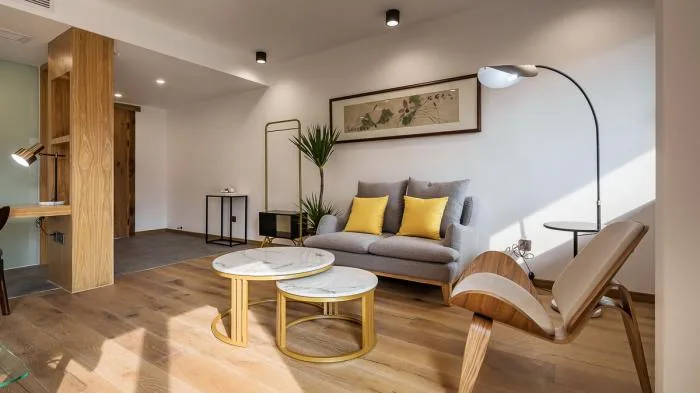
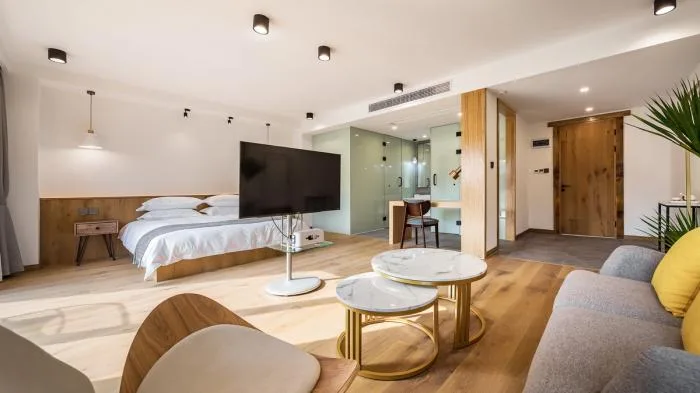
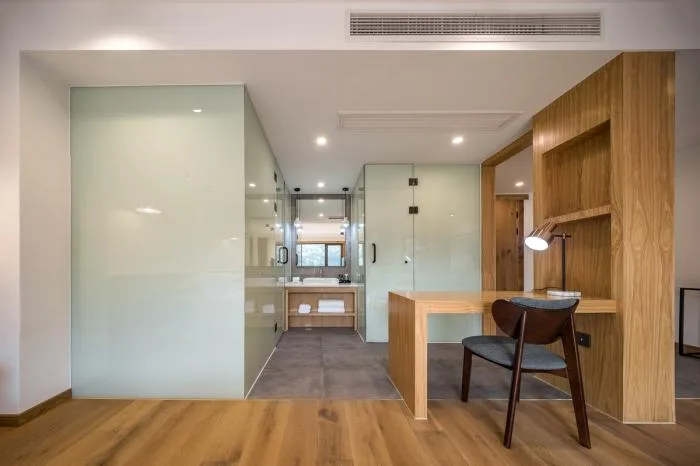
▲ Second floor suite
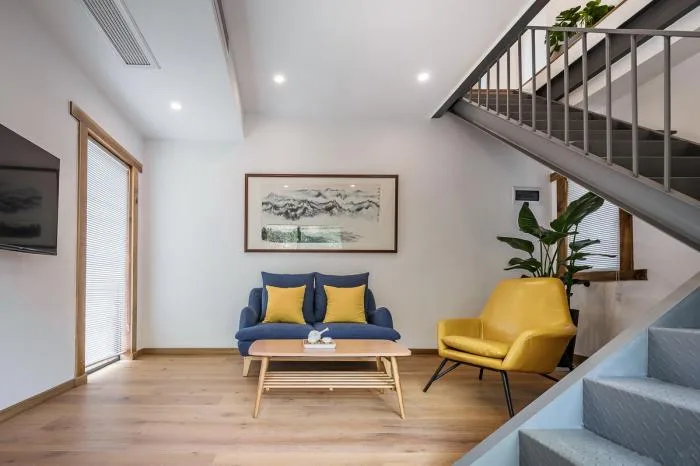
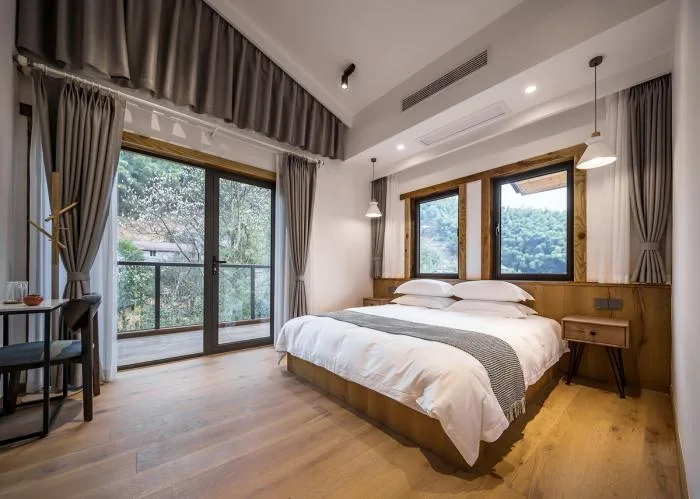
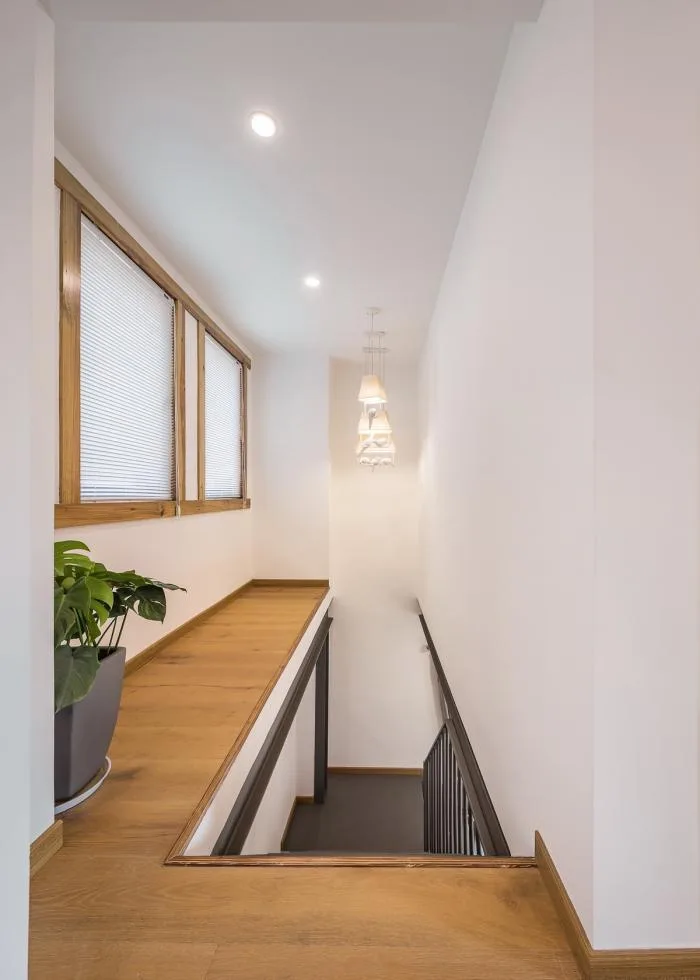
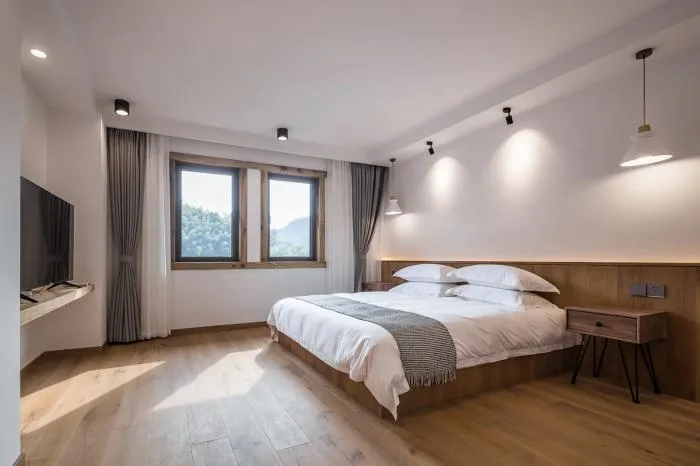
▲ Loft family suite
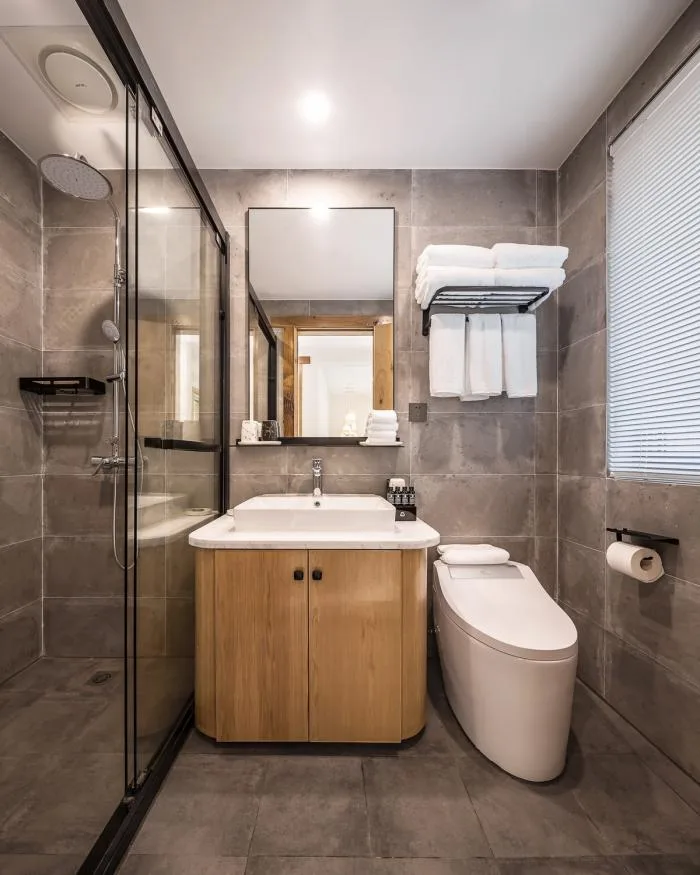
▲ Bathroom
Technical Drawings
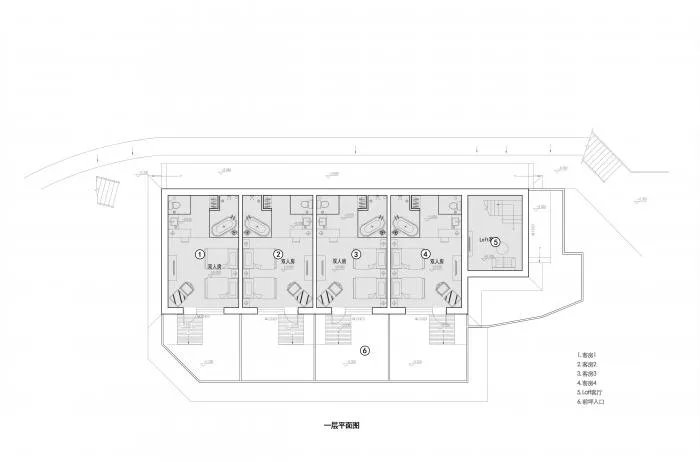
▲ First floor plan
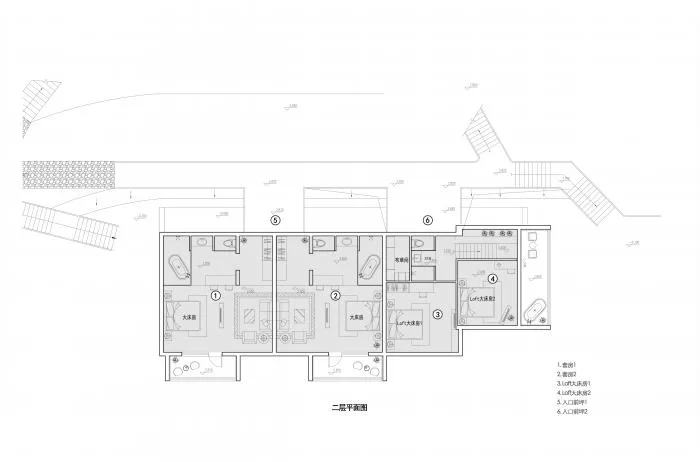
▲ Second floor plan
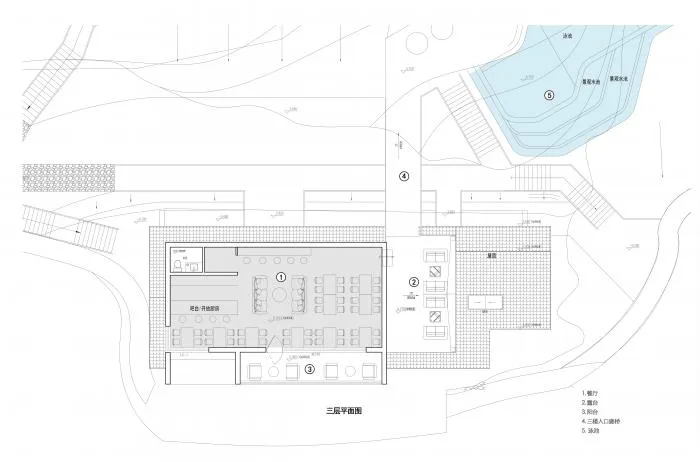
▲ Third floor plan
Project Information
Project Name: Daijiashan Yiyunshan She Boutique Homestay
Architectural Firm: Hangzhou Jianran Architectural Design Co., Ltd
Contact Email: __AI_S_SC0__
Location: Hangzhou, Zhejiang
Completion Year: 2019
Building Area: 600 square meters
Project Address: Daijiashan, Eshan She Ethnic Township, Tonglu County, Hangzhou City, Zhejiang Province
Lead Architect: He Qi
Lead Architects: Chen Jili, Yang Yang
Team Members: Wei Yeniu, Yu Chen, Lin Diqi, Liu Liying
Client: Hangzhou Tonglu Yiyunshan She Homestay Co., Ltd
Photographer: Pan Shuang












Must log in before commenting!
Sign Up