
The Luqian project aims to redefine living spaces by meticulously designing shapes, materials, colors, and details. Its form follows function, creating an impactful lifestyle experience that transcends conventional shapes. This approach fosters a pluralistic and inclusive aesthetic, conveying Oriental Zen principles and inviting occupants to immerse themselves in the interplay between open space and reality.
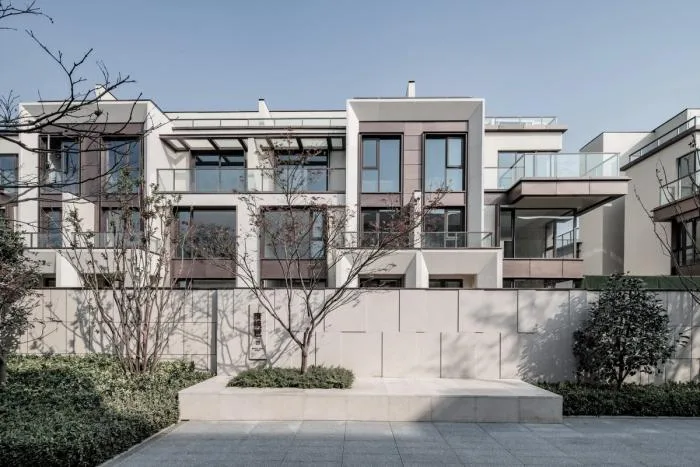
▲ South facade perspective by Su Shengliang
The site is located in the Forest Park area of Luyang District, Hefei, at the junction of Blueberry Road and Linhu Road. It borders Luzhou Park to the south and Dongpu Reservoir to the west, offering a prime geographical location surrounded by natural resources. Just steps away from Luzhou Park, the key challenge is how to integrate this unique urban forest landscape with contemporary architectural language and materials to craft a high-quality living experience.
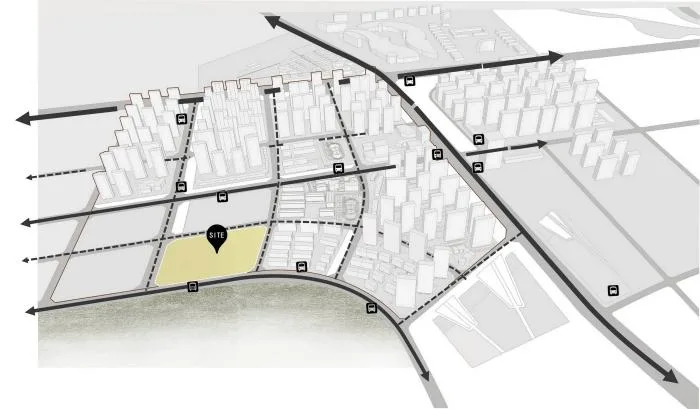
▲ Project surroundings
The master plan comprises four plots with elevations stepping down from north to south towards Luzhou Park. This arrangement creates a dynamic skyline and maximizes the number of residences facing the park.
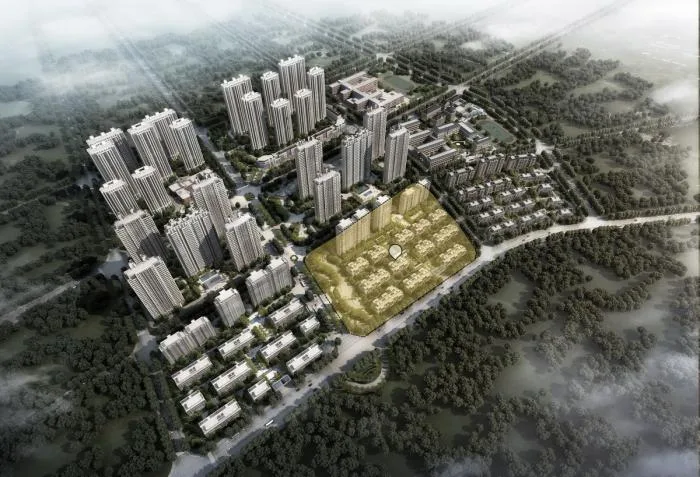
▲ Aerial view
The Luqian Villa area occupies a low-lying plot on the southeast side, directly adjacent to the park.
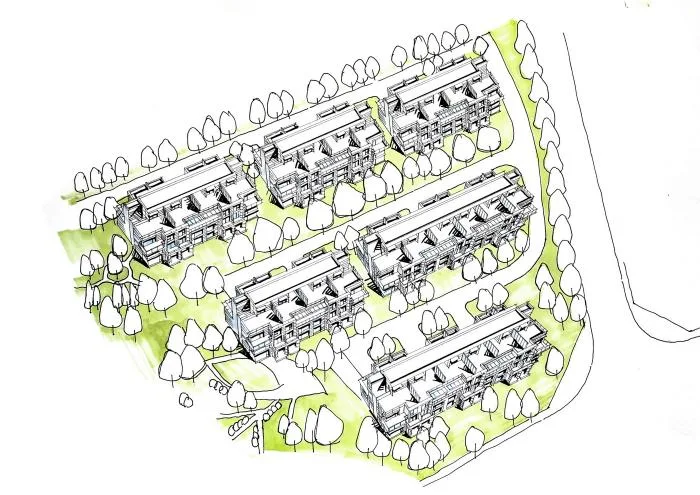
▲ Partial hand-drawn map of the villa area
Most individual buildings consist of six-in-one, four-story, double-sided wide-row villas featuring elongated forms. The design addresses how to reduce the repetitive and monotonous feel caused by the low building height by minimizing unnecessary decoration and emphasizing volumetric and detailed variations.
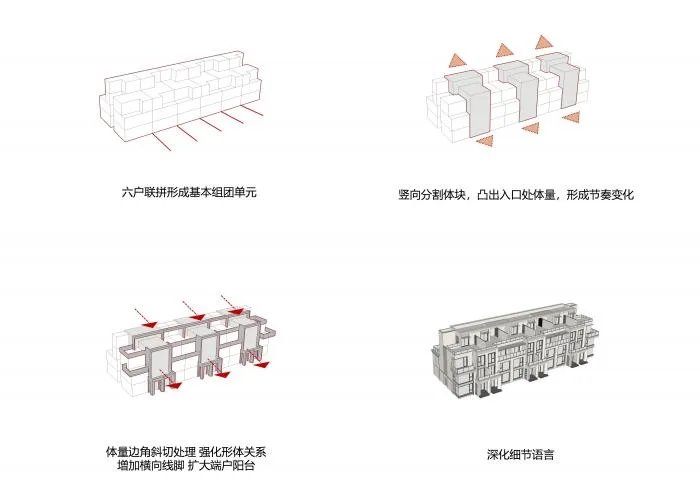
▲ Block formation
The building blocks form a central head unit composed of two façade widths vertically. A layer aligned with the home entrance enhances the central mass’s visual weight, creating a three-tiered longitudinal composition. Horizontally, the natural setback of the four layers forms a two-stage structure that contrasts with the central block’s two-stage form, clarifying the spatial relationship between blocks. End units feature outward-projecting balconies, breaking monotony and adding distinctive edge treatments. The overall image is orderly and refined, exhibiting layers and variations within repetition without losing unity.
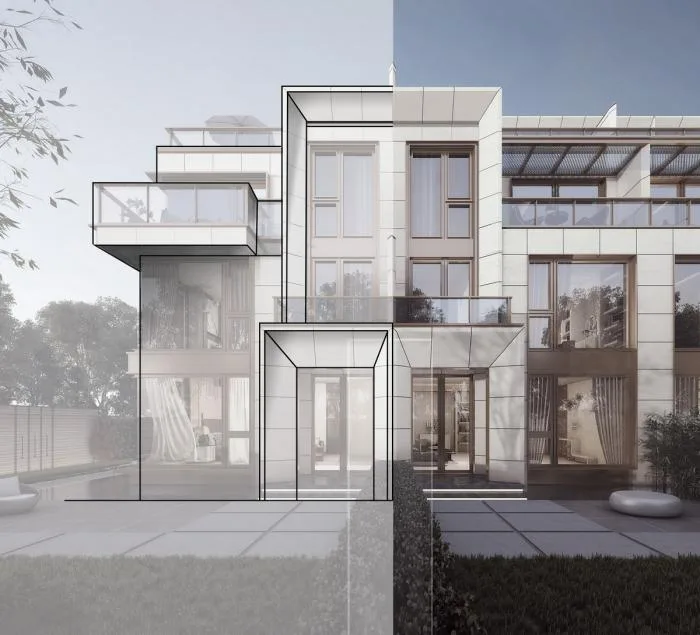
▲ Rendering
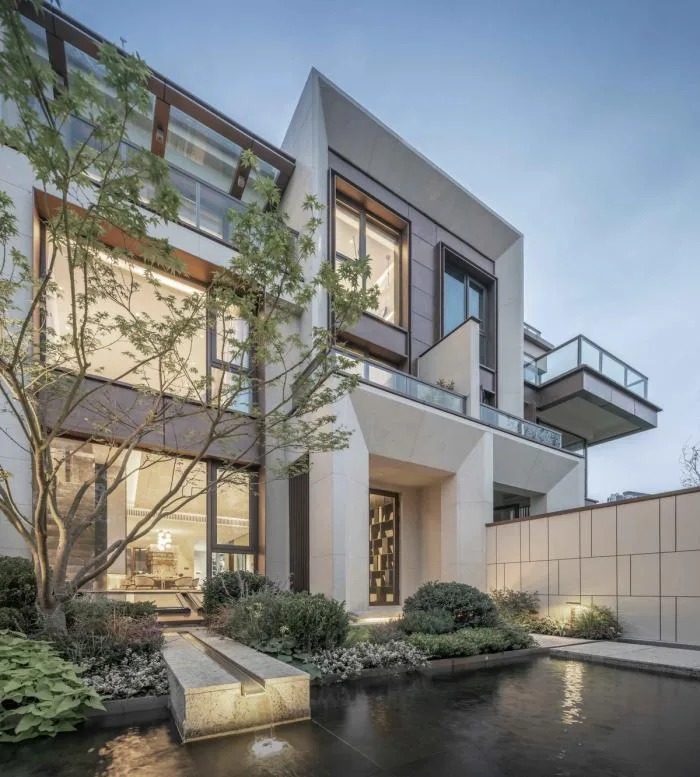
▲ Indoor courtyard perspective by Su Shengliang
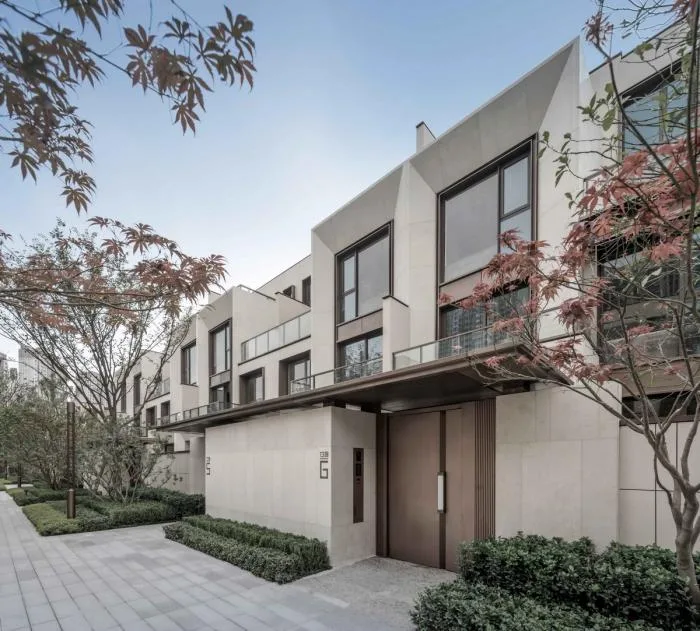
▲ Entrance perspective by Su Shengliang
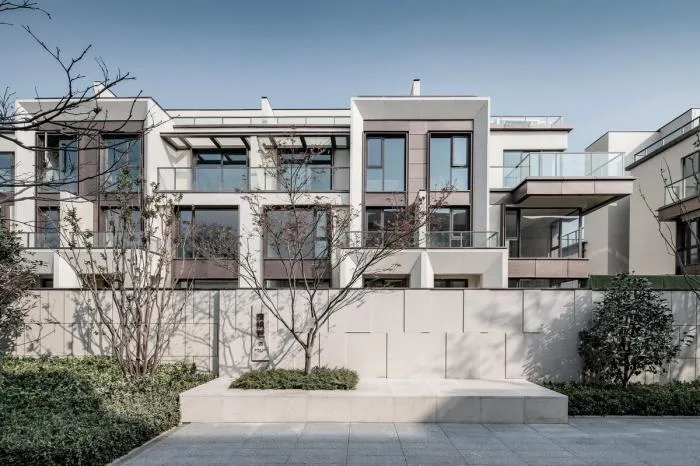
▲ Front view by Su Shengliang
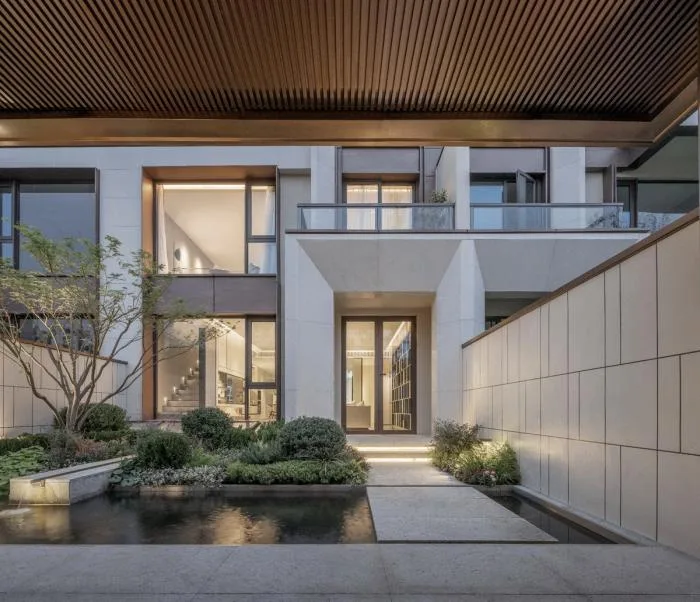
▲ Residential courtyard perspective by Su Shengliang
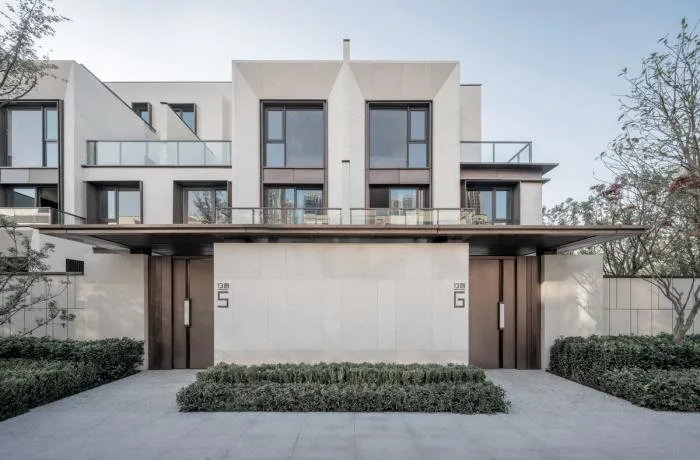
▲ Main entrance perspective by Su Shengliang
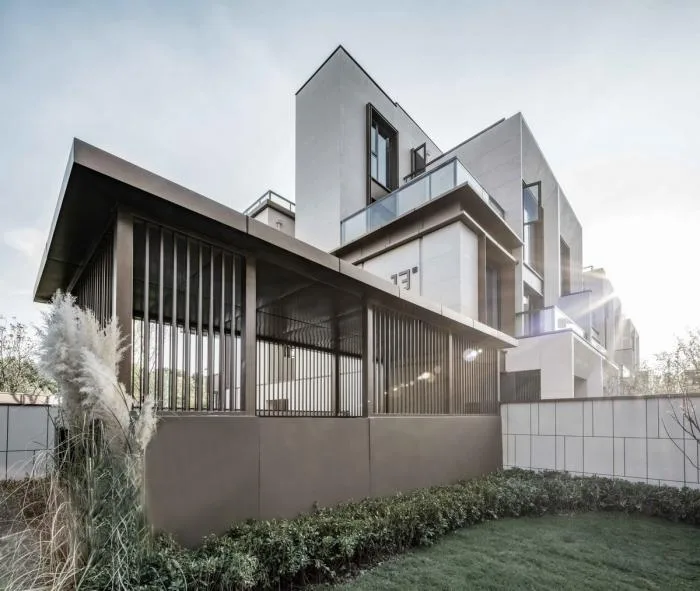
▲ Partial perspective by Su Shengliang
The courtyard landscape reflects traditional Chinese architectural forms, using a minimalist style centered on three elements: stone, water, and greenery. The design employs the Chinese technique of “using stones to divert water,” crafting a rich and textured landscape experience.
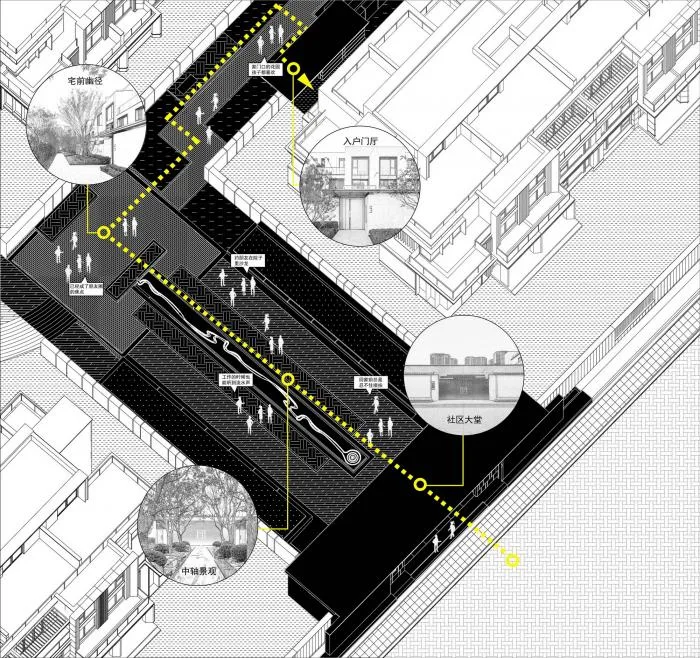
Narrative analysis of the community’s overall landscape axis and homecoming route
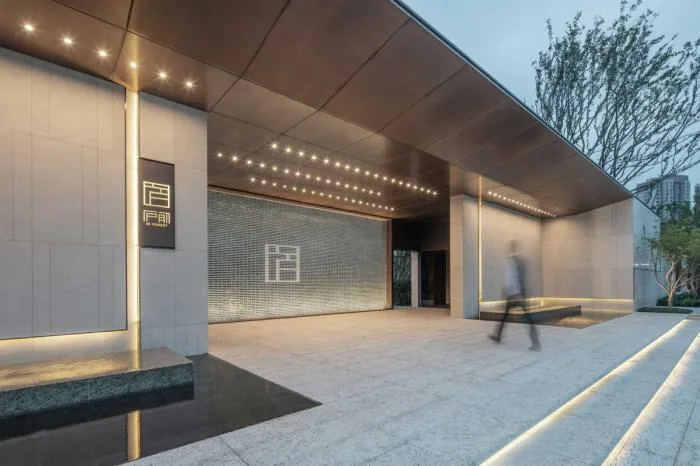
▲ Community lobby perspective by Su Shengliang
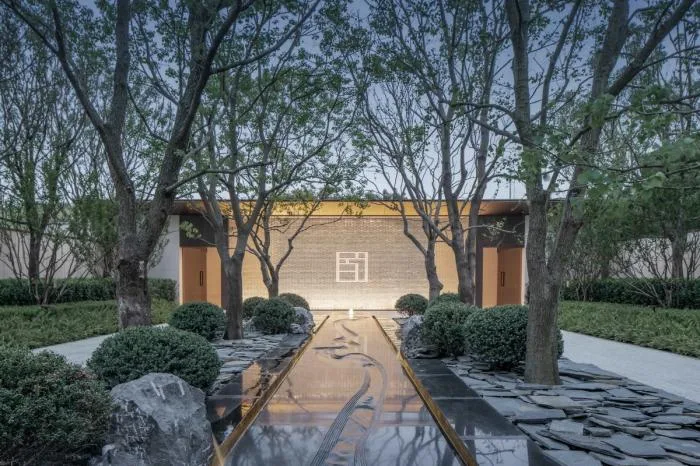
▲ Landscape axis perspective by Su Shengliang
Portuguese beige stone and brushed antique copper aluminum panels are the primary materials used for the exterior surfaces. Their muted tones create a dignified and stable atmosphere. The contrast between polished aluminum and matte stone enriches the façade’s texture. The oblique door frame of the central block accentuates light and shadow effects, while hidden dry-hanging stone joints ensure clean and sharp building corners.
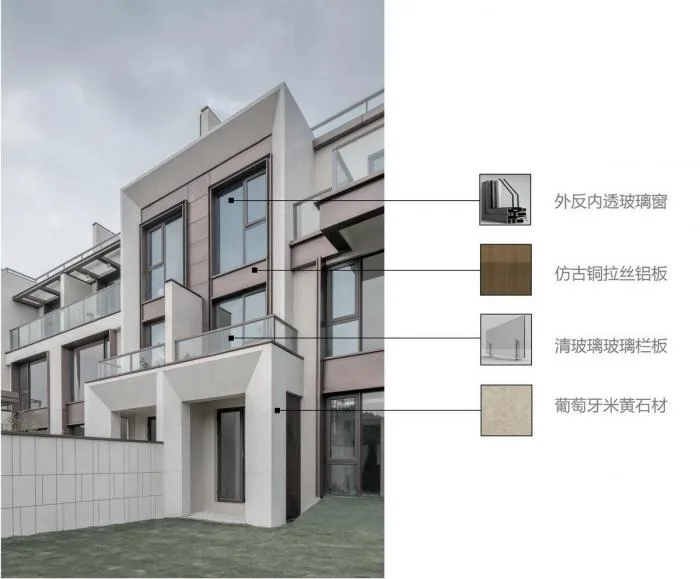
▲ Material details
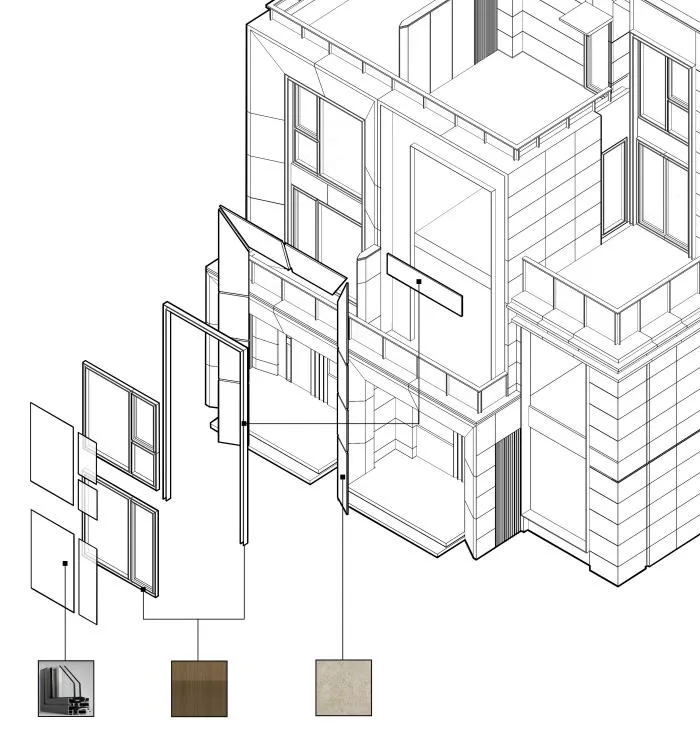
▲ Window component material analysis
Detailed wall node design carefully considers the interface between materials, especially the visual interaction between metal panels and stone surfaces during production.
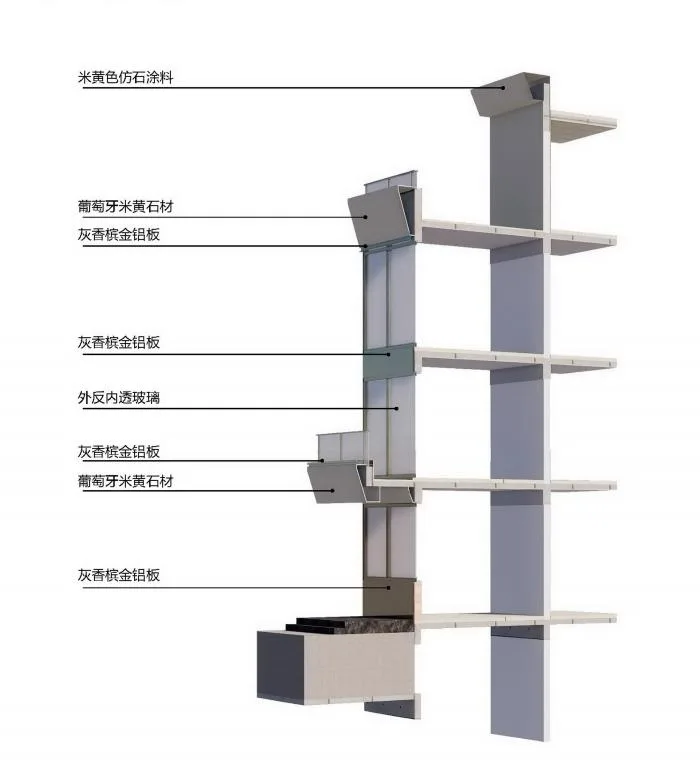
▲ Wall body nodes
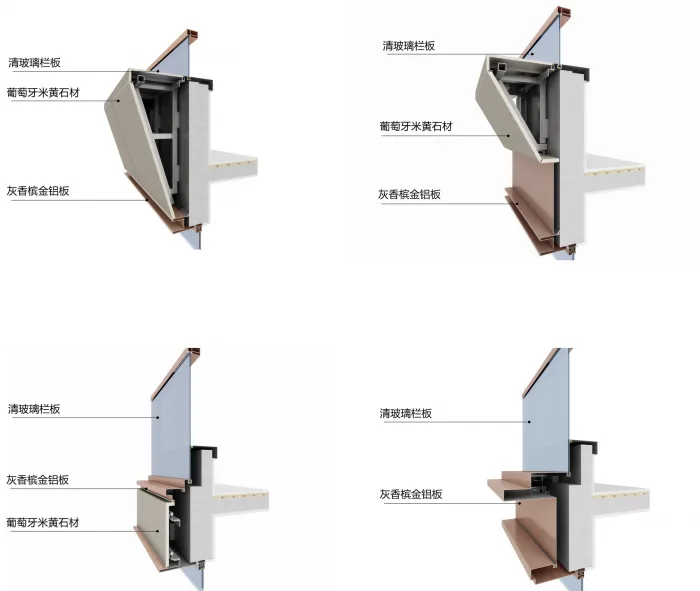
▲ Wall body nodes
The stone vertical joints are intentionally designed wide, with backing stones providing detailed support. Horizontal joints are tightly sealed.
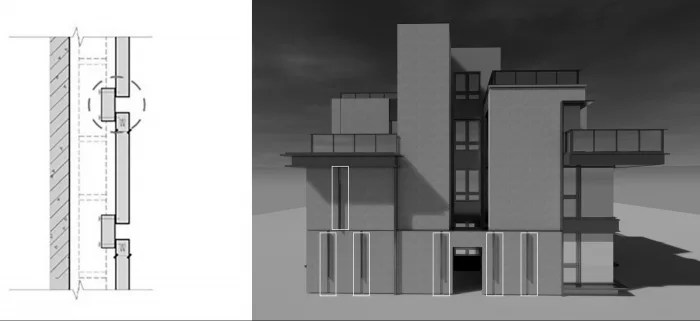
▲ Stone joint detail sample
Due to the oblique section splicing method, stone corners overlap so that external corners cover internal ones.
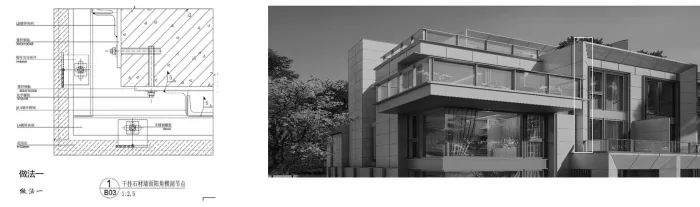
▲ Stone joint detail sample
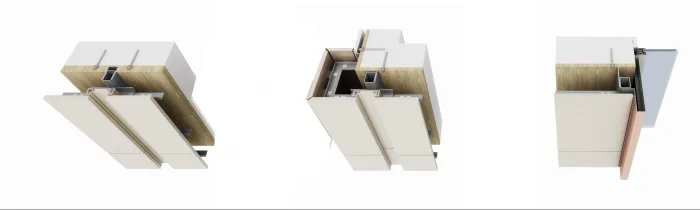
▲ Stone joint detail sample
The entire process—from quarrying to onsite installation—is extensive. To minimize stone wear, pieces are uniformly cut with a modulus no wider than 600mm and no longer than 1200mm.
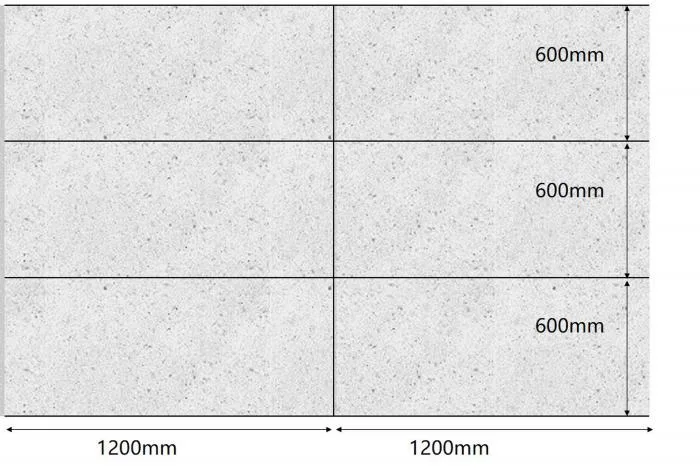
▲ Stone segmentation diagram
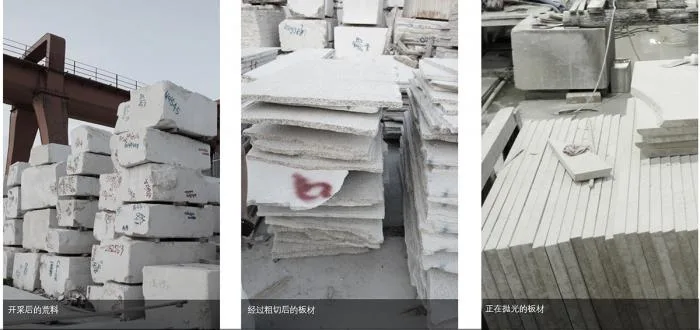
▲ Stone transport and cutting process diagram
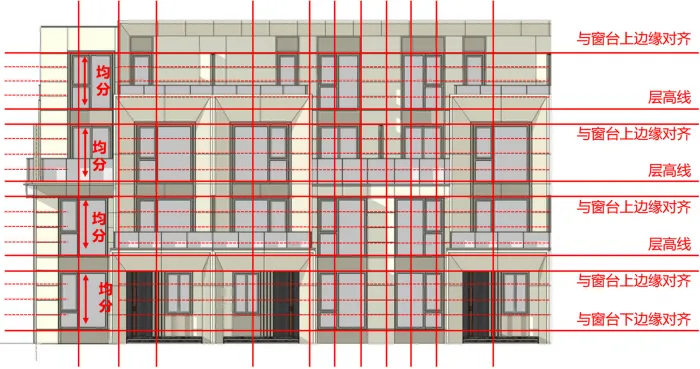
The facade’s vertical joints align evenly with major components, while horizontal joints align with the top and bottom edges of window openings. The use of wide and narrow joints creates a layered effect.
Project Information
Design Company: Shanghai Tianhua Architectural Design Co., Ltd
Project Location: Hefei, Anhui, China
Material: Concrete
Category: Residential Buildings












Must log in before commenting!
Sign Up