
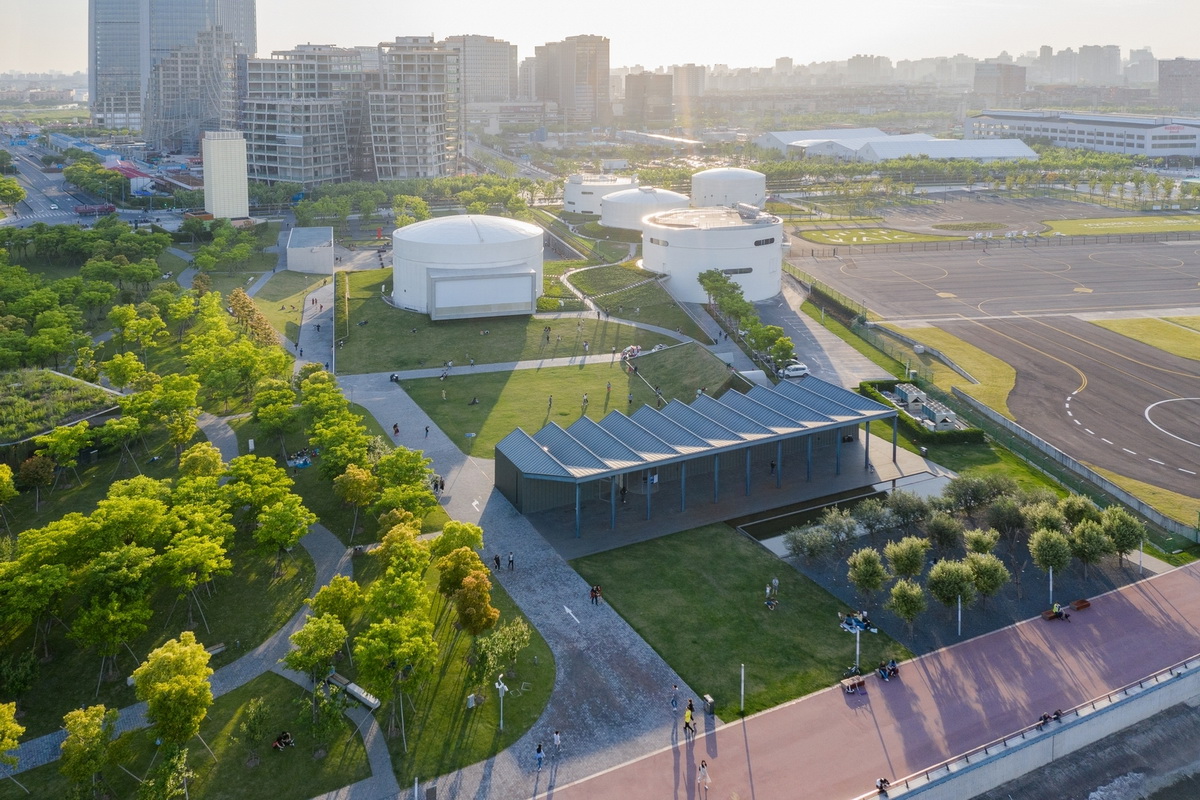
▲ Aerial view of the urban forest and the project site
The Shanghai Oil Tank Art Center is a rare example worldwide of oil tank space renovation. This site, once home to a cluster of abandoned aviation fuel tanks serving Shanghai Longhua Airport, has been transformed over six years by OPEN Architecture into a vibrant art center. Located on Shanghai’s West Bank, an increasingly active cultural hub, the center has drawn countless visitors since its opening in March 2019. It has quickly become a cultural landmark in Shanghai and a notable destination on the global contemporary art map.
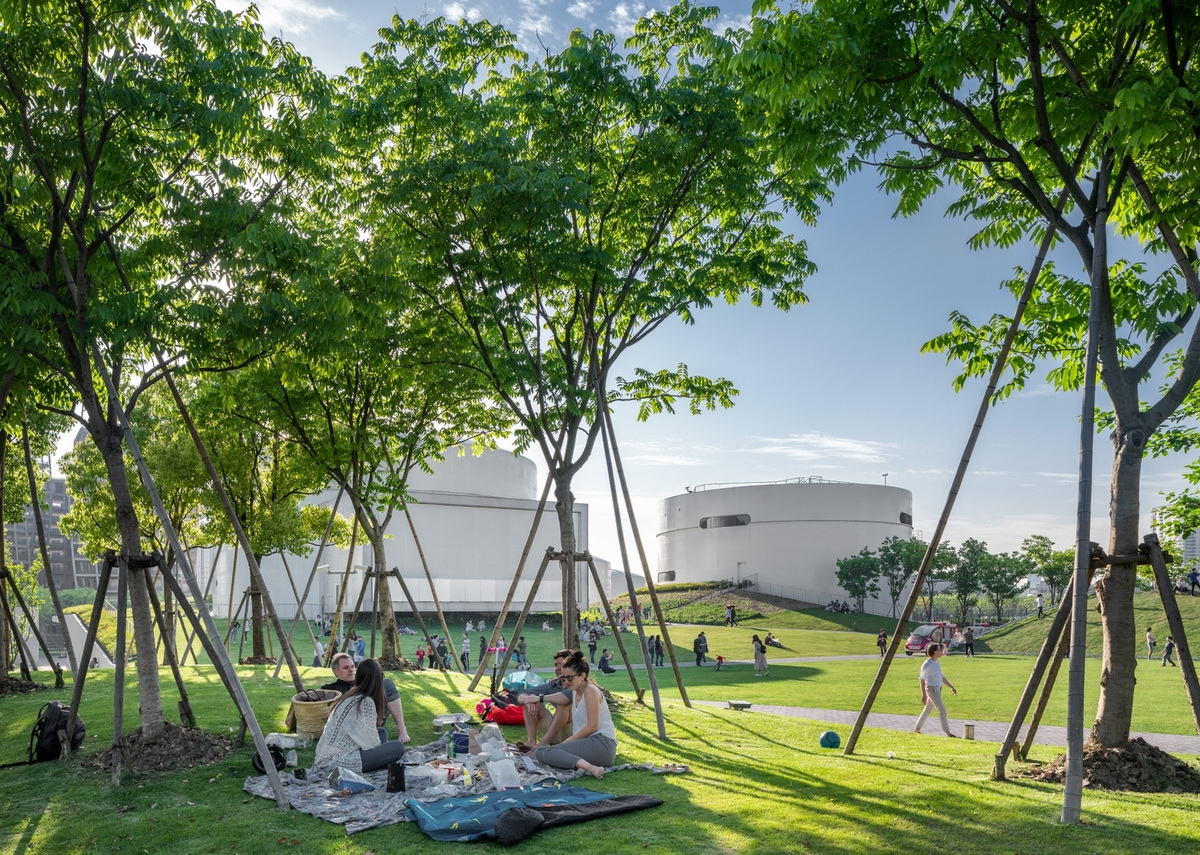
▲ Urban forest surrounding the art center
The Oil Tank Art Center features an outdoor park open to the public, complemented by a variety of indoor exhibition and event spaces. The discreet integration of new structures within the landscape respects the industrial heritage while addressing urban residents’ desire for natural environments. This innovative approach redefines the concept of an art institution—here, visitors move seamlessly between art, nature, and city life.
This “borderless” art museum is intentionally unfinished, offering flexible spaces that evolve to meet diverse needs. It invites visitors to connect with nature and art in an inclusive, unpretentious setting. The museum is not an imposing structure isolating people; instead, it is an open, wall-free space welcoming everyone at any time—whether for walking, jogging, dog-walking, photography, or picnicking.
This openness has inspired a new operational model. Since its public debut a year ago, the center has hosted high-level exhibitions as well as diverse events such as art festivals, book fairs, fashion weeks, and AI conferences, energizing the surrounding neighborhood and city.
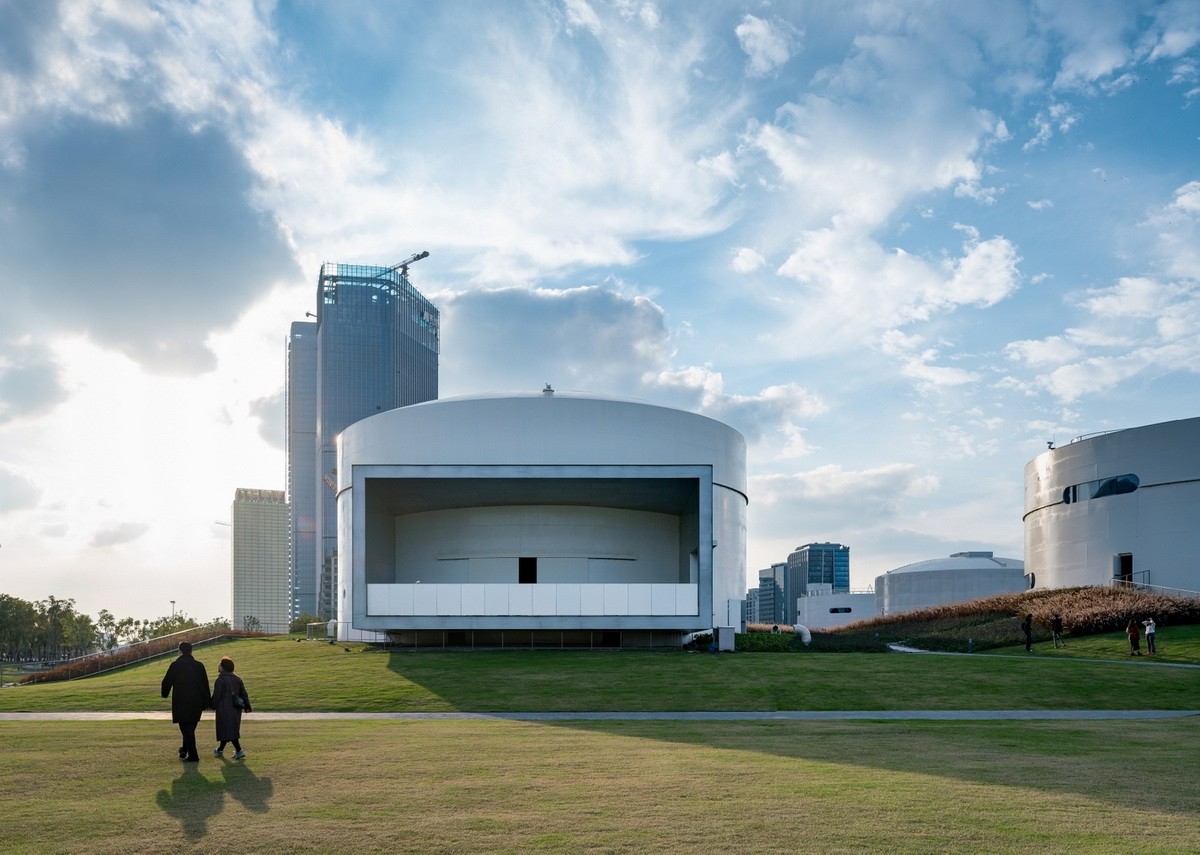
▲ Platform on Oil Tank No. 5 facing the lawn and activity square
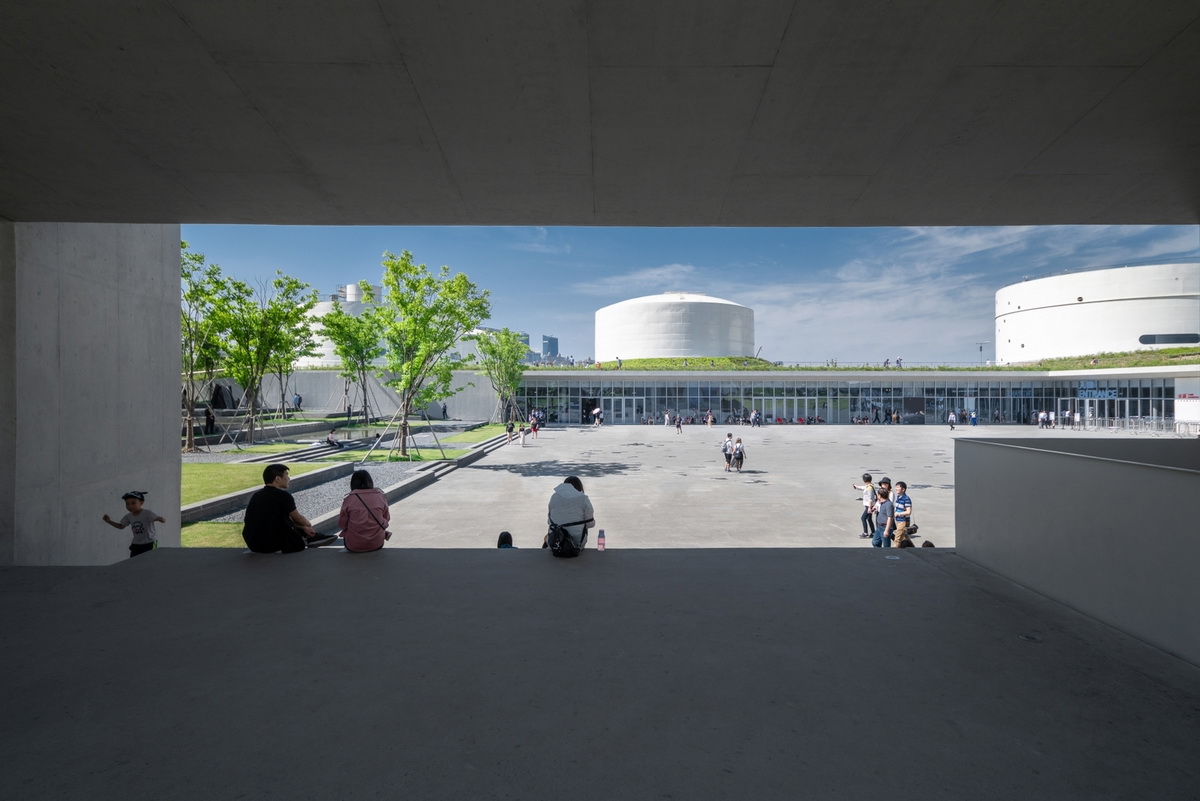
▲ City Square platform
At the heart of the design is the creation of sustainable “land art.” Spanning nearly five hectares, the earth serves as a canvas painted with greenery, while the buildings are like pearls adorning the landscape. Five oil tanks are connected by a new terrain—called the “super surface”—covered with soil and plants.
Tanks 1 and 2, located near the highway, are relatively independent and sit entirely above this super surface. Tanks 3, half of 4, and 5 partially lie below the super ground level, forming an open, semi-underground public space among the three tanks. This area includes the art center lobby, exhibition spaces, a lecture hall, coffee shop, and art store, all facing a sunken square through transparent floor-to-ceiling glass.
Numerous skylights in the ceiling introduce natural light from above the super surface, where an undulating park presents changing landscapes throughout the day. The entrance slope to the three tanks is clad in 10-25mm thick steel plates layered to echo the curved shape of the original tanks. Some steps have been converted into seats for the coffee shop.

▲ Aerial view of the site
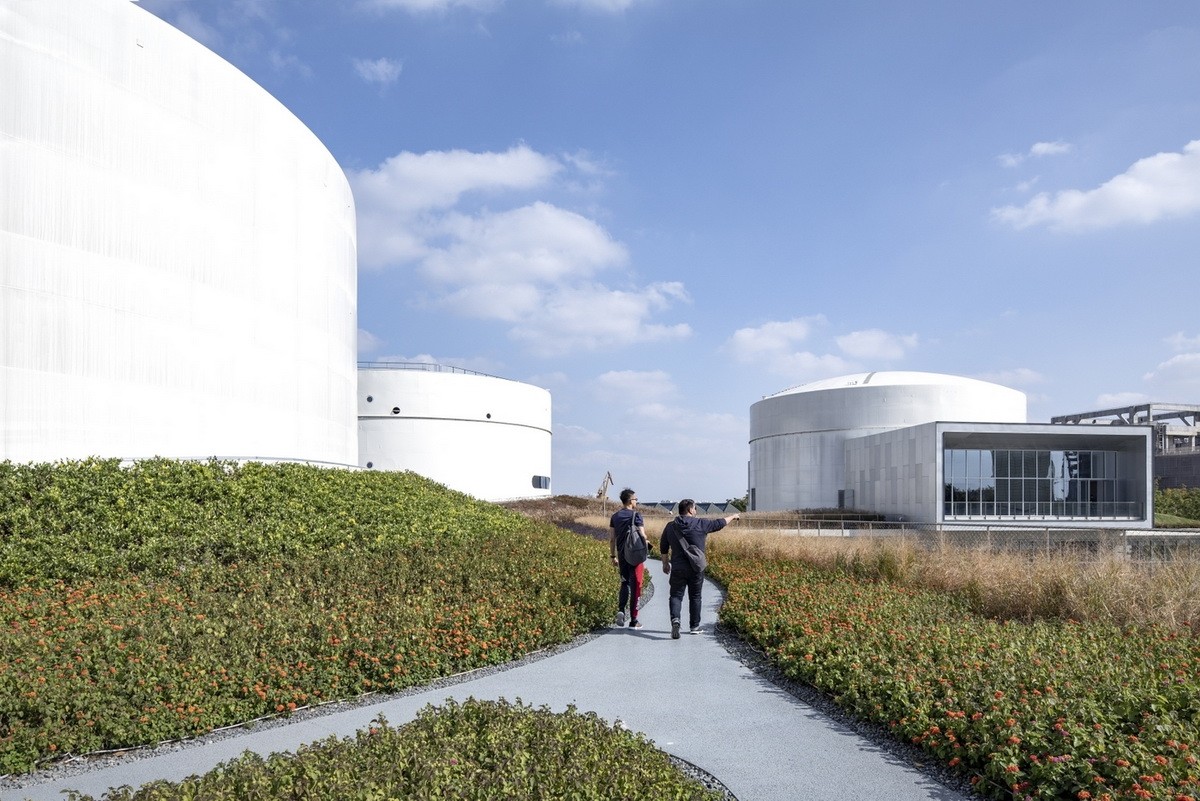
▲ The super ground landscape

▲ Undulating park terrain above the super ground

▲ Open space beneath the super ground
Extending from Longteng Avenue on the west to the Huangpu River on the east, various paths invite visitors to stroll freely through the outdoor park. Following the “stepped waterscape” descending layer by layer, visitors arrive at the “city square.” This space, cooled by mist sprays, is a popular summer retreat. The spray’s plane shape echoes a removed oil tank, creating a poetic connection.
A large “urban forest” runs along the south side of the site, bringing nature back into the city. On the east side lies an open “lawn square,” providing space for running, resting, and serving as seating for large-scale events like outdoor music festivals.
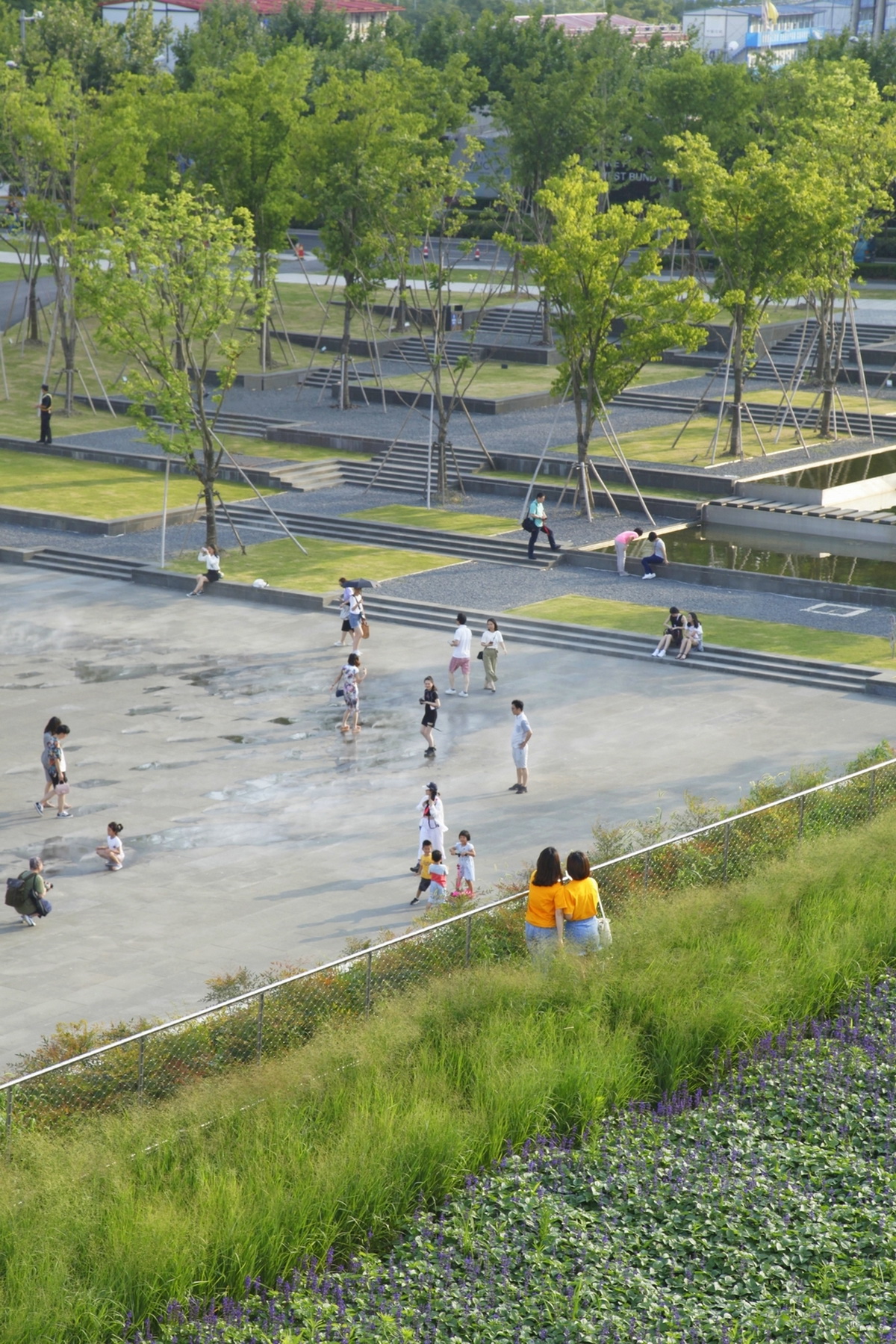
▲ Viewing staircase and water feature from the super ground
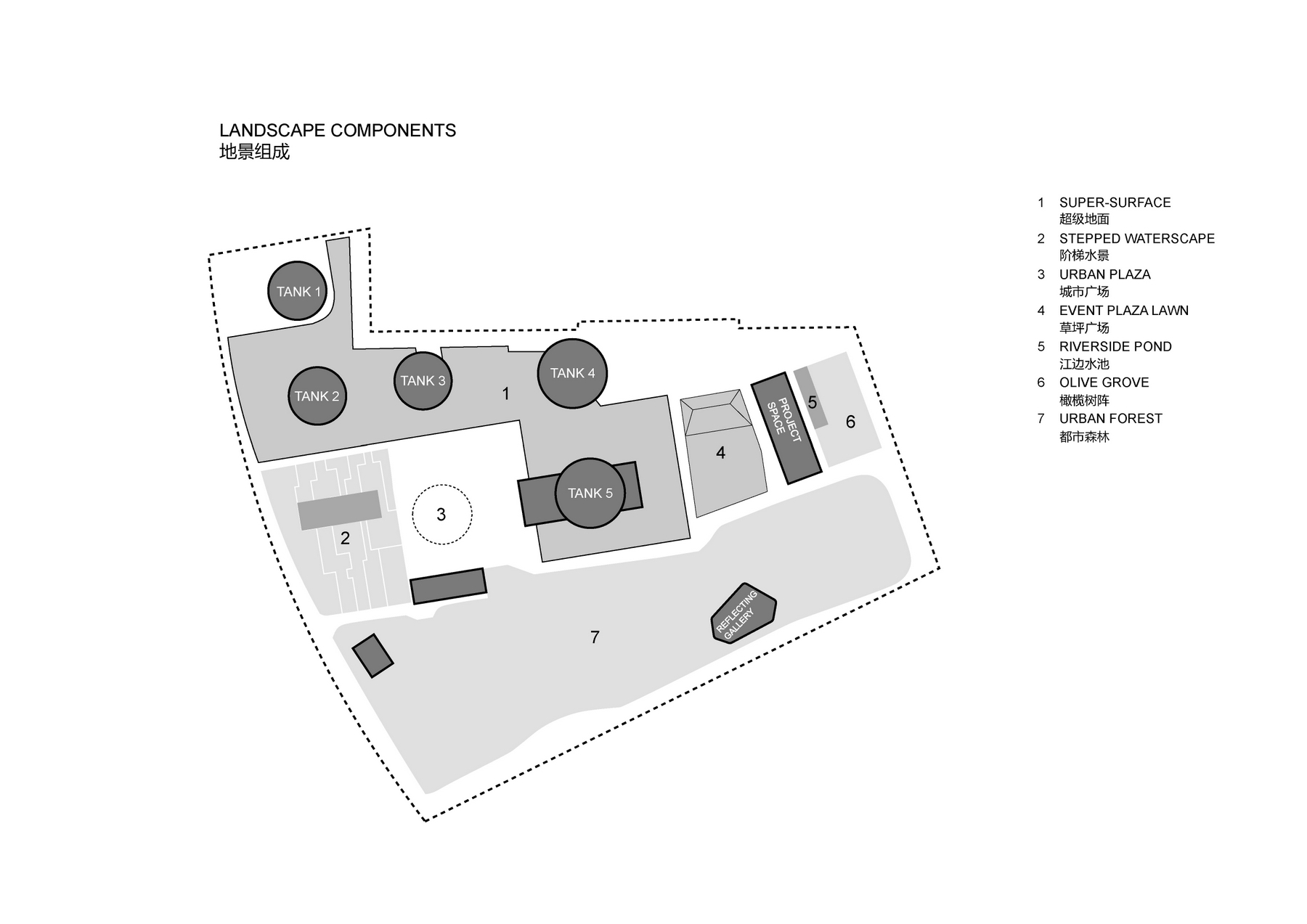
▲ Landscape composition analysis
The landscape includes scattered art installations and two independent small buildings for hosting art events and exhibitions. A “Shadowless Gallery,” wrapped in mirrored stainless steel, is nestled subtly within the urban forest. Near the Huangpu River, a “project space” with serrated skylights contrasts sharply with the white oil tanks, distinguished by its geometric form.
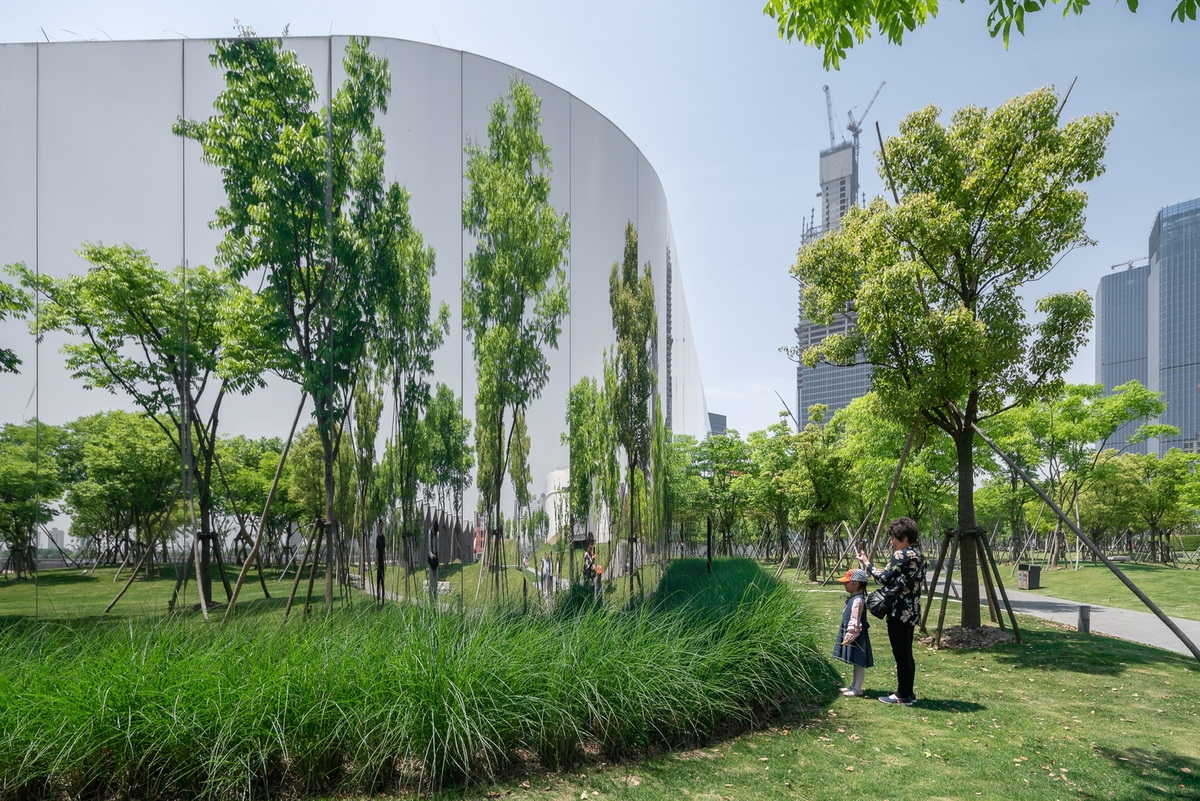
▲ Reflective corridors hidden in the urban forest
The five oil tanks have been renovated with distinct strategies:
- Tank 1 is a two-story live house with a drum-shaped inner container, creating an acoustically optimized venue for performances.
- Tank 2 serves as a restaurant, featuring a circular courtyard and a rooftop platform with river views.
- Tank 3 preserves its interior entirely, offering a dome-shaped exhibition space for large artworks and installations. It includes a single operable skylight for natural light and rainwater when desired.
- Tank 4 houses a three-layer cube inside, functioning as a more traditional art museum with shelves for hanging artworks.
- Tank 5 has been expanded with a rectangular volume passing through it, creating two outdoor stages facing the “City Square” and “Lawn Square.”
The oil tanks retain their industrial character and original beauty, with the addition of circular and capsule-shaped portholes and openings. These features create a unique exterior expression, while framing beautiful views of the park and Huangpu River from within.
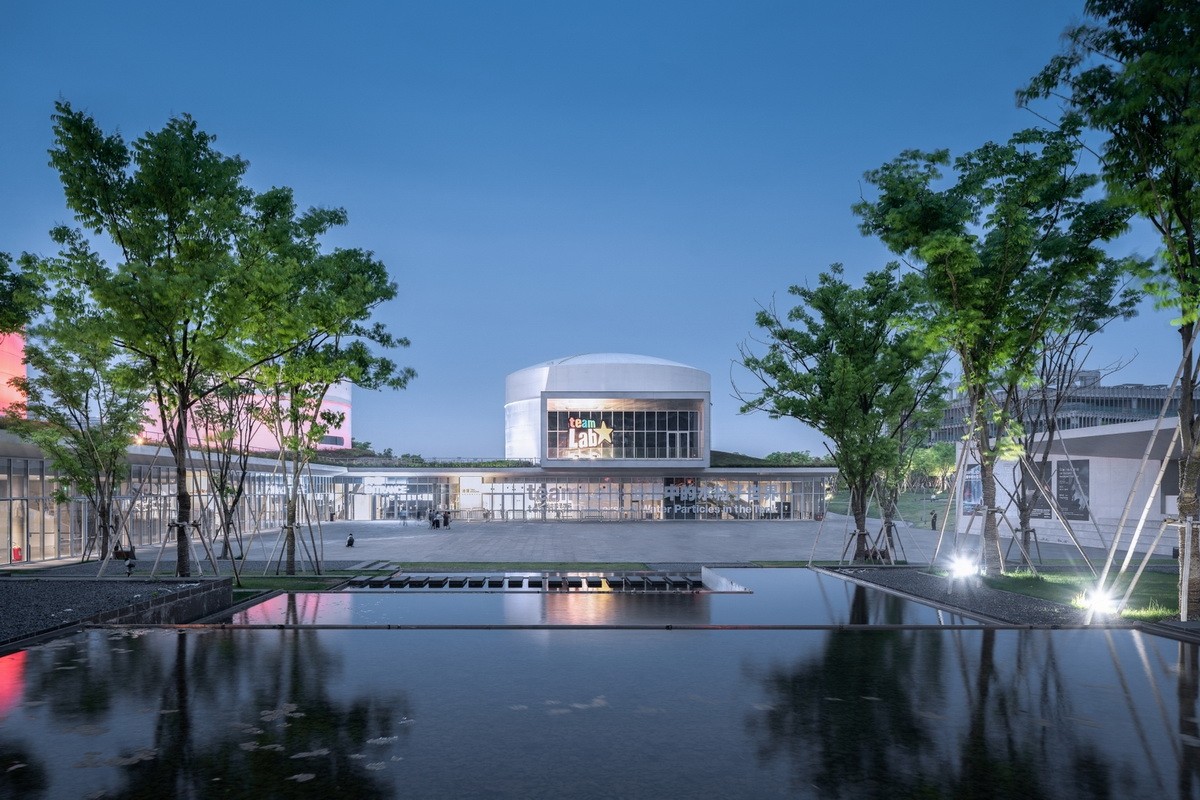
▲ Staircase and water feature

▲ Main entrance of the art center
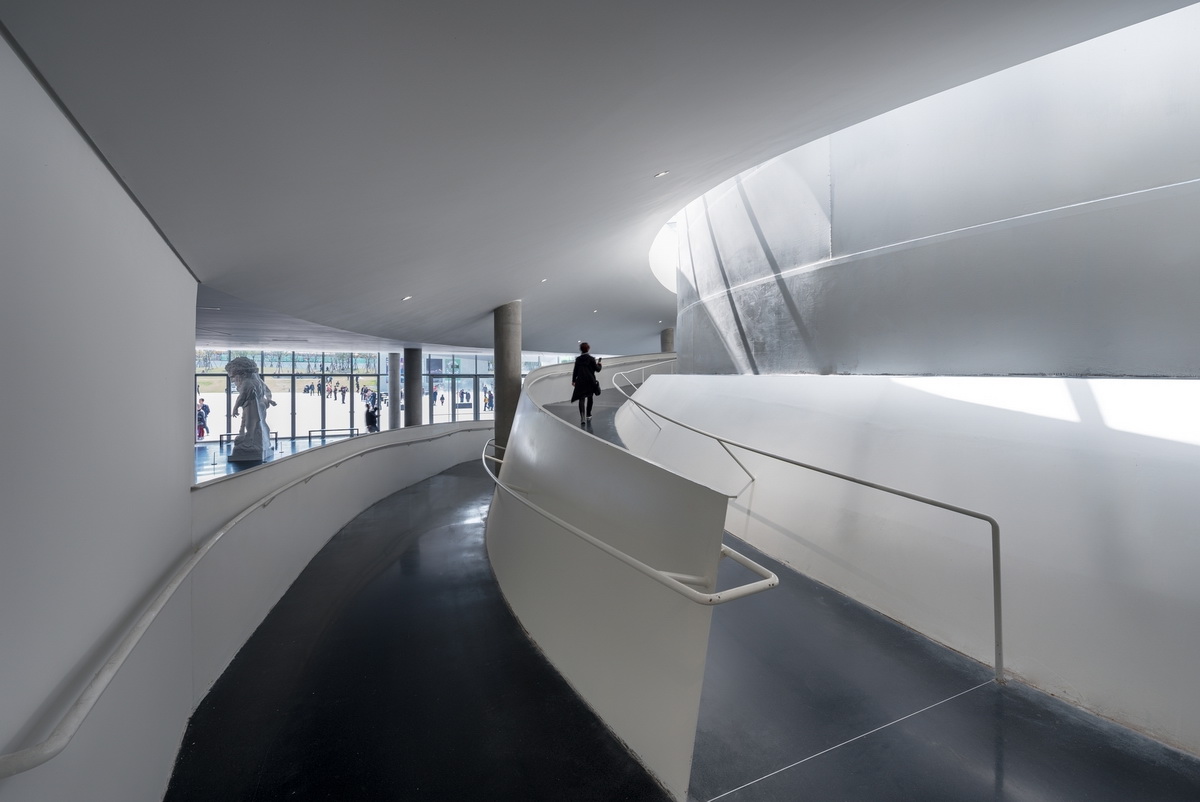
▲ Ramp leading to Oil Tank No. 3
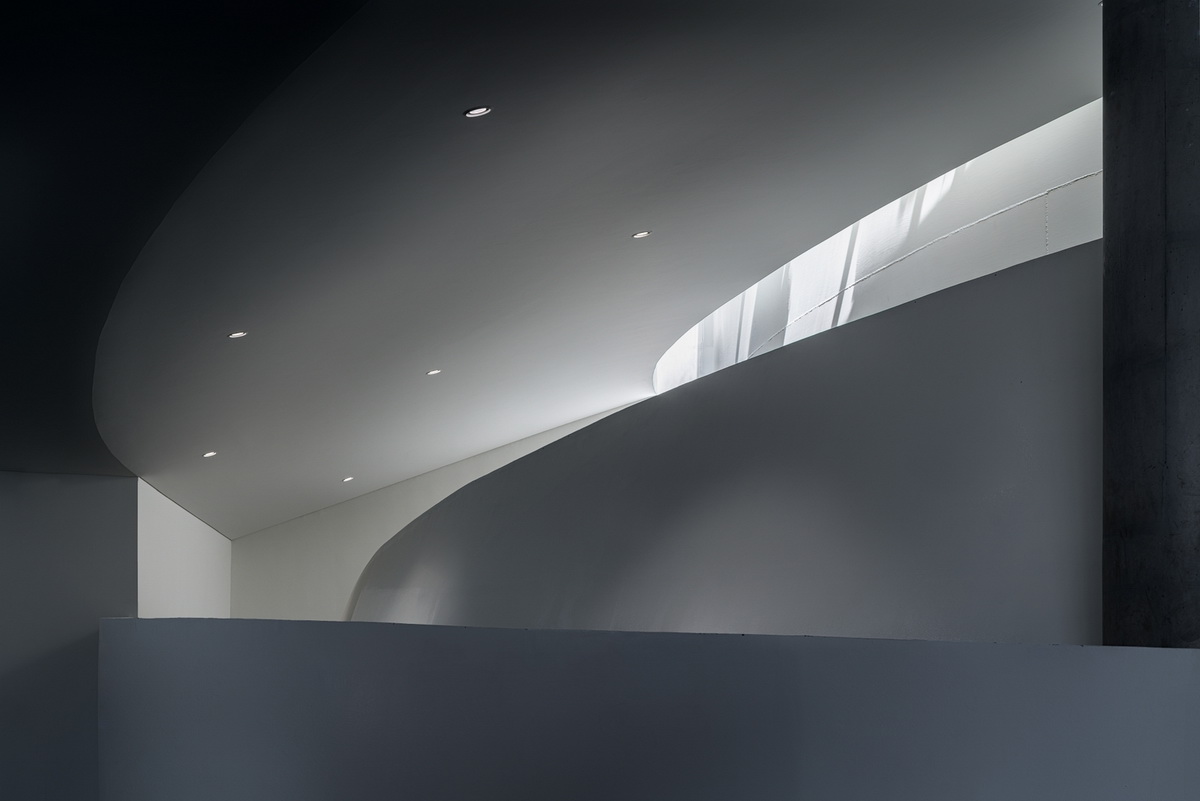
▲ Slope details

▲ Interior of Oil Tank No. 3

▲ Hall and ramp leading to Oil Tank No. 4
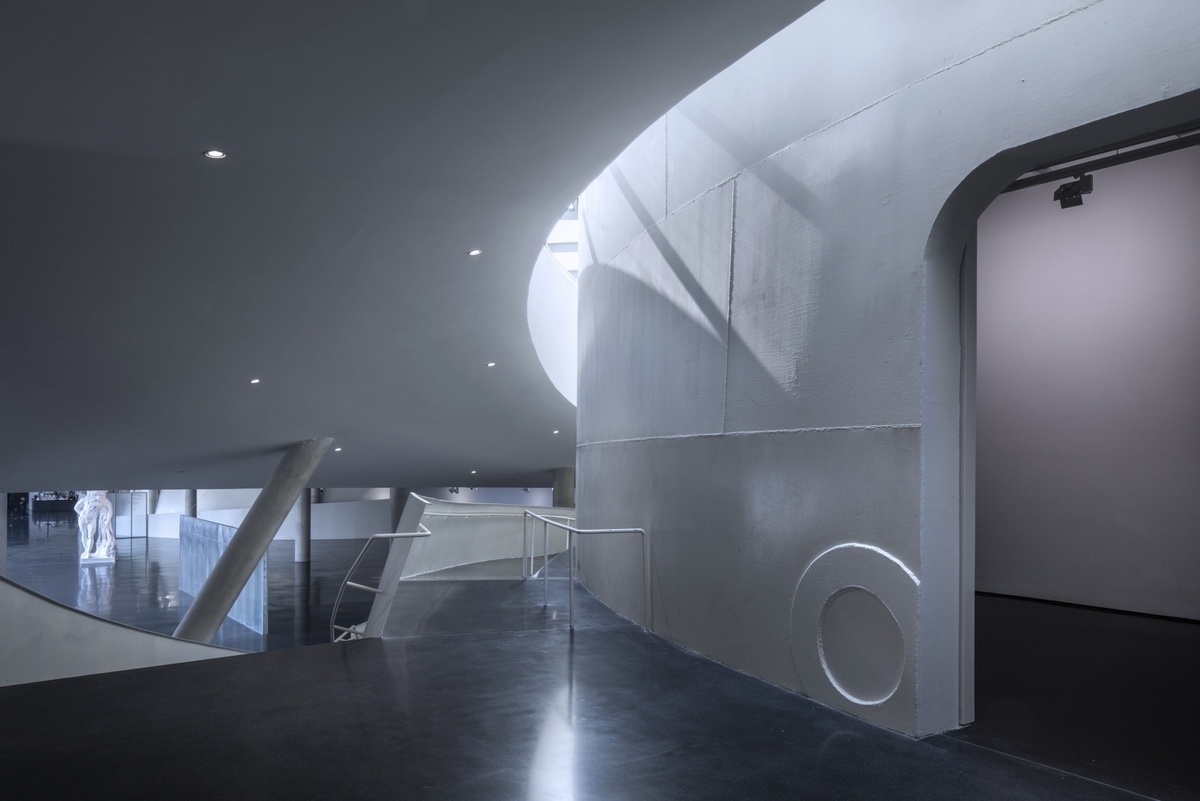
▲ Entrance to Oil Tank No. 4
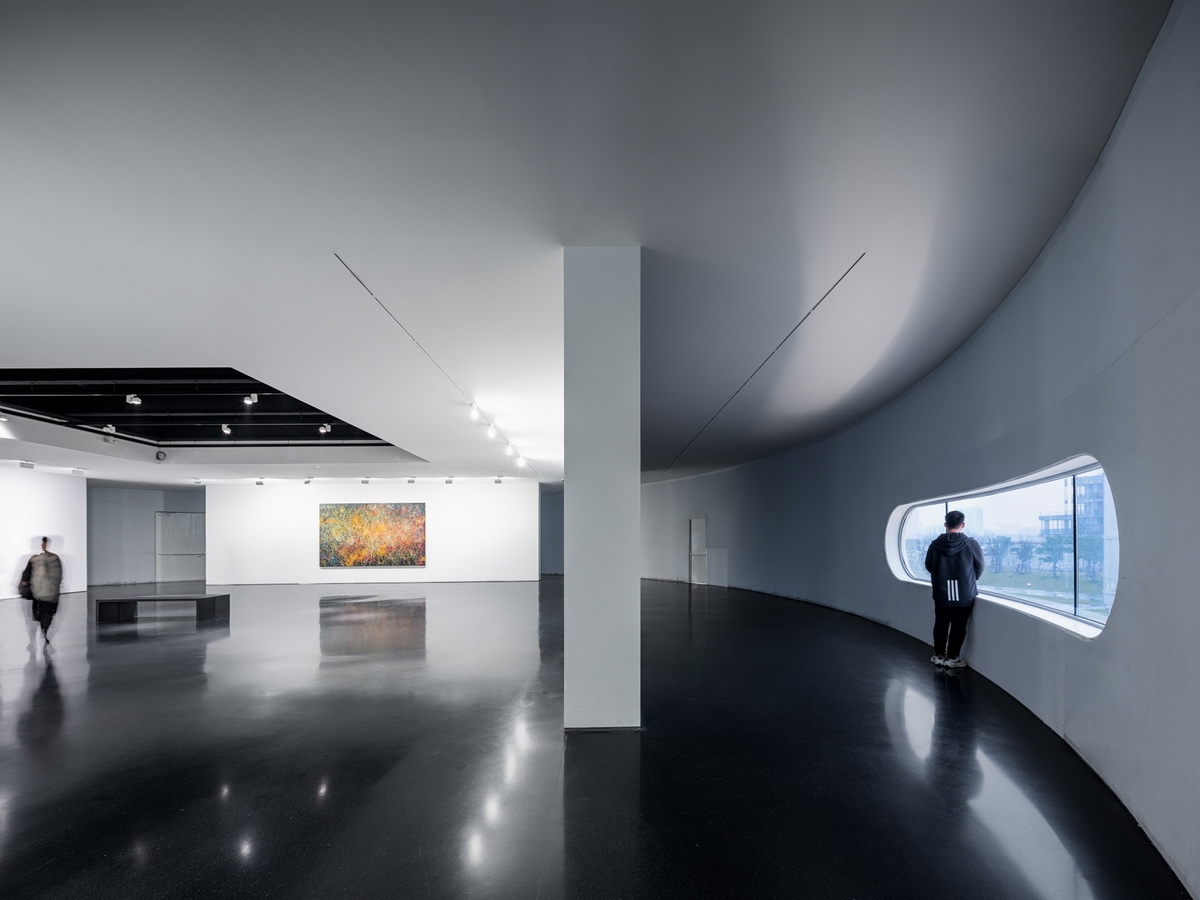
▲ Gallery space inside Oil Tank No. 4
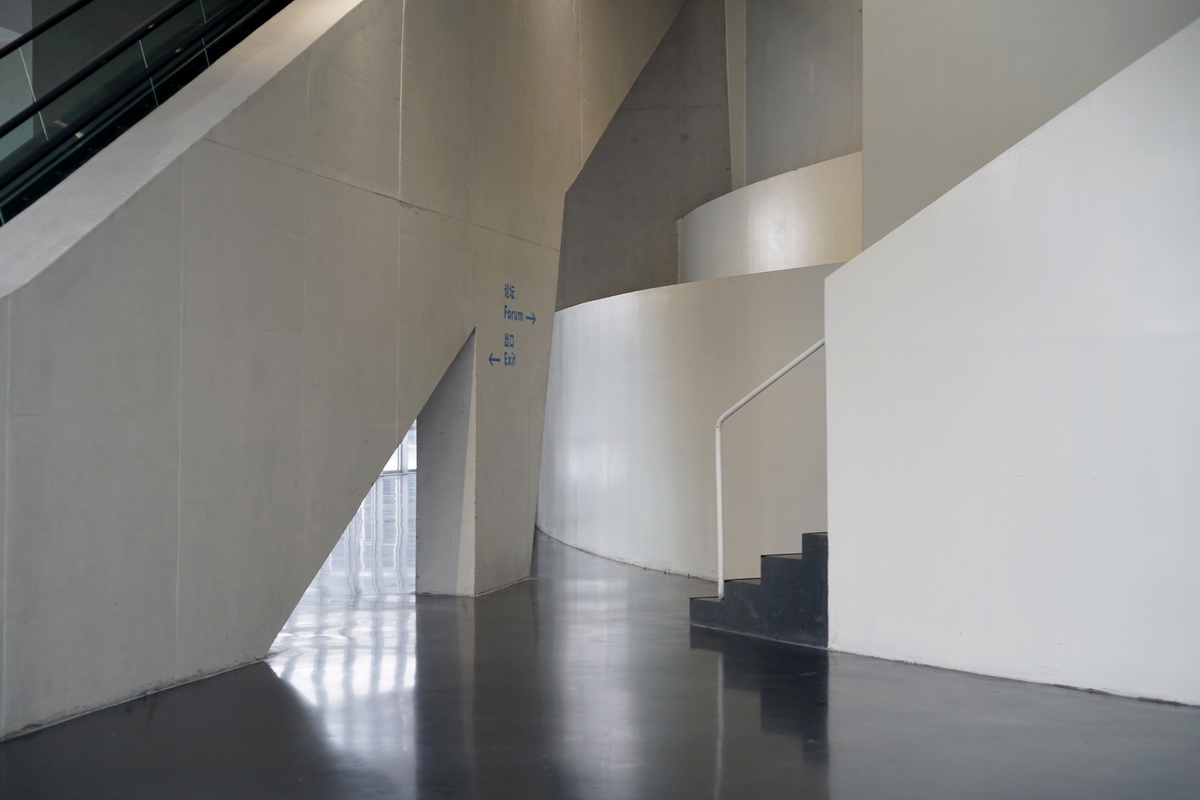
▲ Entrance to Oil Tank No. 5

▲ Seating integrated with steps

▲ Opening facing the Huangpu River
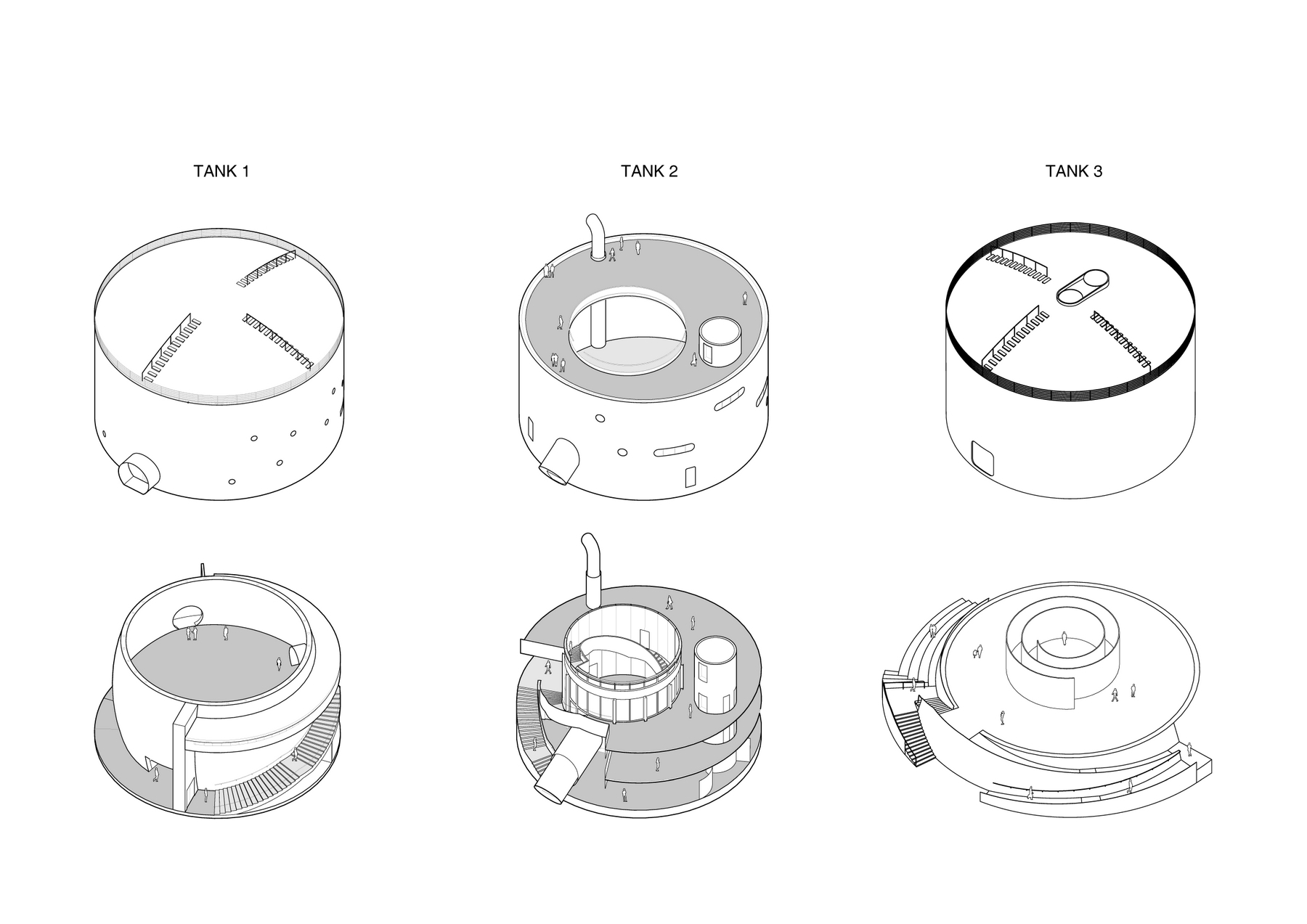
Axonometric drawing of Oil Tanks 1-3
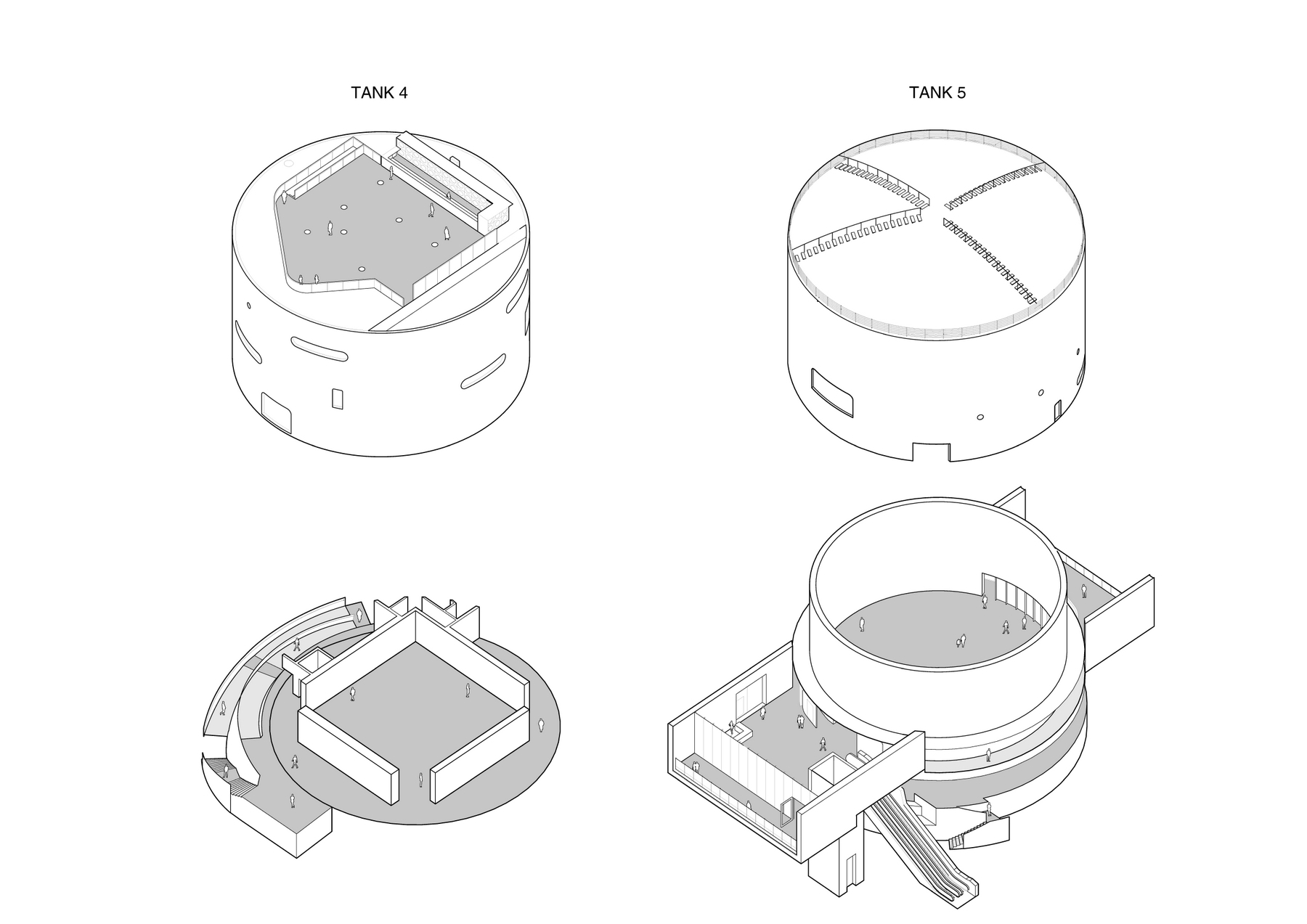
Axis measurement diagram of Oil Tanks 4-5
The Oil Tank Art Center represents a new era for urban art institutions, seamlessly merging urban parks with art exhibitions, landscape with architecture, industrial heritage with innovation. Its open, friendly, humble, and inclusive approach has won the hearts of the public. This boundless art museum unleashes infinite possibilities while subtly fostering a humanistic spirit of equality and sharing.
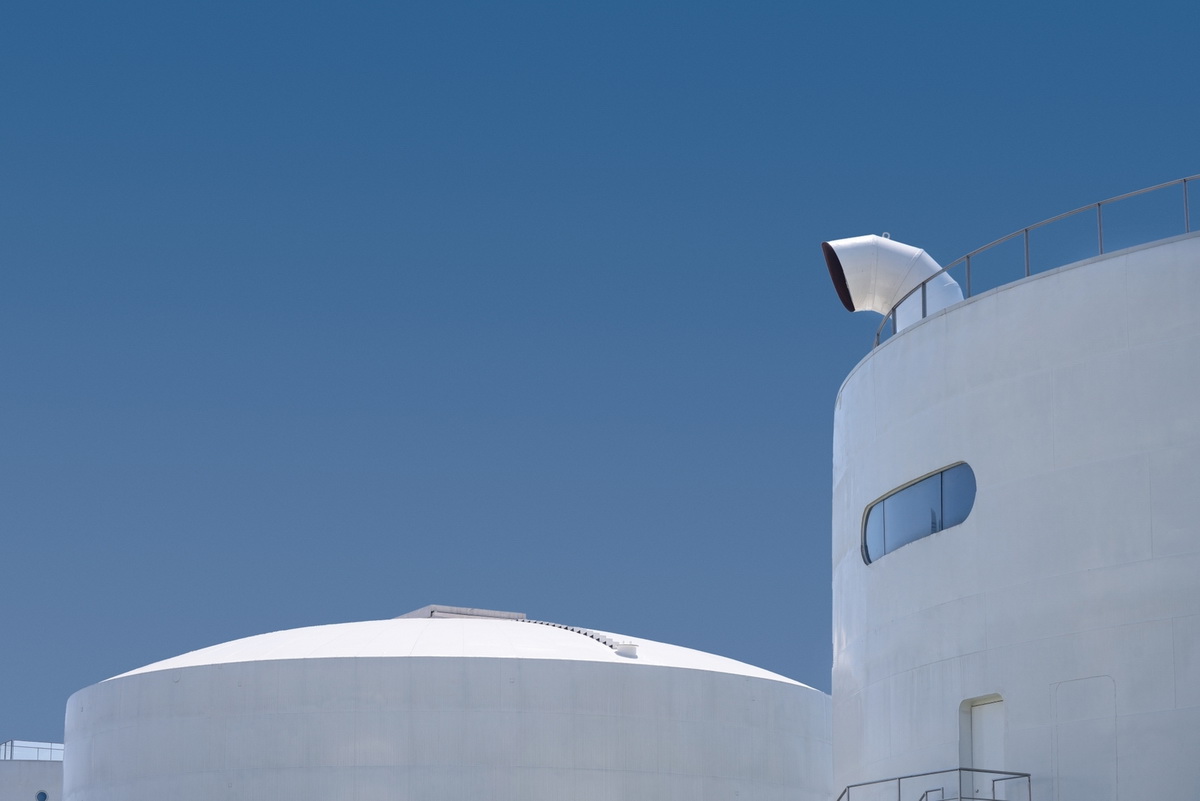
▲ Partial view of an oil tank
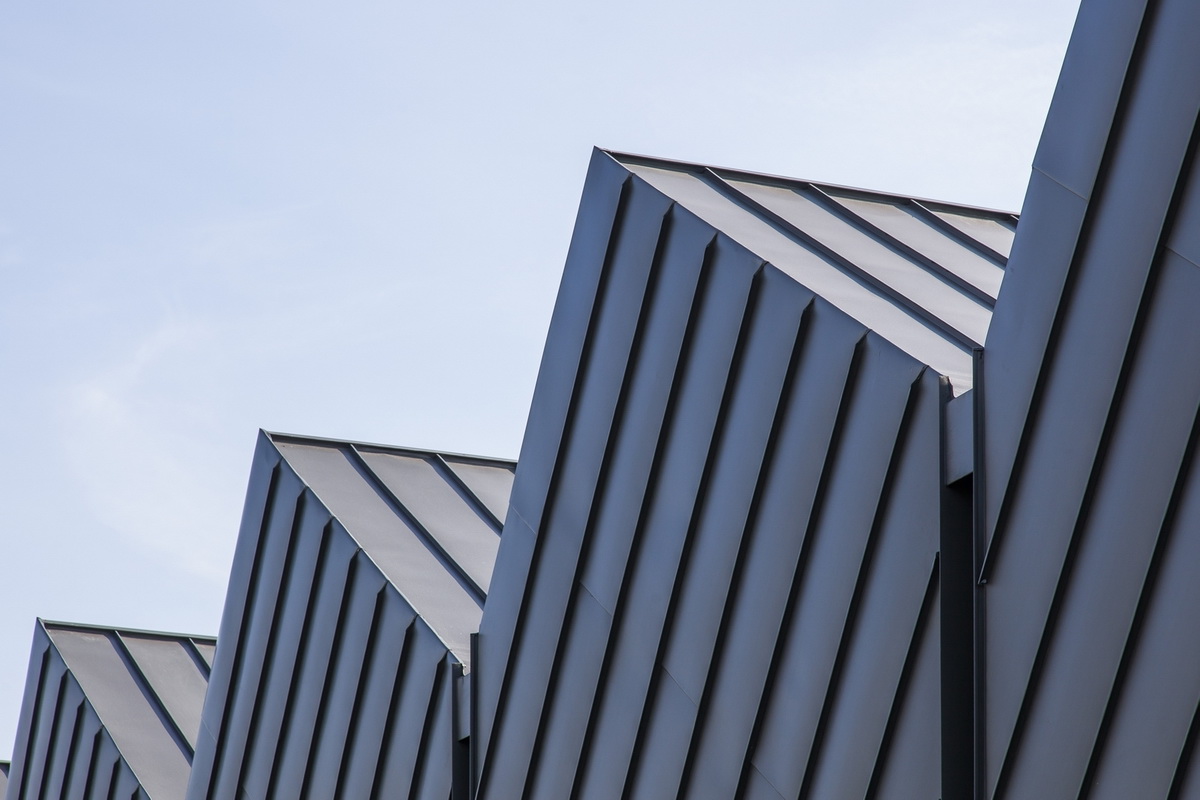
▲ Local project space
Project Drawings
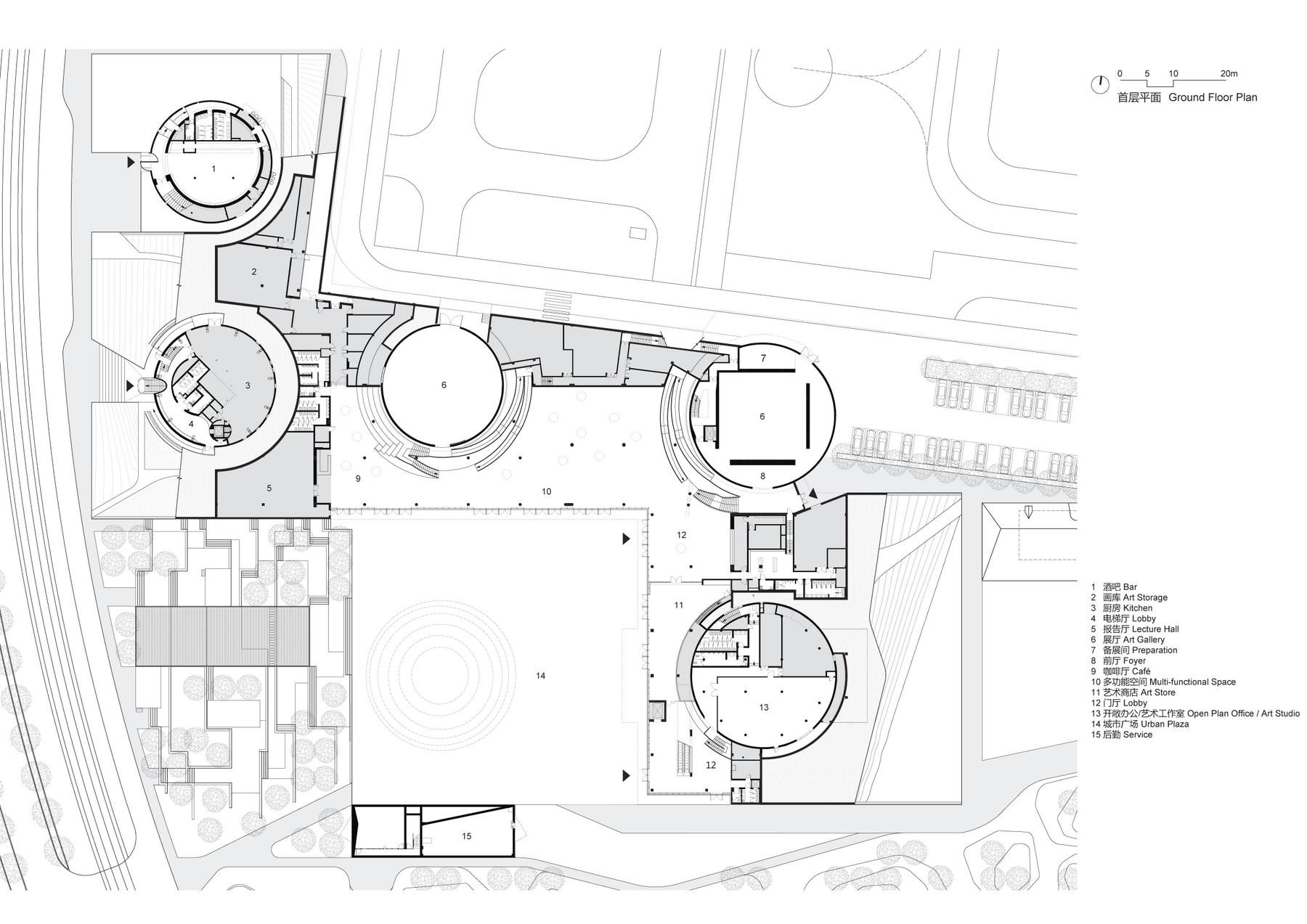
▲ First floor plan
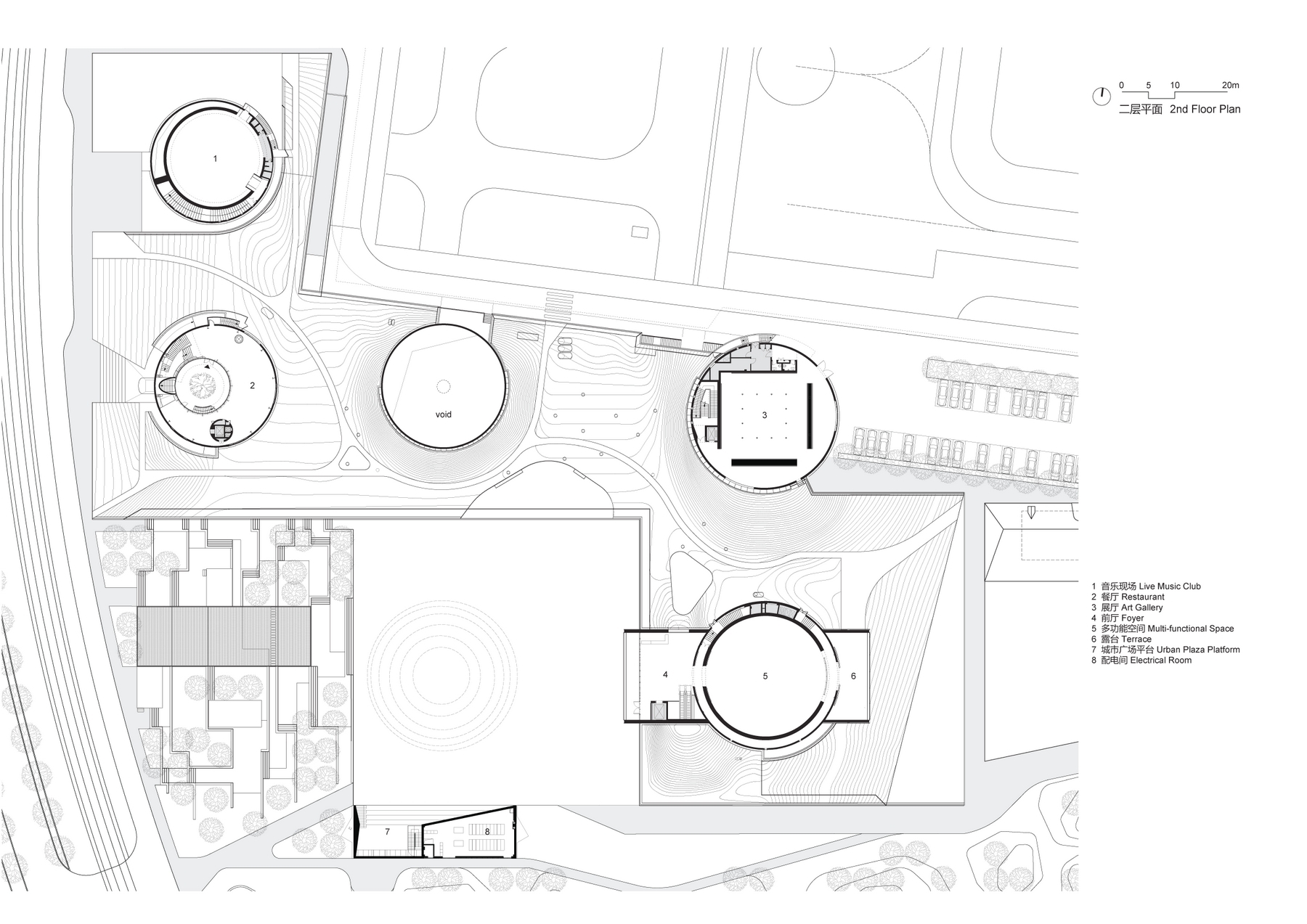
▲ Second floor plan

▲ Sectional view
Project Information
Project Type: Art Museum
Location: Shanghai, China
Architectural Firm: OPEN Architectural Firm
Area: 10,845 m²
Year: 2019
Photographers: Wu Qingshan, INSAW Image, Tian Fangfang, Chen Hao, JJY Photo
Lead Architects: Li Hu, Huang Wenjing
Design Team: Ye Qing, Luo Ren, Victor Quiros, Zhou Tingting, Chen Xiuyuan, Li Zhentao, Zhao Yao, Lu Di, Jia Han, Zhang Yizhuan, Shi Chengyu, Zhou Xiaochen, Huang Zhonghan, Chen Yilan, Cui Yurou, Yang Qi, Ge Can, Gao Qi, Stephanie Lee, Jin Bo’an, Zhang Hao, Wang Mangyuan, Yan Dihua, Zhang Chang, Tomas Kowalsky, Jiang Simin
Collaborative Design Institute: Tongji University Architectural Design and Research Institute
Collaborative Design Team: Sun Xiaolan, Zhang Xinpei, She Xiang (Architecture); Yu Jinxin, Yu Fayang (Structure); Tang Zhenzhong, Wu Pan, Sun Xiaofeng, Zhou Dong (Mechanical and Electrical)
Landscape Design: OPEN Architecture Firm & Beijing Yidi Si E Oriental Environmental Landscape Design Co., Ltd.
Lighting Design: Shanghai Mingchi Architectural Engineering Design Co., Ltd.
Construction: Shanghai West Bank Development (Group) Co., Ltd. & Shanghai Oil Tank Art Center












Must log in before commenting!
Sign Up