
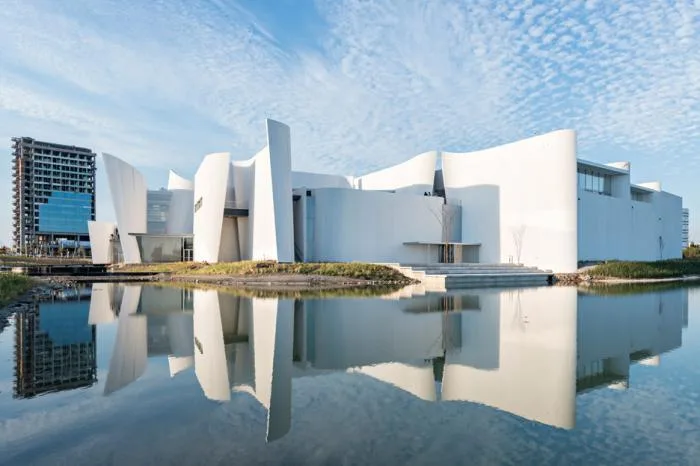
Renowned Japanese architect Toyo Ito has designed the Baroque International Museum in Mexico, featuring elegant curved white concrete walls and a serene water courtyard.
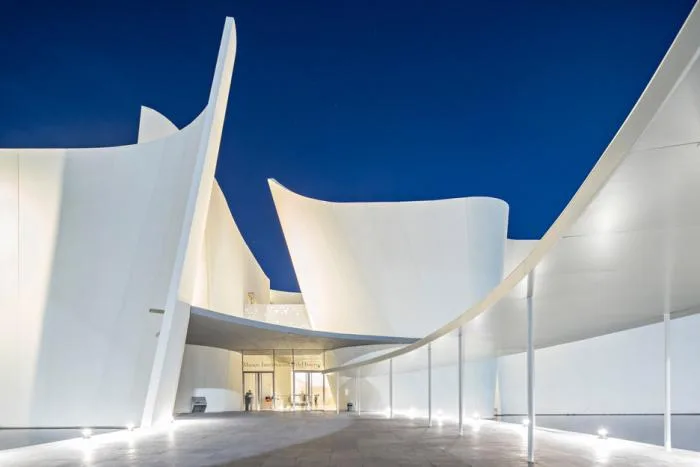
The architectural firm led by Toyo Ito has completed the design of the “Baroque International Museum” (Museo Internacional del Barroco). Situated adjacent to a park in Puebla, Mexico, the museum is dedicated to showcasing Baroque artworks spanning paintings, sculptures, fashion, architecture, music, drama, literature, and cuisine.
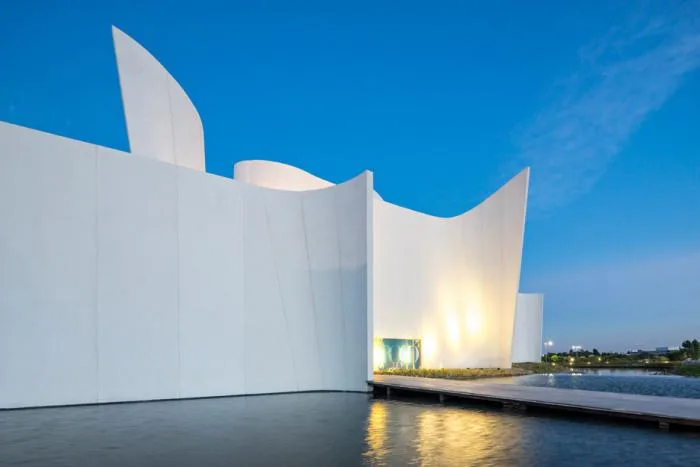
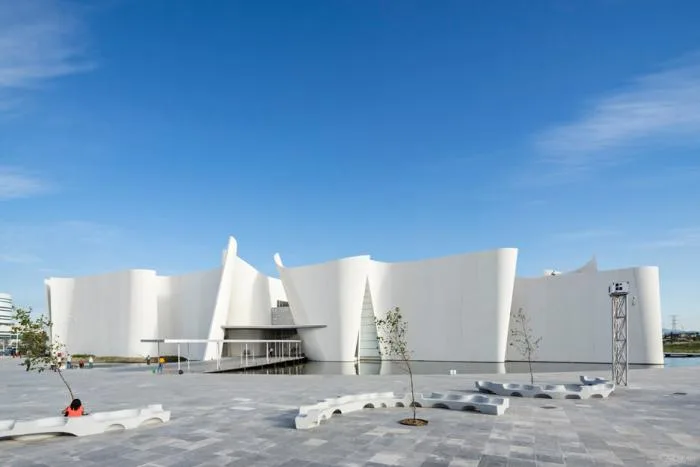
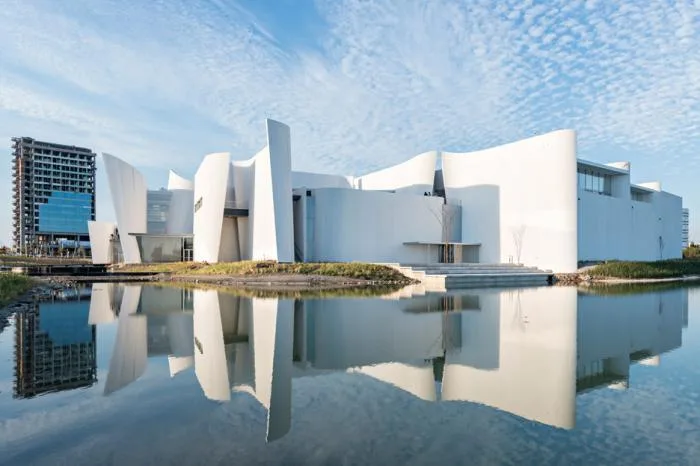
The building’s design features rounded white concrete walls with a unique hammer-carved texture. A crescent-shaped pool envelops the structure, visually connecting it with the surrounding park.
The outdoor terrace offers panoramic views of the adjacent green space, while the exhibition halls are organized around a central courtyard featuring a shallow water basin and fountain. Toyo Ito, the firm’s founder and 2013 Pritzker Prize laureate, emphasized that the project aims to highlight the relationship between humans and nature in every design element. He explained, “Conceptually, we envision the building growing from the ground like springs, gradually evolving.”
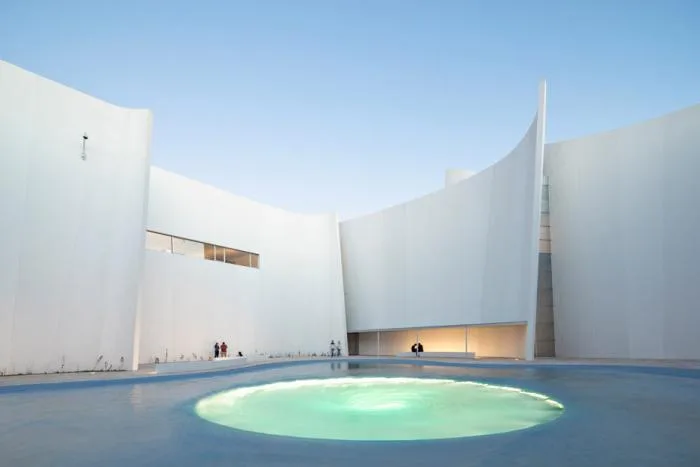
To the south, a bridge links the museum to an open plaza, scattered with benches that serve as rest areas for visitors and spots to enjoy nighttime projections on the building’s facade.
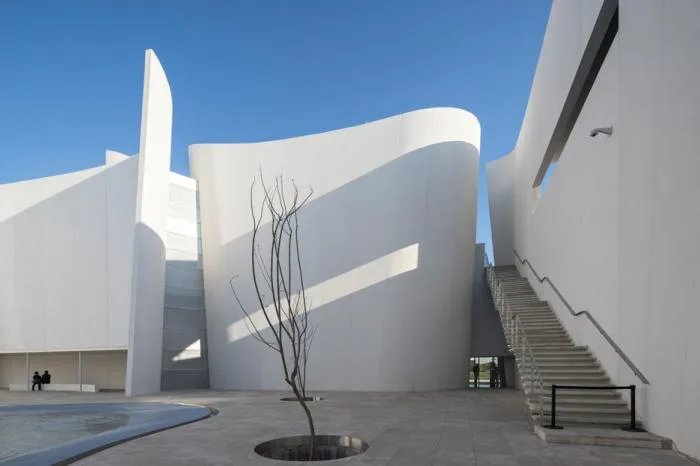
The museum spans multiple floors and mezzanines, covering approximately 18,000 square meters. The first floor houses both permanent and temporary exhibition halls arranged around the central courtyard. Adjacent facilities include a 300-seat auditorium, ticket office, cloakroom, information center, and museum store.
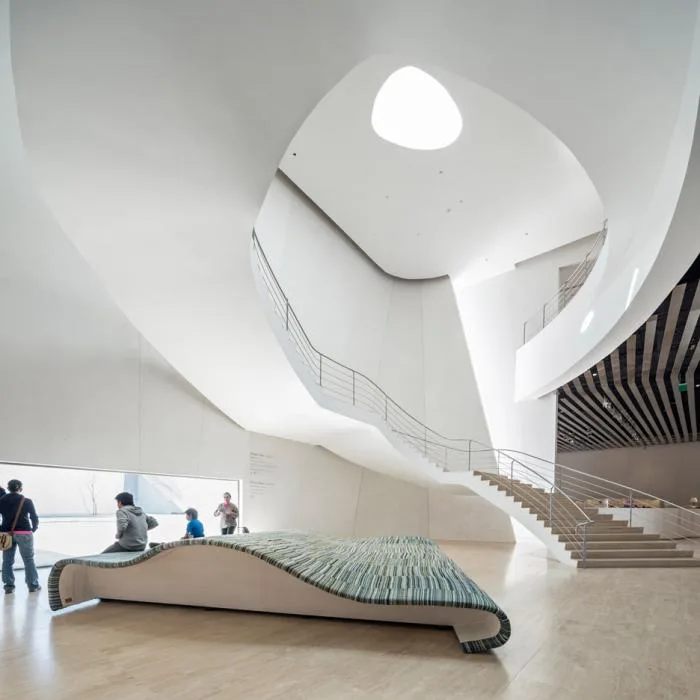
The indoor atrium features a gracefully curved staircase and large benches crafted by local textile artisans in collaboration with the Japanese design studio Kazuko Fujie Atelier, who also designed furniture for the Tama Art University Library, another project by Toyo Ito.
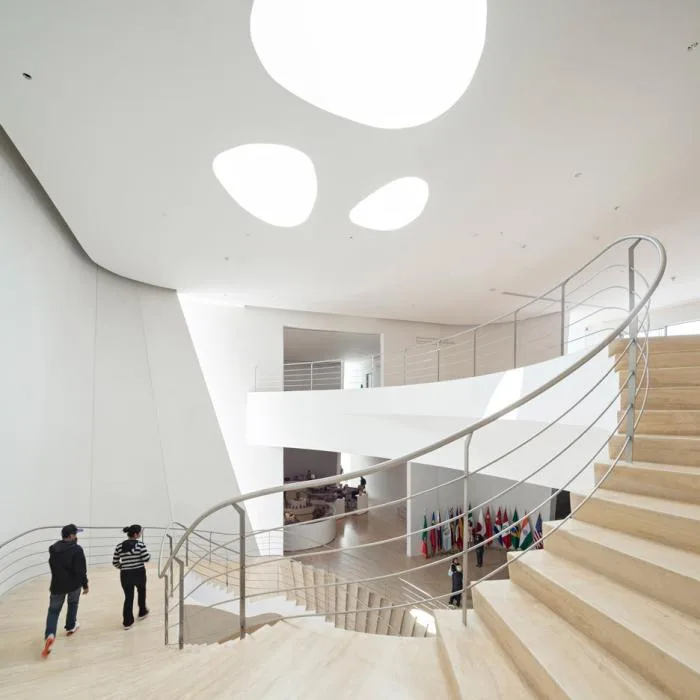
Permanent exhibitions are displayed across eight themed halls, highlighting the cultural influence of Baroque art. Temporary exhibitions are held in three flexible rooms that can operate independently or be combined into a larger gallery. Support facilities are located on the building’s east side, including the loading dock on the first floor. Large-capacity elevators transport exhibits to the second floor, where state-of-the-art storage maintains precise humidity and temperature control.
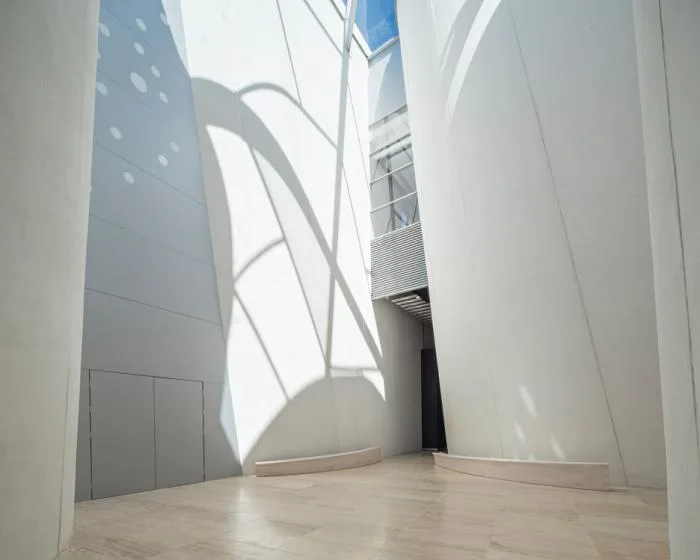
The first floor also includes offices and educational research rooms where visitors can observe the restoration of Baroque artworks and explore original library documents. An international Baroque salon provides space for visiting experts, alongside a restaurant and outdoor terrace offering Baroque-inspired cuisine. A two-story parking facility on the east side accommodates 440 cars, 4 buses, 42 motorcycles, and 50 bicycles.
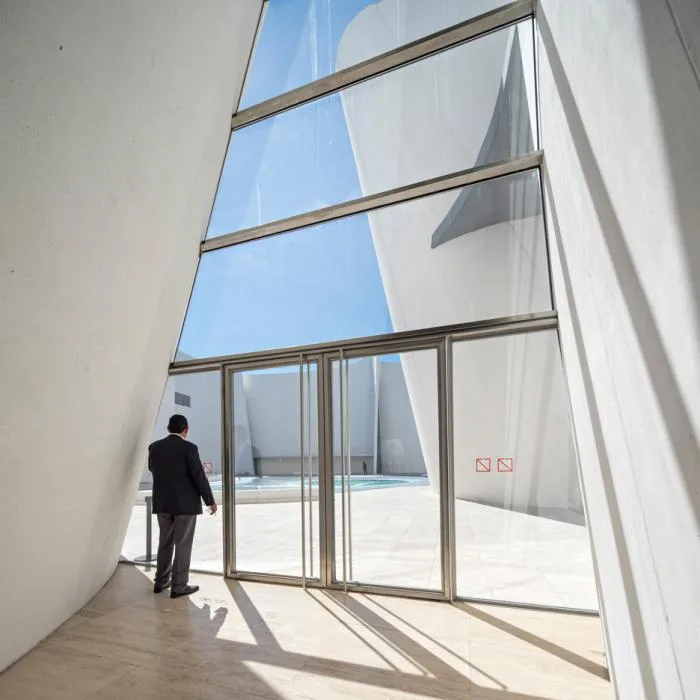
Toyo Ito’s team established three guiding principles to reflect the spirit of the 17th-century Baroque movement, which liberated artists from Renaissance constraints. First, they used curved concrete slabs rather than straight ones to create fluidity and maintain high standards throughout the exhibition spaces. Second, lighting plays a crucial role, inspired by Baroque paintings where darkness is pierced by sudden beams of light. Circular skylights simulate this effect and are likened to “prayer beads.” Although the floor plan resembles a maze at first glance, each room is connected through dome skylights, creating a continuous string of light. The team stated, “Visitors can feel the light from above, as if in conversation with nature.”
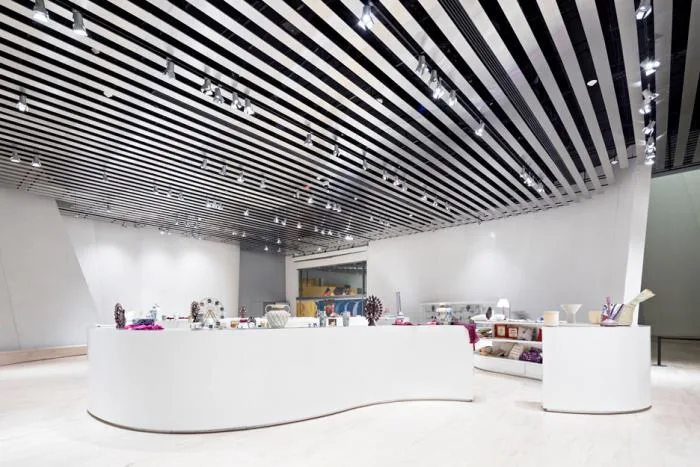
Located within Puebla’s Metropolitan Park, the third design principle focuses on environmental sustainability. The building collects and treats rainwater and sewage, purifies it, and recycles it into the surrounding pool, strengthening the visual and ecological connection between the museum and the park.
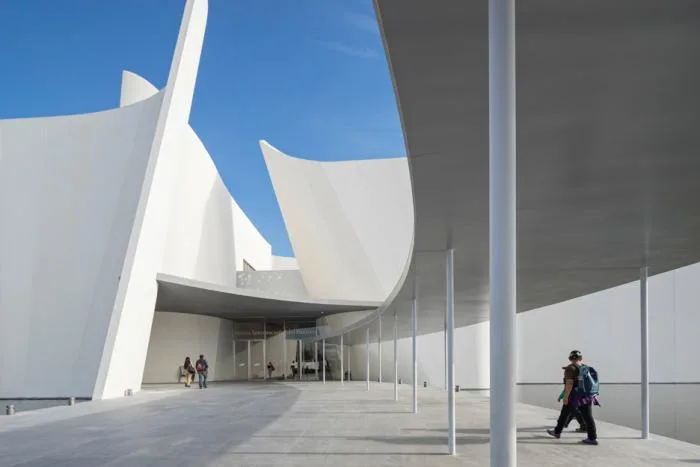
The Baroque International Museum is envisioned as a cultural hub that transcends Mexico’s borders, embodying the international influence of the Baroque era. The agency added, “People from around the world will gather here to exchange ideas and insights.”
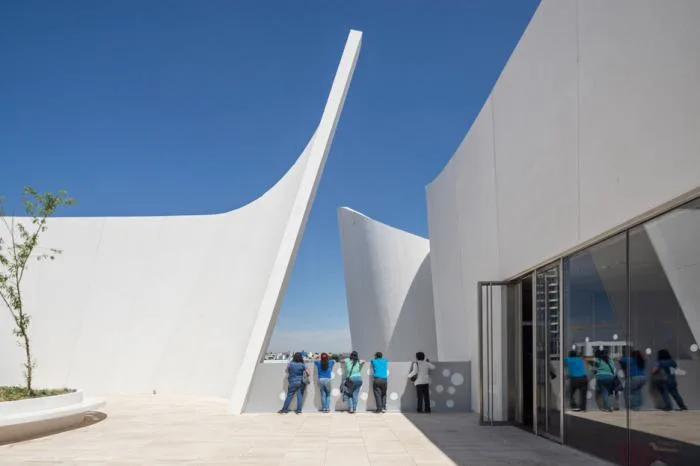
Project Drawings
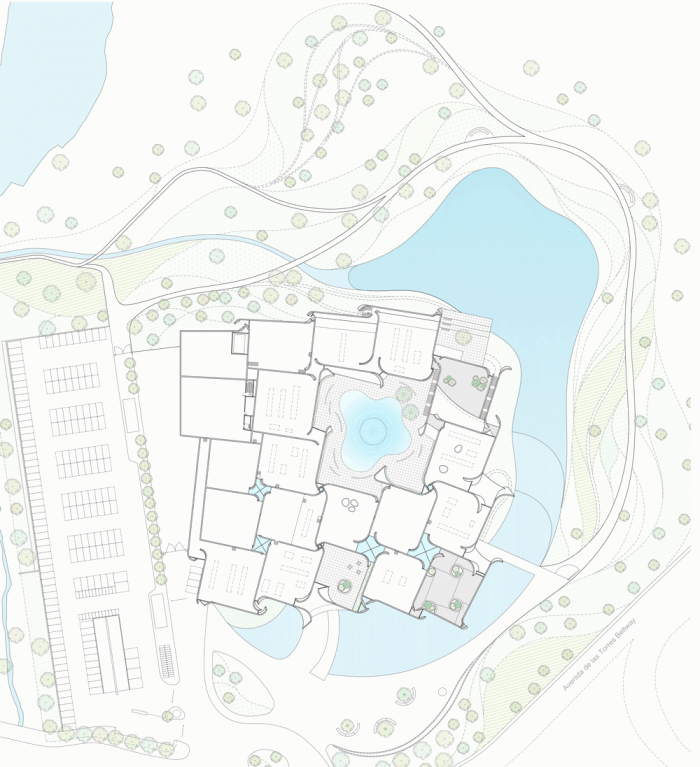
▲ General layout plan
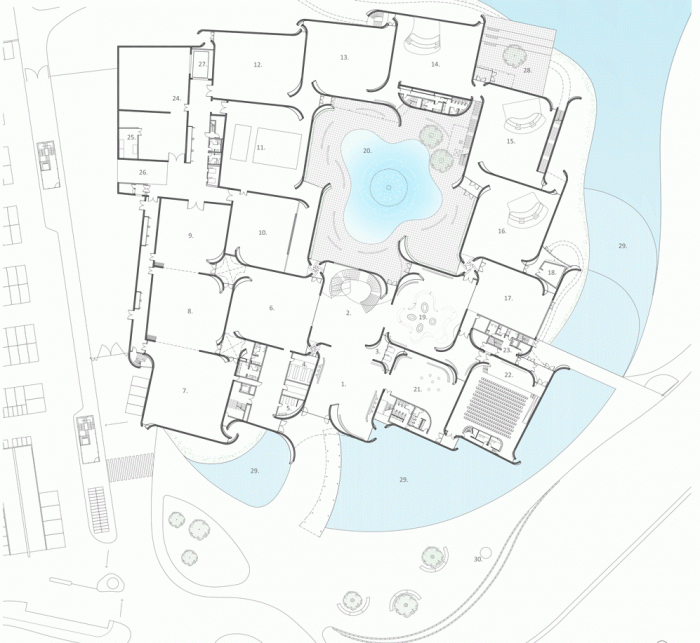
▲ First floor plan
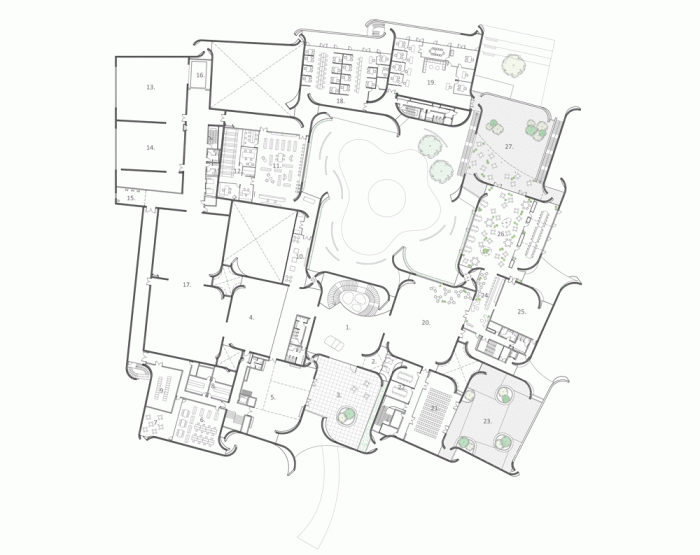
▲ Second floor plan
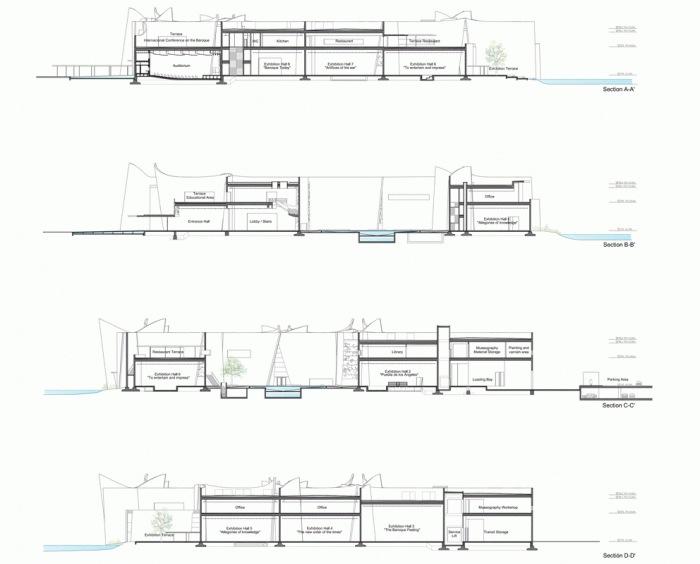
▲ Sectional view
Project Information
Client: Puebla City Government, Mexican Federal Government
Construction and Operations: Constructores del Museo Barroco
Architect: Toyo Ito Office
Local Architect: Federico Bautista Alonso
Museum Technical Advisor: Miguel Ángel Fernández Villar












Must log in before commenting!
Sign Up