
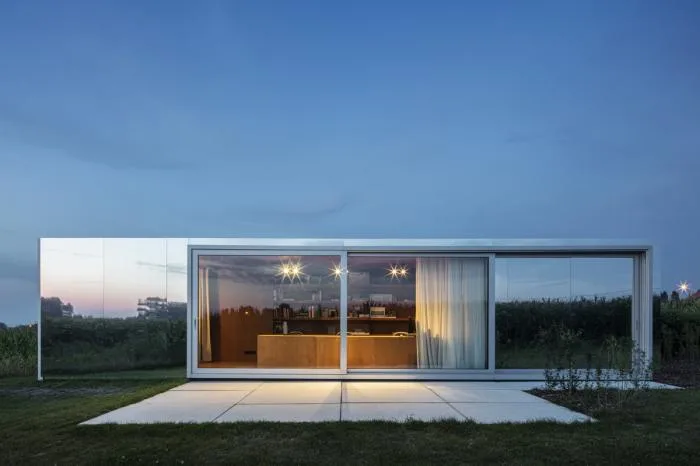
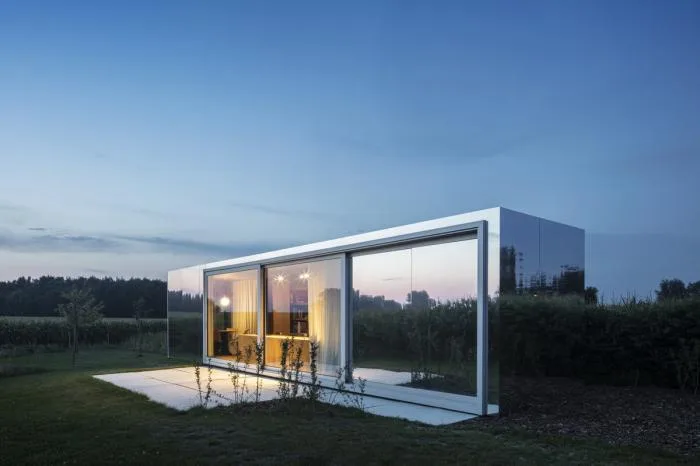
As our studio expands across two locations, we are faced with the challenge of creating more office space. This raises several important questions: Can truly flexible office spaces be achieved? How does a functional workspace like an office interact with its surrounding environment? As architects, how can we best present our vision to future clients? Is it possible to use a unified design concept that adapts seamlessly to local conditions by creating innovative, movable office spaces?
The design of both offices begins with the use of low-cost shipping containers. These units offer great mobility and versatility. Their clear dimensions provide a distinct architectural expression, and the variety of sizes allows for flexible adaptation to different site conditions. Containers also lend themselves well to morphological changes; they can be opened in various sections while maintaining the structural integrity of the frame.
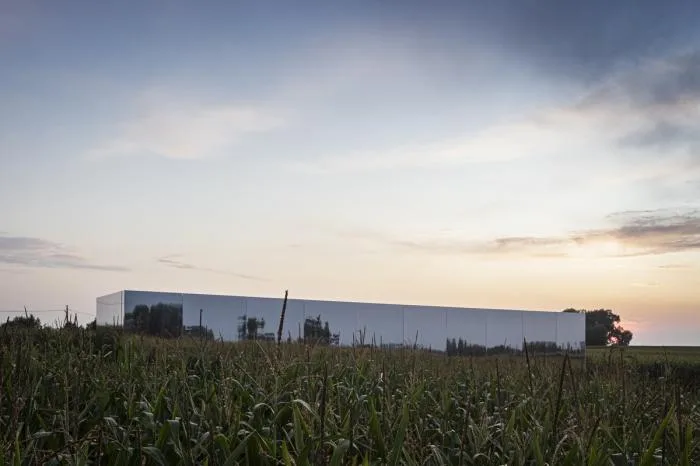
As part of the “diptych” project, our architectural firm offers tailored solutions for two distinct locations. The first installation is designed to suit the typical layout of row houses in the city center, while the second responds to the rural, hilly suburban environment.
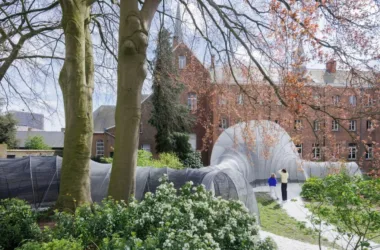
The two sites have different design intentions. The urban office is situated at the edge of a city garden, featuring a large sliding window that visually extends the garden space by reflecting its scenery. Passersby and visitors to nearby street shops are drawn to the glass curtain wall, which peeks through the trees. During the shorter daylight periods of the year, the office remains visible from behind the garden, effectively becoming part of the store’s interior experience.
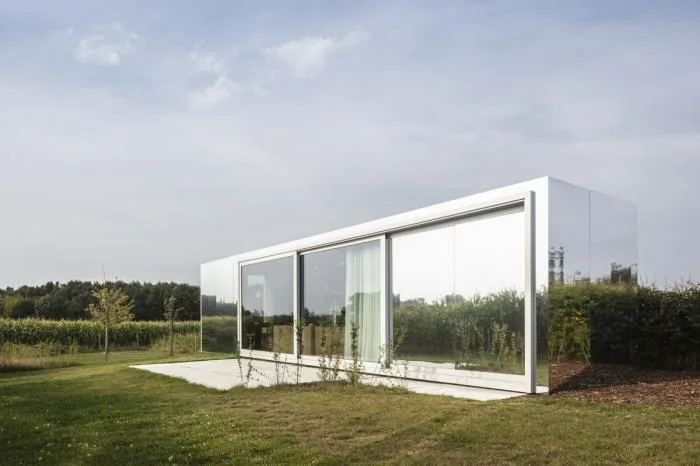
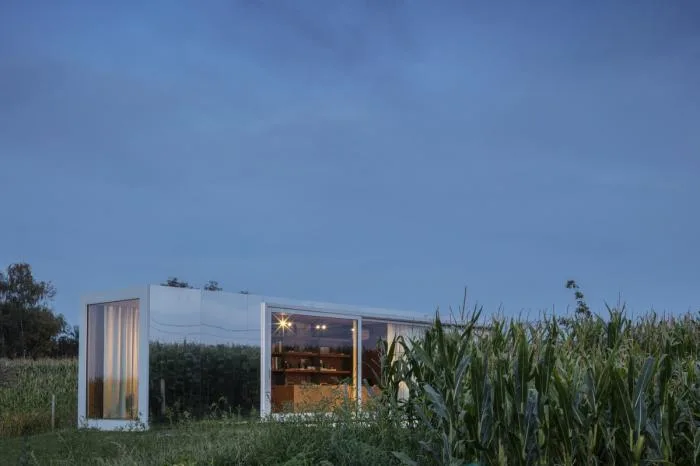
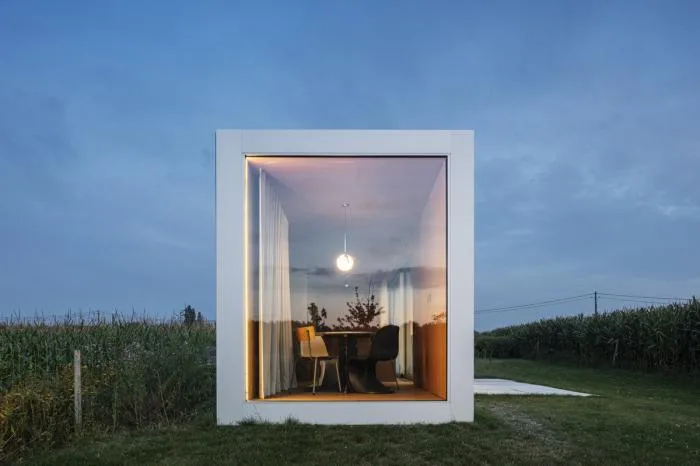
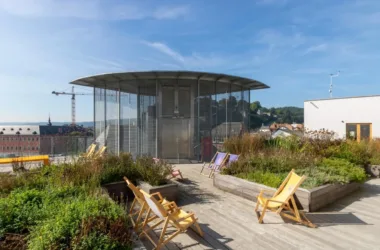
In contrast, the rural office aims to blend seamlessly into its landscape using reflective materials on its exterior. Situated on a beautiful plot, the goal is to make the building as unobtrusive as possible while maximizing views of the surrounding nature. Cladding the exterior with mirrored aluminum panels allows the landscape to be reflected from multiple angles, while the office itself takes on the natural colors around it. Carefully positioned openings connect the interior with the outdoors, including one facing a nearby paved hill and another opening onto a small forest planted at the edge of the site.
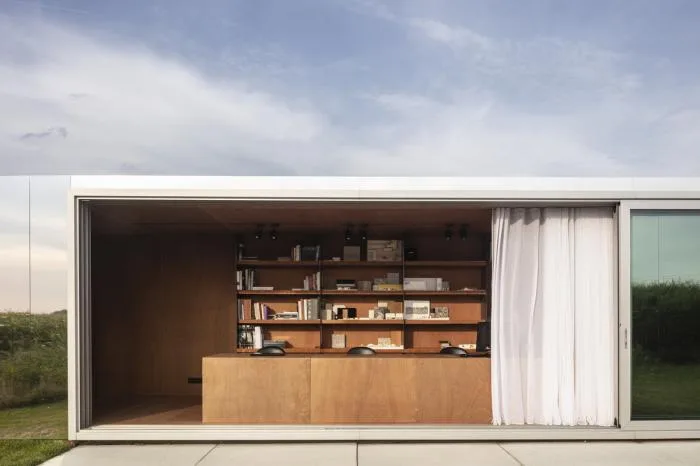
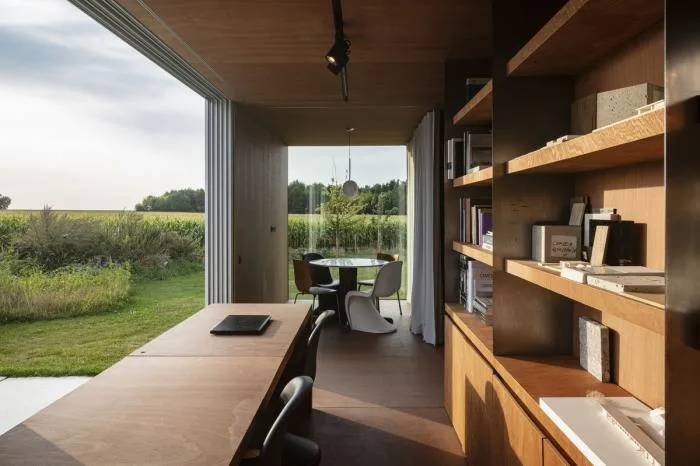
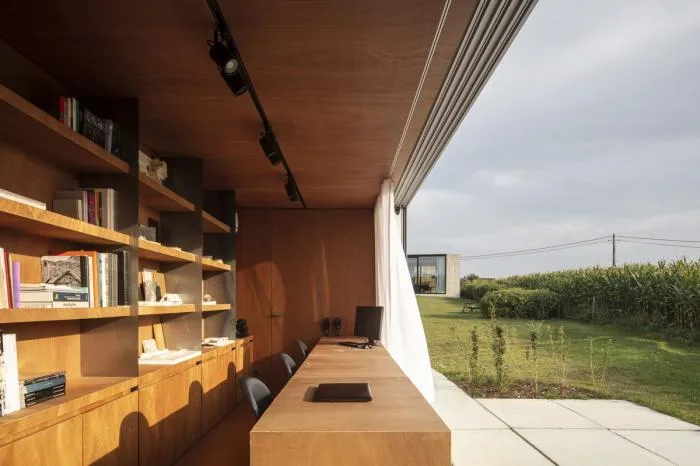
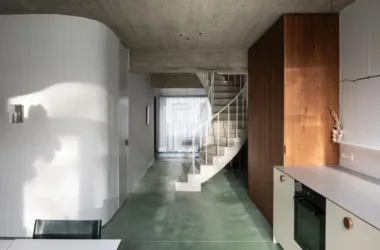
For the interior, our goal was to create a strong visual identity that suits both urban and rural settings. The entire space is wrapped in timeless warm materials, primarily classic red plywood. This material, usually reserved for construction rather than aesthetics, offers a low-cost yet visually appealing finish. The dimensions of the plywood serve as the foundational module, determining the widths of desks, bookshelves, and other elements. These components are arranged with negative joints, allowing untreated steel strips to be inserted between shelves, forming vertical supports without additional hardware. This design enables easy disassembly and recycling of materials by users.
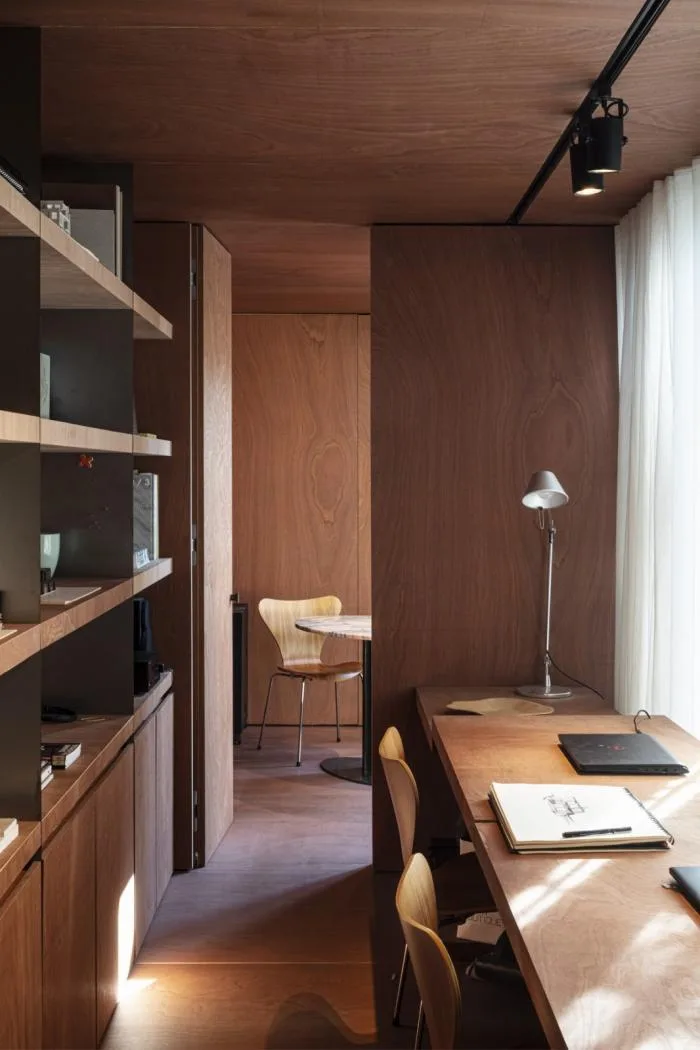
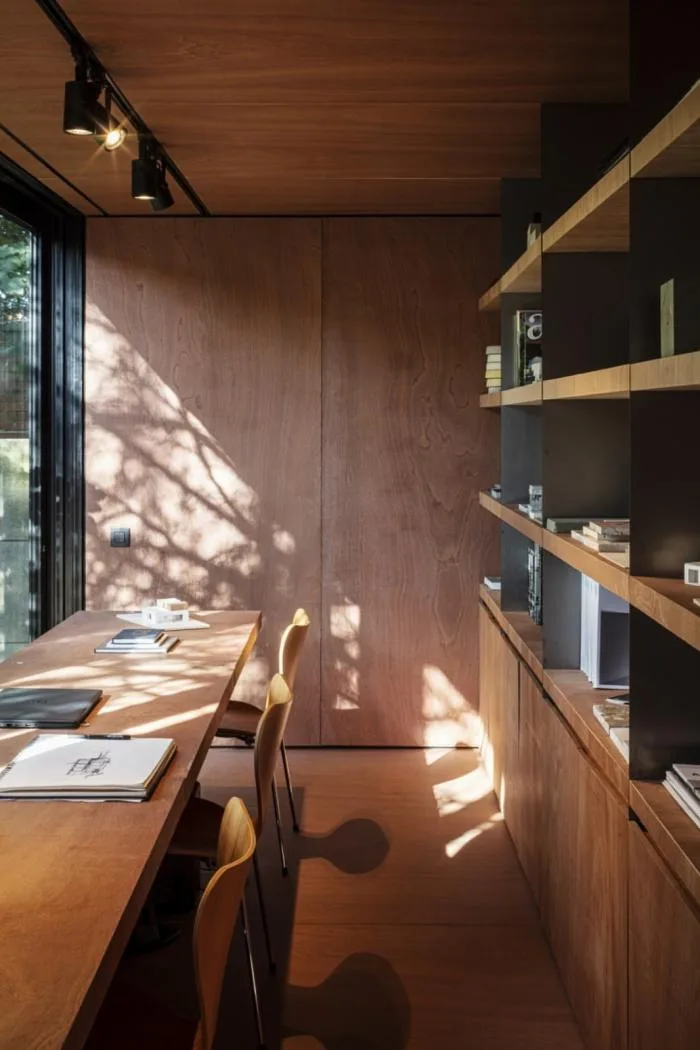
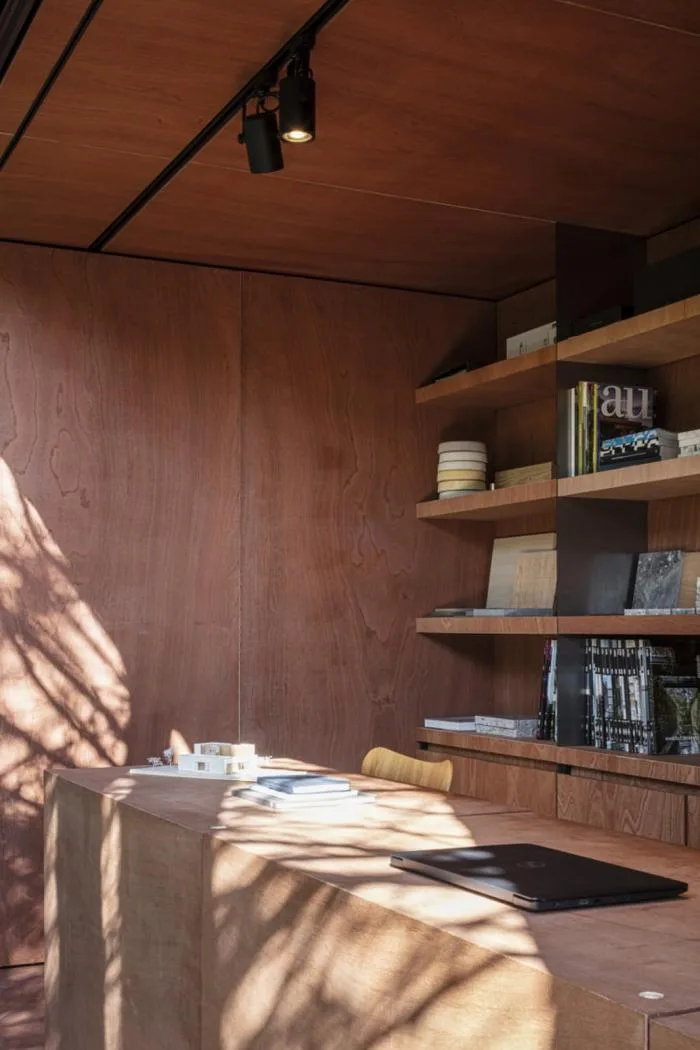
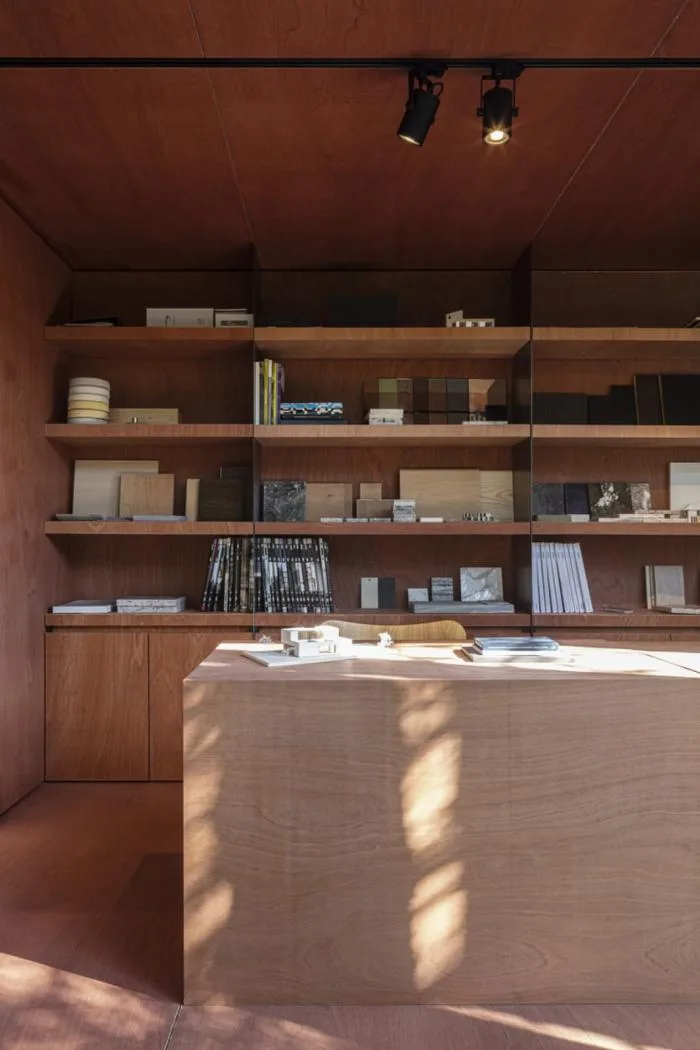
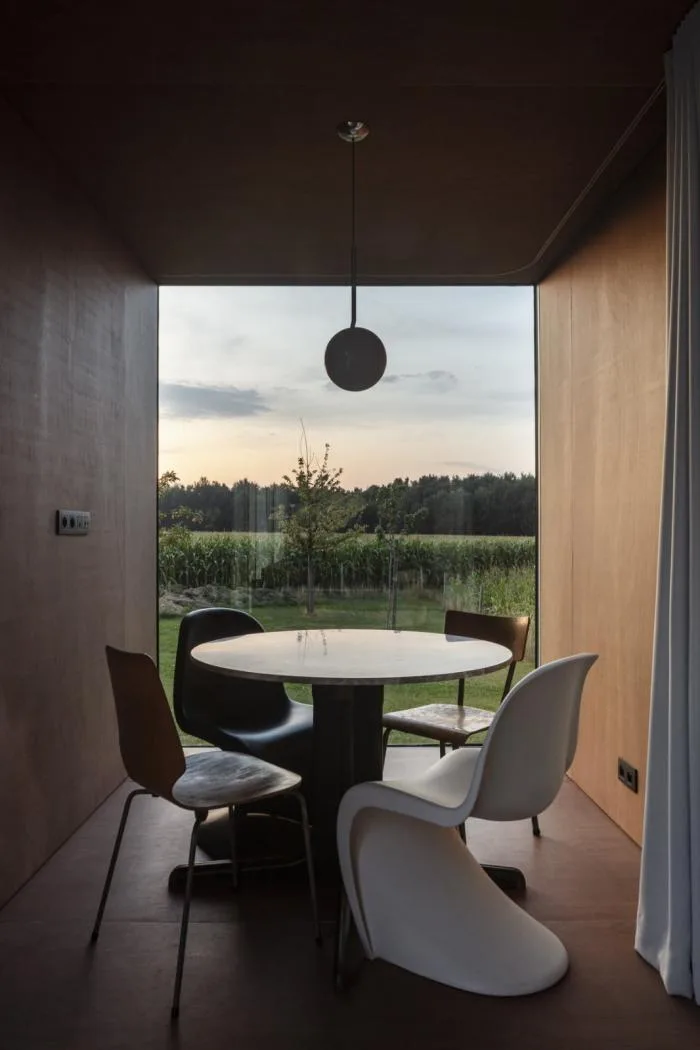
These two parts of the diptych serve as our architectural laboratory—the creative core of our office. Here, our team and visitors collaborate, drawing inspiration from materials, the environment, and one another. The laboratory concept extends beyond these locations; we envision additional laboratories offering unique responses to different sites, expanding the project into a triptych or even a polyptych of designs.
Project Drawings
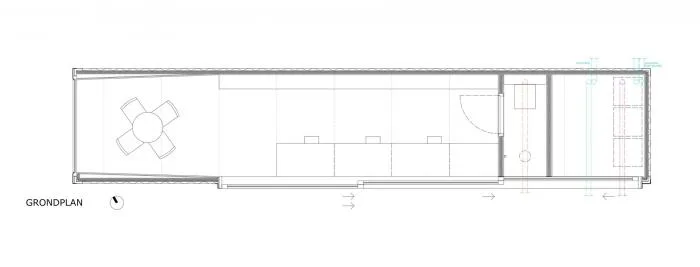
▲ Plan View
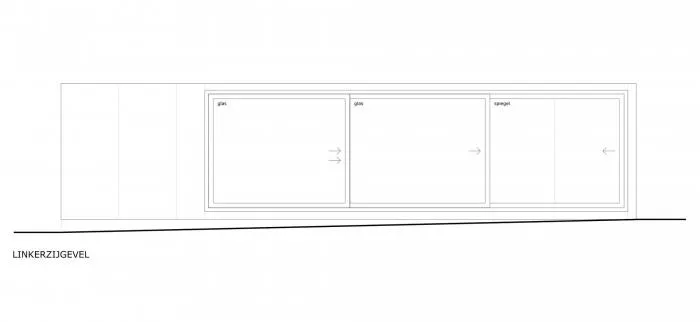
▲ Elevation View
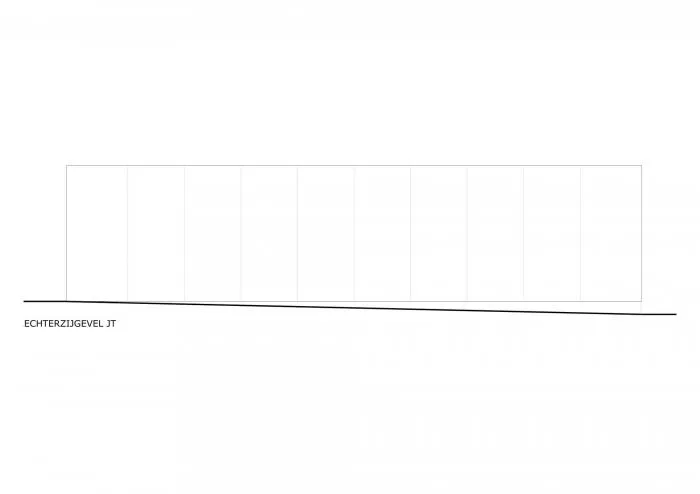
▲ Elevation View
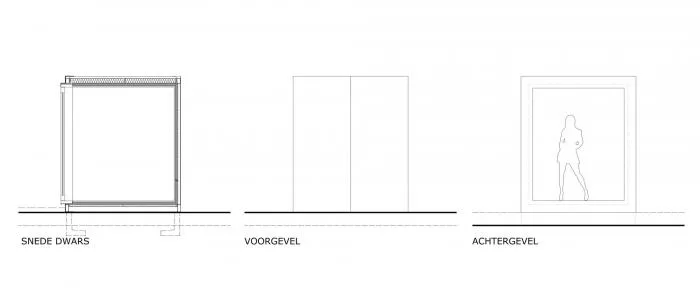
▲ Sectional View
Project Information
Project Type: Office Building
Location: HEUVELLAND, Belgium
Architect: TOOP architect
Area: 36.0 m²
Year Completed: 2019
Photographer: Tim Van De Velde
Manufacturers: Alucobond, Aliplast












Must log in before commenting!
Sign Up