
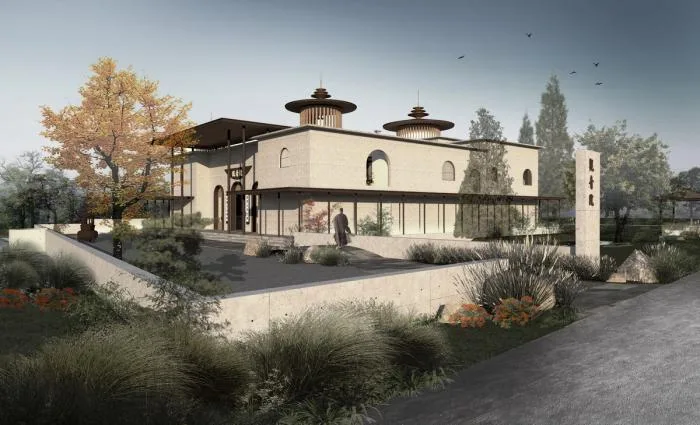
▲ Southeast corner outside the courtyard
Project Background
Religion and spiritual practice are distinct concepts, yet they often intertwine. While personal cultivation requires only a simple shelter to protect from the elements, religion differs significantly. Regardless of the faith, religion is a highly socialized collective activity that demands physical spaces serving practical functions, commemorative purposes, spiritual guidance, and the facilitation of various rituals and training. Sacred texts, scriptures, and the actions of religious figures profoundly influence believers, closely followed by the impact of religious art — including architectural spaces.
Each era and region has developed its own language for religious communication. For instance, Buddhism was transmitted from ancient Sanskrit and Pali into Classical Chinese, then into vernacular languages, and more recently through printed books and the Internet, from Mandarin to local dialects. In China, the transmission of sacred texts is largely seamless. However, the modernization of architectural spaces has not kept pace with these linguistic evolutions.
In recent decades, many temples and Taoist shrines in China have been newly constructed, almost all replicating antique styles. This approach, however, resembles the art of copying renowned paintings and calligraphy—it serves as a method of preserving tradition but should not be the ultimate goal. Elevating replication as the highest pursuit is immature, as anyone familiar with art understands. Architectural design within Buddhism and Taoism has fallen into a fundamentalist trap. In 2013, a Taoist practitioner in Chengdu lamented that newly built “ancient-style” buildings were like photocopies—monotonous and lifeless. It seems temple construction is limited to imitation of the past. For over a decade, designers have advocated broadening perspectives within Buddhist and Taoist communities through architectural innovation.
Origin of Concept
The project’s design concept was inspired by the adjacent Sanjie Village, evoking several interpretations of “three realms” associated with the name:
- Buddhist teaching of the three realms: the realm of desire, the realm of form, and the formless realm—stages on the path of practice, but not the final goal;
- The three realms of reality: life, religion, and culture. Everyone, believer or not, experiences these realms;
- Three geographical boundaries: Hanjiang, Yizheng, and Jiangdu. The site lies at the intersection of these areas under Yangzhou’s jurisdiction, influencing local psychology;
- The Three Principles of Architecture: Utility, Strength, and Beauty, as defined by ancient Roman architect Vitruvius—fundamental to all architectural design.
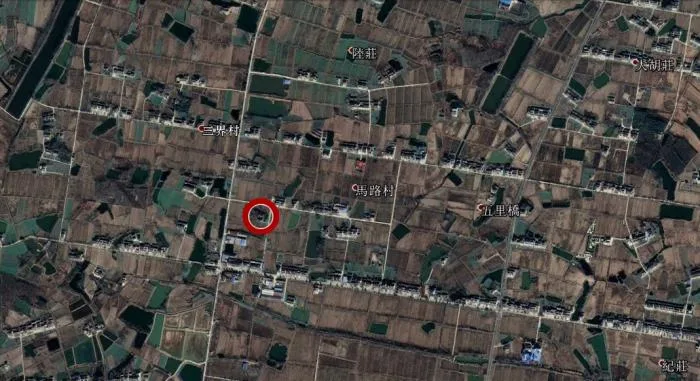
▲ Location Plan

▲ Vertical and horizontal base characteristic elements
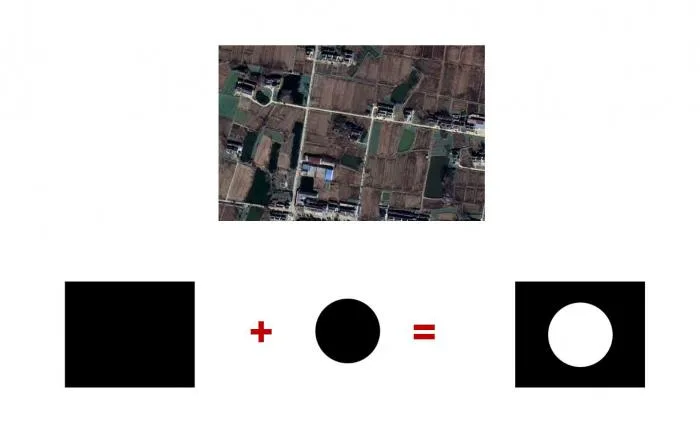
▲ Characteristics of Square and Circular Bases
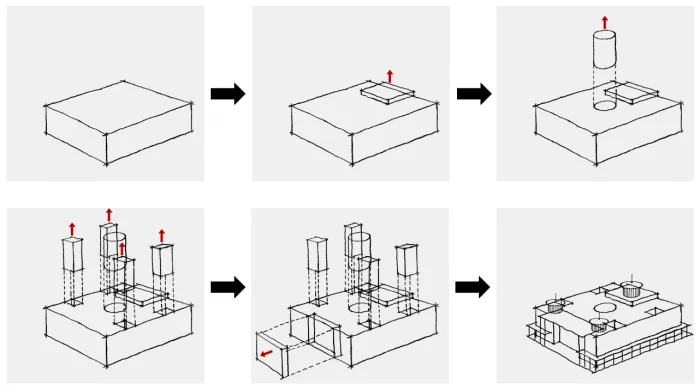
▲ Space block generation
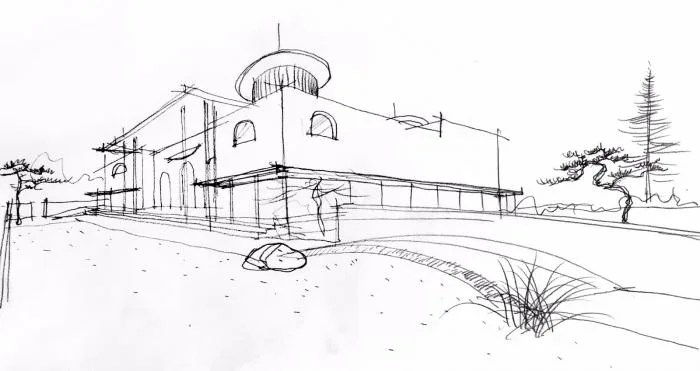
▲ Hand-drawn sketch
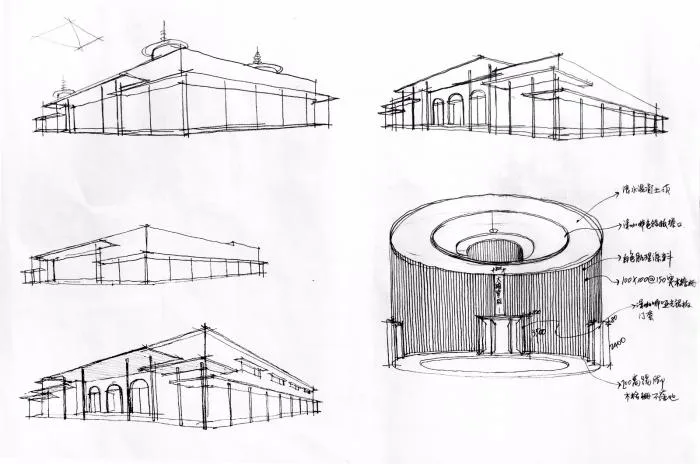
▲ Hand-drawn sketch
Space Description
Legend holds that the original temple was established during the Ming Dynasty, situated amidst typical plains and village roads of the Yangtze River Delta. The current structure, built 20-30 years ago, has become unsafe and requires demolition and reconstruction.
Surrounded by two ponds on the east, south, and north sides, the temple connects with its environment in an ethereal manner. Due to limited land and a compact layout, the design emphasizes this constraint as a feature. Unlike traditional Chinese temples, which typically build houses around courtyards, this design incorporates courtyards within the building itself to ensure adequate lighting and ventilation.
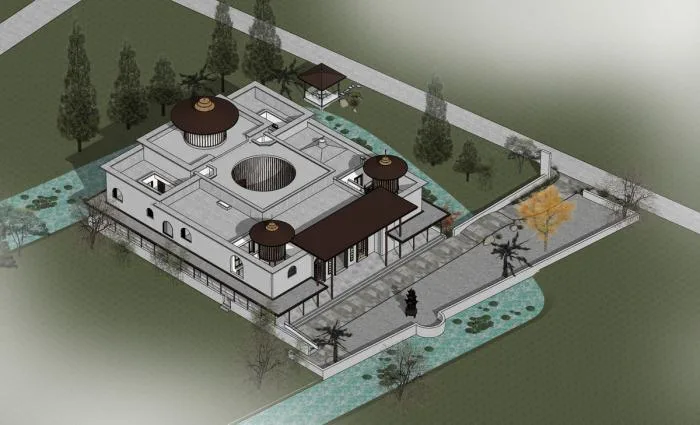
▲ Overall bird’s-eye view
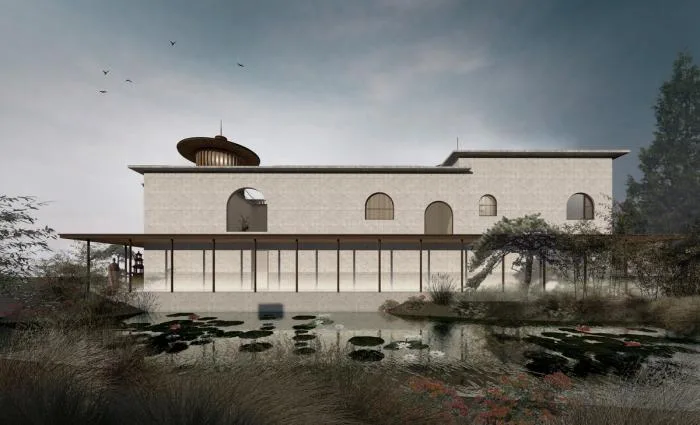
▲ View of the east facade through the pond
The structure is organized along three axes. Following the layout of small traditional temples, the Heavenly King Hall also serves as the mountain gate. Inside lies a circular courtyard, evoking contemplation of “form is emptiness, emptiness is form” (from the Heart Sutra) and the vastness of the universe, as expressed in Wang Xizhi’s “Preface to the Orchid Pavilion Collection.” Flanking the central axis are two east-west inner corridors that connect various functional spaces and four courtyards, reflecting the architectural characteristics of Yangzhou’s traditional buildings.
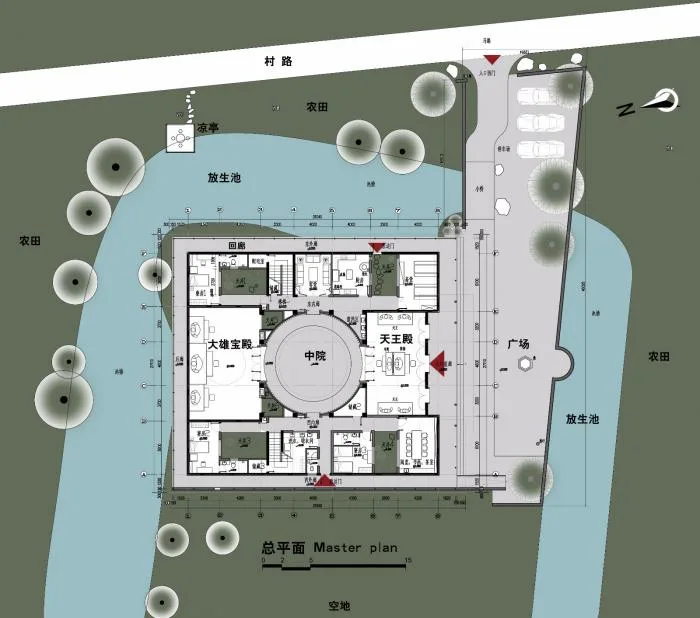
▲ General layout
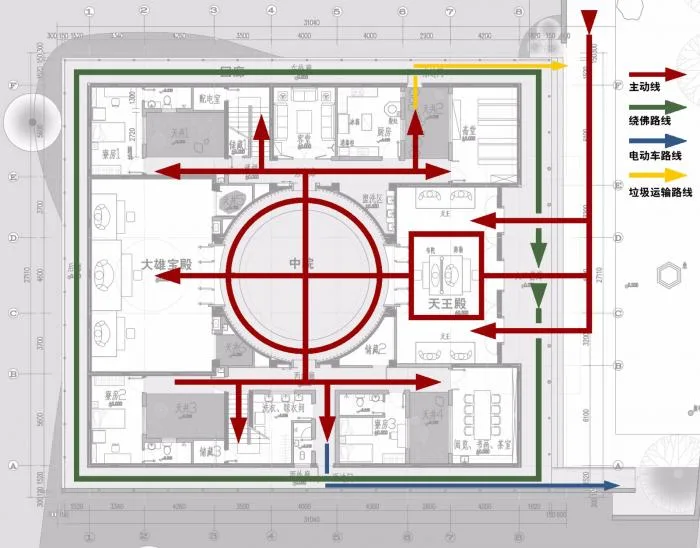
▲ Flow Line Plan
An outer corridor encircles the temple, serving as a circumambulation path for Buddhist rituals and meditation. This walkway offers panoramic views of the surrounding ponds, farmland, and nearby villages. The water and garden vistas soften the solid, windowless exterior walls of the first floor, enhancing the temple’s welcoming atmosphere. The corridor’s horizontal roofline echoes the expansive plains around it, while also recalling the elegant pavilions and towers of traditional Jiangnan gardens.
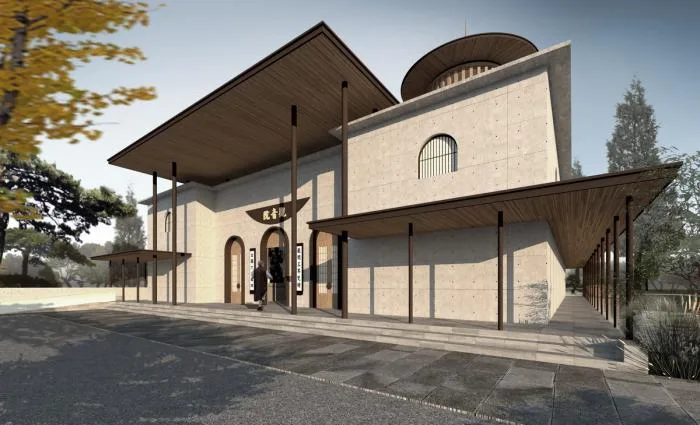
▲ Southeast corner of the building
The main structure is predominantly square, crowned by the Shakya Mani Hall on top and a circular attic on the Bell and Drum Tower, blending traditional Chinese elements with a futuristic design reminiscent of a “flying saucer.” Once completed, the temple’s bell and drum sounds will revive traditional rural memories.
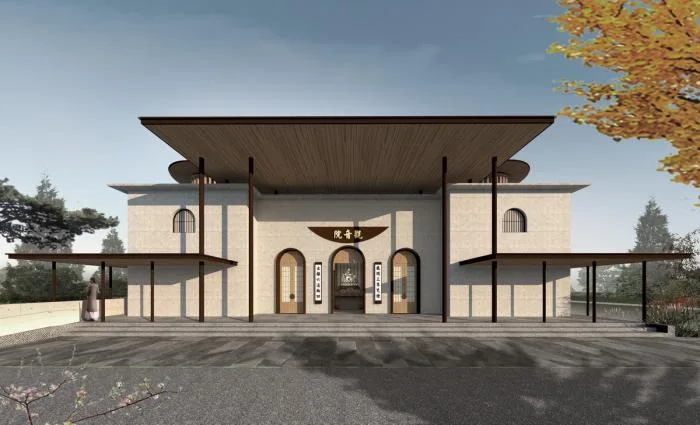
▲ Building facade
The building’s main structure, materials, and color palette consist primarily of plain concrete, accented with dark coffee-colored steel elements. This palette echoes the traditional colors of ancient Yangzhou architecture, while the use of natural wood tones inside creates a warm and inviting atmosphere.
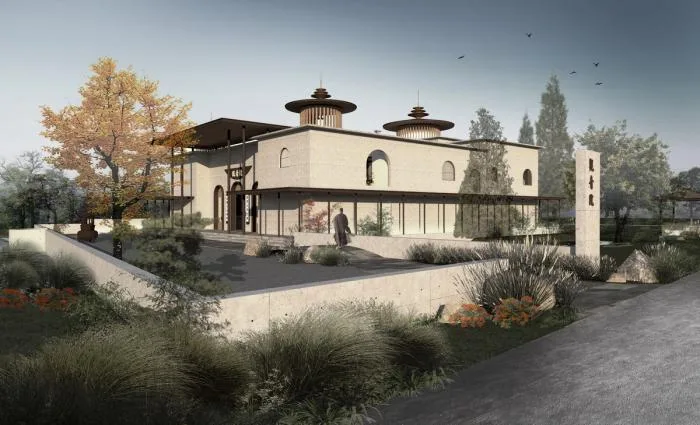
▲ Southeast corner outside the courtyard
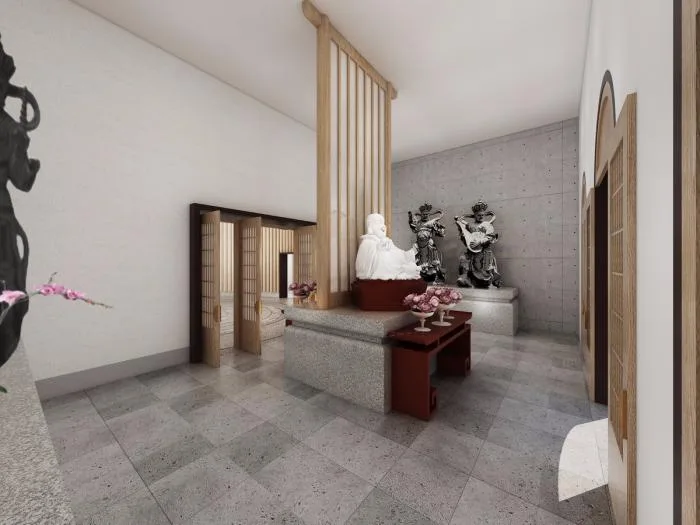
▲ Entrance to the Hall of Heavenly Kings
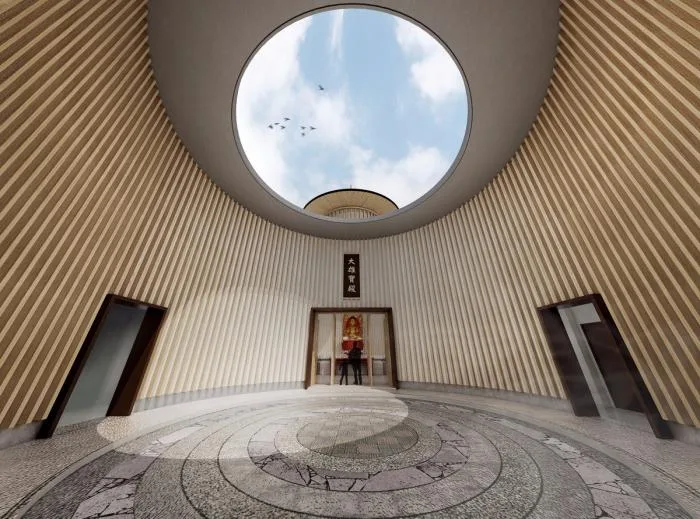
▲ Central Axis Circular Courtyard
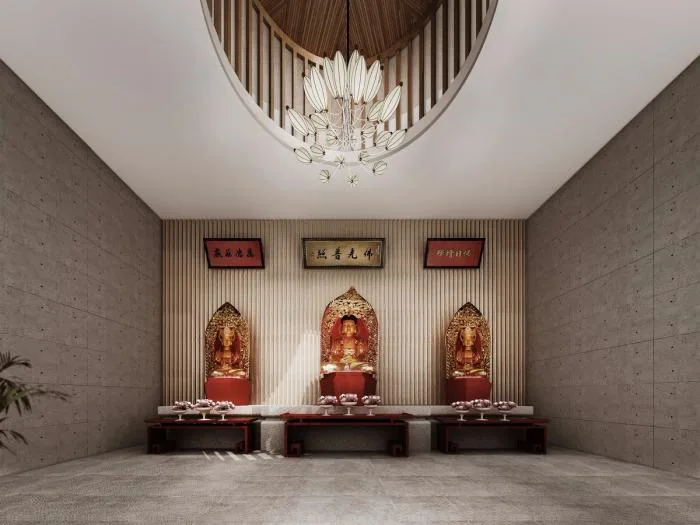
▲ Interior of the Shakya Mani Hall
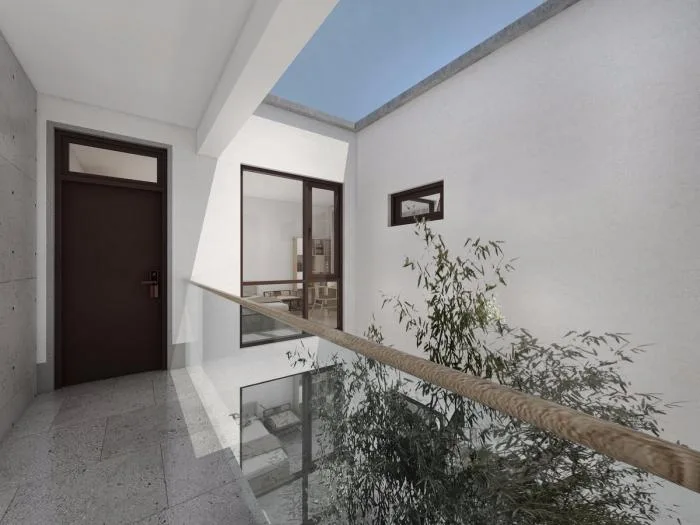
▲ Inner courtyard
The building’s form resembles an ancient wooden boat, symbolizing the Buddhist metaphor of crossing the sea of suffering. The arched windows on the second-floor exterior wall recall the façades of ancient Buddhist grottoes.
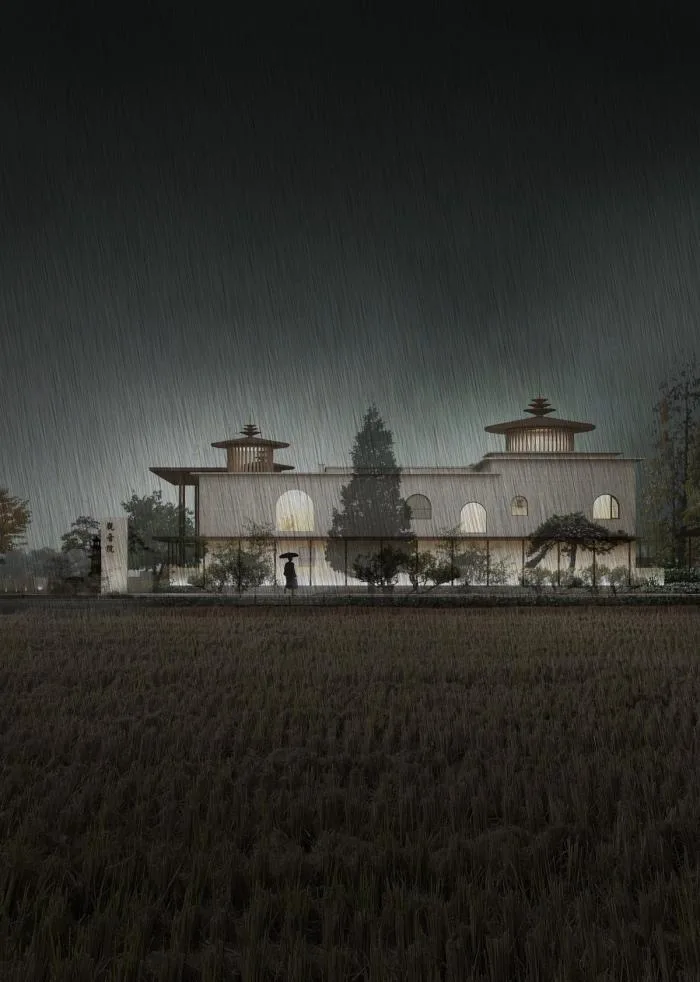
▲ View from the distant farmland
Conclusion
Building temples is not the ultimate goal of Buddhism; it represents a vast topic beyond a single structure. As the designer inscribed in the temple’s gate couplet: “Hearing the bell of the Three Realms, departing from the cycle of the Six Realms.” Architecture, as the vessel for religion and practice, remains merely a shell.
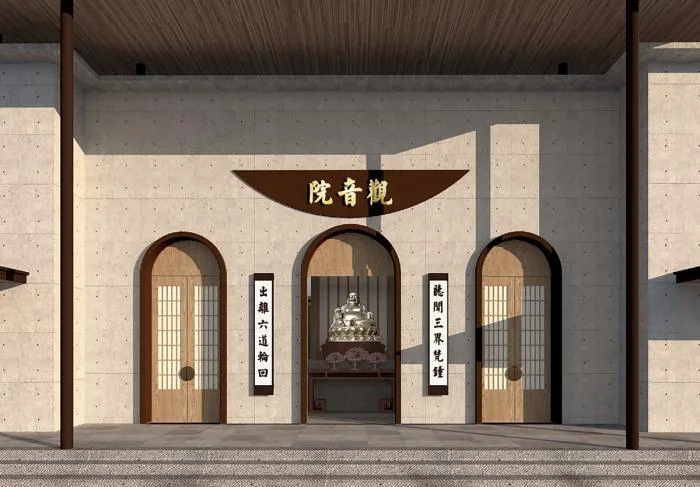
▲ Building exterior
Project Drawings
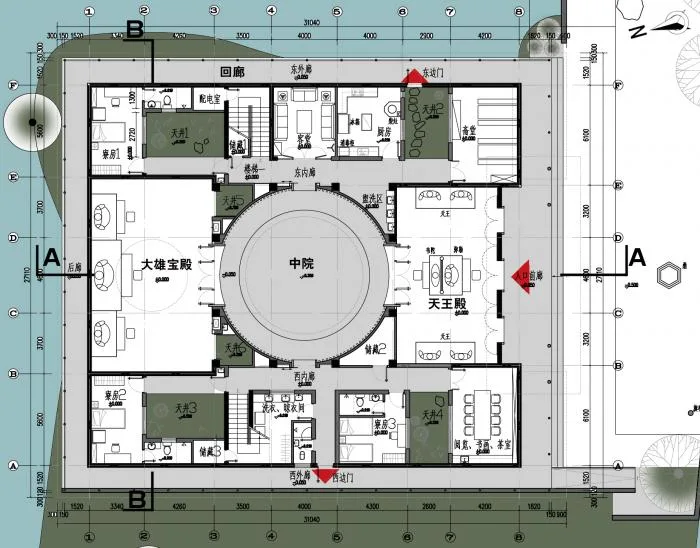
▲ First floor plan
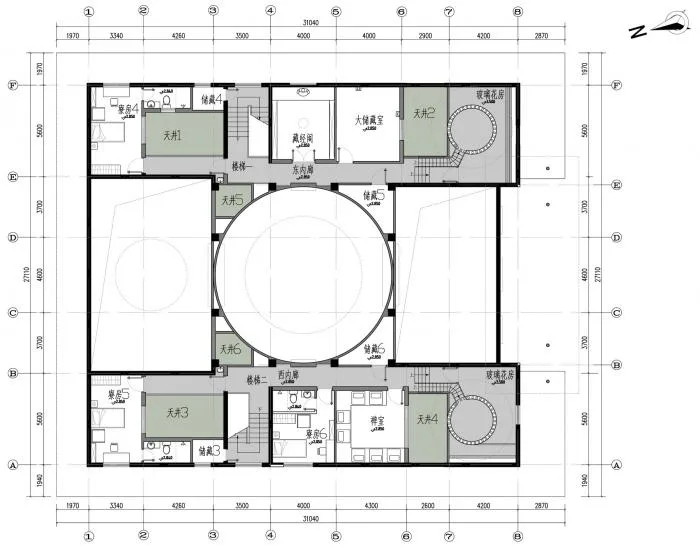
▲ Second floor plan
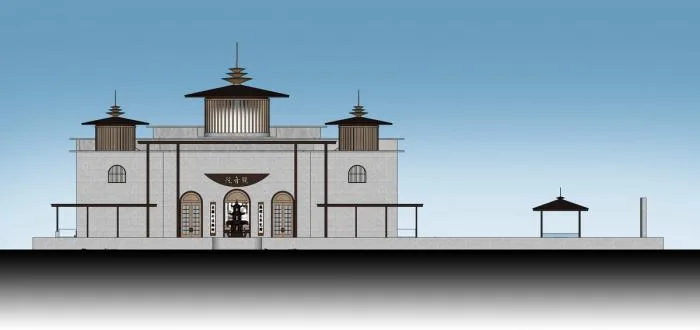
▲ South facade
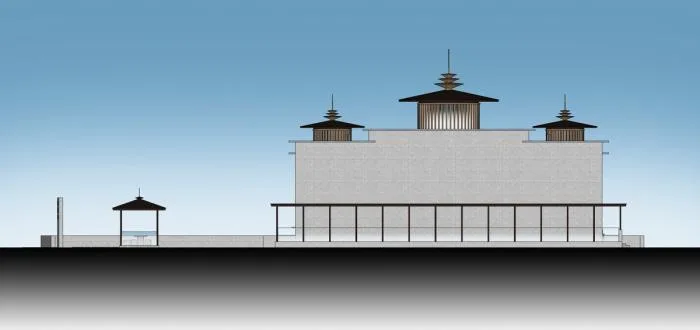
▲ North facade
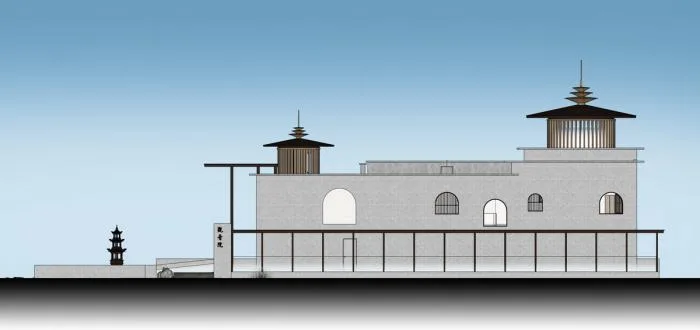
▲ East facade
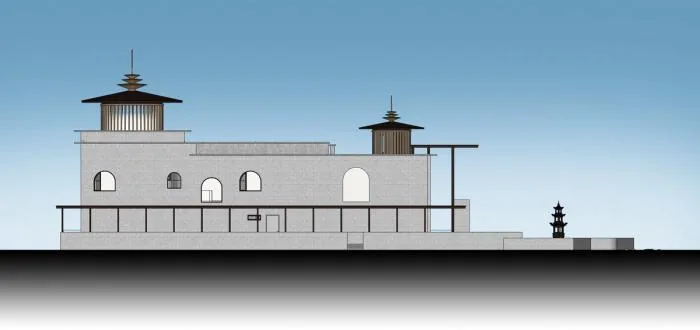
▲ West facade
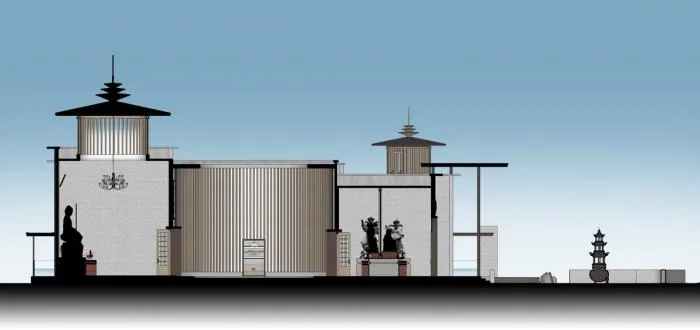
▲ A-A section
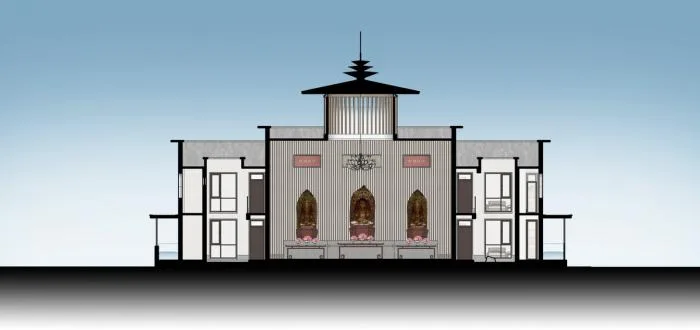
▲ B-B section
Project Information
Project Name: Architectural, Interior, and Landscape Design of Yangzhou Guanyin Courtyard
Location: Malu Village, Gongdao Town, Hanjiang District, Yangzhou City, Jiangsu Province
Land Area: 1,350 square meters (excluding pond area)
Building Area: 853 square meters
Total Construction Area: 1,038 square meters
Scope of Design: Architecture, Interior, Landscape
Structural System: Reinforced concrete with local steel structures
Design Firm: Shanghai Shanxiang Architectural Design Co., Ltd. www.sxarchi.com
Design Director: Wang Shanxiang
Main Materials: Plain concrete, steel, wood, glass, aluminum alloy












Must log in before commenting!
Sign Up