
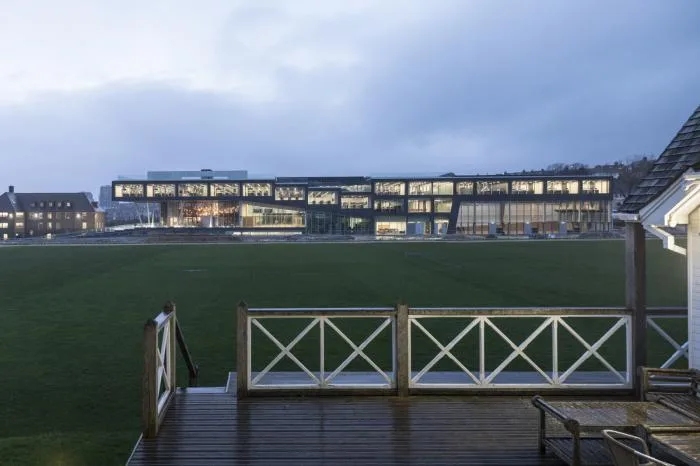
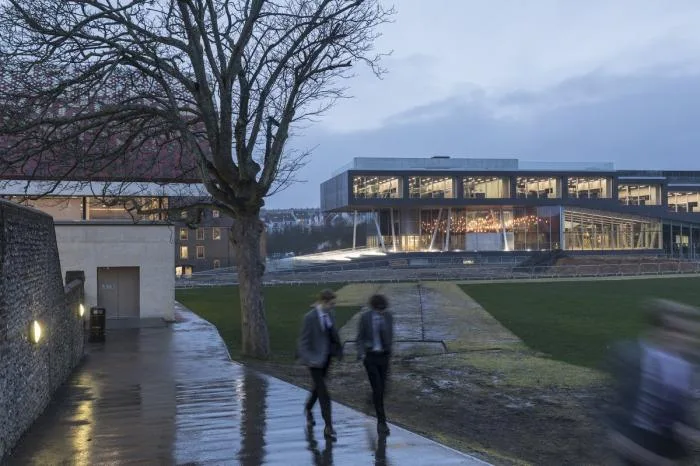
The Science and Sports Department at Brighton College redefines educational architecture by moving away from traditional designs characterized by endless corridors and imposed silence. Instead, it merges the two disciplines into a lively building that encourages students to engage in free and dynamic activities. Recognizing that learning extends beyond the classroom, this design introduces innovative educational concepts, creating spaces that foster interaction and communication.
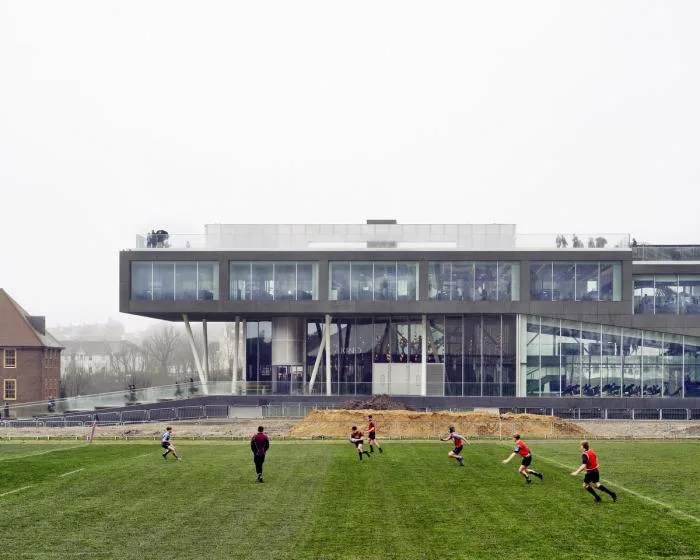
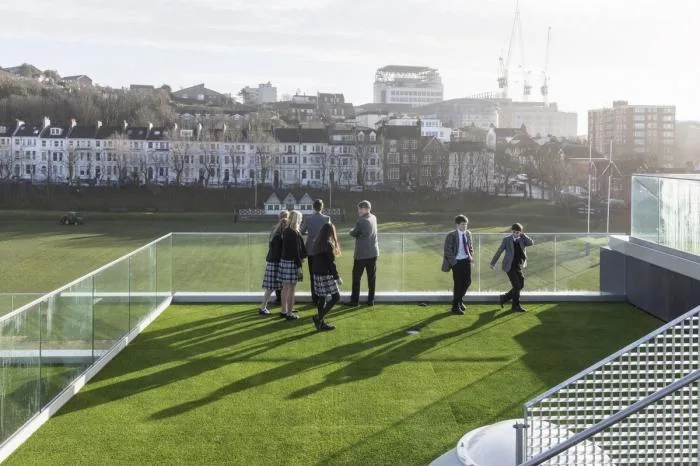
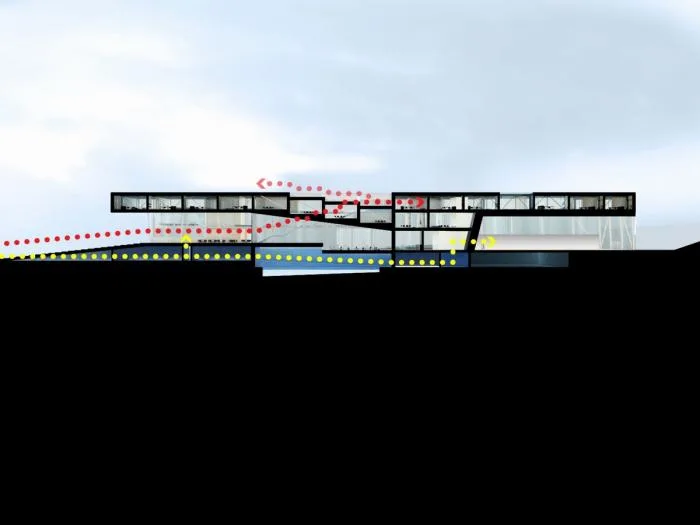
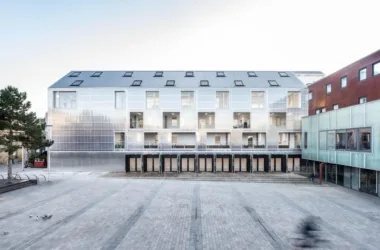
Why separate the Science and Sports Departments? This design integrates them into a single linear structure positioned along the edge of the sports field. The main sports areas and venues are conveniently located on the same level, with the sports hall opening directly onto the field. The Science School houses classrooms, laboratories, and a temperature-controlled facility, all spanning above the sports arena like a framed bridge. The facade draws inspiration from the rhythmic terraces of houses opposite the building, while the roof offers panoramic views of the North Sea.
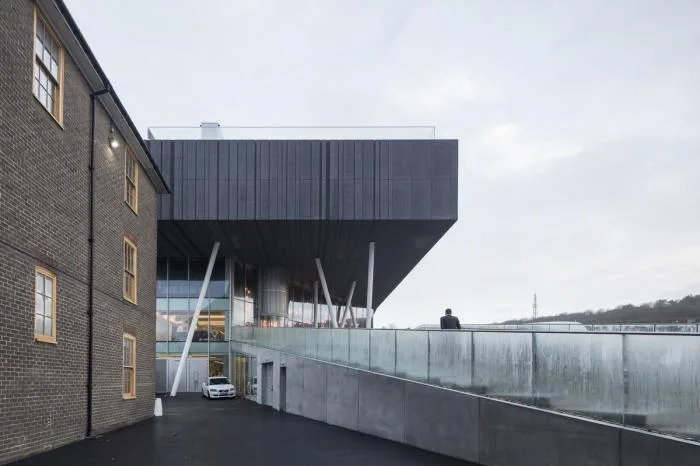
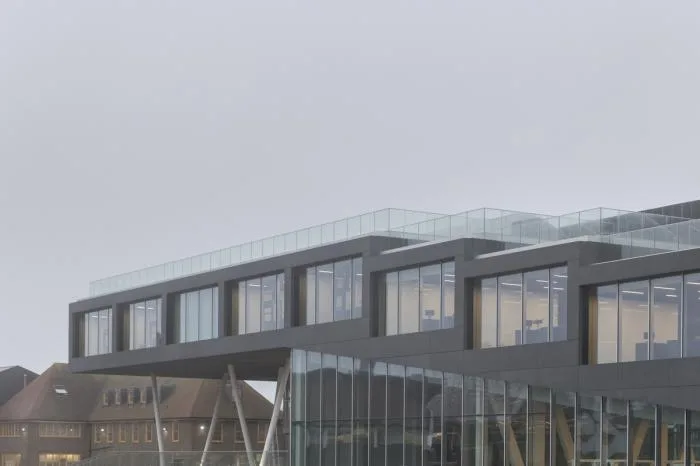
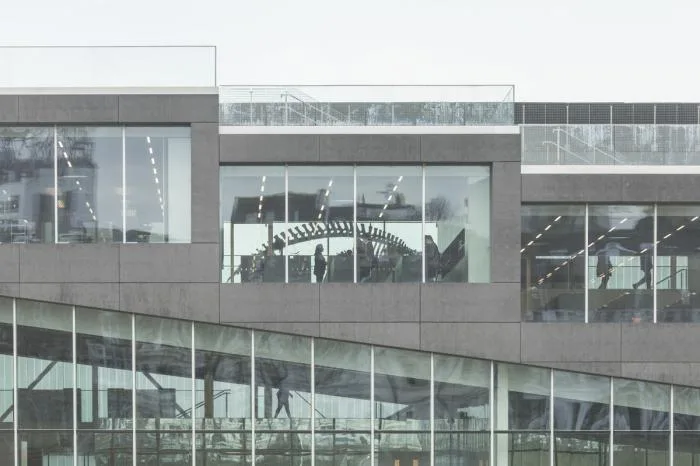
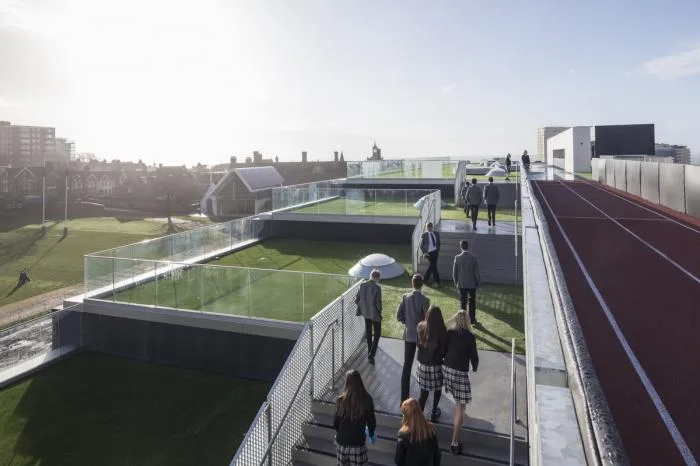
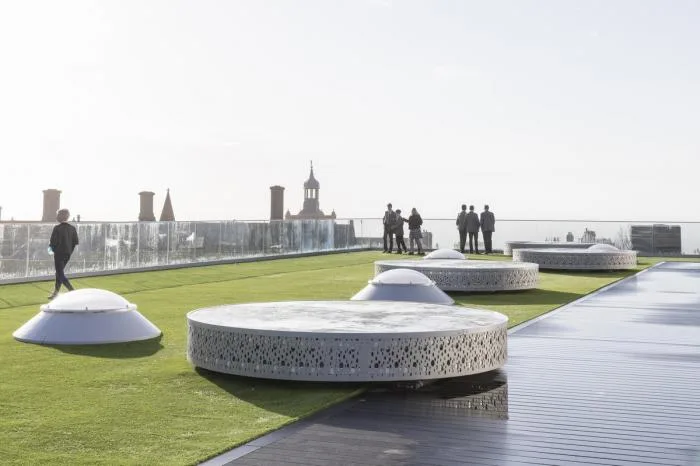
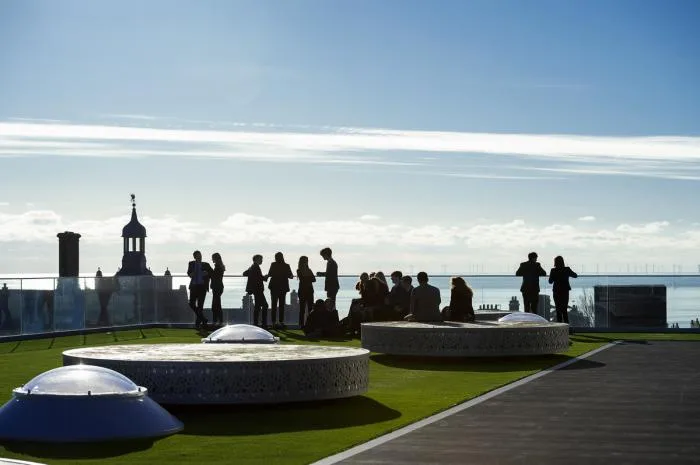
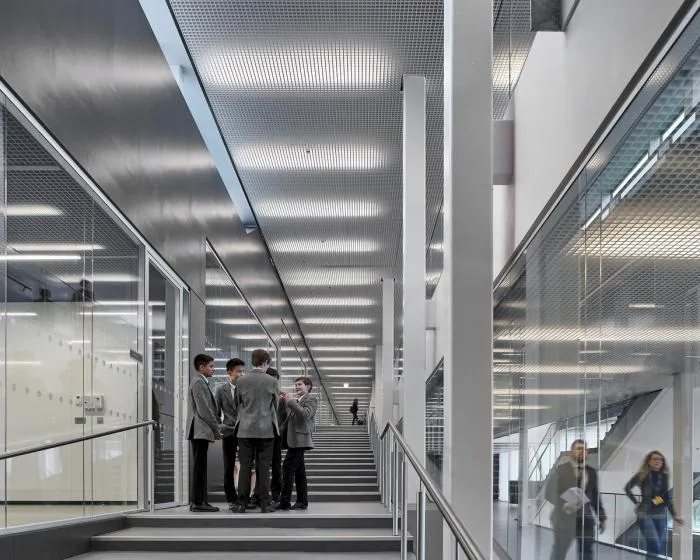
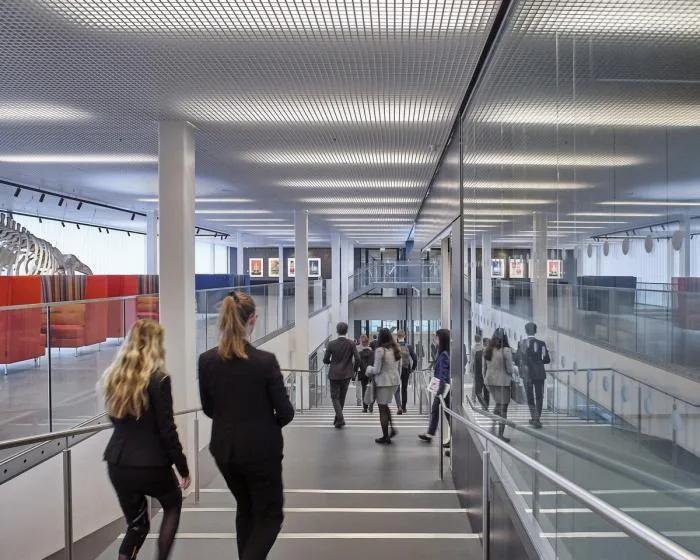
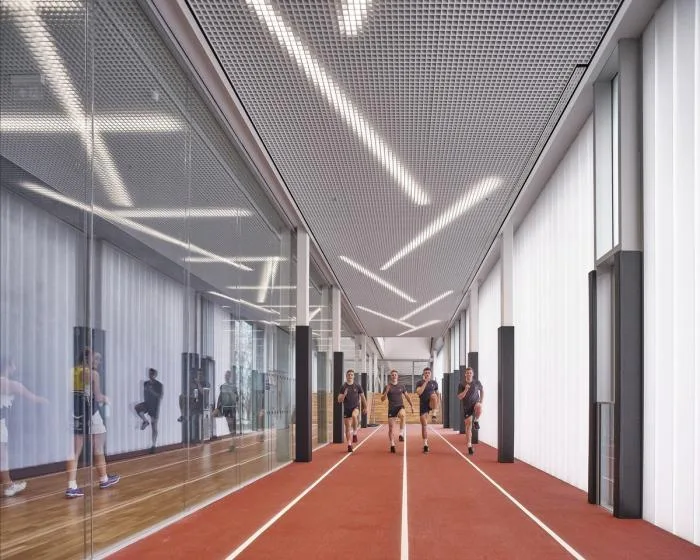
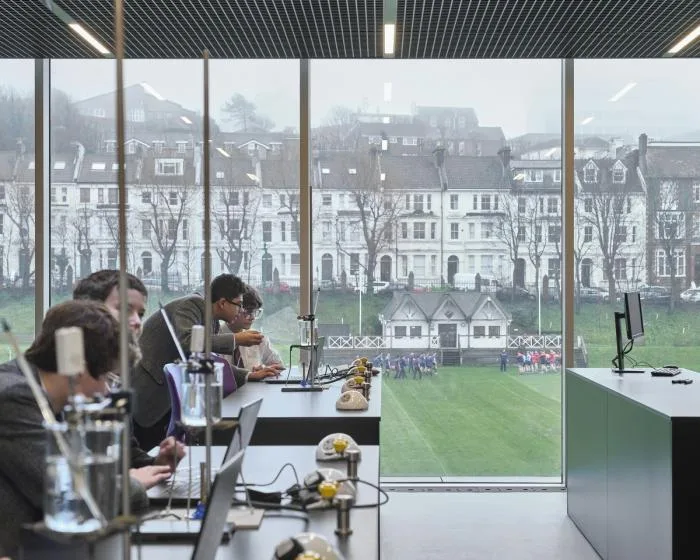
The core design principle is to encourage social interaction among students. Spacious, open areas outside classrooms provide spaces for informal discussions and private study. The varied floor levels, prominent staircase, and glass elements visually connect activities within both colleges, fostering serendipitous encounters between different disciplines. The building is designed to be open and transparent: from the upper floors, one can observe the indoor runway below, classrooms feature full-height French windows, and even the chemistry lab’s fume hood is transparent, allowing passersby to witness experiments in progress.

The grand staircase connecting the Science Academy and the Physical Education School:
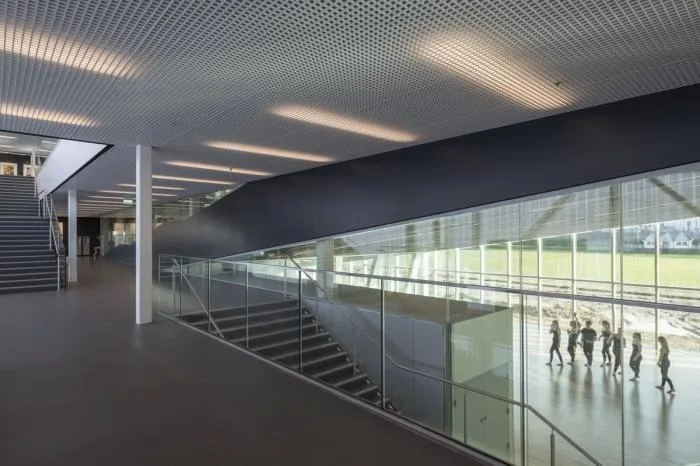
View of the indoor runway from the upper floor:
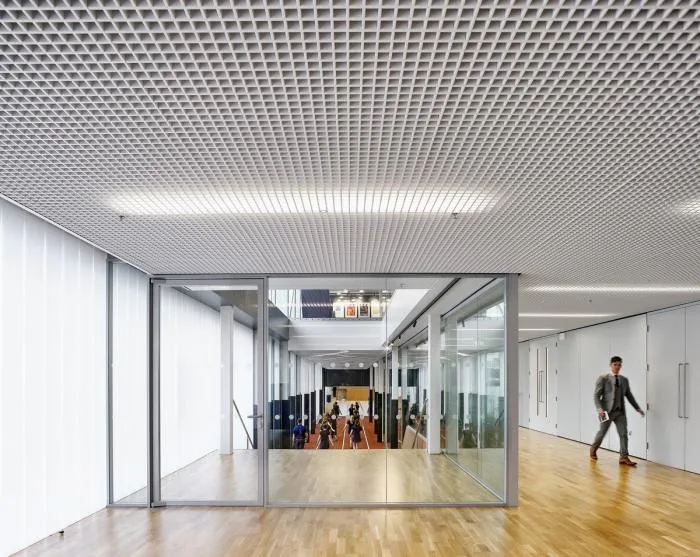
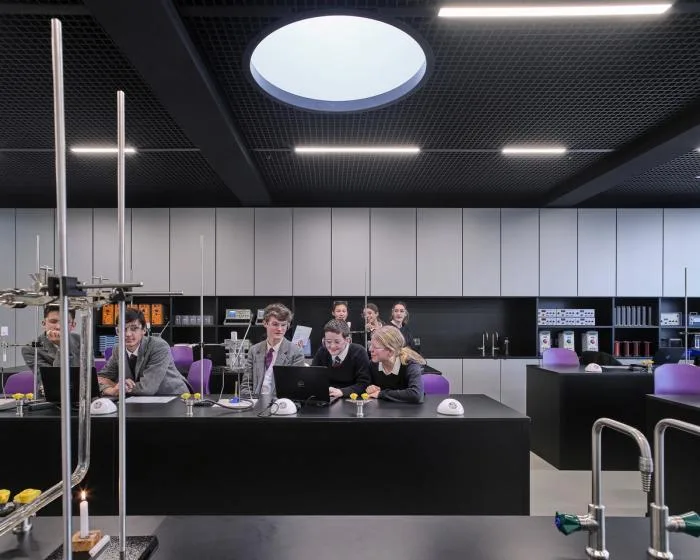
Laboratory:
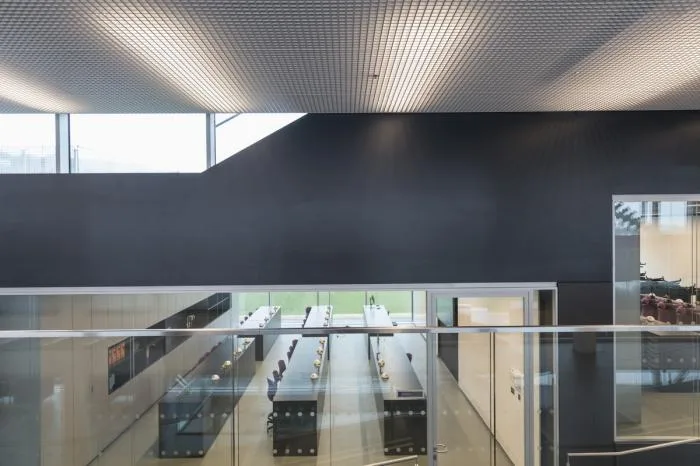
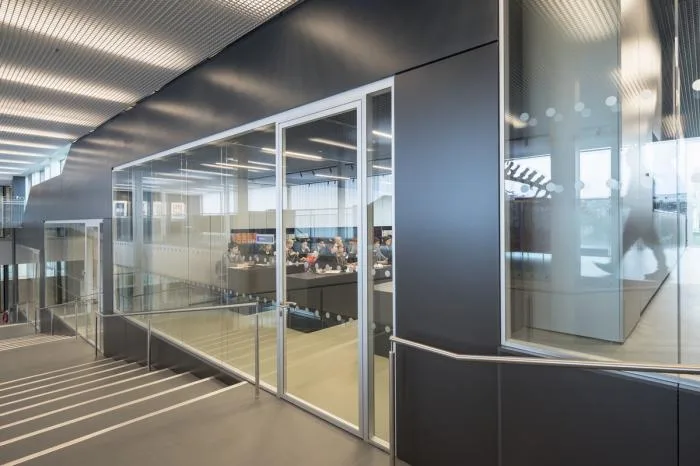
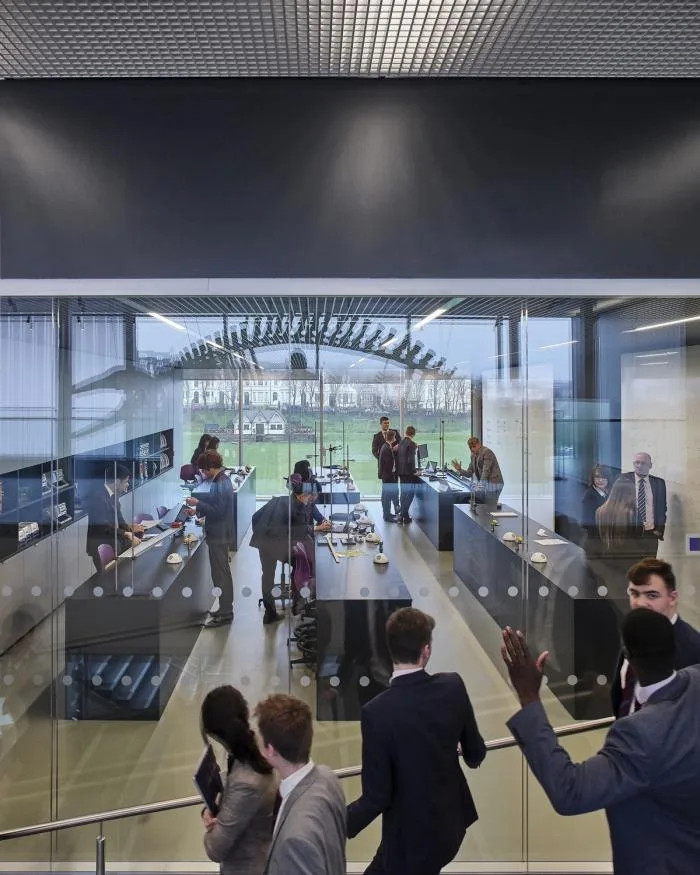
In 2013, Brighton College sought to expand its Science School laboratories and establish cutting-edge sports facilities to nurture students gifted in both academics and athletics. The international architecture firm OMA won the project through a competition. Initially, the sports center and science school were treated as separate projects. After revisions in 2013 and a second competition round in 2014, the plan was approved in 2015, with construction beginning in 2017. The total budget was £36.7 million.
Sports Facilities:
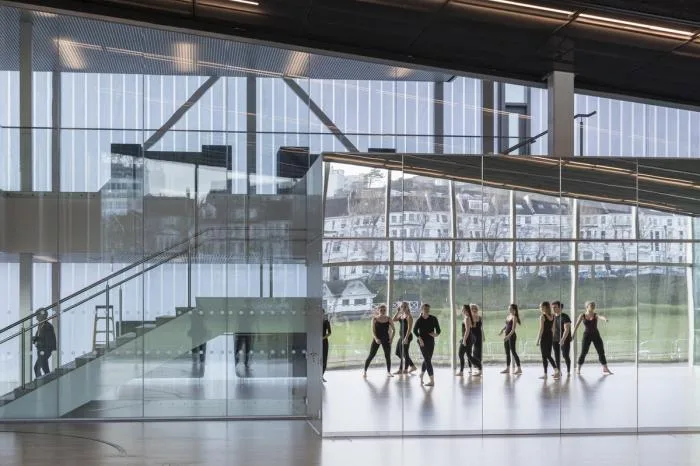
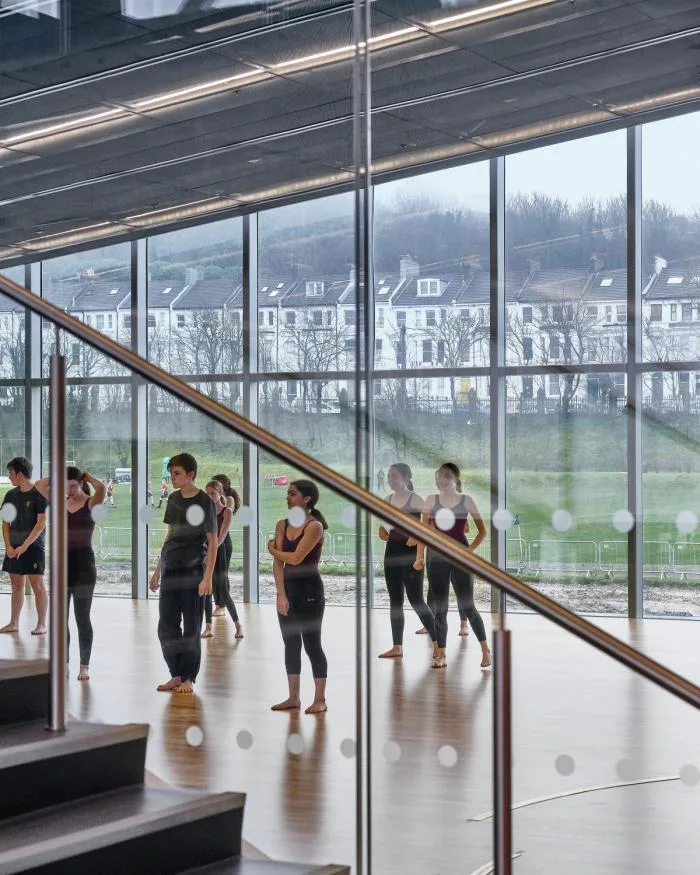
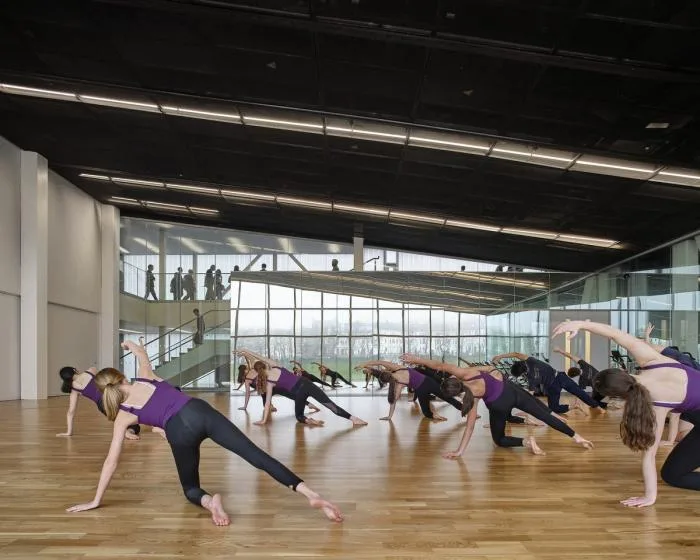
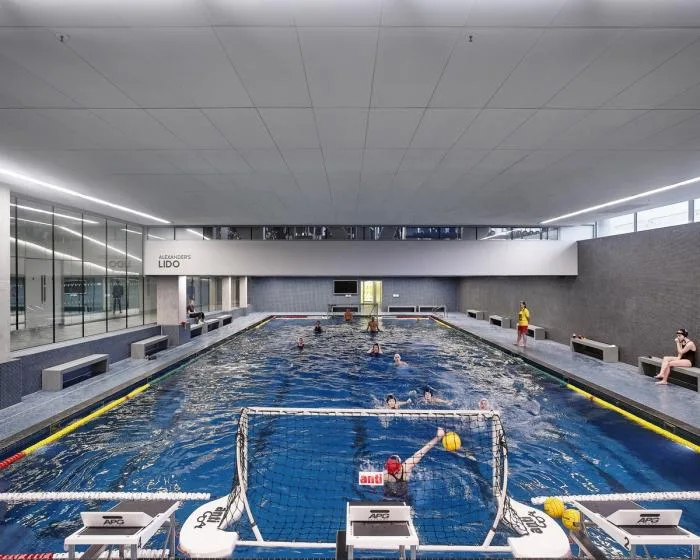
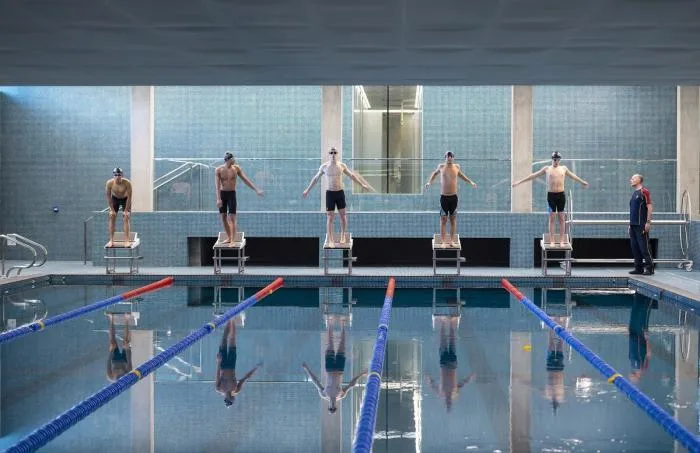
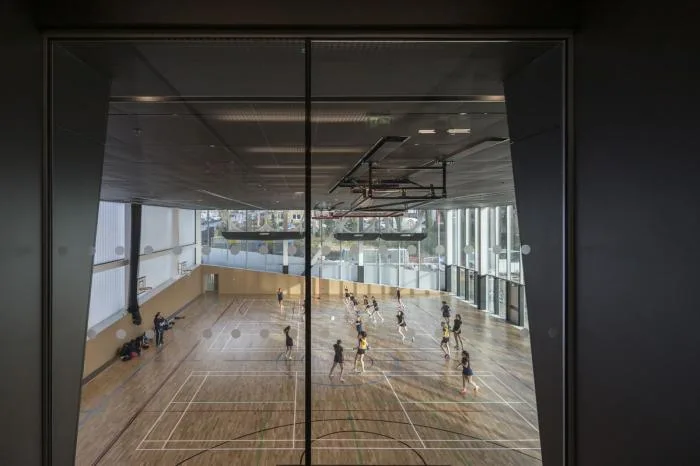
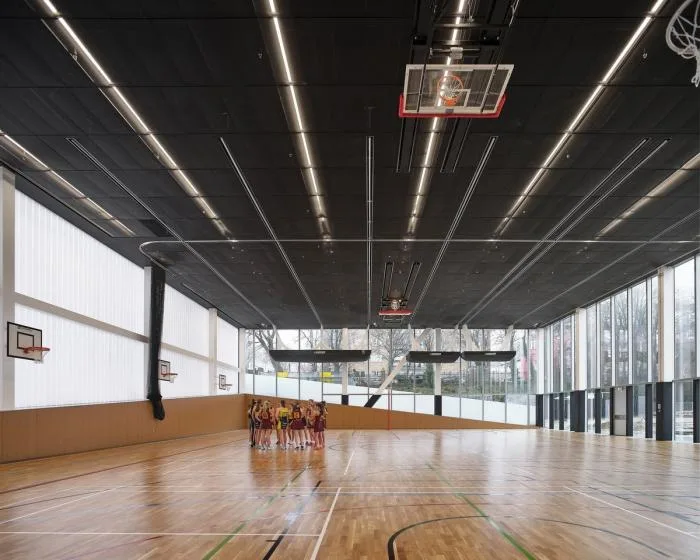
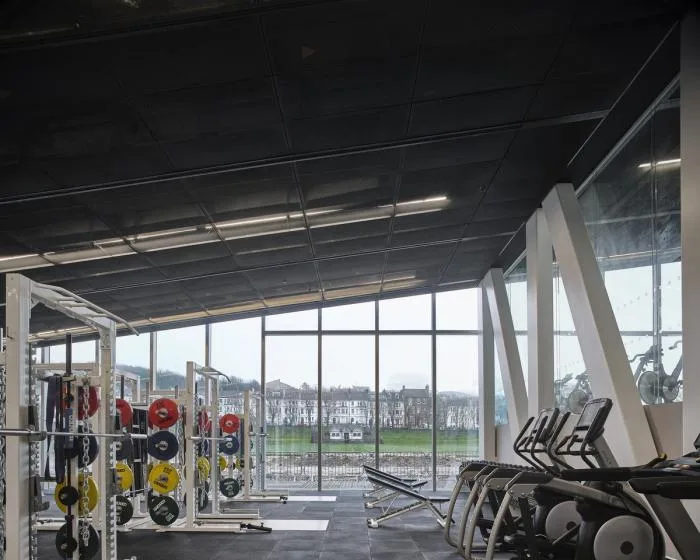
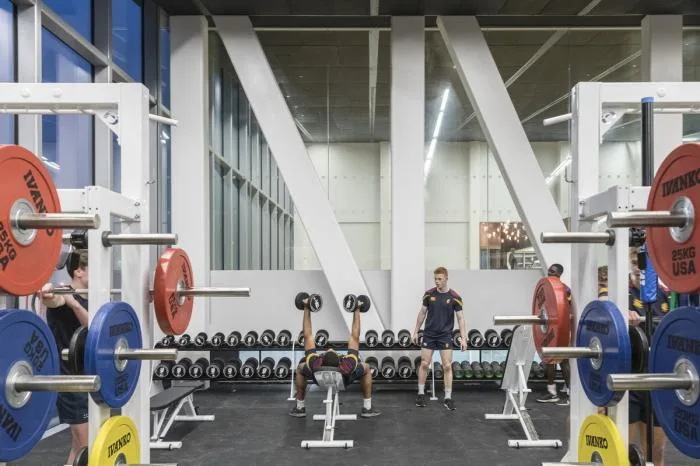
Science Laboratories:
Brighton College, founded in 1845, is a private co-educational boarding school consistently ranked among the UK’s top schools. Its campus is divided into two parts: a historic quadrangle of protected buildings designed by Sir Gilbert Scott and Sir Thomas Jackson in the 19th century, and a modern complex from the 1970s and 1980s, which houses this project.
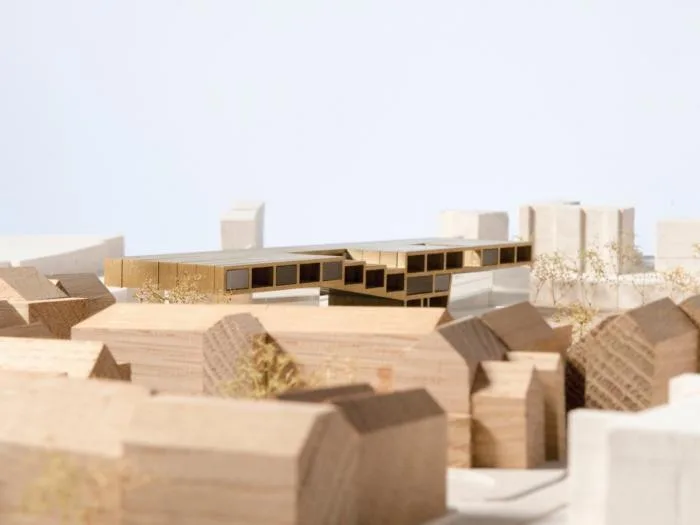
▲ Model
Project Drawings
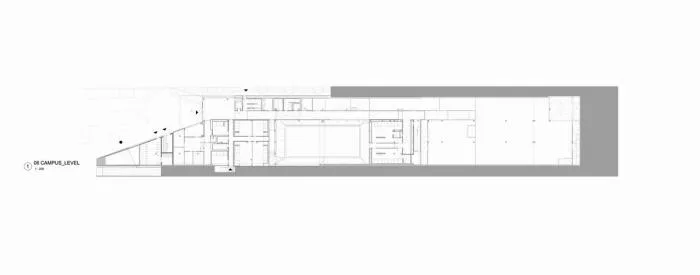
▲ Campus Floor Plan
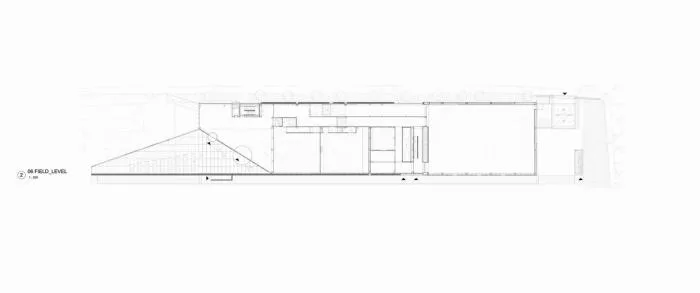
▲ Playground Floor Plan

▲ Second Floor Plan
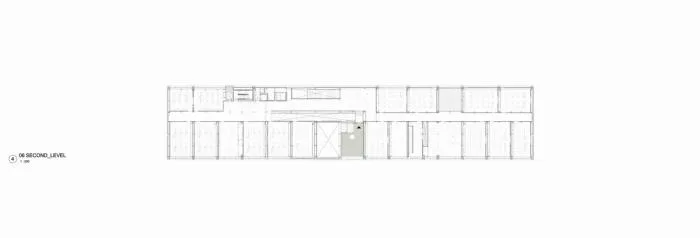
▲ Third Floor Plan

▲ Roof Plan
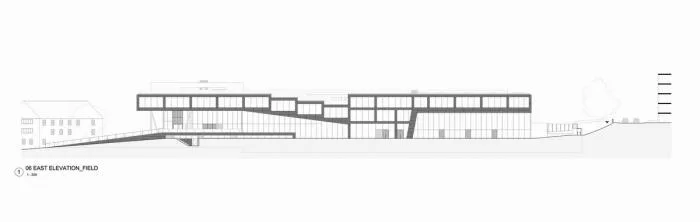
▲ East Elevation View
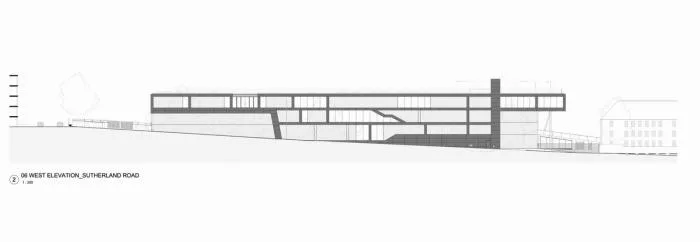
▲ West Elevation View
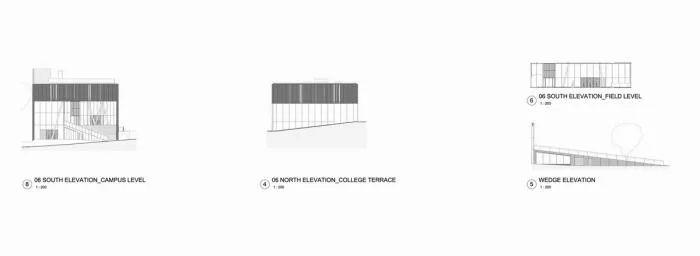
▲ South Elevation, North Elevation, Wedge-Shaped Volume Elevation
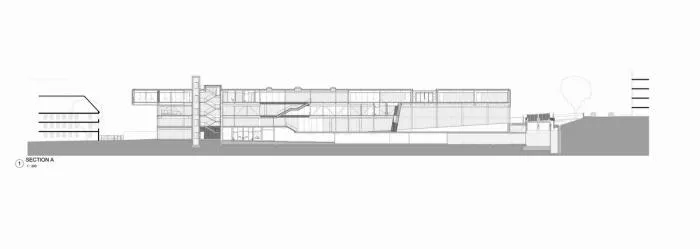
▲ Section A
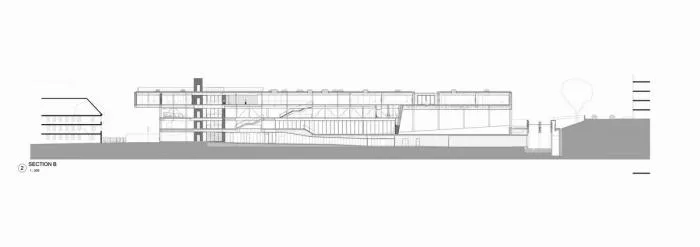
▲ Section B
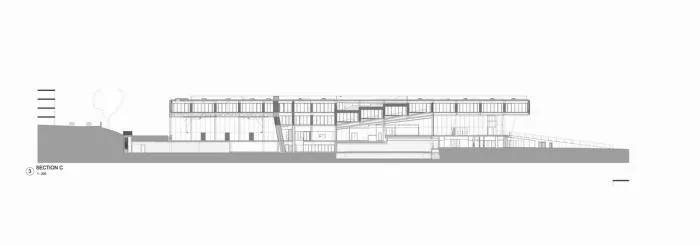
▲ Section C
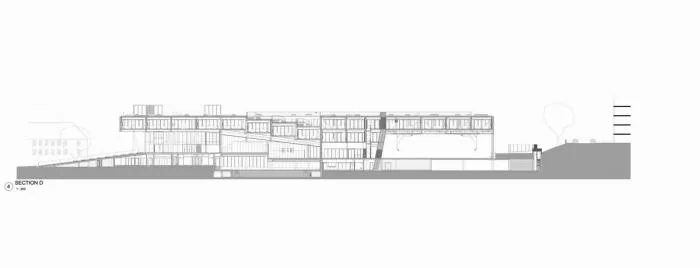
▲ Section D
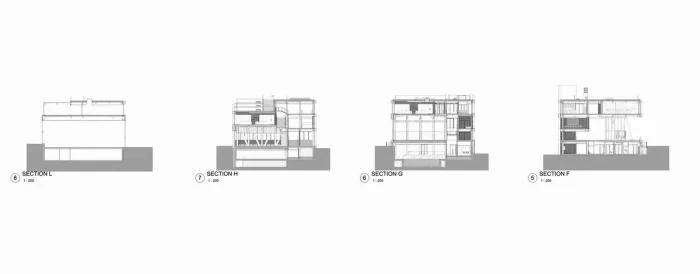
▲ Sectional Drawing L-F
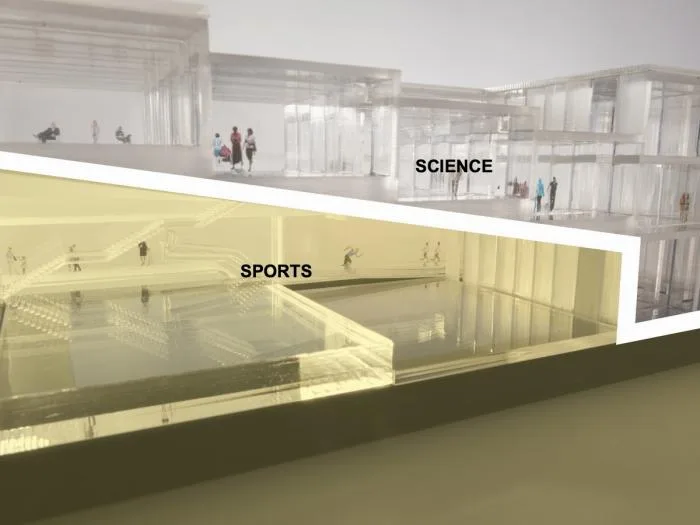
▲ Model
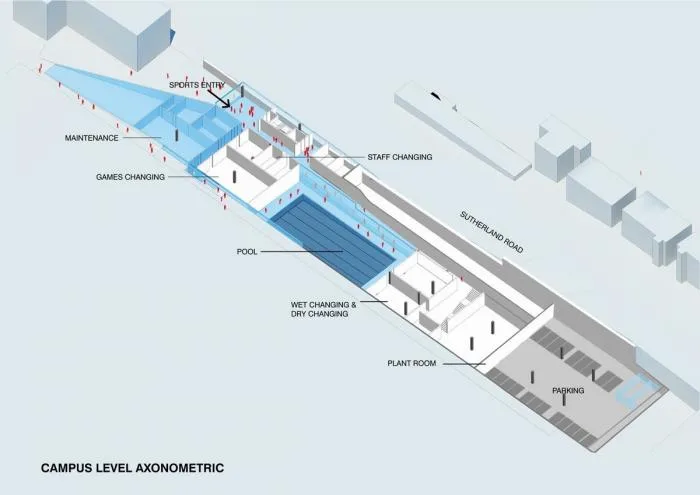
▲ Campus Floor Axonometric
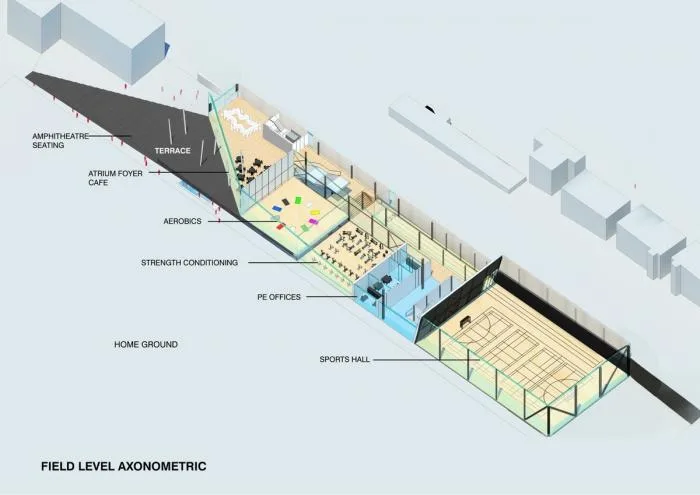
▲ Playground Floor Axonometric
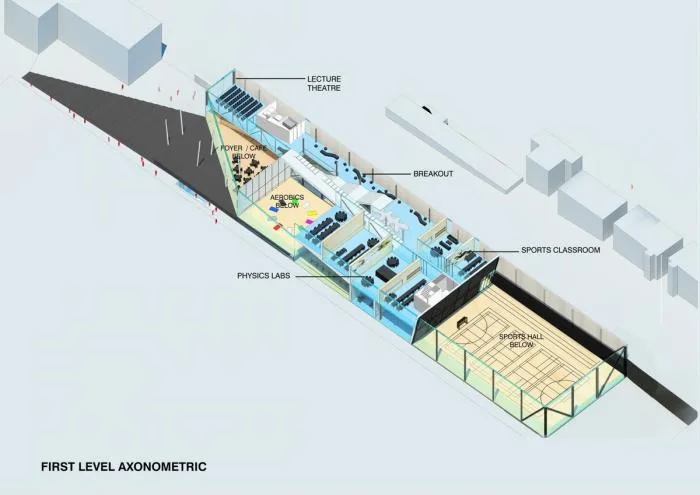
▲ Second Floor Axonometric
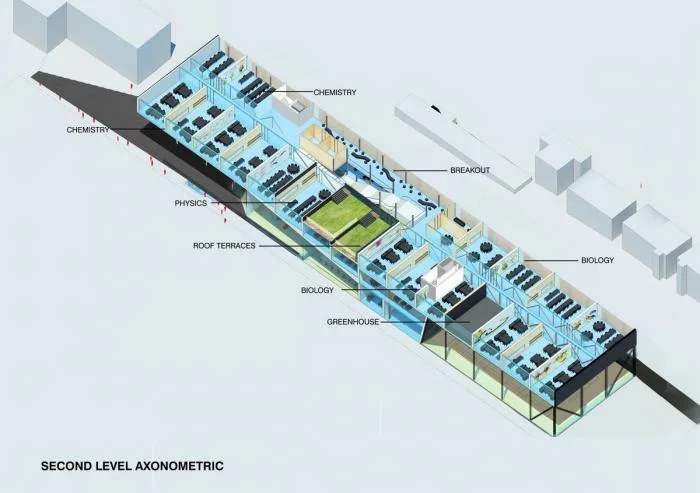
▲ Third Floor Axonometric
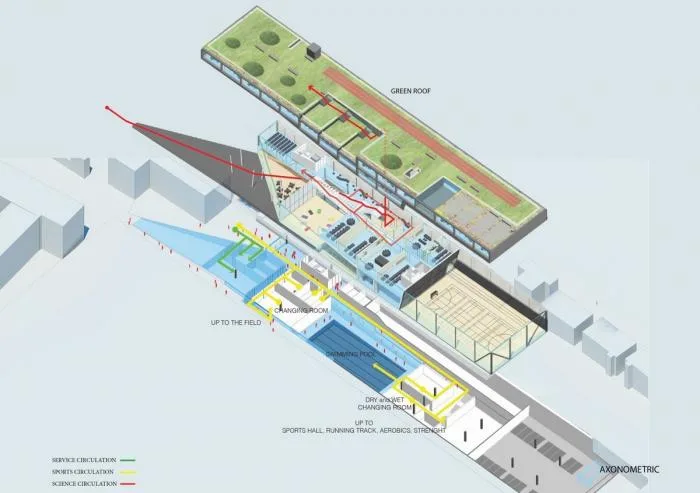
▲ Campus Axonometric
Project Information
Project Type: High School
Location: Brighton, UK
Architectural Firm: OMA
Area: 7,425 m²
Year: 2020
Photographers: Killian O. Sullivan, Laurian Ghinitoiu, Liz Finlayson/Vincent
Manufacturers: Hunter Douglas, Creagh Concrete, Schuco, Forbo
Partner in Charge: Ellen van Loon
Project Manager: Carol Patterson
Competition Team: Ellen van Loon, Rem Koolhaas, Carol Patterson, Gabriela Bandeira, Jan Barta, Marlies Boterman, Matthew Davis, Emile Estourgie, Alain Fouraux, Mindaugas Glodenis, Airat Khusnutdinov, Can Liu, Hans Larsson, Nikki Mulder, Edward Nicholson, Betty Ng, Francesca Pagliaro, Tom Shadbolt, Liheng Zhang, Hongchuan Zhao, Kees van Casteren, Daniel Gonzales, Leonardos Katsaros, Francesco Moncada, Martin Murrenhoff, Vitor Oliveira, Pawel Panfiluk, Jad Semaan, Timur Shabaev, Jonathan Telkamp
Scheme Design: Carol Patterson, Marina Cogliani, Cristina Marin de Juan, Dinka Beglerbegovic
Design Development: Carol Patterson, Marina Cogliani, Michalis Hadjistillis, Mario Rodriguez
Construction: Carol Patterson, Isabel da Silva, Marina Cogliani, Tom Pailing, Magdalena Stanescu
Service Engineering: Skelley and Couch
Structural Engineering: Fluid Engineering
Landscape Design: Bradley Hole Schoenaich
Acoustic Design: Ramboll
Fire Engineering: The Fire Surgery
Sustainability Design: Eight Associates
Contractor: McLaren
Employer Representative: Gardiner & Theobald














Must log in before commenting!
Sign Up