
Wupu City, located in the northern part of Ibaraki Prefecture, is renowned for its thriving fishing industry. The renowned Japanese artist Tenxin Okakura was captivated by the scenic coastline here and chose to make it his lifelong residence. Among the historical landmarks are the “Guanlan Pavilion,” a hexagonal hall designed by Tenxin, and the Tenxin Memorial Art Museum. The current homeowner is a fisherman whose ancestors were sailors working near the celestial center. It is said that Tenxin once said, “Fishermen must plant trees on the mountain.” This philosophy inspired a project where fishermen aimed to fully utilize forest land in designing the residence.
Okakura Tenshin, also known as Okakura Kenzo, was a distinguished Japanese scholar who significantly contributed to the development of Japanese art. Internationally, he is best remembered as the author of The Classic of Tea. The Hexagonal Hall is a six-sided wooden resting structure overlooking the small town.
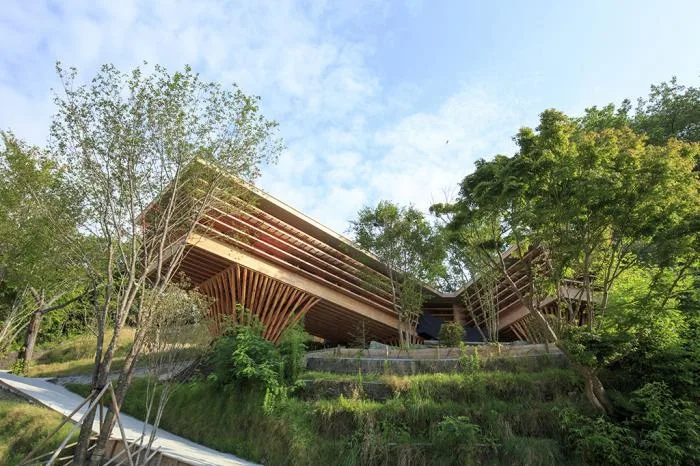
Given the steep, south-facing slope of the site, careful planning was essential. Architects adhered to a principle of preserving the existing landscape, avoiding unnecessary land development, and protecting trees whenever possible. The hillside was thoroughly surveyed and modeled, creating a series of flat surfaces connected seamlessly. This process transformed points into lines, lines into surfaces, and surfaces into a living space perfectly suited to the environment. The residence’s floor plan adopts a “V” shape, with two wings designed to accommodate different living spaces, making optimal use of the site.
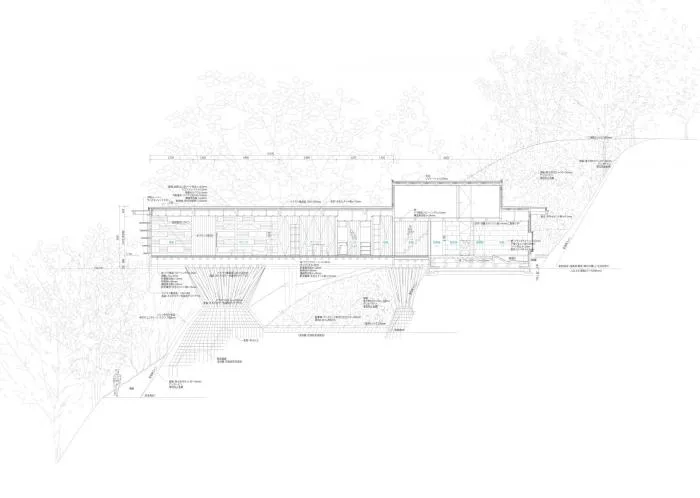
▲ Elevation view
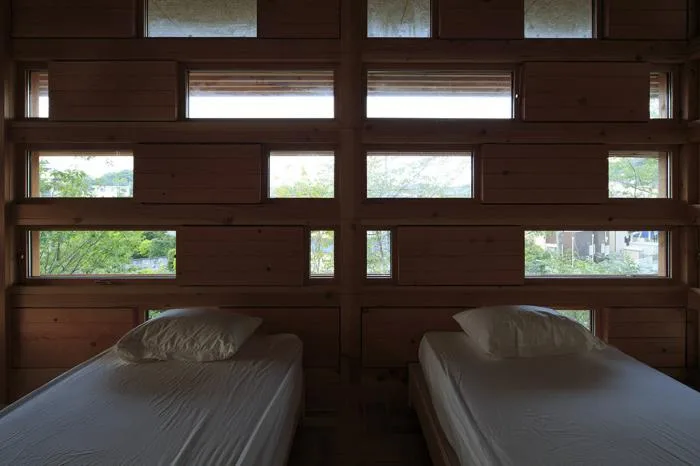
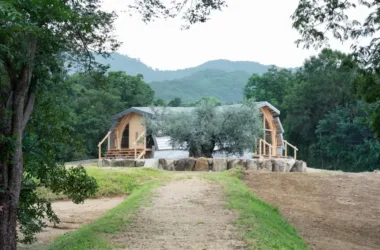
The residence features simple materials: primarily wood and glass. To neatly arrange the columns and horizontal skylights, wooden blocks are embedded diagonally between these elements, with wooden frame walls providing structural support. Alongside the slanted wooden blocks, fixed glass panels and semi-canopy skylights enhance natural lighting.
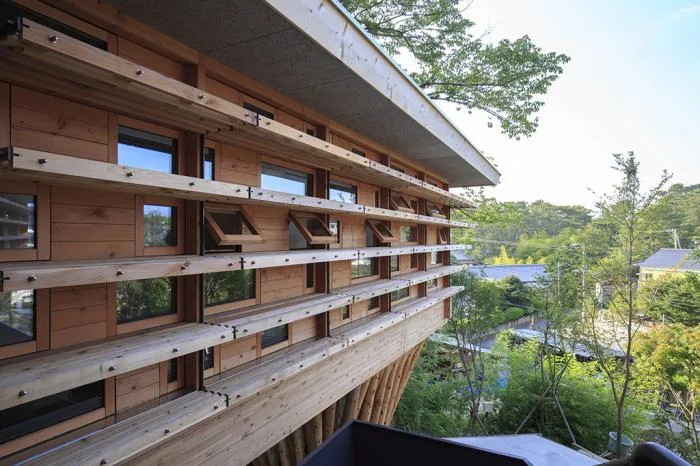
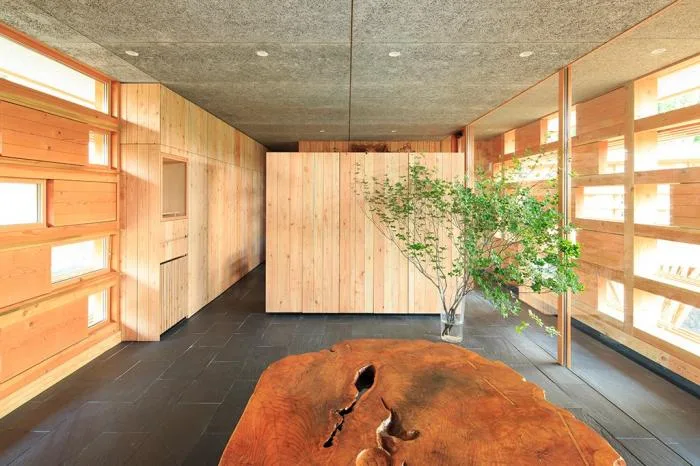
The external wooden skylights control natural light year-round, allowing irregular sunlight to filter gently through surrounding trees. Inside, residents can experience the subtle shifts of the four seasons through the windows. The front door leads to the workspace and storage for fishermen’s equipment. A staircase connects to an upper workspace. Two bathtubs, designed to hold water at different temperatures, provide a warm refuge for fishermen returning from the sea.
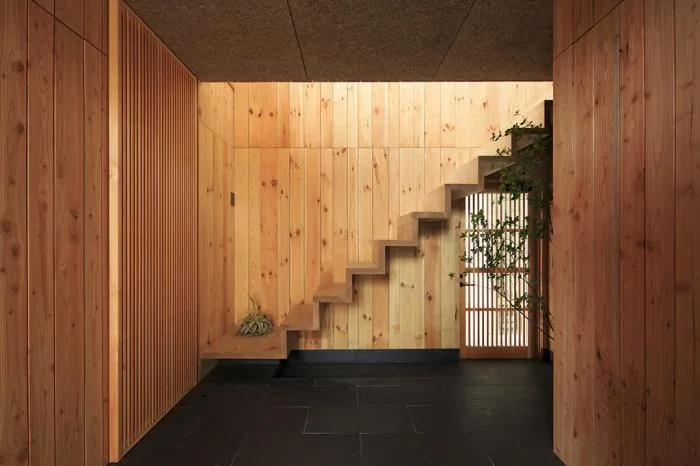
The wooden structure is supported by conical foundations and log “columns” anchored to naturally formed bedrock bases — vertically protruding rock layers near the Wupuhai and Liujiaotang rest areas. The residence’s two cantilevered wings extend from the back slope to the edge of the valley. At the junction of the base and cantilever, three conical foundations, each approximately 3 meters tall, rest directly on the bedrock, formed with pure concrete (slump=8 centimeters).
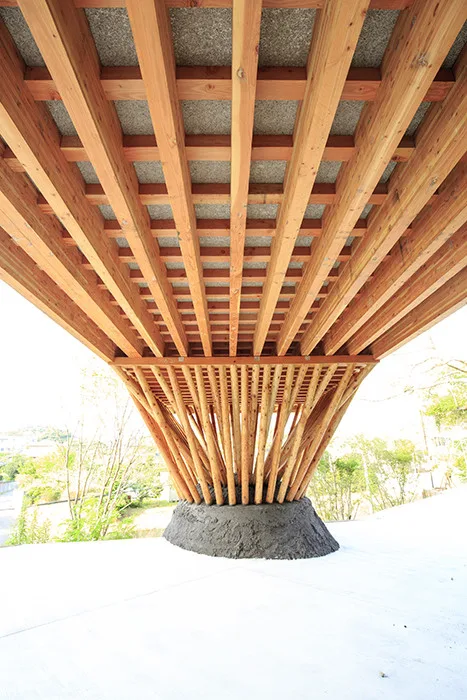
The log columns radiate outward from the foundations. Each pillar’s base, measuring 140 millimeters in diameter, features a circular double-ring design, tapering to a single ring at the top. Massive beams, ranging from 360 to 800 millimeters in diameter, connect the pillars to the hillside, forming a “floor” suspended between mountain and sea—where the residents spend most of their time. Diagonally arranged wooden blocks, 120 millimeters thick, and external wooden walls serve as load-bearing elements.
Local fishermen and architects jointly protect the surrounding forest. The rich forest’s spring water flows towards the ocean, nurturing life and playing a vital role in preserving the marine environment. Together, they planted around 60 trees to restore the land into thriving mountain forest.
This initiative aims to benefit the surrounding environment and community, encouraging generations of residents to care for the forest and uphold the traditions of the Heavenly Heart. When renovation becomes necessary, over 60 trees will be used, and new trees will be planted, continuing this sustainable cycle.
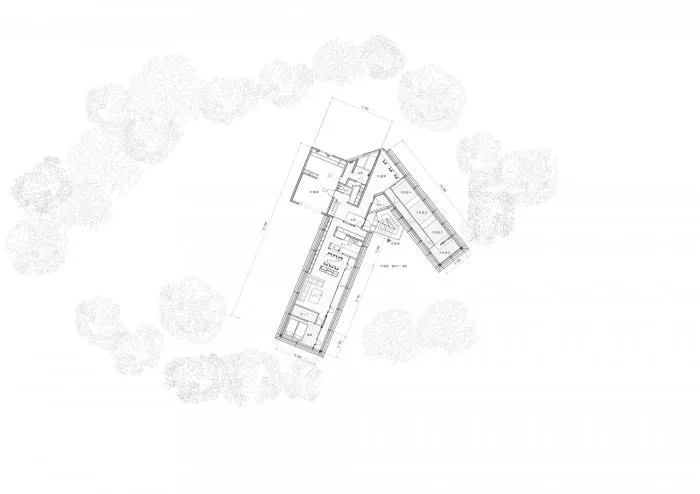
▲ Plan view
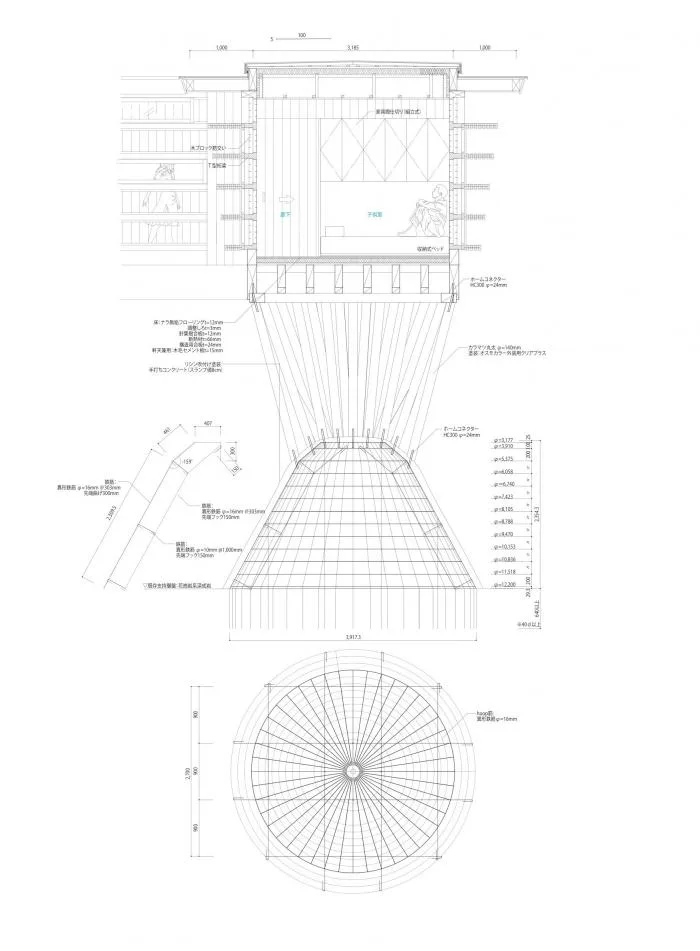
▲ Detail image
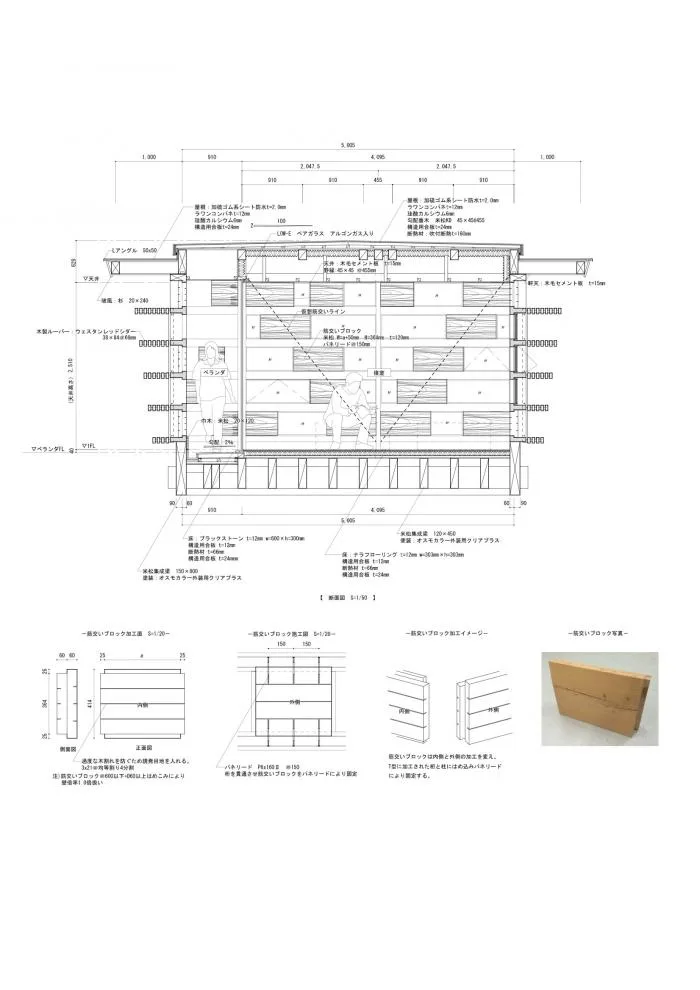
▲ Detail image
Project Information
Project type: Independent residential building
Project location: Beitz City, Japan
Architectural firm: ADX
Area: 204.0 m²
Project Year: 2014












Must log in before commenting!
Sign Up