
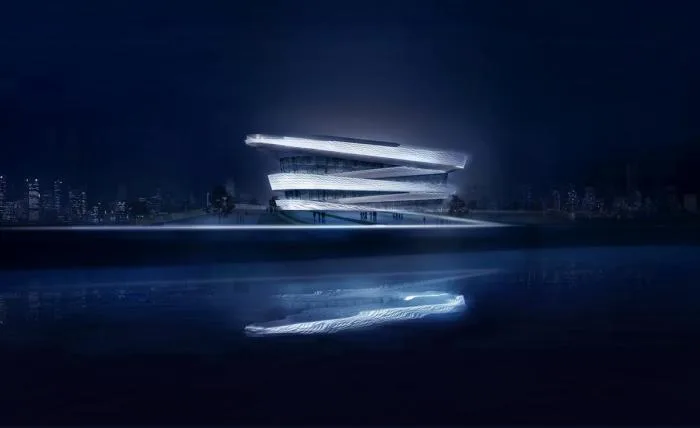
▲ Key locations representing Hangzhou’s rich “water” culture along the Qiantang River
During the last century, Hangzhou’s urban growth was centered around West Lake. However, in the 21st century, the city’s development has progressively shifted southward along its canal system. As a multi-centered urban structure emerges, Hangzhou has transitioned from its historic “West Lake Era” to a vibrant “Qiantang River Era” on both riverbanks. This transformation energizes the city, injecting fresh cultural vitality into Hangzhou’s identity.
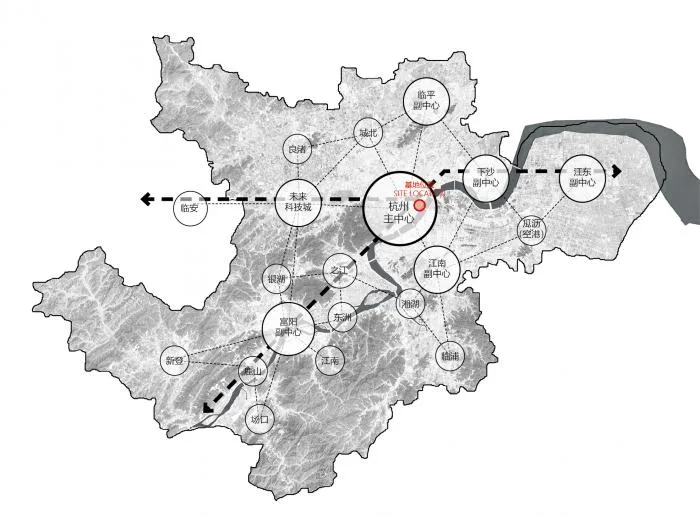
▲ Transitioning from the “West Lake Era” to the “Qiantang River Era”
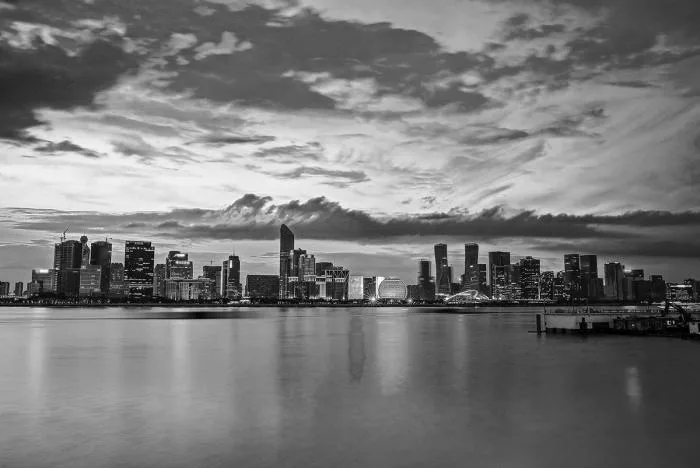
▲ Along the banks of the Qiantang River, rising with the tide
Situated at the confluence of the Beijing-Hangzhou Grand Canal and the Qiantang River, the Qiantang River Museum overlooks the river and the sea, with a clear view of the Century Lotus—the main venue for the 2022 Asian Games. This project occupies a pivotal geographical point, bridging Hangzhou’s key waterways and serving as a showcase for the city’s forthcoming World Cultural Heritage candidacy.
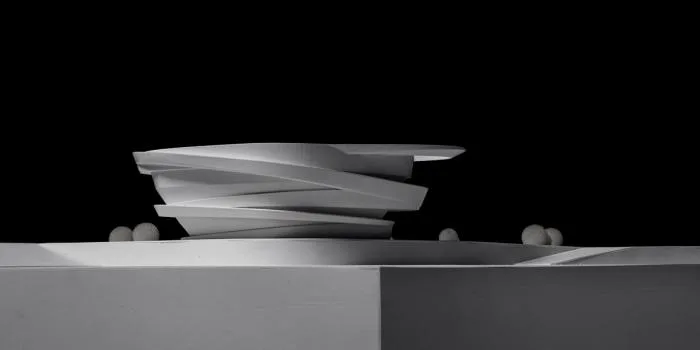
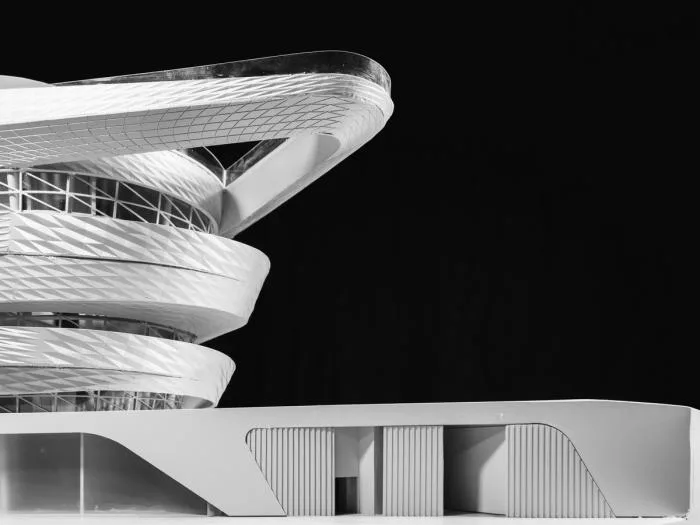
▲ Award-winning design model
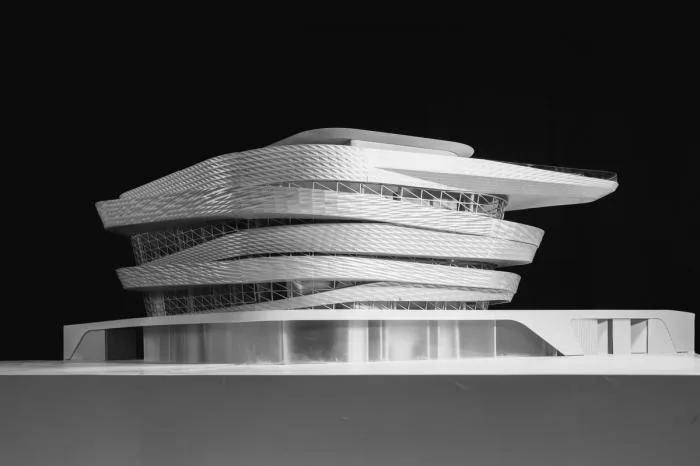
▲ Implementation plan model
The design rights were secured by the Line+ team through an international competition in July 2018. After 15 months of rigorous design refinement, construction officially began on December 18, 2019. The civil engineering phase is anticipated to complete by the end of 2021.
Site Background
The Qiantang River Museum’s location holds deep geographical and historical significance, intertwined with the city’s cultural heritage.
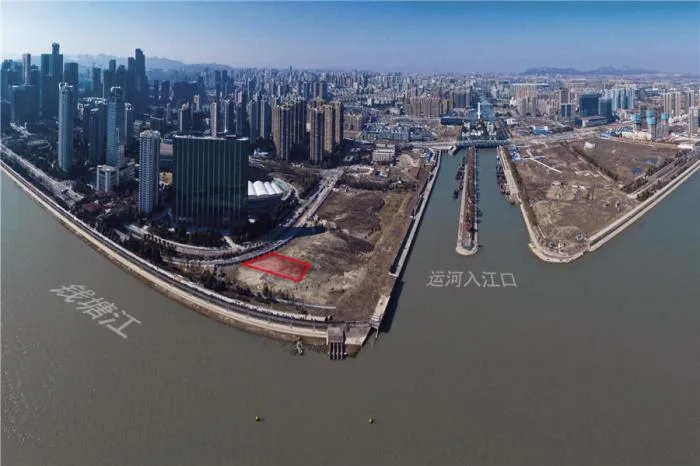
▲ Aerial terrain view
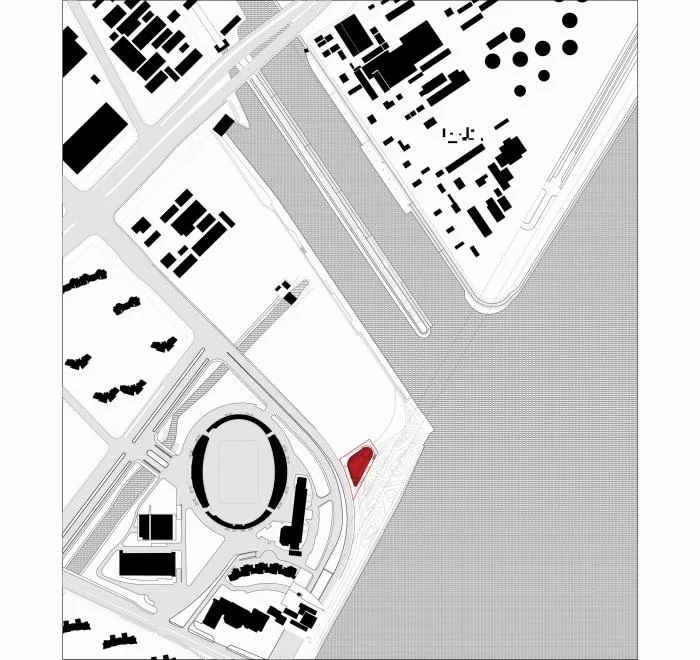
▲ Location map
The site marks the southern start of the Grand Canal, a UNESCO World Cultural Heritage site, where two of Hangzhou’s most important waterways—the Grand Canal and the Qiantang River—merge. The Grand Canal, originally constructed during the Spring and Autumn Period, winds through the historic and elegant cityscape of Qiantang, chronicling the rise and fall of the ancient capital and its vibrant markets.
Meanwhile, the Qiantang River, once known as “Zhejiang,” is the largest river in Zhejiang Province and the origin of the province’s name. As a cradle of Wu Yue culture, it looks out to the southeast, embodying a panoramic connection between ancient traditions and modern life. This intersection of two major waterway civilizations forms a symbolic landmark in Hangzhou’s “water” culture.
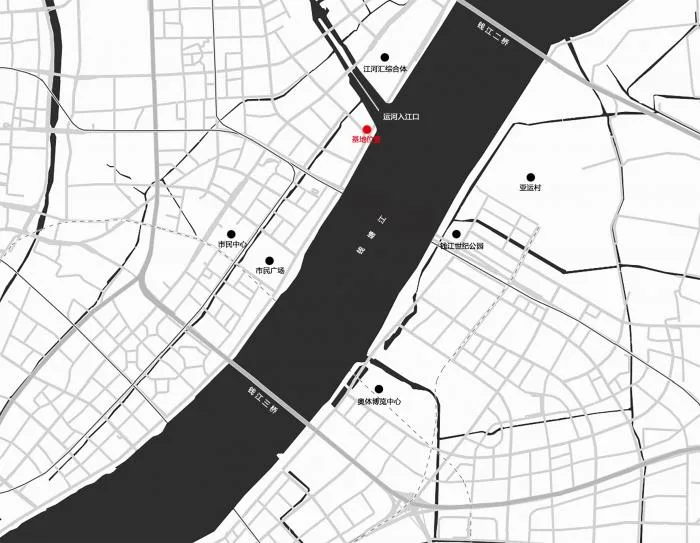
▲ Regional location and connections
Additionally, the project sits at the boundary between Phase I and Phase II of Hangzhou’s Qianjiang New City CBD, adjacent to the Grand Canal to the north. This planned urban complex, integrating rivers and lakes, is poised to become a significant commercial and residential landmark in the city center. Across the river lies the main venue for the 2022 Hangzhou Asian Games, symbolizing the convergence of Hangzhou’s past, present, and future.
Public Space
At this river confluence, where history meets modernity, the design purpose is to move beyond symbolic monuments and instead reshape pedestrian flows in a clear, engaging manner. The aim is to foster diverse activities and provide open, welcoming spaces that encourage public participation in urban life.
— Lead Architect Zhu Peidong
The project faces multiple challenges: a highly sought-after urban location, strict planning constraints including a 3,386 square meter site, a 24-meter height limit, a required 12,000 square meter construction area, and a diverse range of exhibition needs. The Line+ design team approached these complexities with cautious yet proactive strategies.
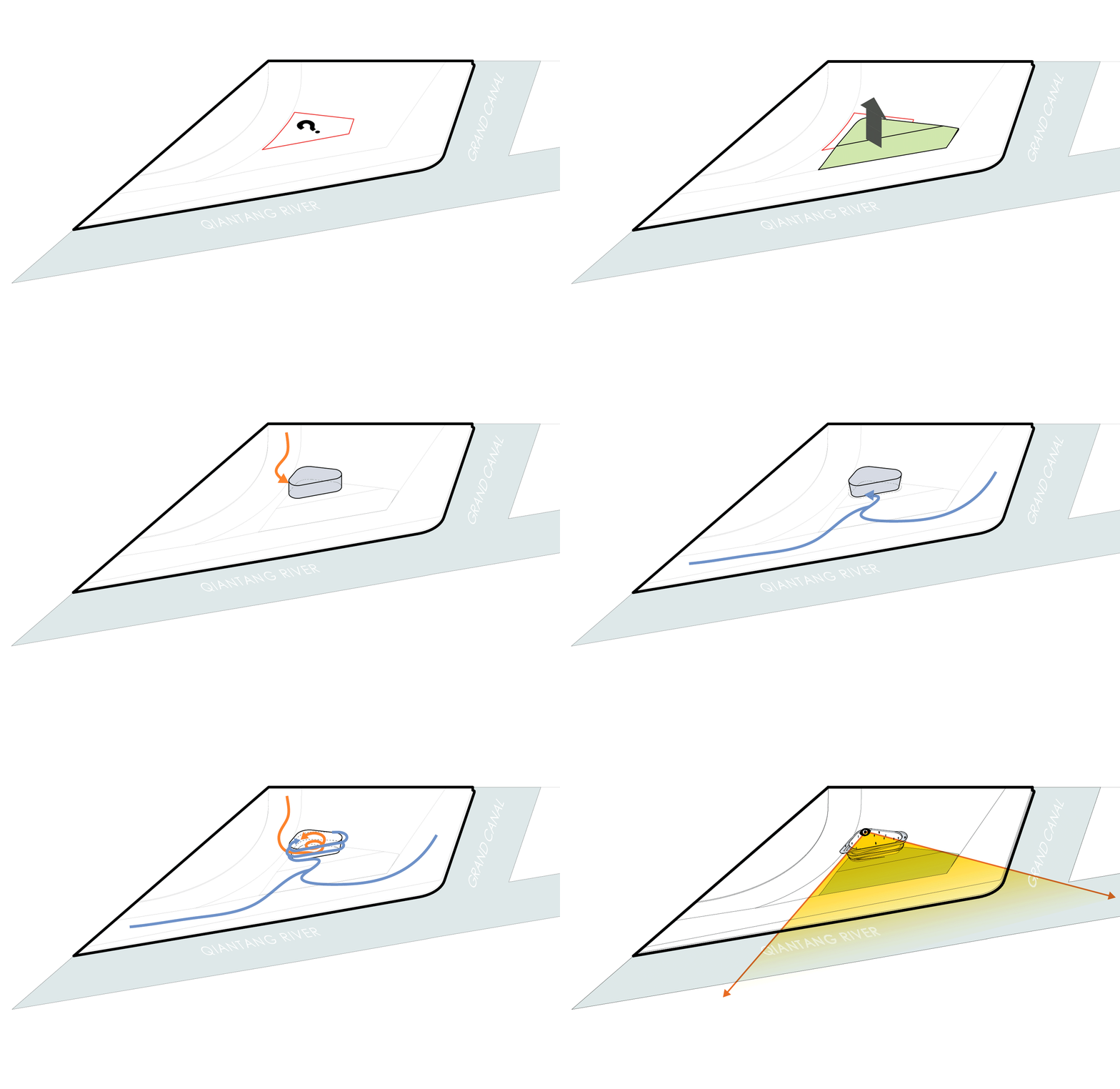
▲ Form development process
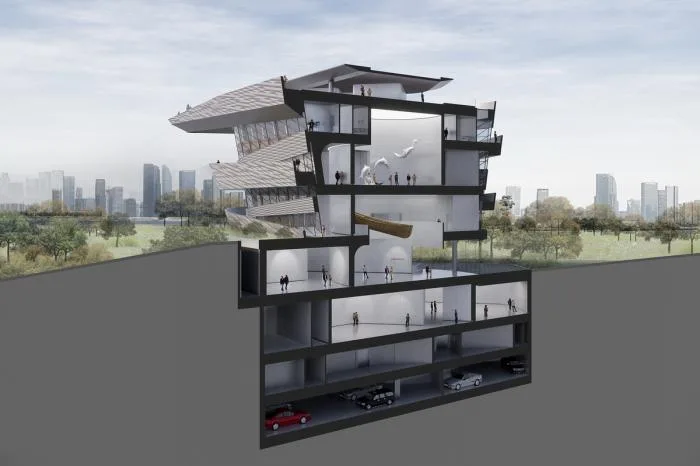
The design places two-thirds of the museum underground to reconcile the height restrictions with exhibition space requirements and overall scale. By leveraging the elevation difference between the Qiantang River trail and the site terrain, distinct paths for exhibition and service entrances were established.
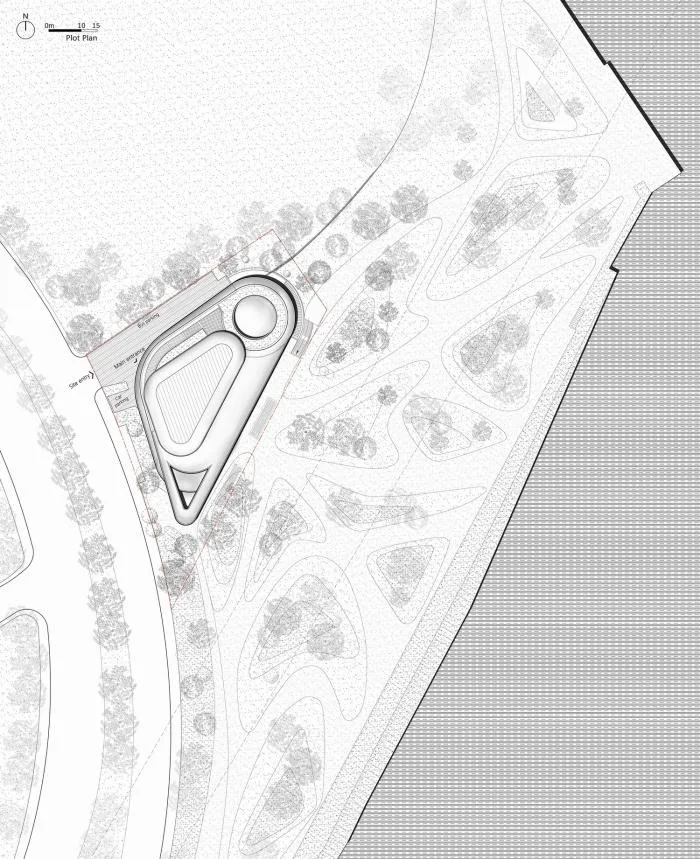
▲ Overall site layout
Located at the intersection of two major waterfront public spaces in Hangzhou—the Canal Trail and the Binjiang Pedestrian Trail—the museum serves as a city landmark with strong public accessibility, inspiring the architects to emphasize its role as an open urban space.
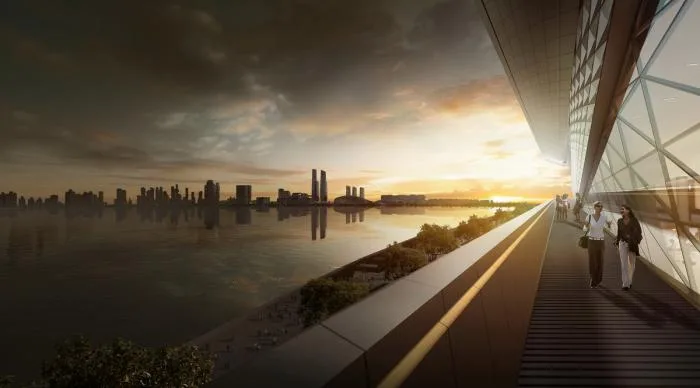
▲ Outdoor riverside viewing corridor connecting the water surface and indoor spaces
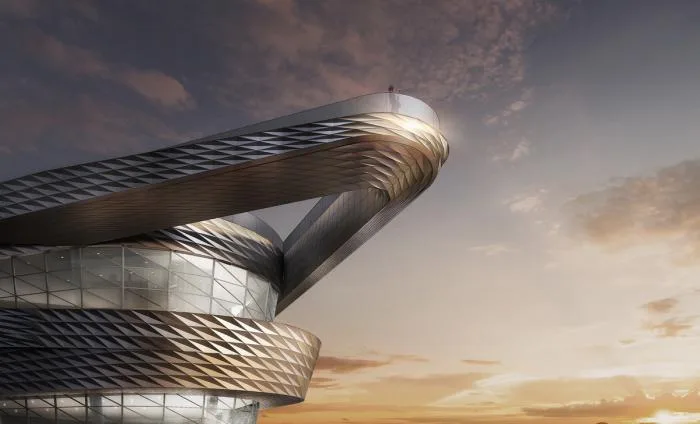
▲ Expansive cantilevered observation deck
To address urban demands, Line+ introduced the concept of “public space return rate,” redefining museums as full-time public spaces. Beyond daytime exhibitions, museums serve as integral components of the city’s public life, offering spaces for citizens to gather and engage even after hours, maximizing the use of time and space.
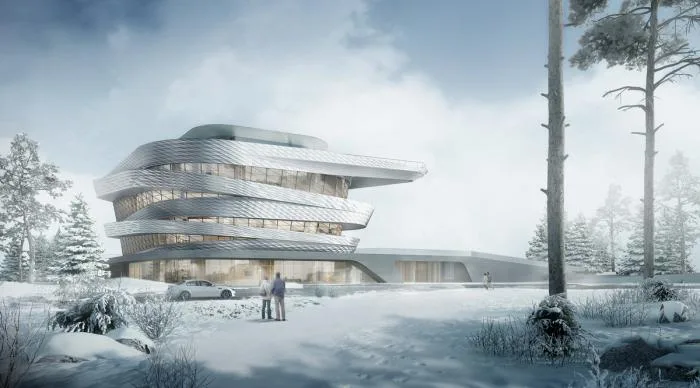
The spiral upward trail offers an elevated public gathering space.
By extending surrounding site trails and shaping the building form, the design directs four distinct visitor groups—the museum exhibition visitors, riverfront shoppers, canal trail pedestrians, and Qianjiang New City riverside visitors—to the museum’s rooftop at 24 meters via a spiraling public trail. This elevation and visual extension encourage visitors to explore the city’s landscape from new perspectives.
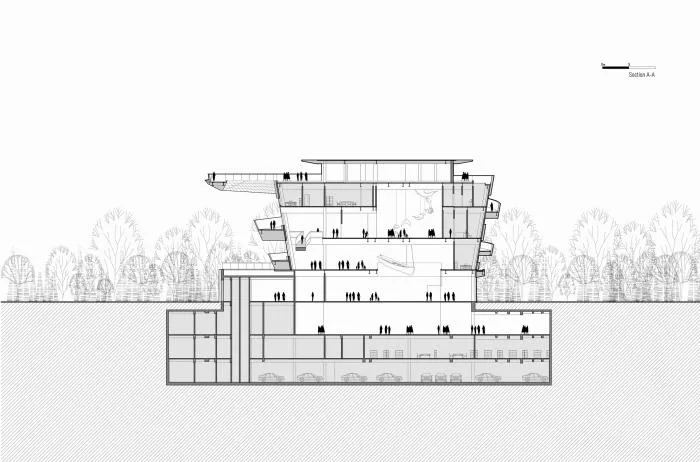
▲ Section view
Within limited site constraints, the design takes the form of a circular truncated cone. Inside, two interwoven spiral circulation paths—one internal, one external—create ample public space and a dynamic ground floor area. Visually, the building embodies water’s essence, as intertwined streams spiral upward.
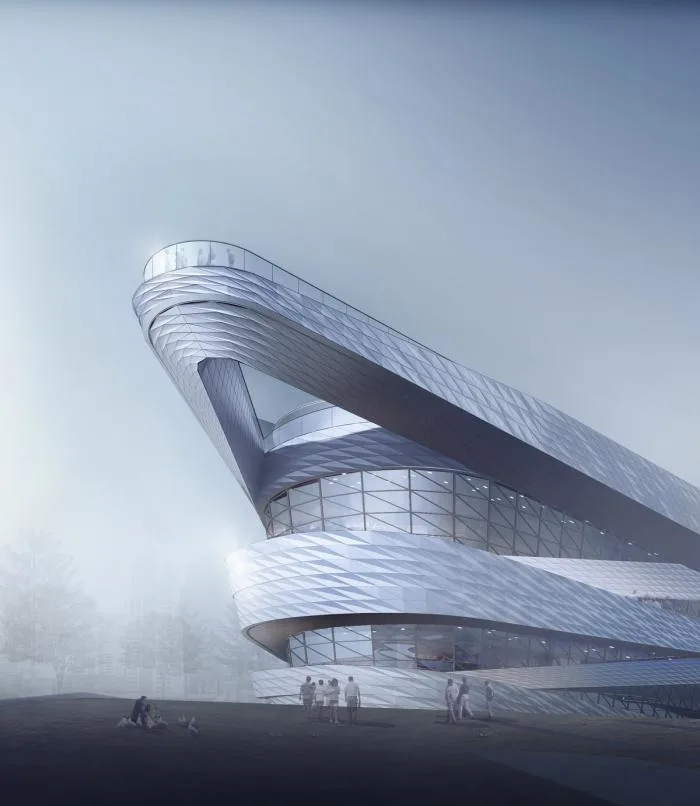
▲ Visual exploration at varying spatial heights and dimensions
As visitors ascend the spiral trail, diverse flows converge on the rooftop, where the expansive cantilevered observation deck symbolizes the limitless extension of the city’s public realm, reinforcing the museum’s role as a vibrant urban hub.
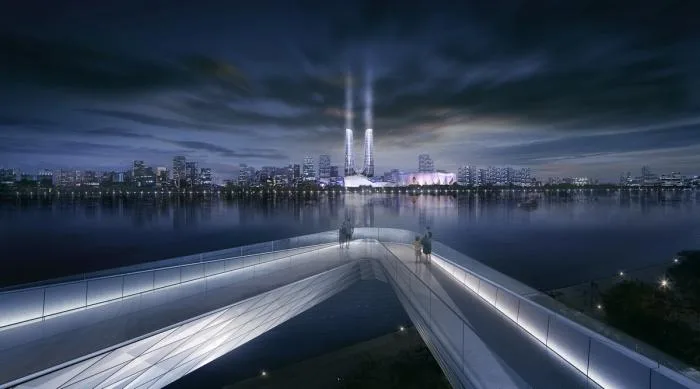
▲ Ascending the rooftop cantilever platform to observe the city’s past and present intersection
Spatial Narrative
The interior and exterior design of the Qiantang River Museum employs a unique narrative language. Through architectural techniques, visitors are guided spatially to experience and appreciate the historical heritage of the Qiantang River within a confined setting.
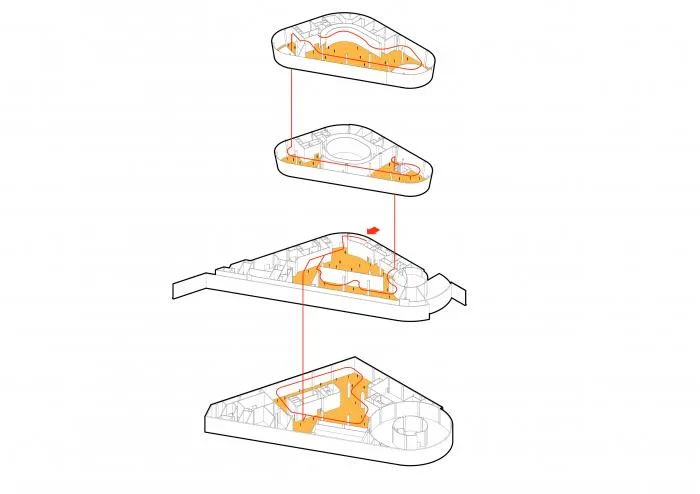
▲ Exhibition flow path
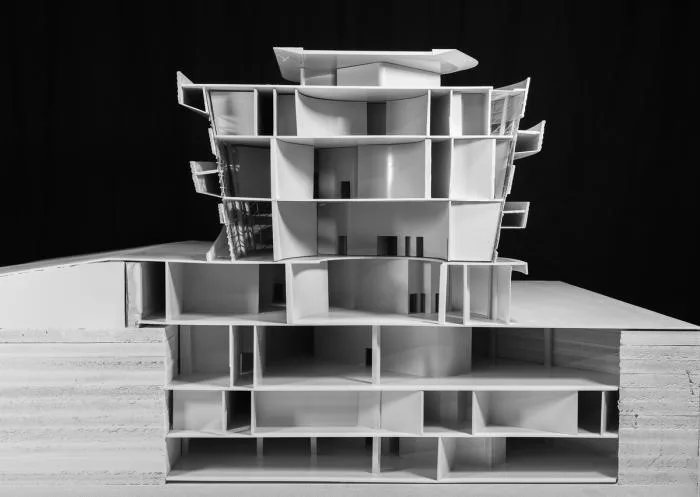
▲ Internal spatial profile model
At the convergence of the riverside trail and canal greenway, the architects shaped the site—located below embankment height—into a gently sloping grassy hillside that naturally elevates the area and forms a new path linking the riverbank to the museum.
▲ Interior perspective
Outdoors, the building’s staggered exterior corridors form a spiraling upward path leading to a panoramic rooftop garden with river views. Indoors, due to land constraints and plot ratio limits, some exhibition spaces are located underground. The exhibition route spirals from the first basement level up to the roof, narrating the winding history and promising future of the Qiantang River.
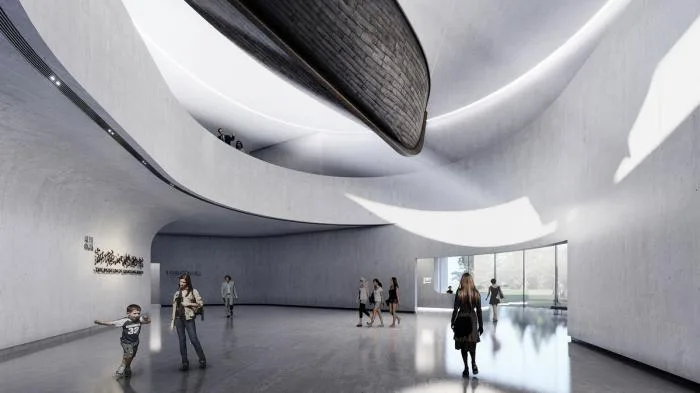
▲ Entrance space
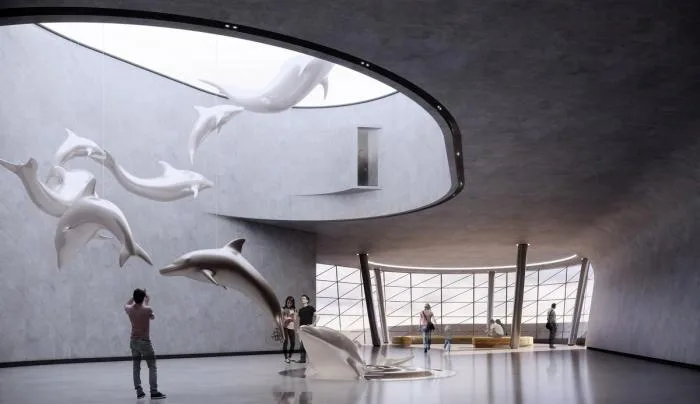
▲ Indoor exhibition hall
The interplay between visitors inside and outside the museum creates dynamic moments of engagement, making both the viewers and the museum integral parts of the Qiantang River’s evolving historical memory.
Facade Language
The spiral corridor concept is directly expressed in the architectural design, while the facade draws inspiration from the ancient Qiantang River seawall’s modular construction, featuring five vertical and five horizontal sections.
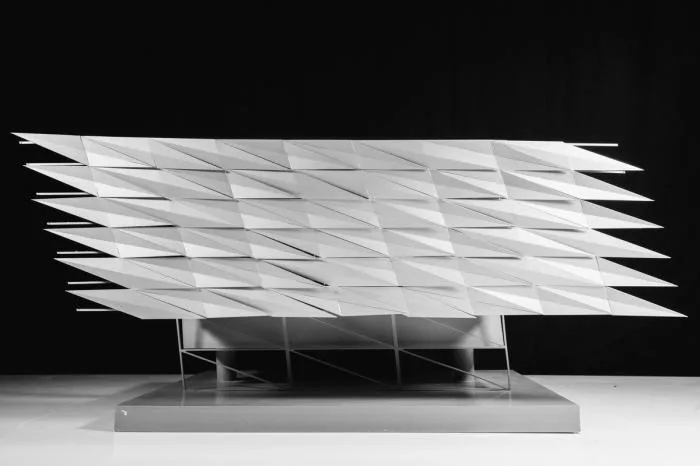
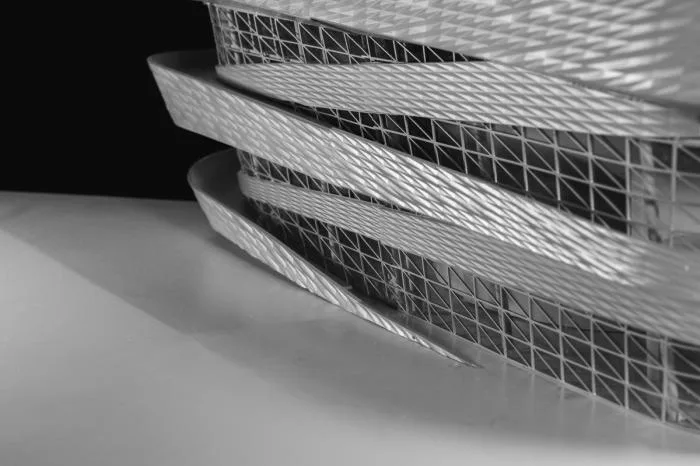
▲ Facade detail model
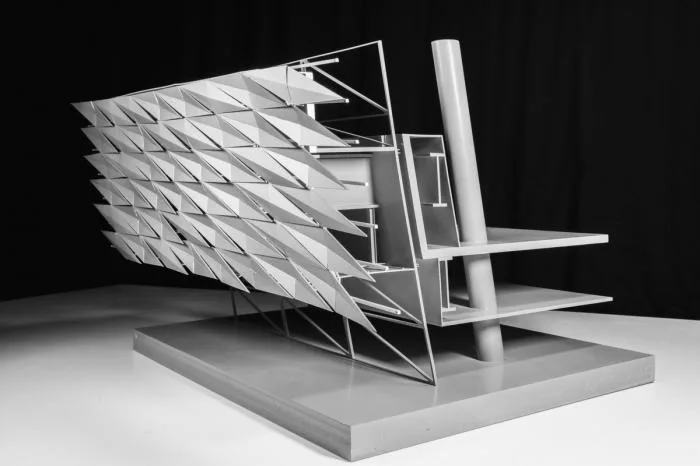
▲ Facade detail model
Leveraging modern digital technology, the facade features interlocking unit-type titanium zinc panel curtain walls. These panels vary in size and depth—some protruding, some recessed, others flat—creating a dynamic texture that mimics shimmering water waves under varying light conditions. This design elegantly captures Wang Anshi’s interpretation of “waves as the skin of water.”
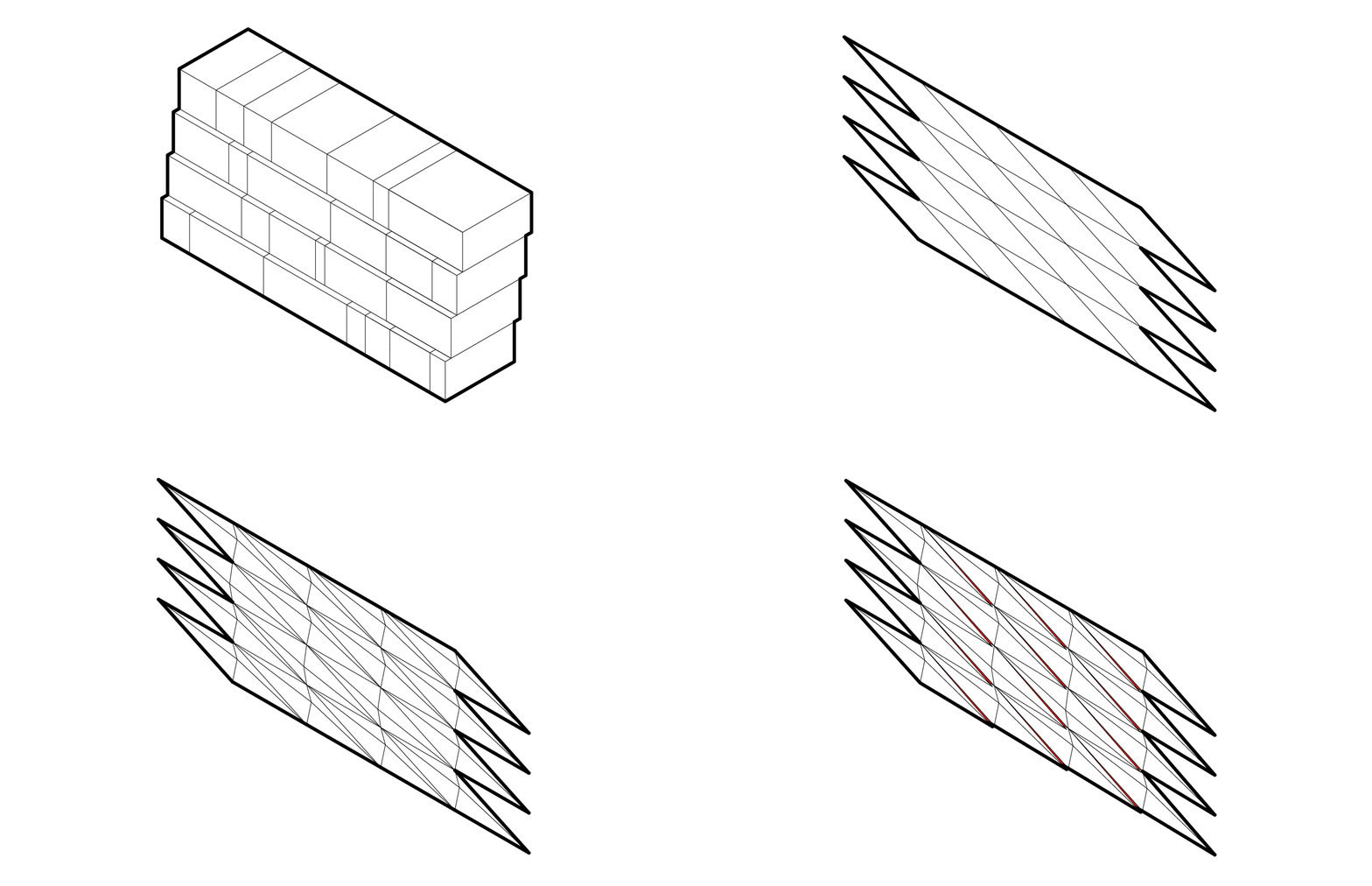
▲ Facade texture generation process
Line+ integrates facade, curtain wall, and lighting designs to meticulously control the curtain wall units. Subtle adjustments between units conceal nighttime lighting fixtures, resulting in a multi-layered visual texture that enhances the building’s nighttime presence.
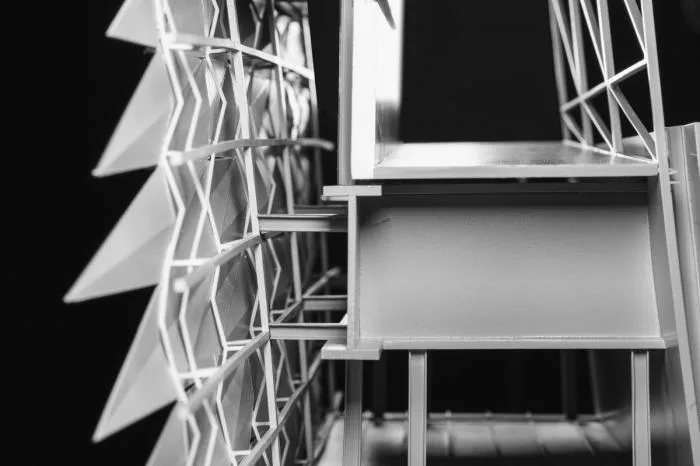
▲ Curtain wall sample model
At night, subtle lighting casts a gentle glow over the expansive riverside facade, positioning the museum as a new urban landmark at the mouth of the Dayun River along the Qiantang River.
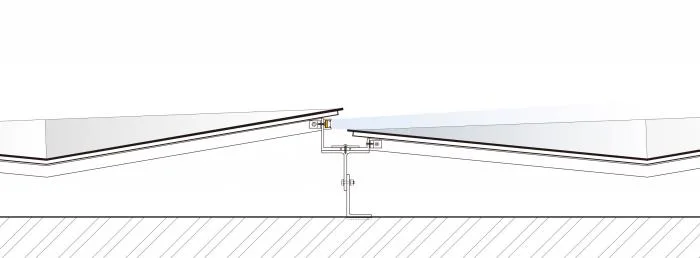
▲ Curtain wall connection nodes
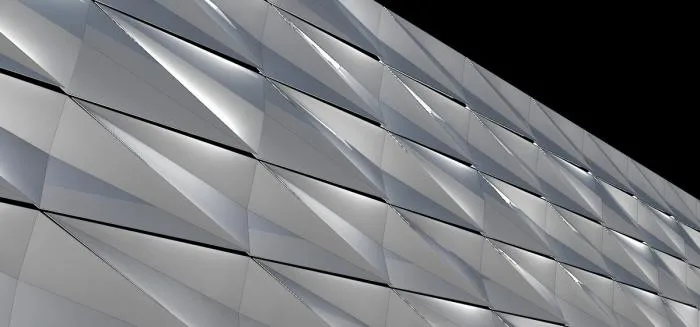
▲ Facade texture close-up
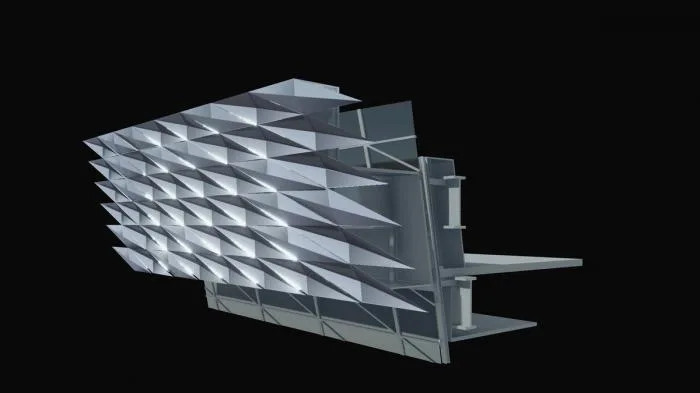
▲ Facade texture close-up
Conclusion
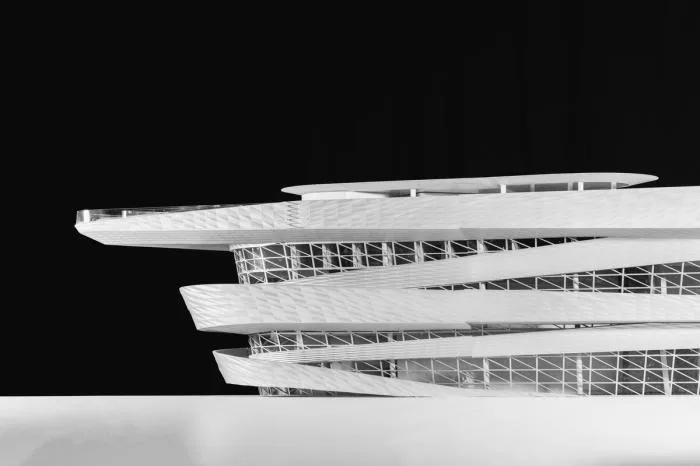
▲ Spiral ascending pathway
As a gateway for Hangzhou’s development along the Yangtze River, the Qiantang River Museum embodies a spirit of openness, sharing, and inclusivity. In today’s diverse urban context, the museum actively asserts itself not only as a geographical meeting point of rivers but also as a social and cultural hub where different communities and activities converge—bridging the past, present, and future of the Qiantang River.
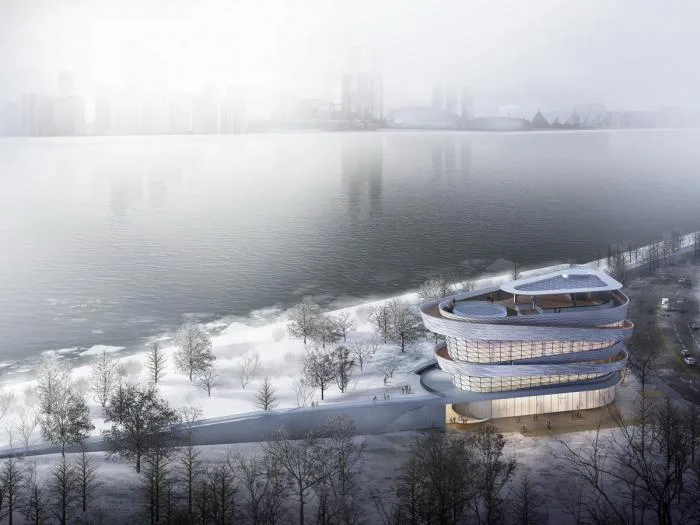
▲ Aerial view
Project Information
Project Name: Hangzhou Qiantang River Museum
Location: Southwest Block of Jianghehui, Qianjiang New City, Hangzhou, Zhejiang Province
Building Area: 11,535.5 square meters
Lead Architect/Project Creator: Zhu Peidong / ad • line+studio
Architectural and Interior Concept Design Team: Zhu Peidong, Sun Xiaoyu, Li Binmiao, Hong Yang, Zhang Qiqi, Du Mengying
Landscape Concept Design: Li Shangyang
Design Units: Gad • line+studio (architectural scheme, preliminary design, interior and landscape concept); Zhejiang Greentown Architectural Design Co., Ltd. (structural, mechanical, electrical scheme, and preliminary design)
Owners: Hangzhou Qianjiang New City Management Committee, Hangzhou Qiantang River Museum
Construction Drawing and EPC Unit: Zhejiang Baoye Construction Group
Building Structure: Steel structure (above ground)
Exterior Wall Material: Unit-type titanium zinc panel curtain wall
Photography: Chen Xi












Must log in before commenting!
Sign Up