
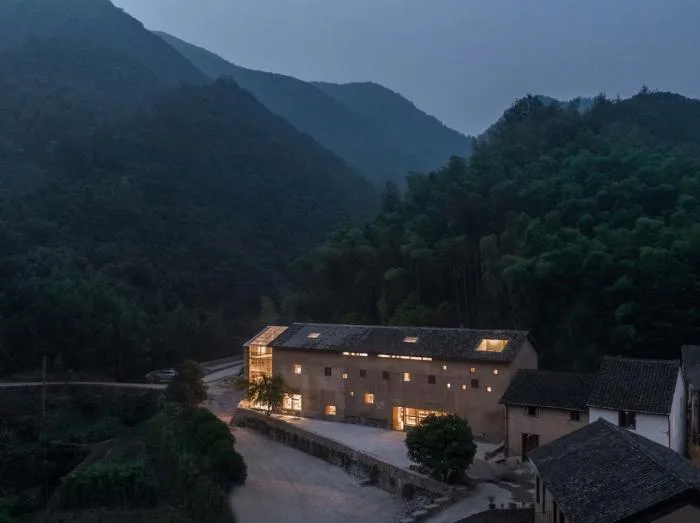
▲ House and Venue © Su Shengliang
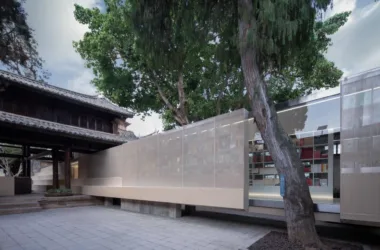
Qinglongwu is an ancient village nestled deep within the mountains and forests of Tonglu, Zhejiang. Its name derives from a stream that flows through the area. The village features an old house constructed with wooden frames and mud walls, located beside a mountain road. To the south, green mountains rise, while to the north, the house overlooks a low terrace courtyard.
Atelier tao+c Xitao Design Studio was invited by the owner to renovate this historic building. The project transformed the space into a capsule hostel accommodating 20 guests, alongside a rural community bookstore and a reading room—all within a compact double-height space of just 232 square meters with a 7.2-meter ceiling height. The main design challenge was balancing the privacy of the accommodation area with the openness of the public spaces, while maintaining spatial continuity throughout the building. This balance became a key focus throughout the design process.
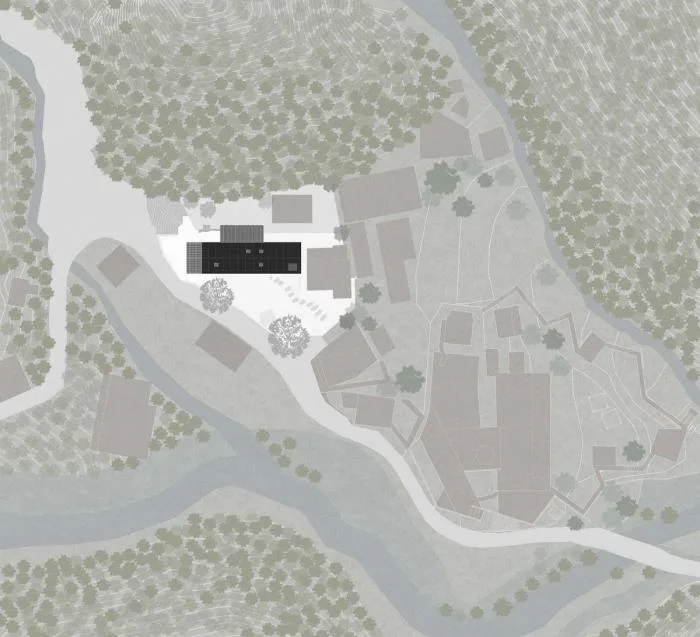
▲ General layout plan
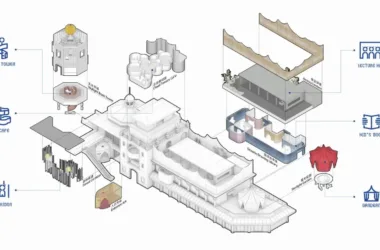
After removing the original floor slabs and partition walls, the architects designated the first floor as a library and public area. Within this open space, two independent “floating” structures were introduced: one as the boys’ building, the other as the girls’ building. Instead of using conventional floor heights for the guest rooms, the design adopted a height based on sitting and sleeping needs—approximately 1.35 meters—for the second floor and above. This created a three-story “building within a building” stacked vertically, offering intriguing perspectives and unconventional spatial scales.
The floor slabs within the accommodation area are staggered, producing double-height zones in some places to allow standing and passage. When standing on the platforms, occupants’ eye level rises above the floor below, enhancing spatial layering and visual interest.
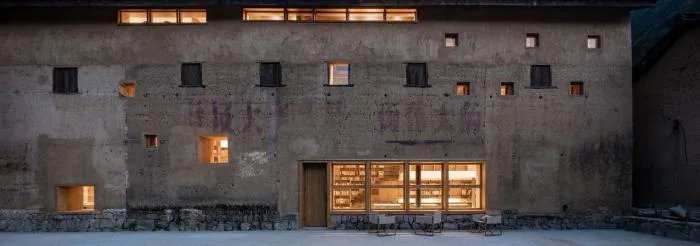
▲ North facade © Su Shengliang
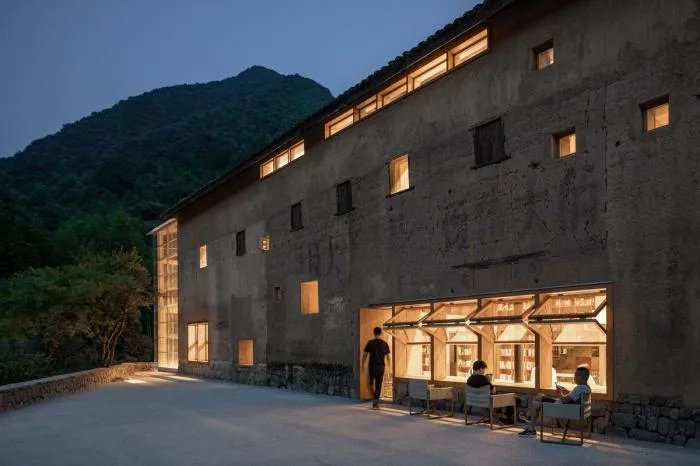
▲ North facade © Su Shengliang
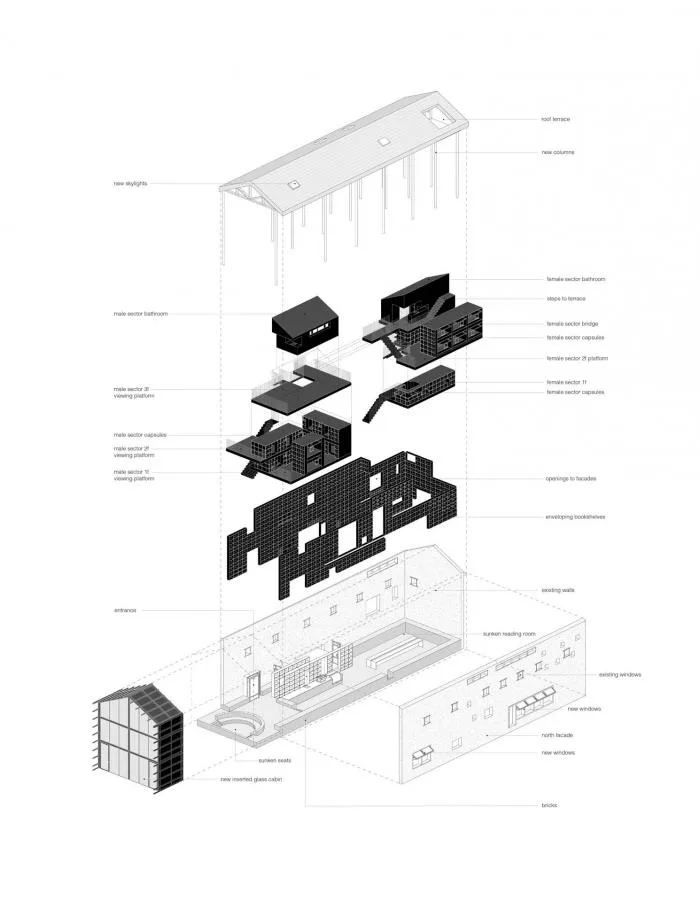
▲ Axonometric diagram
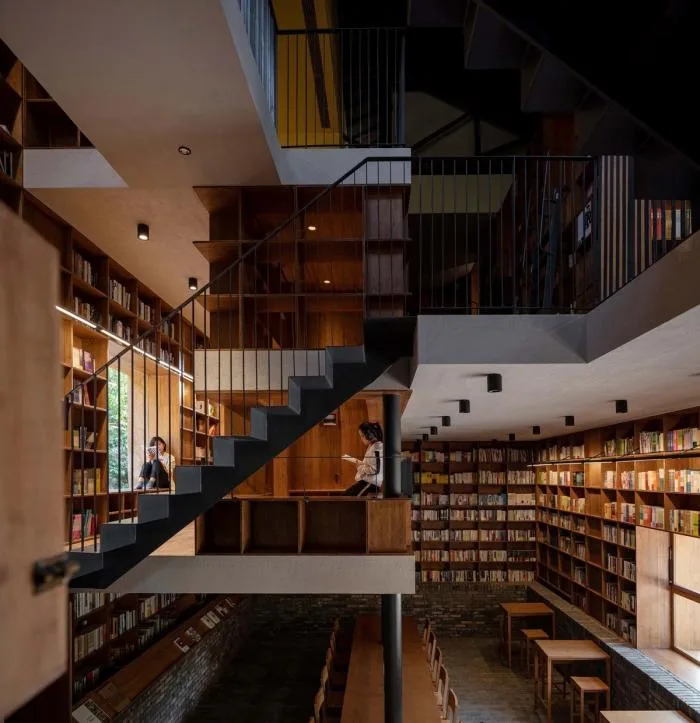
▲ Girls’ Building in the Reading Room © Su Shengliang
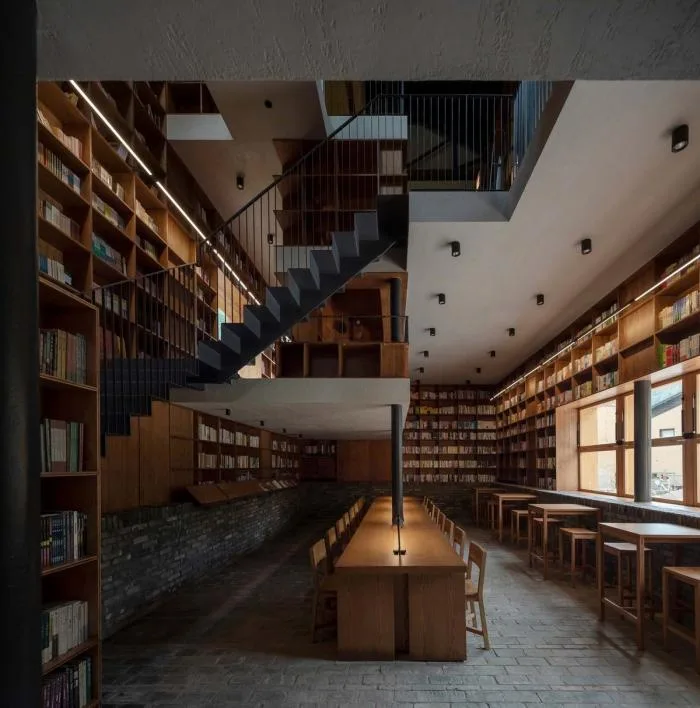
▲ Reading Room © Su Shengliang
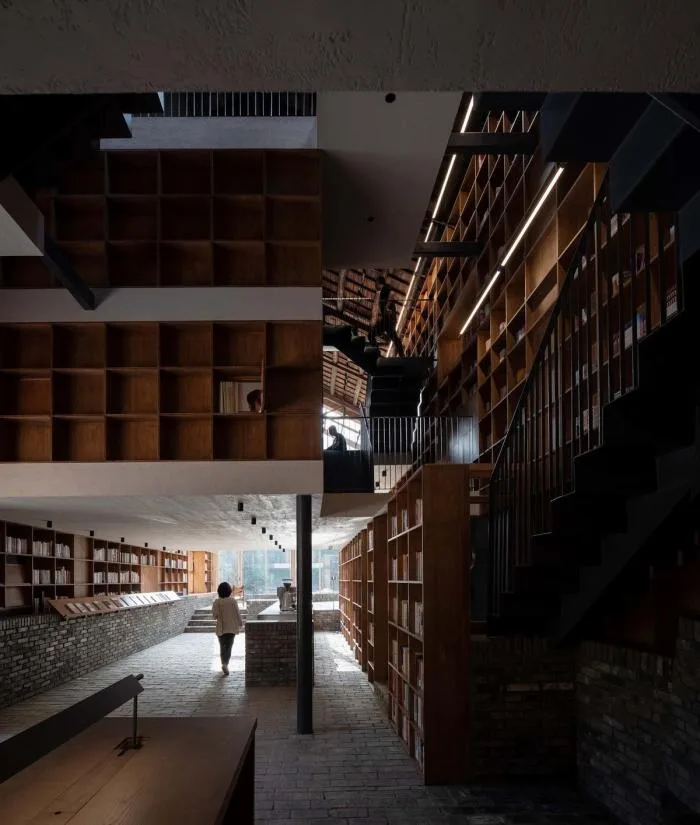
▲ View from the Reading Room towards the Boys’ Building © Su Shengliang
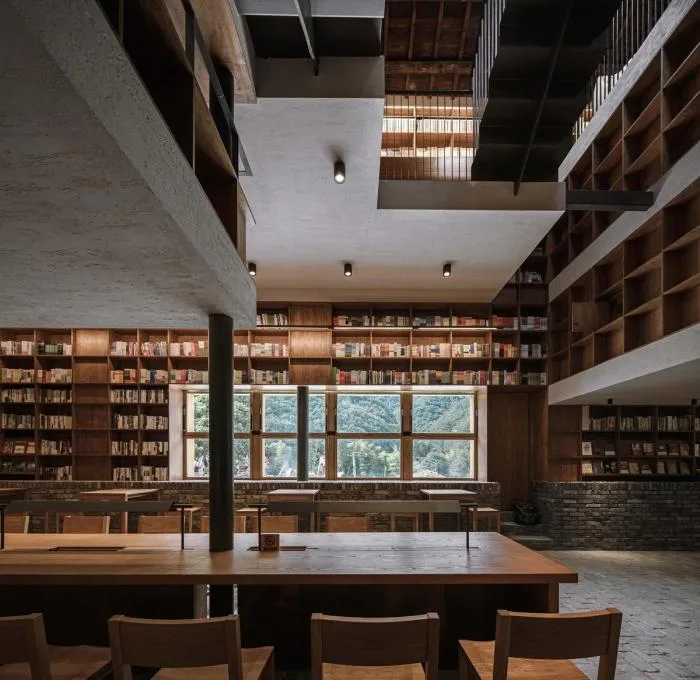
▲ Reading Room nestled between the Male and Female Buildings © fengyuzhu
The undulating platforms create a rich hierarchy of visual connections. The two “buildings within a building” offer multiple perspectives, fostering communication and interaction that result in a dynamic sensory environment. These staggered platforms are linked by slender yet structurally sound metal staircases, each with just nine steps, forming short, winding paths reminiscent of mountain trails. Visitors wander along these paths, pausing to climb, read, peek, or rest within cozy “nooks.” This design ensures that the entire space is never fully visible at once, inviting discovery at every turn and pause—like exploring an indoor landscape garden.
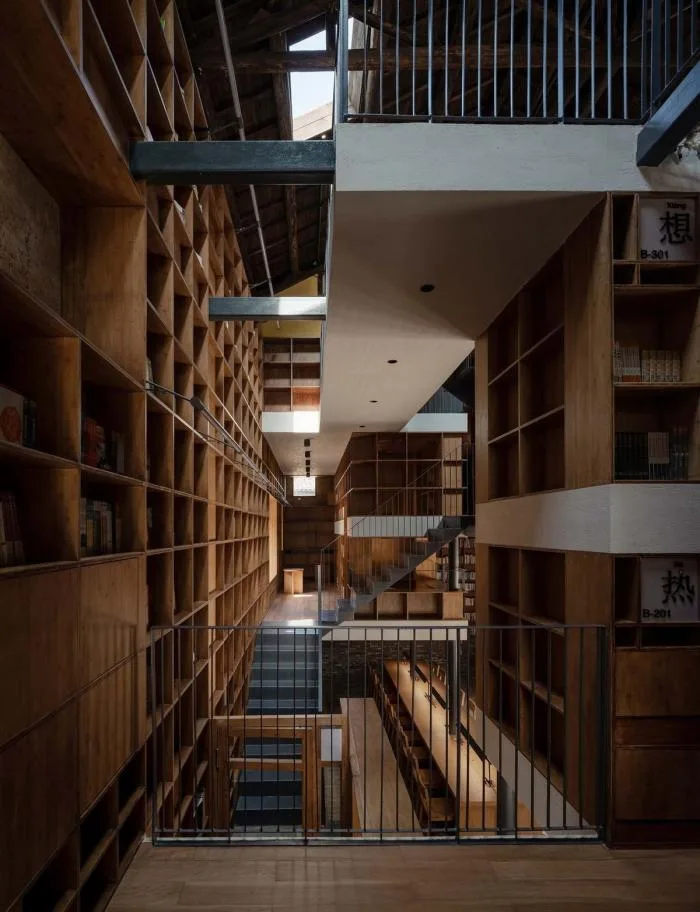
▲ Male Building Platform looking towards the Female Building © Su Shengliang
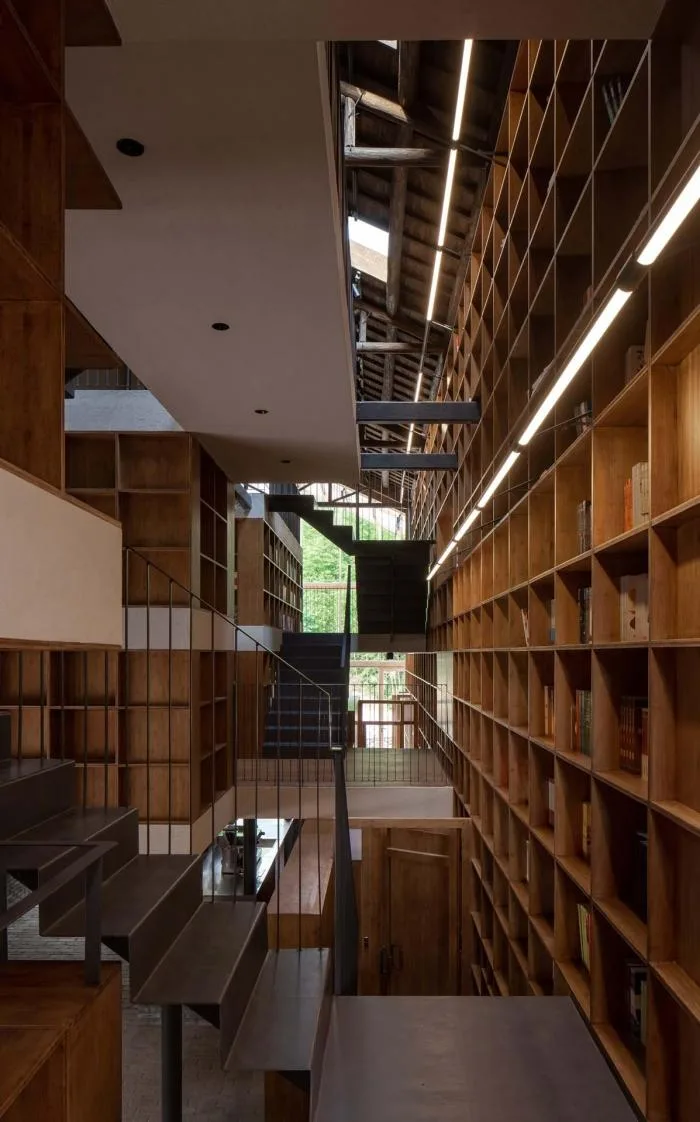
▲ Female Building Platform looking towards the Male Building © Su Shengliang
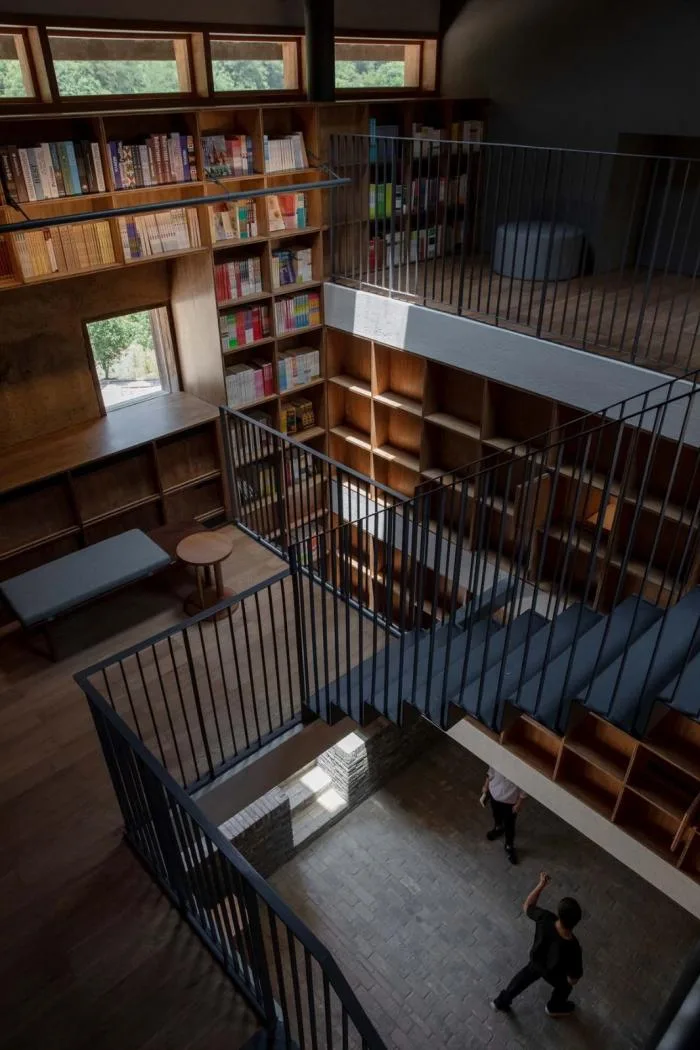
▲ Transformation Pathway © Su Shengliang
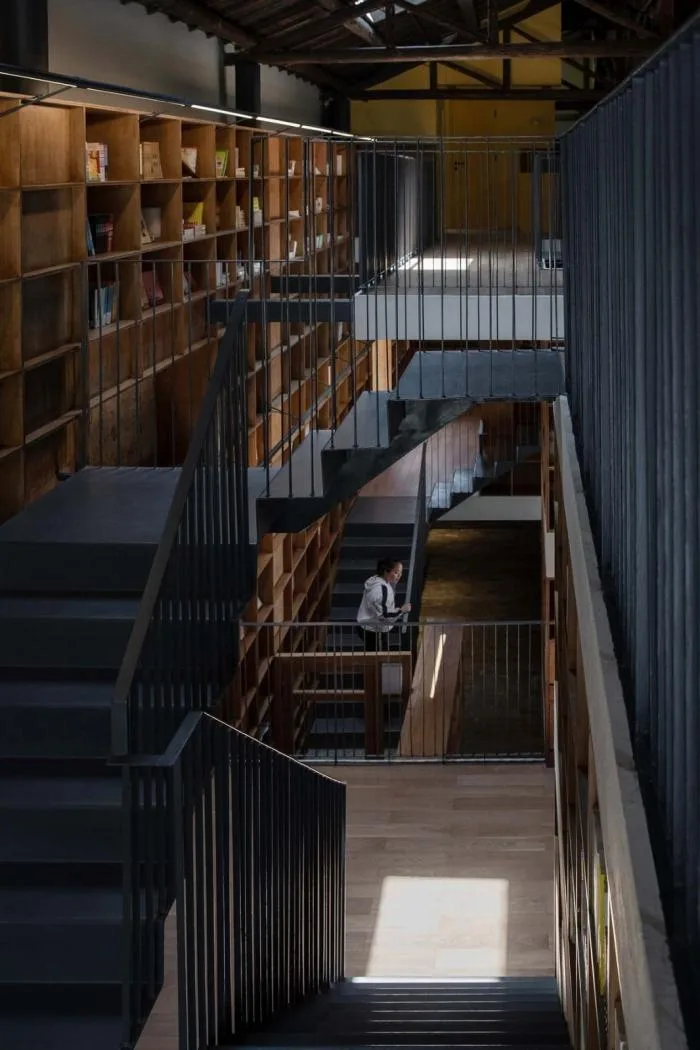
▲ Transformation Pathway © Su Shengliang
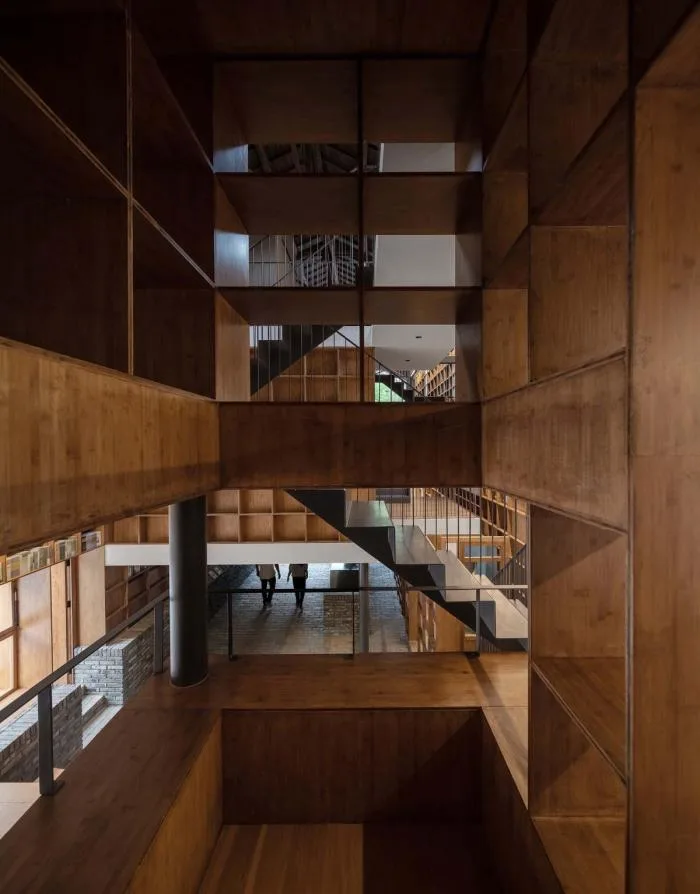
▲ Rest Corner © Su Shengliang
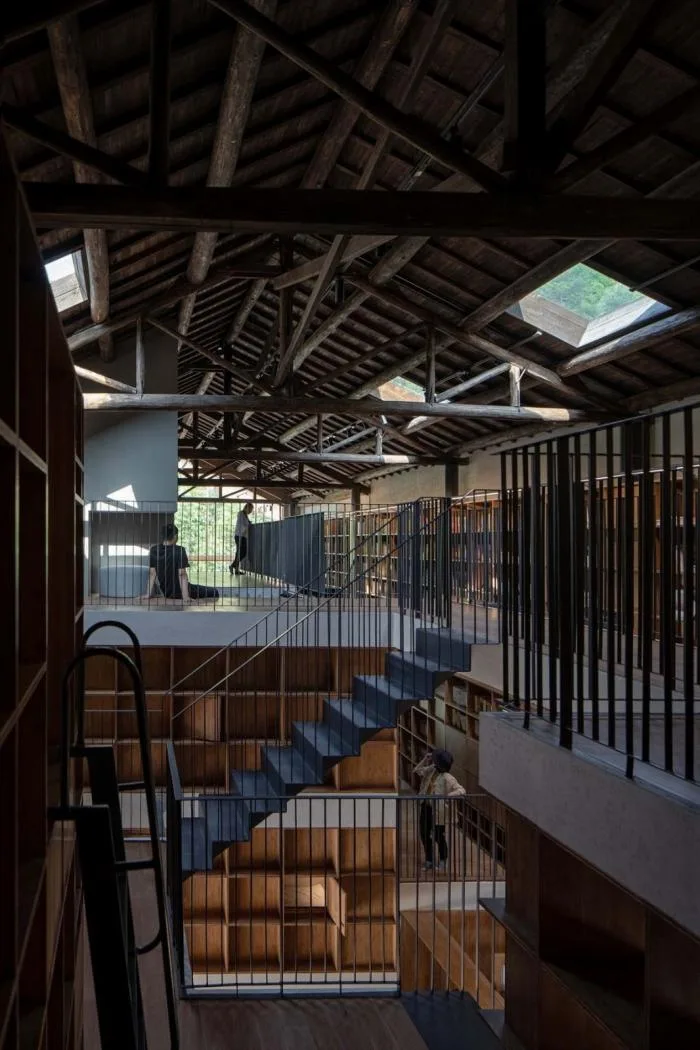
▲ Skylight and Bridge © Su Shengliang
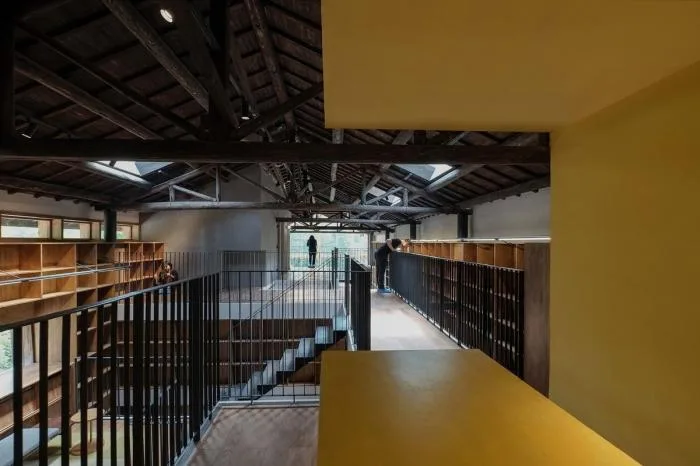
▲ Top Floor Corridor © Siyu Chen
The male and female buildings each contain 10 capsule units and a shared bathroom. The modular capsules, uniform in size, are cleverly concealed behind enclosed bookshelves, enhancing privacy. These bookshelves are crafted from locally sourced bamboo panels, filling the air with a fresh bamboo scent. Each capsule window aligns precisely with a bookshelf compartment, creating varying sightlines that blend visual and olfactory experiences into a captivating sensory journey.
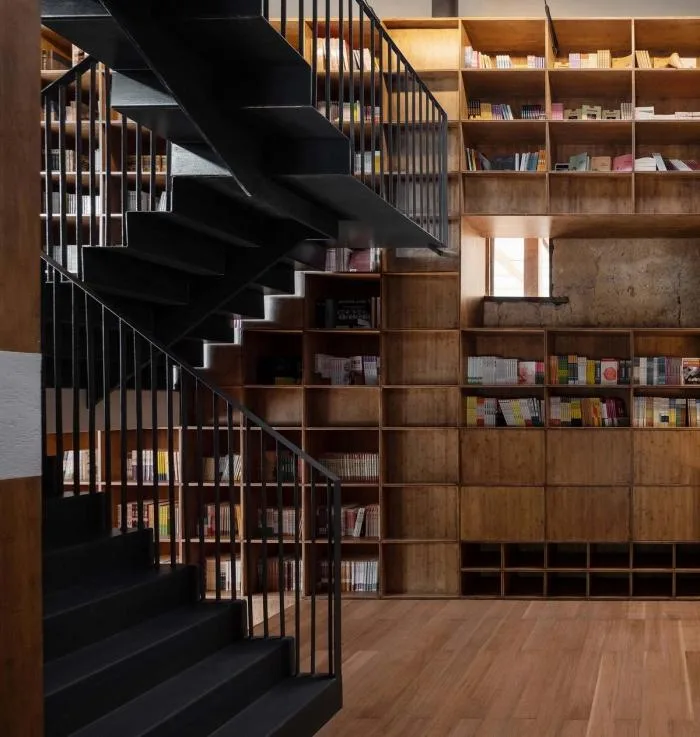
▲ Local bamboo bookshelves and stairs © Su Shengliang
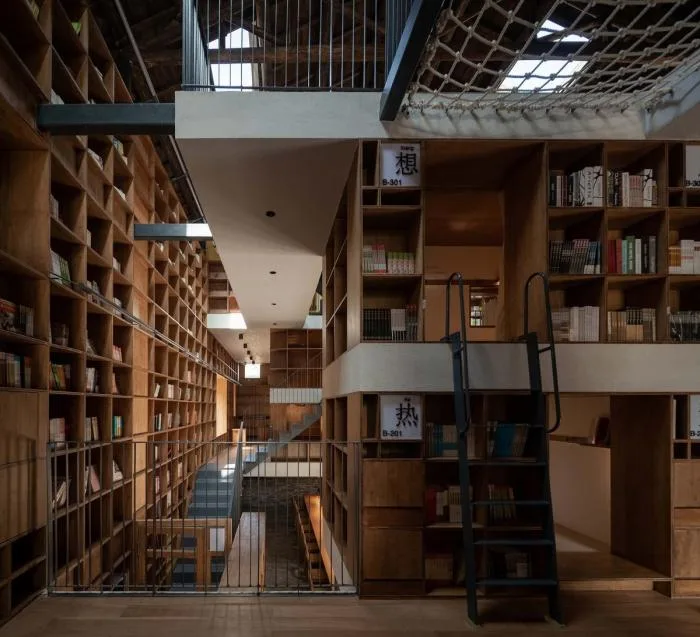
▲ Platform, bookshelf, and capsule © Su Shengliang
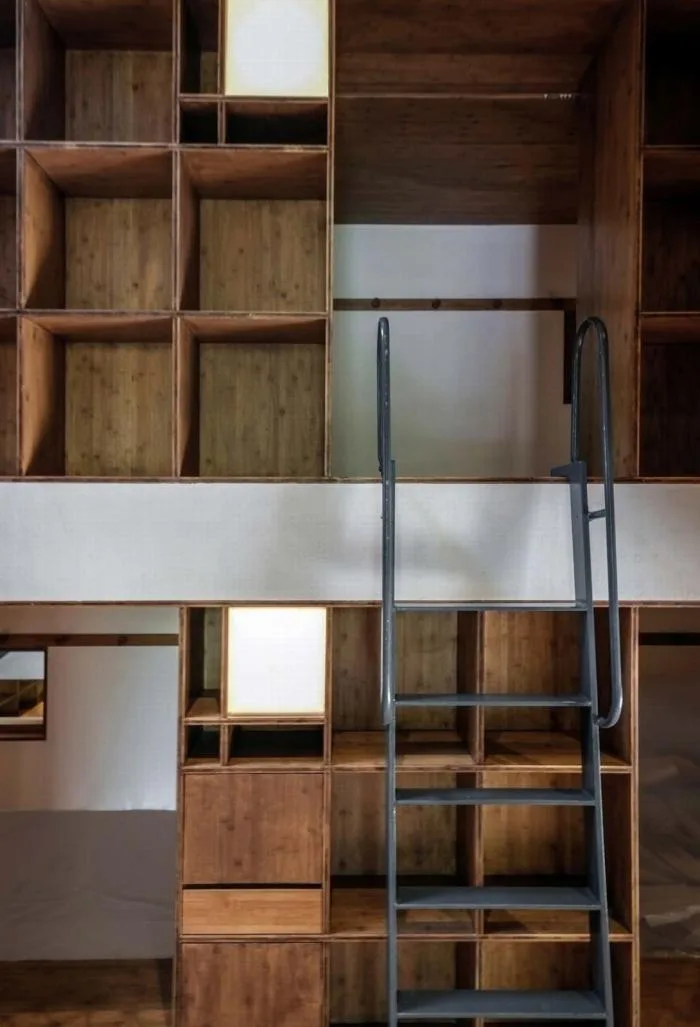
▲ Overlapping capsules © Siyu Chen
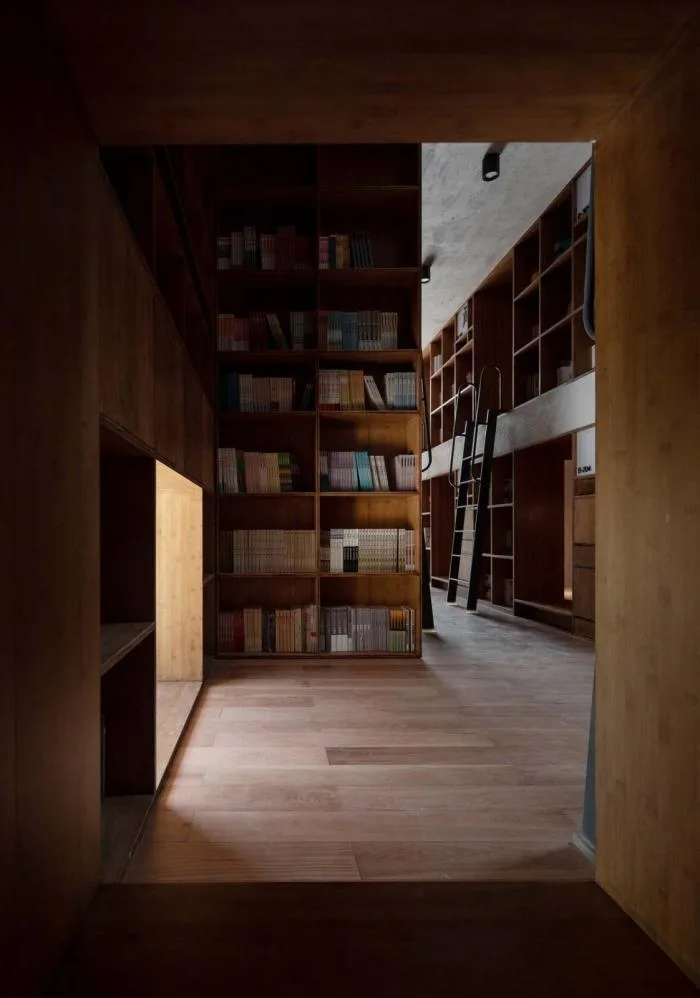
▲ View from inside a capsule © Su Shengliang
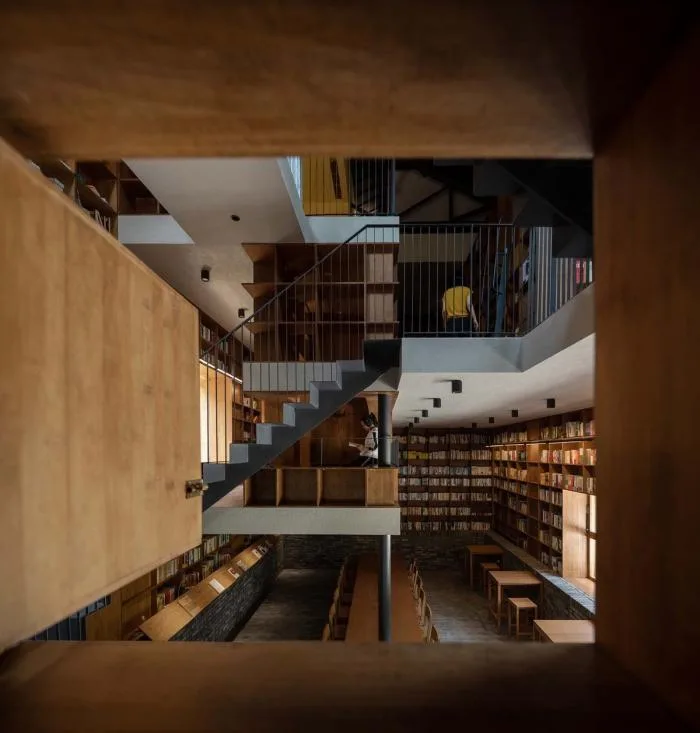
▲ Capsule window view © Su Shengliang
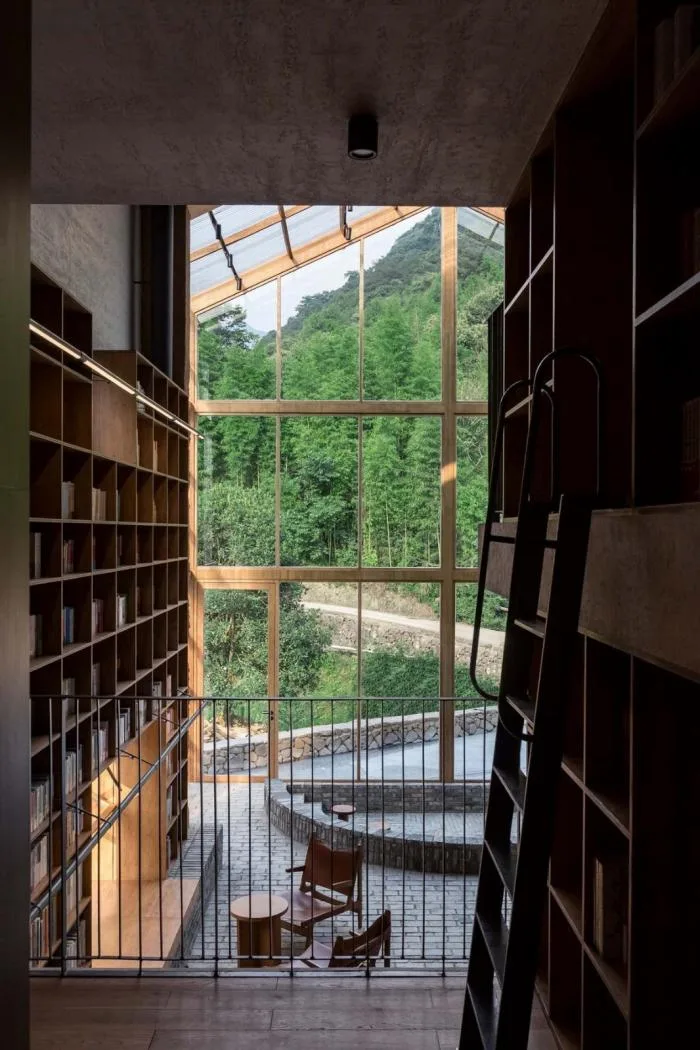
▲ Capsule accommodation area looking towards the lobby © Su Shengliang
The “building within a building” concept blurs spatial boundaries, balancing openness and privacy between the accommodation zones and the public first floor. From the entrance hall, visitors can clearly perceive the sectional layering of the floor slabs. Meanwhile, the capsule area’s sides align rhythmically with the repeating bookshelf system, creating an interplay where inside and outside become fluid, interchangeable experiences.
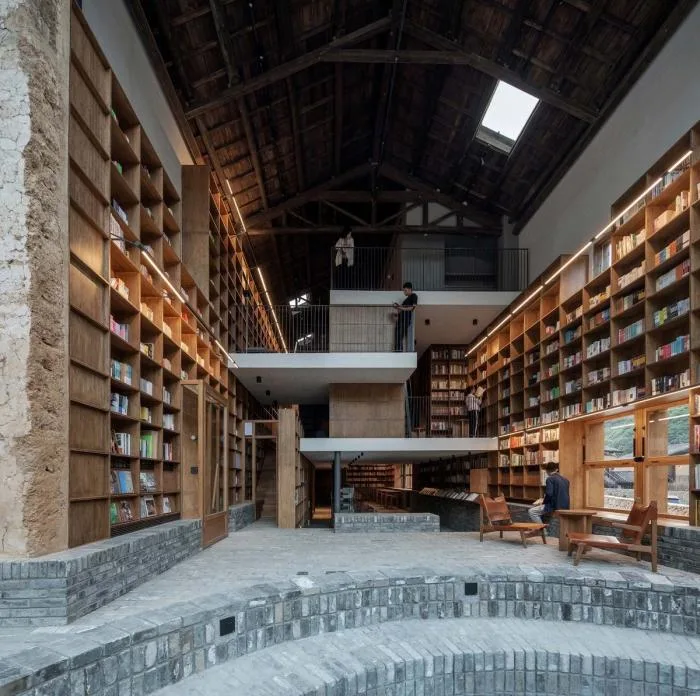
▲ Internal building section © Su Shengliang
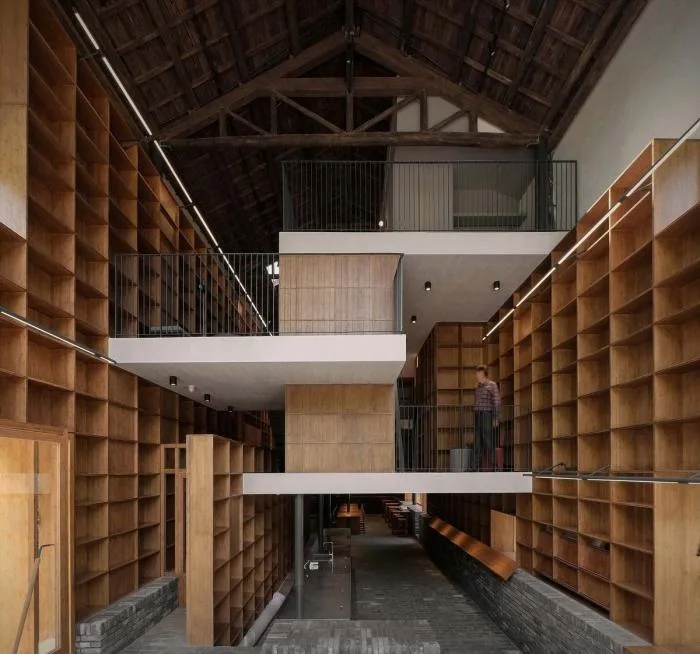
▲ Internal building section © Siyu Chen
The exterior renovation reflects the internal spatial reorganization. Inspired by the vertical arrangement of the capsule rooms, the architects introduced modest windows into the outer walls to preserve the building’s original simplicity. Newly installed glass and wood windows blend seamlessly with the rammed earth walls and existing old windows. Additionally, green bricks on the outdoor flooring extend quietly into the interior, reinforcing continuity.
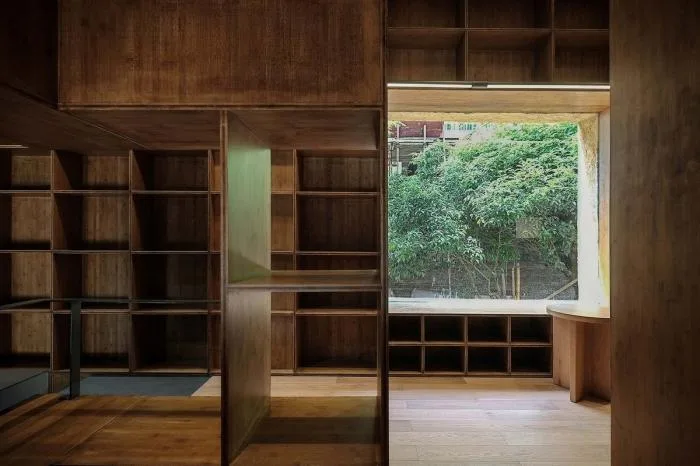
▲ Relationship between local materials and window openings © Siyu Chen
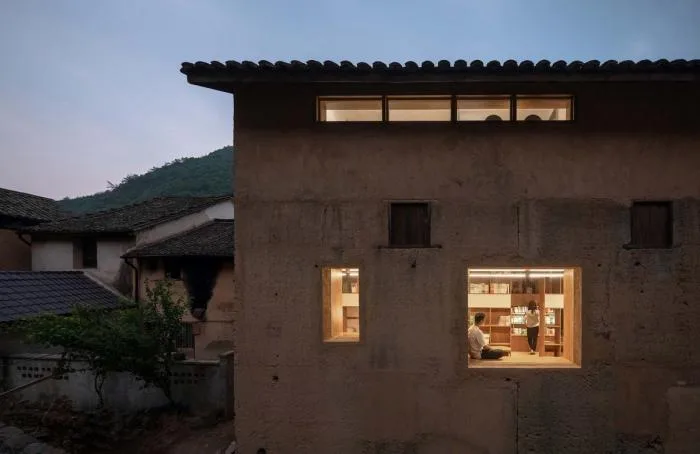
▲ South facade window openings © Su Shengliang
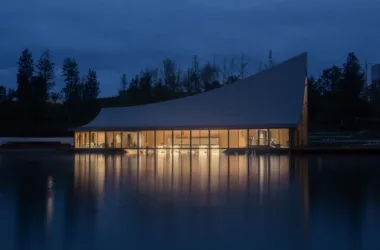
On the building’s east side, which offers stunning natural views, the architects opened up the entire mountain wall. They inserted a transparent structure made from a wooden frame and polycarbonate corrugated panels, seamlessly integrating the lush green mountains and forests with the interior. A skylight on the roof further enhances natural lighting. As night falls, the indoor lights glow warmly through the translucent walls, echoing the tranquility of the mountain village. The scent of books mingles with footsteps, embodying the daily life and emotions of the villagers, revitalizing the village spirit and inspiring new life ideals.
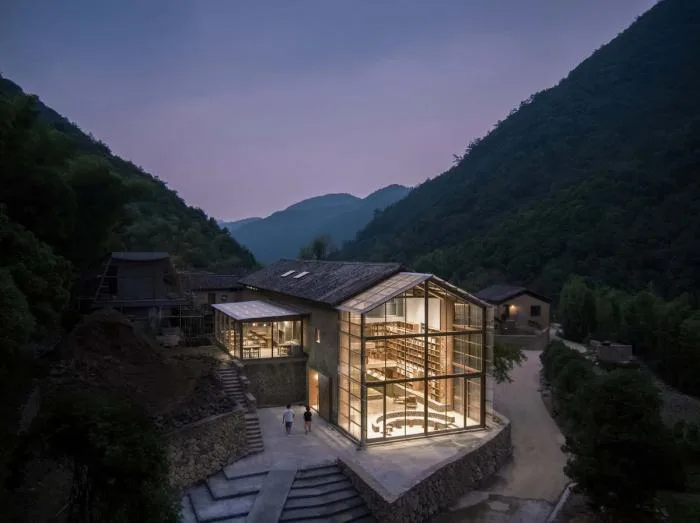
▲ East facade night view © Su Shengliang
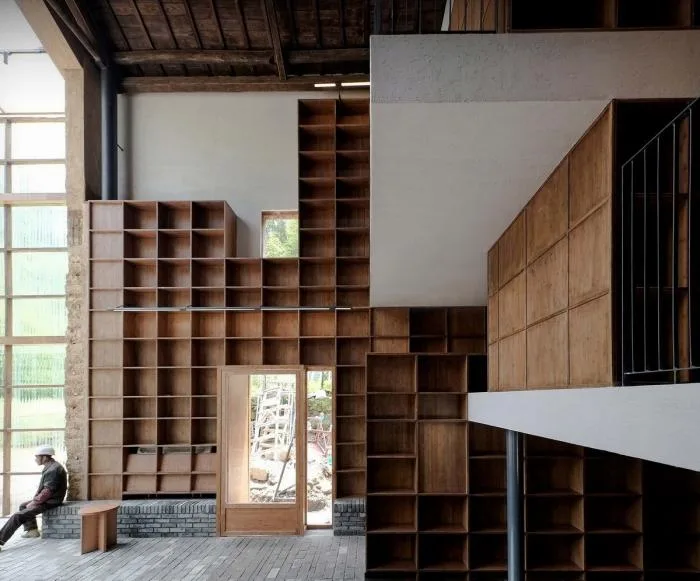
▲ Empty lobby, bookshelves, and floor slabs © Siyu Chen
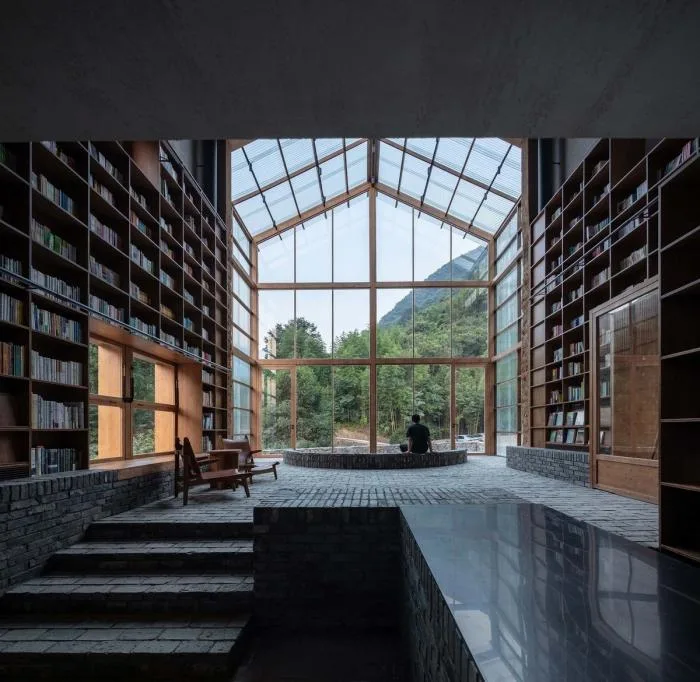
▲ View to the east from the library © Su Shengliang
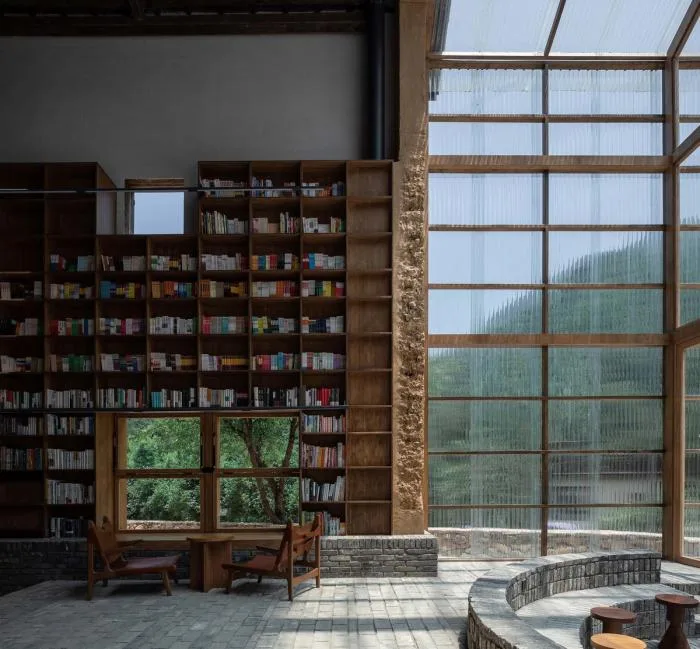
▲ Empty hall, bookshelf, and corrugated panel house © Su Shengliang
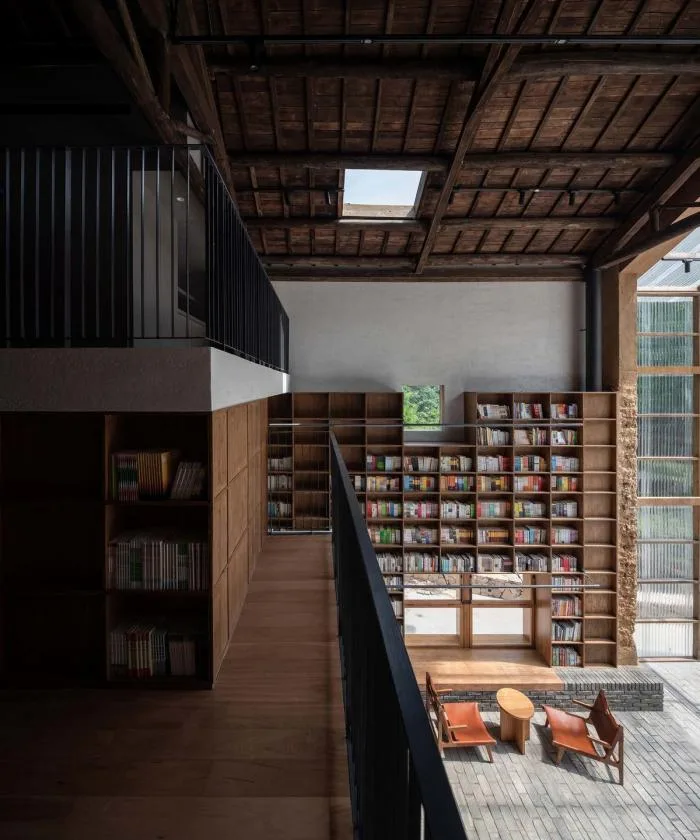
▲ Third-floor platform looking towards the lobby © Su Shengliang
Project Drawings
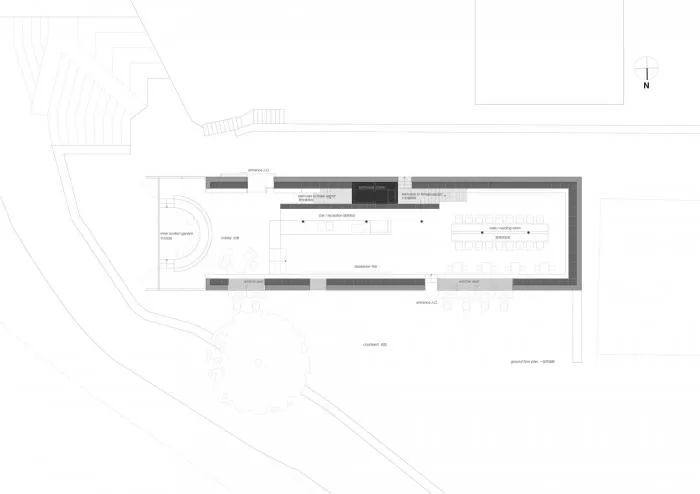
▲ First Floor Plan
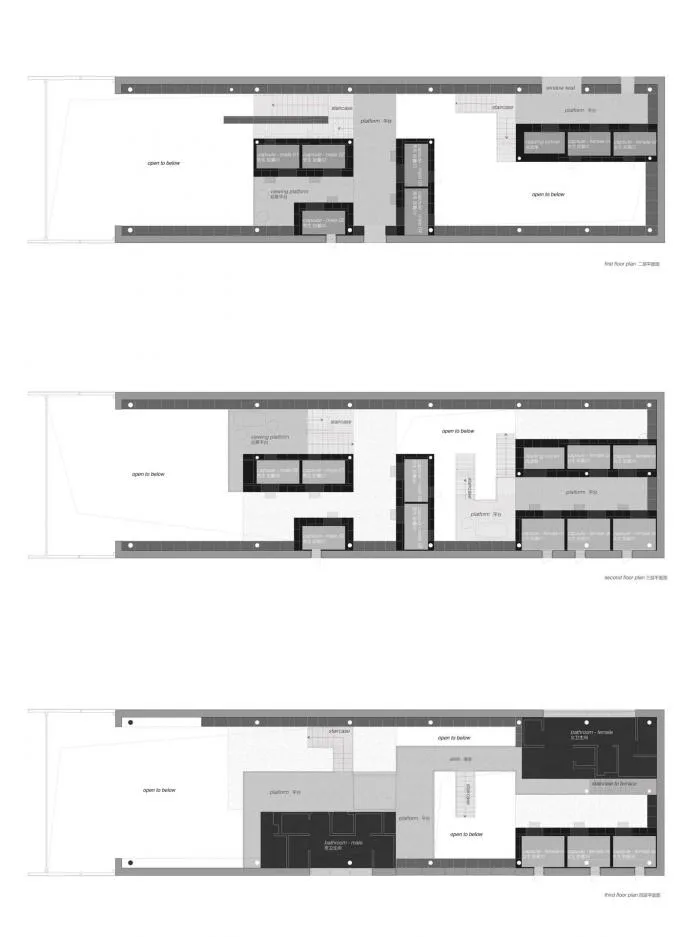
▲ Plans of the Second, Third, and Fourth Floors
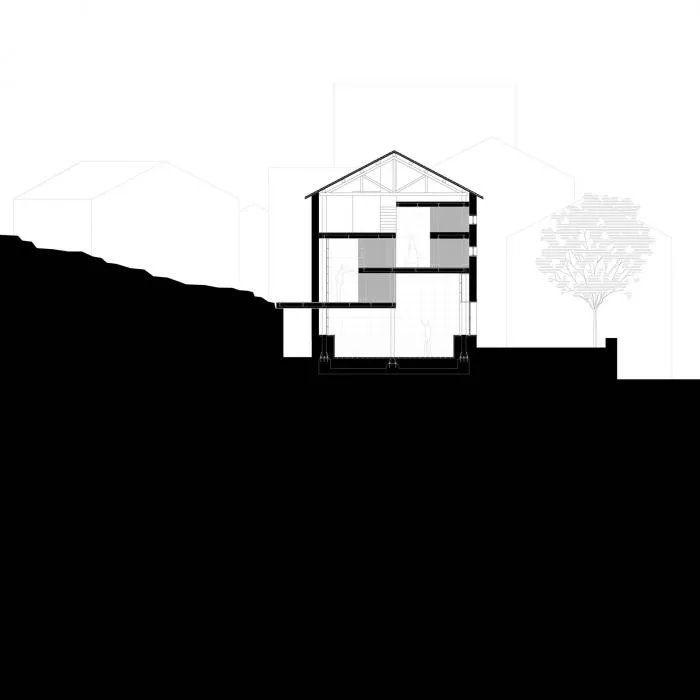
▲ Sectional View
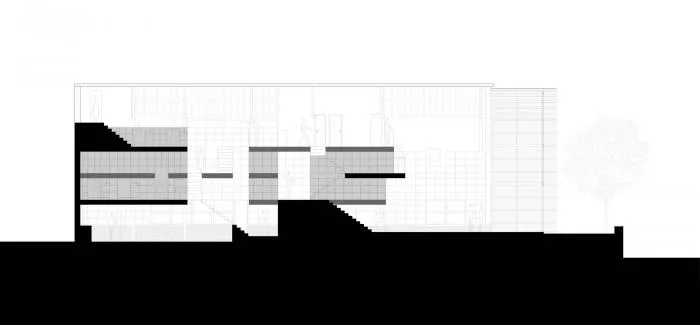
▲ Sectional View
Project Information
Project Type: Hotel Renovation
Location: Jinhua, China
Designer: Xitao Design Studio
Area: 232.0 m²
Year: 2019
Photographers: Su Shengliang, Ben Soon, Siyu Chen, Fengyu Zhu
Manufacturer: edimass
Design Team: Liu Tao, Cai Chunyan, Liu Guoxiong (Project Designer), Han Lihui (Soft Decoration Design)
Furniture and Lighting Collaborative Design: TIWUWORKS
Structural and MEP Design: Feng Yuzhu – Zhu Hongzhong (Project Coordination), Feng Meng (Structural Design), Yang Wei (HVAC Design), Wan Xiaojiao, Gong Dan, Chen Xinping (Hydroelectric Design)
Product Designers: Zhao Yun, Chen Xiaowen
Construction: Du Qingshui Construction
Resident Construction Managers: Liao Huarong, Jing Guoguo
Owner: Fangyu Kongxiang Su Cultural and Creative Complex












Must log in before commenting!
Sign Up