
Toyota has announced plans to build a prototype “City of the Future” on a 175-acre site at the base of Mount Fuji, Japan. This innovative “woven city,” designed by BIG, will be powered by hydrogen fuel cells and feature a fully connected ecosystem. The project was unveiled at CES 2020 (International Consumer Electronics Show) on January 7, 2020. Toyota detailed that this “woven city” will serve as a testing ground for autonomous vehicles, smart homes, artificial intelligence, and other cutting-edge technologies developed by Japanese automakers.
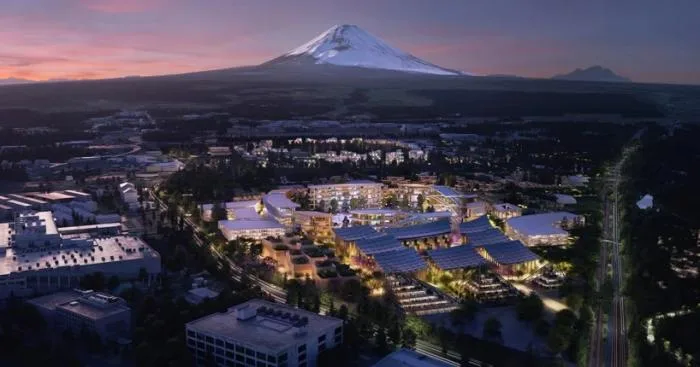
The fully connected ecosystem will accommodate approximately 2,000 residents, including full-time inhabitants, researchers from Toyota, retired employees and their families, as well as retail stores. This community will foster the development and real-world testing of autonomous vehicles, robotics, smart homes, and AI technologies.
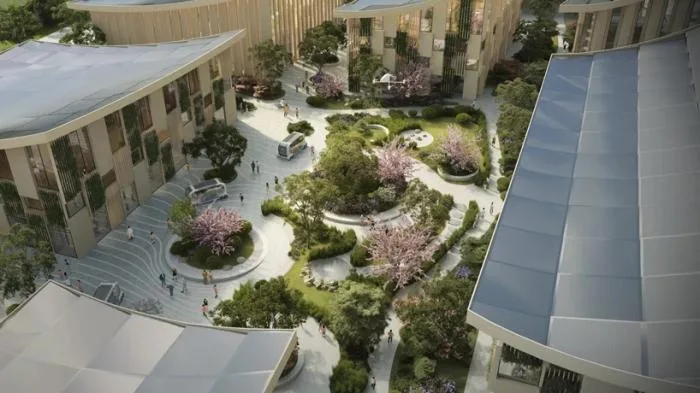
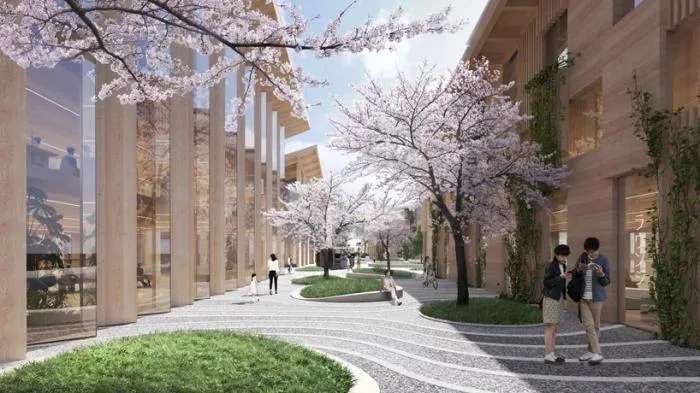
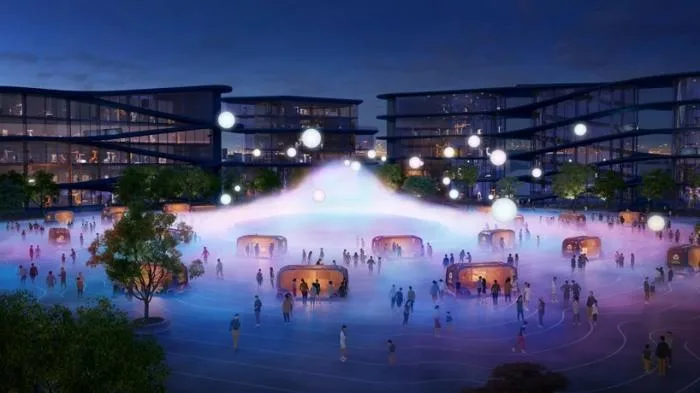
The “woven city” concept was created by BIG, led by Danish architect Bjarke Ingels. Construction is scheduled to begin in 2021. The city will feature an extended road network designed to separate autonomous driving pods, pedestrians, and low-speed vehicles such as electric motorcycles and bicycles. These three distinct street types will interlace to form an organic grid, accelerating autonomous vehicle testing.
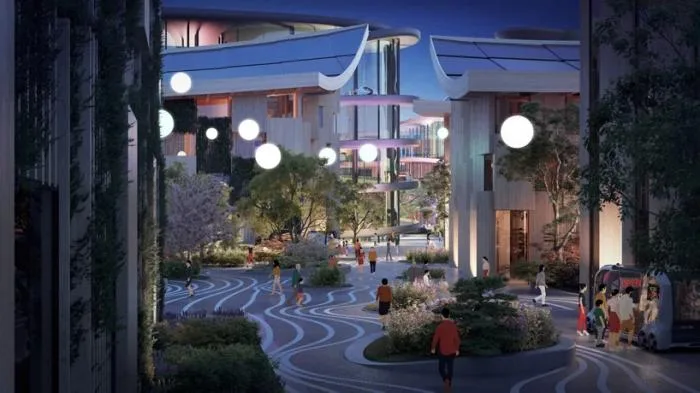
The city’s sustainable design combines advanced machine production techniques with traditional Japanese carpentry, emphasizing wood to minimize the carbon footprint. Hydrogen fuel will supply electricity, while photovoltaic panels installed on rooftops will generate solar energy.
To promote eco-friendly mobility, only fully automated, zero-emission vehicles will be permitted on main roads. Throughout the city, Toyota’s electronic boards will facilitate transportation, delivery, and mobile retail services.
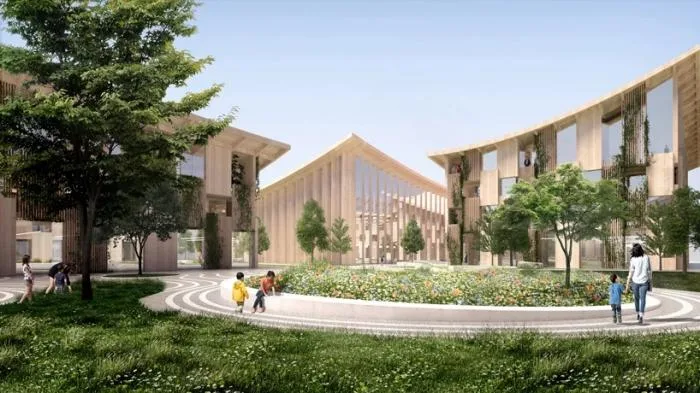
Toyota plans to integrate local plants and hydroponic crops into the city’s outdoor spaces. Public areas such as community parks, Daxing Central Park for entertainment and leisure, and Central Square will foster community connections. Toyota emphasizes that nurturing social interaction is a vital part of this urban experience.
“A wide range of emerging technologies is fundamentally transforming and leading the future of our cities,” explained Bjarke Ingels, founder and creative director of BIG. “Connected, autonomous, zero-emission, and shared mobility solutions will open up new possibilities for urban lifestyles. Through our collaboration with Toyota and its affiliates, we believe that ‘weaving cities’ will pave the way for future urban development.”
“Even on a relatively small footprint, building a city from scratch is a unique opportunity to develop future technologies, including digital operating systems essential for urban infrastructure,” said Akio Toyoda, President of Toyota Motor Corporation. “By connecting people, buildings, and vehicles and enabling communication through data and sensors, we can test AI connectivity in both virtual and real environments, maximizing its potential.”
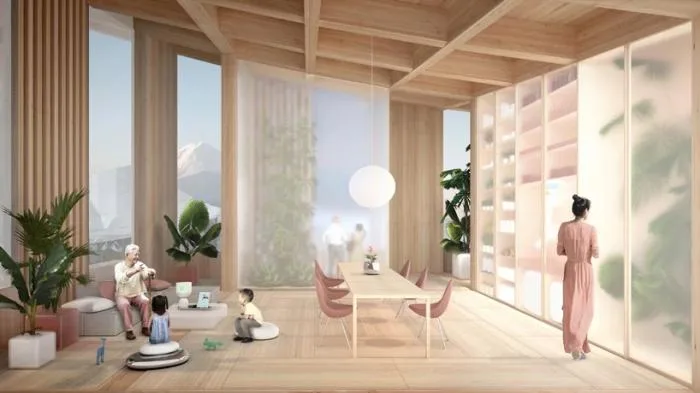
Residences will feature advanced human-support technologies, such as home robots assisting with daily chores. Families will benefit from sensor-based AI systems that monitor health, provide care, and enhance everyday life, creating a safe and proactive environment to deploy IoT technologies grounded in integrity and trust.
Toyota will invite other businesses and academic institutions to collaborate and welcomes scientists and researchers worldwide to conduct their work in this unique, authentic environment. “We invite all those dedicated to improving future lifestyles to join us in this exploration, leveraging our distinctive research ecosystem to create better ways of living and mobility for everyone,” Toyota added.
Project Information:
Project Name: Toyota Weaving City
Project Type: Institutional
Area: 175 acres / 708,200 square meters
Location: Susono City, Shizuoka Prefecture, Japan
Owner: Toyota Motor Corporation + Kaleidoscope Creative
Collaborators: Squint Opera, Mobility in Chain, Atelier Ten
Project Year: 2020
BIG Team:
Managing Partners: Bjarke Ingels, Leon Rost
Project Managers: Yu Inamoto, Giulia Frittoli
Design Team: Agla Egilsdottir, Alvaro Velosa, Brian Zhang, John Hein, Joseph Baisch, Mai Lee, Margherita Gistri, Nicolas Lapierre, Peter Sepassi, Raven Xu, Samantha Okolita, Shane Dalke, Thomas Mcmurtrie, Yi Lun Yang, Nasiq Kahn, Jeffrey Shumaker













Must log in before commenting!
Sign Up