
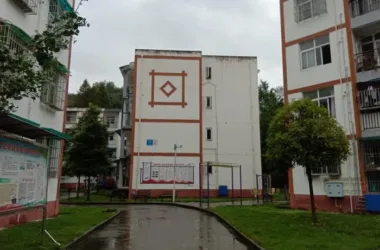
In 2017, we were invited by the village secretary to undertake architectural design and comprehensive planning for Xiaoshi Village in Pengzhou, Sichuan. Like many villages rebuilt after the Longmen Mountain earthquake, Xiaoshi Village faces the challenge of redefining its identity. The residential areas look similar, with simple brick and concrete buildings lining the streets, resulting in hollowed-out rural communities.
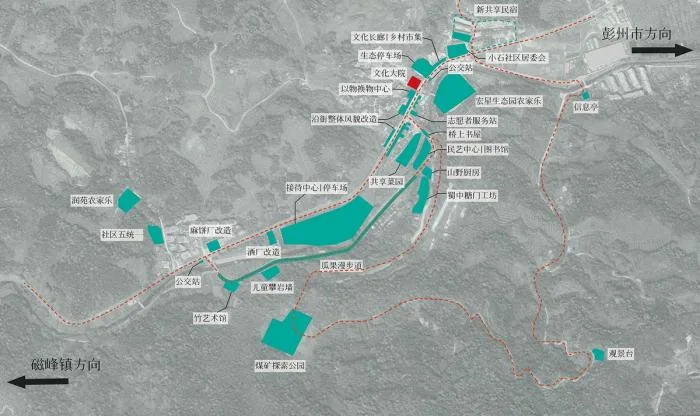
▲ Overall Plan of Xiaoshi Village
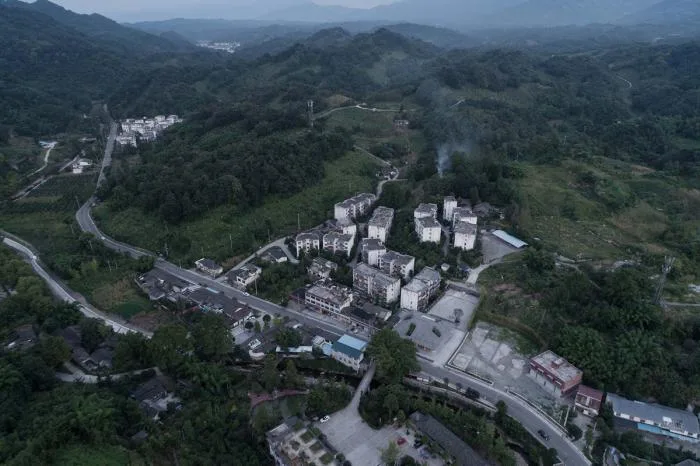
Sichuan’s cloudy climate encourages most residents to enjoy outdoor activities in open spaces. With heavy annual rainfall, shelter is a necessity. The resilient interaction between locals and their public environment has shaped traditional architecture featuring sloping roofs and numerous open eaves corridors, laying the foundation for communal living. However, modern rapid construction has replaced these traditional spatial forms, disrupting the lifestyles shaped by them. This raises important questions: What spatial qualities should future communities embody? How can we build a shared spatial agreement for communal living?
These questions inspired our core concept: to create a “tile roof that accommodates all activities.” This design connects poetic traditions with the vision of interconnected future communities. It fosters a shared identity under one roof, encouraging people to come together, interact, and participate in subtle public governance through spatial design—gradually cultivating new models for rural communities.
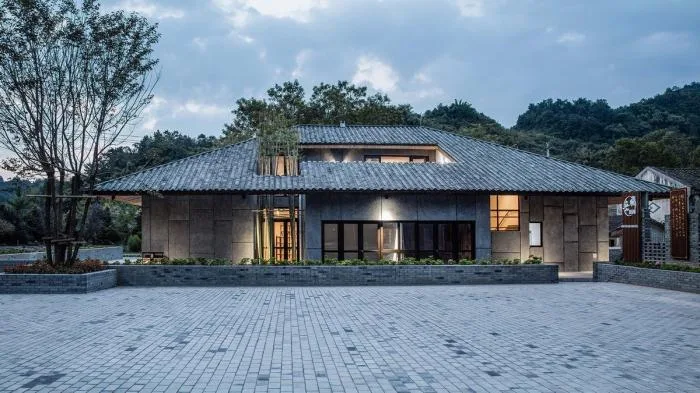
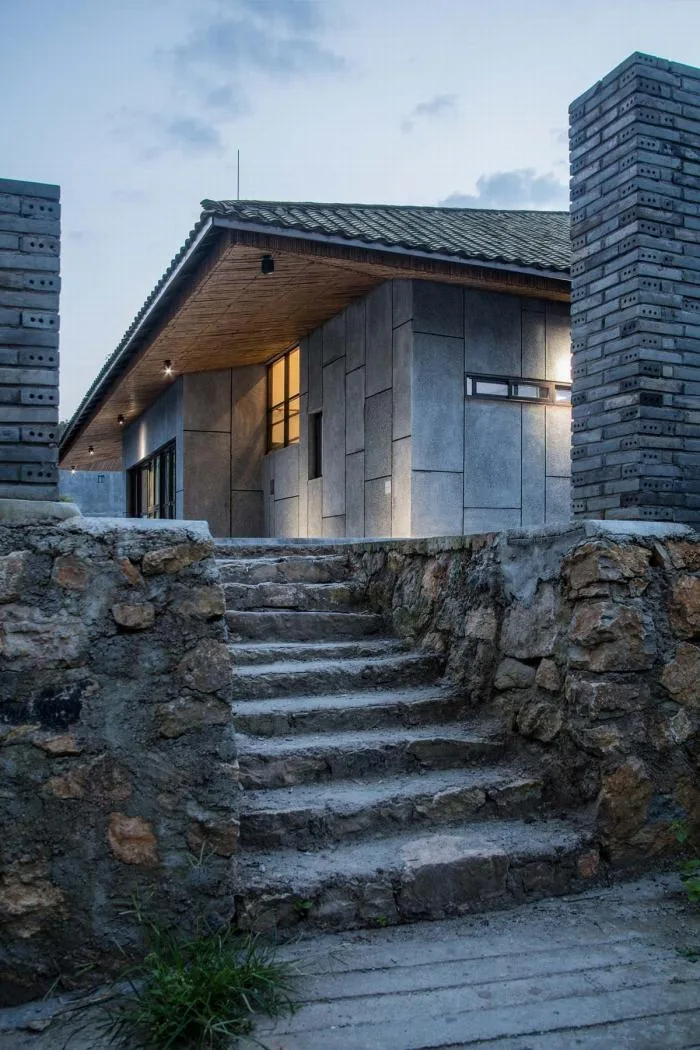
The Xiaoshi Village Cultural Courtyard project represents our initial architectural experiment. Situated at the heart of Xiaoshi Village, this cultural center integrates various public functions—including a daycare center, rural health station, night school, gym, and an exhibition hall dedicated to loyalty and filial piety culture. It marks the beginning of an ideal model for public space.
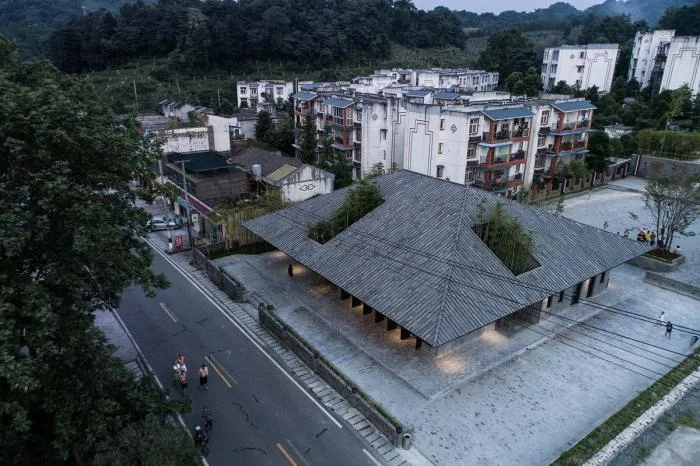
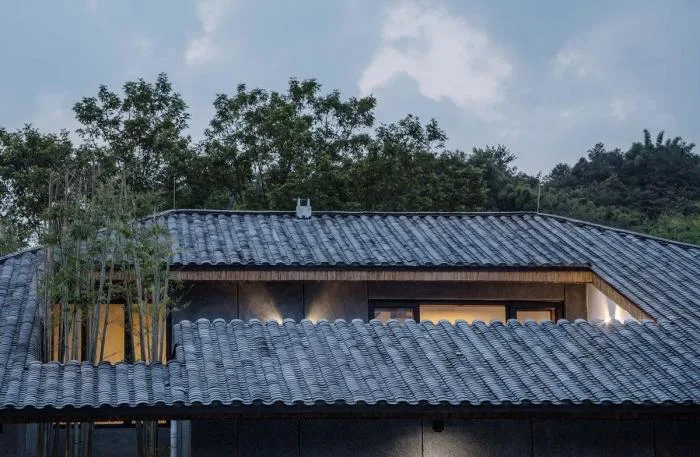
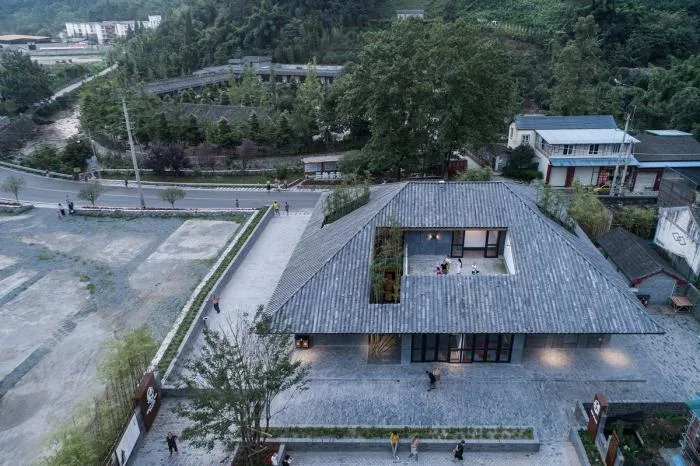
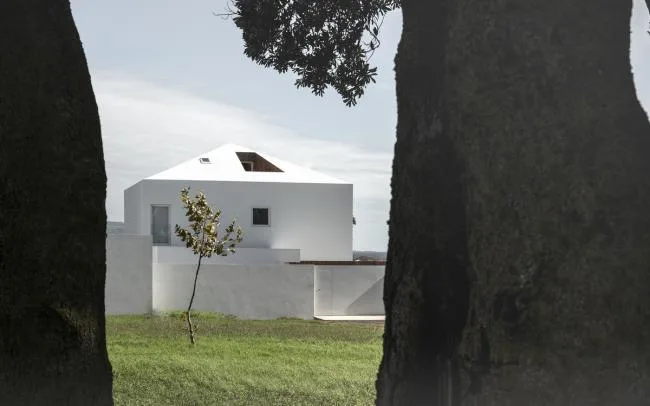
The design employs a four-sloped tiled roof that covers the entire site, guiding the structure, materials, details, and functionality. Four courtyards open beneath the four slopes of the roof, complementing the auxiliary spaces on the ground floor. This arrangement creates a smooth, seemingly effortless entrance beneath the eaves. Bamboo from Xiumao grows within the courtyards, providing a natural landscape and intimate connection to nature for the core space on the first floor and the rooms above on the second floor.
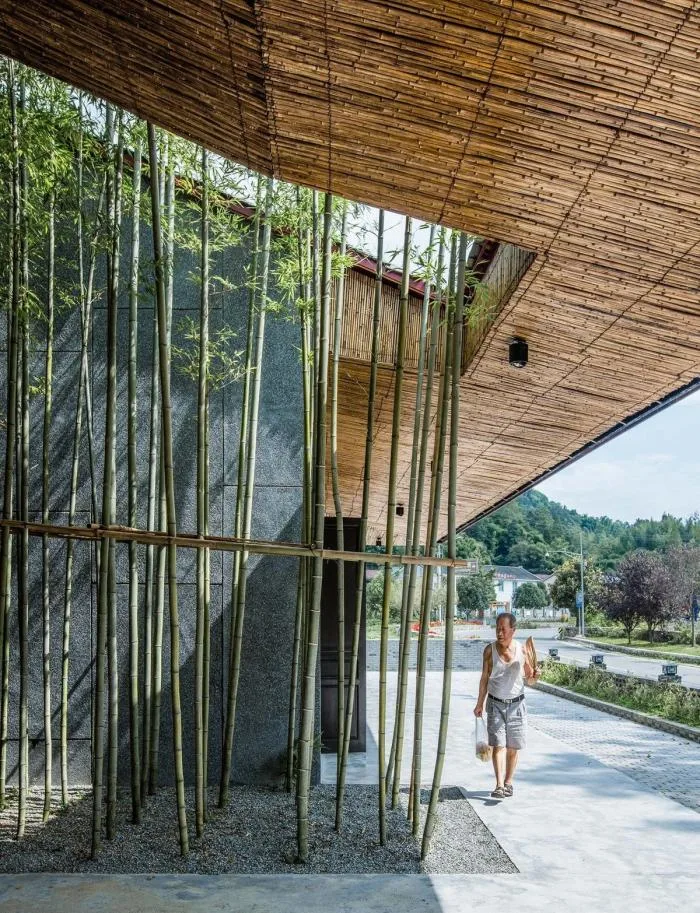
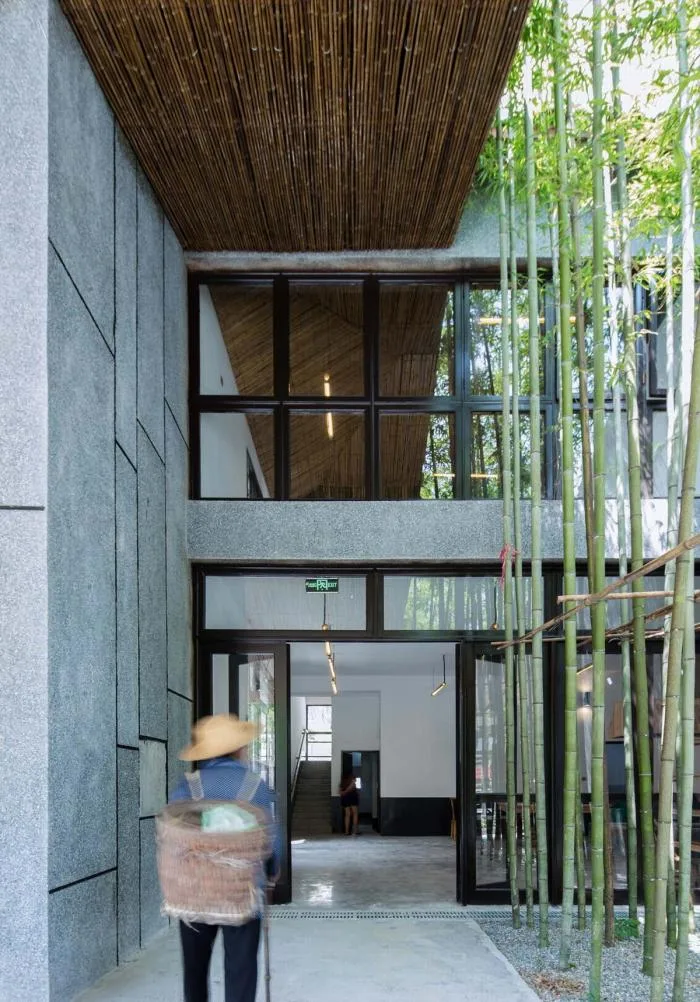
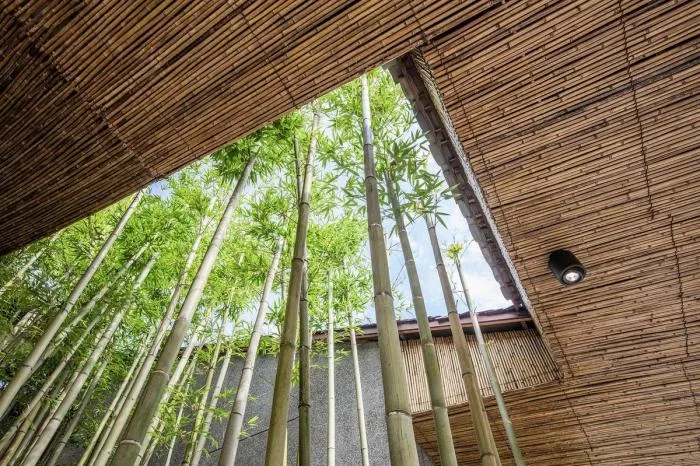
To achieve an 8-meter eave overhang, we used a concrete beam overhanging steel beam structure. Beneath the roof, the ceiling is lined with treated fine bamboo, creating a warm ambiance and subtle light diffusion. The building’s exterior walls feature black stone with a water-brushed finish, while the floor is polished plain concrete to maintain soft, clear lighting and emphasize the relationship between the roof’s scale and the human presence. The terrazzo wall’s scale and pattern mimic bamboo knots, creating a dialogue between natural, crafted, and abstract bamboo elements that harmonize with the roof and courtyard landscape.
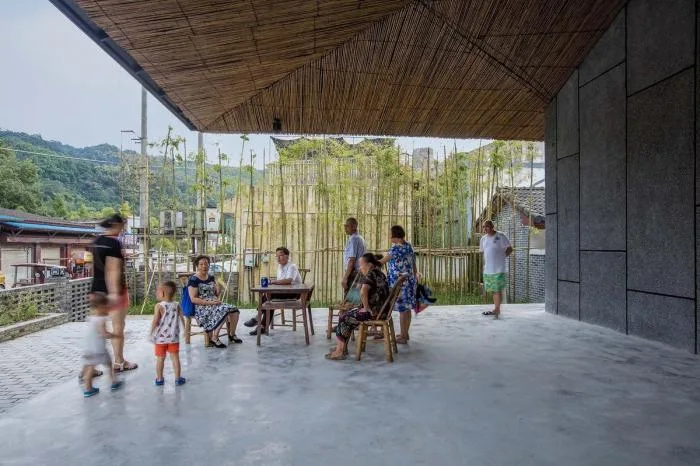
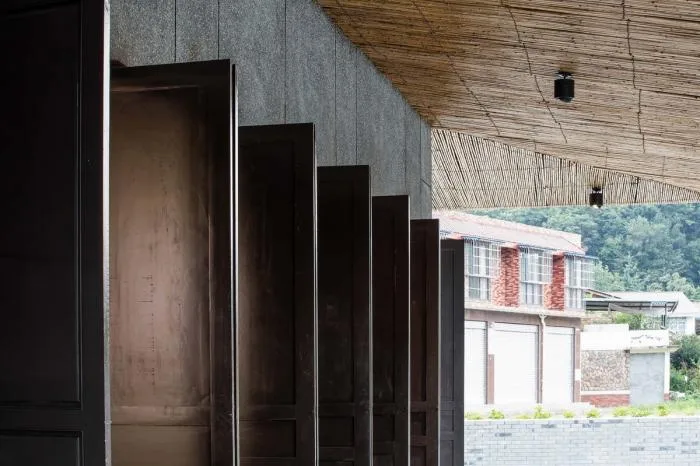
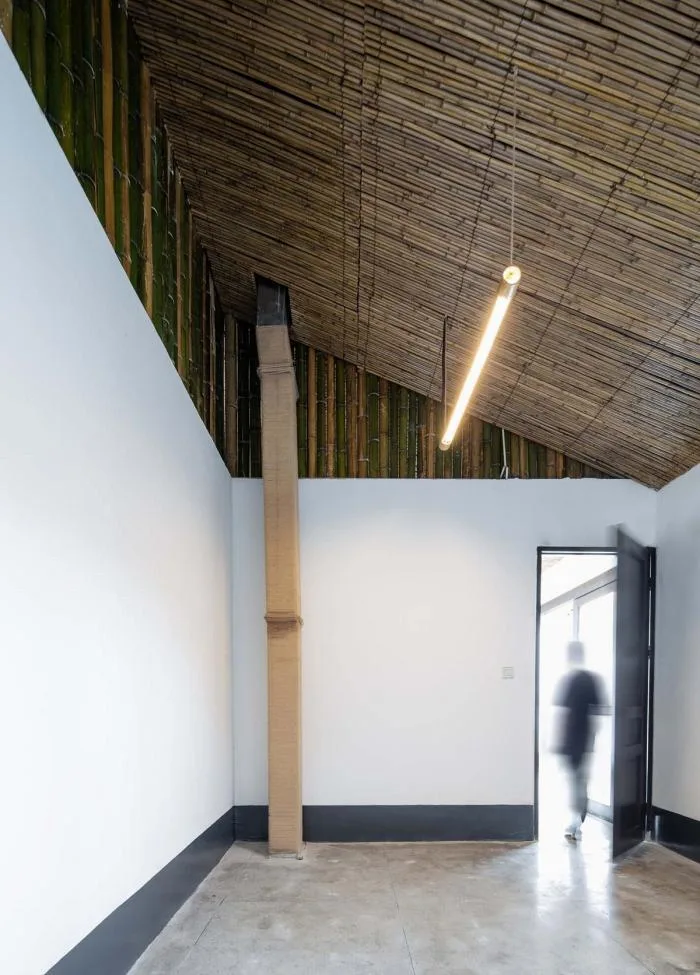
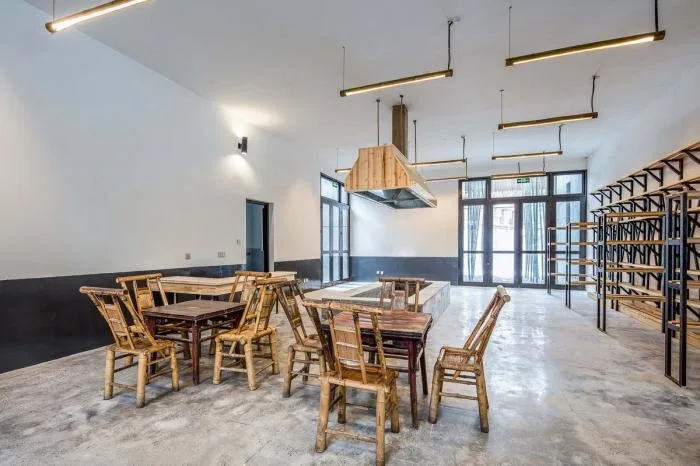
Since the building’s completion in 2018, we have observed the “under the same roof” public space model for over a year. This area frequently serves as the hub for spontaneous village activities and has become a recognizable symbol of Xiaoshi Village. In our future community planning, this cultural courtyard will act as the central anchor, from which a series of interconnected roof spaces will extend—blending production and daily life to ultimately form our envisioned rural community spatial model.
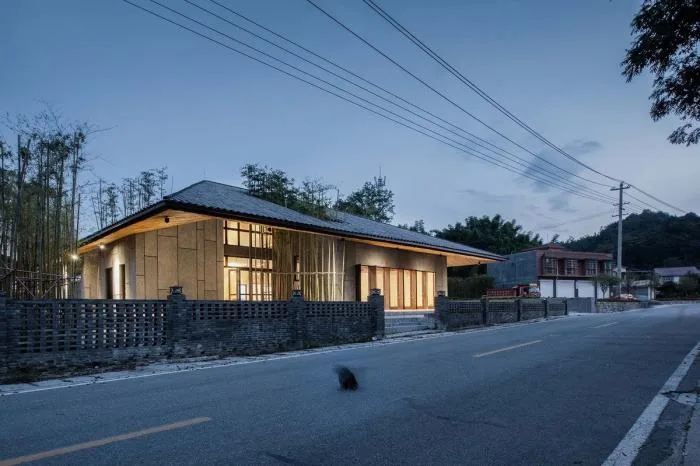
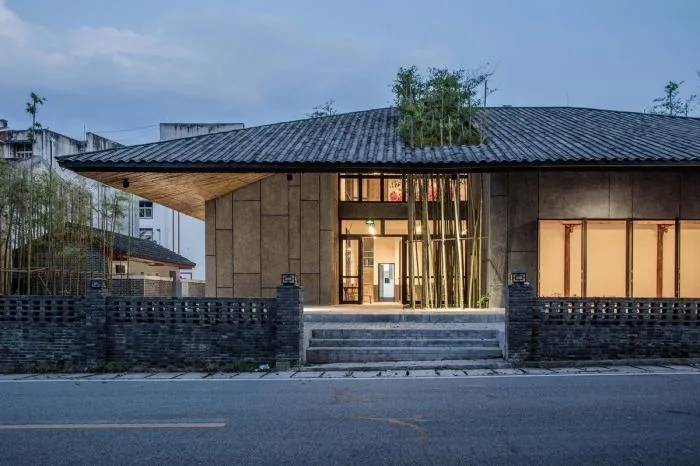
Project Drawings
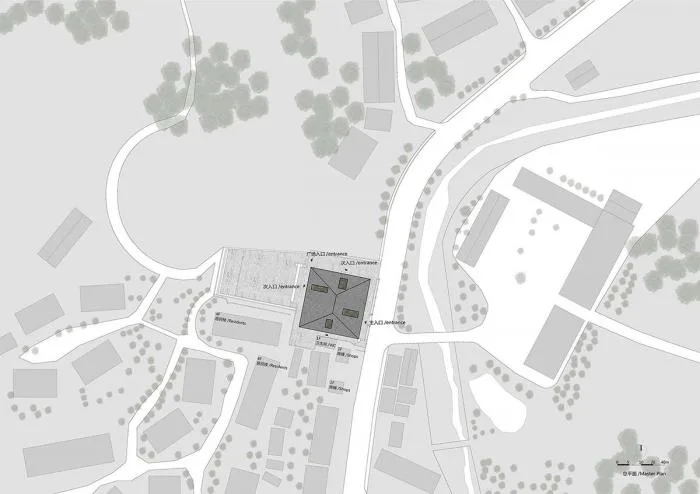
▲ General Layout Plan
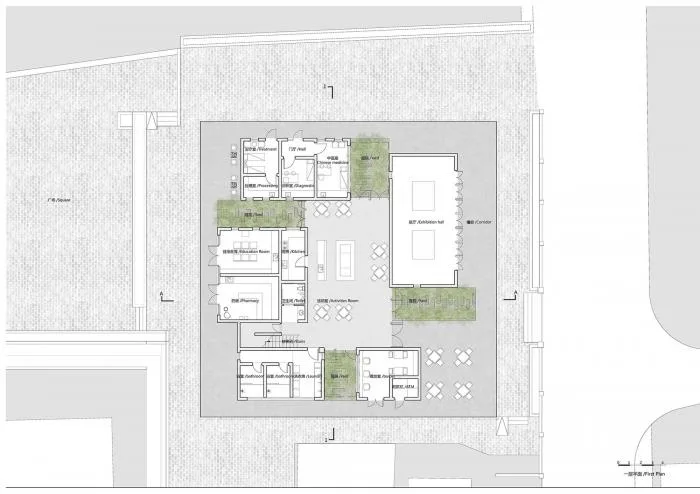
▲ First Floor Plan
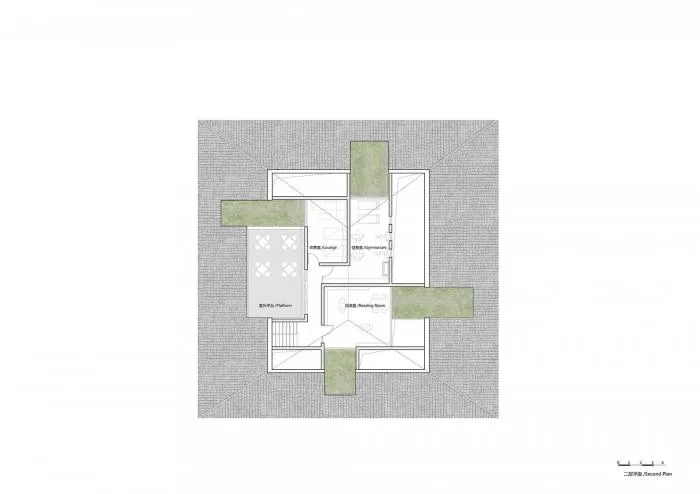
▲ Second Floor Plan
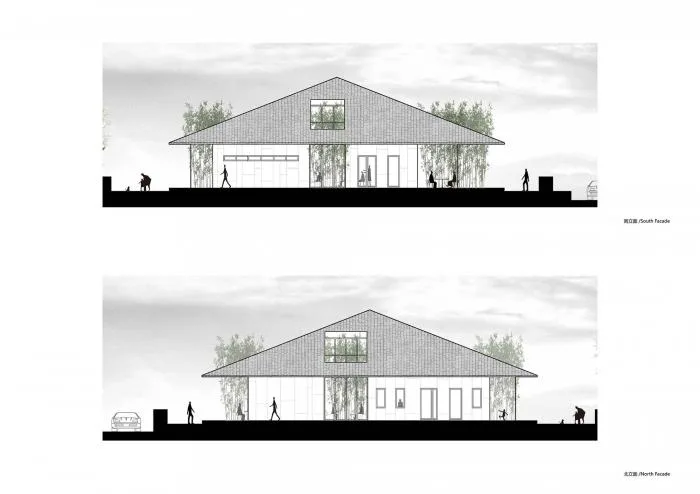
▲ South and North Elevations
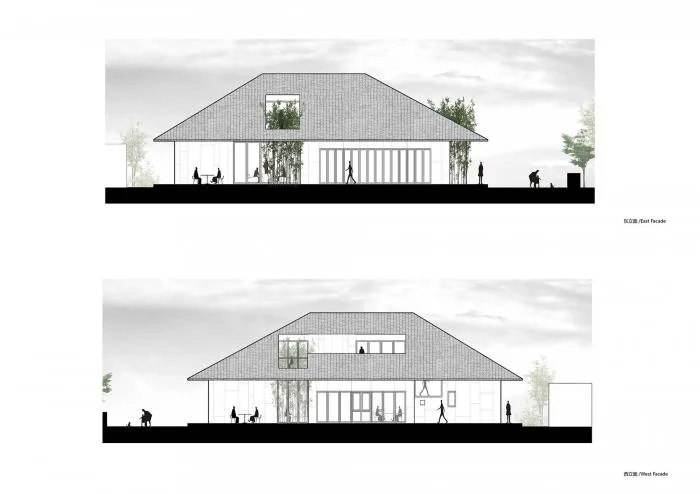
▲ East and West Elevations
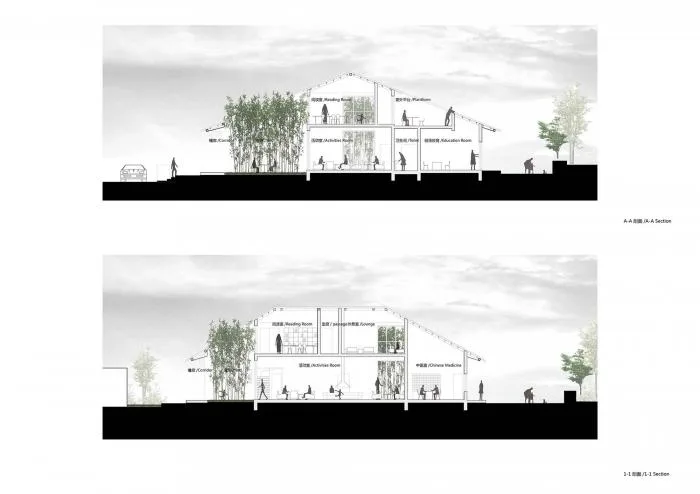
▲ Section View
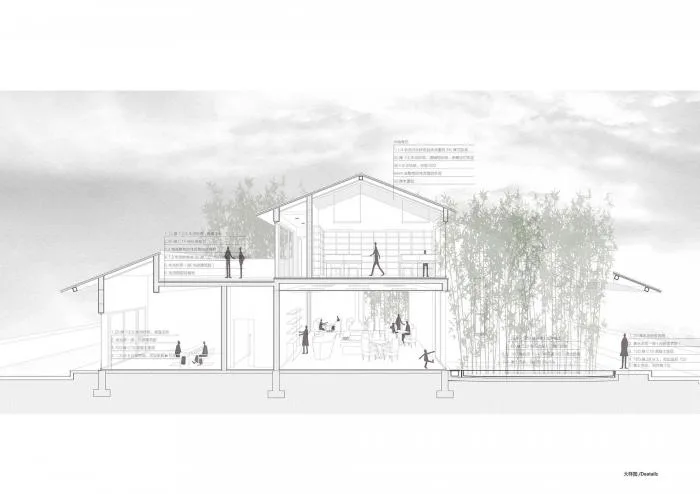
▲ Detailed Drawing
Project Information
Project Type: Community Center
Location: Chengdu, China
Architect: Time and Space Architecture Studio
Area: 650 m²
Year: 2018
Photographer: He Lian
Lead Architect: Li Ye
Project Manager / Architect: Li Ye
Design Team: Zhang Miao, Wang Zhi, Yue Ye, Zeng Xianming, He Qian (intern)
Structural Consultant: Zhao Jingtao
Mechanical & Electrical Consultant: Guo Yingming
Planning Consultants: Huang Helu, Wu Huan
Community Governance Consultant: Yue Fufei
Resident Architects: Yue Ye, Zeng Xianming, Zhang Xun, Yang Lijun
Media Consultant: Yu Yiren (Yú Multimedia Design Studio)
Owner: Xiaoshi Community Village Committee, Pengzhou City
Project Cost: 930,000 yuan












Must log in before commenting!
Sign Up