
The building is situated on a site full of contrasts: it seeks to embrace the landscape while avoiding direct sunlight, desires a lightweight structure while ensuring stability, aims to maintain an air of mystery yet remain practical, strives to connect with the environment while preserving privacy, and balances durability with unexpected elements. These very contradictions inspire the design of this lake view residence.
On the building’s west side, an unrivaled vista overlooks the Colorado River and the Bright Leaf Nature Reserve. This family of four wishes not only to enjoy a relaxed lifestyle within the thriving mature oak forest but also to create a compelling architectural atmosphere. The new residence emphasizes visual and spatial dynamics, providing an abstract backdrop for captivating light, environment, and landscape experiences.
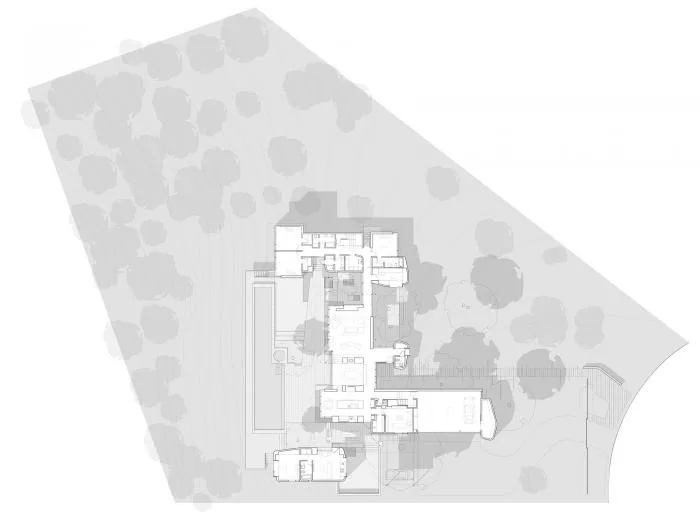
▲ General layout plan
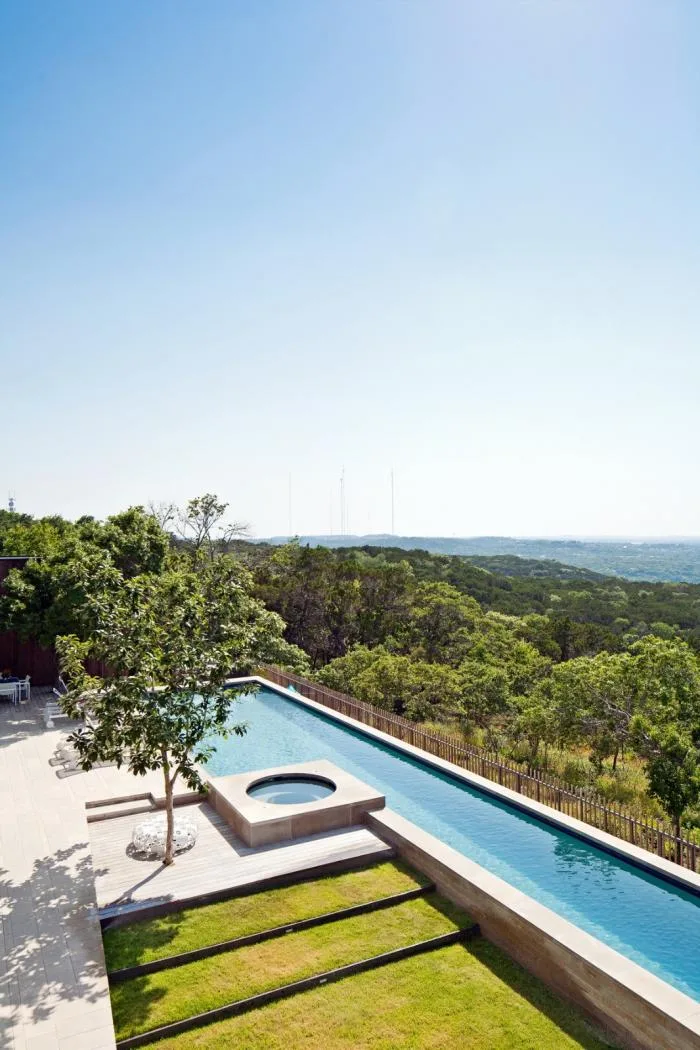
Visitors approach the residence via a winding limestone path beneath towering ancient trees, flanked by a sequence of lush vertical cypress trees and verdant grasslands. The unfolding scenery creates a sense of anticipation; carefully framed views gradually reveal the panorama, offering continual new discoveries.
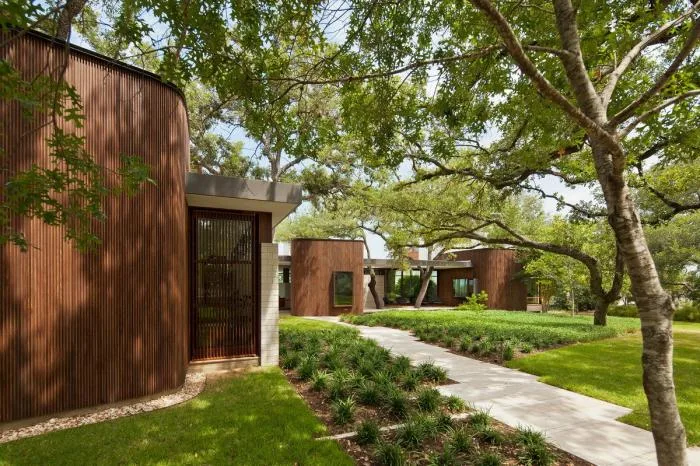
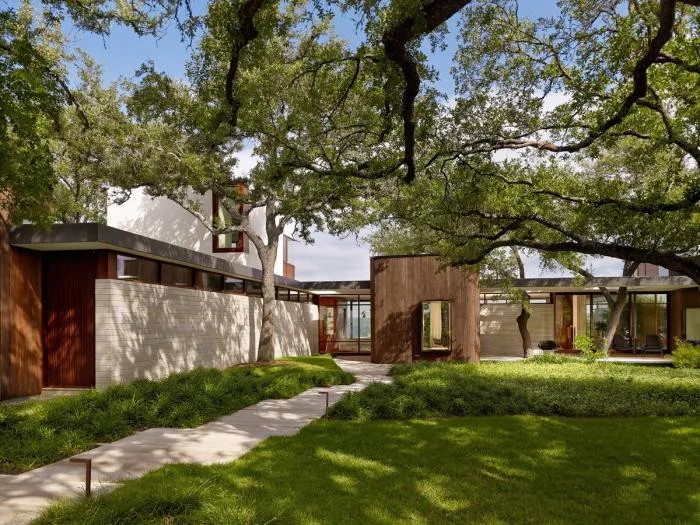
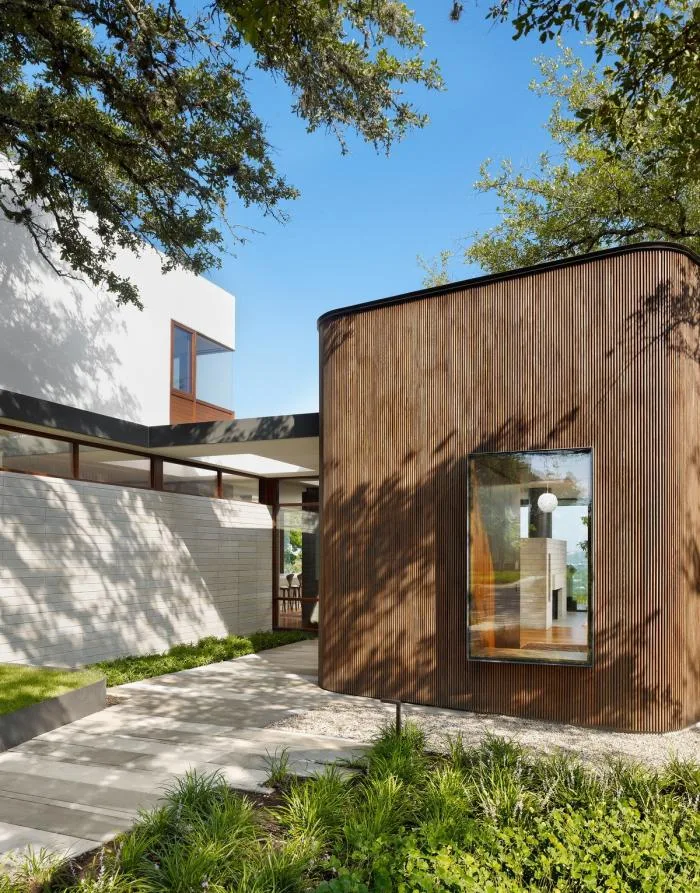
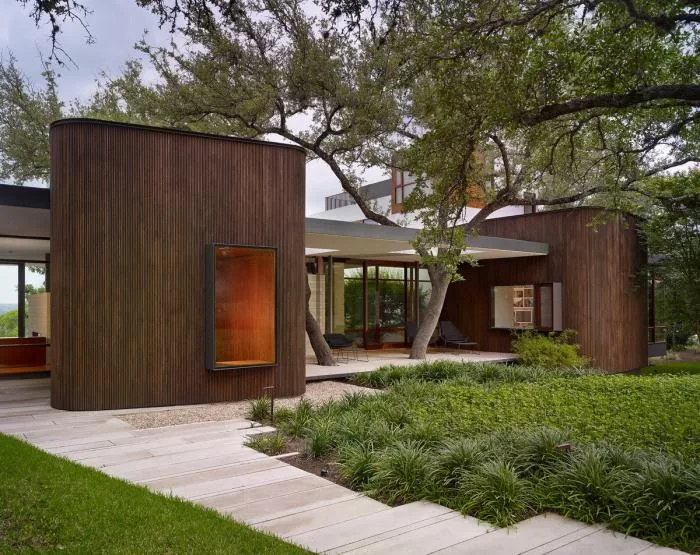
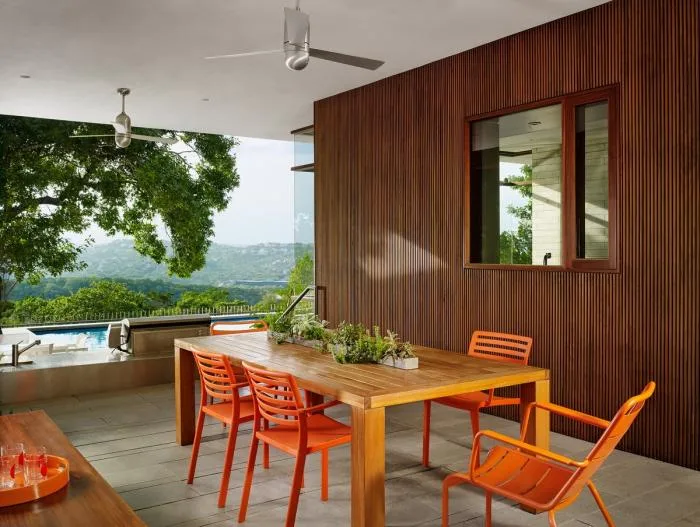
The relaxed roof plan serves as a reflective surface for natural light, while a striking glass curtain wall featuring a large glass corner seamlessly connects the interior and exterior, extending the building’s spatial experience. Inside, a palette of materials, furniture, and finely crafted cabinetry creates an intimate and refined atmosphere. Designed to accommodate this active family, the residence offers spacious, interconnected gathering areas ideal for entertaining and family time, alongside smaller spaces for more intimate occasions.
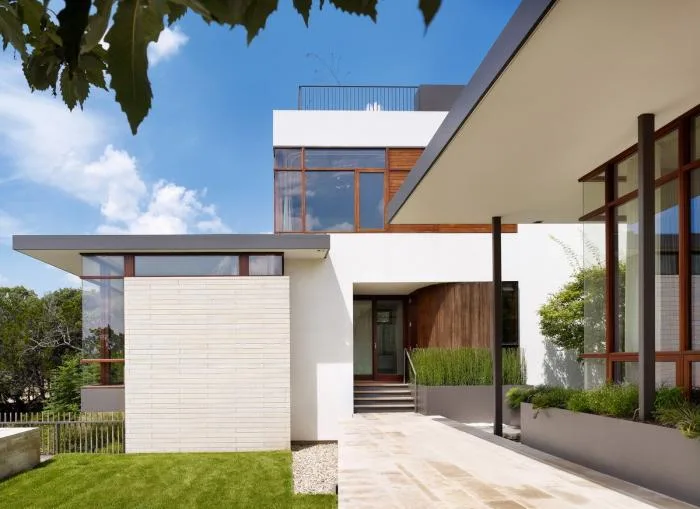
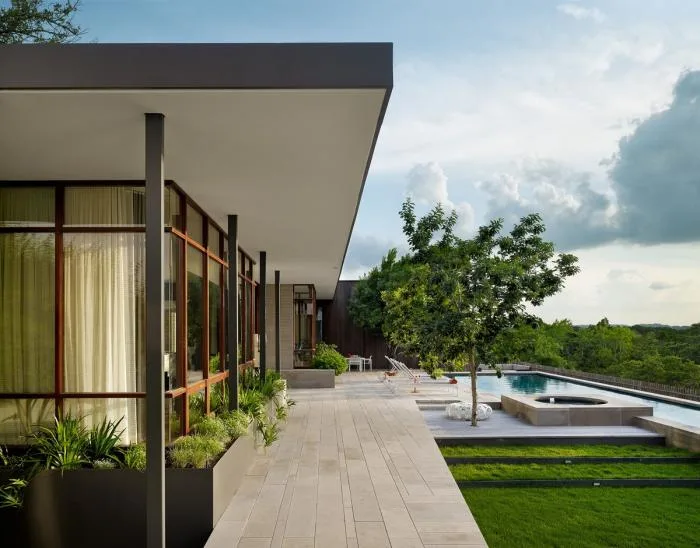
The interior is adorned with 19th-century Persian carpets, a blend of classical and contemporary furniture, medieval collections, sculptures, and locally sourced paintings. A distinctive orange and blue floor pattern runs throughout the home, complementing custom-designed furniture such as a large walnut wood cutlery cabinet and vintage bookshelves featuring unique patterns.
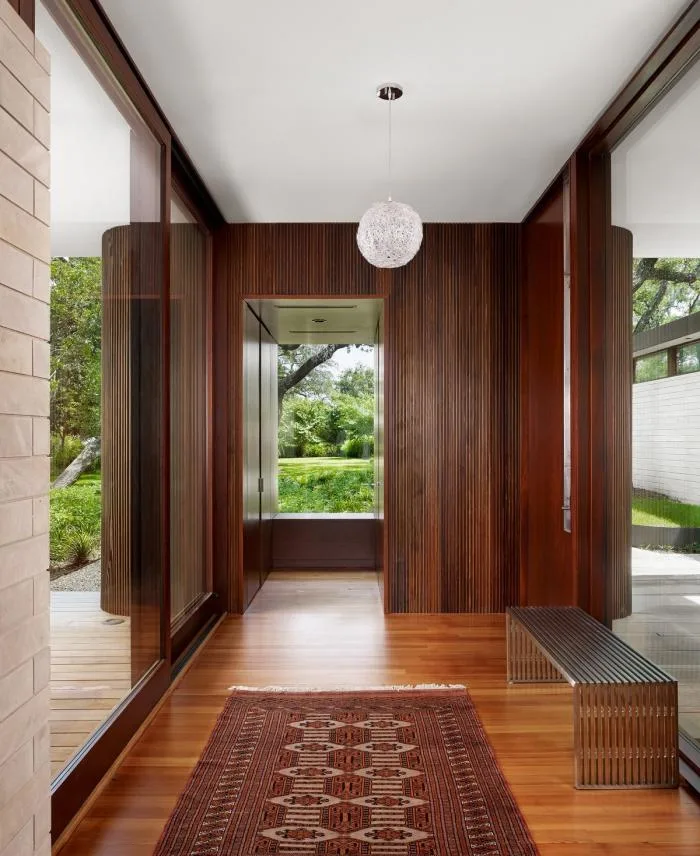
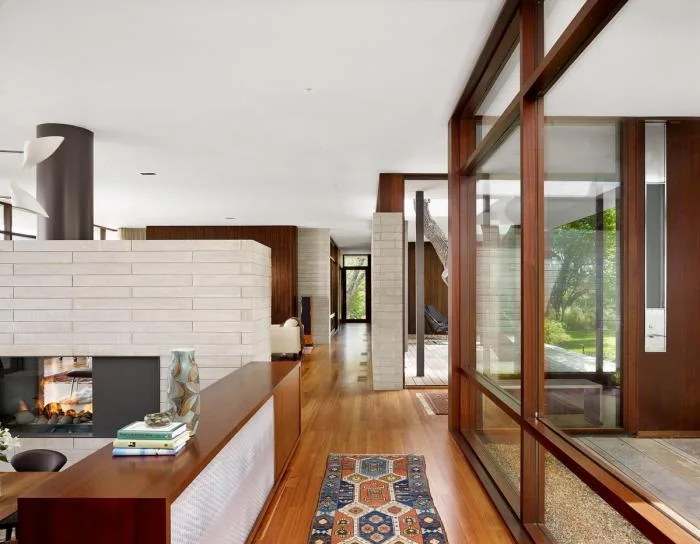
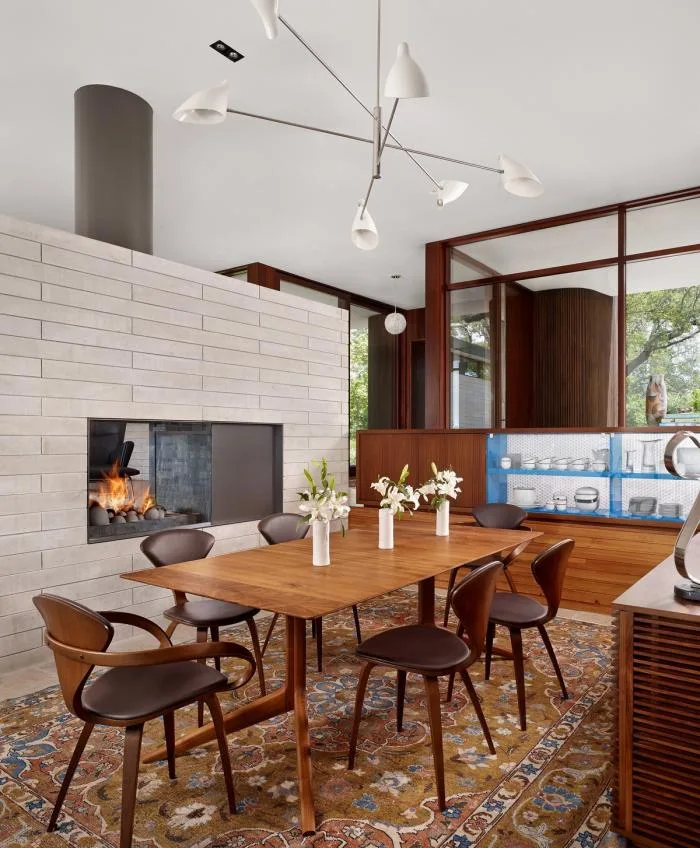
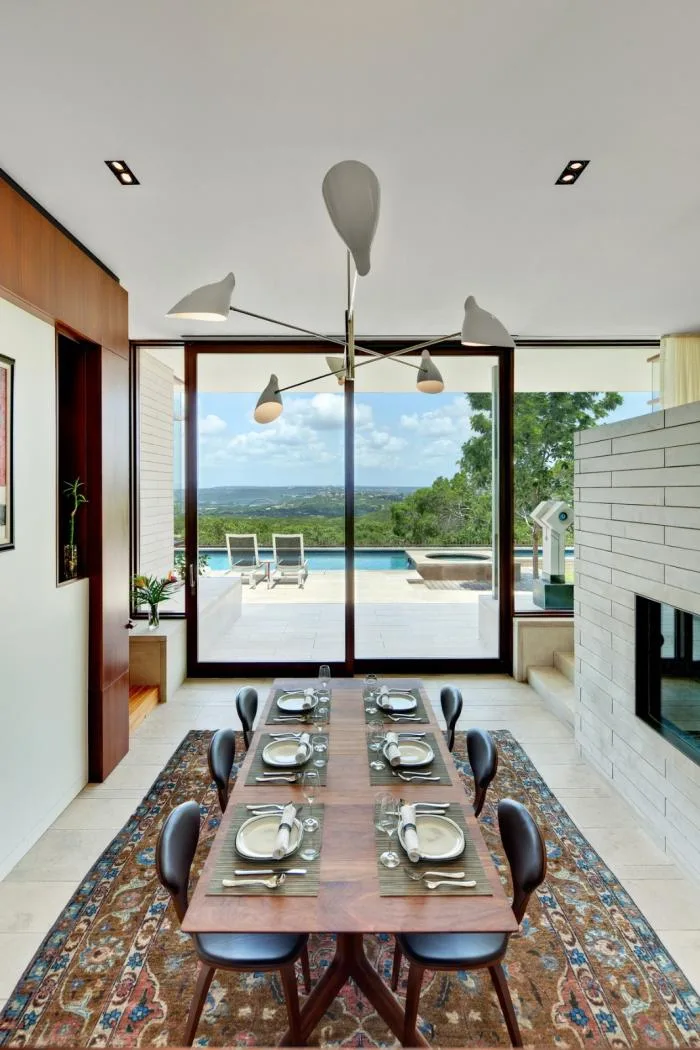
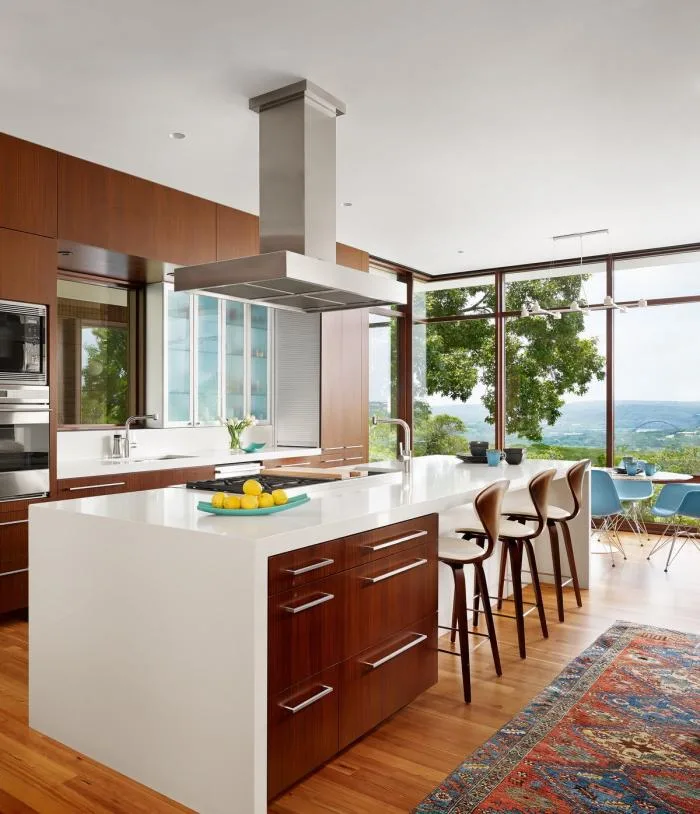
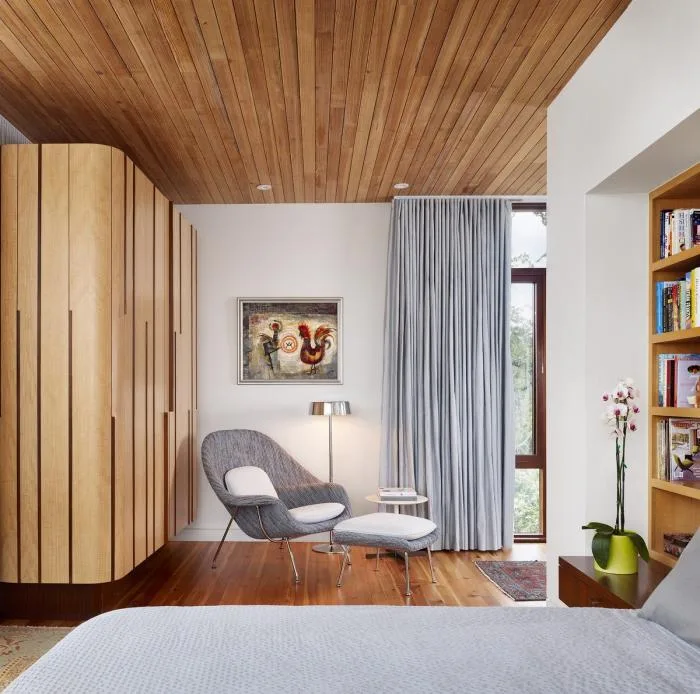
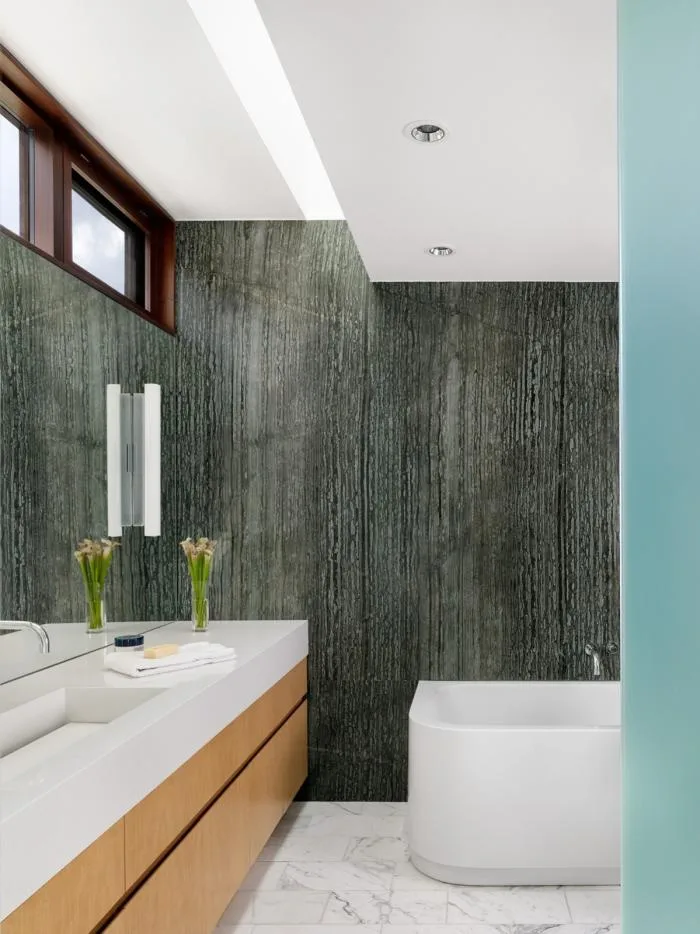
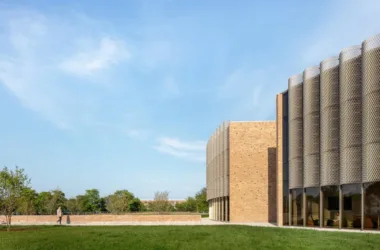
Trees play a central role in shaping the lakeside residence. The interaction between trees, landscape, and architecture is evident throughout: the pervasive ceiling plane gives way to the curved arrangement of oak trees, the foundation spans over their roots, and water gently penetrates the open platform, protecting the roots and creating open yet private landscapes throughout the site. Upon entering, the view immediately hints at the surrounding natural beauty. Expansive glass windows blur the boundaries between indoors and outdoors, while the roof extends outward, providing shade and unifying the interior with the exterior environment.
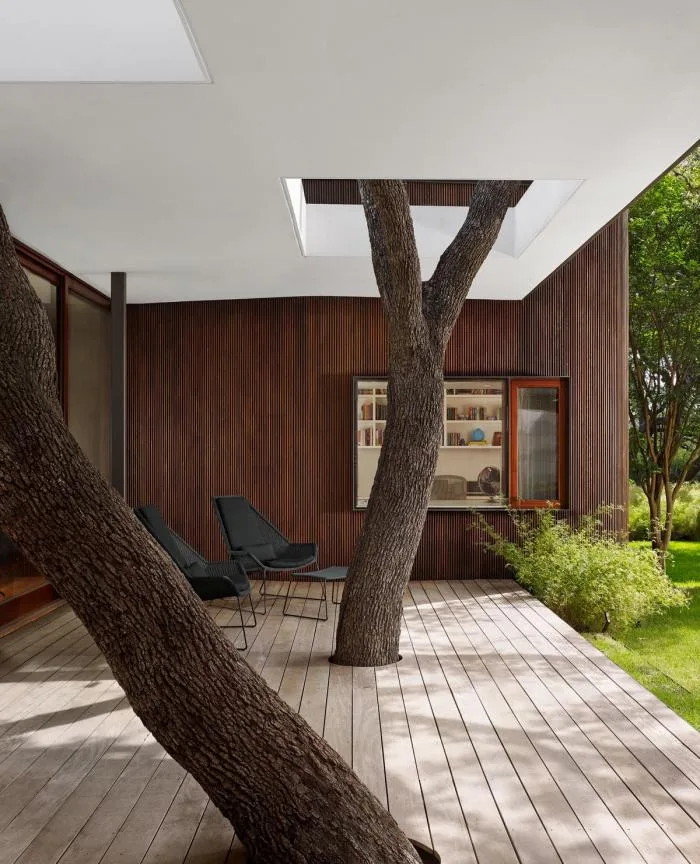
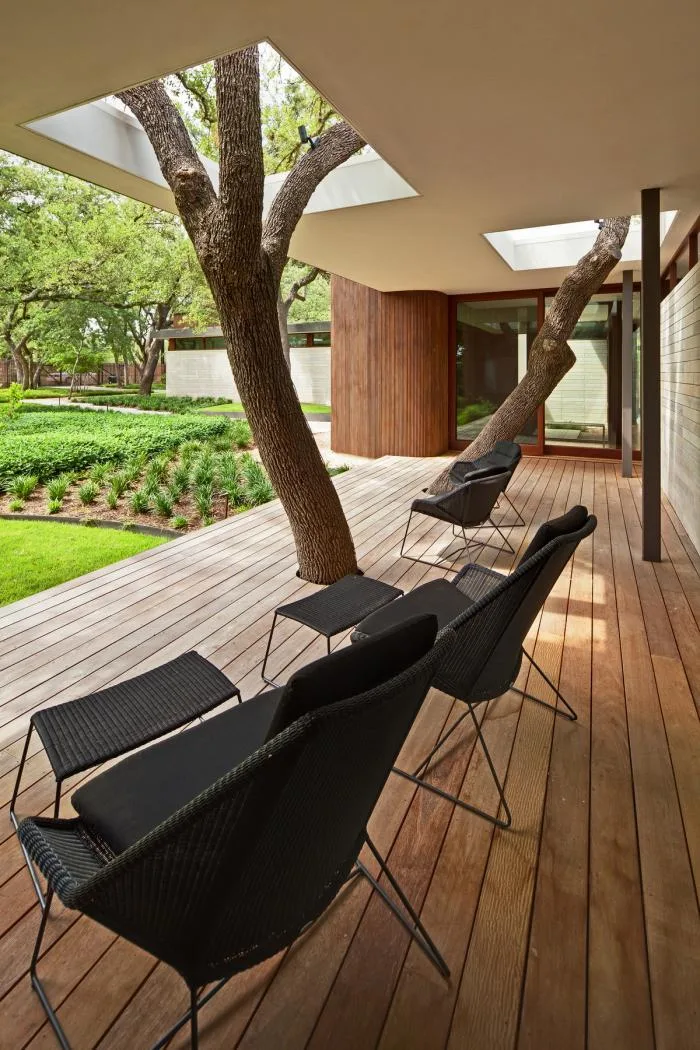
The house is optimally oriented to maximize cross ventilation and minimize sun exposure, while still enjoying west-facing views. Sustainable features include a geothermal HVAC system, photovoltaic panels, a TPO reflective roof, honeycomb foam insulation, electric water heaters, and construction using FSC-certified recycled wood. The residence leverages the shade provided by tree canopies, and strategically placed skylights allow diffused natural light to permeate the interior, reducing reliance on electric lighting. Additionally, a centralized living and remote work setup highlights the homeowner’s commitment to a sustainable lifestyle.
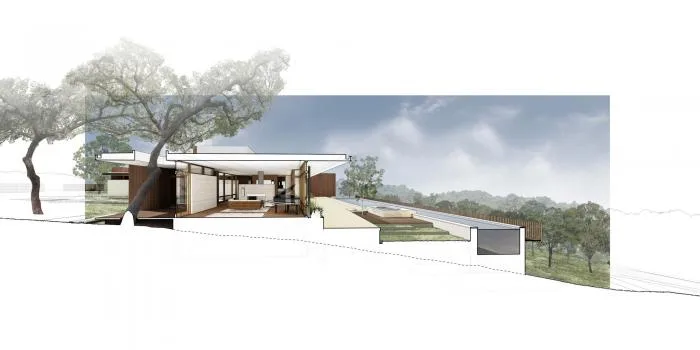
▲ Sectional view
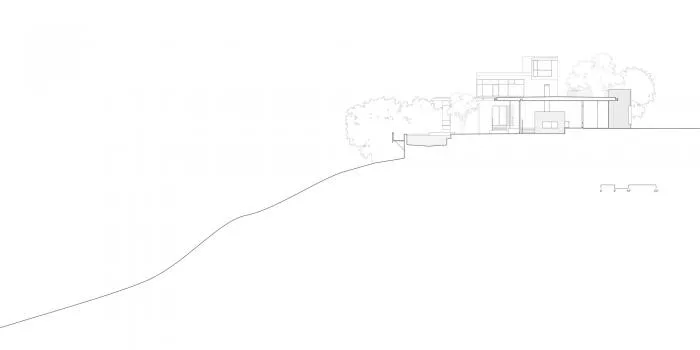
▲ Sectional view
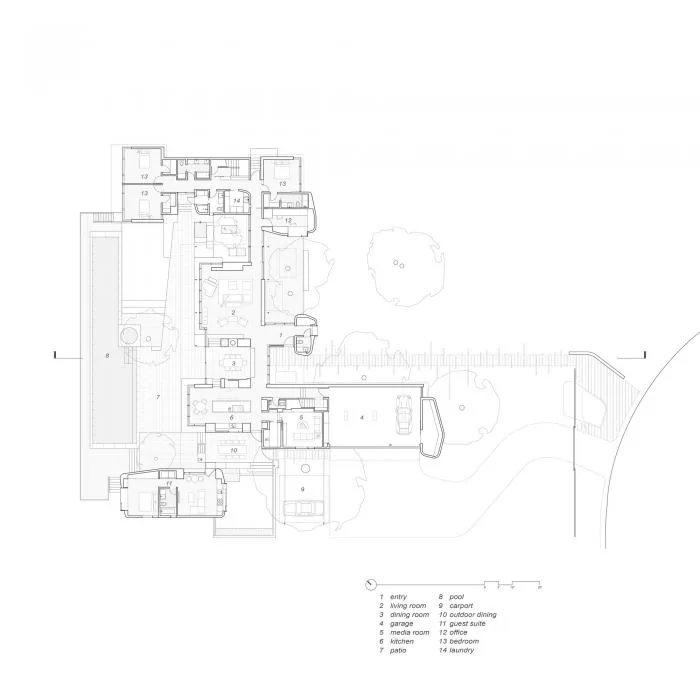
▲ Plan view
Project Information
Project type: Independent residential building
Location: Austin, USA
Architectural firm: Alter Studio
Area: 5,900 ft²
Year: 2011
Photographers: Casey Dunn, Whit Preston, Patrick Wong
Design team: Kevin Alter, Ernesto Cragnolino, Tim Whitehill, Matt Slusarek, Jessica Connolly, Joanna Hartman
Collaborators: Mark Word Design












Must log in before commenting!
Sign Up