
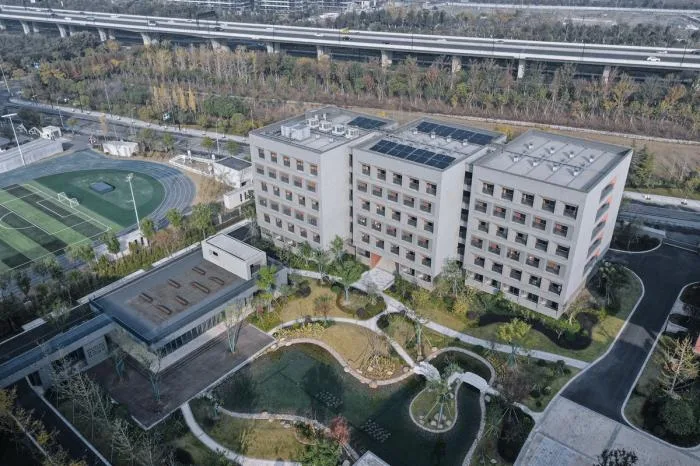
▲ Aerial view of the girls’ dormitory building
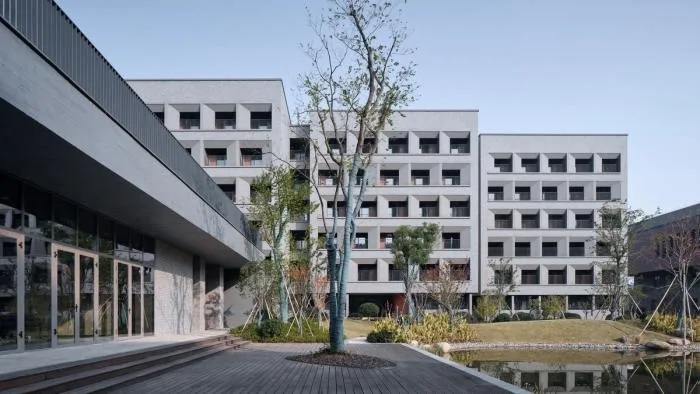
▲ South facade of the girls’ dormitory building
Project Overview
Hangzhou Second Middle School Qianjiang Campus is situated in Qianjiang Century City, Xiaoshan District, Hangzhou. The campus is designed to accommodate 48 classes. As a school with a rich history spanning 120 years, the new campus design pays homage to its heritage by incorporating the grey bricks of Donghe Campus and the red bricks of Binjiang Campus. The core public buildings are constructed with red bricks, while peripheral facilities such as experimental buildings, teaching spaces, and dormitories for male and female students are built using grey bricks or colorful real stone paint.
Initially, the dormitory buildings for male and female students were planned as two parallel structures placed front and back. However, after considering valuable feedback from the school, it was decided to separate the male and female dormitories to minimize visual and traffic interference between students. The male dormitory is located in the northeast corner of the campus, adjacent to sports facilities including fields and basketball courts. The girls’ dormitory is positioned in the northwest corner, enveloped by a small-scale International Exchange Center on the ground floor, which forms a central garden area for the campus.
This article focuses primarily on the design of the girls’ dormitory, given the functional similarities between the male and female dormitories.
Architectural Layout
Reflecting the quiet and gentle character traditionally associated with female students, the girls’ dormitory is placed beside a water feature. The designers envisioned a serene scene: morning sunlight glistening on the water’s surface, reflecting the image of two or three students quietly reading. In the evening, as students return from classes to the dormitory, they pass by the rooftop terrace on the second floor of the International Exchange Center. This terrace serves as a relaxing spot for students to unwind, socialize, or enjoy the view, becoming a cherished communal space.
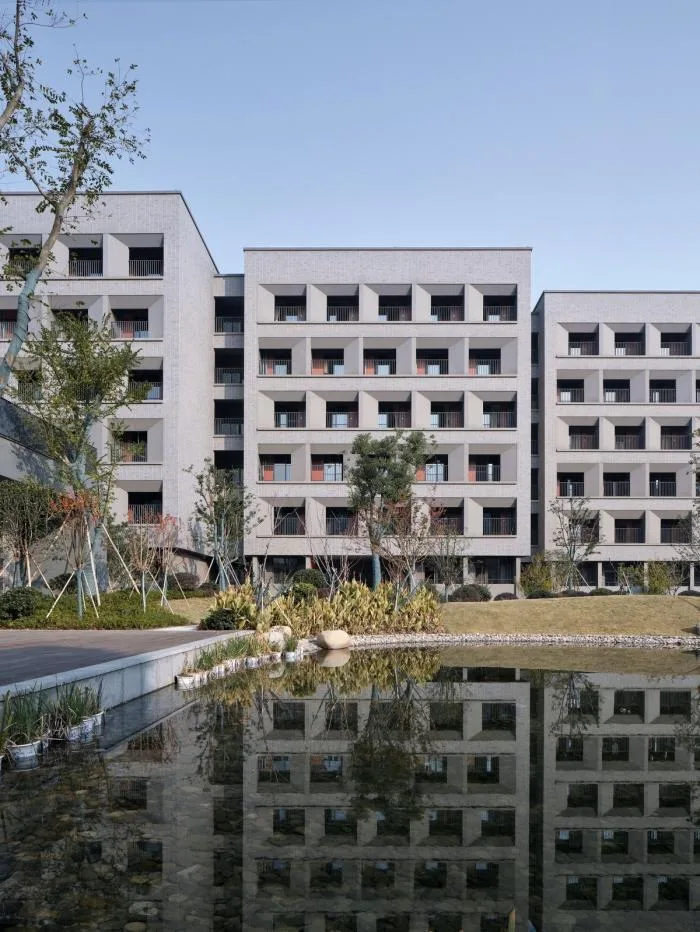
▲ Girls’ dormitory building bathed in morning light
▲ Evening view of the International Exchange Center’s second-floor rooftop terrace
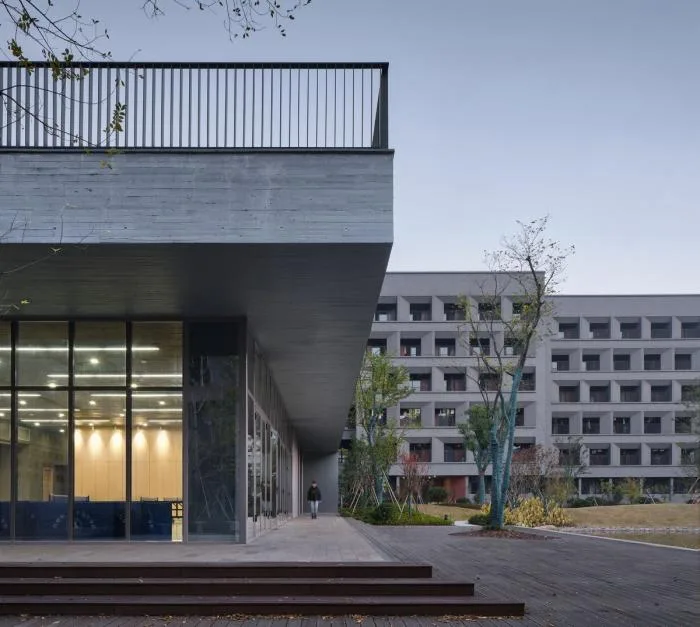
▲ Girls’ dormitory building illuminated at night
Design Concept and Form
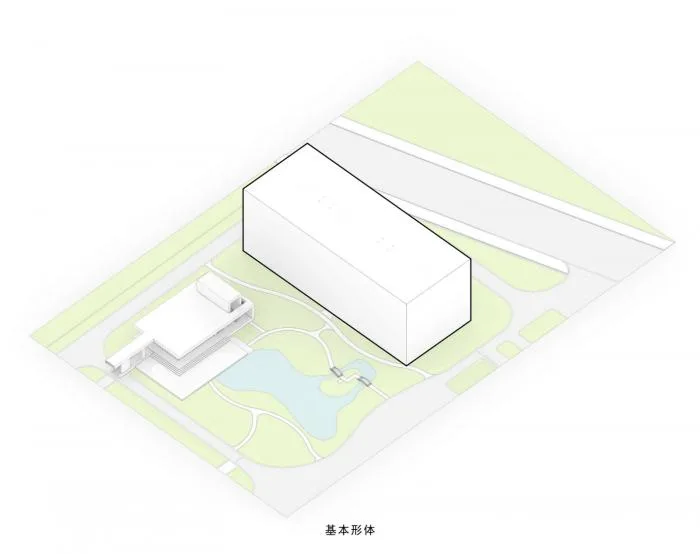
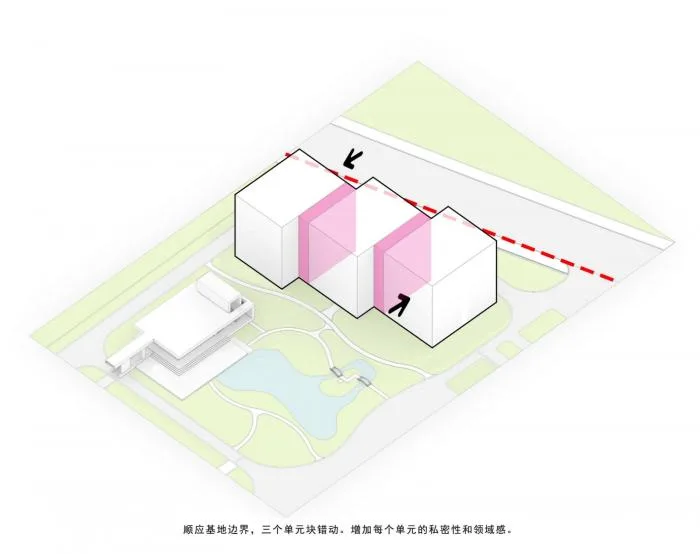
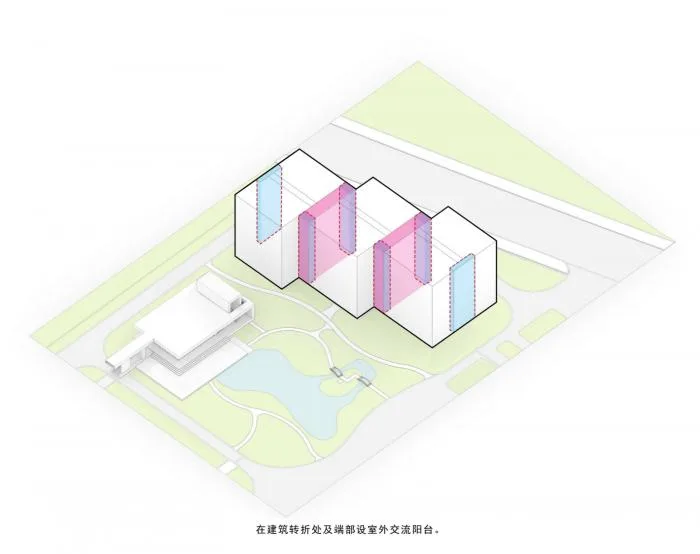
Departing from traditional dormitory designs characterized by long, dark corridors connecting units, this building’s form responds to the terrain and is divided into three staggered sections. At each junction, balconies are incorporated to allow sunlight to penetrate the interiors. The infusion of natural light not only warms the building but also creates inviting communal spaces where students can gather and interact.
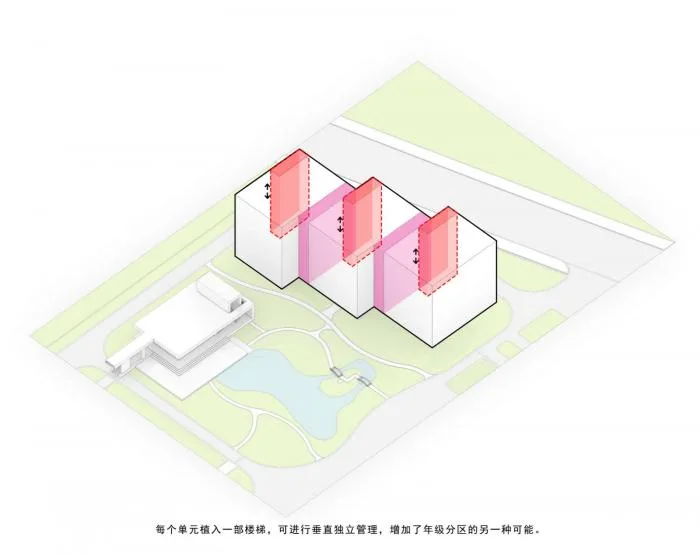
Each of the three staggered sections includes its own staircase, enabling vertical independence within the building. This design allows the school to organize students by grade more effectively.
Facade Design
The building’s primary color palette features gray tones, accented by vibrant orange walls on balconies and entrances. This warm color infusion adds vitality and energy, while creating a visual dialogue with the red brick buildings elsewhere on campus.
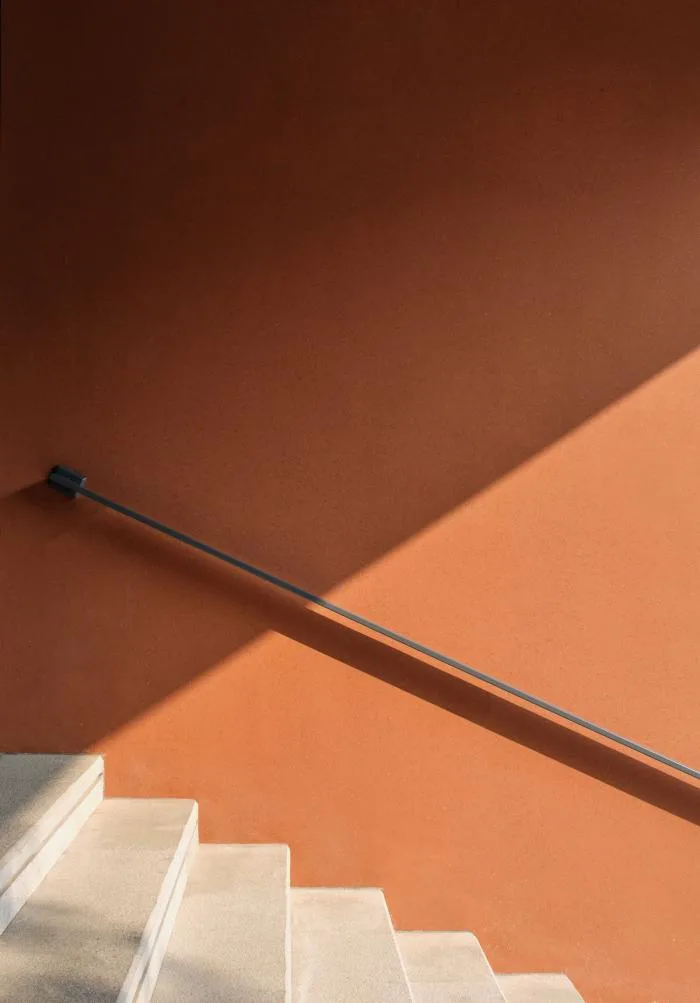
▲ Main entrance side wall
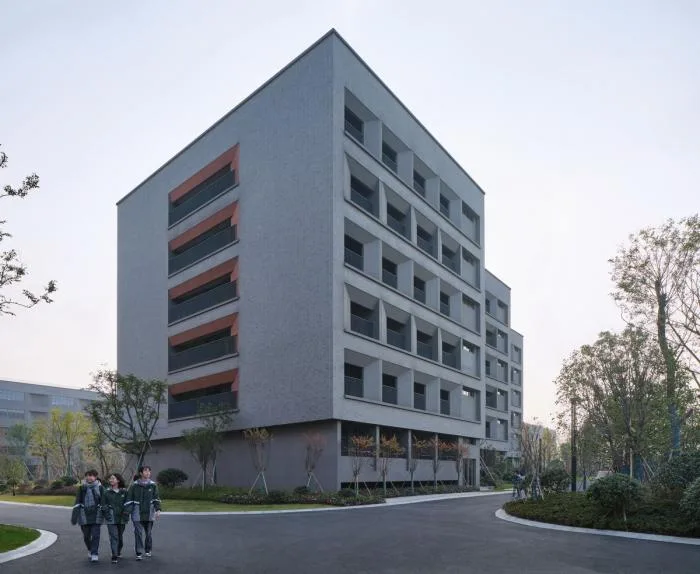
▲ Northeast corner of the girls’ dormitory
To address privacy concerns for adolescent girls, the balcony features a hanging vertical slope that shields clothes drying and the washbasin from view. This sloped design creates dynamic light and shadow effects throughout the day, protecting the facade from damage while adding rhythmic beauty to the building’s exterior.
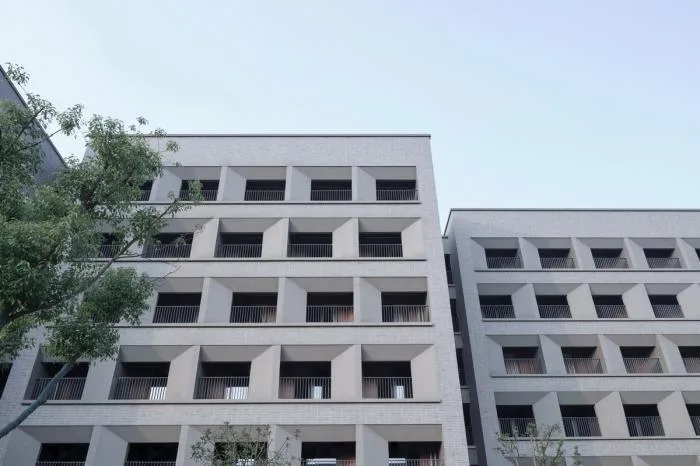
▲ Partial south facade
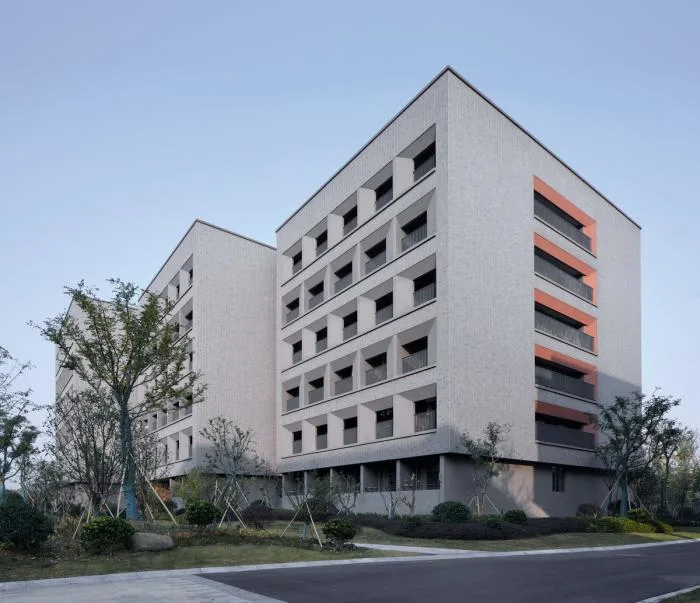
▲ Southeast corner of the girls’ dormitory
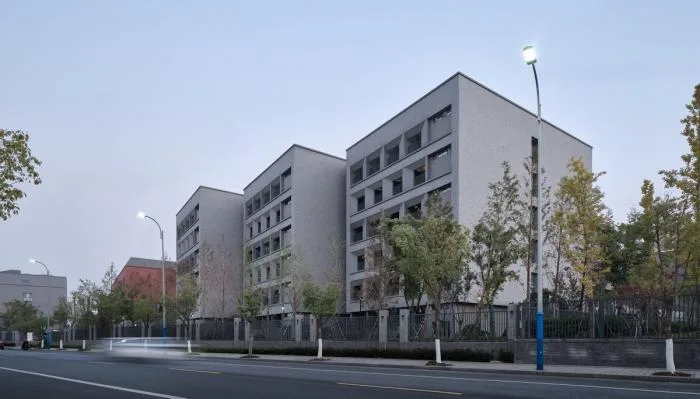
▲ Street-facing facade of the girls’ dormitory
Interior Design
The dormitory rooms accommodate six students each. To maximize natural light and avoid poorly lit corridor sides, the room depth is kept minimal, with compact and efficient furniture arrangements. Each room contains two bunk beds, two desks with upper and lower levels, and two storage cabinets, balancing accommodation needs with study requirements.
Considering the students’ early morning schedules and tight routines, the design includes three indoor washbasins separated from wet areas, easing congestion during peak times.
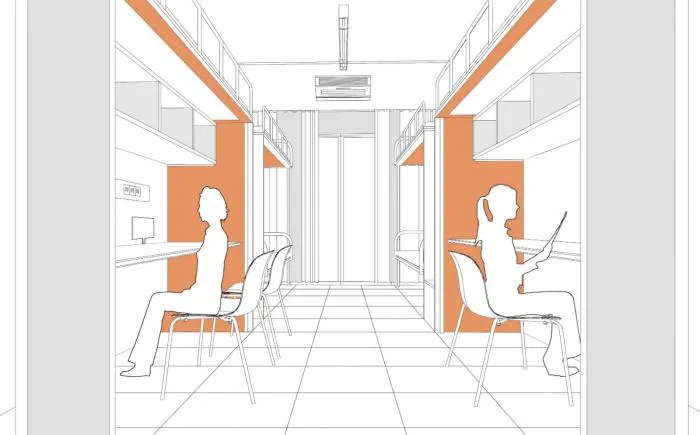
▲ Dormitory room
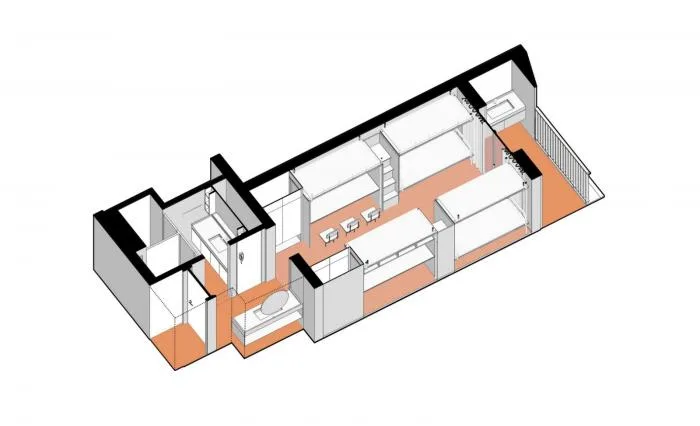
▲ Axonometric view of the dormitory
Each dormitory includes a transition space between the entrance and hallway, enhancing students’ psychological sense of belonging and privacy.
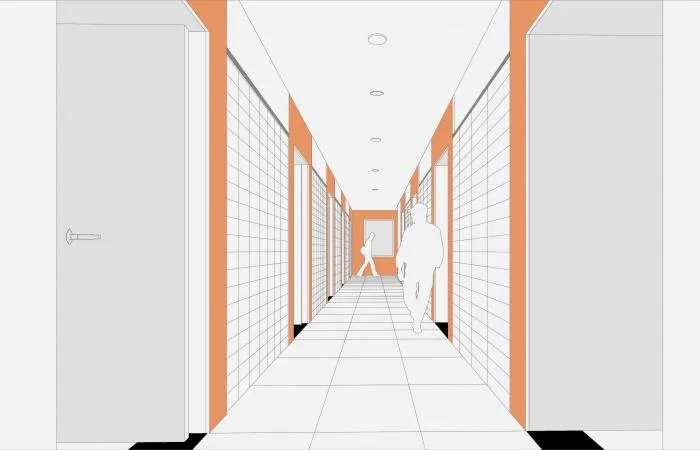
▲ Dormitory corridor
To enrich students’ extracurricular activities, an activity room is located on the dormitory’s first floor. This space fosters friendship building among students and also serves as a reception area for visiting parents, allowing visits without disturbing other residents.
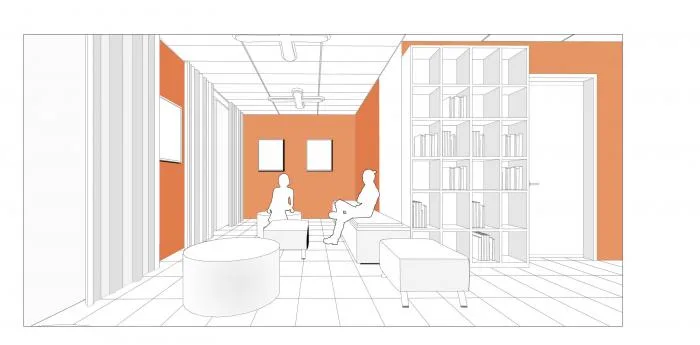
▲ Activity room
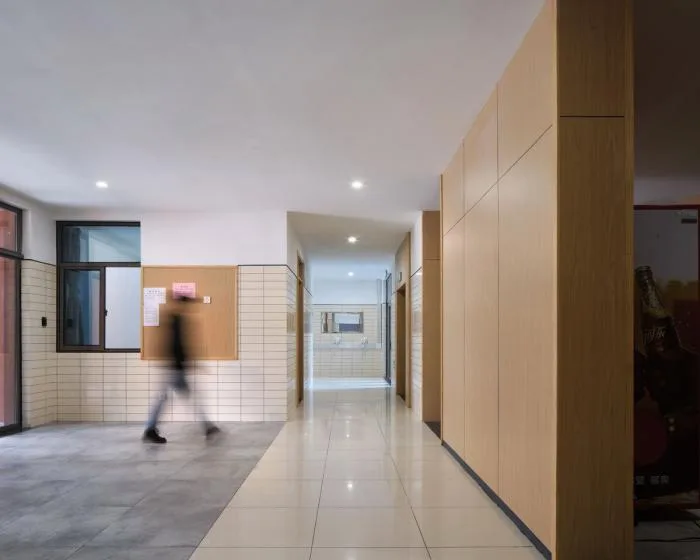
▲ Dormitory lobby
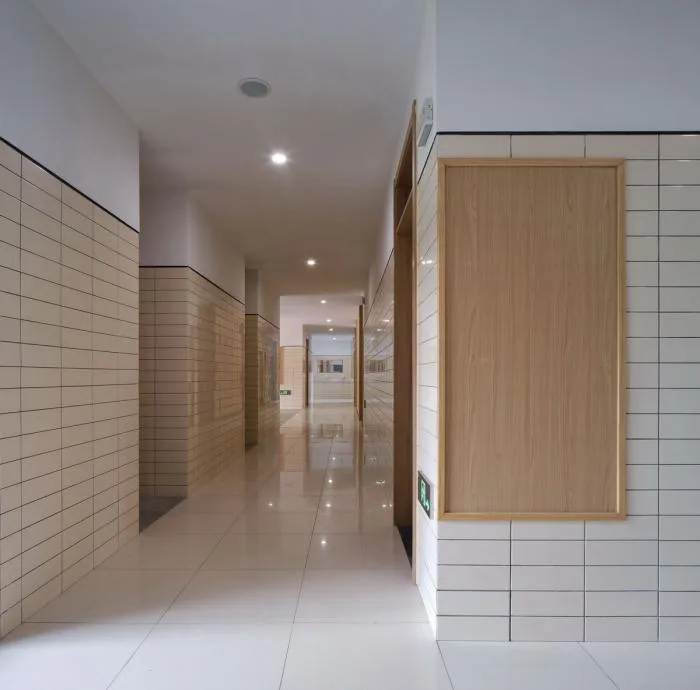
▲ Dormitory corridor
▲ Dormitory entrance area
Summary
Although dormitory buildings are typically straightforward, this project demonstrates how thoughtful attention to detail and functional needs can transform them into remarkable architectural experiences that resonate with users.
A limitation of this project was the inability to exceed the total building area, which prevented the realization of an activity room to the north connecting the three units. Instead, only a southern observation balcony was constructed. The original plan envisioned a multifunctional space in the north, combining activity rooms, tea rooms, and other amenities to support student life and centralized school management.
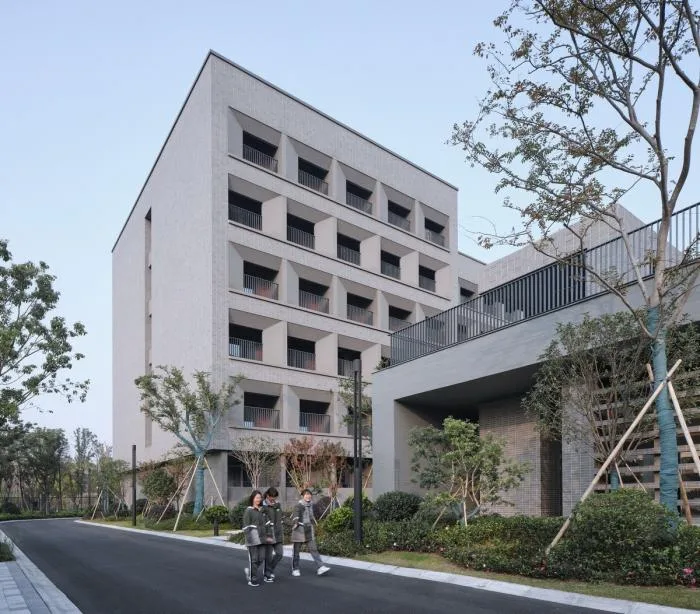
▲ Southwest corner of the girls’ dormitory
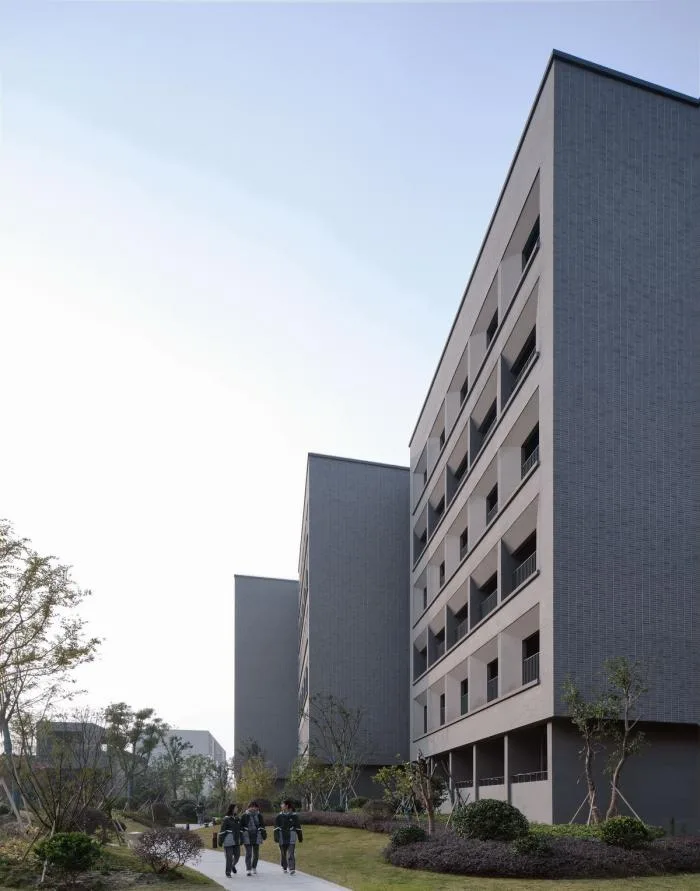
▲ Girls’ dormitory building in the afternoon light
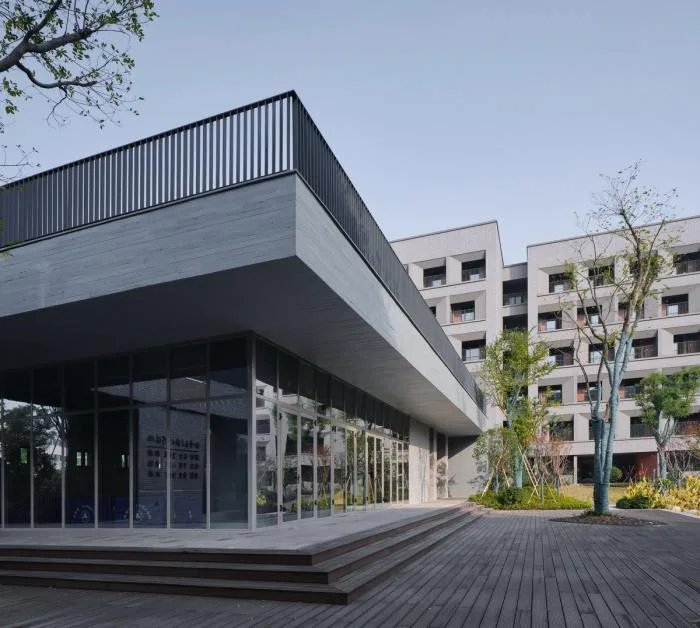
▲ Girls’ dormitory building alongside the International Exchange Center
Project Drawings
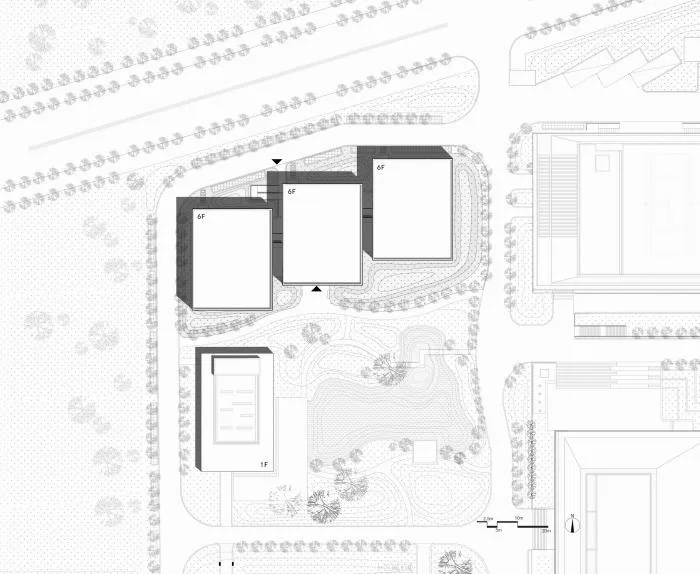
▲ Overall site layout plan
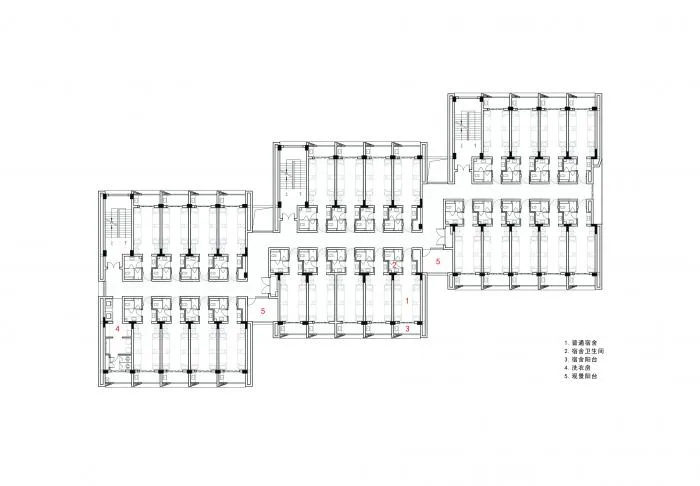
▲ Standard floor plan
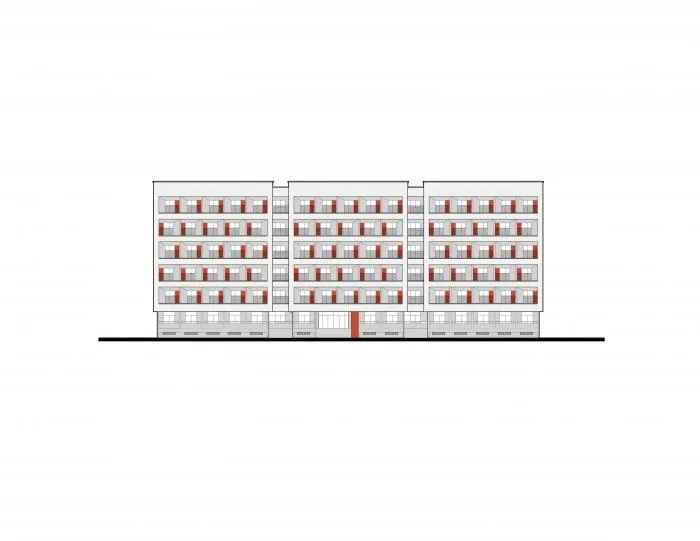
▲ South elevation
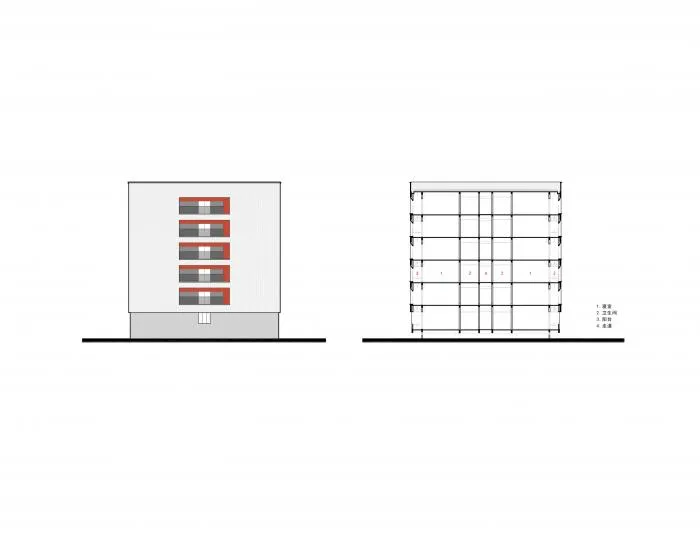
▲ East elevation and section view
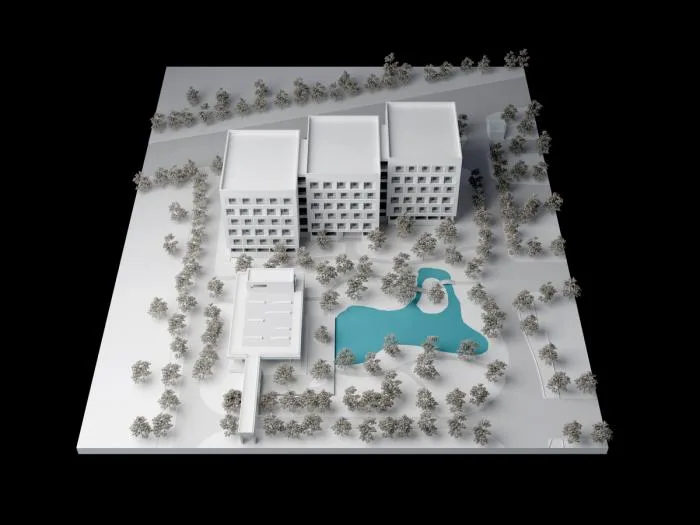
▲ Architectural model
Project Details
Project Name: Qianjiang Campus of Hangzhou Second Middle School – Girls’ Dormitory
Design Firm: Zhejiang University Architectural Design and Research Institute Co., Ltd
Design Period: October 2015 to October 2016
Completion Date: November 2016 – September 2019
Total Construction Area: 7,570 square meters
Ground Floor Area: 7,570 square meters
Lead Architects: Fan Xuzhuang, Xu Sun
Architectural Team: Fan Xuzhuang, Kuang Yang, Xu Sun, Zhang Yuansheng, Zhu Kai, Wang Su
Structural Team: Qian Lei, Kan Jianzhong, Han Jun
Equipment Team: Chen Ji, Zheng Guoxing, Ren Xiaodong, Yang Guozhong, Fang Huoming, Sun Dengfeng, Huang Qinpeng, Shao Chunting, Wang Hang, Ye Agile
Interior Design Team: Li Jingyuan, Zhou Yuan, Luo Baozhen, Wang Feng
Landscape Design Team: Yao Haojun, Li Jiangfu, Zhou Wenqiang
Client: Hangzhou Education Asset Operation and Management Center
Materials: Face bricks by Aike Tao; Colorful real stone paint by Three Trees; Low-E glass by South Glass
Photography Credit: Octopus Jianzhu












Must log in before commenting!
Sign Up