
Sukhai exudes calm and tranquility. What is the ancient charm of southern Beijing?
Whether it’s the ancient capital of the Six Dynasties or the Thai people of Siam, the word “mystery” has long been linked to the East, rooted in the beliefs and customs of its people.
The distinctive freedom of Sukhothai and the streets and alleys of Nanjing city complement each other, blending grace with majesty.
The East remains the East, and although the location is eastern, the center of civilization shifts southward. Jingnan and Taibei move in harmony, united by a shared direction.
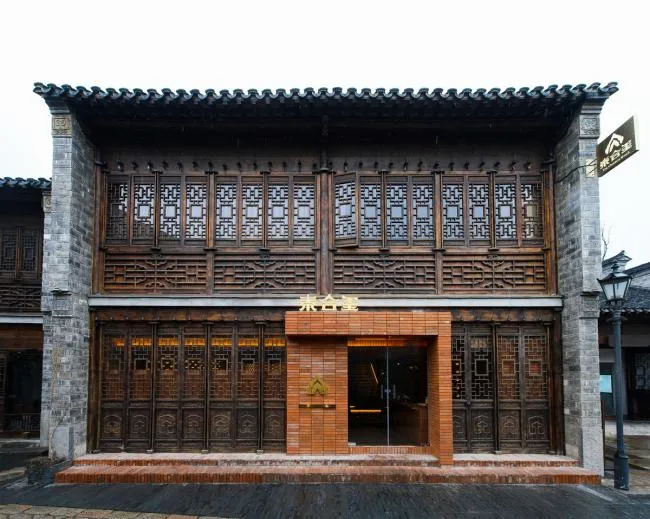
▲ Façade of Taihe Xi Nanjing Laomen East SPA Building
In this context, the shared elements of these two civilizations provide the foundation for the design: the concept of place metaphor.
Place projection is a “design methodology” developed through Bare Building projects.
This is the first time “place reference” has been explicitly used and introduced by Bare Building in a project summary.
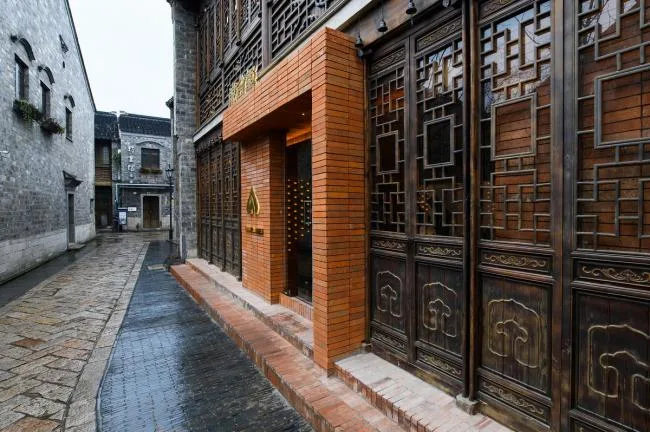
The project is situated in the alley of Laomen East Street, in southern Nanjing.
Place Projection
Place projection focuses on capturing the spiritual scale and allowing room for imagination, from start to finish. It deals with blank spaces in the spiritual realm, using “Thai culture” or “cultural symbols” as points of reference. The client is a promoter eager to introduce Thai massage techniques and culture to China.
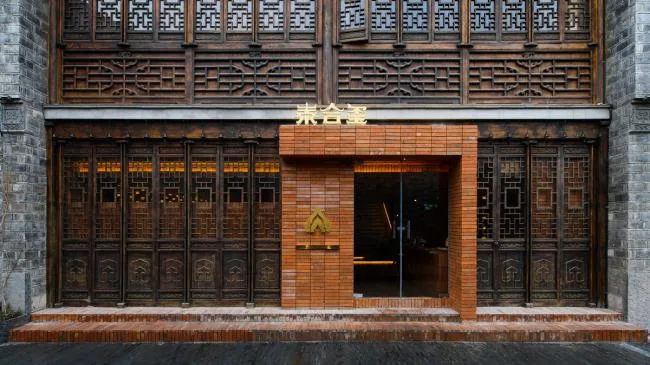
▲ Exterior Landscape
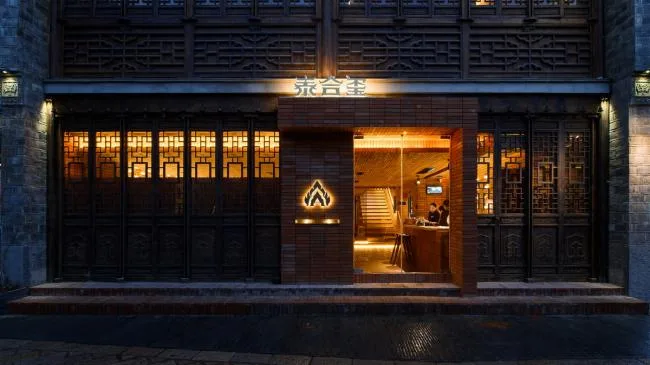
▲ Night View of the Exterior Façade
Nanjing Qingzhuan: This project is located on a commercial street east of Zhonghua Gate in Qinhuai District, Nanjing. After the war, the remaining buildings east of the gate were protected and rebuilt by the government. Traditional Chinese wooden structures and horsehead walls were restored in traditional styles, showcasing heritage and attempting to revive the original charm of the old southern city.
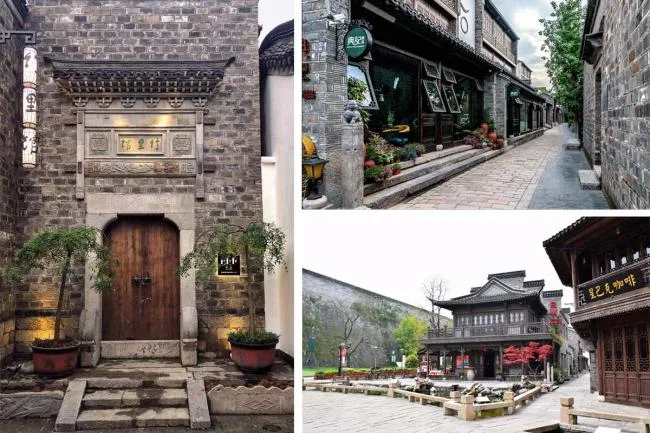
The architectural community east of Laomen is mainly characterized by “green bricks.”
Buildings in this commercial area primarily use green bricks and are mostly standalone structures, emphasizing the inheritance of traditional architecture.
The fusion of these two cultures requires a physical carrier—cultural forms.
Red Brick in Northern Thailand: Overlooking Chiang Mai’s old town, vermilion defines the city’s palette. The ruins of Tapay Gate, the red roofs of the classical Grand Palace, and the traditional foundations and walls of Siamese architecture all showcase the vibrant greens of red bricks and gold tiles. Red bricks are classic and widely used, closely linked to the “red clay” native to Thailand.
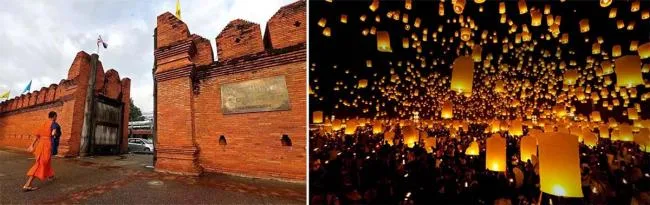
▲ Historical and cultural elements of local “red bricks” and “thousand lanterns” in Thailand
Where Blue and Red Meet
Considering both the quality and symbolic meaning of bricks, bare construction is chosen as the “soul” of the space. Although green and red bricks share material qualities, they represent distinct cultures.
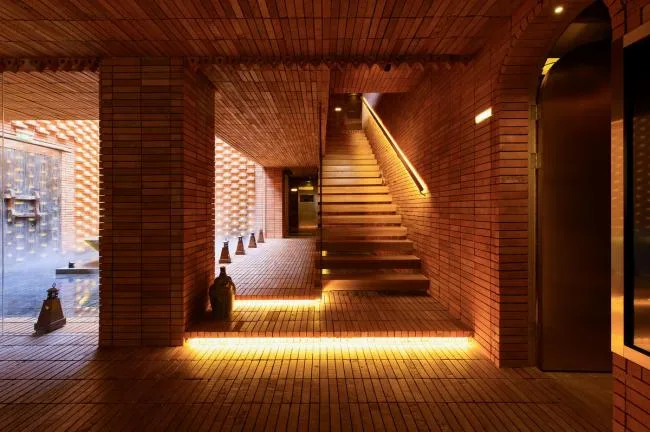
▲ Staircase leading to the second floor
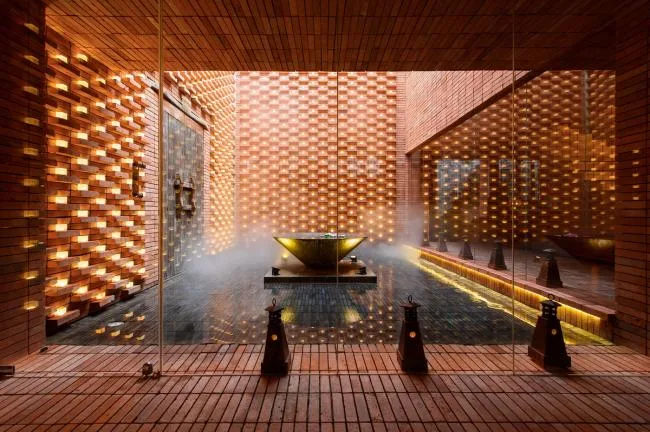
▲ Courtyard
The gaps between bricks create a subtle sense of hidden order. Bare construction accentuates this order through meticulous control.
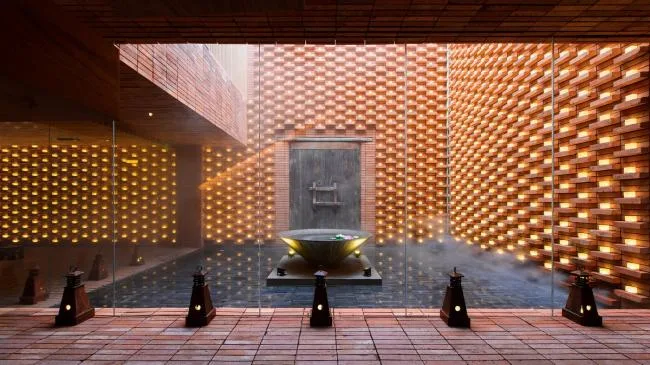
▲ Courtyard
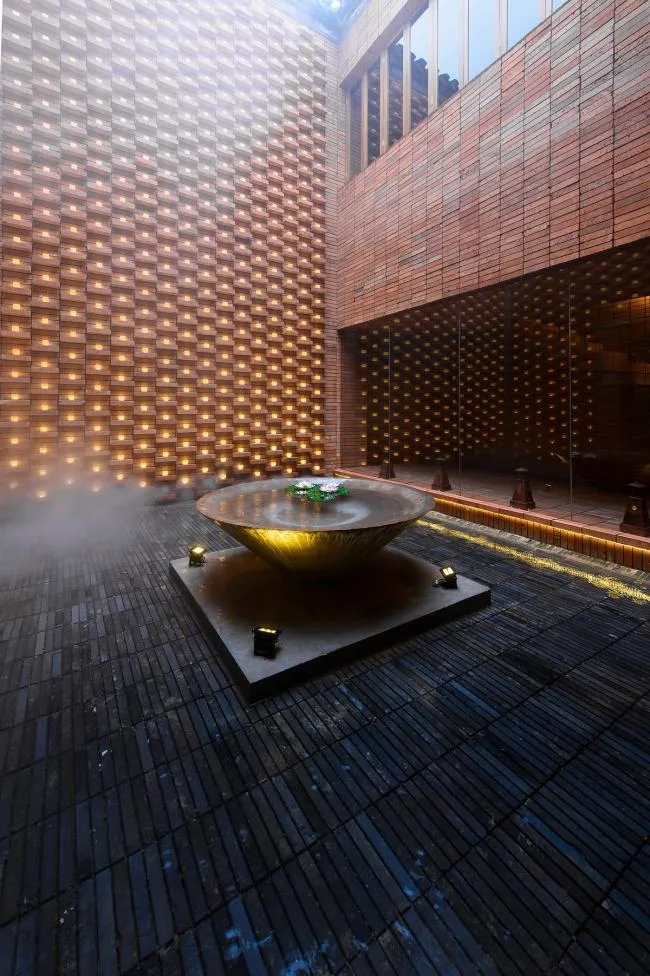
▲ Courtyard
Elements like air conditioning vents, furniture, private rooms, and glass brick door numbers all contribute to a disciplined spatial ritual, reflecting the “sense of ritual” found in religious practices.
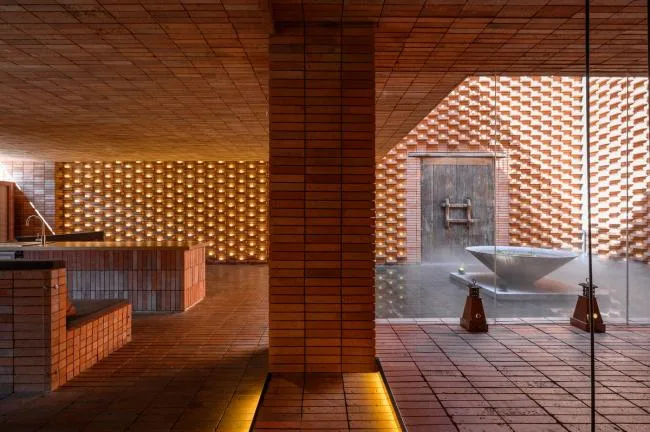
▲ Reception Hall
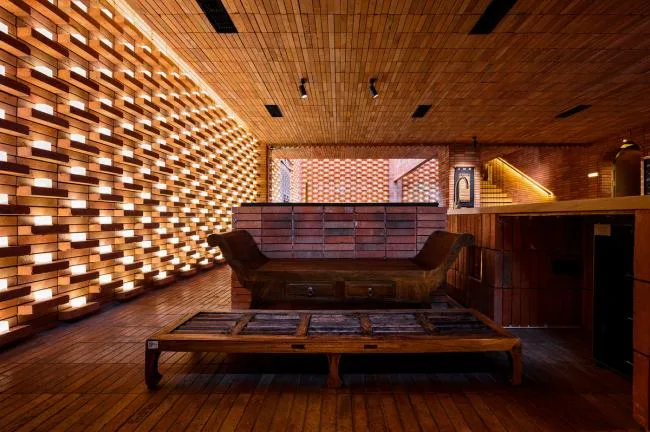
▲ Shoe Changing Area in the Reception Hall
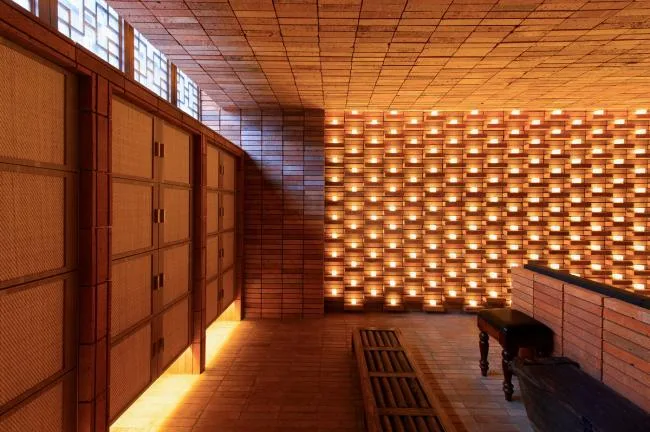
▲ Reception Hall with Clothing Storage on the Left and Shoe Changing Area on the Right
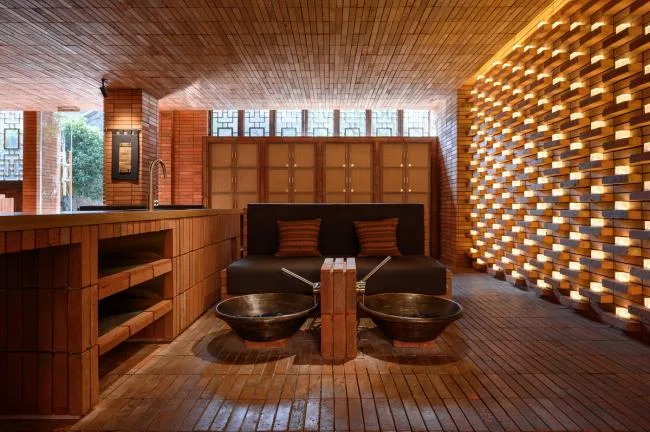
▲ Foot Massage Area in the Lobby
The clay texture of the bricks evokes the comforting feeling of “walking barefoot on soil,” a unique sensation characteristic of Southeast Asia that subtly reflects its true essence.
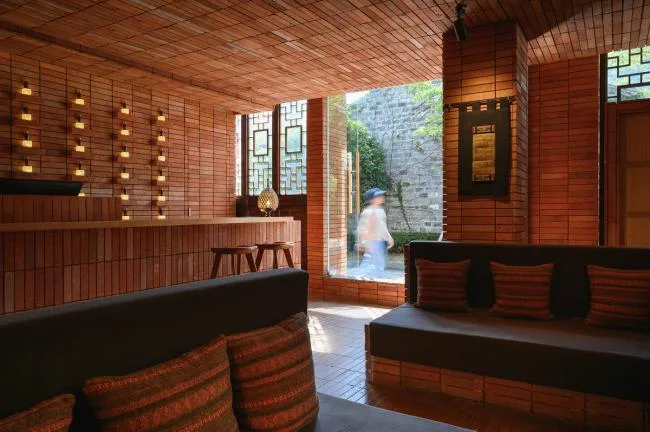
▲ Reception Hall
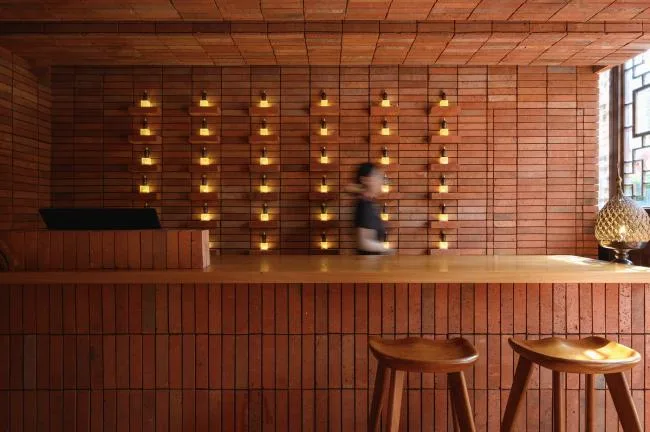
▲ Reception Hall
Thousand Lights
The orderly placement of red bricks illustrates the relationship between space and material, while the Thousand Lantern Wall serves as a vivid cultural and visual symbol.
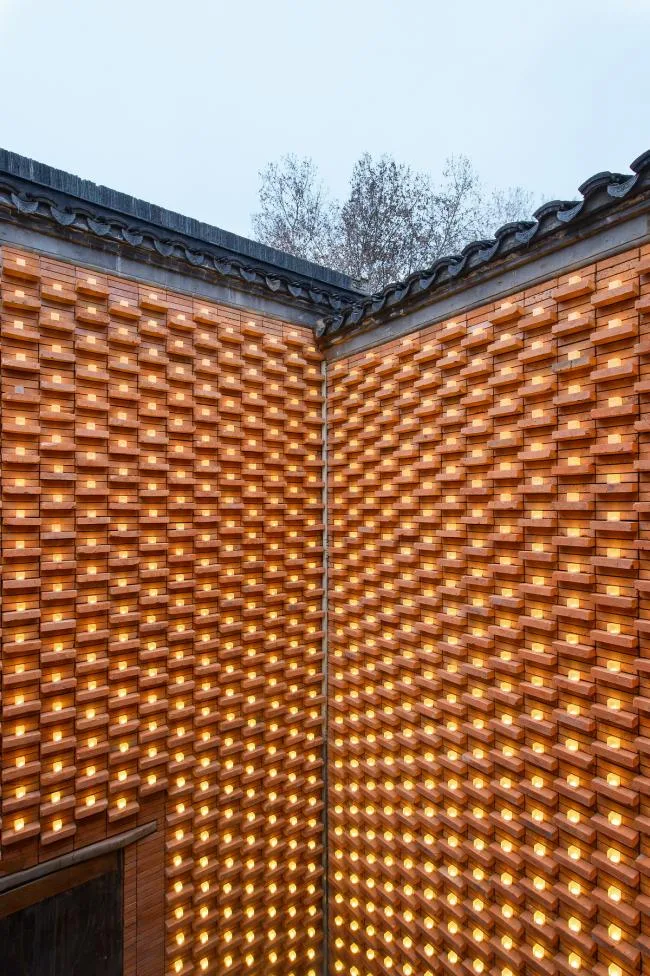
▲ Courtyard
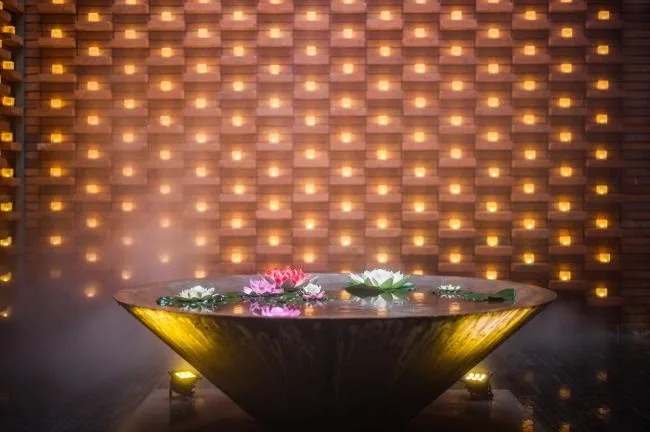
▲ Courtyard
Prayer and meditation are spiritual practices often accompanied by ritual. In architecture, the “sense of place” is created through spatial design, evoking a sense of “divinity.” When night falls and a thousand lanterns light up, beyond the blessings they represent, they embody this sacred spirit, set against the night sky.
For Naked Architecture, the spiritual impact of the Thousand Lanterns is deeply moving. Their use in this project symbolizes a pure continuation of the “divinity” and “field spirit” inherent in religious tradition, stripped of formalism.
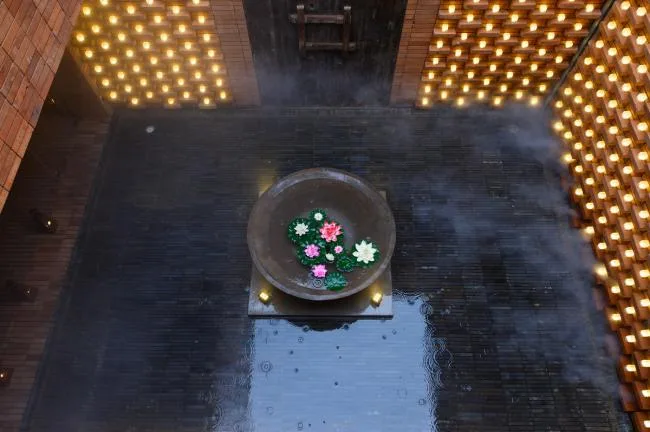
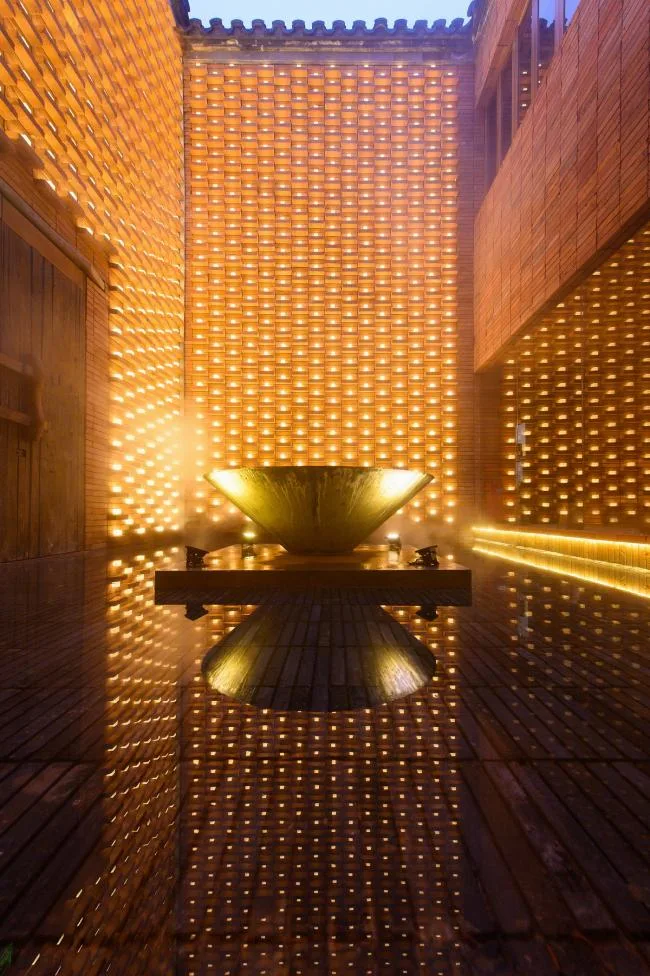
▲ Passageway Leading to Private Rooms
The lamp boxes are carefully elevated and waterproofed to ensure durability and weather resistance in outdoor environments.
The Thousand Lamp Boxes are designed as squares, harmonizing with the red brick layout and its intentional gaps.
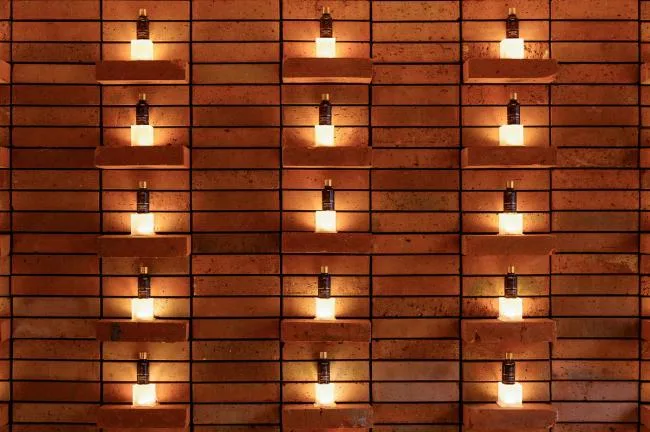
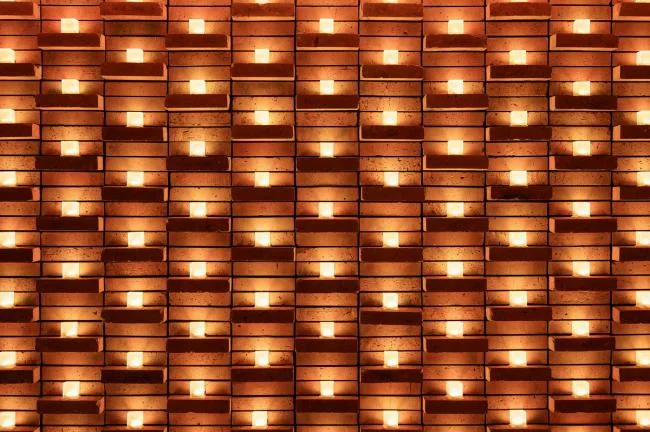
▲ Thousand Lantern Wall
A Glimpse of Order
The red bricks have undergone various finishes, categorized into five sizes to meet specific design needs.
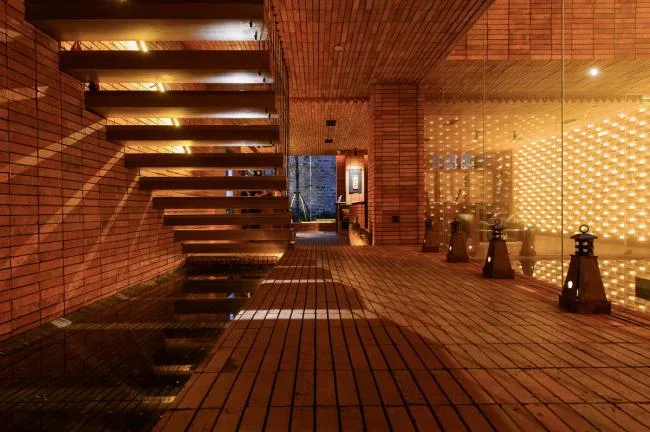
The blue brick pool under the stairs echoes the courtyard’s design.
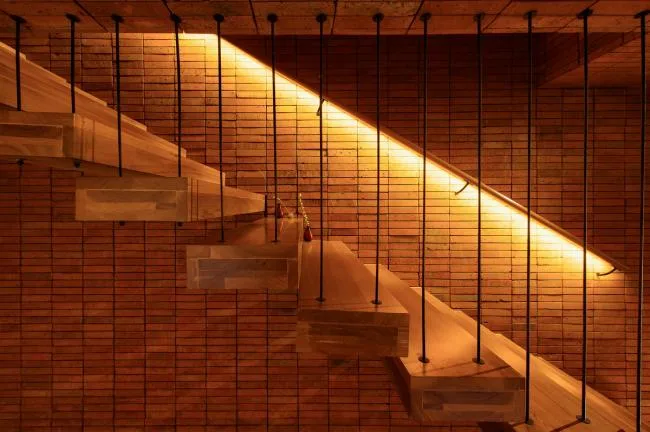
▲ Staircase Construction Details
For detailed expression, Bare Building selected Thai characters with auspicious meanings, engraved directly onto the red bricks and scattered throughout the space. This adds a striking detail that honors and emphasizes Thai script.
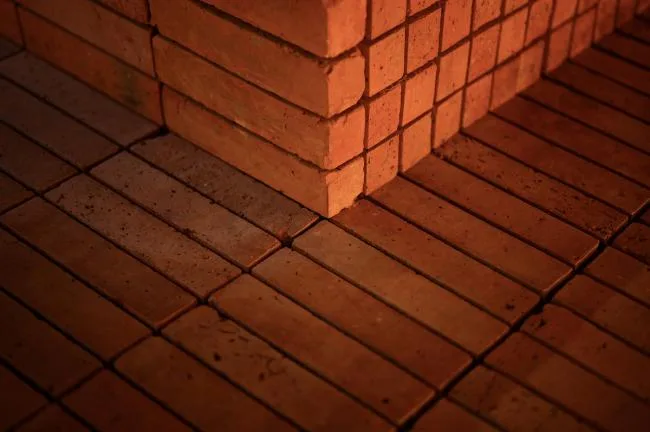
▲ Red Brick Joining Details
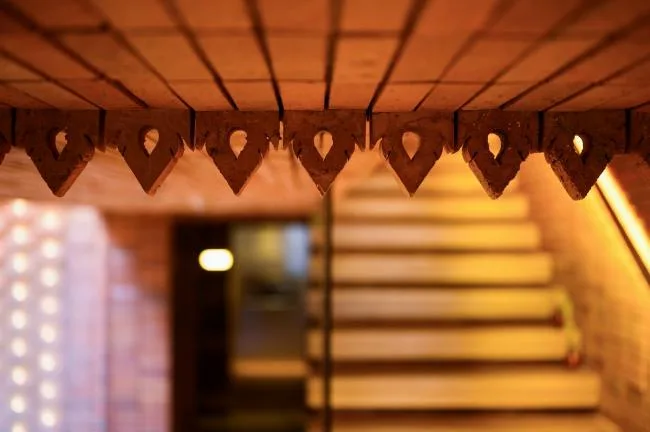
The Taihe Seal symbol on the ceiling is crafted by water-cutting red bricks.
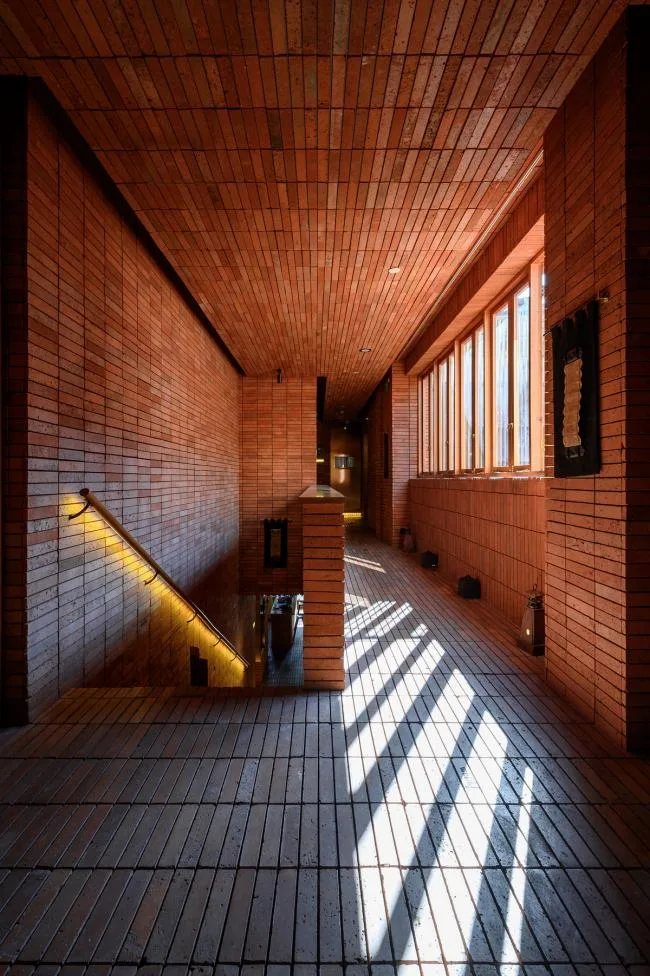
▲ Dual Flow Staircase Leading to the Second Floor
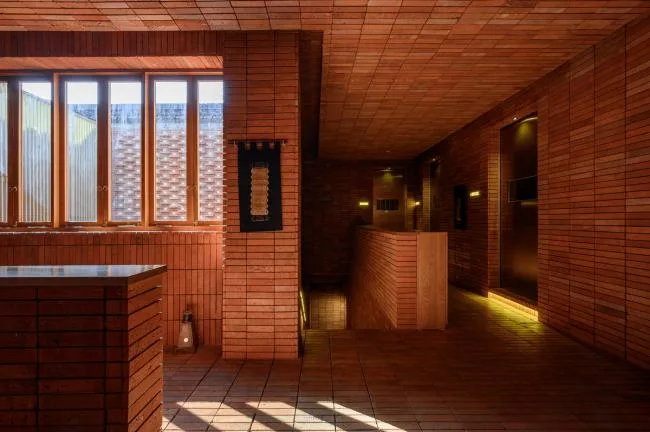
▲ Dual Flow Staircase Leading to the Second Floor
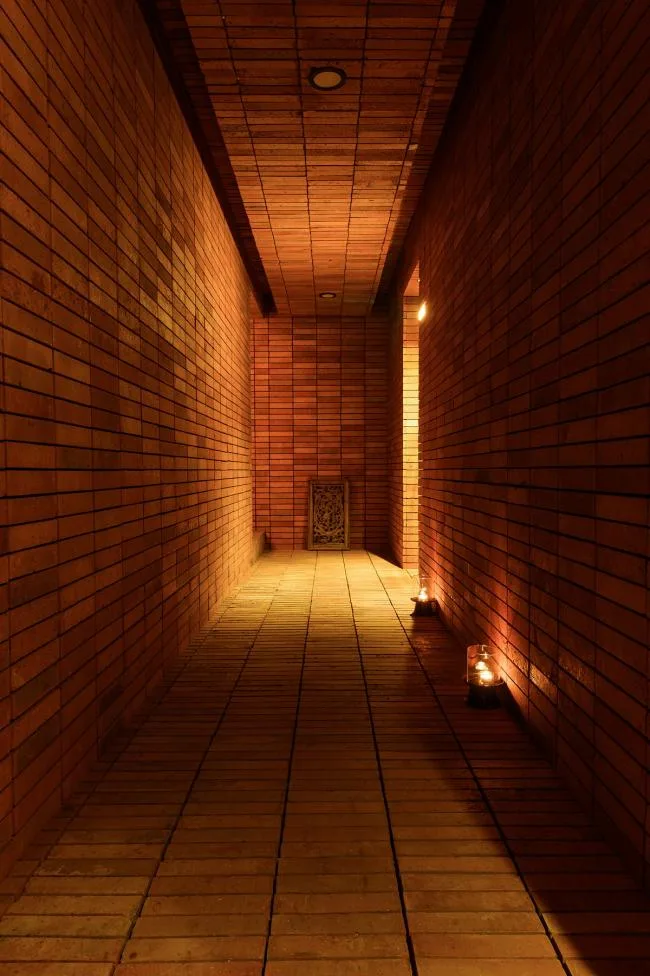
▲ Second Floor Corridor
Decorative Objects
For large-scale hotel projects, Bare Building oversees everything from design to soft decoration and lighting. However, Bare Building generally avoids excessive decorative elements or overly complex patterns, preferring soft furnishings to serve as subtle finishing touches.
Every object reflects Bare Building’s understanding of the space. The five Southeast Asian countries share agricultural and handicraft roots, preserving traditional crafts like weaving, woodworking, textiles, printing, and dyeing. This rich heritage contributes to Southeast Asia’s vibrant civilization. Consequently, handcrafted objects are deliberately chosen for soft decoration. While not antiques, each piece carries its own function and meaning.
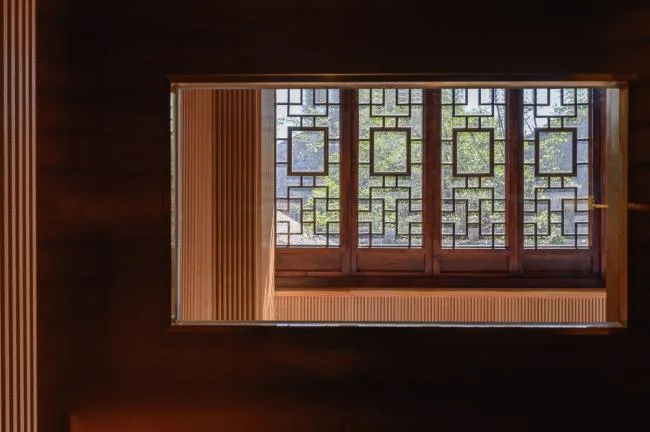
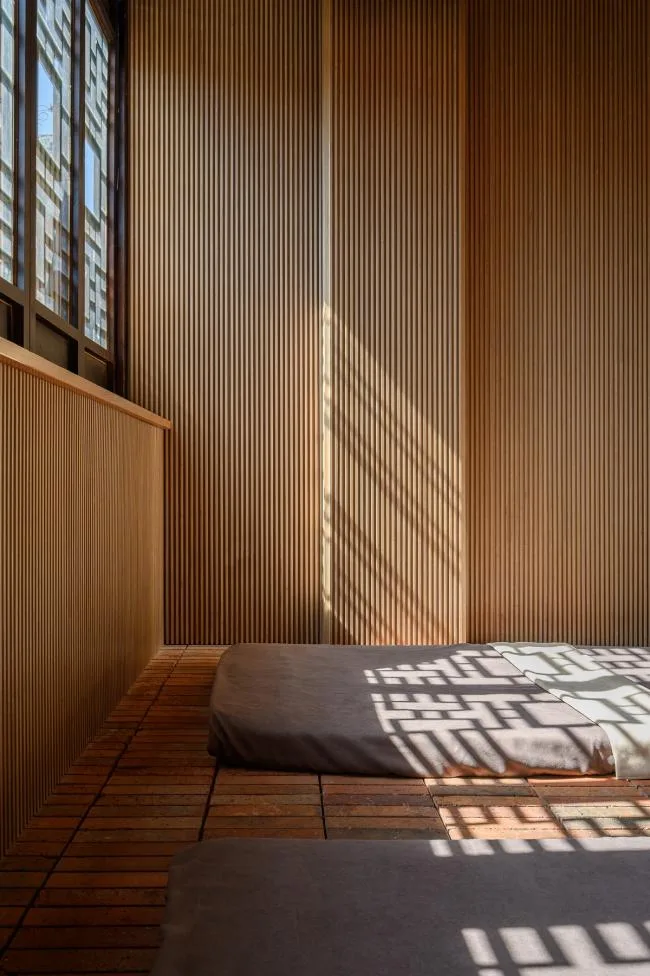
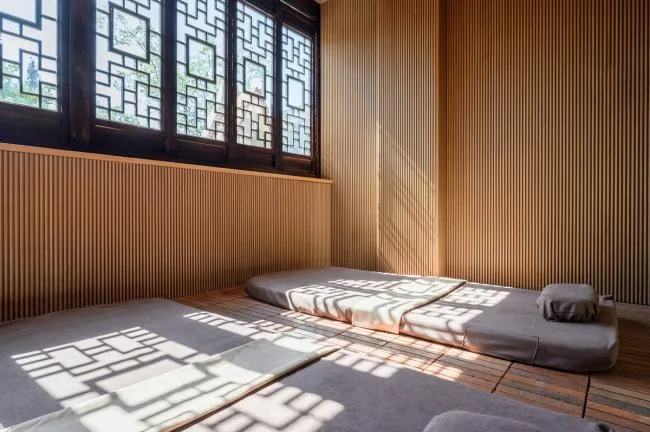
▲ Inside the Private Room
The hanging wall decoration is a unique printing mold from the Myanmar Textile Institute. The patterns on the garments are created by rubbing with these molds, many of which still retain traces of printing ink.
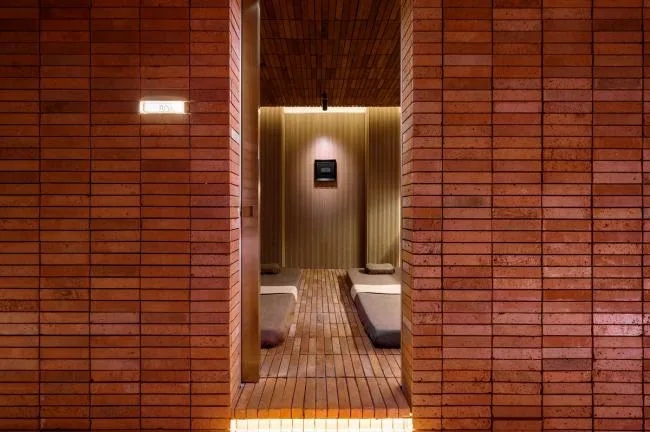
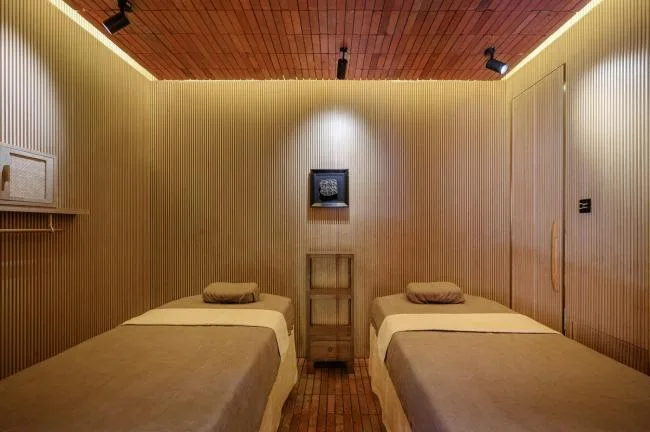
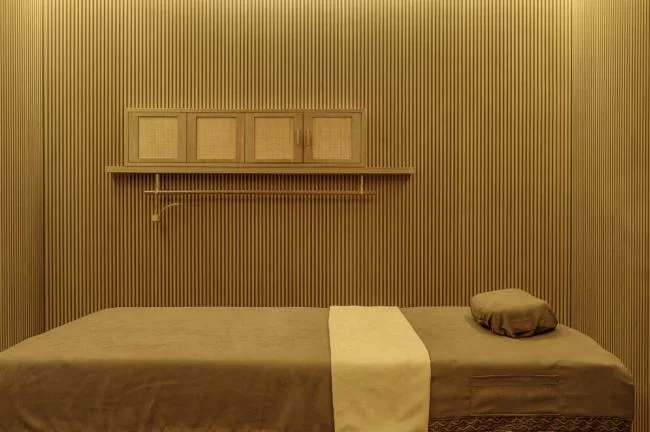
▲ Inside the Private Room
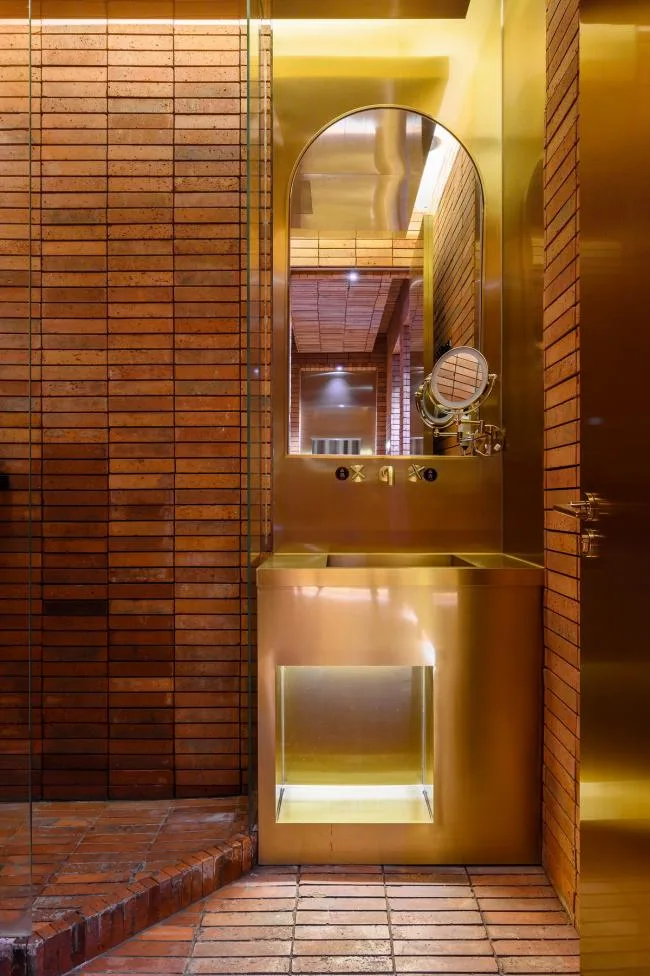
▲ Private Bathroom
The ancient Thai-script recitation medallion symbolizes good luck and is an important auspicious emblem in local culture.
The bronze mirror at the entrance, the square scarf on the table, and the bronze lotus leaf plate originate from India and Myanmar. These handmade items from different regions demonstrate Southeast Asia’s respect for its traditional culture.
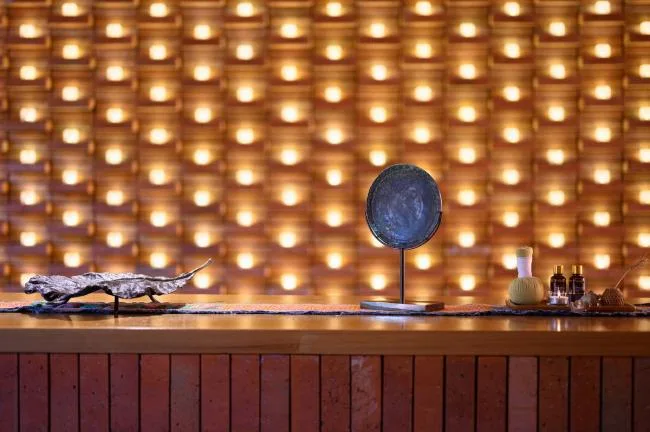
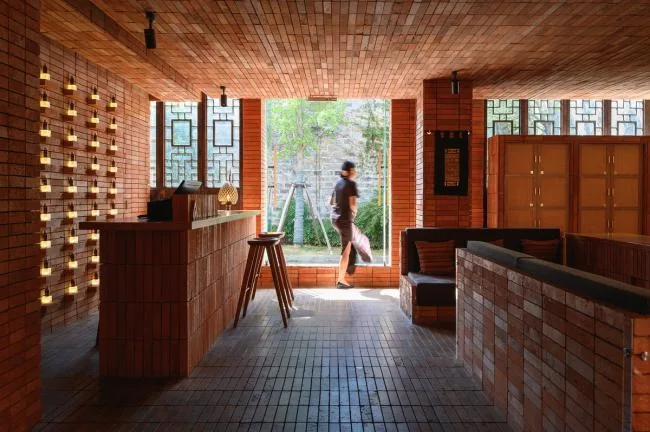
All soft furnishings and decorations are handmade from India and Myanmar.
In today’s world, anything can be replicated except time. Time is our most precious asset, one that we must truly uncover and preserve. Civilization endures through stories and their transmission.
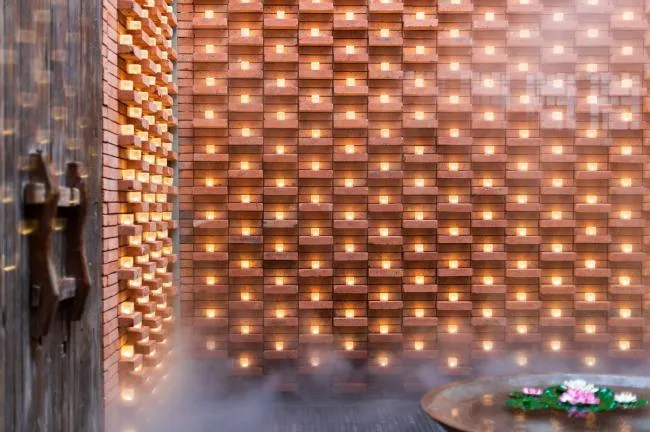
▲ Courtyard Thousand Lantern Wall
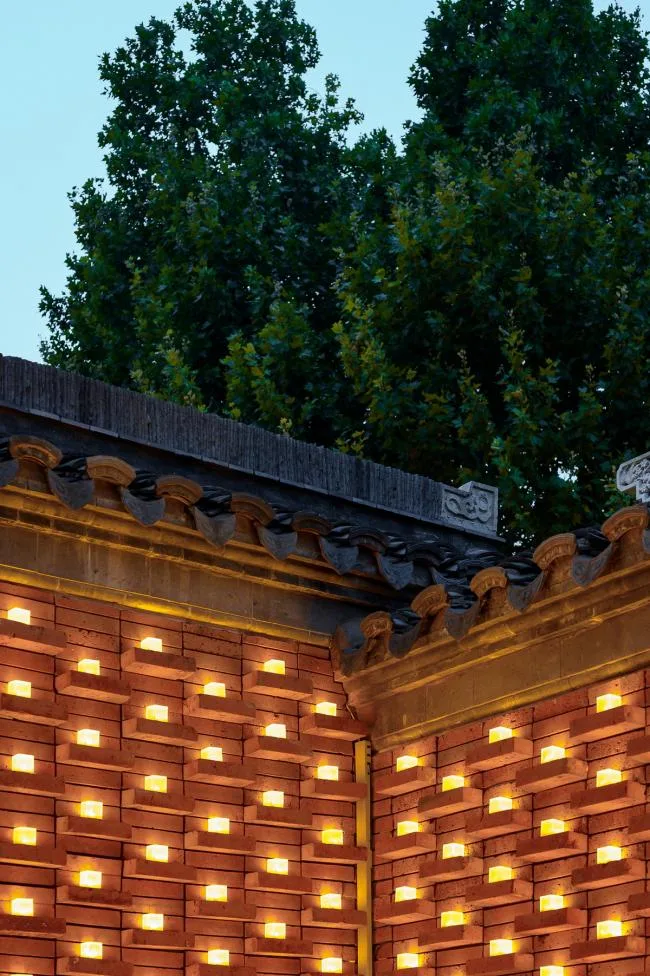
In the height of summer, green leaves peek over the wall.
The sky’s blue and misty rain in Nanjing contrasts with the crimson robes of Buddha in Chiang Mai.
Isn’t the blend of green and red more enchanting?
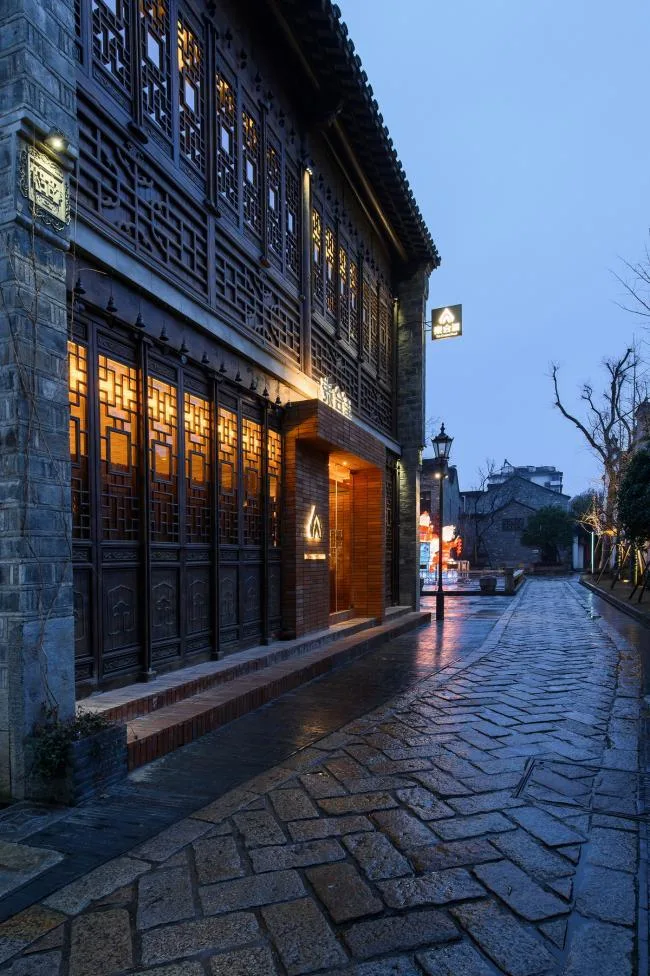
▲ Night View of Taihexi Nanjing Laomen East SPA Hall
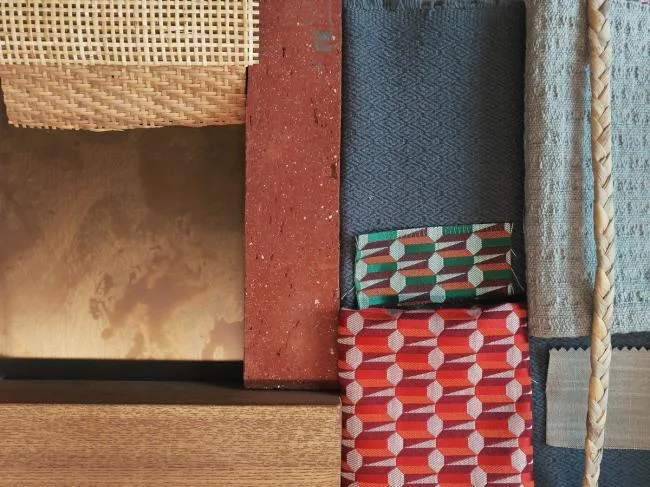
▲ Material Diagram
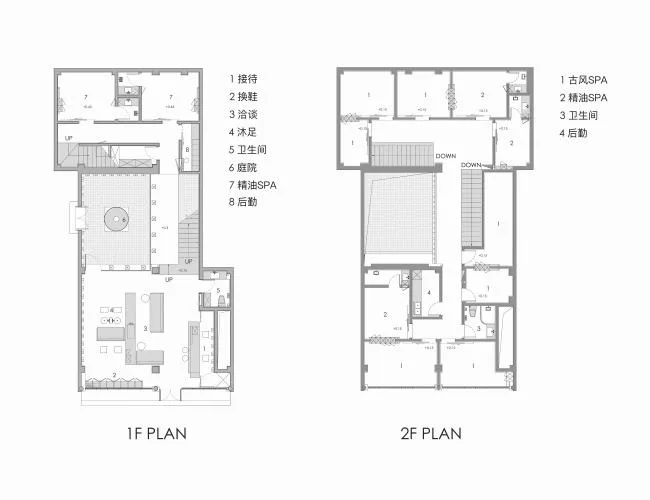
▲ Floor Plans of First and Second Floors
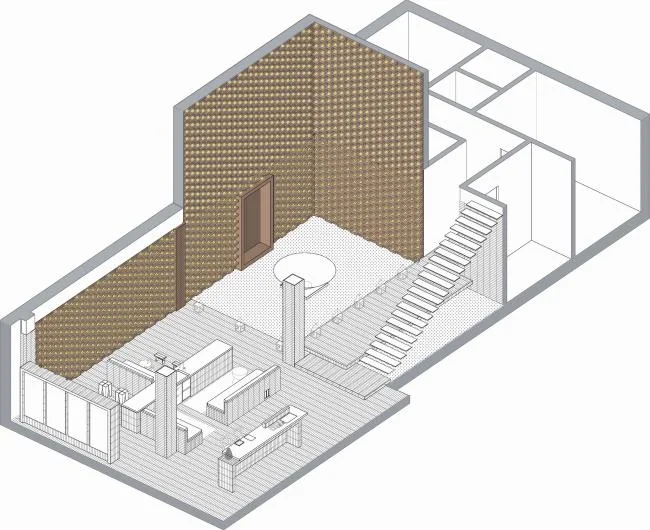
▲ Axonometric Diagram
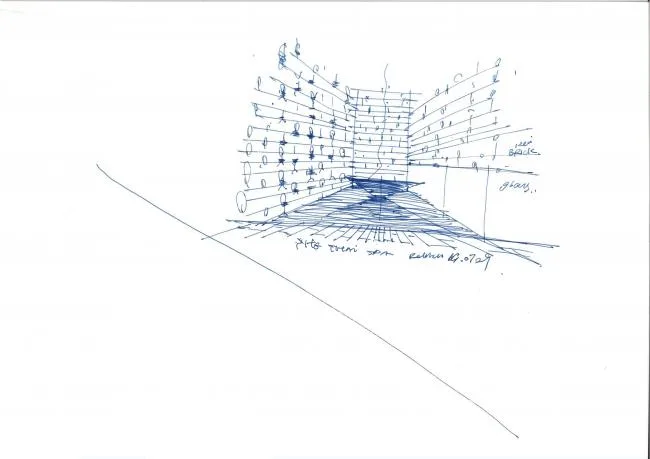
▲ Hand-drawn Sketch
Project Information
Project Name: Taihexi Nanjing Laomen East SPA Hall
Location: Nanjing, China
Address: 18-1 Zhangjiaya, Laomen East, Taojia Lane, Qinhuai District, Nanjing City, Jiangsu Province
Site Area: 450 square meters
Building Area: 450 square meters
Facade and Interior Design: Bare Building Renewal Architectural Design Firm ROARC.cn
Lead Architect: Bai Zhenqi
Design Team: Lin Yan, Xue Leqian, Lu Huiqin, Wu Yejing, Yang Junyi, Gu Qian
Structural Engineer: Wu Chuanyi
Lighting Design: Jiang Zhaolong
Construction Consultants: Zhang Chenghua Jielu Decoration, Tang Yuanhua Aoyang Decoration
Construction Contractor: Taizhou Aoyang Decoration Engineering Co., Ltd
Photographer: Freeman
Owner: Taihexi Health Technology
Main Building Materials: Red brick, wood veneer, Harmerhome fabric, stainless steel, copper-plated panels
Design Period: September 2018 to November 2018
Construction Period: December 2018 to April 2019












Must log in before commenting!
Sign Up