
Guiyuan Town, nestled on Xiannv Mountain in Wulong, Chongqing, is a cultural and creative village revitalized from a century-old settlement hidden amidst the clouds. Rooted in ecological agriculture, the development aims to offer immersive cultural and creative experiences alongside a fresh rural lifestyle, breathing new life into this ancient village.
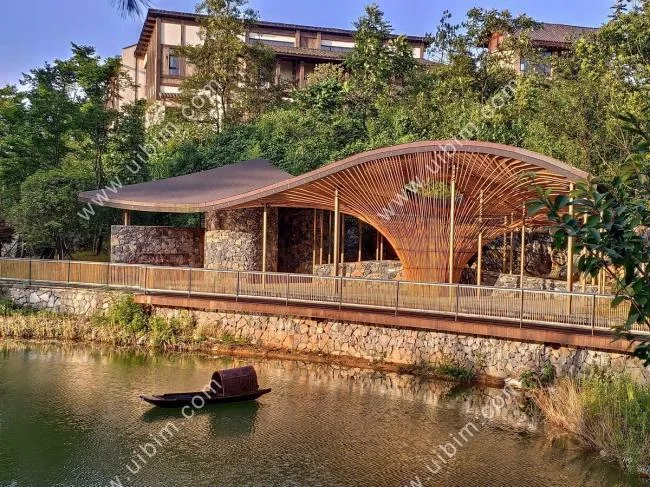
▲ Tea Pavilion bathed in sunlight
The tea pavilion is strategically positioned at the village entrance, intended to serve as a communal leisure space for residents to gather and converse, and as a tranquil spot for visitors seeking respite from the heat. The design maximizes the pavilion’s internal activity area while maintaining its elegant form. It offers a place for chatting, tea drinking, fireside gatherings, reading, and community meetings—filling a gap in public space within the village. Its proximity to mountains and water naturally establishes it as an elegant landmark of the town.
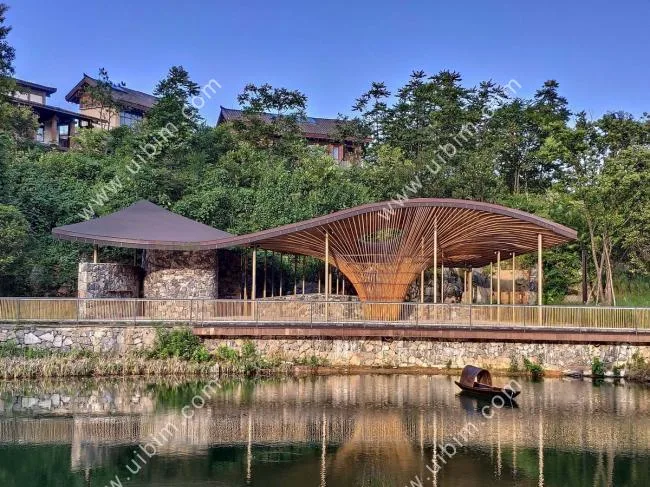
▲ Tea Pavilion illuminated by sunlight
The tea pavilion stands approximately 5 meters tall, stretches 22 meters in length, and extends 8 meters in depth. Its main framework consists of a steel structure, while the internal spatial elements are crafted primarily from bamboo. Expressing three-dimensional forms with a single material in rural mountainous areas presents challenges, so the designers simplified the complex geometry by using basic tools and techniques to control bamboo points and heights precisely. This approach makes all elements manageable and shapes the bamboo confidently. A total of 110 bamboo poles rise from the base with varying parameters, forming a mushroom-shaped structure that visually supports the roof and embodies the concept of “thousands of bamboo.” The bamboo structure itself transforms into the pavilion’s defining beauty.
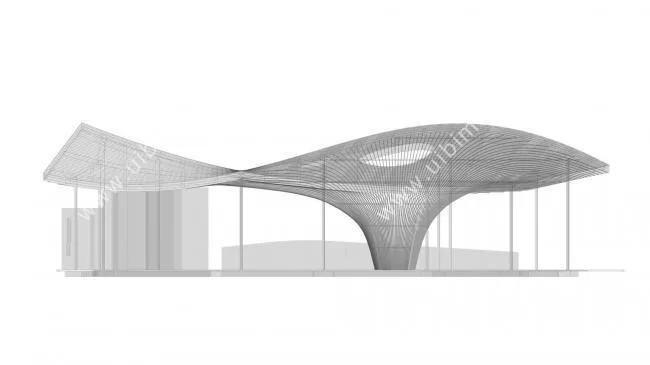
▲ Front facade
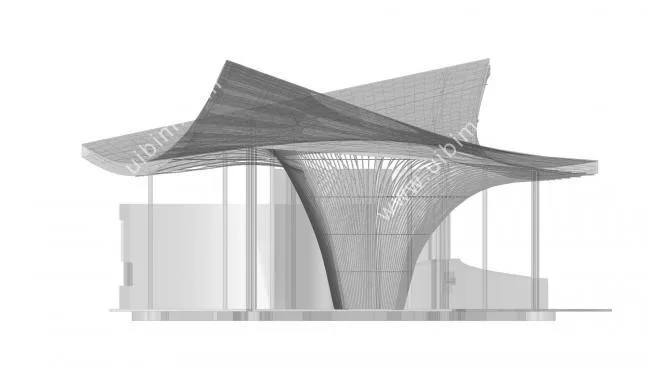
▲ Side facade
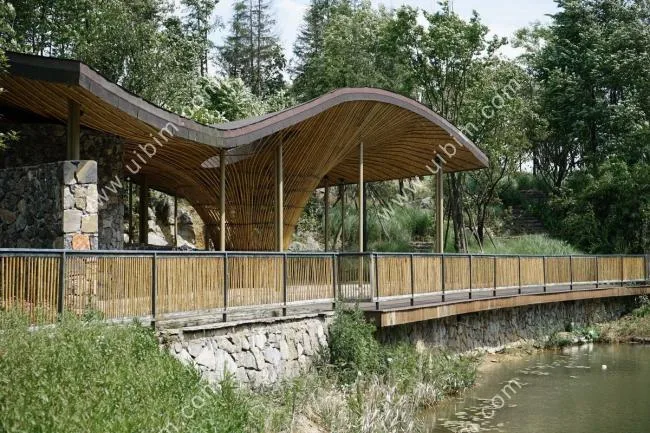
A tea pavilion supported by bamboo
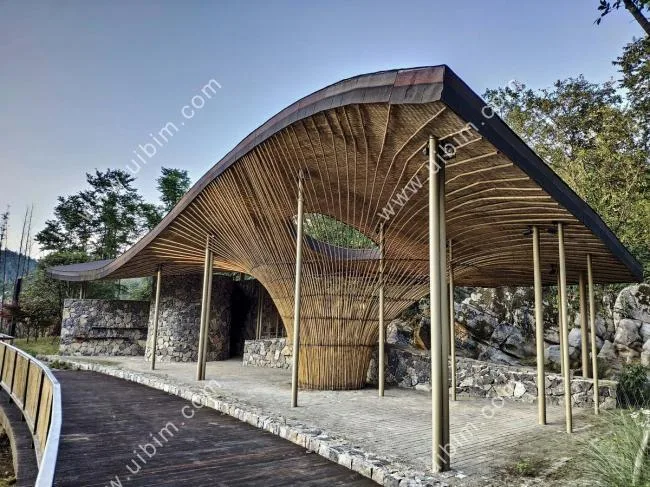
▲ Roof materials
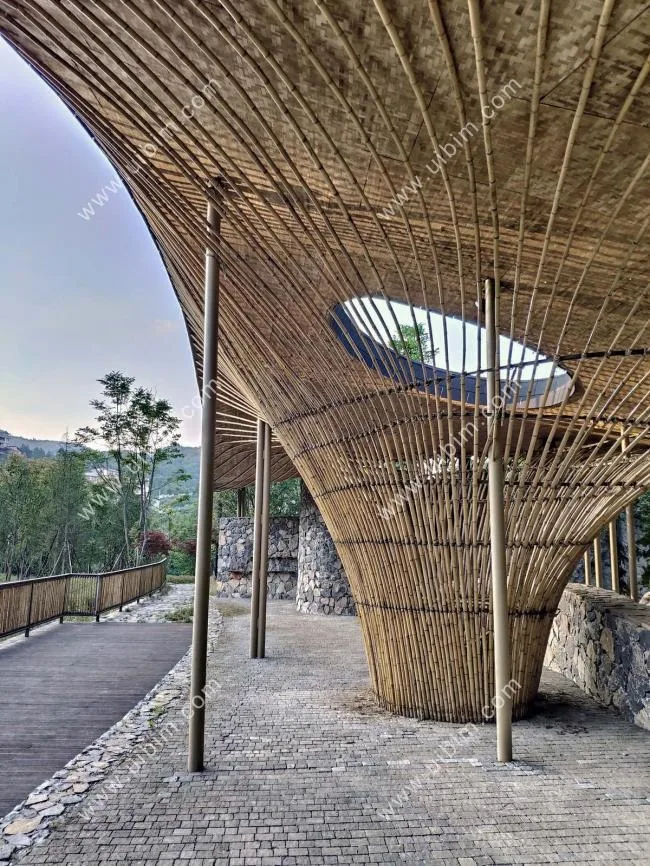
▲ Interior space of the Tea Pavilion
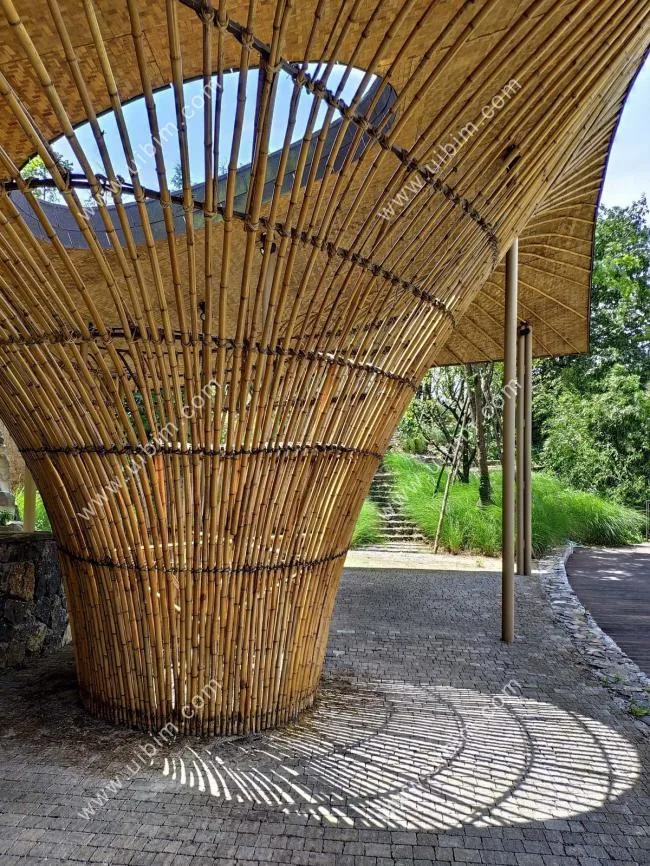
▲ Expanded bamboo details
Bamboo is the most widely used living material among local farmers, employed in everything from baskets and fences to adobe houses reinforced with bamboo strips. The farmers possess intimate knowledge of bamboo’s various forms. During the pavilion’s construction, local artisans skilled in bamboo craftsmanship were consulted to assess the material’s temperature, texture, flexibility, thickness, and durability. After hundreds of experimental trials, the team identified the optimal toughness and ideal presentation of native bamboo. We respect the material’s voice, allowing bamboo itself to shape the design, striving for a natural perfection without forced efforts. Through continuous exploration, bamboo consistently surprises, effortlessly forming shapes that would be challenging for modern materials to achieve without deformation.
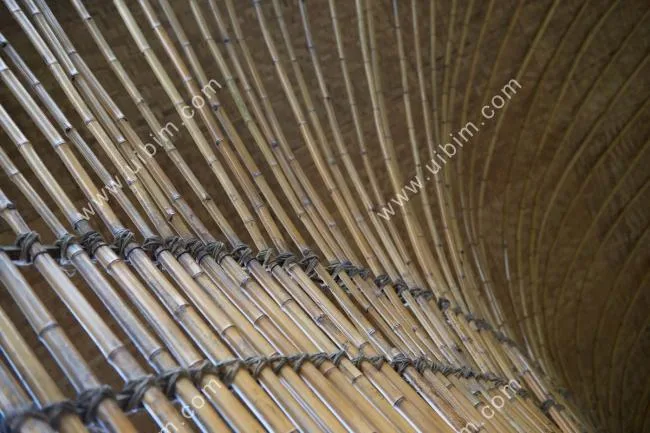
▲ Bamboo craftsmanship details
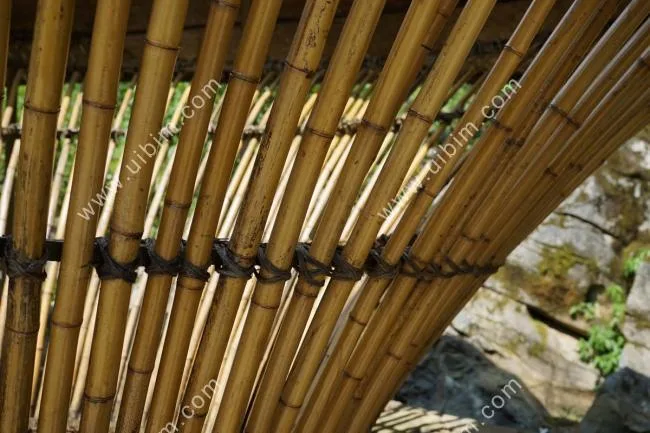
▲ Bamboo craftsmanship details
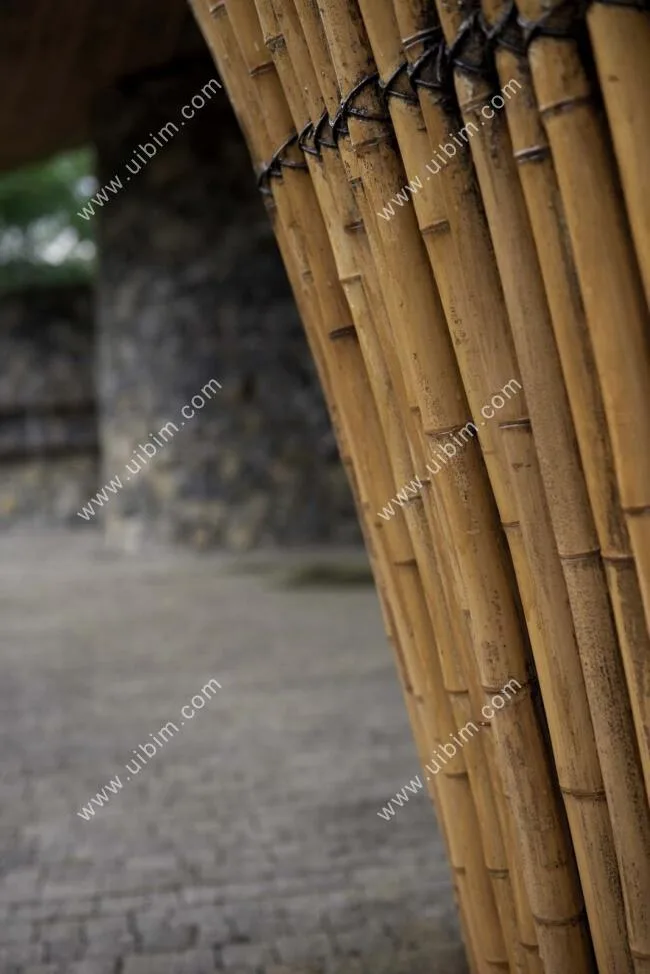
▲ Bamboo craftsmanship details
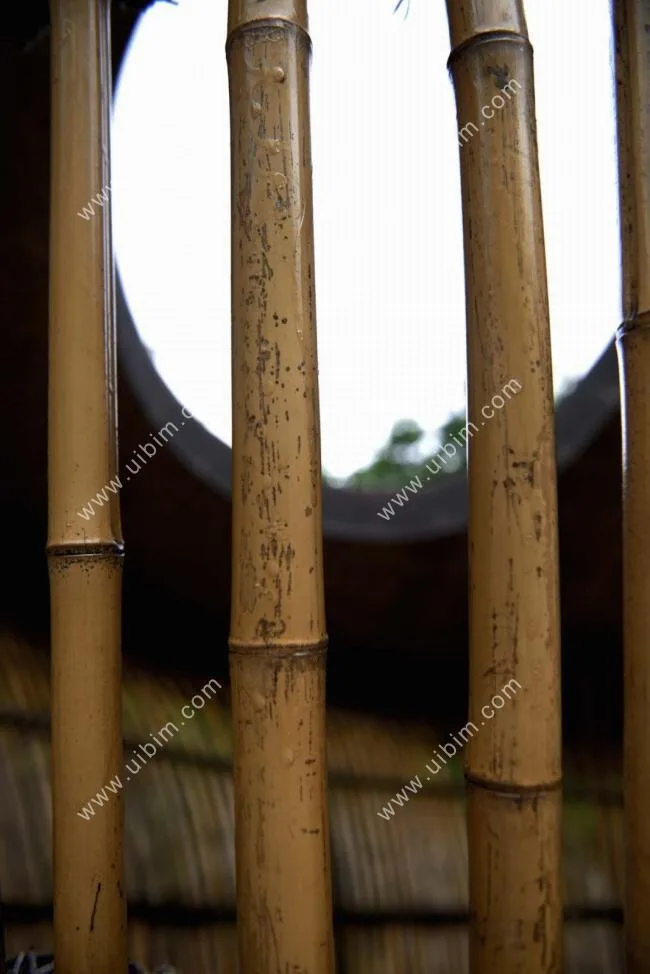
▲ Bamboo craftsmanship details
Drawing inspiration from the roofs of local residences, we abstracted a new curved roof form that is as graceful and light as a frozen mountain breeze. This soft, elegant roof uses undulating eaves to expand the pavilion’s frontal views and create spacious, comfortable areas beneath, enhancing the pavilion’s openness and charm.
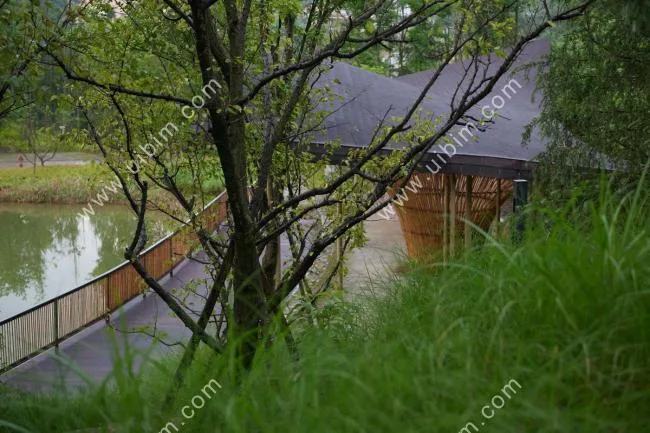
▲ Roof details
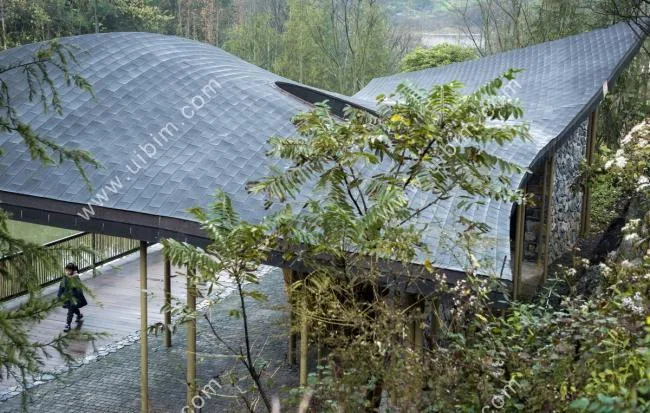
▲ Bamboo Pavilion roof
Behind the pavilion lies a well-preserved natural mountain and stone landscape. To harmonize with this environment, dry earth walls were constructed, echoing the natural terrain and preserving the land’s original character. In front of the pavilion, a peaceful green pool reflects the surroundings, with a small boat gently floating on its surface. A soft breeze stirs the water, while the warm afterglow of the setting sun casts a calm, comfortable atmosphere.
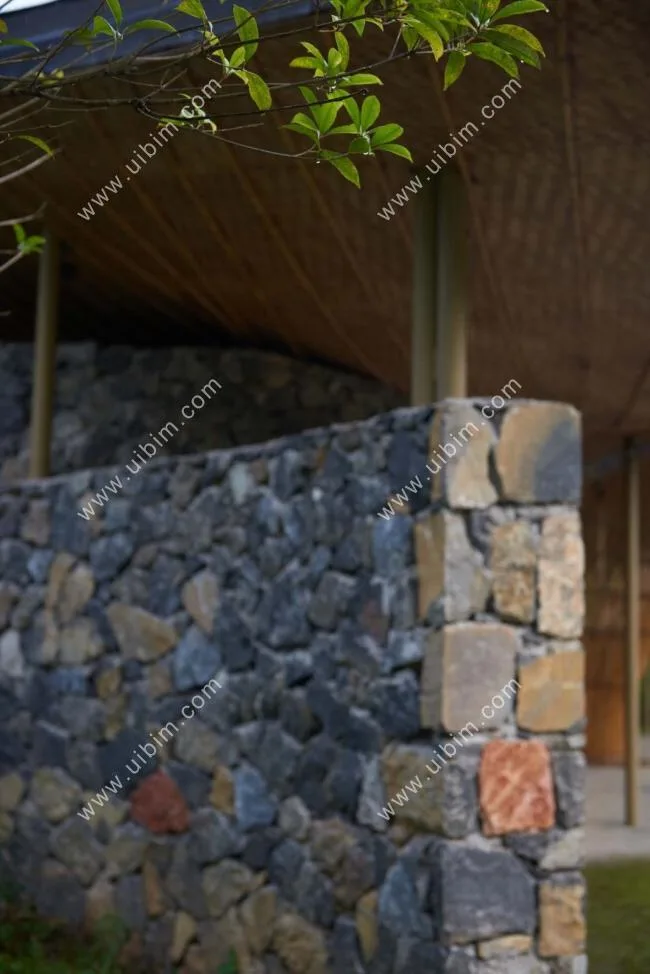
▲ Dry earth base
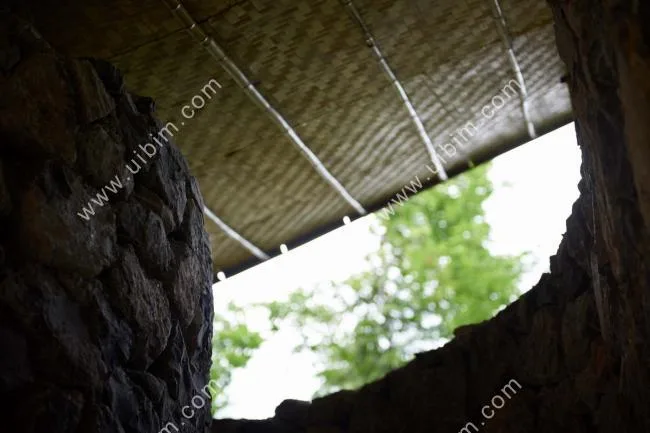
▲ Detail shot
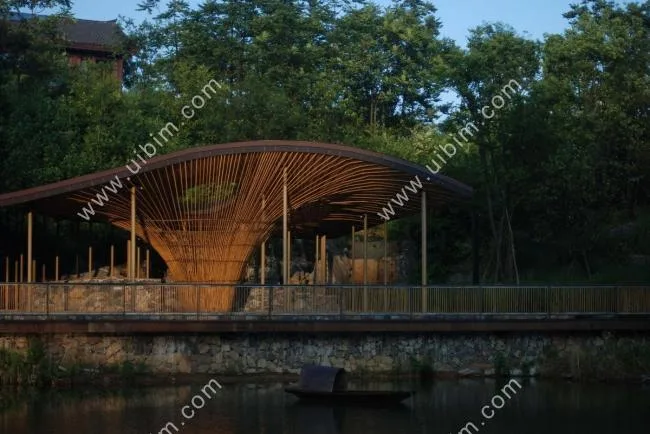
▲ Tea Pavilion at sunset
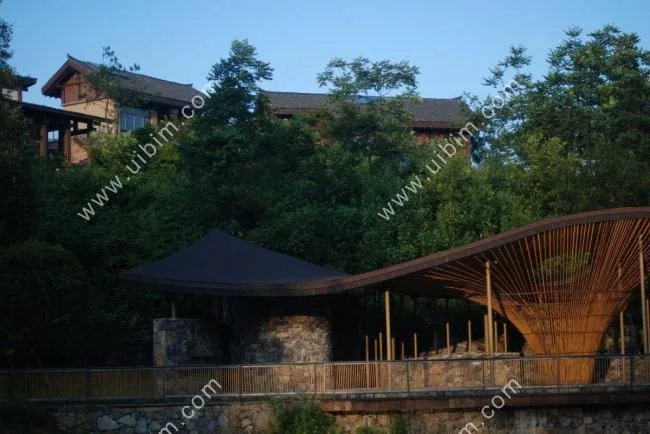
▲ Tea Pavilion glowing under sunset
By utilizing local materials and innovative construction techniques, this project fosters a new model for rural settlements. It creates a unique character and humanistic style that embodies the evolving lifestyle of rural innovation communities. The tea pavilion stands as both a scenic landmark and a serene retreat in the countryside.
Project Drawings
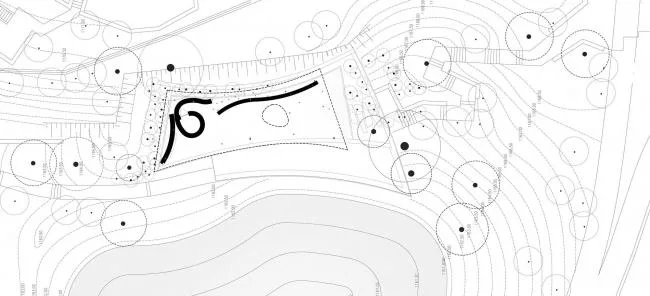
▲ Plan view
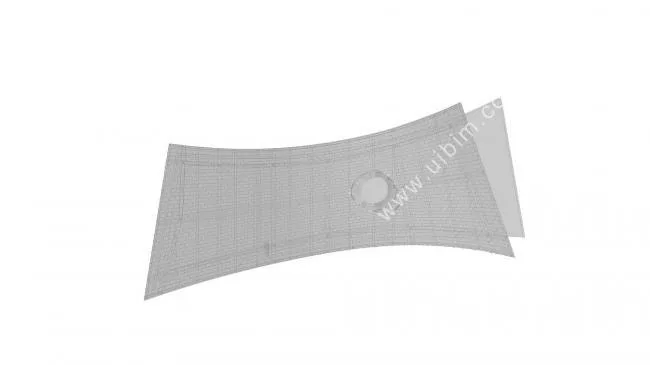
▲ Roof plan
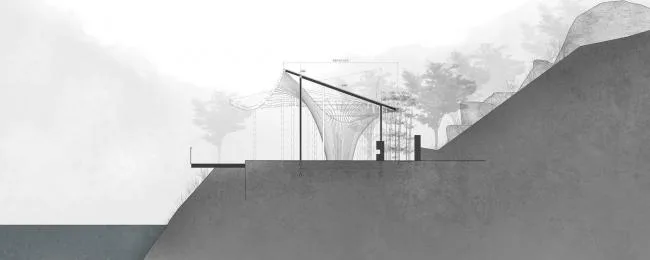
▲ Tea Pavilion section
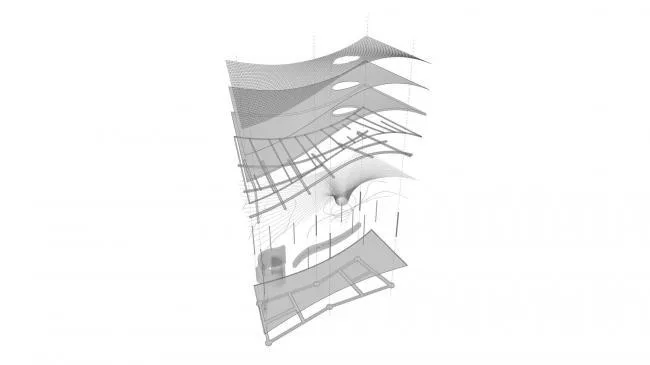
▲ Exploded diagram
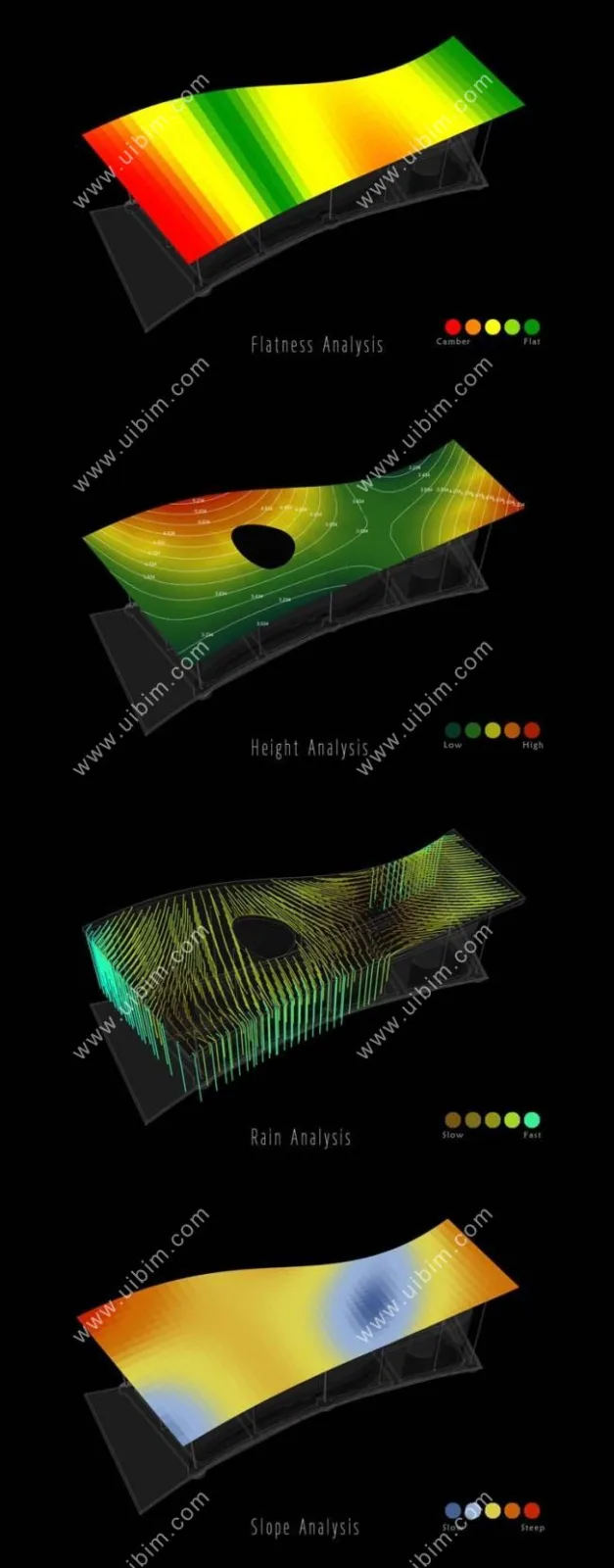
▲ Technical analysis of Tea Pavilion
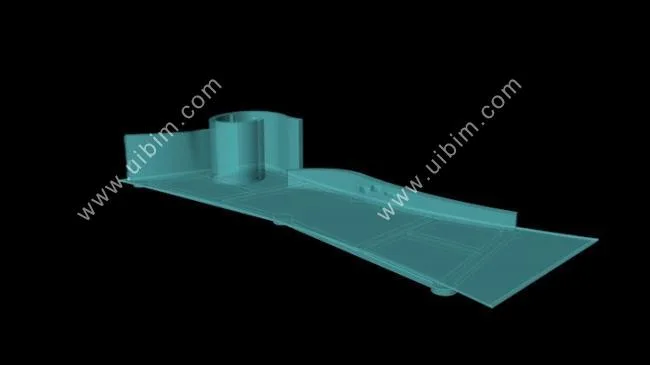
▲ Technical analysis
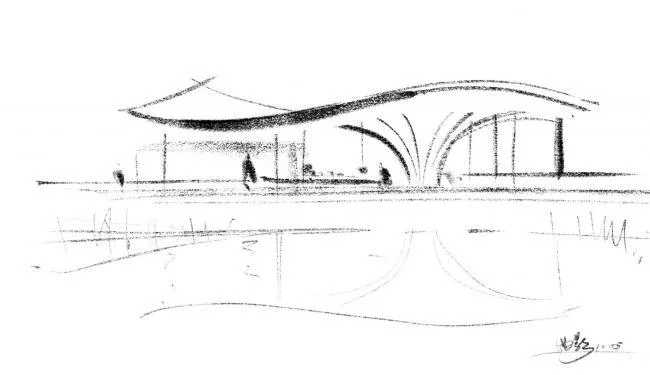
▲ Sketch
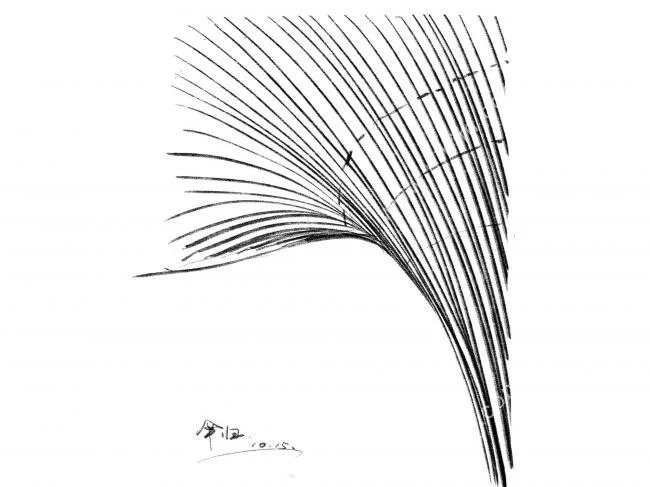
▲ Sketch
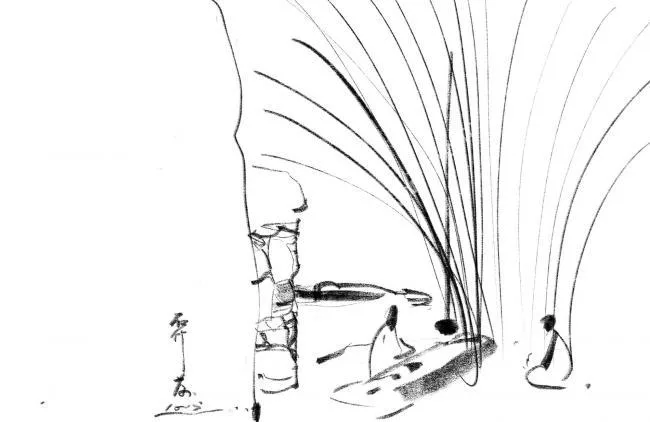
▲ Sketch
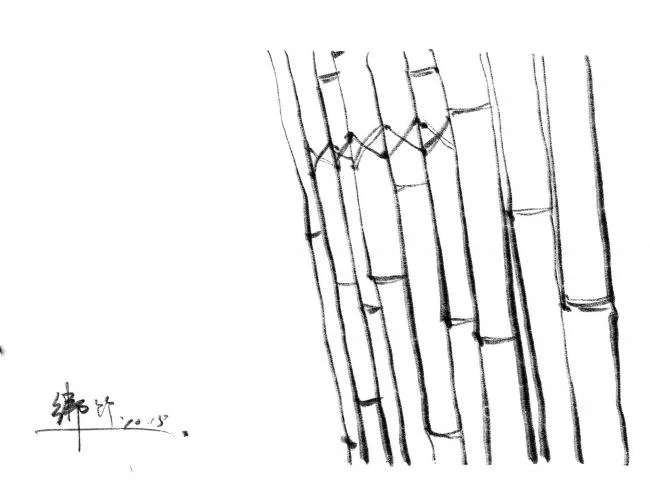
▲ Sketch
Project Information
Project Type: Landscape Architecture, Exhibition Pavilion
Architectural Design: Weitu Design Agency
Area: 120.0 m²
Project Year: 2018
Photographer: Lu Bing
Landscape Design Team: Li Hui, Li Yansa, Tian Le, Zhou Xinyu, Li Li, Gao Yuan, Song Zhaobing, Hu Xiaomei, Liao Chunting
Owner: Fance Holdings












Must log in before commenting!
Sign Up