
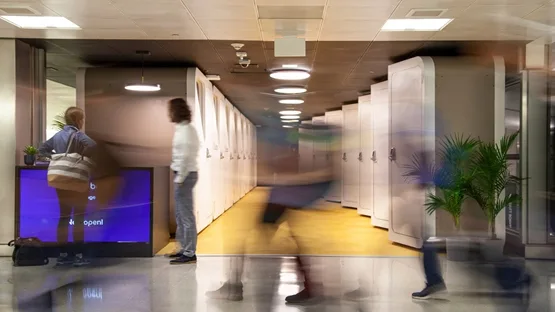
The private sleeping cabins designed by Sleepbox have been installed by 3877 Architecture Studio at Washington Dulles International Airport. The Sleepbox Company offers 16 pre-booked nap rooms for rent, available for a minimum of one hour, providing travelers with a private and comfortable resting space.
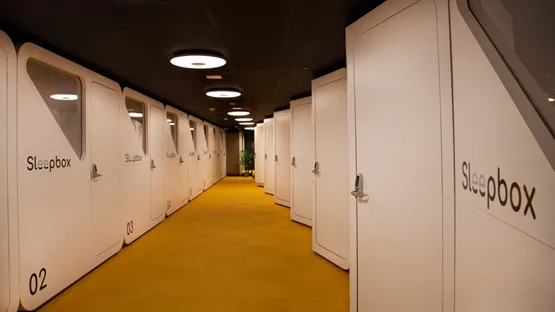
This 1,200 square foot (111 square meter) facility is located at the Postal Security Office in International Hall A at the airport. It features two rows of bookable “Sleepbox Company” cabins. The box-shaped units were originally designed by Arch Group and installed on site by the local architectural studio 3877.
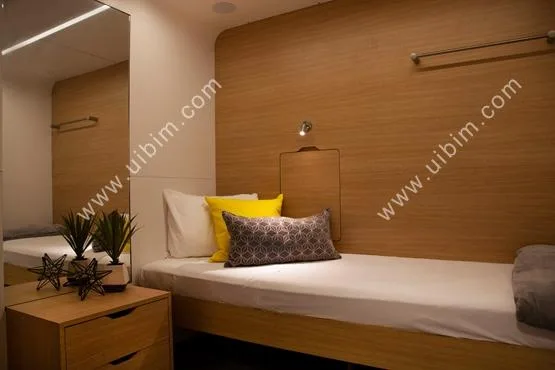
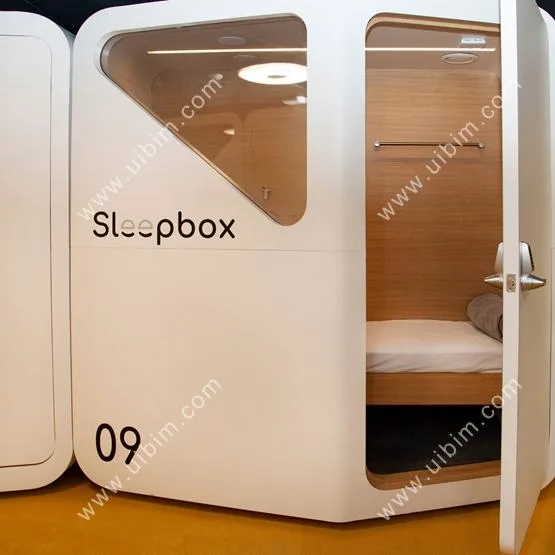
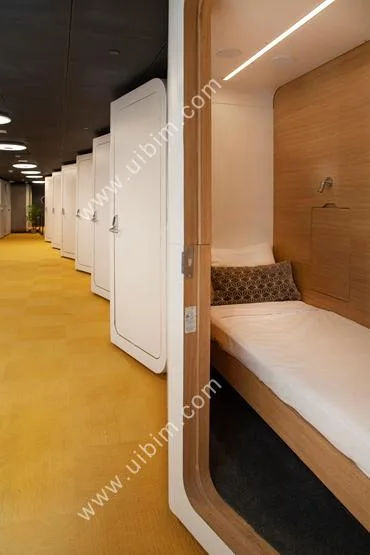
The cabins are prefabricated using plywood and feature a sleek white and gray exterior. The flooring consists of recycled nylon carpet, while LED lighting illuminates the compact spaces. These units are powered by wall-mounted sockets and embrace a plug-in hotel concept.
Each cabin is equipped with wireless controls, including temperature adjustment, privacy window tinting, ambient colored lighting, and Bluetooth speakers. The sleeping units feature closable doors and come in two sizes: a standard 45 square feet (4 square meters) and a compact 35 square feet (3.2 square meters) model.
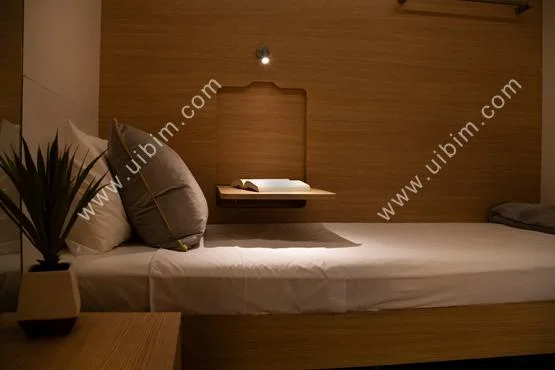
The interiors, crafted from plywood, include an embedded bed and a flip-down table for added convenience. The cabins operate with a dedicated mobile app that allows users to book, unlock, and control the rooms directly from their devices. Rentals start at one hour, with extensions available in 15-minute increments.
The sleeping cabin concept was developed by Mikhail Krymov and Alexey Gorianiov from Arch Group. In 2009, the Dezeen Architecture website introduced their idea, which Krymov credits as crucial to bringing the design to life. He said, “Dezeen provided the vital momentum for our concept’s first introduction. Without it, the sleeping compartment would still be a sketch forgotten on a hard drive.”
In 2011, Arch Group installed two micro sleeping cabins at Sheremetyevo Airport in Moscow. By 2015, Mikhail Krymov relocated from Moscow to Boston, where he earned a research scholarship at the Massachusetts Institute of Technology (MIT) and founded Sleepbox, a tech startup focused on revolutionizing the hotel industry.
Since then, Sleepbox has expanded its offerings to include various sleep solutions, such as Casper’s nap room in New York City, a bedroom designed for outdoor music festivals, and a hammock set developed in partnership with Hassell and Draisci Studio in London.












Must log in before commenting!
Sign Up