
In recent years, the concepts of smart buildings and green construction have gained significant traction. The construction industry has rapidly embraced information technologies such as BIM, mobile communications, the Internet of Things, cloud computing, and big data. This shift has transformed project collaboration management, introducing new methods and tools that differ greatly from traditional approaches.
With engineering projects becoming increasingly complex and demanding higher standards of management, advanced project collaboration models are essential, especially for multi-stakeholder and large-scale projects. Successful project collaboration management hinges on two critical components: first, establishing a project management approach that aligns with collaborative needs; and second, developing a project collaboration platform that meets the requirements of all involved parties.
This article uses Nanjing Renheng Culture and Tourism Company—my workplace—as a case study to share our experience in selecting a project collaboration platform and our insights into effective collaboration management. We hope this serves as a useful reference for colleagues working on the client side.
As the spearhead for expanding Renheng Group’s cultural and tourism sector, Renheng Cultural and Tourism Company sets high standards for project timelines and quality. The Nanjing Jiangxinzhou G84 plot cultural and tourism project is its flagship initiative. However, in the realm of project information collaboration management, the company has traditionally relied on conventional methods such as data exchange and shared storage through internal OA systems, QQ, email, and FTP sites. These methods struggle to meet the collaborative management needs of owners coordinating among design institutes, construction parties, and supervisors.
Information retrieval is inefficient and fragmented, versions are often disorganized, communication delays are common, and tracking project processes is difficult. Therefore, implementing a professional, cross-party engineering collaboration platform is crucial to better satisfy the information collaboration demands of all stakeholders.
Choosing such a collaborative platform requires careful analysis and caution. During our selection, we examined the main business characteristics and pain points within the cultural and tourism industry, arriving at several key observations:
- Multiple stakeholders: Numerous design firms, construction companies, and consulting agencies create complex multi-party communication scenarios. Traditional point-to-point communication often leads to omissions and redundant exchanges.
- Drawing management challenges: The industry’s architectural uniqueness produces a large volume of drawings, including many similar versions and frequent revisions, complicating effective management.
- Complex structures: Irregular building forms with high construction difficulty call for advanced visualization capabilities of individual building models.
- Extended project cycles: Long engineering cycles require comprehensive, full-lifecycle project management with a platform capable of managing and storing construction process data.
While visualization of building models is important, BIM use in cultural and tourism projects remains in early stages. Most implementations focus on specific functions like model visualization or clash detection and lack full integration between 3D models and 2D drawings. Currently, project reviews primarily rely on 2D drawings, and BIM usage on both client and contractor sides centers on coordination. Our immediate focus lies in leveraging BIM for auxiliary design and display.
Due to the high cost and complexity of implementing BIM-based collaborative platforms and the dominance of 2D drawings in regulations, we selected a collaboration platform primarily based on 2D drawing management. It efficiently handles document control, facilitates swift information exchange, and supports 3D model browsing and component data queries to help address issues such as drawing clashes, errors, and omissions.
During early requirements gathering, design, engineering, and project departments proposed additional features for potential future needs—such as external document linking, approval workflows, onsite issue reporting, and mobile access. These considerations, combined with the business pain points, helped us develop a comprehensive platform comparison framework.
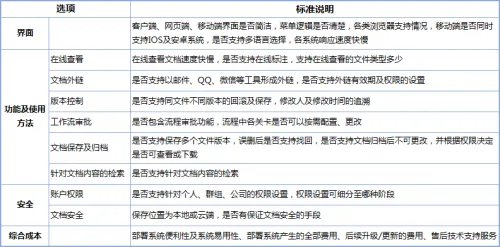
Criteria for Selecting a Collaborative Platform
We evaluated four platforms: domestic options Guanglian Da Xiezhu and Jin Tanglang Huizhu, and international platforms ANYSHARE and Autodesk BIM360. Jin Tanglang Huizhu focuses mainly on BIM applications, interior decoration, and materials management, without covering the full project lifecycle. ANYSHARE offers comprehensive functions but requires local storage and involves high deployment complexity and costs, making it more suited as a group document management tool.
Autodesk BIM360 is a mature product, but its limited localized customization and foreign design standards make it less suitable and more costly for the domestic market. Considering Guanglian Da Xiezhu’s strong performance across key functional areas, we ultimately chose it for the Nanjing Jiangxinzhou G84 cultural and tourism project.
Multi-Platform Access and Performance
The platform must support design and construction cycles while accommodating approval workflows. It needs to operate seamlessly across desktop clients, web browsers, and mobile devices to support both office and onsite use. Real-time data sharing and intuitive operation are essential. Guanglian Da Xiezhu offers three login methods—app, web, and desktop client—with integrated data synchronization. It uses Alibaba Cloud for reliable data transmission, ensuring fast and stable access both domestically and internationally.
Functional Coverage and User Experience
Key functions include online document viewing, external document linking, version control, and workflow approvals. Guanglian Da Xiezhu, with its long-standing service to construction enterprises, leads its peers in document format support and loading speed. It integrates with email, QQ, and WeChat, allowing users to open shared drawings, models, and office files effortlessly. External links can be shared with expiration dates and permission settings, providing convenient, traceable access anytime, anywhere.
The platform supports version rollback, tracks who made changes and when, and offers flexible, customizable approval workflows. It also supports BIM models, providing a foundation for future visualization, 3D clash detection, and other advanced functionalities.
Data and Operational Security
In cultural and tourism projects, the uniqueness of architectural designs demands stringent data security. Proper allocation of account permissions is critical. Guanglian Da Xiezhu employs triple data backups and local data synchronization in the cloud, ensuring robust data protection. Its clear user, department, and company permission settings define rights and responsibilities, making management straightforward.
Deployment Ease and Total Cost of Ownership
Transitioning to information-driven workflows requires platforms that are easy to deploy, learn, and maintain. A product with clear operational logic facilitates enterprise-wide adoption, especially among frontline staff. Simplified deployment reduces difficulty, accelerates implementation, and maximizes value.
Currently, we have procured the collaborative platform but have yet to fully deploy it. Our immediate plans focus on three core business issues during design and construction:
- Uploading and confirming design drawings (including those from contractors) via the platform;
- Managing design changes through platform-based approvals and confirmations;
- Using official blueprints as the construction baseline, supplemented by platform drawings for reference, while reporting and circulating construction issues through the platform for confirmation and filing by contractors, clients, and design institutes.
After months of platform evaluation, I have compiled these reflections to assist fellow client-side colleagues. The emergence and application of multi-party collaborative management technologies naturally follow the maturity of cloud computing and big data.
Collaborative platforms differ significantly from traditional project management tools by addressing the detailed pain points faced by various roles. We look forward to enhancing information collaboration efficiency through these platforms, thereby improving work quality and project management precision.













Must log in before commenting!
Sign Up