
China’s commodity housing market has been evolving rapidly, with the industry landscape continually shifting. Amid intensified competition, several real estate companies with multi-billion dollar scales have emerged, leading to increased industry concentration. A technological revolution is underway in residential industrialization, driven by the rise of prefabricated buildings. These buildings offer benefits such as environmental friendliness and enhanced production efficiency. Since 2013, the State Council and the Ministry of Housing and Urban-Rural Development have issued numerous policies to promote domestic housing industrialization and the development of prefabricated construction.
Currently, alongside early advocates like Vanke, major real estate firms including Country Garden, Greenland, Xincheng, China Resources, Xuhui, and Jindi have strategically invested in the prefabricated building sector. This article explores various aspects such as technological advantages, market orientation, policy background, and real estate companies’ development examples in prefabricated construction. It also addresses the challenges and risks faced in the current development phase of prefabricated buildings in China.
Overview and Industry Development Trends of Prefabricated Buildings
1. Definition and Overview of Prefabricated Buildings
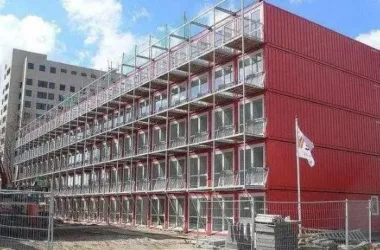
Prefabricated buildings are constructed by assembling prefabricated components on-site. They primarily fall into three categories based on structural materials: prefabricated wooden structures, prefabricated concrete structures, and prefabricated steel structures. Due to their inherent material properties, wood and steel structures are prefabricated. This article focuses mainly on prefabricated concrete structures, which are widely used in domestic commercial residential buildings.
Unlike traditional cast-in-place reinforced concrete structures, prefabricated concrete buildings rely on a systematic, industrialized approach. This involves standardized early-stage design, factory-based prefabrication, and on-site assembly construction. According to the national standard “Technical Standards for Prefabricated Concrete Buildings,” prefabricated buildings integrate prefabricated components in core structural systems, peripheral protection, equipment and pipeline systems, as well as interior systems.
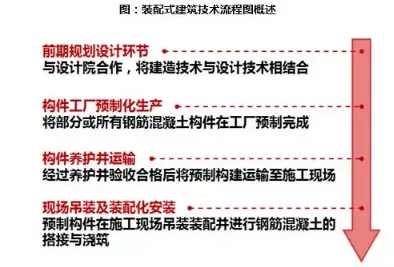
Two major technical challenges exist in prefabricated concrete structures. First, early project planning requires systematic design of prefabricated structural components, including modular coordination, module combinations, interface connections, node construction, and modular integration methods. Second, on-site assembly demands advanced wet connection techniques such as high-strength concrete, mortar, sleeve grouting, and high-pressure grouting. Post-poured concrete overlaps at key nodes are critical for structural integrity. Given their impact on connection strength and overall building performance, meticulous control is essential throughout design, component production, and on-site construction stages.
2. Development Trends in China’s Prefabricated Construction Industry
3. Policy Background and National Orientation for Prefabricated Buildings
Factors like a shrinking demographic dividend, environmental protection priorities, construction industry development, and industrial chain upgrading have aligned prefabricated buildings with China’s national strategic goals. Since the release of the “Green Building Action Plan” by the State Council in 2013, numerous policies have promoted prefabricated construction. These policies set clear requirements across development planning, standards, industrial chain management, and engineering quality. Prefabricated buildings have been elevated to a national strategic priority.
In March 2017, the Ministry of Housing and Urban-Rural Development introduced the “Action Plan for Prefabricated Buildings during the 13th Five-Year Plan,” targeting over 15% prefabricated building proportion in new constructions nationwide by 2020, with key areas exceeding 20%. In February 2018, the Ministry approved the “Evaluation Standards for Prefabricated Buildings” as a national standard, establishing guidelines including assembly rate calculations.
Table summary: Policies from the Ministry of Housing and Urban-Rural Development and the State Council supporting prefabricated buildings from 2013 to present.
Impact of Prefabricated Buildings on Real Estate Enterprises and Case Studies
The rise of prefabricated buildings influences multiple facets of real estate development. In the short term, some cities have introduced policies linking prefabricated building requirements to land acquisition processes. Prefabricated buildings enhance production quality, energy efficiency, project turnover, and operational efficiency in real estate development. Long term, companies piloting prefabricated construction are positioning themselves strategically to capture emerging market opportunities.
1. Land Acquisition Process: Urban Policy Support for Prefabricated Buildings
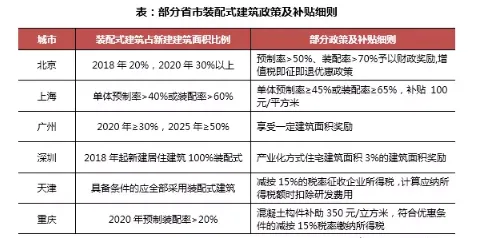
Responding to national directives, over 31 provinces, municipalities, and autonomous regions have set targets and guarantees for prefabricated buildings. These include setting prefabrication and assembly rate requirements for land parcels and offering financial incentives such as tax reductions or area subsidies. Cities like Shanghai and Tianjin mandate 100% full decoration of affordable and commercial housing using prefabricated methods.
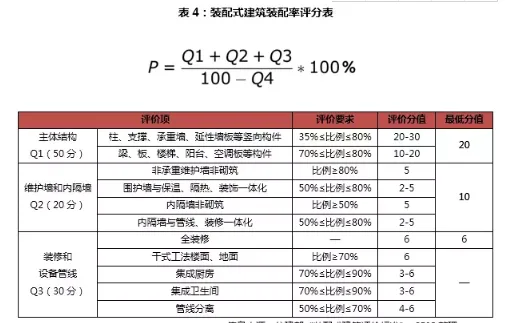
Key policy indicators include the prefabrication rate (total volume of prefabricated components divided by total concrete volume) and assembly rate (assembled area divided by total aboveground capacity). These administrative regulations directly influence land acquisition and development strategies for real estate enterprises.
2. Development Phase: Enhancing Engineering Quality, Energy Conservation, and Environmental Protection
3. Financial Benefits: Boosting Production Efficiency, Capital Turnover, and Cost Reduction
Beyond external policy support, the internal advantages of prefabricated buildings—such as shortened project development cycles and improved capital turnover—are key drivers for adoption. Prefabricating components lessens on-site labor intensity, often eliminating masonry and plastering tasks. It also reduces concrete curing time compared to traditional cast-in-place methods. Combining industrialized component production with interlaced construction techniques significantly accelerates timelines, enhancing project turnover and capital efficiency. These improvements reduce financial costs and increase profitability for real estate firms.
Data shows prefabricated buildings can cut construction time by 25-30% compared to traditional methods. For example, an 18-story residential building’s upper structure construction can be shortened by an average of 150 days using prefabrication. Country Garden found that construction-to-delivery time for a 30-story high-rise villa decreased from 25.1 months to 15.8 months using an industrialized construction system, saving approximately 9.3 months.
4. Long-Term Strategic Significance of Prefabricated Buildings for Real Estate Development Models
5. Case Studies: Prefabricated Building Development in Real Estate Companies
Embracing residential industrialization trends and national policies, companies like Vanke, Country Garden, Greenland, Xincheng, China Resources, Xuhui, and Jindi have made strategic moves in prefabricated construction.
Vanke introduced residential standardization and industrialization concepts as early as 2003, elevating construction technology innovation to a strategic priority. In October 2017, the Xiong’an Vanke Architecture Research Center was launched, focusing on green construction development, building performance, and prefabricated interior decoration.
Country Garden’s expansion strategy aligns naturally with prefabricated buildings. Since 2016, it has piloted the SSGF industrialized construction system, emphasizing “Science and Technology Innovation,” “Safety Sharing,” “Green Sustainability,” and “High Quality & Efficiency.” For instance, the Dongguan Chashan Country Garden project reduced construction manpower by one-third and was shortlisted for the “Guangsha Award.” By the end of 2017, Country Garden had piloted prefabrication in 111 out of 1,468 projects, with plans to extend the system across all new developments.
Challenges and Risks in Prefabricated Building Development
While prefabricated building technology supports residential industrialization and accelerates project turnover, it also presents challenges. Although faster turnover reduces capital occupation and financial costs, increased material and transportation costs arise. Real estate companies face difficulties in process control, industry chain coordination, and product design that require urgent attention.
1. High Construction Costs and Lack of Scale Advantages
2. Elevated Transportation Costs and Immature Industrial Chain Support
Factory-based component production and on-site assembly, while advantageous, increase transportation demands and require robust local industrial chain support.
Transportation costs for prefabricated buildings surpass those of commercial concrete due to factory location constraints and component size limits. Additionally, large prefabrication plants demand extensive maintenance and storage spaces, where location choices must balance land and transportation costs.
Furthermore, prefabricated component factories face capacity issues—both shortages and overcapacity coexist. Limited factory output or substandard component quality can delay construction schedules, impacting overall project timelines if companies must wait for re-production.
3. Crucial Integration of Building Information Modeling (BIM) and Architectural Design
4. Need for Industrial Worker Training and Updated Engineering Management
5. Standardized Mass Production as a Prerequisite for Prefabricated Buildings
Practically, prefabricated buildings have limitations in unit layout variety and proportion within projects. Cost reduction relies heavily on industrial mass production through extensive replication and standardization, which spreads research and development costs. Consequently, prefabricated construction is best suited for projects with fixed layouts and scalable product designs.
In summary, supported by policies from the State Council and the Ministry of Housing and Urban-Rural Development, numerous prefabricated building projects have been launched. Policy supervision and incentives are crucial for early adoption; however, current assembly and prefabrication rate requirements and short-term incentives are insufficient for sustained industry growth. The scale benefits of prefabricated buildings will emerge only as the industrial chain matures, standardization improves, and capacity utilization rises. With ongoing construction technology innovation, China’s housing industrialization is poised for rapid advancement.
Responsible Editor: Shi Dandan














Must log in before commenting!
Sign Up