
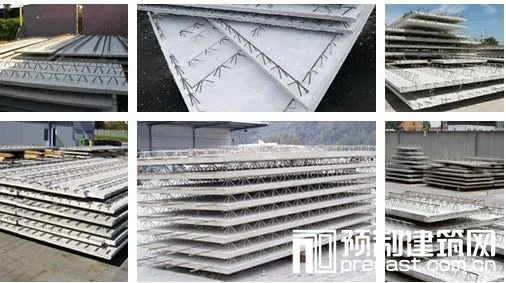
Composite floor slabs are considered semi-prefabricated components. Mechanically, the precast concrete layer must have a minimum thickness of 5 to 6 cm, depending on the amount of concrete and reinforcement used, and it can reach up to 7 cm.
These slabs are manufactured in factories that provide relatively controlled and stable environments. Once installed, the steel bars and truss steel bars (which are prefabricated components designed for torsional stiffness) add rigidity to the slabs. The transverse and longitudinal anti-bending steel bars must comply with installation and operational requirements.
After the composite floor slabs are positioned on-site, a secondary concrete pour is necessary to form a solid, unified floor. The total thickness of the concrete floor slab after this secondary pour ranges from 12 cm to 30 cm, depending on the span and load conditions. The truss steel bars that extend from the precast layer and the rough texture of the concrete surface ensure a strong bond between the precast and cast-in-place sections, effectively integrating them into a single structural unit.
Structurally, aside from differences in thrust calculation methods, composite floor slabs behave similarly to pure cast-in-place slabs. However, composite floors combine the benefits of industrial prefabrication with the traditional advantages of cast-in-place concrete construction.
















Must log in before commenting!
Sign Up