
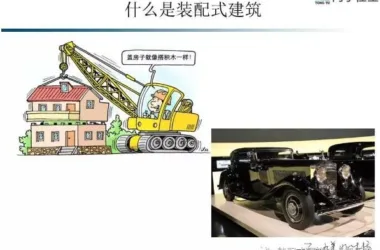
What exactly is a prefabricated building? Simply put, it is a structure assembled from prefabricated components connected reliably on-site.
Prefabricated buildings are categorized based on their structural materials, which primarily include concrete, steel, wood, and composite structures. Historically, other less common types such as stone and iron structures have also been used.
If we consider the definition of prefabricated buildings according to national standards, it becomes clear that their significance is far from diminishing.
According to three national standards covering concrete, steel, and wooden prefabricated buildings, these structures are defined as “buildings where the main parts of the structural system, enclosure system, interior system, equipment, and pipeline system are integrated using prefabricated components.” The standards further elaborate that prefabricated buildings are systematic projects that integrate prefabricated components through modular coordination, module combination, interface connections, node construction, and specific construction methods. This integration is efficiently and reliably assembled on construction sites to achieve unity of the building enclosure, main structure, and mechanical and electrical installations.
This means that prefabricated buildings are not just about whether the structure itself is prefabricated but also about system integration and full decoration, aligning perfectly with the goal of industrializing new building methods. Could it be that implementing system integration and full decoration is somehow wrong?
Understanding the historical evolution of prefabricated buildings also dispels any notion that they are obsolete.
Humans, like all primates, do not have an innate instinct to build. Our architectural needs and construction abilities have evolved gradually over time.
Archaeological findings reveal that early human-made shelters date back approximately 2 million years, coinciding with the discovery of fire. Perhaps the most direct motivation for the birth of architecture was the lifestyle centered around the fire pit, providing protection against wind and rain to keep the fire alive.
The origins of architecture extend even further back. Some animals that existed before primates—over 60 million years ago—can be considered ancestors of various building techniques. These creatures are natural architects, capable of constructing complex cast-in-place “buildings,” prefabricated “structures,” and cave dwellings without formal architectural education or structural knowledge.
Cast-in-place architecture ancestors include bees, desert termites, and swiftlets
Bees use secreted beeswax to build their hives. A type of desert stone bee uses saliva mixed with fine sand particles to create what can be described as “bee-made concrete” for hive construction. Hornets and bumblebees chew wood fibers and bond them with saliva—similar to papermaking—to produce pulp-like materials for building hives.
In Australia, a species of desert termite combines feces and sand to form “ant-made concrete,” constructing nests up to 3 meters high. Relative to their body size, these nests equate to skyscrapers over a kilometer tall for humans—far taller than the Burj Khalifa, currently the world’s tallest building at 828 meters.
The golden swiftlet creates precious bird’s nests from saliva, wet mud, and fluffy feathers. This “bird-made concrete” operates on a principle akin to reinforced concrete: branches or feathers handle tensile forces while the dried mixture of mud and saliva bears compressive loads. Similarly, the South American Stove Bird builds nests using soft clay.
Prefabricated construction is not a modern invention—even birds have been creating prefabricated structures. For humans, prefabricated dwellings existed as early as the hunter-gatherer era, long before the advent of agriculture.
Understanding the history of prefabricated concrete buildings dispels the myth of their demise
In 1824, British inventor Joseph Aspdin developed cement. Forty-three years later, in 1867, French gardener Joseph Monier patented reinforced concrete, inspired by flower pots—a clear example of prefabrication in action. Reinforced concrete buildings first appeared in France around 1890.
The use of precast concrete components in construction began in 1891, when a Parisian company first implemented precast concrete beams.
By 1896, France saw its earliest prefabricated concrete building: a small gatehouse.
Entering the 20th century, some modernist architects recognized that industrializing architecture could effectively address urban housing shortages. They advocated for and promoted prefabricated concrete buildings. In 1910, Walter Gropius, founder of the Bauhaus and one of the four greatest architects of the 20th century, proposed that reinforced concrete buildings should be prefabricated and industrialized.
Due to the disruptions caused by two world wars, prefabricated concrete buildings remained largely conceptual until the 1950s. After World War II, they gained significant momentum and became an important construction method.
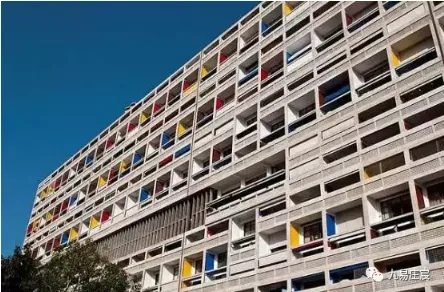
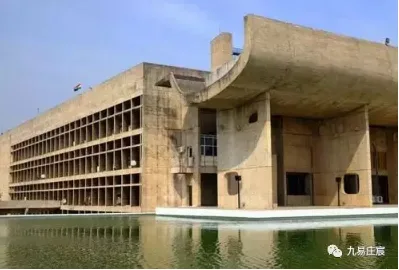
In the 1950s, Le Corbusier, another of the world’s four legendary architects, designed the Marseille apartment complex using numerous prefabricated plain concrete components. He also planned and designed Chandigarh, India, extensively using prefabricated components.
The Marseille Apartment features a large number of prefabricated concrete components
Chandigarh, India, also incorporates many prefabricated concrete components.
The Pan American Building in New York, designed by Gropius in the late 1950s, is a landmark high-rise. Its exterior employs decorative, integrated prefabricated concrete components made from exposed materials.

The Philadelphia Social Ridge Apartments, designed by I.M. Pei, stand as a high-rise prefabricated concrete building.

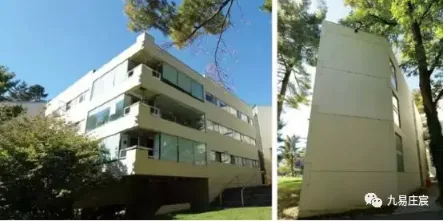
Princeton University’s student dormitories, also designed by I.M. Pei, consist of eight buildings with four floors each. All components are prefabricated, including integrated decoration. The longest wall panels measure 12 meters and weigh 1.78 tons. These panels are bolted together and connected to floor slabs. Built in 1973, this is the earliest fully prefabricated reinforced concrete building in the United States. Prefabrication reduced costs by approximately 30% and significantly shortened construction time. The architectural style is also notably distinctive.
The Sydney Opera House, arguably the greatest building of the 20th century, is also a prefabricated structure. Its complex curved design by Jørn Utzon was difficult to realize with traditional cast-in-place methods at the time but was successfully constructed through assembly. The curved thin shells are composite panels, while the protective exterior walls are decorative integrated panels.

Sydney Opera House
The Phoenix Library, built in 1992 by architect William Bruce, is a renowned example of a fully assembled column-beam structure. Its prefabricated columns are connected by bolts. Many European countries have adopted fully prefabricated technology for their buildings.
Fully assembled concrete buildings are constructed by dry connections such as bolts or welding of prefabricated concrete components. By contrast, assembled integral concrete buildings use wet connection methods like post-pouring concrete and sleeve grouting to achieve structural integrity.

Phoenix Library
Many world-renowned architects have created famous prefabricated concrete buildings, including American architect Frank Lloyd Wright, Louis Kahn, and concrete poet Neville. It’s worth asking: should the immortal prefabricated concrete buildings designed by these masters be allowed to die? Clearly, assembly is not the enemy!
Prefabricated concrete construction has a history spanning over fifty years, with sleeve connection technology existing for about forty years. Japan’s Kitahama Building in Osaka, standing 208 meters tall, is the tallest prefabricated concrete residential building in the world. It uses sleeve grouting connection technology rather than cast-in-place construction. Nearby, another 203-meter-high prefabricated concrete residential building also employs sleeve technology. Notably, Japan’s super high-rise prefabricated concrete buildings have withstood numerous intense earthquakes, making their seismic design the most reliable globally.
Prefabricated concrete buildings do face challenges, but instead of rejecting them outright, we should focus on solving these problems. Prefabricated and cast-in-place construction methods each have their advantages and can coexist, complementing one another.
Achieving this balance requires us to study harder. Ahead lies a path where ignorance must die!
Responsible Editor: Shi Dandan













Must log in before commenting!
Sign Up