
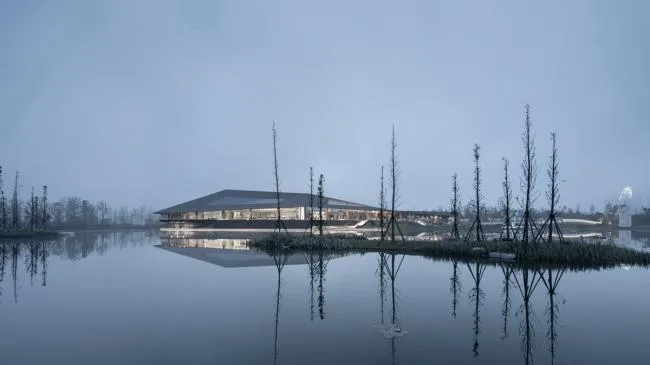
▲ Horizontal ridge view © Jiuli Architecture
Seek
“The great river flows eastward, waves wash away, and a timeless figure remains.”
— From Su Dongpo’s poem “Nian Nu Jiao: Red Cliff Nostalgia for the Past”
Meishan, located just an hour’s drive from the provincial capital Chengdu and connected by a half-hour high-speed rail, offers convenient transportation. Its rich cultural heritage dates back 1,500 years, thriving especially during the Tang and Song dynasties.
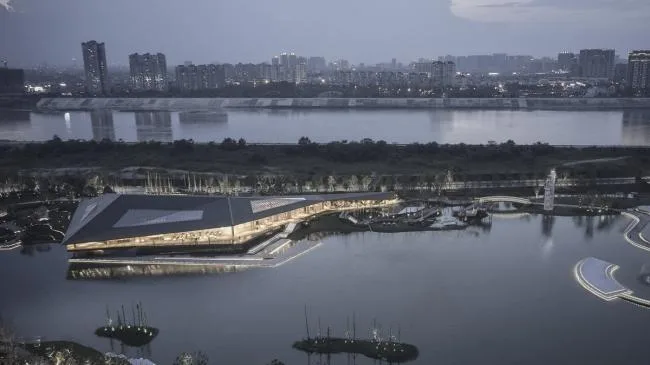
▲ Aerial view from the southeast © Path Architecture Photography
In 1037 AD, the renowned poet Su Shi was born in Meishan, Sichuan. Historical records show that during the Song Dynasty’s 300 years, nearly a thousand individuals from Meishan passed the imperial examinations. Among them, the “Three Sus”—Su Xun, Su Shi, and Su Zhe—stand out as exceptional talents. Emperor Renzong of Song once remarked, “Many scholars in the world aspire to study in Meizhou (Meishan).”
The legacy of the Three Sus is deeply rooted in Meishan, where the local people hold immense pride for Su Shi. Villagers often affectionately refer to him as a “literary and musical star descended to the mortal world,” embodying the spirit and voice of their hometown.
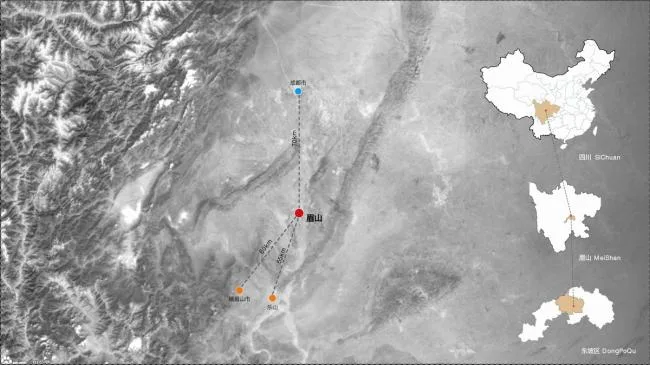
▲ Project location map © Zhan Tao Studio
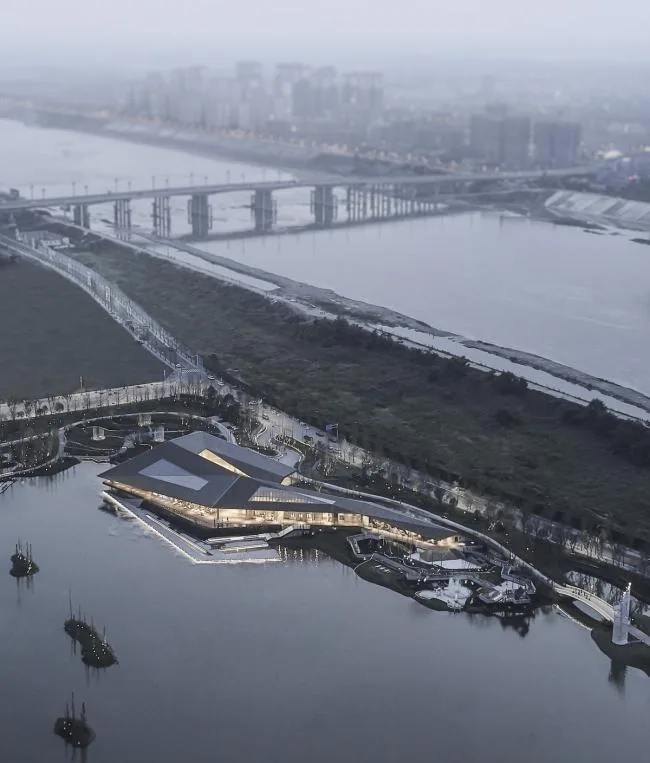
▲ Aerial view from the southwest © Path Architecture Photography
Vanke selected the banks of the Minjiang River in Meishan as the site for the Dongpo Academy, honoring this great literary figure and expressing deep affection for Meishan’s land and people.
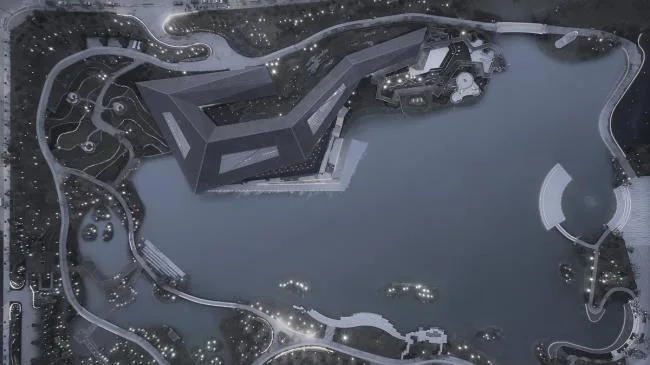
▲ Current aerial view © Path Architecture Photography
Form
“From a horizontal perspective, ridges and slopes form peaks of varying distances and heights.”
— Su Dongpo’s “Inscription on Xilin Wall”
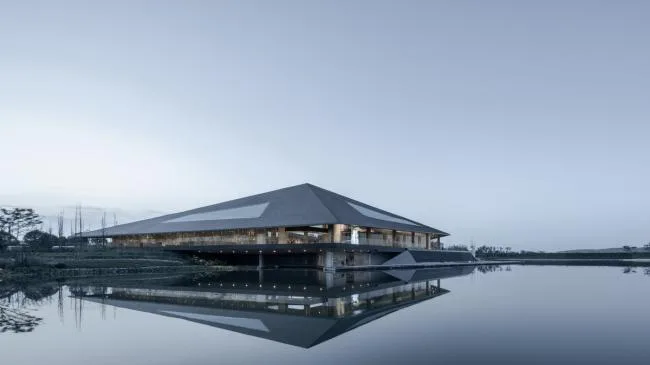
▲ Peak formation on the side © Jiuli Architecture
A poet once said, “Poetry is the soul that creates form.”
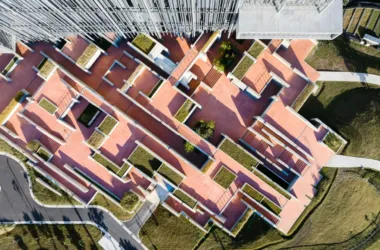
The academy transcends traditional architectural styles, drawing inspiration from poetry to express character and spatial tension through sleek, flowing roofs—reflecting Su Shi’s bold and unrestrained spirit. The undulating roof mirrors the terrain of Mount Emei, taking advantage of the lake’s light and shadows, blending water and land in a tranquil lakeside setting.
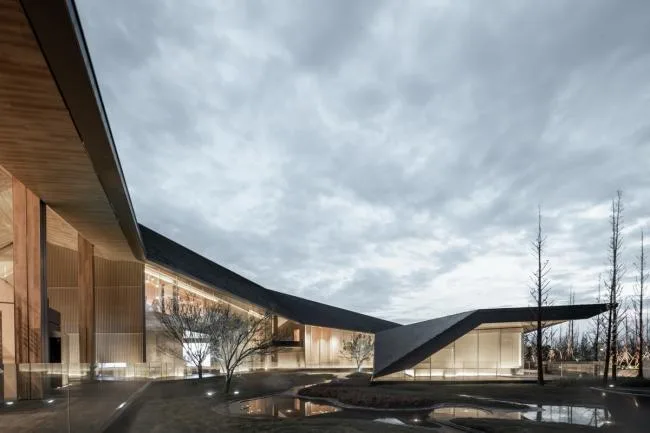
▲ Courtyard interior view © Jiuli Architecture
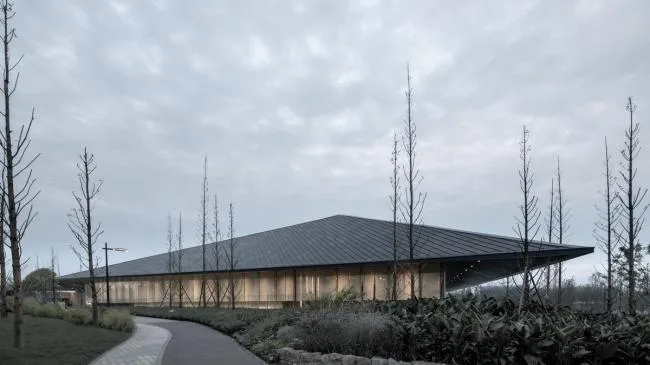
▲ Entrance perspective © Jiuli Architecture
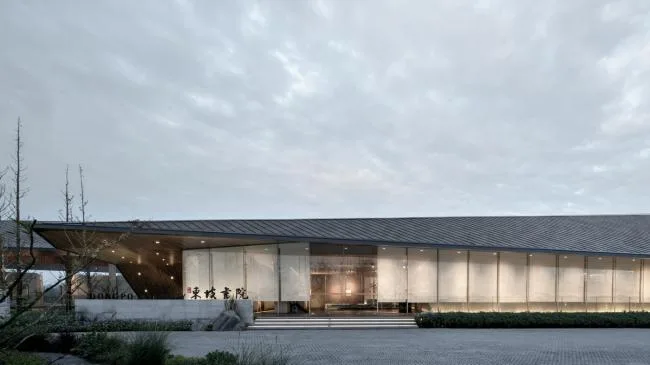
▲ Main entrance perspective © Jiuli Architecture
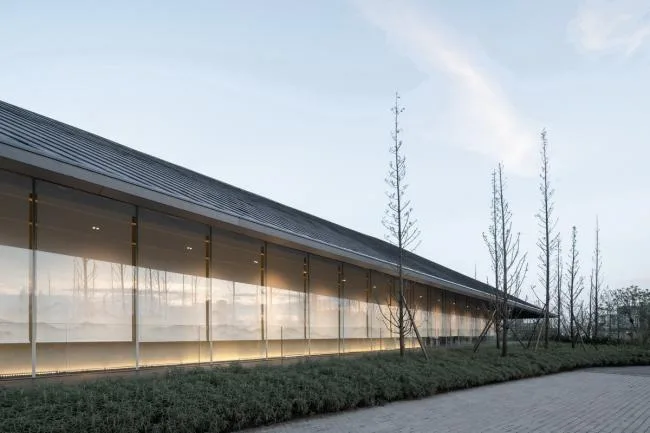
▲ Main entrance perspective © Jiuli Architecture
The building’s continuous sloping roof creates an uninterrupted corridor, offering visitors a quiet place to sit, enjoy tea, and admire the view. This space bridges indoor and outdoor environments, facilitating a seamless transition and harmony between the building and its surroundings.
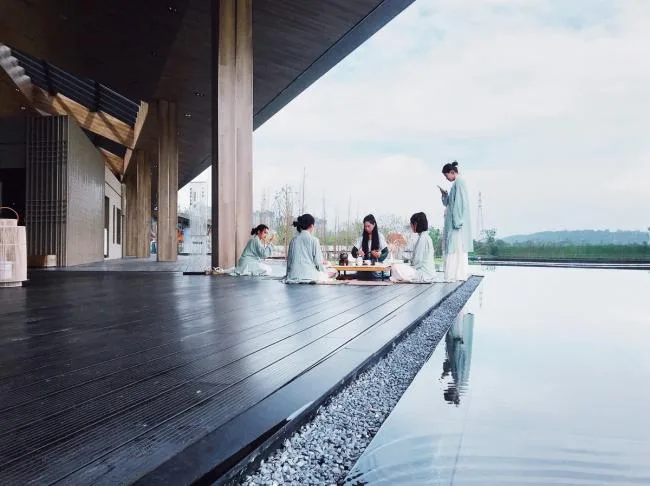
▲ Quiet tea enjoyment under the eaves © Wu Chao
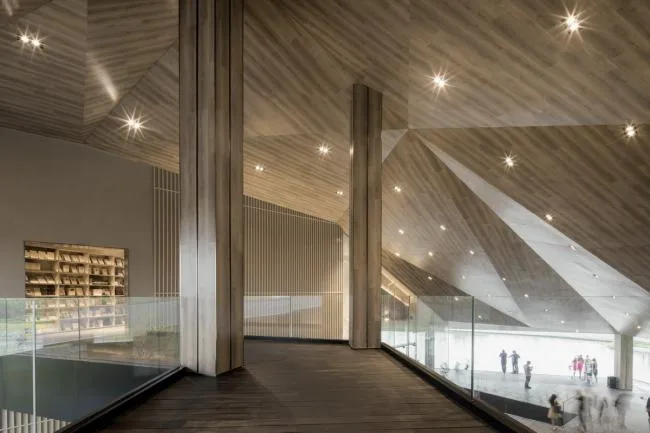
▲ Aerial view of the corridor © Form in Architectural Space Photography
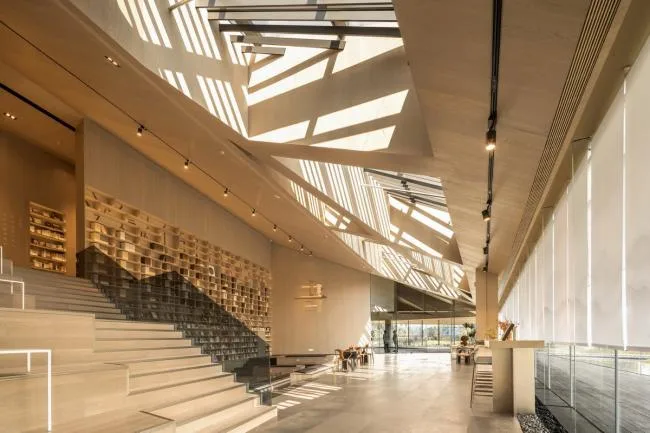
▲ Sunlight fills the Lianchuang Reading Space through the skylight © Jiuli Architecture
Three large skylights on the roof flood the museum and reading areas with natural vertical light. Combined with floor-to-ceiling glass panels beneath the eaves, they create a transparent, open space that allows uninterrupted views, making the building appear to float above the water.
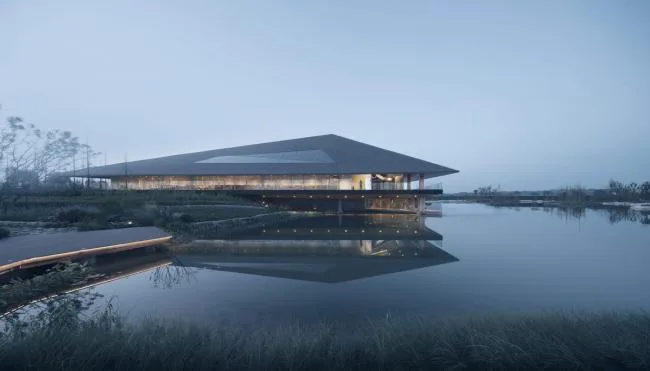
▲ Floating over the water surface © Jiuli Architecture
Feel
We believe understanding goes beyond sight and extends to the tactile experience of architecture.
A building should be “read” through touch, conveying warmth and materiality.
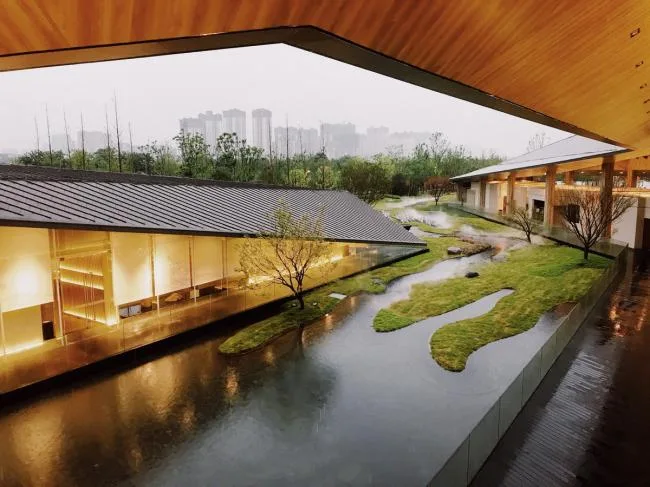
▲ Second-floor corridor overlooking the garden © Wu Chao
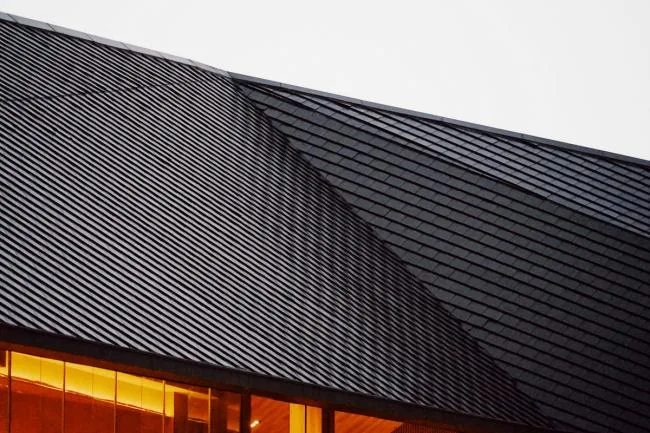
▲ Roof details © Wu Chao
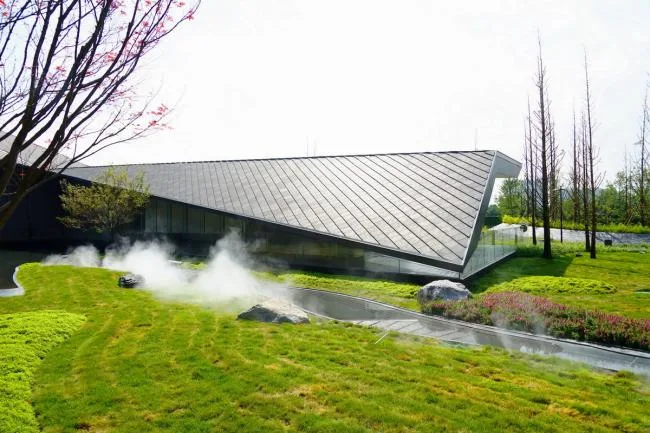
▲ Garden view © Wu Chao
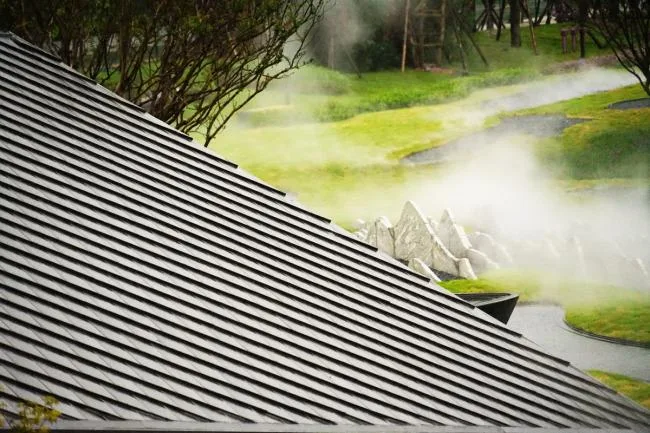
▲ Roof details © Wu Chao
The academy’s roof extends down to the ground, inviting passersby to touch the ink-colored tiles, feeling their texture and warmth. This tactile experience evokes deep-rooted memories associated with traditional roofing materials.
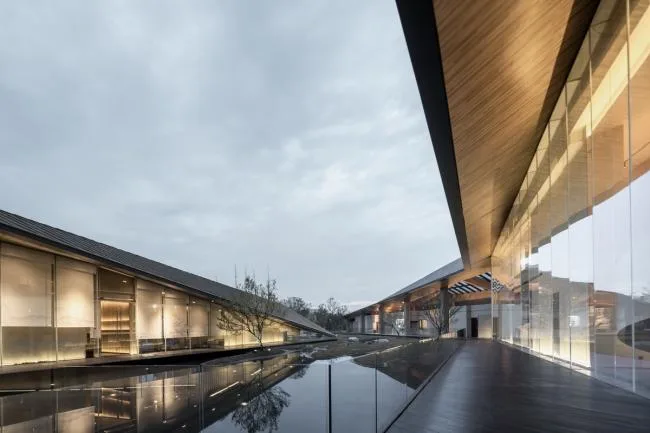
▲ Inner courtyard perspective © Jiuli Architecture
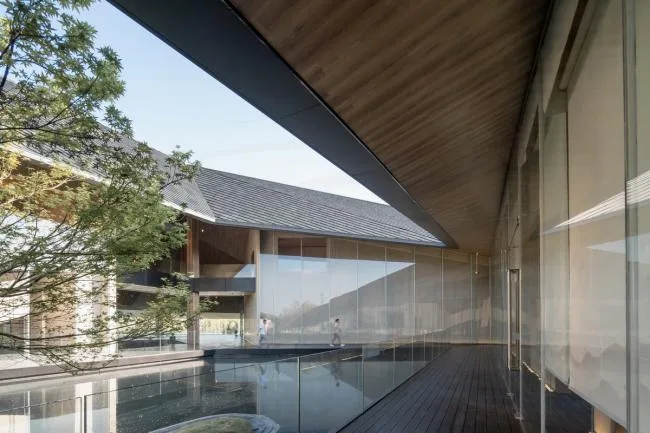
▲ Inner courtyard perspective © Jiuli Architecture
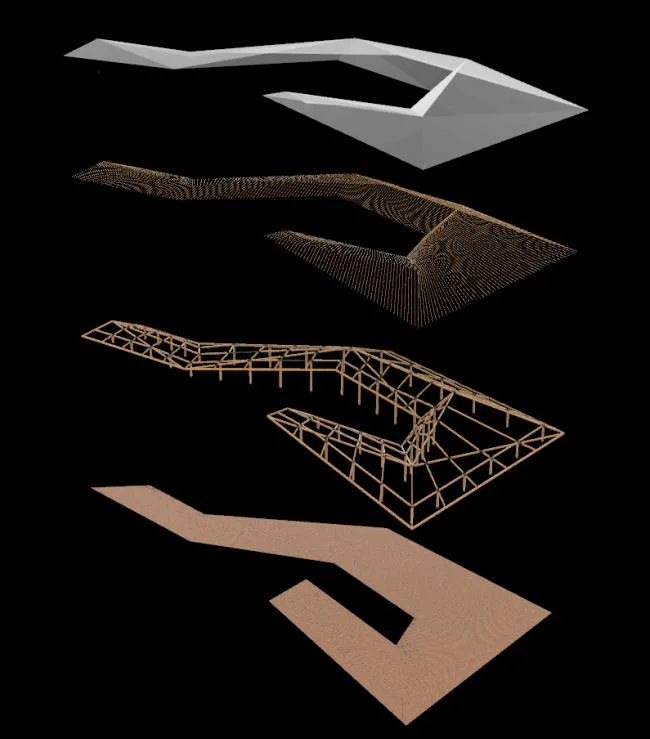
▲ Exploded architectural diagram © Wu Chao
The design incorporates elements of traditional wooden construction while utilizing a steel structural system. This blend allows vertical supports at a human scale to combine steel and wood, where the warmth of wood contrasts with the coolness of steel and glass, enhancing the human experience of the space.
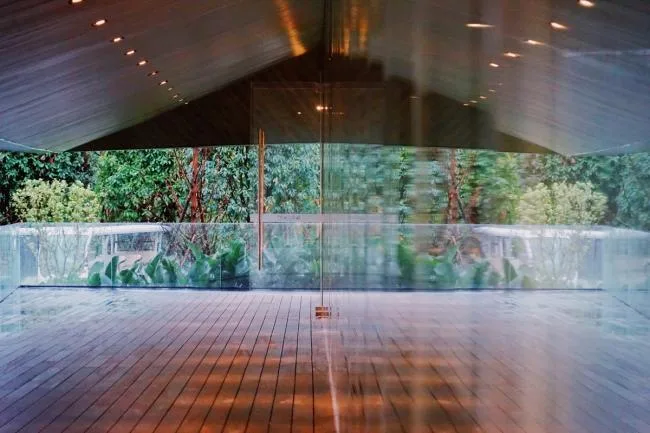
▲ Covered corridor “Smoke and Rain” © Wu Chao
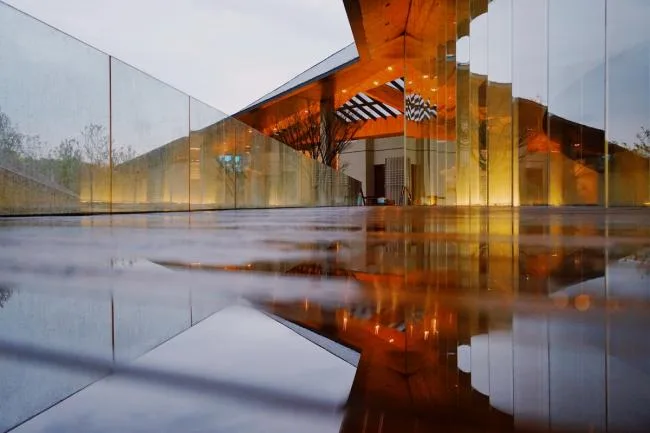
▲ Covered corridor “Smoke and Rain” © Wu Chao
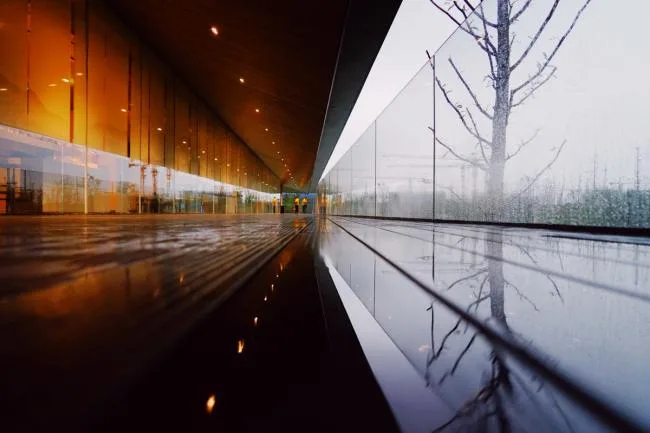
▲ Covered corridor “Smoke and Rain” © Wu Chao
Walking along the wooden corridor, the sound of footsteps accompanies visitors as they descend stone steps to the water’s edge. The overlapping sounds of water and the mist hovering over the lake create an atmosphere reminiscent of a traditional ink painting.
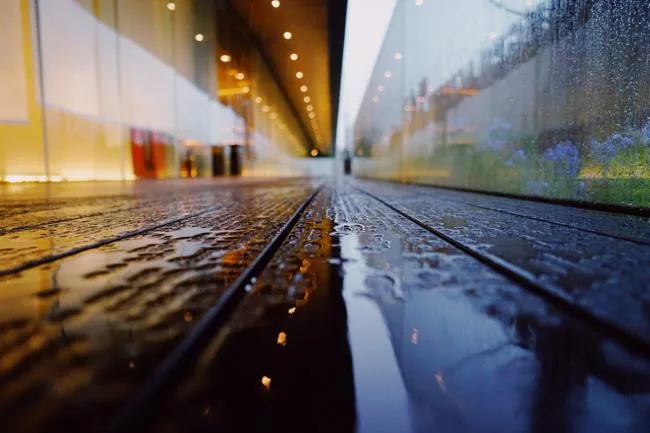
▲ Covered corridor “Smoke and Rain” © Wu Chao
Meaning
“White dew stretches across the river; water and light merge with the sky. Like reeds swaying, confusion lingers over ten thousand acres. Like Feng Xu guarding against the wind, uncertain of destination; drifting independently, ascending to immortality through transformation.”
— Su Dongpo’s “Ode to the Red Cliff”
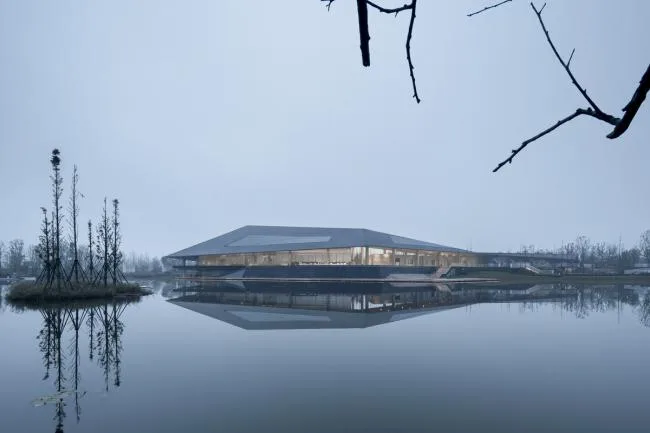
▲ South facade © Jiuli Architecture
Chinese philosopher Zhu Guangqian once said, “Beauty is not only in things but also in the heart. It lies in the relationship between the heart and things.”
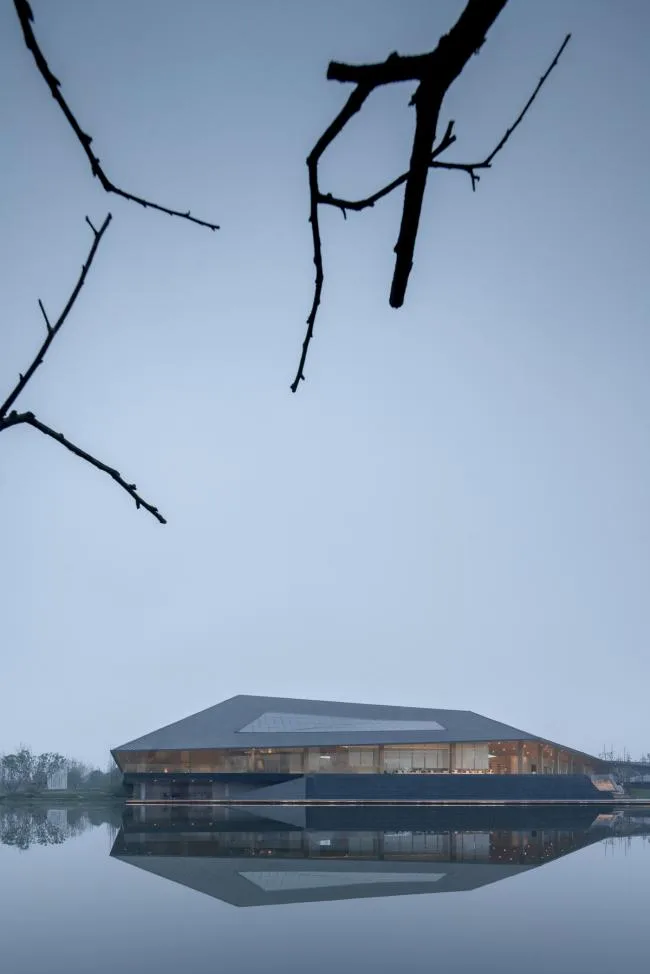
▲ South facade © Jiuli Architecture
We aim for visitors to connect not only with nature but also immerse themselves in this familiar Eastern ink painting landscape, engaging all their senses.
The academy’s presence enhances the beauty of Meishan by creating a new cultural dialogue with its people.

▲ Conceptual scene design diagram © CG Studio
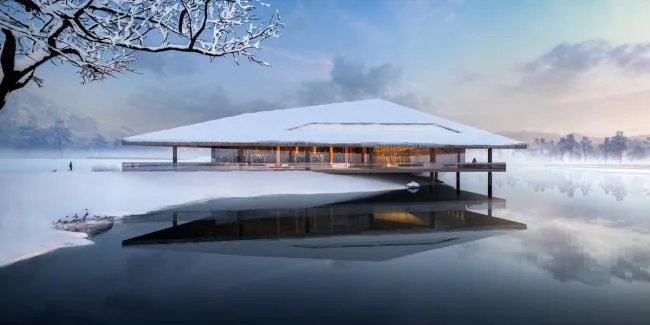
▲ Conceptual scene design diagram © CG Studio
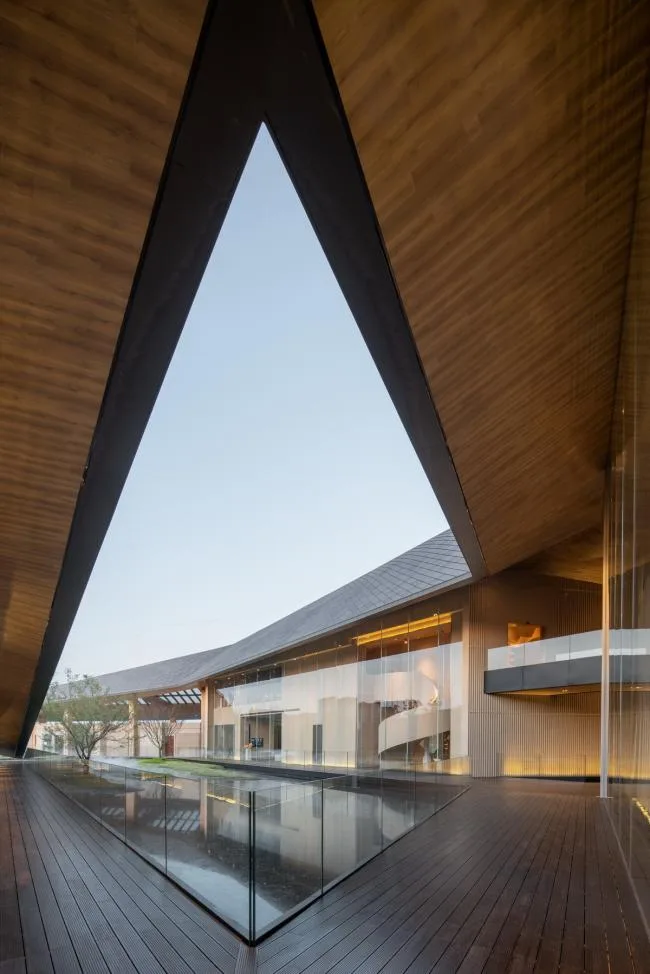
▲ Inner courtyard perspective © Jiuli Architecture
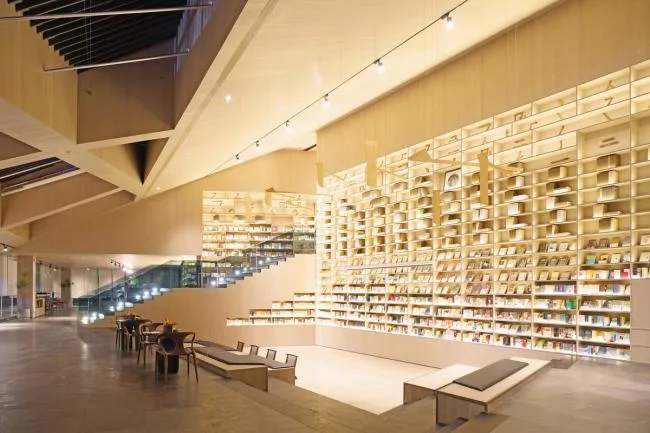
▲ Collaborative reading space with Chengdu Fang © Wu Chao
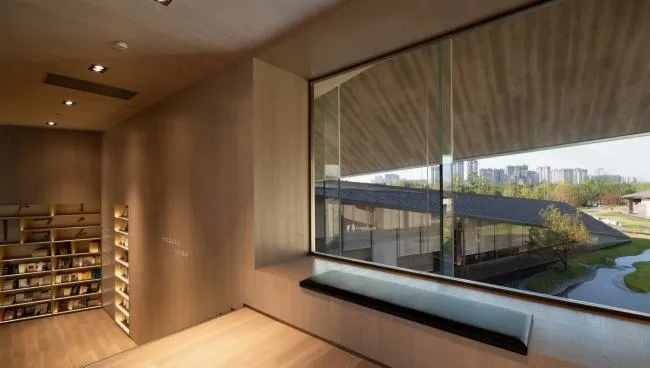
▲ Lianchuang Reading Space second floor window view © Jiuli Architecture
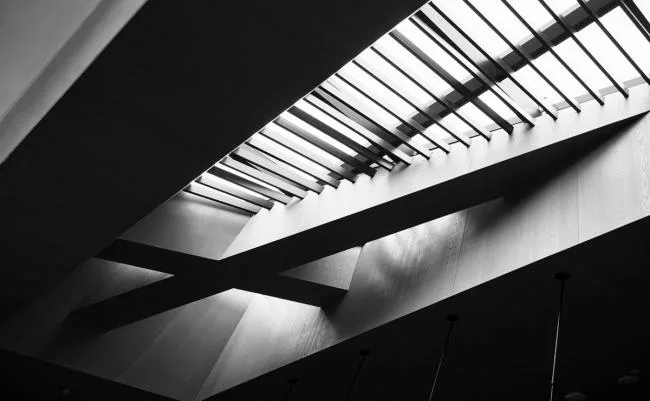
▲ Skylight detail © Wu Chao
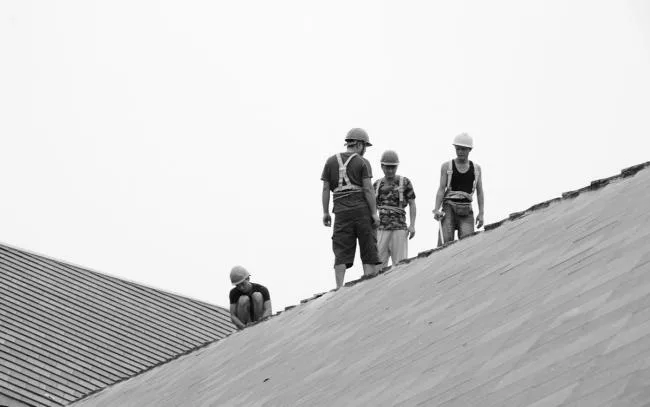
▲ Roof construction site © Wu Chao
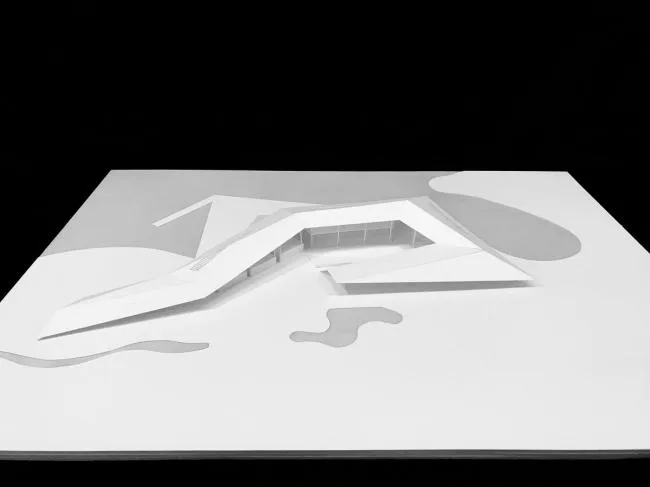
▲ Work model photo © Wu Chao
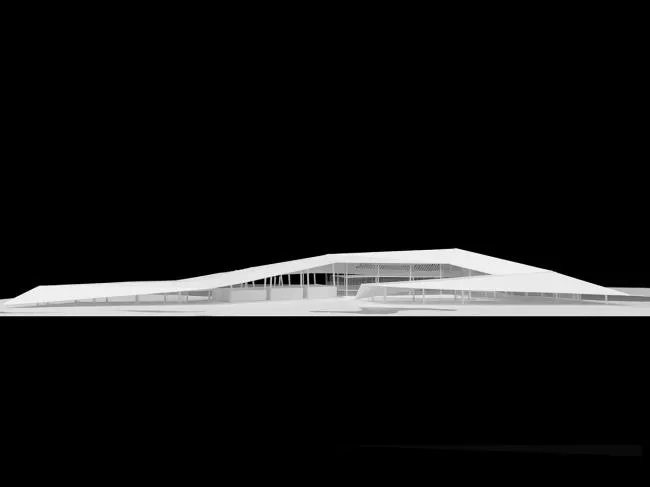
▲ Work model photo © Wu Chao

▲ Conceptual elevation view © Wu Chao
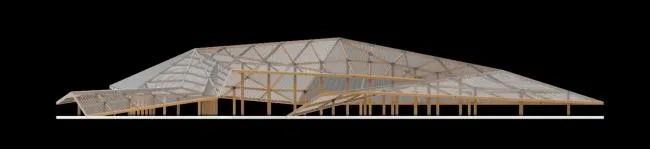
▲ Conceptual elevation view © Wu Chao
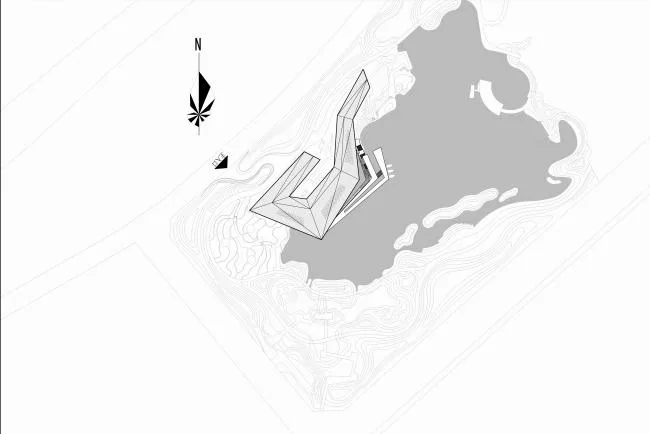
▲ General layout plan
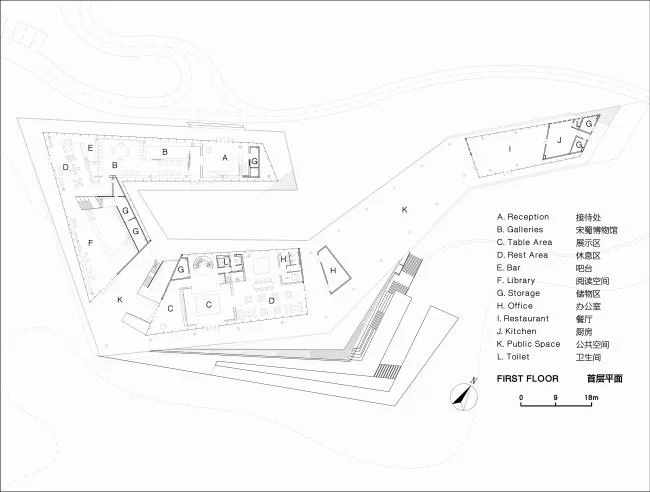
▲ First floor plan
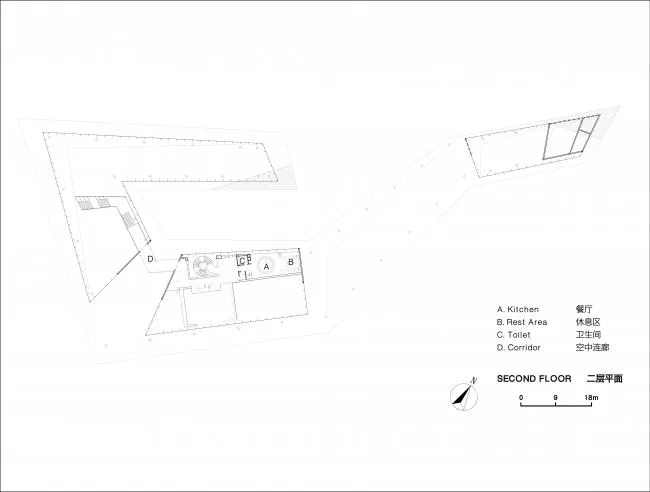
▲ Second floor plan

▲ Elevation view
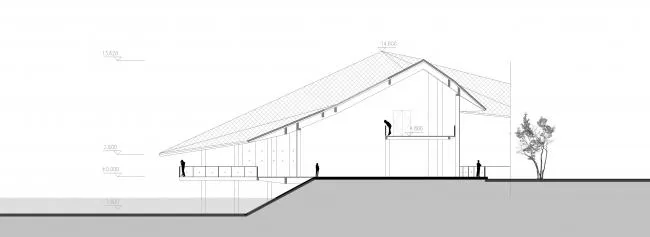
▲ Sectional view
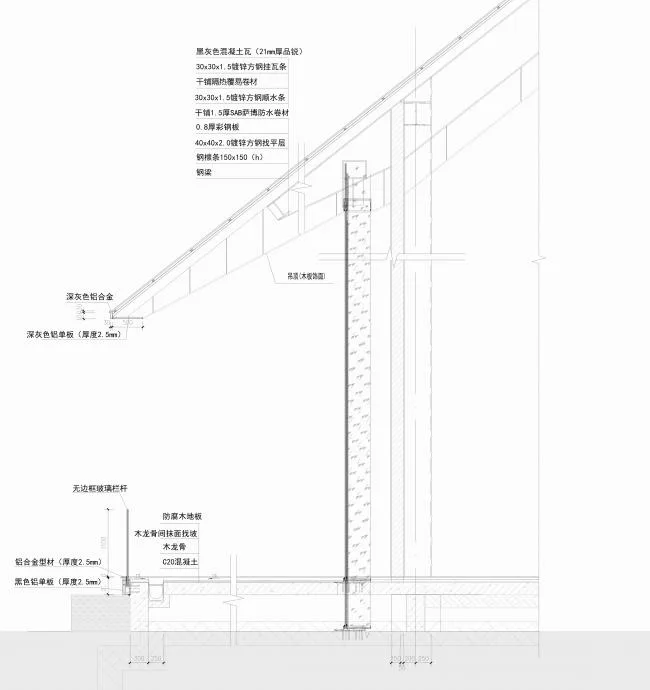
▲ Structural node detail
Project Overview
Project Name: Meishan Dongpo Academy
Architectural Team: Zhan Tao Studio, XAA Architecture Firm
Lead Architect: Zhan Tao
Design Team: Tian Wang, Wang Mengyu, Wu Chao, Li Zhi, Lin Shuo, Lin Xiteng, Huang Niangxin, Huang Xiaowei
Location: Binjiang East Road, Dongpo District, Meishan City, Sichuan Province
Land Area: 12,000 m²
Building Area: 2,760 m²
Design Period: November 2018
Completion: August 2019
Developer: Vanke Meizhou Real Estate
Curtain Wall Design Team: Zhang Deqiang, Tang Jiehong, Tan Kun
Structural Design Team: Structural Design Institute of Guangzhou Hanhua Architectural Design Co., Ltd
Mechanical & Electrical Design Team: Mechanical and Electrical Institute of Guangzhou Hanhua Architectural Design Co., Ltd
Interior Design Team: Guangzhou Yanyutang Decoration Design Co., Ltd
Landscape Design Team: Didong Planning and Design (Beijing) Co., Ltd
Rendering: XAA Architecture Firm CG Studio
Photography: Jiuli Architecture, Wu Chao, Path Architecture Photography, Form in Architectural Space Photography












Must log in before commenting!
Sign Up