
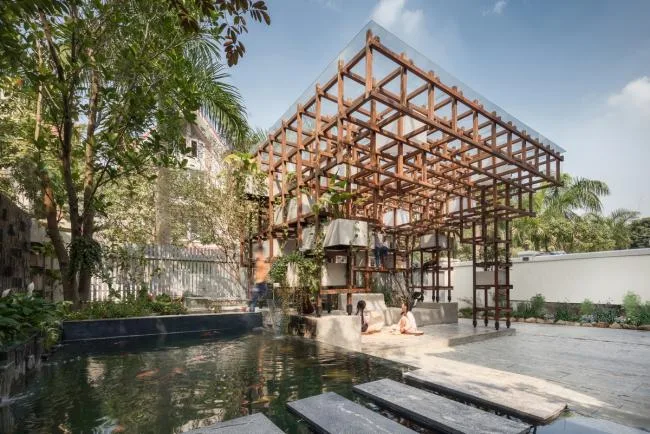
In Hanoi, Vietnam, it is common for residents to incorporate small landmark features within their homes, such as fish ponds, which can range from simple aquariums to elaborate koi ponds. Due to rising concerns about urban pollution affecting vegetables, there is an urgent need to grow fresh produce within residential areas. Many families now cultivate vegetables at home, but often in an unplanned and informal manner, lacking strategic design or architectural harmony. Vegetable foam boxes are typically placed in cramped spaces, balconies, gardens, or rooftop terraces without cohesive planning.
Introducing the Urban VAC Model by Farming Architects
Farming Architects is redesigning the VAC (Vegetables, Aquaculture, and Chickens) system specifically for urban settings. This approach aims to maximize the efficient use of natural resources while experimenting with various combinations of animals and plants in city environments.
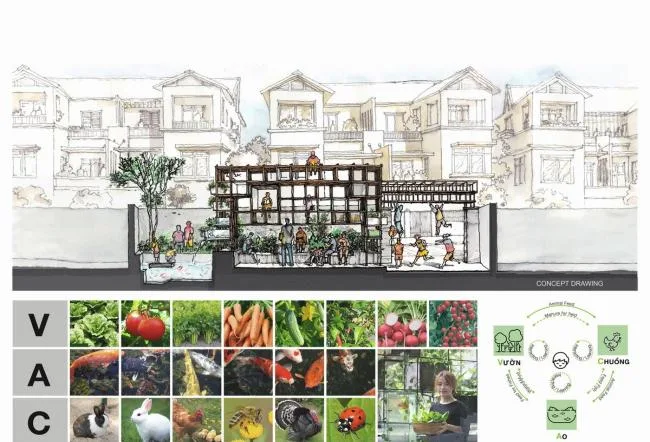
▲ Concept Map
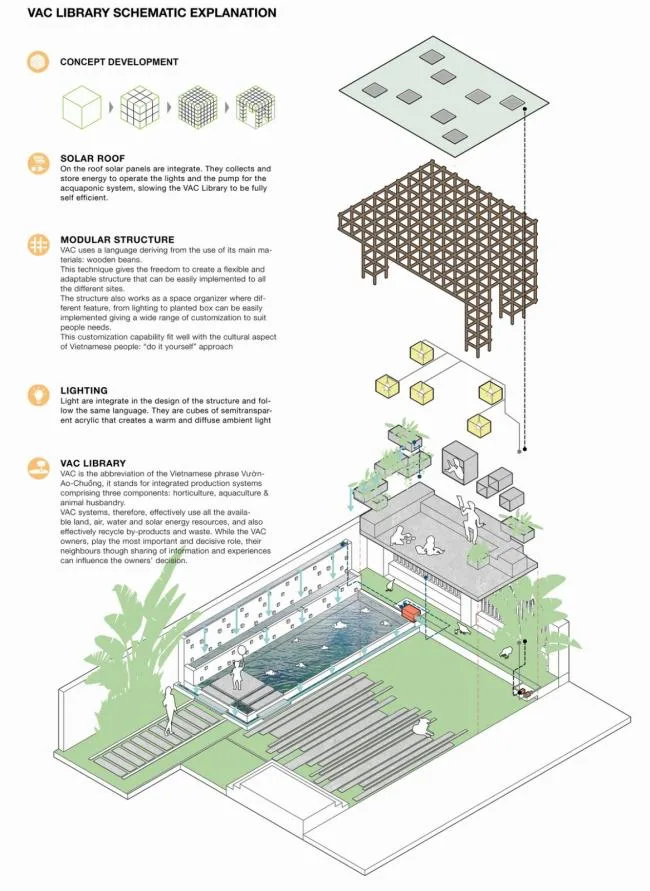
▲ Scheme Description
How Does the VAC Library Work?
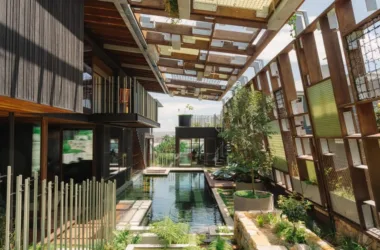
The central element of the VAC design is aquaculture, which integrates traditional fish farming with hydroponics to create a symbiotic ecosystem. In this aquaponic system, water circulates through fish ponds, providing nutrient-rich water for plants. Specialized bacteria convert fish waste into nitrates and nitrites, which nourish the plants. In return, the plants purify the water before it returns to the fish tanks.
The system is designed with energy efficiency in mind. It leverages renewable solar energy and minimizes the use of water pumps by allowing water to flow naturally downward when possible. Additionally, solar panels provide electricity to power lighting and water pumps, reducing overall energy consumption.
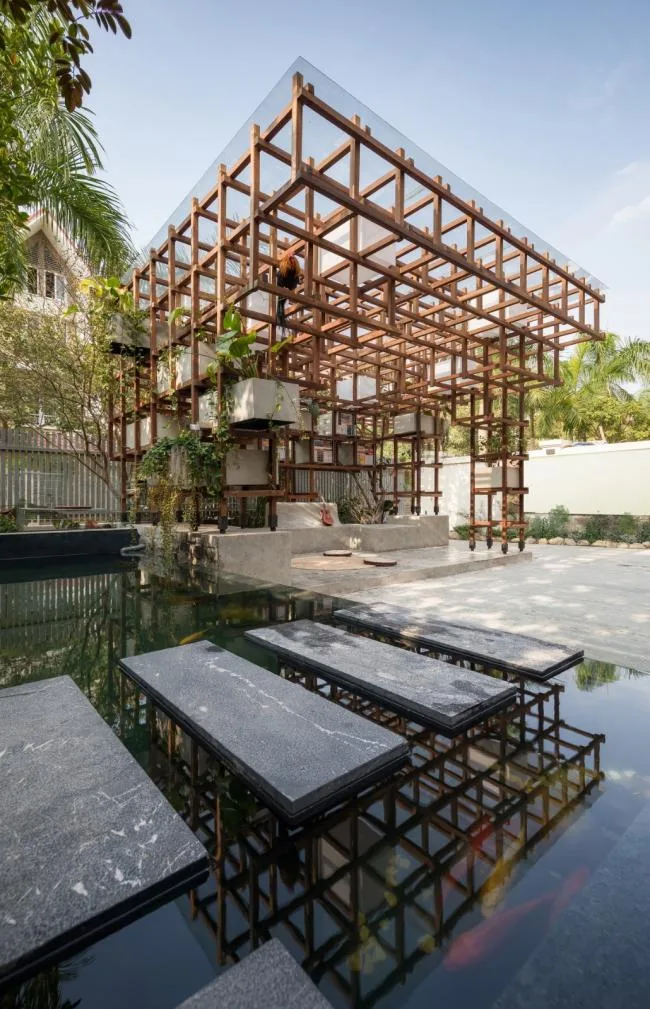
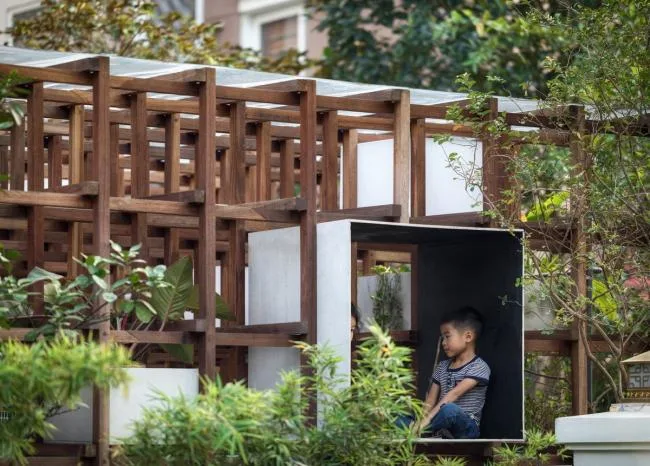
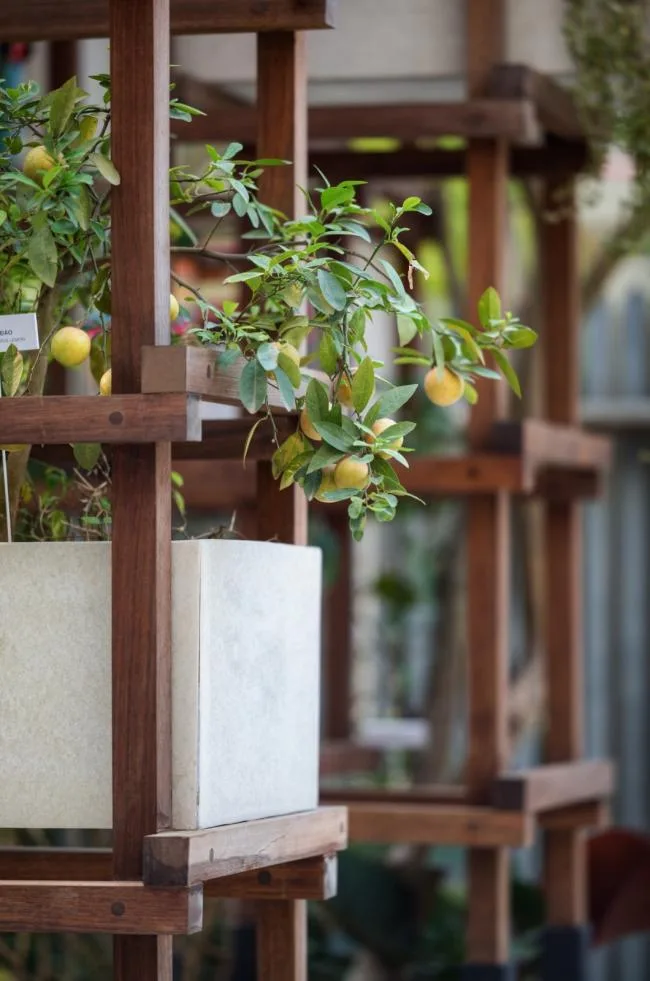
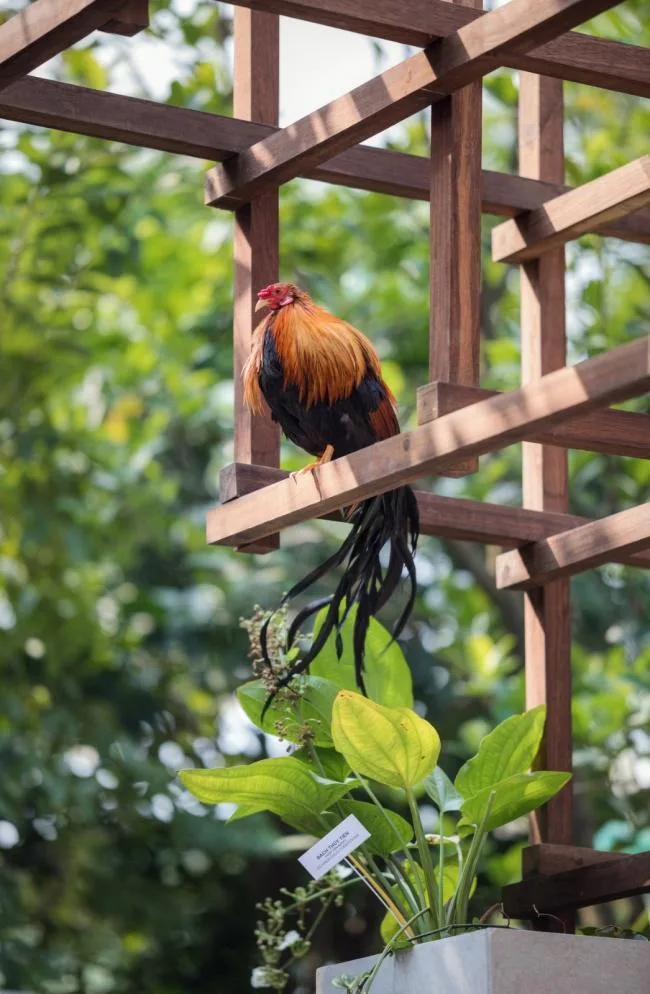
Structural Language
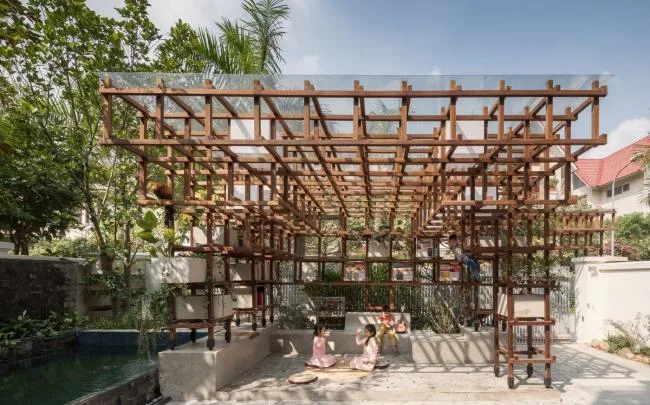
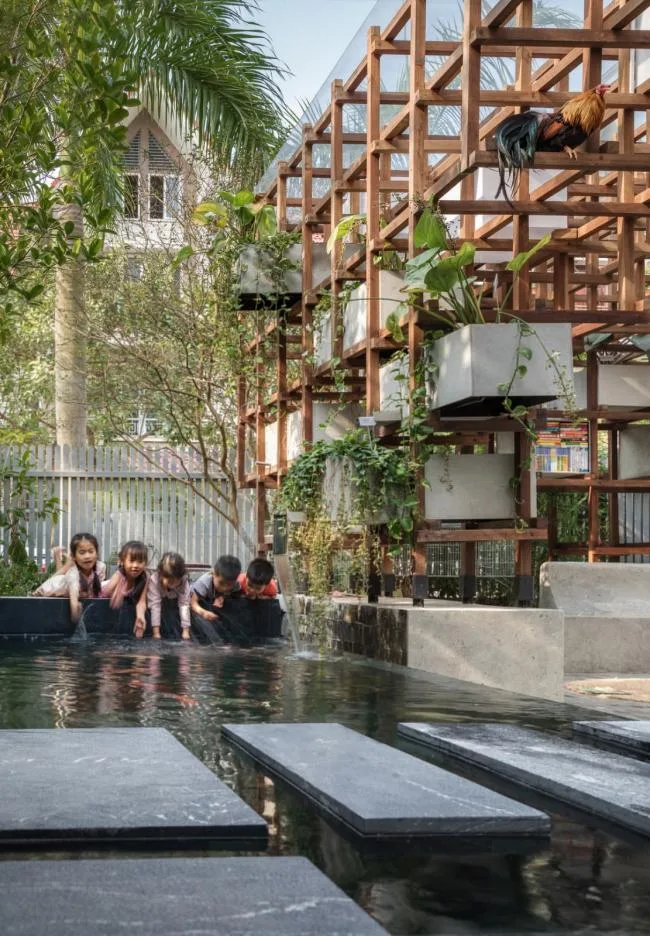
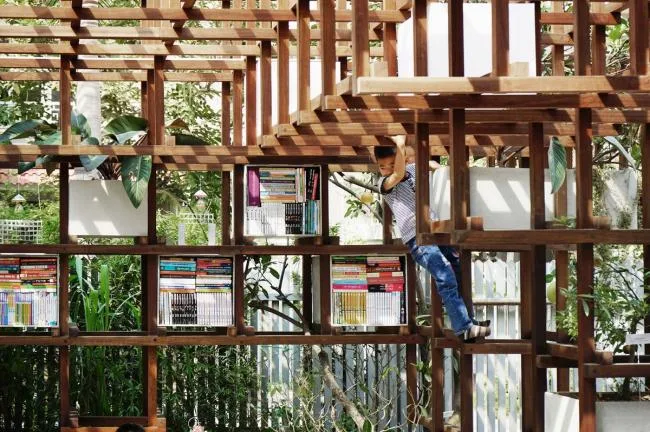
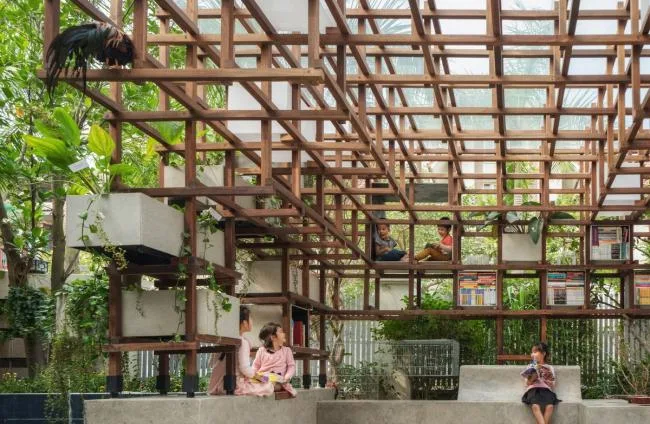
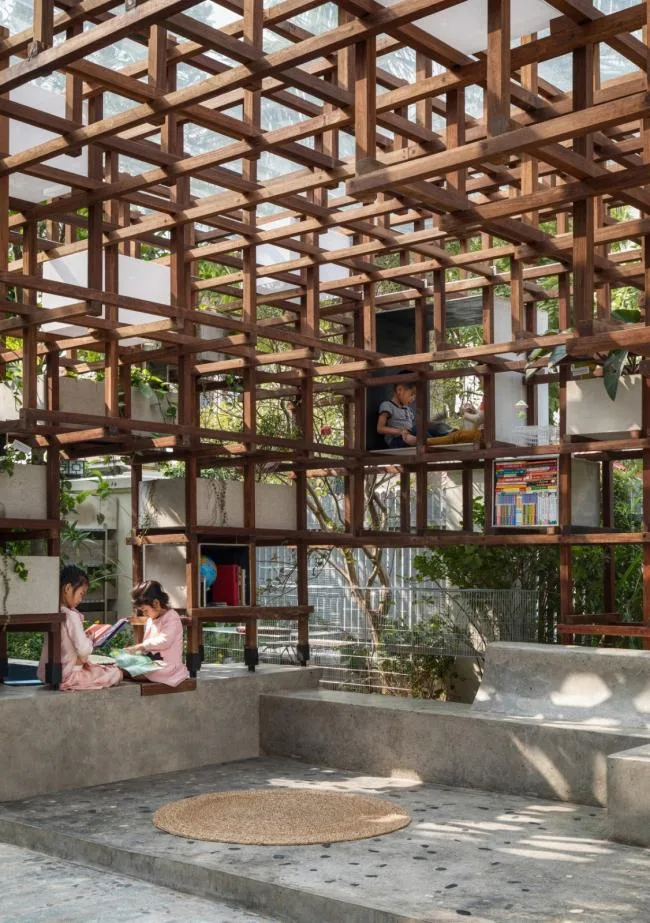
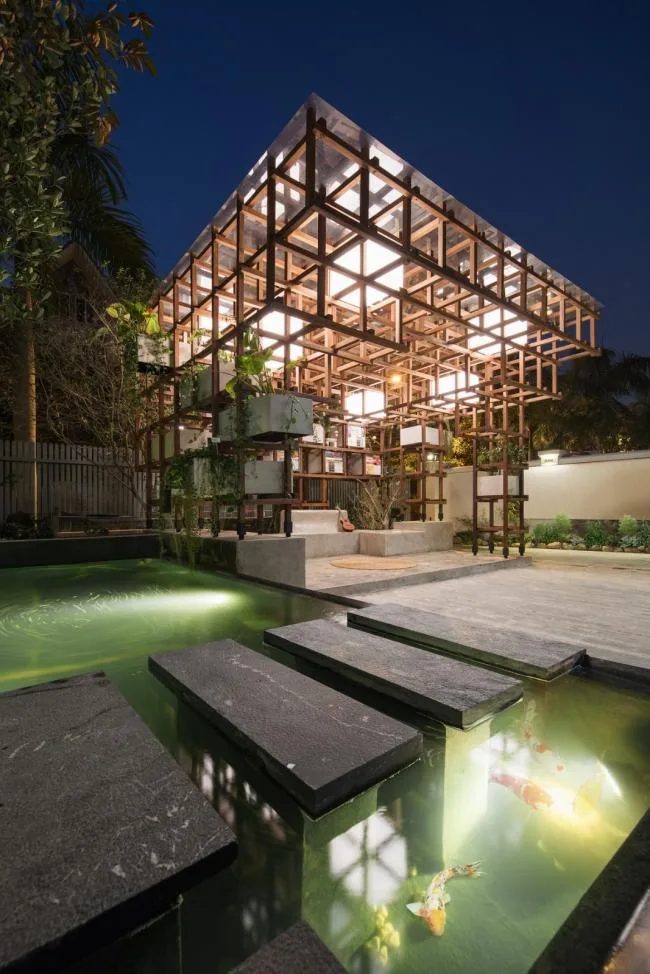
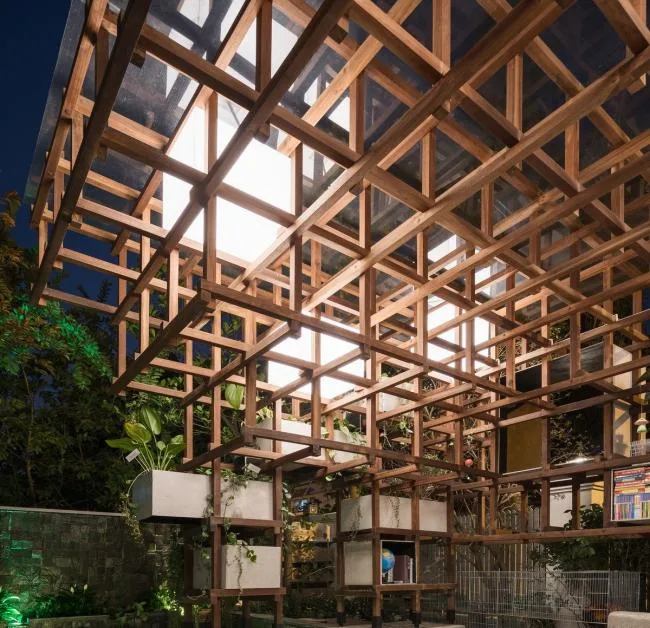
The VAC Library features a design inspired by wooden framing techniques, which allows for flexible and adaptable structures. This architectural language organizes the space into distinct functional zones. Notably, the VAC Library doubles as an educational library for children. Local kids and visitors can come here to play, read, and visually explore this ecological architectural model.
Children learn that koi fish are more than ornamental pets—they play a crucial role in this ecosystem. Their waste feeds the plants, which in turn purify the water that returns to the pond. Nearby, chickens are raised in cages, providing eggs and organic fertilizer that benefits the garden, completing the cycle of sustainable urban farming.
(BIM Design)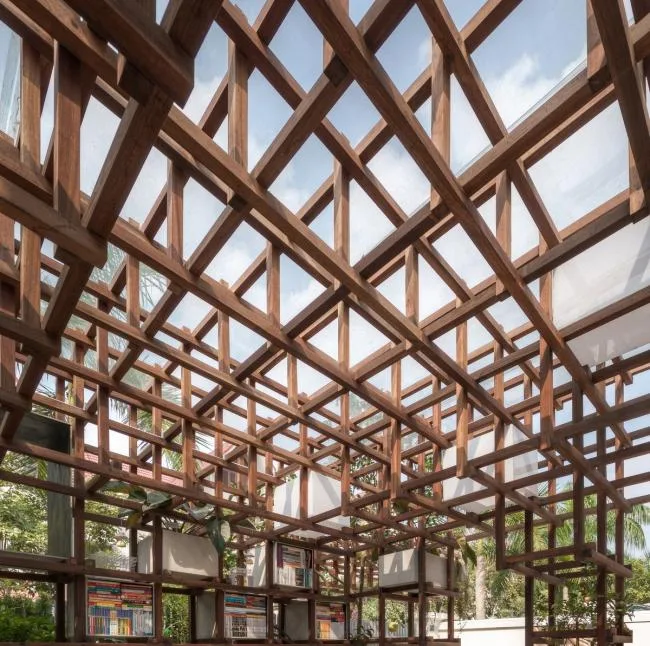
Project Information
Design Firm: Farming Architects
Location: Yang Noi, Hanoi, Vietnam
Project Type: Library
Lead Architect: Viet Dung An
Building Area: 55.0 m²
Project Year: 2018
Photographers: Thai Thach, Viet Dung An












Must log in before commenting!
Sign Up