
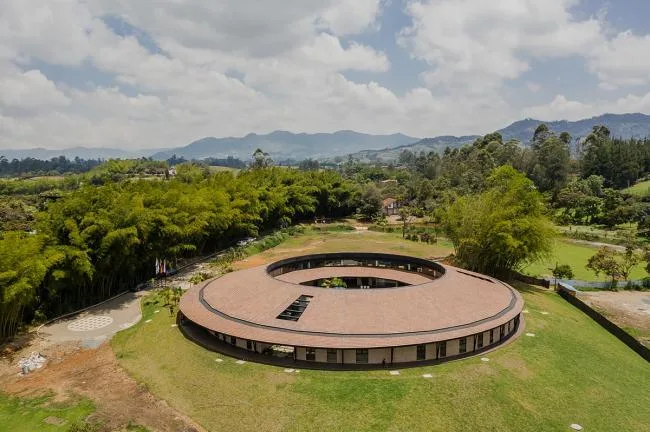
The project is situated in the municipality of Rio Negro, Colombia, adjacent to the Cabeciras/San Nicolás highway. The site covers approximately 76,017 square meters and remains largely in its natural state. The rich terrain and towering trees have played a crucial role in shaping the design and are reflected in every detail of the project.
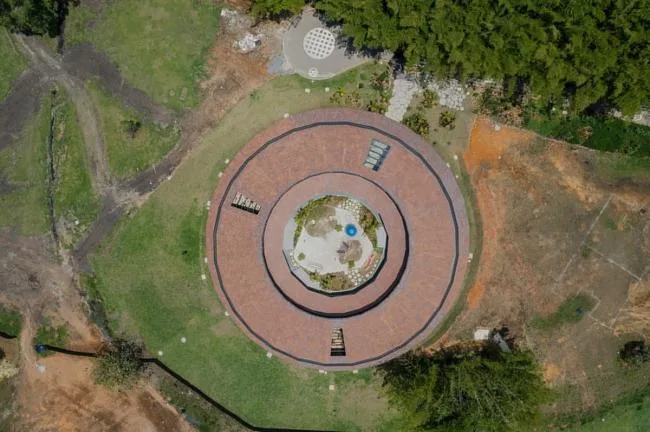
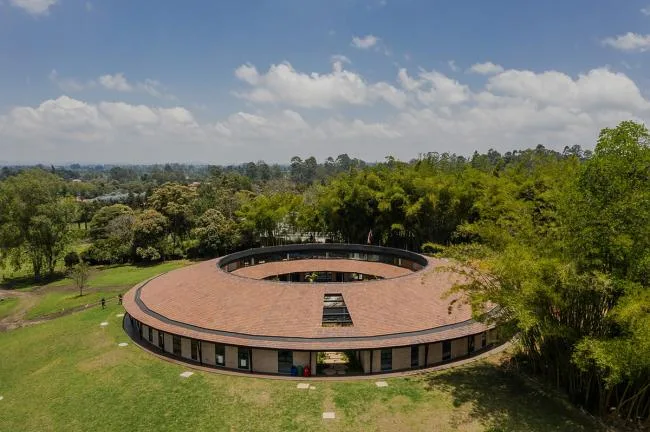
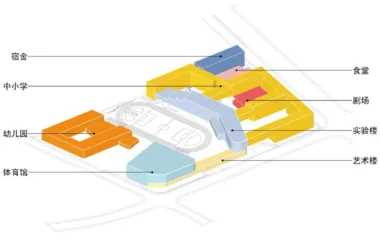
The campus master plan respects the existing site context and embraces a circular spatial concept. The architect designed various educational spaces of different scales, including small platforms, central plazas, and internal gardens, to foster strong connections among students and their environments.
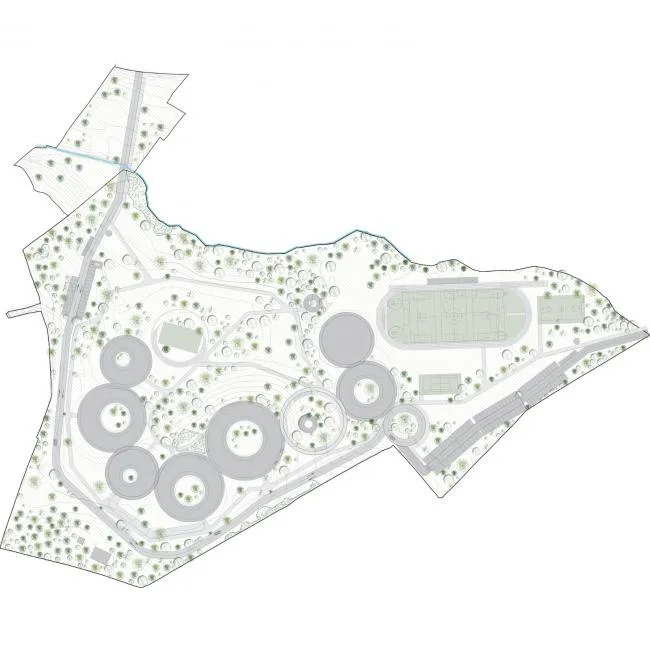
▲ General layout plan
As a flexible and versatile educational environment, the public spaces allow any part of the campus to serve as a classroom. This design brings students closer to nature and encourages interaction and communication with their surroundings.
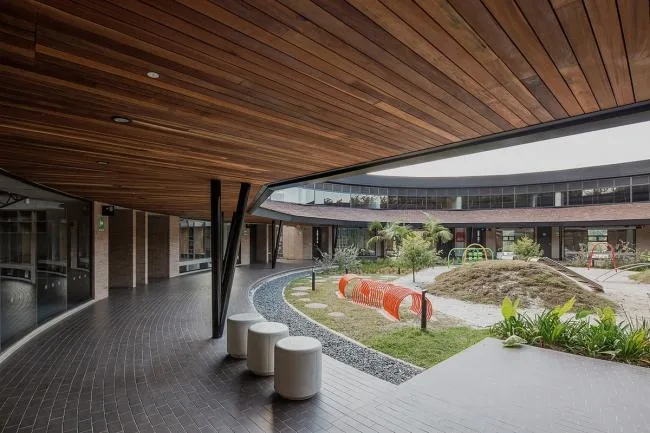
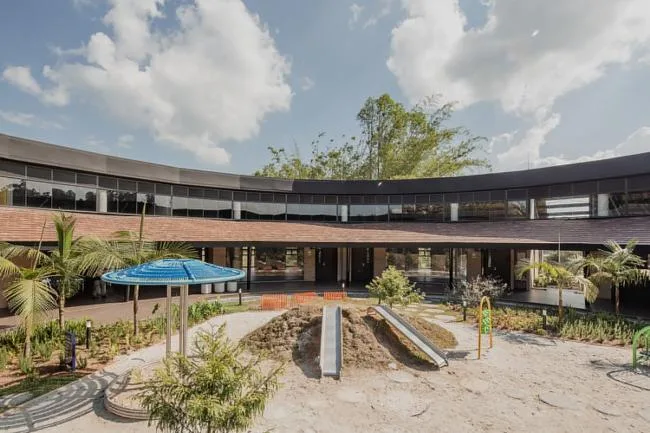
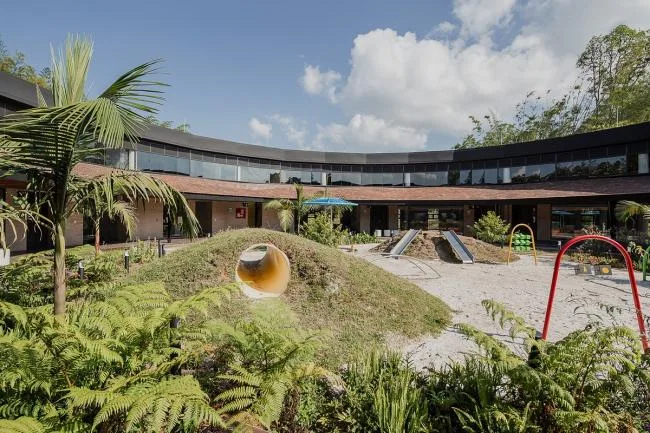
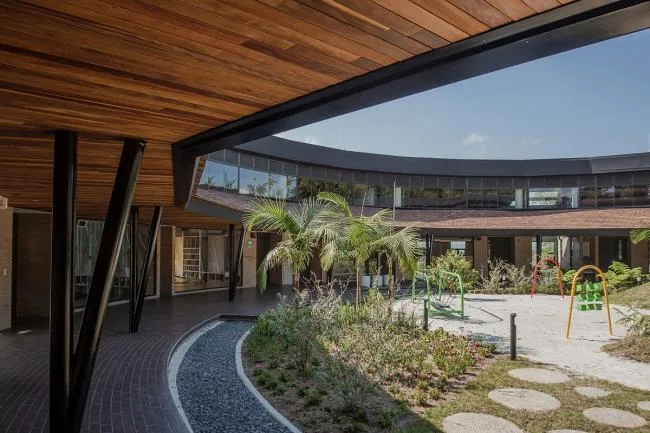
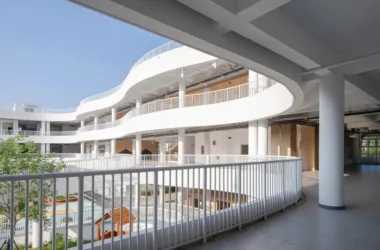
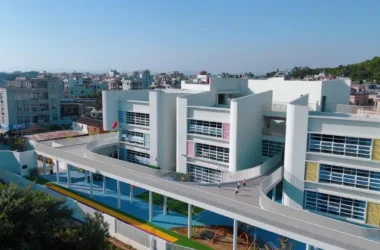
The classrooms are positioned on the elevated areas of the site, while the lower flat zones are dedicated to physical activities. Each teaching building is circular, featuring a central garden that connects with the surrounding BIM structure. These elements are linked by a sealed external corridor, forming a distinct unit within the campus. The project is implemented in stages, starting with adjustments and expansions of the overall plan based on actual needs, followed by customized designs for each circular teaching building.
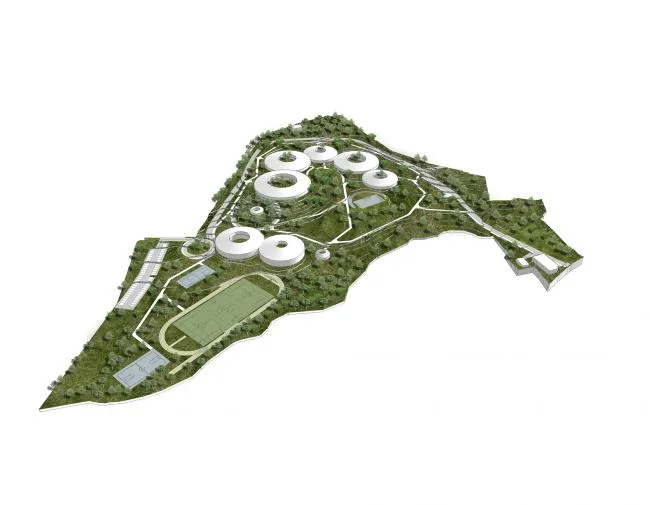
▲ Overall planning
The circular educational spaces align with the spatial requirements of the Montessori method. Additionally, these flexible and adaptable spaces support students’ personal growth and character development. As a result, the spaces on campus serve not only as connective areas but also as supplementary teaching venues when necessary.
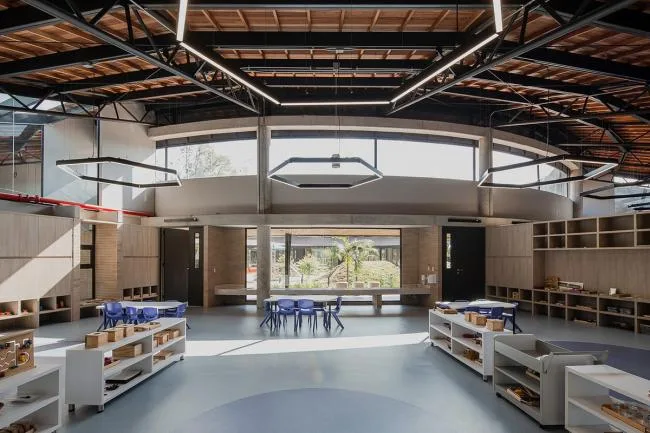
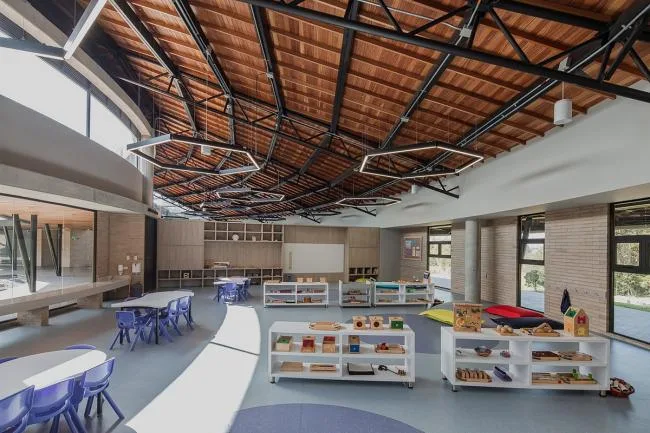
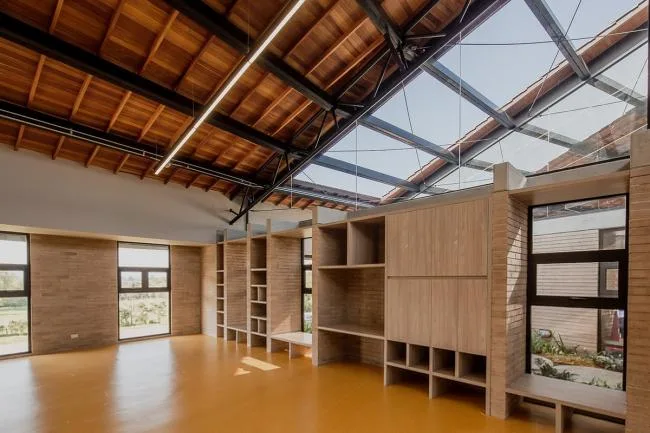
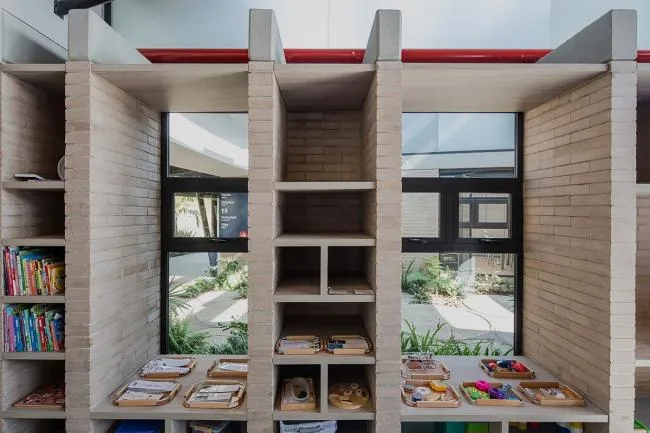
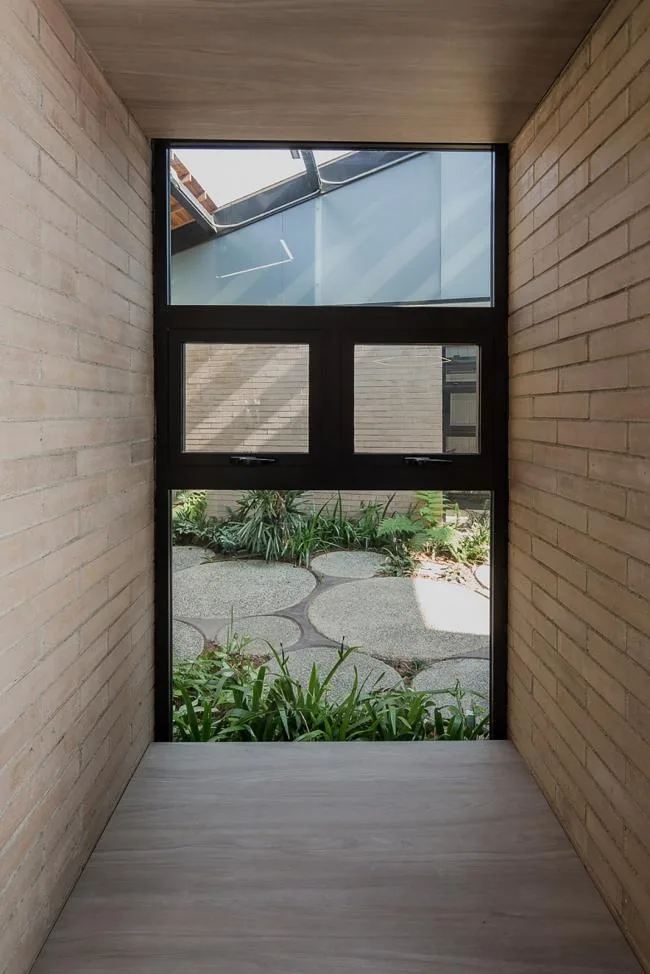
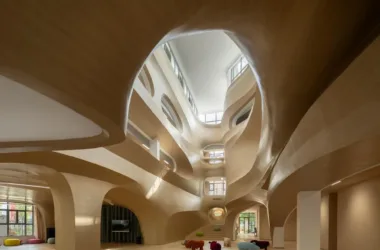
The central courtyard within each teaching building serves as a multifunctional space. It supports classroom activities, rest, and various events. This courtyard defines the main functions of each building but can also be adapted to meet the diverse needs of its users.
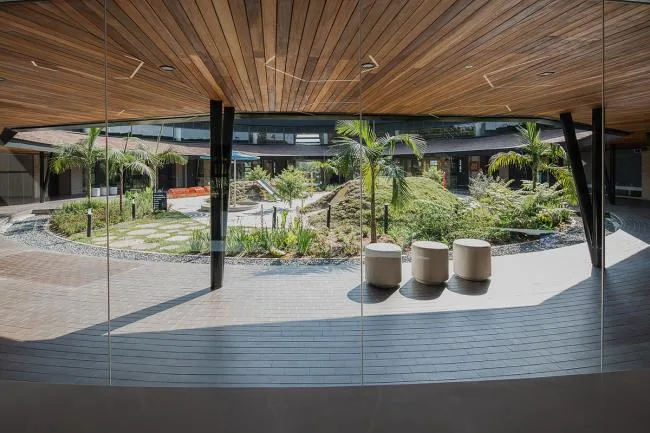
Material durability and comfort were fundamental considerations in the project. These factors guided the architects’ material selections, along with the building’s adaptability to the local thermal environment.
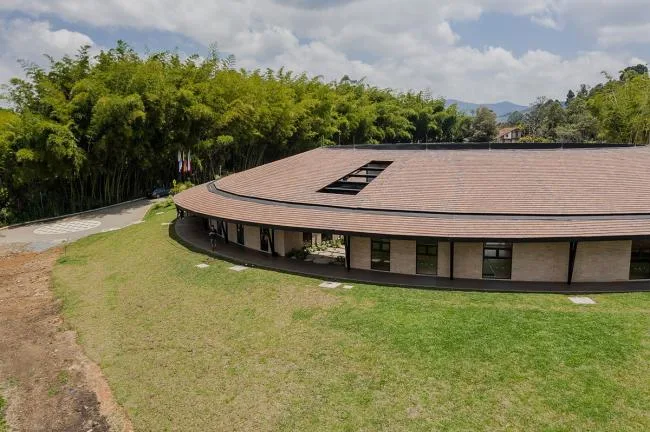
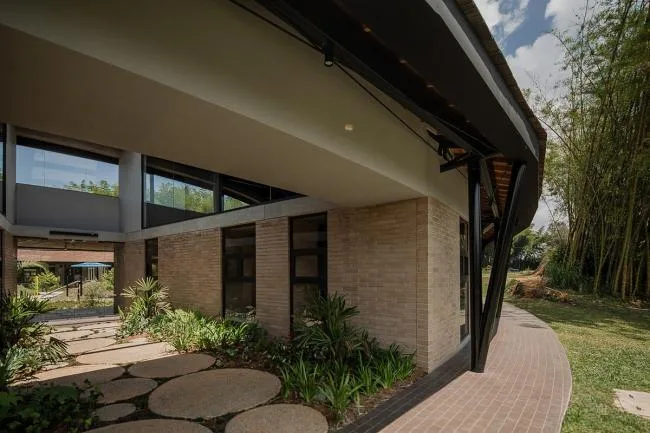
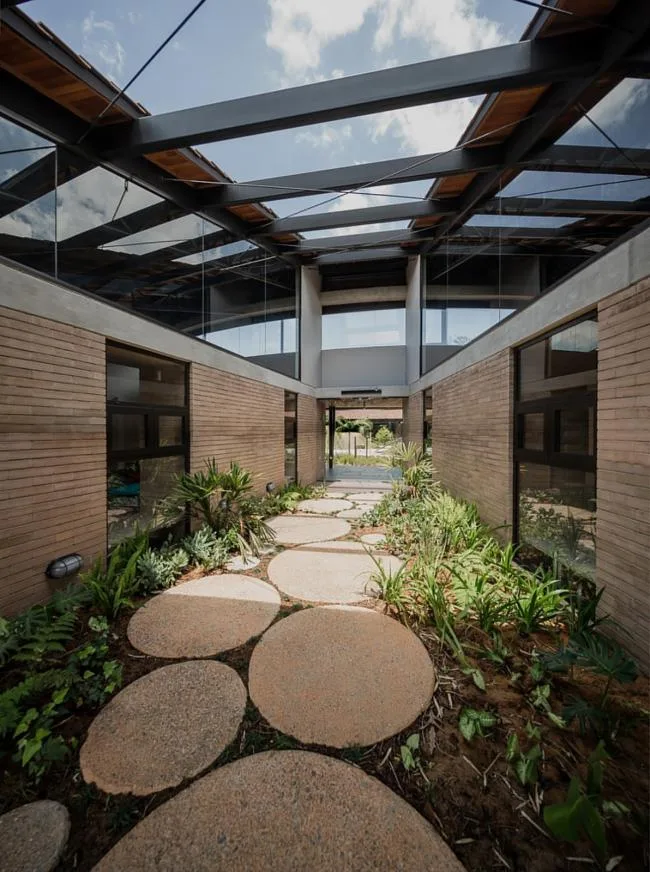
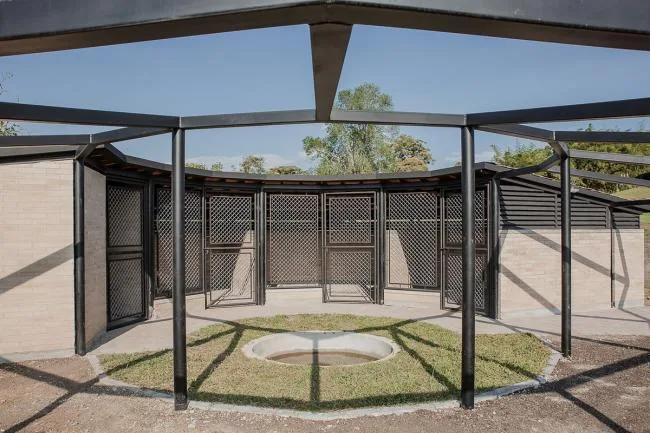
In summary, the architects drew inspiration from the flexible and versatile central garden (BIM learning space) to foster and nurture students’ harmonious relationship with nature throughout their personal development.
Project Drawings:
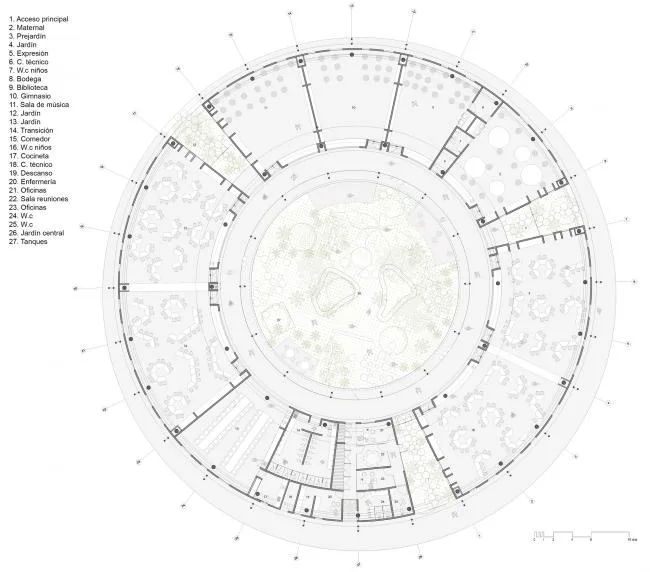
▲ First Floor Plan
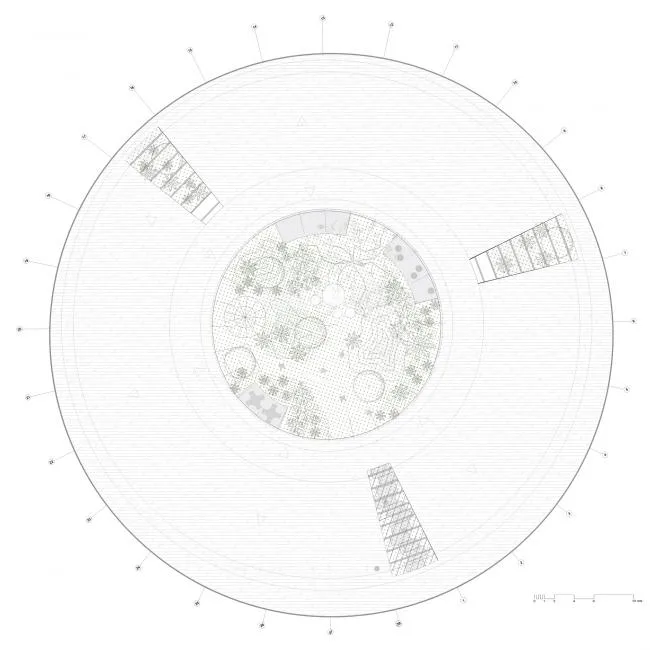
▲ Roof Plan
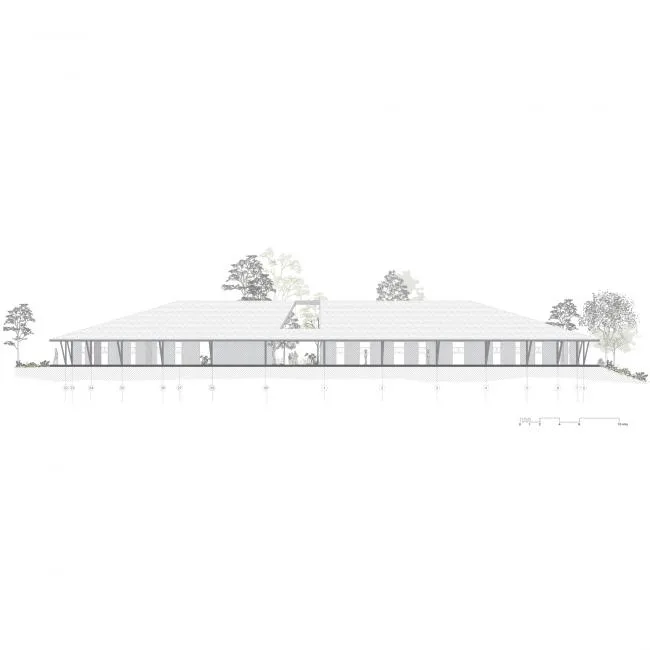
▲ Elevation View
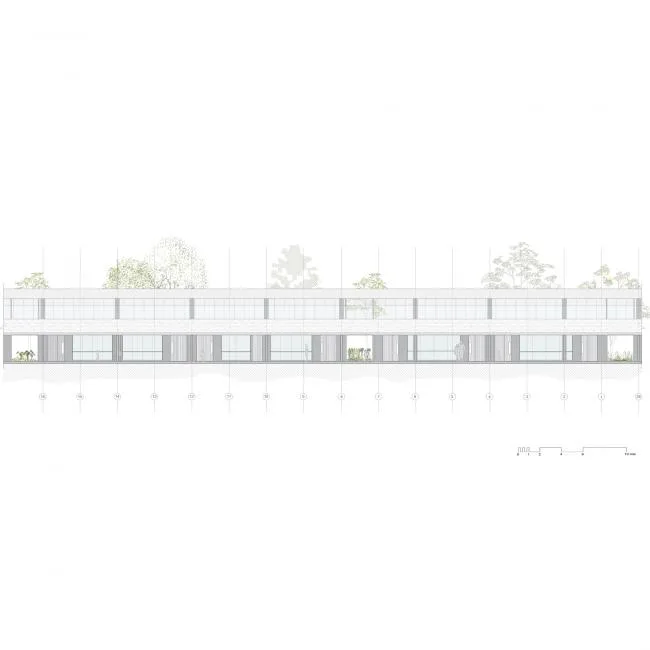
▲ Elevation View
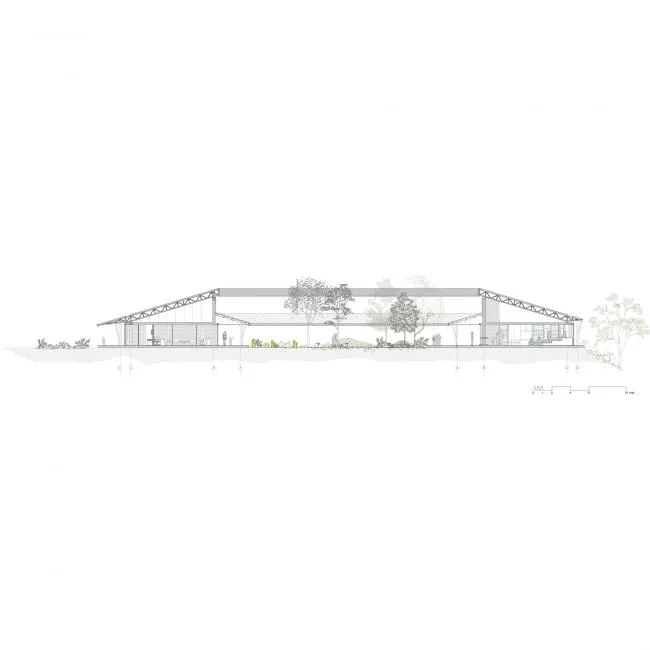
▲ Sectional View
Project Information:
Architectural Firm: Estudio Transversal
Location: Rio Negro, Antioquia, Colombia
Category: Kindergarten
Lead Architects: Ricardo Vásquez, Emerson Marín, Juan Pablo Martínez, Mateo Agudelo
Area: 2000 m²
Project Year: 2018
Photographer: Alejandro Arango
Suppliers: Ladrillera Santa Fé, AGS Glass, Alfa, Epifita, Lombo Lombo, Ladrillera Santafé
Construction Company: Constructivamente S.A.S
Structural Calculations: Efe Prima CE
Design Team: Federico Ortiz, Daniel Gómez, Carlos Ramírez, Simón Abad, Daniela Franco, Yesica Silva












Must log in before commenting!
Sign Up