
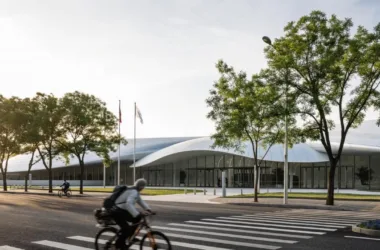
Heading east from Guiyuan Zen Temple and passing through the old city renovation area, the view suddenly opens up. Amidst the cramped, aged surroundings, light and transparent architectural forms emerge—resembling rolling peaks and lotus blossoms rich with Zen symbolism. This serene and ancient atmosphere of Guiyuan is complemented by the ever-changing sky above and the bustling street life below. This scene captures the essence of Hanyang’s old city renewal area at the Wuhan Oriental World View Urban Renewal Exhibition Hall.
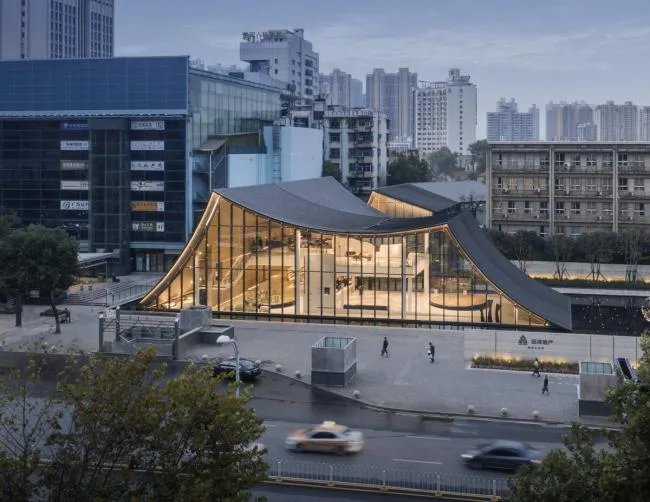
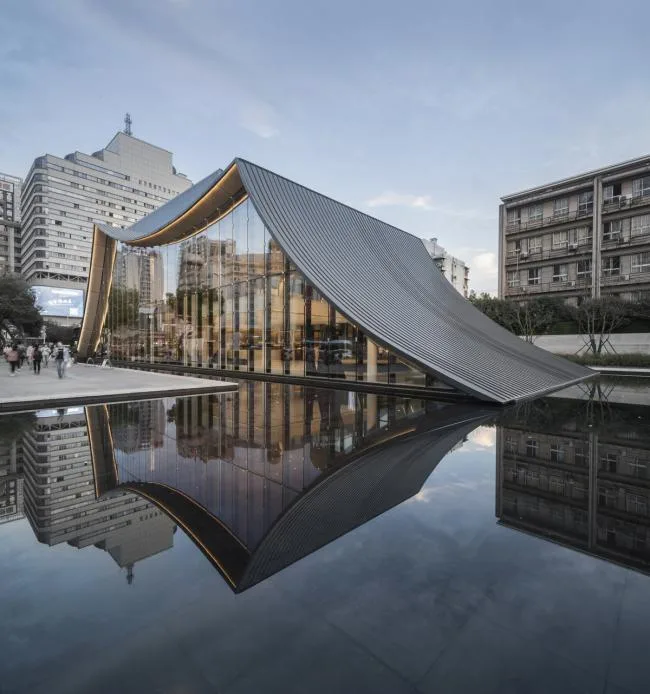
▲ Light as wings, clear as air; clouds leisurely reflect in the water, evoking tranquility.
Reshaping Space: A Heart Inspired by the Environment
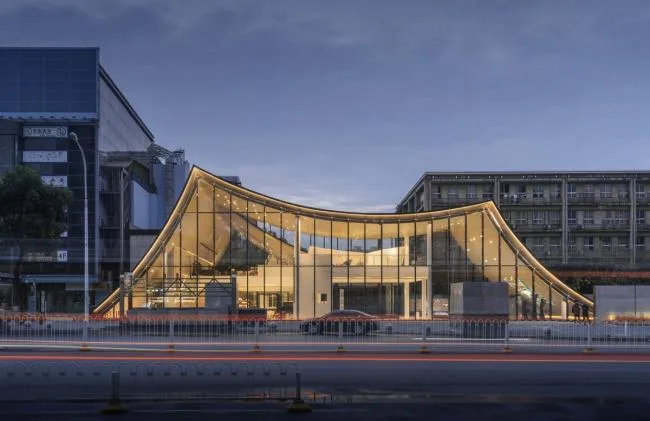
▲ Clear winds and haze blend harmoniously with the Tianshan Mountains.
At first glance, the building captivates with its warm, lustrous glow. The transparent curtain wall and smooth, curved edges shimmer vibrantly against the backdrop of the old street.
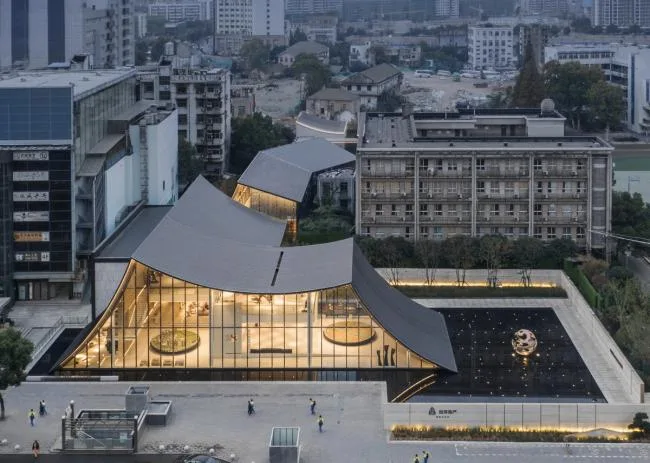
▲ In front of the Shadow Photography Hall in Muyun City, embodying the intention to relocate the environment.
From afar, the glass curtain wall mirrors the evolving city skyline and subtle color shifts, weaving the old and new spaces seamlessly together and attracting urban visitors. It successfully establishes a public, experiential architectural presence amid the complex urban renewal context. (BIM Architecture)
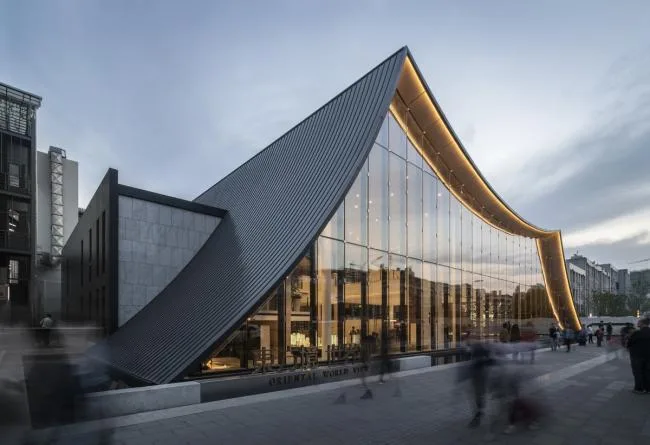
▲ Observing lotus flowers reminds us to keep the heart unstained.
On closer inspection, delicate eaves and jade-like curtains reflect clear ripples across the water, while gentle breezes carry subtle fragrances. When morning mist descends, spring dew and autumn frost slide down the roof beside the water mirror, and through faint drifting smoke, quiet sounds emerge—revealing the beauty found in the details.
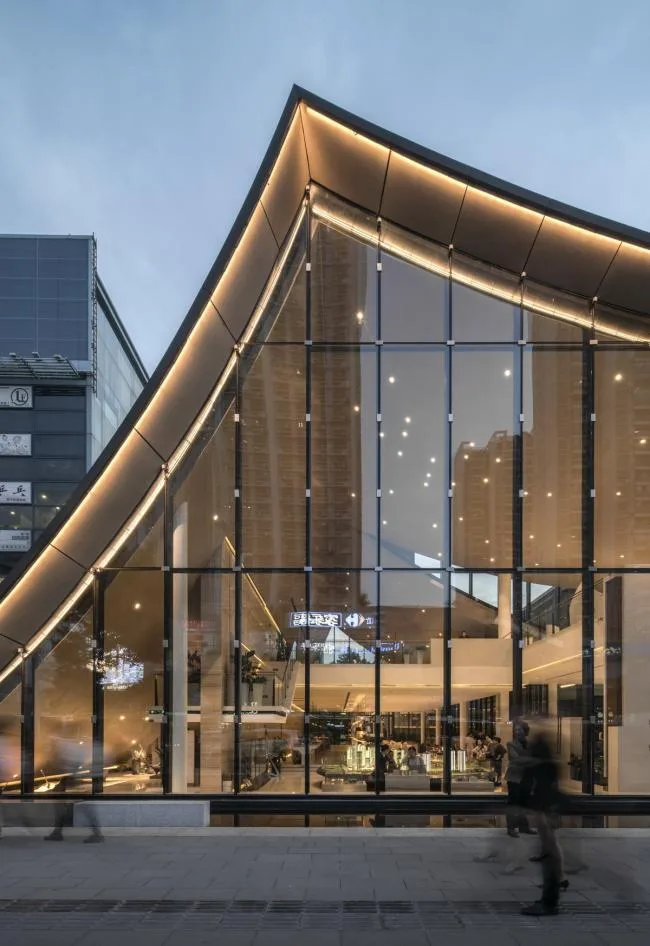
Approaching the main exhibition hall, one experiences the ethereal charm of clear, graceful waters. A lush green wave nourishes the jade-like beauty, giving the impression that the building floats upon the water—conveying timeless Sanskrit Zen wisdom: drifting through time, never forgetting the original intention, and embracing calm and peace.
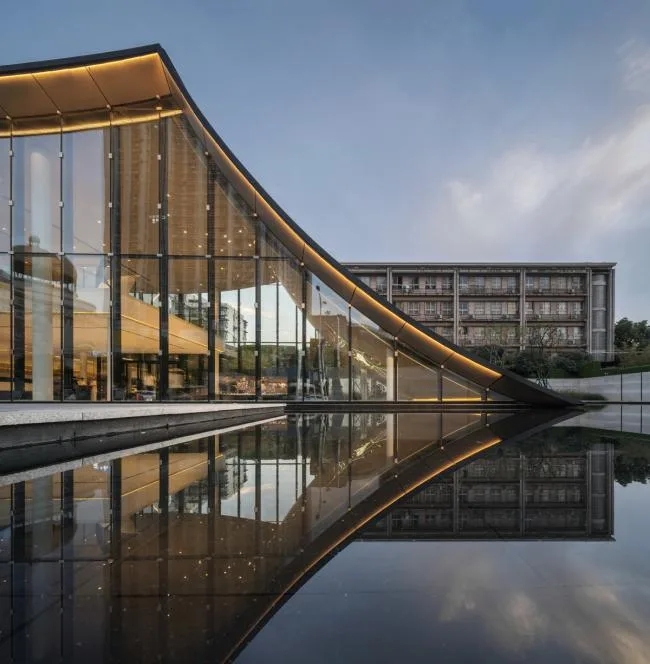
The entrance is discreetly located on the non-street side of the exhibition hall, gradually winding around the water pool before leading indoors. Facing the water, visitors are gently immersed in the scenic beauty. The smooth aluminum-magnesium-manganese roof panels add dynamic, lightweight lines that harmonize with the curtain wall and water mirror, creating a serene and transcendent ambiance.
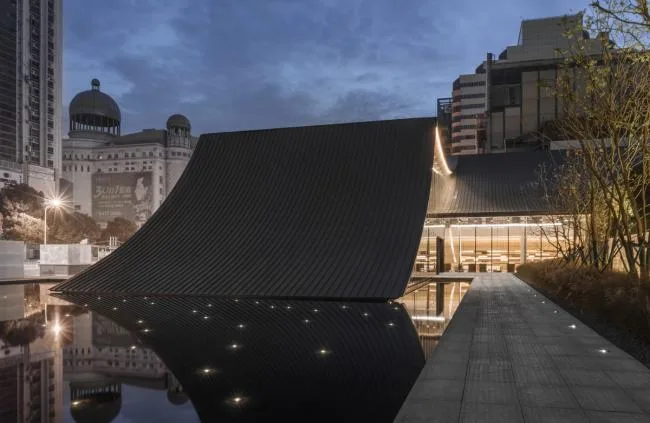
▲ Idle clouds, pool reflections, gentle sunlight, and moonlit corridors envelop the night sky.
Waiting for the moon to rise, visitors slowly walk through the corridor into the hall. Gazing ahead at scattered stars and river shadows, one is transported back to the quiet desolation of the old city—a fleeting reminder of youth flowing like water, setting an emotional tone for entering the exhibition.
Tracing Origins and Embracing the Present, Rooted in Tradition
Guiyuan Zen Temple, situated at the heart of Hanyang’s old city, has quietly transformed its once-grand presence into a serene green oasis, weathering the tides of history. Still waters and drifting clouds hide within the temple grounds, where ringing bells and fragrant incense mark a boundary between the mortal world and the sacred. The sounds of morning bells and evening drums resonate from the ancient temple, mingling with the vibrant atmosphere of the old market as it watches over the city’s bustle.
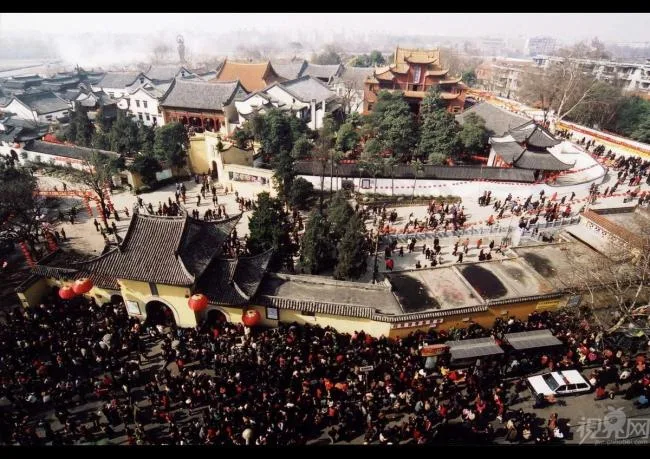
▲ A hundred feet of lush forest, a thousand poles of bamboo cultivation; red sun breaks through green clouds (BIM design).
East of Guiyuan Temple lies the Yuanyang Group’s urban renewal zone. This large-scale old city renovation area once contained a patchwork of buildings bearing strong historical marks, scattered transit stations, towering structures, and aging homes in urgent need of demolition. Today, residential and commercial redevelopment proceeds steadily, shaping an urban corridor stretching west to east: from Guiyuan Temple to the street and lane commercial district, the urban renewal exhibition hall, residential areas, and finally the waterfront belt. This corridor extends the ancient temple’s incense legacy and the evolving urban landscape toward the Yangtze River.
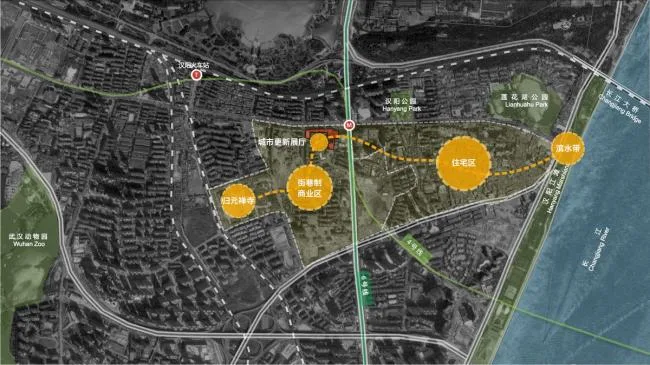
▲ Hidden Market Returns to the Yuan Dynasty: thriving incense, surrounding architecture, clouds rising into the sky.
On one side are the eaves and corners of the ancient temple, while the other side features staggered building heights.
The cultural contrasts and integrations visible along the urban corridor inspired designers to deeply reflect on urban renewal within the old city renovation area. Drawing from Guiyuan Temple, the classic linear element of the “sloping roof” was extracted and reinterpreted through minimalist, modern techniques to embody the spiritual essence of traditional Chinese architecture. The urban exhibition hall not only showcases Hanyang’s urban renewal but also serves as a model for future quality living in Jiangcheng, bridging the past and the future.
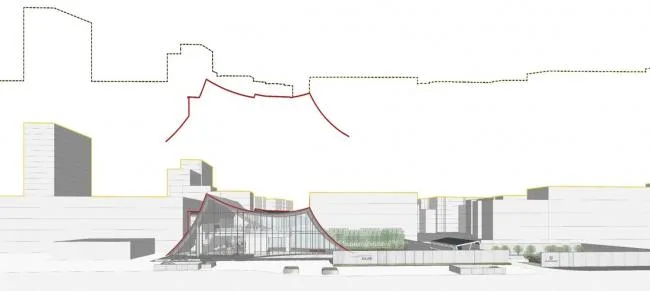
▲ Embracing the heart of the city and continuing the skyline.
The urban renewal exhibition hall sits at a key junction of the urban corridor. Amid ongoing phased demolition and renewal across several small plots, the hall contends with narrow, irregular terrain hidden among dense, aging buildings slated for demolition. The tight streets and uneven terrain posed unique design challenges.
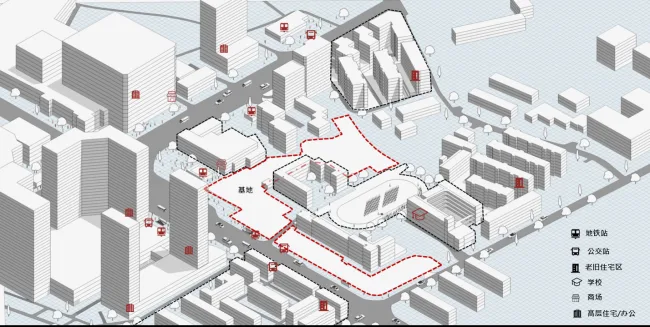
Exploring the Corridor: A Harmonious Coexistence of Diversity
To avoid being overshadowed by the old city’s scale, the designer rejected the traditional approach of compressing and then elevating the exhibition center. Instead, the main exhibition hall opens directly toward the city.
To overcome the constraints of deep terrain, the design draws inspiration from Guiyuan Zen Temple’s linear south-to-north progression, departing from traditional symmetrical axes. Five building volumes are arranged linearly, responding to local conditions and creating an inward-facing courtyard space.
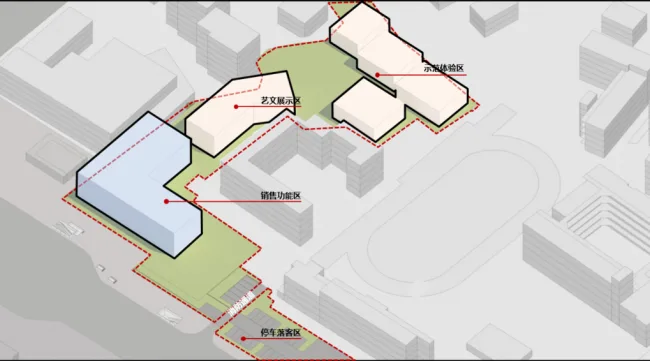
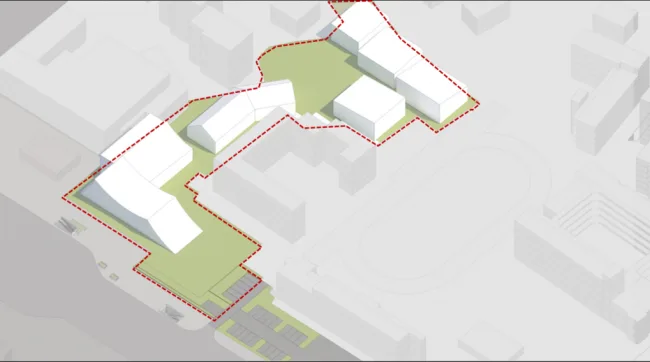
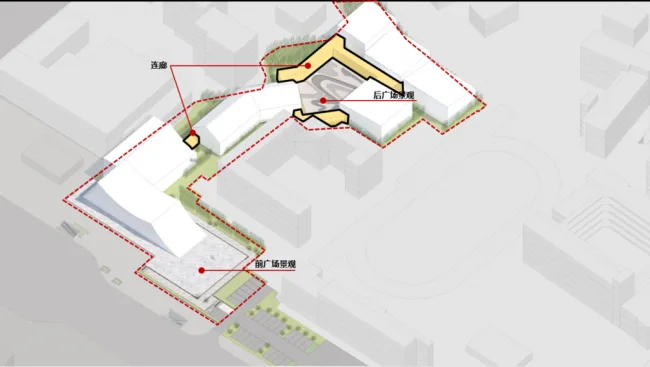
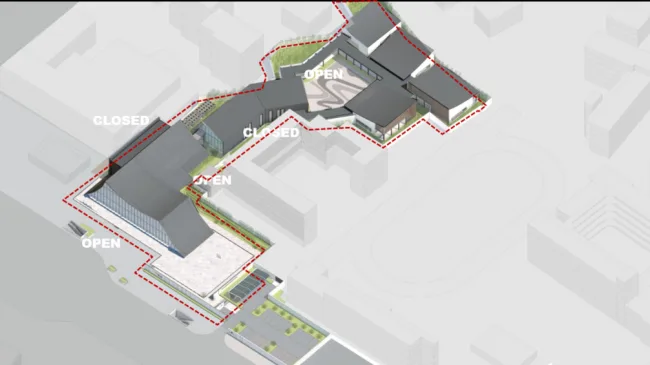
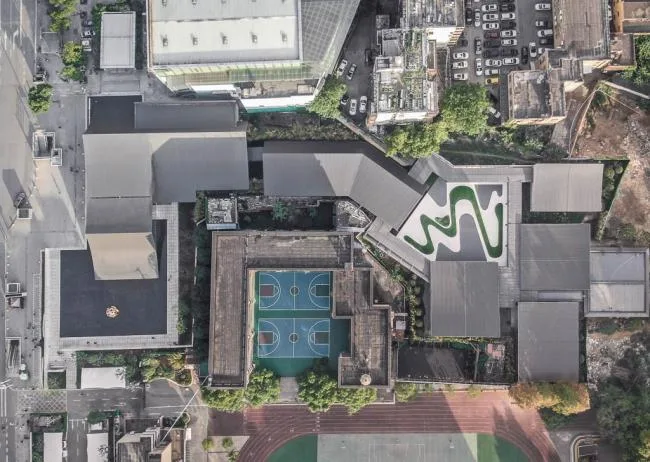
▲ Learning from the past, inheriting traditional spatial layouts.
To align with functional spatial sequences, the front of the exhibition hall adopts a modern linear flow style, while the rear embraces an inward-facing courtyard layout. This transition guides visitors from an open, bustling city environment into tranquil community spaces, ultimately evoking a peaceful home atmosphere.
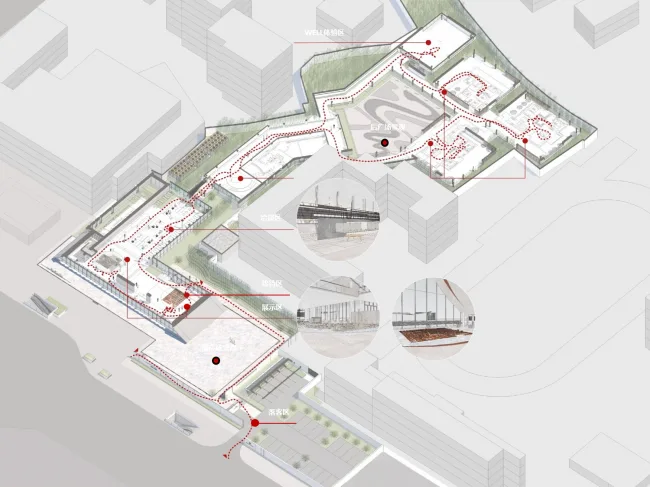
▲ The hall integrates multiple functions, including reception, exhibition, parent-child areas, WELL experience zones, model houses, and negotiation spaces.
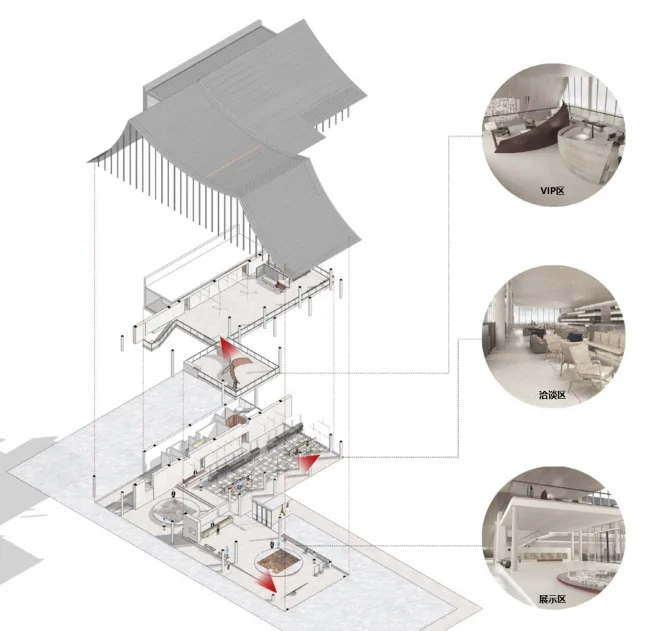
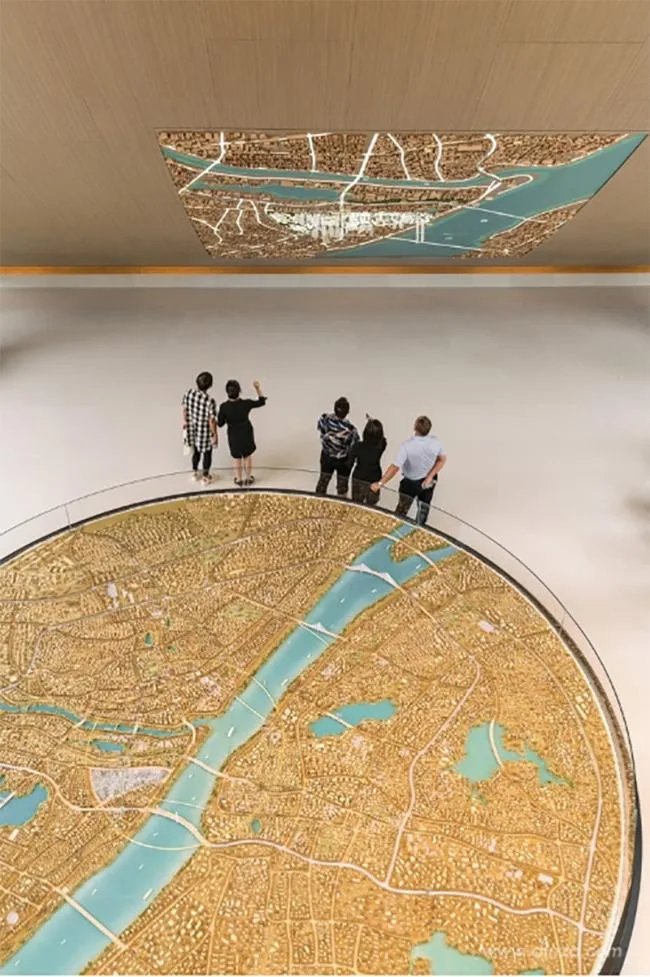
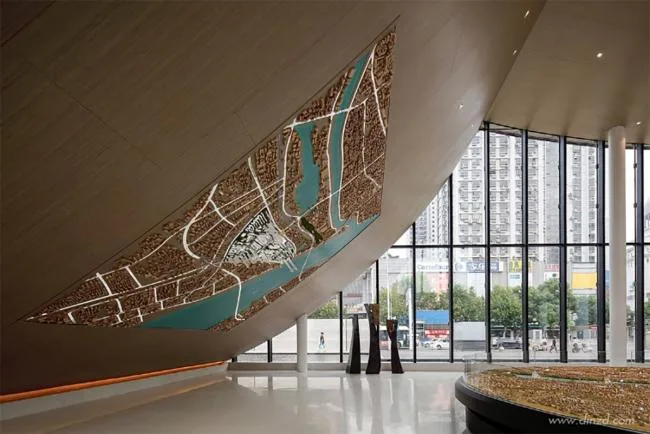
▲ The corridor subtly reveals itself, seamlessly blending diverse functions. © Water Phase Design | Photographer: Zhao Yuchen
Additionally, the designer leveraged the narrow plot to create vine-like growth spaces aligned with varied functionalities: showcasing new urban homes, historical corridors preserving urban memories, and exhibition spaces celebrating cultural diversity. This approach fosters a vibrant and practical urban core within the renewal era, echoing the sustainable development and life continuity of patchwork urban renewal, while reflecting the old city renovation area’s evolution.
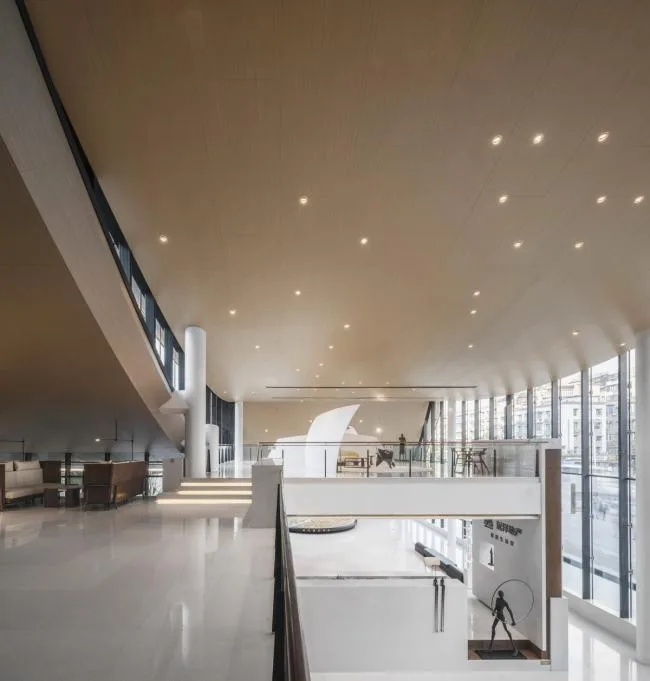
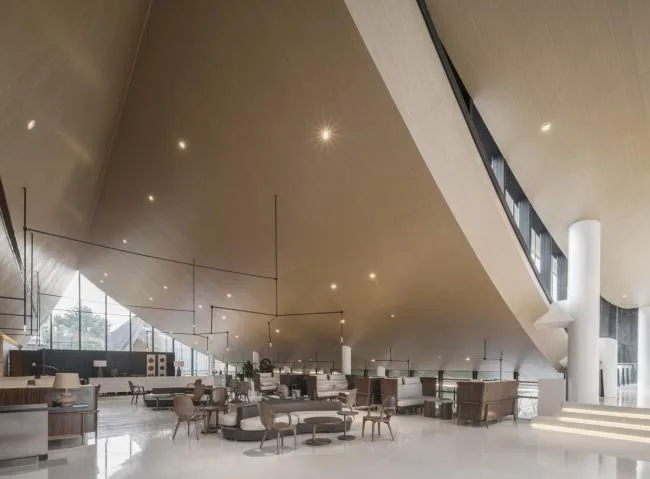
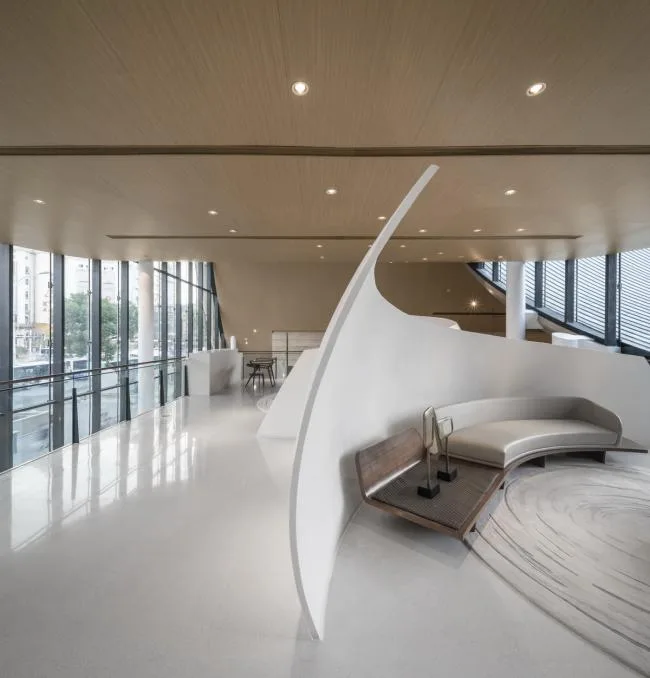
▲ Visitors gain a comprehensive experience transitioning from the city to the community throughout their tour.
To integrate the cultural atmosphere of urban renewal and enhance the visitor experience, the designer exploited the plot’s natural terrain to create multiple slopes and steps, adding variation in light, shadow, and elevation. The use of self-contained curtain wall and slender column systems fosters a seamless connection between indoor and outdoor spaces, creating a lightweight, curtain-like structure. Ultimately, this results in a richly layered narrative corridor with harmonious spatial transitions.
Exquisite Craftsmanship and Careful Material Selection
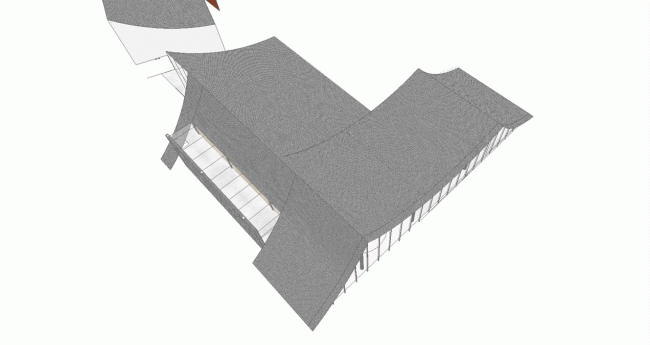
▲ The curtain wall framework is detached from the structural columns, forming a self-supporting system with columns positioned inside the space.
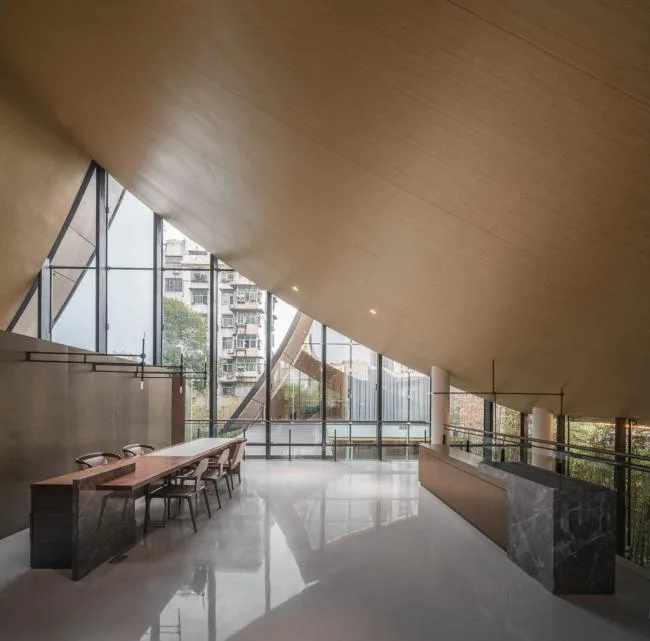
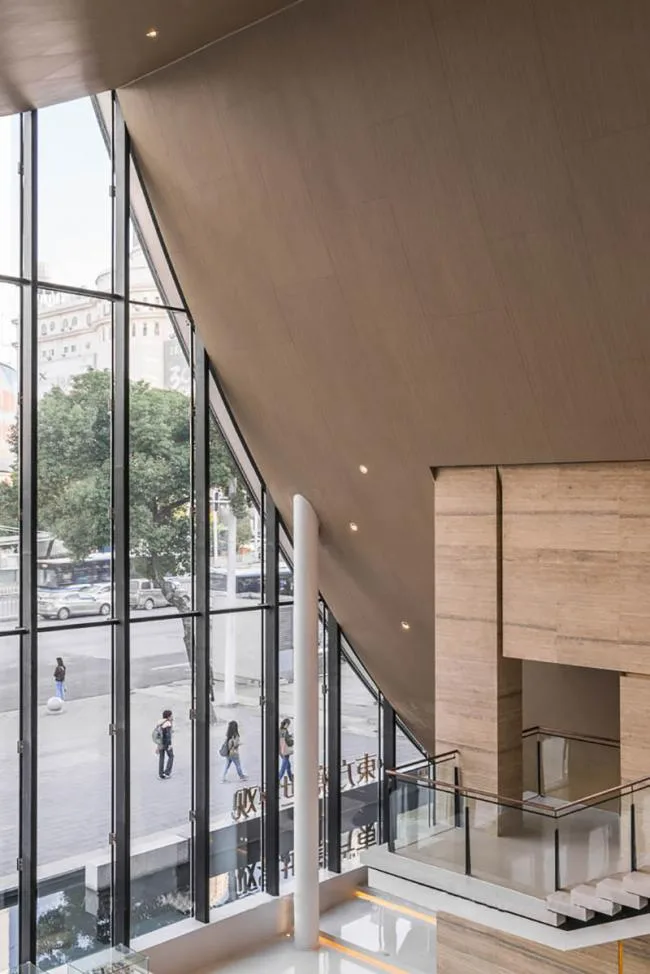
▲ Small columns enhance the exhibition hall’s structural sense while supporting the lightness of the curtain walls.
The designer reimagined the relationship and hierarchy between interior and exterior spaces, emphasizing the thinness and lightness of the eaves through meticulous detailing of transitions between the roof, glass curtain walls, and indoor ceilings. These refined details create a permeable spatial experience, blending inside and outside. A custom roof drainage system forms elegant, clean curves on the roof.
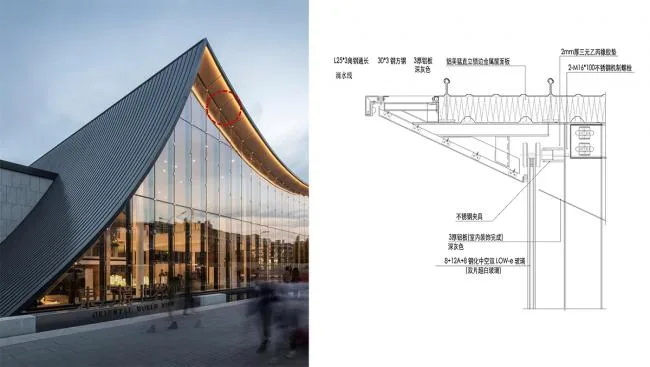
▲ Details of the roof, glass curtain wall, and indoor ceiling junctions.
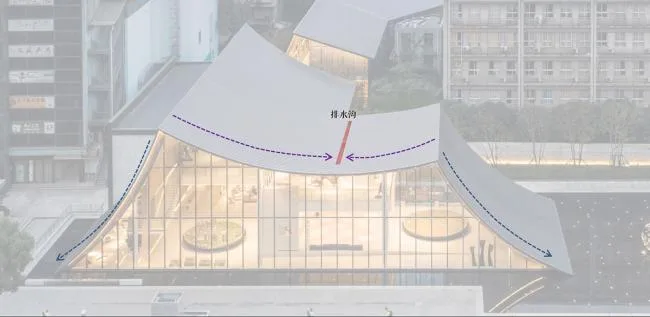
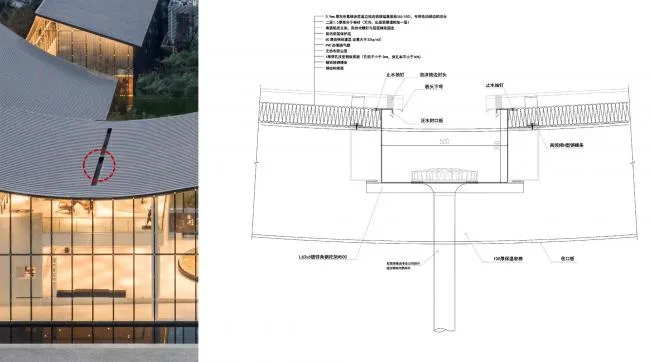
▲ Diagram of the roof drainage system.
Though the building is relatively small, materials were carefully chosen. The Wuhan Oriental World View Urban Renewal Exhibition Hall employed numerous materials rarely used in previous projects, facing challenges like sourcing difficulties and ensuring quality at the start of construction. Coordinated efforts across project teams—including studying past projects, comparing supplier samples, and sourcing materials directly—enabled timely substitutions without compromising the project schedule or quality.
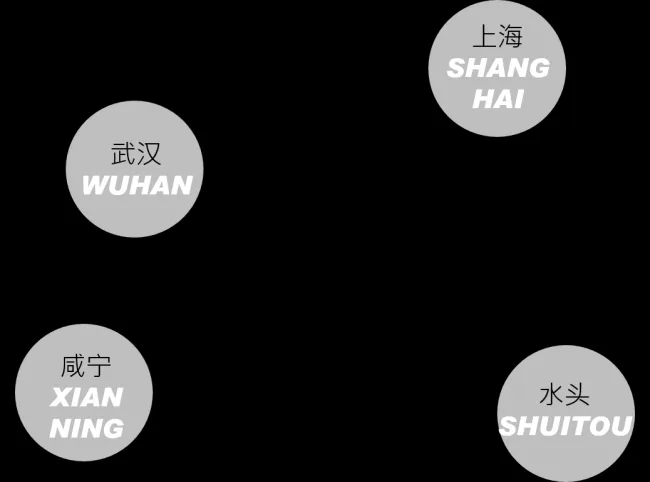
The architect conducted extensive site visits, inspecting multiple metal roofing benchmarks and stone construction projects, including visiting Shuitou, Jinjiang, Fujian—the largest stone distribution market in China—for on-site research.
Initially, titanium zinc sheets were the ideal roofing material due to their rich luster, vibrant colors, and elegant metal wire drawing effects. However, tight project timelines and long supply lead times made titanium zinc unfeasible. After evaluating samples and construction cases, aluminum-magnesium-manganese panels with fluorocarbon surface spraying were selected as a cost-effective alternative, achieving over 90% of the desired effect.
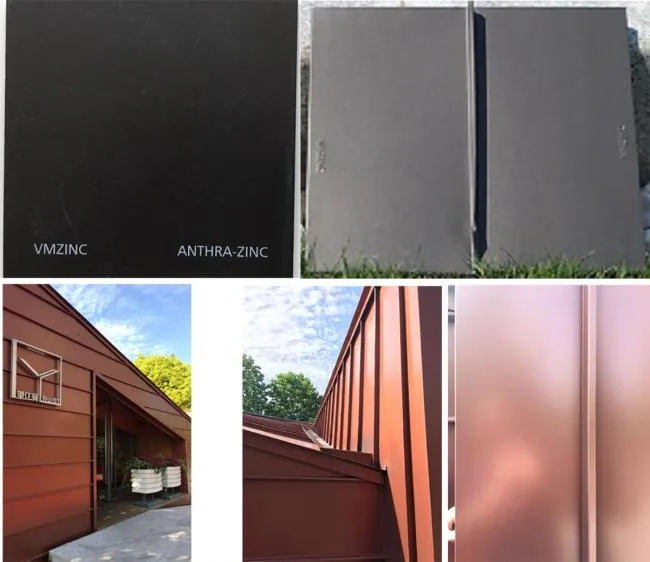
▲ Aluminum-magnesium-manganese panels selected for the metal roof.
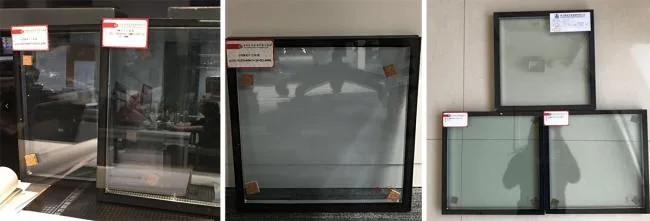
The curtain wall primarily uses double-layer low-e insulated ultra-white glass. Different manufacturers’ samples were compared under varied lighting to ensure optimal selection.
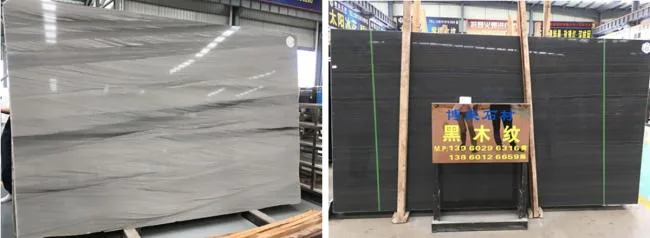
Considering factors such as overall texture, stone slab cutting sizes, and supply stability, the designer chose White World Trade stone for the project. Its color and texture closely resemble white rose patterns, providing a consistent slab appearance.
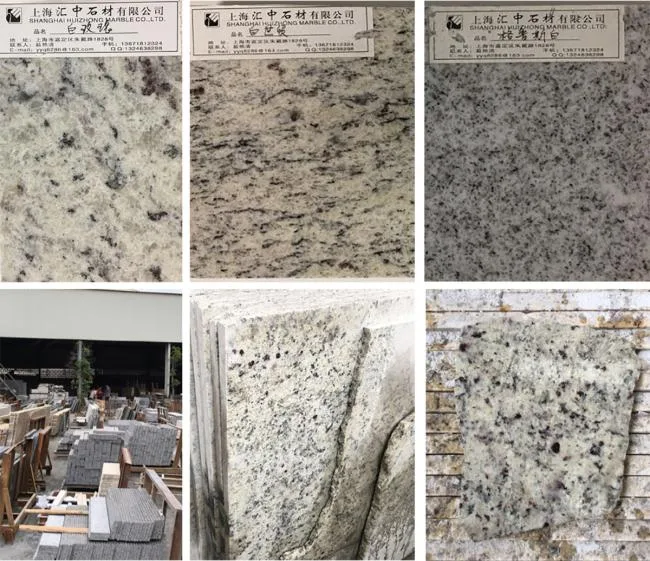
▲ Stone materials were carefully compared and selected.
To create a natural, humanistic, artistic, and healthy indoor setting, natural wood veneer was initially planned for the ceiling. However, due to import costs and technical challenges emphasizing wood patterns, technological wood veneer was chosen instead. This option reduced costs and resolved pattern highlighting issues.
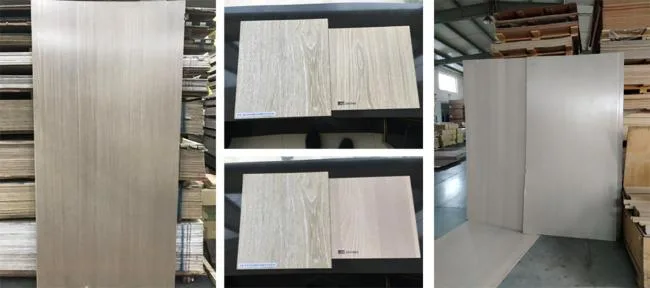
▲ Technological wood veneer replaces natural wood veneer.
The large wall connecting the first and second floors was originally planned with rammed earth, but due to Wuhan’s humid environment, high wall height, and flatness requirements, traditional silver-gray cave stones were selected instead, preserving historical character.
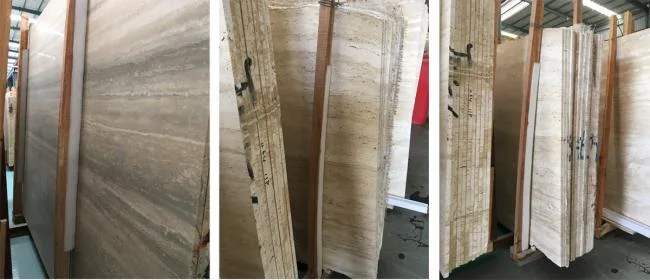
▲ Silver-gray cave stone replaces rammed earth.
Due to scarce and low-quality domestic velvet marble supplies, the designer promptly switched to black wood grain marble. Though darker in color, it creates a more elegant, intimate environment, with wood veneer and lighting effects enhancing the aesthetic.
The Path to Simplicity: Returning to Origins and the Heart
How can urban context be preserved during renewal? The Wuhan Oriental World View Urban Renewal Exhibition Hall offers a fresh narrative.
Serving as a display space within a large urban renewal site, the hall creates vine-like growth spaces within the deep terrain, enhancing light and shadow through elevation changes and turning constraints into opportunities. Inspired by Guiyuan Zen Temple’s traditional linear layout and inward courtyard, the iconic “sloping roof” element preserves the century-old spiritual and cultural core of the ancient city. By blending traditional construction methods with an open, modern form, lightweight transparent materials, and self-contained structural systems, the architecture presents a vocabulary that is both timeless and contemporary.
This openness invites citizen participation, realizing a living legacy that learns from the past without being bound by it, innovates while honoring roots, and activates renewal through inheritance. In the dialogue between modern and traditional, the key lies not in reduction or replacement, but in using modern architectural language and concise expression to sustain the city’s vitality while respecting its essence.
Project Information
Project Name: Ocean Shipping Group · Wuhan Oriental World View City Renewal Exhibition Hall
Location: No. 723 Hanyang Avenue, Hanyang District, Wuhan City, Hubei Province
Owner: Ocean Shipping Group
Building Area: 4,337.17 square meters
Completion Date: August 2018
Design Team: Han Bing, Li Wang Ling, Wei Yiqiong, Yang Zhe, Ni Jianyou, Wei Xiaoyu
Construction Drawing: Xie Yong, Dong Bei, Chen Xiuwen
Structure: Jiang Kewei, Tao Shaojun
HVAC: Ke Changjin and Yao Qizhi
Water Supply and Drainage: Yang Ning, Zhang Jin, Pan Xiaojiao
Curtain Wall: Ren Dayong
Landscape: Ocean Landscape Planning and Design Institute
Interior Design: Water Phase Design Co., Ltd
Lighting: Beijing Rongwen Zhijiang Lighting Engineering Co., Ltd
Curtain Wall Consultant: China Construction Dingyuan Construction Engineering Co., Ltd
Construction Units: Ocean Construction, Ocean Decoration, Ocean Mechanical and Electrical, Green Crown Garden, and others
Architectural Photography: Shiran Architectural Photography, Zhao Yuchen












Must log in before commenting!
Sign Up