
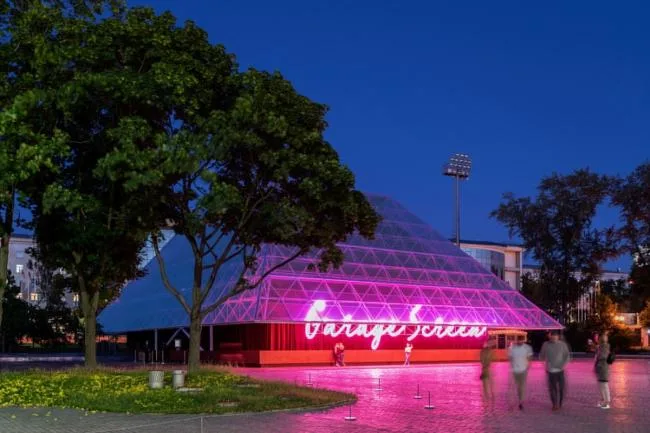
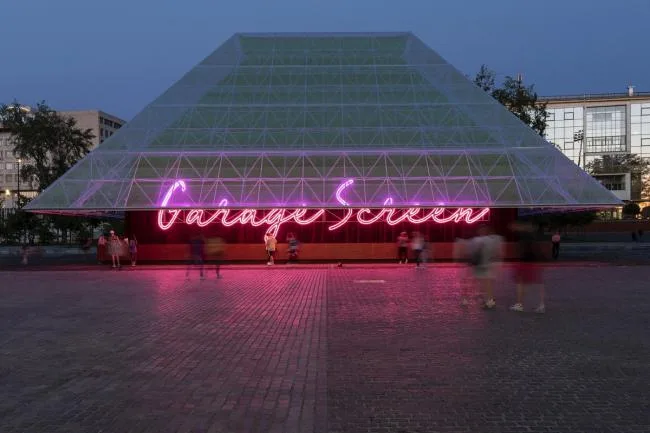
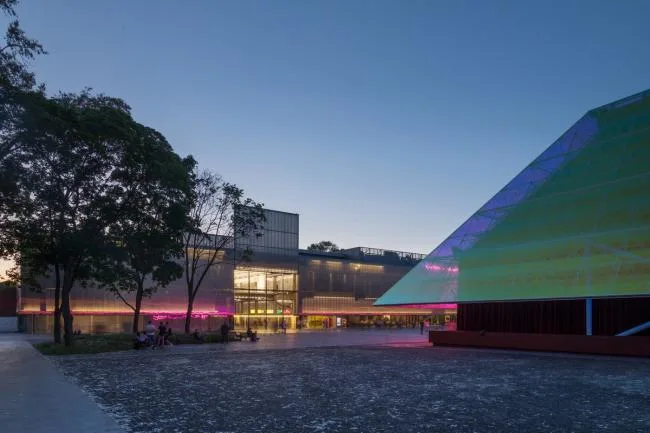
The Garage Screen summer cinema is situated in Moscow’s Gorky Park, directly across from the Moscow Garage Museum of Contemporary Art, designed by Rem Koolhaas in 2015. This project aims to redefine the BIM design viewing experience for the general public, offering a fresh and engaging way to explore BIM through an innovative cinema space.
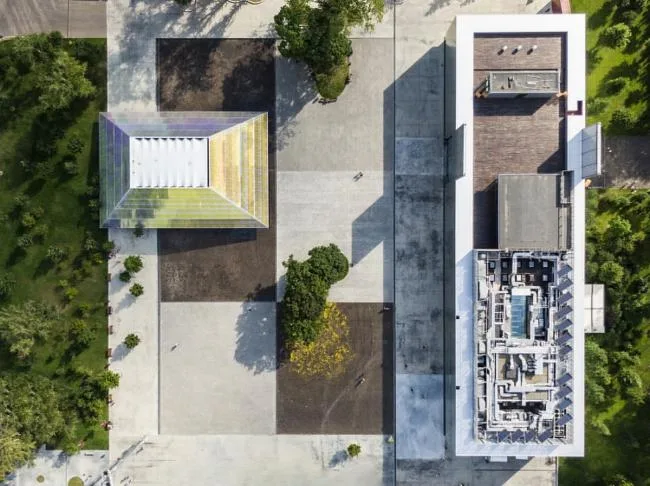
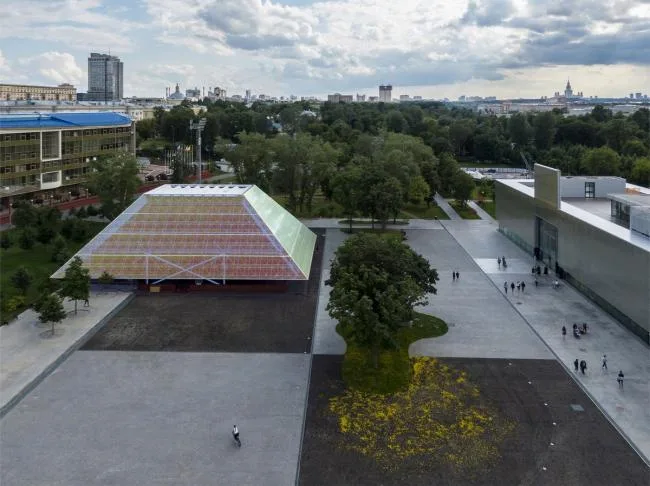
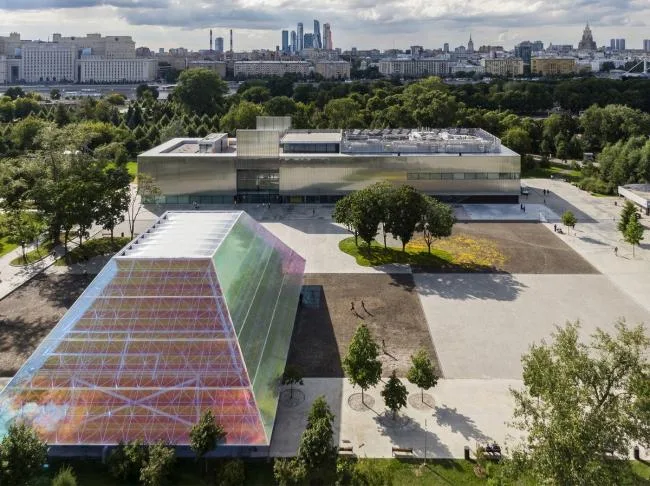
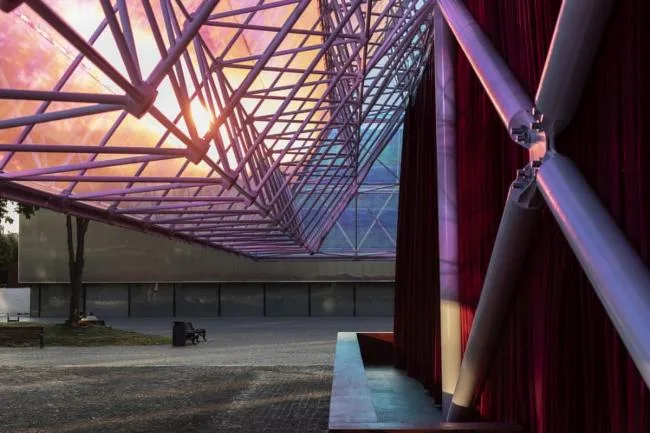
The central idea behind the project is the concept of an “open cinema”. Rather than creating a closed, controlled environment isolated from the outside world, the architects chose to embrace and harmonize with the surrounding environmental factors. This approach ensures the cinema complements the vibrant public life of the square where it is located. The design not only integrates the surrounding environment organically into the cinema’s spatial function but also extends the cinema space outward, merging with the public square. This design grants the summer cinema a dynamic, performative quality—allowing those inside to experience the unique sensation of “seeing and being seen.” Retractable curtains around the cinema offer complete openness, enabling viewers to watch movies while simultaneously observing passersby. Likewise, pedestrians can easily see the audience inside the cinema.
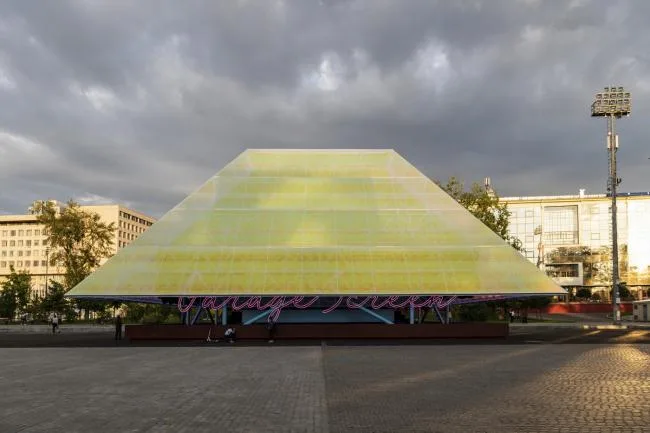
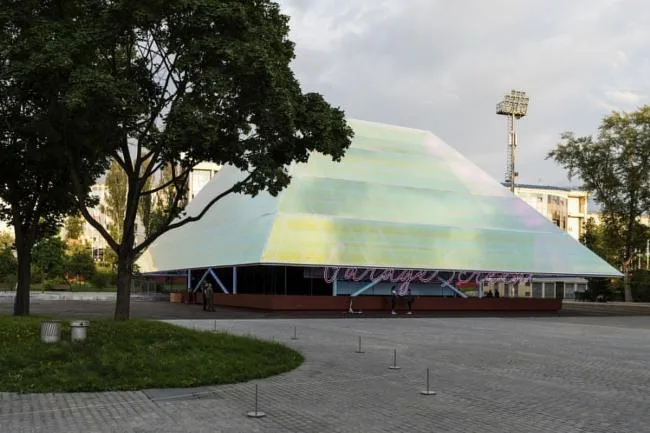
Addressing the environmental conditions surrounding the cinema was a key challenge, particularly in selecting appropriate building materials, systems, and forms. When the curtains are raised, the cinema becomes fully transparent, while the use of velvet fabric significantly improves the acoustic quality inside the space. When closed, the curtains create a calm and serene atmosphere, allowing viewers to relax fully and immerse themselves in the film. The cinema’s design features adjustable curtains and a variable roof, enhancing the viewing experience in Moscow’s summer climate. On rainy days, the closed roof provides shelter, and on clear nights, the open roof lets viewers enjoy movies under the stars. Additionally, the architects optimized the cinema’s shape using computer modeling to ensure the hall remains shaded, providing a comfortable environment for viewers.
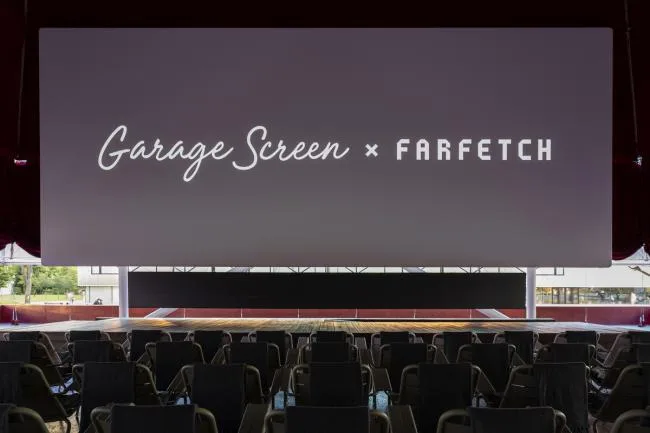
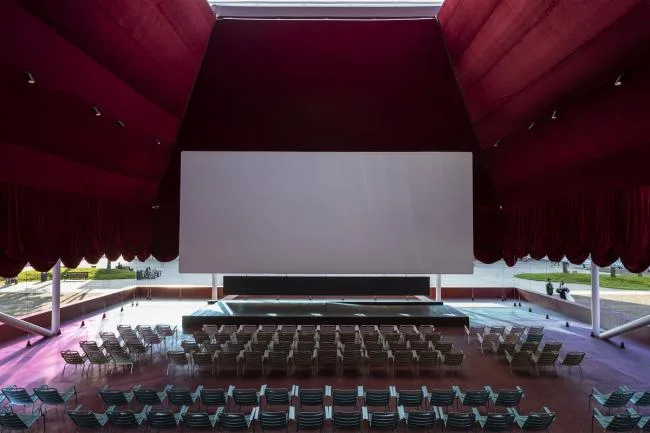
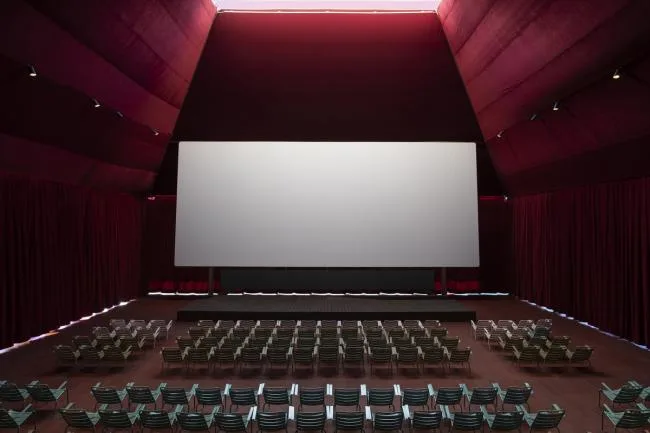
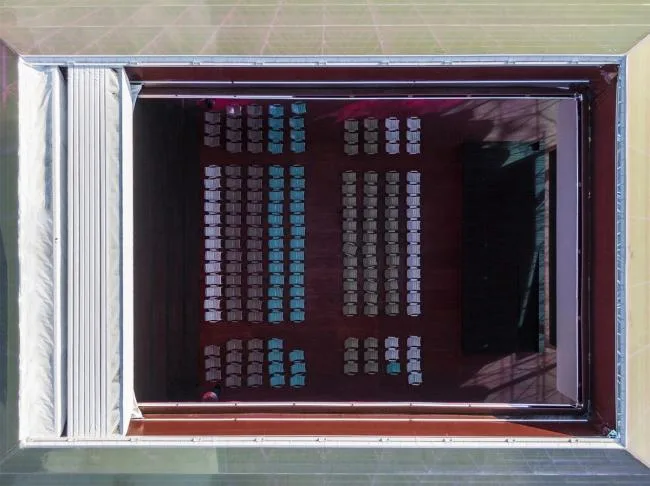
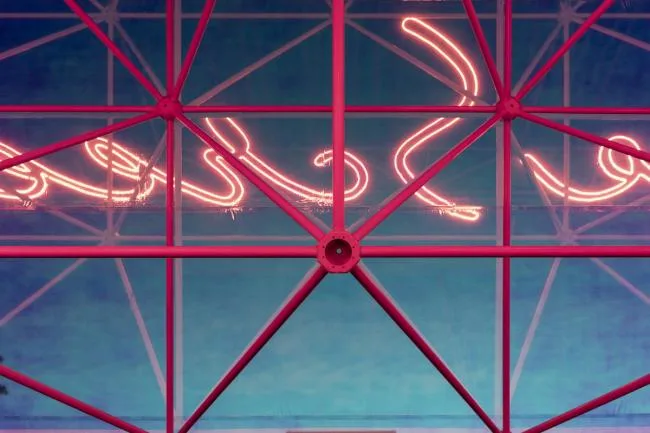
The design draws inspiration from the cinema’s core spatial functions. The building’s form resembles the diverging beam of a projector, while its exterior evokes the reflection and refraction effects seen during film playback. The entrance design takes inspiration from “Star Wars,” offering a sense of infinite perspective. The neon light color scheme is influenced by the film “Blade Runner,” creating a distinctive and immersive atmosphere.
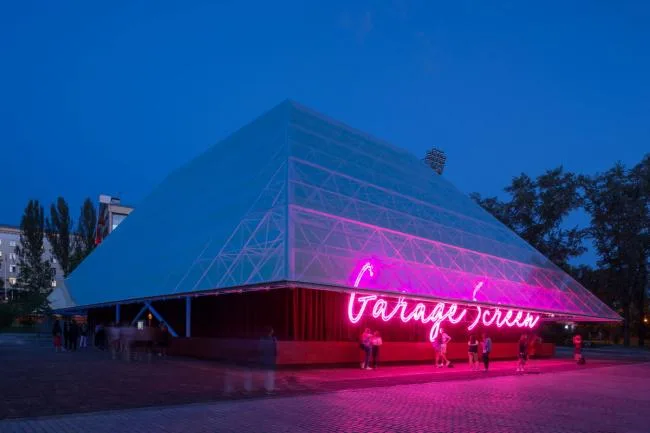
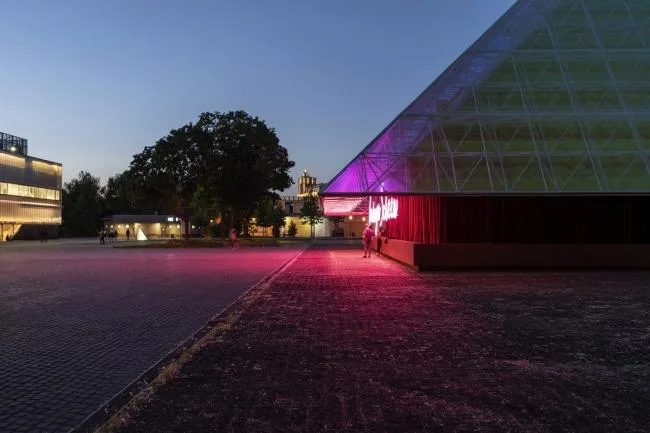
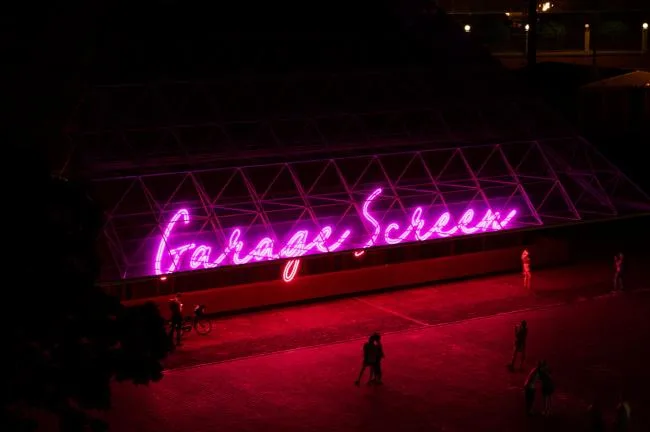
Although this summer cinema is a temporary installation, its design aims to captivate the public and offer a unique spatial experience. To make it a striking landmark within the square, the architects selected a dichroic film as the primary material for the pavilion. This film changes color based on time of day, weather, and viewing angle, shifting from green to yellow throughout the day. At night, neon lights illuminate the pavilion, casting a purple glow that reflects the nearby museum. This dynamic color transformation ensures that each visitor’s experience of the summer cinema is distinct and memorable.
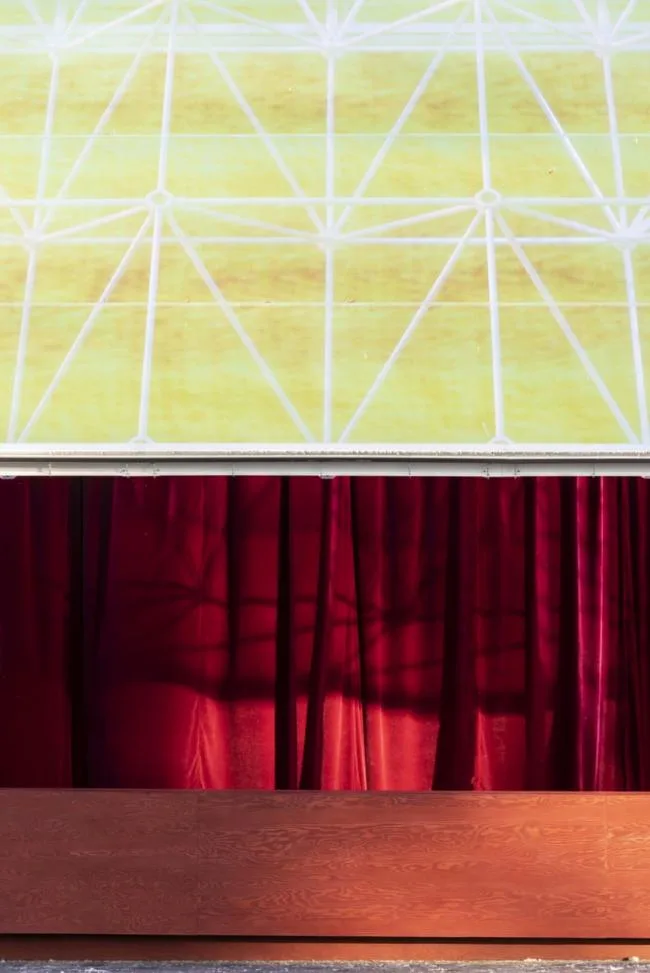
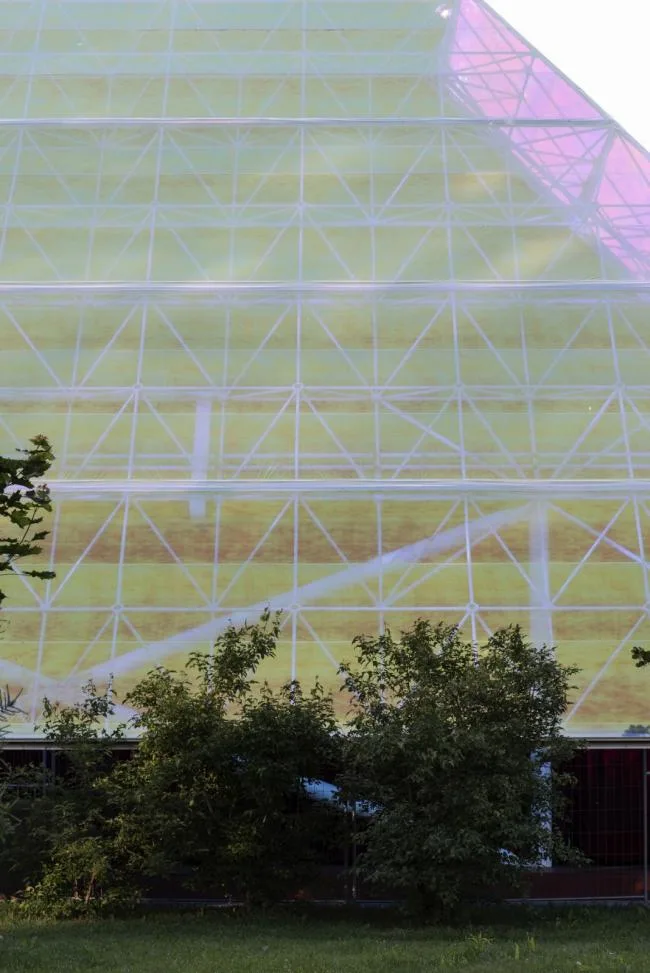
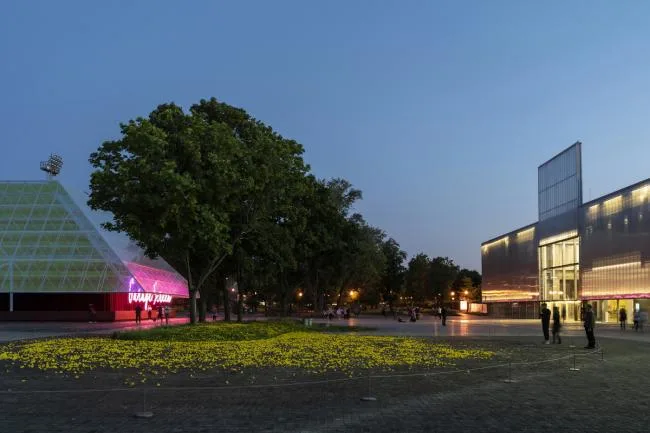
As a temporary structure, environmental responsibility was a significant consideration throughout the design process. The entire pavilion can be fully disassembled, packaged, and transported for reconstruction at different locations. The metal components of the pavilion are reusable for other structures, while the film and PVC synthetic plastics are repurposed as raw materials for museum merchandise, ensuring minimal waste and sustainable use of materials.
Design Drawings:
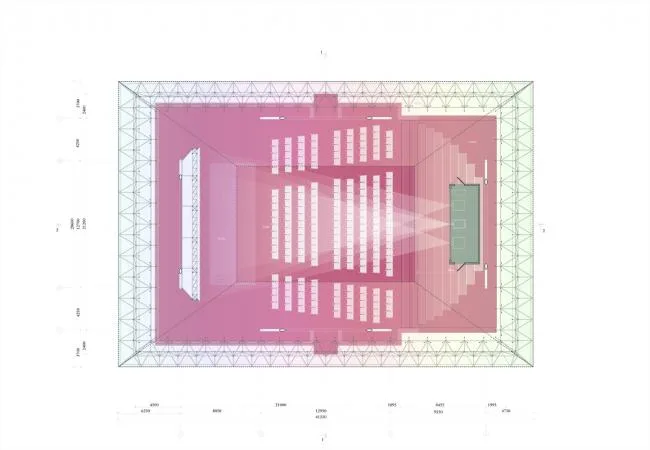
▲ Plan View
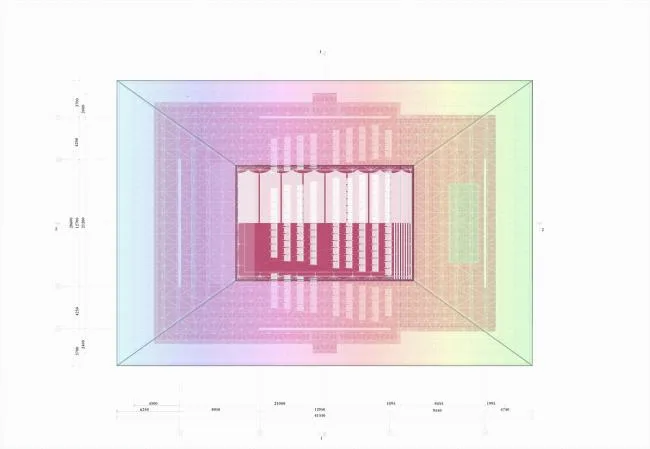
▲ Plan View
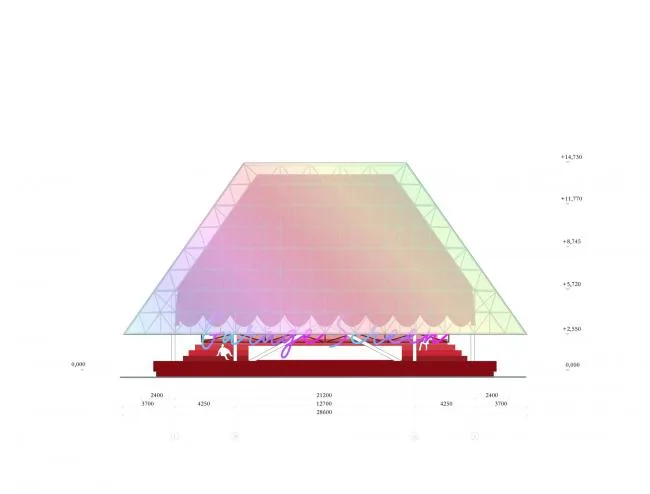
▲ Elevation View
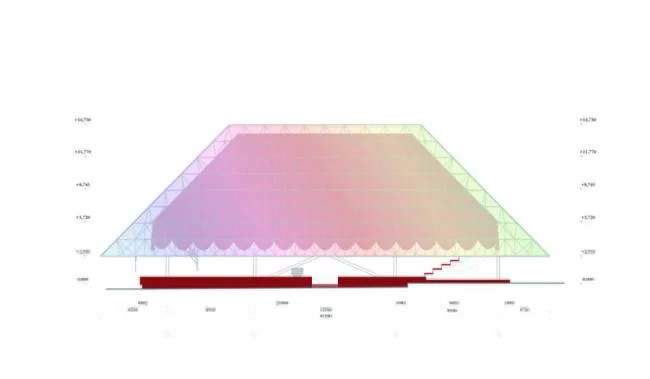
▲ Elevation View
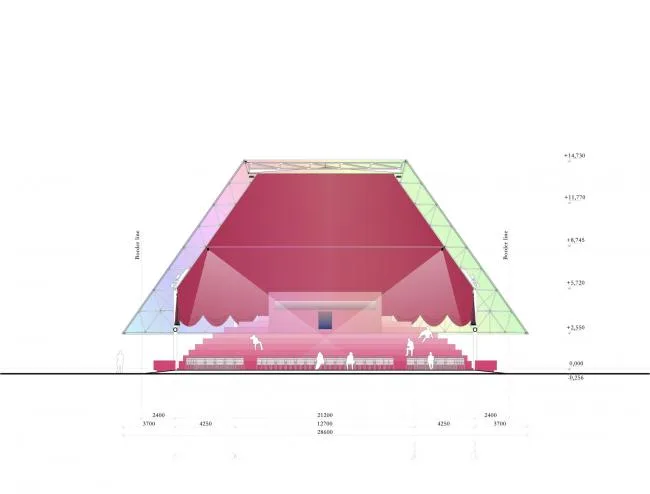
▲ Sectional View
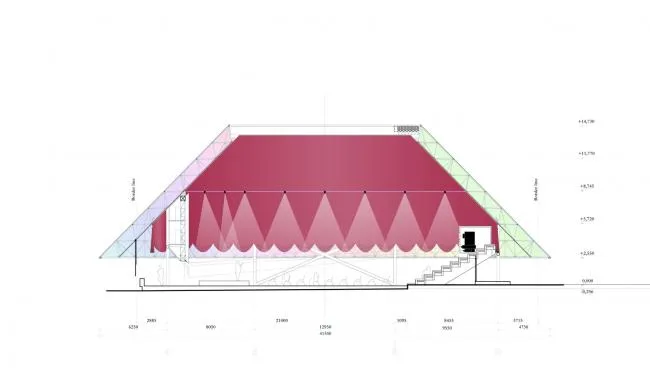
▲ Sectional View
Project Information:
Architectural Firm: SYNDICATE Architects
Location: Gorky Park, Moscow, Russia
Category: Exhibition Pavilion
Lead Architect: Victor Stolbovoy
Building Area: 900 m²
Year: 2019
Photographers: Daniel Annenkov, Aleksey Narodizkiy, Ivan Erofeev












Must log in before commenting!
Sign Up