
The Tianma New Campus (BIM Work) of Hunan University is situated within the Yuelu Mountain University Science and Technology Park, covering a total area of 18.96 square meters. The campus is bordered by Hunan University’s old campus to the north, Tianma Mountain to the east, Yuelu Mountain across Lushan South Road to the west, and Fubuhe Road along with Tianma Student Apartments to the south. This location offers a rich natural landscape and a strong cultural atmosphere. Planning and construction began in 2003, but after facing multiple delays, the campus was only fully completed in 2016. It acts as an extension and complement to the existing old campus due to its proximity.
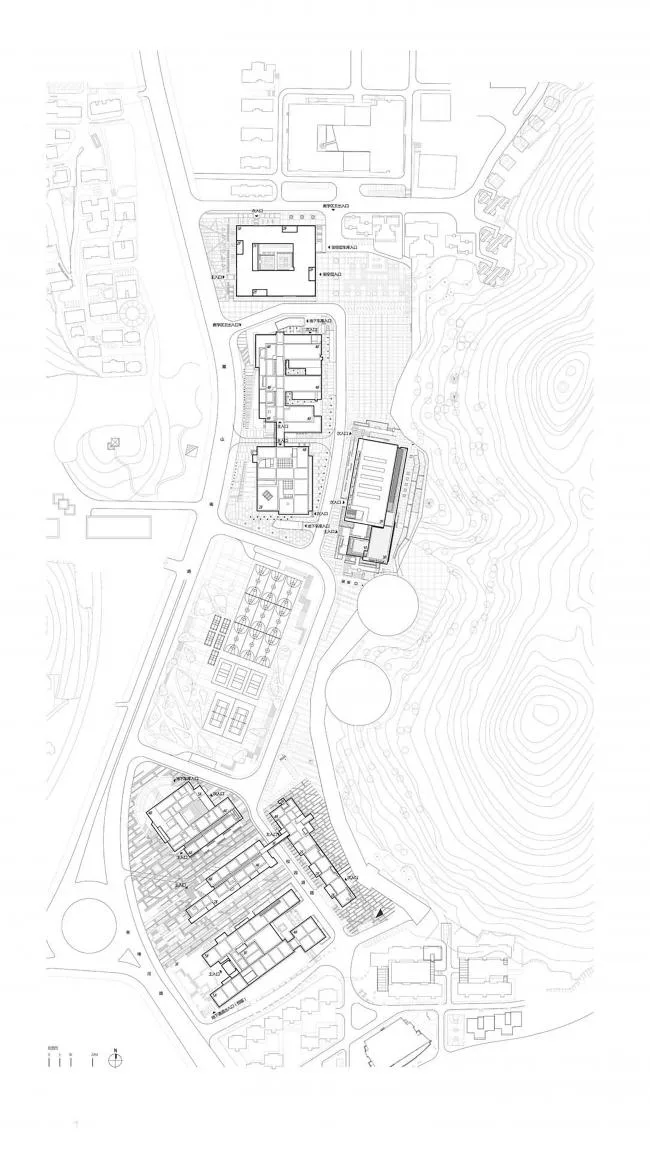
▲ General layout plan
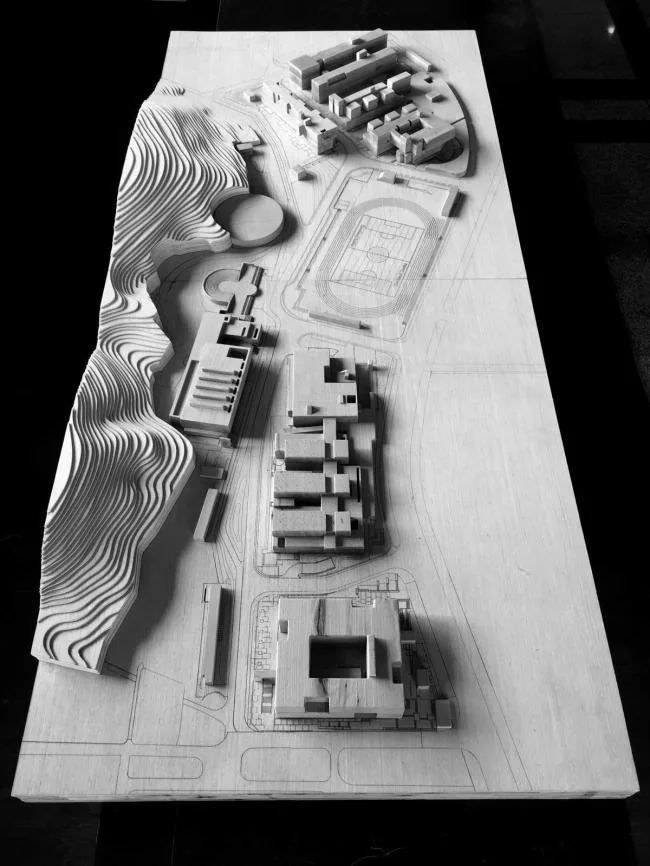
▲ Model
The overall design embraces a clustering concept, organizing buildings according to their disciplinary functions to create a logical and efficient layout. For example, the Physics, Microelectronics, and Mathematics Buildings are grouped together. The design also emphasizes interdisciplinary exchange, grouping the School of Art and Design with the School of Software in one building to foster creative collaboration.
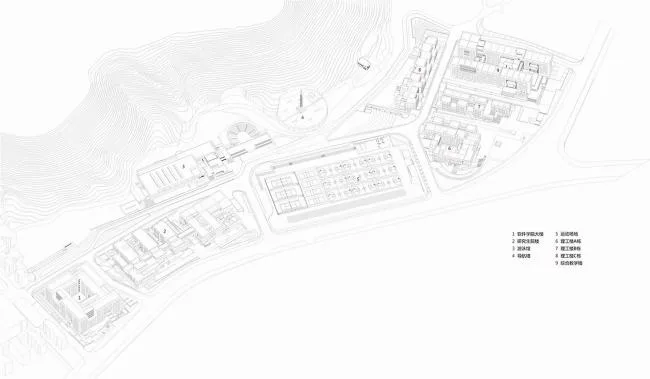
▲ Overall axial view of the 207-acre campus
Graduate School of Hunan University
In recent years, local studios have studied traditional Hunan residential architecture such as stilted houses, wind and rain bridges, sun-drying buildings, swallow mouth houses, and courtyards. They have stripped away decorative elements to reveal core characteristics, extracting and restoring basic spatial types that serve as design prototypes. These concepts have been widely applied in practice, including the original Hunan University campus.
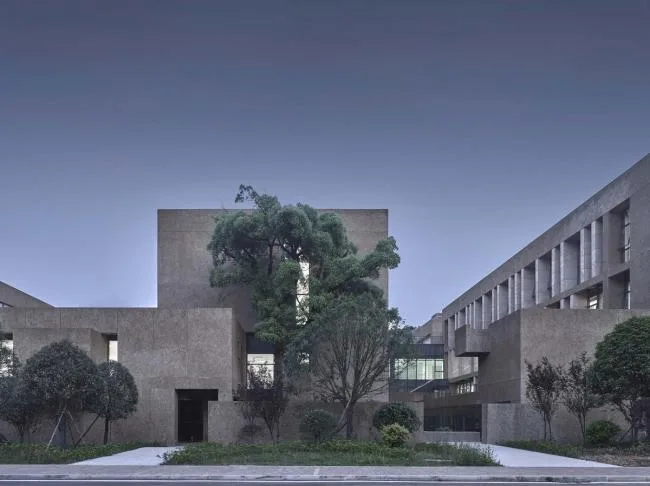
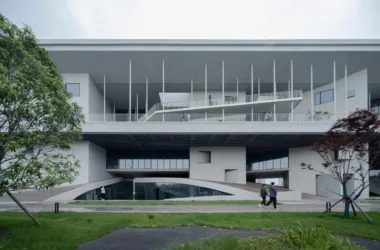
The graduate school building uses regional spatial elements such as courtyards, terraces, and narrow slits to sculpt and hollow out its large 20,000-square-meter volume. This relieves the building’s mass on urban space and creates a strong sense of physical form, combining architectural “sculpture” with breathing spaces inside. This design echoes the spatial forms derived from Hunan University’s architectural origin, Yuelu Academy, effectively addressing complex constraints including historical culture, climate, and site characteristics.
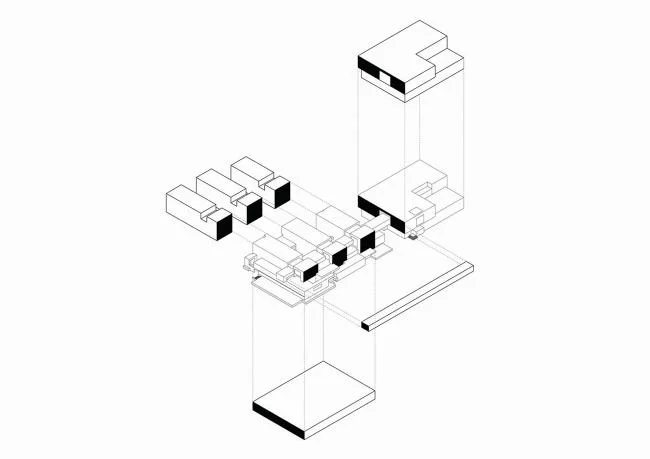
Graduate School – Form Development
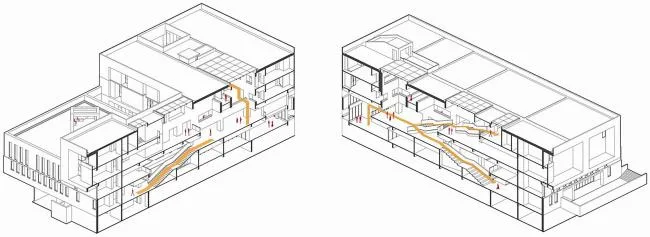
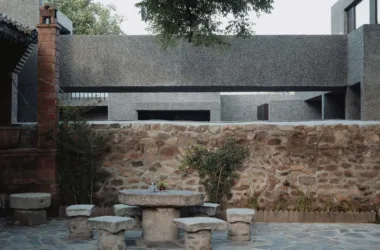
Graduate School – Courtyard
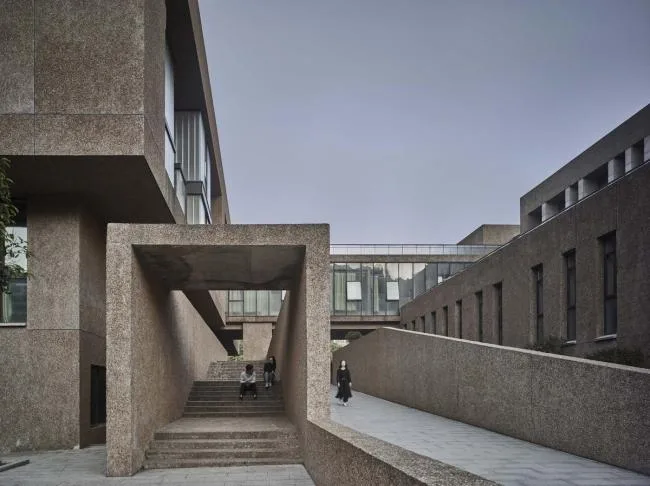
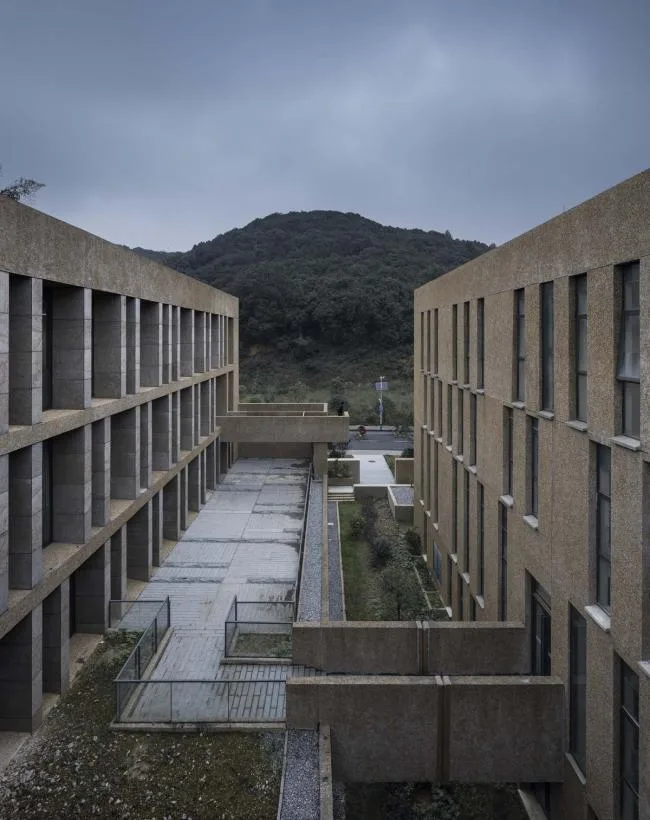
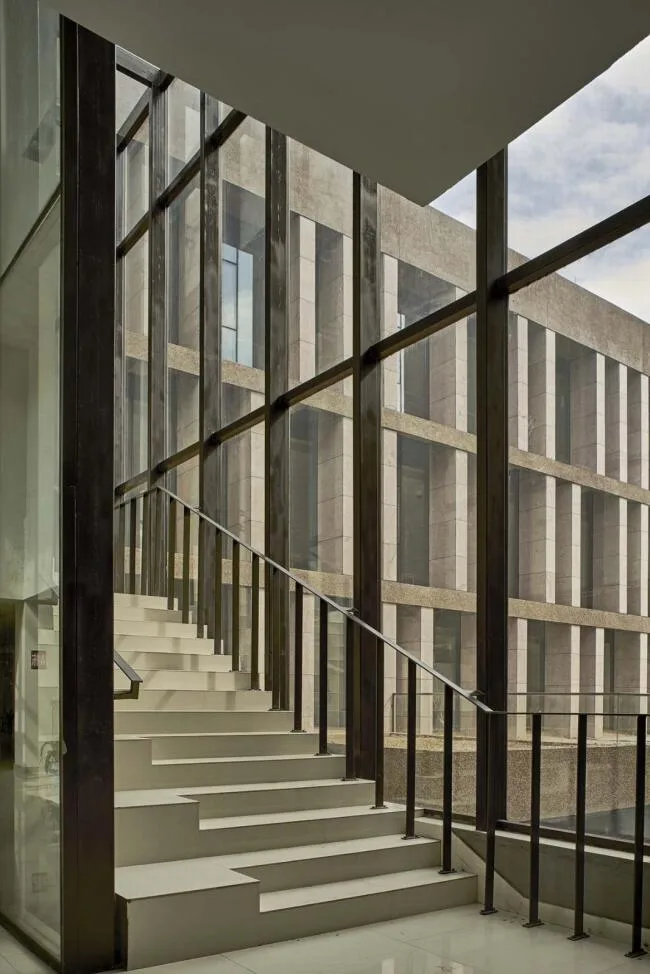
In terms of form, the design avoids emphasizing the structural uniqueness of individual buildings to prevent the campus from becoming a collection of unrelated structures. Instead, it adopts a modular composition strategy, creating alignment, resonance, similarity, and interweaving relationships among units. This coordination ensures consistent scale and uniform form. The use of water-brushed stone on exterior walls unifies the buildings visually. By connecting, lifting, squeezing, cutting, and retreating the building masses, spaces such as platforms, courtyards, corridors, tunnels, and walkways emerge throughout the campus. These spaces encourage social interaction and creativity, transcending their original functional definitions. Additionally, these areas provide shaded zones and air channels, responding positively to the local climate.
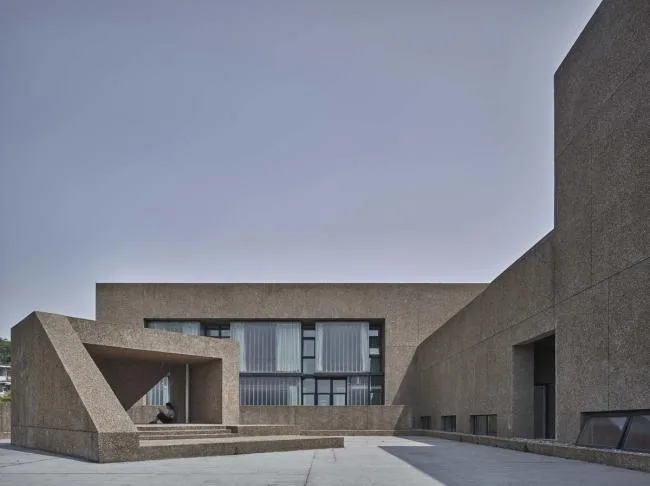
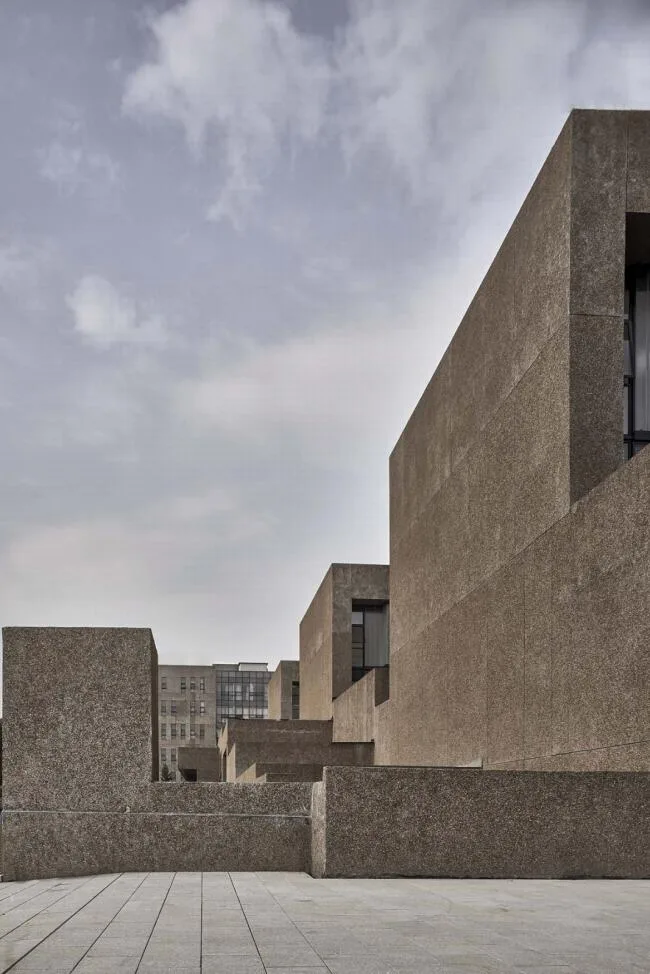
Local design elements also enhance the campus’s ritualistic atmosphere. For example, a linear skylight carved through narrow slit spaces creates mysterious shadow areas; two original large trees are preserved as focal points of the local spatial domain; and some abstract structures have been transformed into “pulpits.”
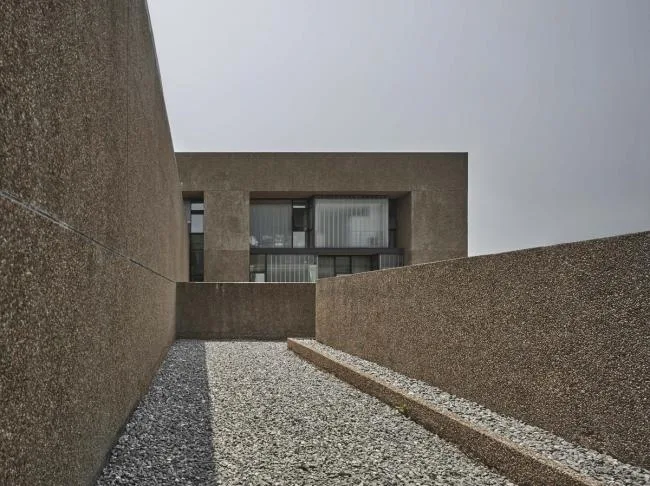
The western edge of the campus borders a busy commercial street and is highly accessible. The design intentionally creates a space that feels somewhat detached and independent from the urban environment. The new campus is envisioned as a place for intellectual cultivation, with its own distinctive style and character. The atmosphere evokes the metaphysical works of Chirico, featuring quiet, distant scenes with closed buildings and strong contrasts of light and shadow.
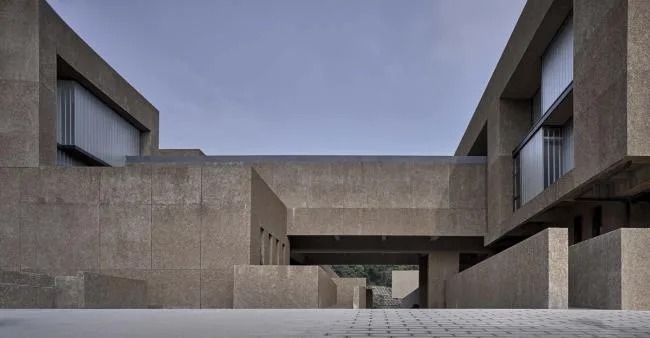
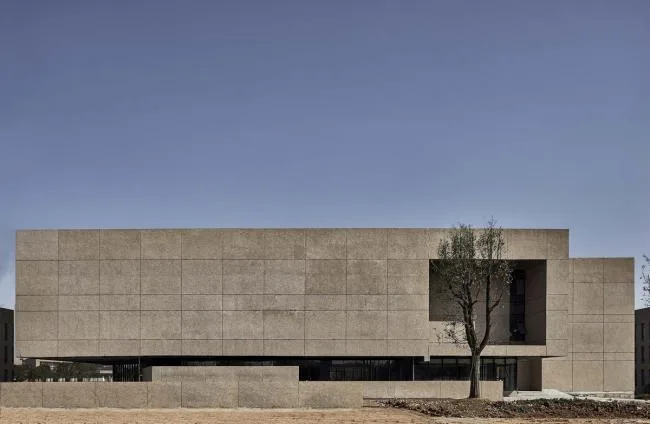
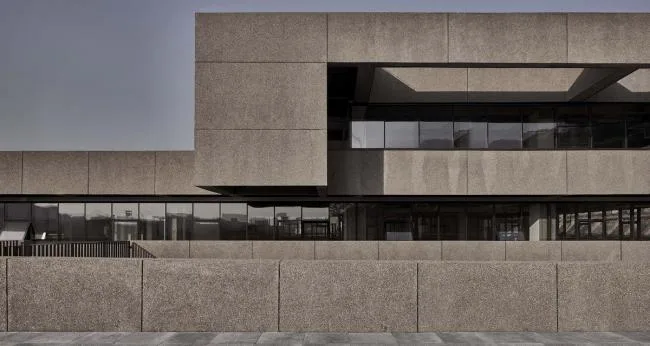
The use of water-brushed stone on the walls reflects respect for historical and cultural heritage. The old campus features buildings that utilize this material, but more importantly, it highlights the unique qualities of the stones themselves and their atmospheric contribution. The natural pebbles, sourced from the Xiang River and meticulously screened by hand, exhibit diverse shapes and subtle color variations within a cohesive palette. Embedded shells, biological debris, and gravel are visible between the stones. These countless micro-expressions create a warm, textured tone under sunlight, emphasizing the building edges and massing throughout the campus. This enveloping effect revives the artistic sensibility reminiscent of Chirico’s paintings.
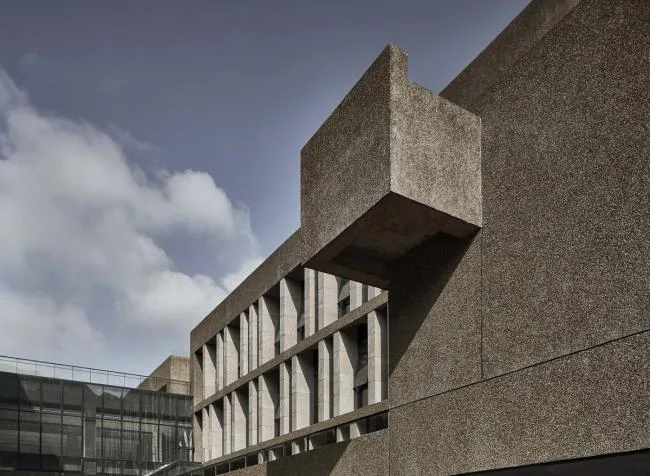
Hunan University Swimming Pool
The concept of community construction extends to the landscape, where buildings and the surrounding earth and mountains embed into each other. Architecture grows from the land and becomes an extension of it, blurring the boundary between built environment and natural landscape, evoking a raw and primitive aesthetic. The swimming pool, for example, is located at the intersection of the slope and flat land at Tianma Mountain’s base, shaped to follow the terrain.
The main entrance area’s form aligns with the mountain’s incline, featuring layered rock formations on the slope. Large outdoor steps create natural pathways, defining spatial flow and clarifying the relationship between the building and its surroundings. The main structure appears to float in the air, serving as the visual and spatial center, resembling a square box extending from the mountain. This contrast emphasizes the architectural tension typical of sports facilities.
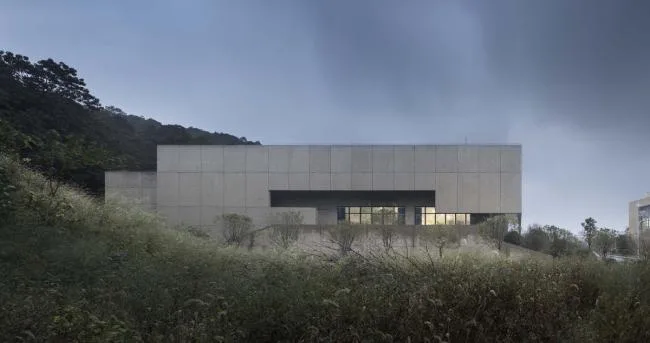
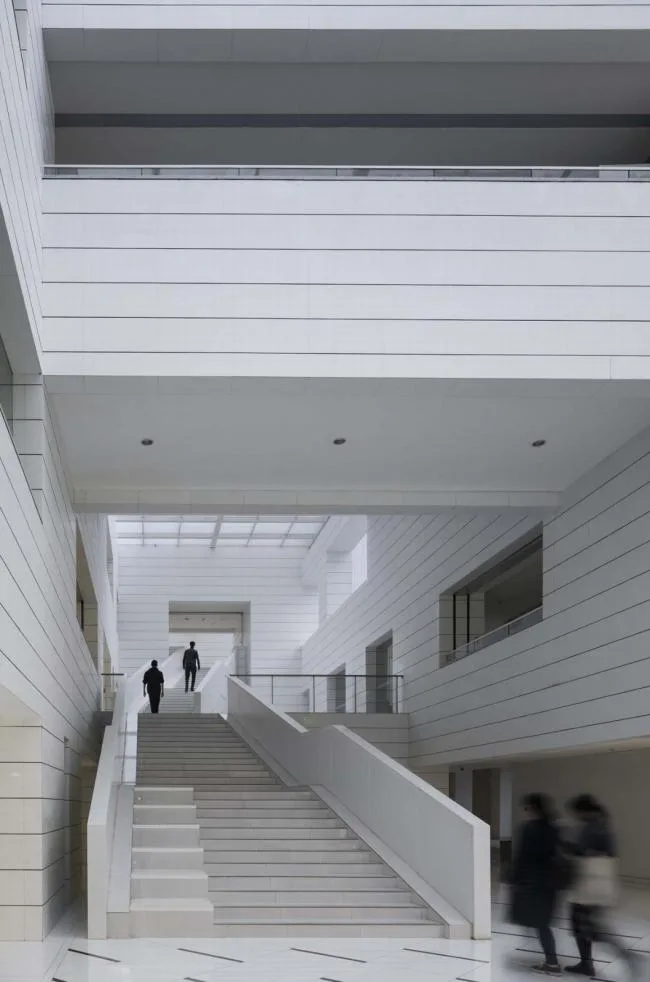
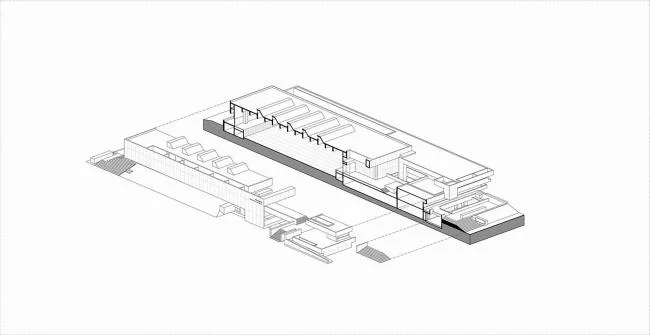
▲ Swimming Pool – Form Development
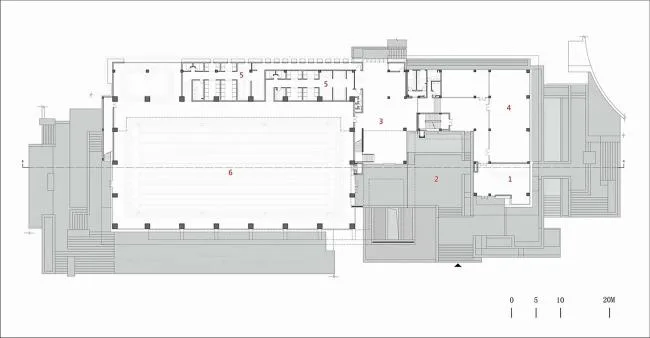
▲ Swimming Pool – First Floor Plan
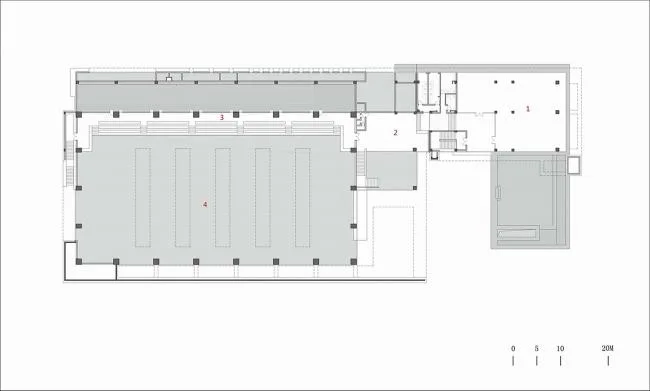
▲ Swimming Pool – Second Floor Plan
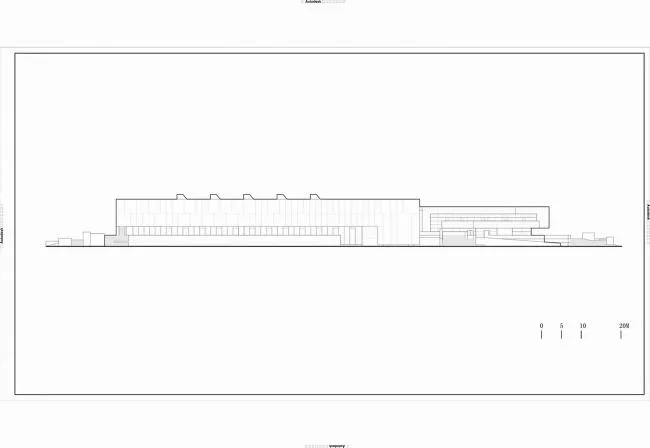
▲ Swimming Pool – Front View
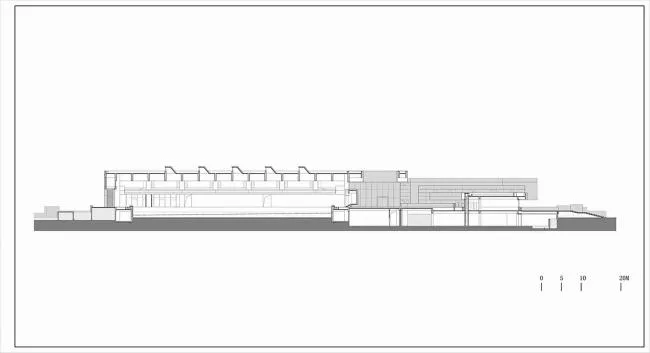
▲ Swimming Pool – Section
Hunan University Science and Engineering Building
The building’s form was derived by changing the typical combination of functional blocks and focusing on their inherent spatial relationships. This creates an integrated cluster that includes urban space, teaching zones, unit spaces, transportation paths, and visual corridors. The design strengthens linear spatial features with continuous modular units to enhance a “deep perspective” effect, reminiscent of Cherokee style, increasing the sense of depth.
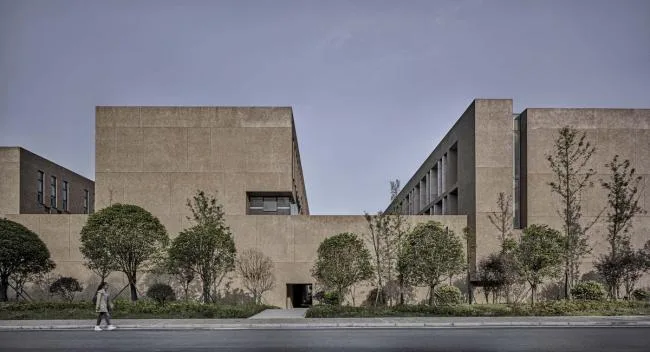
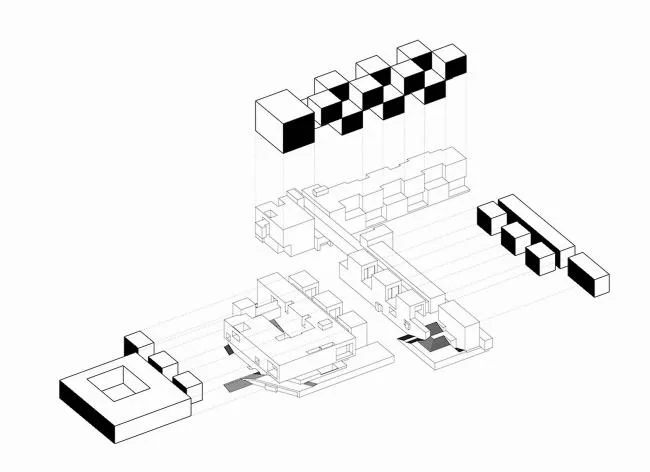
▲ Science and Engineering Building – Form Development
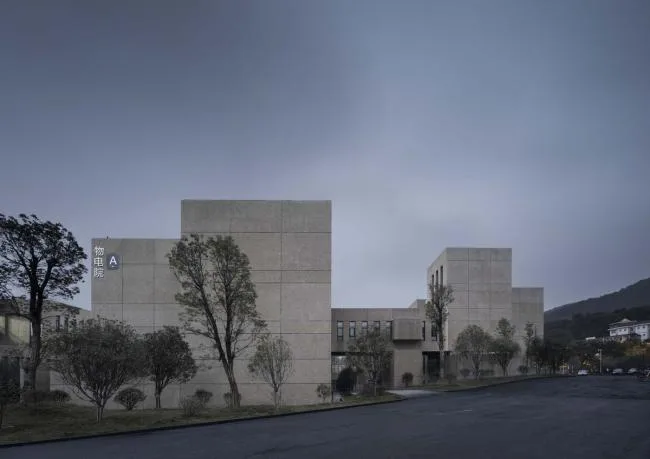
The design reconstructs the deep perspective street scenes found in Chekhov’s paintings, creating a sense of emptiness between buildings. Through simple arrangements and logic, it evokes a profound atmosphere with historical depth. In the science and engineering complex, Buildings A and B (School of Physics and Microelectronics) stand staggered opposite each other, resembling silent stone statues. Between them lies a long corridor aligned towards Building C (School of Mathematics), whose end appears to hang like a bent arm.
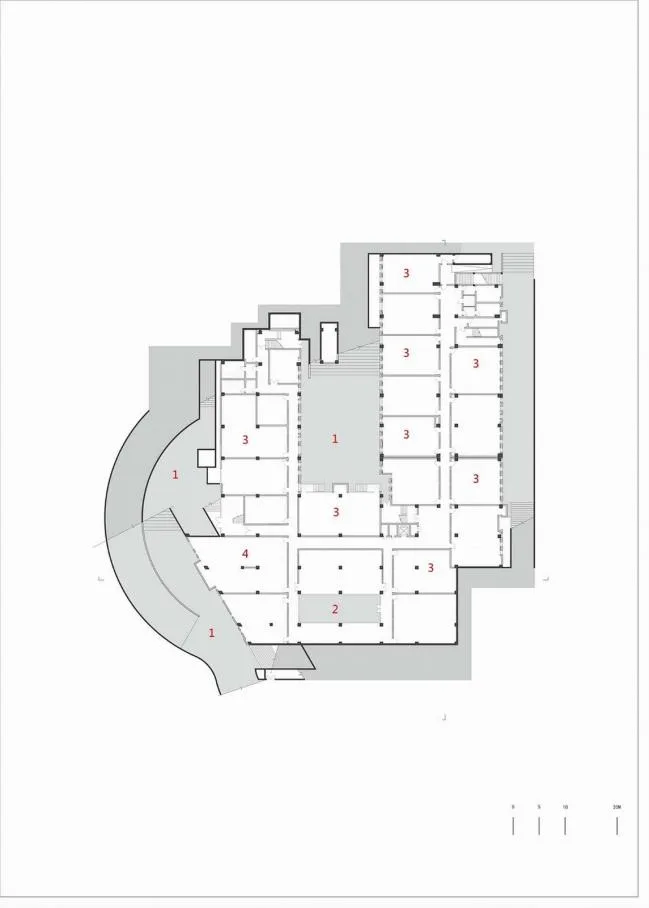
▲ Building A – First Floor Plan
▲ Building A – Facade
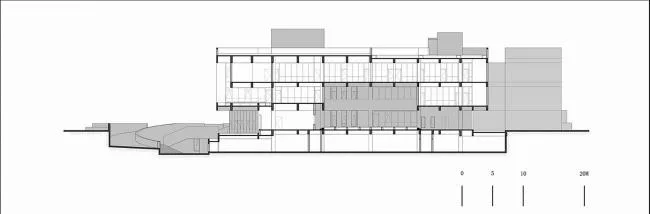
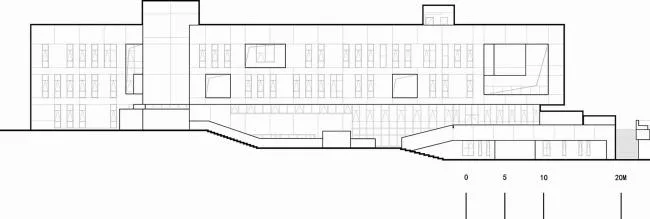
▲ Building A – Section
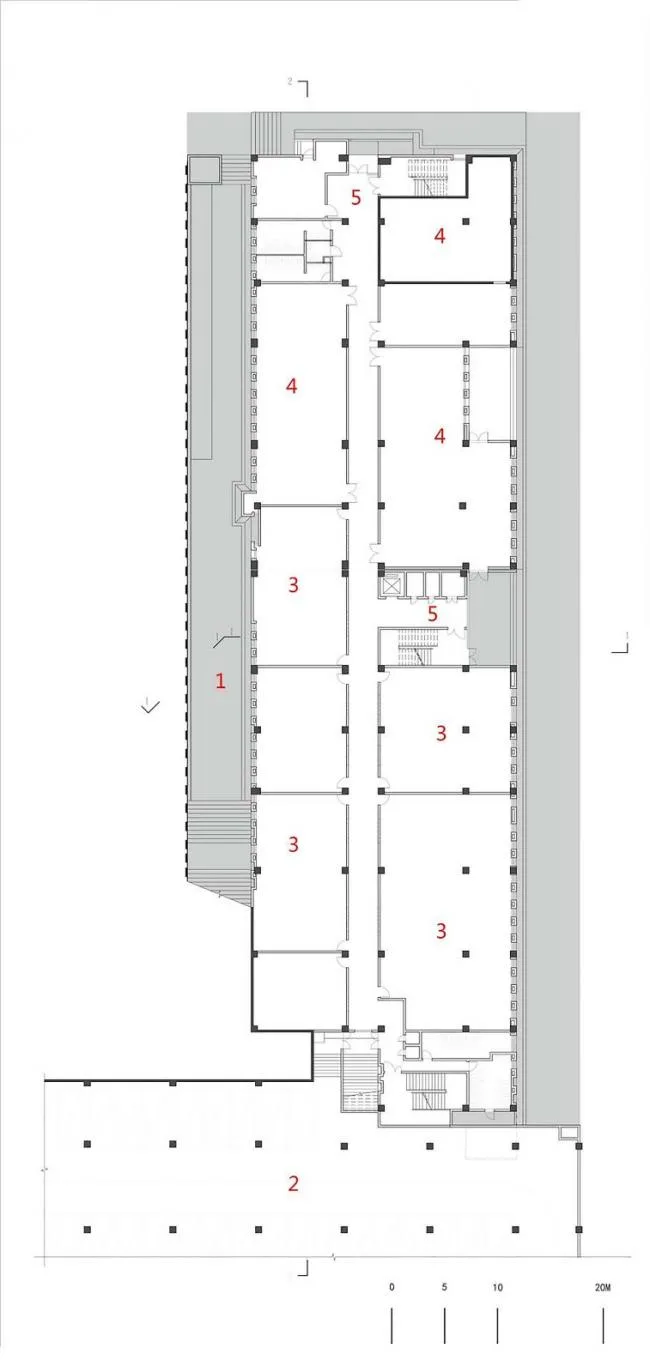
▲ Building B – First Floor Plan
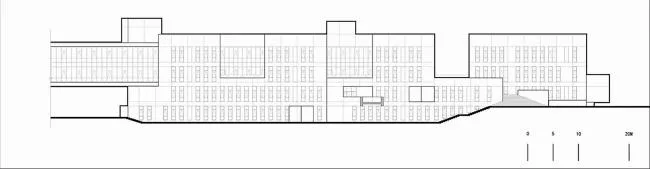
▲ Building B – Facade
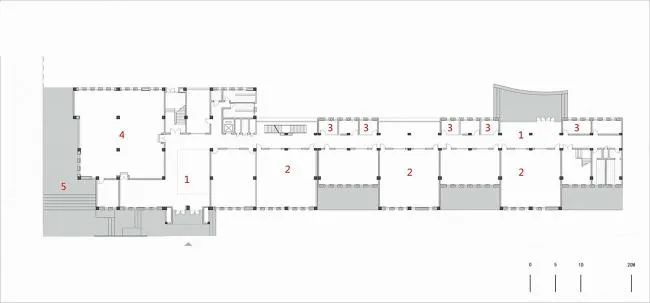
▲ Building C – First Floor Plan (BIM)
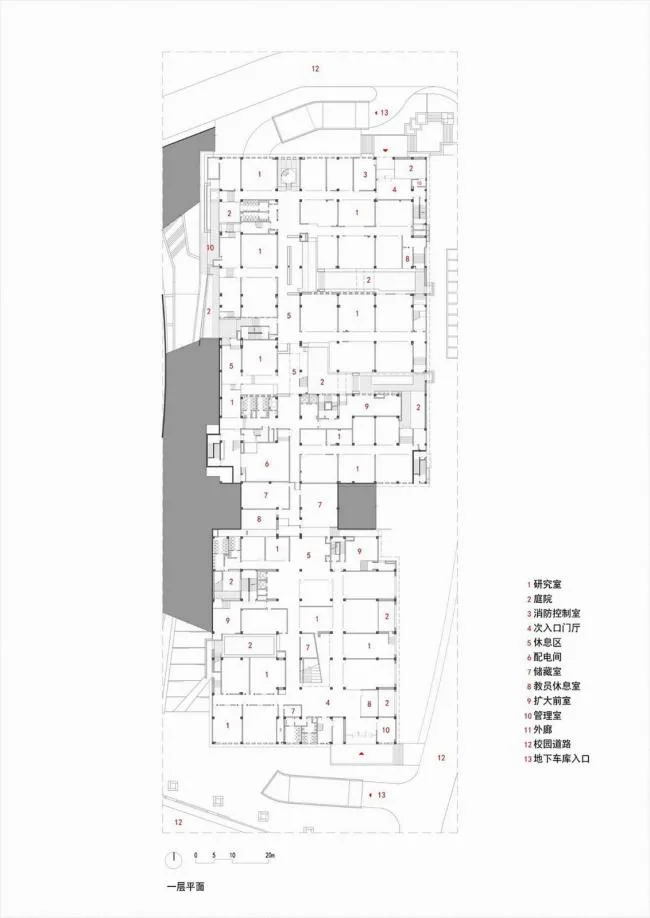
▲ First floor plan
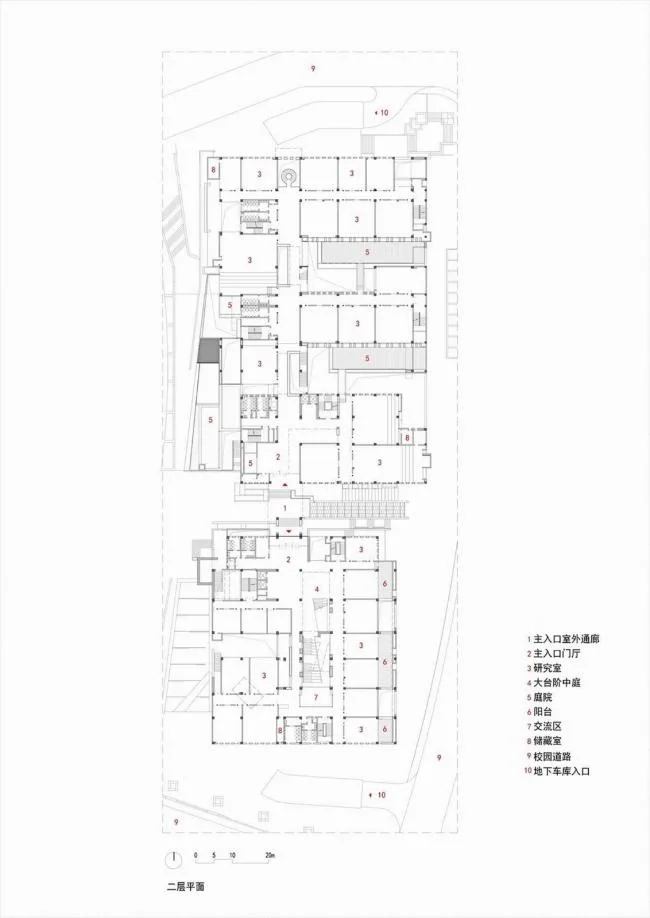
▲ Second floor plan
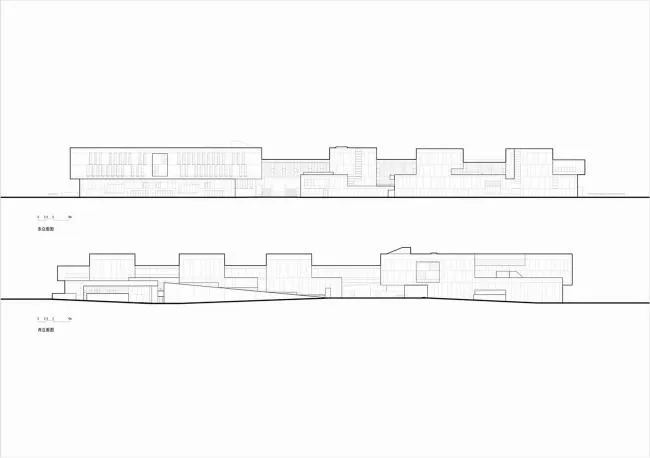
▲ East-West Facade
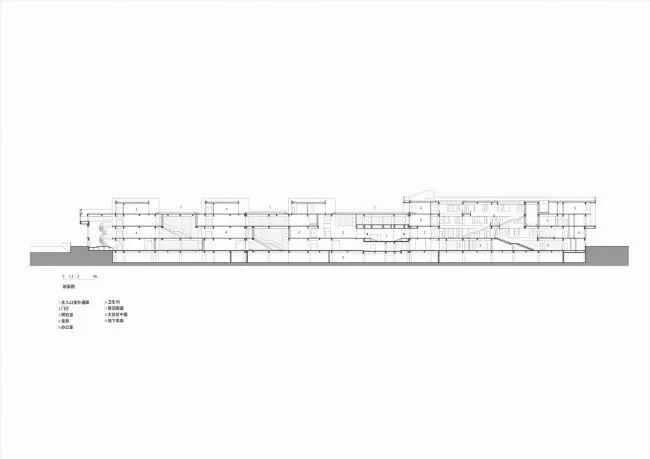
▲ Section
Project Information:
Architectural Firm: Local Studio
Location: Changsha City, Hunan Province, China
Category: University
Graduate School Design Team: Wei Chunyu, Li Xu, Wu Shuai, Liu Haili, Chen Tianyi, Qin Liyi, Lu Jing, Liu Jingqi, Fu Chaoyun, Wang Jicheng
Science and Engineering Building Design Team: Wei Chunyu, Song Mingxing, Li Xu, Zhang Guang, Shen Xin, Ouyang Sushu, Li Yaxia, Xiong Dandan, Zhang Wenya
Swimming Pool Design Team: Wei Chunyu, Huang Bin, Gu Ziwei, Peng Jun, Lv Chang, Zhou Rui, Jiang Kangning
Structural and Electromechanical: Hunan University Design and Research Institute Co., Ltd.
Landscape Design: Xiong Jinbin
Building Area: 29,012.1 square meters
Project Completion Year: 2016
Photography: Digital Photography Studio, Yao Li












Must log in before commenting!
Sign Up