
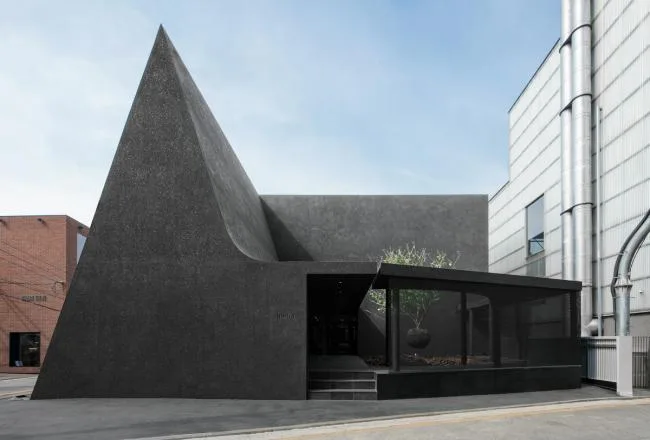
The Juun. J flagship store is the brand’s first, spanning two floors. The ground floor features a café alongside women’s apparel, while the second floor is dedicated to men’s clothing. The design incorporates natural elements such as light and shadow, expressed through the brand’s signature color—black.
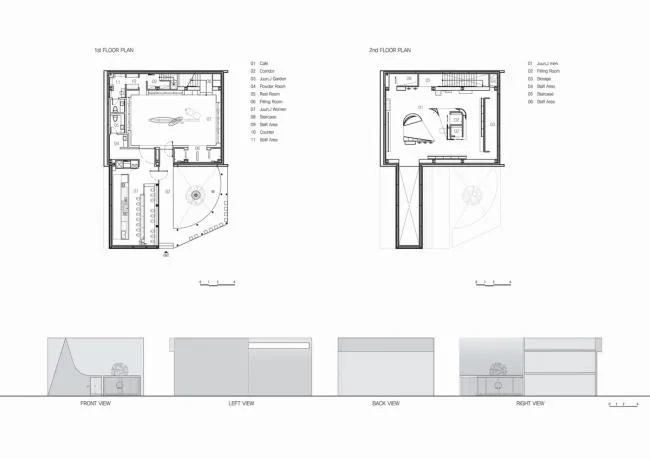
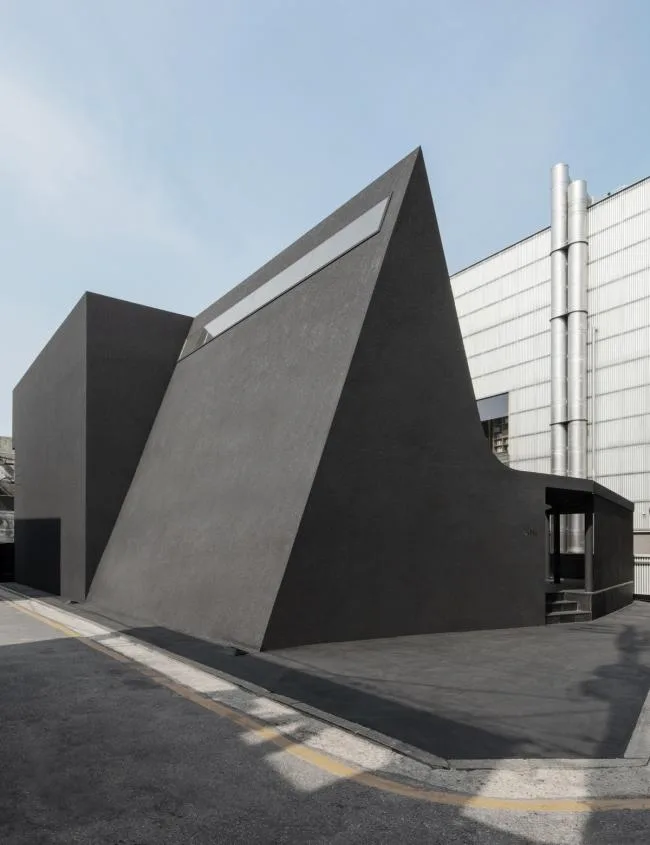
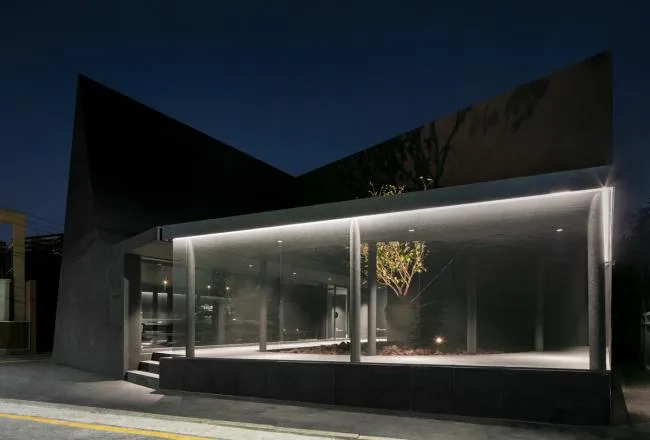
The architecture begins with the fundamental design principle of geometry. Juun. J’s flagship store embodies a form that resembles a shadow—shapeless yet distinct—reflecting the brand’s mysterious allure. Black symbolizes Juun. J, like a shadow detached from tangible existence.
Traditional Eastern architecture often features large roof tiles atop structures, creating deep, expansive shadows through sunshades. Similarly, this design embraces darkness and shadow as key elements in defining space.
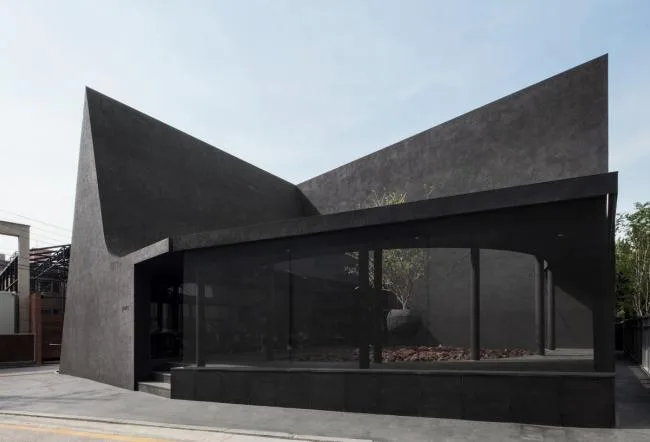
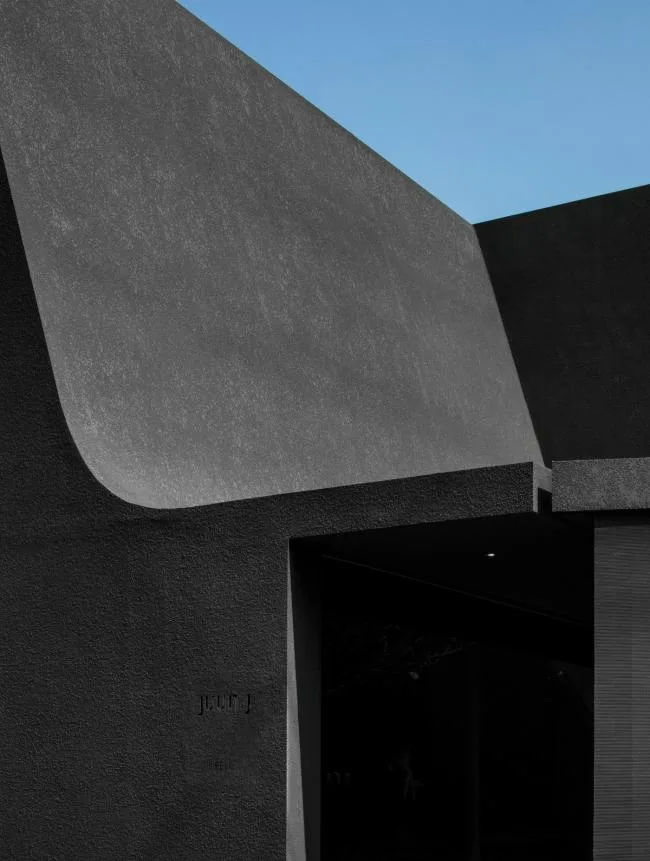
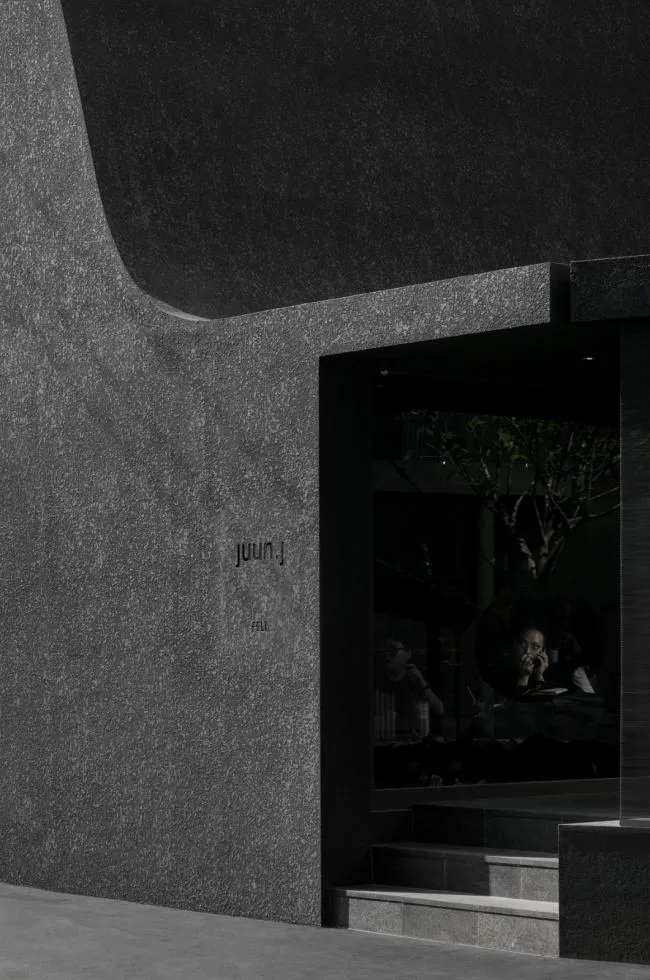
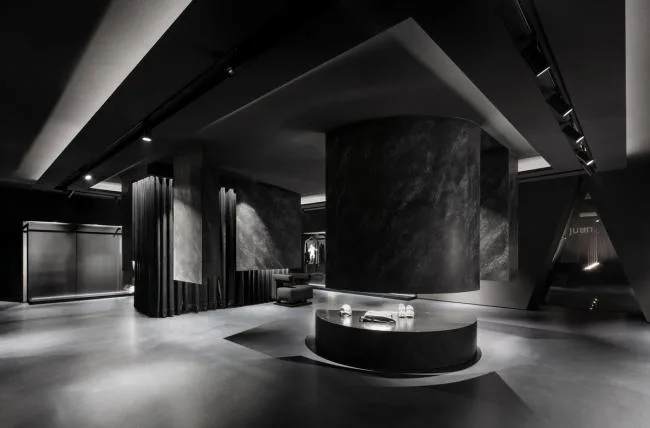
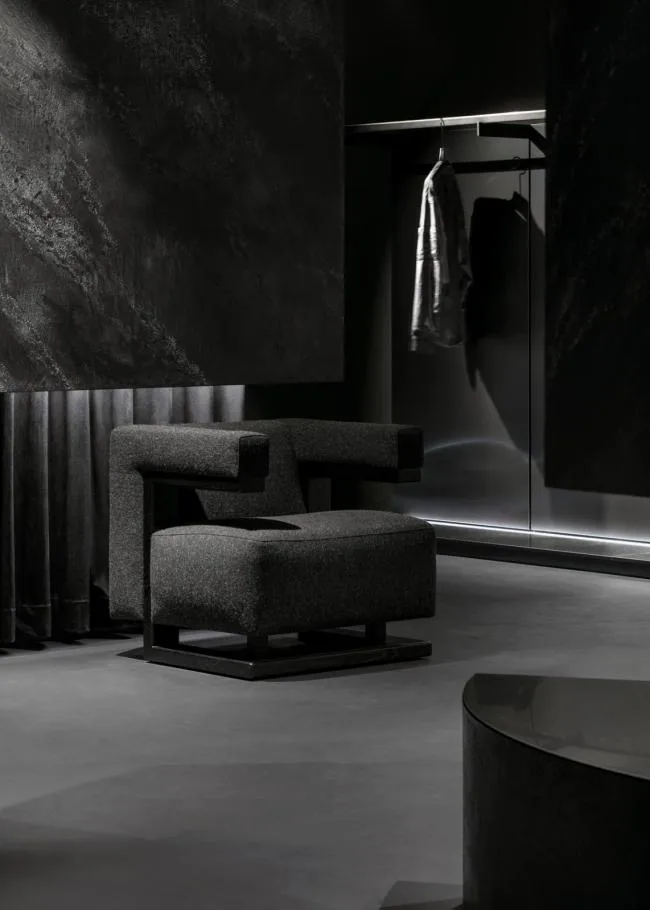
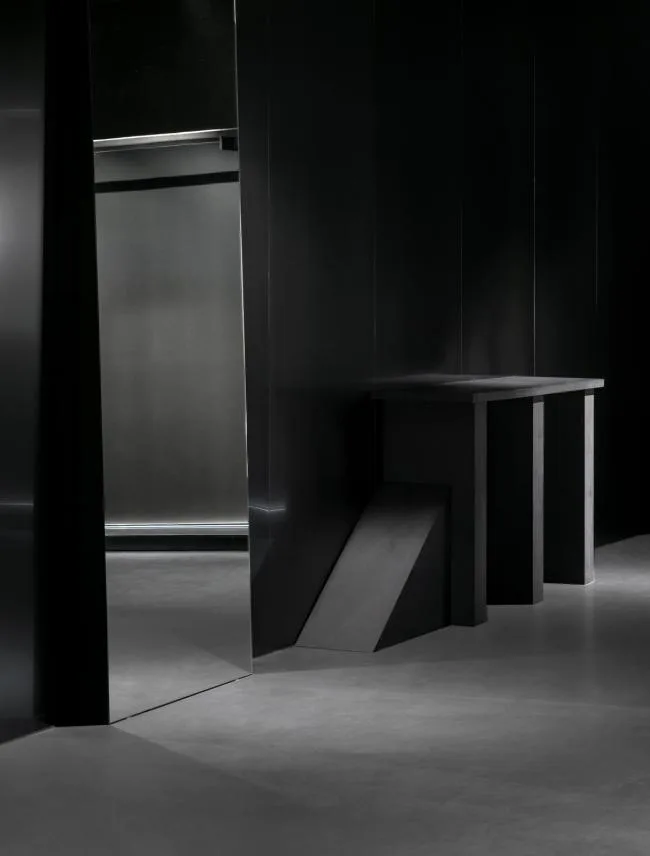
Much like the pitch-black space beneath a sunshade, the store’s interior uses darkness to shape the environment. Shadows are created by suspending numerous objects or partitioning the space, forming areas of varying densities of black.
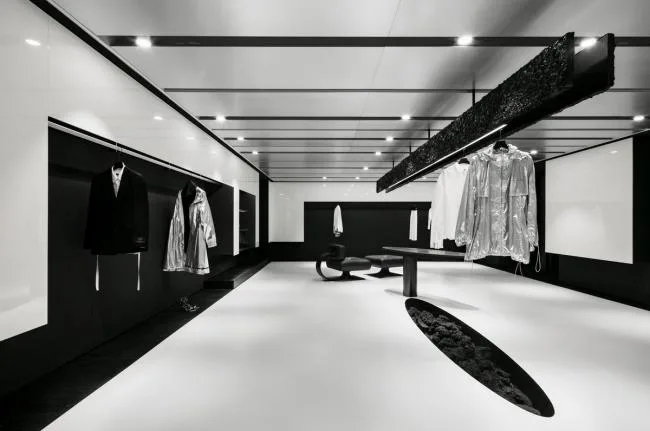
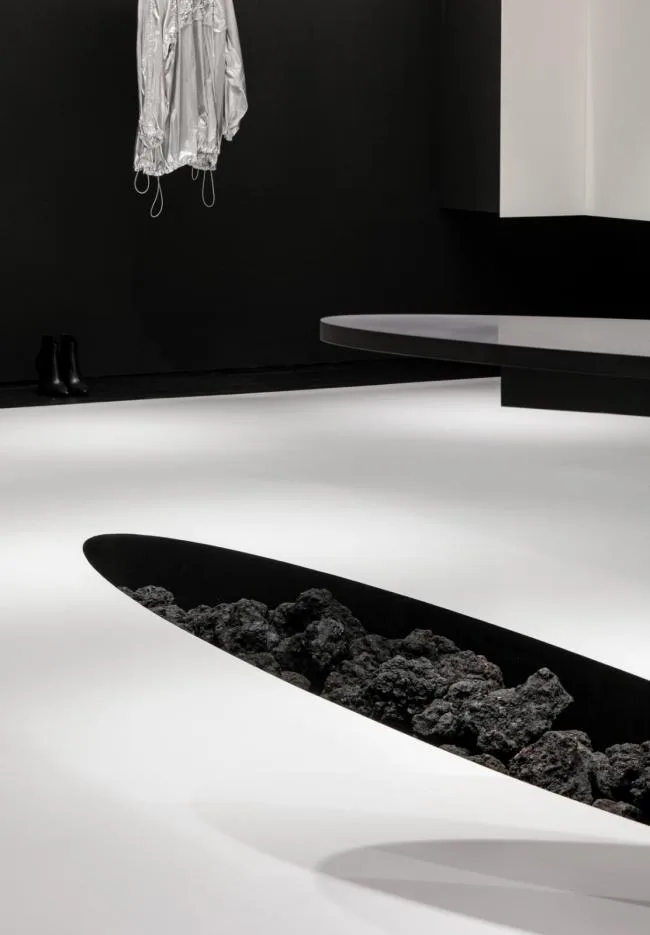
Except for the white section dedicated to women’s clothing on the first floor, all other areas are enveloped in darkness. Even the clothing in these spaces hangs within the shadows, emphasizing the contrast while maintaining a cohesive ambiance.
(BIM)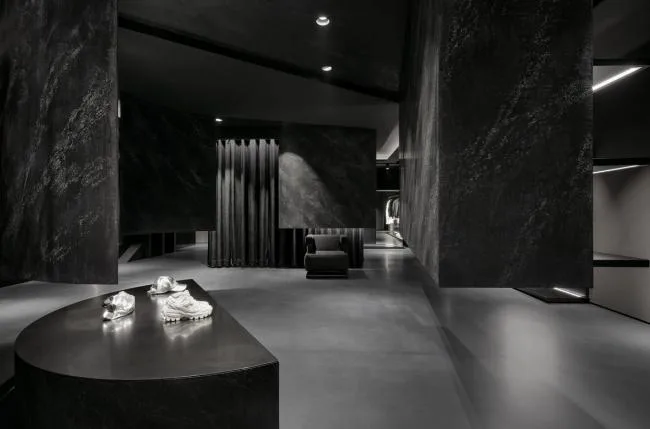
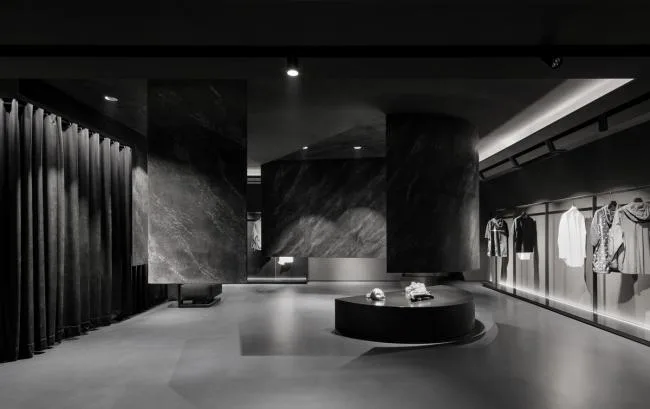
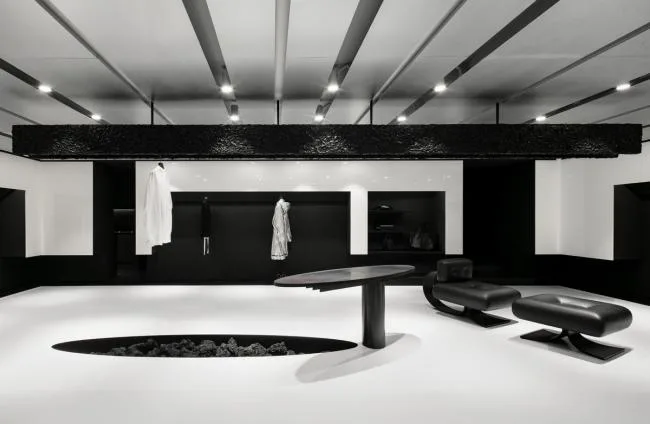
Natural light dramatically filters through the ceiling of the café, creating varying shades of darkness within the space. The extended eaves act as sunshades, allowing visitors to experience reflected light from the garden outside, where shadows of trees can be seen.
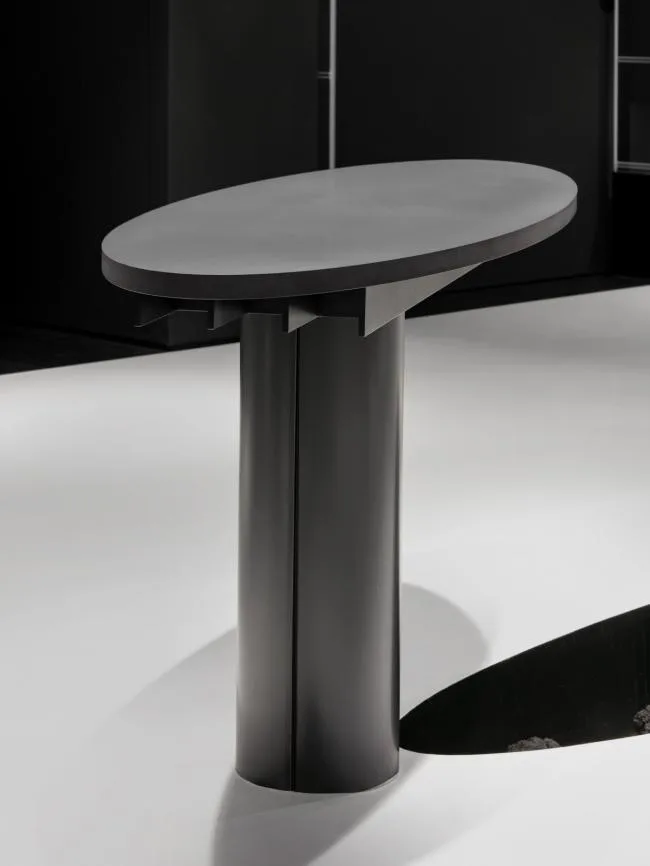
The architectural design is based on basic geometric shapes—circles, quadrilaterals, and triangles—drawing inspiration from the concept of dark matter in the universe.
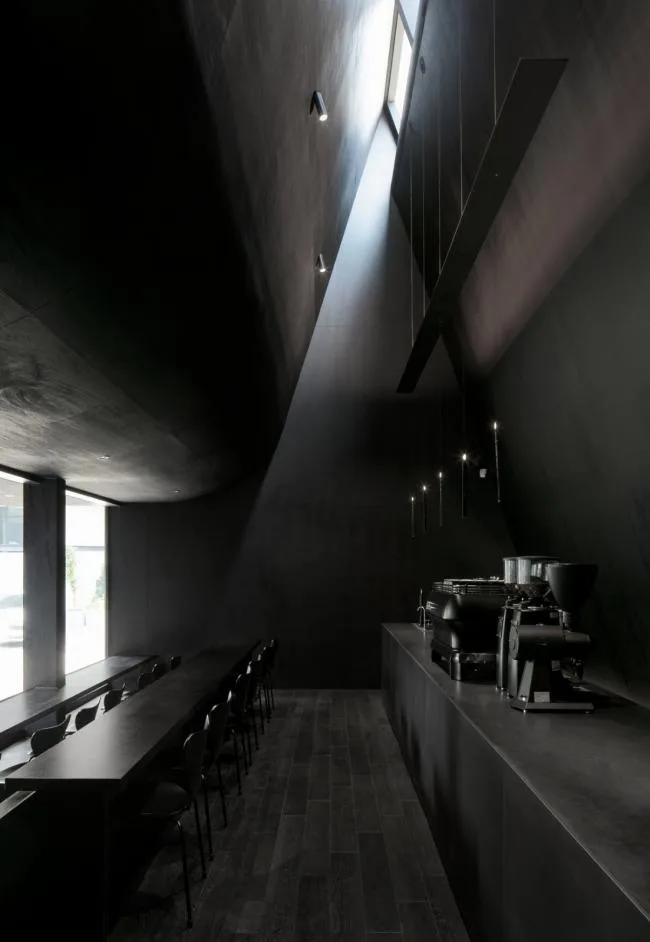
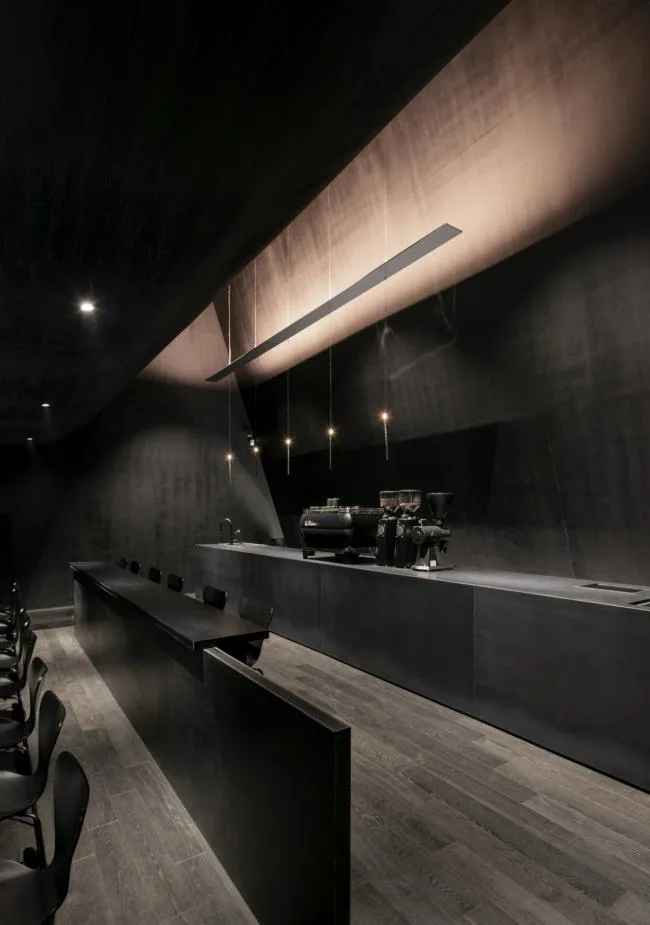
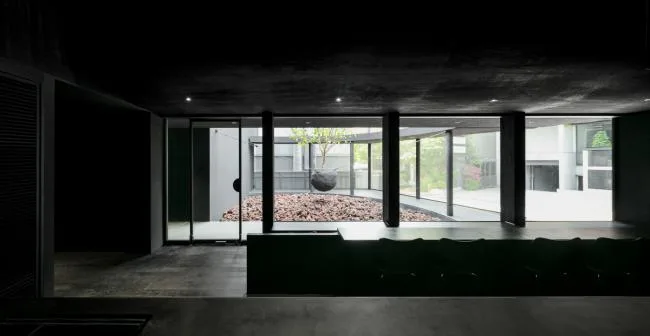
Notably, the circular garden serves as a natural light absorber, creating a striking contrast with the surrounding dark matter-themed architecture. This design concept blends Eastern philosophical influences with Western spatial structure and form.
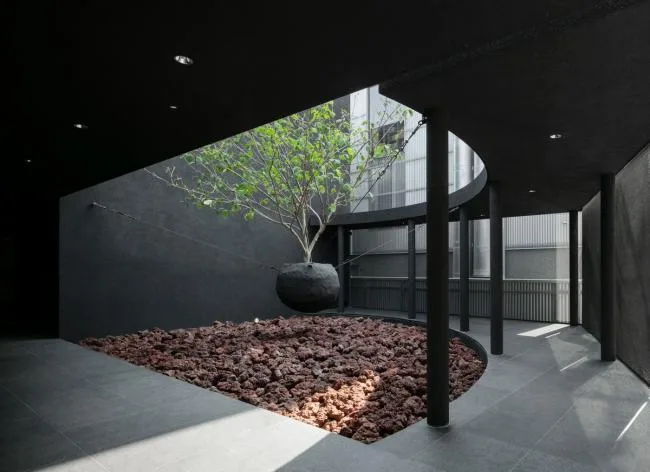
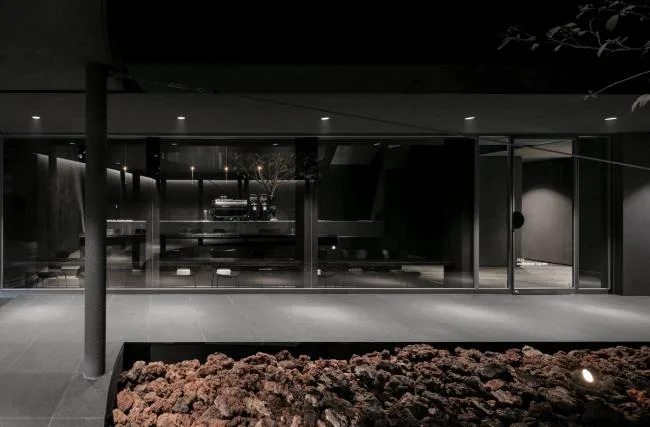
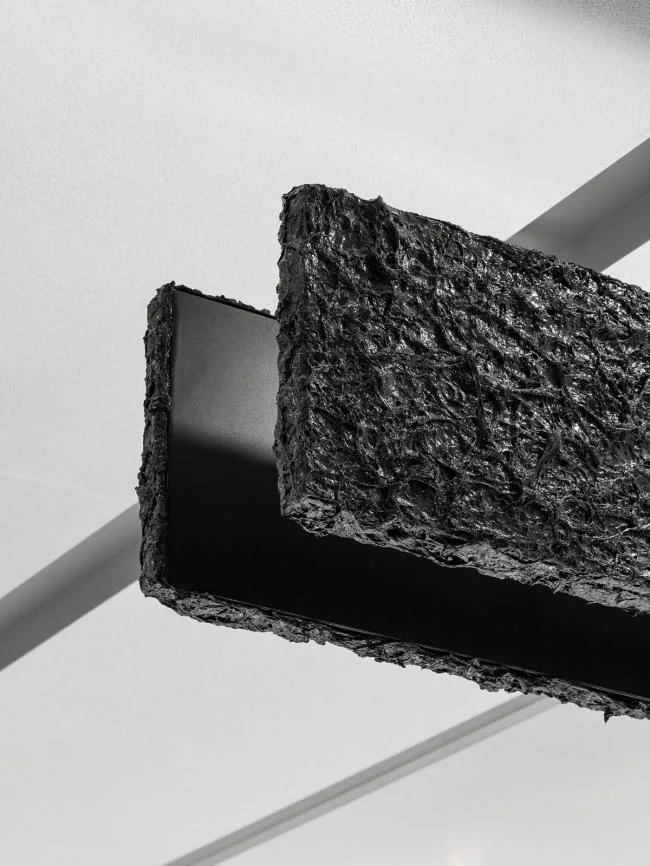
Rather than simply painting surfaces black, the design expresses black as a non-color—darkness itself—within the space. This effect is achieved by leveraging the inherent textures and qualities of materials, rather than relying on black paint alone.
Project Information:
Architectural Firm: (BIM Tutorial) WGNB
Location: Seoul, South Korea
Lead Architect: Jonghwan Baek
Building Area: 396.0 m²
Year Completed: 2019
Photographer: Yongjoon Choi
Manufacturers: TERRACO, Autodesk, Trimble, Unicor International
Client: Juun. J












Must log in before commenting!
Sign Up