
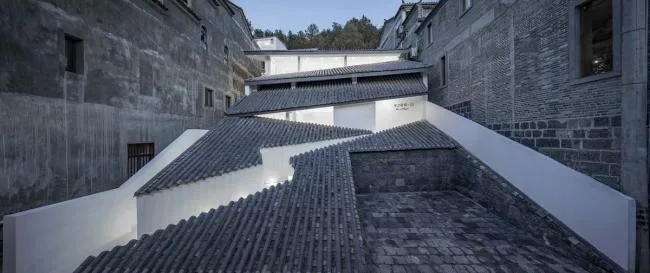
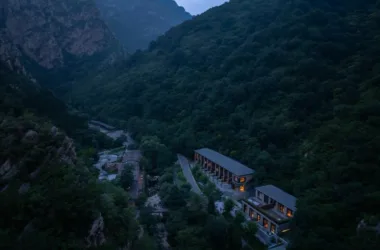
▲ A three-dimensional facade that harmoniously blends architecture with mountains and forests
“Anzhi Ruoshu Mountain” is a cutting-edge boutique homestay nestled in Heshun Ancient Town, Tengchong. It is situated along a complex old street extending from the ancient town, occupying a narrow, winding mountainside and a mountaintop plot forming an inverted L-shape. The two ends of the site contrast sharply: one lies in the bustling urban area, while the other is hidden among the clouds. Between them is a narrow slope with dramatic changes in direction and elevation, creating weak inter-regional connections and presenting significant architectural challenges.
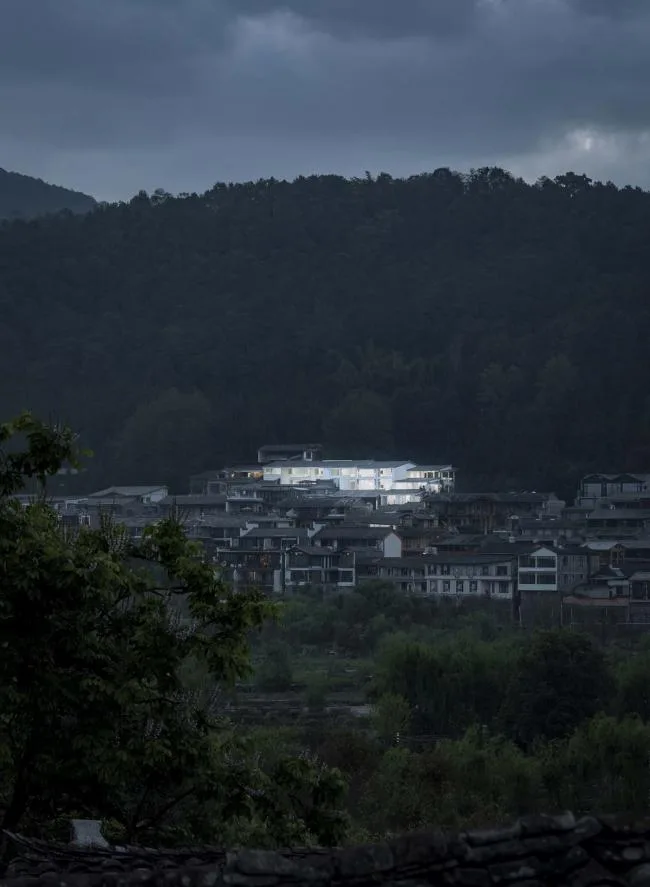
▲ A distant view into the ancient town, showcasing a dynamic three-dimensional facade that merges urban architecture with natural mountains and forests
In response to the fierce competition along the street, the design adopts a detached approach: the entrance is discreet, the facade is dissolved, and the concept of the roof’s “existence” is redefined. The building ascends the hillside, with the roof covering the slope and folding upward along the natural line of sight. This opens up the previously hidden mountains and forests behind the settlement, creating a new three-dimensional facade alongside neighboring buildings.
This facade evokes the layered landscapes found in Chinese Song Dynasty paintings, reminiscent of Fan Kuan’s “Travelers Among Mountains and Streams.” Instead of serving as a mere boundary wall, the collapsed facade transforms into a street courtyard—a social space where people can gather, converse, and take photos. The once narrow street flow is instantly revitalized, reintroducing social themes and reconnecting the veins of the ancient town’s neighborhoods and alleys.
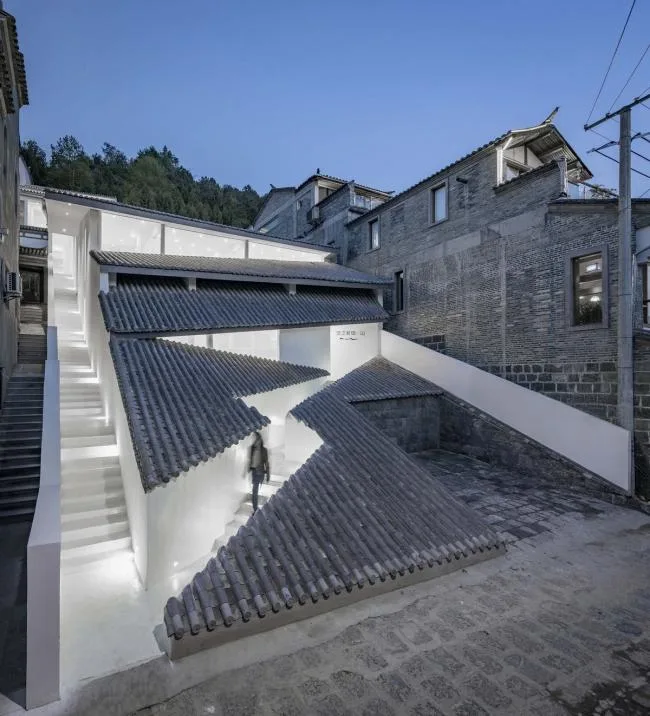
The dissolved facade redefines the concept of the roof’s “existence.”
The subtle entrance, nestled between the eaves and the ground of “An Zhi Ru Su Shan,” invites visitors into an “alternative world” realized through BIM technology. Here, boundaries between roof, walls, facade, and floor blur, creating a space that feels like an open “field” rather than a conventional “room” segmented by beams and columns.
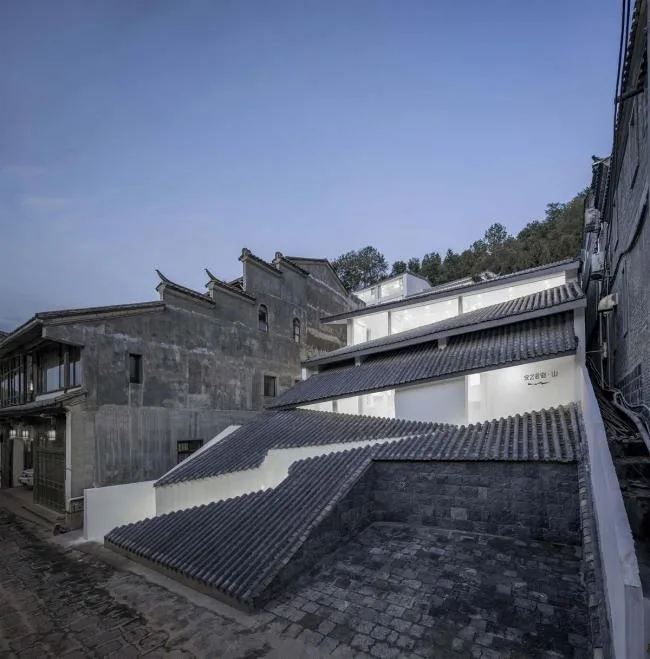
▲ Micro opening at the entrance between eaves and ground
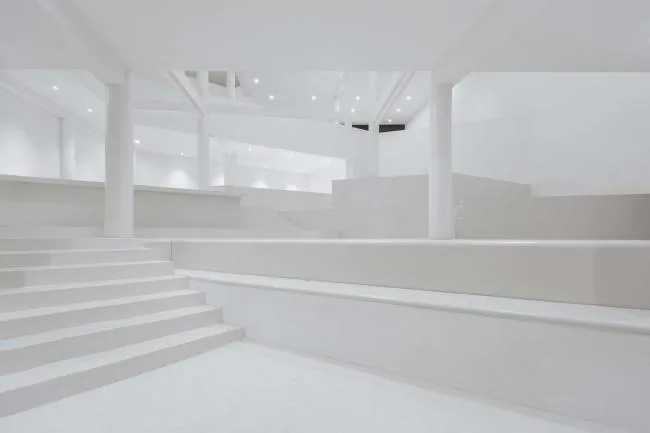
The first turning point inside the restaurant introduces the concept of “field.”
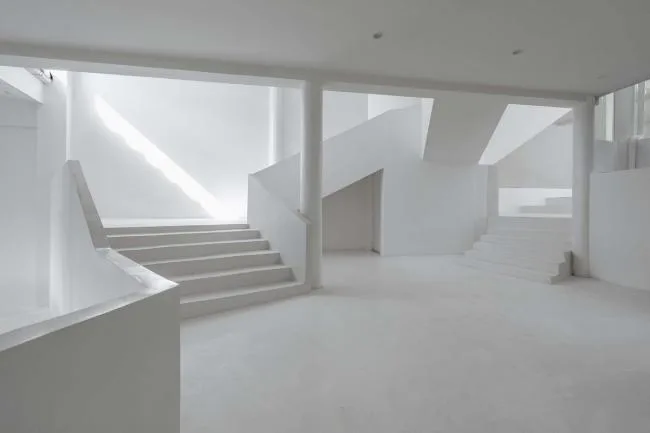
The space is designed as a “field,” not confined by traditional beams and columns into segmented rooms.
Functions and circulation within the building follow the natural slope, including restaurants, bars, performance areas, tea tables, reading spaces, and cultural activities arranged vertically along the terrain. Time becomes part of this “field,” with ongoing interactions and dynamic activity scenes.
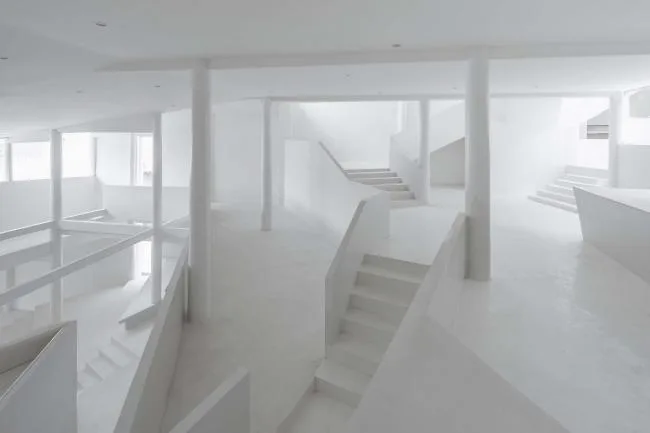
▲ Public areas arranged sequentially along the terrain
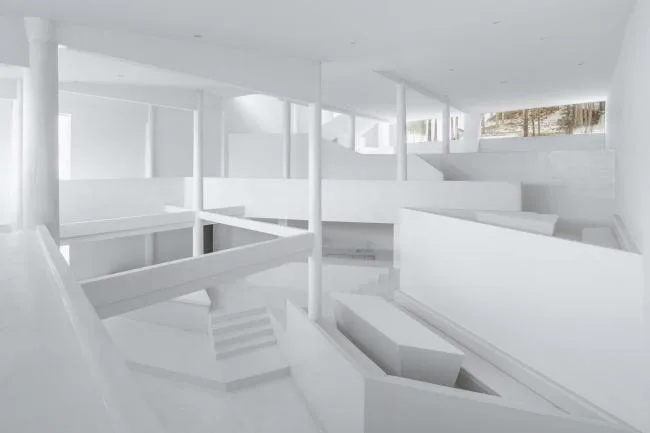
▲ Public spaces extend along the mountain, connected vertically with pedestrian pathways
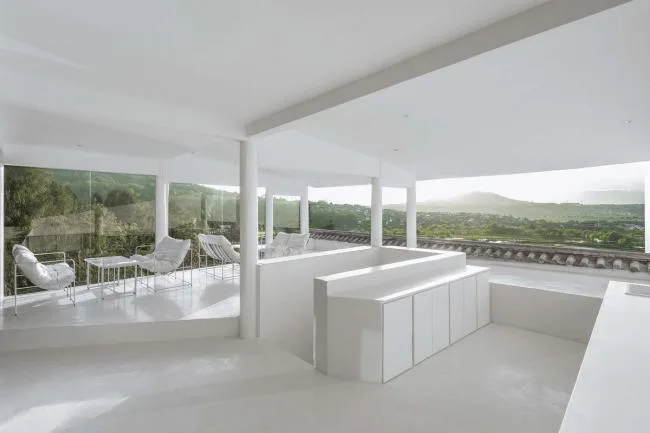
▲ Public area extends to the tea room at the summit, offering panoramic views of Heshun Ancient Town
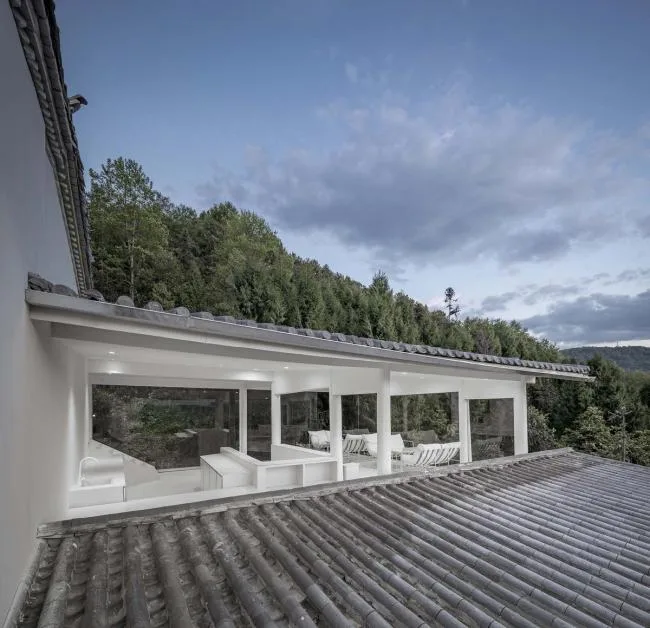
▲ Tea pavilion located at the top of the public area
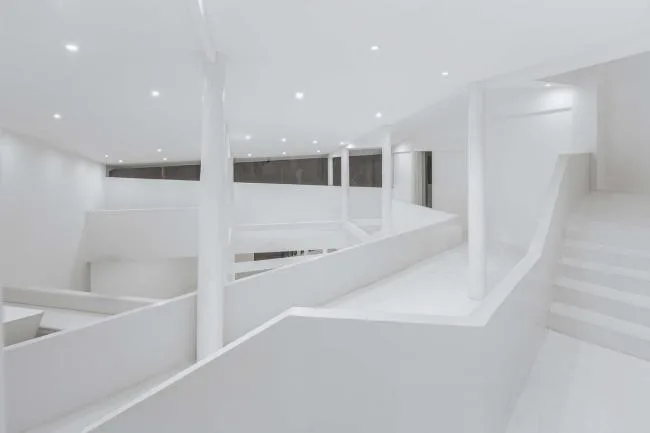
▲ Time is integrated into the spatial “field”
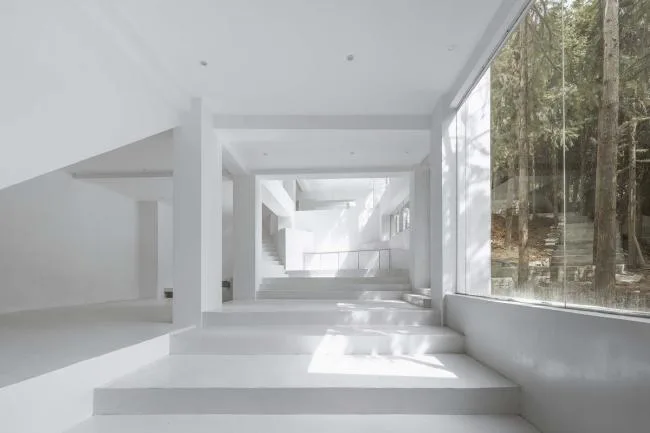
Activity scenes continuously unfold and interact dynamically.
To address the 20-meter height difference across the site, a “ladder” with 133 steps connects the streets and alleys to the clouds above. This pathway creates a clear, ritualistic experience for visitors ascending the mountain. More importantly, the ladder acts as a core link between the horizontal and vertical zones, enhancing the overall connectivity and coherence of the site.
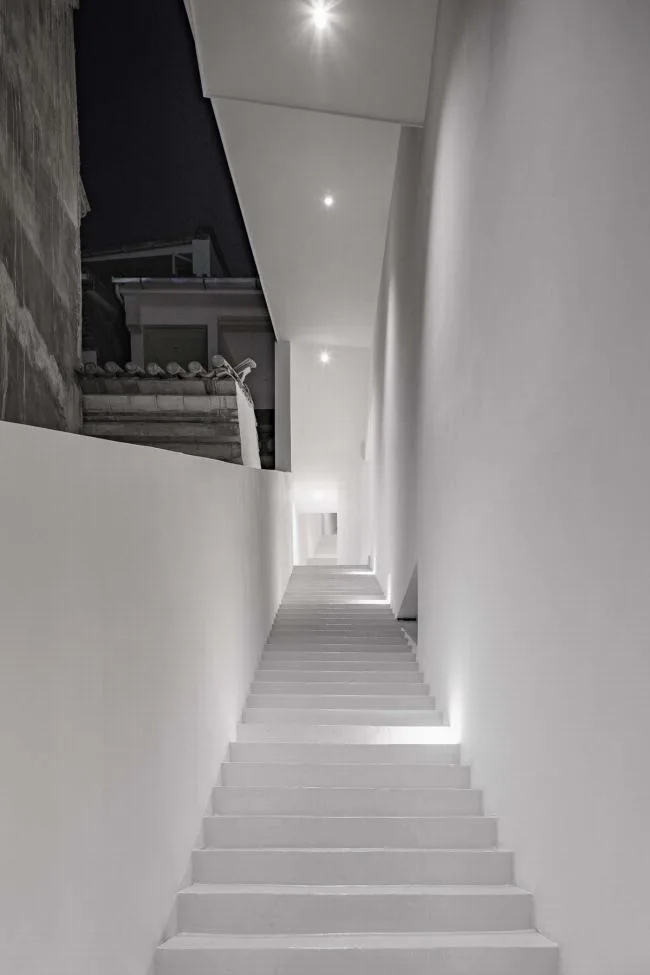
▲ The ladder ascends continuously with a total of 133 steps
At the top of the ladder, a “flying corridor” weaves through the mountains and forests, suspending the path back to the mountain retreat. The interplay of light and shadow resembles a mountain stream, embodying the natural spirit of the surrounding landscape.
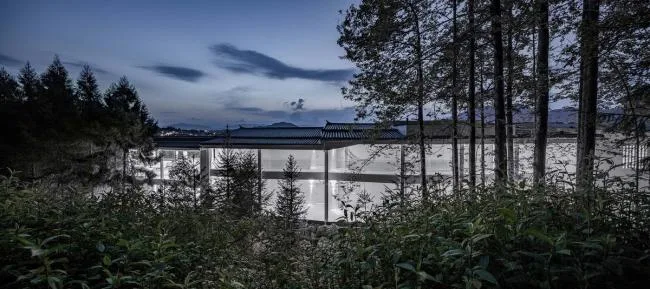
▲ Distant view of the flying corridor
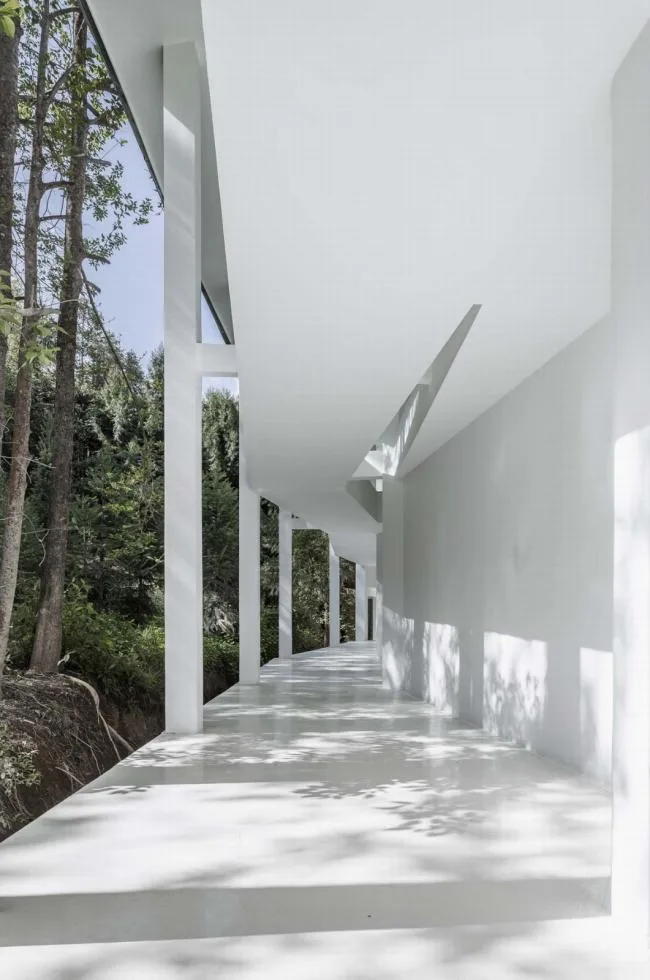
The “flying corridor” suspends the return path to the mountain retreat.
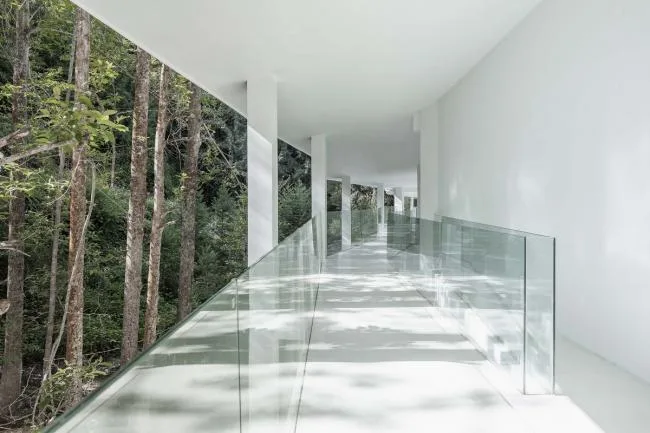
The shifting light and shadow in the flying corridor evoke a flowing mountain stream.
The 15 guest rooms at “An Zhi Ru Su · Shan” employ 2.5-dimensional architectural techniques to navigate complex spatial relationships and optimize views. Inside each room, the geometric extension of walls and low-profile furniture guide the eye toward the ever-changing outdoor scenery visible through the windows.
The interplay of angled walls, beds, and bathtubs directs movement and sightlines, capturing multidimensional views and memories.
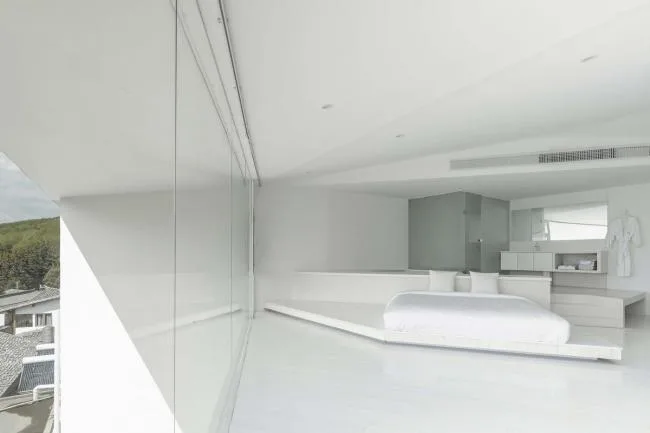
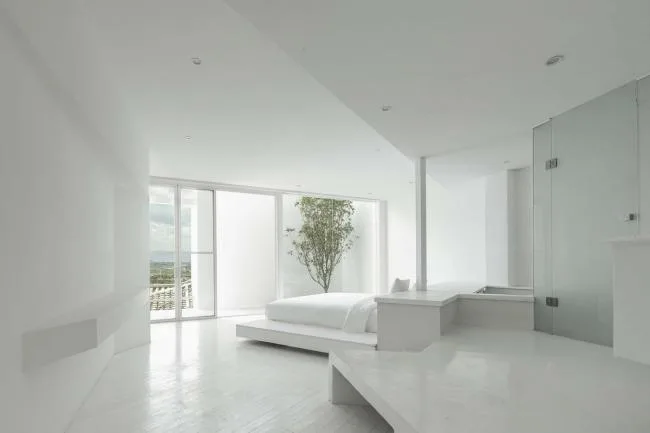
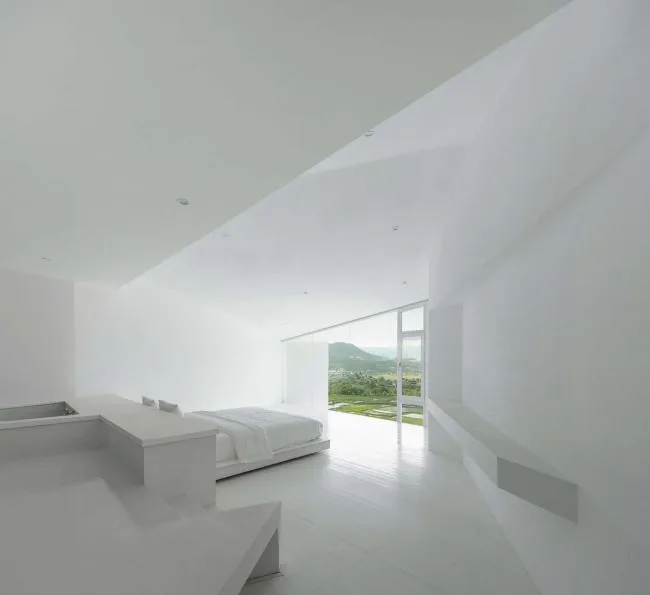
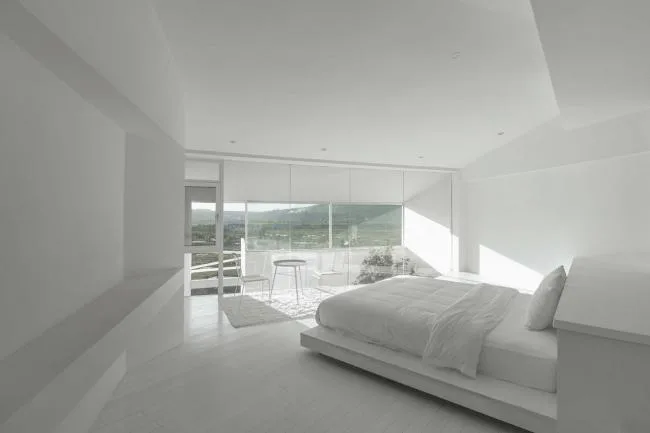
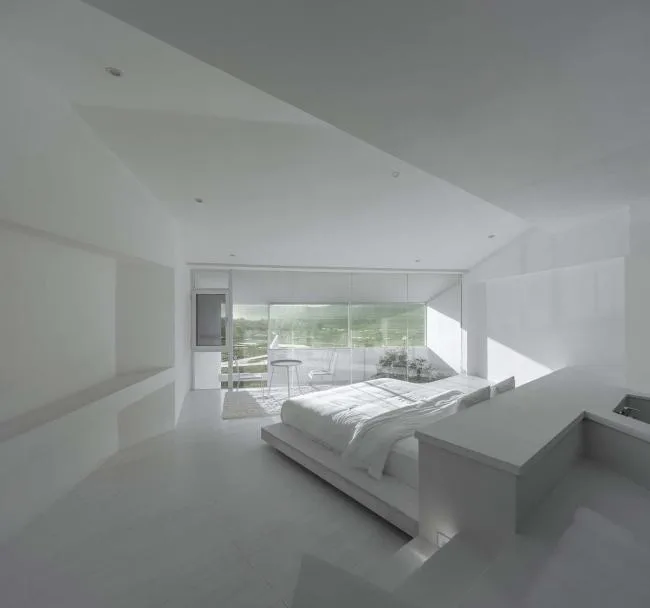
▲ Guest rooms that utilize 2.5-dimensional architectural techniques to navigate complex spatial relationships
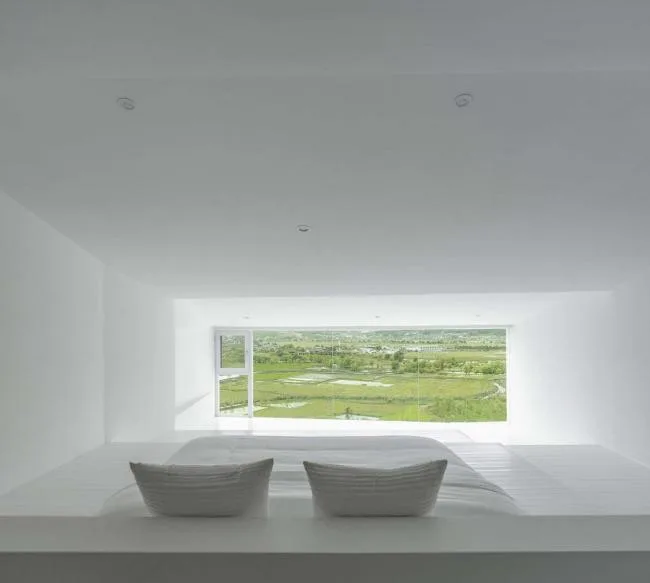
▲ Guest rooms designed to capture the best possible landscape views
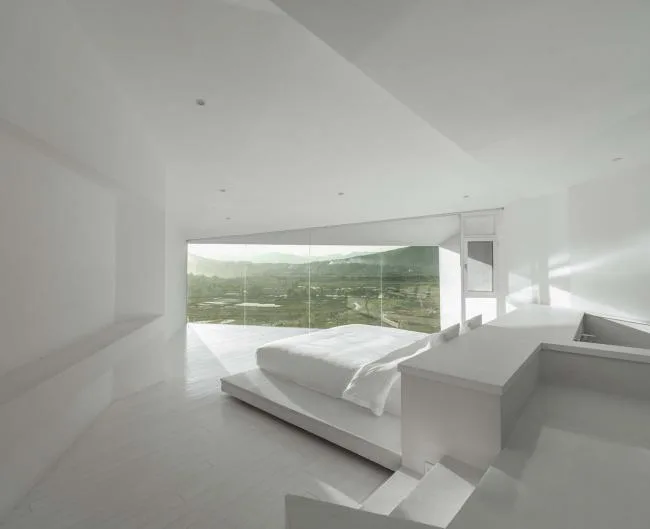
▲ The 2.5-dimensional architectural approach guides bodily movement and transforms sightlines
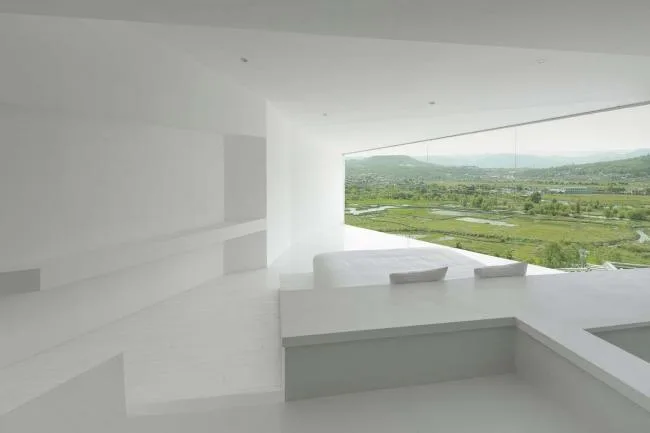
▲ Guest rooms employ a 2.5-dimensional “micro wall” spatial technique
This design explores the delicate relationship between walls and spatial boundaries. Walls are not solid or immutable; sometimes they act as fragile barriers that can be shattered or vanish instantly through the play of soft light and shadow. Each room’s “micro wall” technique—a blend of relief and strong perspective—gently folds the main walls, creating unintended spaces.
With the changing light throughout the day and night, time is introduced, and the space begins to shift and become immeasurable. The orientation of the body and visual perception offer different clues, where light, shadow, memory, and stories unfold.
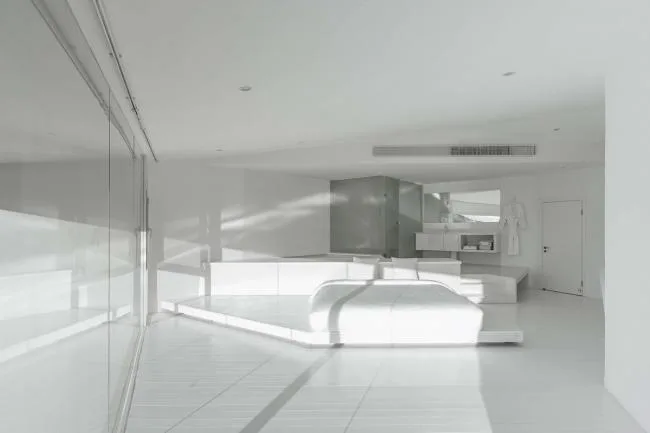
▲ With the shifting daylight, spaces begin to misalign and transform
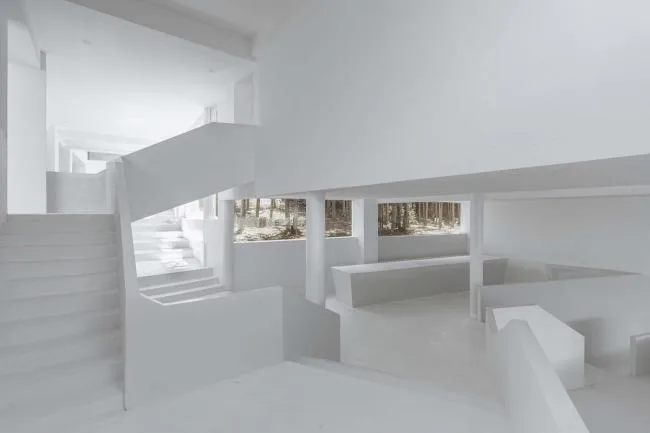
▲ Every corner offers new surprises
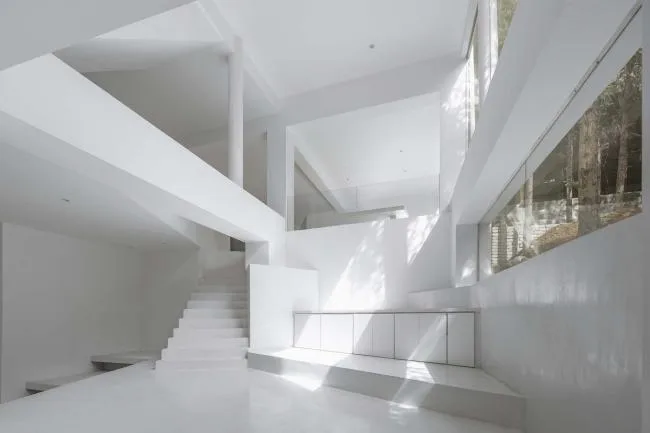
▲ Forest scenery captured from various angles through windows of differing heights
Upon entering “An Zhi Ru Su Mountain,” time ceases to flow linearly, and space abandons traditional regularity and formality. The 2.5D design is not just a passive experience; it constructs new visual memories through subtle boundaries, encouraging fresh perceptions and experiences. This is our vision of “great beauty without words, peaceful as a lodging.”
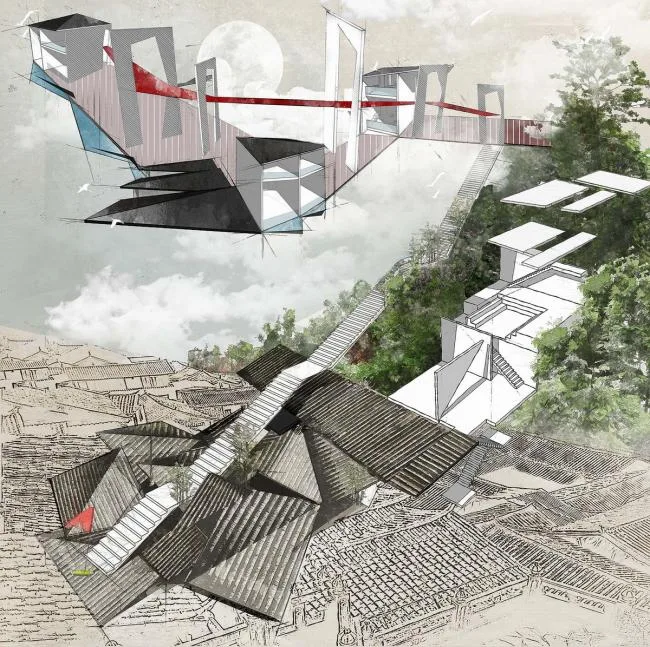
Flying eaves and walls wander freely like flowing rivers and lakes
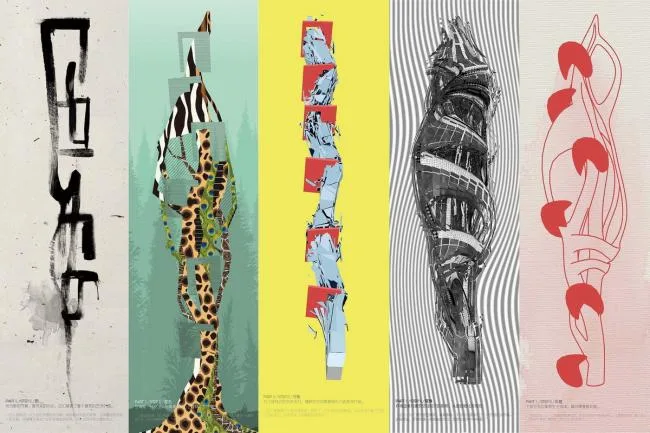
▲ Five illustrations of the Flying Corridor
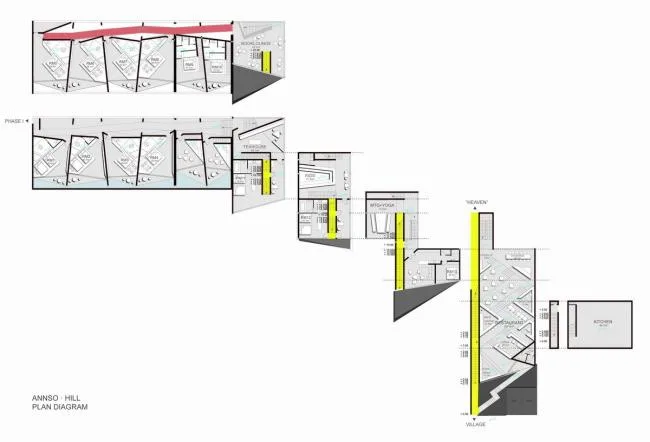
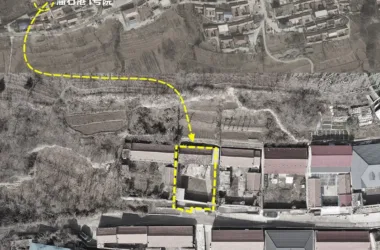
▲ Plan sketch of “An Zhi Ru Su · Mountain”
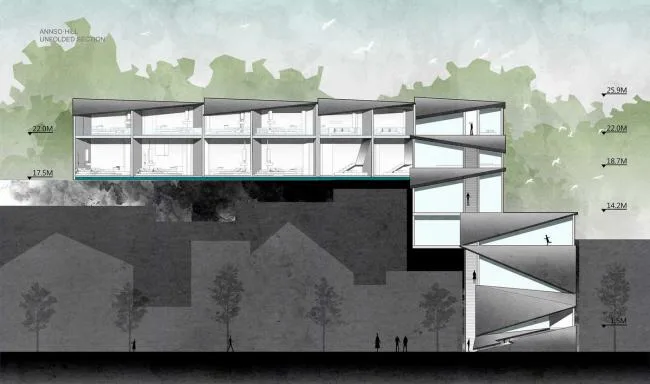
▲ Elevation of “An Zhi Ru Su · Mountain”
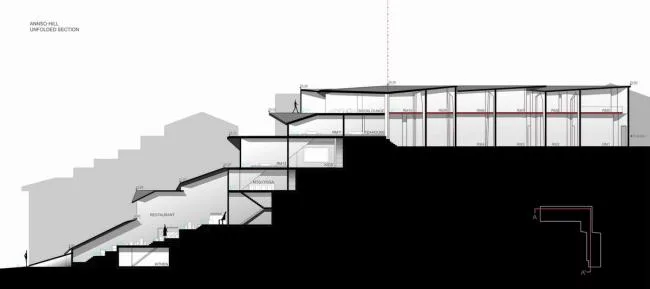
▲ Section map of “Anzhi Ruosu Mountain”
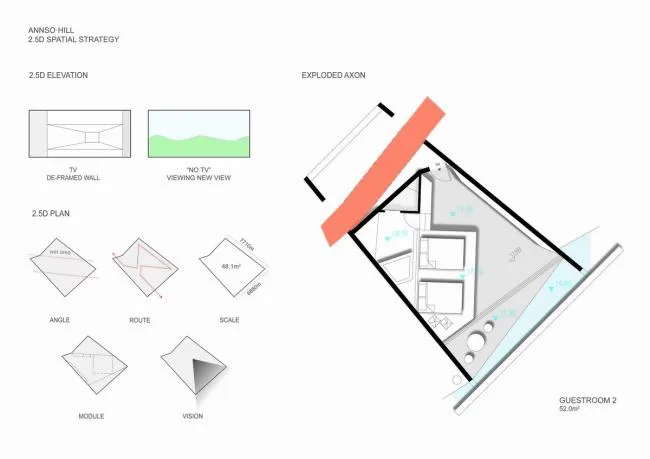
▲ Diagram illustrating the 2.5-dimensional spatial strategy of guest rooms
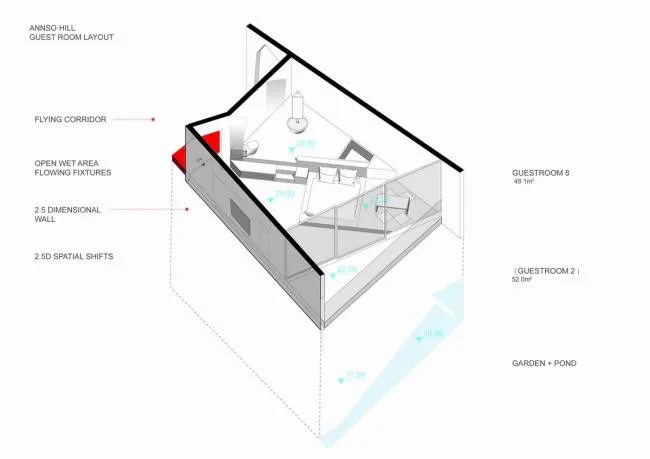
▲ Schematic illustrating the relationship between guest rooms, visual axes, and functional elements
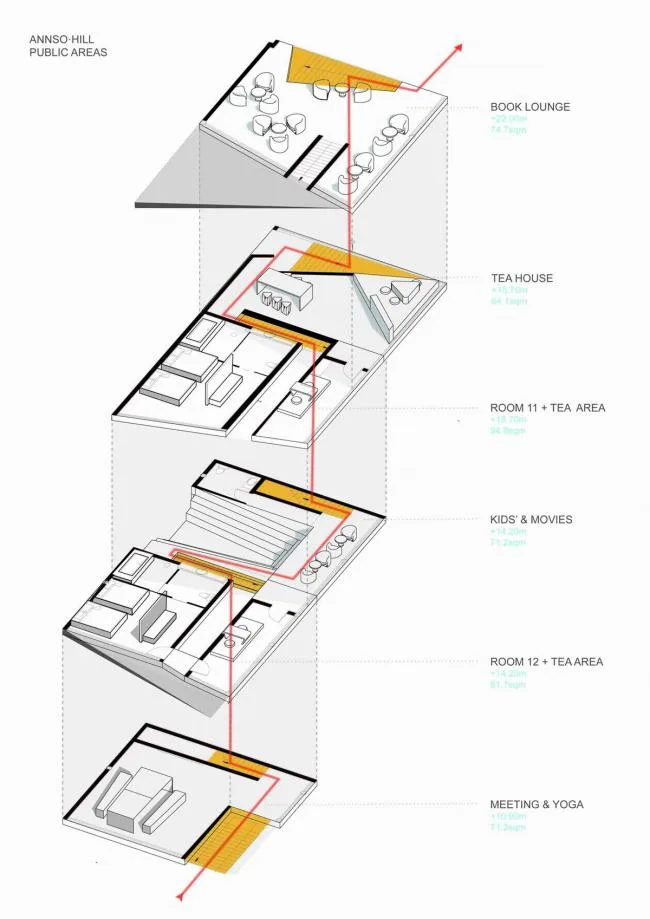
▲ Flow relationship schematic of the public areas
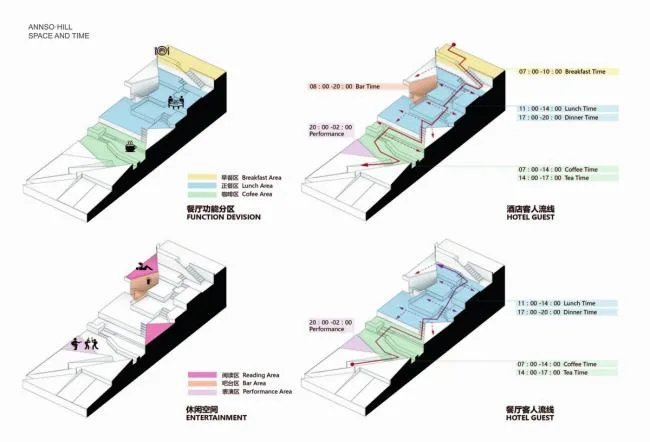
▲ Diagram representing the relationship between space and time in the restaurant area
Project Information:
Architectural Firm: STUDIO QI
Location: Heshun Ancient Town, Tengchong City, Yunnan Province, China
Category: Hotel
Principal Architect: Qi Shanshan
Design Team: Zhao Yuting, Yang Ping, Liu Nianfei
Engineering: Institute of Architectural Design and Research, Chinese Academy of Sciences Co., Ltd
Owner: An Zhiruosu Cultural Tourism
Building Area: 2,500 square meters
Project Year: 2019
Photographer: Jin Weiqi












Must log in before commenting!
Sign Up