
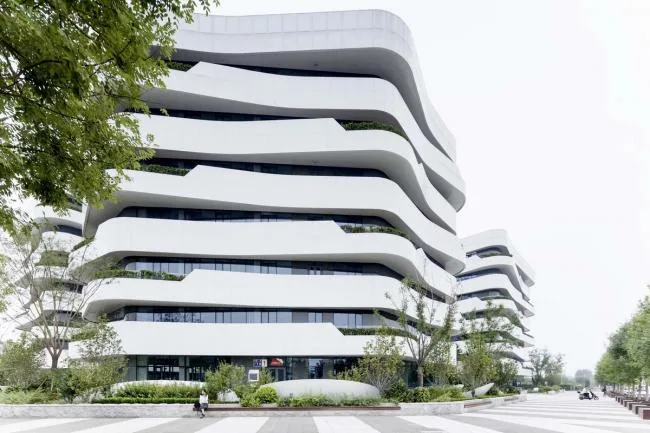
This industrial land development project targets private small and medium-sized enterprises, offering affordable office spaces near major cities in China. Unlike state-owned enterprises, these private businesses, though not the primary economic entities, play a vital role in strengthening the real economy—a realization that has emerged after 30 years of real estate-driven economic growth in China.
The design employs a modular approach to control costs while creating green, flexible, and interactive office spaces. It aims to explore innovative and human-centric work environments, reflecting a rational understanding of industrial manufacturing and preserving the site’s industrial heritage.
Project Background
On the outskirts of China’s first to third-tier cities, governments have designated industrial land for comprehensive planning, originally intended for factories supporting urban centers. However, rapid urbanization, environmental regulations, and industrial upgrades have led large-scale manufacturers to relocate, prompting these peripheral industrial areas to adopt new functions.
Since the nature of industrial land is defined by government urban planning and is challenging to change, research and development offices linked to industrial manufacturing have become the primary function of these areas. Our client, following market analysis, acquired land from the government and partnered with architects to create office buildings tailored to market needs. The project focuses on developing a technology research and development enterprise park with office buildings and small-scale commercial amenities. The target market comprises small and medium-sized private enterprises transitioning from fourth- and fifth-tier cities to larger urban centers, seeking affordable office space outside city centers.
Moreover, large industrial manufacturing companies relocating from city outskirts still require exhibition halls or settlement centers to maintain close ties with major cities. This demand financially supports the operation of enterprise office parks. The influx of new enterprises increases local tax revenue, encouraging governments to sell land to developers at low prices with reasonable planning, ensuring that both sale prices and rents remain affordable for private businesses. This development model fosters a virtuous cycle benefiting governments, developers, and enterprises alike.
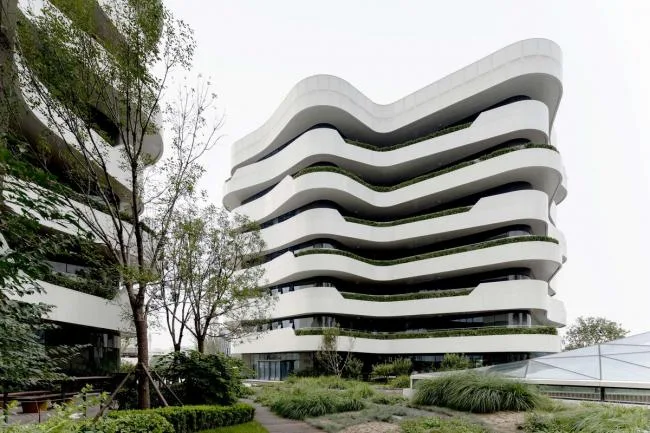
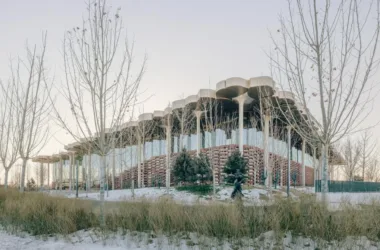
The Tianyun Office Cluster, completed in Beijing, serves as a fundamental prototype demonstrating our collaborative development of office building products with the client. It also acts as a market test case for future large-scale applications in other cities.
Basic Unit
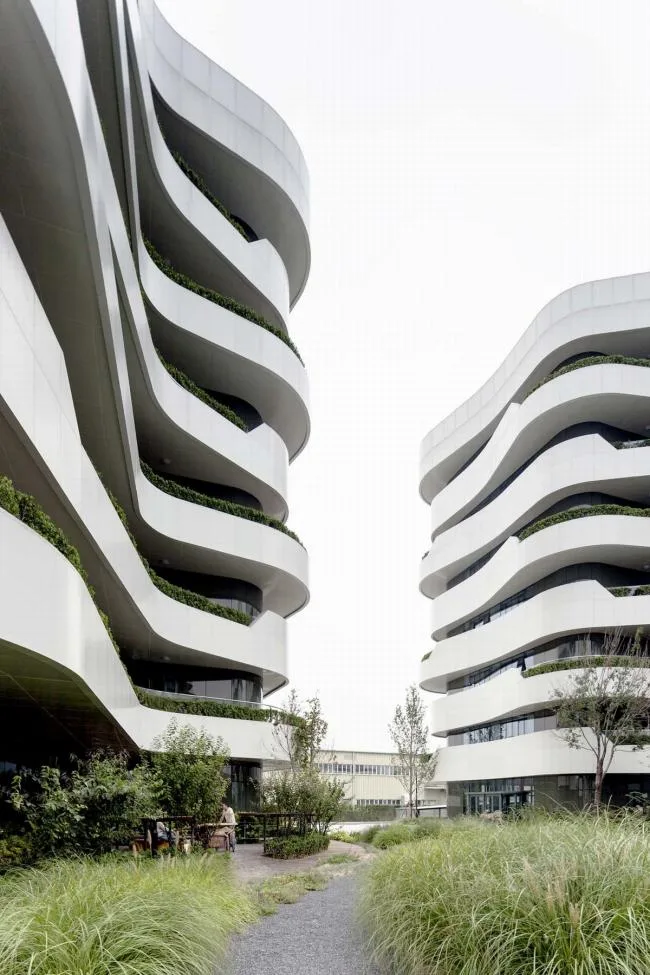
The design embraces a modular concept, starting with the analysis of office work units. Each office unit’s indoor floor plan consists of one or two 8.4m by 8.4m structural modules, surrounded by a 3.3m overhang. Each module includes a functional core housing a staircase, elevator, and bathroom. These modules can combine into various configurations: I-shaped, T-shaped, L-shaped, and cross-shaped, creating diverse architectural clusters and outdoor spaces. The core design minimizes circulation areas to maximize usable office space. Building heights range from 5 to 7 floors.
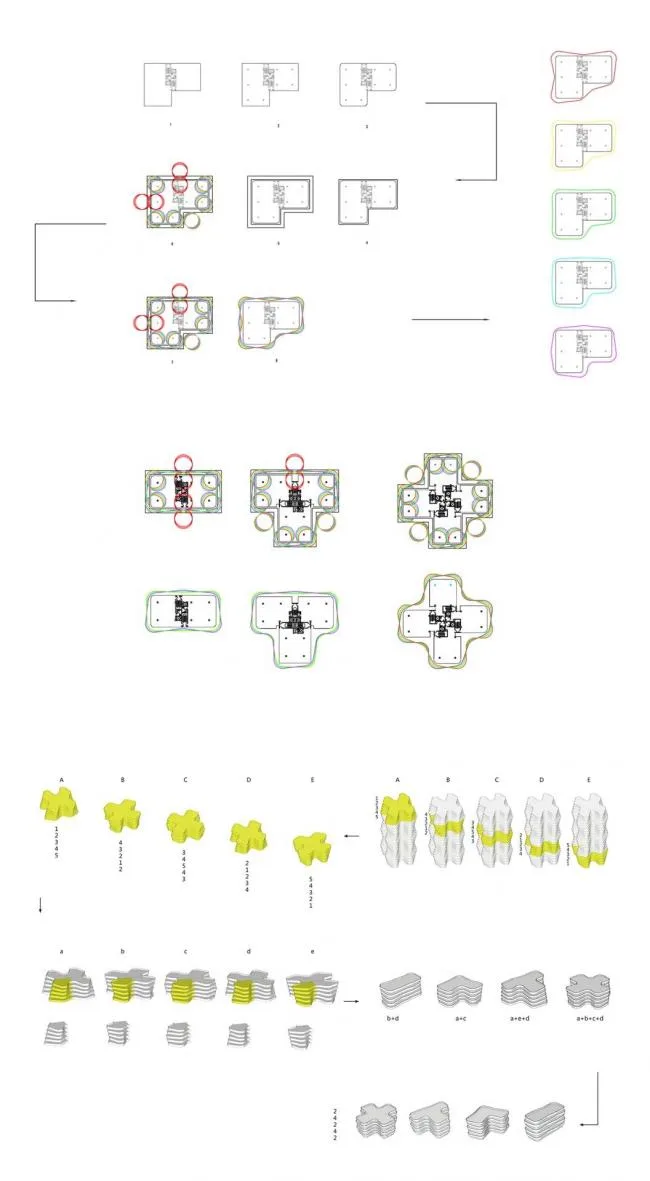
▲ Analysis Diagram
Building Scale
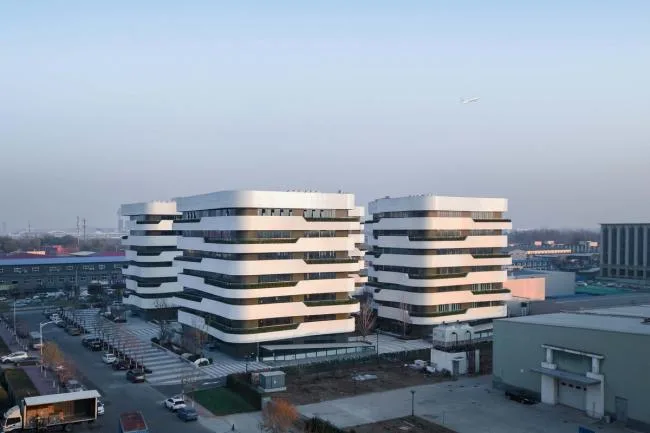
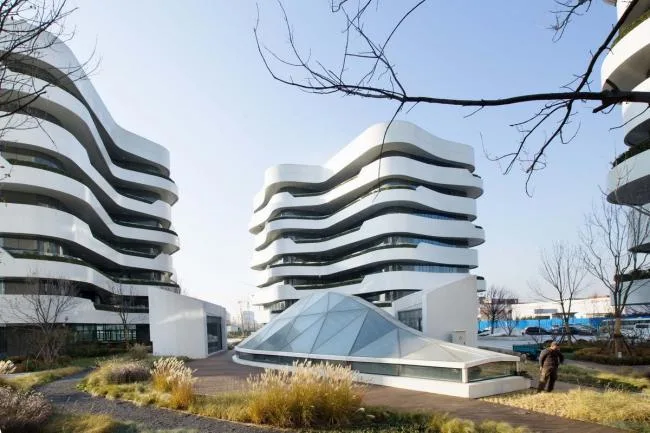
The Tianyun cluster’s design is based on site characteristics, featuring four L-shaped buildings enclosing a central square. Each L-shaped block combines two office units—one larger and one smaller—rising seven floors. The larger unit covers 2,600 square meters, while the smaller one spans 1,900 square meters.
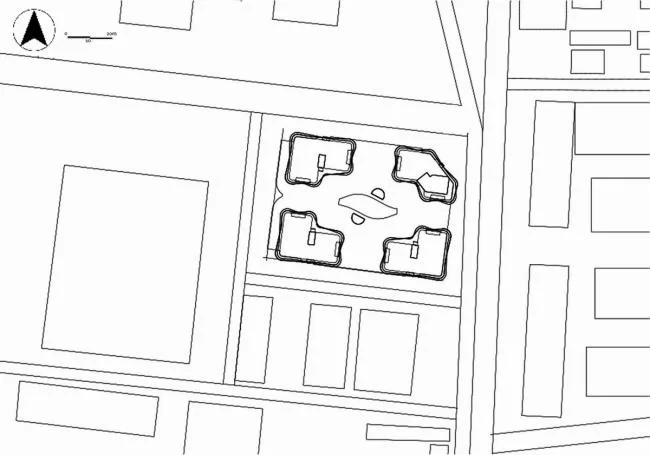
▲ Overall Site Plan
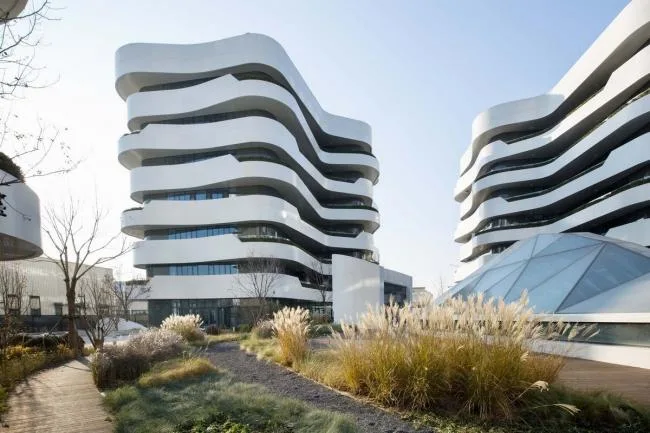
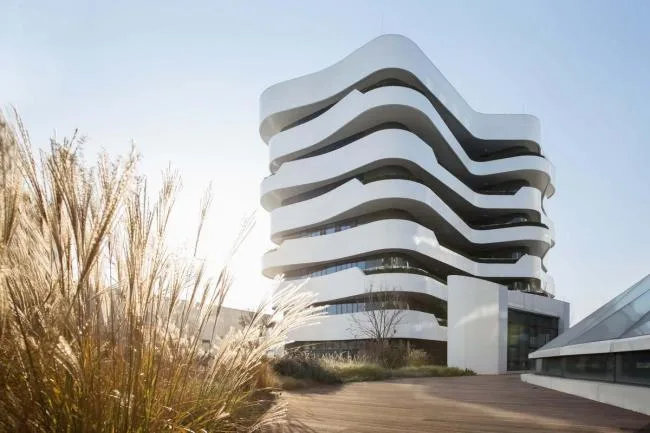
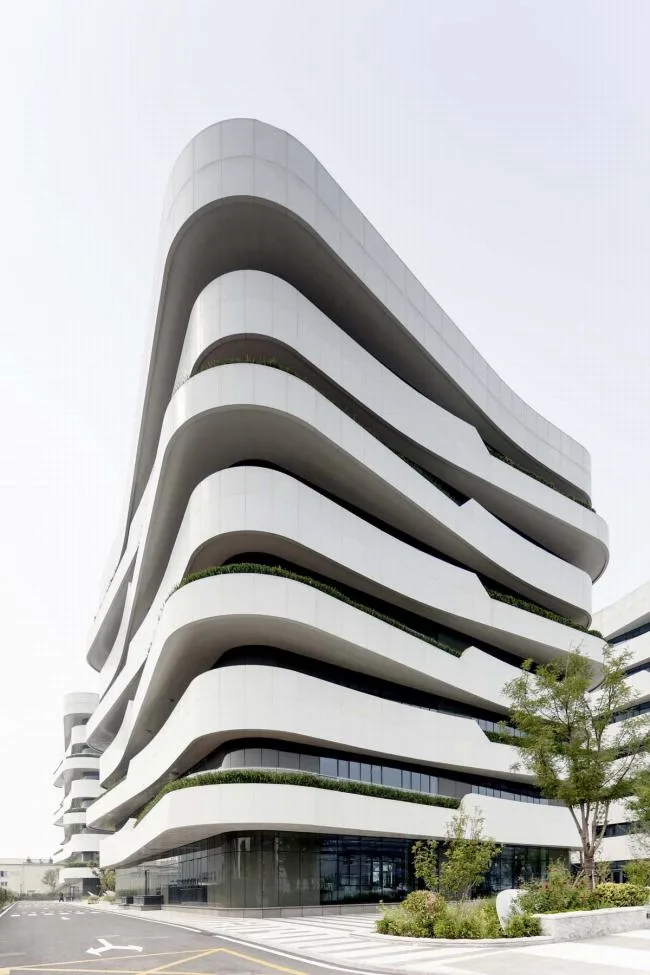
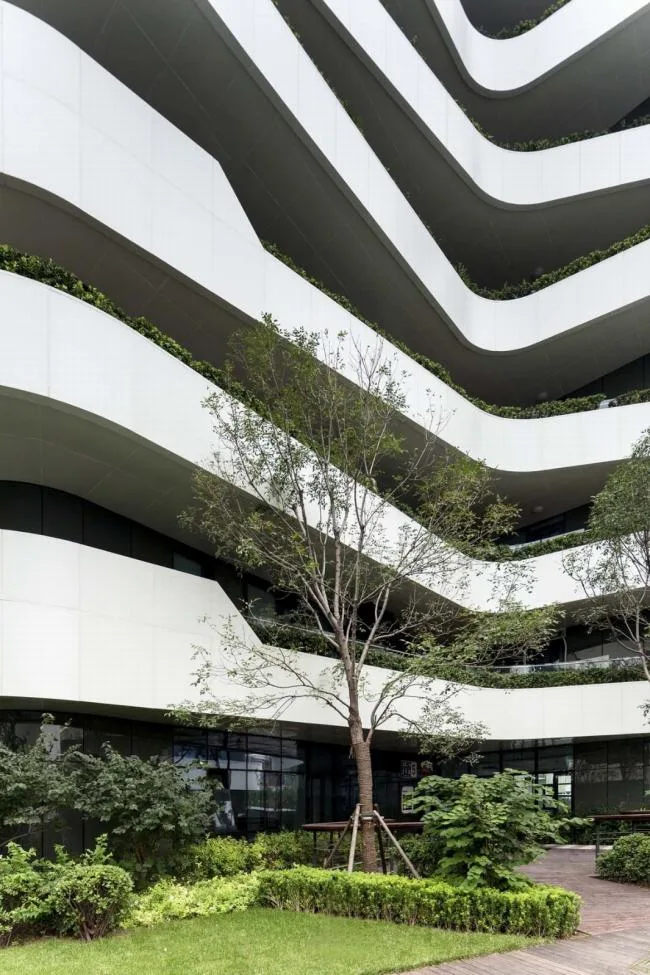
The exterior design further emphasizes modularity. After studying five types of vertical curve boundaries, the design settled on two simplest alternating curve patterns, eliminating formal complexity. This approach supports high-frequency repetition, simplifying office units and reducing the number of modules, which lowers project costs and facilitates replication. The alternating curved balconies enhance natural sunlight access and create richer spatial experiences. These balconies, wrapped around the building and planted with greenery, provide flowing spaces for relaxation after work.
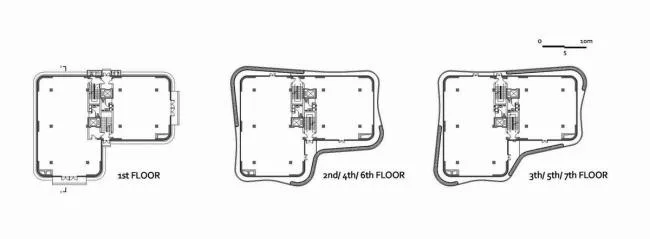
▲ Floor Plan View
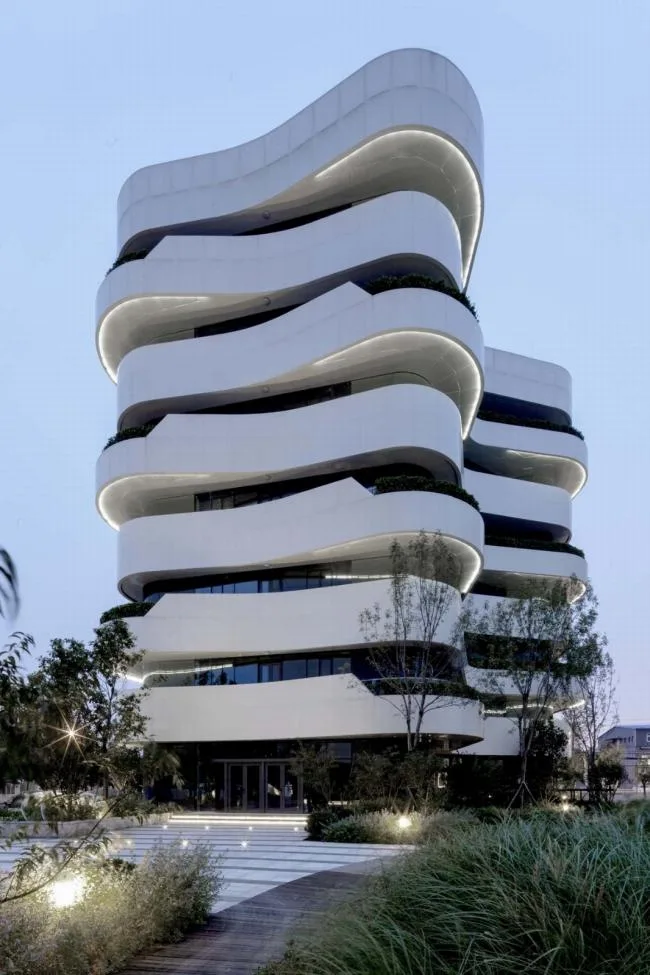
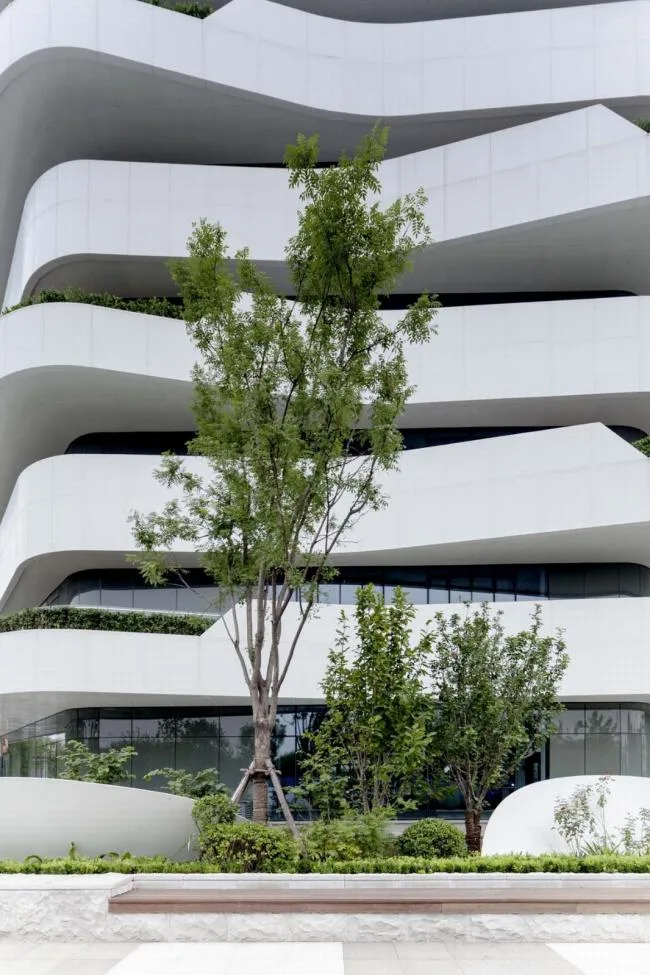
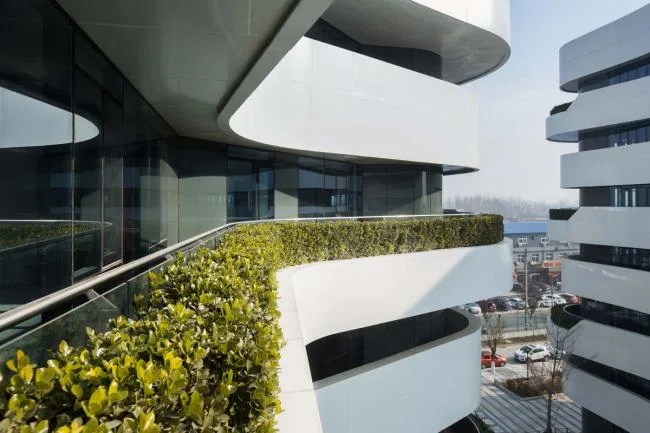
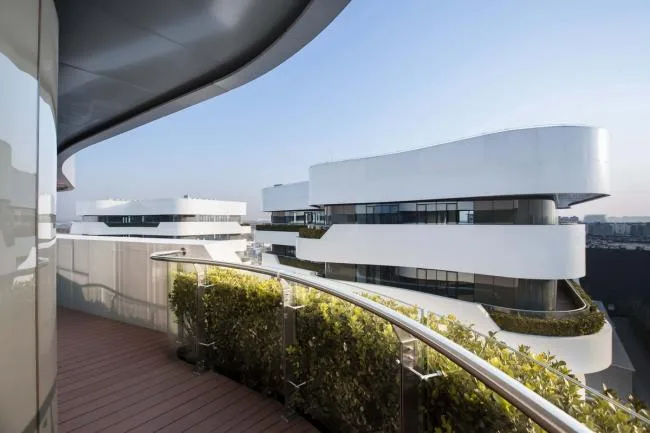
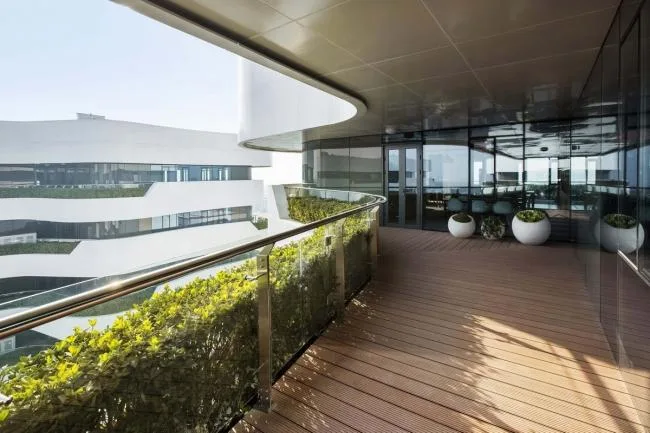
Each office floor features a compact functional core with transparent glass on three sides and a balcony adorned with greenery, offering tenants maximum flexibility to customize their interior spaces.
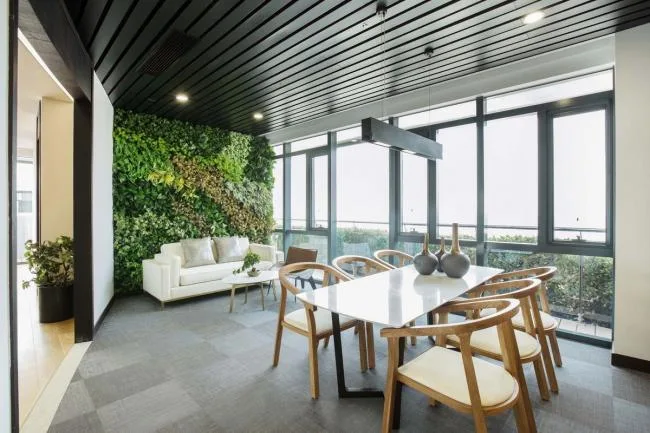
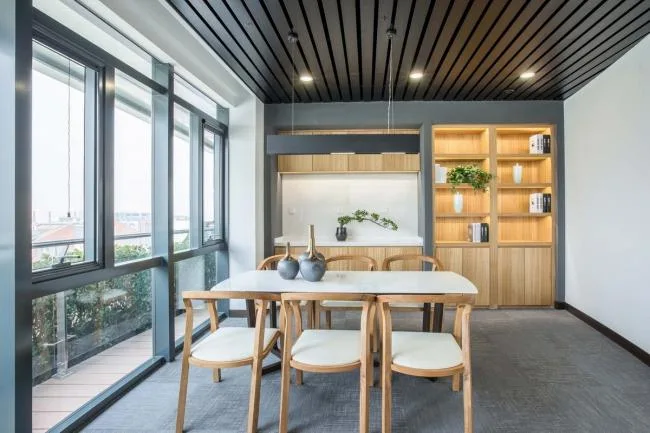
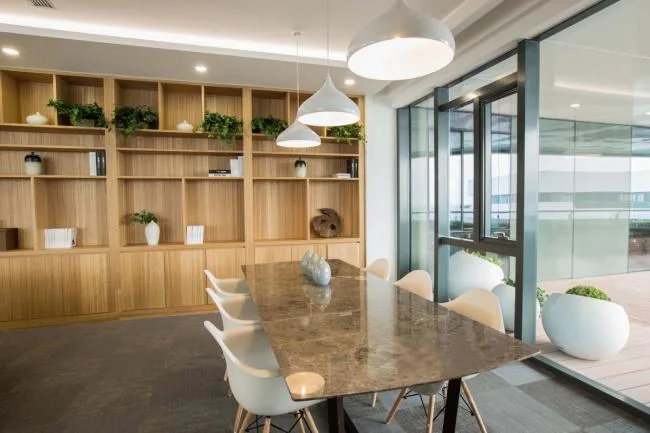
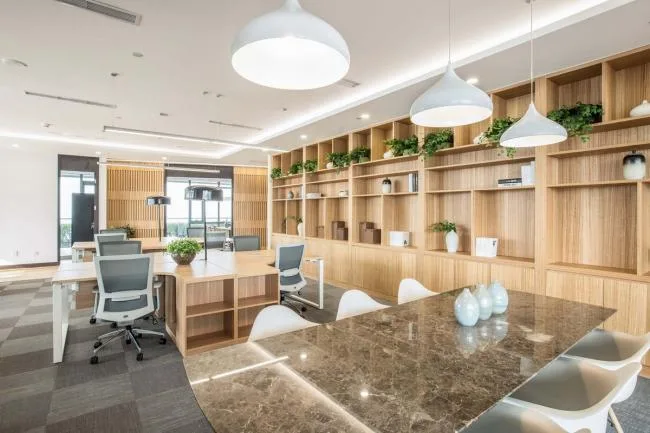
The underground level includes parking facilities and a restaurant, with a glass roof in the central square allowing natural light to illuminate the basement dining area.
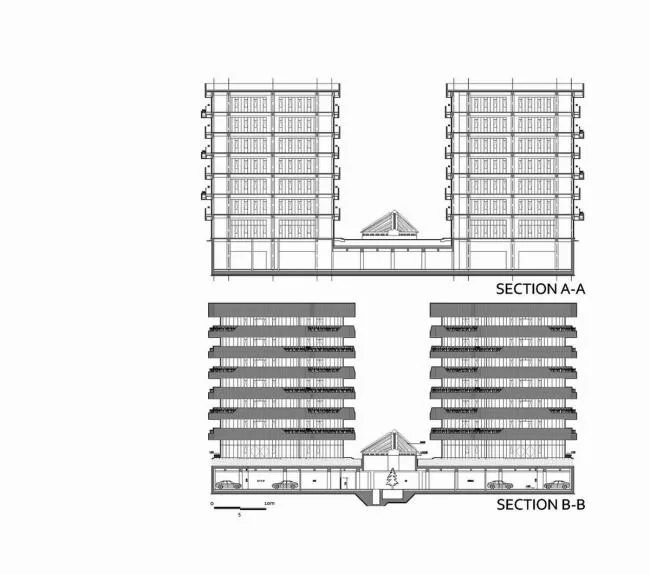
▲ Sectional View
Urban Scale
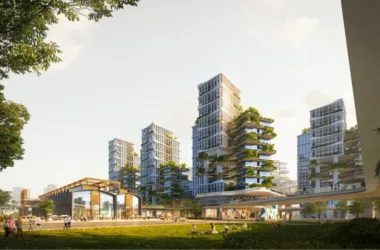
Following the successful market testing of the Tianyun cluster, our client is advancing to the next phase. We are collaborating to apply this building type on a larger scale, planning a development on a 200-acre urban plot.
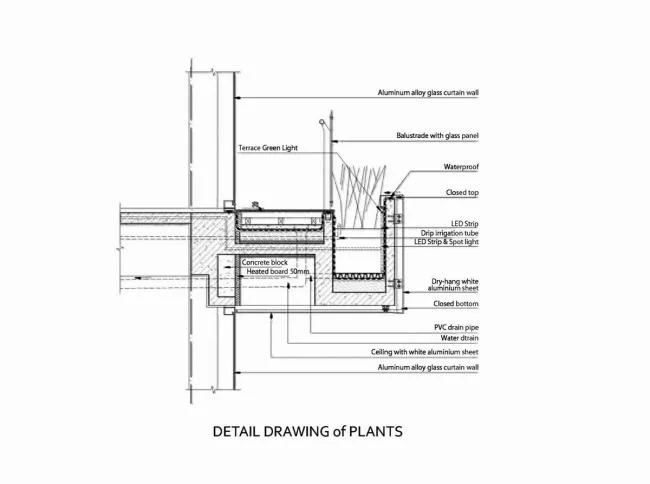
▲ Balcony Details
Project Information:
Architectural Firm: First Practice Architectural Design
Location: Shunyi District, Beijing, China
Category: Office Facilities
Principal Architect: Di Shaohua
Design Team: Liu Xing, Feng Jiancheng, Lu Dongxia, Huo Junlong
Building Area: 23,600 square meters
Project Year: 2018
Landscape Design: Alex Camprubi Lu Bin Office (BIM Architecture)
Construction Drawings: China Construction Engineering Design Group Co., Ltd
Interior Design (800 sqm model room): Lin Zhenzhong, Paul David International Design Company
Floodlight Design: Beijing Kaishun Teng Engineering Consulting Co., Ltd
Client: Tianruijin Real Estate Group Co., Ltd












Must log in before commenting!
Sign Up