
Introduction
Huzhou Nanxun Kindergarten is situated in the heart of Nanxun Urban New District, bordered by Nanlin Road to the west and Zhongxin Street to the south. It is surrounded by a planned river and urban green belt to the east and north, the Nanxun Museum project to the north, Civic Square to the northeast, and a planned ecological children’s park to the east. Inspired by William Hazlett’s philosophy of “freedom to think, feel, and do whatever you are interested in—complete freedom,” the design features eight large, medium, and small classes respectively, accommodating approximately 720 children.
▼ Project Overview
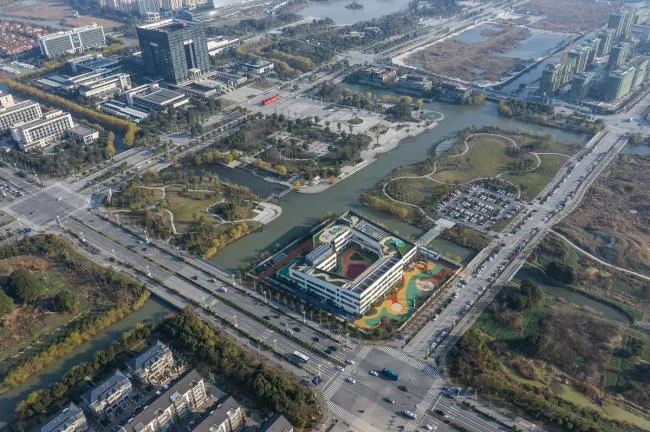
Blending Landscape and Architecture: The First Activity Space
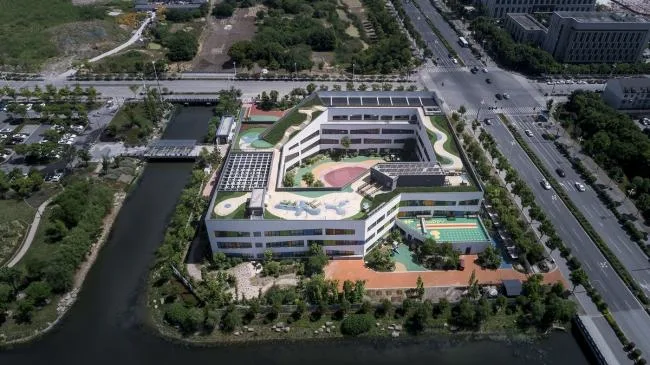
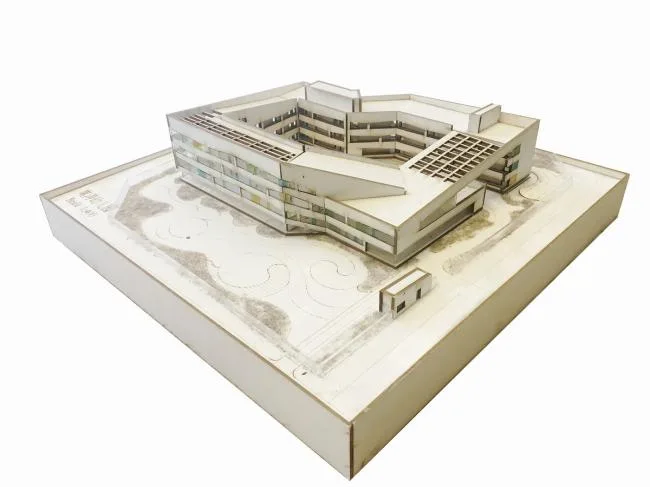
The building’s overall form follows a flexible circular pattern that echoes the site’s landscape design. Its height varies from southwest to northeast, creating an undulating architectural profile. The inner courtyard faces northeast, opening up to views of the river and park landscape. This arrangement aligns with urban design principles, presenting a rugged urban interface outward while crafting a safe, free-flowing circular activity area inward. The kindergarten’s drop-off and pick-up zone integrates with the ecological park on the east side and connects to the main entrance square via a pedestrian bridge, adding a playful touch to the entrance experience.
▼ Northern Bird’s-Eye View
▼ Northeast Bird’s-Eye View
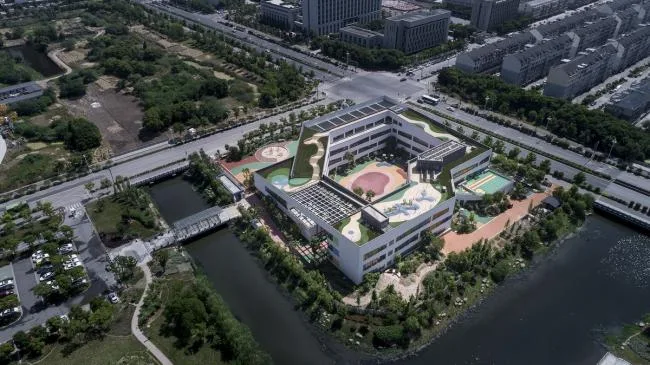
Landscape seamlessly integrates with architecture
Engaging Courtyard in the Urban New Area: The Second Activity Space
The inner courtyard acts as the heart of the entire building, linking regular classrooms, specialized rooms, administrative offices, lobbies, multifunctional classrooms, and dining areas. It features diverse vegetation, landscaped areas, play zones, and a rubberized running track, forming an interactive, multi-functional space designed to encourage communication and play among children. The design prioritizes safety with no blind spots, allowing teachers to guide children in experiential learning. Tall trees are strategically avoided in the main sightlines, and gentle slopes are incorporated with the terrain to create varied play experiences for the children.
▼ Inner Courtyard
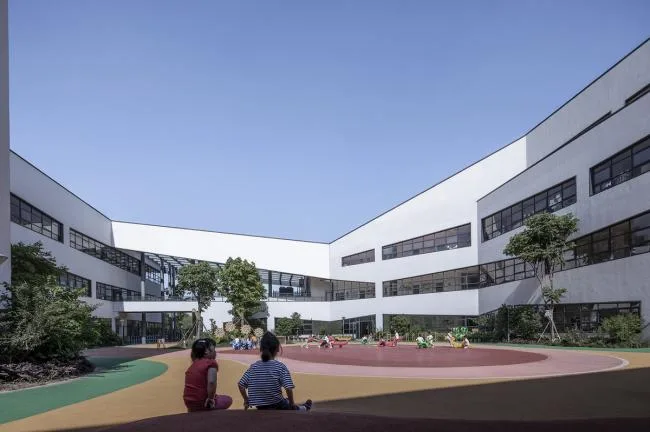
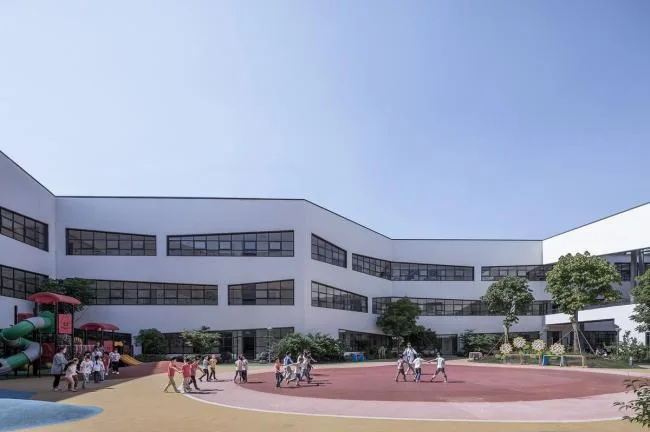
Children running and playing in the courtyard
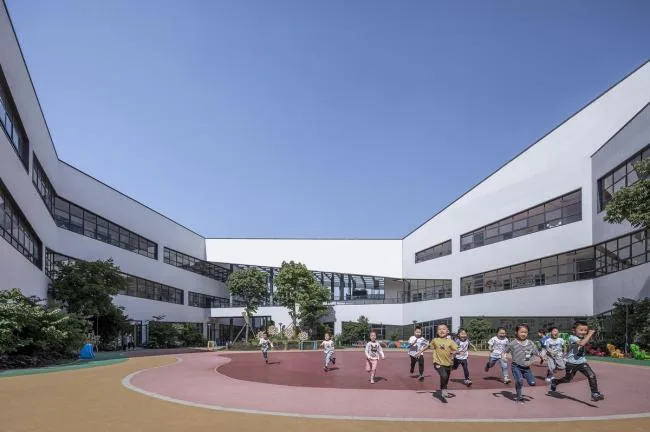
▼ Inner Courtyard Corner
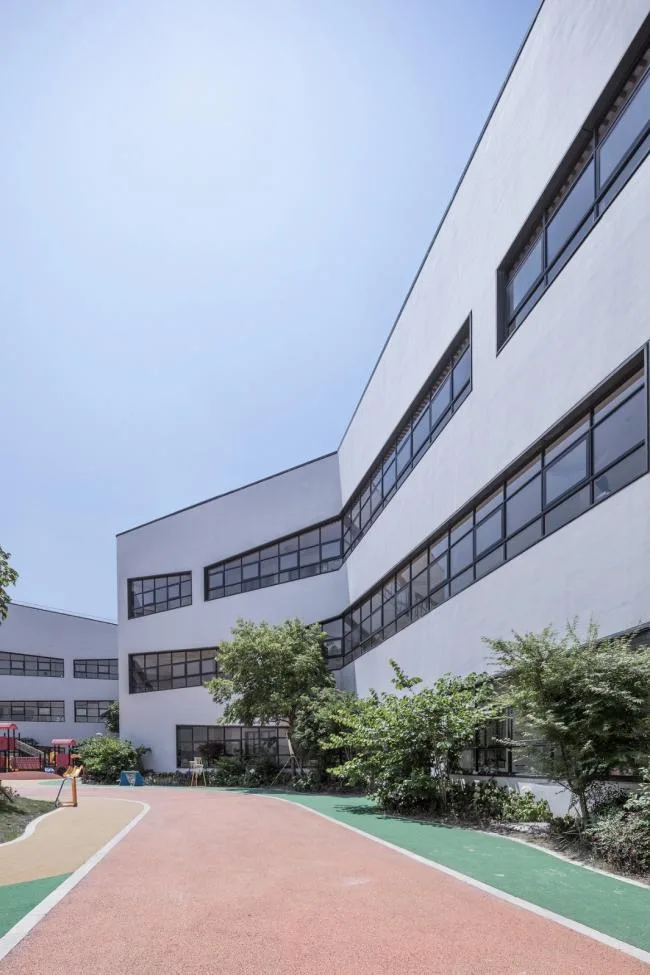
▼ Northeast Corner of the Inner Courtyard, Open to the Outside
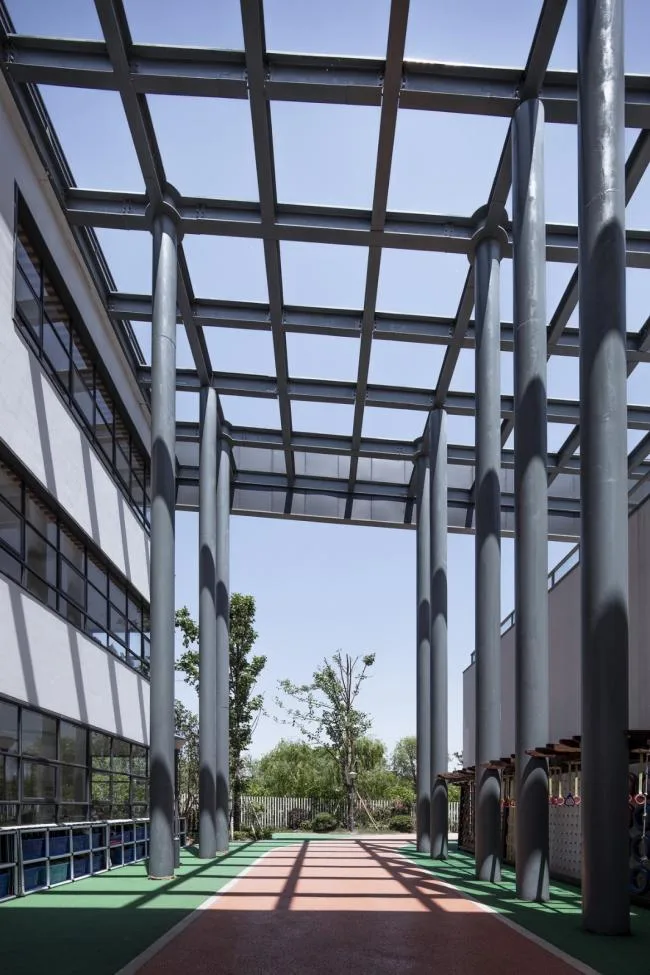
While the first space emphasizes the integration of the building with its environment, the second focuses on the cohesive space created within the architecture itself. The courtyard space seamlessly connects specialized classrooms, public activity zones, and outdoor areas.
The Undulating Green Roof: The Third Activity Space
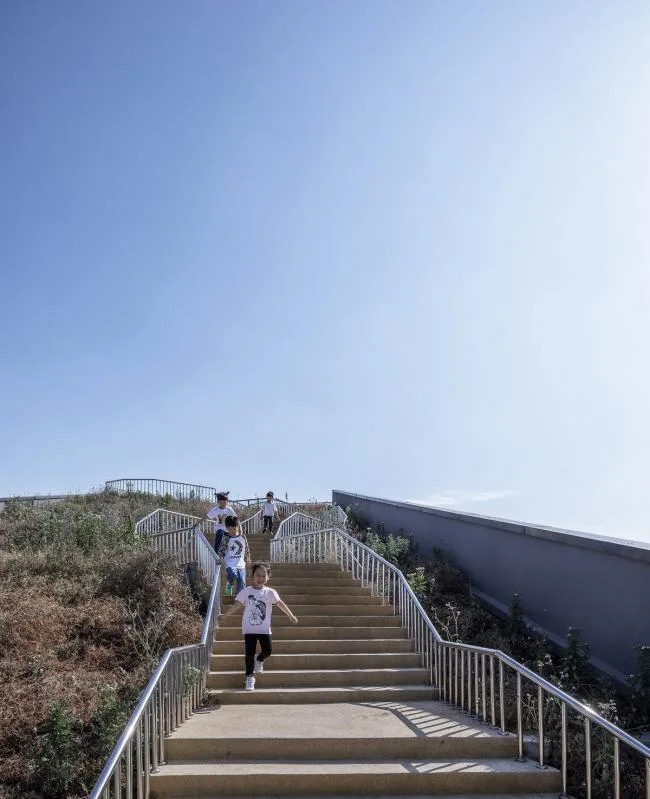
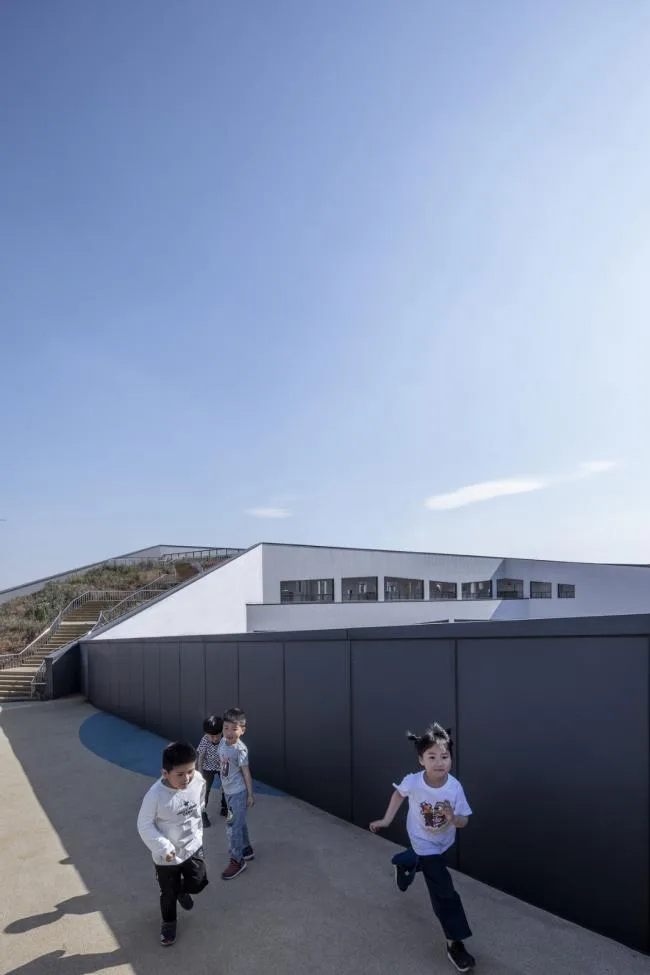
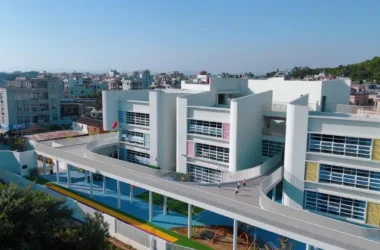
The roof features an undulating activity platform offering excellent landscape views. Designed as a safe rooftop garden and play area, it takes full advantage of the adjacent riverside park scenery. Various vegetation, landscaped zones, play areas, and rubberized tracks on the roof highlight the playful character of the kindergarten’s architecture.
▼ Large Steps on the Roof
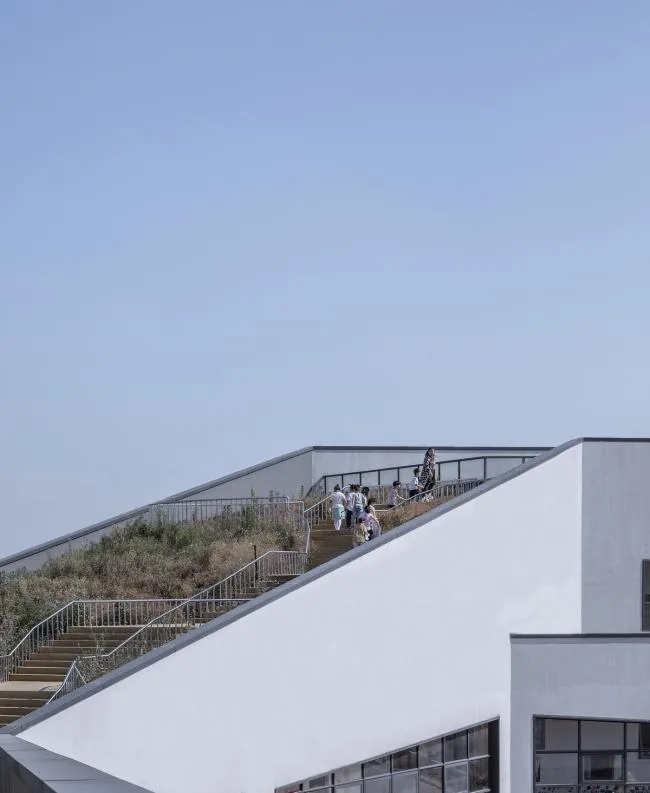
Children walking and playing on the BIM-designed roof steps
Vibrant Facade Design
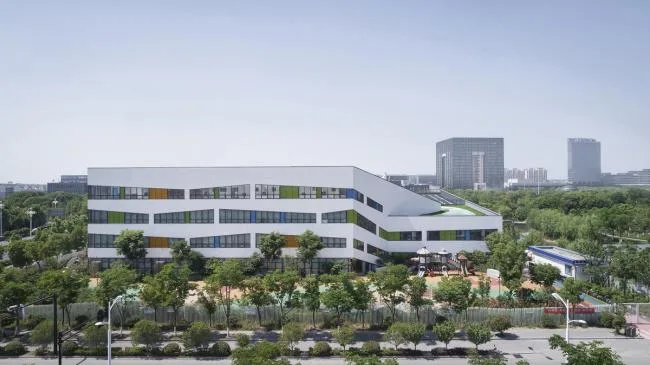
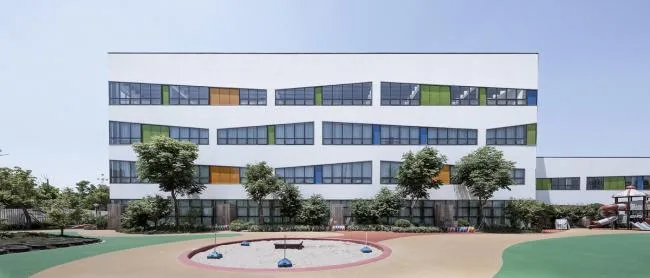
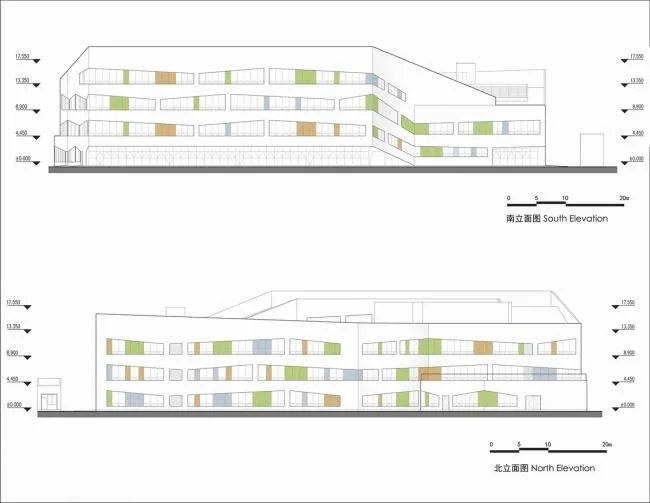
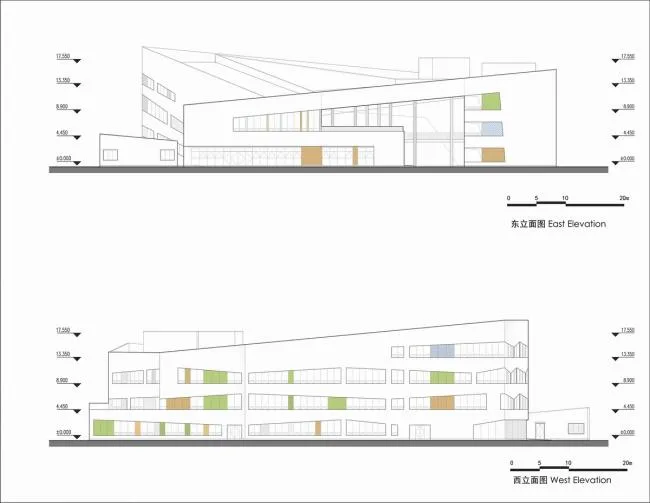
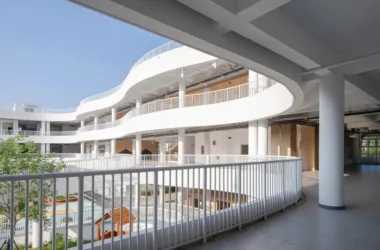
The building’s facade incorporates horizontal free-form windows to maximize natural light. Colorful glazed glass panels create a playful and lively kindergarten atmosphere. The inner courtyard’s free activity area features horizontal railings arranged in staggered layers, forming multi-level platforms for play and interaction.
▼ Courtyard Facade with Free-Opening Windows
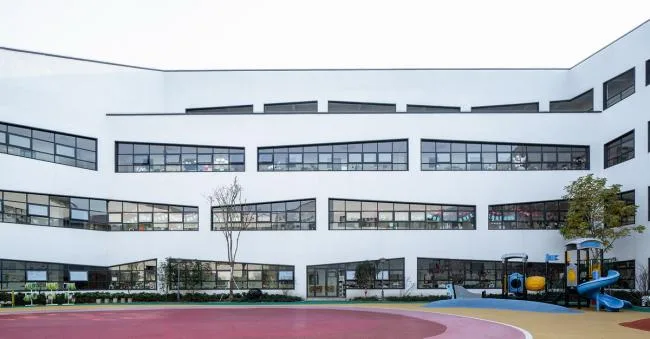
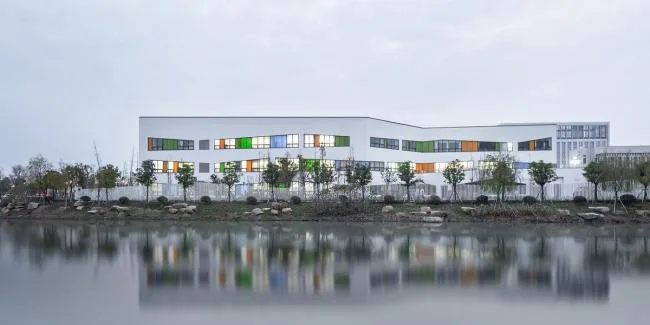
The primary color of the building is white, accented with orange and green glass panels to enhance the playful character of the architecture. Each floor of the preschool teaching and support buildings is differentiated by color to improve visibility, with some sections clad in wood panels to offer a warm, child-friendly feel.
Colorful Facade
Conclusion
Kindergarten represents the first public space young children encounter during their development. The architectural atmosphere significantly influences children’s perceptions and understanding. Kindergarten activity spaces should extend beyond physical boundaries to embody educational principles and concepts through thoughtful spatial design—posing a unique challenge for architects.
This project explores the relationship between architecture and environment, the creation of courtyard spaces, and the concept of a “third space” to expand rich activity areas within kindergarten architecture.
Exploring the Relationship Between Architecture and Environment
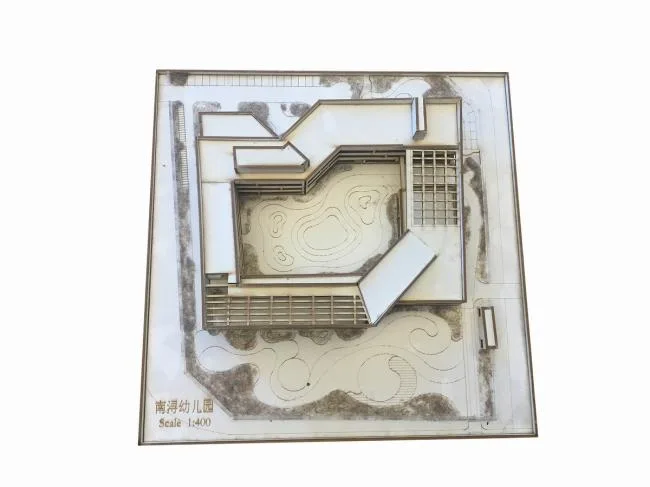
▼ Model
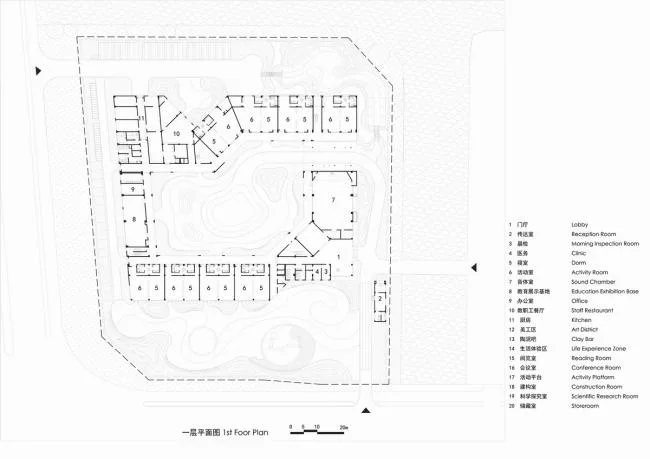
▼ First Floor Plan
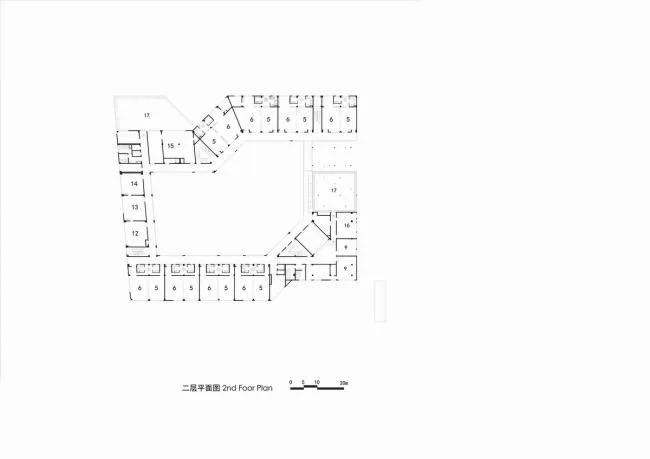
▼ Second Floor Plan
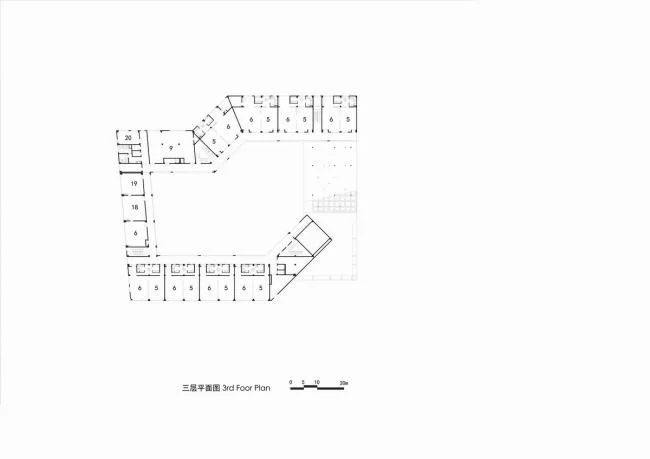
▼ Third Floor Plan
▼ South Facade & North Elevation
▼ East Facade & West Elevation
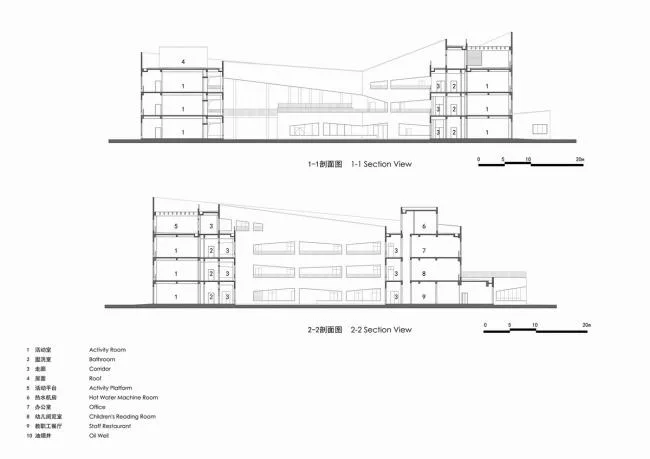
▼ Section Views 1-1 & 2-2
Project Information
Project Name: Expansion Project of Nanxun Town Central Kindergarten New Site
Location: Jiafeng Road, Nanxun District, Huzhou City, Zhejiang Province
Building Area: 10,030 m2
Completion Date: September 29, 2017
Facade Materials: White and colored premium exterior wall coatings, aluminum alloy windows, glazed glass panels
Design Firm: Zhejiang University Architectural Design and Research Institute Co., Ltd. (www.zuadr.com)
Design Director: Wang Yuping
Project Manager: Mo Zhoujin
Designers: Su Renyi, Xuan Wanli
Structural Engineers: Zhang Jie, Zeng Kai, Wu Jie
Electrical Engineers: Shen Yueqing, Feng Baile
Water Supply and Drainage: Yi Jiasong, Chen Fei
HVAC: Pan Dahong, Ding De
Weak Current Systems: Jiang Bing, Zhang Wubo
Photography: Jin Weiqi, Zhang Yong












Must log in before commenting!
Sign Up