
▼ Overall Architecture
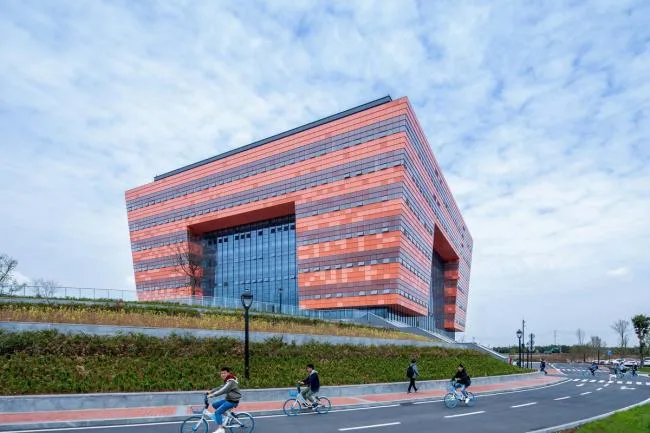
Completed in spring 2019, the new library at Chengdu University quickly became a viral sensation on campus. Interestingly, this widespread attention was not the architects’ (BIM engineers’) original intention, but rather stemmed from its striking and vibrant colors.
Given the library’s large scale and its prominent placement in the northern campus layout, initial design efforts, much like other university libraries in China, prioritized function over image, despite its inevitable visibility in the campus environment.
▼ General Layout Plan
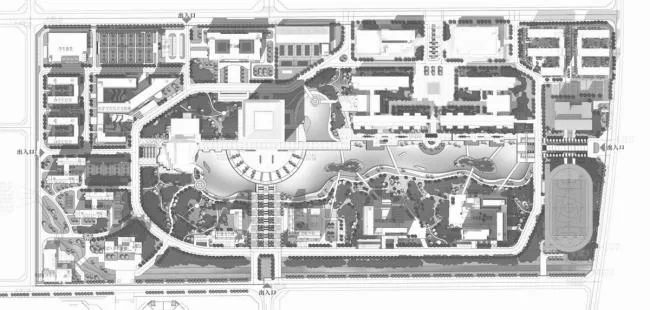
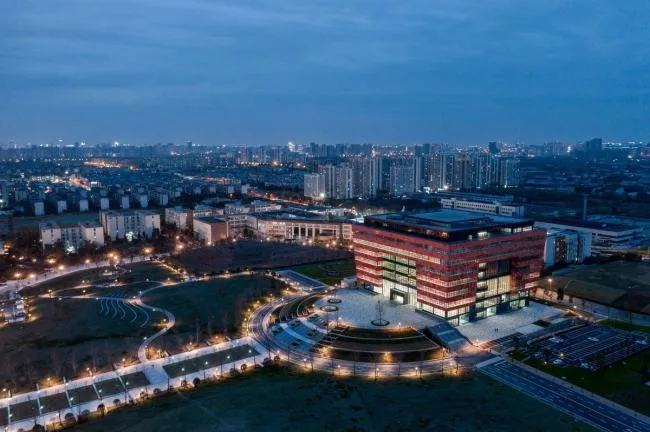
The library holds a commanding position within the campus.
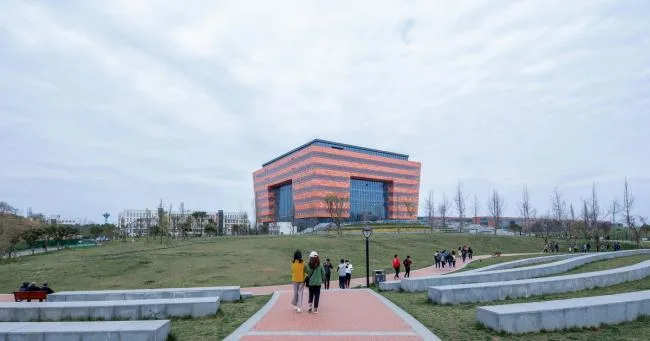
Following the natural terrain, which slopes gently from north to south and east to west, the library building is lightly perched atop a rounded hill at the southern edge of the site. This elevation difference creates a smooth and accessible transition between the building and the surrounding landscape.
The site’s topography slopes from north (higher) to south (lower) with a gentle east-west gradient.
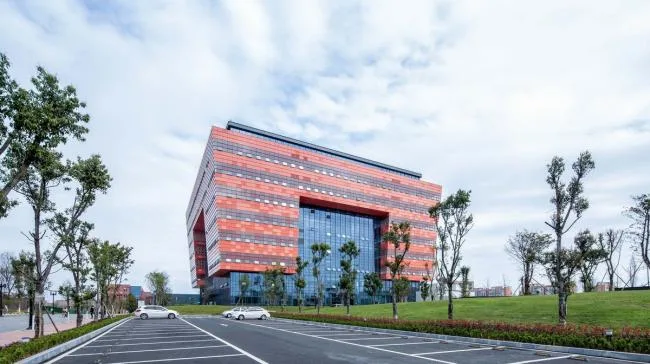
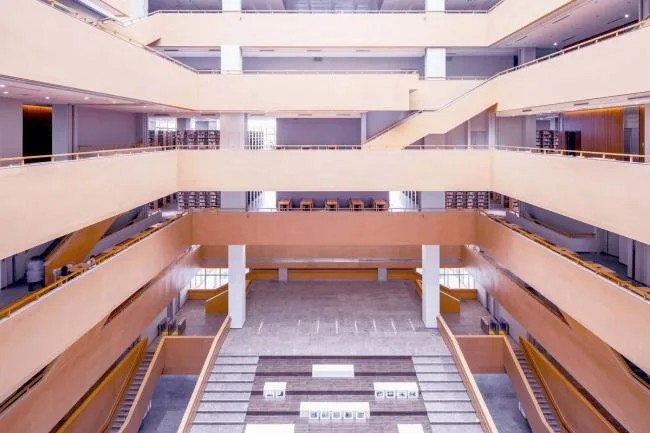
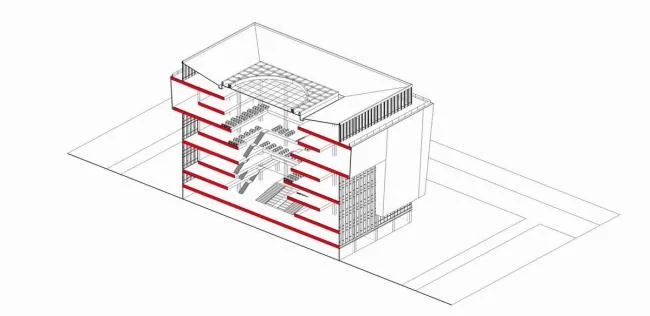
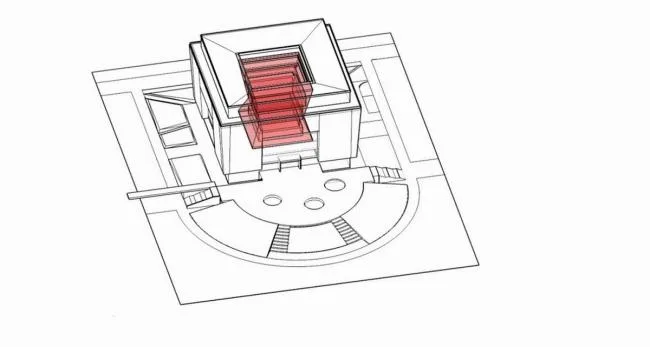
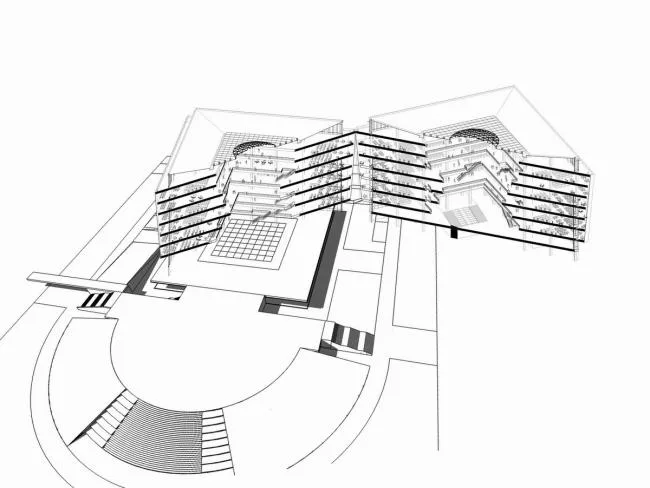
The floor plan is clear and efficient, featuring a “bucket”-shaped atrium accessible from all sides. Vertical and horizontal circulation is arranged along the inner edges, creating a centripetal space that draws inward from every direction. The “sandwich”-shaped large volume is suspended, maximizing natural light penetration.
Courtyard Analysis

▼ Shape Evolution
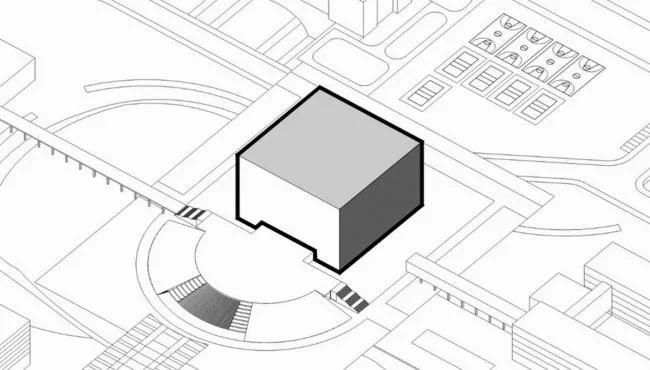
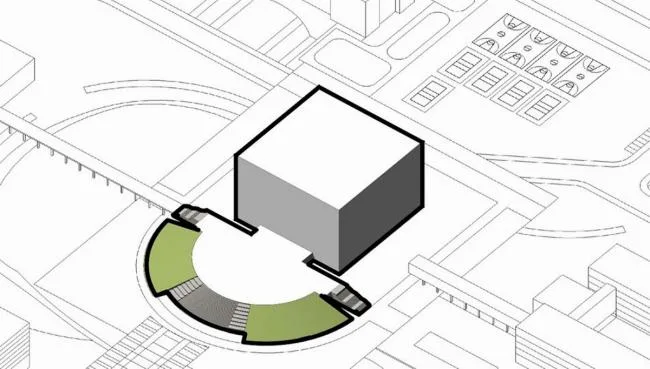
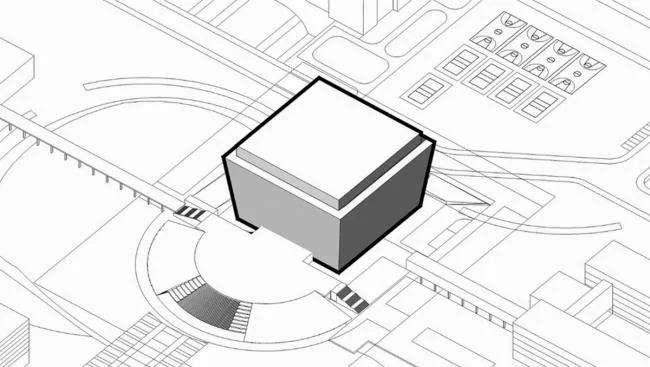
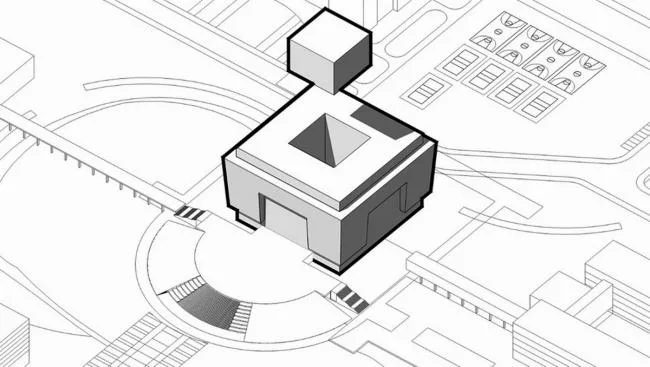
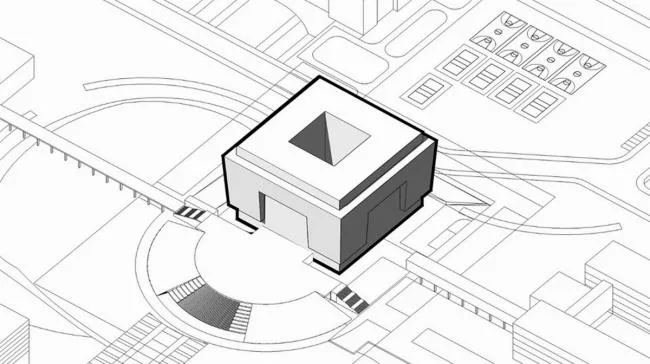
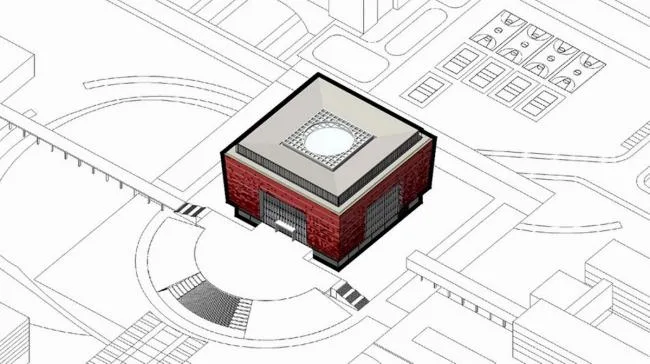
Vertical and horizontal circulation around the circular atrium.
▼ Self-Study Area Adjacent to the Circular Corridor
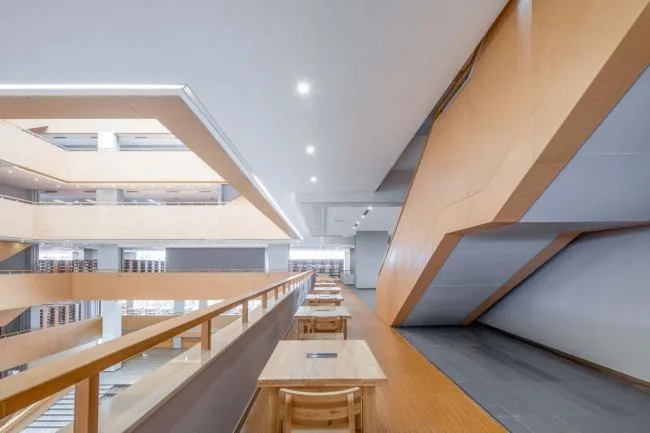
The design ethos focuses on lightness, clarity, accessibility, openness, and transparency. The intention was to avoid creating a heavy, fortress-like academic atmosphere.
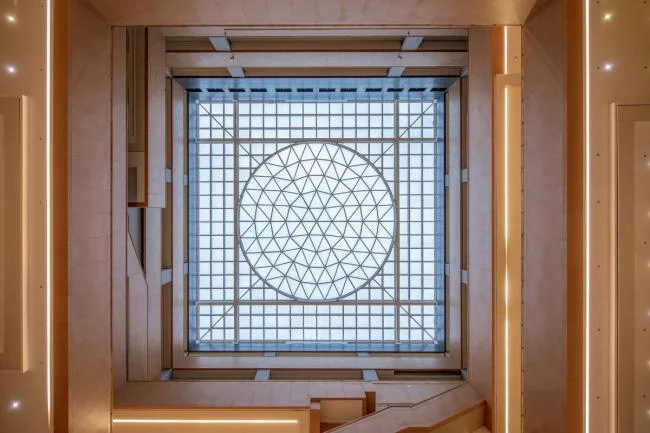
The building’s profile was shaped through CFD airflow simulations and natural lighting analysis, carefully considering Chengdu’s dominant wind patterns and extended transitional seasons. The circular courtyard leverages skylights and side openings for natural light and ventilation, reducing energy consumption. The interior promotes communication and public interaction, integrating various social spaces.
▼ Lighting and Ventilation Analysis
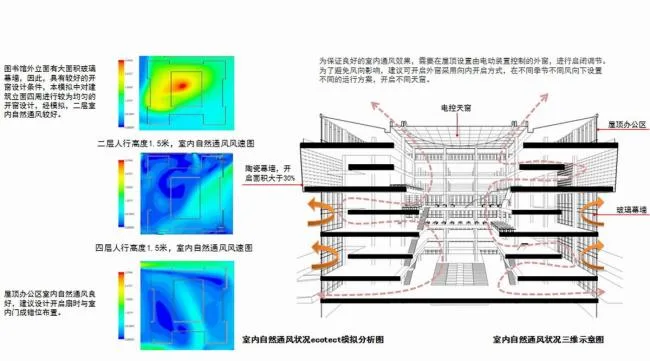
▼ Side Courtyard Lighting
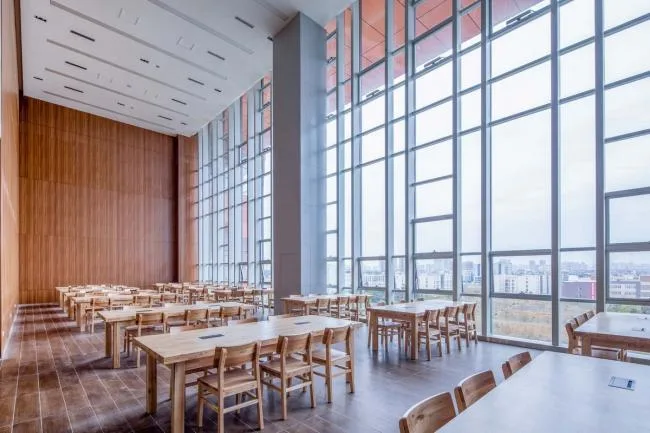
▼ Skylight
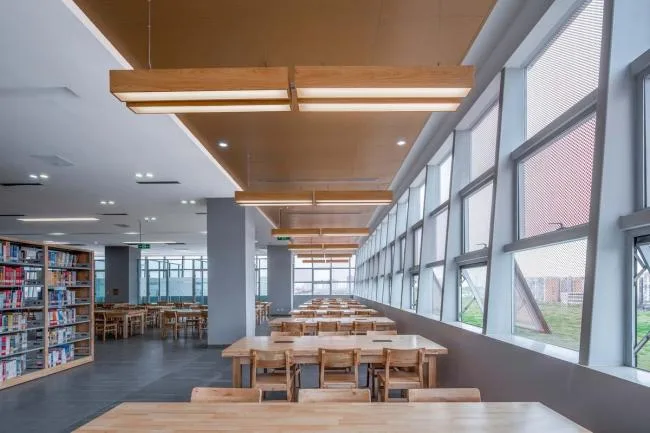
A standout feature of this library is its lightweight exterior maintenance system. The parameterized panel and glazing point design effectively shade and reduce glare, creating a soft, diffused indoor light that fosters a bright and pleasant reading environment.
▼ Parameterized Panel and Glazing Point Design on Facades
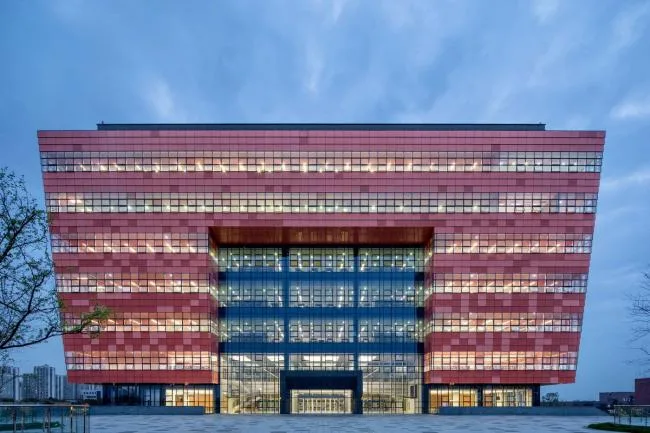
The exterior curtain wall system features a stepped inward design from top to bottom, supported by a steel rectangular tube frame and aluminum alloy adapters. Each floor’s facade combines three sets of thin ceramic panels and glazed hollow glass, embodying principles of green, low-carbon, and lightweight design.
▼ Building Curtain Wall System
▼ Axonometric Diagram
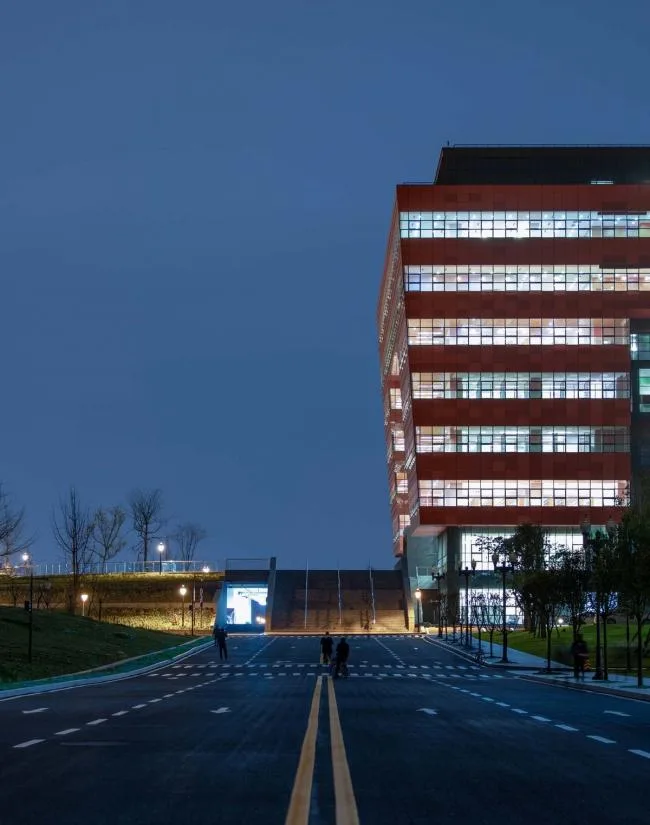
Upon completion, the library’s vivid orange-red color and textured patchwork stand out against the spacious campus and community backdrop. Particularly striking under the night sky, it glows like a transparent and radiant Chinese lantern (BIM work), drawing attention. As a venue for expression, the library’s open and shared design strategy inspires communication, sharing, and knowledge dissemination.
The night sky resembles a glowing Chinese lantern.
▼ Close-Up View
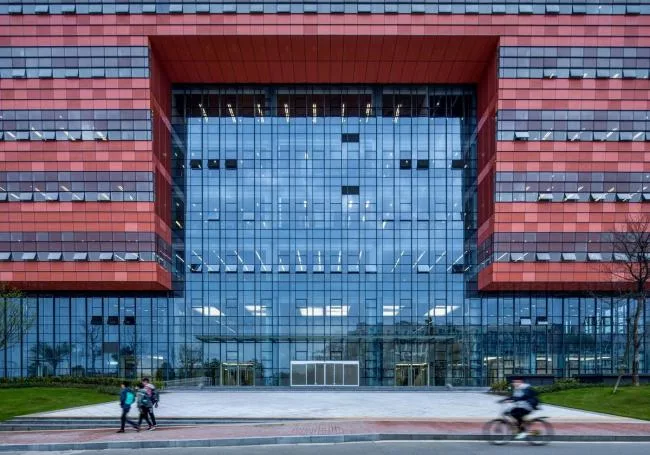
The exterior design is sleek and purposeful. The orange-red porcelain panels combined with glazed glass convey modernity, while their distinct pixelated patches give the library an information age character. The highly refined exterior reflects the aesthetic values of our time.
▼ Glazed Glass Curtain Wall
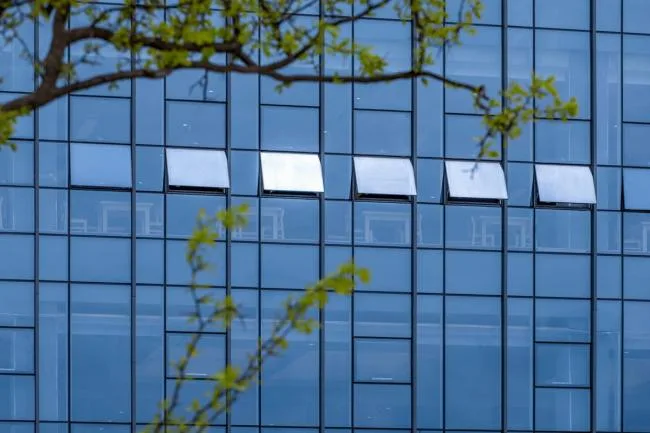
▼ Pixelated Orange-Red Porcelain Surface
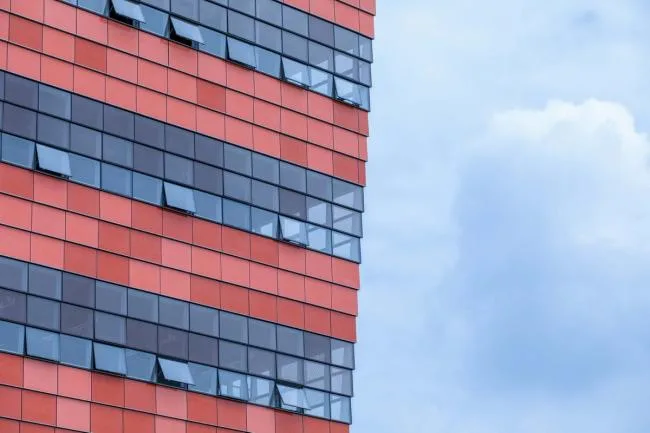
Some observers have noted that the trapezoidal facade evokes the image of the Golden Mask of Jinsha from ancient Shu culture at dusk. Architecture, as a medium, conveys emotion and meaning. As Hayek once said, “The world is composed of the knowledge and information that humans possess. The greatest wisdom of humanity is to find and discover an order that allows everyone’s local knowledge and information to freely collaborate and expand.” The architects’ primary hope is that this library, as a repository and hub for knowledge and interaction, will be cherished by many users and benefit countless learners.
▼ Axonometric Diagram
▼ Sectional Drawing
Project Information:
Designer: China Southwest Architectural Design and Research Institute
Location: Chengdu City, Sichuan Province, China
Category: Library
Lead Architect: Wang Xingguo
Design Team: Wu Pei, Zheng Tingting, Bai Kejia, Li Lei, Leng Lihao, Xu Jingxiong, Tao Xiaosen, Zhou Ying, Li Ming, Fu Yaoyin, Zhang Bin, Xiong Jun, Zhou Li, Kang Qian, Zhang Guoqiang, Jiang Wei
Building Area: 48,026.0 m²
Project Year: 2018
Photographer: Existence of Architecture
Manufacturer: Mona Lisa, Jianlang
Construction Company: Sichuan Huating Construction Co., Ltd
Client: Chengdu Renzhu Real Estate Co., Ltd












Must log in before commenting!
Sign Up