
Introduction
Fengqiao, an ancient town with a history spanning over a thousand years, located in Zhuji, Zhejiang, has become the cultural heart of the northeastern Zhuji region. This is largely due to its past as the capital of ancient Yue and its association with the Three Sages of Fengqiao. The “Fengqiao Experience” of 1962 is nationally recognized as a pioneering model for grassroots social governance.
In 2015, the architect was invited by the Fengqiao Town government to lead the renovation of Fengqiao Ancient Town. During the research phase, the architects often imagined themselves as future visitors, reflecting on the old streets and the iconic Fengxi Bridge. They soon realized the difficulty visitors faced in navigating the narrow alleys and streets of the town. This insight sparked the idea of creating an entrance pilot zone to improve accessibility, which was well received by the property owners. Midway through construction, the project scope changed when the owners requested the entire entrance area be transformed into a “Fengqiao Experience” exhibition hall, a development discussed further below.
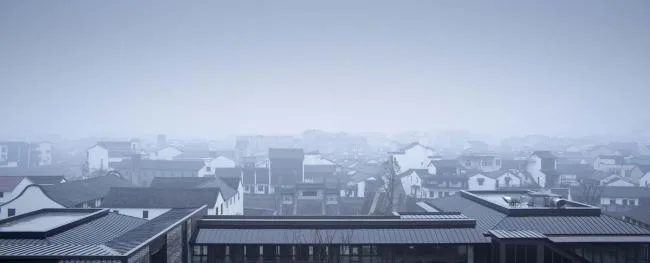
Amid irregular city walls, are there smoke trees?
Weaving and Mending – Intricate Forms with Poetic Balance
Constructing buildings in small towns differs greatly from urban projects. In cities, construction typically begins with a clear red-line map defining the land boundaries. Here, the challenge was to find a suitable plot within a densely built-up area.
After careful consultation with the property owners, an oddly shaped, winding plot emerged: to the south, it borders the newly renovated Xiaoyi Old Street, which the architects had previously helped restore; to the north, it faces the local “mother river,” Fengxi; and on the east and west sides, various existing buildings of different sizes and heights surround it.
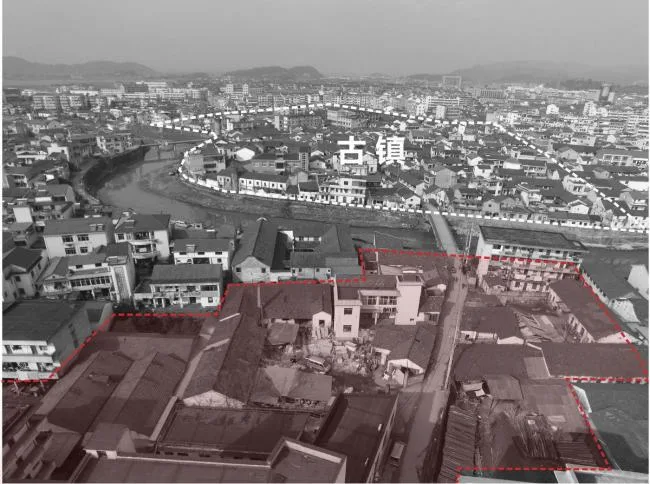
▲ Outline of the irregularly shaped plot
Rather than choosing the main transportation artery as the entrance, three reasons guided the selection of this site: First, entering the ancient town by crossing the Fengxi River via a bridge offers a poetic and memorable experience. Second, this location allows interaction and visibility between the ancient town and Xiaoyi Old Street. Third, the site contains several abandoned public buildings, making land acquisition easier and presenting an opportunity to repurpose the land. Additionally, relocating disruptive wood and stone workshops benefits the local community.
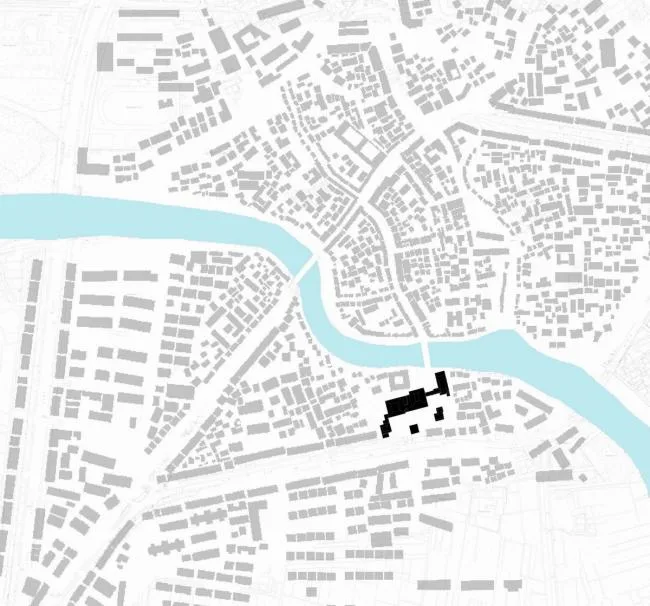
▲ Project location
The unusual shape of the land reminds us that in small towns, wide streets and square plots are rare. Our approach is to harmonize with the town’s existing fabric, balancing accessibility, land acquisition feasibility, and convenience with humility.
Activation – Addressing the Lack of Public Space
Simply having an entrance to the ancient town would be insufficient. Fengqiao Ancient Town and its surrounding urban area suffer from a severe shortage of public spaces for residents. This project aims to offer a solution.
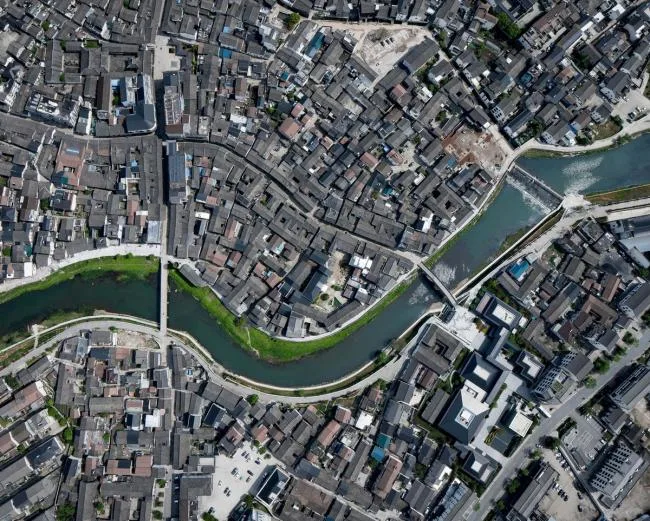
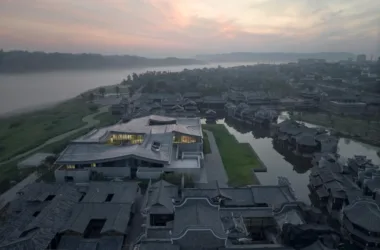
▲ Aerial view
Facing Xiaoyi Old Street, we designed a main courtyard welcoming visitors from all directions. This space is separated from the city by a water body, requiring guests to cross a slightly elevated bridge, creating a psychological transition. On the east side of the courtyard, an installation called “Yingyue” enhances the poetic atmosphere and serves as a popular photo opportunity for tourists and locals alike.
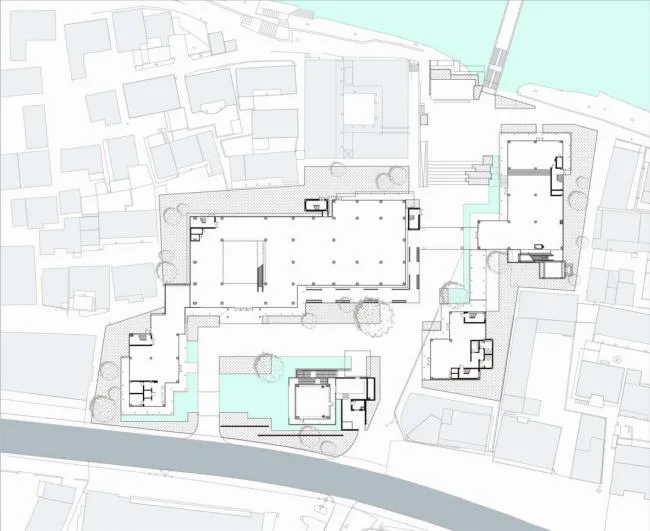
▲ First-floor plan
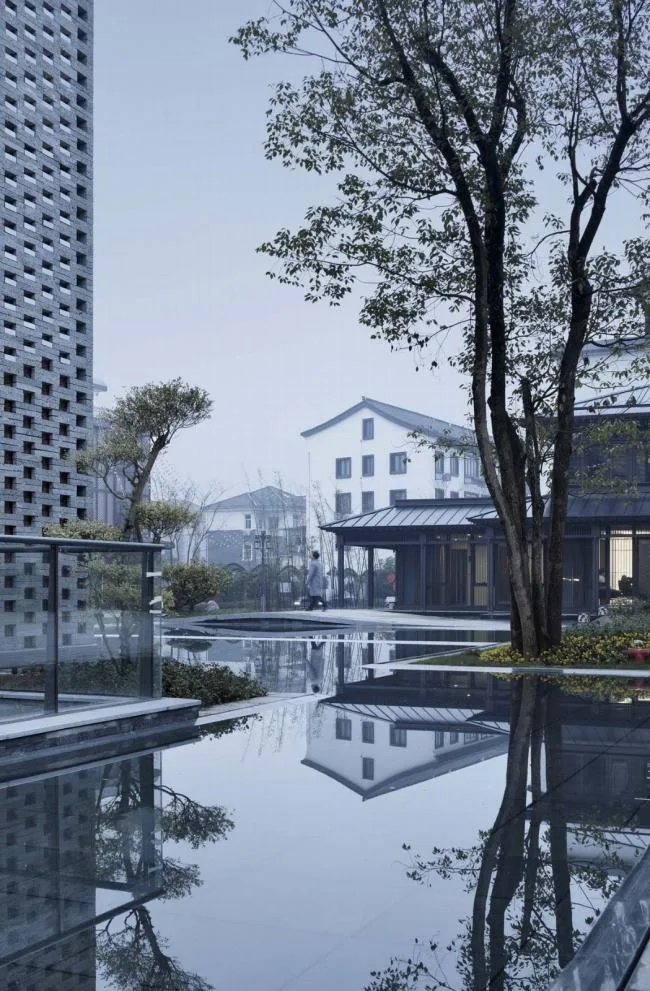
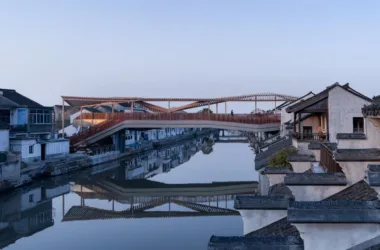
▲ Crossing the water body from the city, shifting mindset, entering the main courtyard
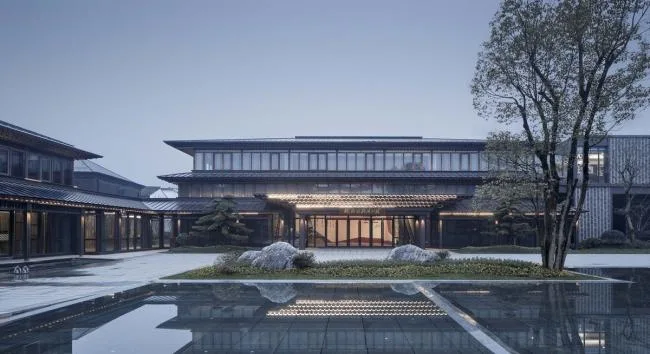
▲ Main courtyard
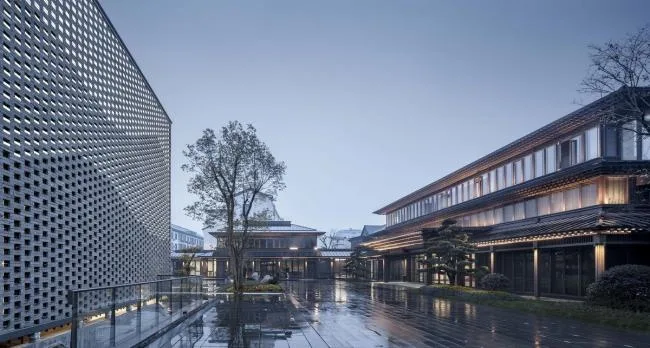
View of the main courtyard from another angle
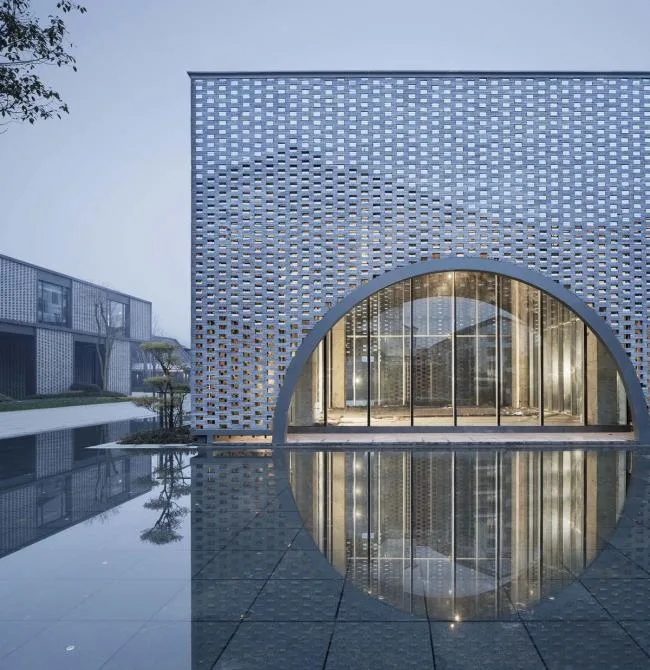
▲ “Reflection on the Moon” – Landscape feature
Along Maple Creek, we created a semi-enclosed square adjacent to old houses and a memorial archway. This waterfront space is a rare “virtual” zone along both banks of the Fengxi River, accommodating growing foot traffic from the ancient town. Visitors pause to enjoy the view, rest, or take photographs with the town as a backdrop. On the first New Year’s Day after project completion, a grand folk festival was hosted here, establishing a vibrant community destination.
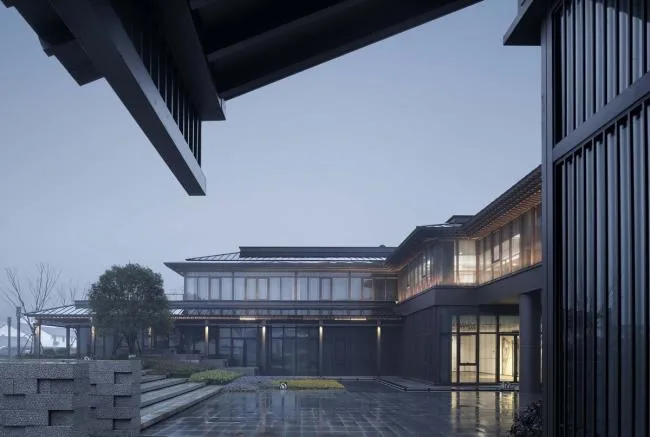
▲ Square by Fengxi River
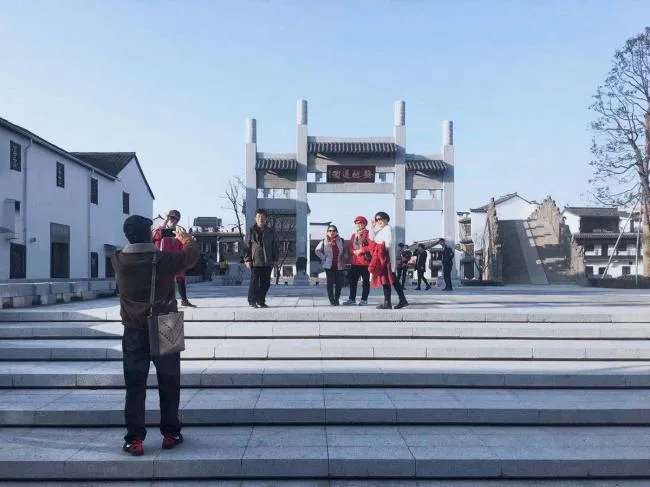
▲ Visitors taking photos as souvenirs at the Fengxi River square
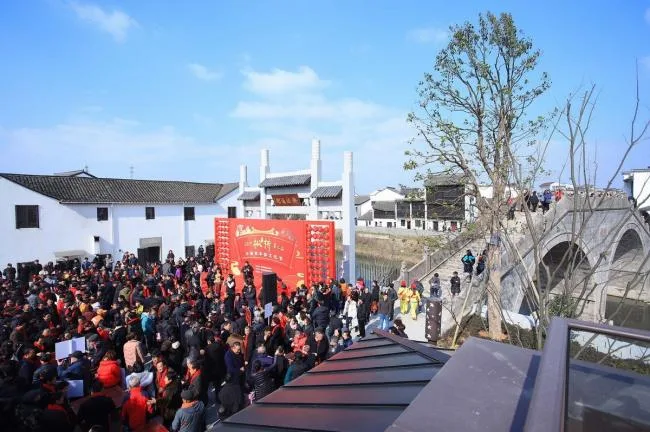
▲ New Year’s Folk Festival held at the Fengxi River square
This project goes beyond tourism, accommodating exhibitions, commercial activities, and small meetings, thus enhancing the town’s public facilities.
Seeking Meaning – Artistic Expression of Traditional Architectural Spirit
At the courtyard’s center, a glass box floats on the water. It is draped in a stone “gauze” featuring a semi-circular opening facing the water. This design allows the bright moon to reflect on the surface, embodying the nostalgic connection to the moon in Chinese ancient towns.
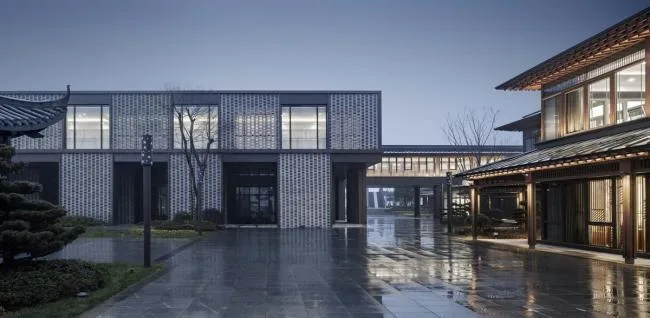
▲ Stone gauze detail
Fengqiao is not only an ancient town but also a landscape of mountains and water. The box’s surface hints at this landscape, and at night, subtle light filters through the stone, enhancing its ethereal quality.
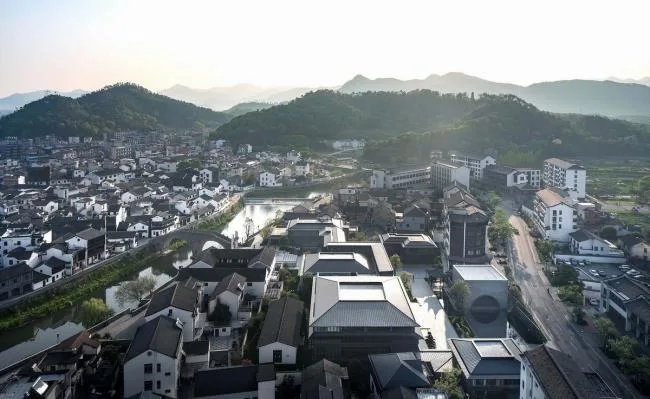
▲ Architecture, Ancient Town, Landscape
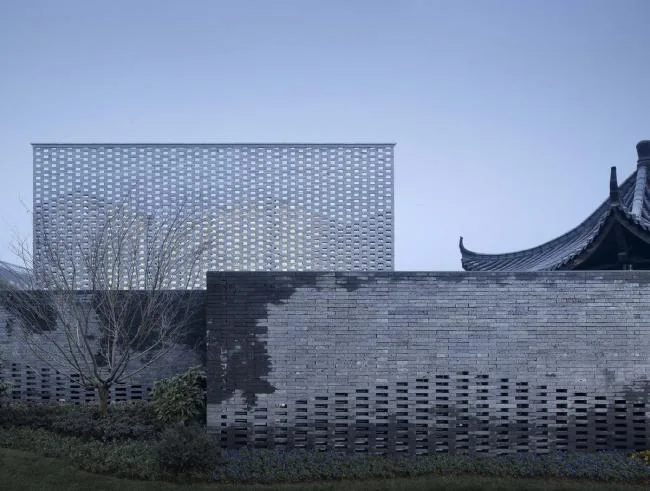
▲ Softly glowing stone box
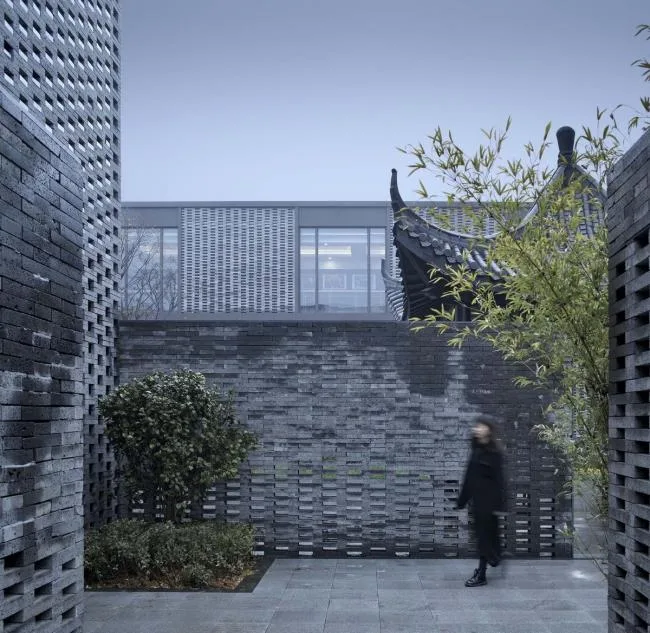
▲ Stone Box Courtyard
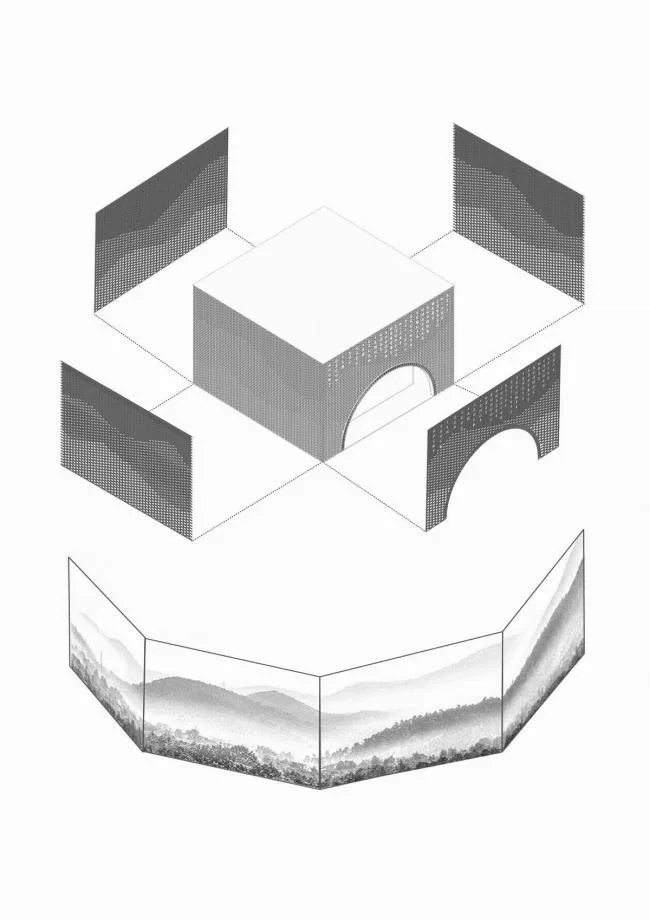
▲ Facade analysis diagram
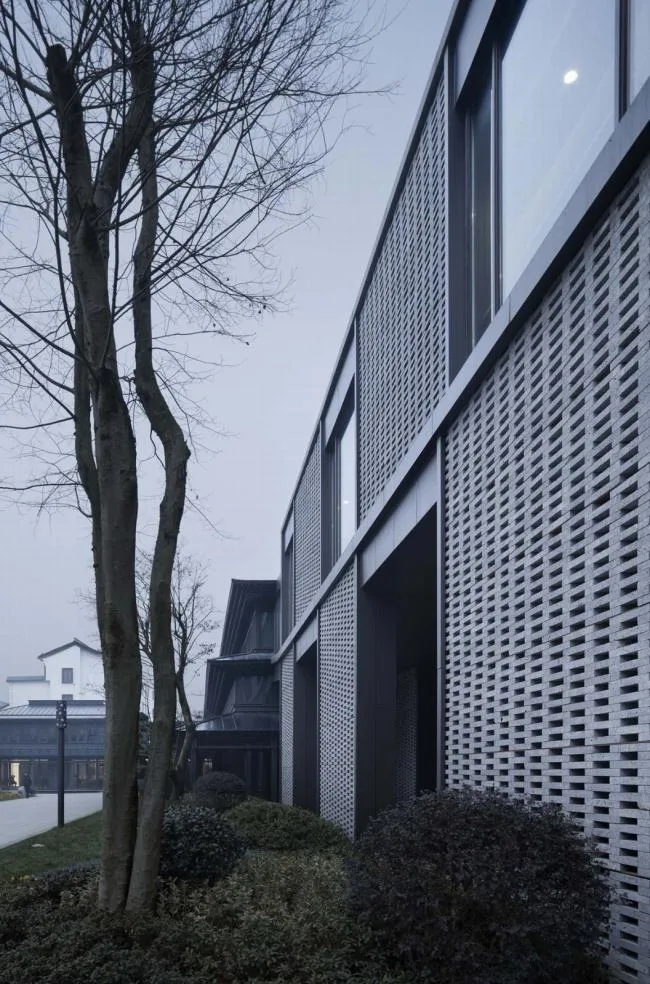
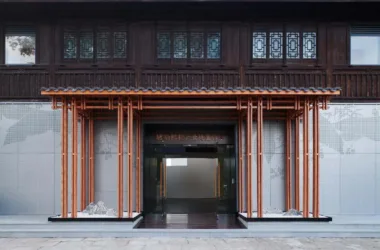
▲ Facade details
Beyond fleeting poetry, the entrance’s atmosphere is conveyed through the artistic spirit of traditional architecture. Different areas evoke distinct moods—some explicit, some subtle—each carrying its own meaning.
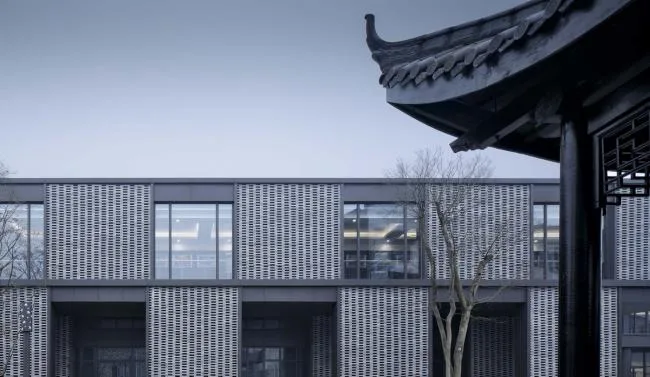
▲ Harmony between tradition and modernity
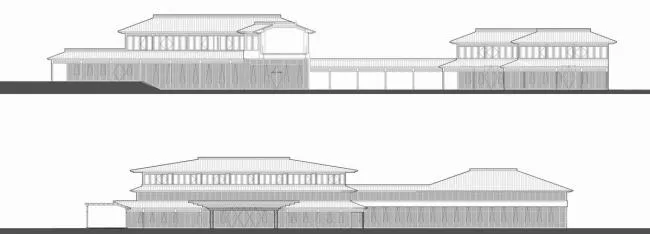
▲ Elevation view
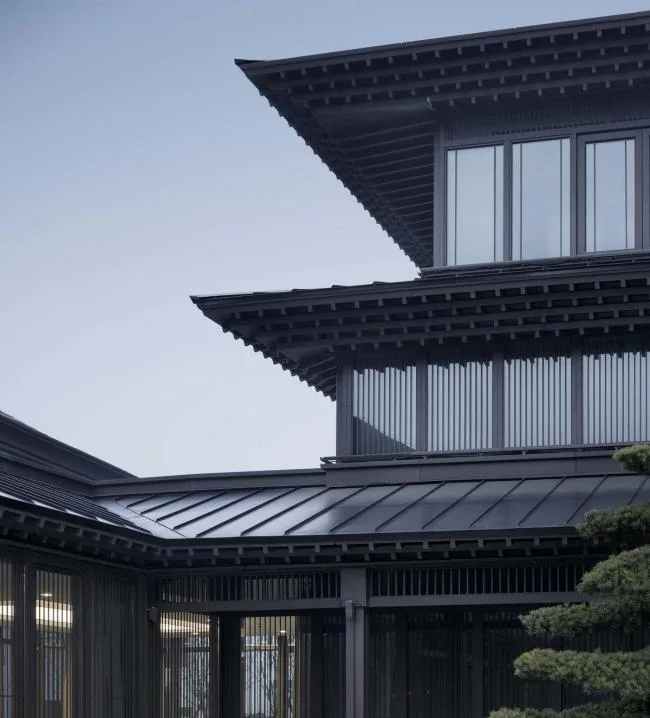
▲ Cornice details
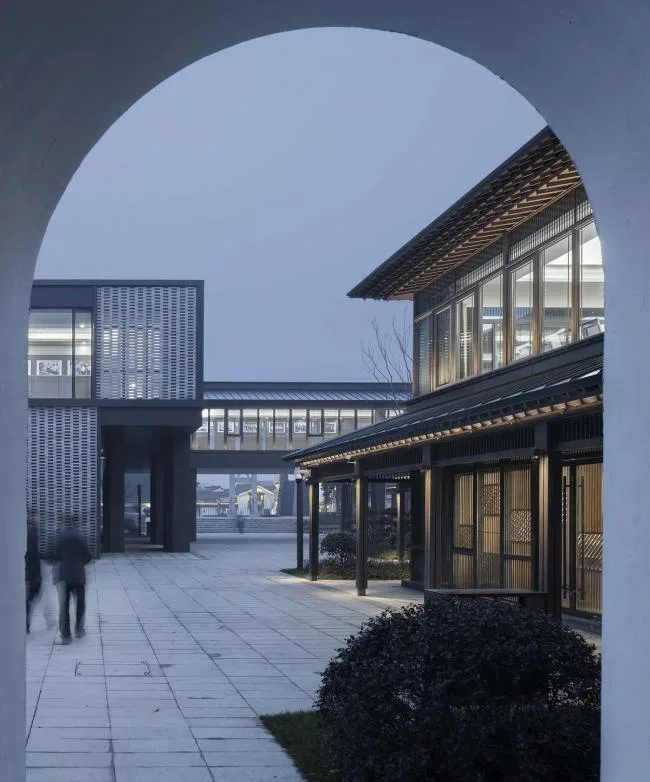
▲ Framing scene
Afterword
With two of the five buildings already topped out, the owner (BIM training) was informed that, in honor of the 55th anniversary of the “Fengqiao Experience” commemorative conference, senior officials wished to convert the entire entrance area into a Fengqiao Experience Exhibition Hall, no longer serving as a simple entrance. The design team quickly adapted the plan, adding indoor corridors connecting the buildings while preserving the original entrance’s appearance. These adjustments, closely coordinated with civil construction, exhibition, and landscape teams, ensured the project’s timely completion. The conference was successfully held as planned.
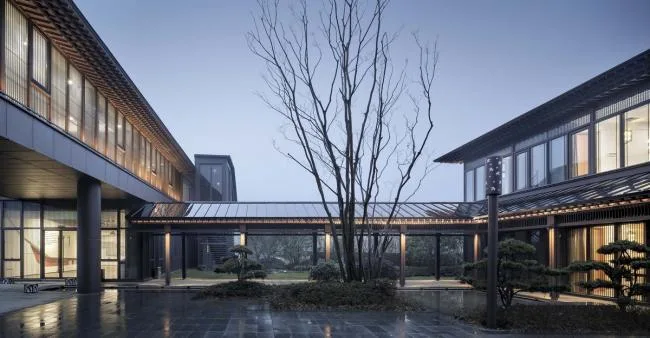
▲ Corridor and courtyard
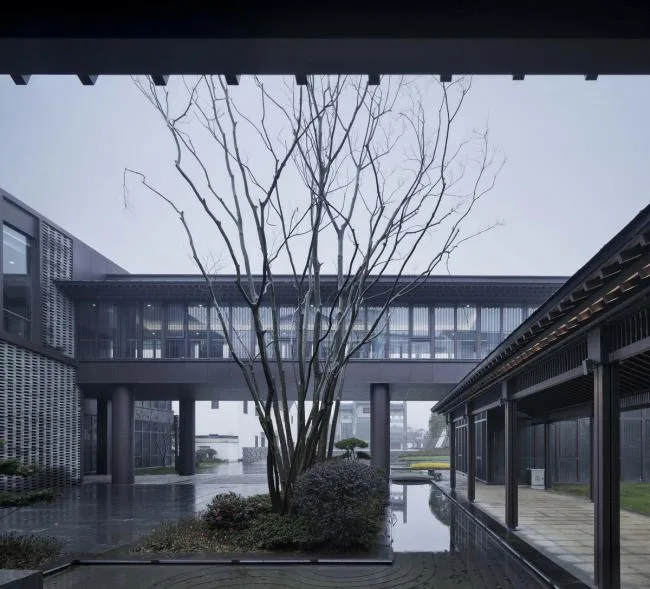
▲ Corridor and courtyard
Project Information:
Designer: Zhejiang University Architectural Design and Research Institute
Address: Xiaoyi Road, Fengqiao Road, Zhuji City, Zhejiang Province, China
Category: Exhibition Center
Design Director: Mo Zhoujin
Project Manager: Wang Yuping
Designers: Guo Lidong, Jiang Zhelin, Sun Yunjia
Building Area: 5,687.0 square meters
Project Year: 2018
Photographers: Zhao Qiang, Song Shan
Structure Team: Jin Xingxin, Wu Qiang, Zhang Shenbin, Rong Zihan
Water Supply and Drainage: Yi Jiasong, Deng Qian
HVAC: Wang Yalin, Ma Yanbin
Electrical: Wu Xuhui, Hou Yuhui
Low Voltage Systems: Ma Jian, Lin Minjun
Landscape Architects: Tang Zerong, Wang Jietao, Zhu Liang, Ao Dandan, Zhu Jing
Lighting Designers: Wang Xiaodong, Jiang Yuanmin, Sun Guojun, Fu Yong
Curtain Wall Specialists: Tao Shanjun, Chen Dong
Interior Designers: Chu Ran, Zhang Bin, Ma Bo (BIM Engineer)
Collaboration Team: Achieving the Ultimate Realm












Must log in before commenting!
Sign Up