
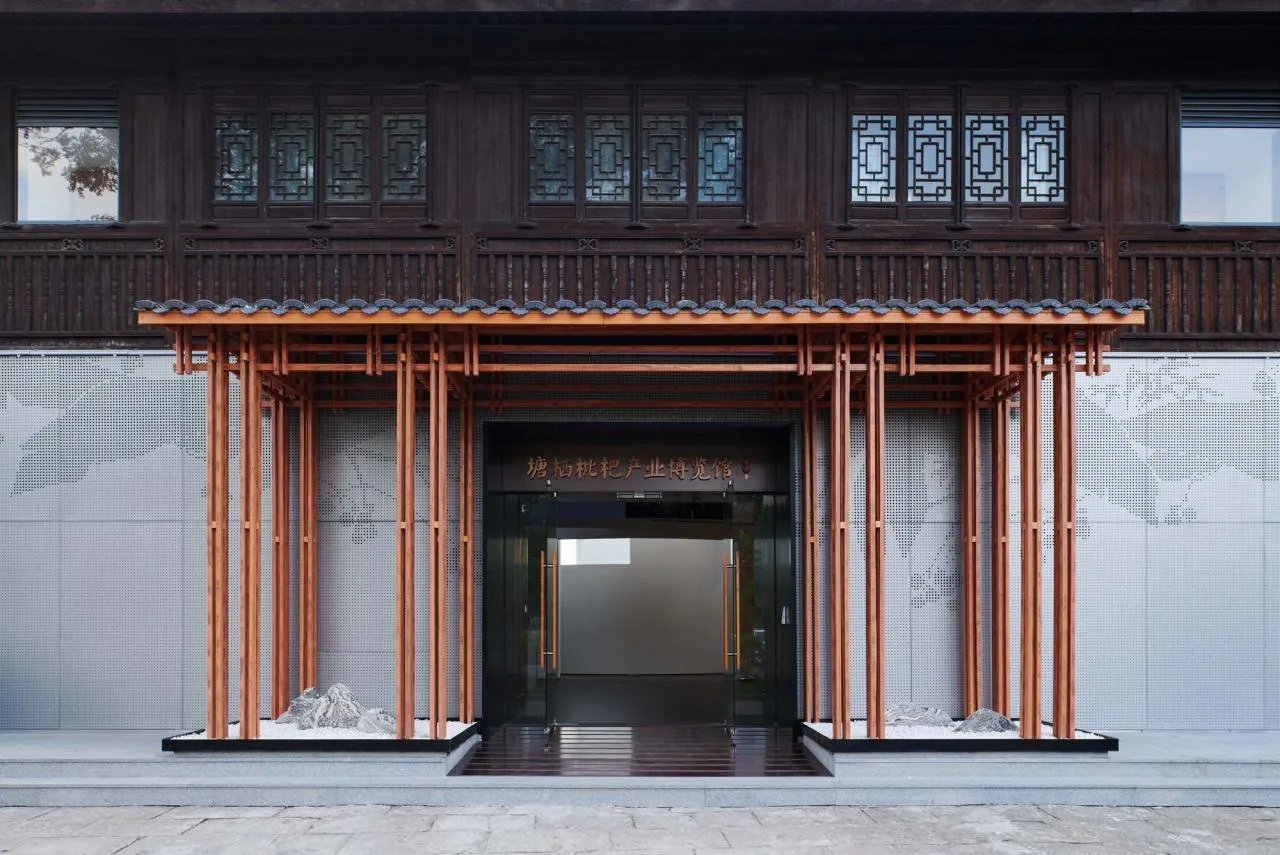
The Loquat Museum is situated within the Tangqi Ancient Town Scenic Area. Tangqi Town lies along the strategic Beijing-Hangzhou Grand Canal waterway, serving as the northern water gateway to Hangzhou city. The canal’s construction fostered local settlement, and wild loquat fruit cultivation gradually flourished here. First planted during the Sui Dynasty, Tangqi loquats boast a long and rich history, becoming one of the town’s key industries. Today, the loquat industry stands as a prominent symbol of Tangqi Town’s agricultural heritage.
This project, commissioned by the Tangqi Town Government and partner institutions, transforms an existing building into an exhibition hall dedicated to the loquat industry, forming a significant cultural tourism node within Tangqi Ancient Town. The renovated building covers a total area of 1,153.2 square meters. It borders the He Sijing Memorial Hall to the west, the main street to the south, and an inner courtyard to the north.
Originally, the second floor featured a glass roof allowing natural daylight, whereas the first floor was enclosed and dimly lit. The two floors were separate, connected only by a fire escape staircase.
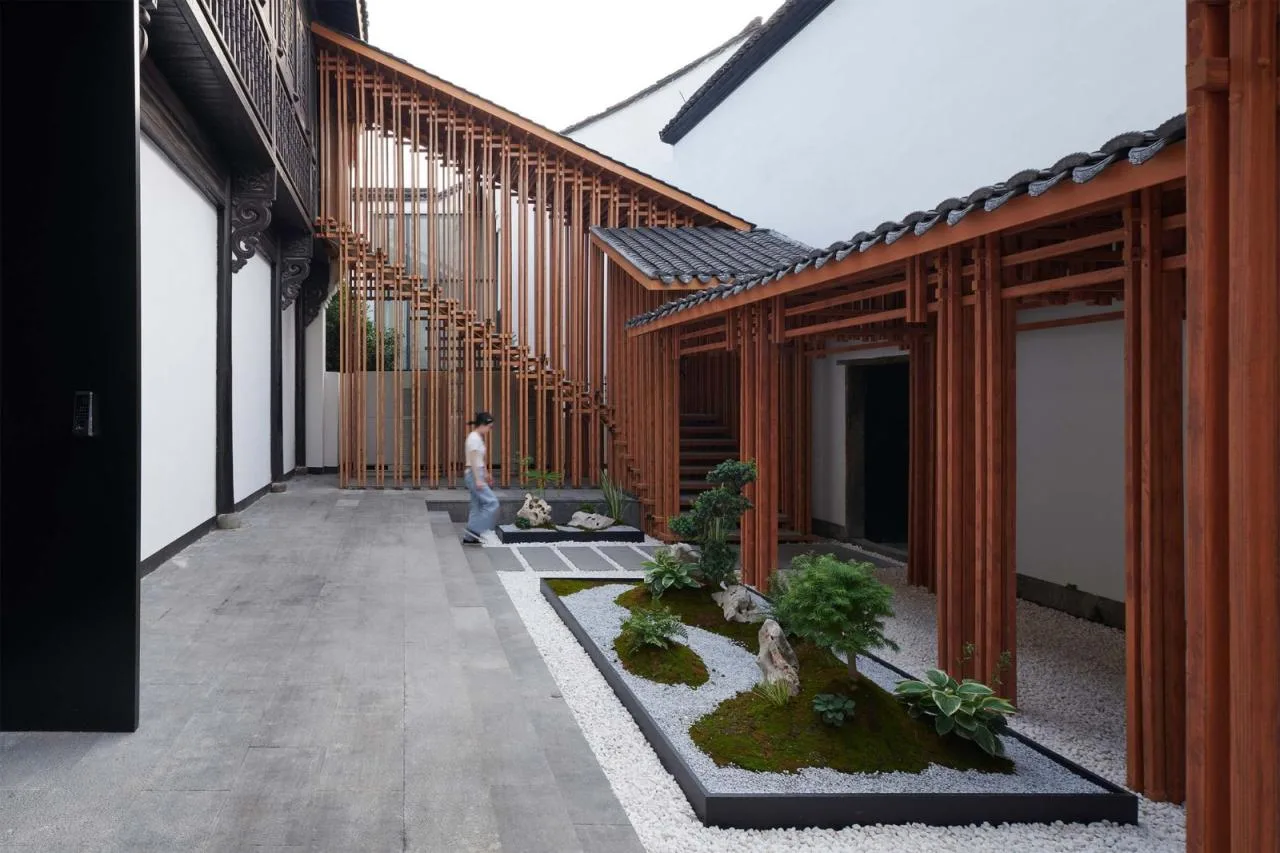
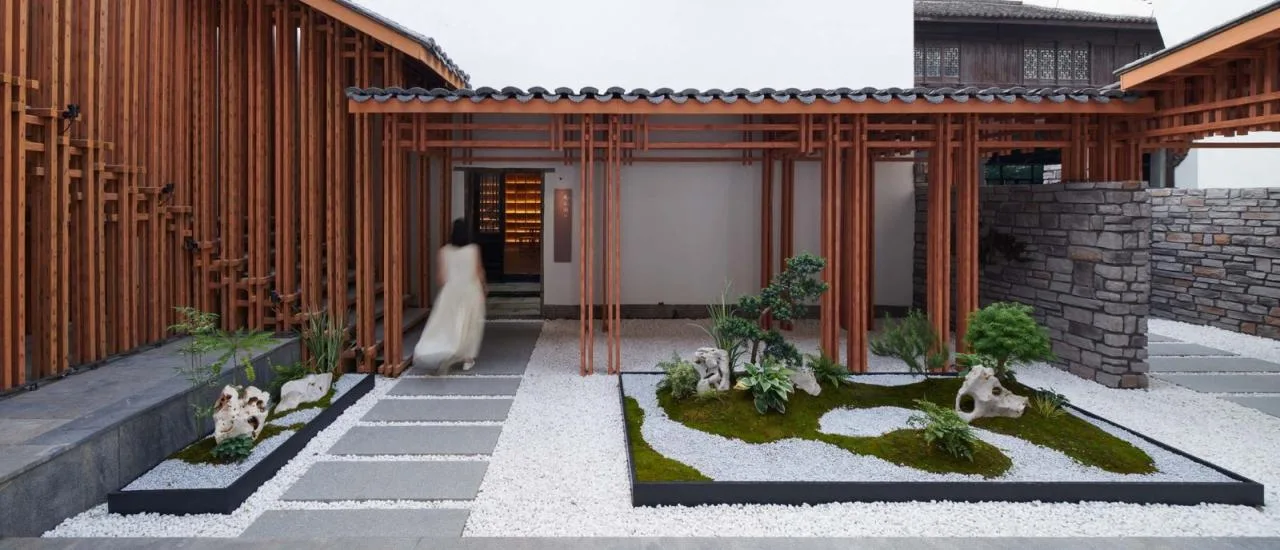
Given its location within the cultural belt of Tangqi Grand Canal Ancient Town, the building’s exterior underwent a sensitive update that respects the original town’s architectural unity. The traditional upper facade was preserved, including the ornate flower-patterned doors and windows on the second floor facing outward.
On the first floor, a contemporary wooden structure with a modern “bucket arch-like” design was introduced, integrating with the entrance rain corridor. The back of this structure features a perforated aluminum panel shaped like a loquat fruit silhouette. This juxtaposition reflects a dialogue between past and future: the upper half honors tradition, while the lower half embraces modernity.
Inside this historic facade lies a completely different world. The museum aims to create an immersive utopia contrasting the external environment. To achieve this, the previous separation between the first and second floors was removed, replaced by an installation art piece spanning both levels called the “Heavy Loop”.
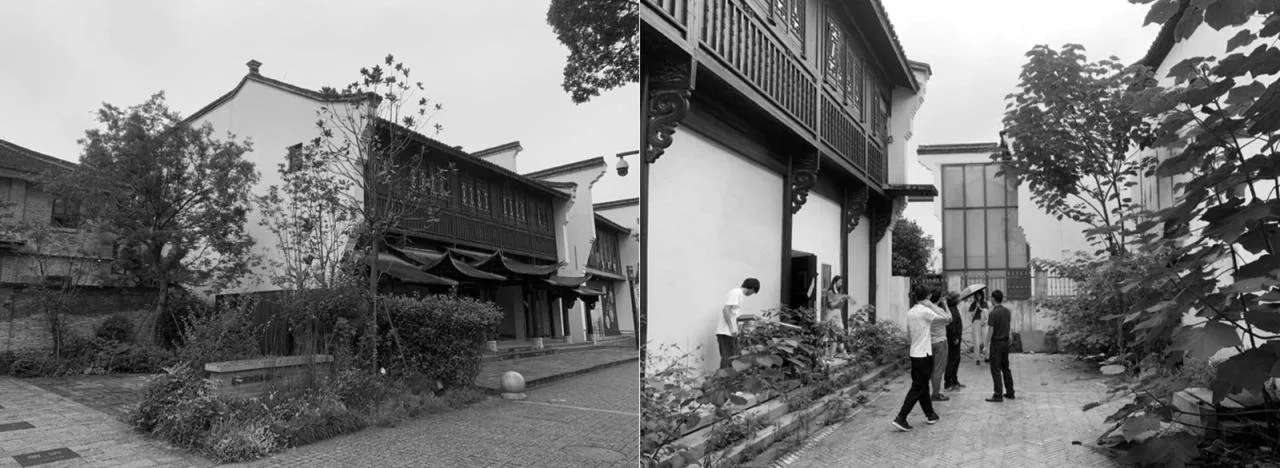
△ Original building
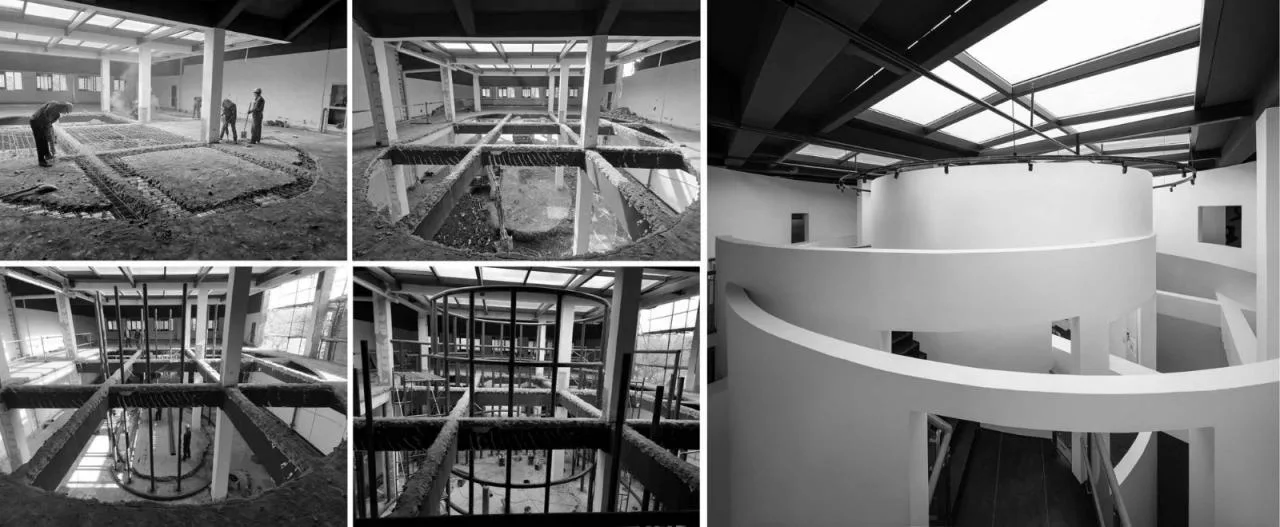
Construction process showing the integration of new steel structures with the existing framework.
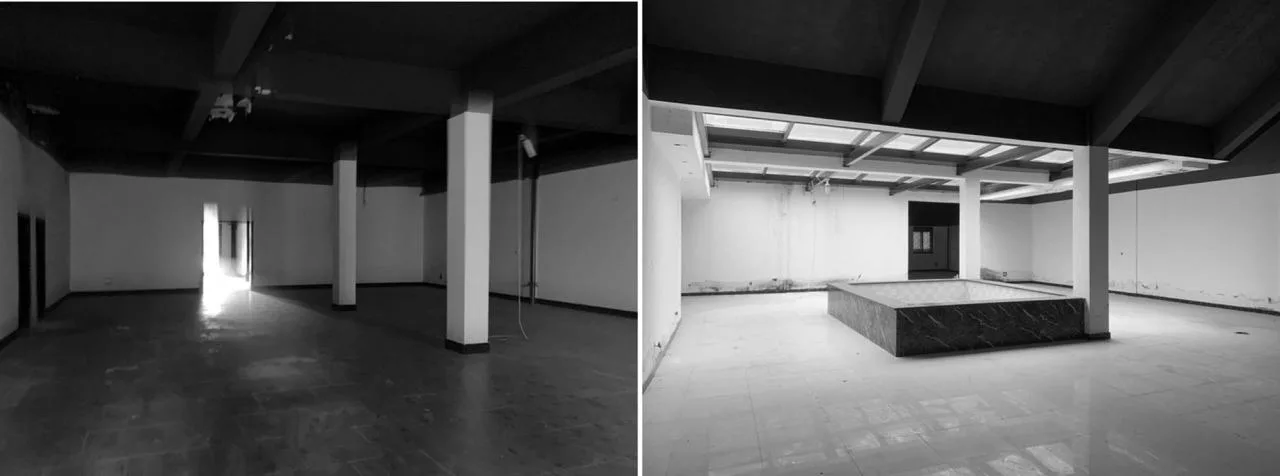
△ Left: The original dim first-floor space; Right: Second-floor glass roof atrium
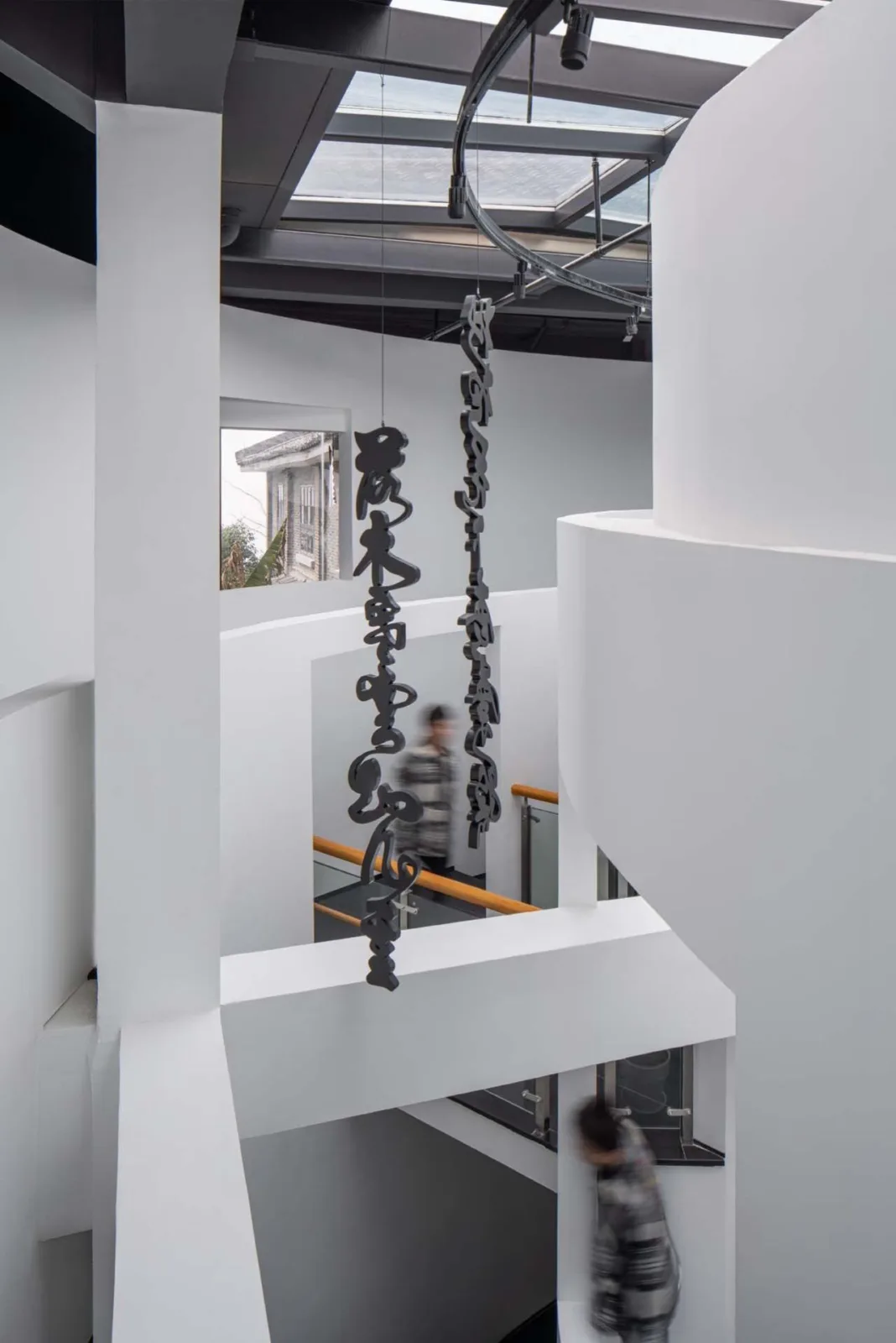
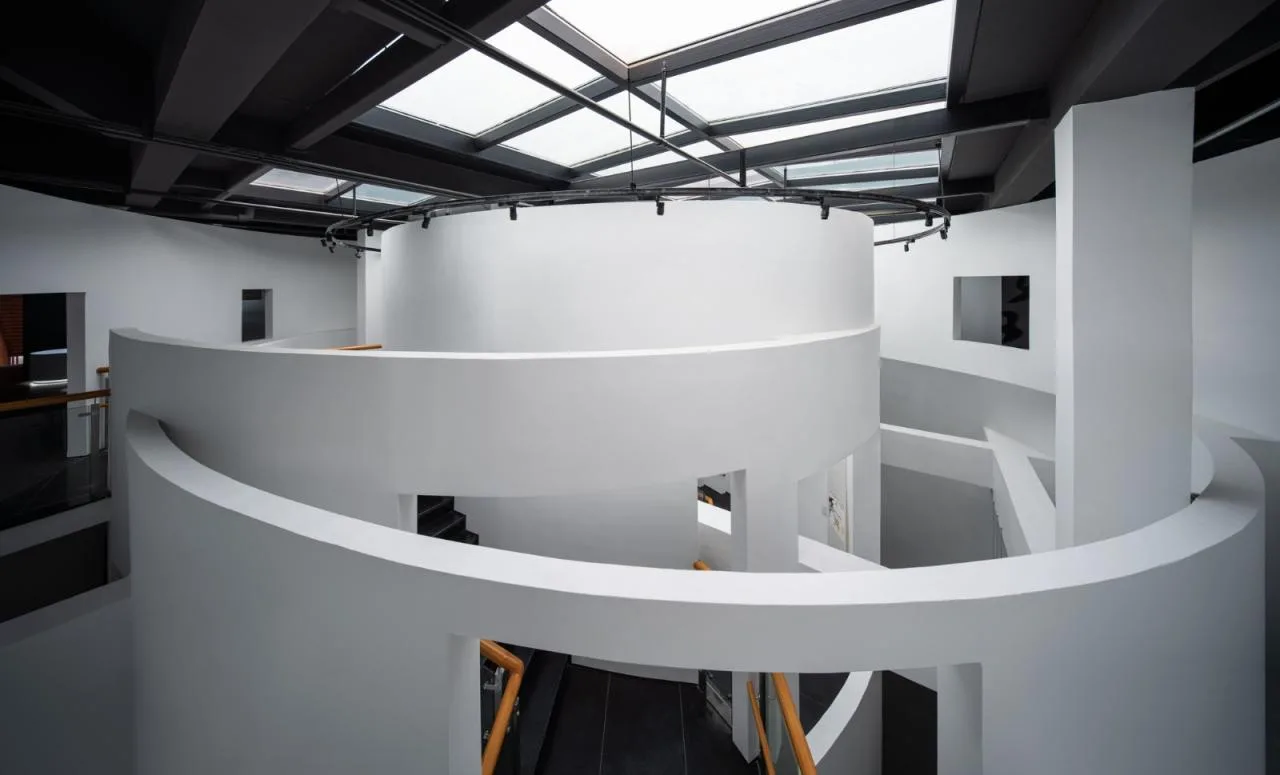
The “Heavy Loop” is a pure white, multi-layered circular atrium composed of elliptical rings of varying heights and sizes. This layered “heavy ring” defines an internal circular atrium that guides visitors through a gradual spatial journey, akin to the slow unfolding of an ancient Chinese scroll painting.
The circular atrium offers a moment of respite from the dense exhibition content, allowing visitors to breathe deeply and immerse themselves in the interplay of space, nature, and light. Inspired by iconic circular designs like Wright’s Guggenheim Museum and Baeza’s Granada Museum, this spatial prototype organizes visitor flow through a gently ascending circular path connecting the floors. Exhibition spaces line the perimeter, ensuring clear and distinct visitor circulation.
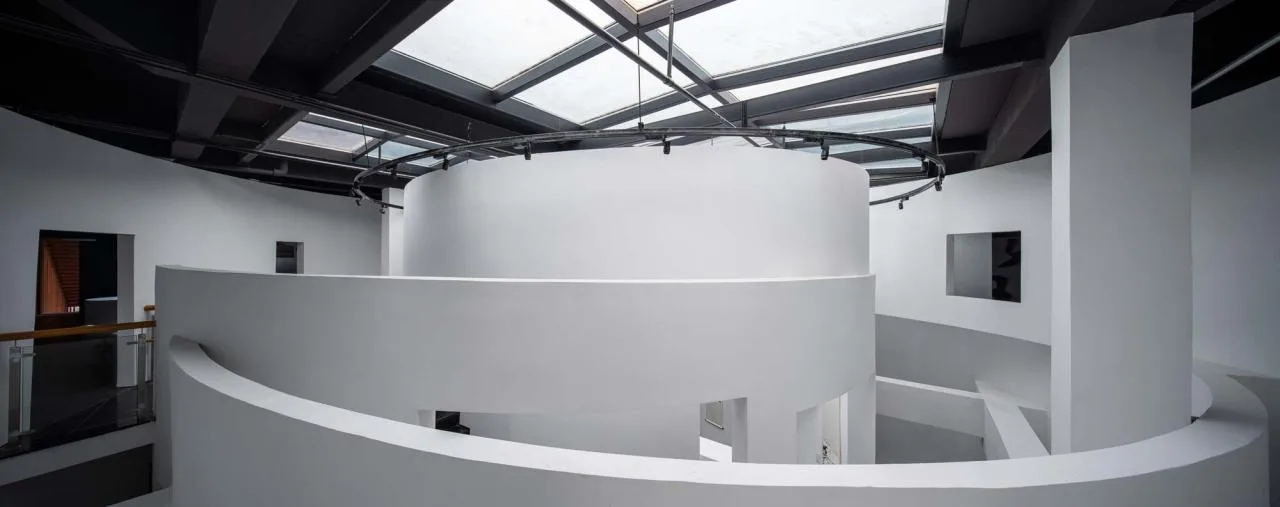
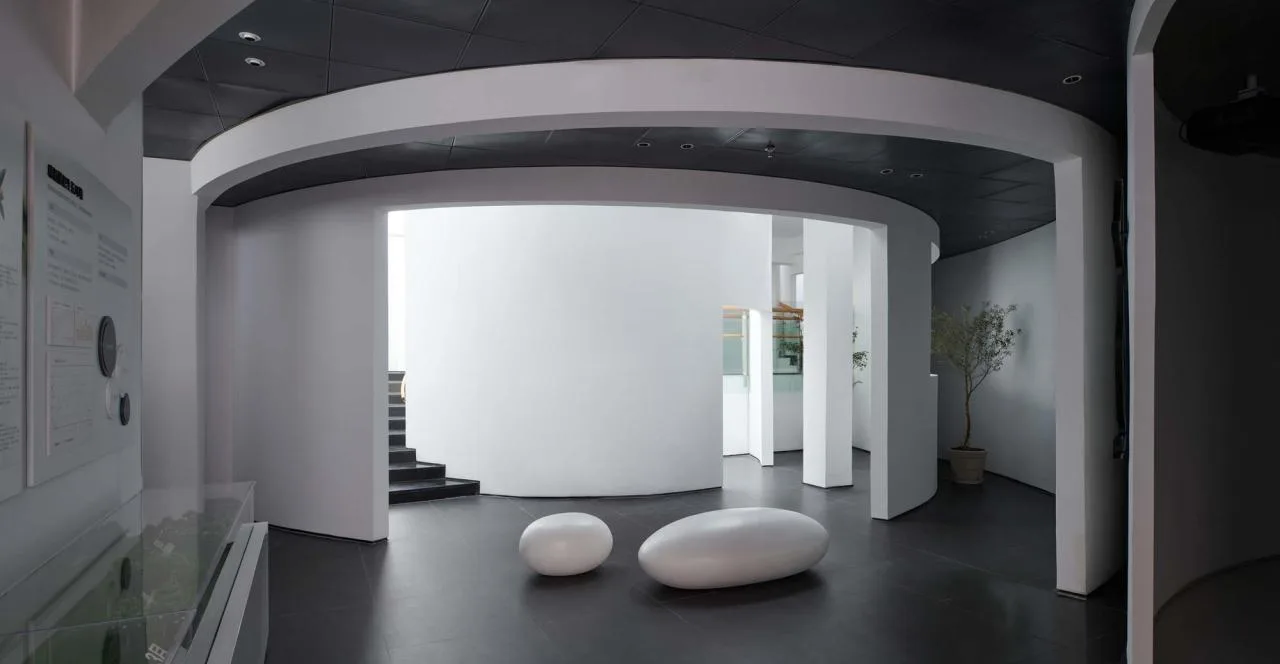
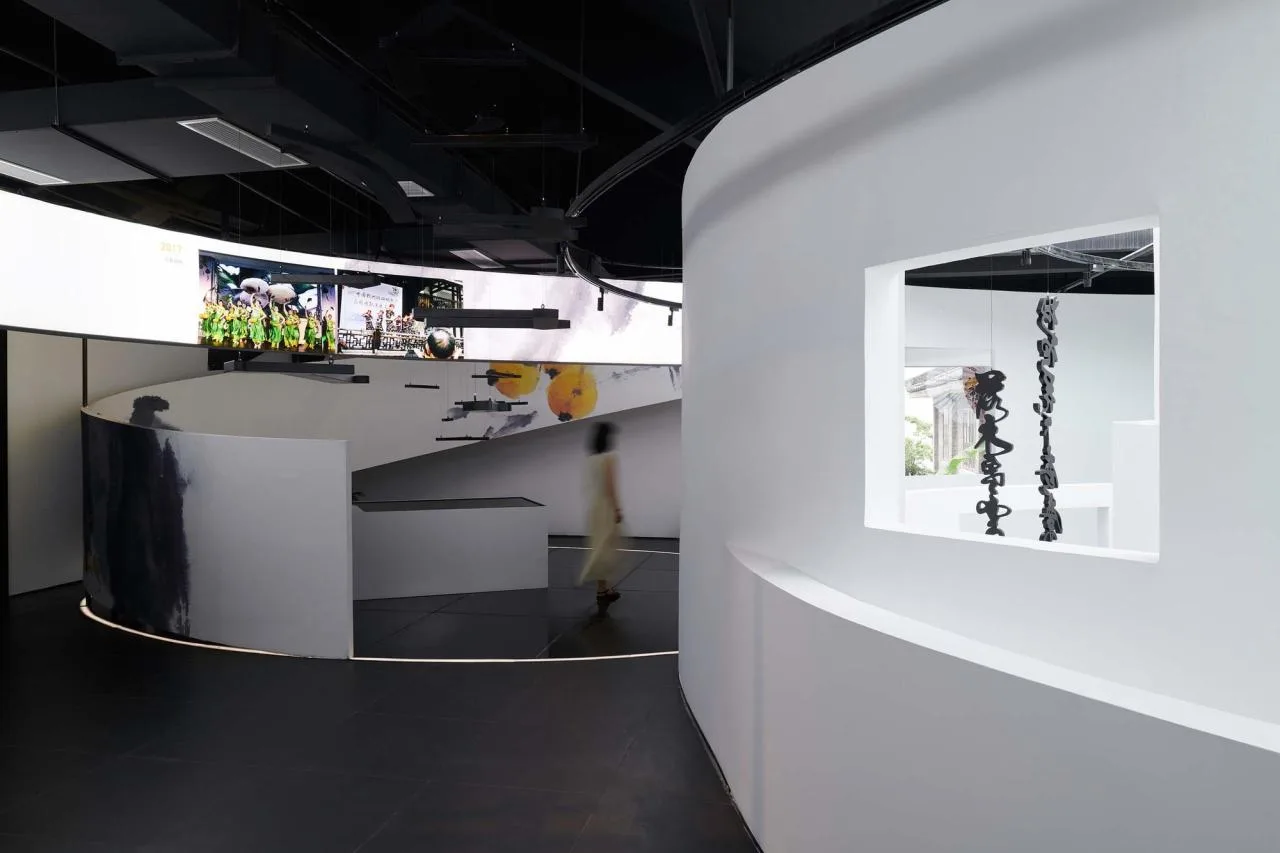
The main challenge was adapting this prototype circular space within the constraints of the existing building structure. The smooth circular upward path had to navigate around the old beams and columns, creating a dynamic interplay between new and old. This structural dialogue invites a more open and intriguing interpretation of the space.
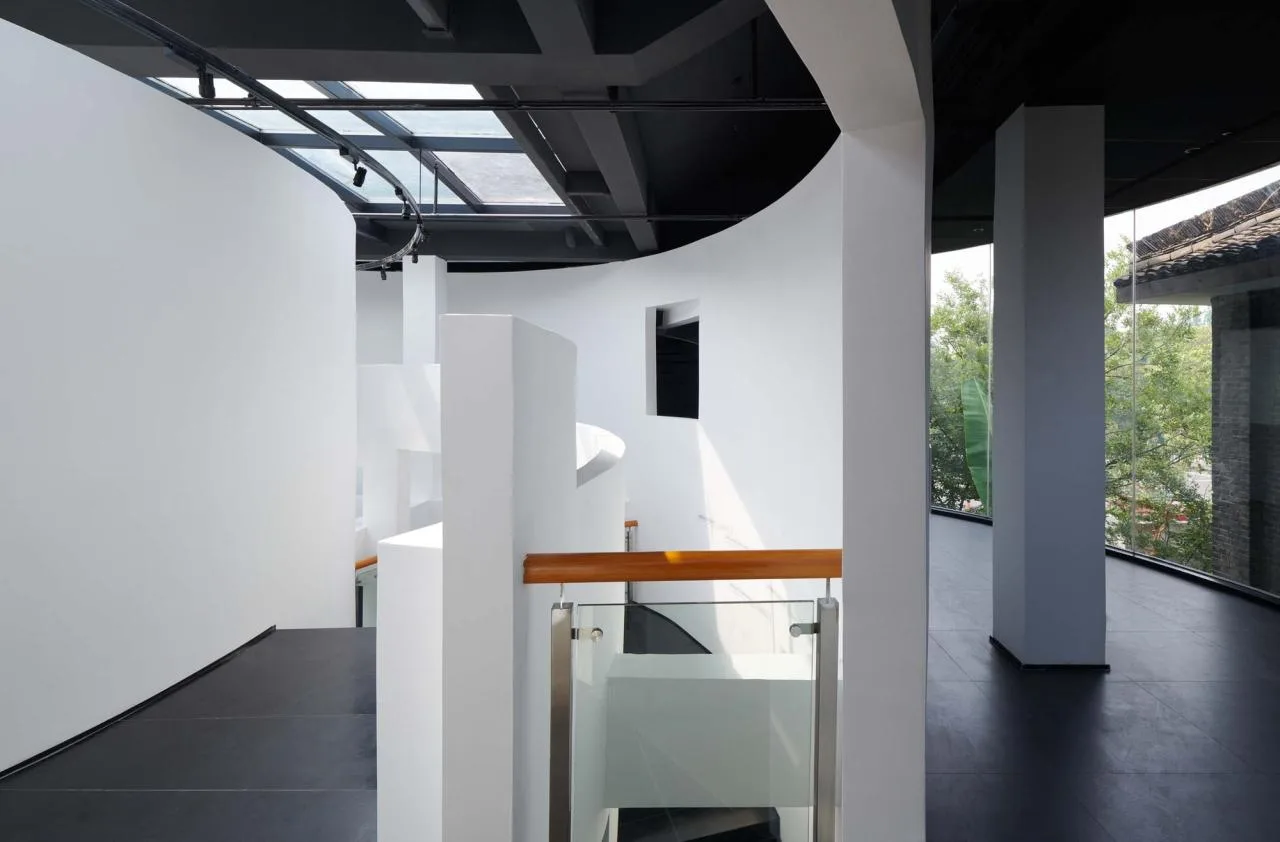
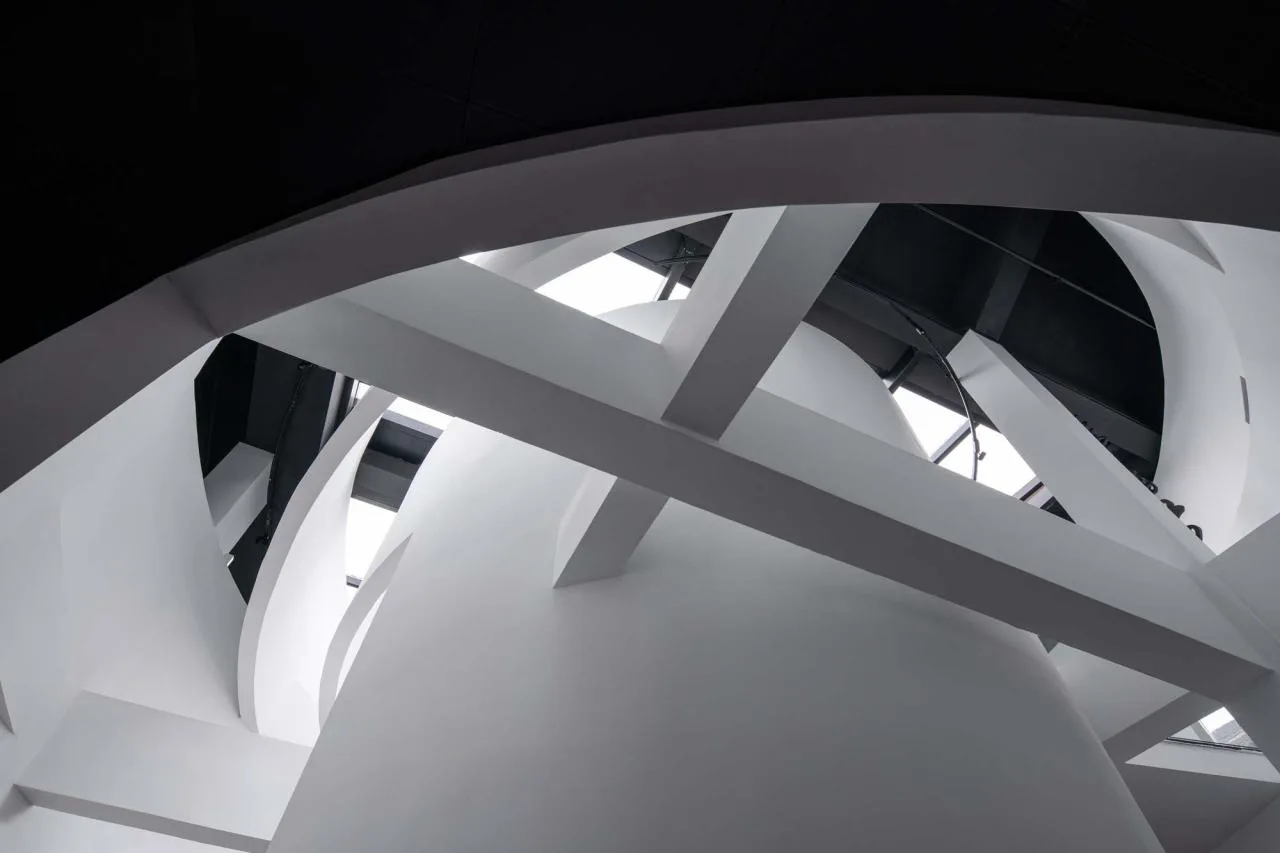
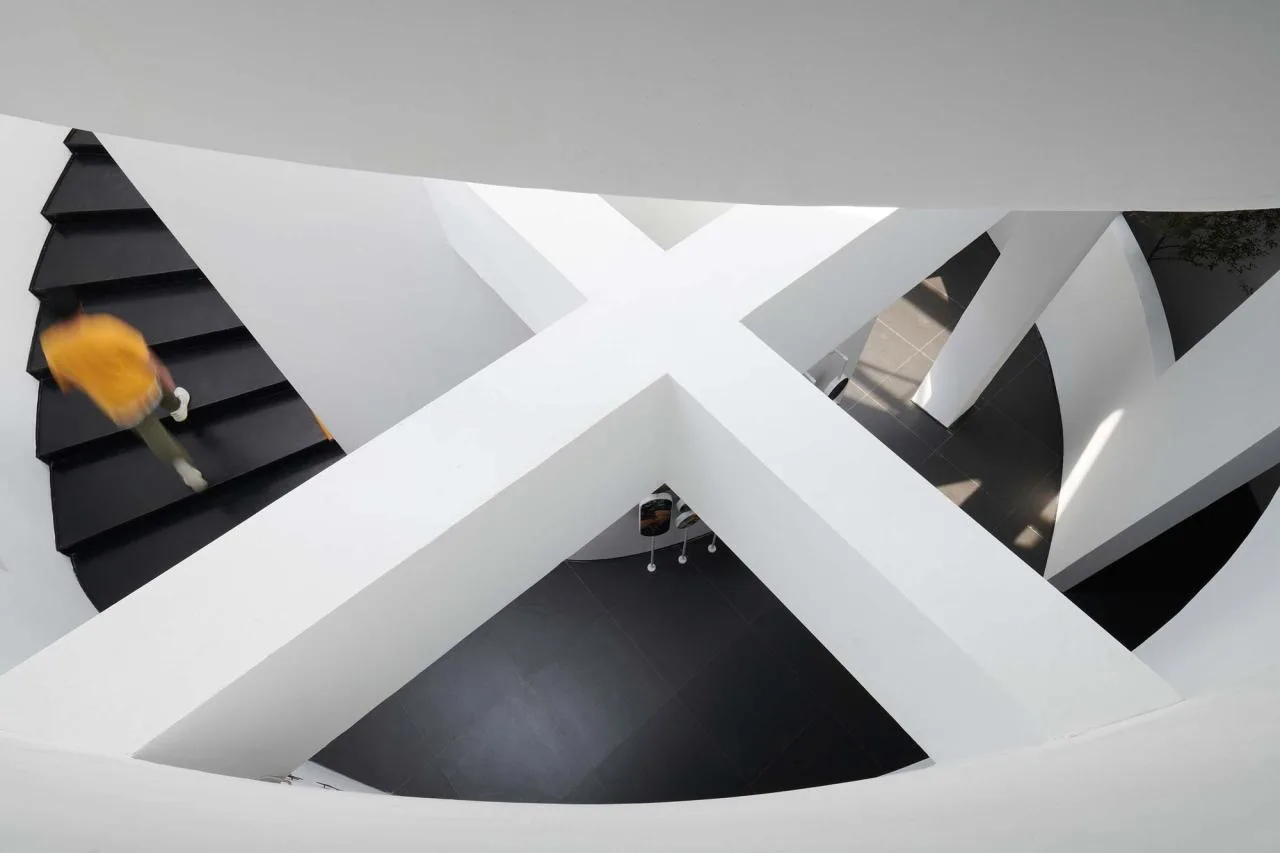
The experience of the “Heavy Loop” can be understood on three levels:
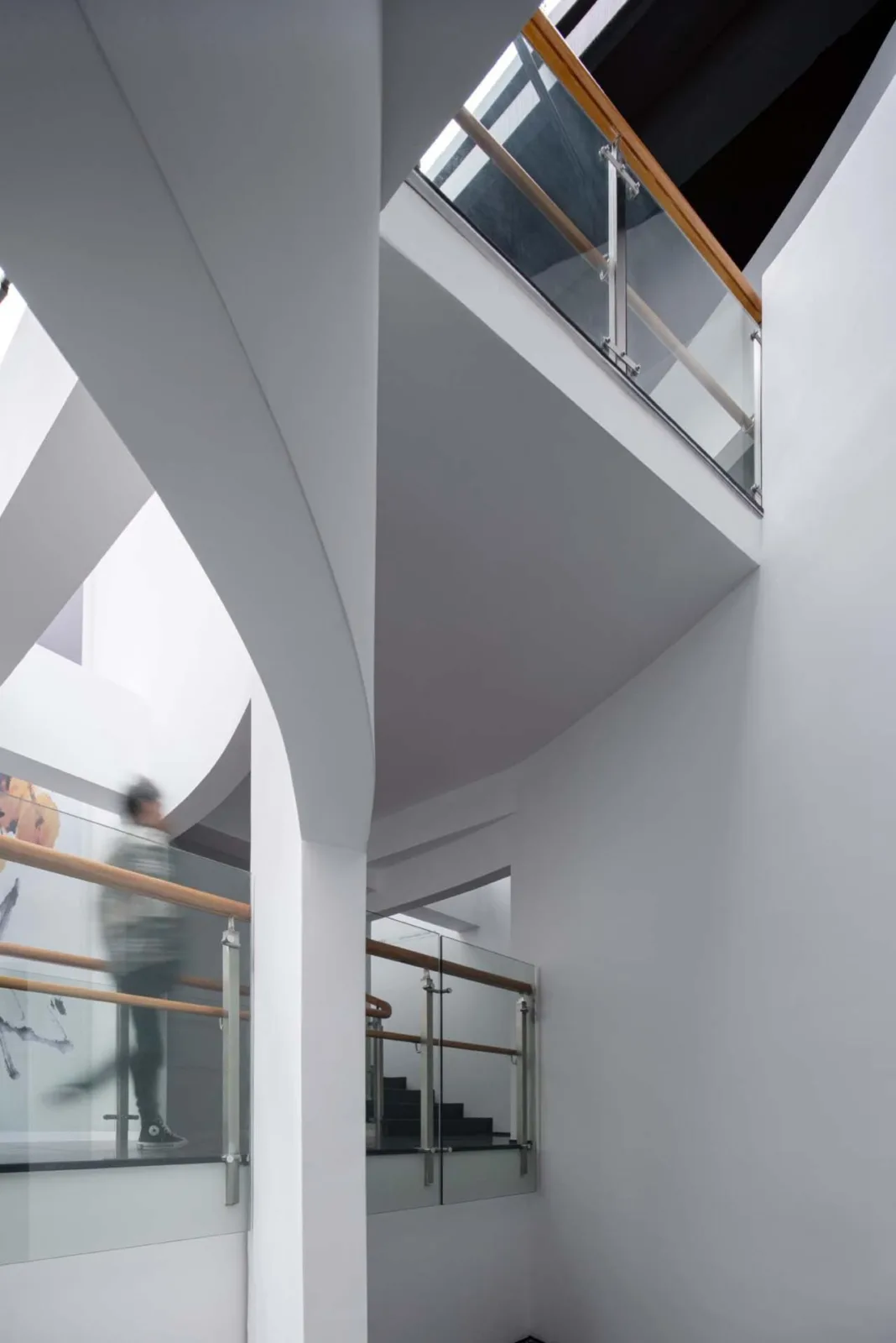
1. Following the Flow: Visitors move slowly along the curved walls, tracing a path that is not perfectly aligned due to deliberate dislocations within the ring system. These “misaligned” layers create spatial gaps that connect the two floors, allowing air and sightlines to flow freely. This “heavy” effect introduces complexity and poetic variation to what would otherwise be a simple circular path. Visitors glimpse fragments of past and future within these gaps, forming a unique spatial narrative blending familiarity and mystery.
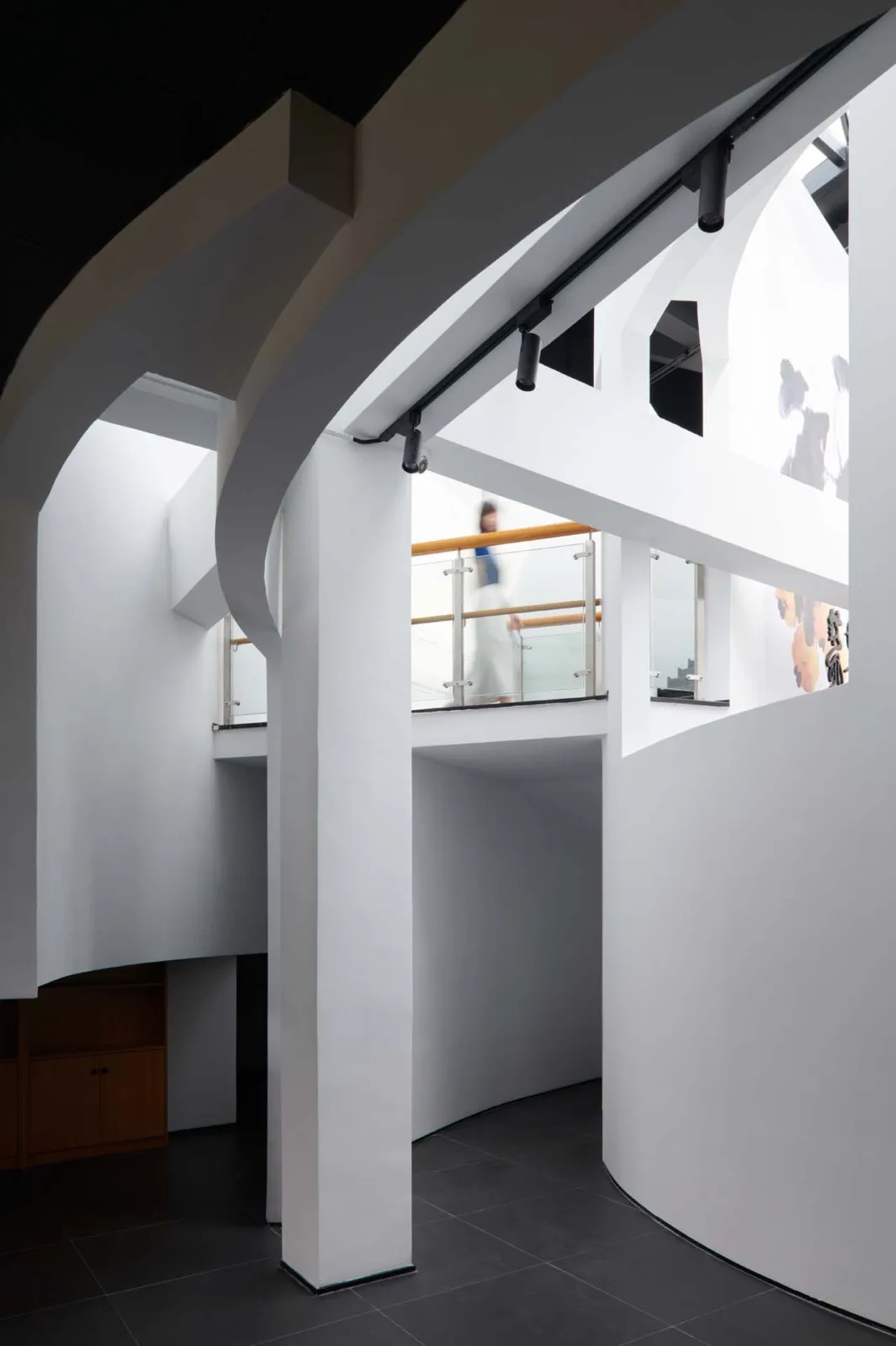
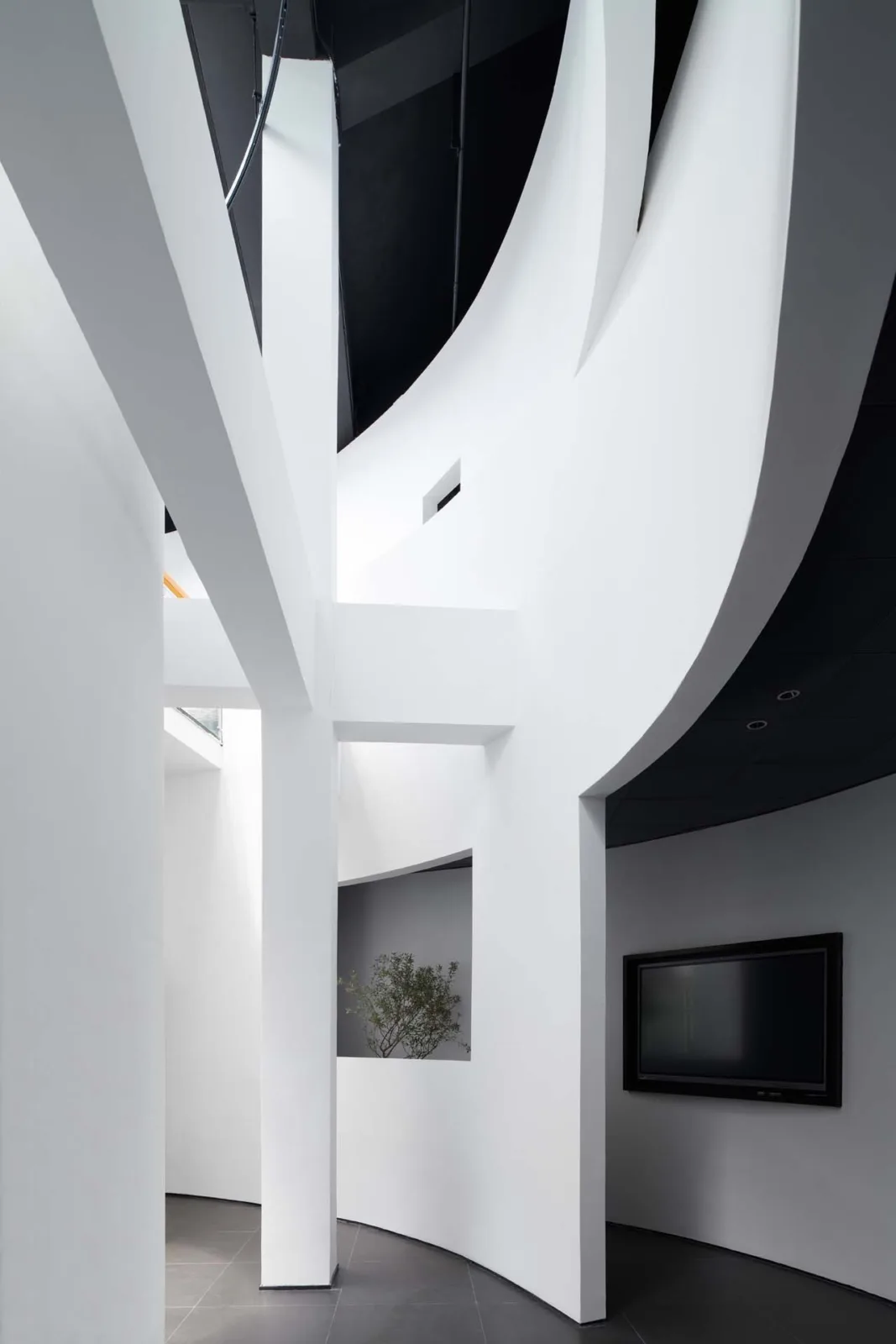
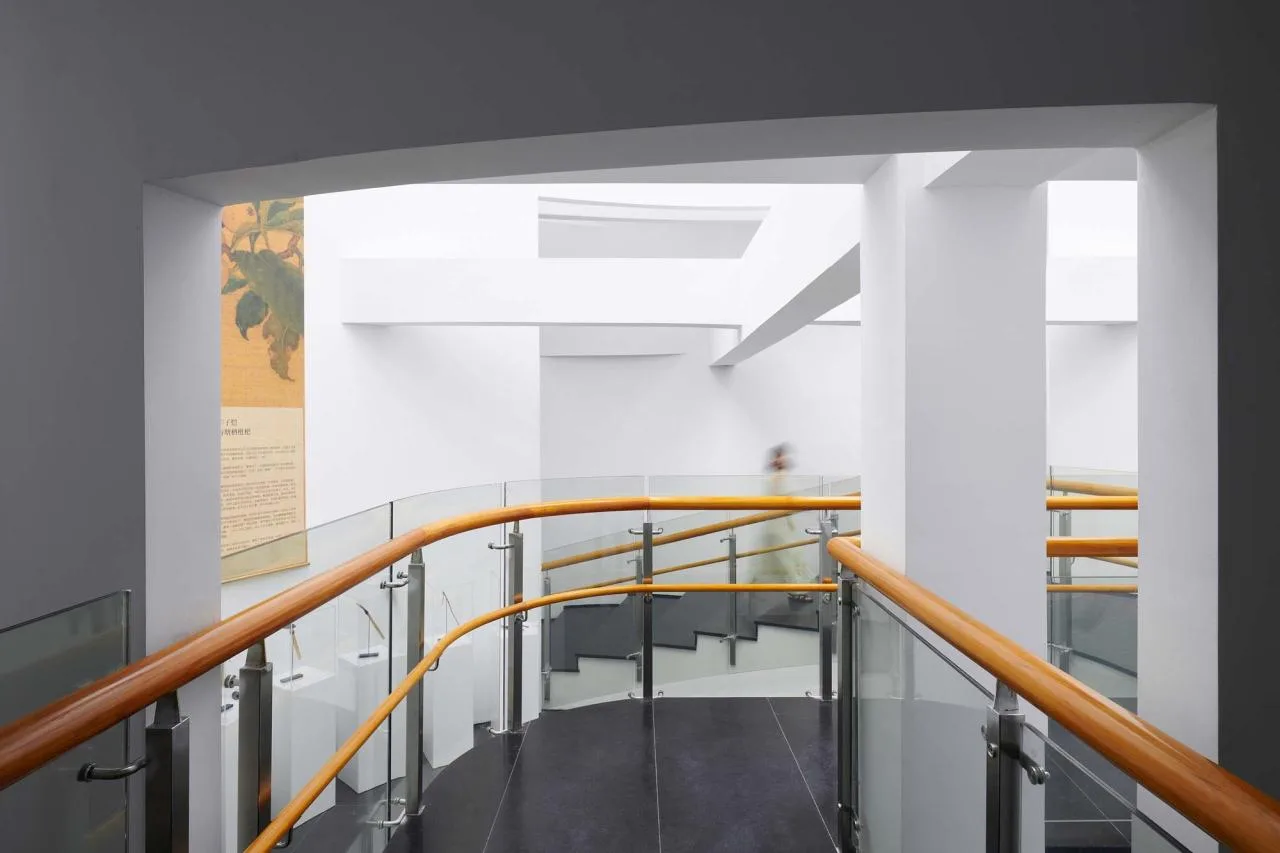
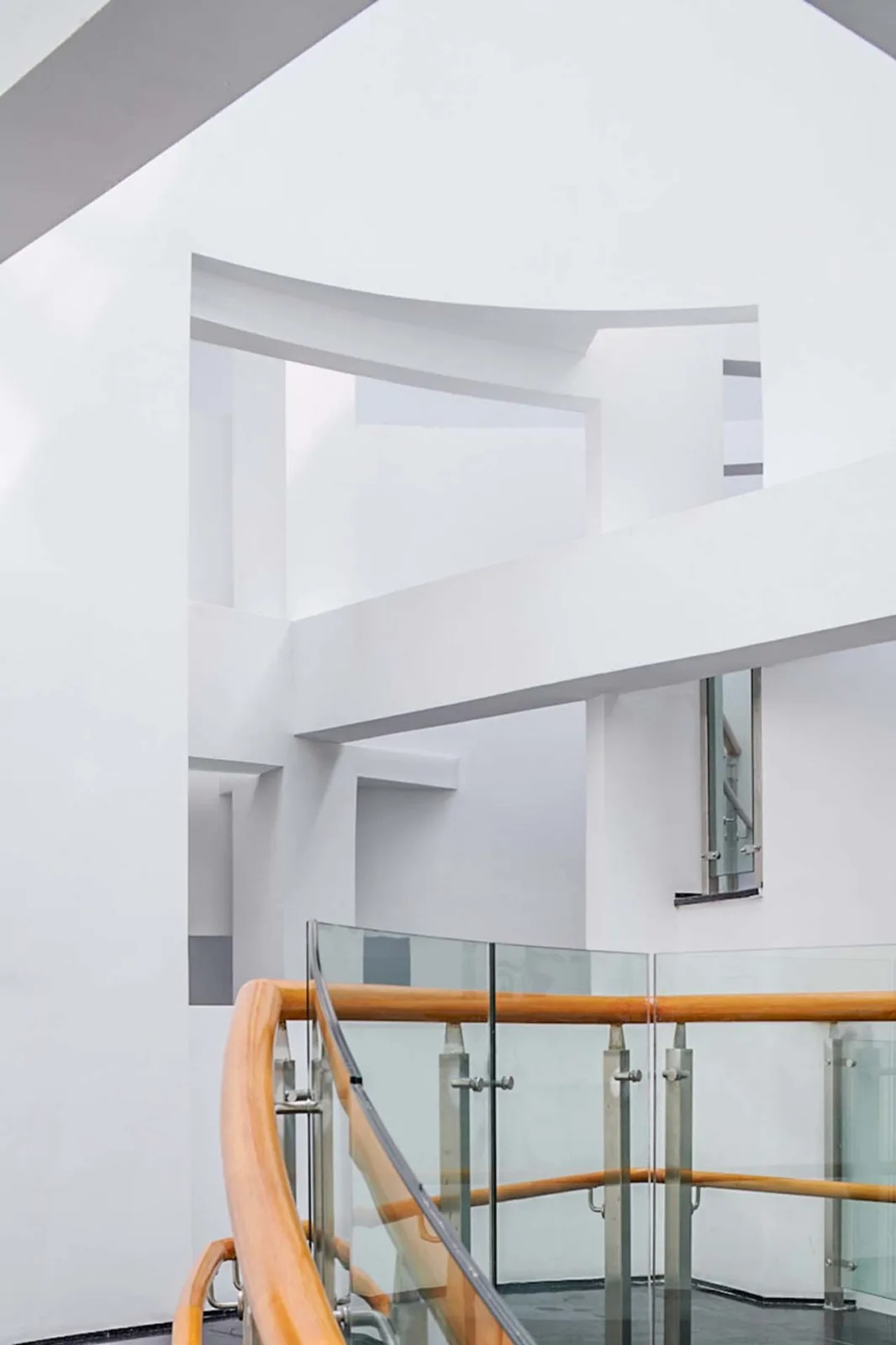
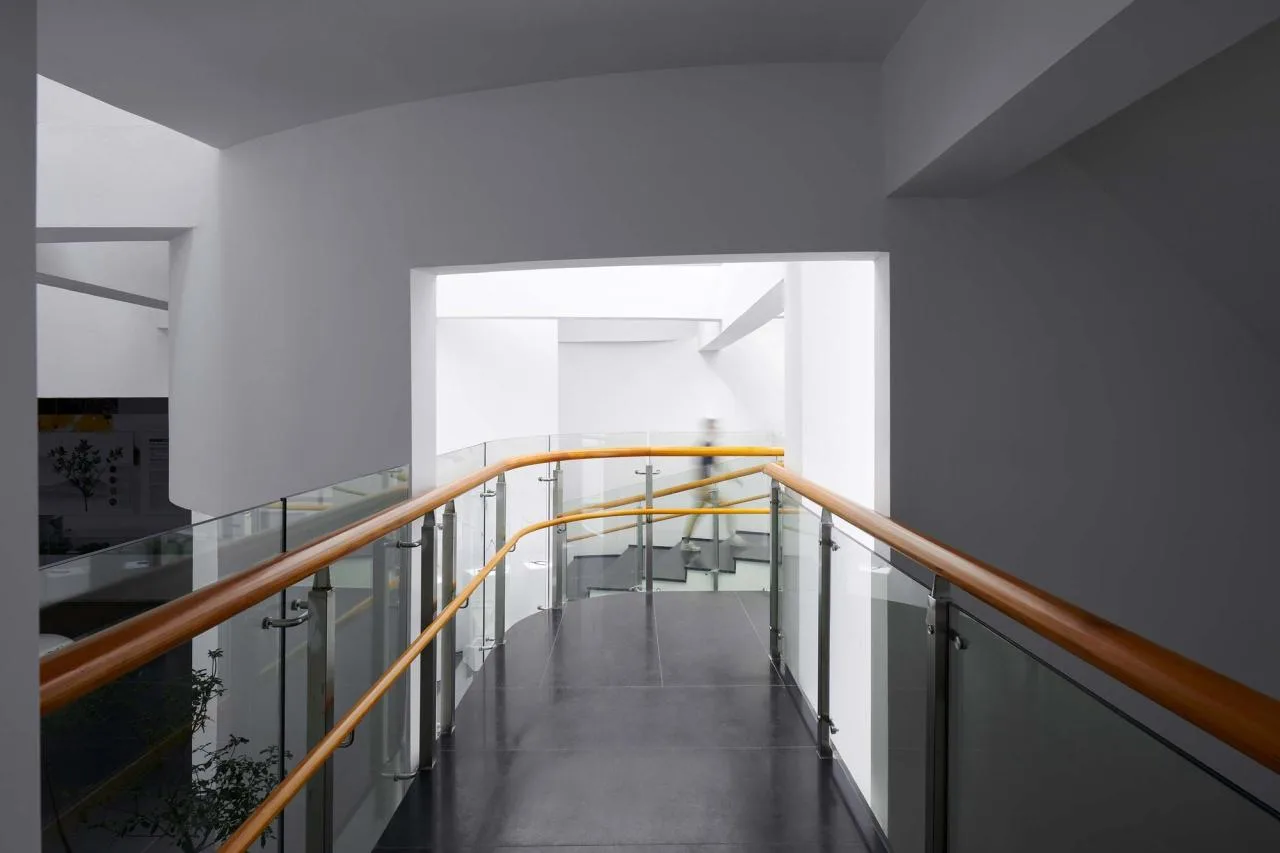
2. Time Travel: The “Heavy Loop” features multiple layers that visitors cross vertically, transforming the ring from a single surface into a complex assembly of walls and gaps. Ascending to about 1.2 meters, visitors walk along a suspended corridor intersecting these layers and the original building structure. The proximity to the ceiling beams creates a striking moment where old and new structures collide, both painted white to emphasize their geometric dialogue in a minimalist “white drawing” style, enhancing the architectural power of both.
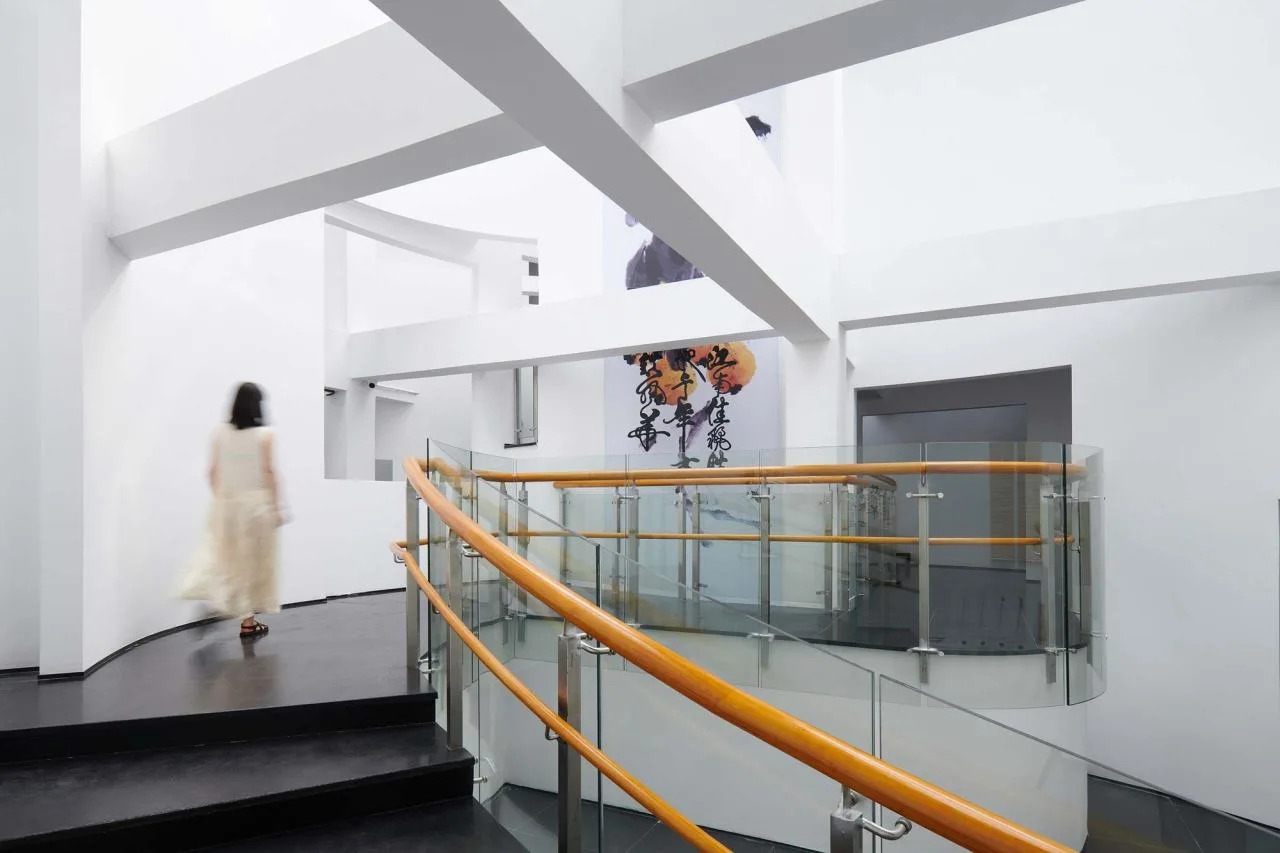
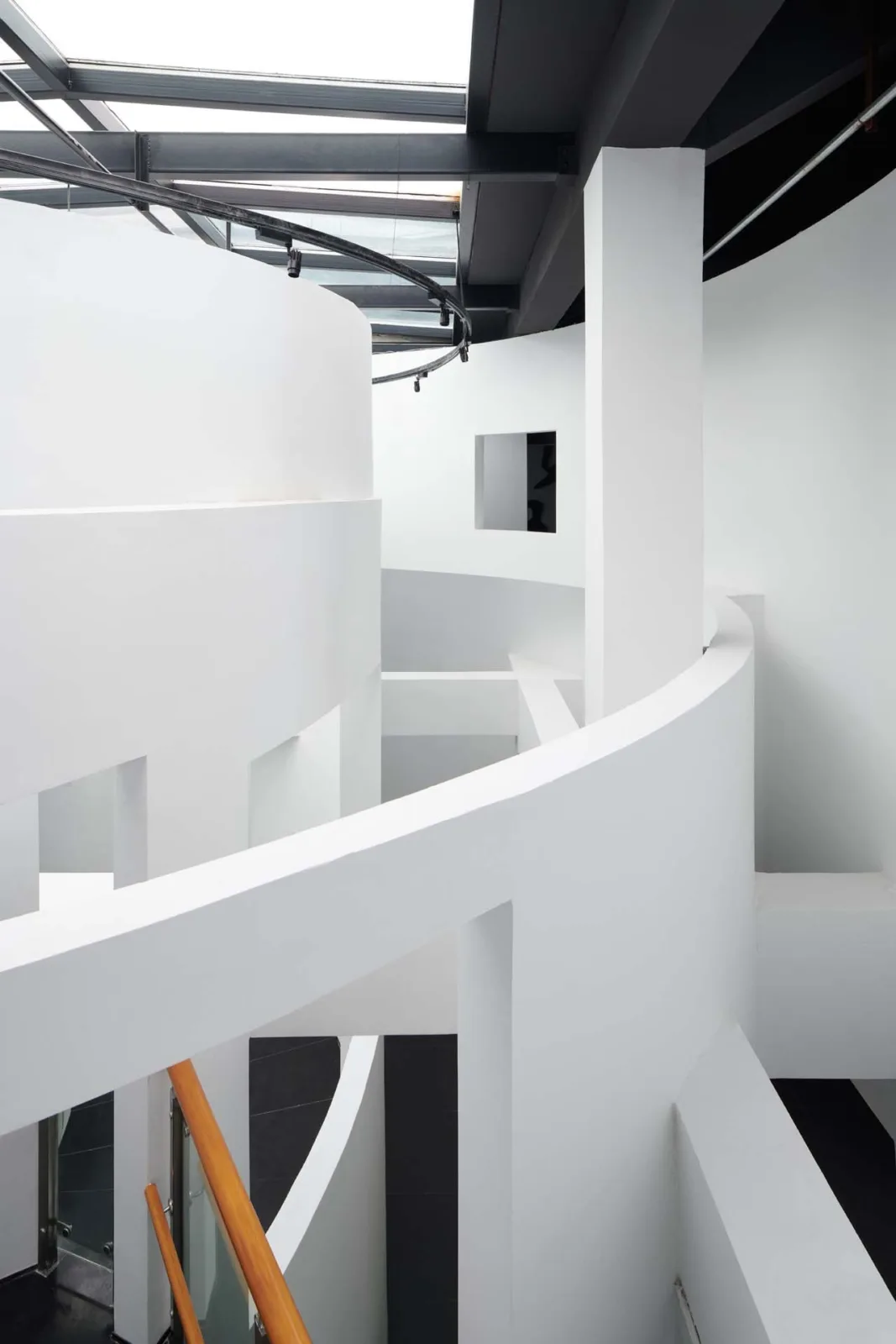
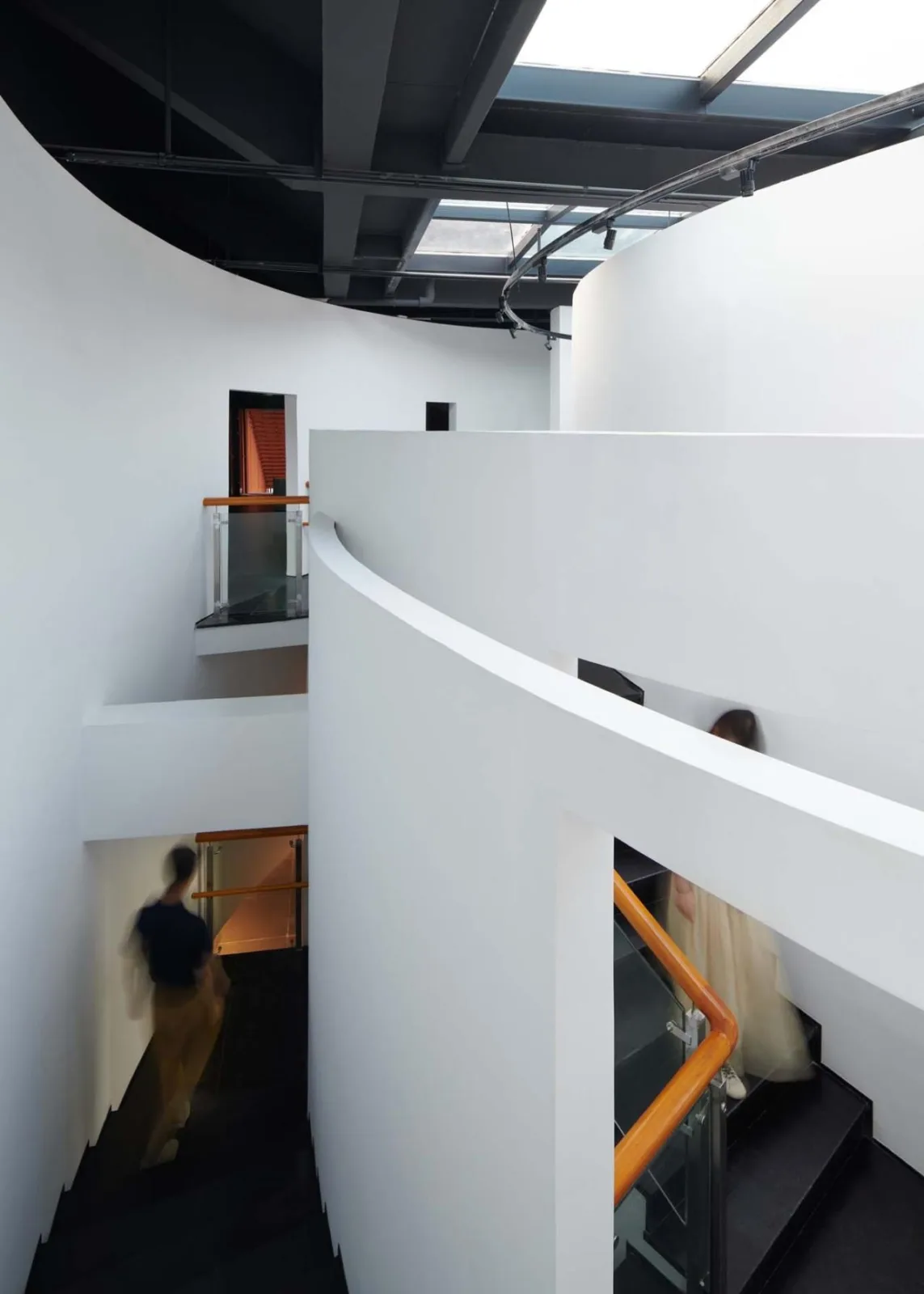
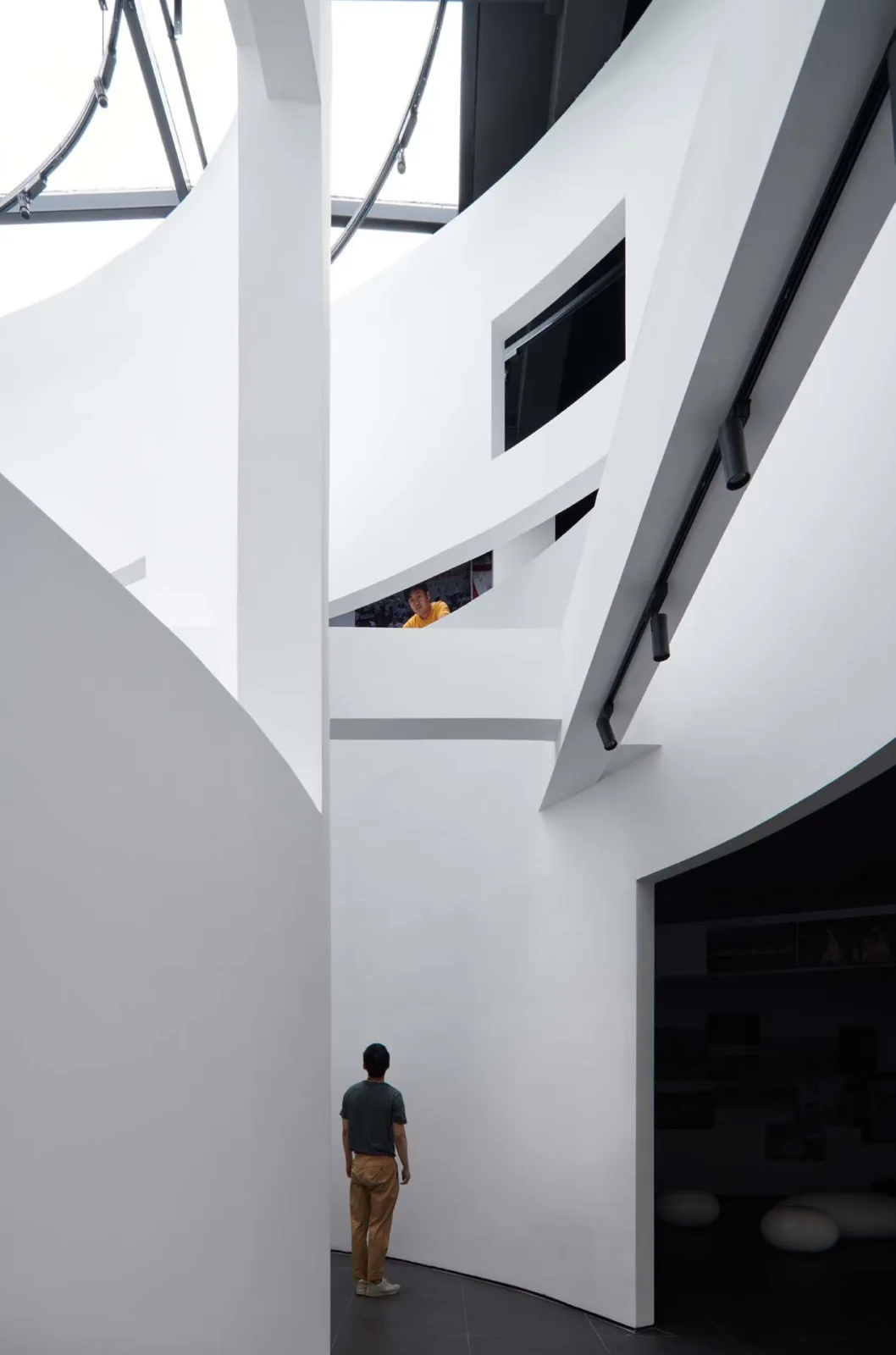
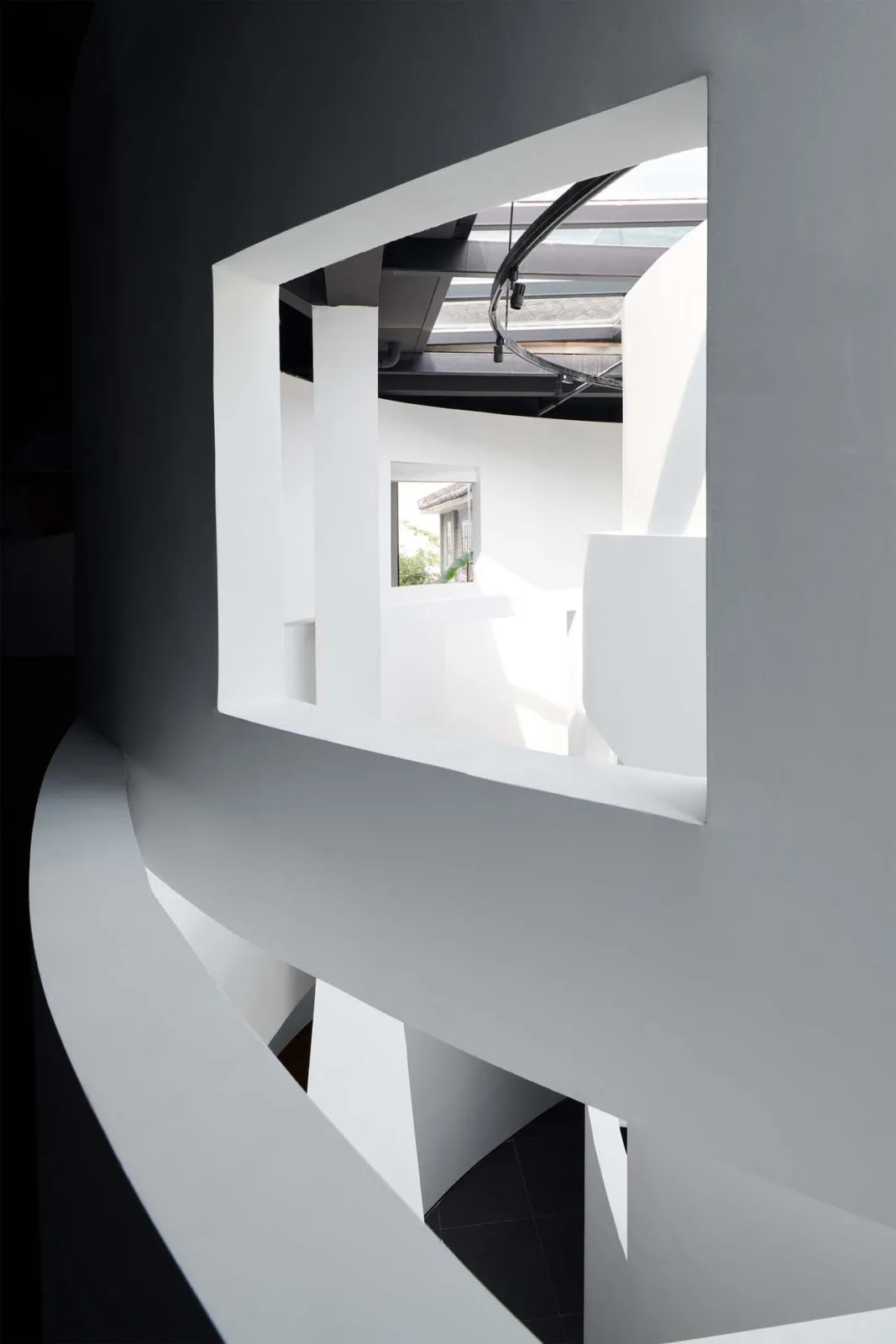
3. Jerking Movements: Unique openings or “joints” within the ring create unexpected spatial interruptions rarely seen in traditional circular courtyards. These joints adjust the new system to fit the original framework and serve as narrative frames within the spatial experience. They allow visitors to pause, disappear, reappear, and look back through these apertures, creating a fragmented and layered spatial story. Visitors never see the entire installation at once but experience it as a series of interrelated fragments.
This fragmented experience heightens curiosity and engagement, encouraging visitors to appreciate the unexpected at every turn. From certain vantage points, the layered rings unfold dramatically, evoking the sensation of overlooking distant mountains, blending abstraction with reality.
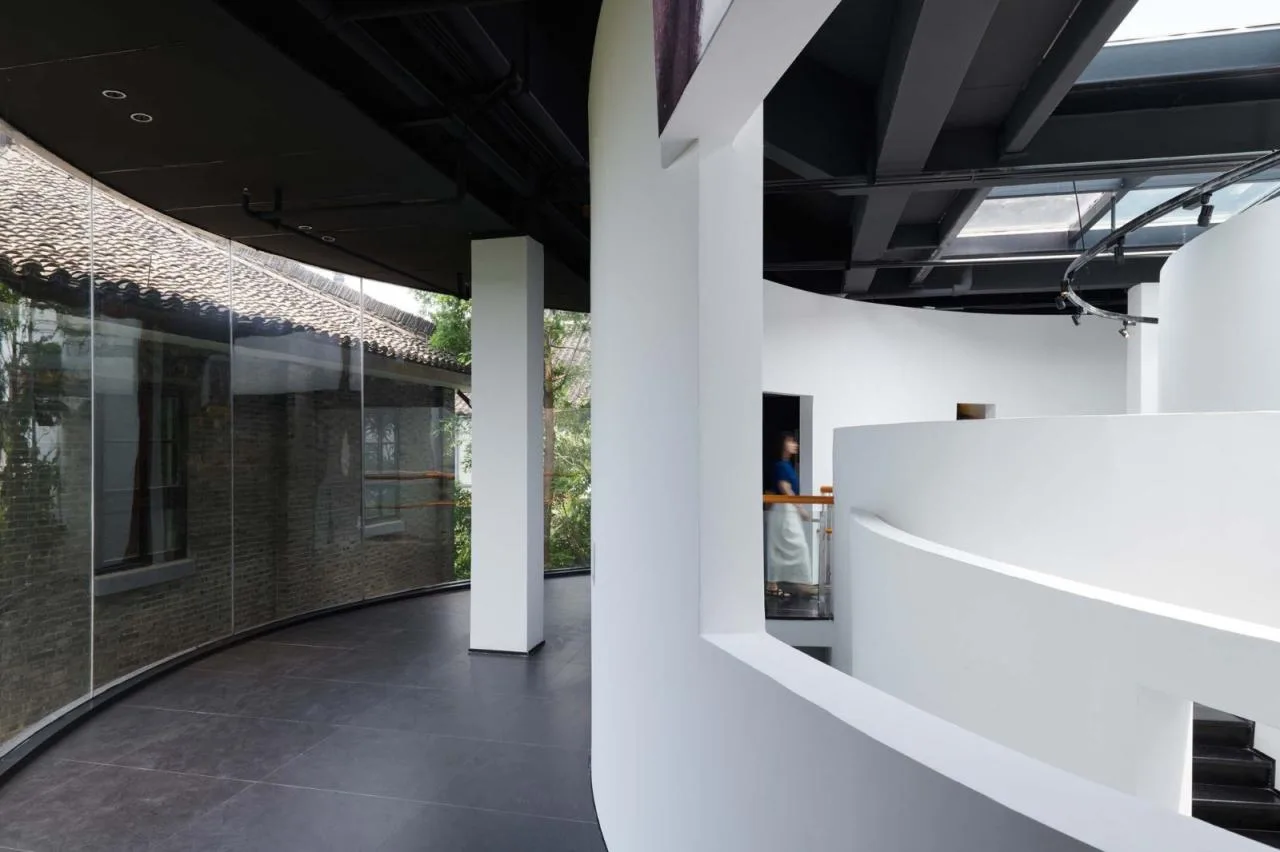
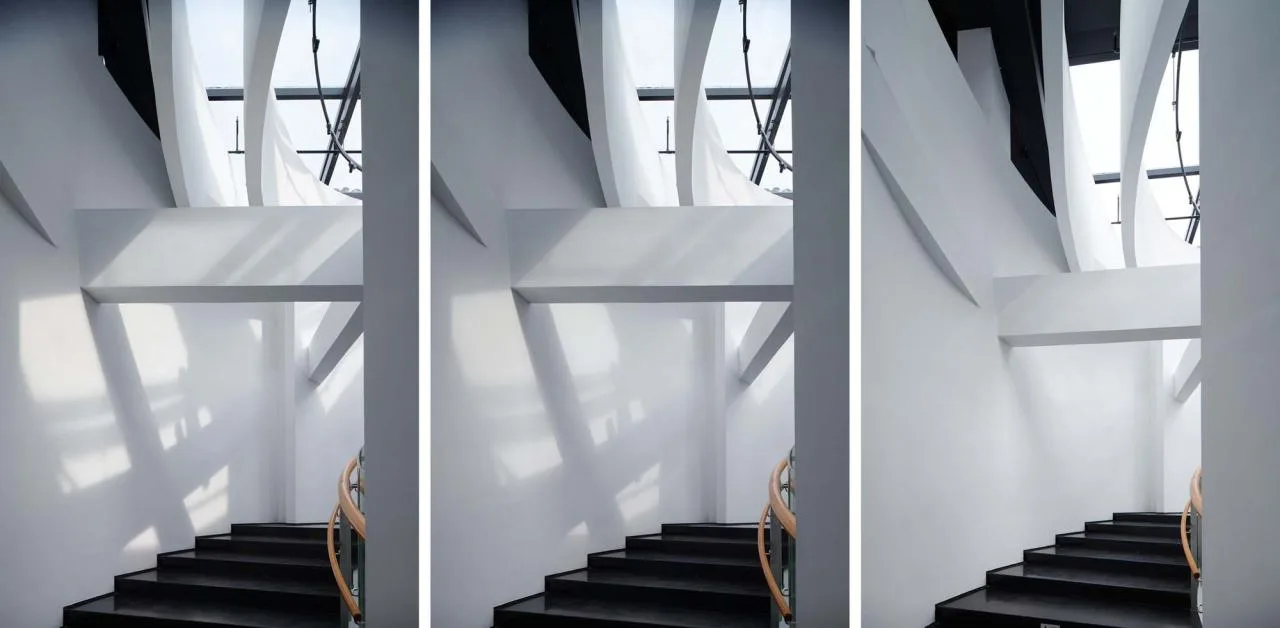
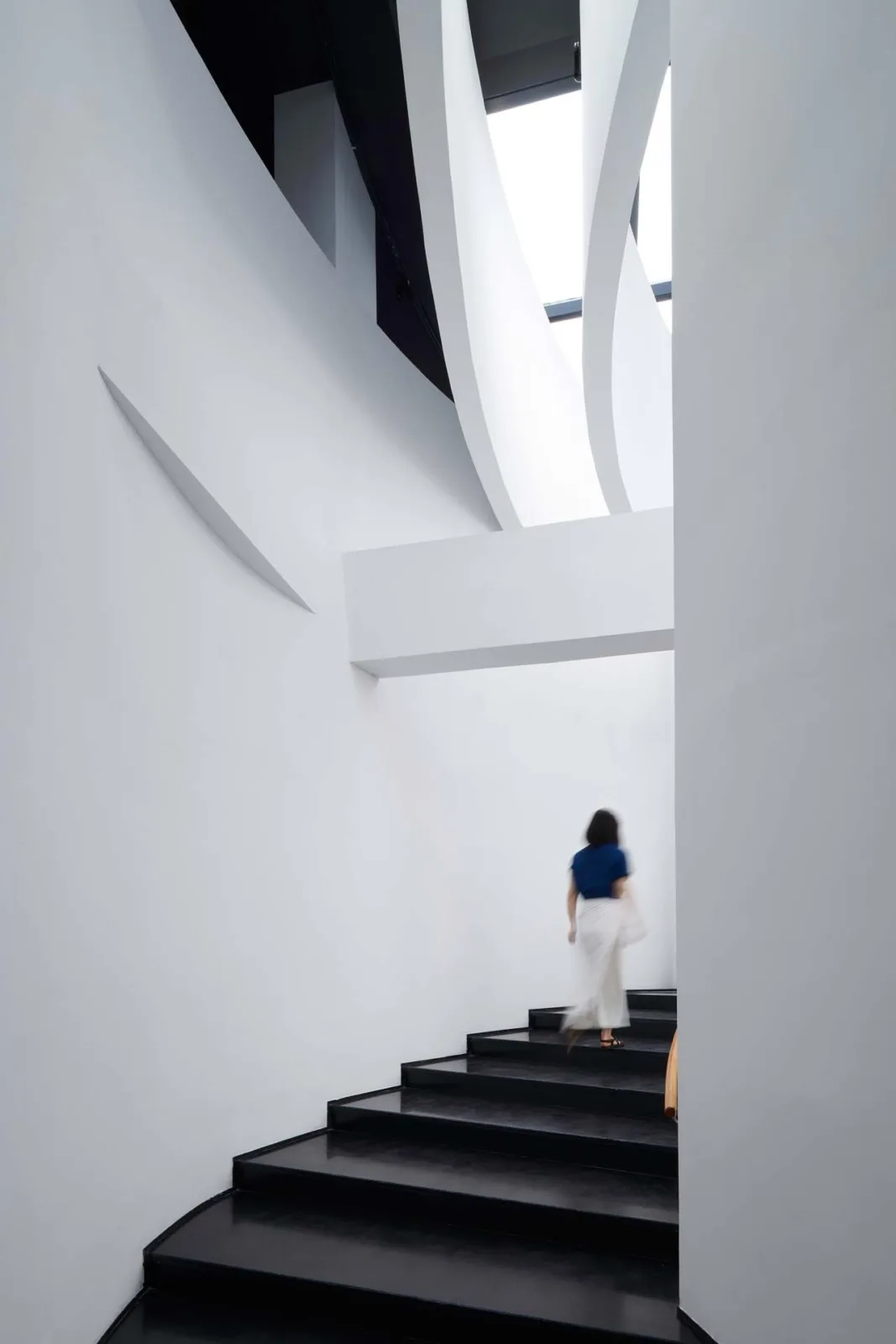
This approach to viewing space is similar to garden design, where windows frame and borrow scenic views. Just as rockeries create physical courtyards in gardens, the “Heavy Loop” functions as a “rockery-like” atrium. It occupies its volume solidly, while controlling light to produce an “abstract nature” within its intricate interior space.
Most poetically, all narrative elements converge at the journey’s end. Visitors emerge into natural greenery and bright light along the curved path, with transparent glass walls immersing them in a timeless, transcendent natural scene. The adjacent He Sijing Memorial Hall becomes part of the visit through these views, creating a moment where time, space, reality, and abstraction collide.
Project Drawings
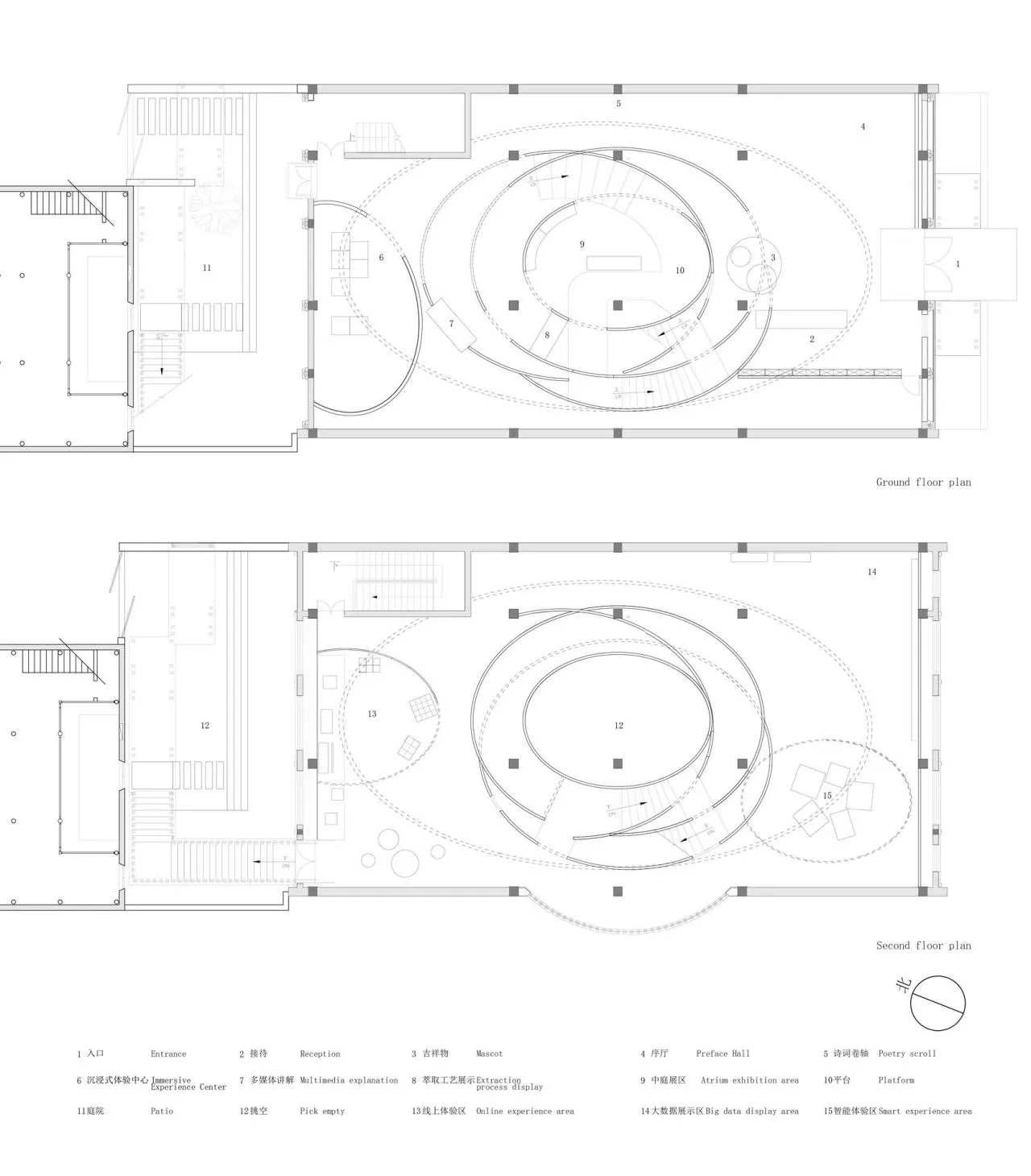
△ Plan view
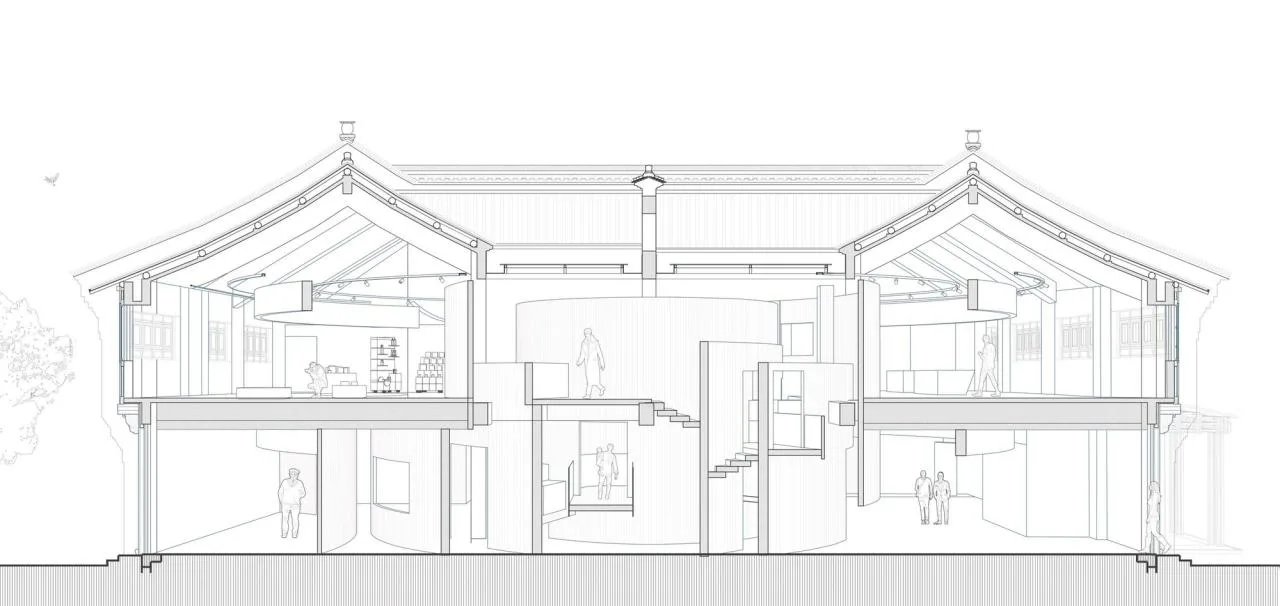
△ Section diagram
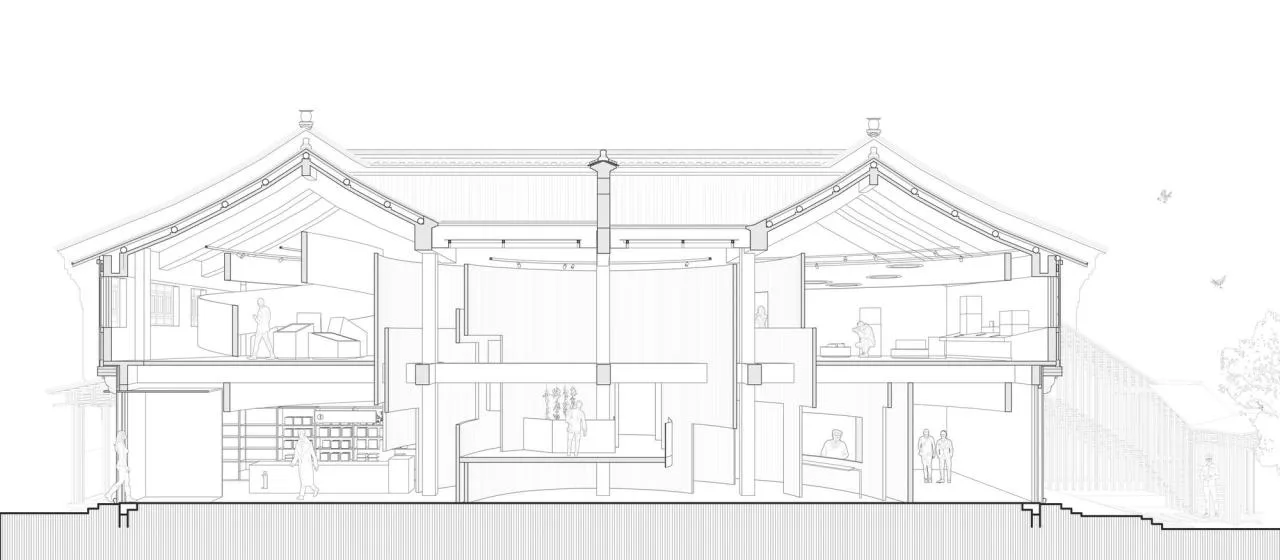
△ Section diagram
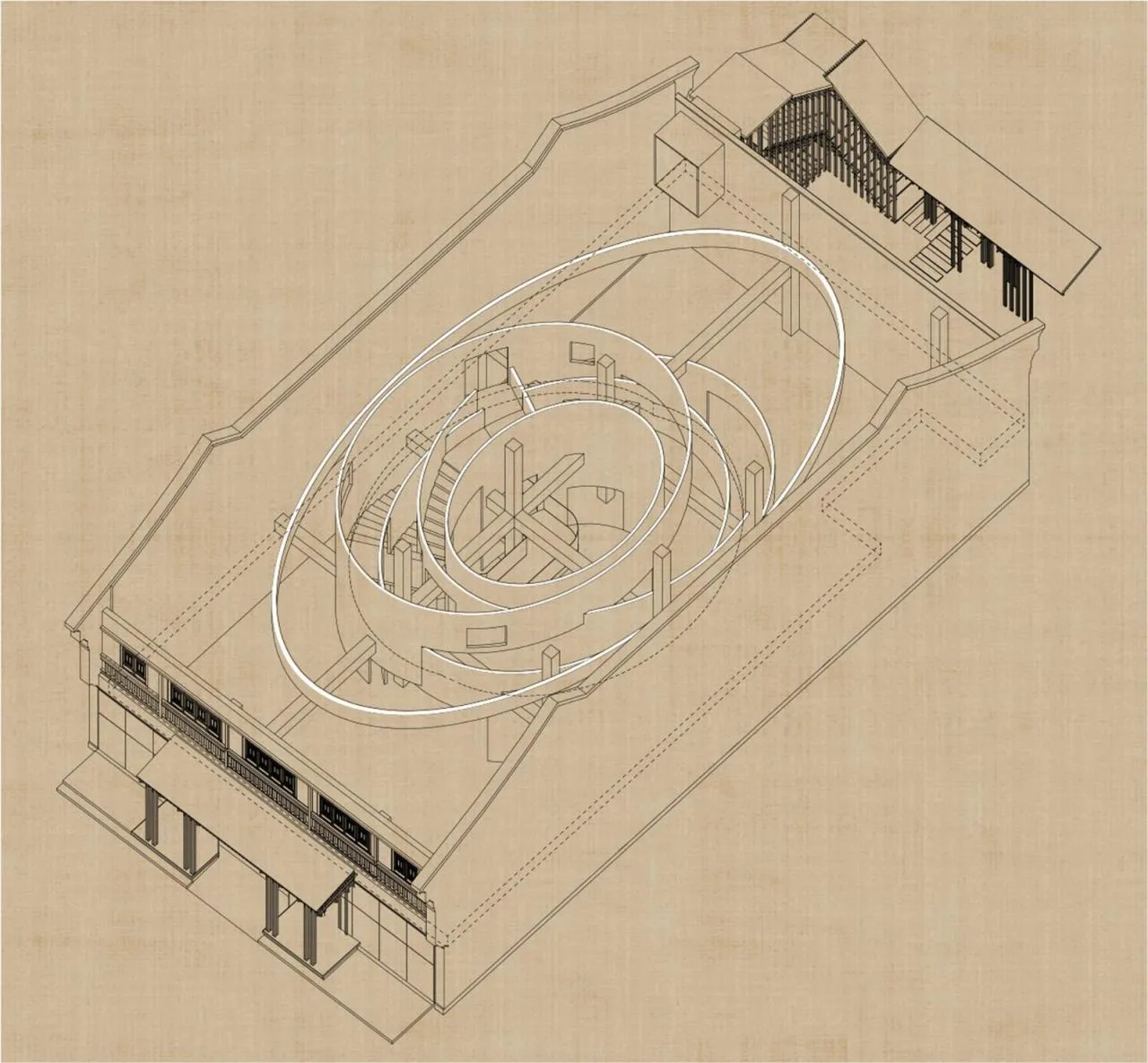
△ Embedded within the building’s circular atrium – the “Heavy Ring”
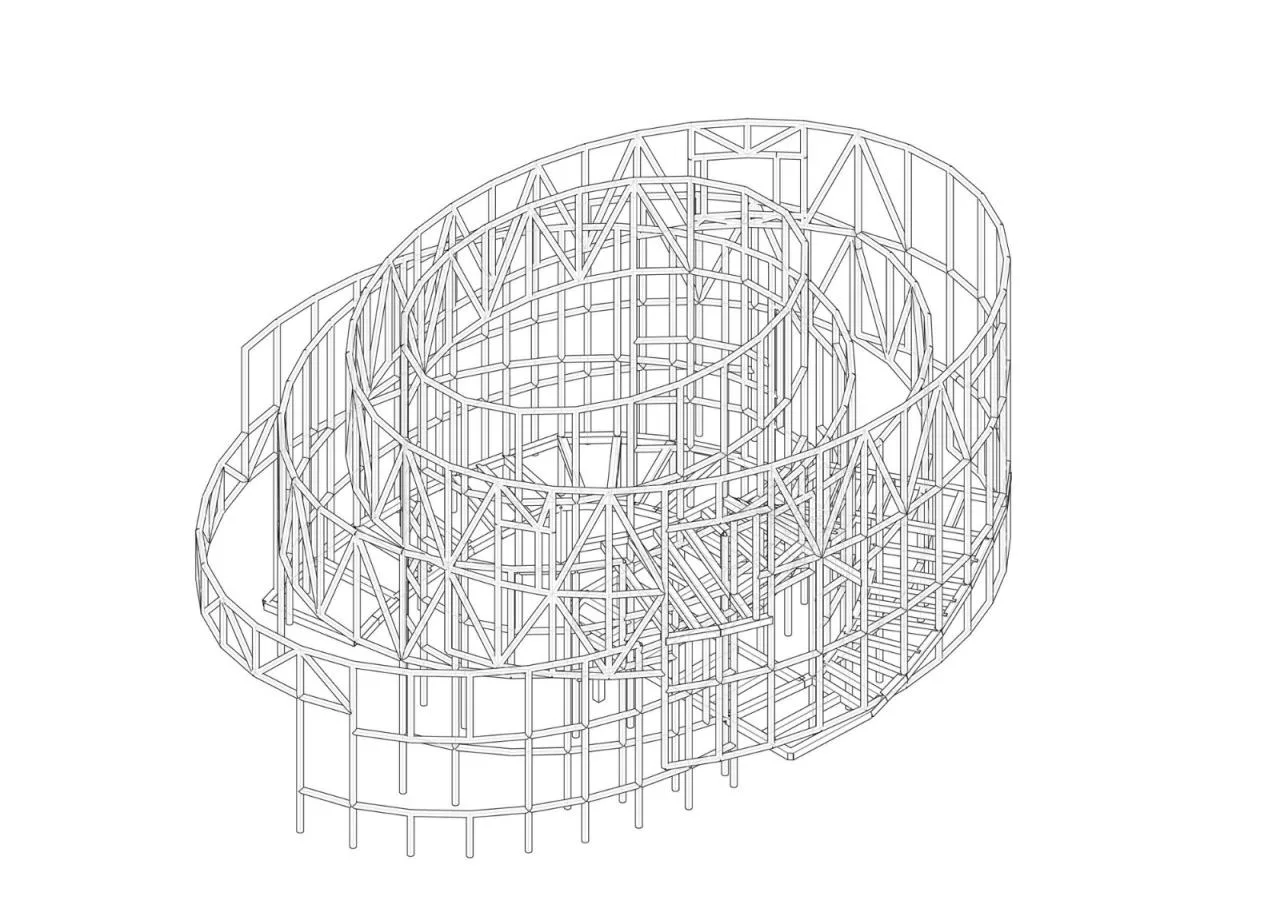
△ Steel structure
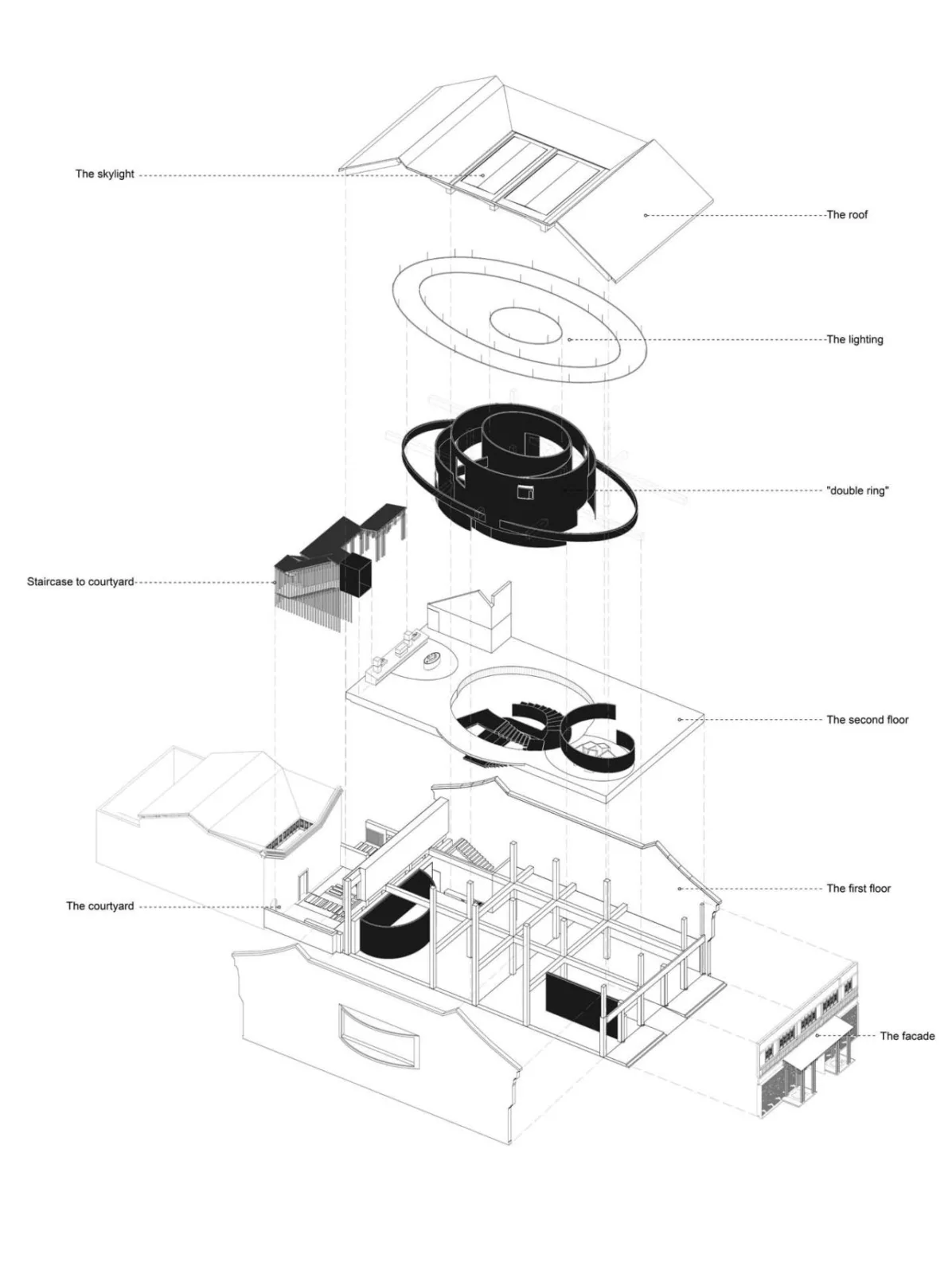
△ Revealing the unfolding structural relationships within the building
Project Information
Architectural Design: Buildings between Fields
Area: 1,153 m²
Project Year: 2021
Photographers: Zhou Fang, Chen Hao
Suppliers: Aluminum Canton Building Materials, Dongpeng Ceramic Tile, Zhengfeng Stone Co., Ltd.
Lead Architects: Fang Runwu, Wang Minghao
Design Team: Fang Runwu, Wang Minghao, Fan Jiangnan, Xi Huimin, Ma Zhichao, Xu Dawei
Principal: Tangqi Town People’s Government, Yuhang District, Hangzhou City
Construction Companies: Zhejiang Dongxin Construction Group Co., Ltd., Longbang Construction Co., Ltd.
Partners: Tianshang Design Group Co., Ltd., Hangzhou Bole Industrial Design Co., Ltd.
Location: Hangzhou, China















Must log in before commenting!
Sign Up