
This project, located on Longhu Tianjie in Binjiang, Hangzhou, marks the first store opened by “Eel Enjoyment House” in Zhejiang. To better and more deeply demonstrate design precision and enhance brand competitiveness, Wono has joined the restaurant’s management team for this endeavor.
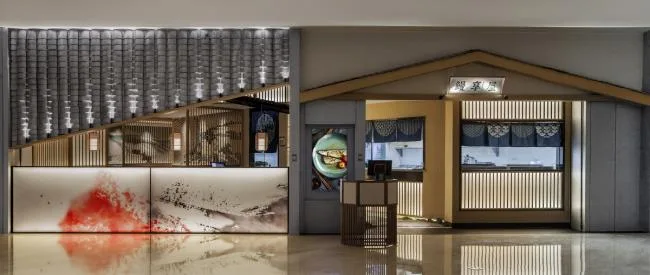
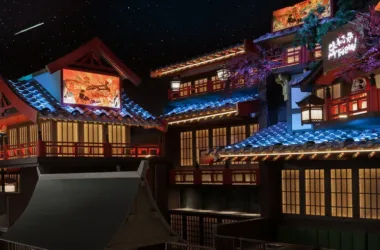
▲ Panoramic view of the front entrance
Design Philosophy – Harmonizing Business and Aesthetics
Wono firmly believes that excellent design must seamlessly blend functionality with visual appeal.
Design that focuses solely on aesthetics without considering business needs can feel vague and uninspiring, failing to truly satisfy customers and market demands.
To gain insight into the operators’ mindset, Wono joined the management team at “Eel Enjoyment House,” aiming to strike a balanced harmony between aesthetics and commerce.
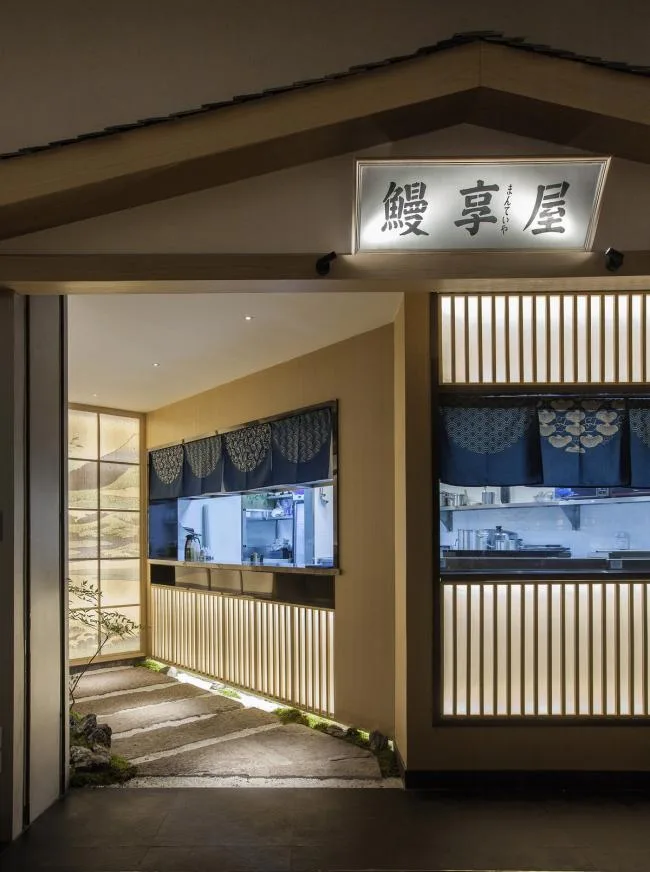
▲ Close-up view of the entrance
Adapted to Local Conditions – Unique Layout Features
Although the Eel Enjoyment House occupies a small area, the sense of ceremony typical in Japanese architecture remains essential.
The design incorporates a foyer and micro-landscape within the compact space, ensuring customers experience a subtle and refined atmosphere upon entering.
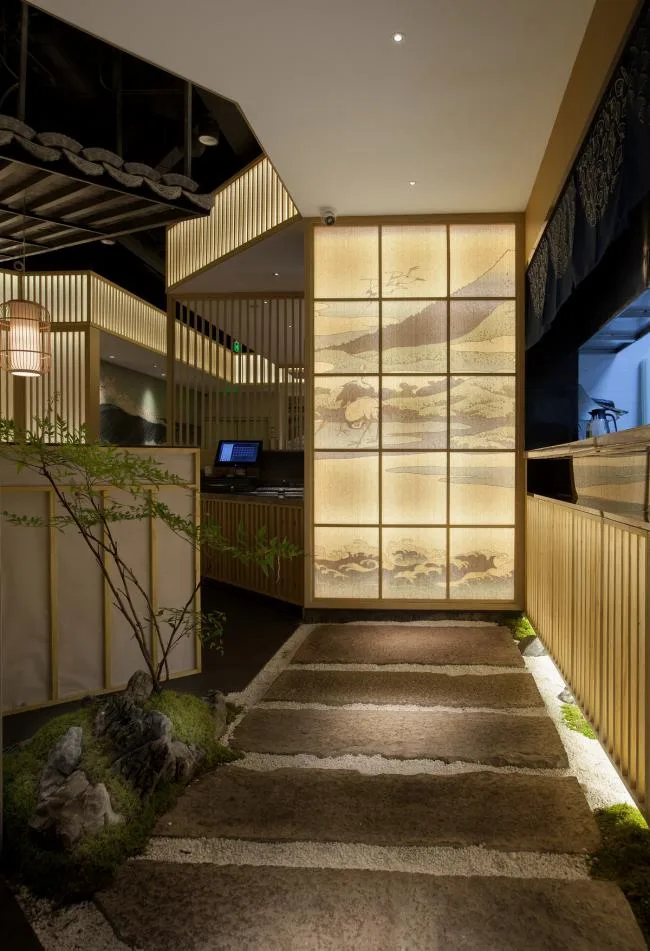
▲ Entrance with micro landscape
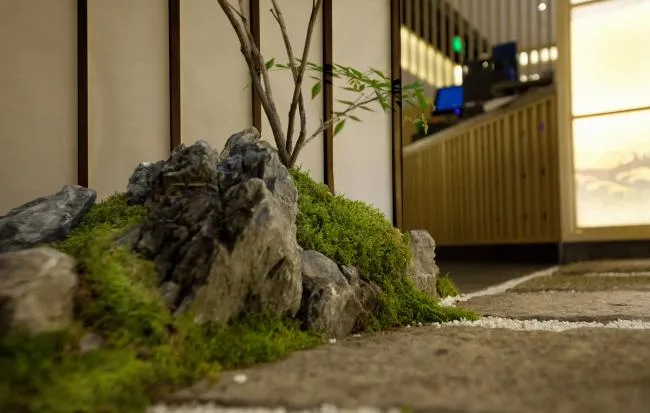
▲ Micro landscape detail
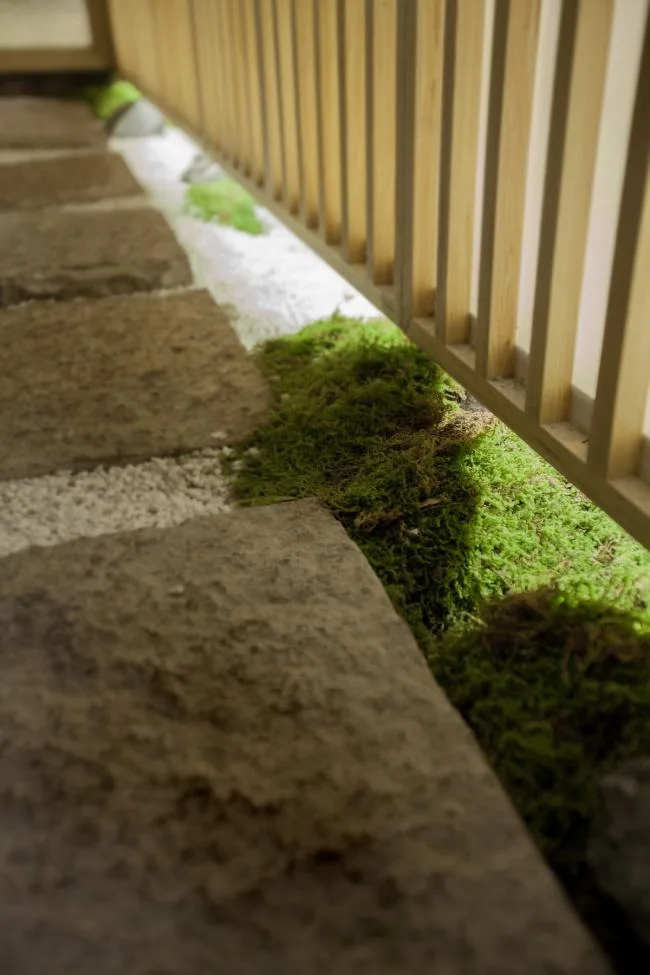
▲ Another view of the micro landscape
The entrance integrates a clear partition, while the kitchen is positioned upfront. This layout significantly increases display space while optimizing the use of available area.
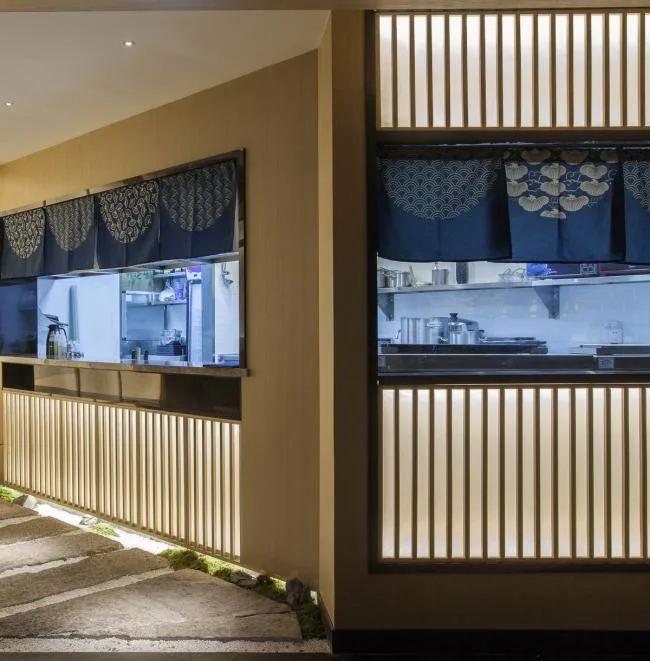
▲ Bright mode close-up
The design adopts a one-way flow with an auxiliary circular path, creating a sense of “winding paths leading to secluded spots” for visitors.
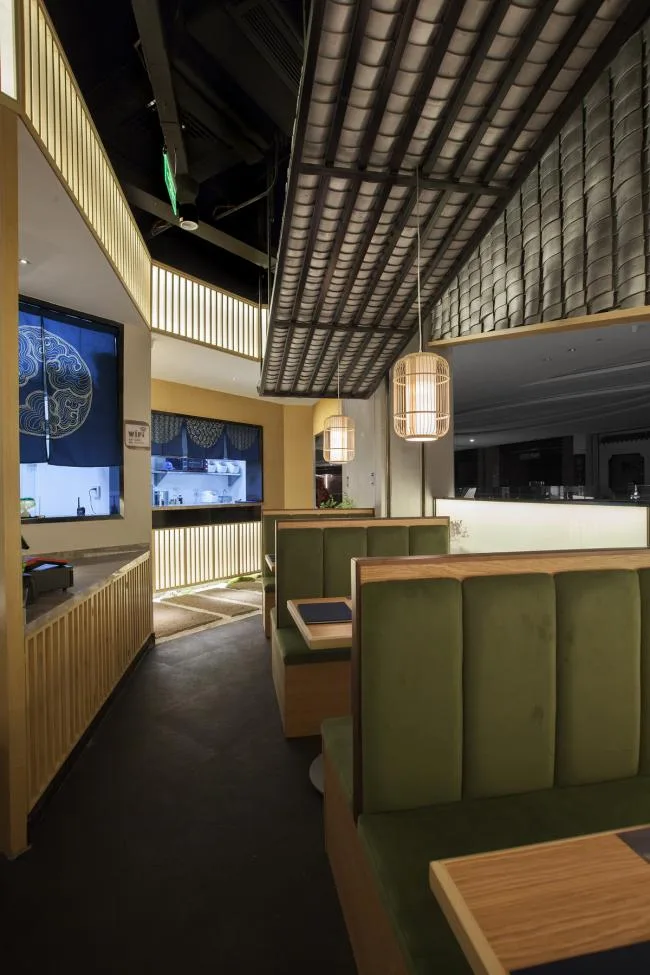
▲ Unidirectional active circulation path
Guihua Liuwa – The Use of “Super Symbols”
The compact layout of “Eel Enjoyment House” called for a color scheme that avoids the traditional Japanese calm and heavy tones. Instead, bright colors like rice white and light gray-yellow were chosen to prevent the space from feeling cramped or dull.
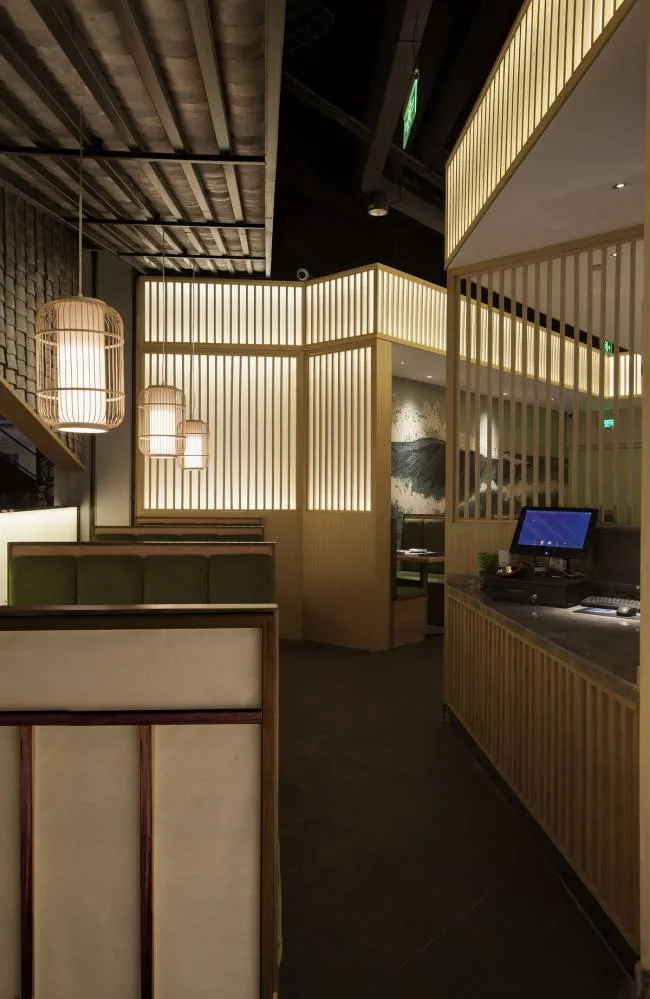
▲ Light-colored interior space
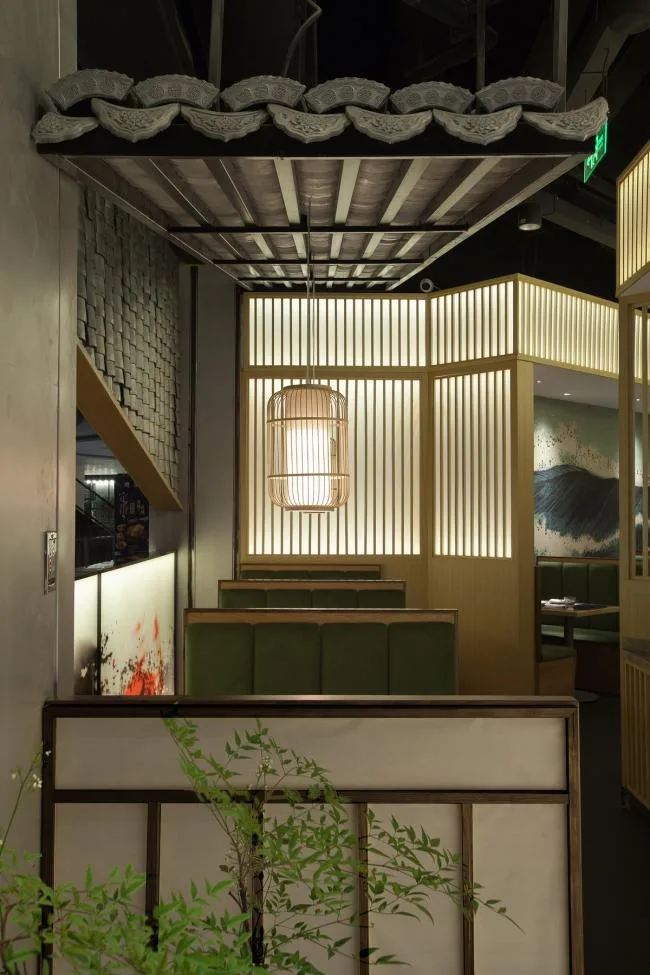
▲ Another view of the light-colored space
Silver-white tile elements extend from the doorway into the interior, serving as the “super symbol” of Eel Enjoyment House.
This design element draws inspiration from the “Guihua Liuwa” passage in Zhou Bangyan’s “Jieyuhua: Shangyuan” from the Northern Song Dynasty.
On summer nights, the bright moonlight reflected on stacked roof tiles perfectly conveys Woye’s vision for this project.
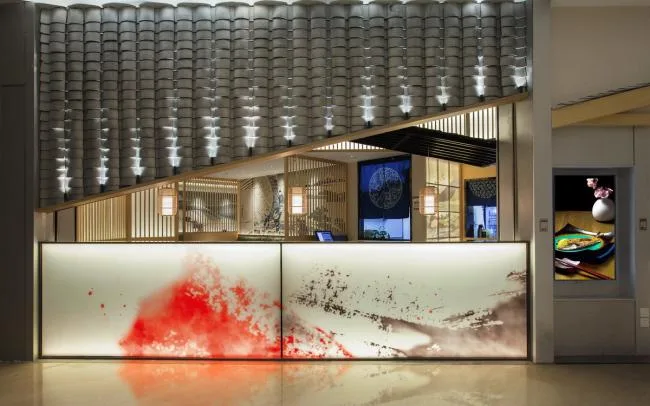
▲ Silver tile detail
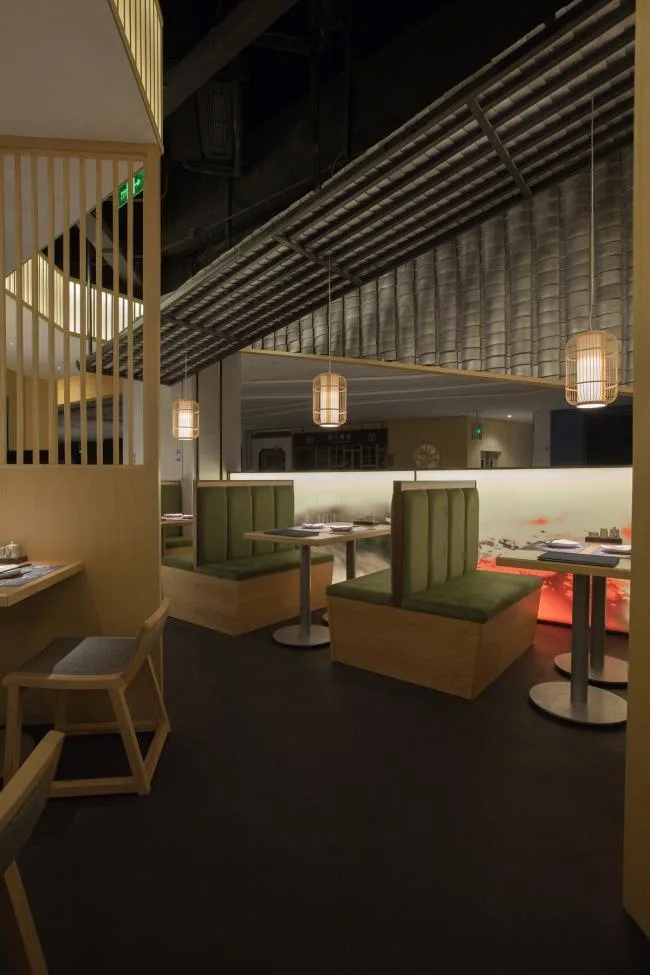
▲ Flat silver tile roof
Element Placement – Reuse and Emphasis on Key Features
The design of Eel Enjoyment House targets a younger consumer base, with both cuisine and style leaning toward fast fashion trends.
To prevent cultural barriers from creating a sense of alienation, classic Japanese elements such as traditional fans, wavy patterns, and ukiyo-e prints were incorporated.
These elements are prominently displayed in key areas, repeating throughout the space to reinforce the theme without overwhelming the atmosphere.
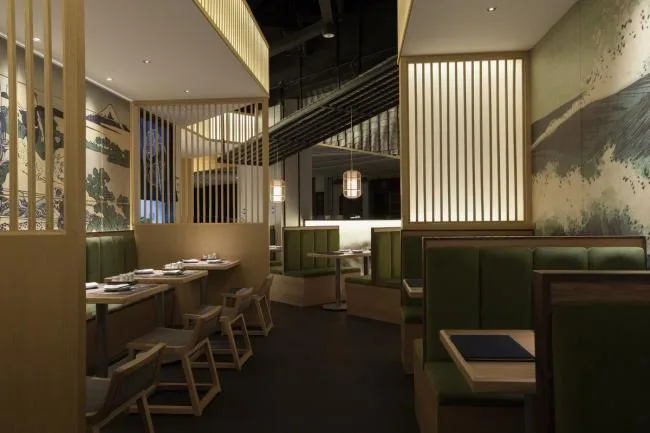
▲ Elements – Reused wooden lattice
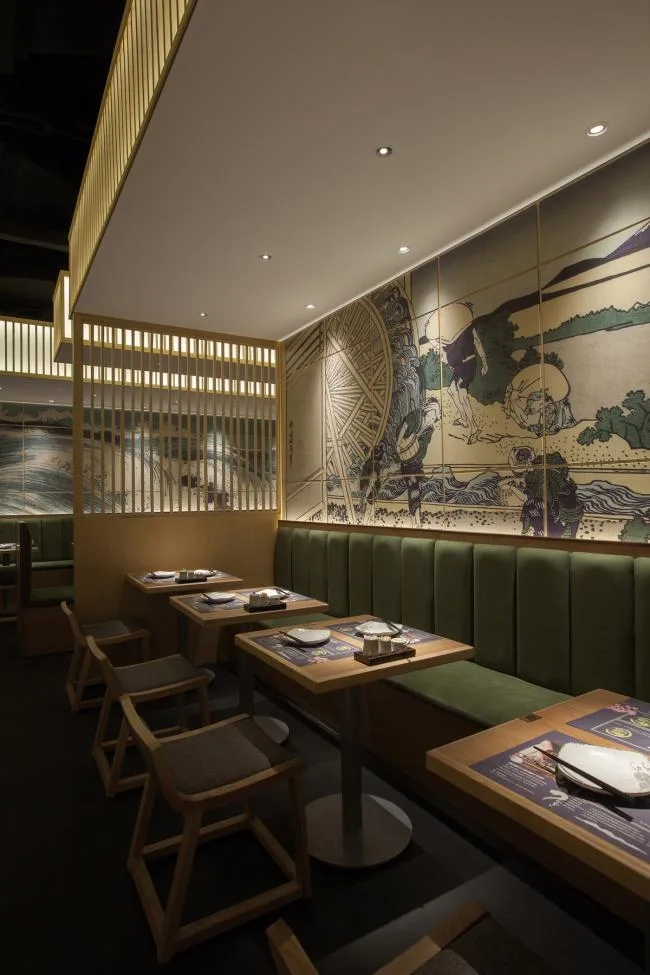
▲ Elements – Large ukiyo-e artwork areas
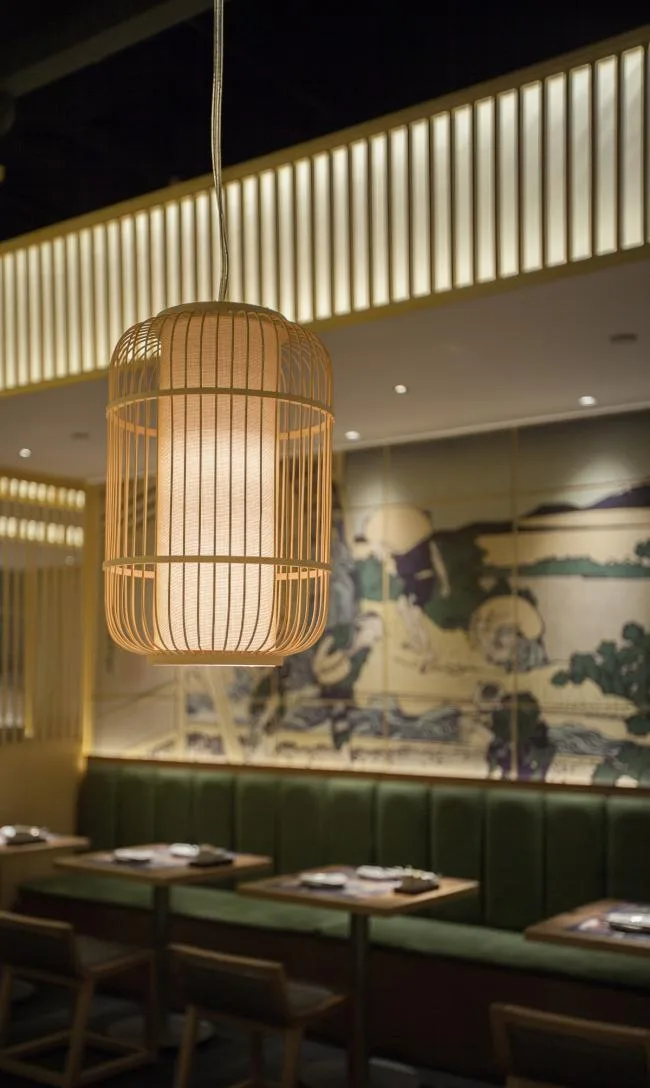
▲ Elements – Japanese lanterns
Collaboration on Furniture Design
To maximize space in the compact layout, dining tables seating four or more are often arranged in a staggered pattern. The seat back heights are carefully adjusted to increase spatial efficiency and reduce floor space usage.
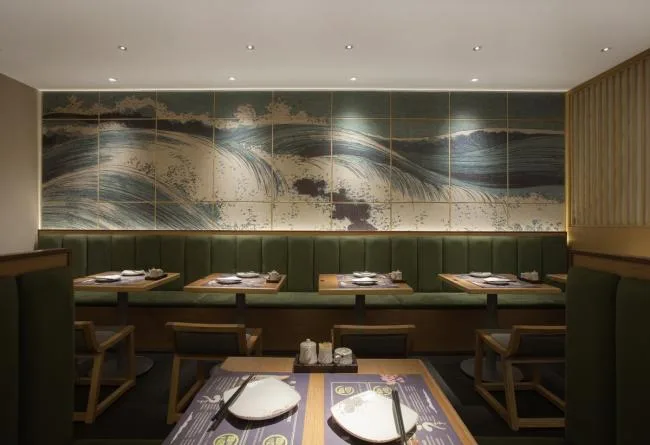
▲ Communal dining area
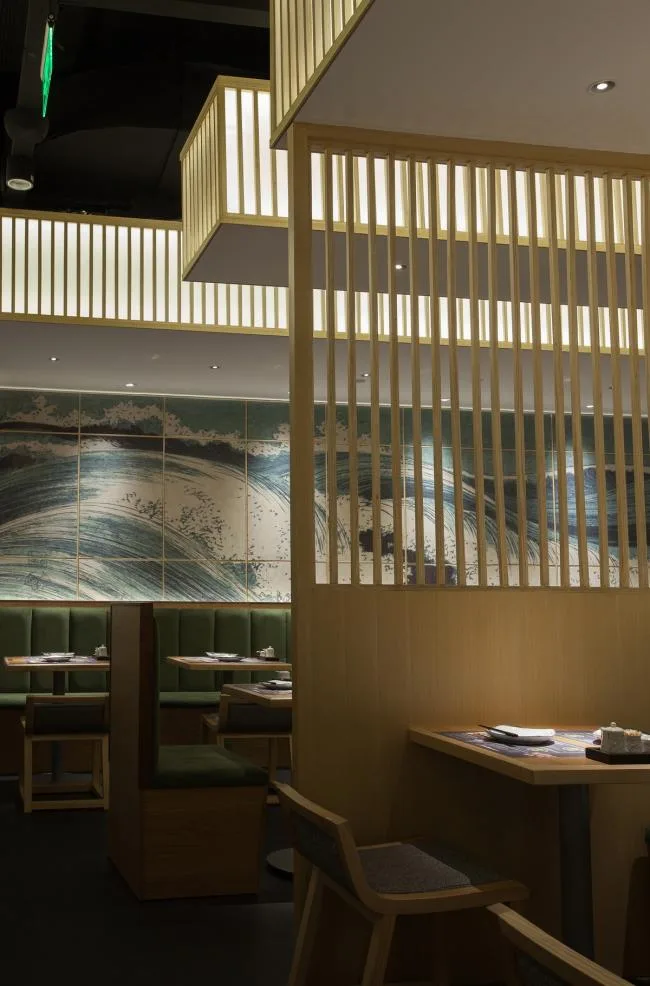
▲ Low-rise seating (BIM engineer)
The booths are upholstered in velvet, inspired by the traditional Japanese moss green color, providing a comfortable and cozy experience for customers.
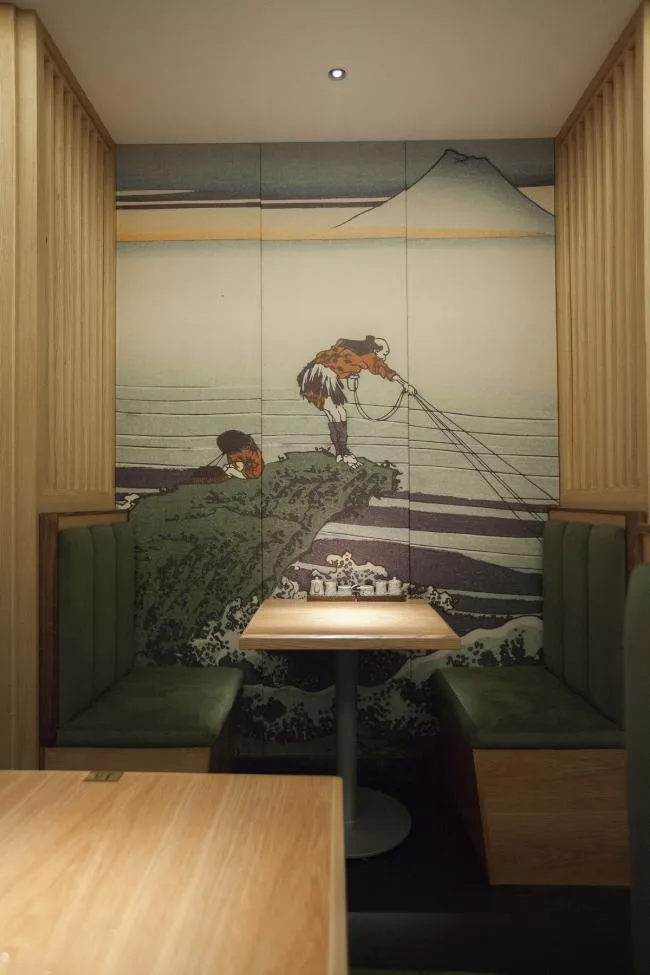
▲ Soft cushion seating
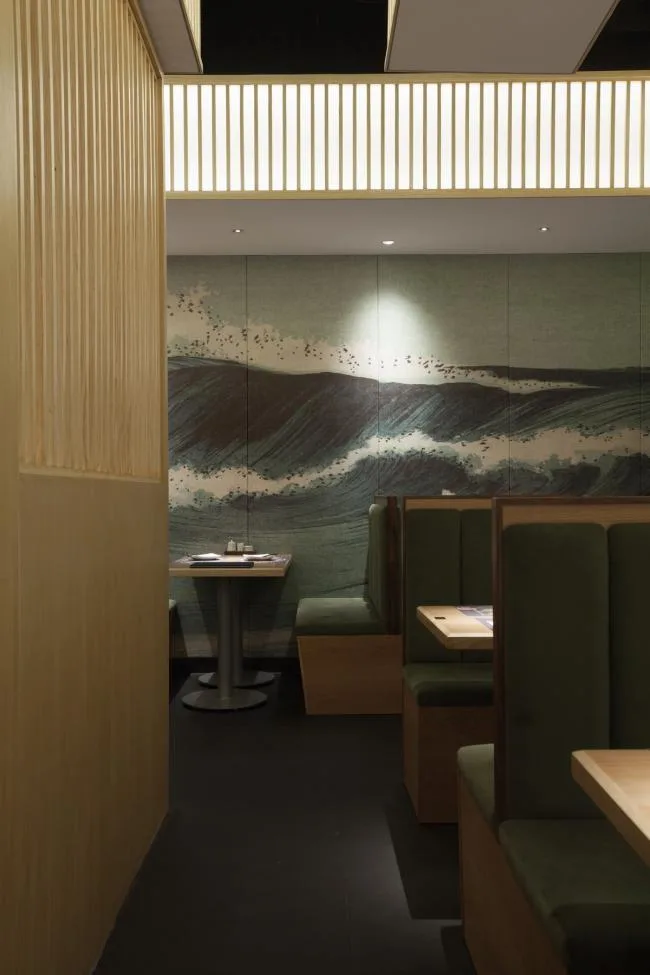
▲ Soft cushion seating
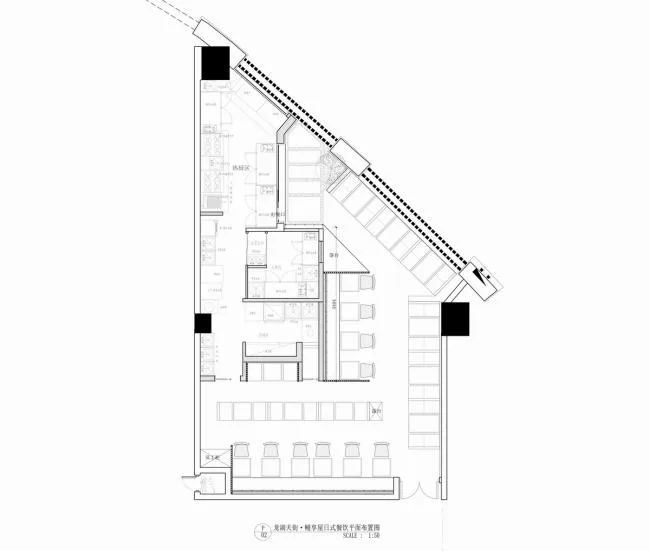
▲ Floor plan overview
Project Details:
Project Name: Eel Enjoyment House
Location: Hangzhou, Zhejiang
Building Area: 107 square meters
Design Firm: Hangzhou Woye Space Design Co., Ltd
Lead Designer: Su Jing
Project Development: Zhang Juefeng
Graphic Design: 33
Photography: Su Jing
Text Editor: 33
Special Thanks:
Lighting Support: Shike Lighting, Ye Zhenghua
Old Stone Slab Support: Xu Yongfu (BIM Design)
Black Absorbing Brick Support: Song Yanfeng
Entrance Landscape Support: Deng Motorcycle
Furniture Support: Deng Fuqiang












Must log in before commenting!
Sign Up