
Memory
Over the past two decades, road transportation has become a defining feature of the hilly landscapes in eastern Chongqing. The winding roads, intertwined with diverse terrain, have significantly improved travel for local residents.
Alongside these developments, villagers have gained access to increased income, subsidies, tap water, natural gas, and fiber optic networks in their homes. Occasionally, loudspeakers at the entrance broadcast lively programs from the Central People’s Broadcasting Station promoting prosperity and public welfare. Although these scenes might feel like a 30-year-old memory, they are very much alive today.
For the last fifty years, traditional new home construction in eastern Chongqing rarely considered orientation. Securing an effective building area on limited land, while respecting compass directions, remains crucial.
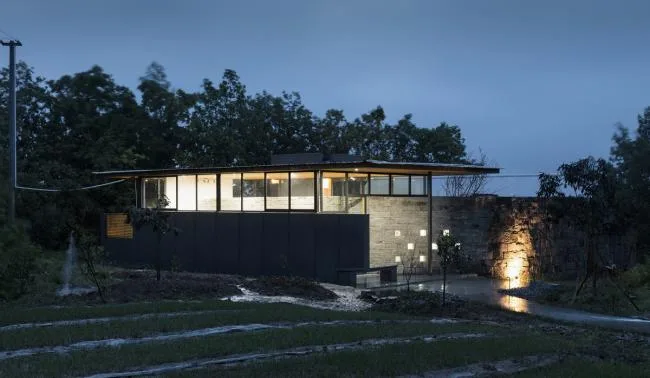
In my youth, the three-bedroom old house often faced the sunset, with a 200-year-old yellow horn tree standing proudly at the center of the view. The backlighting created a silhouette that remains unforgettable. The walls were built from stone, homemade cement hollow bricks, and precast reinforced concrete floor slabs—typical materials for 1980s residences. The small fan-shaped windows lacked glass, and the wooden frames were on the verge of collapse.
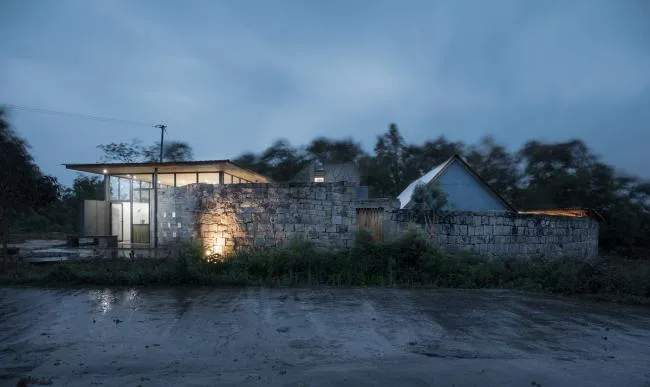
These memories gradually transformed into a landscape that now guides the architect’s original vision.
Combination
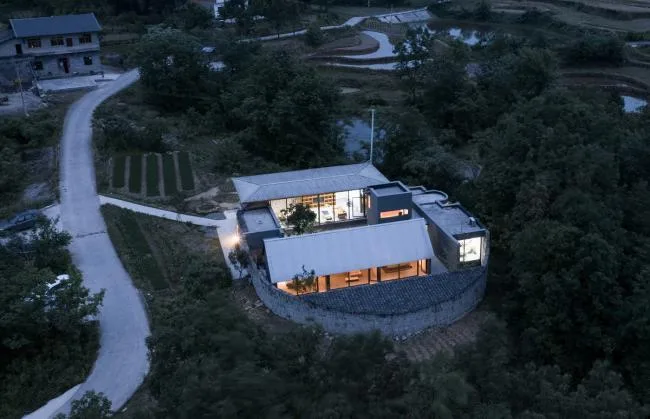
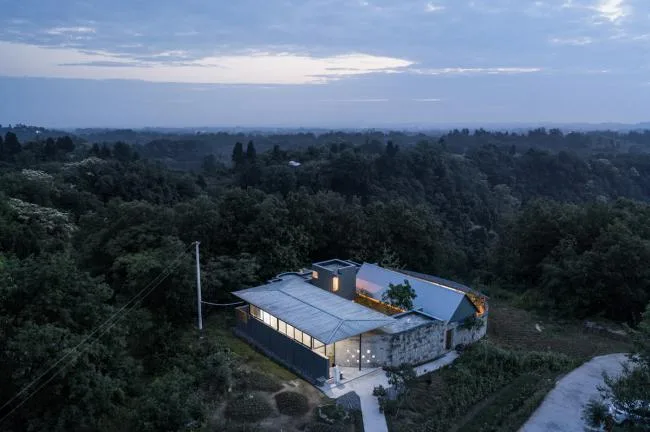
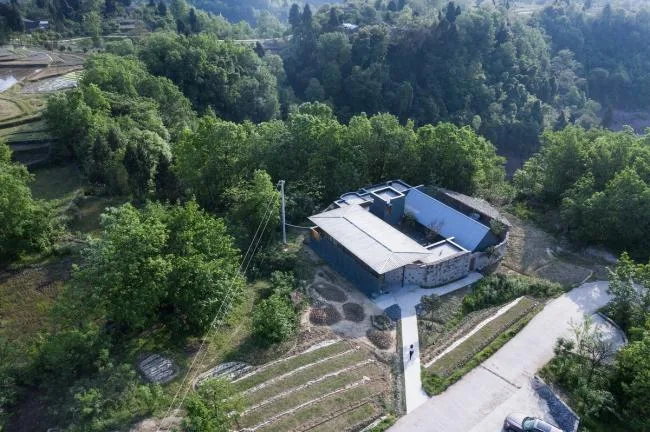
The new building replaces the previous unsafe structure, located remotely to avoid farmland and forest land boundaries, while ensuring convenient transportation and an ideal position.
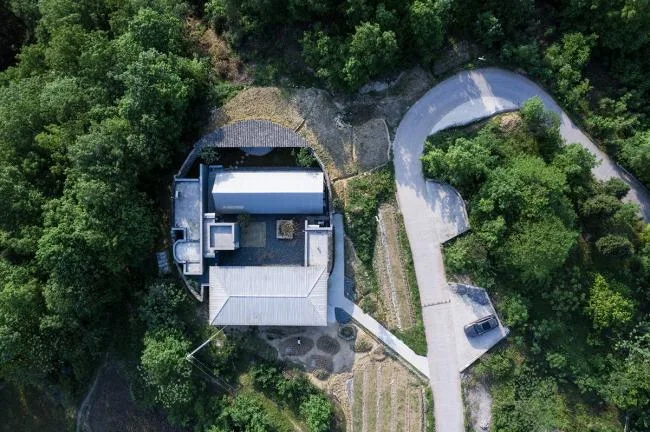
I envisioned a simple and well-proportioned house, where living functions are broken down and arranged across different site levels for relative independence. The hall is placed at the highest elevation, connected to the entrance by a corridor, serving public functions. The bedrooms are located at a lower level, offering inward views and privacy.
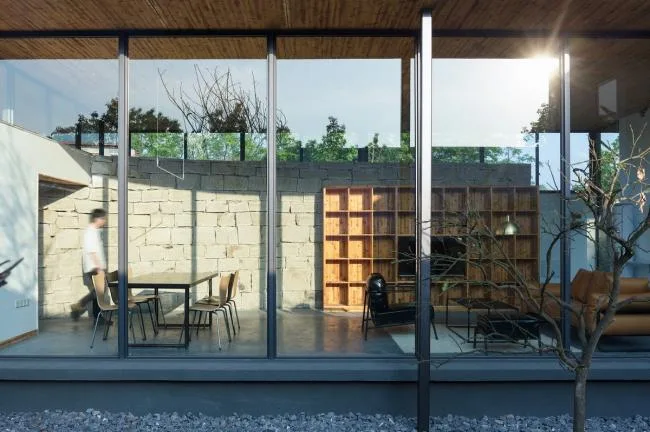
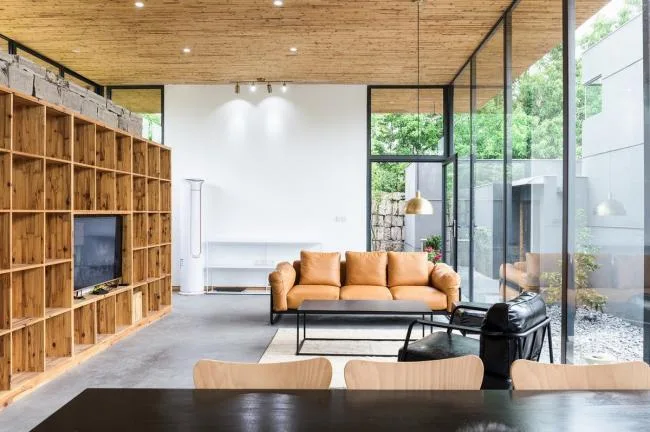
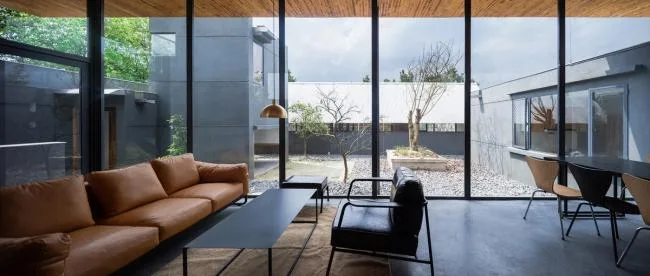
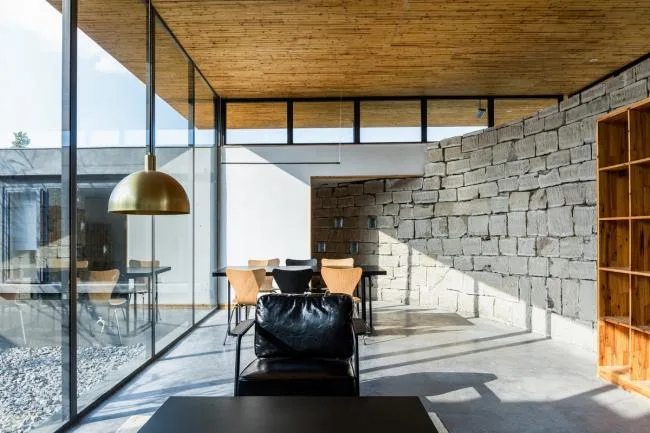
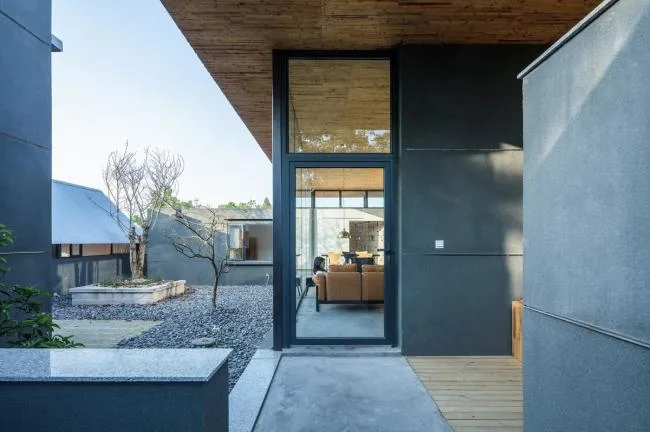
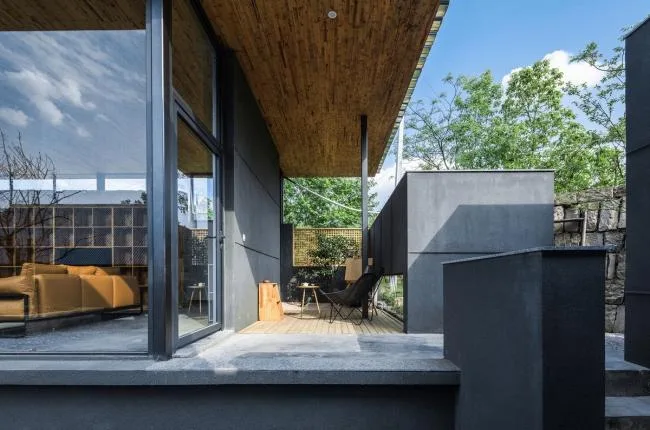
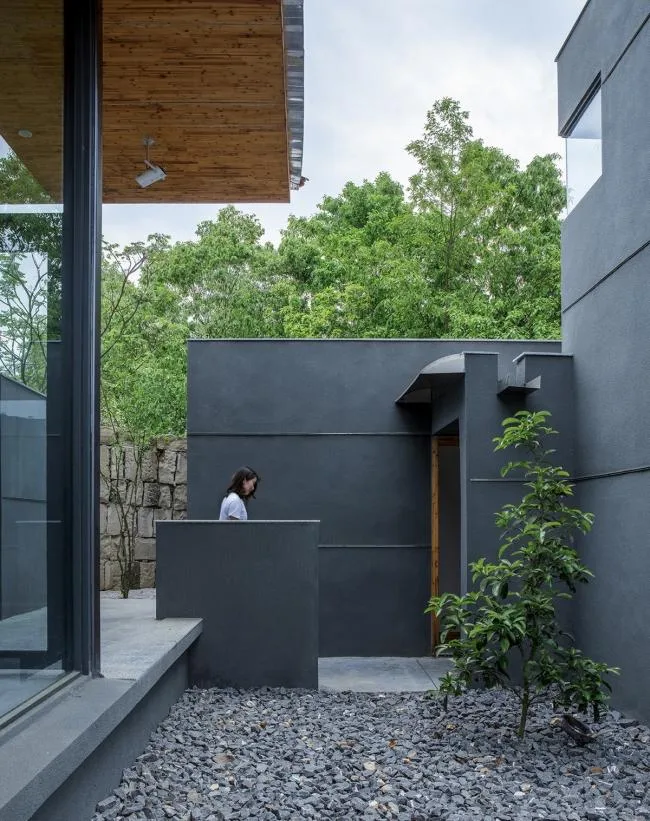
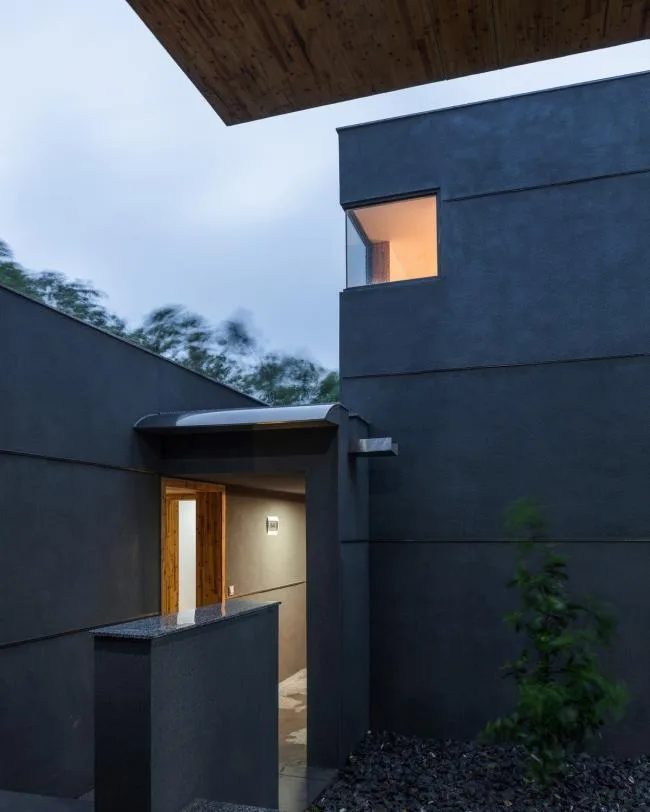
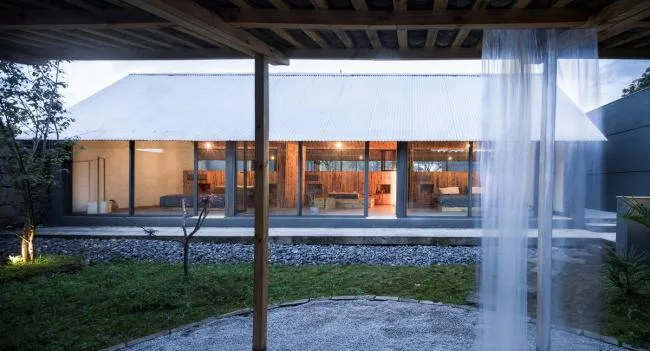
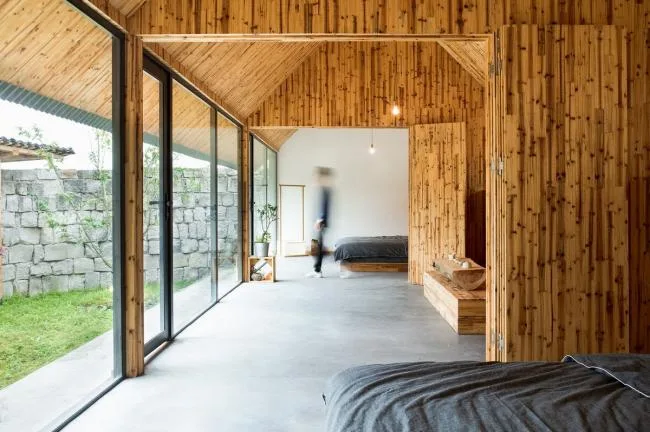
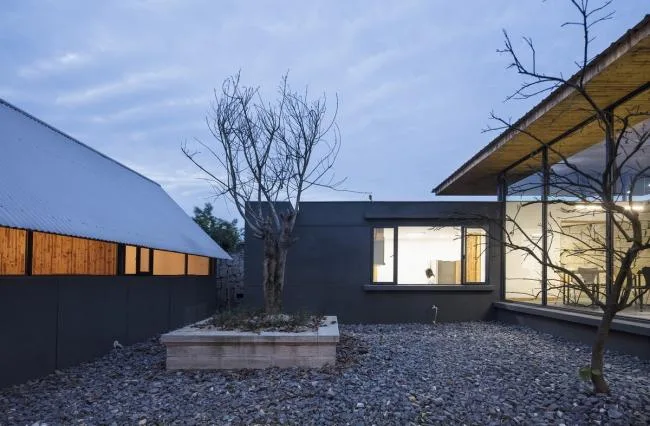
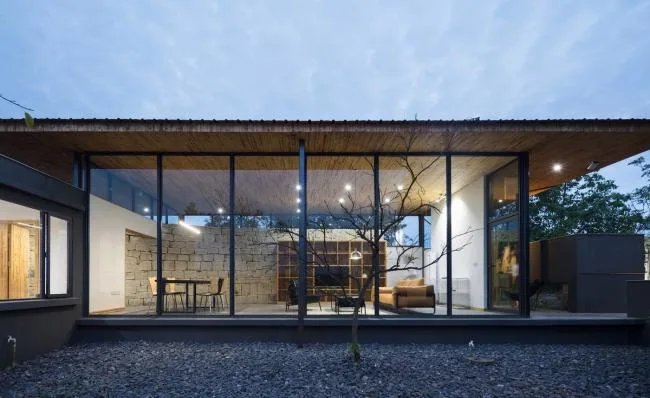
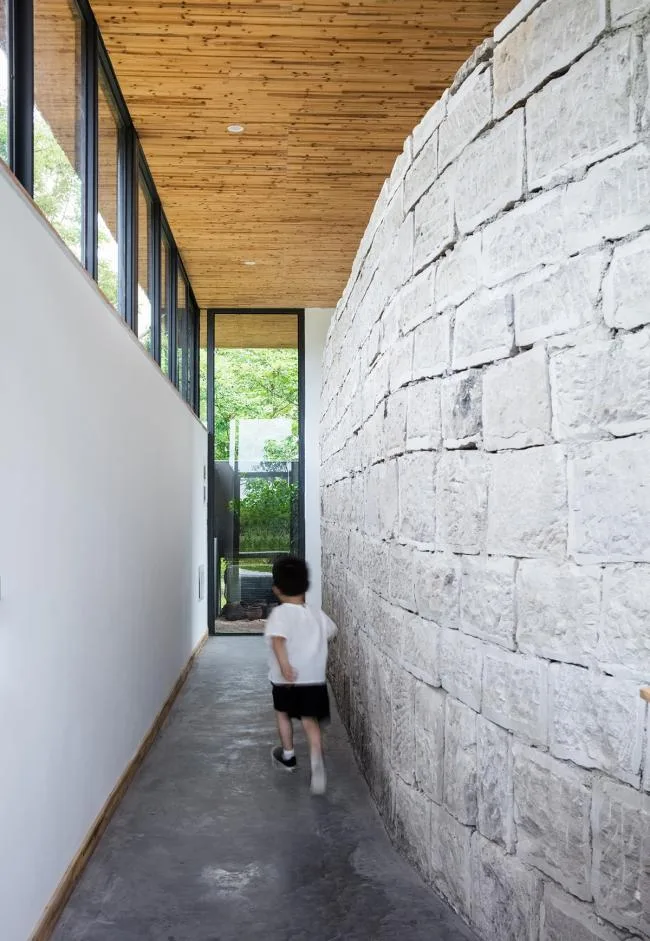
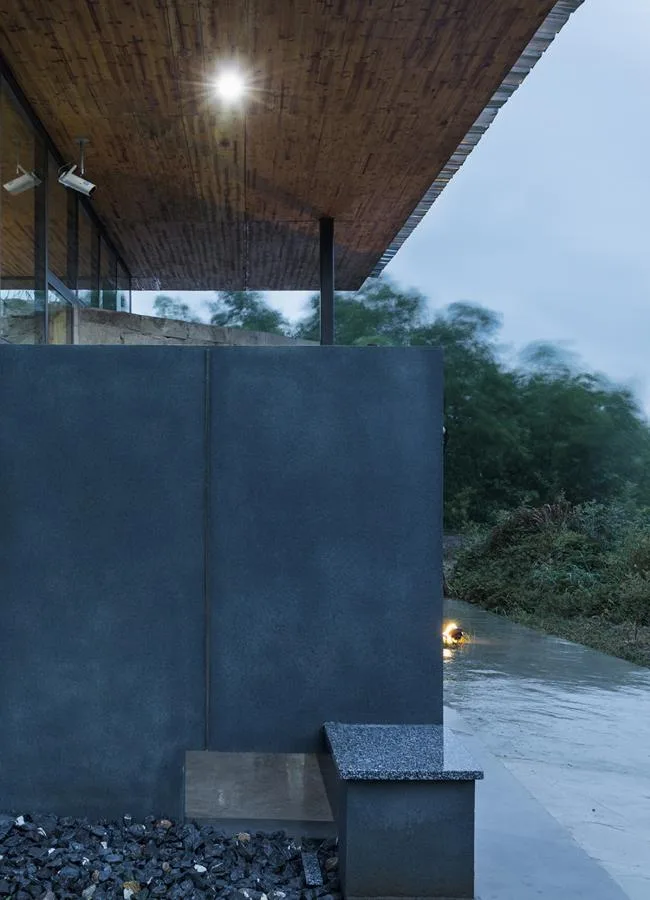
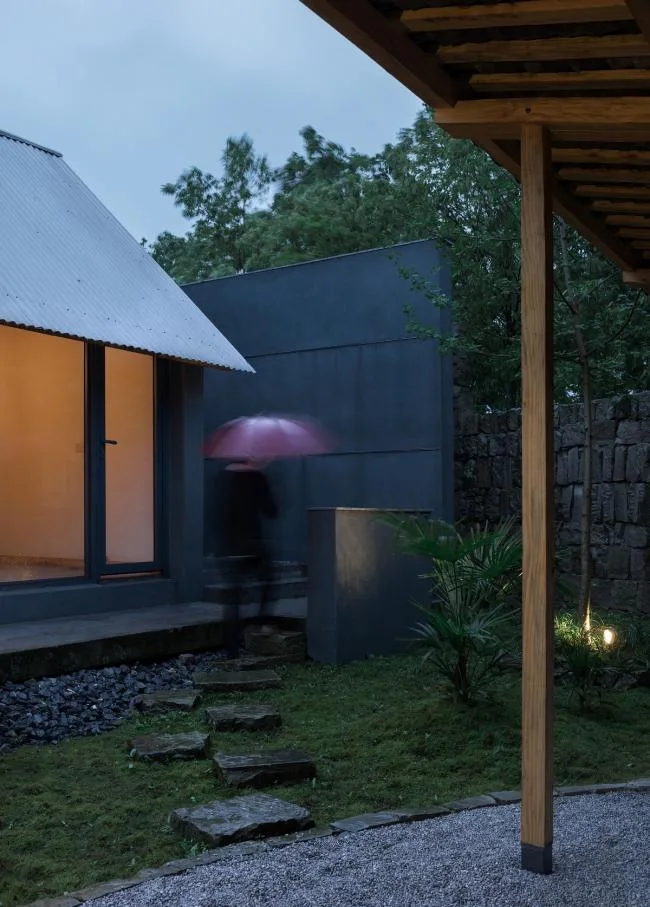
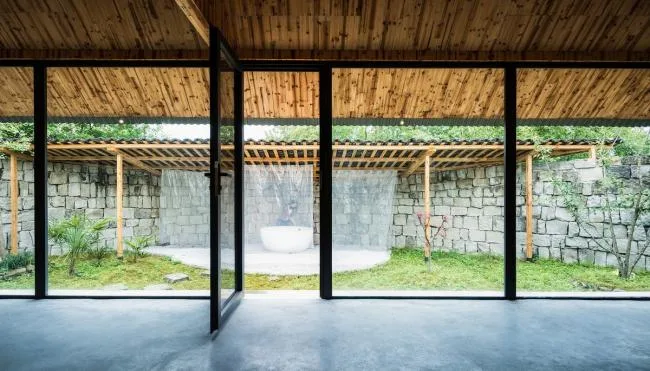
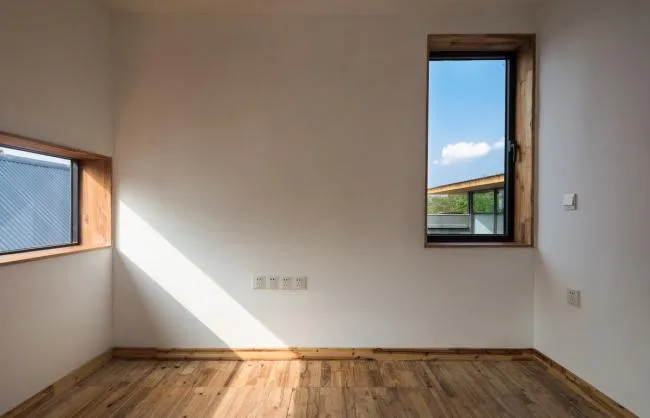
The traditional stone wall construction in the region acts as a connective “relationship” between various functions. It creates courtyards of different scales to fulfill the needs of distinct functional units for “observation” or “use”. This inward-facing living space blurs the orientation typical of traditional architecture, yet light still filters in from the west, resonating with the unique spirit of the old house.
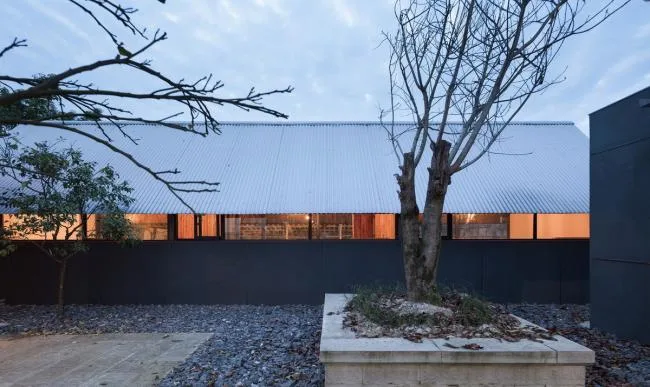
The main hall and rooms feature steel-structured metal roofs. While they might seem like ‘foreign objects’ in the traditional setting, they blend with the current rural landscape, where steel structures and metal roofs are common due to their waterproof quality, affordability, and ease of construction. The horizontal hall and the triangular roof of the rooms create a contrasting yet harmonious relationship, emphasized by their height difference. Large glass surfaces facing the courtyard blur the boundary between indoors and outdoors, inviting nature inside.
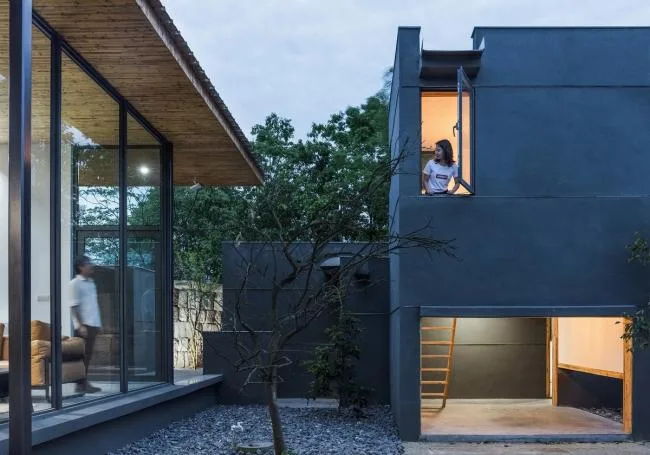
The tower, serving as a visual extension, is centrally located and adaptable.
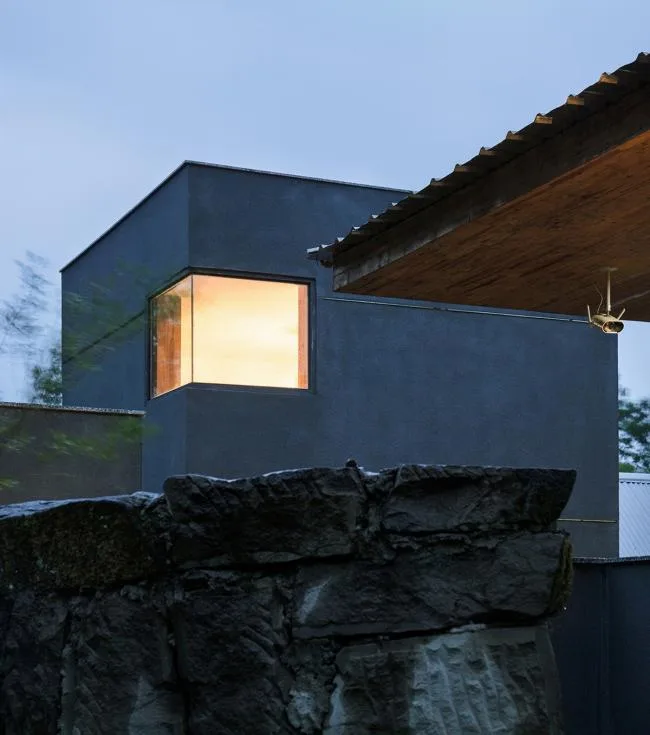
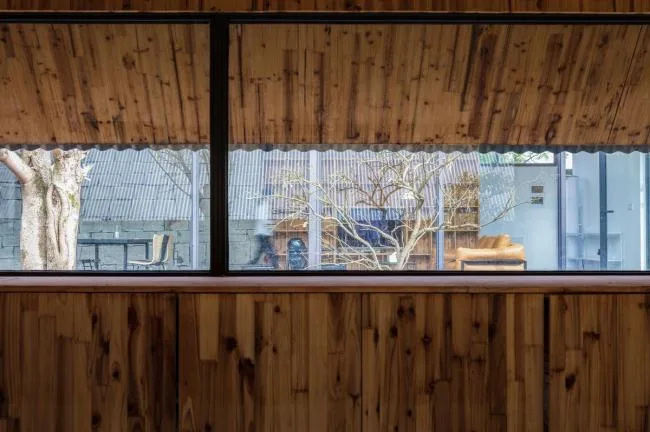
The shed in the lower house contrasts with the main building by preserving traditional construction methods and materials. The roof features a three-part slope, rooted in traditional truss design, with wooden columns and beams as the primary load-bearing elements. These were recycled from green tiles of neighboring homes.
Build
Bricks, stones, and carpenters have traditionally been central to construction, covering the entire building process. With the rise of urbanization in the 21st century, steelworkers and welders have joined the field. Control over construction benefits from the expertise of master carpenters, who help reconcile the unintentional inaccuracies that may arise from other trades.
Design Drawings:
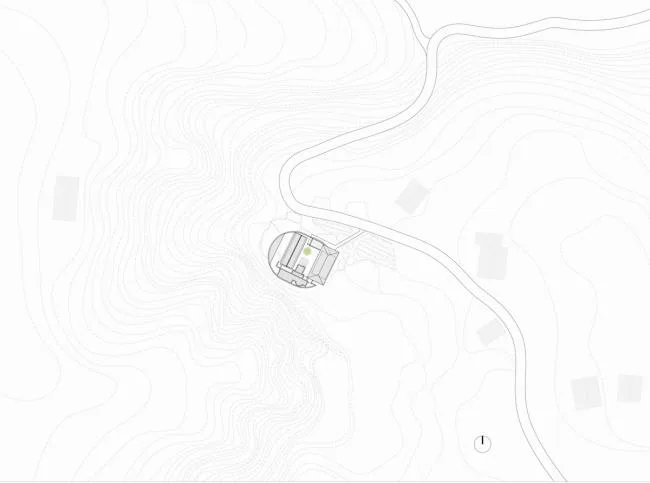
▲ General Layout Plan
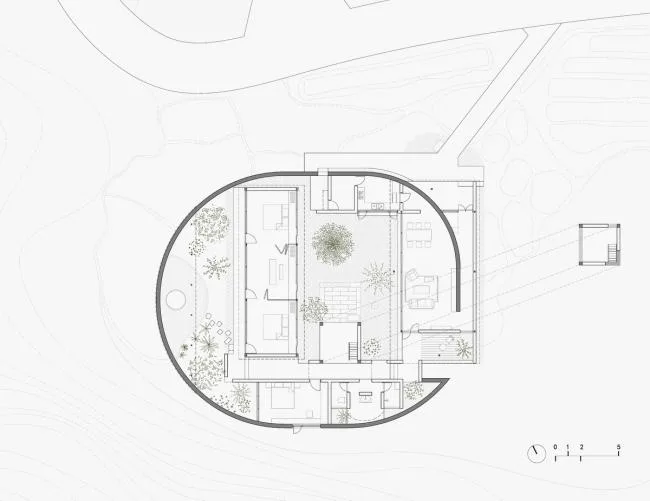
▲ Plan View
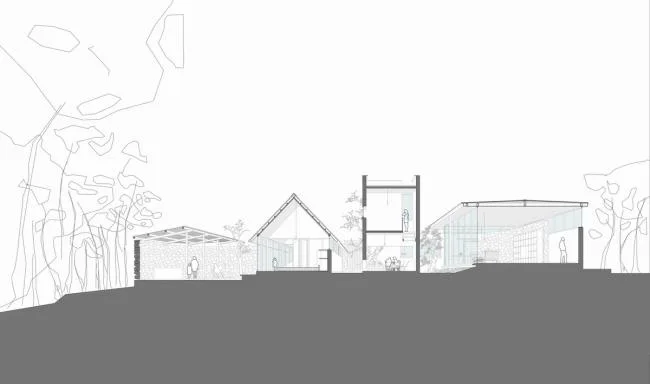
▲ Sectional Perspective
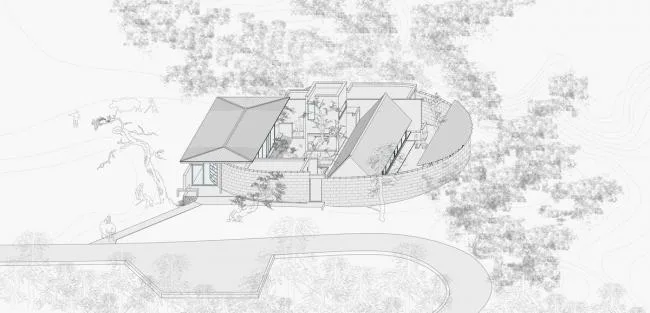
▲ Axonometric Diagram
Project Information:
Architectural Firm: Lowercase Architectural Firm
Address: Qiuyubao, Pingshan Town, Dianjiang County, Chongqing City, China
Category: Collective Housing
Lead Architects: Li Wei, Yuan Yuan, Li Liang
Design Team: Zeng Wenjuan, Jiang Peng, Yuan Shuai, Wang Simin, He Yuqing, Ma Wei, Hu Cuiying
Building Area: 195.0 m²
Project Year: 2019
Photographer: He Lian
(BIM Design)
Principal: Li Qixiao
Structural Design: Wu Haisheng
Landscape Design: Lowercase Architecture Firm
Construction Team: Li Fengwei Team












Must log in before commenting!
Sign Up