
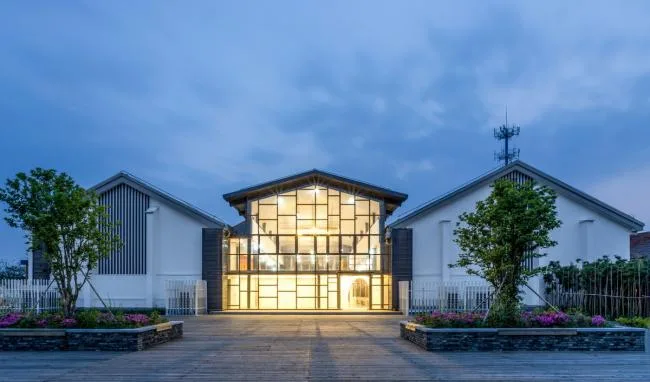
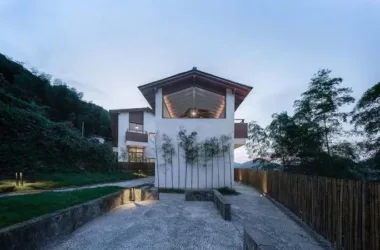
▲ Eastern Night View
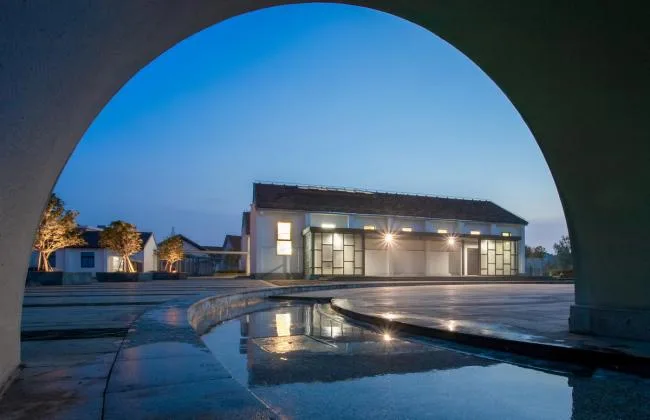
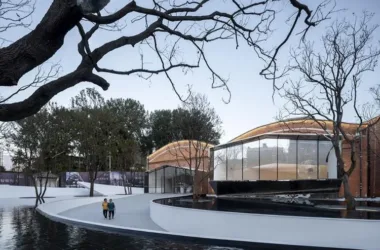
▲ Southern Night View
This project is situated in the heart of Haiyan, Zhejiang—a representative small town within the Yangtze River Delta region. The granaries No.1 and No.2, originally built in the 1980s, are preserved and transformed into urban living spaces. Their main functions include a folk culture exhibition hall, an urban and rural construction exhibition hall, and a multifunctional hall.
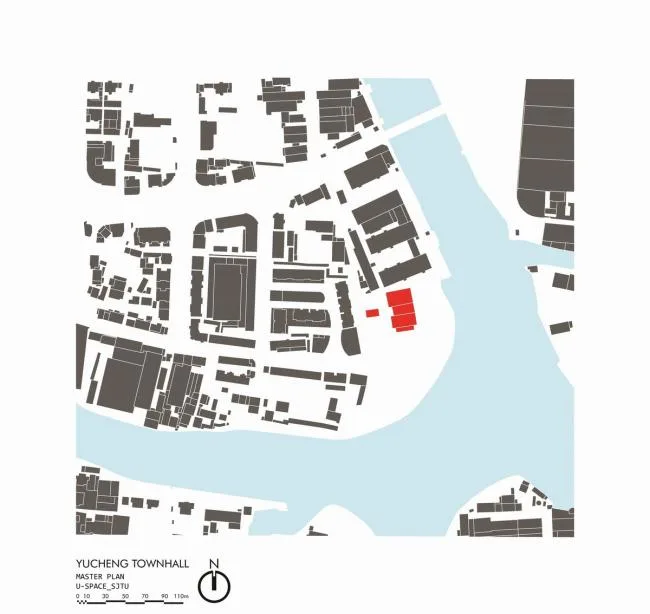
▲ General Layout Plan

▲ Aerial Night View
The Origin of Nostalgic Memories
The grain station located by Lüzhong Pond holds iconic nostalgic significance for the town. Preserving and reconstructing these memories is crucial, and the renovation and functional planning of the space center around themes related to these nostalgic elements.
The project emphasizes maximizing the preservation of the existing grain station’s imprints and facilities. The multifunctional hall is expanded into a grain warehouse-themed exhibition, recreating typical grain station scenes. Broader nostalgic memories are incorporated, including a local folk culture exhibition in Hall 1 and an urban and rural construction exhibition in Hall 2. Additionally, the display of water town cultural memories extends to outdoor venues.
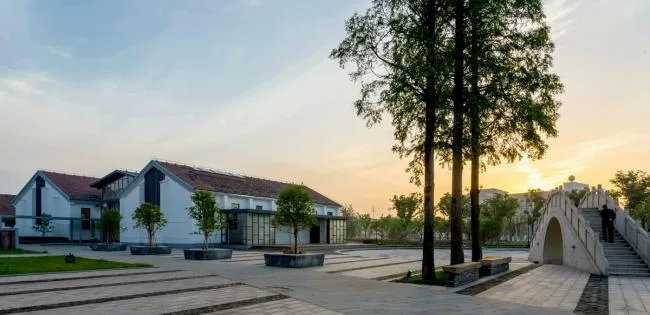
▲ Southwest Panoramic View at Dusk
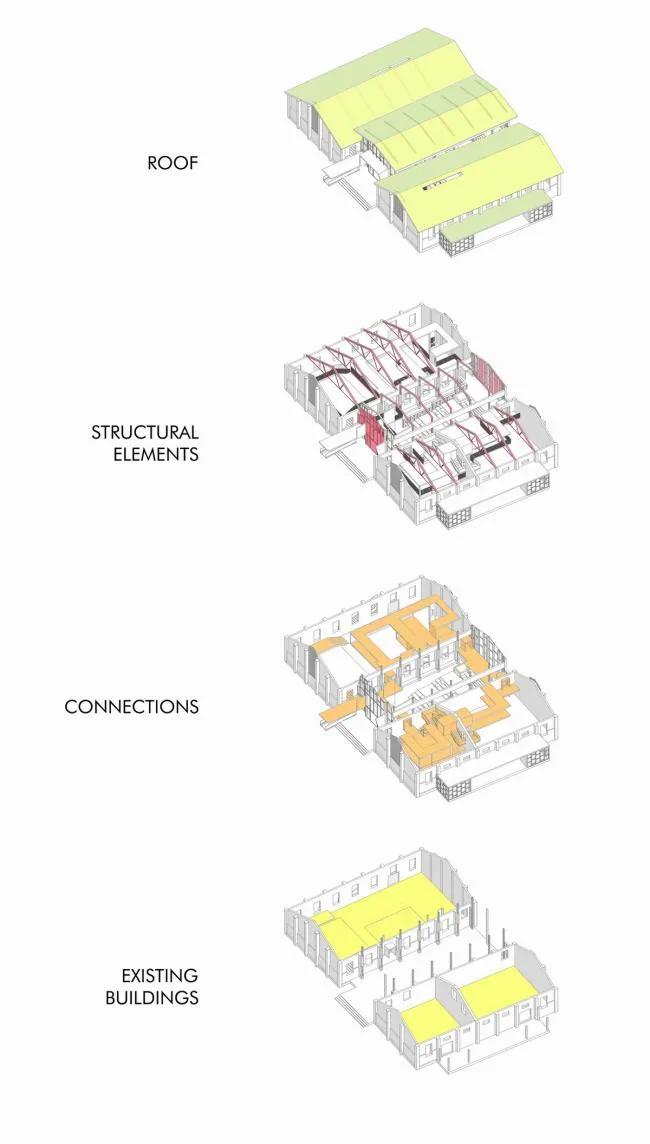
▲ Conceptual Analysis
Communication Nodes in Mobile Space
Prior to renovation, the granary was a closed-off area within the BIM zone of the town center. To create a dynamic node, spatial syntax analysis guided the reorganization of the entire space into a series of micro-spaces that support various programs and informal activities. These spaces are connected by a continuous, surface-colored bond.
Styling techniques such as wrapping vertically, enclosing horizontally, and echoing movements are used to blend old and new elements, memory and imagination. The bond itself accommodates multiple potential functions, including exhibitions, casual seating, small stages, corridors, and lighting.
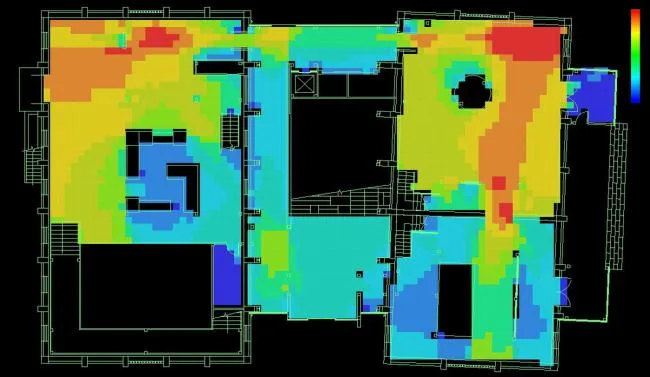
▲ Visual Connection Analysis
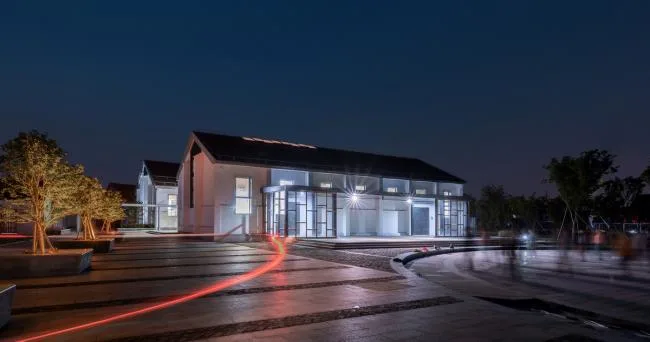
▲ Southern Night View
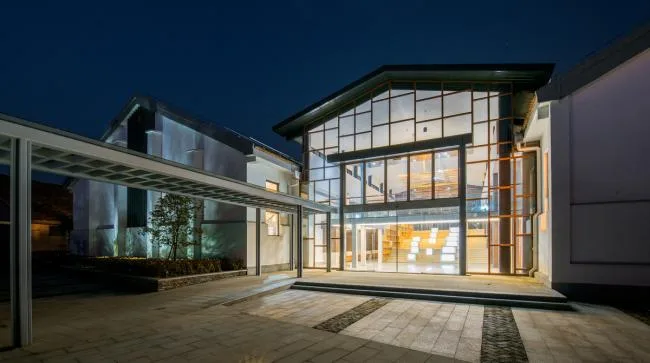
▲ Night View of Entrance
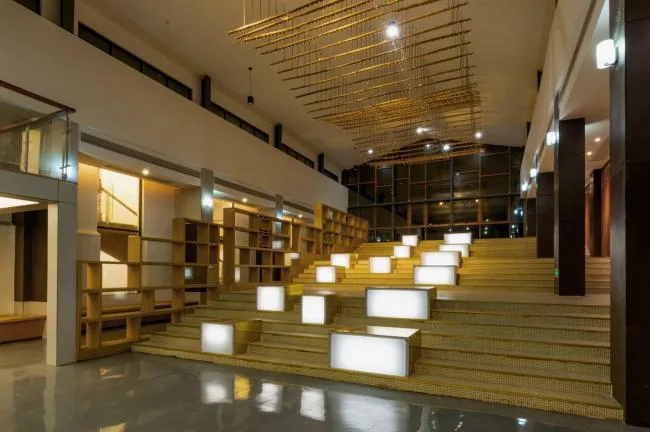
▲ Multifunctional Hall
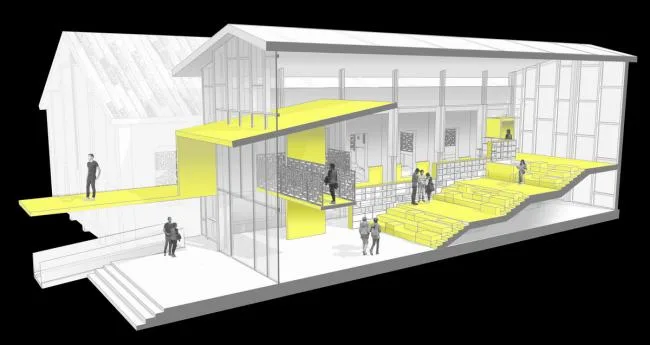
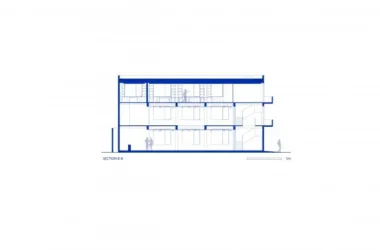
▲ Multifunctional Hall Section
Appropriate Technology for Repairing Key Points
With limited financial resources and local construction capabilities, the project adopts a small-scale, low-cost, green renovation model. It successfully addresses three technical challenges.
The newly added structures use lightweight steel frameworks that are relatively independent. Steel columns have cantilevered or detached foundations from the old wall foundations to avoid impacting existing structural bases. Similarly, the new floor slabs are completely separated from the original walls to prevent damage.
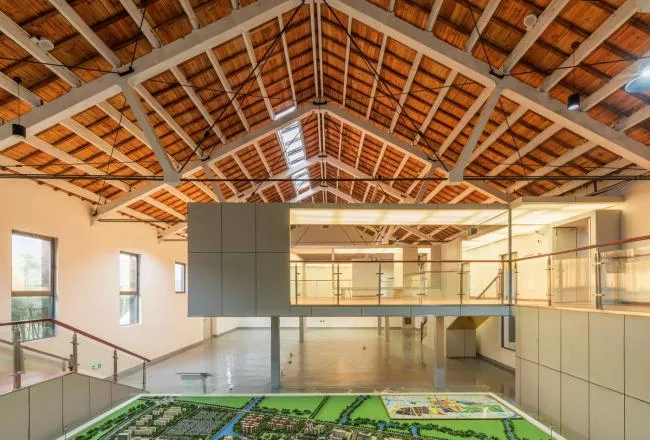
▲ Roof Structure of Urban and Rural Construction Exhibition Hall
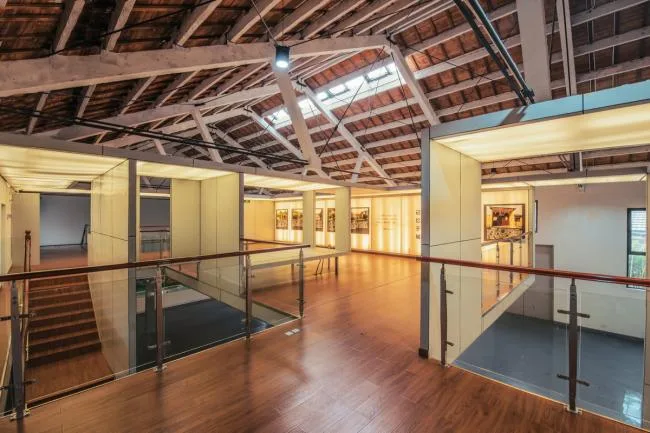
▲ Space Showcasing Mobility in Urban and Rural Construction
Given the limited ceiling height, the gaps between the original roof truss structures have been fully utilized. A flexible mezzanine space has been introduced to ensure adequate display and passage heights.
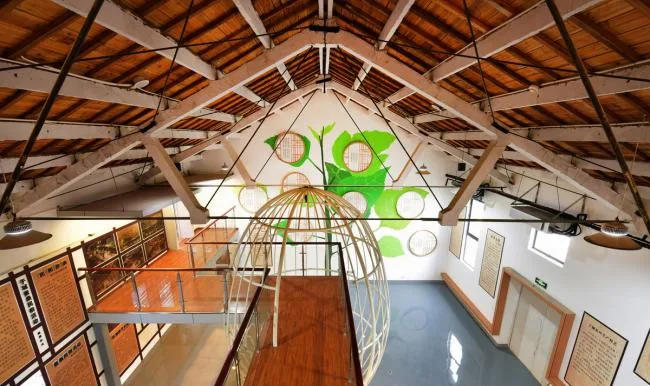
▲ Interior of the Folk Culture Exhibition Hall
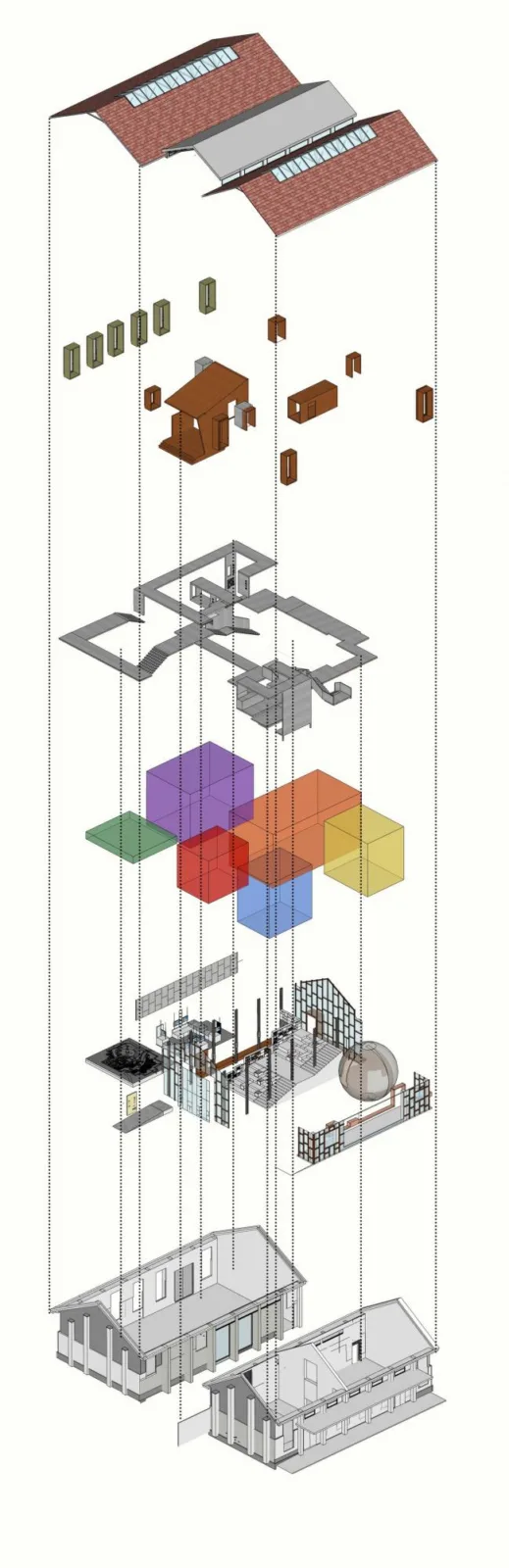
▲ Element Analysis
Due to the challenge of accommodating large pedestrian flows in public buildings, the original grain silo window openings and ventilation systems were insufficient. Following the principle of minimal exterior intervention, solutions such as adding operable roof skylights and locally lowering window sills were implemented to increase natural lighting and ventilation.
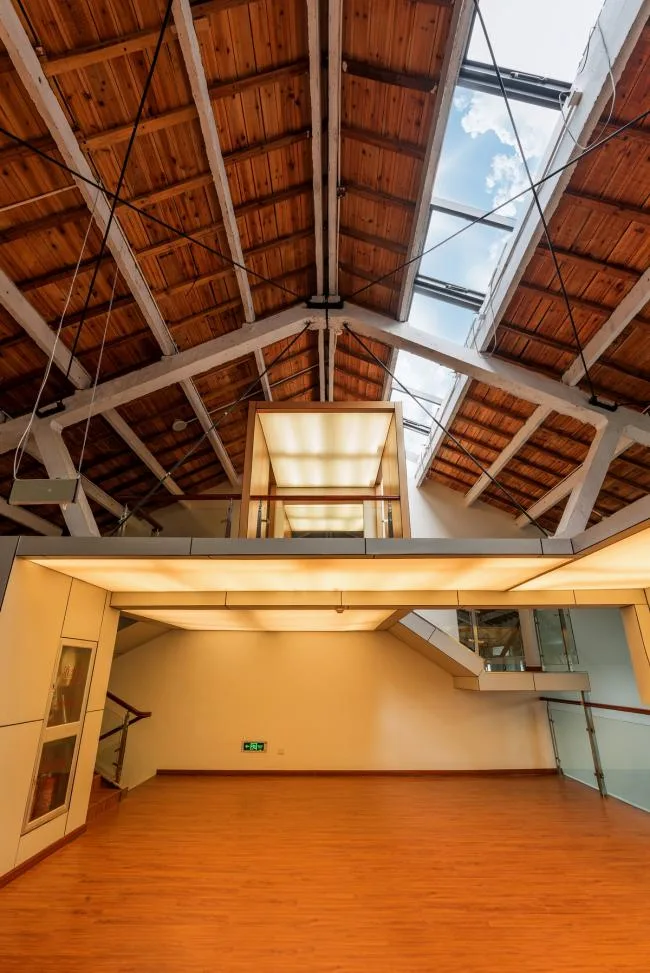
▲ Skylight inside the Folk Culture Exhibition Hall
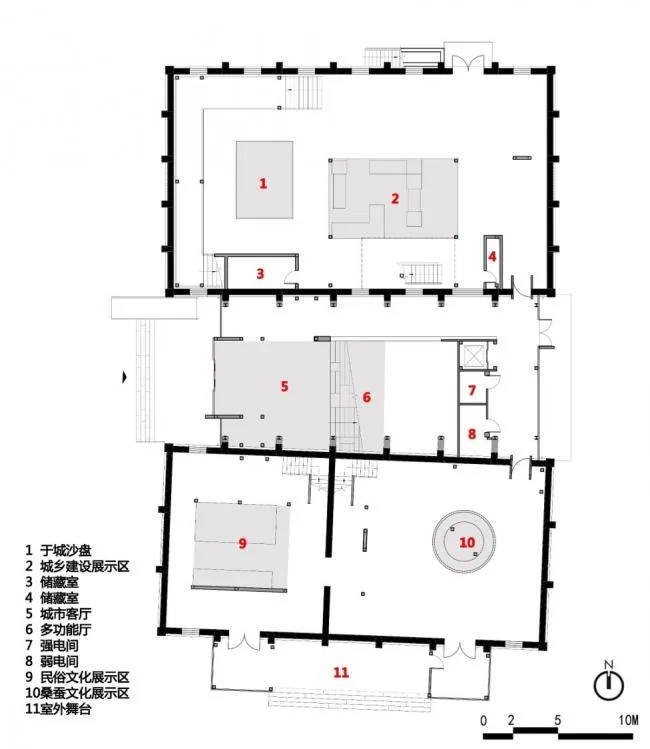
▲ First Floor Plan
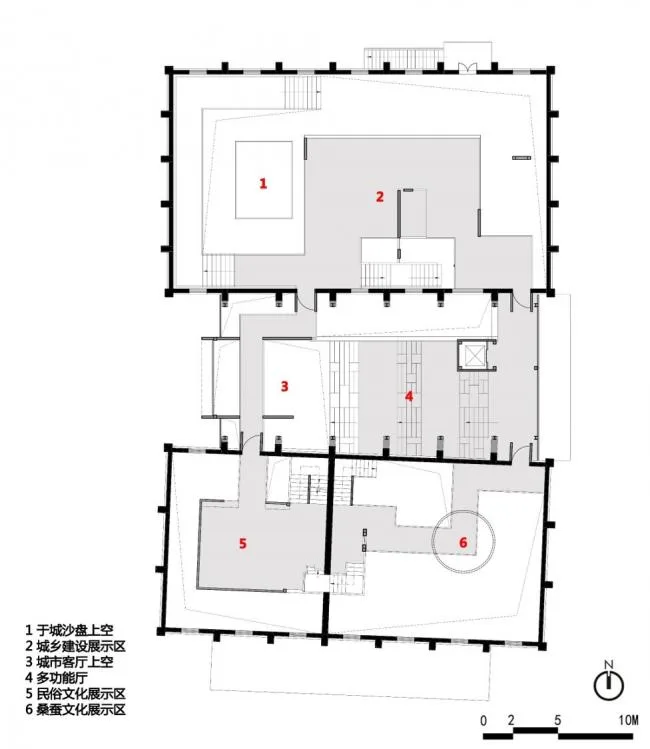
▲ Second Floor Plan
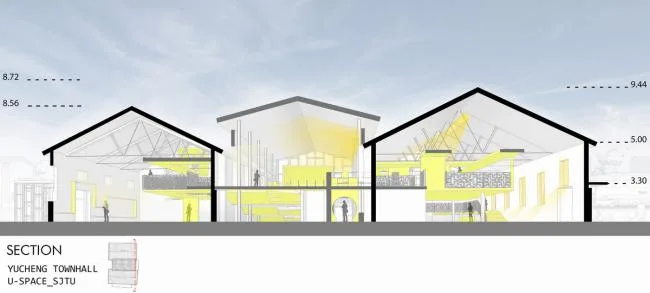
▲ Section – Sunlight Analysis
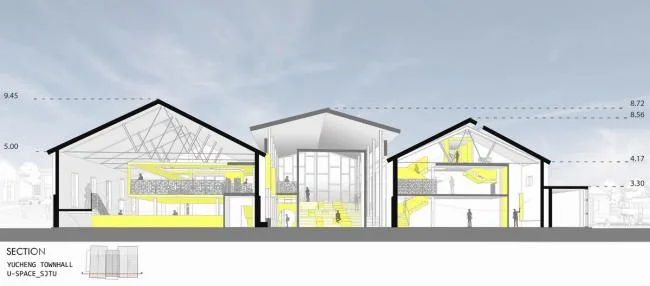
▲ Profile – Line of Sight Analysis
Project (BIM Learning) Details:
Designer: Urban Space Culture and Science Research Center, Shanghai Jiao Tong University
Location: East of Cangbian Road, Yucheng Town, Haiyan County, Zhejiang Province, China
Category: Cultural Center
Lead Architect: Lu Shaoming
Design Team: Du Li, Diao Jiahui, Li Zhou
Building Area: 1,336.0 m²
Project Year: 2018
Photographers: Fan Yilun, Zhang Qian












Must log in before commenting!
Sign Up