
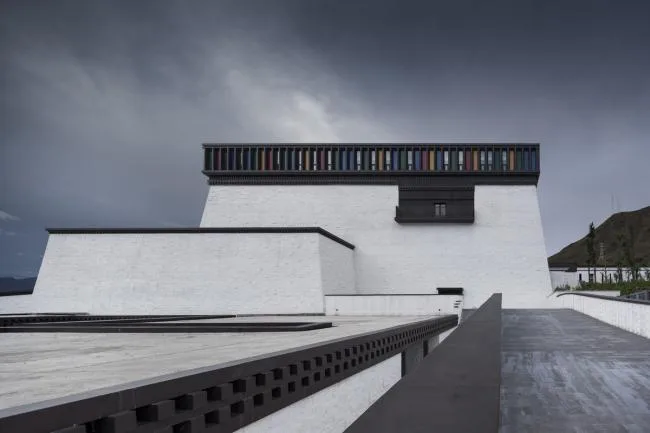
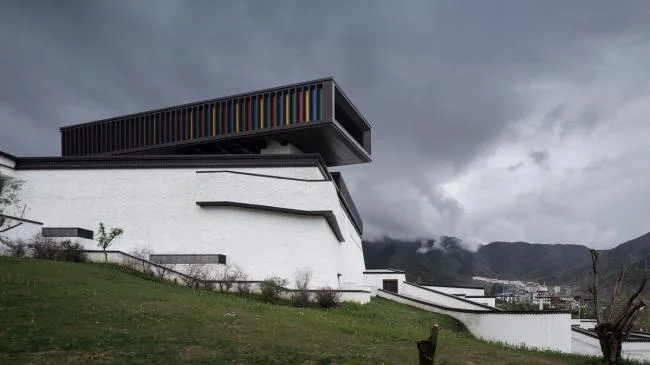
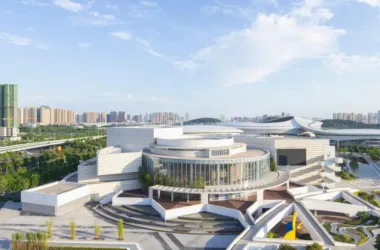
View from the south side of the museum.
The Xizang Intangible Cultural Heritage Museum is a major project funded by the Shenzhen Municipal Government and Vanke Group, constructed by Vanke on behalf of the Xizang Autonomous Region.
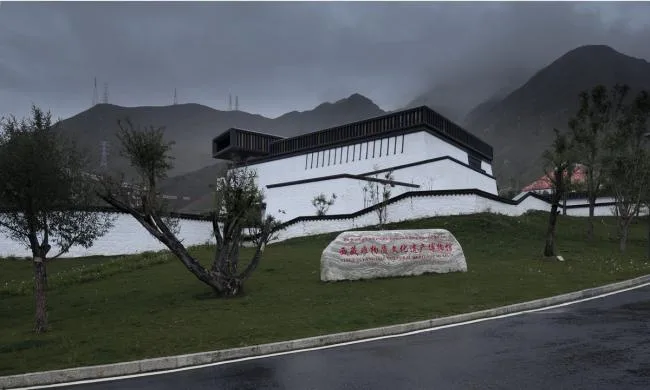
Southwest perspective of the museum.
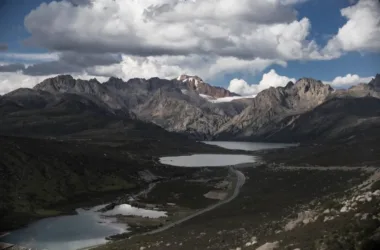
The project site, designed using BIM, is situated in the newly developed Cijuelin Cultural and Creative Park. It lies in a gentle area extending south from the Lhasa River Valley, facing the old city of Lhasa across the valley to the north, and is surrounded by mountains to the east, west, and south.
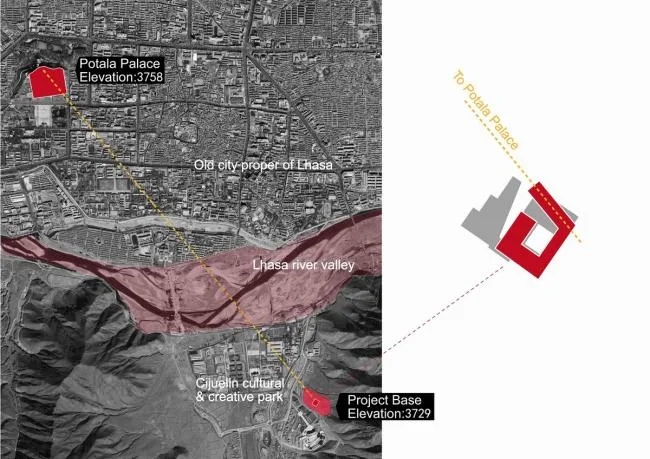
Project location map.
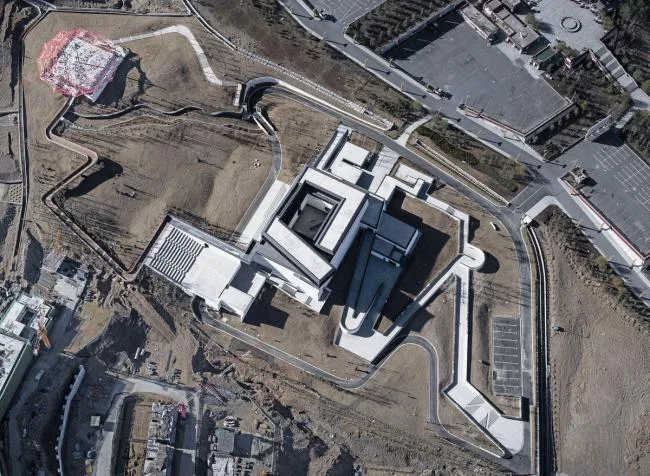
Overall bird’s eye view of the museum (BIM architecture).
Overlooking the Lhasa River Valley.
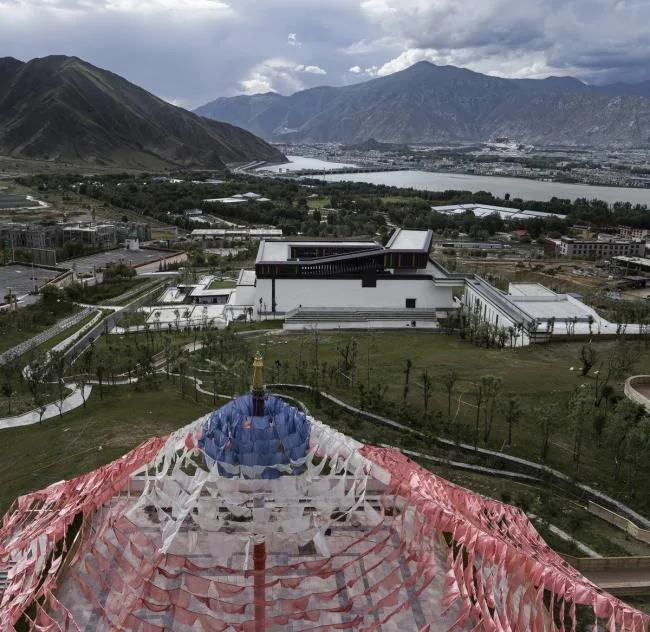
The museum, Lhasa River Valley, and Potala Palace in view.
Our aspiration is for the museum to become a new cultural landmark in Xizang that harmoniously integrates with the existing natural environment and urban fabric. Simultaneously, it establishes a symbiotic relationship with significant historical structures such as the Potala Palace and Jokhang Temple, creating a dialogue that spans both time and space.
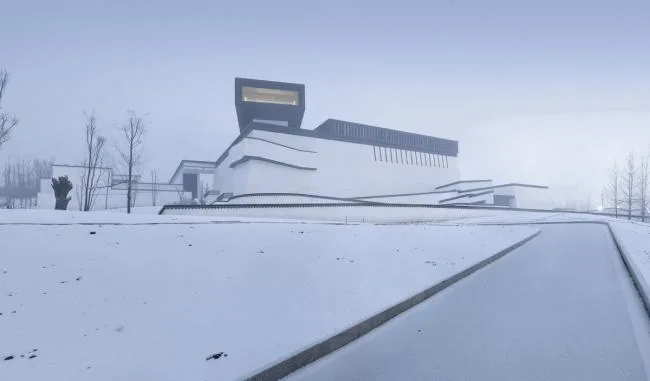
Museum bathed in morning light.
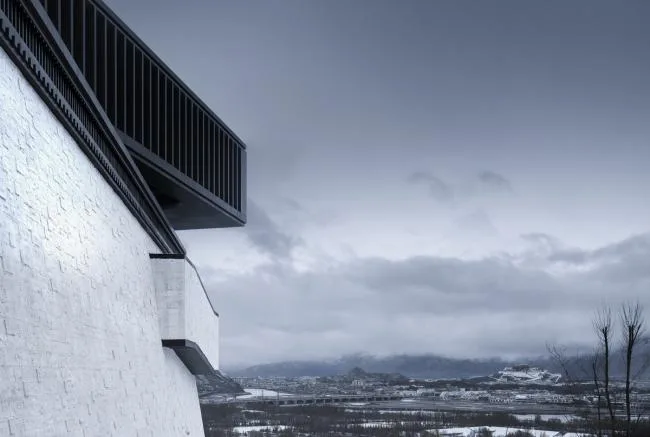
View overlooking the Potala Palace.
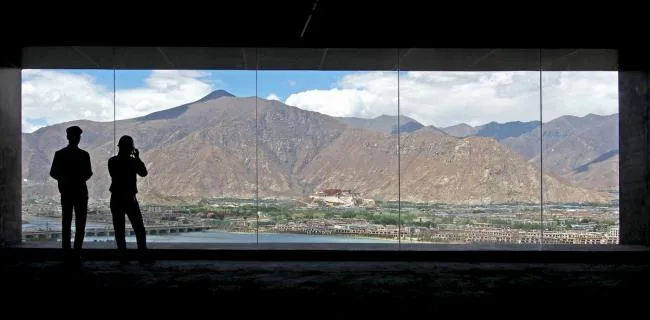
Another view overlooking the Potala Palace.
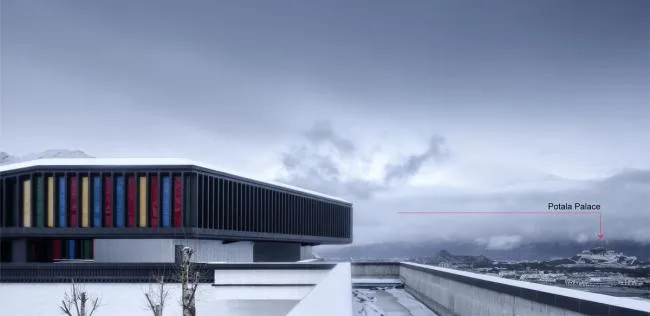
A dialogue that transcends time and space.
Lhasa is an exceptionally unique city where elements of nature, culture, history, and the present intersect and overlap. These factors establish the specific conditions and foundation for our design approach.
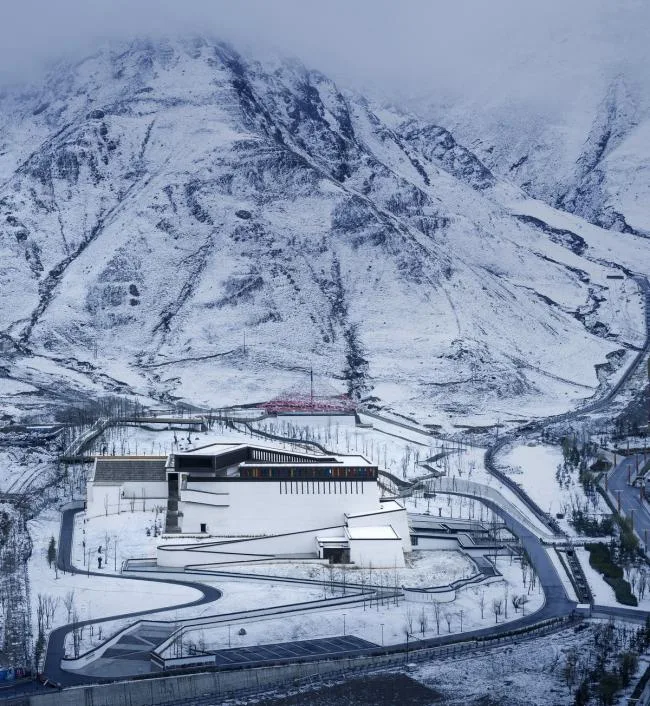
Museum surrounded by snow.
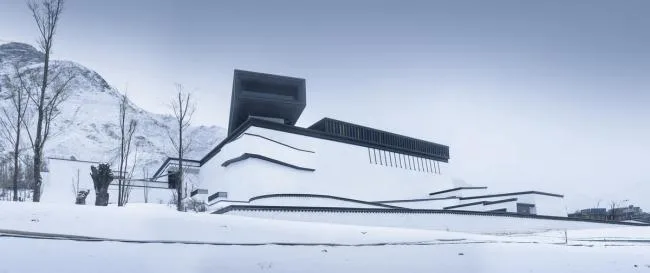
The museum and distant mountains echo each other.
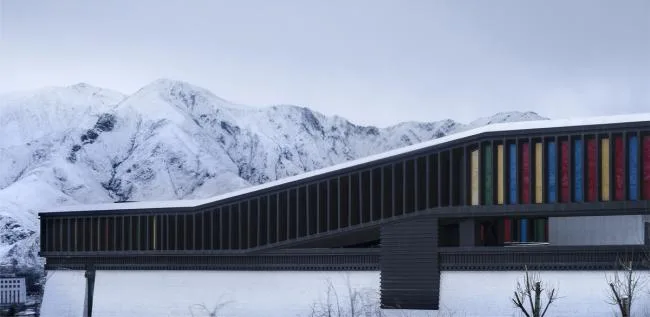
Architecture blending with distant mountains.
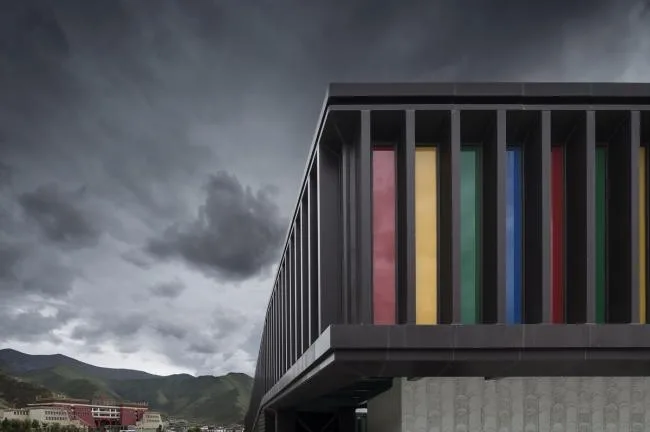
Close-up view.
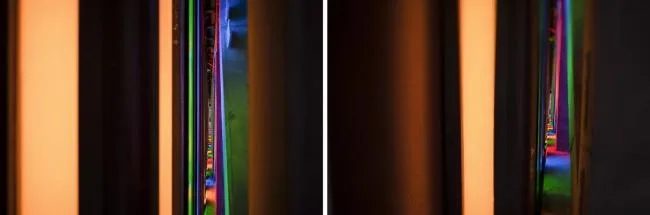
Close-up detail.
Xizang is regarded as a sacred land close to the sky in the hearts of many, with the Potala Palace and Jokhang Temple serving as pilgrimage destinations. Our design is inspired by the concept of “Tianlu” (Heavenly Road), which embodies Tibet’s unique natural and cultural essence.
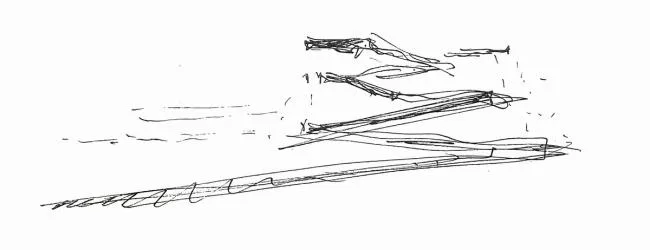
Concept sketch: “Heavenly Road”.
The “Heavenly Road” concept is expressed on three levels in the design. First, the physical walking path is inspired by the zigzag route of the Potala Palace. Abstracted from this prototype, it forms the primary spatial flow line that ascends from the site entrance into the building and spirals upward within the museum.
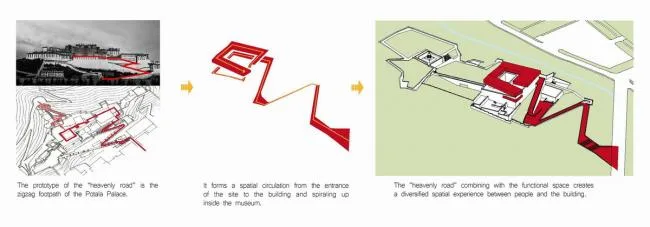
Generation of Tianlu concept.
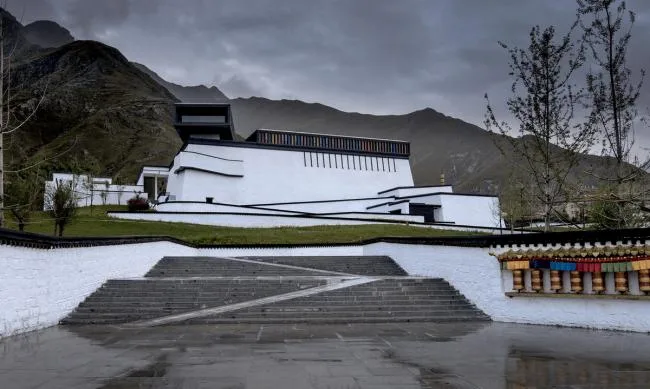
Perspective from the venue entrance.
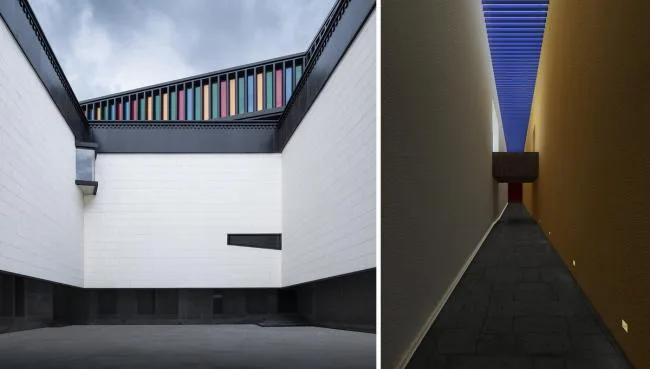
Internal courtyard and ramp.
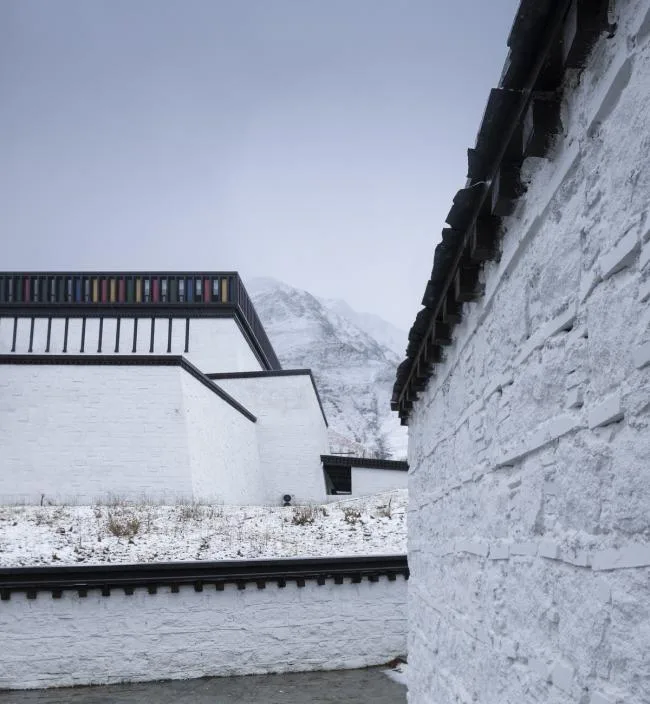
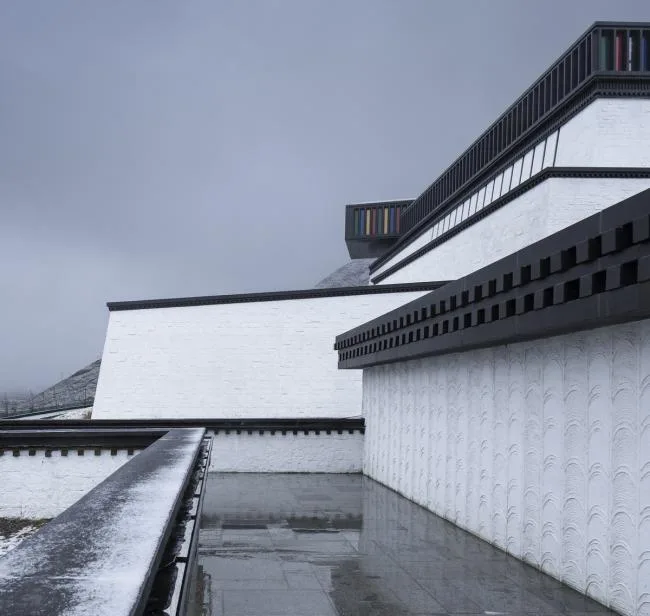
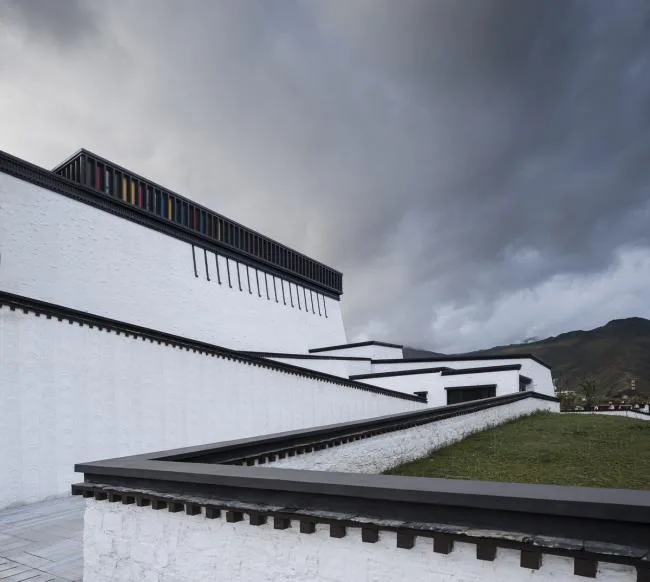
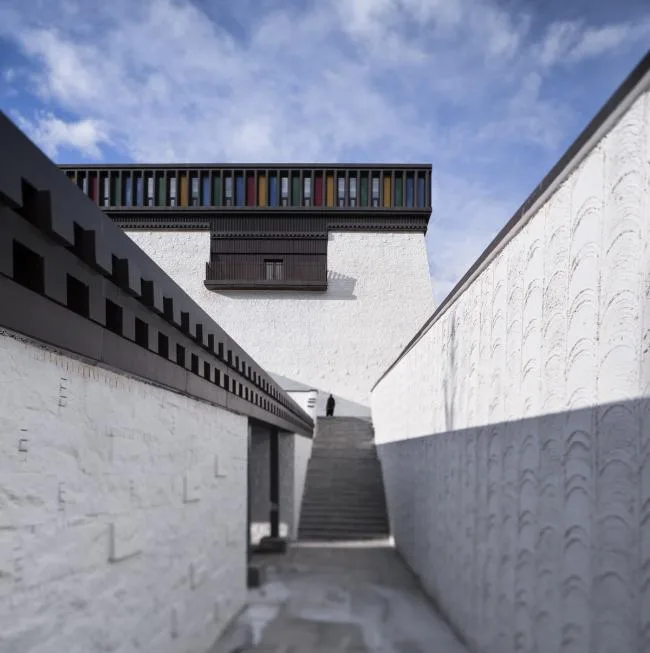
Buildings viewed from different perspectives.
The second level is the unique spatial experience created by overlapping spaces. The museum architecture is inspired by the main hall of Jokhang Temple. When this inward, stable spatial structure is combined with the visitor path inspired by the “Heavenly Road,” it forms a dynamic and diverse relationship between people and the physical space. Visitors move through areas that vary from high and narrow to open, dark to bright, offering a unique journey through the museum.
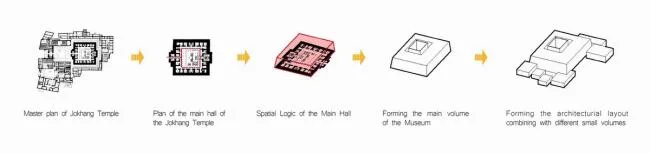
Volume generation process.
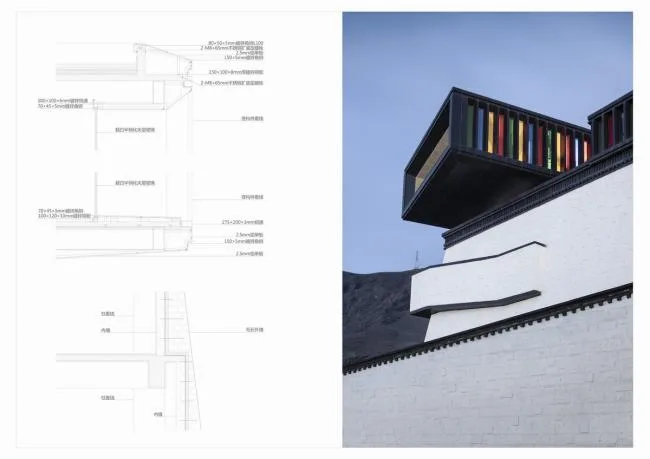
Wall detail node.
The third meaning of the “Heavenly Road” relates to the heart — the emotional and psychological impact this unique spatial experience evokes. The architectural journey naturally influences visitors’ feelings, creating subtle changes in their emotions as they explore the museum.
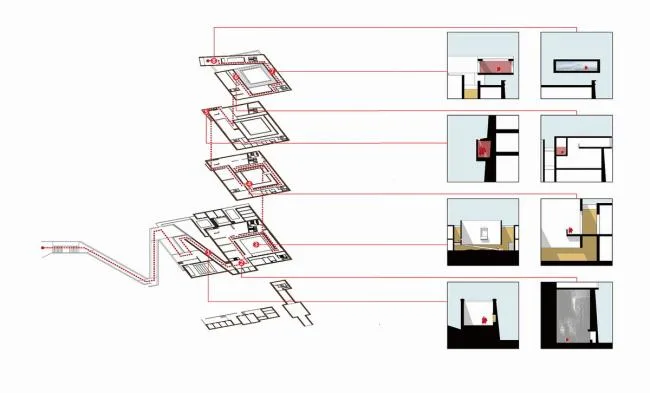
Spatial experience within the museum.
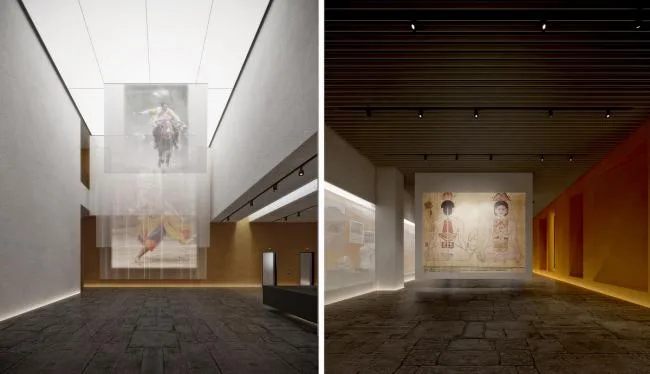
Lobby and exhibition hall.
After an invigorating climb, visitors can fully appreciate Tibet’s rich intangible cultural heritage, culminating in a cross-temporal and spatial encounter with the Potala Palace. This experience is both a dialogue and a tribute to Xizang’s remarkable natural geography, history, culture, and its significance as a sacred land in everyone’s heart.
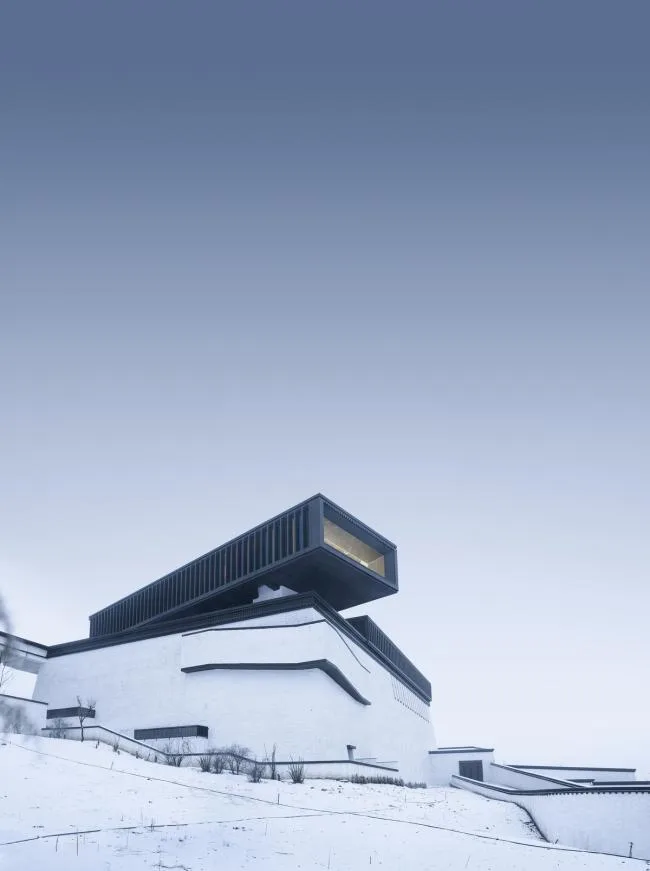
A salute to cultural heritage.
Design Drawings:
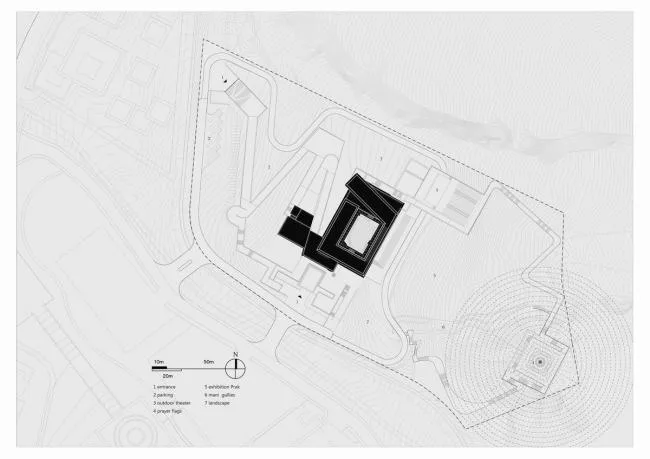
Project overview.
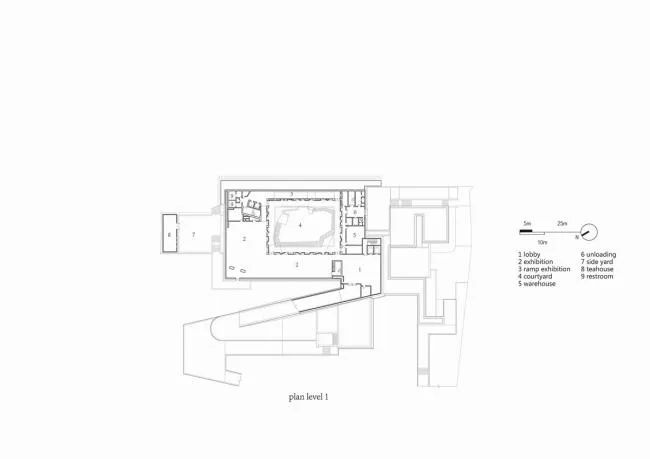
Ground floor plan.
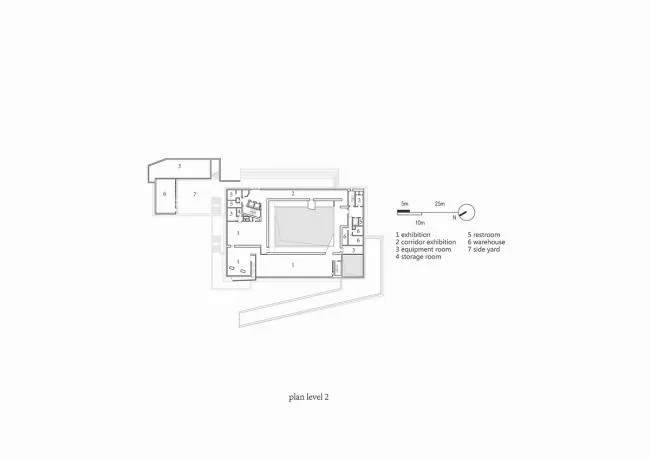
Second floor plan.
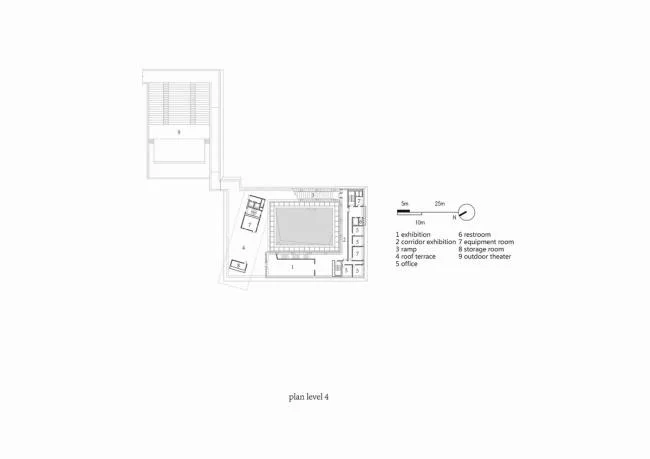
Fourth floor plan.
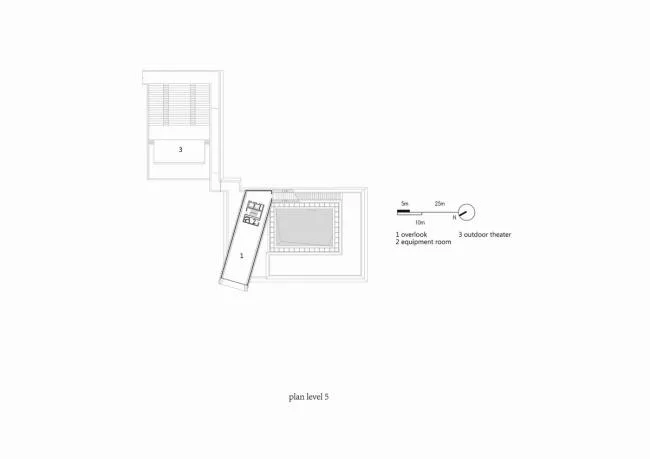
Fifth floor plan.
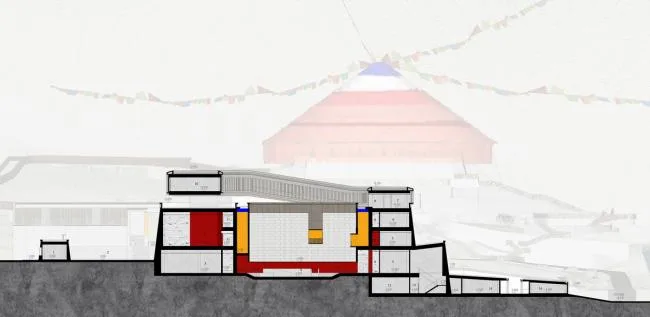
Sectional view.
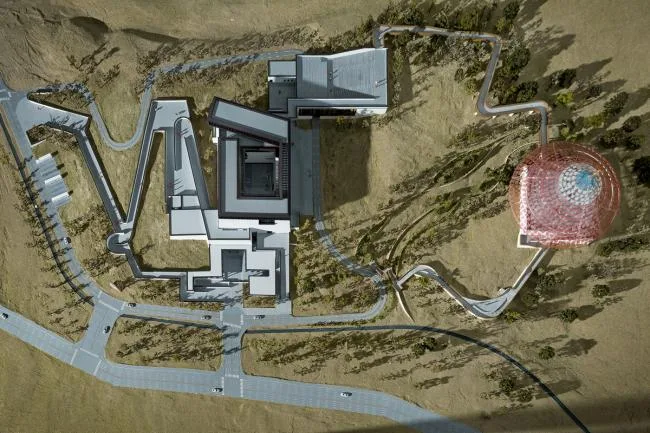
Model photograph.
Project Information:
Architect: Shenzhen Huahui Design
Location: Lhasa, Xizang, China
Category: Exhibition Architecture
Lead Architect: Xiao Cheng
Design Team: Liao Guowei, Zhu Lin, Liang Ziyi, Liang Jianyuan, Xu Mu
Planning and Architectural Design: Shenzhen Huahui Design
Building Area: 6,800 square meters
Project Year: 2018
Photographer: Yao Li
Construction Drawing Collaboration: China Southwest Architectural Design and Research Institute
Landscape Design: Zhu Yufan Studio
Interior Design: Republican Design












Must log in before commenting!
Sign Up