
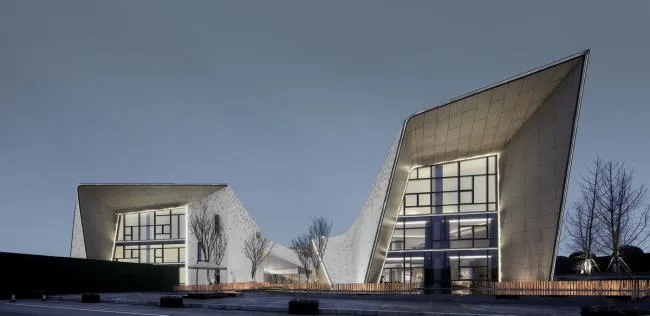
Architecture encompasses three fundamental elements: place, pure geometry, and nature.
— Tadao Ando
Design Philosophy
According to Gestalt psychology, complex yet unified shapes are perceived as mature and complete forms. The guiding principle for design should be “simplicity and appropriateness.” Since the human brain naturally simplifies complex visuals, kindergarten architecture does not need to rely on bright colors. Instead of strictly following modern architectural rules, designers explore children’s visual and perceptual simplification, aiming to create simple, minimalist, and engaging spatial experiences.
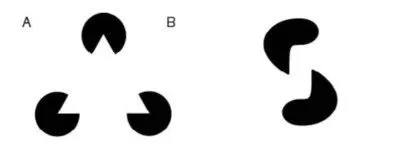
▲ Illustration of Gestalt Psychology
Form Inspired by Site
This project is situated within the ecological zone of Chengdu’s Tianfu New Area, nestled in a park adjacent to natural attractions such as Luhu Ecological City, Xinglong Lake Ecological Zone, and Tianfu Central Park.
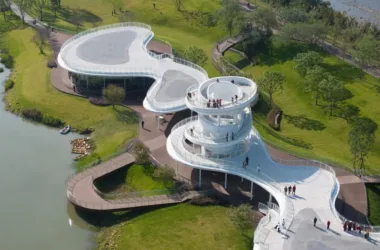
The site is bordered by urban landscape belts on three sides, with a 100-meter green belt to the north serving as a key urban landscape axis. The building’s form adapts to the irregular site shape, integrating the surrounding landscape into the architecture. This design allows children to engage with nature directly, while the building itself serves as a flexible tool for environmental education.
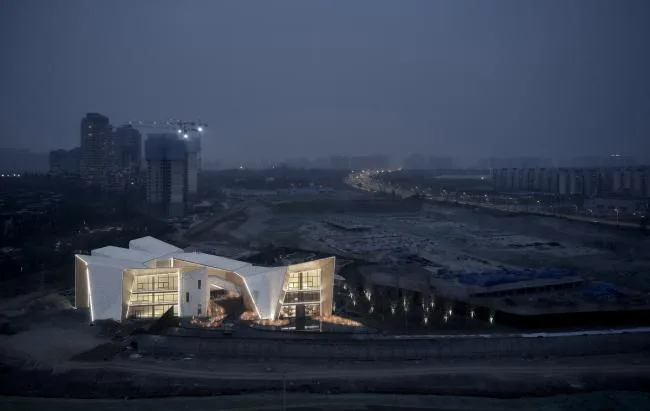
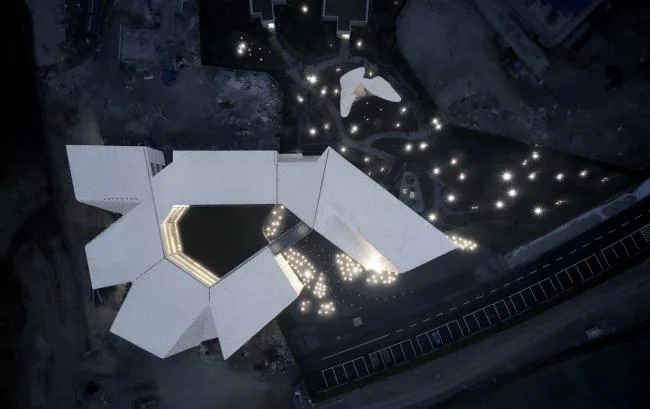
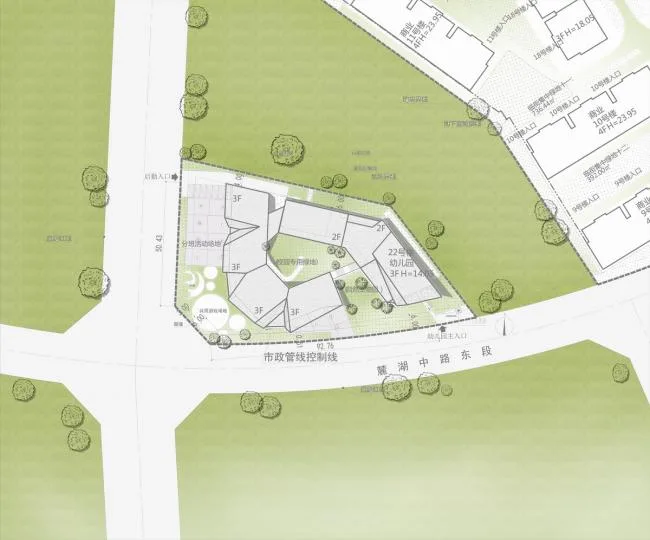
▲ General layout plan
Beginning with the kindergarten’s unit characteristics, the design shapes the building to establish a connection between architecture and pedestrian flow. Adjustments for lighting and outdoor activity spaces orient the building mass towards the south. Innovation lies in creating a transitional micro-geographical environment that bridges the built environment with the natural landscape.
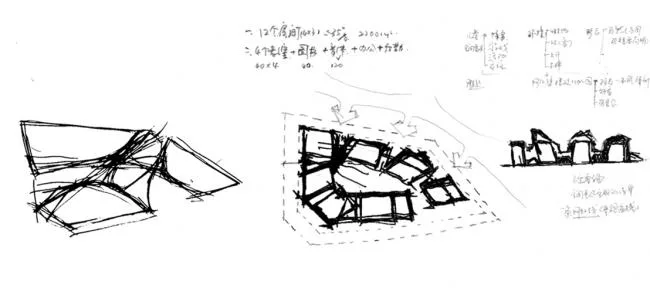
▲ Hand-drawn sketch
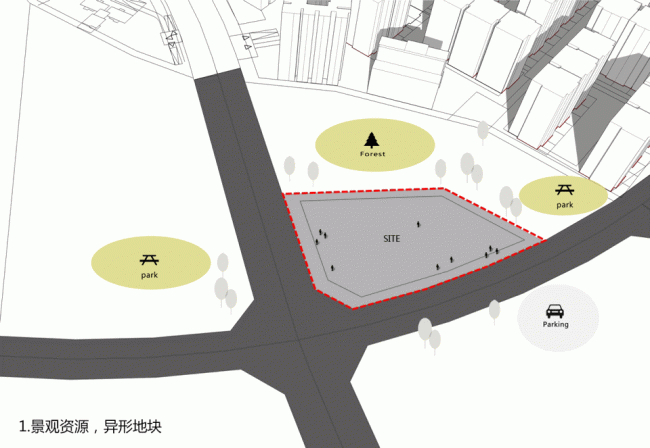
▲ Block generation analysis diagram
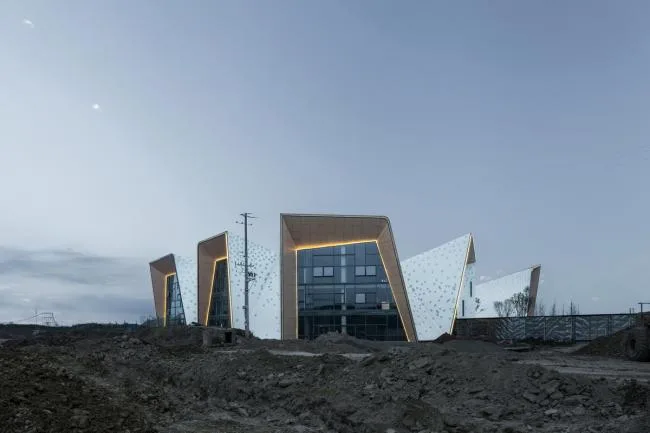
Abstracting Nature
Frank Lloyd Wright once said, “Design is a natural refinement, a factor that appears in a purely geometric way.” This project abstracts nature through architecture, aiming to foster a thriving environment for children amidst mountains and forests.
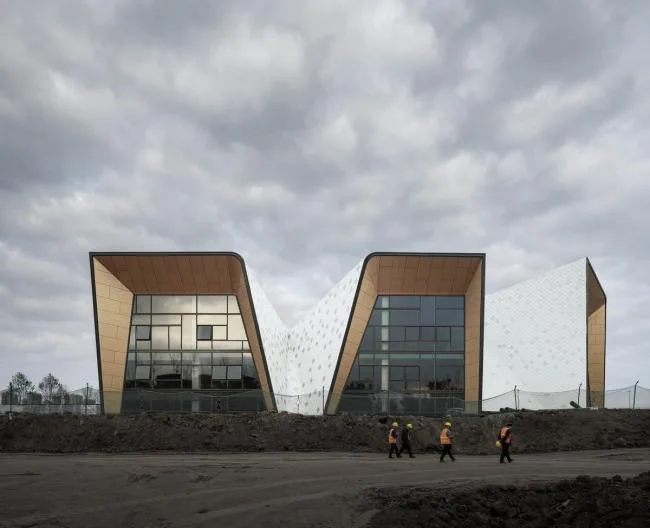
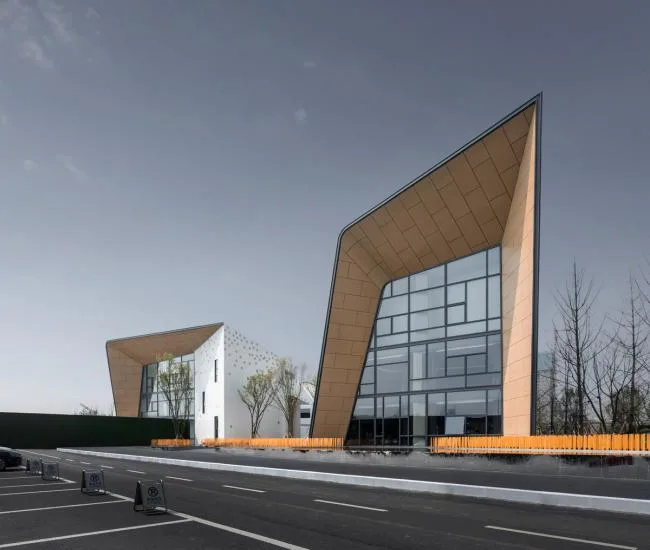
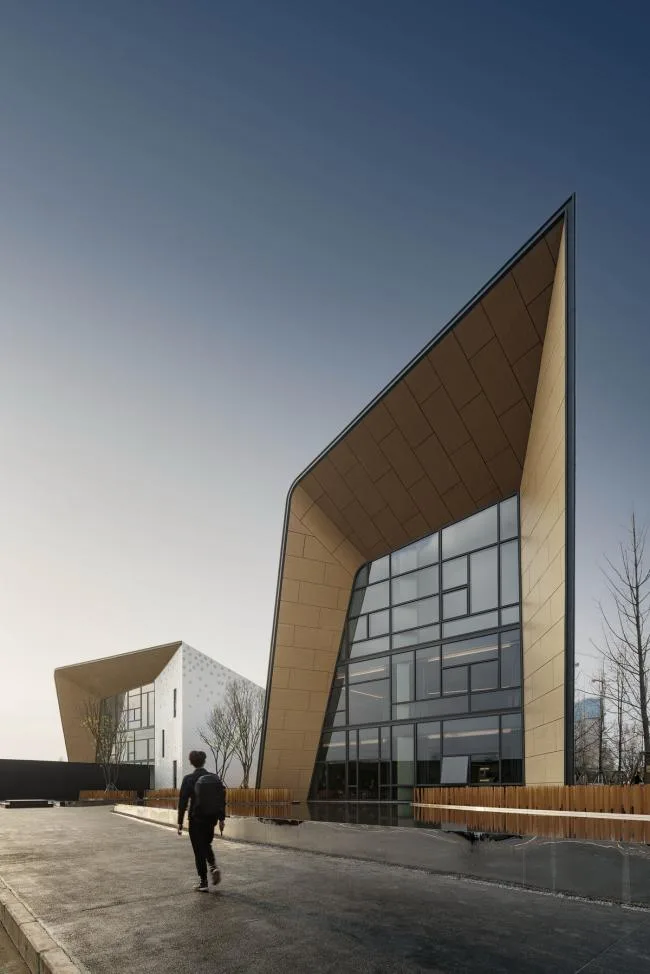
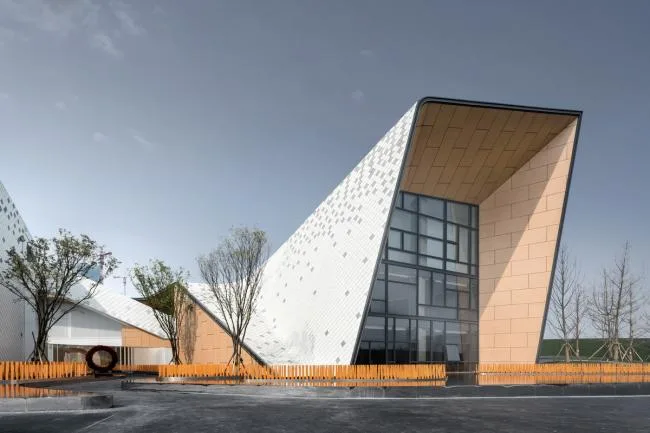
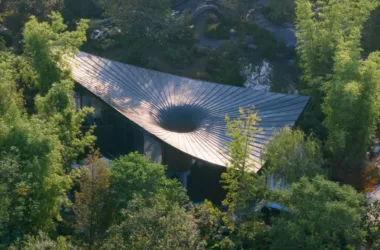
The architectural form is inspired by abstract paintings of mountains, expressed through clear, vivid graphics. Certain areas rise to create focal points, symbolizing the building’s identity without becoming monotonous. Using refined and concise techniques, the design captures the essence of abstract nature, harmonizing with the diverse surrounding landscape like a forest encircled by mountains, satisfying visual and psychological needs.
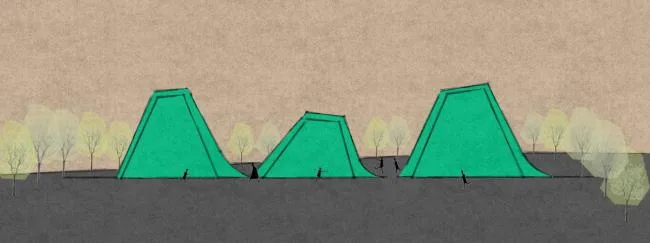
▲ Abstract Nature Concept
Creating a Shared Environment
The building aims to create a shared “field” where children of the same generation can live together, where teachers who understand and support children can engage (facilitated by BIM learning), and where an appropriate environment nurtures growth.
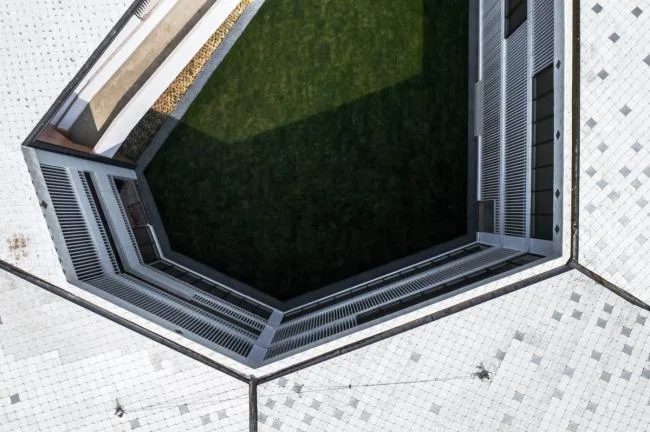
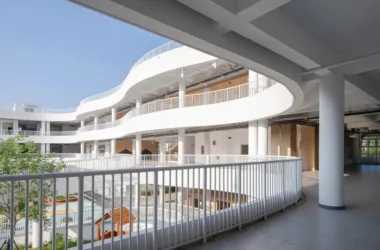
Complex yet cohesive building structures emerge from combining irregular plots, employing basic geometric shapes and composition methods to express architectural essence. The building encloses the entrance plaza and central courtyard along terraced levels, opening outward to form an invisible ring that blurs the boundaries between real and virtual spaces.
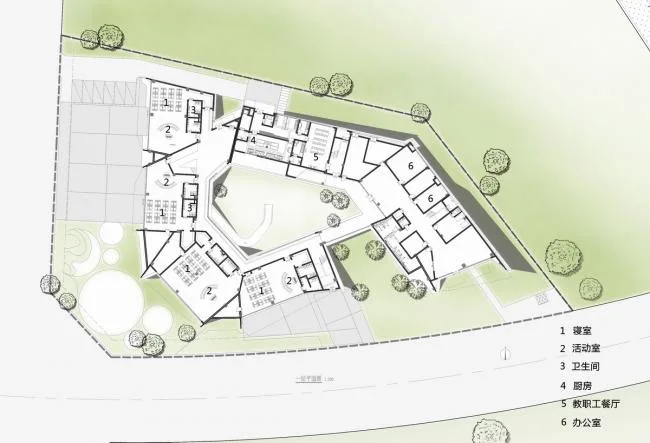
▲ First floor plan
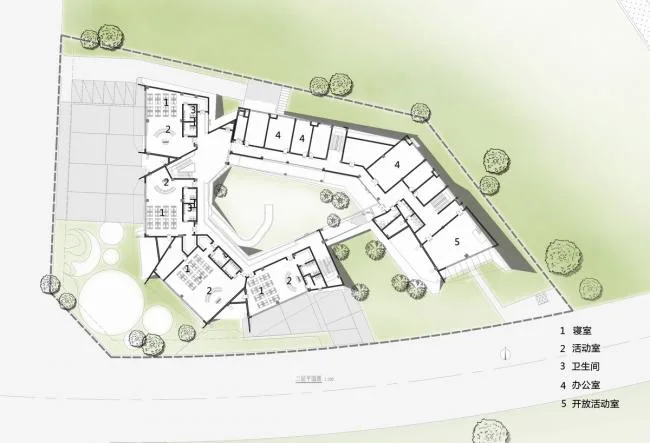
▲ Second floor plan
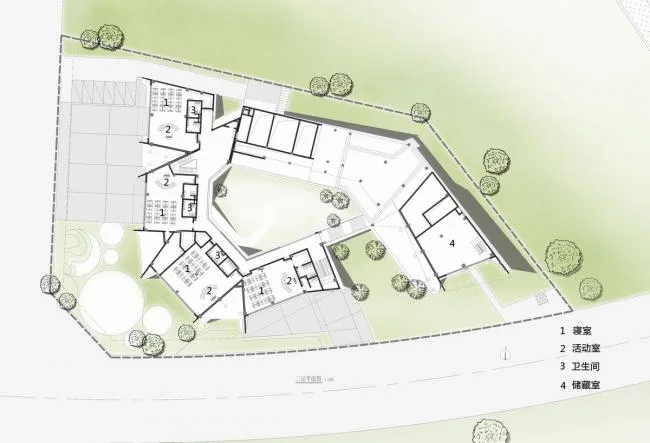
▲ Third floor plan
Architects focus on breaking through closed activity units to provide diverse learning and play spaces that support the physical and mental development of young children. They also prioritize creating communication areas and additional public spaces.
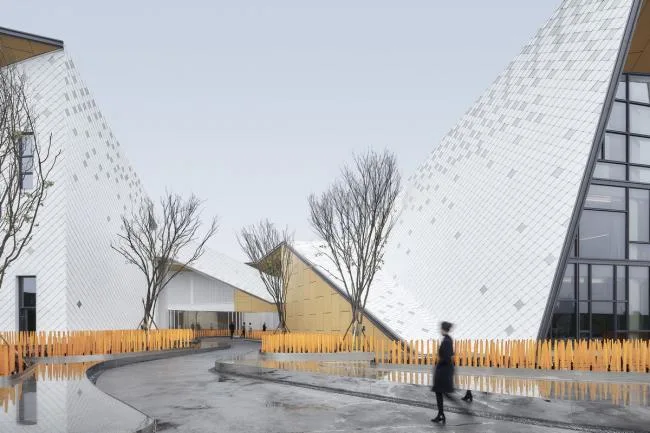
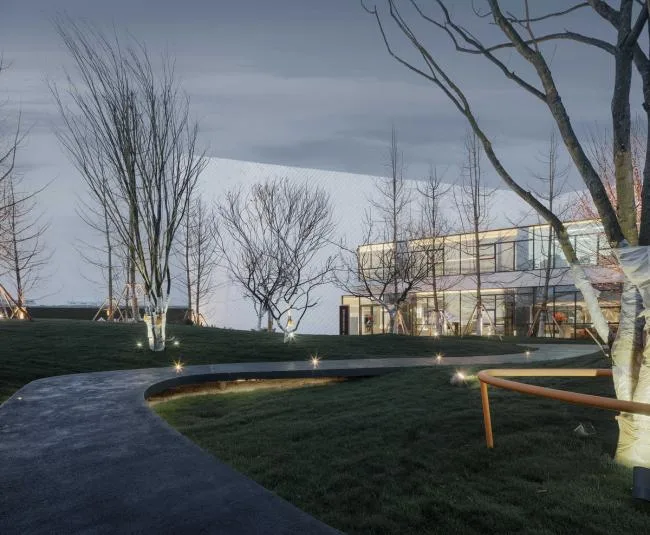
The intermediary spaces, such as corridors, serve as transitional, ambiguous, and bounded zones. They meet the psychological transition needs of young children by connecting and transforming different areas — bridging public and private, indoor and outdoor, active and quiet spaces. This creates spatial continuity and reduces conflicts between contrasting spatial characteristics.
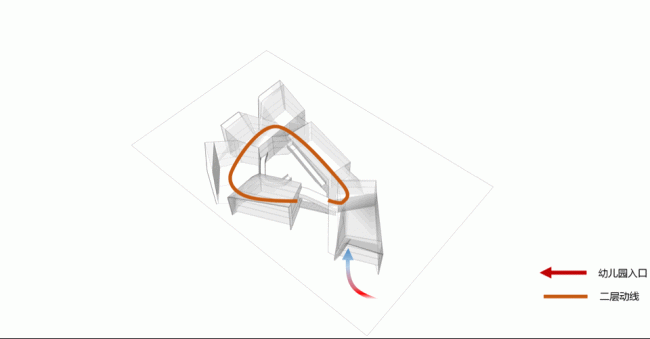
▲ Circular circulation flow
Minimalist Blank Space
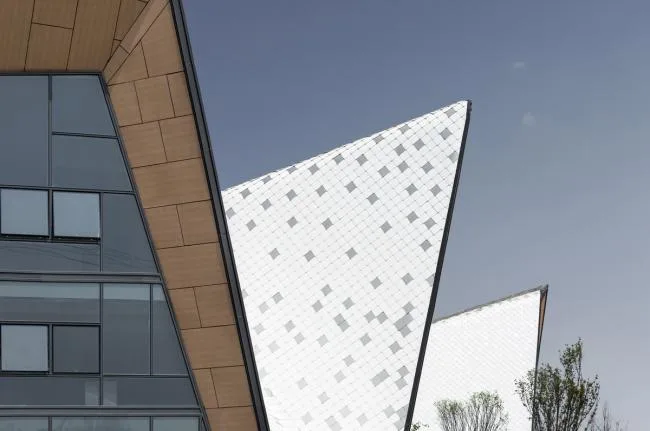
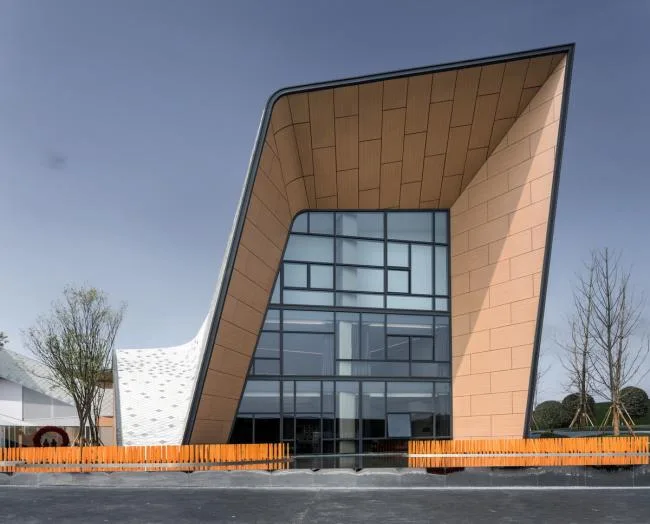
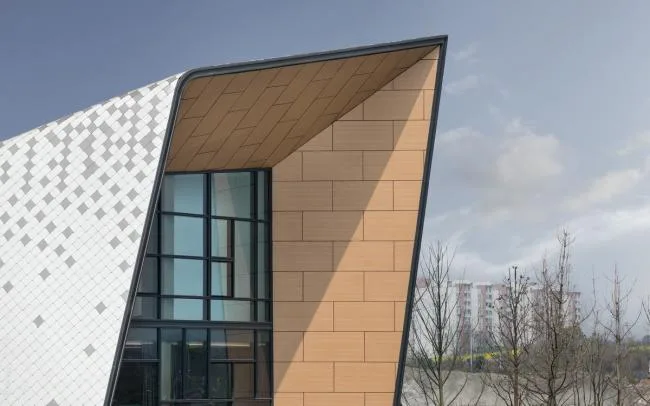
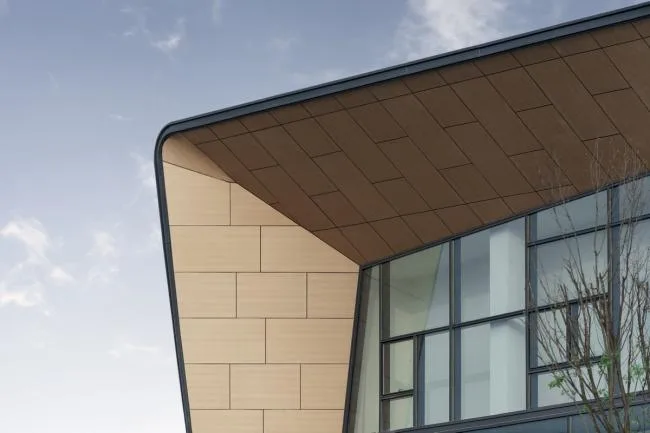
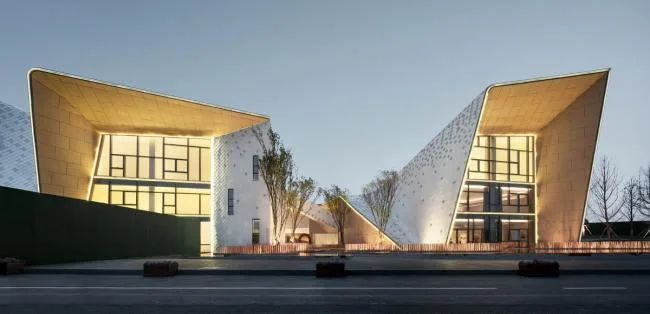
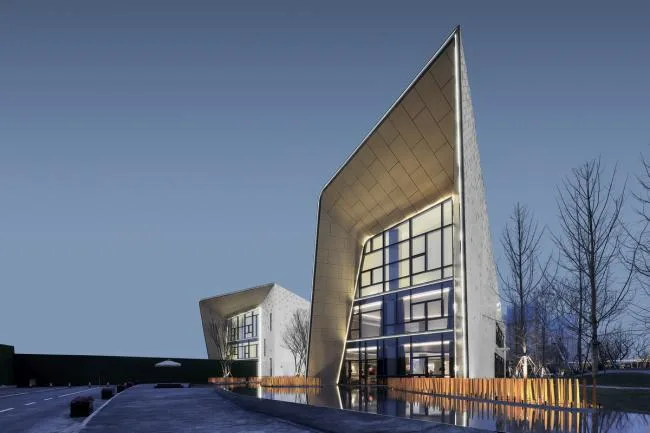
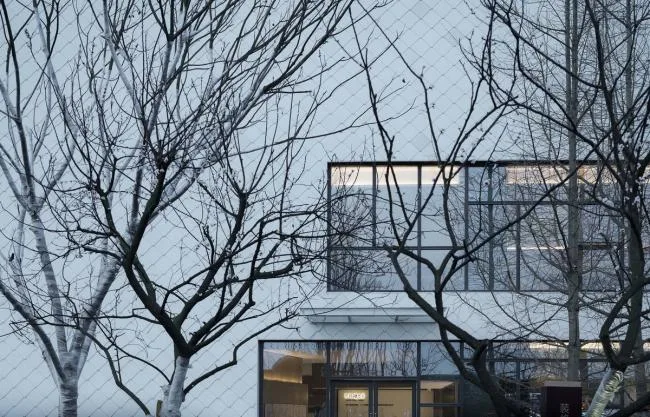
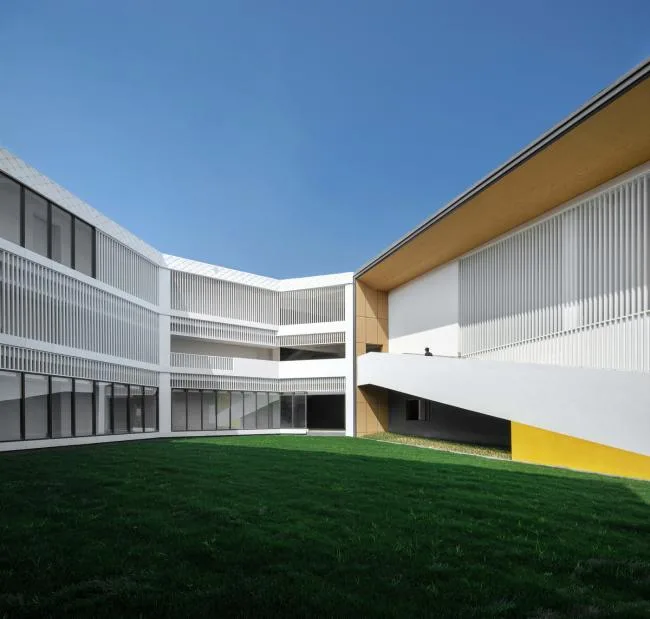
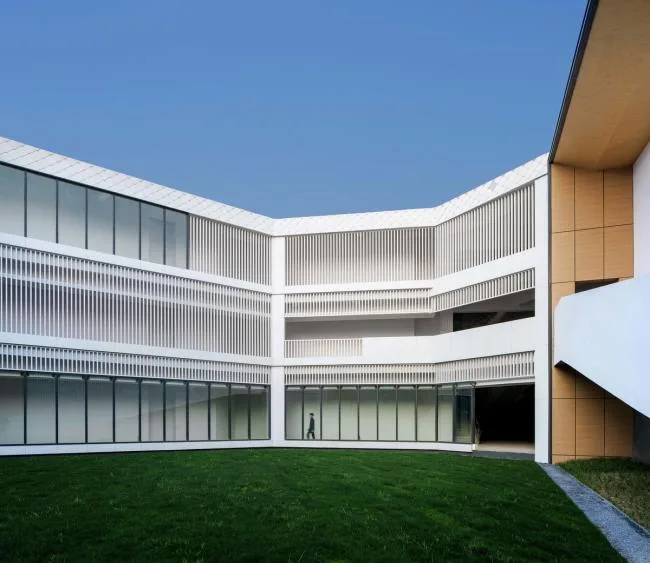
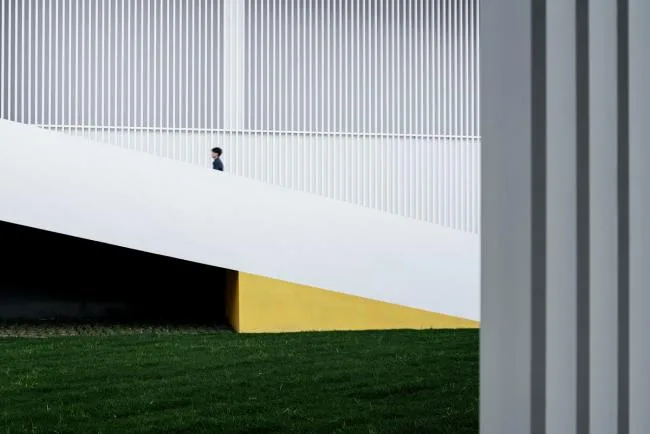
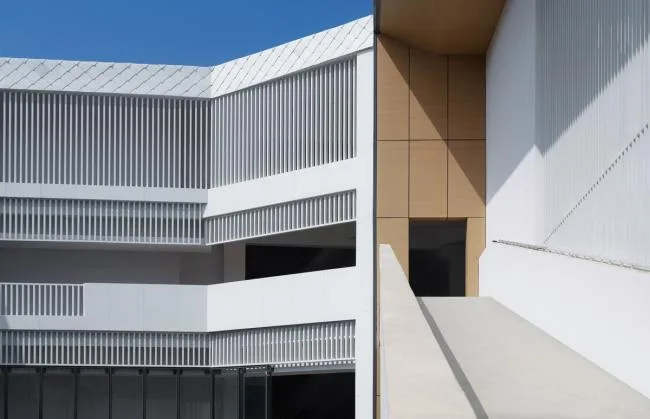
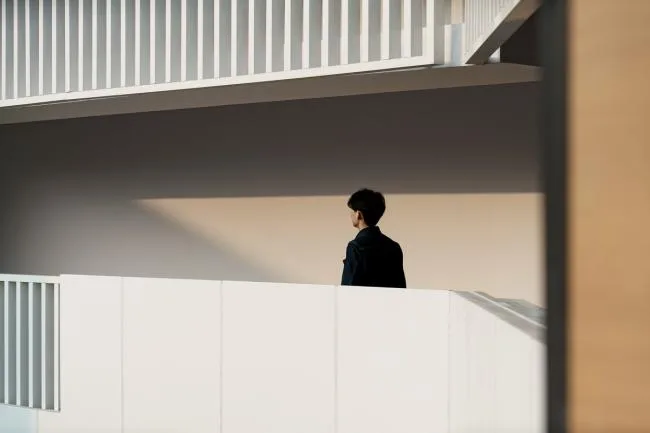
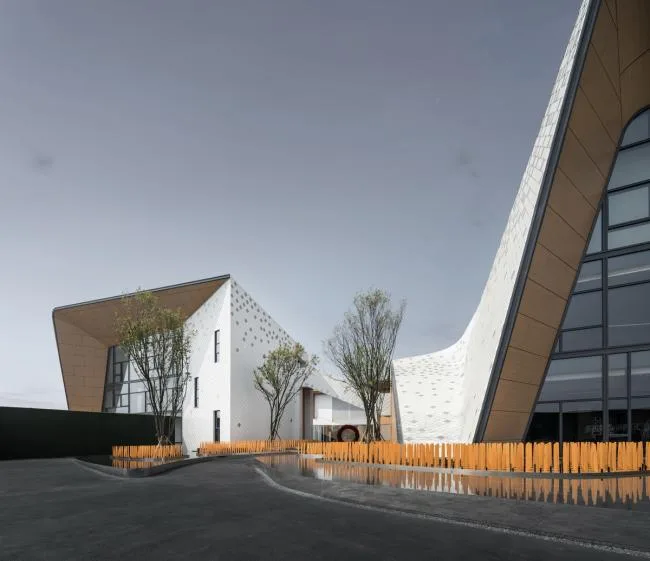
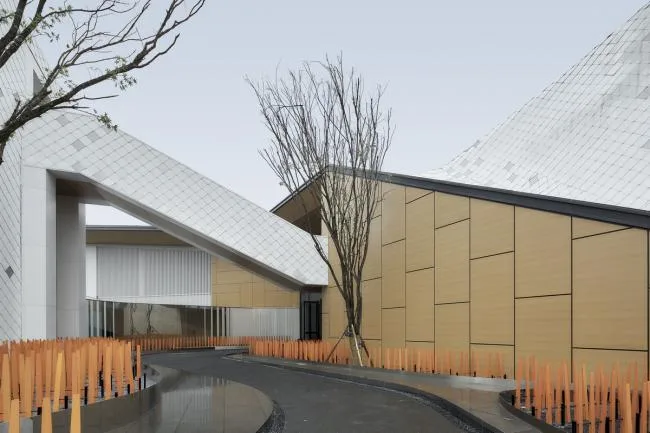
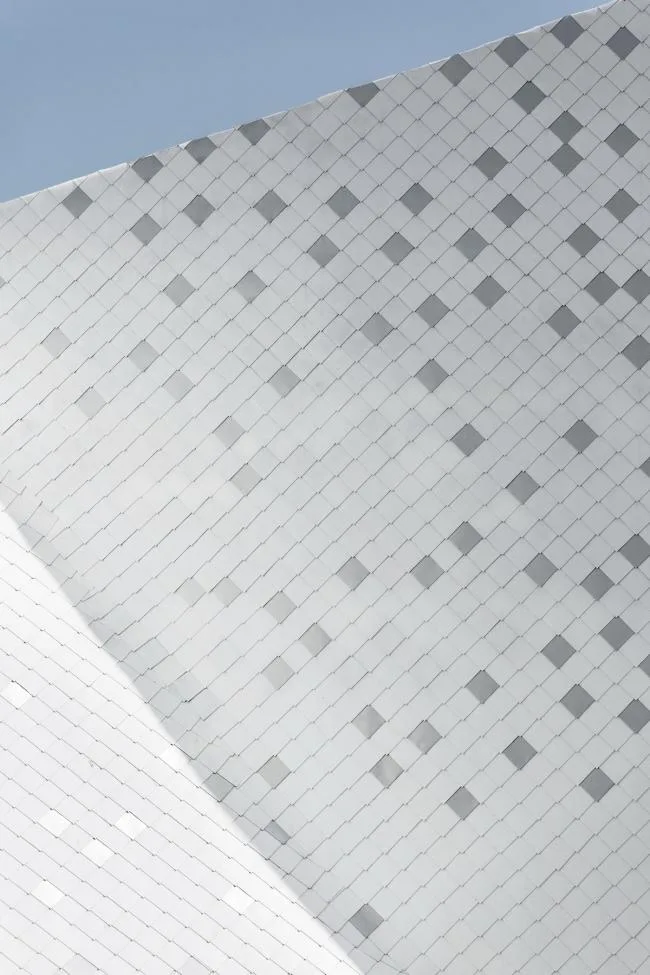
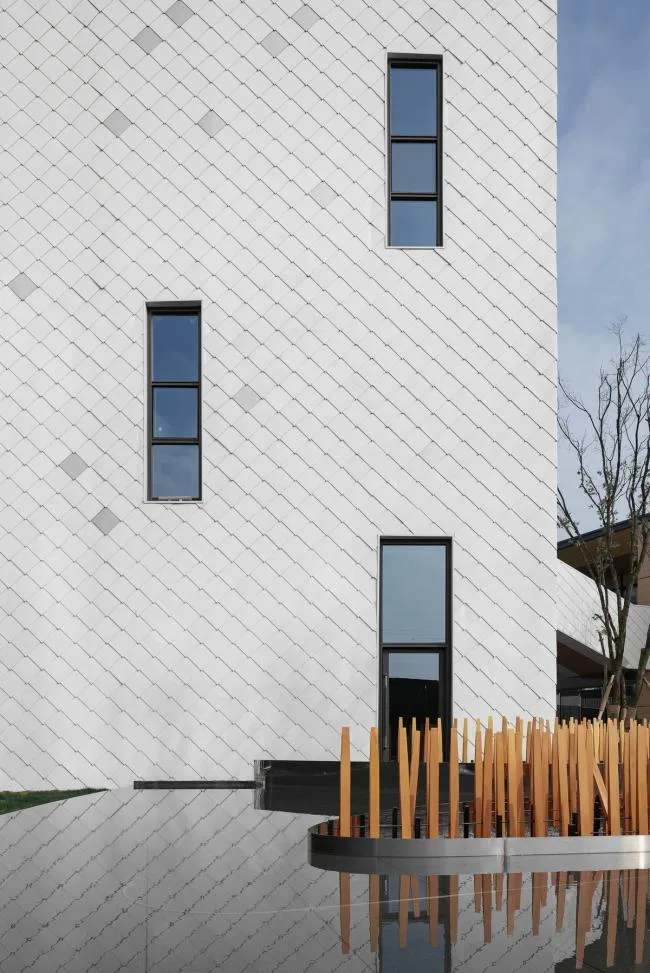
White, as a color, enhances the perception of all other natural colors. Facing a white surface offers the best experience of light and shadow. Designers use white to clarify architectural concepts and strengthen visual impact. The white façades create a harmonious backdrop with the natural surroundings, reflecting light and nature itself. This contrast enriches the environment without overpowering it, balancing contradiction and harmony with nature.
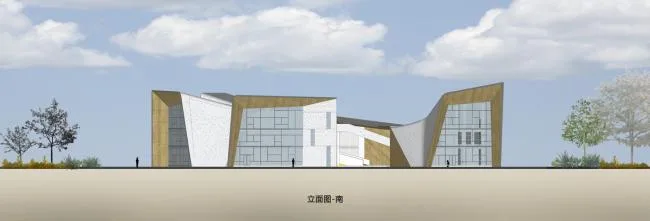
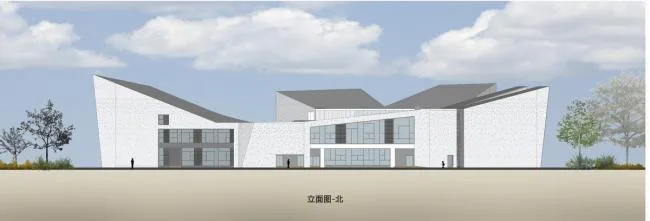
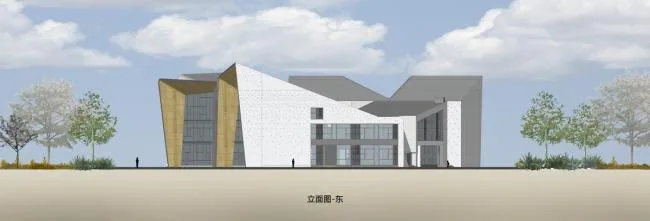
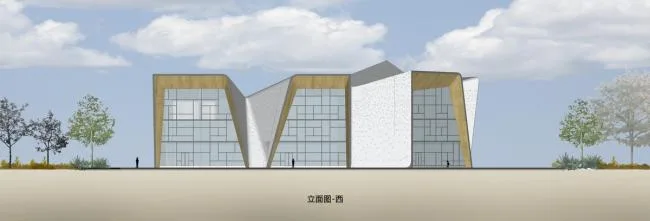
▲ Elevation view
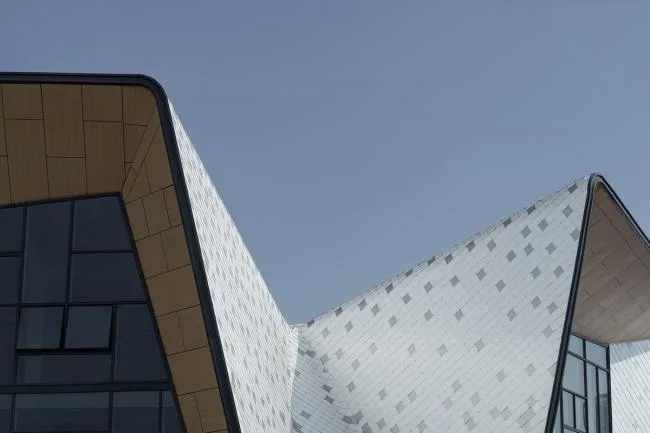
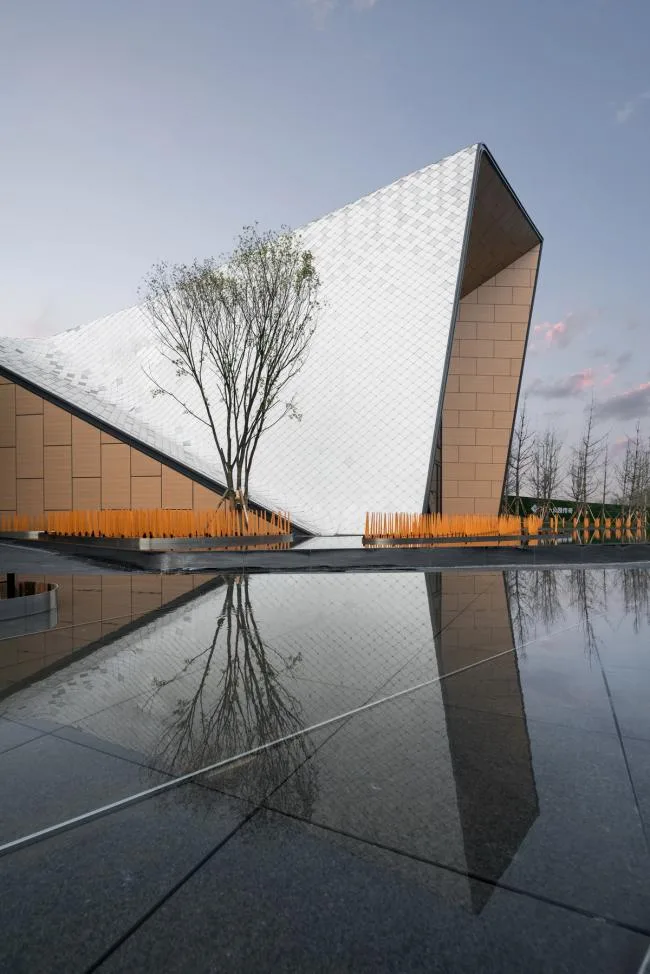
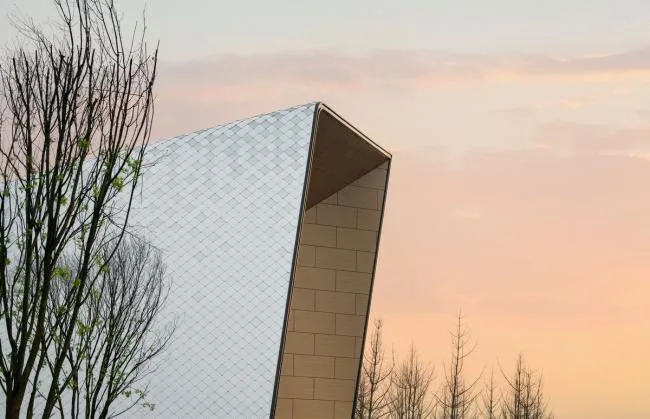
The building’s skin, with its vertical and horizontal structural principles, cascades like a waterfall, creating a dynamic, lightweight, and comfortable visual effect. The complexity of natural forms is distilled into a balanced system, generating tension that moves toward peaceful harmony. The result is a unified architectural form that artistically transforms the kindergarten and its environment.
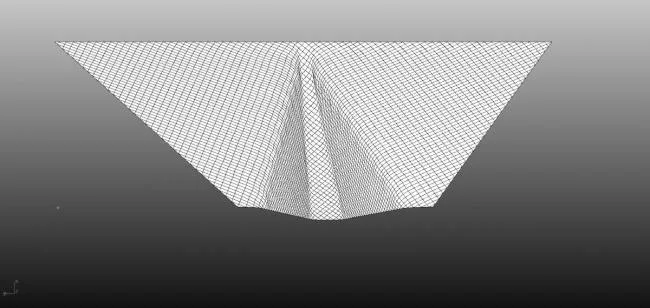
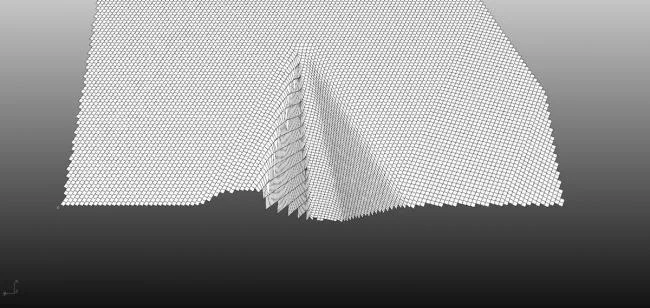
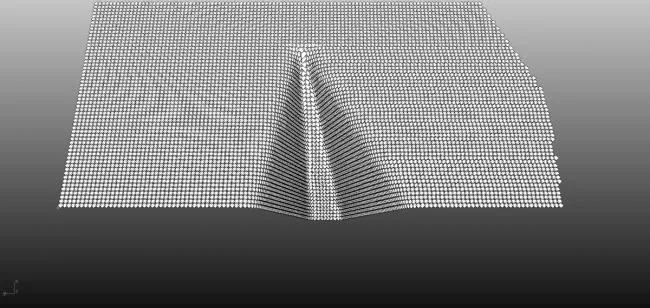
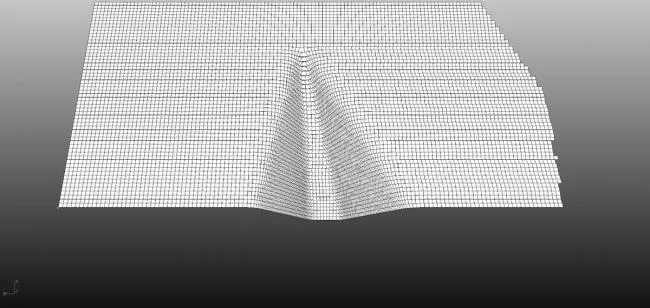
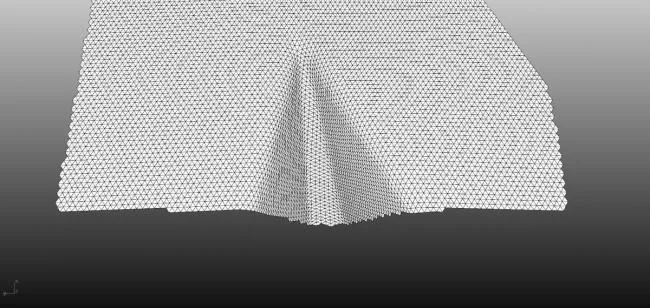
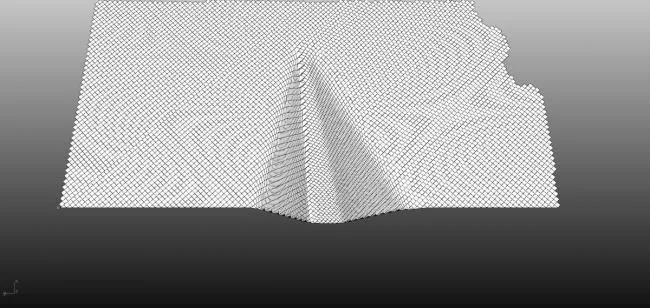
▲ Comparison of various façade schemes
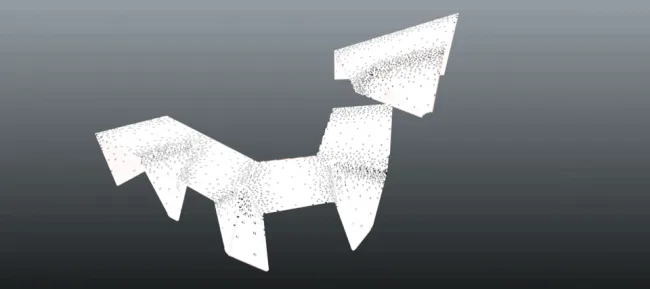
▲ Façade generation process
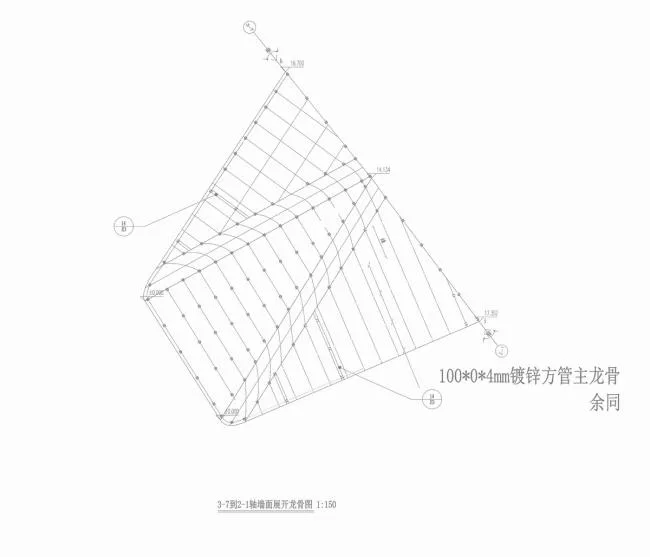
▲ Detail diagram of arched metal roof curtain wall framework
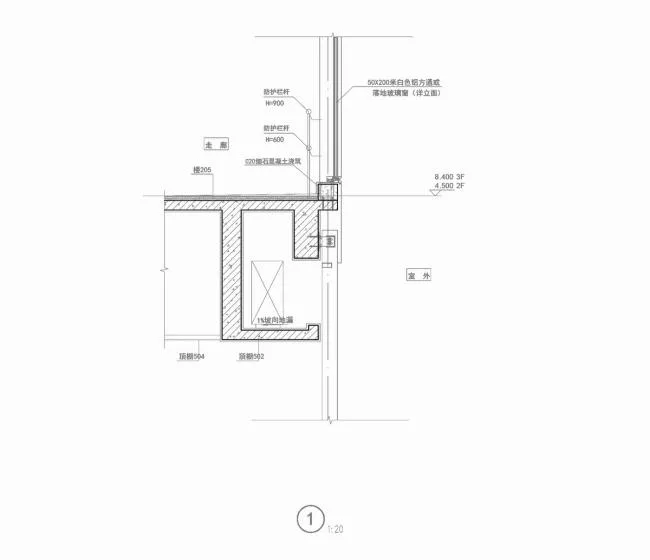
▲ Concealed detail of air conditioning unit placement
Childhood Joy Preserved
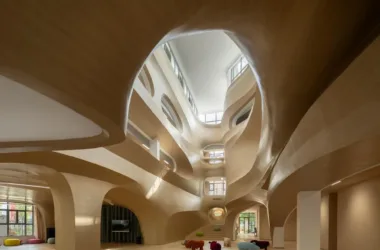
The interior primarily features wood, harmonizing with the façade to create a natural, bright atmosphere. The spatial lines are minimalist, smooth, and comfortable—simple without being dull, full of childlike charm.
The space is reconstructed through geometric forms, where contrasting elements highlight their unique qualities while achieving overall harmony through bold contrasts.
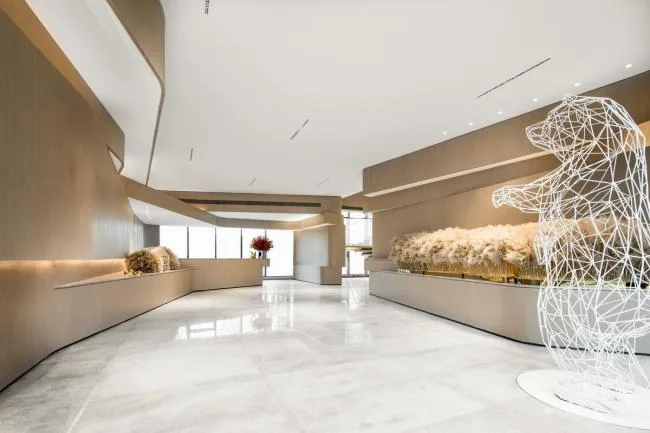
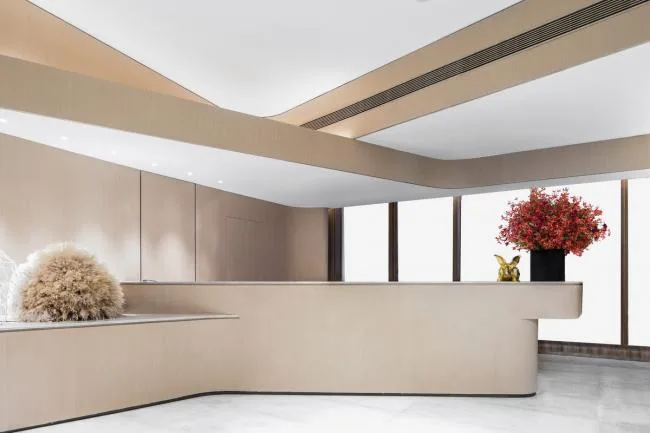
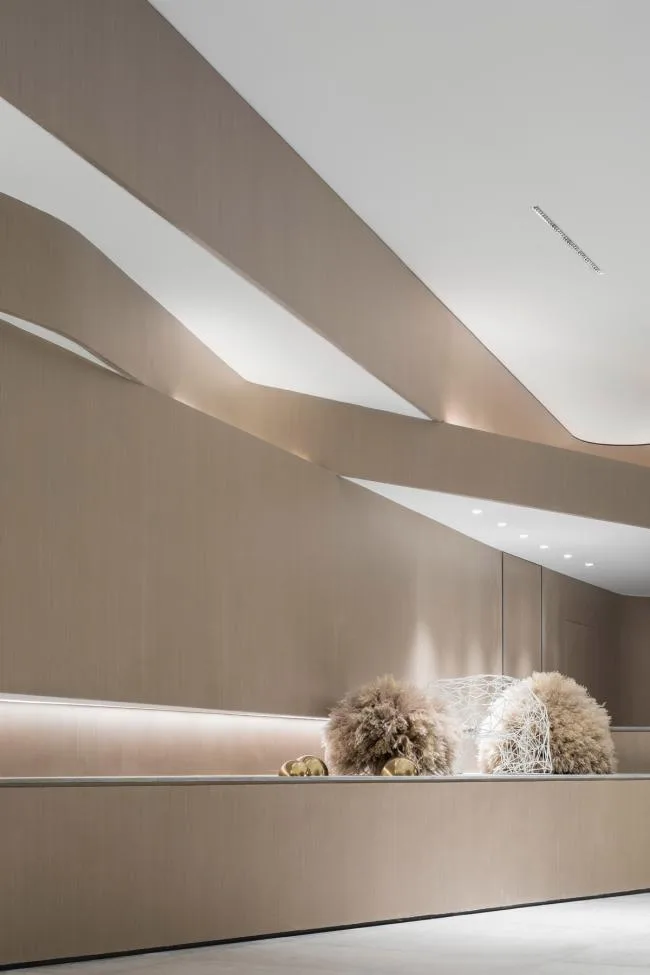
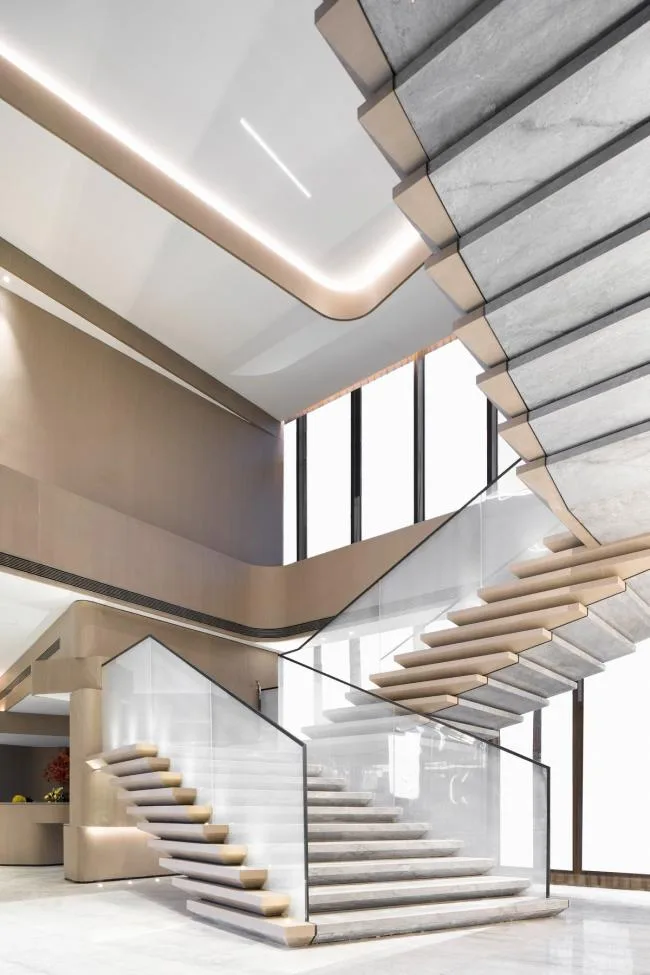
The life of architecture lies in its beauty, which is especially important for children. Natural architecture offers comfort and joy without relying on bright colors. Simple geometric compositions and attractive public spaces in BIM design fulfill these needs. As a foundation for children’s lives, architecture should provide ample opportunities for self-exploration and learning.
Project Details
Project Name: Chengdu Vanke Park Legendary Kindergarten
Location: Tianfu New Area, Chengdu
Building Area: 5,600 square meters
Owner: Chengdu Vanke Nancheng Real Estate Co., Ltd
Architectural Design: Shanghai Chengzhi Architectural Design Co., Ltd
Chief Architect: Li Jie
Design Director: Yan Fang
Design Team: Lin Shuya, Li Hailian, Feng Wubing, Lin Wei, Xu Xiuxian
Construction Drawing Design: Chongqing Changxia Anji Architectural Design Co., Ltd
Interior and Soft Decoration Design: ENJOYDESIGN
Landscape Design: Weitu Design Agency
Landscape Construction: Guangzhou Huayuan Garden
Floodlight Design and Construction: Sichuan Purui Lighting Engineering Co., Ltd
Exterior Wall Coating Detailing: Chengdu Yehua Construction Engineering Co., Ltd
Design Period: April 2018 – February 2019
Completion Date: February 2019
Photography Team: Prism Architecture Space Photography, Xiong Huan, Path Architecture Photography
Note: This project was primarily designed as a kindergarten and currently functions as an exhibition center.












Must log in before commenting!
Sign Up